I have had an ongoing conversation with CBC reporters about the Montreal’s Champlain Bridge light rail project. Evidently, the Conservatives were trying to force the Montreal transit authority to install SkyTrain and they were having none of it. In fact, the authority claims that LRT would be able to carry more passengers than SkyTrain (maybe Mr. Cow’s graphic I sent to the CBC raised some eyebrows)!
I won’t go into the story that proved very embarrassing for TransLink.
Hmmm!
The Libs, who seem to have no clue about transit, and promise money to what ever project they think that will win them votes.
The BC way to plan transit.
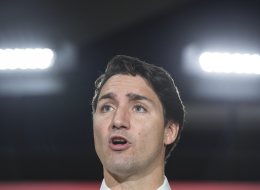
Justin Trudeau Promises Funding For Light Rail Project In Montreal
CP Ai??|Ai?? By The Canadian Press
Posted:
MONTREAL ai??i?? Liberal Leader Justin Trudeau promised new money for two big transit projects Thursday in Montreal and touted his plan to run deficits and spend on infrastructure ahead of Friday’s leaders debate in Quebec.
Trudeau made the announcement in a province not unfamiliar with deficits, and tried to differentiate himself from NDP Leader Tom Mulcair as the only progressive option on the economy and spending stimulus.
“Mr. Mulcair made the wrong choice. He chose not to listen to what Canadians have been telling all of their leaders over the past year ai??i?? that now is the time to invest, now is the time to grow our economy,” Trudeau said at a forklift repair plant.
“He’s put forward a plan (to balance the budget) based on Stephen Harper’s framework.”
Throughout the question-and-answer session with reporters, Trudeau frequently repeated the accusation that Mulcair made the wrong choice by promising to balance the budget ai??i?? even while fielding a question on post-secondary tuition.
Trudeau’s comments drew a sharp rebuke from Andrew Thomson, a former Saskatchewan finance minister running for the NDP in Eglinton-Lawrence in Toronto.
“Justin Trudeau’s plan is based on broken promises, bad math and a $6.5 billion cut to services,” Thomson said.
He said Trudeau promised in August to spend $5.8 billion on transit over four years, but when he released his fiscal plan, he’d cut $150 million from that.
“If he’s breaking these kinds of promises before election day, imagine what he’ll do after.”
Trudeau’s Liberals are trying to gain traction in Quebec, after securing a handful of seats in the last election. With the NDP and Liberals both trying to convince voters they are the alternative to the Conservatives, Trudeau has been playing up his pitch that only the Liberal spending plan will boost the economy.
The NDP and Conservatives have also promised infrastructure spending, however, and accuse Trudeau of making spending promises that exceed his deficit allowance.
He made the announcement in the riding of Lac-Saint-Louis, a longtime Liberal bastion on Montreal’s West Island and one of the few seats considered safe.
His promise Thursday was to help fund a rapid transit system to the area, as well as a light-rail project on the Champlain Bridge, which connects Montreal to the suburban South Shore. A Liberal government would spend $20 billion on transit infrastructure alone over 10 years across the country, he said.
But while the economy appeared to be top of mind at the start of the election campaign, discussion has often diverted to questions of Canadian identity ai??i?? whether women should be allowed to wear the niqab during citizenship ceremonies and whether Canadians with dual citizenship should lose their Canadian one if convicted of terrorism.
The Bloc Quebecois has run ads attacking Mulcair that portray a woman wearing a niqab. Conservative Leader Stephen Harper got a loud round of applause from supporters Wednesday in Montreal when he pledged to legislate a ban on wearing face veils during citizenship ceremonies.
Trudeau blamed the other parties for the focus on identity issues.
“Our opponents are falling down into identity politics ai??i?? the politics of fear, the politics of division, the politics of personal attack.”
“If my opponents want to try to distract people so that Canadians don’t realize they have no plan for economic growth and no change to offer Canadians…then I find they’re missing the mark,” he added in French.
It’s no surprise that the parties involved were offering some promises, its an election and both the Liberals and Conservatives don’t care as long as they think that it what’s people want to hear. They don’t have to know anything about rapid transit rail systems and their various differences. Now, I know from a Conservative Party friend of mine that, Montreal was never going to get any train of any kind for the bridge from the Conservatives, it was always going to be buses only. It was a red hearing, they already new the SNC-Lavlin, Bombardier Light Metro System was too expensive. The Conservatives would simply state after the election that there are too many funny things going on with this project and would start again from the beginning a new process. Then forget about a new process once everybody was distracted with something else and some time later quietly cancel they whole process.
Everybody in Quebec already knew that as well, with the story that started breaking last January with a Radio-Canada story on the subject, that both Bombardier and SNC inflated the bridge transit figures so that it would look like their ART 300 system would be a perfect fit. A bridge transit study they were both placed in charge of.
The City of Montreal has already stated that in no certain terms that, the Bombardier’s ART 300 technology was way too expensive, required way too much intrusive supporting infrastructure once the trains were off the bridge and unlike Vancouver, Montreal doesn’t want more ugly concrete above grade train carrying viaducts, blocking out the sunlight and creating a visual blight in their downtown neighborhoods. They also did not want to get stuck with the repair bill 40 years from now when the concrete starts to fall down out of the sky.
The province of Quebec stated many times that, the Skytrain like technology was way too expensive and that only a cheap surface running LRT would ever be considered for financial support. Finally a major announcement last January the Caisse de depot would start investing in Quebec transit projects, specifically the Train deL’Ouest and the rail transit component of the Champlain Bridge project. The private equity group Caisse de depot, which handles Quebec’s pension money stated back in the winter that, they would only invest in Quebec transit infrastructure that made sense and the ART 300 technology is just too expensive and that, putting the 2 companies that own all the patents for that particular technology (both engineering and vehicle patents) in charge of the transit study for the Champlain Bridge was a recipe for disaster. They also stated that if their money was paying for this transit investment, they would choose the rail technology and the operational group that would run the rail system, not the government.
On the subject of Red Hearings, everybody from all parties know that in the Vancouver area, Translink can’t presently afford its 1/3 share of any rapid transit project right now, LRT in Surrey or Skytrain under Broadway. They can promise anything in that regard and don’t have to give you guys squat because they know there is 0 local money available. After the election, regardless of the party that is in power, they can simply ignore any request for funding because until you guys decide how much you want to pay locally for rapid transit, you can be forgotten. This why I said that if you wanted to see any money for any rapid transit technology you should have voted yes in your plebiscite, regardless of how good or bad you think Translink is run, they are independent of each other. You can tare down Translink and start from scratch but you still need rapid transit expansion/repair money from senior levels of government regardless, that work can’t stop. If you let it stop then nothing will happen until the money flows again. Unfortunately at that point, you have to start again from the beginning of the process, regardless. Remember, even with all your cash in hand, it legally takes a minimum of 2 years to go through the planning and procurement stage to follow all the legal requirements. For example, under Canadian law, the RFP (request for proposal) stage alone requires that you the taxpayer wait a year for the various interested parties to provide a proposal. This prevents you the tax payer, from being sued by any of the parties involved because you didn’t give enough time for the interested parties to do a proper proposal and therefore you are not showing favoritism, towards a better politically connected party which was able to get their proposal done early.
SOME RAPID TRANSIT FUNDING IS ALWAYS BETTER THAN NONE AND THAT IS EXACTLY WHAT YOU GUYS IN THE VANCOUVER AREA ARE GOING TO GET, NONE! YOUR NO VOTE HAS SOLIDFIED THE CURRENT FUNDING SITUATION! REGARDLESS OF HOW CORRUPT YOU THINK YOUR TRANSIT AGENCY IS, YOU NEVER, NEVER, NEVER TURN THE MONEY TAP OFF FROM SENIOR LEVELS OF GOVERNMENT ONCE IT STARTS FLOWING. IT CAN TAKE A DECADE OR MORE OF HARD LOBBYING TO TURN IT BACK ON. CANADIAN CITIES CAN’T BUILD ANYTHING WITHOUT PROVINCIAL AND OR FEDERAL HELP BECAUSE THATS HOW THE SYSTEM IS STRUCTURED. IF YOU HAVE TO GO IN TO DEBT TO BUILD HARD INFRASTRUCTURE YOU DO, DUE TO THE BIG MULTIPLIER EFFECT HARD INFRASTRUCTURE HAS WITH CREATING JOBS AND NEW TAXES.
Lastly remember, compared to the other big city transit areas in Canada (Montreal & Toronto) your agency is underfunded by 30-40% because it has to do both local and regional transit duties. In the other big Canadian cities there are two separate agencies which do each job. If you want to accurately compare Vancouver with the City of Toronto and its transit spending you must include, both the local cost of the TTC as well as the City of Toronto’s component of its provincial GO Transit funding. Each municipality or region which receives GO Transit service, BUS and or Rail, pays extra transit taxes for the service. This is usually included on the individual taxpayer’s provincial tax bill.
In the Greater Golden Horseshoe Area, which is Toronto’s outer commuting zone and is represented by 8.8 million people, GO Transit and its operator Metrolinx (the regional transit planning agency) partners with the 30 other local, semi regional and regional transit agencies, including the TTC in Toronto. In Greater Montreal the AMT (Agence Metropolitaine de Transport) partners with 21 local, multi local and regional transit agencies, which represent 77 different single municipalities, regional county municipalities and native reserves around and including the island of Montreal. They also do the planning, coordination and delivery of transit infrastructure for the area’s 4.1 million people.
Zwei replies: A larger percentage of the Canada Line’s employee’s were foreign workers.
“Zwei replies: A larger percentage of the Canada Line’s employee’s were foreign workers.”
Haveacow blasts your position on the plebiscite and Translink. and this is how you ?
Zwei replies: Mr. Cow and I have different opinions on the plebiscite. He is a valued contributor and if you have read his what he has posted, you would see he does not favour either the Broadway subway, nor Surrey’s LRT. Most transit experts I have communicated with have expressed great doubts with the Broadway subway (why would people take it?) and Surrey’s LRT (a poor man’s SkyTrain, with all the baggage of bad planning). I will add, most find BC’s transit politics a mixture of pixie dust planning and mindless political interference.
No one copies Vancouver’s transit planning (though one poster said Bogota, Columbia did) and no one copies our use of SkyTrain.
Let me make this as clear as possible. I have known people like Zwei for many years, he is a battered warrior of the local political game that is transit planning, in this case, rapid transit planning. He likes a particular transit technology that I agree as a professional has a big future ahead in it. It is just too bad that Zwei’s technology the Tram-Train concept, has real legal and regulatory hurdles to get past hear in North America before it will become reality. Its popular in Europe because of several reasons.
First, their regulatory agencies and governments have for the most part, not allowed privatization to severely break up national rail companies and their rail networks, thus their national rail providers some private, most public, are not completely hung up on the idea of making a profit at all costs. They (the rail providers) have the wiggle room to experiment and ask questions about new ideas that may not be profitable now but maybe later once fully developed.
Secondly, European rail providers, unlike our railways are not diametrically opposed to carrying passengers. They don’t have the mantra that North American Railways have, “freight can’t sue”.
European’s would never let vast stretches of track go unused in our cities and countryside because its presently not profitable for freight use. Europeans as a people understand that most passenger railway lines will never make a profit, that is not the point. Most roads subjected to the same scrutiny don’t make money yet, we keep building them because we believe it is a public good. Europeans see rail rapid transit as a public good profitable or not.
I, along with many others in Ottawa helped start our O-Train Line, now called the Trillium Line. A diesel multiple unit vehicle designed for mainline railway commuter rail use but adequately geared so it could be a used as a very inexpensive diesel LRT line, using pre existing ex CPR track. We were ridiculed, threatened both professionally and literally by people in Ottawa that wanted the Transitway (our successful BRT system) to be our only form of rapid transit. I get where Zwei’s “fire and acid speak” as we say in Ottawa, comes from. Hang in there Zwei, you will get there eventually! Probably sooner than you think. I see many disturbing parallels between your official Skytrain staff, planners, engineers, fan boys/girls, politicians included and our Transitway only elite, who made every effort to try and stop anything other than bus based rapid transit for over 3 decades in Ottawa. I have no doubt that Zwei and certain members of his Rail for The Valley Group have been threatened, abused and gently harassed by cowards who fear the end to the Skytrain only way of life. However, I have recently noticed that even some of the most hardened Skytrain zealots (some I know personally and professionally), have softened to allow BRT as a possibility because Skytrain is too expensive to go everywhere. Guys even compared to what I observed just 5 years ago in your town, I would consider that, YOU HAVE HAD SOME EFECT and that is a success in my book.
One difference I have Zwei is that I know BRT can work and has worked reasonably well in certain conditions, especially when you build real BRT, not what I call BRT Lite! Or Zwei’s very accurate assessment of your B-Line routes,”Its a tarted up Express Bus”. I have the luxury because we here in Ottawa have come through the other side, as they say, we are now building LRT and BRT where each make sense to build, for the most part anyway, don’t get me started!. The people who wanted nothing but BRT are quickly disappearing from the official City of Ottawa payroll. I have the professional calm knowing life will be all right because I have dealt with this crap for most of my professional life. I have a certain professional detachment I can retreat to, so I don’t go nuts. I know, its just an election! Things can change quickly when enough want it too. Zwei just hasn’t got to that happier place yet but he will!
However, the Surrey LRT in my humble opinion is just bad planning from the start. Its mainly from the fact that, this whole project was based on a contrary political position in fight with another politician, which is common in today’s politics. The project is not based in a soberly thought out, previously stated planning goal for the community or a genuine need for new and improved transit. The whole process was tainted from the start because a reasonably powerful and determined local politician has been able to completely control the path of an entire study process. Thus, really big basic questions were not asked about the real need, scope or what I call geographic and design service scale. Very poorly thought out technology comparisons led to poor planning regarding the system’s preferred technology. To answer your next question, I don’t know what is the best technology choice for this project and you sure should not rely on the study that determined the present technological choice. This led to a choice of LRT routes that are at best mediocre in ridership and general use. Most importantly have little future opportunity to be part of a larger operating network of other LRT lines.
Zwei replies:
Can’t disagree. BRT will work if it is real BRT and not a tarted up express bus service, and real BRT costs a lot of money. Real BRT, from what I have read, costs about 70% of what LRT would cost to build, with higher operating costs, but we are not getting real BRT, nowhere even close.
The Surrey LRT is just poor planning based on an absolute ignorance of what LRT is and why it is built.
As for tram train, the main concern is safety, but in a country where one man operation is allowed on long oil trains, it is absolutely hypocritical to use the safety aspect against tramtrain. The SRR of BC has been interested in operating a tram like service on its tracks and it is the CPR who have been balking on the joint section through Langley (former BCE tracks sold off to the CPR). There is a statutory obligation to operate a passenger service on the route and former TransLink CEO, Tom Prendergast, was on the verge of urging Victoria to seriously look at some sort of LRT/DMU service on the route. It seems this is one of the reasons he was eased out of the position by senior bureaucrats within TransLink and the MoT.
TramTrain will happen in North America when finances become very tight and cheaper alternatives must come to the fore. We are still under a tax and spend regimen where huge monies spent on transit are deemed a sacred investment, even though they do little to improve transit in the whole. Rules will change to compel railways to accommodate TramTrain, but not at this time.





It’s no surprise that the parties involved were offering some promises, its an election and both the Liberals and Conservatives don’t care as long as they think that it what’s people want to hear. They don’t have to know anything about rapid transit rail systems and their various differences. Now, I know from a Conservative Party friend of mine that, Montreal was never going to get any train of any kind for the bridge from the Conservatives, it was always going to be buses only. It was a red hearing, they already new the SNC-Lavlin, Bombardier Light Metro System was too expensive. The Conservatives would simply state after the election that there are too many funny things going on with this project and would start again from the beginning a new process. Then forget about a new process once everybody was distracted with something else and some time later quietly cancel they whole process.
Everybody in Quebec already knew that as well, with the story that started breaking last January with a Radio-Canada story on the subject, that both Bombardier and SNC inflated the bridge transit figures so that it would look like their ART 300 system would be a perfect fit. A bridge transit study they were both placed in charge of.
The City of Montreal has already stated that in no certain terms that, the Bombardier’s ART 300 technology was way too expensive, required way too much intrusive supporting infrastructure once the trains were off the bridge and unlike Vancouver, Montreal doesn’t want more ugly concrete above grade train carrying viaducts, blocking out the sunlight and creating a visual blight in their downtown neighborhoods. They also did not want to get stuck with the repair bill 40 years from now when the concrete starts to fall down out of the sky.
The province of Quebec stated many times that, the Skytrain like technology was way too expensive and that only a cheap surface running LRT would ever be considered for financial support. Finally a major announcement last January the Caisse de depot would start investing in Quebec transit projects, specifically the Train deL’Ouest and the rail transit component of the Champlain Bridge project. The private equity group Caisse de depot, which handles Quebec’s pension money stated back in the winter that, they would only invest in Quebec transit infrastructure that made sense and the ART 300 technology is just too expensive and that, putting the 2 companies that own all the patents for that particular technology (both engineering and vehicle patents) in charge of the transit study for the Champlain Bridge was a recipe for disaster. They also stated that if their money was paying for this transit investment, they would choose the rail technology and the operational group that would run the rail system, not the government.
On the subject of Red Hearings, everybody from all parties know that in the Vancouver area, Translink can’t presently afford its 1/3 share of any rapid transit project right now, LRT in Surrey or Skytrain under Broadway. They can promise anything in that regard and don’t have to give you guys squat because they know there is 0 local money available. After the election, regardless of the party that is in power, they can simply ignore any request for funding because until you guys decide how much you want to pay locally for rapid transit, you can be forgotten. This why I said that if you wanted to see any money for any rapid transit technology you should have voted yes in your plebiscite, regardless of how good or bad you think Translink is run, they are independent of each other. You can tare down Translink and start from scratch but you still need rapid transit expansion/repair money from senior levels of government regardless, that work can’t stop. If you let it stop then nothing will happen until the money flows again. Unfortunately at that point, you have to start again from the beginning of the process, regardless. Remember, even with all your cash in hand, it legally takes a minimum of 2 years to go through the planning and procurement stage to follow all the legal requirements. For example, under Canadian law, the RFP (request for proposal) stage alone requires that you the taxpayer wait a year for the various interested parties to provide a proposal. This prevents you the tax payer, from being sued by any of the parties involved because you didn’t give enough time for the interested parties to do a proper proposal and therefore you are not showing favoritism, towards a better politically connected party which was able to get their proposal done early.
SOME RAPID TRANSIT FUNDING IS ALWAYS BETTER THAN NONE AND THAT IS EXACTLY WHAT YOU GUYS IN THE VANCOUVER AREA ARE GOING TO GET, NONE! YOUR NO VOTE HAS SOLIDFIED THE CURRENT FUNDING SITUATION! REGARDLESS OF HOW CORRUPT YOU THINK YOUR TRANSIT AGENCY IS, YOU NEVER, NEVER, NEVER TURN THE MONEY TAP OFF FROM SENIOR LEVELS OF GOVERNMENT ONCE IT STARTS FLOWING. IT CAN TAKE A DECADE OR MORE OF HARD LOBBYING TO TURN IT BACK ON. CANADIAN CITIES CAN’T BUILD ANYTHING WITHOUT PROVINCIAL AND OR FEDERAL HELP BECAUSE THATS HOW THE SYSTEM IS STRUCTURED. IF YOU HAVE TO GO IN TO DEBT TO BUILD HARD INFRASTRUCTURE YOU DO, DUE TO THE BIG MULTIPLIER EFFECT HARD INFRASTRUCTURE HAS WITH CREATING JOBS AND NEW TAXES.
Lastly remember, compared to the other big city transit areas in Canada (Montreal & Toronto) your agency is underfunded by 30-40% because it has to do both local and regional transit duties. In the other big Canadian cities there are two separate agencies which do each job. If you want to accurately compare Vancouver with the City of Toronto and its transit spending you must include, both the local cost of the TTC as well as the City of Toronto’s component of its provincial GO Transit funding. Each municipality or region which receives GO Transit service, BUS and or Rail, pays extra transit taxes for the service. This is usually included on the individual taxpayer’s provincial tax bill.
In the Greater Golden Horseshoe Area, which is Toronto’s outer commuting zone and is represented by 8.8 million people, GO Transit and its operator Metrolinx (the regional transit planning agency) partners with the 30 other local, semi regional and regional transit agencies, including the TTC in Toronto. In Greater Montreal the AMT (Agence Metropolitaine de Transport) partners with 21 local, multi local and regional transit agencies, which represent 77 different single municipalities, regional county municipalities and native reserves around and including the island of Montreal. They also do the planning, coordination and delivery of transit infrastructure for the area’s 4.1 million people.
Zwei replies: A larger percentage of the Canada Line’s employee’s were foreign workers.
We should all know by now that the federal libs always lie.
“Zwei replies: A larger percentage of the Canada Line’s employee’s were foreign workers.”
Haveacow blasts your position on the plebiscite and Translink. and this is how you ?
Zwei replies: Mr. Cow and I have different opinions on the plebiscite. He is a valued contributor and if you have read his what he has posted, you would see he does not favour either the Broadway subway, nor Surrey’s LRT. Most transit experts I have communicated with have expressed great doubts with the Broadway subway (why would people take it?) and Surrey’s LRT (a poor man’s SkyTrain, with all the baggage of bad planning). I will add, most find BC’s transit politics a mixture of pixie dust planning and mindless political interference.
No one copies Vancouver’s transit planning (though one poster said Bogota, Columbia did) and no one copies our use of SkyTrain.
Let me make this as clear as possible. I have known people like Zwei for many years, he is a battered warrior of the local political game that is transit planning, in this case, rapid transit planning. He likes a particular transit technology that I agree as a professional has a big future ahead in it. It is just too bad that Zwei’s technology the Tram-Train concept, has real legal and regulatory hurdles to get past hear in North America before it will become reality. Its popular in Europe because of several reasons.
First, their regulatory agencies and governments have for the most part, not allowed privatization to severely break up national rail companies and their rail networks, thus their national rail providers some private, most public, are not completely hung up on the idea of making a profit at all costs. They (the rail providers) have the wiggle room to experiment and ask questions about new ideas that may not be profitable now but maybe later once fully developed.
Secondly, European rail providers, unlike our railways are not diametrically opposed to carrying passengers. They don’t have the mantra that North American Railways have, “freight can’t sue”.
European’s would never let vast stretches of track go unused in our cities and countryside because its presently not profitable for freight use. Europeans as a people understand that most passenger railway lines will never make a profit, that is not the point. Most roads subjected to the same scrutiny don’t make money yet, we keep building them because we believe it is a public good. Europeans see rail rapid transit as a public good profitable or not.
I, along with many others in Ottawa helped start our O-Train Line, now called the Trillium Line. A diesel multiple unit vehicle designed for mainline railway commuter rail use but adequately geared so it could be a used as a very inexpensive diesel LRT line, using pre existing ex CPR track. We were ridiculed, threatened both professionally and literally by people in Ottawa that wanted the Transitway (our successful BRT system) to be our only form of rapid transit. I get where Zwei’s “fire and acid speak” as we say in Ottawa, comes from. Hang in there Zwei, you will get there eventually! Probably sooner than you think. I see many disturbing parallels between your official Skytrain staff, planners, engineers, fan boys/girls, politicians included and our Transitway only elite, who made every effort to try and stop anything other than bus based rapid transit for over 3 decades in Ottawa. I have no doubt that Zwei and certain members of his Rail for The Valley Group have been threatened, abused and gently harassed by cowards who fear the end to the Skytrain only way of life. However, I have recently noticed that even some of the most hardened Skytrain zealots (some I know personally and professionally), have softened to allow BRT as a possibility because Skytrain is too expensive to go everywhere. Guys even compared to what I observed just 5 years ago in your town, I would consider that, YOU HAVE HAD SOME EFECT and that is a success in my book.
One difference I have Zwei is that I know BRT can work and has worked reasonably well in certain conditions, especially when you build real BRT, not what I call BRT Lite! Or Zwei’s very accurate assessment of your B-Line routes,”Its a tarted up Express Bus”. I have the luxury because we here in Ottawa have come through the other side, as they say, we are now building LRT and BRT where each make sense to build, for the most part anyway, don’t get me started!. The people who wanted nothing but BRT are quickly disappearing from the official City of Ottawa payroll. I have the professional calm knowing life will be all right because I have dealt with this crap for most of my professional life. I have a certain professional detachment I can retreat to, so I don’t go nuts. I know, its just an election! Things can change quickly when enough want it too. Zwei just hasn’t got to that happier place yet but he will!
However, the Surrey LRT in my humble opinion is just bad planning from the start. Its mainly from the fact that, this whole project was based on a contrary political position in fight with another politician, which is common in today’s politics. The project is not based in a soberly thought out, previously stated planning goal for the community or a genuine need for new and improved transit. The whole process was tainted from the start because a reasonably powerful and determined local politician has been able to completely control the path of an entire study process. Thus, really big basic questions were not asked about the real need, scope or what I call geographic and design service scale. Very poorly thought out technology comparisons led to poor planning regarding the system’s preferred technology. To answer your next question, I don’t know what is the best technology choice for this project and you sure should not rely on the study that determined the present technological choice. This led to a choice of LRT routes that are at best mediocre in ridership and general use. Most importantly have little future opportunity to be part of a larger operating network of other LRT lines.
Zwei replies:
Can’t disagree. BRT will work if it is real BRT and not a tarted up express bus service, and real BRT costs a lot of money. Real BRT, from what I have read, costs about 70% of what LRT would cost to build, with higher operating costs, but we are not getting real BRT, nowhere even close.
The Surrey LRT is just poor planning based on an absolute ignorance of what LRT is and why it is built.
As for tram train, the main concern is safety, but in a country where one man operation is allowed on long oil trains, it is absolutely hypocritical to use the safety aspect against tramtrain. The SRR of BC has been interested in operating a tram like service on its tracks and it is the CPR who have been balking on the joint section through Langley (former BCE tracks sold off to the CPR). There is a statutory obligation to operate a passenger service on the route and former TransLink CEO, Tom Prendergast, was on the verge of urging Victoria to seriously look at some sort of LRT/DMU service on the route. It seems this is one of the reasons he was eased out of the position by senior bureaucrats within TransLink and the MoT.
TramTrain will happen in North America when finances become very tight and cheaper alternatives must come to the fore. We are still under a tax and spend regimen where huge monies spent on transit are deemed a sacred investment, even though they do little to improve transit in the whole. Rules will change to compel railways to accommodate TramTrain, but not at this time.