1. (in Hinduism and Buddhism) the sum of a person’s actions in this and previous states of existence, viewed as deciding their fate in future existences: “a buddha is believed to have completely purified his karma”
The following is from the LRPPro:
Alstom has a problem on their hands with their Citadis Spirits LRV’s and they are not going to get into the LRT market in NA over it. They are no longer building the Flexity after TTC order and Kitchener will need 18 of the for the next phase in 5-10 years.
Toronto has them on Line 6 that has 18 of them that are have issues at this time. Mississauga has 27 at this time and will have up to 45 when the full line is built. Mississauga LRV’s will not be in service until late 28 to 30. May see testing late this year or early 27 considering it was to happen in 24.
It seems there is a problem with Alstom’s trams in Canada, which begs the question why?
In Zwei’s opinion, part of the problem is politcal interference.
In the Canadian politic, politcans wanted photo-ops, instead of transit workhorses and demanded politically prestigious transit systems to be built.
Transit systems are not toy trains and cost a lot of money to operate, money that has not been budgeted for by the very same politcans.
It seems karma has struck those politicians as they play the blame game.
Lack of maintenance is just not a problem back east, as TransLink is playing the “deferred maintenance” game in Metro Vancouver with both the bus and light metro fleets.
That $16 billion plus extending the Expo and Millennium Lines a mere 21.7 km may have something to do about it.
Again politicians have not dealt with the real issues, rather just look ahead to cutting ribbons on transit projects for the next election.
Those advocating for more SkyTrain, never mention the now $90 million funding needed annually in additional operational and maintenance costs, once the extension project is operational.
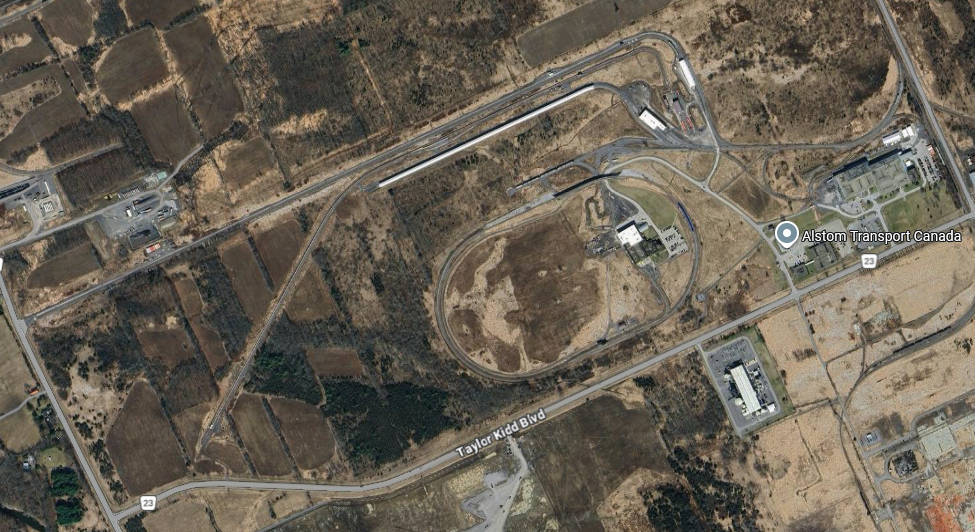
With Alstom selling the Kingston manufacturing plant, home to the proprietary Movia Automatic Light Metro system (SkyTrain) and the current ills which seem more centered on Canadian practices than the products, Alstom, with Canada being a very small market, may pull out of Canada completely.
That would be a major black eye to Canada, especially in these delicate times.
Citadis tram is a family of low-floor trams and light rail vehicles built by Alstom. As of 2026, over 8,000 Citadis trams have been ordered, with operations in over 140 cities on all six inhabited continents. An evolution of Alstom’s earlier TFS vehicle.
The Citadis Spirit was adapted for Canadian use.
We just do not know about Canada, you take a perfectly good tram, with a sound history and you screw it up.
We are beginning to call it the “Canadian disease”.
They adapted everything for North American service (heavier and more robust frames, motors) but still refuse to modify the axles bearings and flanges. This is why private companies should not be in charge of maintenance (Rideau Transit Maintenance not O.C. Transpo) they are still trying to cheap out on maintenance.This is what happens when P3’s are forced on everyone.
Zwei replies: TransLink is now only doing essential maintenance on transit vehicles, which is leading to more major breakdowns of buses in revenue service. I have seen no fewer than 4 buses in south Delta out of service on the 601 route last week!
Not quite on the same topic, the Minister of Transportation stated that there would be no compensation for merchants who face bankruptcy on Broadway so far and the government is going to close a section for 4 months. Already 80 businesses have ceased operation with several businesses in bankruptcy. Sadly local merchants were lied to by the CoV and the provincial government. In 2018, I made a presentation to the local BIA about the upcoming subway construction and i stated that they should relocate or try to put clauses in there leases about construction./I was told that the CoV stated they learned their lessons from the Cambie St. fiasco and local businesses would be taken care of. NOT HAPPENING.
I can’t quote the case names but it’s almost impossible due to several legal cases in Canada, to get money for businesses that went bankrupt during construction. Its been that way for at the least, 60 years. It’s not impossible but there are many conditions attached to even get marginal (aka small) amounts of money for construction compensation. Business owners would never get enough money back to restart a business.
It’s probably better that way, as harsh as that sounds. If people or business owners could sue every time a multiple year or decade long project, like major storm or sanitary sewer project, took longer than expected, it would be open season, legally speaking on our cities and towns. Many of these projects would become unaffordable.
A planner friend of mine who deals with this problem all the time, pointed to 2 main issues that are never discussed by business owners, politicians or the press for that matter.
1. Unfortunately, nearly three quarters (73%) of small and medium sized businesses in Canada, cannot withstand even a 2 month construction period in the direct vincinity of their business without being under threat of shutdown, temporary or permanent. Just a drop of 1/3 in customer access is enough to kill half of storefront service related businesses in Canada. To keep in mind, 60% of all businesses are providing products and services we don’t need to survive. The point, most small Canadian businesses are already operating all the time, where there is a threat of loosing their business due to a single change in the business environment. Whether it’s major construction project in the area, a change interest rates, one or multiple business input costs independently increasing, regardless of the overall inflation rate or a list of dozen or more on top of that, most small businesses are already too close to the edge of disaster, like it or not. One single infrastructure project, won’t change that.
2. If anyone was even partially successful at getting large amounts of cash from these types of projects, it would open the proverbial flood gates and the associated non-construction related costs for these projects would explode. The non-construction related costs of most infrastructure projects are increasing, faster than the actual construction costs. Any time the planning process requires multiple community meetings, everything from the very public ones (large art gallety type meetings or action meetings where they try to some small amounts of independent public imput), all the way to the private ones (small groups of afflicted business and property owners) these add huge amounts of money to the project’s total cost. The purchase of land, extra site or construction insurance (you need both) paying for lawyers for your court costs. When people against the project sue using government based tribunals (the Provincial Planning Tribunal formerly the Ontario Municipal Board ) or the actual court. All add costs to the final project.




Citadis tram is a family of low-floor trams and light rail vehicles built by Alstom. As of 2026, over 8,000 Citadis trams have been ordered, with operations in over 140 cities on all six inhabited continents. An evolution of Alstom’s earlier TFS vehicle.
The Citadis Spirit was adapted for Canadian use.
We just do not know about Canada, you take a perfectly good tram, with a sound history and you screw it up.
We are beginning to call it the “Canadian disease”.
They adapted everything for North American service (heavier and more robust frames, motors) but still refuse to modify the axles bearings and flanges. This is why private companies should not be in charge of maintenance (Rideau Transit Maintenance not O.C. Transpo) they are still trying to cheap out on maintenance.This is what happens when P3’s are forced on everyone.
Zwei replies: TransLink is now only doing essential maintenance on transit vehicles, which is leading to more major breakdowns of buses in revenue service. I have seen no fewer than 4 buses in south Delta out of service on the 601 route last week!
Not quite on the same topic, the Minister of Transportation stated that there would be no compensation for merchants who face bankruptcy on Broadway so far and the government is going to close a section for 4 months. Already 80 businesses have ceased operation with several businesses in bankruptcy. Sadly local merchants were lied to by the CoV and the provincial government. In 2018, I made a presentation to the local BIA about the upcoming subway construction and i stated that they should relocate or try to put clauses in there leases about construction./I was told that the CoV stated they learned their lessons from the Cambie St. fiasco and local businesses would be taken care of. NOT HAPPENING.
I can’t quote the case names but it’s almost impossible due to several legal cases in Canada, to get money for businesses that went bankrupt during construction. Its been that way for at the least, 60 years. It’s not impossible but there are many conditions attached to even get marginal (aka small) amounts of money for construction compensation. Business owners would never get enough money back to restart a business.
It’s probably better that way, as harsh as that sounds. If people or business owners could sue every time a multiple year or decade long project, like major storm or sanitary sewer project, took longer than expected, it would be open season, legally speaking on our cities and towns. Many of these projects would become unaffordable.
A planner friend of mine who deals with this problem all the time, pointed to 2 main issues that are never discussed by business owners, politicians or the press for that matter.
1. Unfortunately, nearly three quarters (73%) of small and medium sized businesses in Canada, cannot withstand even a 2 month construction period in the direct vincinity of their business without being under threat of shutdown, temporary or permanent. Just a drop of 1/3 in customer access is enough to kill half of storefront service related businesses in Canada. To keep in mind, 60% of all businesses are providing products and services we don’t need to survive. The point, most small Canadian businesses are already operating all the time, where there is a threat of loosing their business due to a single change in the business environment. Whether it’s major construction project in the area, a change interest rates, one or multiple business input costs independently increasing, regardless of the overall inflation rate or a list of dozen or more on top of that, most small businesses are already too close to the edge of disaster, like it or not. One single infrastructure project, won’t change that.
2. If anyone was even partially successful at getting large amounts of cash from these types of projects, it would open the proverbial flood gates and the associated non-construction related costs for these projects would explode. The non-construction related costs of most infrastructure projects are increasing, faster than the actual construction costs. Any time the planning process requires multiple community meetings, everything from the very public ones (large art gallety type meetings or action meetings where they try to some small amounts of independent public imput), all the way to the private ones (small groups of afflicted business and property owners) these add huge amounts of money to the project’s total cost. The purchase of land, extra site or construction insurance (you need both) paying for lawyers for your court costs. When people against the project sue using government based tribunals (the Provincial Planning Tribunal formerly the Ontario Municipal Board ) or the actual court. All add costs to the final project.