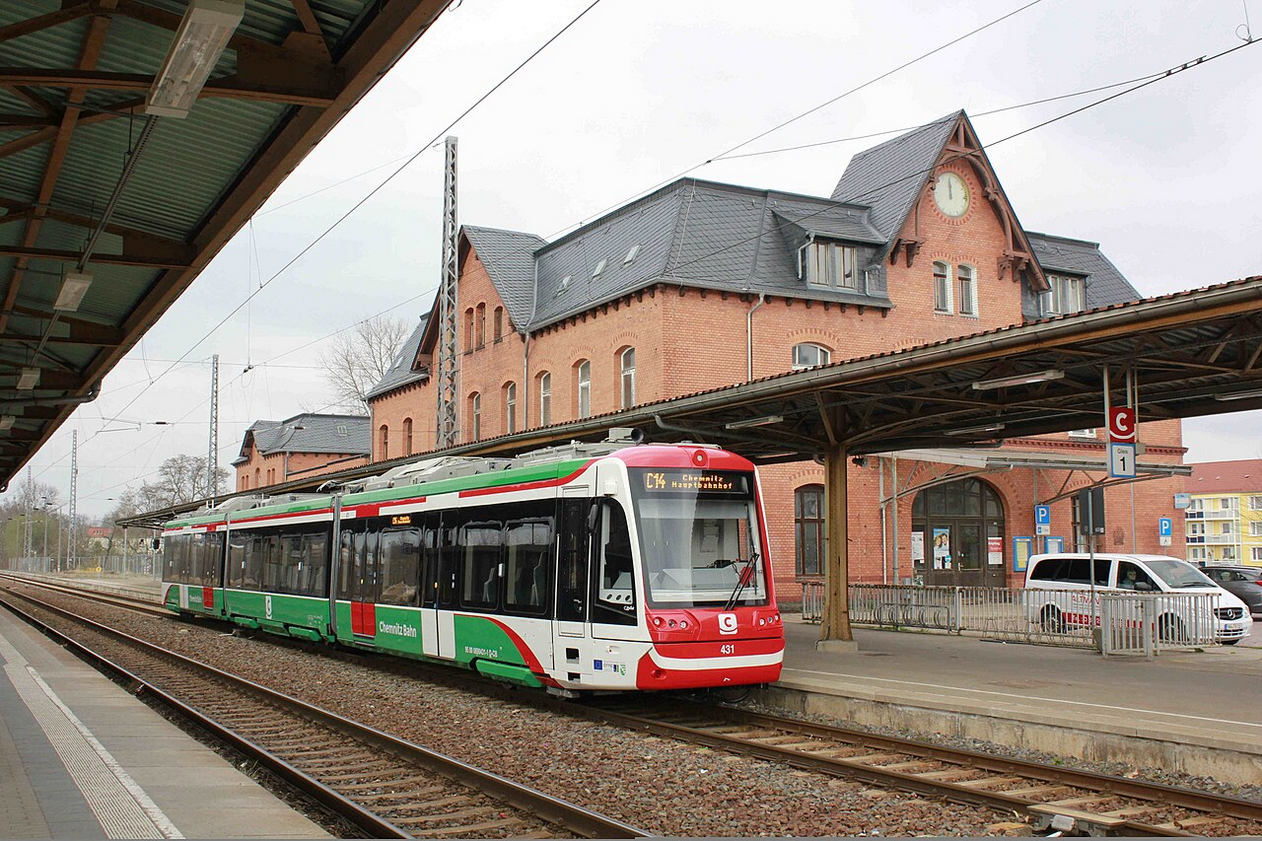
The birth of what we call TramTrain or a streetcar that can operate on the mainline railways, came about after much research and public consultation, to provide the the city of Karlsruhe and region with a ‘user-friendly’ public transit system. In the 1980’s cities with trams or streetcars were seeing a steady decline in patronage and seemed doomed to the history books. With tram management being given a simple diktat: “Get people to use the tram system or loose it“. Much time was spent consulting with current transit customers and potential transit customers on what type of service would retain or bring the customer to public transit.
In Vancouver, the transit customer is seldom consulted with, nor is the customer listened too, with any real enthusiasm.
Light metro is built with the provincial government telling the taxpayer, “You are getting SkyTrain whether you like it or not!” Added to this, the region has invented a pseudo science of densification which is a smokes screen for government to inflate property values to reward land speculators and land developers. This ‘Densification‘ pseudo science or Lysenkoism has proven not to attract much new ridership to the public transit system. Ridership on the public transit is kept seemingly high, with over 130, 000 of U-Pass deep discount ‘ride at will’ tickets for students in post secondary institutions, which flood the transit system at peak hours.
Meanwhile back in Germany, the public wanted a ‘no-transfer‘ service, with reasonable travel times and the TramTrain was conceived to provide a doorstep to downtown service, omitting a 20 minute transfer from commuter train to tram at the main railway station.
A city tram with a TramTrain in the rear.
The success of the TramTrain operation in Karlsruhe was an instant success as the following table shows. In seven months ridership on the new TramTrain service, replacing a commuter train, providing a direct, no transfer service to downtown Karlsruhe saw 479% increase in ridership, from5 33,600 to 2,554,976 customers a week.
Compare to our now almost $17 billion, 21.7km extension of SkyTrain, where TransLink is all but hiding the fact that there will be little or no increase in ridership on both the Expo Line extension to Langley and the Broadway subway once both lines are in operation, as fundamental transit issues are not dealt with!
The failure dealing with transit issues are no seeing an ever steepening decline in ridership as the regional transit system offers 1980’s transit solutions for 2026 transit issues.
Currently the various levels of government seem to reward failure and ignore success, which is a recipe for financial disaster.
One thing that always surprises me about tram-trains and the stats that are often quoted is the increase in useage after the switch to Tram-Train. The increase in ridership for the Tram-Train line you mentioned over a weekly basis is roughly equal to the weekly use of the Bloor-Danforth Subway (Line #2). 2,554,976 for the S4 tram-train line (Karlsruhe-Bretten) and 2,567,196 for Line #2 in Toronto, one of the busier subway/rapid transit lines in North America. Yet, I have been told to my face that Tram-Trains are only for places with smaller populations.
Zwei replies:TramTrain is a niche solution for niche problems.
The initial success in Karlsruhe was due to the route eliminating a very unpopular transfer from passenger train to tram, in a city with a decreasing use of the public transit system. The TramTrain innovation literally sparked a resurgence of public use of the extensive tram network and has expanded today with Karlsruhe being one of the most underrated transit systems in the world.
From local experience, transit planners tend to assign transit mode with population and not the route served. Vancouver builds with SkyTrain because the claim is (and has been told to me to my face) the only mode that can deal with regional population growth.
SAY WHAT?
What TramTrain does is to create transit routes, otherwise far too expensive for other transit alternatives.
Rail for the Valley is probably the best example because the Leewood study puts the cost (adjusted for inflation and the current politcal situation) of a 130 km Vancouver to Chilliwack TramTrain in the neighbourhood of $2 billion, while the current 16 km extension of the Expo line to Langley is now fast approaching $7 billion.
Also told to my face is the reason no one wants to consider a Vancouver to Chilliwack TramTrain or regional passenger service is that it would carry more people at a far cheaper cost than SkyTrain, greatly embarrassing politcans, especially the ruling NDP!
If anything, TramTrain demonstrate the flexibility of light rail, but sadly, in our neck of the woods, our transit planners do not understand this at all.
I will add this and again it was told to me by a retired TransLink manager; “We all knew that LR was a better choice, but supporting LRT in BC instead of SkyTrain is career ending. No one working in the MoT or TransLink and even BC Transit is brave enough to “bell the cat”.





One thing that always surprises me about tram-trains and the stats that are often quoted is the increase in useage after the switch to Tram-Train. The increase in ridership for the Tram-Train line you mentioned over a weekly basis is roughly equal to the weekly use of the Bloor-Danforth Subway (Line #2). 2,554,976 for the S4 tram-train line (Karlsruhe-Bretten) and 2,567,196 for Line #2 in Toronto, one of the busier subway/rapid transit lines in North America. Yet, I have been told to my face that Tram-Trains are only for places with smaller populations.
Zwei replies:TramTrain is a niche solution for niche problems.
The initial success in Karlsruhe was due to the route eliminating a very unpopular transfer from passenger train to tram, in a city with a decreasing use of the public transit system. The TramTrain innovation literally sparked a resurgence of public use of the extensive tram network and has expanded today with Karlsruhe being one of the most underrated transit systems in the world.
From local experience, transit planners tend to assign transit mode with population and not the route served. Vancouver builds with SkyTrain because the claim is (and has been told to me to my face) the only mode that can deal with regional population growth.
SAY WHAT?
What TramTrain does is to create transit routes, otherwise far too expensive for other transit alternatives.
Rail for the Valley is probably the best example because the Leewood study puts the cost (adjusted for inflation and the current politcal situation) of a 130 km Vancouver to Chilliwack TramTrain in the neighbourhood of $2 billion, while the current 16 km extension of the Expo line to Langley is now fast approaching $7 billion.
Also told to my face is the reason no one wants to consider a Vancouver to Chilliwack TramTrain or regional passenger service is that it would carry more people at a far cheaper cost than SkyTrain, greatly embarrassing politcans, especially the ruling NDP!
If anything, TramTrain demonstrate the flexibility of light rail, but sadly, in our neck of the woods, our transit planners do not understand this at all.
I will add this and again it was told to me by a retired TransLink manager; “We all knew that LR was a better choice, but supporting LRT in BC instead of SkyTrain is career ending. No one working in the MoT or TransLink and even BC Transit is brave enough to “bell the cat”.