Cleaning a subway – Does TransLink get it?
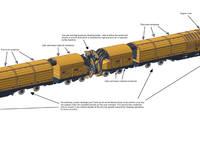
 A London Underground Vacuum train
Subways are an expensive proposition, not only are they expensive to build and operate, they are expensive to maintain.
A little known fact is that subways needAi??regular cleaning as the dust and debris from daily operation is very corrosive to important signaling installations. The constant piston like action of trains in the tube, propel the debris of operation like a miniature sandblaster and over time, great and expensive damage occurs. This debris must be cleaned and a subway vacuum, many custom made, is used to clean the subway tubes.
Subway cleaning is just another subway expense that has been quietly ignored by TransLink and the subway lobby in Vancouver, especially when they expect the valley taxpayer to ante up to pay for Vancouver’s expensive transit demands.
From the Railway Gazzette
London Underground vacuum train to cut tunnel cleaning time
12 March 2012UK: London Underground aims to slash the time taken to remove dust and litter from underground sections of its network from two years to two months using a new tunnel cleaning train which is expected to enter service by the end of this year.
Much fine dust in the tunnels is metal from wheel-rail contact or braking, which LU says can ’cause signal failures and interfere with other electrical systems’. At present a contractor is employed to clean tunnels manually overnight, but it takes two years for six gangs of six workers to cover all the tunnels which at 181 km form 45% of the 402 km LU network.
The new train will consist of seven cars. At each end will be a pair of driving motor cars built for the Victoria Line in 1967 and recently withdrawn. These are being remodelled to provide traction and to supply the power for the vacuum and dust disposal plant, which is being supplied by Hannover-based metro cleaning vehicles specialist SchAi??rling Kommunal. A hydraulic drive will allow low-speed running at 1 km/h during cleaning, while the motor cars will enable the train to reach work sites at line speed.
Dust and litter will be sucked in by a 360Ai?? ring of nozzles on the central vacuum car. On each side of the vacuum car will be vehicles with containers to store the fine dust or larger items of litter. It is estimated that manual cleaning removes about 150 kg of dust per km of tunnel. The vacuum train is expected to quadruple this to 600 kg/km.
The train is suitable for use on the small-profile single-bore deep level tube tunnels, and also the mainly double-track sub-surface tunnels on the older parts of the LU network.

A New York subway vacuum train