Italian Tram Renaissance
Italy has rediscovered “Il Tram” and a renaissance of the modern tram in eleven cities. The following are six Italian city tram and light rail systems.

A modern low-floor tram in Bergamo.
The Bergamo–Albino light rail is a 12.5-kilometre (7.8 mi) light rail line that connects the city of Bergamo, Italy, with the town of Albino, in the lower part of the Val Seriana. It was built on the right-of-way of the former Valle Seriana railway, closed in 1967. It opened for service on 24 April 2009
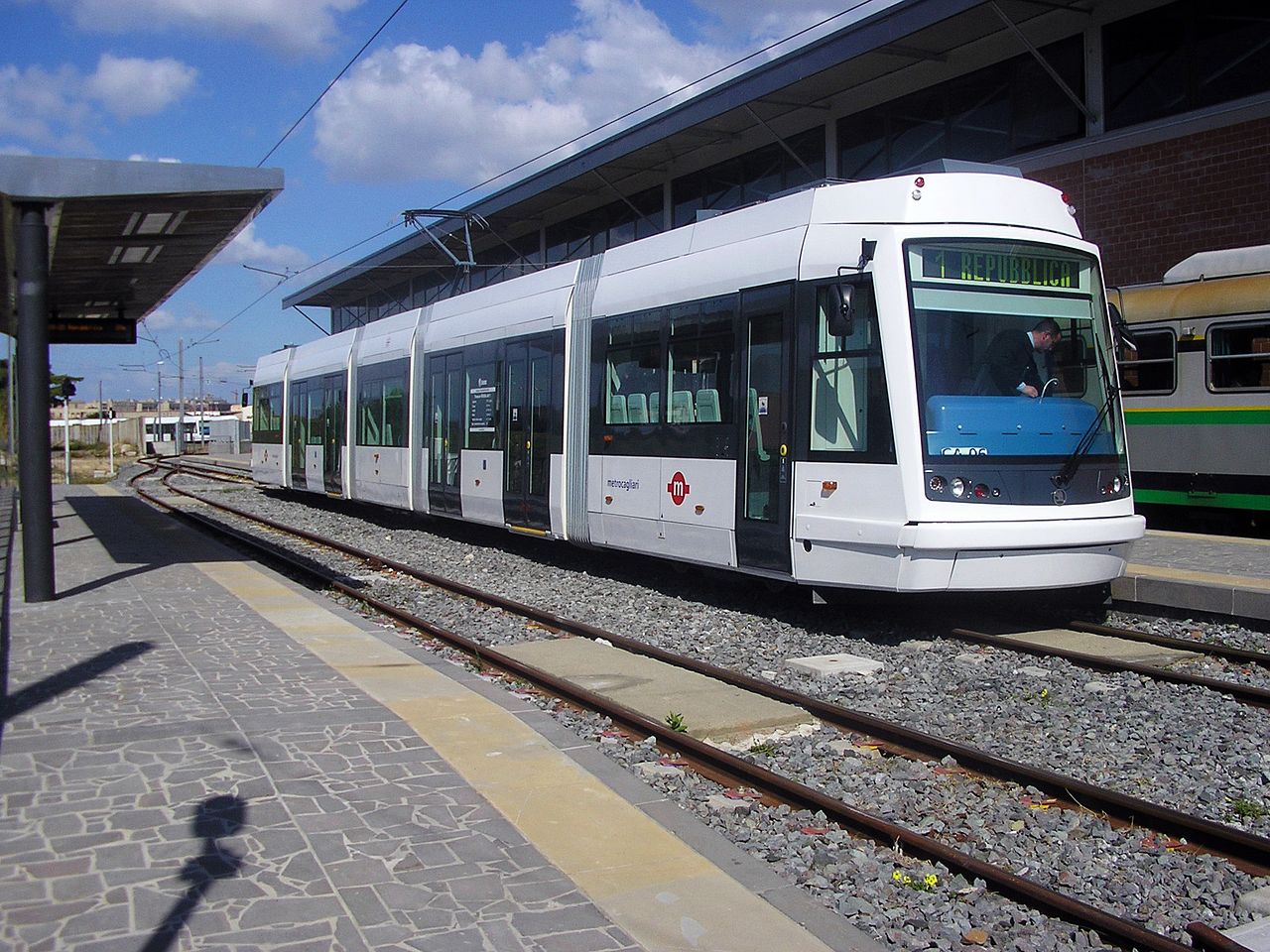
More low-floor cars for Cagliari.
The Cagliari light rail system, commercially known as Metrocagliari, is a two-line light rail system that serves the town of Cagliari and part of its metropolitan area, in Sardinia, Italy. The system was inaugurated in 2008 and has subsequently been expanded to two lines.

Narrow trams for Turin, for those ancient and narrow streets.
The Turin tramway network is an important part, along with the Turin Metro, of the public transport network of the city and comune of Turin, in the Piedmont region, northwest Italy.
In operation since 1871, the network is about 88 km (55 mi) long, and comprises 10 lines.

Milan still operates the Peter Witt style cars

Modern low-floor tram in Milan.
The Milan tramway network (Italian: Rete tranviaria di Milano) is part of the public transport network of Milan, Italy, operated by Azienda Trasporti Milanesi (ATM).
In operation since 1881, the network is currently 181.8 km (113.0 mi) long,[2] making it one of the biggest in the world. It has the unusual track gauge of 1,445 mm (4 ft 8 7⁄8 in) (Italian gauge), and comprises 17 urban lines and one interurban line.
While the Milan metro is characterized by a low level of centrality, with no more than two lines ever crossing each other at any of the interchange stations, the tram network is substantially centralized, with nearly half of the lines passing or terminating around Piazza del Duomo, the city central square.
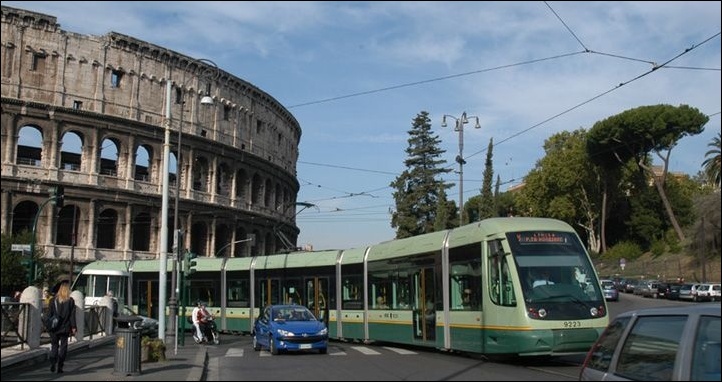
Rome!
The current Rome tram system is a leftover from what once was the largest tram system in Italy. With its fragmented structure, it does not currently function as a backbone of the city’s public transport. The system is owned and operated by Azienda Tranvie e Autobus del Comune di Roma
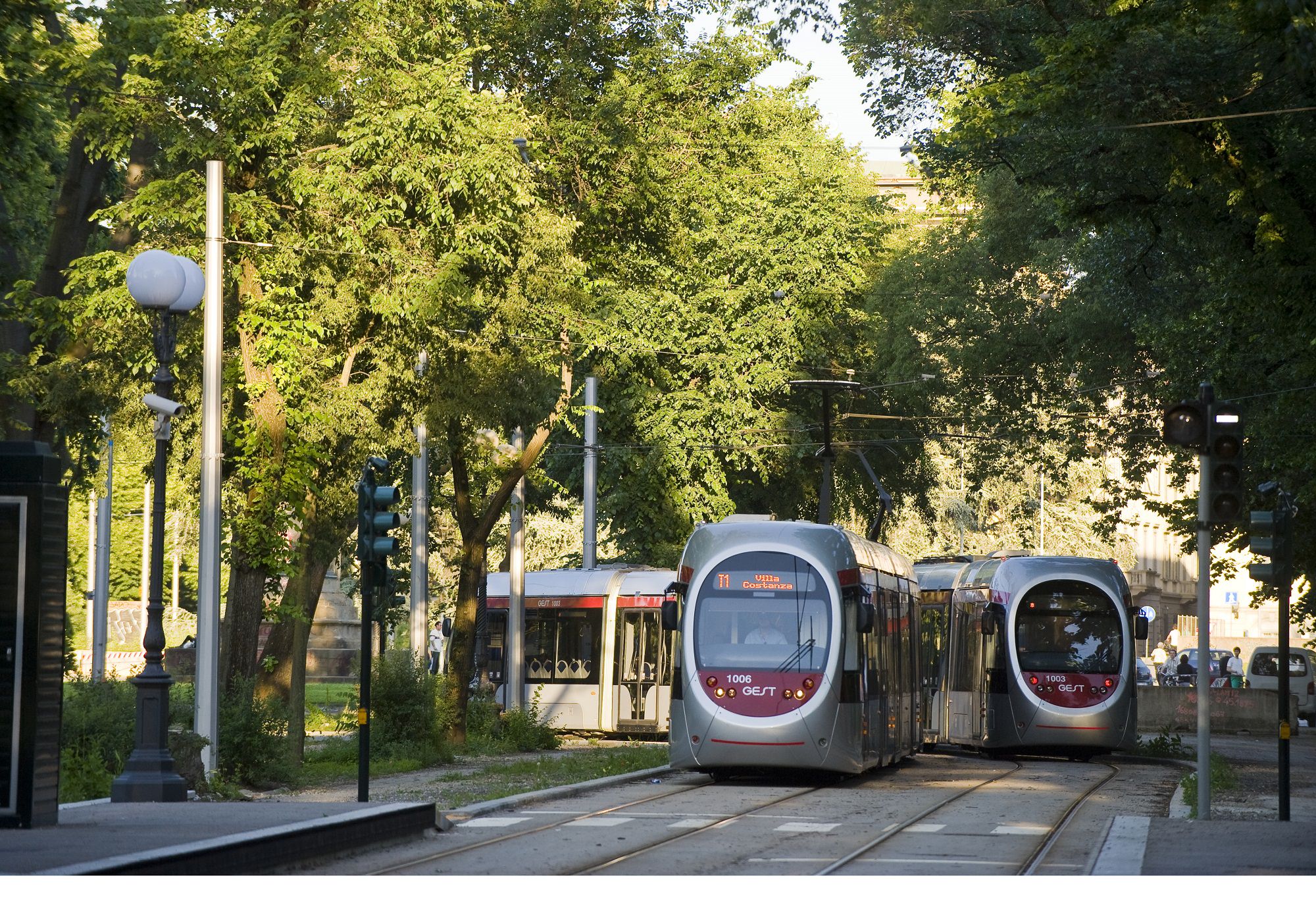
Florence trams
Florence, like many other Italian cities, closed down its old tramway network at the end of the 1950s, but has come back to trams in recent years to find a solution to the rising car traffic in the city. The first line in the present network was opened in 2010 to link the city center with the neighboring comune of Scandicci; the second line opened on February 11, 2019, linking the city center with Florence Airport.



Funny how all the different cities use such different looking tram trains.
Zwei replies: The modular trams have about 6 different section styles to choose from, with just the front piece being a customer design. Basically all the modular sections are interchangeable.