The VIA Rail Car Order
There has been a lot of comment on the recently announced VIA Rail car order.
Many people complain about the cost, but the ordered cars comes with a maintenance package, which means VIA does not have to invest in several maintenance centers across Canada. to give one the idea at the cost of a maintenance centre, the proposed Operations and Maintenance Centre #5, to be located on the Expo Line extension to Langley is around $1 billion!
As well, these will be newly designed cars with 9 different interiors, which again is quite expensive and the new cars must be “safety cased” by Transport Canada, which in itself is no easy or cheap task.
Depending on the maintenance package, $4.7 billion may prove to be a prudent decision and time will tell.
On another note, Alstom winning the contract (if there was a contract to win), this order will keep Ontario and Quebec jobs as Alstom is about to abandon production of SkyTrain capable cars and there is zero interest in the proprietary system, with no sales in a quarter of a century.
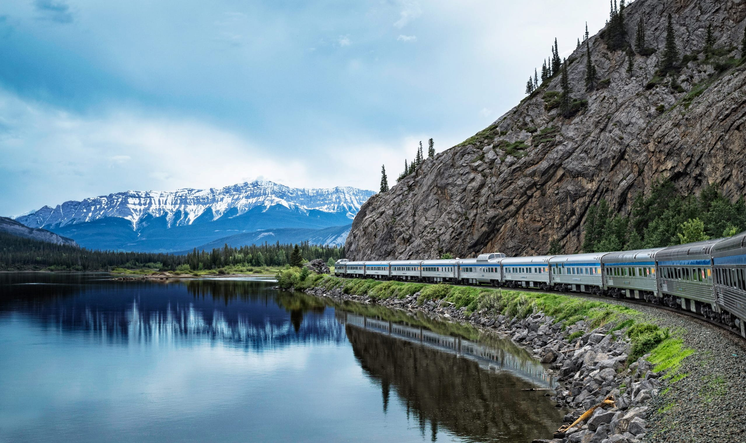
Alstom to build new passenger cars for VIA Rail Canada in Ca$4.7 billion deal
David Lassen
September 3, 2026

THUNDER BAY, Ontario – The Canadian government will provide Ca$4.7 billion (U.S. $3.41 billion) for 313 new VIA Rail Canada passenger cars, which Alstom will build in Canada, Prime Minister Mark Carney announced today (Thursday, Sept. 3).
Alstom Canada will produce the cars, with design and engineering work to be done at Saint-Bruno-de-Montarville, Quebec, and construction at Thunder Bay, Ontario, and La Pocatière, Quebec.
The announcement comes at a time when tariffs imposed by President Donald Trump have increased efforts by the Canadian government to support industry in Canada.
“In the face of strong headwinds, a confident Canada is choosing to build,” Carney said in a statement. “For the first time in four decades, VIA’s passenger cars will be built in Canada. Cars that used to be made in the United States will now be made here at home. This means new contracts for Canadian suppliers, good jobs for Canadian workers, and paychecks that stay in Canadian cities and towns. That’s how we build Canada strong.”
It is the largest single investment in VIA Rail Canada in the Crown corporation’s history, officials said, and in Canadian intercity passenger rail in generation. The new cars will replace a long-distance and regional railcar fleet largely dependent on Budd-built stainless steel equipment built for Canadian Pacific in 1954 and 1955.
A press release from the Prime Minister’s Office said that replacing the existing fleet will deliver safer, more reliable, and more modern service. The project will support nearly 700 jobs and generate more than Ca$1.6 billion in economic benefits, according to the release.
“Today’s announcement marks a defining step in shaping the future of VIA Rail’s pan-Canadian fleet,” VIA Rail Interim CEO Mathieu Paquette said. “These new Canadian-built passenger rail cars will retain signature features such as dome cars, full-service dining, and social areas, while incorporating modern amenities, improved accessibility, and greater reliability. They will help us preserve essential services to remote communities and elevate the unique onboard experience that allows passengers to discover Canada in a way that only train travel can offer. We thank the Government of Canada for this historic investment in the future of passenger rail.”

The order will include:
- 78 sleeping cars.
- 58 coaches.
- 38 panorama cars.
- 29 baggage cars.
- 26 accessible sleepers.
- 25 dome cars.
- 20 dining cars.
- 20 Prestige class sleepers.
- 19 berth sleepers.

The order is intended to maintain all current classes of service and preserve the signature features of VIA’s long-distance service. The first cars are projected to enter service in 2031, with the order completed by 2035.
Today’s announcement brings recent government investments in VIA to more than Ca$6.6 billion (U.S. $4.79 billion). In July, the government announced it would provide Ca$1.6 billion to purchase 45 new VIA locomotives from Stadler, as well as Ca$357 million to fund a new locomotive factory in Montreal.