Words of Wisdom
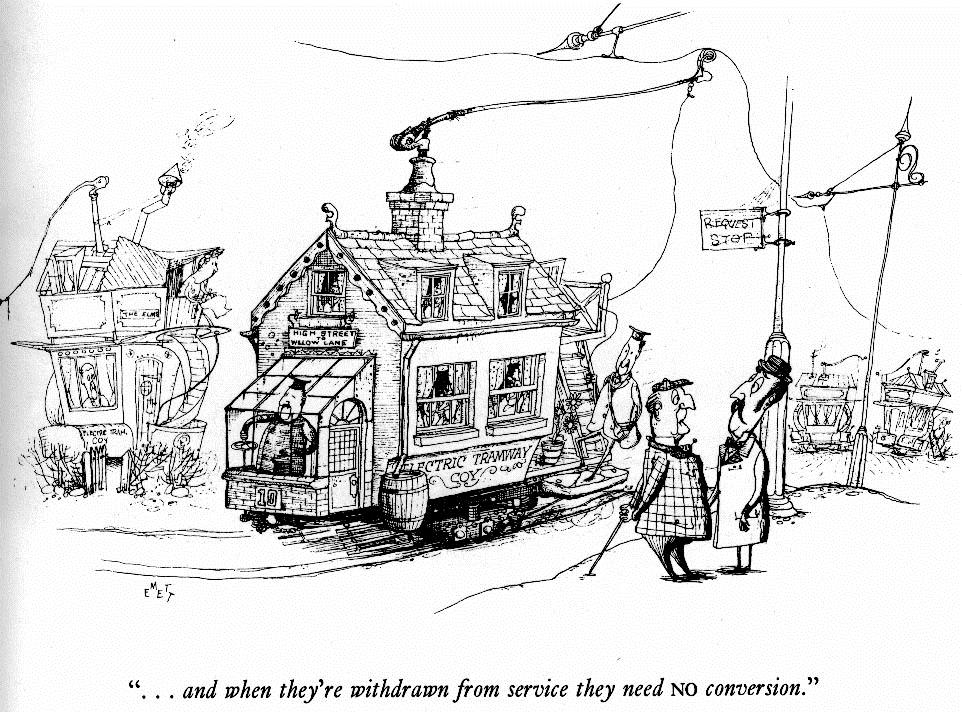
The following comment comes from the LRTA’s chat room and I believe has much relevance here. I have slightly abridged the item as the first part was mainly about British Politics and with the spider web of BC politics to contend with, I thought it best not to reprint it.
Is the proposal Clegg is speaking about, for Councils to be able to borrow locally from an infrastructure fund for transport projects, for Councils to be able to borrow against tax receipts for local transport & infrastructure projects or Councils to be able to raise funds for local transport & infrastructure projects by issuing bonds using tax receipts & debts as collateral?
I do think that this is a good proposal, not quite as revolutionary as a French style `Transport Versement’ but a huge step forward compared to the DfT’s centralised system.
A brief remark on the responses in the Telegraph; am I surprised, no.
Over ten years of advocacy and I’ve read every angry response from Bristol to West London to Croydon to Nottingham, Manchester & Edinburgh.
The 1% would much prefer tax cuts and s** the 99%
If you can’t win by making dubious challenges to the business case, play the ecology/environmental card (read challenges to HS2)
Remember, worse than an NIMBY is a:-
NIABY
Opposition to certain developments as inappropriate anywhere in the world is characterised by the acronym NIABY (Not In Anyone’s Backyard). The building of nuclear power plants, for example, is often subject to NIABY concerns.
NAMBI
NAMBI (Not Against My Business or Industry) is used as a label for any business concern that expresses umbrage with actions or policy that threaten that business, whereby they are believed to be complaining about the principle of the action or policy only for their interests alone and not for all similar business concerns who would equally suffer from the actions or policies. The term serves as a criticism of the kind of outrage that business expresses when disingenuously portraying its protest to be for the benefit of all other businesses. Such a labelling would occur, for example, when opposition expressed by a business involved in urban development is challenged by activists – causing the business to in turn protest and appealing for support from fellow businesses lest they also find themselves challenged where they seek urban development. This term also serves as a rhetorical counter to NIMBY. Seen as an equivalent to NIMBY by those opposing the business or industry in question.
BANANA
BANANA is an acronym for Build Absolutely Nothing Anywhere Near Anything (or Anyone). The term is most often used to criticize the ongoing opposition of certain advocacy groups to land development. The apparent opposition of some activists to every instance of proposed development suggests that they seek a complete absence of new growth. The term is commonly used within the context of planning in the United Kingdom.
PIBBY
PIBBY is the acronym for Put In Blacks’ Back Yard. This principle indicates that the people with social, racial, and economic privileges object to a development in their own back yards, and if the
objectionable item must be built, then it should be built so that its perceived harms disproportionately affect poor, racially disadvantaged people. The environmental justice movement has critiqued Nimbyism as a form of environmental racism. Robert Doyle Bullard, Director of the Environmental Justice Resource Center at Clark Atlanta University, has argued that official responses to NIMBY phenomena have led to the PIBBY (Put In Blacks’ Back Yard) principle.FRUIT
FRUIT is the acronym for Fear of Revitalization Urban-Infill and Towers. The word FRUIT or FRUITs is a play on words in support of the acronym BANANAs. First used in a development industry article in Vancouver to describe irrational local opponents (fruit cakes, fruit loops or just fruits) of well-planned developments.
I have a particular disdain for certain journalists at the moment:
The Gruniad’s Tony Brignull
The Gruniad & Evening Standards Simon Jenkins
The Times Matthew Parris
The Telegraph’s Simon Heffer
Finally my List of forty Most Frequent Questions Asked (FQA):
Critical comments.
Excuses.
Criticism.
Opposition.
And Hostility to Trams
1.Ai??Ai??Ai?? Trams are inflexible.
a.Ai??Ai??Ai?? If the road becomes closed, due to an accident or emergency road or utility repairs, is there any way a tram service can be maintained?
2.Ai??Ai??Ai?? Trams are noisy.
3.Ai??Ai??Ai?? The construction of a tram system, causes disruption to towns & city’s; noise, dust, road closures, utility diversions.
4.Ai??Ai??Ai?? Can I claim compensation for disruption & reduction in earning to my business, during the construction work?
5.Ai??Ai??Ai?? Why do the electricity cables, gas & water mains, have to be dug up & moved to accommodate the building of a tram system?
6.Ai??Ai??Ai?? We have a perfectly good bus system/service, why do we need a tram system?
7.Ai??Ai??Ai?? Will the tram system mean that a number of our existing bus routes will be shut down?
8.Ai??Ai??Ai?? Who will operate a new tram system?
a.Ai??Ai??Ai?? Will the trams run 24/7?
b.Ai??Ai??Ai?? Can trams continue to run if it snows, unlike many buses & trains?
9.Ai??Ai??Ai?? Are tram drivers trained, to the same high level of competence as:
a.Ai??Ai??Ai?? Bus drivers?
b.Ai??Ai??Ai?? Train drivers?
10. Will there be conductors on the trams to collect fares?
11. Will the trams be as safe or safer for vulnerable people travelling on their own late at night than other public transport modes?
12. Can I use my Freedom Pass/Bus Pass/disabled pass/Oyster/Travel Card to travel on the tram?
13. Are trams accessible to disabled people & parents with prams?
14. Do tram systems operate on signals like the main line railways?
15. How is the location of the tram stops decided?
16. How fast do trams travel along the road?
a.Ai??Ai??Ai?? Do trams have to obey the roads speed limit?
17. How long will tram rails last, before the road has to be dug up to repair or replace them?
18. Trams represent an old fashioned & outmoded Victorian form of transport.
a.Ai??Ai??Ai?? Why has the reintroduction of trams to Britain, become fashionable in the last two decades?
b.Ai??Ai??Ai?? There are, only six tram systems in Britain to date, with a seventh being currently built in Edinburgh. If, as I am being told they are successful; then why have more not been built?
19. Who pays for new tram systems, the Government, the City/town council or the local Passenger Transport Authority?
20. Who decides, if a new tram system represents value for public money?
21. Is private investment used to pay for tram systems to be built?
22. Tram systems are expensive.
a.Ai??Ai??Ai?? No British tram system has ever made/run at, a profit.
b.Ai??Ai??Ai?? Constructing a tram system will mean that our Council tax/taxes will have to rise to pay for it.
c.Ai??Ai??Ai?? Every tram system built in the past twenty years in Britain, has overrun it’s construction budget.
23. Will public transport ticket prices rise, to pay for the tram system?
a.Ai??Ai??Ai?? Nobody will use the trams, when they are introduced because the fares will be too expensive.
b.Ai??Ai??Ai?? How is fare evasion controlled on tram systems?
24. A tram system will bring crime & more undesirables into our town/city centers.
a.Ai??Ai??Ai?? Who is responsible for policing tram systems?
25. Trams cause congestion on the roads, to other users; private cars, buses.
26. Trams will cause delays at road junctions for private cars & buses.
a.Ai??Ai??Ai?? How will the designers phase junction traffic lights, to meet the needs of the trams & other road users?
b.Ai??Ai??Ai?? Will trams get priority at road junctions, over other road users?
27. Why don’t they, the council/government, build a metro/underground system instead?
28. The trams should run in tunnels under the town and not down the streets. This will free up more road space for private cars.
29. We need less public transport, not more.
30. Public transport & particularly trams slow down the speed of traffic.
31. Trams are dangerous for:
a.Ai??Ai??Ai?? Pedestrians.
b.Ai??Ai??Ai?? Cyclists.
c.Ai??Ai??Ai?? Car drivers.
32. The overhead electric tram wires & masts are an eyesore.
a.Ai??Ai??Ai?? The tram line will pass through a conservation area, overhead poles & wires will be an aberration.
b.Ai??Ai??Ai?? Is it possible to design trams that can run on rechargeable batteries, so that ugly poles & wires do not have to be installed?
c.Ai??Ai??Ai?? The pre 2nd World war London trams, picked up electrical power from a conduit in the road, rather than from overhead wires; is this practical system in the 21st century?
d.Ai??Ai??Ai?? The overhead poles & wires will spoil the attractiveness of the town/city.
e.Ai??Ai??Ai?? The overhead electricity wires will reduce the value of my house/property.
f.Ai??Ai??Ai??Ai?? The overhead electrical cables are a cause of cancer in children.
g.Ai??Ai??Ai?? How safe are the overhead power cables? What happens if one breaks and falls down across the road?
h.Ai??Ai??Ai?? How do tram system designers ensure that the return current passing through the tram rails does not corrode buried utilities?
i.Ai??Ai??Ai??Ai??Ai?? How do tram system designers ensure that the current in the overhead wires, does not cause interference with business computer, data & hospital life support equipment?
33. Trams cause accidents in towns & city’s.
34. Government accident statistics prove that trains & trams have a poorer safety record, per passenger miles travelled than other forms of transport.
a.Ai??Ai??Ai?? The statistics prove that more pedestrian accidents are caused by public transport, than by private cars.
b.Ai??Ai??Ai?? Buses have a better safety record than trams.
c.Ai??Ai??Ai?? How quickly, can a tram stop if a child runs out in front of it?
35. A tram line past my house/property will cause the value to fall.
36. My shop/business will suffer if a tram line is built on this street.
a.Ai??Ai??Ai?? Where will my customers park, if they cannot stop outside my shop/business?
b.Ai??Ai??Ai?? Where will my suppliers park, to deliver to my shop/business?
c.Ai??Ai??Ai?? The council will raise my business rate to pay for the tram system.
d.Ai??Ai??Ai?? If a tram line/system is built, all my customers will ride/take the tram to the out of town shopping malls.
37. Trams are a continental form of public transport.
a.Ai??Ai??Ai?? Trams were invented on the continent, so let the continent keep them there.
b.Ai??Ai??Ai?? Why do the French appear to be more successful at introducing new tram systems, in even their smaller cities?
38. Britain’s streets are too narrow for trams.
a.Ai??Ai??Ai?? Will any roads have to be closed for private cars, to allow the tram system to be built?
b.Ai??Ai??Ai?? Will any of these roads, remain permanently closed to suit the operation of the tram system?
c.Ai??Ai??Ai?? What rules exist, for safely running trams through a pedestrian thoroughfare?
d.Ai??Ai??Ai?? Can tram lines be designed to run in their own corridor separated from other road users?
39. Trams are more polluting than private cars or buses.
a.Ai??Ai??Ai?? Tram systems have very large carbon footprints.
b.Ai??Ai??Ai?? It’s a myth, that trams are an ecologically cleaner form of public transport.
c.Ai??Ai??Ai?? Where will the electricity for powering the trams be generated?
d.Ai??Ai??Ai?? Can tram systems be powered by renewable sources of electricity?
e.Ai??Ai??Ai?? How much electricity, does each tram use?
40. Can it be proved that trams are successful in reducing the number of journeys made by private cars, in towns & cities?