Transit lessons unlearned
For four decades, the lessons building ‘rai’ transit has not been learned. Politicians in BC refuse the learn the lessons of others and continue to blunder on making the same higely expensive mistakes, over and over again. It is sheer negligence on the part of TransLink, the Mayor’s Council on Transit, the Premier’s Office, and the Ministry of Transportation, that they remain ignorant of what was commonly known elsewhere.
Ignorance of the truth, is not a defense.
Lesson #1
In the very early 1980’s, the Ontario Conservative Party (the William Davis Government) tried to force the Toronto Transit Commission (TTC) to build with the new Intermediate Capacity Transit System or ICTS, now known as SkyTrain; produced by the Urban Transit Development Corporation (UTDC) an Ontario crown corporation. The TTC commissioned a comprehensive study comparing streetcars/LRT and metro with ICTS. The results were not encouraging to those wishing to sell ICTS and even gave the City of Hamilton enough ammunition to reject the Ontario provincial government lead, construction of ICTS in the city. The TTC transit study, the Accelerated Rapid Transit Study or ‘ARTS’ found that:
“ICTS costs anything up to ten times as much as a conventional light-rail line to install, for about the same capacity; or put another way, ICTS costs more than a heavy-rail subway, with four times its capacity.”
ICTS was dead in the water as a product, so UTDC did what every other manufacturer does when faced with this dilemma, they changed the name from ICTS to ALRT or Advanced Light Rail Transit and sold the unsalable ICTS to some political rubes out West, namely Bill Bennett and Grace McCarthy, the leader and deputy leader of the British Columbia Social Credit Party and the rest, as they say, is history.
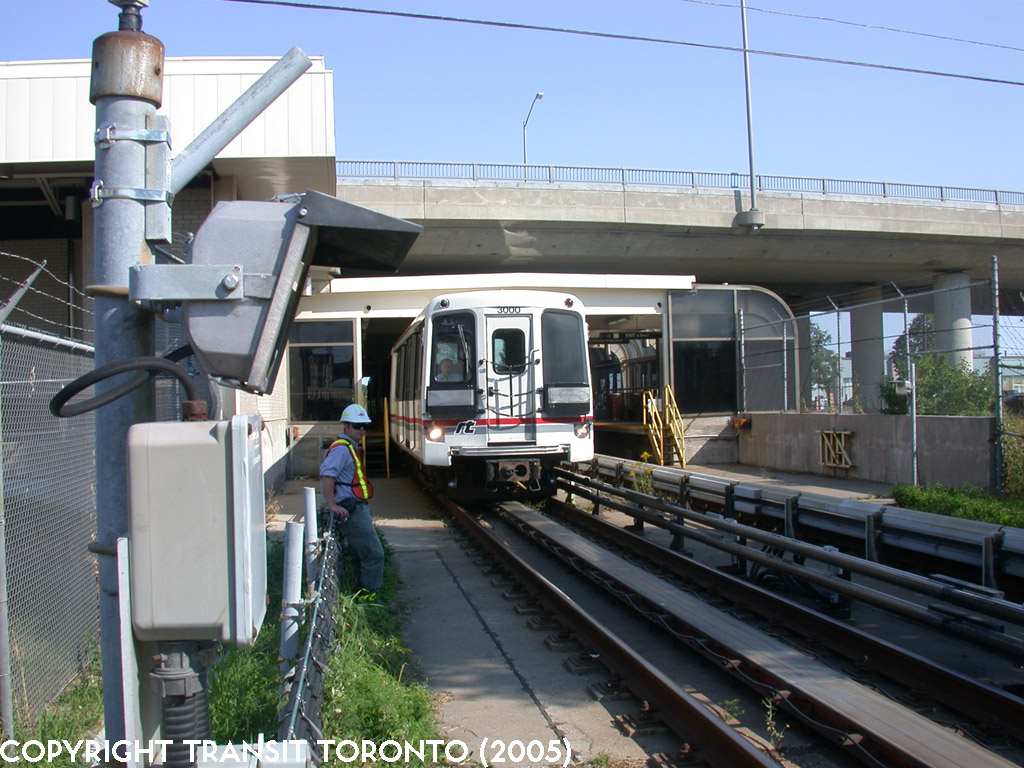
Toronto’s ICTS system, one of two built, and now closed.
Lesson #2
In the 1980’s there was much debate between modern light-rail and many proprietary transit systems being offered for sale, which included the SkyTrain ICTS/ALRT automatic light-metro. Many claims were made by the owners of various proprietary transit systems being offered for sale, about the effectiveness of their transit systems. In 1991, Gerald Fox a noted American transit specialist, produced a study comparing light-rail and automatic guided transit (AGT) systems including SkyTrain and the French VAL light-metro system. The study concluded that despite the hype and hoopla of the promoters of AGT systems, there was no benefit in building with more expensive AGT. These conclusions were not lost on American and European transit planners, who wanted ‘the best bang for the buck’ and the desire to build prestigious and expensive light-metro systems waned from the mid 90’s until the present day.
Conclusions from Gerald Fox’s A Comparison Between Light Rail And Automated Transit Systems. (1991)
- Requiring fully grade separated R-O-W and stations and higher car and equipment costs, total construction costs is higher for AGT than LRT. A city selecting AGT will tend to have a smaller rapid transit network than a city selecting LRT.
- There is no evidence that automatic operation saves operating and maintenance costs compared to modern LRT operating on a comparable quality of alignment.
- The rigidity imposed on operations by a centralized control system and lack of localized response options have resulted in poor levels of reliability on AGT compared to the more versatile LRT systems.
- LRT and AGT have similar capacities capabilities if used on the same quality of alignment. LRT also has the option to branch out on less costly R-O-W.
- Being a product of contemporary technology, AGT systems carry with them the seeds of obsolescence.
- Transit agencies that buy into proprietary systems should consider their future procurement options, particularly if the original equipment manufacturer were to cease operations.
Conclusion #4: “LRT and AGT have similar capacities capabilities if used on the same quality of alignment. LRT also has the option to branch out on less costly R-O-W.“is affecting future light metro growth very badly. The cost of the Expo Line extension to Langley has now surpassed $400 million/km to build, yet, according to TransLink, will carry around 40 thousand passengers a day, less than the Broadway B-Line bus carries today!
The taxpayer the province) can only afford one light metro line built every decade, thus the next line built, if it is indeed a MALM SkyTrain will not start construction until 2040 at the earliest. But will there be cars available to operate on it, when Alstom ceases production?
Today TransLink and the provincial government still make unfounded claims of superior operation for SkyTrain (if it doesn’t snow) and denounces LRT as a poor-man’s rapid transit system. Nothing could be further than the truth and it still seems TransLink and the SkyTrain lobby have failed to read and understand transit lessons, taught decades ago!

France’s VAL system, a comparable system to today’s Movia Automatic Light Metro, a.k.a. SkyTrain.
Those who do not read history are doomed to repeat it ……………..
……… and the BC government and Metro politicians are ignorant about history and have saddled the region with an unaffordable transit system that is now almost too expensive to extend.
In 2026, ridership on TransLink is tanking (a 4.5% drop from April 2026 from April 2025), yet our provincial and regional politcans blunder on, selling “snake-oil” tarted up as transit solutions. BC’s economy is on the rocks, yet the NDP preserver on planning for hugely expensive light metro, which in today’s world, is an operating museum piece.
BC desperately needs cheaper transit options, but 40 years of lies, deceit, and corrupt politics has doomed the lower mainland to massive traffic congestion and gridlock, simply because those in charge, refuse to learn lessons from the past.