First posted by zweisystem on Tuesday, July 7, 2020
Updated.
As the clamour continues by Vancouver politicians for the federal government to fund the now $8 billion Broadway subway to UBC, TransLink stays largely mute and for good reason, they know in today’s politcal climate, the feds won’t be anteing up.
As politcans recklessly promise SkyTrain to UBC; the North Shore; down the median of the #1 highway to Abbotsford; and to Maple Ridge, TransLink has become scared of the future. There is no money for this type of 10’s of billions of dollars for promised expansion.
TransLink knows that the provincial government and Metro taxpayers cannot afford any of this. The fact is the taxpayer cannot afford the current $16 billion and growing cost of the current 21.7 km expansion to the Expo and Millennium Lines.
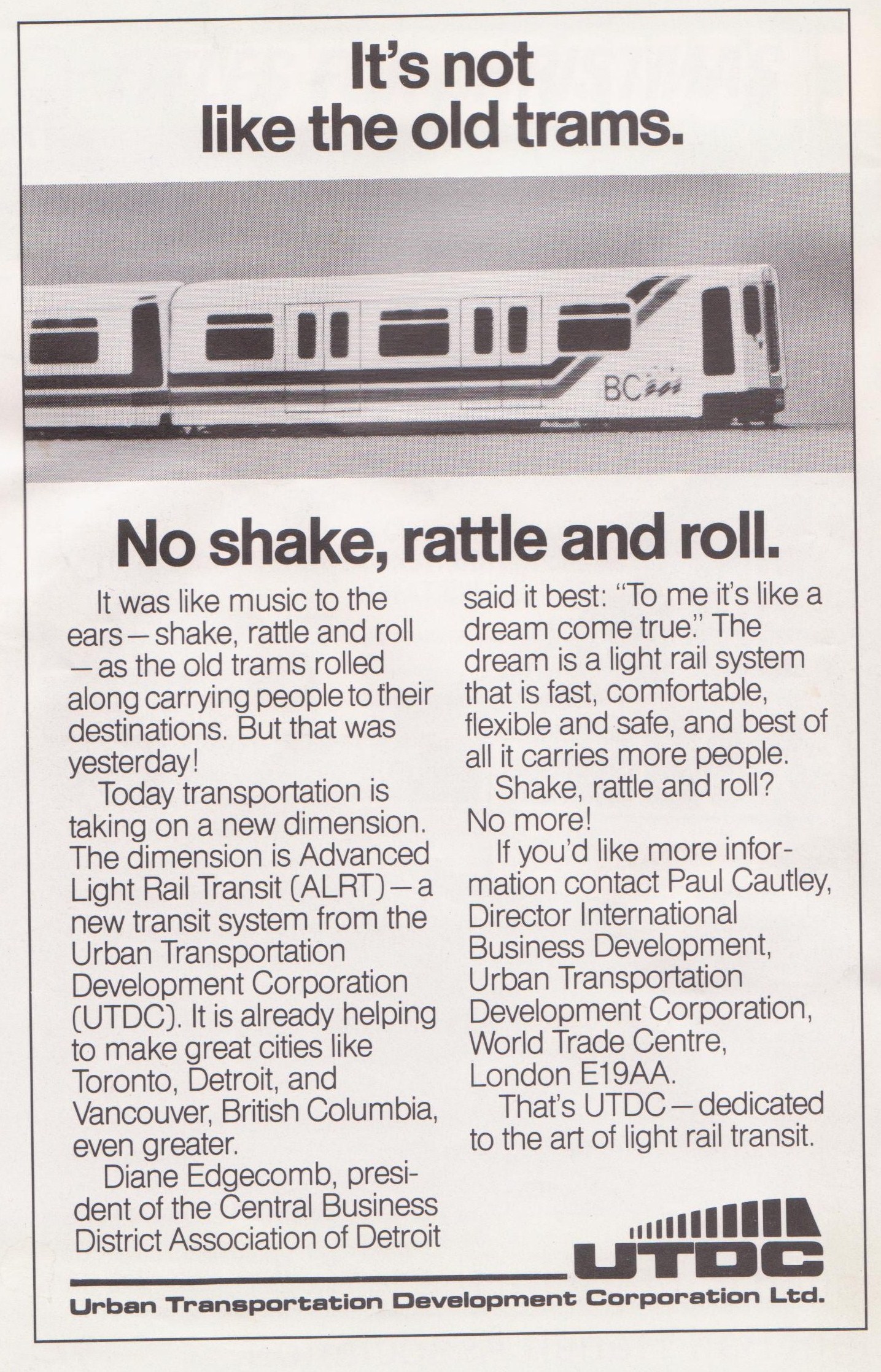
Early advertising for the proprietary ICTS/ALRT rapid transit system. In the end, only seven were built, including Vancouver, all with huge government subsidies. Today there are only six in operation as Toronto abandoned their ICTS system. Modern light rail made ALRT rapid transit obsolete overnight. Question: Why does TransLink plan for obsolete rapid transit?
From Wiki:
Rapid transit or mass rapid transit (MRT), also known as heavy rail, metro, subway, tube, U-Bahn, metropolitana or underground, is a type of high-capacity public transport generally found in urban areas.Unlike buses or trams, rapid transit systems are electric railways that operate on an exclusive right-of-way, which cannot be accessed by pedestrians or other vehicles of any sort, and which is often grade-separated in tunnels or on elevated railways.
TransLink’s ongoing program to misinform the public, comes to grief when one deals with real experts or companies located outside the metro Vancouver bubble are involved. The 2022 Thales News Release regarding their $1.47 billion contract to resignal the Expo and Millennium Lines is a good example.
According to Thales:
The government of Canada, the government of British Columbia, and the region have committed to investing $C 1.47bn ($US 1.1bn) in the Expo and Millennium Line Upgrade Programme until 2027.
When the programme is fully implemented, the Expo Line will be able to accommodate 17,500 passengers per hour per direction, and the Millennium Line will be able to handle 7500 passengers per hour per direction, a 32% and 96% increase respectively.
Toronto streetcars, operating on-street in mixed traffic were offering capacities in excess of 12,000 pphpd on select routes in peak hours in the late 1940’s and early 1950’s!
This chart erroneously shows that SkyTrain has a higher capacity than LRT, which is not true.
This so called fact sheet is designed to misinform, yet the City of Vancouver, abetted by TransLink, continue to make false claims about SkyTrain and light rail without any government or media fact checking.
TransLink’s false claims debunked:
SkyTrain has a large capacity. Fact: SkyTrain rapid transit has a limited capacity of 17,500 pphpd, after Thales $1.47 billion resignalling program . According to Thales: “………Millennium Line will be able to handle 7500 passengers per hour per direction……………….”
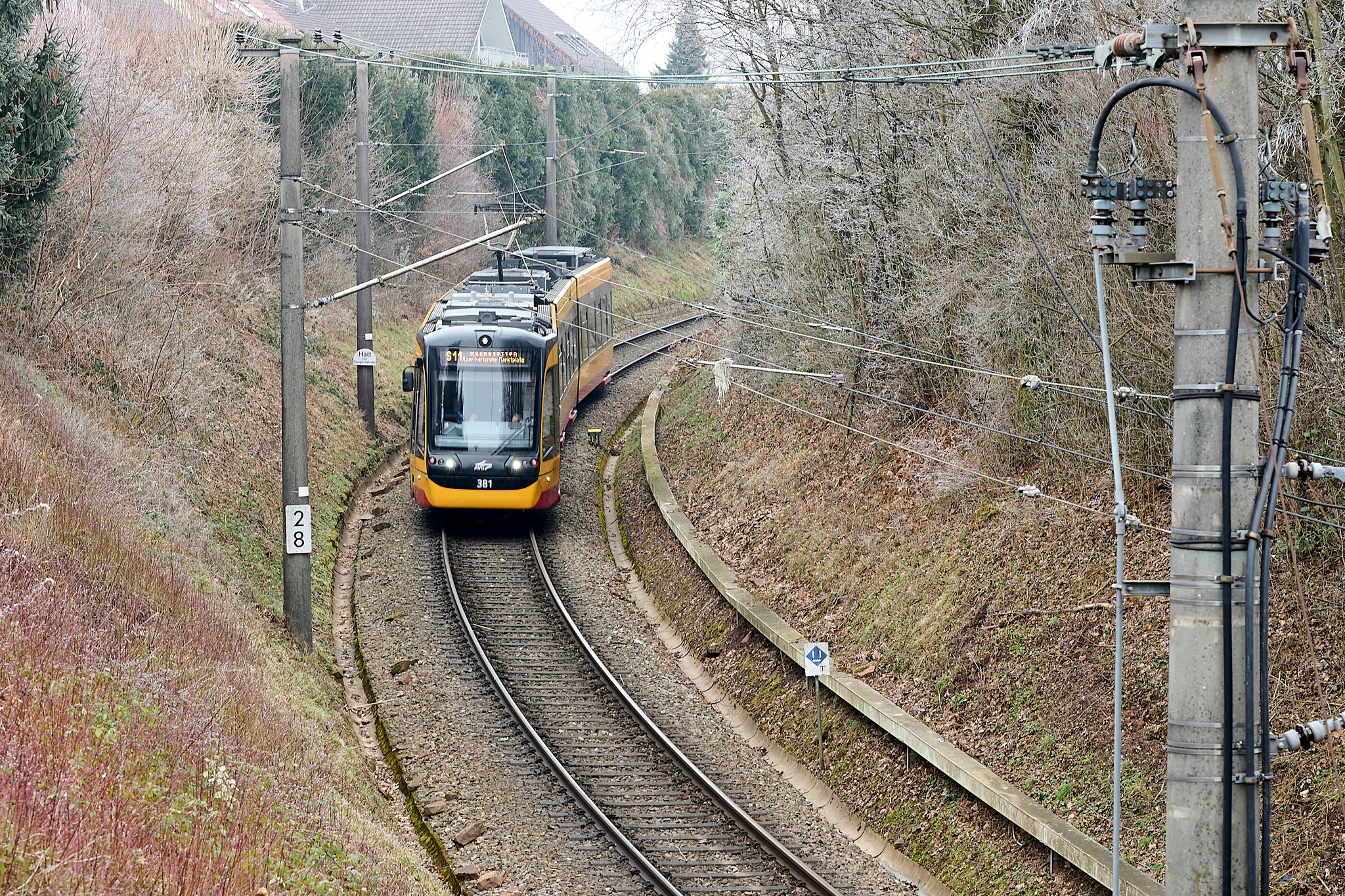
LRT is slow: Fact: LRT can travel as fast or even faster than SkyTrain rapid transit, if designed to. Most modern tram being marketed can obtain speeds in excess of 90 kph.
SkyTrain is faster than LRT. Fact: The higher commercial speed for SkyTrain comes from having much fewer stations or stops than an average light rail line. What TransLink does not include is the time needed to access the station, which in the end tends to show LRT having the faster “door to door” service.
LRT has less capacity than SkyTrain. Fact: LRT has proven to obtain capacities in excess of 20,000 pphpd
LRT cause traffic congestion and gridlock at intersections. Fact: There is no evidence of this. In most cases a modern tram can clear an intersection in 6 to 10 seconds, causing little or no delay for road traffic unlike light controlled intersections where the stopped traffic may have to wait 6o seconds or more.
What TransLink doesn’t mention is that light rail, offers all the benefits of rapid transit but, without the huge costs associated with subways and elevated construction.
TransLink’s planners should understand this, but it is not reflected in current transit planning.
Much of the success of urban transport in the past 40 years, in weaning the car driver from his or hers car is due to light rail and not rapid transit.
This is TranLink’s rapid transit dirty little secret, by continually planning and building ruinously expensive rapid transit on routes that modern light rail would have been just as successful, if not more so, in attracting new ridership.
Our friend Haveacow raised five points about TransLink’s rejection of an interurban style passenger rail service from Vancouver to Chilliwack.
1. If Translink keeps to narrowly defined geographically limited rail planning corridors, and continually offers nothing but a hugely expensive, built from scratch rail lines that, travels the dead centre of the corridor, then that’s all you ever get and anything else always looses when comparing against it.
2. If the planning agency, in this case Translink, doesn’t do anything but this same approach you never get new ideas and all your rail planning and the lines you end up building will at some point suffer from the same basic flaw or series of flaws.
3. Arguing that Translink should use a different type of train doesn’t change their limited focus when planning. It’s their focus in design and planning that really needs to change. Things like operational cost vs. service scale, the geographic scale of the service area and passenger catchment areas are just a few the many issues that the endless horizontal expansion of the current rail technology makes worse.
4. A simple well designed rail system can make up for initially starting with a more limited capacity and operations by being more adaptable and cost effective. This is where Skytrain as a technology, isn’t anywhere as adaptable or cost effective compared to the planned operating technology for the Interurban Line, given the vast area it will operate in.
5. Translink doesn’t seem to understand that unless new ways of planning and especially in their case, implementation processes are looked at, new solutions never happen. Yes, the Interurban Line would require negotiations with railways. I don’t think there really against the Interurban Line, they just don’t want to ever have to negotiate operations agreements. It’s so much easier to just own everything they operate, they set the rules. They just don’t get many new ideas this way.
TransLink’s continued planning for light-metro has left the region in a transit deficit and the taxpayer paying much more than he/she should (an estimated three times more), to keep TransLink’s ossified planning continuing.
Metro Vancouver has now become immune to new ideas and new operating philosophy and instead keeps planning and building the same thing, ever hoping for different results.
This has been definedas madness.
Reinstating a Vancouver to Chilliwack rail service using 21st century versions of the interurban, which has proven extremely successful elsewhere, is ignored.
The rot at TransLink has been in place far too long and sadly the entire operation is sinking into a planning and financial morass, where there is no escape and the the big question is is, how much taxpayer’s money will bleed from ill designed and dated transit projects before regional, provincial and federal politicians will take notice?
Keep in mind LRT is a very broad term that could be anything from a streetcar to a light metro like the Ottawa LRT or Seattle LRT. To obtain the high speeds an LRT would not only need a traffic separated right of way but that right of way would likely require some form of grade separation(cheapest option put the street on an overpass or underpass to pass over or under the LRT right of way. The biggest cost to any rail project is grade separation, many of the high speed LRTs like the ones in Ottawa, Seattle & the yet to be opened Eglinton Crosstown LRT in Toronto cost as much or more than the cost of our Skytrain extensions. Even Portland is thinking about building a tunnel for some of the Max lines in downtown Portland, the current streetcar running in downtown Portland has significant impacts on the frequency & operating speed. If you want a fast system you’ll have to pay for it, if you want a cheap system you’ll have a bus on rails and if you combine the 2 you’ll have an operational mess and many trains may be required to turn back early if there are issues on the street running portions.
Zwei Replies: First we must define what LRT is and is not (this gets blurred in North America). LRT is a modern streetcar or tram that operates on a dedicated R-o-W, largely with signal priority at intersections. This gives light rail the same operating characteristics as a much more expensive light metro, in fact LRT can be built for about one tenth the cost of fully segregated Right of ways.
Example: The light-metro Expo Line extension to Langley is now costing around $400 million/km to build, while in Europe, light rail extensions are being built between the cost of $30 million to $40 million per km.
Ottawa, Toronto and Seattle, actually operate hybrid LRT/light-metro systems, which demonstrates the flexibility of the modern tram, operating on varied forms of R-o-W’s.
Eglinton costs rival that of SkyTrain due to having a 6 km subway and several km of elevated R-o-W’s but it does have sections of lawned dedicated or “reserved R-o-W’s. The ability of Eglinton’s LRT to operate as LRT certainly has reduced over-all costs.
As for Portland, it has 5 light rail lines but only one North south and one East West route, each serving 2 rail services. The short city blocks in Portland and the refusal to allow preemptive signalling has created congestion issues, but with funding a serious question, building a subway at this point in time is extremely problematic.
One must remember it is not the speed of the tram that is important, rather the overall, door to door travel times that is important.
The big problem for transit planners in North America, there is politcal reluctance to reduce auto capacity in favour of transit, while in Europe, transit is planned to actively reduce auto use, yet one traffic used for a tram/LRT/streetcar equals up to 10 lanes or more of actual traffic. The key is building transit to what customers and potential customers want and not building transit to win elections.
Actually Zwei, has a good point, until very recently in California, it was illegal to build a rail transit project that actually reduced road capacity.
During the planning process in the province of Ontario since the 1970’s, you had to by law, do a cost benefit analysis on every rapid transit project but all major road, highway and expessway projects were exempt until 2013.




Keep in mind LRT is a very broad term that could be anything from a streetcar to a light metro like the Ottawa LRT or Seattle LRT. To obtain the high speeds an LRT would not only need a traffic separated right of way but that right of way would likely require some form of grade separation(cheapest option put the street on an overpass or underpass to pass over or under the LRT right of way. The biggest cost to any rail project is grade separation, many of the high speed LRTs like the ones in Ottawa, Seattle & the yet to be opened Eglinton Crosstown LRT in Toronto cost as much or more than the cost of our Skytrain extensions. Even Portland is thinking about building a tunnel for some of the Max lines in downtown Portland, the current streetcar running in downtown Portland has significant impacts on the frequency & operating speed. If you want a fast system you’ll have to pay for it, if you want a cheap system you’ll have a bus on rails and if you combine the 2 you’ll have an operational mess and many trains may be required to turn back early if there are issues on the street running portions.
Zwei Replies: First we must define what LRT is and is not (this gets blurred in North America). LRT is a modern streetcar or tram that operates on a dedicated R-o-W, largely with signal priority at intersections. This gives light rail the same operating characteristics as a much more expensive light metro, in fact LRT can be built for about one tenth the cost of fully segregated Right of ways.
Example: The light-metro Expo Line extension to Langley is now costing around $400 million/km to build, while in Europe, light rail extensions are being built between the cost of $30 million to $40 million per km.
Ottawa, Toronto and Seattle, actually operate hybrid LRT/light-metro systems, which demonstrates the flexibility of the modern tram, operating on varied forms of R-o-W’s.
Eglinton costs rival that of SkyTrain due to having a 6 km subway and several km of elevated R-o-W’s but it does have sections of lawned dedicated or “reserved R-o-W’s. The ability of Eglinton’s LRT to operate as LRT certainly has reduced over-all costs.
As for Portland, it has 5 light rail lines but only one North south and one East West route, each serving 2 rail services. The short city blocks in Portland and the refusal to allow preemptive signalling has created congestion issues, but with funding a serious question, building a subway at this point in time is extremely problematic.
One must remember it is not the speed of the tram that is important, rather the overall, door to door travel times that is important.
The big problem for transit planners in North America, there is politcal reluctance to reduce auto capacity in favour of transit, while in Europe, transit is planned to actively reduce auto use, yet one traffic used for a tram/LRT/streetcar equals up to 10 lanes or more of actual traffic. The key is building transit to what customers and potential customers want and not building transit to win elections.
Actually Zwei, has a good point, until very recently in California, it was illegal to build a rail transit project that actually reduced road capacity.
During the planning process in the province of Ontario since the 1970’s, you had to by law, do a cost benefit analysis on every rapid transit project but all major road, highway and expessway projects were exempt until 2013.