Highway 1 Day of Action TOMORROW!
Just one more day…
Please get your friends and family out to this important, historic event in the Fraser Valley.
It’s simple: Choose an overpass, make some signs, & do your part, Saturday from 11:00am to 1:00pm, to bring passenger rail service back to the Fraser Valley!
LIGHT RAIL FANS TO HIT THE HIGHWAY
Our Day of Action is in the news – big-time!
Day of Action will focus on light rail advantages (Abbotsford Times, April 10)
150 km of track, trains for price of new bridge: Study (The Province, April 9)
Light rail fans to hit the highway (Jeff Nagel, Surrey Leader, April 3)
On April 11, from 11:00am to 1:00pm, we will make history, holding banners for two hours atop Highway 1 overpasses throughout the Lower Mainland, from Chilliwack in the east to Eagleridge Bluffs in West Vancouver, in support of passenger rail and in opposition to our governmentA?ai??i??ai???s current single-minded Gateway agenda of road-building and 2nd-class transit for the South of Fraser.
*To sign up to take part in this important action, please send an email to railforthevalley@gmail.com*
We need to be very organized to pull this off, so
& let me know your overpass preference, and whether you can make a sign or a banner.
Light rail fans to hit the highway – article by Jeff Nagel in the Surrey Leader (click here)

Instead of twinning the Port Mann Bridge, the province intends to tear it down and build an all-new 10-lane span.

UBC professor Patrick Condon estimates 200 kilometres of light rail can be built for the cost of rebuilding the Port Mann Bridge and widening Highway 1.
10 questions for May’s election – How much of a transit expert are you?
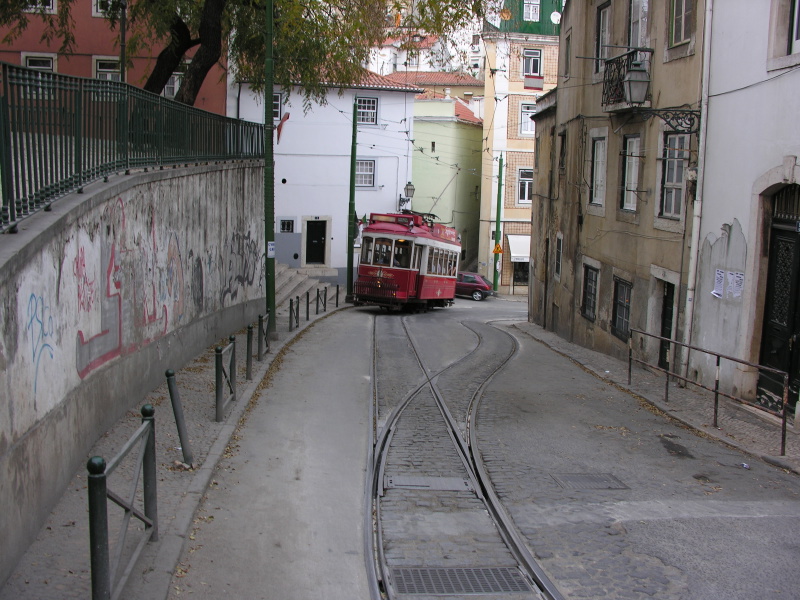
Lisbon tram climbing a 13.8% grade!
Ai??Ai??
Here are ten questions toAi??Ai??test the knowledge ofAi??Ai??political candidates about LRT & public transit in May’s provincial election. Passing grade is 70%.
1) What is light rail transit?
2) What is metro?
3) What is capacity?
4) What grade maximum is now industry standard for light rail?
5) What is the maximum gradeAi??Ai??that LRT/tram climbs (by adhesion) Ai??Ai??in revenue service today?
6) After the introduction of ‘busways’ in Ottawa, ridership changed by how much?
7) Approximately what percentage of operating costs of a transit system can be attributed to wages?
8) Approximately how much ridership is lost per transfer?
9) Are automated transit systems cheaper to operate than non automated transit systems?
10) What is the maximum capacity of theAi??Ai?? largest light rail vehicle today, calculated at all seats filled and standing passengers at four persons per square metre?
Answers:
1) LRT is a transit mode, generally electrically powered, able to operate in mixed traffic, that can economically carry between 2,000 and 20,000 persons per hour per direction.
2) Metro is a grade separated transit mode, electrically powered, built for average hourly ridership loads in excess of 15,000 pphpd. LRT can be operated as a metro, though a metro can’t operate as light rail!
3) Capacity is a function of headway.
4) 8%
5) 13.8% (Lisbon, Portugal)
6) A decline of ridership of 15.7% from 1986 to 1997 (OC Transpo)
7) 70%
8) 70%
9) No, studies have found that LRT is cheaper to operate, when comparing equal systems.
10) 350 passengers; the ‘Jumbo’ modular light rail cars used in Strasbourg, France. (By comparison, four Mk.1 SkyTrain cars have a capacity of 300 persons!)
The Heritage Tram – Interesting possibilities for the Vancouver to Chilliwack Interurban
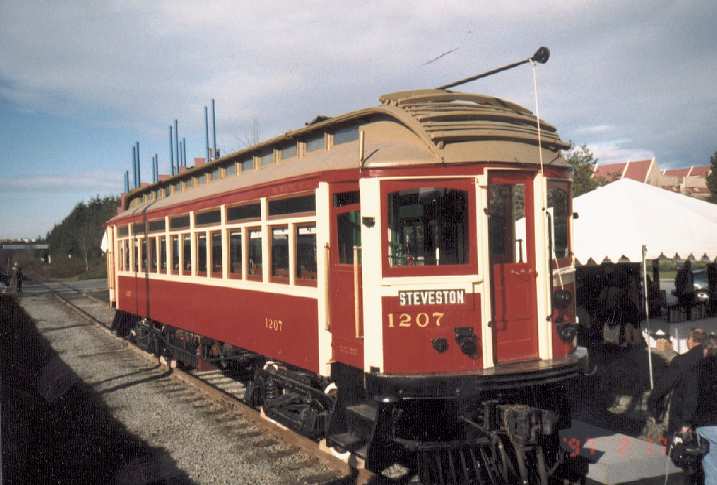
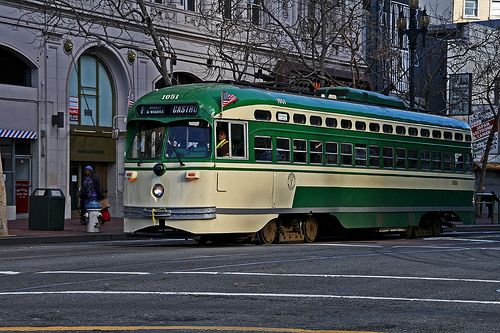
Heritage streetcars, operating in museums, onAi??Ai??their own trackage orAi??Ai??running in scheduledAi??Ai??Ai??Ai??service, on existingAi??Ai??transit routes, have proven to be extremely popular and operate in many cities around the world. A proven tourist generator, heritage streetcars and interurbans could expandAi??Ai??Vancouver centricAi??Ai??tourism up the Fraser Valley to Chilliwack.
There is plenty of scope for vintage streetcars or heritage interurbans to operate on part orAi??Ai??the entire route of the reinstated Vancouver to Chilliwack interurban line.Ai??Ai??Ai??Ai??With short branch lines for heritage tram only operation in Cloverdale, Langley, Abbotsford and Chilliwack, could also improve local service, with heritage trams providing revenue service. There is even a possibility of a destinationAi??Ai??tram museum located somewhere along the the old BCE Ai??Ai??line, offering a variety of classic vintage trolleys on show or in operation.
The Valley Interurban offers not just regional passenger transportation but a vehicle that will enhance valley tourism, with an added quality attraction, something that SkyTrain and or RapidBus could never do.
April 11 Day of Action UPDATE
LIGHT RAIL FANS TO HIT THE HIGHWAY
Banner-making workshops
Abbotsford
Where: gather at UFV – Abbotsford campus, east lobby of building A, by the Roadrunner Cafe (bottom floor). If you get lost, contact Paul Gieselman at 604-703-3650.
When: Tuesday April 7, 7:00 pm
Vancouver workshop/party
Where: 1825 Charles St (@ Salsbury)
When: Thursday April 9, 6:00pm-9:00pm
Bring: Supplies will be provided. If you have your own banner material, that is of course welcome!
Our Day of Action is in the news!
Light rail fans to hit the highway – article by Jeff Nagel in the Surrey Leader (click here)
On April 11, from 11:00am to 1:00pm, we will make history, holding banners for two hours atop Highway 1 overpasses throughout the Lower Mainland, from Chilliwack in the east to Eagleridge Bluffs in West Vancouver, in support of passenger rail and in opposition to our government’s current single-minded Gateway agenda of road-building and 2nd-class transit for the South of Fraser.
*To sign up to take part in this important action, please send an email to railforthevalley@gmail.com*
We need to be very organized to pull this off, so
& let me know your overpass preference, as well as a contact telephone number.
*If you don’t have a banner, don’t let that stop you. We can provide you with one.*
Light rail fans to hit the highway – article by Jeff Nagel in the Surrey Leader (click here)

Instead of twinning the Port Mann Bridge, the province intends to tear it down and build an all-new 10-lane span.

UBC professor Patrick Condon estimates 200 kilometres of light rail can be built for the cost of rebuilding the Port Mann Bridge and widening Highway 1.

Karlsruhe’s TramTrain’s – Why is TransLink so afraid!
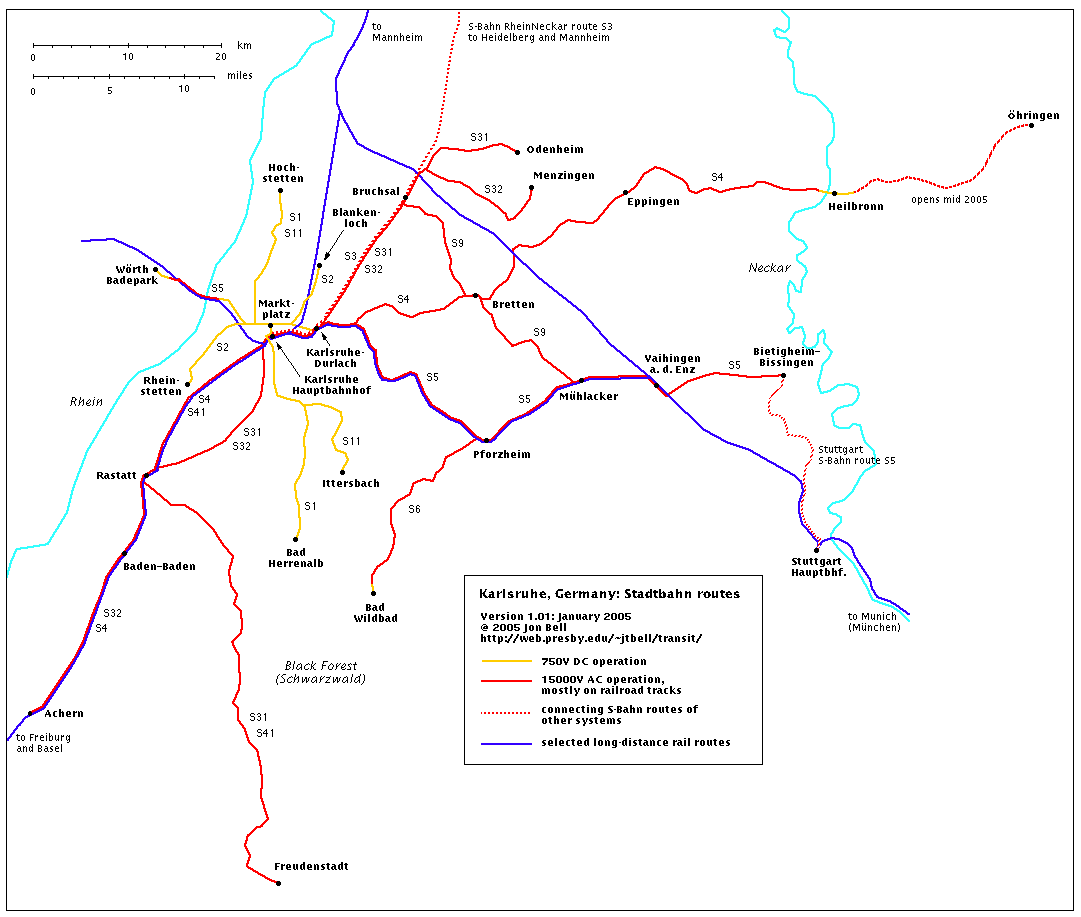 A map of Karlsruhe’s regional tram (tramtrain) network
Since 1993, Karlsruhe’s award winning two system (now called tramtrain) LRT system has been operating safely, track-sharing with mainline railways. Karlsruhe’s tramtrain concept is now used on no fewer than ten light-rail systems in Europe and North America and presently being planned for numerousAi??Ai??transit systems world wide. The tramtrain concept has been proven in revenue service and has been very successful. Why then is TransLink so afraid of LRT and especially tram train?
 Tramtrain servicing a mainline railway station.
TransLink ignores modern light-rail and treats it as a poor-man’s SkyTrain, despite much evidence that LRT has made SkyTrain obsolete on the world stage. TransLink has become aAi??Ai??Ai??Ai??creature of the provincial government, even though it is supposed to be responsible to Metro Vancouver, the real controlling force for TransLink resides in the Premier’s office and like so many provincial premier’s before all hints of transit economy are thrown out the window, in favour ofAi??Ai??very expensive glitzy metro systems. Simply, a metro like SkyTrain or RAV/Canada Line is far more sexier for a photo-op than a tram or a bus! In Vancouver’s metro region, rail transit is to promote land development and not move people, whichAi??Ai??has lead to a perversion of transit planning. Unlike other cities where transit is planned and built to cost effectively move people, in the Vancouver metro region, transit planning is to further extend SkyTrain, enriching a small clique property speculators and developers who own or have purchased lands next to the guideway.
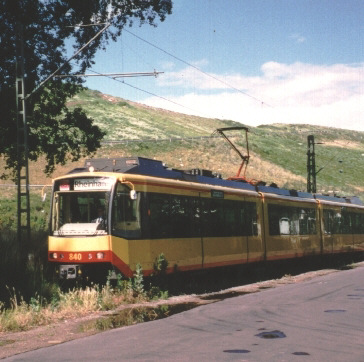 TramTrain operating a rural service.
TransLink’s bureaucratsAi??Ai??are loath to build with light-rail is because it is simple, much simpler to plan for and build than metro and if LRT was the chosen mode, TransLink would not needAi??Ai??the layers of duplicateAi??Ai??bureaucracy to function. Many bureaucrats have created little fiefdoms within their departments in TransLink, where any hints of economy is treated with disdain. LRT would bring economy to TransLink and a new philosophy of providing public transit that conflicts with current philosophy that “the more money one throws at transit, the better it is!” TransLink invests in transit that is good for TransLink and its political masters, not what is good for the transit customer and with no real public input. Sadly, there is no change on the horizon.
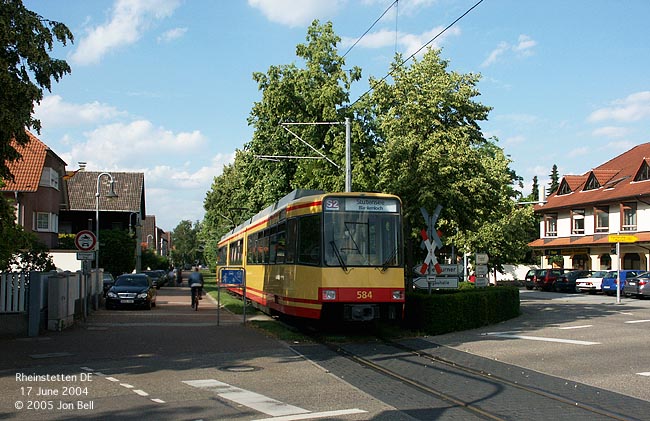 Tramtrain fits well into the cityscape.
TransLink fears change and wants to keep doing things as they always have done things and building with LRT/Tramtrain represents change.Ai??Ai?? Into the mix, the province wants to keep building metro, to placate the ossified transportation bureaucracy in Victoria, who in turn advise the transportation ministry and the Minister of Transportation. Building with light-rail represents change; change how the region views transit and how transit will reduce congestion and pollution. The threat of ‘peak oil’ and global warming have not registered with the current provincial government, who still want to pursue very expensive metro solutions an build new highways and bridges as they believe such a course will win votes at the polls.
Tramtrain is seen as a further complication by a transportation Ai??Ai??bureaucracy that is stalled with 1960’s thinking, unwilling or unable to understand proven successful transit philosophies used elsewhere.
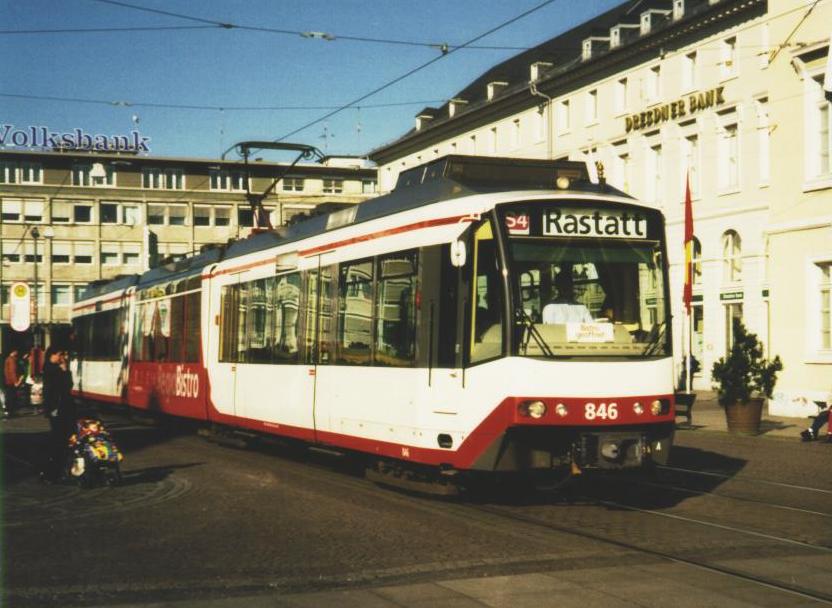 Have a coffee?Ai??Ai??Try aAi??Ai??’Bistro’ tram.
In an age where ‘rail’ transit is invested in to reduce auto congestion, pollution and be an attractive alternative to the car, the upcoming election should be a vehicle to tell political hopefuls that a change is needed and the electorate will stand for nothing less. Tramtrain and track-sharing represents a cost effective beginning to the 21st century public transport philosophy that to be effective LRT must not only service major destinations but also service suburbia. To do this, there is no reasonable choice but to track-share with existing railways as the cost of goingAi??Ai?? greenfields is cost prohibitive.
Rail for the valley must draw a line in the sand and not tolerate TransLink’s and the Transportation Minister’s pathetic attempts to downplay modern LRT and not supporting the reinstatement of the interurban from Vancouver to Chilliwack. The map of Karlsruhe’s 400 km. tramtrain/LRT network at the top, illustratesAi??Ai??what can be builtAi??Ai??for less than the cost of the 19 km. $2.5 billion RAV/Canada light-metroAi??Ai??line and one wonders why TransLink keeps planning for SkyTrain and is so afraid of modern LRT!
Nordhausen – TramTrains for small towns
Nordhausen is a German cityAi??Ai??at the southern edge of the Harz Ai??Ai??mountains, in the state of Thuringia.Ai??Ai?? Nordhausen’s population is a very modest 44,272 andAi??Ai??with a population density of 421 /kmAi??A?, one would think that the town is just too small for light-rail butAi??Ai??has a metric gauge tramway networkAi??Ai??with 2 lines (7 km long, built at the beginning ofAi??Ai??20th century). The central point of the system is located at the railway station, where a double track ring allow urban electric trams (internal track) and diesel trains (external track) from Ilfed to the Central Station or Bahnhof.Ai??Ai??To extend the metre gauge tram service along existing metre gauge railways,Ai??Ai??the local railway adopted the TramTrain concept, first pioneered in Karlsruhe Germany.Ai??Ai??Ai??Ai??This allowsAi??Ai??local trams to act as regionalAi??Ai??trains toAi??Ai??extend their run alongAi??Ai??existing Harz railwayAi??Ai??tracks without any vehicle interchange at the railway station.
 Look, no overhead wires!
Nordhausen trams and TramTrain should dispel any notion that towns in the Fraser Valley do not have the population or density for successful operation of light-rail, either electric or diesel!
Lawned rights-of-ways = non-user friendly & green transit
In stark contrast to SkyTrain’s and RAV/Canada Line’s (in Richmond) ugly elevated concrete viaducts, Europe is greening their tram-lines. European transit authorities are lawning their tram routes, creating a park like atmosphere, which is further enhanced by trees, shrubbery and statuary. Tram lines, either ballast and tie on the ground or elevated on a viaduct can be an eyesore, but by ‘greening‘ the tram formationAi??Ai??and making it a linear park certainly makes new LRT lines an easier sell to local residents; making the tram-line non-user friendly. Even the German Federal Railways (DB) are experimenting with lawned rights-of-ways for ecologically sensitive areas along the railway’s mainline.

The photo shows a Grenoble tram, with a simple station, operating on a lawned rights-of-way, as it were operating in a small park. Certainly the Arbutus Corridor is a natural for lawned light-rail tracks, but also imagine if you will, lawnedAi??Ai??interurban line in Cloverdale, Langley, Abbotsford, and Chilliwack, with the Valley interurban becoming aAi??Ai??vast linear park connecting town centres. Talk about green transit!
In today’s Tyee – Hats off to Prof. Condon and UBC, they are now planning for the 21st Century!

In today’s Tyee is a very interesting item about LRT, Gateway and how monies invested (some say squandered) in the Gateway – Port Mann Bridge expansion could provide over 200 km. of LRT for Surrey, Whiterock, Langley, Coquitlam, Pitt Meadows, Maple Ridge and New Westminster! Now add in the 90 km. Vancouver to Chilliwack Interurban and you have the magic 300 km. of LRT (future post) that would be an attractive alternative to the car.
For the entire article:
http://thetyee.ca/News/2009/03/25/LightRail/
Calgary’s C-Train Development & Operating Costs
|
C-Train’s Development and Operating Costs |
|
What is interesting is that Calgary’s C-Train operating costs in, 2006, was nearly $33 million, while SkyTrain’s annual operating costsAi??Ai??during the same period wasAi??Ai??nearly $80 million and Calgary’s light rail system carries more passengers!Ai??Ai?? The Interurban, by comparison would be far cheaper to operate on an annual basis.
World transit system list as of 2006 – from the LRTA
The following is the number or various type of transit systems around the world including those under construction, excluding airport shuttles, commuter/mainline rail, entertainment parks and funiculars. Classification always brings areas of doubt, particularly in countries such as Japan and Switzerland where clear dividing lines just do not exist.
Metro (including SkyTrain) – 146
Light RailAi??Ai??Ai??Ai??Ai??Ai??Ai??Ai??Ai??Ai??Ai??Ai??Ai??Ai??Ai??Ai??Ai??Ai??Ai??Ai??Ai??Ai??Ai??Ai??Ai??Ai??Ai??Ai??Ai??Ai??Ai??Ai??Ai??Ai??Ai??Ai??Ai??Ai??Ai??Ai??Ai??Ai??Ai??Ai??Ai??Ai??Ai??Ai??Ai??Ai??Ai??Ai??Ai??Ai??Ai??Ai??Ai??Ai??Ai??Ai??Ai??Ai?? – 98
Tramways (streetcars)Ai??Ai??Ai??Ai??Ai??Ai??Ai??Ai??Ai??Ai??Ai??Ai??Ai??Ai??Ai??Ai?? – 445
Light RailwaysAi??Ai??Ai??Ai??Ai??Ai??Ai??Ai??Ai??Ai??Ai??Ai??Ai??Ai??Ai??Ai??Ai??Ai??Ai??Ai??Ai??Ai??Ai??Ai??Ai??Ai??Ai??Ai??Ai??Ai??Ai??Ai??Ai??Ai??Ai??Ai??Ai??Ai??Ai??Ai??Ai??Ai??Ai??Ai??- 143
Heritage TramAi??Ai??Ai??Ai??Ai??Ai??Ai??Ai??Ai??Ai??Ai??Ai??Ai??Ai??Ai??Ai??Ai??Ai??Ai??Ai??Ai??Ai??Ai??Ai??Ai??Ai??Ai??Ai??Ai??Ai??Ai??Ai??Ai??Ai??Ai??Ai??Ai??Ai??Ai??Ai??Ai??Ai?? – 51
OtherAi??Ai??Ai??Ai??(incl. monorails)Ai??Ai??Ai??Ai??Ai??Ai??Ai??Ai??Ai??Ai?? – 27
Interesting to note that as of 2006, the light-rail family had 686 systems in operation.



Recent Comments