The German disease – What is it? Do we suffer from it?
In the early 1960’s, when the German economy was beginning to recover from the war, Germany invested heavily in new subways (U-Bahn) and fast commuter style metropolitan railways (S-Bahn). The tram or strassebahn, which bore the brunt of providing public transitAi??Ai??from theAi??Ai??late 40’s, to theAi??Ai??60’s, was largely regardedAi??Ai??by manyAi??Ai??as a dated or evenAi??Ai??obsolete.Ai??Ai??At the time, German plannersAi??Ai??were going to abandon most trams systemsAi??Ai??or upgrade to S-BahnAi??Ai??by the Millennium, but unplanned events reversed this trend. Three surprisingAi??Ai??things happened to cities thatAi??Ai??replaced tramsAi??Ai??with subways S-Bahn and buses, which madeAi??Ai??public transit policy andAi??Ai??transportation projections go awry:
- Cities which abandoned trams, in favour of U-Bahn and S-Bahn saw an overall drop in transit ridership.
- The cost of new S-Bahn and U-Bahn construction, all but bankrupted local transit authorities, which then bled money from the rest of the transit system.
- Public transit systems were seen to be mainly used by the poor, the elderly, and students.
Collectively these events, but especially number 3, became to be known as the German Disease.
Not widely reported, except inAi??Ai??specialist journals, the German disease was a serious threatAi??Ai??to public transit, as many transit customersAi??Ai??who could use the car, did; leaving the public transit system for mainly the socially disadvantaged. Public transitAi??Ai??was seen as an appendage of the social welfare system and operated as such, further continuing the downward spiral of ridership. Flashy new subways and S-Bahns, just did not attract the ridership asAi??Ai??projected, which caused great concern for transit planners and politicians alike, for many, they did not have a “plan B”.
With the erosion of public transit, authorities in many cities issued a diktat to transit managers, especially tram managers (trams were still thought to be obsolete); “either you increase ridership or you will lose it“. Tramway (streetcar) managers recognized that the lowly tram was the backbone of their transit system; no trams, no customers; leading to the wholesale abandonment of urban transportation. Local managers did something quite unspectacular, yet very effective; opened honest consultation with the transit user or customer. This honest and open dialog found that the average transit customer wanted, not flashy new U-Bahns or S-Bahns, but trams giving a doorstep to doorstep service: “transit customers wanted transit on the pavement, ready to use.” With subways and S-Bahns, the vast majority of transit customers had to take a bus to the rapid or express transit and again take a busAi??Ai??to their destination. What did ring loud and clear was the transit customer did not want to take a bus!
With this wealth of information and public input, transit managers designed and operated transit systems to best suitAi??Ai??their customers needs. Public pressure was brought against building politically inspired, gold-plated subway schemes and S-Bahns were only planned when there was actually the ridership to warrant them. In the mid 80’sAi??Ai??began a reversal of planning andAi??Ai??instead of abandoning tramways, a program of tramway renewal and expansionAi??Ai??began. The introduction of low-floor tramcars brought an almost universal mobility for all to all tram systems, whichAi??Ai??saw increased use of public transport. Cities with tramways were thought to be progressive and by the 1990’s, a marked modal shift from car to tram was clearly evident.
The German disease, saw a remarkable German cure and with much ingenuity such as ‘Bistro’ cars, party trams, and TramTrains, German transit planning is seen as one of the most progressive in the world.
The question we should ask ourselves is : “do we suffer from the German disease?” And if we do, “do our politicians have the political fortitude to rectify the situation?” PromisesAi??Ai??of more U-Passes, especially on an over stressed bus system; planning for more hugely expensive gold-plated subways, that in the end cater to very few new transit customers; and the staggering fact that 80% of SkyTrain’s ridership, first take a bus to the light-metro, indicate that the metro region has a bad case of the German Disease. Sadly, no one yet is willing to admit to this, or that there is even a problem.
What is taken for mediocrity in Europe, is considered success in Vancouver!
Useful links for the BCE Interurban – old and new

A BCE interurban leaves Chilliwack station…………
For a map of the old interurban and time tables:
http://www.scribd.com/doc/2473591/Interurban-Timetables
Though Zweisystem doesn’t agree with their conclusions:
http://www.scribd.com/doc/515139/DRL-Solutions-Interurban-Report
And a short history of the interurban:
http://www.hastebc.org/haste-news/a-short-history-interurbans-lower-mainland
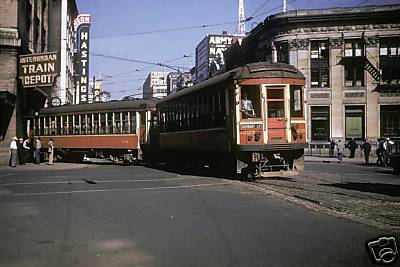
………….and arrives in downtown Vancouver!
Vancouver 1940. A map of streetcars and interurbans in Vancouver

Here is a map of LRT or streetcar operations Vancouver and vicinity in 1940…………………..now back to the valley interurban.
Debunking the SkyTrain myth. Rail for the Valley answers the UBC SkyTrain Lobby!
It was brought to Zweisystem’s attention yesterday that a blog site was established by the UBC SkyTrain Lobby, critiquing modern LRT.Ai??Ai?? Zweisystem responded,Ai??Ai?? posting correctionsAi??Ai??forAi??Ai??the many myths, half truths and anti-LRT claptrap so often used by the SkyTrain lobby. The SkyTrain folks removed the comments and by doing so, fully admit that they are afraid of the truth. Zweisystem is not surprised as this is exactly how the SkyTrain lobby operates: repeat a lie so often that it soon becomes a fact. What is lost in the LRT/SkyTrain debate is that LRT has made SkyTrain light-metro obsolete decades ago,Ai??Ai??something theAi??Ai??SkyTrain lobby fails to admit.
Why should Rail for the Valley supporters be concerned with a UBC SkyTrain? Simple, the $4 billion subway (RAV was to cost a mere $1.3 billion and now it’s direct costAi??Ai??may exceed $2.8 billion) will suck money away fromAi??Ai??all ‘rail’ projects for the Fraser Valley by spending hard earned tax dollars on another needless gold-plated rapid transit project for Vancouver. We must debunk the SkyTrain myth now.
There is no mention who the UBC SkyTrain lobby are and one wonders why they are so afraid of debate?.
The following is the website of the UBC SkyTrain lobby.
http://ubcskytrain.wordpress.com/22points/
The following is the 22 myths comment, with Zweisystem’s comments in Italics.
Debunking Myths: Our 22Ai??Ai??Points
Twenty-two points created by our organization, debunking myths and inaccuracies:
==============
TIME IS MONEY
==============
LRT SUPPORTERS:
ItA?ai??i??ai???s okay to have longer travel times (which is what ground-level LRT will bring) in exchange for a A?ai??i??Ai??community-friendly systemA?ai??i??A?.
Zweisystem responds: What is lost, is thatAi??Ai??a community friendly transit system attracts ridership, something that an unfriendly transit system does not do. Subways are very user unfriendly. Speed ofAi??Ai??a transit system itself doesn’t attract ridership (Hass Clau) but the time of the total commute (doorstep to doorstep), the overall ambiance and ease of use of a transit system that has proven to attract ridership, especially the motorist from the car.
FACT:
(1) SkyTrain will have 2-3 times more capacity and more than twice the speed of an ground level LRT line due to its private right-of-way. Speed is an important factor for the daily commuter, as shown by bus ridership statistics for the Broadway corridor: 99 B-Line (60,000 passengers per day); other Broadway bus routes (40,000 per-day) = total Broadway bus ridership is 100,000 passengers per day.
There is a reason why a large majority of Broadway transit commuters take the 99 B-Line: speed and convenience. The 99 B-Line is a rapid bus service, and it is at capacity in terms of the number of buses that can be put into service (according to TransLink, over 120 articulated buses were dedicated to the 99 B-Line in 2006; 10% of the entire TransLink bus fleet). Counting the 99 B-LineA?ai??i??ai???s 60,000 daily riders alone, that is more than the ridership of TorontoA?ai??i??ai???s streetcar lines.
Zweisystem responds: SkyTrain does not have 2 to 3 times more capacity than LRT asAi??Ai??SkyTrain’s potential capacityAi??Ai??is about the sameAi??Ai??as modern light rail (Gerald Fox). This myth was created byAi??Ai??the discredited Delcan and ND Lea studies of the early 90’s, whichAi??Ai??arbitrarily claimed that SkyTrain had more capacity than LRT, without any study backing this assertion.Ai??Ai??Ai??Ai??Modern LRT/tram, operating on-street/at-grade,Ai??Ai??can handle over 20,000 persons per hour per direction (LRTA).
The claim that the B-Line carries more than Toronto’s streetcars is pure bunkum. Maybe on a route by route basis, the Broadway buses carry more riders than on some streetcar lines, but not the network!
(2) The 12-km SkyTrain extension from VCC/Clarke Station to UBC via the Broadway corridor will take between 15-20-minutes travel time from terminus to terminus. Stations will be located at Finning, Main/Kingsway, Cambie (vital interchange station with Canada Line), Oak (hospital precinct), Granville, Arbutus, Macdonald, Alma, Sasamat/West Point Grey Village, and UBC transit interchange. All of these stations parallel the existing 99 B-Line service. A SkyTrain would be mainly tunneled, and with its own private right-of-way would be allowed to reach speeds of 80 km/h.
A ground-level LRT line would begin from Commercial/Broadway Station, and would take a travel time of between 30-45-minutes from terminus to terminus. It would have the same stations as the above mentioned SkyTrain with an additional four to six stations. Its higher travel time, on par with the existing 99 B-Line bus service, is a result of the line running through city streets instead of its own private right-of-way; as it runs in city streets, it must abide local traffic laws and speed limit of 50 kms/h. This will no doubt affect the extensionA?ai??i??ai???s reliability as a real alternative to the car: peak-hour traffic, road congestion, traffic accidents, etc.
In addition, commuters will be given a one-train ride with SkyTrain: no transfer will be needed, saving significant time. It also offers higher train frequencies and flexible schedule adjustments. On the contrary, LRT tends to have less frequent schedules due to the expense of having drivers and it would require a time-costly transfer from the regionA?ai??i??ai???s main transit network: SkyTrain (as it would simply be an extension of the Millennium Line). Such a pointless transfer would also affect ridership.
Zweisystem responds: A light rail/tram line operating on a reserved rights-of-way, with equal number of stops, would have travel times comparable to a SkyTrain light-metro. In Germany, trams operating in mixed traffic (with autos)Ai??Ai??are allowed to travel 10 kph faster than posted auto speeds and if tram/LRT operates on a reserved rights-way (a rights-of-way used exclusively for a tram), could operate at higher speeds quite safely. The authors of theAi??Ai??blog conveniently forget that a transfer would have to be made to the proposed UBC SkyTrain from the Expo Line, thus the transfer argument is moot.
One, also questionsAi??Ai??the validity of recentAi??Ai??light rail studies and asks, “were they done by qualified experts in LRT”. To date not one company with a proven expertise in the construction and operation of modern light rail have ever been allowed into the study process. It is also important to know that the various owners of the proprietary SkyTrain light-metro system have never allowedAi??Ai??it to compete against modern LRT!
(3) SkyTrain is the regionA?ai??i??ai???s main transit network. Such a network should be high in speed, capacity, reliability, and frequency. Metro Vancouver axed a highway expansion plan in the 1970A?ai??i??ai???s in favour of building a competent transit network: we must build a competent transit backbone that makes up for our lack in road capacity.
Zweisystem responds: Many cities around the world happily operate metro with light rail and the argument is again silly. What is not mentioned is that SkyTrain is a proprietary light metro, a mode long made obsolete by modern light rail. Building with SkyTrain today, is like trying to buy a new Edsel, because “I already have one”. Who buys SkyTrain?
(4) For such a costly expense, ground-level LRT will be a minor upgrade from the existing 99 B-Line bus service. The 99 B-Line is overflowing with riders, it needs something far greater than that to take its place. LRT is a short-term solution and will simply be a A?ai??i??Ai??99 B-Line with steel wheelsA?ai??i??A?. On the other hand, SkyTrain will provide a long-term solution for the corridorA?ai??i??ai???s transit needs.
Zweisystem responds: Light RailAi??Ai??will be more expensive to build than upgrading the B-Line service, about 30% more,Ai??Ai??but it would be much cheaper to operate than buses. One modern light Rail vehicle, withAi??Ai??one driver is as efficient as 6 to 8 busses, with 6 to 8Ai??Ai??Ai??Ai??bus drivers and one needs to hireAi??Ai??three or more people per bus or tram to drive, maintain and manage them. Do the math, cities that operate LRT have done so. Ai??Ai??Even operating in mixed traffic, with no reserved rights-of-ways or signal priority, modern trams are about 10% faster than buses. SkyTrain on the other hand, costs a lot more to operate, almost twice as much as Calgary’s LRT C-Train, which also carries more customers daily! The higher operating costs of SkyTrain and other proprietary light-metros were well understood by the early 1990’s and helped in the demise of the mode.
(5) Frequent trolley service will still exist, given the importance of local service along the Broadway corridor. It will complement the SkyTrain service.
Zweisystem responds: Why, after spending up to $4 billion on a subway, wouldAi??Ai??TransLink want to operate trolley buses as well, driving up operating costs of the route; even on Cambie St., the electric trolley busesAi??Ai??are nowAi??Ai??replaced by diesel buses. Modern LRT is built because it is cheaper to operate than buses on a transit route, when ridership exceeds 2,000 pphpd. With LRT operating on-street, with stops every 500 to 600 metres, there would be no need for buses on Broadway.
(6) A 2000 study by the City of Vancouver concluded that an LRT line, with 16 stations from Commercial to UBC along the Broadway corridor, would rake in 140,000 daily riders. However, a SkyTrain extension from VCC/Clarke to Arbutus combined with a rapid bus service from Arbutus to UBC would bring in 150,000 daily riders.
Zweisystem responds: Based on what figures? Subways are notoriously poor in attracting new ridership and that, combined with high operating and maintenance costs, subways are avoided, unless traffic flows are over 500,000 passengers a day. It was predicted in 1980, that SkyTrain would be carrying over 20,000 pphpd, in the peak hour,Ai??Ai??by the year 2000; presently it is carrying half this number.
Note that the study was completed before the U-Pass was implemented, before record high gas prices, and before the green shift took priority. Following the 2002 implementation of the U-Pass, transit ridership at UBC increased significantly: in 2002 daily ridership was at 29,700 but by 2004 it was 50,000; a 68% increase in ridership in just two years because of the U-Pass! Transit ridership still increased significantly in the years after.
Zweisystem responds: Funny how a bus route, Broadway, operating at capacity can attract 68% more customers. The argument is moot because a LRT line could easily handle 250,000 or more passengers a day.
The study also does not account for the improved transit services since, especially the new Canada Line that will be opening in September 2009.
Taking account that the study was completed nearly ten years ago, and with all the changes to the region since then, ridership for a SkyTrain extension to UBC could rake in more than 200,000 passengers per day.
For comparisonA?ai??i??ai???s sake, the Expo Line (29-kms) currently has a daily ridership of 185,000; Millennium Line (20-kms) at 75,000; and the projected daily ridership for the Canada Line (19-kms) and Evergreen Line (11-kms) is at 100,000 and 80,000.
Zweisystem responds: SkyTrain, unlike other transit systems around the world,Ai??Ai??has never had an independent audit of ridership, so the figures presented are questionable; that being said TransLink admits that 80% of SkyTrain’s ridership first take a bus to the light metro and as buses are poor in attracting new ridership, one questions this 200,000 a day figure. But again the argument is moot, because LRT can easily handle such loads!
As there is no independent audit of SkyTrain’s ridership, the numbers are questionable, also Expo Line riders are double counted on the Millennium Line and visa versa. Ridership projections for the Evergreen line and RAV Canada line are speculative at best.
====================================
ROUTE AND CONSTRUCTION METHODOLOGY: LRT
====================================
LRT SUPPORTERS:
Building light rail is fast and painless, unlike building SkyTrain; light rail wonA?ai??i??ai???t require digging up the road, while SkyTrain will. Businesses will not be affected. With light rail, parking spaces will not be lost both during the construction process and after construction is complete. LRT can be built on West 4th Avenue, instead of Broadway. LRT will not require tunneling. LRT will cost only a fraction of what SkyTrain would cost.
FACT:
(7) If light rail were the chosen technology for the extension, a trunk sewer underneath Broadway will require a costly removal and relocation. Thus, it will require digging up the entire street, like a large trench, and will be time consumingA?ai??i??Ai??
Zweisystem responds: The sewer trunk is built in the gutter lane, why? Because the old streetcars operated in the median lanes! The argument is thus lost.
(8) A?ai??i??Ai??In addition to removing the Broadway trunk sewer, ground level light rail construction will require the closure of several lanes and all on-street parking lanes. Traffic will be reduced to two-lanes, similarly to Cambie Canada Line constructionA?ai??i??Ai??.
Zweisystem responds: Modern LRT construction would require street closures on a block by block basis and only for a short period of time, no different when the city tears up roads for utility maintenance.
(9) All in all, with light rail Broadway merchants will still be significantly affected by construction for about 2 years. In comparison, most of Cambie has been closed for about the same period for Canada Line construction. Light rail construction is far painless as claimed. It should also be noted that the construction timeline for an LRT line in the middle of a road should not be confused with the construction timeline for an LRT or streetcar line with its already existing private right-of-way.
Zweisystem responds: More fear mongering as Broadway would be closed on a block by block basis as track laying progressed. Street construction would be completed in aboutAi??Ai??one years time orAi??Ai??less.
(10) As Broadway is a narrow street, a ground-level light rail system would result in the permanent removal of the majority of the on-street parking spaces that Broadway merchants hold onto so dearly. Nearly all of Broadway will also be reduced to a two-lane road (one lane in each direction) due to the massive amount of spacing needed for ground level light-rail; a major east-west road artery in the city will be abolished.
Zweisystem responds: Such nonsense, there will no loss of on-street parking, unless the city of Vancouver wishes it, what will happen is that one traffic lane, in each direction, will have capacity increased from a bout 1,600 pphpd to over 20,000 pphpd, with LRT.Ai??Ai?? Traffic on Broadway will be reduced by 1 lane in each direction; this is known as traffic calming.
(11) Any mass transit extension would need to be located along the Broadway corridor. West 4th Avenue would not work as it would skip the main employment hubs along Broadway, thus reducing potential ridership significantly.
The Broadway corridor catches 16th Avenue to 4th Avenue; more people live along the upper corridor rather than 4th Avenue
Zweisystem responds: What is “mass transit”? We are dealing with light-rail and light metro and there are pros and cons about each mode. For the cost of a SkyTrain subway to UBC, one could build a 4th Ave. LRT; a Broadway LRT; 41st Ave. LRT, for a combined capacity of over 60,000 pphpd, plus at least 2 North south LRT lines in Vancouver.
(12) LRT would likely require significant tunneling due to the steep grades on the hill west of Alma Street. LRT trains will be unable to climb the hill on such a steep slope.
Zweisystem responds: Not true. The industry standard for LRT climbing grades is 8%; in Sheffield England the maximum grade is 10% and in Lisbon, their trams climb 13.8% grades. The old streetcars climbed the Alma grades and modern LRT can do the same as well.
(13) It is a myth that $2.8-billion could build you 200-kms of light rail. Such a claim would likely mean the routes for these 200-kms of light rail lines already have pre-existing rail right-of-ways: we know that certainly does not exist in Vancouver, especially not for the Broadway mass transit extension.
Zweisystem responds: In Spain, new LRT is being built for under $8 million/km. and in Helsinki, on-street tram construction, including the electrical overhead was about $5 million/km. The $2.8 billion for 200 km. of LRT is very realistic. What the SkyTrain lobby is scared of is that $2.8 billion will buy youAi??Ai??less thanAi??Ai??28 km. of elevated SkyTrain or less than 9 km. of subway.
Proponents also falsely advocate this claim by A?ai??i??Ai??cherry-pickingA?ai??i??A? the best features of LRT, all of which come with a high price. The real cost of 200-kms of real LRT in the region would likely be at least $12-billion.
Zweisystem responds:Ai??Ai??More invention and uninformed assertions, showingAi??Ai??a complete ignorance of modern light rail.
=======================================
ROUTE AND CONSTRUCTION METHODOLOGY: SkyTrain
=====================================
LRT SUPPORTERS:
SkyTrain construction along the Broadway corridor will devastate local businesses just like Canada Line construction. SkyTrain is also expensive to build and operate.
FACT:
(14) The SkyTrain extension would likely occur under 10th Avenue (and NOT on Broadway), one block/60-metres south of Broadway. Station entrances will still be located on BroadwayA?ai??i??Ai??.
(15)A?ai??i??Ai??Such an extension under 10th Avenue, bored or cut and cover, would significantly reduce the impact on local businessesA?ai??i??Ai??
(16)A?ai??i??Ai??With the large $2.8-billion budget, a vital long-term investment into the regionA?ai??i??ai???s infrastructure, it is likely that planners are planning for a bored tunnel design rather than cut and cover to avert most of the mistakes on Cambie.
Ai??Ai??Zweisystem responds: $2.8 billion will not buy much of a subway. If the 19 km. RAV/Canada line 50% subway may cost somewhere in the neighborhood of $2.8 billion a Broadway subway will cost a lot more.
(17) With an underground system, built on 10th Avenue and likely a bored tunnel, businesses will not be as affected (compared to a ground-level LRT line or a Cambie-style cut and cover tunnel).
Zweisystem responds: if a bored tunnel is used, properties adjacent to the subway may settle because the surrounding groundAi??Ai??will beAi??Ai??disturbed. Without costly pre-engineering work, the true cost of subway construction is a guesstimate at best.
(18) Local businesses stand to benefit significantly from the additional foot traffic within SkyTrain station precincts.
Zweisystem responds: Not so, as subways have proven poor in attracting business to local merchants. Modern LRT has a proven record in increasing business by about 10% along routes where LRT runs.Ai??Ai??PassengersAi??Ai??Ai??Ai??in subways do not seeAi??Ai??surface businesses.
(19) SkyTrain may cost billions to build, but this is a long-term investment into our regionA?ai??i??ai???s infrastructure: an investment that could last up to a century. On the contrary, LRT with its limited capacity and speed is a short-term investment.
Zweisystem responds: Completely untrue. Subways lack operational flexibility and require most customers to use other transport to get to the subway. To date, SkyTrain has yet to match LRT’s capacity and speeds! Lack of stations may provide a faster service, but at the same time deter ridership. Many LRT lines operate on well maintainedAi??Ai??infrastructure that is over 100 years old; subway on the other hand require constant and expensive maintenance as London’s TUBE and Toronto’s subways have well proven.
(20) SkyTrain, with its driverless automation, is cheaper to operate annually compared to driver systems such as LRT. In addition, there are capital cost savings and efficiencies from using the same maintenance yard/facilities, operations centre, and train rolling stock.
Zweisystem responds: Actually it is the other way around, automated transit systems cost a lot more toAi??Ai??operate than LRT. Calgary’s C-Train LRT costs less than half per annum to operate than SkyTrain and it carries more passengers as well! in 2006, the cost of wages for drivers was $6 million. SkyTrain doesn’t have drivers, rather attendants and SkyTrain police, which cost more than drivers for Calgary’s LRT system.
As SkyTrain light-metro cars cost more to purchase than equivalent LRT cars, the last statement loses much of its validity. Also, with SkyTrain, there is only one supplier ofAi??Ai?? one style of car: Ai??Ai??Bombardier Inc.; With LRT there are many suppliers and styles of cars to choose from and all are able to operate in conjunction with each other, something that RAV/Canada line and SkyTrain cars can’t do.
============================
A REGIONAL CORRIDOR
===============================
BUILD NOTHING & LRT SUPPORTERS:
There is not enough ridership to support a rapid transit rail line along the Broadway corridor. Any rapid transit rail lineA?ai??i??ai???s real purpose would be to solely serve the University of British Columbia.
FACT:
(21) Central Broadway/Cambie A?ai??i??Ai??UptownA?ai??i??A? is the second largest employment centre in the entire region after Vancouver City Centre. According to a 1996 census, there were 40,000 jobs in the area and half of these people live outside of Vancouver making the district a regional centre. We can only assume that the number of jobs in the area has grown significantly since 13 years ago and will continue to grow. In addition, the Broadway corridor is one of the most densely populated areas outside of Downtown Vancouver.
Zweisystem responds: By building LRT down Broadway, itAi??Ai??would protect both residents and businesses from escalating taxes to pay for a gold-plated subway project and the need to massively increase densityAi??Ai??along the routeAi??Ai??to feed the metro, while at the same time provide high quality transportation to the area.
Central Broadway is also part of the Metropolitan Core, part of Downtown Vancouver; a focus area for population and employment growth.
All of the above only serves to support ridership. And as mentioned above, there are already 100,000 daily bus riders along the Broadway corridor making it the busiest bus corridor in the entire region.
(22) The University of British Columbia is one of the largest employment centres in the entire region. With over 50,000 students and faculty, it will only continue to grow. In addition, the university is developing plans to build new dense residential neighborhoods – this will only serve to support ridership.
As already mentioned above, transit ridership at the university was at 50,000 in 2004A?ai??i??Ai??we can only assume it will be much more today. It will only grow with additional and improved services.
Zweisystem responds: LRT would be able to service all of UBC and with the inherent flexibility of the mode, could provide a minor LRT network on campus. Also there is the possibility of LRT carrying freight to UBC, as done in other European cities, taking commercial vehicles off city streets. The ridership forecasts certainly point to a light rail solution for UBC and not an expensive subway.
One hundred posts!
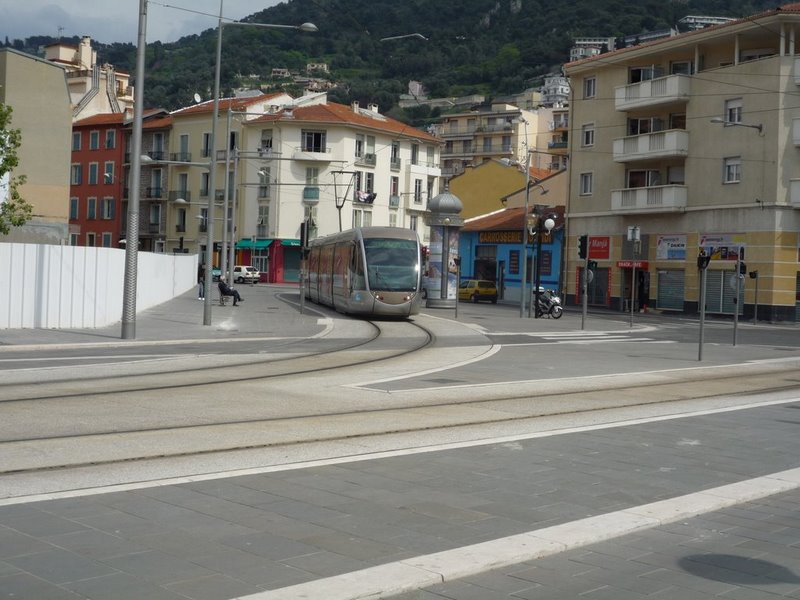
Light Rail in Nice France – Could be Langley, Abbotsford or Chilliwack!
This marks the 100 post to the Rail For the Valley blog and I hope that for all who read the various postings have found them informative. When John Burker asked me to help with postings for the then new Rail For the Valley blog site, I was worried that the subject matter was too dry for many and simply would give it a pass. I see by the statistics page that there is a loyal following and some postings have been viewed by over 160 people, which I find encouraging for a new blog site.
My goal with this blog is to provide informative news on current transit around the world and expand on subjects that the promoters for the reintroduction of the Interurban should and must know. There is, of course, some controversial subjects like RapidBus and SkyTrain, but a firm understanding of modern public transportation philosophy and operation is essential for any meaningful debate on the subject.
Valley residents are faced with a great ignorance about transit and transportation from the Minister of Transportation, TransLink, the media and even other transit groups and this blog, I hope, will provide a shining light to help those see through the darkness of willful and deliberate misinformation of others, intent to stop the project at any price. What would be a no-brainer in other countries is ignored here, though IAi??Ai??am pleased to hear thatAi??Ai??some local politicos taking up the standard for light rail and the reinstatement of the Vancouver to Chilliwack Interurban!
As always, comment are always welcome and I will try to answer all inquiries promptly.
A letter sent to the Abby News, regarding light rail and SkyTrain
The article, “Rapid Transit: The light rail option”, is timely, but one is irritated by Transportation Minister Kevin Falcon’s continued economies of the truth about SkyTrain. His claim that, “the business case conducted for the Evergreen Line linking Coquitlam, Port Moody and Burnaby concluded that SkyTrain technology would draw 2.5 times as many riders as light rail and would reach destinations in almost half the time.” is pure fabrication.
No independent study has ever found that the SkyTrain light-metro alone, would attract more ridership than light-rail, in fact the opposite is true; at-grade/on-street light rail attracted more new customers than elevated or underground metros! One tires of TransLink’s and Falcon’s wanton lack of ethics on this issue.
Noted American transit specialist, Gerald Fox, easily shredded TransLink’s business case for SkyTrain on the Evergreen Line. Fox found, “several instances where the analysis had made assumptions that were inaccurate, or had been manipulated to make the case for SkyTrain.” Fox also notes, “It is interesting how TransLink has used this cunning method of manipulating analysis to justify SkyTrain in corridor after corridor, and has thus succeeded in keeping its proprietary rail system expanding. In the US, all new transit projects that seek federal support are now subjected to scrutiny by a panel of transit peers, selected and monitored by the federal government, to ensure that projects are analyzed honestly, and the taxpayers’ interests are protected. No SkyTrain project has ever passed this scrutiny in the US.”
TransLink’s spokesperson Ken Hardie is not a transit expert, nor very knowledgeable on various transit modes and merely parrots what TransLink’s masters (Premier Campbell & Kevin Falcon) tell him to say. That’s what he’s paid for.
In Europe today, new LRT systems are being built cheaply, under $10 million/km.; less than the cost of new highway construction. Track-sharing with regular railways makes LRT implementation even cheaper.
We do not need anymore expensive and questionable studies; we know what needs to be done; we know how to do it. What is lacking is the political will to make it happen!
Malcolm Johnston
Light Rail Committee
Box 105, Delta, BC
V4K 3N5
604-889-4484
All-candidates meetings in the Fraser Valley
With the election campaign now in full swing, it’s time to get some concrete answers from the candidates and keep Rail for the Valley on the agenda.
Here is a very incomplete list of All-candidates meetings in the Fraser Valley. Check back for updates. There WILL be more meetings posted as they are announced. (E-mail railforthevalley@gmail.com, or post a comment, to add a meeting to this list.)
Surrey
Langley
Fort Langley-Aldergrove
May 5, 7:00-9:00pm
Fraser River Presentation Theatre
Langley Township Civic Facility
20338 – 65 Avenue
Abbotsford West
May 7, 7:00-9:00pm
UFV Abbotsford campus
Envision Athletic Centre North Gym
*hosted by the UFV Student Society
Abbotsford-Mission
May 5, 7:00-9:00pm
Heritage Park Secondary School Cafeteria, Abbotsford
*hosted by the UFV Student Society
Abbotsford South
May 6, 7:00-9:00pm
UFV Abbotsford campus
Envision Athletic Centre North Gym
*hosted by the UFV Student Society
Chilliwack (both Chilliwack constituencies?)
May 5, 6:00-9:00pm
Evergreen Hall
9291 Corbould Street
Chilliwack
May 6, 7:00-9:00pm
UFV Chilliwack campus
Yale Road – UFV Theatre in Building D
*hosted by the UFV Student Society
Chilliwack-Hope
May 7, 7:00-9:00pm
UFV Trades and Technology Centre
Tyson Road, in the Oval
*hosted by the UFV Student Society
*For more information on UFV Student Society-hosted meetings, click here.
If you can go to just one meeting in your area, and ask a question… with many of us acting together in doing this, it will make a difference in this election.
*Be prepared: most meetings will require that you submit a written question, and the most common questions will be asked.*
Getting a handle on the cost of light rail – How much does modern LRT cost?

Relaying new trackAi??Ai??for Nottingham’s LRT, on a disused railway formation.
What does light rail cost to build?
What has been left out of the ‘Rail for the Valley’ debate is real cost of light rail construction. True, a $35 million/km. figure has been bandied about, but this seems much too high and is based on recent American LRT projects, many of which have been designed to a mainline railway standard, with much gold plating. Two earlier postings showed that modern LRT is being built much cheaper, less than $8 million/km.Ai??Ai??in Europe.
http://railforthevalley.wordpress.com/2008/12/23/trams-on-the-cheap/
http://railforthevalley.wordpress.com/2008/12/26/trams-on-the-cheap-part-2/
But are all American LRT projects so expensive?
No, and the followingAi??Ai??table of light rail construction costs from the Greater Victoria Electric Railway Society (1995) givesAi??Ai??good insight ofAi??Ai??the capital costs of newer American LRT lines.
Comparative capital costs for new-start lower cost LRT systems updated to 1995 Canadian dollars
CITYAi??Ai??Ai??Ai??Ai??Ai??Ai??Ai??Ai??Ai??Ai??Ai??Ai??Ai??Ai??Ai??Ai??Ai??Ai??Ai??Ai??Ai??Ai??Ai??Ai??Ai??Ai??Ai??Ai??Ai??Ai??Ai??Ai??Ai??INITIALAi??Ai??Ai??Ai??Ai??Ai??Ai??Ai??Ai??Ai??Ai??Ai??Ai??Ai??Ai??Ai??Ai??Ai?? KM. OFAi??Ai??Ai??Ai??Ai??Ai??Ai??Ai??Ai??Ai??Ai??Ai?? 1995 COST
Ai??Ai??Ai??Ai??Ai??Ai??Ai??Ai??Ai??Ai??Ai??Ai??Ai??Ai??Ai??Ai??Ai??Ai??Ai??Ai??Ai??Ai??Ai??Ai??Ai??Ai??Ai??Ai??Ai??Ai??Ai??Ai??Ai??Ai??Ai??Ai??Ai??Ai??Ai??Ai??Ai??Ai??Ai??Ai??Ai??Ai??Ai??Ai??Ai??Ai??Ai??Ai??Ai??Ai??Ai??Ai??Ai??Ai??Ai??Ai??SERVICEAi??Ai??Ai??Ai??Ai??Ai??Ai??Ai??Ai??Ai??Ai??Ai??Ai??Ai??Ai??Ai??Ai??Ai??Ai??Ai??Ai??Ai??LINEAi??Ai??Ai??Ai??Ai??Ai??Ai??Ai??Ai??Ai??Ai??Ai??Ai??Ai??Ai??Ai??Ai??Ai??Ai??Ai??($MIL)/km.Ai??Ai??
BaltimoreAi??Ai??Ai??Ai??Ai??Ai??Ai??Ai??Ai??Ai??Ai??Ai??Ai??Ai??Ai??Ai??Ai??Ai??Ai??Ai??Ai??Ai??Ai??Ai??Ai??Ai??Ai??Ai??Ai??Ai??1992Ai??Ai??Ai??Ai??Ai??Ai??Ai??Ai??Ai??Ai??Ai??Ai??Ai??Ai??Ai??Ai??Ai??Ai??Ai??Ai??Ai??Ai??Ai??Ai??Ai??Ai??Ai??Ai??Ai??Ai??Ai??Ai??Ai??Ai??Ai??Ai??Ai??Ai??36.2Ai??Ai??Ai??Ai??Ai??Ai??Ai??Ai??Ai??Ai??Ai??Ai??Ai??Ai??Ai??Ai??Ai??Ai??Ai??Ai??Ai??Ai??Ai??Ai??Ai??Ai??Ai??Ai??Ai??Ai??Ai??Ai??Ai??Ai??Ai??Ai??15.4
DenverAi??Ai??Ai??Ai??Ai??Ai??Ai??Ai??Ai??Ai??Ai??Ai??Ai??Ai??Ai??Ai??Ai??Ai??Ai??Ai??Ai??Ai??Ai??Ai??Ai??Ai??Ai??Ai??Ai??Ai??Ai??Ai??Ai??Ai??Ai??Ai??Ai??Ai??Ai??Ai??1994Ai??Ai??Ai??Ai??Ai??Ai??Ai??Ai??Ai??Ai??Ai??Ai??Ai??Ai??Ai??Ai??Ai??Ai??Ai??Ai??Ai??Ai??Ai??Ai??Ai??Ai??Ai??Ai??Ai??Ai??Ai??Ai??Ai??Ai??Ai??Ai??Ai??Ai??Ai??Ai??22.5Ai??Ai??Ai??Ai??Ai??Ai??Ai??Ai??Ai??Ai??Ai??Ai??Ai??Ai??Ai??Ai??Ai??Ai??Ai??Ai??Ai??Ai??Ai??Ai??Ai??Ai??Ai??Ai??Ai??Ai??Ai??Ai??Ai??Ai??Ai??Ai??15.4
PortlandAi??Ai??Ai??Ai??Ai??Ai??Ai??Ai??Ai??Ai??Ai??Ai??Ai??Ai??Ai??Ai??Ai??Ai??Ai??Ai??Ai??Ai??Ai??Ai??Ai??Ai??Ai??Ai??Ai??Ai??Ai??Ai??Ai??Ai??1985Ai??Ai??Ai??Ai??Ai??Ai??Ai??Ai??Ai??Ai??Ai??Ai??Ai??Ai??Ai??Ai??Ai??Ai??Ai??Ai??Ai??Ai??Ai??Ai??Ai??Ai??Ai??Ai??Ai??Ai??Ai??Ai??Ai??Ai??Ai??Ai??Ai??Ai??Ai??Ai??Ai??Ai??24.5Ai??Ai??Ai??Ai??Ai??Ai??Ai??Ai??Ai??Ai??Ai??Ai??Ai??Ai??Ai??Ai??Ai??Ai??Ai??Ai??Ai??Ai??Ai??Ai??Ai??Ai??Ai??Ai??Ai??Ai??Ai??Ai??Ai??Ai??Ai??Ai??16.2
SacramentoAi??Ai??Ai??Ai??Ai??Ai??Ai??Ai??Ai??Ai??Ai??Ai??Ai??Ai??Ai??Ai??Ai??Ai??Ai??Ai??1987Ai??Ai??Ai??Ai??Ai??Ai??Ai??Ai??Ai??Ai??Ai??Ai??Ai??Ai??Ai??Ai??Ai??Ai??Ai??Ai??Ai??Ai??Ai??Ai??Ai??Ai??Ai??Ai??Ai??Ai??Ai??Ai??Ai??Ai??Ai??Ai??Ai??Ai??Ai??Ai??Ai??Ai??29.5Ai??Ai??Ai??Ai??Ai??Ai??Ai??Ai??Ai??Ai??Ai??Ai??Ai??Ai??Ai??Ai??Ai??Ai??Ai??Ai??Ai??Ai??Ai??Ai??Ai??Ai??Ai??Ai??Ai??Ai??Ai??Ai??Ai??Ai??Ai??Ai??10.5
San DiegoAi??Ai??Ai??Ai??Ai??Ai??Ai??Ai??Ai??Ai??Ai??Ai??Ai??Ai??Ai??Ai??Ai??Ai??Ai??Ai??Ai??Ai??Ai??Ai??Ai??Ai??Ai??Ai??Ai??Ai??1981Ai??Ai??Ai??Ai??Ai??Ai??Ai??Ai??Ai??Ai??Ai??Ai??Ai??Ai??Ai??Ai??Ai??Ai??Ai??Ai??Ai??Ai??Ai??Ai??Ai??Ai??Ai??Ai??Ai??Ai??Ai??Ai??Ai??Ai??Ai??Ai??Ai??Ai??Ai??Ai??Ai??Ai??67.4Ai??Ai??Ai??Ai??Ai??Ai??Ai??Ai??Ai??Ai??Ai??Ai??Ai??Ai??Ai??Ai??Ai??Ai??Ai??Ai??Ai??Ai??Ai??Ai??Ai??Ai??Ai??Ai??Ai??Ai??Ai??Ai??Ai??Ai??Ai??Ai??Ai??Ai??13.8
St. LouisAi??Ai??Ai??Ai??Ai??Ai??Ai??Ai??Ai??Ai??Ai??Ai??Ai??Ai??Ai??Ai??Ai??Ai??Ai??Ai??Ai??Ai??Ai??Ai??Ai??Ai??Ai??Ai??Ai??Ai??Ai??Ai??1993Ai??Ai??Ai??Ai??Ai??Ai??Ai??Ai??Ai??Ai??Ai??Ai??Ai??Ai??Ai??Ai??Ai??Ai??Ai??Ai??Ai??Ai??Ai??Ai??Ai??Ai??Ai??Ai??Ai??Ai??Ai??Ai??Ai??Ai??Ai??Ai??Ai??Ai??Ai??Ai??Ai??Ai??Ai??Ai??28.9Ai??Ai??Ai??Ai??Ai??Ai??Ai??Ai??Ai??Ai??Ai??Ai??Ai??Ai??Ai??Ai??Ai??Ai??Ai??Ai??Ai??Ai??Ai??Ai??Ai??Ai??Ai??Ai??Ai??Ai??Ai??Ai??Ai??Ai??Ai??Ai??Ai??Ai??Ai??Ai??17
Notes: Inflation at 4% per year compounded. Conversion based on $1 Canadian $0.65 USD; .6 mile = 1 km. Sacramento LRT was 60% single track, hence lower construction costs. Table adapted from Central Puget Sound Regional Transit.
What should be noted is that LRT construction costs have not changed much since this table was prepared, but what has happened in the interim,Ai??Ai??is that gross and needless over-engineering has driven upAi??Ai??construction costs to such an extent, that light-rail’s construction costs rival that of the SkyTrain light metro, as witnessed with the planned LRT Millennium and Evergreen Lines!
The 300 km. solution – An affordable way to reduce gridlock and pollution

For overAi??Ai??two decades the Light Rail Committee has stated that toAi??Ai??have a viable alternative to the car, over 300 km. of light rail must be built in the region, the question of course is, “can we afford it?” The answer is yes!
To be successful modern LRT must not just serve major destinations like town centres, universities and alike, but it must penetrate into the suburbs where people live. To do so, it must be built cheaply and to build LRT cheaply, it must be free of any major engineering such as tunnels andAi??Ai??viaducts.
TransLink’s planners have generously inflated the cost of modern LRT to such a point that it has become equal to SkyTrain, which coincides with their thinking that light-rail is just a poorman’s SkyTrain. This blinkered thinking has greatly reduced the ability of TransLink and ‘Metro’ Vancouver (GVRD) to plan for future transit applications, especially for rail transit. With SkyTrain’s costs now wellAi??Ai??exceeding $100 million/km., planning is now done in about 10 km. or $1 billion and change, increments. This myopicAi??Ai??vision has retarded any useful ‘rail’ planning for the Fraser Valley.
To build 300 km. of SkyTrain in the region would cost over $30 billion, but by using LRT both on the former Vancouver to Chilliwack interurban route and separate LRT/streetcar networks in Vancouver,Ai??Ai??Surrey, Langley and Abbotsford, could cost for 300 k. of new LRT could be as little as $5 billion. A deluxe Vancouver to Chilliwack interurban service (15 to 20 min headways) would cost about $1 billion to install, while 200 km.Ai??Ai?? of LRT/streetcar in Vancouver, Surrey, Langley and Abbotsford, at about $20 million/km. to build, would cost about $4 billion, or a grand total of $5 billion. The key is to build it cheaply, by building light rail on-street where possible. Of course, the more engineering included in construction increases the cost, the trick is to keep engineering to a minimum.
In a province where the cost metro construction has exceeded $2.5 billion for the 19 km. RAV Line, TransLink and Metro transportation planners have forgotten thatAi??Ai??a real light rail alternative can be built much cheaper than SkyTrain. As well, that hoary old saw that theAi??Ai??Fraser ValleyAi??Ai??doesn’t have the density for rail can be put to rest once and for all,Ai??Ai??for if RAV/SkyTrain operates in areas with densities as low as 2,000 per sq./km., much cheaper LRT, costing about one fifth the cost of SkyTrain, could happily operate in areas with densities as low as 400 persons per sq./km.!
The defenders of the massive Gateway highways and bridge project, as well as the SkyTrain/RAV lobby have failed to understand modern light-rail philosophy, “Build it cheaply and build lots”, and by doing so have condemned the region to continued and future gridlock, pollution, withAi??Ai??ever increasing property and auto taxes to fund and subsidize an unworkable, ill-conceived, and dated regional transportation infrastructure.
The 300 kilometre solution: it’s time we start now, to save the future.
Highway 1 Day of Action a Soaking Success
By all accounts!
Pictures: Day of Action in pictures on Flickr (feel free to upload yours)

I’ve heard over and over again, from people up and down the Valley and in Vancouver, that this was actually a really fun event, & people want to do it again.
*If you have a banner that needs storing, please contact us by sending an email to railforthevalley@gmail.com.
News coverage so far:
VIDEO: Global TV news item on our Day of Action
VIDEO: CTV news item on our Day of Action
Chilliwack Progress: Light rail demonstration honking success in Chilliwack
Aldergrove Star: Rail transit supporters rally
Surrey Leader: Protesters push for rail not freeways
Abbotsford News; Railing for transit
Chilliwack Times: A honking success
Langley Free Press: Rail For The Valley Protests along Highway #1 Overpasses



Recent Comments