TransLink- Metro Vancouver & BC Transit -Greater Victoria ridership 2025
According to statistics Canada TransLink ridership,
in 2025 was 235.12 M journeys
vs 2024 239.36 M journeys ( 3.1 % less )
Where has the ridership gone?
We have now invested, including the current $16 billion, full program, to extend the Expo and millennium lines a mere 21.7 km, is over $30 billion, ridership is decreasing at an alarming rate.
Why?
I don’t have the answer but I would guess it is the transit system itself and decades of politcal interference where trying to design a transit system to please every one, in fact has pleased no one!
User-friendliness is the keyword describing a successful public transit system, but Translink and the service it provides is far from being user-friendly.
When SkyTrain was first imposed on the GVRD, now metro Vancouver, downtown Vancouver was the main destination for many transit customers, but in 2026, there are many main transit destinations but with the bus services designed to feed the light-metro system, many of the new customer destinations are near impossible to timely access by transit and taking the car is just so much easier.
A good example was just last Saturday, where a scheduled bus failed to show and began an 2 hour ordeal to get from Vancouver to Tsawwassen. Taking the car would be just 30 minutes.
Lack of any customer care by TransLink and senior management means ridership will further decline until there is a complete change in direction by TransLink, the mayor’s council on Transit and the Premier’s Office.
First posted by zweisystem on Wednesday, March 4, 2020
This was posted almost six years ago and the realities of subway construction are today, hitting home. The Broadway Subway, the 5.7 km continuation of the the Millennium Line, first pegged to cost $2.7 billion and open in 2024, has now well passed the $3 billion mark and is projected to cost near $4 billion when it opens, probably in early 2028.
Already 80 businesses have gone bankrupt due to the road closures along Broadway from subway constructionist, which politcans and bureacrats had promised would not happen. many more businesses are due to go bankrupt in 2026 due to the complete closure of Broadway.
Also it must be remembered that according to Thales, who is doing the $1.47 billion re-signalling program on both the Expo and Millennium Lines (not included in the cost estimates for the Broadway Subway), the maximum capacity pf the Broadway Subway will be a mere 7,500 pphpd!
The government of Canada, the government of British Columbia, and the region have committed to investing $C 1.47bn ($US 1.1bn) in the Expo and Millennium Line Upgrade Programme until 2027.
When the programme is fully implemented, the Expo Line will be able to accommodate 17,500 passengers per hour per direction, and the Millennium Line will be able to handle 7500 passengers per hour per direction, a 32% and 96% increase respectively.
Sadly, the realities of subway construction remain unlearned in Metro Vancouver, as the politicians at all levels of government sell porkies to the taxpayers and Broadway merchants..
The realities of subway mania.
Vancouver politicians live in “The Land of the Lotus Eaters”, when it comes to transit.
In Greek mythology the lotus-eaters, were a race of people living on an island dominated by the Lotus tree. The lotus fruits and flowers were the primary food of the island and were a narcotic, causing the inhabitants to sleep in peaceful apathy.
As TransLink, Vancouver Council, UBC, and the Mayor’s Council on Transit sleep in peaceful apathy, the realities of the real cost of the subway are ignored.
According to Metrolinx’s study, the real cost of the 5.8 km Broadway subway will be more like $6 billion over 50 years.
As costs mount ever higher elsewhere for subways, our politicians and bureaucrats remain ignorant of escalating costs for subway construction, continue to misinform the public as to the real cost of Broadway’s subway.
In Metro Toronto, Metrolinx has finally admitted that:”
“……the Scarborough subway costs simply aren’t worth it,” he said. “It’s been years that Scarborough subway advocates haven’t been telling the truth to Scarborough residents and people across the city.”
And for years now, Translink: the City of Vancouver, UBC, the Ministry of Transportation, the Minister of Transportation, the Minister responsible for TransLink, the Mayor’s Council on Transit and the subway lobby haven’t been telling the truth about the high costs of subway construction to taxpayers in metro Vancouver. Is the $6 billion. plus, cost over 50 years, giving good value?
Is it not time that the province steps in for a fiscal reality check? Is there the moral fibre in Victoria to do this?
Interesting that the numbers for LRT came via the TTC and the numbers for the subwaycame from the provincial government who wanted the subway.
The subway project in Scarborough has been hotly debated in Toronto since 2013, when its backers won council support for cancelling a light-rail line in the area and replacing it with an extension – the Toronto-York Spadina Subway Extension seen here in 2016 – of the subway to Scarborough Town Centre mall.Kevin Van Paassen/The Globe and Mail
Two of Ontario’s marquee transit projects have costs that far exceed their benefits, according to a pair of analyses prepared for the regional transit agency Metrolinx.
The reports, released Friday afternoon, show that the Scarborough subway extension proposed for east-end Toronto and the westward extension of the Crosstown Eglinton light rail line across the city could, together, cost nearly $10-billion to build while producing benefits amounting to billions less. In spite of this, Metrolinx has recommended both projects be advanced.
The analysis deliberately errs on the side of caution and Metrolinx hopes to improve the benefits of these projects over time, agency CEO Phil Verster said in a statement.
The benefits are calculated by assigning a monetary value to such things as removing cars from the road and saving commuters time.
Shelagh Pizey-Allen, spokesperson for the advocacy group TTCRiders, said the projects were examples of proposals pitched with a modest price tag, but costs rose and value diminished over time.
The Metrolinx board received these reports at an in-camera meeting in January and, at the time, quietly approved pushing ahead with the projects. The agency refused to release the reports when asked earlier this month.
Both projects are being overseen by the provincial government, which struck a deal with the city of Toronto that handed over control and financial responsibility for major rail construction to Metrolinx.
A spokeswoman for Transportation Minister Caroline Mulroney said the government would continue to support both projects.
“These [reports] represent Metrolinx’s best understanding of the projects at a given moment in time and are inevitably subject to change during the projects’ life cycles,” Christina Salituro said in an e-mail.
“These documents are key elements in ensuring Metrolinx continues to make the most informed decisions going forward and are just one of a number of factors used in making a final decision.”
The subway project in Scarborough has been hotly debated in Toronto since 2013, when its backers won council support for cancelling a light-rail line in the area and replacing it with an extension of the subway to Scarborough Town Centre mall.
The analysis released Friday of the subway extension concluded it would bring $2.8-billion in benefits over a 60-year period, and cost about $5.5-billion to build. The Ontario government had last year pegged the cost at this level, which is about $2-billion more than the amount budgeted by the city when it was in charge of an earlier version of project.
“That subway is not going to be cost-effective,” said Brenda Thompson, with the advocacy group Scarborough Transit Action, adding that such a high price tag would preclude building anything else in that part of the city.
“I think this is going to suck up all of the money and I think politicians should be upfront about that. This is what we’re going to end up with, if at all.”
Toronto Councillor Josh Matlow, who has long advocated for the original plan for light rail instead in Scarborough, said that the report is another example of the claims of subway boosters being proved wrong.
“Today Metrolinx finally admitted that the Scarborough subway costs simply aren’t worth it,” he said. “It’s been years that Scarborough subway advocates haven’t been telling the truth to Scarborough residents and people across the city.”
The city had budgeted $3.56-billion for a one-stop Scarborough subway extension. During the last election campaign, now Premier Doug Ford pledged to add two more stations. The version being studied by Metrolinx includes the additional stations.
The newly released analysis for a light-rail extension of the Crosstown to Pearson International Airport shows that it will cost up to $4.4-billion, net present value, in 2019 dollars, if it has nine stops and is substantially below ground. In that form it would bring benefits of $1.4-billion over 60 years.
The project’s capital cost could be reduced to about $2.8-billion if most of the stops were removed, the analysis notes, or to as little as $2.1-billion if it was built on the surface.
Mr. Ford has pledged to bury as much of the Crosstown extension as possible.
First published on July 8, 2022 under the title “The $1.47 Billion Solution”, recent comments about the Broadway subway need clarifying.
The following quote sums up the capacity issue for the Millennium Line (Broadway subway).
When the programme is fully implemented, the Expo Line will be able to accommodate 17,500 passengers per hour per direction, and the Millennium Line will be able to handle 7500 passengers per hour per direction, a 32% and 96% increase respectively.
Please copy this this to Transportation Minister Mike Farnsworth, who seems to confuse the Millennium and Expo lines.
The following news release came to Zwei via Montreal and Germany and answered one very important question, which TransLink is ashamed to reveal locally.
The cost of the signalling rehab is $1.47 billion!
This is not chump change, but serious coin, which must come from somewhere.
Well, I can guess: a little from the Ministry of health; a lil from the Lytton rebuilding program and most, if not all funding that maybe would have gone to the E&N or even the Rail for the Valley project. come to think of it, $1.47 billion could fund the “full meal deal” Leewood Study, with three trains per hour between Chilliwack and Vancouver.
We now will have to wait for the other shoe to drop, multi billion dollar plus cost to refurbish and enhance the electrical supply for the light-metro.
TransLink awards Thales SkyTrain train control contracts
Contracts enable a 22km extension of the fully automated SkyTrain system.
TransLink has awarded two contracts to Thales for upgrading the train control technology on the Expo and Millennium lines of Metro Vancouver.
TRANSLINK has awarded Thales two contracts to provide train control technology under the Expo and Millennium Line Upgrade Programme for the SkyTrain network in Vancouver.
The contracts include a new Operations Control Centre and a new fully automated depot, Operations Maintenance Centre 4. These two new facilities are key components of the upgrade programme.
The system will be expanded from 80km to 106km by 2028, with 41 new trains expected to be in service by the end of 2027.
TransLink says that in 2018 the Expo and Millennium lines saw on-time performance of 96.38% – the best punctuality on record for SkyTrain and higher than that achieved by most major metros in North America.
The government of Canada, the government of British Columbia, and the region have committed to investing $C 1.47bn ($US 1.1bn) in the Expo and Millennium Line Upgrade Programme until 2027.
When the programme is fully implemented, the Expo Line will be able to accommodate 17,500 passengers per hour per direction, and the Millennium Line will be able to handle 7500 passengers per hour per direction, a 32% and 96% increase respectively.
1. lack of success: “an economic policy that is doomed to failure”
2. the neglect or omission of expected or required action: “their failure to comply with the basic rules”
A rather intense phone call has prompted me to post this.
The caller irately stated: “SkyTrain is not proprietary” and “Vancouver has the most successful transit system in North America”. He went further but his rant became a salad of gish gallop.
It has been a long time since I have entertained such a call, but my name has been in the local media of late so it was to be expected.
The problem I think is that TransLink is spending huge amounts of money, now over $16 billion to extend the Expo and Millennium Line a mere 21.7 km, combined with the fact that the Broadway subway (As I predicted as early as 2016) has sterilized business along Broadway (now with over 80 bankruptcies) has got a lot of local politcans very worried.
Also very worried is the provincial NDP, who have been gaslighting taxpayers as to the costs and benefits of the SkyTrain light metro system.
The problem is that TransLink’s ridership has been in a steady decline since 2018; 2025 ridership numbers declined 1.5% from 2024!
With civic elections this year and a tenuous majority in Victoria, combined with an extremely unhappy electorate both the provincial government and TransLink ar extremely worried, but not worried enough to do the same things over and over again, ever hoping for different results.
TransLink’s failure to attract new customers after about $30 billion has been spent on the SkyTrain light-metro system alone, does not an election winner make!
1. (in Hinduism and Buddhism) the sum of a person’s actions in this and previous states of existence, viewed as deciding their fate in future existences: “a buddha is believed to have completely purified his karma”
The following is from the LRPPro:
Alstom has a problem on their hands with their Citadis Spirits LRV’s and they are not going to get into the LRT market in NA over it. They are no longer building the Flexity after TTC order and Kitchener will need 18 of the for the next phase in 5-10 years.
Toronto has them on Line 6 that has 18 of them that are have issues at this time. Mississauga has 27 at this time and will have up to 45 when the full line is built. Mississauga LRV’s will not be in service until late 28 to 30. May see testing late this year or early 27 considering it was to happen in 24.
It seems there is a problem with Alstom’s trams in Canada, which begs the question why?
In Zwei’s opinion, part of the problem is politcal interference.
In the Canadian politic, politcans wanted photo-ops, instead of transit workhorses and demanded politically prestigious transit systems to be built.
Transit systems are not toy trains and cost a lot of money to operate, money that has not been budgeted for by the very same politcans.
It seems karma has struck those politicians as they play the blame game.
Lack of maintenance is just not a problem back east, as TransLink is playing the “deferred maintenance” game in Metro Vancouver with both the bus and light metro fleets.
That $16 billion plus extending the Expo and Millennium Lines a mere 21.7 km may have something to do about it.
Again politicians have not dealt with the real issues, rather just look ahead to cutting ribbons on transit projects for the next election.
Those advocating for more SkyTrain, never mention the now $90 million funding needed annually in additional operational and maintenance costs, once the extension project is operational.
With Alstom selling the Kingston manufacturing plant, home to the proprietary Movia Automatic Light Metro system (SkyTrain) and the current ills which seem more centered on Canadian practices than the products, Alstom, with Canada being a very small market, may pull out of Canada completely.
That would be a major black eye to Canada, especially in these delicate times.
1. the action or crime of making a false spoken statement damaging to a person’s reputation: “he is suing the TV company for slander”
verb
1. make false and damaging statements about (someone): “they were accused of slandering the head of state”
The continued debate about the trains that operate on the Expo and Millennium Lines continues.
The SkyTrain for Surrey folks have crossed the line on this issue and Rail for the Valley call for a retraction of their recent News Release or face possible legal action.
The claim that Rail for the Valley and others “fabricated” certain facts is false.
Skytrain to Surrey also points out that somehow Rail for the valley “Strangled the Broadway Subway by 20 years“; “Sabotaged Surrey’s rapid transit, pushing for an inferior surface LRT“; and “Distorted public trust“; are false and deliberately misleading and constitute slander.
According to SkyTrain to Surrey:
The consequences of this misinformation weren’t just academic—they were astronomical. These false claims were the primary weapons used to:
Strangle the Broadway Subway: originally slated for completion in the mid-2000s, this critical regional artery was delayed by 20 years. (This statement is completely false RftV)
Sabotage Surrey’s rapid transit, pushing for an inferior surface LRT that would have offered lower capacity and lower speeds. (This statement is completely false – RftV)
Distort public trust, forcing planners to defend proven technology against recycled myths — again and again and again. (RftV would be ecstatic to have this sort of influence – RftV)
SkyTrain is the name of the regional light-metro system which was chosen via a radio contest in 1985 on CKNW Radio. The SkyTrain light metro system which consists of conventional trains that operate on the Canada Line and the unconventional, proprietary trains that operate on the Expo and Millennium Lines. These trains have been deemed proprietary since the first ALRT Trains operated in 1986.
The trains used on the Expo and Millennium Lines have had four owners, the Urban Transportation Development Corporation, a province of Ontario Crown Corporation; Lavalin; Bombardier and now Alstom.
The proprietary railway has been marketed under at least six names including, Intermediate Capacity Transit System (ICTS); Advanced Light Rail Transit (ALRT); Advanced Light Metro (ALM); Advanced Rapid Transit (ART); Innovia Rapid Transit; Movia Automatic Light Metro (MALM).
These trains can only operate within their small six system family and cannot operate on conventional railways or transit systems.
Originally seven systems were built, but only six remain in operation and no new system has been sold in the past 25 years.
The technical patents for the proprietary railway are owned by Alstom (inherited from Bombardier) and possibly SNC Lavalin may still may own engineering patents, inherited from Lavalin.
According to a News Release from Kuala Lumpur:
” A consortium made up of CRRC ZELC, CRRC Rolling Stock Centre (M) Sdn Bhd and CKM Landas MRO Sdn Bhd has surfaced as the front runner for a lucrative RM1.1 billion contract to manufacture, supply, deliver, test and commission 26 sets of four train cars for Prasarana Malaysia Bhd to be used for the Kelana Jaya light rail transit (LRT) lin“
What is being done is not a surprise as it is a replacement order with new cars being custom built by the CRRC to operate on Kelana Jay Line, which begs many questions. The same is true of many proprietary railways, where the original manufacturers has gone out of business. Germany’s famed Schwebebahn monorail is a good example where new cars were constructed to replace old stock on the only line, which started operation in 1903.
It should be of note that the CRRC is not marketing the cars, rather they are building cars for a replacement order. The proprietary system is deemed darted and unsalable, with no sales for a quarter century.
Kuala Lumpur has three rapid transit systems.
1) The now called Mass Rapid Transit System which is a conventional light metro.
2) The Kelana Jaya Line, which uses Bombardier’s ART system.
3) Klang Valley Rapid Transit metro system, a proprietary monorail system.
It was reported that officials wanted a monorail for the Kelana Jaya Line but Bombardier and SNC Lavalin were involved in a scandal where they paid “success fees” to senior bureaucrats and politicians, to build with ART, which Bombardier were having huge issues trying to sell the proprietary railway. This was ground zero for SNC Lavalin’s (they owned engineering patents) international bribery scandal.
Also of note the next rapid transit line built in Kuala Lumpur was indeed the monorail!
From further research, it seems CRRC is doing this with Alstom’s permission, which leads to three points.
1. Alstom either knew they were getting nothing from Kuala Lumpur. Due to their Bombardier connection. That they didn’t even get one of the contracts for the rehab and conversion of 2 car (sections) trainsets to 4 car (sections) trainsets, Converting the fleet’s 2 car trains (2 section trains, the 200 models). Their people invented the tech, you think they would got something.
2. That Alstom doesn’t care about the tech itself, maybe because that are not actively marketing the system and plan to abandon production after the Vancouver order is completed.
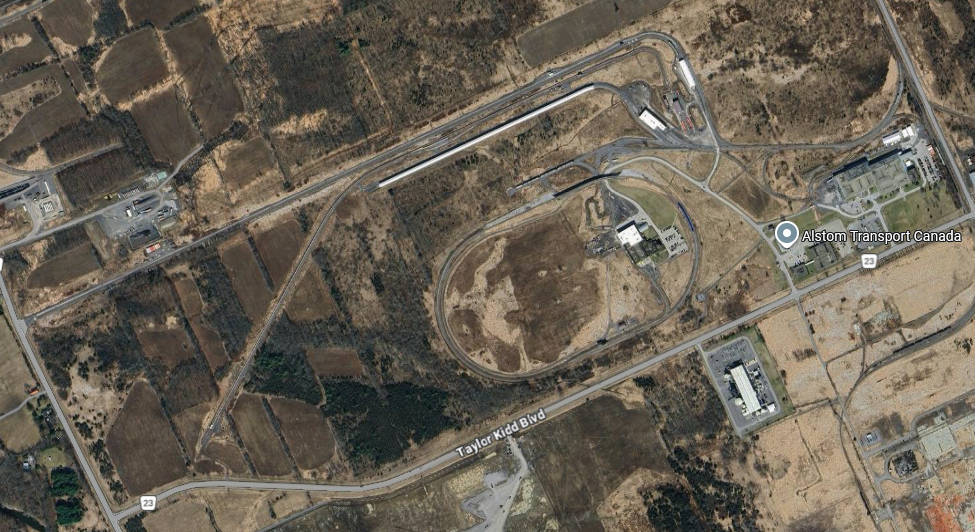
3. That Alstom is “washing its hands” of MALM as they plan to discontinue production and any sort of legal action would be counter productive, especially with the previous dubious history. Alstom is selling the production facility and test track in Kingston Ontario and the CNR has applied to abandon the spur line servicing the facility.
Alstom did get the contract for Kuala Lumpur’s airport people mover cars.
Lastly, the fact that a company known for poor quality trains and intellectual property theft, CRRC, is going to be SkyTrain for Surrey and Vancouver’s champion to prove that their technology isn’t proprietary is a good joke on on both. Nothing like being beholden to Communist China for your rail transit technology. The CRRC ‘s winning of the contract was most likely an, “anybody but Bombardier contract” or in this case, “anybody but Alstom contract”.
The big question, which SkyTrain for Surrey does not ask is “Would these car be legal for operation in Canada?“.
Rail for the Valley would again remind everyone, the proprietary trains, operating on the Expo and Millennium Lines is just one of the seven systems built in almost fifty years. Today, only six systems remain in operation and not one sale of a new system in the past 25 years. The proprietary railway is today, as it was in the past unsalable, which illustrates the many expensive issues that comes with a proprietary railway.
Rail for the Valley demands SkyTrain for Surrey to retract their claims in their recent News Release!
The ongoing rift between Canada and the USA will have generational effects and will never go back to normal, as President Trump has forever changed how people behave. Trump and MAGA is a prelude for great change in BC.
The ongoing climate change with summer’s heat dome and subsequent wild fires shows we cannot go back to normal.
The now annual atmospheric rivers resulting in massive floods and land slides, demonstrates we cannot go back to normal.
Metro Vancouver’s regional transit system has been greatly affected by events since 2020, as thousands of of people have changed their travel habits with many either working or studying from home. This has put a massive finical strain on TransLink, which now claims huge annual deficits.
TransLink seemed OK operating empty buses, without any hint of a “plan B” for attracting new ridership. TransLink is now asking the provincial and federal governments for more money to to service its continued declining ridership, at the same time and to keep huge executive salaries being paid.
TransLink and the Mayor’s Council on Transit with their pet $4 billion, 5.6 km Broadway subway and their $6 billion+, 16 km extension to the Expo a Line, despite clear evidence that both projects are nothing more than “gold-plated” prestige projects, have all but bankrupted TransLink. Both projects, designed to further the profits of land speculators and land developers who support many of the mayors at election time. Both projects will only improve transit on paper and nothing more.
The proposed Broadway subway is being built on a route without enough ridership to justify its construction and the flip flop from LRT to light-metro in Surrey, will be again be built on a route where the ridership will not justify construction costs. An estimate of $100 million annually for increased operating costs, which translates to increased annual subsidies for both projects, has not been budgeted for.
The so called “business cases” for these two transit projects were a sham and continues the practice of business cases in BC being politcal documents and not technical documents!
Questionable ridership projections are based on future condo tower development, based on foreign investment and this is not guaranteed! The already huge cost does not include the proprietary Movia Automatic Light Metro (erroneously called SkyTrain) cars, nor the inflationary cost increases for cement and specialty steel, needed for subway and viaduct construction.
NEWS FLASH: TransLink’s ridership dropped 1.5% in 2025!
It is no secret that the often renamed and now called Movia Automatic Light Metro (MALM), as used on the Expo and Millennium Lines is obsolete, as it has been obsolete since the late 1980’s, being more expensive to build, maintain and operate than its chief competitor, light rail.
Only seven such systems have been built in the past 50 years, with only six still in operation and only two are seriously used for urban transit. despite the system being rebranded six times!
Today, modern light-metro systems such as Ottawa and Seattle use light rail vehicles, because of their cost effectiveness and their ability to operate on lesser rights-of-ways, yet because MALM uses Linear Induction Motors, it is impossible to use LRV’s on the proprietary MALM system.
MALM cannot be built cheaply, nor can it be operated and maintained cheaply. The taxpayer pays a first class cost for a second class system and this cannot continue in the future.
The recent sale of Bombardier to Alstom puts into question the future availability of MALM cars and spare parts! Production of niche transit systems like the proprietary MALM light metro, maybe discontinued. Alstom has already shown that it has little use for proprietary transit systems by discontinuing production of the TVR guided bus used in several European cities, leaving operators scrambling for spare parts.
Alstom has offered for sale the MALM production site in Kingston Ontario, with the all important test track; the CNR has applied for the abandonment of the spur line for the production facility.
Vancouver is now the only customer for MALM, as the systems built in Korea and Malaysia have mired Bombardier and SNC Lavalin (the patent holders of the proprietary railway) in legal misadventure, due in part, to healthy “success fees” paid to lobbyists and politicians, to ensure MALM was to be built!
The Broadway subway and the Expo Line extension to Langley extensions to the SkyTrain light-metro system are grossly overpriced for what they will do as light ridership on both extensions will greatly increase operating costs. Broadway, current peak hour transit customer flows are under 4,000 persons per hour per direction (pphpd). The North American standard for building a subway is a transit route with customer flows of at least 15,000 pphpd and operational subsidies increase dramatically with smaller customer flows.
Despite deliberate and misleading statements by TransLink and the City of Vancouver, Broadway is not the busiest transit corridor in Canada, as a representative of TransLink stated in a letter, Broadway was “our region’s most over crowded bus route“
TransLink and the Mayor’s Council on Transit have never been honest with the long term costs of the project, which over a fifty year period, will have grave implications for the metro Vancouver and BC taxpayers.
According to the Toronto Transit Commission, who have a long experience operating subways, the Broadway subway to Arbutus, alone, will add over $40 million annually to TransLink’s operating costs.
The fifty year costs for subways and grade separated transit are staggering, estimated more than $1 billion per km for the subway portion and just under $600 million per km for the elevated sections of the light metro system. Already the original Expo Line desperately needs a minimum $2 billion to rehab (full rehab about $3 billion) the system and increase capacity beyond Transport Canada’s Operating Certificate maximum of 15,000 pphpd.
TransLink has ignored these costs, for fear of pointed questions about the massive future costs including tax increases.
The following is the 50 year costs of various transit modes, by Ontario’s MetroLinx.
Spending $16 billion for 21.7 km of light-metro pales, when one could instead invest under $2 billion on both, the proposed Fraser Valley Rail project reinstating a 130km Vancouver to Chilliwack passenger service and $4 billion rehabbing the E&N, reinstating a Victoria to Courtney 183 km passenger service and still have $10 billion left over to invest in regional transit projects in Metro Vancouver and beyond.
The current economic crisis will create long term financial hardships for taxpayers, not just TransLink. Even though there are generous government support, TransLink and its ossified bureaucracy still squanders monies on questionable projects, instead of improving the core service.
The taxpayer will very soon, be in no mood, to fund Metro Vancouver’s gold-plated, prestige transit projects, nor will the taxpayer and the transit user be willing to pay higher fares and other taxes for transit that about 85% of the population will not use.
As Premier, you must step in and say “enough” as TransLink and the Mayor’s Council on Transit have isolated themselves from public oversight and ignore public debate.
In 2015, 62% percent of the people voted against TransLink’s demands for money, yet they have done nothing but play the taxpayer and voter for fools by offering virtually the same plan with no real public input. TransLink’s public oversight is nothing but a charade; a smokescreen to carry on with their hugely expensive rapid transit agenda.
In our current economic climate, TransLink must plan for affordable transit projects; build user friendly transit projects and refrain from doing the same expensive thing over and over again hoping for different results.
TransLink needs to rethink its planning; the Mayor’s Council on Transit needs to rethink how transit is provided and funded; and the provincial government must rethink its rubber stamping Metro Vancouver’s questionable transit planning.
The taxpayer and the transit customer deserve far better than the current sham planning, complete lack of oversight and failure to correct the current mess maybe felt at the polls in the next election three years hence.
After 40 years, the taxpayer is still held hostage to expensive and myopic light-metro planning, based largely on an obsolete light metro system.
In Metro Vancouver, The SkyTrain light metro system has had an interesting issue, no noticeable modal shift from car to train.
Yes, the light metro system carries a lot of customers but the vast majority have transferred from bus to light-metro. The bus system has been so designed to feed every bus customer onto the light metro system, which in turn may account for the steady decline of ridership on the regional transit system since 2018!
Instead of planning bus routes to meed the demands of the customer, bus routes are planned to meet the demands of politicians and that is to increase ridership numbers on the light metro system!
The following article is of interest, where £19 billion (CAD$35 billion) invested in the Elizabeth Line only saw a 1% modal shift from car to train!
Will the now over $16 billion investment in the Expo and Millennium Lines, actually take cars off the road?
Probably not.
Sadly, SkyTrain has not yet shown any noticeable modal shift from car to transit and $16 billion; 21.7 km of new line probably will have the same result as the newly built Elizabeth Line.
Transport Leader Newsletter and Blog | Helping Transport Leaders Transform Mobility 11h
The Elizabeth Line in London has received rave reviews. But has it failed in its most important metric? The Elizabeth Line post-opening evaluation has been released: https://lnkd.in/gWF-TCbQ The Line carries 800,000 people every day. It’s the UK’s busiest rail service. Journey times dropped. Crowding reduced.
Accessibility improved dramatically across the network. But there’s an uncomfortable truth buried in the data. 🚇
Only 1% of riders switched from driving. Just 1%. Think about that for a moment. London spent nearly £19 billion on world-class public transport. The trains are fast and comfortable. Stations are modern and accessible. The service runs frequently and reliably. And almost nobody left their car at home.
80% of Elizabeth Line users simply switched from other trains.
They were already public transport riders. This isn’t a failure of the Elizabeth Line itself. The project delivered amazing results for London. But it exposes a hard truth about transport planning. 🚗
Here’s what the Elizabeth Line DID achieve:
• 9 million minutes saved per weekday across the network
• 71,000 new homes built near stations
• 11% reduction in step-free journey times
• Reduced crowding on other rail lines
These are real wins. They matter for people’s lives and London’s economy. But mode shift from cars? Almost zero.
This result shows we need both carrots and sticks. Better public transport alone won’t get people to give up their cars. We also need to make driving less appealing. Subscribe to my newsletter at transportlc.org/subscribe for insights like this every week.
Yes, SkyTrain the most successful transit system in the world, no one wanted to buy!
Interesting article in the Hive, which is basically the mouthpiece for TransLink.
The problem with SkyTrain is that it was a politcal decision and now with almost 45 years of deliberate misinformation and pro SkyTrain propaganda, the local media, especially with lazier younger reporters and journalists just do not do any research and print what they are told to print.
Here the old adage comes true; “if you repeat a lie often enough, the public become to believe it.“
The trains used on Vancouver’s Expo and Millennium Lines us the the proprietary ICTS/ALRT/ART/Innovia RT/MALM system, which has had four owners, the Ontario government, throught the UTDC, Lavain, Bombardier and Alstom. Only seven such systems were built and only six remain in operation.
The four systems that Bombardier sold, when they owned the patents, were fraught with controversy!
1 ) Korea, where Bombardier paid success fees to both bureaucrats and politicians to ensure a sale. The fallout from this was lawsuits and criminal investigations with the result of irreparable damage to Canadian Industries trying to do business in Korea with the scandal.
2) Malaysia, where Bombardier and SNC Lavalin paid success fees to bureaucrats and politicians including the prime minister to ensure the sale of ART for Kuala Lumpur for their second rapid transit system. This scandal started the whole SNC Lavalin and Bombardier bribery scandal, with hints that the Prime minister of Canada was involved.
3) New York, but in the USA all rapid transit systems being built, using federal funds must be peer reviewed and the JFK airTrain was duly peer reviewed and it failed badly, being far too expensive to build and not well designed. To keep Bombardier from “losing face” internationally with this fiasco, the Canadian Prime Minister authorized the Canadian Overseas Development Bank to fund the system.
4) China bought one strictly to obtain LIM technology and has never built another. Hint, ICTS/ALRT/ART use attractive LIMs, while Maglevs use repulsive LIMs and there is a technological void between the two.
No SkyTrain MALM system has been sold in now over 20 years, in fact there is zero interest, even when Bombardier would add on the LIM option at not extra cost!
What Zwei sees is that with Alstom soon going to cease production of MALM (SkyTrain), as the already have the manufacturing centre, including the all important test track, up for sale. There will be no more cars made and specialty parts will be expensive because they will have to be custom built.
As light metro costs increase and the fear that transitioning to light rail would expose the SkyTrain as a massive scandal, due to the porkies sold to the public, including faux business cases and bidding processes by all levels of government, it is hoped that BRT will squeak in unnoticed until all politcans and bureacrats involved be enjoying their generous pension plans and SkyTrain fades into the past.
Mark V train at SkyTrain’s Stadium-Chinatown Station. (Kenneth Chan)
In the early 1980s, the Government of British Columbia made a choice that would later have a profound impact on how people in Metro Vancouver move and how the region is shaped and structured for growth.
Zwei Replies: The choice for the proprietary SkyTrain was a horse trade between the Social Credit government and the government of Ontario, to sell the unsalable ICTS (ALRT) light metro system, manufactured by their Crown Corporation, the Urban Transportation, Development Corporation and in return got the use of the then famous “Blue Machine” to win the next provincial election, which the social Credit had a frail one seat majority.
It chose to build the region’s first modern rail rapid transit line using the latest state-of-the-art innovations in fully automatic train control technology, as well as new Canadian-made linear induction motor (LIM) train propulsion technology.
Zwei replies: Actually the ICTS/ALRT system used the dated components from the failed Krauas Maffei TransUrban MAGLEV people mover under development in Ontario.
LIMs on the underside of the SkyTrain vehicles used on the Expo and Millennium lines interact with a continuous aluminum strip down the centre of the tracks to create an electromagnetic reaction that propels the trains forward.
In contrast, the SkyTrain vehicles on the Canada Line use conventional electric motors — akin to most subways elsewhere in the world, like New York City, London, Hong Kong, Toronto, and many other systems. In some ways, the Canada Line trains have more similarities with a Tesla car than the trains on the Expo and Millennium lines, with an electric source powering onboard motors that push the train forward.
Zwei Replies: A rather bizarre comparison, the cars used on the Canada Line are standard railway Electrical Multiple Units and do not operate via a battery.
LIMs are well-suited for the Expo and Millennium lines because they move trains using electromagnetic propulsion instead of relying on the grip of steel wheels. This means trains can accelerate quickly, climb steeper hills, and run reliably in rain, snow, or leaf-covered tracks. As well, this provides superior rapid acceleration and deceleration for a system with relatively closely spaced stations.
Zwei Replies: Partly true, but LIM’s were only recommended for railways with continuous grades exceeding 10% and have nothing to do with acceleration or deceleration, which conforms to customer comfort. There are no such grades on the SkyTrain system.
Diagram showing the differences between linear induction motors (non-adhesion drive system) and conventional rotary motors (adhesion drive system). (Kawasaki Heavy Industries)
The narrow air gap between a SkyTrain car’s linear induction motors and the aluminum reaction plate on the tracks. (TransLink)
With fewer moving parts beneath the passenger floor than conventional motor technology, LIM-equipped trains generally have lower maintenance needs and can be built with a lower overall profile. This reduced underfloor height allows for smaller tunnels and slimmer elevated guideway structures, and works especially well with fully automated, high-frequency metro systems like SkyTrain. This was a key consideration for the Expo Line, which reused Canadian Pacific’s former freight tunnel — the tight Dunsmuir Tunnel, built in 1932 — for the downtown Vancouver segment between Stadium-Chinatown Station and Waterfront Station.
Zwei Replies: Most of this is untrue. The Mk.1 Cars were the standard vehicles for the ICTS system and similar vehicles were used in Toronto and Detroit. Detroit still uses MK.1 cars which are virtually identical to Vancouver’s MK.1s. The name ICTS was changed to ALRT to fool the locals and media that SkyTrain was new, it was not.
The Detroit ICTS system, almost identical to Vancouver’s MK.1 cars.
But no system is perfect; every advantage has its trade-offs.
The trains on the Expo and Millennium lines have a less-than-optimal narrow width compared with modern trains, which can reduce interior comfort and limit accessibility. This design constraint stems from the early legacy decision to size the Expo Line around the dimensions of the Dunsmuir Tunnel, a choice that continues to influence vehicle design today. By contrast, the Canada Line — built as a completely separate system — uses trains that are roughly half a metre wider, a difference that has a noticeable impact on interior space, comfort, and passenger flow.
Zwei Replies: Again not true, the MK.1 cars were not designed for the operation in the Dunsmuir Tunnel as they were standard ICTS/ALRT cars. The Canada Line is a heavy-rail railway that uses standard EMU’s!
1982 planning map to repurpose Canadian Pacific’s former Dunsmuir Tunnel for SkyTrain’s Expo Line segment in downtown Vancouver. (TransLink)
Another downside is that LIMs on the Expo and Millennium lines can use more electricity than conventional motors and waste some energy as heat in the track, which can, on occasion, be seen from the track’s aluminum strip as rising steam during rainfall. LIMs also require extra equipment built into the guideway, which requires very precise measurements for installation, and adds to the initial capital and ongoing maintenance costs.
Zwei Replies: Today LIMs (and the SkyTrain light-metro system uses the wrong sort of “attractive” LIM) costs more to operate and maintain than a modern rotary electrical motor.
Trains on the Expo and Millennium lines also tend to emit more noise while in motion, particularly the high-pitched whine associated with the original Mark I fleet, which is now a model being retired and replaced by the new generation of Mark V trains. This sound does not come from wheel-and-rail contact, but from electromagnetic noise generated by the LIMs.
Zwei Replies: The MK.5 Trains are a TransLink name only as the 5 car train-sets use the Innovia 300, 5-car light metro train-sets, designed by Bombardier to accept either LIM or standard electrical motors. The entire package was sold under the Movia Automatic Light Metro (MALM) system.
Mark I car for SkyTrain’s Expo Line in 1985. (TransLink)
At the time in the early 1980s, some wondered whether the then-futuristic technological combination of driverless trains and LIM applied for use on the scope of a metro rail network was a gamble — too ambitious, too expensive, and too unconventional.
Zwei Replies: ICTS/ALRT (SkyTrain) was unsalable, but as mentioned before and the choice to use the proprietary ICTS/ALRT system was politcal and had little to do with the system being automatic.
The TTC Accelerated Transit Study (ARTS) and the IBB Study found that; “ICTS coast anything up to ten times to install than a conventional light rail line to install for the same capacity, or put another way, cost more than a heavy-rail subway to instal with four times its capacity!
But over the subsequent decades, both technologies, particularly full automation, have been increasingly adopted on other large systems elsewhere in the world, with Vancouver being an early pioneer.
Zwei Replies: Not so fast. The first automatic (driverless railway) was the London’s post office Railway, opened in 1927. London’s Victoria Line, opened in 1968 is considered the firs automatic metro in the world. The big problem of automatic railways is maintenance costs and automatic operation requires a massive and expensive amount of preventative maintenance to guarantee operation.
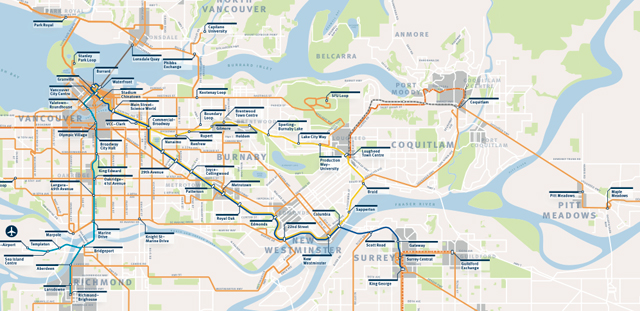
The legacy of SkyTrain and light-metro for metro Vancouver is that to date, taxpayers have paid (including the current $16 billion/21.7 km expansion program) about $30 billion for SkyTrain light metro, fully two thirds more than what a conventional light rail system would have cost and with light rail having a higher capacity!


/arc-anglerfish-tgam-prod-tgam.s3.amazonaws.com/public/M35ZOHK4KRDBBM2CUU4KLEBRT4.JPG)







Recent Comments