A simple station incorporating a passing loop on the Harlingen–Nieuweschans railway, with roofed bicycle storage for customers
Rail transport in the Netherlands uses a dense railway network which connects nearly all major towns and cities. The network totals 3,223 route km (2,003 mi) on 6,830 kilometres (4,240 mi) of track, of which three-quarters of the lines have been electrified.
What is not focused on is the number of secondary, non electrified regional railways, operated to cater to local customers.
Over 400,000 people live within the E&N catchment area, (over 500,000 if one includes the Port Alberni branch line) which only travel mode is the car. This ignored by those who want to turn the E&N into a glorified bike trail, who continue to pander the all too common “fake news” and “alternative facts” trying to drum up support for their cause.
The ‘Cycle’ lobby likes to point to the Netherlands as some sort of cycle utopia that BC should aspire to, yet they fail to recognize that Netherlands has an extensive passenger rail network. Also forgotten by the more ardent members of the ‘Cycle” lobby is that a large portion of the Netherlands is flat and cycling is far more easier for the population.
When this is mentioned for BC’s rail debates, especially on the E&N railway issue, when comparing the E&N to European regional railways they cycle lobby point out that the population of European counties is much, much greater than Vancouver island, but never admit to the fact that most European regional railways operate in areas where population densities are on par with the E&N of Rail for the Valley’s interurban service.
Of course, portions of these railways share track with the mainline, but large portions of the route, mostly single track, services small towns and villages, providing quality public transport.
What the various anti-rail lobby’s ignore is that regional railways are so designed to operate in areas of lesser populations, are largely single tracked and non electrification. They are much cheaper to operate and maintain than mainline railways, yet they provide a vital function of offering a viable and proven alternative to the car.
It is time to realize that regional railways are vital to sustain BC in this time of Global Warming and Climate Change and those who fail to realize this are strangling the province with dated perceptions and deliberate misleading information, punctuated with “man of straw arguments”.
It is time both the federal and provincial governments stop playing trains with high speed rail (which will never happen in the Pacific North West) and invest in what is needed, a program of regional railways, providing a user-friendly and affordable alternative to the car.
Single track stub terminal station at Leeuwarden.(Harlingen–Nieuweschans Railway)
Scheemda Station. Please note, cyclists use bicycles to commute to the station to take the train!(Harlingen–Nieuweschans Railway)
A single stub terminal station at Stavoren.(Leeuwarden–Stavoren Railway)
Franeker Station. Simple platform station with minimal amenities.(Harlingen–Nieuweschans Railway)
The problem in Canada, with “rail” transit, especially light rail (LRT) is that politcans get involved and when politicians get involved, costs rise dramatically.
Unlike Europe, Canadian University’s do not offer degrees in Urban Transport and the vast majority of Engineers and Planners who work on transit projects have little knowledge of what “light rail” (LRT) is!
In Metro Vancouver, both Engineers and Planners still claim that LRT has less capacity than light metro (SkyTrain), yet LRT today in many cities, carry peak hour ridership numbers far in excess what Vancouver’s light metro can achieve.
In fact the current maximum capacity of the Millennium Line is a mere 4,000 persons per hour per direction!
In simple terms, LRT is a modern tram (streetcar) operating on a dedicated or reserved rights-of-ways, thus obtaining the operating characteristics of a modern metro or subway, at a fraction of the cost.
Not so in Canada!
As Canada lacks Engineers and Planners, who have a credible knowledge of “rail” transit, including LRT and what transit experts we have, been muted from providing honest comment, because telling the truth about transit in Canada is not merely a firing offense, it tends to get one blacklisted from working in Canada altogether!
Why do you think Haveacow wishes to remain anonymous!
TransLink’s two top planners, one being considered the best in Canada, were forced to resign for stating the obvious, that; “Broadway did not have the ridership to warrant a subway“.
$4 billion later, Vancouver will have a subway to nowhere, with a maximum capacity less that what Bombardier stated would be justified to build with a light metro, to carry mainly the current B-99 Rapid Bus customers, which peak hour ridership is around 2,000 to 2,500 pphpd!
And to top it off, transit ridership is declining in Metro Vancouver, down 1.5% in 2025, when compared to 2024’s ridership!
$4 billion would build a lot of light rail, about 100 km’s worth, if built as light rail, on-street/at-grade.
Here lies the problem, politcans want, the Rapture of Mega Projects!
Bent Flyvberg’s Iron Law of Megaprojects specifically addresses why politicians are obsessed with infrastructure at any cost.
…the “political sublime,” which here is understood as the rapture politicians get from building monuments to themselves and their causes. Megaprojects are manifest, garner attention, and lend an air of proactiveness to their promoters. Moreover, they are media magnets, which appeals to politicians who seem to enjoy few things better than the visibility they get from starting megaprojects. Except maybe cutting the ribbon of one in the company of royals or presidents, who are likely to be present lured by the unique monumentality and historical import of many megaprojects. This is the type of public exposure that helps get politicians re-elected. They therefore actively seek it out.
Until transit planning changes and becomes independent of the politcal process (politicians make very bad transit planners) and let real experts plan transit for what is best for the transit customer, Canada’s daft transit planning and massive cost overruns will continue.
Unlike those who say, “don’t listen to the experts“; politcans should “listen to the experts“, because they will give one the best advice on what and how transit is built.
A test train departs Sloane Station during ongoing system testing for the Eglinton Crosstown LRT in Toronto, Oct. 9.GABRIEL HUTCHINSON/The Globe and Mail
A Toronto comedian just threw a quinceañera for the Eglinton Crosstown.
It has been – can you believe it? – 15 years since the birth of the light-rail transit line that will traverse the centre of the city. Authorities still won’t say for sure when it will open, though there is talk it could happen next month.
Jacob Balshin hired a mariachi band for a mock celebration of the line’s coming of age. It played merrily at a transit station as he and friends toasted the teenage project on video. “Fifteen years! Next year, you’ll be able to drive. You only cost an estimated $12.8-billion. That’s only $8.2-billion more than expected!”
Funny not funny. The Crosstown has been a comprehensive fiasco. When construction began, the completion date was set at 2020. That was pushed back to 2021, then 2022. For a while there, 2024 seemed like a possibility, but that year passed, too. Eventually, the people in charge stopped even saying when it would open, for fear of being forced to acknowledge they had missed another target.
So here we are, all these years later, waiting. The tunnels are bored, the stations are built, the trains are even running, gliding along their tracks on test runs with nobody on board, through stops with nobody in them. It is ridiculous and a little eerie – a phantom transit service.
Doug Ford, Ontario’s Premier since 2018, says he’s as frustrated as anyone, telling reporters this week that it is “driving me crazy” and urging transit officials to “get the damn thing moving.”
While he was at it, he couldn’t resist taking a shot at the party that preceded his Progressive Conservatives in office. “This thing has been a disaster since the Liberals started it,” he said.
In fact, the problem goes back farther than that. It was a PC premier, Mike Harris, who cancelled a subway project on Eglinton Avenue in 1995 as he tried to bring provincial spending back in line. The hole had already been dug. Workers filled it up again. That subway would have long ago started whisking commuters across town.
It was Mr. Ford’s brother, Rob, who further gummed up the works when he was Toronto’s mayor by cancelling a plan, called Transit City, to build a whole network of light-rail lines. The Eglinton Crosstown is a remnant of that plan – a 19-kilometre project with 25 stops, some of them underground.
Driving such a line through a dense urban area like midtown Toronto – digging the tunnels, building the stations, redesigning dozens of above-ground intersections – was always going to be expensive. But $13-billion? For what is in essence a fancy streetcar? Outrageous.
People wait for a bus along Eglinton Avenue in view of a test train.GABRIEL HUTCHINSON/The Globe and Mail
By comparison, building Toronto’s 8.6-kilometre Spadina subway extension cost $3.2-billion. That went overbudget and over time, too, but at least the city got a proper, high-speed, high-capacity subway out of it.
The mismanagement of the Crosstown has reached a whole other level. Globe and Mail reporter Jeff Gray laid it all out in a recent investigation.
Instead of giving the job to the Toronto Transit Commission, the century-old agency that operates the transit system, the provincial government handed it to Metrolinx, a new transit-planning agency with little experience building anything.
Using the public-private partnership, or P3, model, Metrolinx then passed it on to a big engineering consortium. But the public and private sides soon set to quarrelling over costs, timelines and a host of other issues, leaving the project tied up in court and adding many millions to the price tag.
Toronto simply can’t afford this kind of mess.
After decades of stalling, the city is finally building out its transit network to fit its status as a major metropolis. Several huge projects are in the works, including subway extensions into Scarborough to the east and Richmond Hill to the north. A whole new subway will run through downtown: the Ontario Line, with its eye-watering budget of $27-billion.
And yet the quarterbacks of this big play can’t even manage to open a line that has been substantially finished for a couple of years. In October, Metrolinx had to put a pause on testing the Crosstown when two trains actually collided in a storage yard.
I have updated the post but since very little has changed about BRT over the past decade, that there is little to update. Real BRT has reached its maximum potential, unless tree-articulated buses become the norm and that has made BRT a niche transit mode to deal with niche transit issues.
In metro Vancouver we are not getting real BRT, rather BRT Lite, or more to the point, tarted up express buses that will offer little advantages for the transit customer, but sound good at election time.
Brisbane BRT bus jam.
Mr. Haveacow, who frequently comments on the RftV blog, is a Canadian public transit specialist and what he says deserves to be listened to. (Zwei does listen to the Experts!) As he is active in the transit profession in Canada, he would like to keep his real name out of the media, lest he be blacklisted for his views.
The following is a repost from 2015, largely explaining BRT and the former Surrey LRT planning, which has now morphed into a $7 billion, 16km SkyTrain light-metro project.
The following diagram may help explain the capacity issue comparing bus and LRT.
Guided bus-ways have a big issue, capacity. The reason you have a guided bus-way is that, surface vehicles like buses can sway side to side quite a bit on a roadway. One of the reasons most Bus-way lanes are a minimum of 4 metres wide is to allow for that side to side sway that occurs naturally at higher speeds when we drive. Guided Bus-ways are fixed to their ‘track’ or Concrete Guideway or fixed using a laser/optical system that electronically locks them into a right of way so no side to side sway occurs at all. Optical systems also have an additional issue in that they are highly weather dependent and are very costly to service. The advantage for the guided bus-ways is that, your right of way can be considerably less wide much like a rail line right of way. Unless you design a complex concrete guideway bypass at bus-way stations or an electronic one using optical guided equipment, the buses are forever trapped behind the buses in front of them. This severely limits system capacity.
The real problem common with BRT is the operating cost of carrying the large amount of passengers, only using buses, once the passenger levels become very high. That level is different for every city and is dependent on the exact nature and characteristics of the right of way.
The picture Zwei used of the Brisbane Busway is another common occurrence on successful Bus-ways, bus back ups at choke points or stations.
The company MMM Consulting (nee McCormik Rankin Consulting) was the main designer and developer of both Ottawa’s Transit-way System and its child, the Brisbane Bus-way Network, the subject of the article’s main picture.
The main differences between the two are the fact that Ottawa’s Transit-way System was designed and mostly built in the 70’s, 80’s and 90’s whereas, Brisbane’s was designed and built in the 90’s, and 2000’s. The other major difference is that unlike Ottawa, Brisbane was able to build a fully segregated right of way through its downtown which comprised below grade tunnels and above grade viaducts and a physically segregated surface route. Ottawa has painted bus lanes on a couplet of downtown one-way streets with signal modification which allow Transit-way (east-west traffic) almost the legal limit of signal priority over the north-south traffic at intersections.
The difference between the two, using roughly the same number of vehicles about 185-200 buses/hour/direction at peak the Ottawa Transit-way can move 10500 people/hour/ direction and Brisbane about 14,000p/h/d.
Both however, have the same issue, massive back ups of buses primarily at downtown or major bus-way stations because the size and handling capacity of the actual stations has been grossly under built. The issue is that, to handle these kind of crowds and move them with 12 and 18 metre single articulated buses (23 metre long, double articulated and 30 metre long triple articulated buses are not street legal in Canada or Australia and even in the USA for that matter) you must construct monster sized, at the least full metro sized or larger bus station platforms that are or exceed 150 metres in length. The stations also have to be 4 lanes wide, 4 metres per lane, not including station platform width. Most downtown businesses would not want to be located near one of these stations for obvious reasons. One of Brisbane’s bus-way stations was enlarged to this standard, the bus back up picture Zwei used for this article is the que of buses entering that station.
The other main issue is the operational cost of having to use that many bus drivers and buses. Buses in general have far too little capacity for these high traffic BRT operations.
In China and Latin America drivers cost much less as a proportion of the total operating cost of each bus 50-60% in Latin America and 30-45% in China. In the northern 2/3 North America, Western and Central Europe, Australia/New Zealand, Japan Taiwan, basically most of the so called developed world, the cost of the bus driver is 70-80% of the total cost of operating the bus.
Using 185-200 buses/hour/direction to move people becomes a great financial drain on the operating bus system as a whole and makes it almost impossible to get extra buses to other non bus-way routes that need them. In Ottawa, several suburban routes that have needed many more buses to handle their high passenger levels can’t get them and haven’t been able to for more than a decade because so many buses are tied up on the Transit way, either on it or at the stations during peak hours. There are barely enough extra buses left to handle individual bus breakdowns let alone provide extra service on other routes. Buying more buses was not an answer because Ottawa’s bus fleet was already near 1100 vehicles this is a pretty big fleet for a city and area of at most, 1.2 million people. This would put the operational budget into a serious deficit. We already had the most expensive per taxpayer transit portion on our tax bills of all Ontario municipalities it really does not need to go higher. The bus options had run out of time. Ottawa’s answer was LRT. Brisbane continues to maintain their heavily used portions of busways. Ottawa is building more Transit ways but in suburban areas with much lighter passenger traffic levels.
The Transit-way was designed to be converted to rail however, the cost to convert the first part would be an eye popping $2.1 Billion. The reason was no one ever figured how much extra work there would be like, having to build parallel temporary bus rights of way so that, all those buses didn’t totally clog city streets during conversion of the Transit-way to rail and the fact that, they waited till much the original Transit-way infrastructure was in desperate need of replacement due to age. Some Transitway right of way also was only temporary and not rail friendly. These temporary rights of way lasted for over 30 years and now have to be either totally rebuilt and or abandoned at high cost. The kicker about the high operational cost of servicing bus-ways at high passenger demands was that, even with Ottawa being forced to build a 2.5 km tunnel, with 3 very large underground stations at a cost of $715 Million under downtown for the LRT line (surface operation would have simply exchanged heavy surface bus traffic and passenger crowds for heavy surface LRV traffic and passenger crowds) operationally, Ottawa was going to save a minimum of $60 million a year, switching to LRT technology.
The take away from this is that, building “Real BRT” can be a very good way of building up ridership and up to a certain point, a less costly way, compared to a lot of rail systems, to move people in a North American low density environment.
The problem now even in Canada is that, politicians are building express bus systems like B Lines, Brampton’s Zum (pronounced zoom) and many comparable systems in the US and calling it BRT, which it really is not. Those politicians love doing it because this false BRT is much cheaper to build and operate than real BRT and they still get a ribbon cutting ceremony.
The problem is that, the amount you spend with these systems generally is comparable to the systems effectiveness in moving passengers. VIVA, (York Region Transit) for example, started with the faux BRT or what I like to call “BRT” but, had definite designs and plans to build physically separate BRT rights of way that can be converted to a high capacity LRT system in the future and has carried through on it. York Region just didn’t have the passenger count to build LRT at the beginning. But they have designed in the ability to easily convert the BRT system to LRT technology when needed. Brampton (which is part of Peel Region) just to the west of York Region has no definite plan or design to convert its Zum system to a real BRT standard now or in the future. However, the Zum System has built up Brampton’s transit ridership. I am not saying that, these “BRT” systems aren’t useful but they are not real BRT and should be labeled as that because they can confuse people into not building anything in places that need improved transit but cana’t afford to build or operate LRT and or support LRT with enough passengers. As a planner it is quite common to hear comments like this at public meetings, “I saw BRT in Brampton and it gets stuck in regular traffic all the time. BRT sucks!” Then you have to explain what real BRT is and is not, by then most people fall asleep or stop listening.
Then you get into a half technical half ethical problem with BRT and or any other transit operating technology for that matter. How do you study the differences between operating technology so that you are being fair as well as being accurate in the final choice of technology? The best recent example of what not to do is right here locally in Vancouver, South of the Fraser River, to be exact.
Trying to convince people in Surrey that, their LRT plan is useful, TransLink used a SkyTrain option as well as a surface BRT option to compare to LRT capability, pointing out the superiority of LRT in this case. The SkyTrain option had many problems cost and general usefulness being the main ones. The BRT example they used is actually an LRT line using buses operating on a layout and design which is not even close to what a real BRT line in a on-street environment would or should be using. Its not even close to the best Canadian practices, let alone best practices used in the rest of the world, with BRT systems in a on-street environment. Did the staff doing this know enough to do this purposely or were they ignorant of the differences of what good BRT design is or is not.
Their example of LRT also displays a a serious lack of knowledge about best surface LRT operating practices in the US and Canada.
More importantly it shows to me, how committed or in this case not committed, TransLink staff really are to studying LRT technology at all. In fact, I don’t blame the people who supported SkyTrain technology for this area, like Daryl from SkyTrain for Surrey, he had a point, on the surface this study definitely made it look like that to me that the SkyTrain Light Metro was the superior technology choice. The difference as a professional is that, I know the real differences in all the technologies that were studied. I also have no belief that, I am the be all and end all of studying these things in the world and would also ask for much help in studying these technology choices from other friends and companies I am familiar with, whom are experts at it. To me a whole new study should be done using the actual best practices for all technologies not just the preferred LRT technology, you should seriously question major aspects and assumptions that were made in this particular TransLink study.
I was sent a following link The Transit “Experts” That Derail Transit. (click here)
It is by a fairly well known YouTube type who has ‘taken the wrong tack’, but he has a large following.
It is obvious that the author has a preference for metros and a disdain for light rail and in fact much of his comments about light rail borders on myth and invention.
Metros, due to their cost, are only built on the heaviest used transit routes; transit routes with traffic flows in excess of 15,000 pphpd (North America) and 20,000 pphpd (Europe). Most major cities in Asia build with a metro and why is that?
Simple answer is that traffic flows, due to huge populations, demand a high capacity transit system and so densely packed are major cities, that grade separated transit is a must.
Yet, China has 23 and Japan has 21 tram/light rail systems.
The new light rail system in Wuhan China.
Because Metro is so expensive to build and operate (just ask German transit authorities) and (pre light rail) trams capacities were limited a new transit mode evolved, the light metro.
Light metro suffers from three major three problems: capacity, expensive operating and maintenance costs (those small cars needed to do two to three times the work as a standard metro carand the automatic train control needed constant, daily preventative maintenance) and the then emerging light rail (which provided the same operating characteristics of a light metro, at a cheaper cost).
Light metro was not the bargain it proponents expected it to be.
Around the time light metro was being marketed, the modern articulated tram made an appearance and to increase commercial speeds and capacities, the modern tram was operated on dedicated rights-of-ways. In Germany this was called Stadtbahn or city railway, it later became better known in North America as LRT.
In the 1980’s there was much competition between light metro and light rail and despite the many claims made for both modes, LRT became the clear winner because it had two very important factors in its favour; cost and flexibility.
LRT was much cheaper to build (up to 10 times cheaper to build according to the Toronto Transit Commission, ART and IBB studies) and it could easily integrate with in situ streetcar of tram tracks in city centres (OK, not Toronto due to different track gauges) Light metro, especially driverless light metro could not.
Now we travel to France, which was mentioned in the article, and see why light rail has such a foothold in the country.
France developed their own light metro system, VAL (Véhicule Automatique Léger) and like all automatic light metros, was expensive to build and operate.
The major issue was VAL was produced by MATRA, then Frances largest military manufacturer. Sales of the VAL system was weak and the French government was afraid that lack of sales of VAL translated in a lack of confidence in MATRA’s weapon systems. To rectify this, the French government offered to fully fund construction for the first VAL Line in the city choosing VAL.
Sounds good doesn’t it!
Not so fast. French politcans tend to be more attuned to costs and taxes than most and soon questioned the future costs of extending the newly built VAL Lines.
VAL, like most light-metros was and still is extremely expensive to build.
Lille also operated a metre gauge tramway, which was going to be replaced by a future VAL extension, but the good Burghers of Lille and surrounding cities, did some sums and it was found to be far cheaper to completely rebuild the Lille, Raubaix and Tourcoing tramway, which they did and today the “Mongy” operates as a stark reminder that light rail is far cheaper to build and operate than the VAL system. This singular fact has spurred the French tramway revolution. In 1980 there were only four operating tramways in France and in 2025 there are now thirty.
Raubaix and Tourcoing tramway
What the author of the article ignores (on purpose?) is costs and funding issues for transit construction and continues to use “man of straw” arguments, such as speed, capacity and more seriously, mixing streetcar performance with light rail.
The graph is from Metrolinx comparing the 50 year costs of various transit modes.
Experts know this, most amateurs do not.
Transit authorities do not just ‘magic’ a light metro or metro into operation. Transit authorities have to secure funding for both construction and operation and light metro systems tend to be money-pits. Just look at Metro Vancouver’s 16km Expo Line extension to Langley, originally a $1.63 billion light rail project has now grown to a now over $7 billion SkyTrain project! Operational costs have also risen to now almost $50 million annually!
Definitely not “chump change”.
If ridership on a transit route does not meet the traffic flows needed for a heavy-rail metro, then light rail is the next best choice and this seems to make may people uncomfortable and the “metro lobby” apoplectic as TransLink’s “Mayor’s Council on Transit” are now finding out.
First posted by zweisystem on Tuesday, July 7, 2020
Updated.
As the clamour continues by Vancouver politicians for the federal government to fund the now $8 billion Broadway subway to UBC, TransLink stays largely mute and for good reason, they know in today’s politcal climate, the feds won’t be anteing up.
As politcans recklessly promise SkyTrain to UBC; the North Shore; down the median of the #1 highway to Abbotsford; and to Maple Ridge, TransLink has become scared of the future. There is no money for this type of 10’s of billions of dollars for promised expansion.
TransLink knows that the provincial government and Metro taxpayers cannot afford any of this. The fact is the taxpayer cannot afford the current $16 billion and growing cost of the current 21.7 km expansion to the Expo and Millennium Lines.
Early advertising for the proprietary ICTS/ALRT rapid transit system. In the end, only seven were built, including Vancouver, all with huge government subsidies. Today there are only six in operation as Toronto abandoned their ICTS system. Modern light rail made ALRT rapid transit obsolete overnight. Question: Why does TransLink plan for obsolete rapid transit?
From Wiki:
Rapid transit or mass rapid transit (MRT), also known as heavy rail, metro, subway, tube, U-Bahn, metropolitana or underground, is a type of high-capacity public transport generally found in urban areas.Unlike buses or trams, rapid transit systems are electric railways that operate on an exclusive right-of-way, which cannot be accessed by pedestrians or other vehicles of any sort, and which is often grade-separated in tunnels or on elevated railways.
TransLink’s ongoing program to misinform the public, comes to grief when one deals with real experts or companies located outside the metro Vancouver bubble are involved. The 2022 Thales News Release regarding their $1.47 billion contract to resignal the Expo and Millennium Lines is a good example.
According to Thales:
The government of Canada, the government of British Columbia, and the region have committed to investing $C 1.47bn ($US 1.1bn) in the Expo and Millennium Line Upgrade Programme until 2027.
When the programme is fully implemented, the Expo Line will be able to accommodate 17,500 passengers per hour per direction, and the Millennium Line will be able to handle 7500 passengers per hour per direction, a 32% and 96% increase respectively.
Toronto streetcars, operating on-street in mixed traffic were offering capacities in excess of 12,000 pphpd on select routes in peak hours in the late 1940’s and early 1950’s!
This chart erroneously shows that SkyTrain has a higher capacity than LRT, which is not true.
This so called fact sheet is designed to misinform, yet the City of Vancouver, abetted by TransLink, continue to make false claims about SkyTrain and light rail without any government or media fact checking.
TransLink’s false claims debunked:
SkyTrain has a large capacity. Fact: SkyTrain rapid transit has a limited capacity of 17,500 pphpd, after Thales $1.47 billion resignalling program . According to Thales: “………Millennium Line will be able to handle 7500 passengers per hour per direction……………….”
LRT is slow: Fact: LRT can travel as fast or even faster than SkyTrain rapid transit, if designed to. Most modern tram being marketed can obtain speeds in excess of 90 kph.
SkyTrain is faster than LRT. Fact: The higher commercial speed for SkyTrain comes from having much fewer stations or stops than an average light rail line. What TransLink does not include is the time needed to access the station, which in the end tends to show LRT having the faster “door to door” service.
LRT has less capacity than SkyTrain. Fact: LRT has proven to obtain capacities in excess of 20,000 pphpd
LRT cause traffic congestion and gridlock at intersections. Fact: There is no evidence of this. In most cases a modern tram can clear an intersection in 6 to 10 seconds, causing little or no delay for road traffic unlike light controlled intersections where the stopped traffic may have to wait 6o seconds or more.
What TransLink doesn’t mention is that light rail, offers all the benefits of rapid transit but, without the huge costs associated with subways and elevated construction.
TransLink’s planners should understand this, but it is not reflected in current transit planning.
Much of the success of urban transport in the past 40 years, in weaning the car driver from his or hers car is due to light rail and not rapid transit.
This is TranLink’s rapid transit dirty little secret, by continually planning and building ruinously expensive rapid transit on routes that modern light rail would have been just as successful, if not more so, in attracting new ridership.
Our friend Haveacow raised five points about TransLink’s rejection of an interurban style passenger rail service from Vancouver to Chilliwack.
1. If Translink keeps to narrowly defined geographically limited rail planning corridors, and continually offers nothing but a hugely expensive, built from scratch rail lines that, travels the dead centre of the corridor, then that’s all you ever get and anything else always looses when comparing against it.
2. If the planning agency, in this case Translink, doesn’t do anything but this same approach you never get new ideas and all your rail planning and the lines you end up building will at some point suffer from the same basic flaw or series of flaws.
3. Arguing that Translink should use a different type of train doesn’t change their limited focus when planning. It’s their focus in design and planning that really needs to change. Things like operational cost vs. service scale, the geographic scale of the service area and passenger catchment areas are just a few the many issues that the endless horizontal expansion of the current rail technology makes worse.
4. A simple well designed rail system can make up for initially starting with a more limited capacity and operations by being more adaptable and cost effective. This is where Skytrain as a technology, isn’t anywhere as adaptable or cost effective compared to the planned operating technology for the Interurban Line, given the vast area it will operate in.
5. Translink doesn’t seem to understand that unless new ways of planning and especially in their case, implementation processes are looked at, new solutions never happen. Yes, the Interurban Line would require negotiations with railways. I don’t think there really against the Interurban Line, they just don’t want to ever have to negotiate operations agreements. It’s so much easier to just own everything they operate, they set the rules. They just don’t get many new ideas this way.
TransLink’s continued planning for light-metro has left the region in a transit deficit and the taxpayer paying much more than he/she should (an estimated three times more), to keep TransLink’s ossified planning continuing.
Metro Vancouver has now become immune to new ideas and new operating philosophy and instead keeps planning and building the same thing, ever hoping for different results.
This has been definedas madness.
Reinstating a Vancouver to Chilliwack rail service using 21st century versions of the interurban, which has proven extremely successful elsewhere, is ignored.
The rot at TransLink has been in place far too long and sadly the entire operation is sinking into a planning and financial morass, where there is no escape and the the big question is is, how much taxpayer’s money will bleed from ill designed and dated transit projects before regional, provincial and federal politicians will take notice?
The eventual outcome on Eglinton, Mr. Miller charges, was predictable: The TTC had built and run all of the city’s subways and streetcar lines for a century; Metrolinx, which the province created in 2006 to draft a regional transit masterplan and run its GO Transit commuter bus and rail lines, had at the time barely built anything at all.
“To have an agency that was a planning agency oversee the largest [P3] proposal in the history of Canada, it’s madness,” he said of the Metrolinx takeover. “It just made no sense.”
Mr. Miller also says the Eglinton fiasco is the end result of what he says has been a growing provincial desire in recent decades – shared by both the previous Liberals, and Mr. Ford’s current PCs – to meddle in things the former mayor believes should be best left to the city government.
The premier’s pledge to fund all of Transit City would not last.
In 2010, amid the fallout of the global financial crisis, Mr. McGuinty would partially renege, chopping his pledged billions for the new LRTs in half and prompting the TTC to halt its imminent move to seek bidders to build the Eglinton line. Later that year, the TTC and Metrolinx would agree on today’s shortened, 19-kilometre Eglinton line, pledging to have it done by 2020.
Mr. Miller said that if the TTC had been able to get a Crosstown contract signed before the province cut its funding, it would have been harder for Mr. McGuinty, and Mr. Miller’s successors at City Hall, to keep redrawing the plans.
And redraw them they did.
After Mr. Miller chose not to run for a third term, he was replaced by Rob Ford, the current premier’s now-deceased brother.
Rob Ford had campaigned as a culture warrior against surface light-rail, blaming it for taking up traffic lanes, while intoning a mantra of “Subways! Subways! Subways!” He scrapped the Transit City plans on his first day in office in December 2010, and vowed to bury the entire Eglinton line, which would have added billions to the cost.
But his city council rebelled and reinstated the more affordable, partially tunnelled proposal for Eglinton in 2012.
In 2016, a worker looks down into where the LRT trains will enter and exit the tunnel. When Rob Ford became mayor in 2010, he moved to have the entire line buried, but that decision was reversed a couple years later.
It wasn’t only Mr. Miller who advocated against a Metrolinx takeover to install a P3. Behind the scenes, engineers and transit officials were also engaged in their own tug-of-war.
A TTC staff report from May 2012 is eerily prescient.
The TTC asked a panel of experts with the American Public Transit Association to look over the province’s plans. Prominent transit authority executives, who had overseen major subway and LRT projects in New York City, Los Angeles and Philadelphia, took part.
They concluded that Metrolinx’s promised 2020 completion date was “extremely challenging” and “unrealistic,” with 2022-23 being more likely. The report also warned of “uncertainty” around the purported advantages of the P3 model, which had rarely been used for large transit projects – although Vancouver’s Canada Line, completed on time in 2009, in time for the Winter Olympics the following year, was a P3.
(Later in 2012, the City of Ottawa would sign it’s own ill-fated LRT P3, which would be plagued by delays and shutdowns after opening day – shadows that account for Metrolinx’s reluctance to rush opening the Crosstown without extensive testing.)
The TTC report also predicted that the province’s Eglinton plan would cause “disproportionate disruption” to neighbourhoods along the route, and didn’t allow enough time for potential contract changes, the complexities of relocating water and gas pipes or the building of a massive interchange station at Yonge Street.
The construction of the LRT, shown here in 2018, disrupted the neighbourhoods along Eglinton for years.
Plus, the panel said that such a large contract as the Crosstown’s may make true competitive bids unlikely as few companies are big enough to take it on. Just two consortiums would later bid on the project.
There were other warnings about P3s that the province ignored, including from its Auditor-General, who in 2014 reviewed 74 of Infrastructure Ontario’s P3 projects and concluded they would have collectively cost $8-billion less if they had been handled by the public sector in the conventional way.
Clive Thurston, head of the Ontario General Contractors Association at the time, was involved in the release of a 2013 report by an umbrella group called the Construction and Design Alliance of Ontario that warned that the mega-sized Eglinton tender would squeeze out smaller, local companies. The report said that bundling the contract together was dampening competition and could add an estimated $500-million to the cost of the project.
Mr. Thurston also says he made his case in meetings with ministers and officials, arguing that the contract should be chopped into smaller chunks, but got nowhere, and so went public and took his concerns in 2013 to the media.
He said the government’s clear shift towards P3s, and the powerful private-sector lobby for them – backed by Bay Street and big industry players – was just too strong.
The Canadian Council for Public-Private Partnerships, an industry association that has promoted P3s since the 1990s, even gave the Crosstown project a “gold” award for “project finance” at their annual gala dinner in 2015, an event usually attended by prominent businesspeople and politicians.
“‘We told you so’ just doesn’t seem to cut it,” Mr. Thurston said in a recent interview. “It’s kind of satisfactory to know we were right. But so what? Nobody listened.”
Metrolinx and Crosslinx lock into legal battles
In 2015, then-Ontario transportation minister Steven Del Duca, now the mayor of Vaughan, announced that the P3 Crosstown contract, worth (at the time) $9.1-billion, had been awarded to Crosslinx, for the line and all its systems and stations, and 30 years of maintenance. (The tunnels had been dug beforehand, with separate contracts.)
The consortium includes the former SNC-Lavalin – now known as AtkinsRéalis – as well as other major construction and infrastructure players Aecon, EllisDon and ACS-Dragados. The completion date was also pushed to 2021.
The problems started almost immediately. Crosslinx submitted its own designs for stations and sections of the line 12 to 18 months late.
There were also – unnecessary in hindsight – concerns and a court battle with delay-plagued Bombardier over whether it would be able to deliver the line’s fleet of vehicles in time for opening day.
(In recent testing, these same vehicles – some of which are now a decade old – have had problems with brake pad wear, and ventilation and communication systems, hampering Eglinton’s progress.)
Bombardier’s delay in the manufacturing of the LRT’s fleet of vehicles caused concern, but that was before the entire project’s deadline was extended.
It wasn’t long after the 2017 appointment of former ScotRail Alliance managing director Phil Verster to the top job at Metrolinx that relations between the agency and Crosslinx would become confrontational, and end up in court – with Mr. Verster responding with pointed, public criticism of the consortium.
He quit last December and was replaced by Mr. Lindsay, who had run Infrastructure Ontario since 2020. Mr. Verster, whose salary had risen to more than $880,000 a year by his departure, did not respond to LinkedIn messages requesting comment for this story.
A source familiar with the inner workings of the project said that Metrolinx under Mr. Verster had put itself on what amounted to a war footing, sending Crosslinx hundreds of formal notices alleging it had failed to adhere to parts of the contract instead of taking a more collaborative approach to fixing the various problems that emerged during construction. The Globe is not identifying the source as they were not authorized to speak publicly about the project.
Tensions boiled over in the summer of 2018 when Crosslinx hit back in a court filing alleging that the delays plaguing the project were due to utility work beyond its control and the sluggish pace of government permits and approvals.
Metrolinx would later have to hand over $237-million to settle the fight, as revealed in a report on the mess from the province’s Auditor-General that also said the agency had “limited remedies” under the terms of the contract.
In another legal battle in 2020, this time over Metrolinx’s decision to deny that the COVID-19 pandemic constituted an emergency under the contract, a judge sided with Crosslinx, saying the provincial agency’s approach was “neither a fair nor reasonable approach.” This time the settlement cost Metrolinx another $325-million, with the opening date pushed to 2023.
But in April of that year, then-transportation minister Caroline Mulroney announced that the consortium had “no credible schedule” for completion of the project. Mr. Verster said there were 260 “quality issues” that remained outstanding, including mislaid tracks, but did not release a public list.
Crosslinx would hit back with yet another legal filing that May, blaming “undue interference” from the TTC, which is to operate the line. In a public statement, Mr. Verster dismissed the lawsuit as a delay tactic.
The Eglinton Crosstown’s tracks and stations, shown here in 2021, have been completed for a while, but testing of the line was still needed. Eglinton’s shorter sister line on Finch Avenue West, also a P3 and well behind schedule, could open sooner than the Crosstown, even though construction only started in 2019.
The consortium, under fire but barred by its contract from speaking to the media to defend itself, decided to break those terms and give a Toronto Star reporter a tour of the nearly complete line in 2023.
EllisDon president CEO Geoff Smith, who is now the company’s executive chairman, told The Star that the relationship with Metrolinx was “broken.” He said both sides had underestimated the transit line’s vast complexity, and that this kind of project can “threaten companies.”
Susan Sperling, a spokesperson for Crosslinx, declined to comment for this story.
History of transit projects in Toronto
Yonge Subway
Union to Eglinton (now Line 1)
Groundbreaking: 1949
Completion: 1954
Length: 7.4 km
Delay: Start delayed for two years, due to postwar shortages
Projected cost: $32.4-million (1946)
Final cost: $67-million ($783.57-million in 2025 dollars)Cost per kilometre in 2025 dollars: $105.89-million
🚇
7 years (1959-1966)
John Boyd/The Globe and Mail
University/Bloor-Danforth Subway
Line 1 Union to St. George, Line 2 Woodbine to Keele
Groundbreaking: 1959
Completion: 1966
Length: 16 km
Delay: None, completed one year ahead of schedule
Projected cost: $189-million (1958)
Final cost: $206-million ($1.94-billion in 2025 dollars)Cost per km in 2025 dollars: $121.25-million
🚇
8 years (1994-2002)
Tibor Kolley
Sheppard Subway
Line 4
Groundbreaking: 1994
Completion: 2002
Length: 6.4 km
Delay: None, opened on schedule
Original cost: $875-million (1996)
Final cost: $934-million ($1.53-billion in 2025 dollars)Cost per kilometre in 2025 dollars: $239.38-million
🚋
5 years (2005-2010)
Fred Lum/The Globe and Mail
St. Clair Streetcar Right-of-Way
Groundbreaking: 2005
Planned opening date: 2009
Completion: 2010 (opened in stages starting in 2007)
Length: 6.8km (all on surface)
Delay: Eight months, due to court challenge
Final cost: $106-million ($149.65-million in 2025 dollars)Cost per kilometre in 2025 dollars: $22-million
🚇
8 years (2009-2017)
Fred Lum/The Globe and Mail
Spadina Subway Extension
Groundbreaking: 2009
Planned opening date: 2015
Completion: 2017
Length: 8.6 km
Original cost: $2.8-billion
Final cost: $3.2-billion ($4.05-billion in 2025 dollars)Cost per km in 2025 dollars: $470.09-million
🚧
14+ years (2011-2025?)
Mark Blinch/The Globe and Mail
Eglinton Crosstown LRT
Groundbreaking: 2011
Planned opening date: 2020
Finished: Not completed, and no projected date has been released
Length: 19 km
Projected cost: $5.3-billion (2010 dollars)
Final cost: $13.087-billion (2025) (includes 30 years of maintenance.) Total spent on construction as of June 30, 2025: $9.238-billion. Cost per km in 2025 dollars: $688.88-million (using projected total number, including maintenence); $486.21-million (using amount spent on construction to date)
I do not know enough about Toronto’s Eglinton’s new LRT, to accurately comment on the project; only that portions of the system is definitely not LRT. That being said, this two part series from the Globe and Mail will help inform those on the other side of the mountains about this hugely expensive project.
Meddling politicians, a massive contract, multimillion-dollar lawsuits and a pandemic have turned the Eglinton Crosstown LRT into a 14-year project
For months, they have glided along the middle of Toronto’s Eglinton Avenue: Sleek, empty streetcars on test runs, stopping at platforms blocked off to the public. No one gets on or off. And before the two-car vehicle pulls away, its electronic chimes sound their pointless warnings as the doors close.
Here in Scarborough, on a strip lined with mall parking lots, cars and buses full of people – relegated to the road’s remaining traffic lanes – just roll on by as though the weed-choked rail line occupying the median isn’t there.
This is the Eglinton Crosstown, a running joke in the city often invoked in the same resigned tone as Toronto’s perpetually frustrated hockey hopes: Will the Maple Leafs ever win another Stanley Cup? Will the Crosstown ever open?
The Eglinton LRT is widely regarded as the most delay-plagued major public transit project in Canadian history. First proposed in 2007, construction only finally began in 2011, with completion set for 2020 – five years ago and counting.
The project clogged this main artery through Canada’s largest city with lane closures, hoarding and construction dust for years. While the line itself is mostly complete, Metrolinx, the province’s public-transit agency responsible for the project, has given up predicting an opening date.
This month, commuters waiting for buses could see Eglinton Crosstown LRT vehicles pass by on their test runs. The testing is nearing its end, but an official date for the line’s launch has yet to be announced.
Although a previous Liberal provincial government launched the Crosstown, the Progressive Conservatives of Premier Doug Ford, now in their eighth year in office, have been unable to put the project on track. Toronto’s city council and Ontario’s Opposition NDP have demanded a public inquiry, to no avail.
The bill for this partially tunnelled, 19-kilometre light-rail line is currently pegged at $13.08-billion, including 30 years of maintenance – around $8-billion more than estimated back when construction began. Its 25 stations, still empty, are spread from Mount Dennis in the west end to Kennedy Station in the east. https://charts.theglobeandmail.com/LtnPq/4/
How can a light-rail line have taken 14 years, and counting? First, a revolving door of politicians rewrote and ripped up the plans for years before work began, as they often do. Then came design delays, the unforeseen complexity of moving gas and water pipes, mislaid tracks, leaky stations, buggy signalling software and the COVID-19 pandemic.
Experts and some involved in the project say many of the problems were a result of its structure as Canada’s largest ever “public-private partnership,” or P3, a type of contract that typically hands over an entire project – design, construction, some of its financing, future maintenance – to the private sector. Before the advent of the P3 model, governments or their agencies would more or less just design a project themselves, and then hire contractors to build it. And in this case, in order to turn the Crosstown into a P3, the province stripped the city’s Toronto Transit Commission of control of the project.
Some critics also blame the adversarial relationship that developed between Metrolinx and the private consortium of leading construction companies it hired to build the line, known as Crosslinx Transit Solutions. The two would battle over legal challenges that would cost Metrolinx hundreds of millions of dollars to settle.
The line’s progress, or lack thereof, has largely been cloaked in silence – even as governments profess a renewed focus on accelerating big infrastructure projects and maintain that public transit is key to housing and climate-change goals.
At an event in September to boast of progress on the Scarborough subway extension in Toronto’s east end, Ontario Transportation Minister Prabmeet Sarkaria and Metrolinx CEO Michael Lindsay insisted that the province has learned key lessons from the Eglinton mess – lessons they say are being applied as they charge ahead with their ambitious multi-billion-dollar list of other transit megaprojects in Toronto, including the $27-billion Ontario Line subway.
System testing tantalizes Torontonians who would like to start riding the LRT; the line had been planned to be operational by 2020.
But a review of the tortured history of the Crosstown reveals that, more than a decade ago, the provincial government of the day failed to heed credible warnings from local politicians, public-transit leaders and voices in the province’s construction business who had all warned that the Crosstown P3 contract was just too big, too risky and too complex – and would end badly.
After months of testing, Eglinton finally is undergoing a kind of final dress rehearsal: a 30-day “revenue service demonstration” – with no passengers – meant to ensure it can handle the rigours of daily operation. (A collision between two vehicles in their storage yard forced Metrolinx to pause operation for a few days, the government acknowledged last week.) An eastbound test train crosses the bridge over the Don River. When first conceived, the LRT was to go from Kingston Road all the way to Pearson airport; its terminus is now Mount Dennis, but the construction of a western extension began in 2021, to be completed by 2031. Gabriel Hutchinson/The Globe and Mail
If the test ultimately succeeds, the earliest civilians could hop on the Crosstown would be sometime in November. But Mr. Lindsay has also warned to expect a gradual “ramp up,” not full service on Day 1. No one in Toronto is holding their breath.
Metrolinx’s overseeing the project ‘just made no sense’
Among those who warned that the province’s approach on Eglinton would end in disaster is David Miller, Toronto’s mayor from 2003 to 2010.
“It’s frankly not very nice to be vindicated,” he said in a recent interview with The Globe and Mail.
He was behind the original vision for the Crosstown, which he laid out as part of a broader network of light-rail lines in 2007 in a plan branded as “Transit City,” complete with slick maps and collectible buttons.
Mr. Miller’s Eglinton project had a lowballed early cost estimate of $2.2-billion, which had not been fully fleshed out and did not include things like vehicle-storage facilities. It was initially intended to be much longer, running more than 30 kilometres, from Kingston Road in the east to Pearson Airport in the west.
Ontario premier Dalton McGuinty, here seen speaking at the 2007 announcement of funding for Toronto mayor David Miller’s “Transit City” plans, suggested Ottawa would help foot the bill for the LRT, but that never came to pass.
Just months after unveiling his plans, Mr. Miller stood beaming at an event at a Mississauga bus garage, with his Transit City vision apparently set to be realized.
Then-premier Dalton McGuinty hopped out of a bus for the TV cameras and pledged to cover at least two-thirds of the cost of the Transit City LRTs.
Mr. McGuinty’s aim was to have the rest of the bill covered by Ottawa, and to proceed without the typical cash contribution from the strapped city budget. However, a federal cheque never materialized, and the province would later assume the entire cost.
Mr. Miller says now it was a mistake for the city not to have some skin in the game, as its power over the project began to wane. By 2008, Metrolinx was already pushing behind the scenes for changes, including unsuccessfully gunning to put the whole line underground, or on stilts, or run an updated version of the Bombardier-made vehicles used on the now-defunct Scarborough RT line.
Indeed, the free ride for the city laid the groundwork for an eventual provincial takeover.
Initially, the project was to be run like all previous TTC major transit expansions. While the province, in this case, did make its Metrolinx agency the owner of the Eglinton and the other Transit City LRT lines it pledged to build – since it was paying the full cost – it had agreed that the TTC would still oversee the projects, and still mostly build them in its usual way.
The usual way, for the TTC and most other transit agencies in decades past, was to design a transit line first, either with in-house engineers or consultants, and then put out contracts for competitive bids and hire companies to build the line, its stations and any required vehicles.
But in April 2011, Metrolinx and its provincial masters told the TTC they had changed their minds, and wanted oversight of the plan. The TTC resisted the idea. But by 2012, it was official: Metrolinx would take over the project and bring in Infrastructure Ontario, a provincial agency created in 2005 that had championed P3s for hospitals and courthouses, to run the procurement.
When Metrolinx sidelined the TTC, Toronto’s transit agency had to toss out tens of millions of dollars of design and engineering work – putting the project back years even before it got under way.
Mr. Miller, long a critic of P3s, argues that if the TTC had been left to its own devices on the Crosstown and built it in the conventional way, Torontonians would have been riding it for five or even seven years by now.
Mayor David Miller, right, is shown a model of the boring machine that would be used to dig tunnels for the Eglinton Crosstown. Mr. Miller initially suggested the project could cost $2.2-billion; now, the projected price for the project, which includes 30 years of maintenance, is $13.08-billion.
He points to the Sheppard Subway, completed on time and on budget (for just under $1-billion) in 2002. Even the TTC’s troubled Spadina subway extension to Vaughan, which cost $400-million more than pledged and required the hiring of private-sector project managers to finish it two years past due in 2017, looks rosy when compared to the Crosstown.
An interesting article about improving streetcar service on the 510 Adina route in Toronto.
I would like to remind everyone, that light rail (LRT) is a modern streetcar operating on a ‘reserved’ or dedicated Rights-of-ways, thereby obtaining a performance of that of a heavy-rail metro at a fraction of the cost.
A reserved, lawned rights-of-way on the new Eglinton light rail in Toronto
TTC Optimized: Designing an Improved 510-Spadina Streetcar Service.
In Toronto’s vibrant landscape, the 510 Spadina Streetcar is more than just a transport option; it connects diverse communities and bustling marketplaces. Despite its crucial role, the streetcar, like many urban transit systems, struggles with efficiency and is slower than it needs to be. Suggestions for enhancement are often proposed, yet they lack the analytical foundation necessary to under the true impact of these changes.
This article presents a thorough analysis focused on how operational and infrastructural changes can effectively reduce travel times along the streetcar route. Key factors such as vehicle speed, stop frequency, traffic signal coordination, and operational speed limits are examined to identify viable improvements.
The methodology involves simulating the current operation of the 510 Spadina Streetcar, establishing a baseline that reflects the scheduled times set by the Toronto Transit Commission (TTC). This baseline is then used as a reference point for multiple simulations, each altering various input factors to assess their impact on overall travel time. Through this systematic exploration, the article seeks to not just advocate for quicker transit; but to reimagine urban mobility along Toronto’s iconic streetcar lines.
Methodology: Crafting the Analytical Framework
Data Collection and Preparation
The foundation of this analysis is built upon data from the TTC schedule and the City of Toronto’s traffic signal information. This combination allowed for an accurate depiction of the Spadina Streetcar’s route. The route was segmented into distinct parts, each representing the distance between two stops. Aligning the coordinates of streetcar stops with the city’s traffic signals, each signal was assigned to its respective route segment, following the streetcar’s travel direction. This resulted in a detailed list of segments, each including stops and traffic signal locations, ready for a comprehensive simulation. For example, stop 1 → traffic light1 → stop 2.
Simulation Parameters and Constraints
The simulation was designed to reflect real-world conditions with fixed constraints:
A speed limit of 25 km/h.
An acceleration and deceleration rate of 0.9 m/s² to mimic realistic vehicle dynamics.
A static 20-second loading and unloading time at each stop, considering passenger movement.
These parameters set the stage for calculating the travel dynamics of the streetcar, encompassing acceleration to the speed limit, maintaining its speed, or decelerating for stops and signals.
Travel Scenarios
Four travel scenarios were developed to capture the variability of the streetcar’s journey:
Stop to Stop: Travel from one stop to another, without intermediate traffic lights or stops.
Stop to Continuous: Transition from a halt to continuous motion without stopping at the next segment.
Continuous to Stop: The reverse of the above, where the streetcar slows to a stop.
No Stop: Movement through consecutive green lights without halting.
Incorporating Traffic Signal Probabilities
Recognizing the critical role of traffic signals, a random variable was introduced. This variable assigned a 50% chance for the streetcar to encounter a red light at each stop, with waiting times between 1 and 60 seconds. Calculated independently for each signal, this randomness added an essential realism layer, capturing the unpredictability of urban traffic.
Running the Simulation
Travel time for each segment was calculated independently, based on stop locations and the traffic signal probability model. This simulation was repeated 100 times, providing statistical robustness and yielding the average time and standard deviation for each section between stops.
Further adjustments were made to certain input factors to align the simulation baseline closely with the TTC’s scheduled times during rush hour. This step was vital to compensate for unobservable variables in the data, such as traffic dynamics and operational constraints, establishing a reliable standard for measuring the impact of different scenarios.
To explore the full spectrum of potential enhancements to the 510 Spadina Streetcar service, a series of distinct simulation scenarios were crafted. Each scenario represents a strategic alteration in operational or infrastructural elements, aimed at reducing overall travel time and increasing efficiency.
1. Baseline & Simulation:
Approach: This foundational scenario establishes a baseline by simulating the current state of the Spadina Streetcar with a 25 km/h speed limit, factoring in a 50% probability of stopping at red lights, with random wait times between 1 and 60 seconds at each signal.
Purpose: As a comparative benchmark, this scenario allows for a clear assessment of the impact of subsequent modifications.
Results
Total Time End to End: 28:47
Slowest Average Speed: 7.52 km/h, Queen St. → King St.
Fastest Average Speed: 16.16 km/h, Rees St. → Harbourfront Centre
2. Constant Speed Along Line
Approach: This scenario looks to remove the need for streetcars to “crawl” through intersections that intersect with other streetcar lines
Purpose: To quantify the effect of upgrading track switches and operational constraints on the overall travel time if streetcars don’t need to slow down when crossing some intersections
Results:
Total Time End to End: 26:35 → 8.8% Faster than Baseline
3. Speed Limit Increase
Approach: This scenario makes only one change, increasing the speed limit from 25 km/h to 35 km/h
Purpose: As a comparative benchmark, this scenario allows for a clear assessment of the impact of subsequent modifications.
Results:
Total Time End to End: 25:37 → 12.2% Faster than Baseline
4. Minor Transit Signal Priority (TSP) — Minor Intersections Only:
Implementation: Envisioning full TSP at all minor intersections, while maintaining standard traffic sequences at major intersections.
Specifics: The probability of encountering a red light is drastically reduced to 2.5% on designated minor streets, while it remains at 50% on major streets: College, Dundas, Queen, King, Front, Lakeshore
Goal: To evaluate the effectiveness of TSP in minimizing delays at less critical intersections.
Results 1:
Speed Limit: 25 km/h
Total Time End to End: 24:36 → 18.5% Faster than Baseline
Top 3 Sections — Speed Improvements
Queen St → King St: 51.6%
Bremner Blvd → Lower Spadina/Queen Quay: 34.2%
Front St → Bremner Blvd: 34.1%
Results 2:
Speed Limit: 35 km/h
Total Time End to End: 21:03 → 27.8% Faster than Baseline
Top 3 Sections — Speed Improvements
Queen St → King St: 83.6%
Spadina Station → Sussex Ave: 61.7%
Front St → Bremner Blvd: 58.1%
5. Removal of Closely-Spaced Stops:
Action: Eliminating certain stops that are within 250 meters of one another, specifically at Sussex, Willcox, Nassau, Sullivan, and Bremner
Rationale: To test whether reducing the number of stops could contribute to a quicker transit experience without significantly impacting accessibility.
Results 1:
Speed Limit: 25 km/h
Total Time End to End: 26:43% → 8.4% Faster than Baseline
Results 2:
Speed Limit: 35 km/h
Total Time End to End: 23:14% → 20.3% Faster than Baseline
6. Enhanced Transit Signal Priority — Extended to Major Intersections:
Expansion: Extending TSP to include major intersections, modifying the chance of hitting a red light to 15% at these locations, and reducing waiting times to a range of 1–20 seconds.
Expectation: To observe the potential time savings when TSP is applied more broadly across the route.
Results 1:
Speed Limit: 25 km/h
Total Time End to End: 23:30% → 19.4% Faster than Baseline
Top 3 Sections — Speed Improvements
Queen St → King St: 50.5%
King St → Front St: 40.5%
Front St → Bremner Blvd: 38.4%
Results 2:
Speed Limit: 35 km/h
Total Time End to End: 19:59% → 34.6% Faster than Baseline
Top 3 Sections — Speed Improvements
Queen St → King St: 85.4%
King St → Front St: 67.9%
Willcox St → College: 65.2%
7. Combined Approach — Enhanced TSP and Stop Removal
Combination: Integrating the strategies of enhanced TSP and the removal of closely spaced stops.
Anticipation: This scenario aims to gauge the cumulative effect of these modifications, offering a glimpse into a more streamlined and rapid transit service.
Results 1:
Speed Limit: 25 km/h
Total Time End to End: 21:40% → 25.7% Faster than Baseline
Results 2:
Speed Limit: 35 km/h
Total Time End to End: 17:58% → 38.4% Faster than Baseline
It is important to note that traffic impacts were not considered in these scenarios, as the Spadina 510 operates on a grade-separated line, distinct from car traffic.
Final Results & Observations
Final Results — All Scenarios
The above chart outlines all outlined individual scenarios and scenario combinations. Some observations from this analysis are:
Increasing the speed limit from 25km/h to 35km/h offers 11% savings without making any other changes.
It is not surprising, but full TSP offers the most savings overall at 18.4% at 25km/h and 30.57% at 35km/h.
Removing stops alone only saves a couple of minutes, it requires some sort of TSP to fully realize the potential savings it can offer.
There are diminishing returns as you add more simulation parameters, and there are tradeoffs to making each of these changes which may not be worth it for minimal improvements.
The results for individual options when the speed limit remains at 25 km/h are:
Full / Enhanced TSP: 18.36%, 5:17 in time savings
Partial TSP: 14.53%, 4:11 in time savings
Constant Speed Through Intersections: 7.64%, 2:12 in time savings
Remove Some Stops: 7:18%, 2:04 in time savings
Increasing the speed limit from 25km/h to 35km/h adds anywhere between 9–12% in additional savings depending on the scenario.
Conclusion & Recommendations
When looking at all of the possible options, it is easy to point to the final scenario (all potential improvements) and recommend this option since it provides the greatest possible time savings. However, none of the scenarios come for free and have tradeoffs to consider. For example, removing stops may reduce travel times but now riders need to walk farther to reach their stop, which may increase their total travel time. Additionally, full TSP will be very expensive and take a lot of coordination to implement and maintain.
Based on these considerations, my recommendation would be to implement minor TSP with a focus on maintaining a constant speed, with a speed limit of 35 km/h. This will cut down travel time by 32.54%, which saves approximately 9:23 in travel time from Spadina to Union. This scenario doesn’t give maximum time savings, but provides the highest benefit-to-cost ratio for a few reasons:
Transit signal priority on minor streets will be easier to implement since fewer people cross these streets, no other transit lines intersect Spadina at these streets, and it will have a minimal impact on motorists travelling on other major roadways. It also avoids the increased complexity of designing signalling at major intersections (ex. Spadina & Dundas).
Removing stops at minor intersections can result in significant time savings, but not in a vacuum. Streetcars typically have to stop for a red light before reaching a stop on a minor street, and then stop again at the stop. Eliminating the need to stop first at a red light is a prerequisite before we can explore removing stops.
Maintaining a higher average speed will also require safety enhancements to the line. In more congested areas, there is a risk of cars blocking intersections or pedestrians crossing tracks unexpectedly. These issues will need to be addressed to increase speeds along the line.
The “crawl” at major intersections due to the current streetcar track switches does not have as big an impact as expected since the streetcar is already slowing down to stop on the other side of the street. The immense cost and disruption caused by upgrading these switches will not provide large enough time savings to justify the cost.
Overall, the main theme here is that streetcars need to reach a higher top speed and remain there for as long as possible. Limiting red lights and reducing the need to slow down for safety reasons are steps that need to be taken to realize the potential time savings for this line or any other line in the city.
……..Of What We Call SkyTrain And It Is A Proprietary Light Metro! Get Over It!
This was first published in 2021, but with all the hype about building the Broadway subway, the city of Vancouver has reverted back to to the old song that, what we call SkyTrain, is a successful brand and definitely not proprietary.
So back into the archives I go.
And yes, since this was published, it seems a Brazilian company has trademarked the name SkyTrain for their proprietary transit system, as their Emails remind me.
The term SkyTrain is used on a lot of elevated transit systems, notably Vancouver and Bangkok.
BTS Bangkok is a conventional railway, operating as a regional metro system and is no relation to the proprietary “SkyTrain” light-metro system in Vancouver.
The Kuranda SkyTrain or Sky-rail in Australia, is an aerial tramway.
What is the city of Vancouver playing at? Why the deliberate misinformation?
What they are calling the SkyTrain brand in Vancouver, is not a brand, rather the name of the regional light-metro system, chosen via radio contest by CKNW in 1985.
So, as a refresher, I will start with the brands that our light-metro system has been marketed under.
Intermediate Capacity Transit System (ICTS)
Advanced Light Rail Transit (ALRT)
Advanced Light Metro (ALM)
Advanced Rapid Transit (ART)
Innovia Rapid Transit
Movia Automatic Light Metro (MALM)
The various brands have been owned by four companies:
The Urban Transit Development Corporation (UTDC)
Lavalin
Bombardier Inc.
Alstom
Powered by Linear Induction Motors, MALM certainly is, as most unconventional railways are proprietary. The MALM system is not compatible in operation on any other railway, other than its family of now six systems (Toronto abandoned their ICTS system) and no other company has ‘off the shelf’ vehicles that can be used on the MALM system.
As stated before, Alstom now hold the technical patents and SNC Lavalin hold engineering patents.
The city of Vancouver should be wary, as this blatant attempt to mislead the public could come back and haunt them legally in the future.
Two and a half decades later, the following lessons have not been learned by TransLink, Metro Vancouver and the provincial NDP. It is sheer negligence on the part of TransLink, the Mayor’s Council on Transit, and the Ministry of Transportation, that they remain ignorant of what was commonly known elsewhere, not just a decade or so ago, rather four decades ago.
“Those who ignore history are doomed to repeat it”
Ignorance of the truth, is not a defense.
Lesson #1
In the very early 1980’s, the Ontario Conservative Party (the William Davis Government) tried to force the Toronto Transit Commission (TTC) to build with the new Intermediate Capacity Transit System or ICTS, now known as SkyTrain; produced by the Urban Transit Development Corporation (UTDC) an Ontario crown corporation. The TTC commissioned a comprehensive study comparing streetcars/LRT and metro with ICTS and the results were not encouraging to those wishing to sell ICTS. The information and conclusions of the Accelerated Rapid Transit Study (ARTS) gave the City of Hamilton enough ammunition to reject the Ontario provincial government lead, construction planning for ICTS in the city.
The TTC transit study, the Accelerated Rapid Transit Study or ‘ARTS’ found that:
“ICTS costs anything up to ten times as much as a conventional light-rail line to install, for about the same capacity; or put another way, ICTS costs more than a heavy-rail subway, with four times its capacity.”
ICTS was dead in the water as a product, so UTDC did what every other manufacturer does when faced with this dilemma, they changed the name from ICTS to ALRT or Advanced Light Rail Transit and sold the unsalable ICTS to some political rubes out West, namely Bill Bennett and Grace McCarthy, the leader and deputy leader of the British Columbia Social Credit Party and the rest, as they say, is history.
Toronto’s ICTS system, one of three built, closed for good in 2023.
Lesson #2
In the 1980’s there was much debate between modern light-rail and many proprietary transit systems being offered for sale, which included the SkyTrain ICTS/ALRT automatic light-metro. Many claims were made by the owners of various proprietary transit systems being offered for sale, about the effectiveness of their transit systems.
In 1991, Gerald Fox a noted American transit specialist, produced a study comparing light-rail and automatic guided transit (AGT) systems including SkyTrain and the French VAL light-metro system. The study concluded that despite the hype and hoopla of the promoters of AGT systems, there was no benefit in building with more expensive AGT. These conclusions were not lost on American and European transit planners, who wanted ‘the best bang for the buck’ and the desire to build prestigious and expensive light-metro systems waned from the mid 90’s until the present day.
Conclusions from Gerald Fox’s A Comparison Between Light Rail And Automated Transit Systems. (1991)
Requiring fully grade separated R-O-W and stations and higher car and equipment costs, total construction costs is higher for AGT than LRT. A city selecting AGT will tend to have a smaller rapid transit network than a city selecting LRT.
There is no evidence that automatic operation saves operating and maintenance costs compared to modern LRT operating on a comparable quality of alignment.
The rigidity imposed on operations by a centralized control system and lack of localized response options have resulted in poor levels of reliability on AGT compared to the more versatile LRT systems.
LRT and AGT have similar capacities capabilities if used on the same quality of alignment. LRT also has the option to branch out on less costly R-O-W.
Being a product of contemporary technology, AGT systems carry with them the seeds of obsolescence.
Transit agencies that buy into proprietary systems should consider their future procurement options, particularly if the original equipment manufacturer were to cease operations.
Today TransLink and the provincial government still make unfounded claims of superior operation for SkyTrain (if it doesn’t snow) and denounces LRT as a poor-man’s rapid transit system. Nothing could be further than the truth and it still seems TransLink and the SkyTrain lobby have failed to read and understand transit lessons, taught over four decades ago!
France’s VAL system, a French proprietary Light Metro.
The provincial government is now spending over $16 billion to extend the Expo and Millennium Lines a mere 21.7 km. Currently the project is currently underfunded by $3 to $4 billion.
As well, there is growing pressure on the provincial government to extend the Broadway subway to UBC at a now estimated cost of $8 billion. Added to this there is more than growing pressure to extend SkyTrain to the North Shore at a cost of in excess of $10 billion!
Yet, there is no actual proof that SkyTrain has taken cars off the road. A great portion of SkyTrain’s ridership is merely recycling bus customers, as over 80% of the light metro’s ridership first take a bus.
There has been no sales of the proprietary railway in over 25 years and only six remain in operation, yet Metro Vancouver, The Mayor’s Council on Transit, the Ministry of Transportation and the Provincial NDP still call the system “world class” and continue to plan and build with it, even though Alstom, who now owns the system, is selling the Kingston plant which produces the proprietary rail vehicles and CN Rail has applied to abandon the spur line servicing the plant.
The Kingston Plant, soon to be sold home of the Innovia 300 (MALM) vehicle production.
Vancouver’s SkyTrain, the only ‘world class’ system in the world, that no one wants to buy! Now, that is world class!


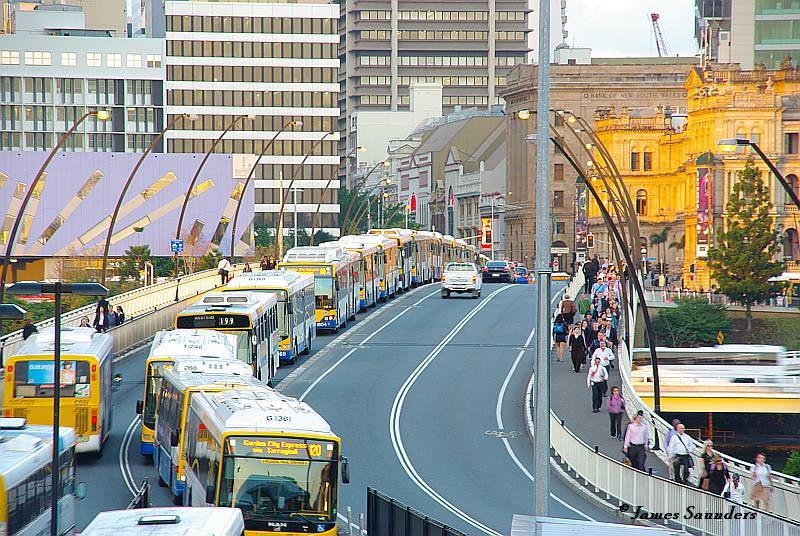

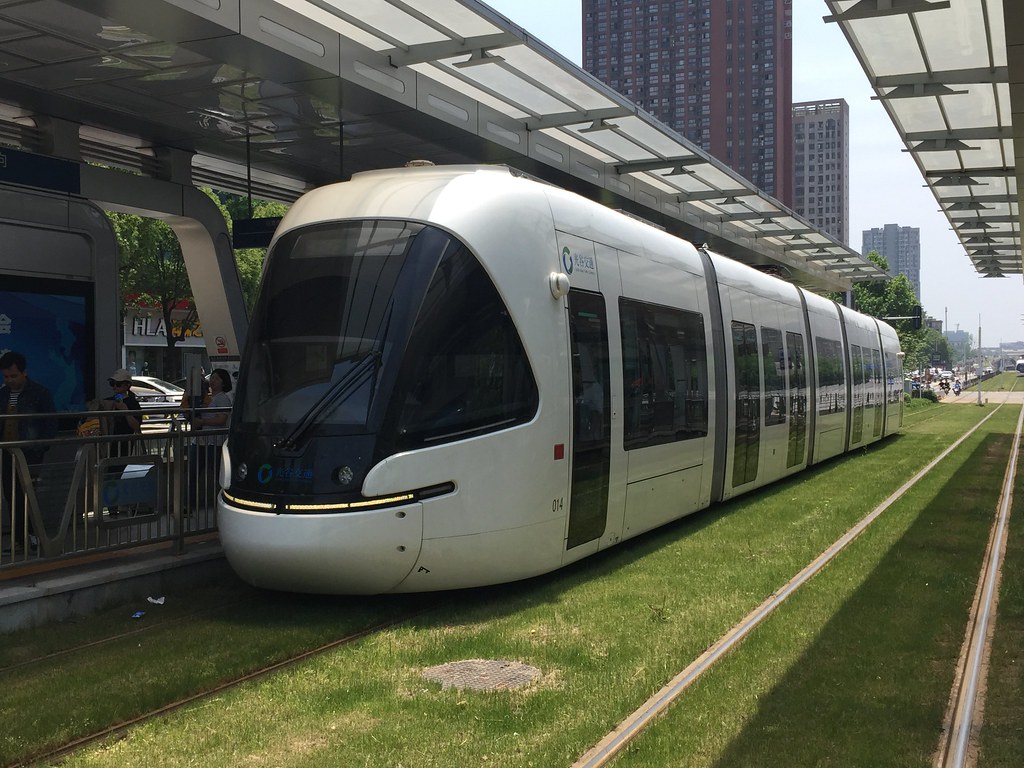
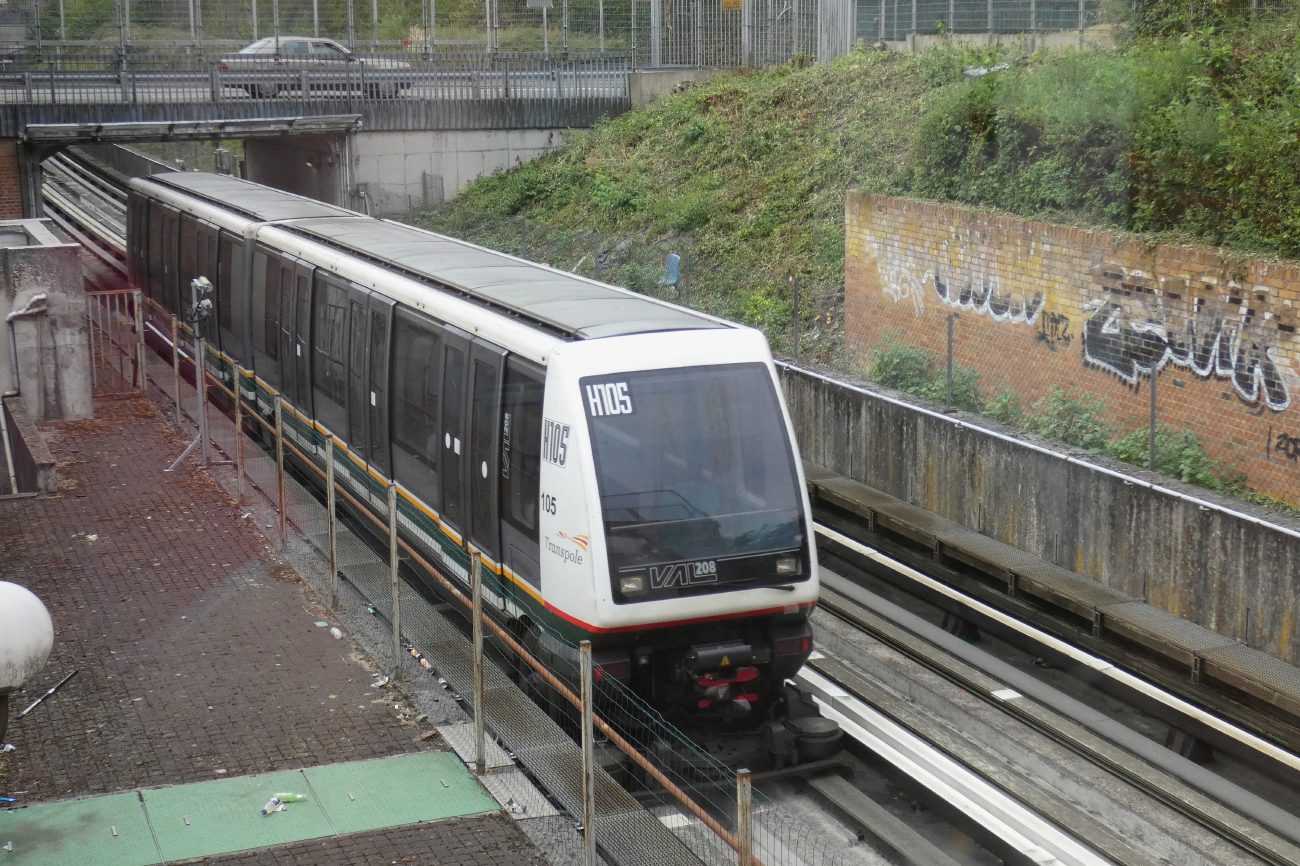
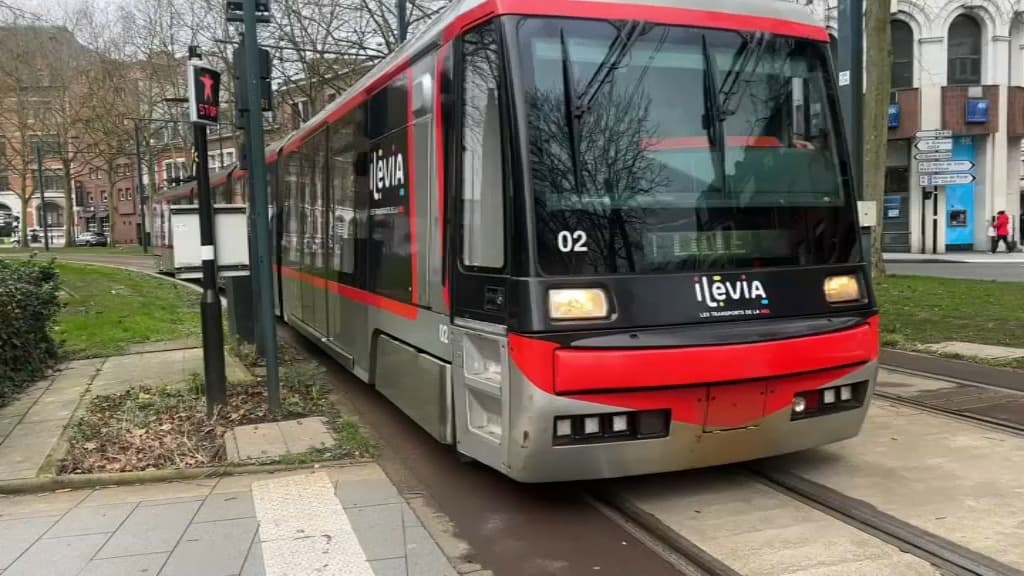
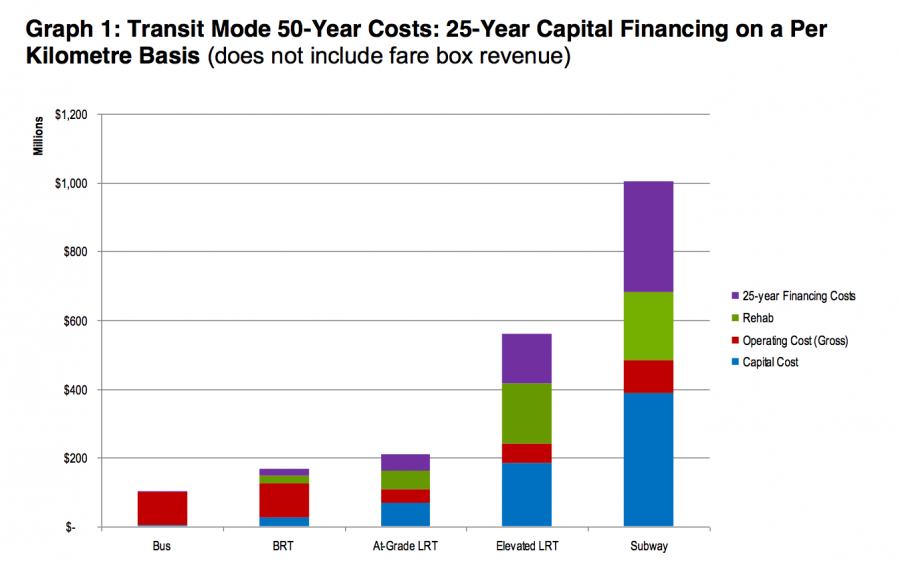
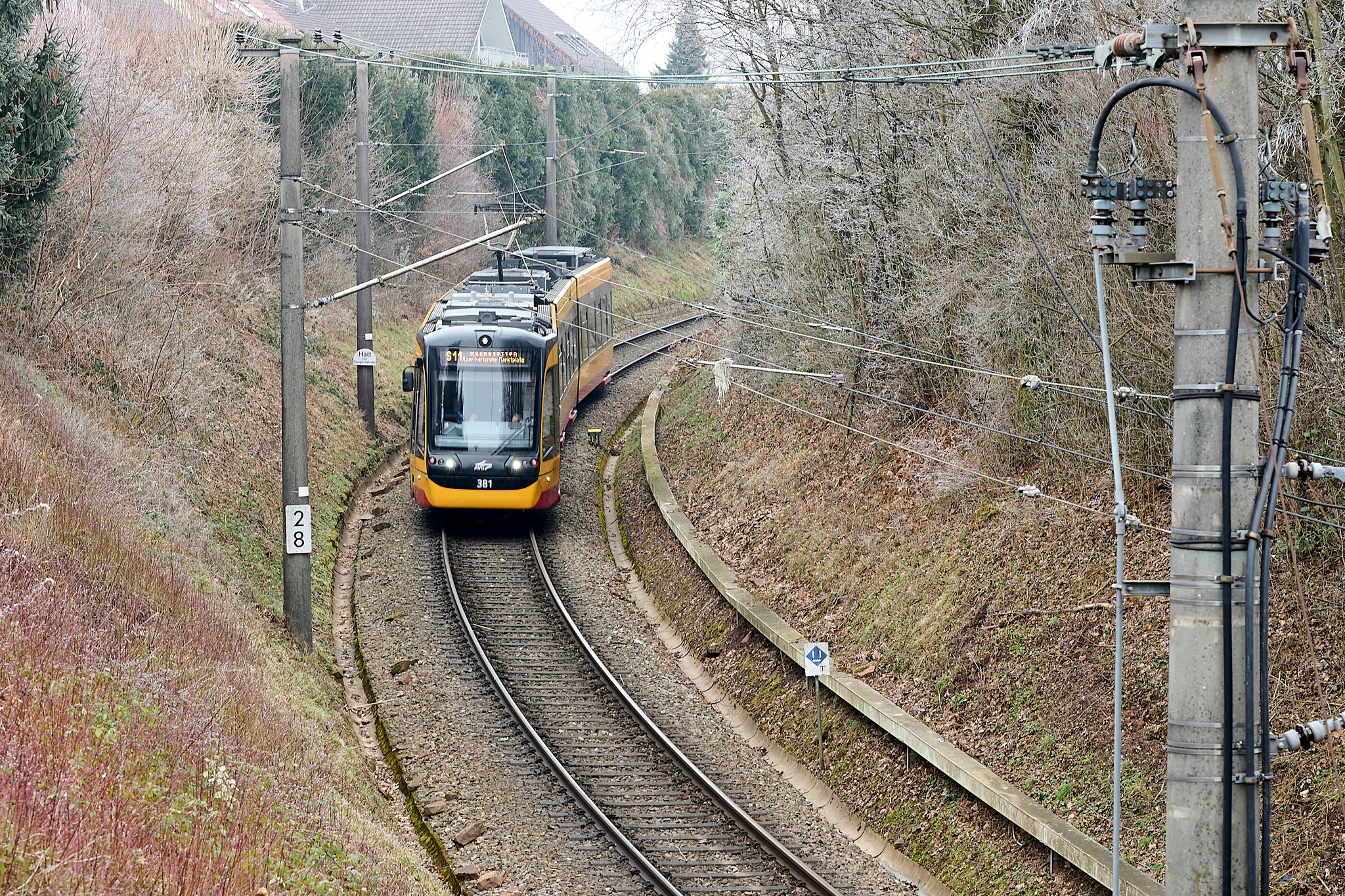
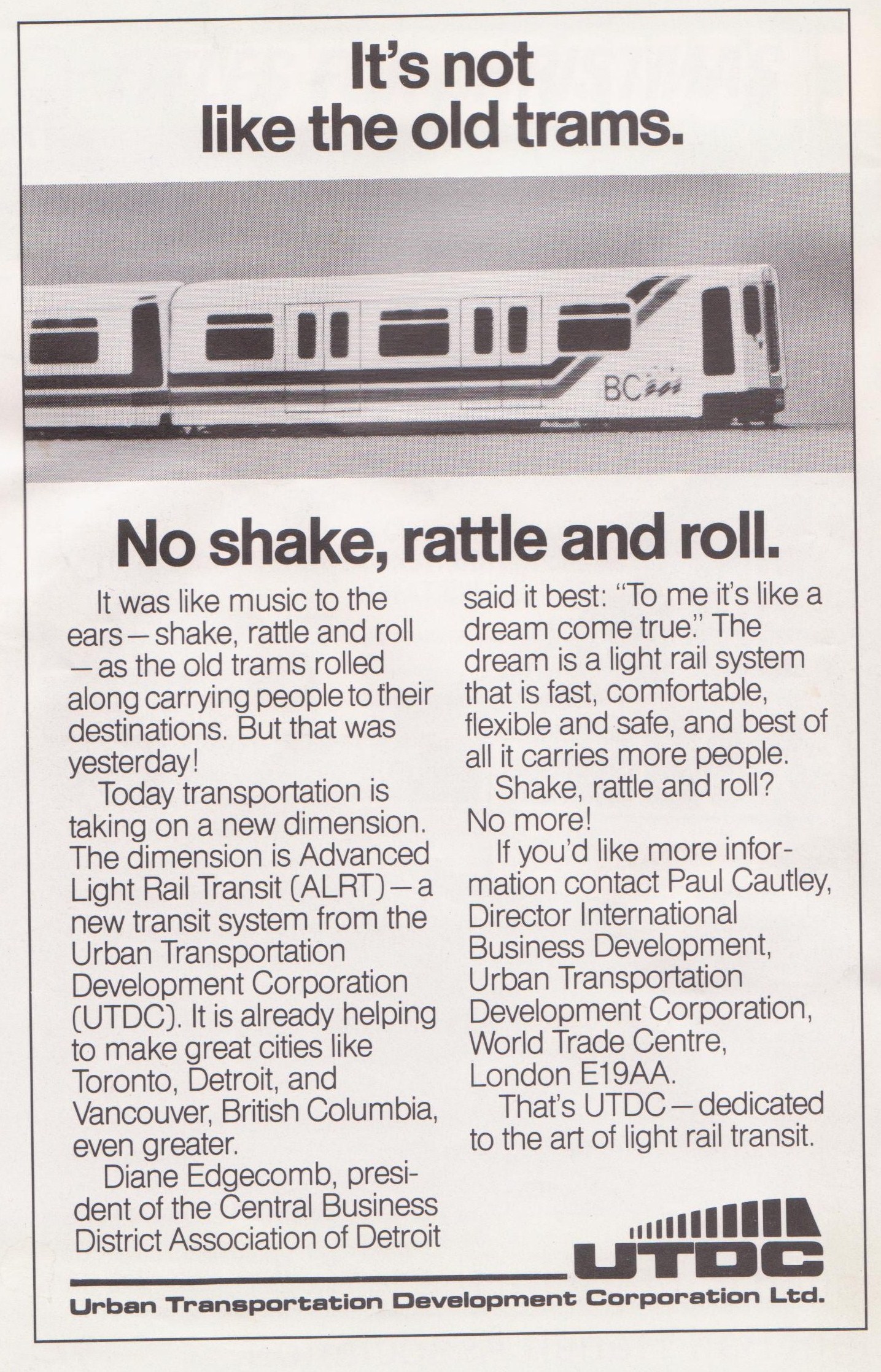

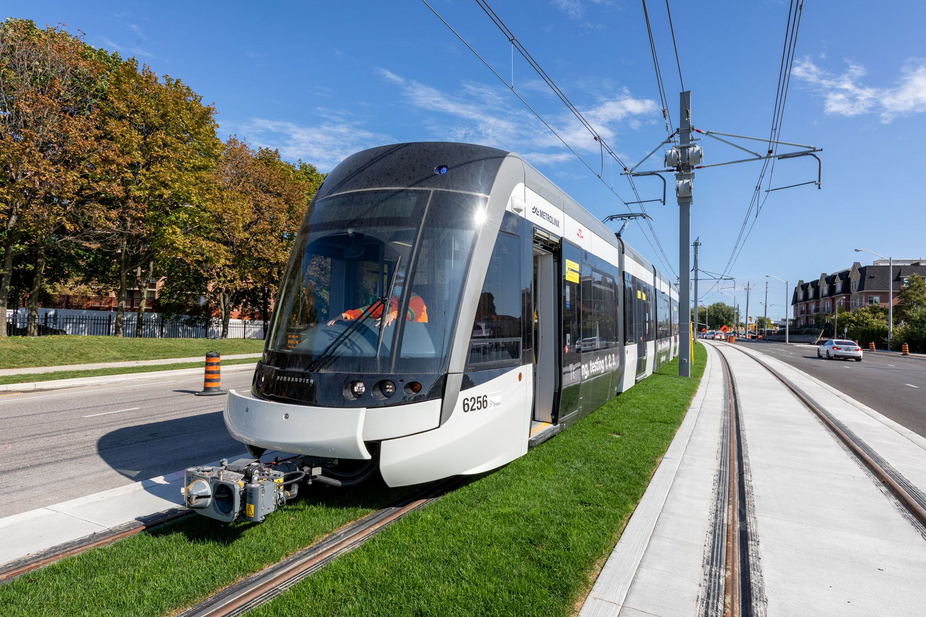


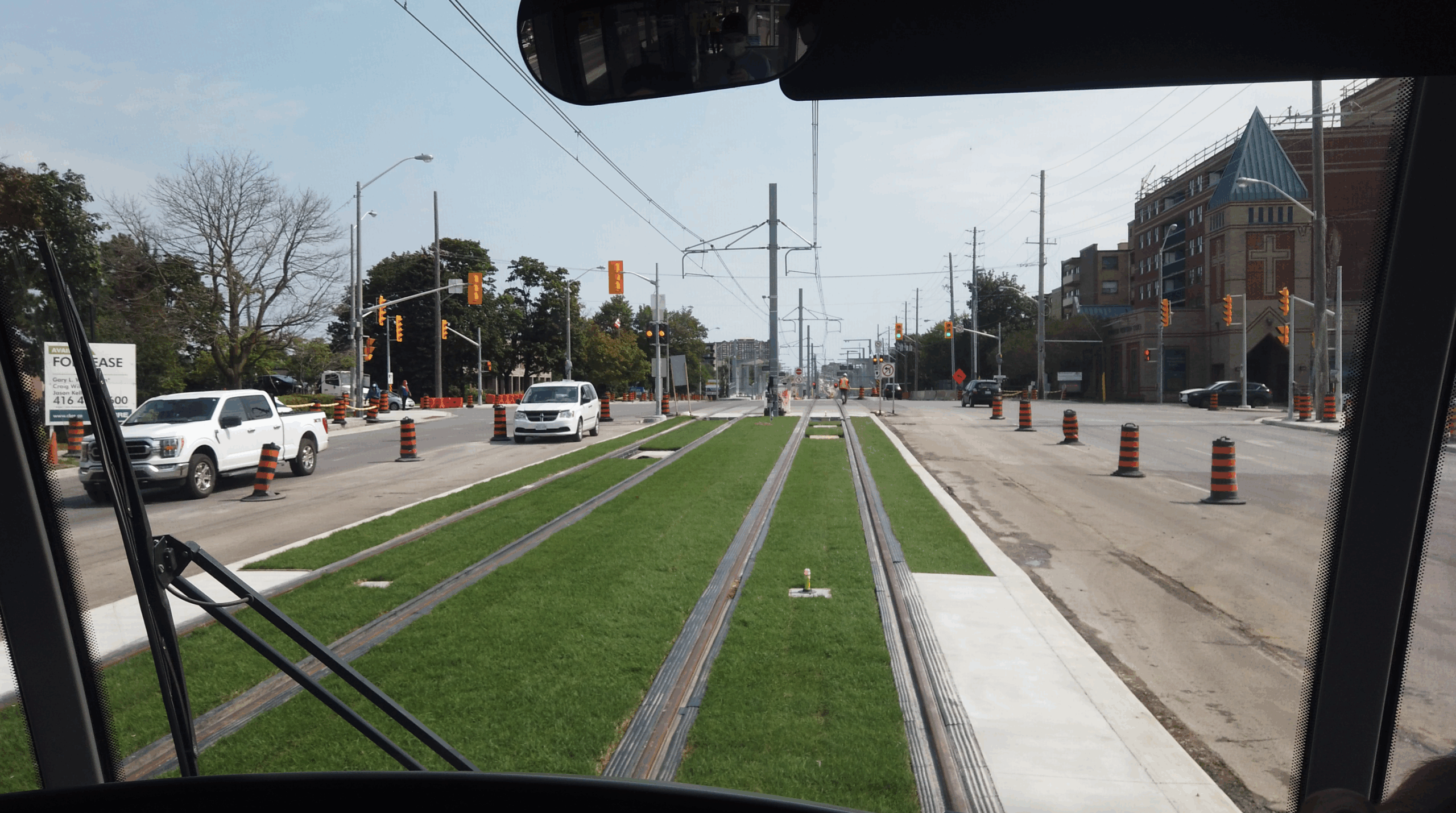


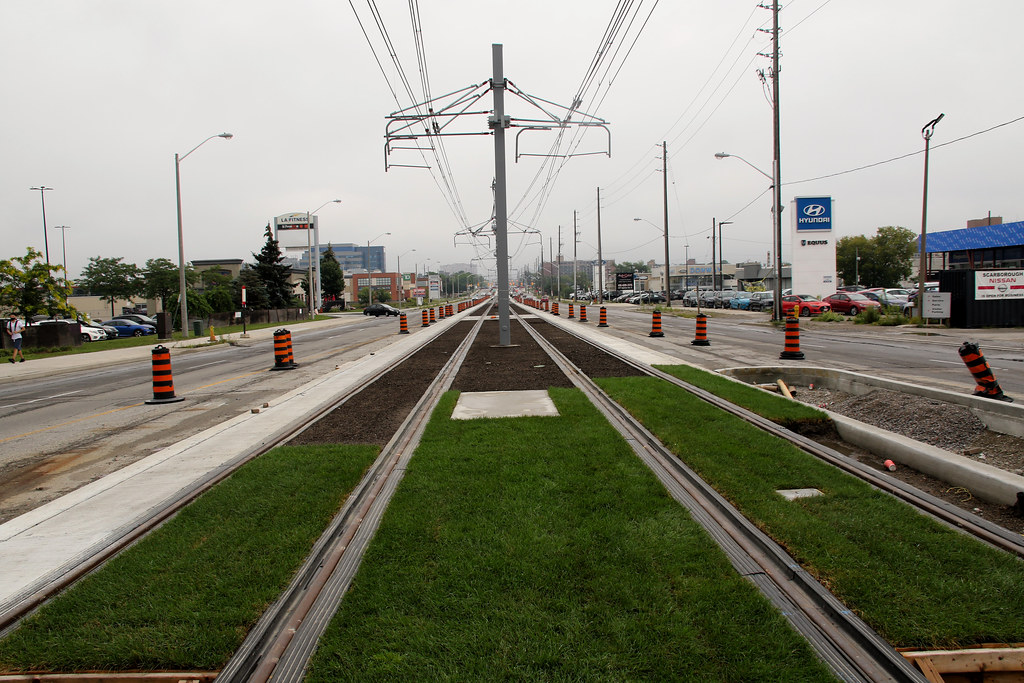
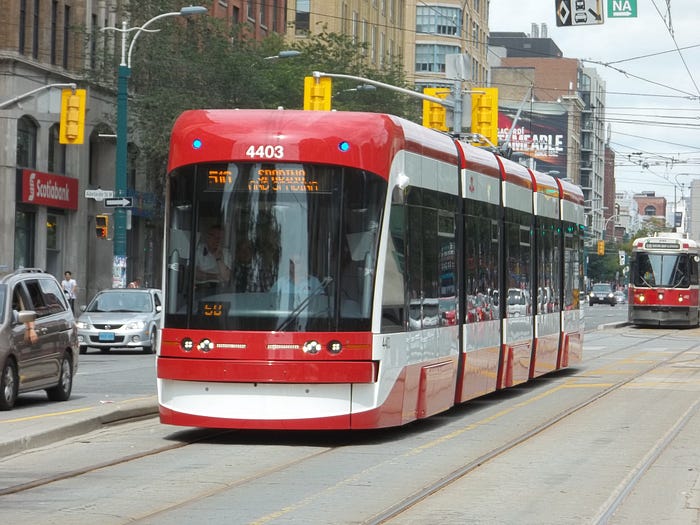
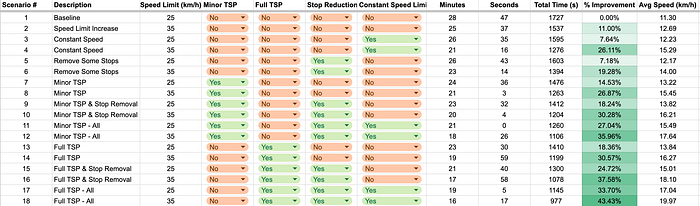
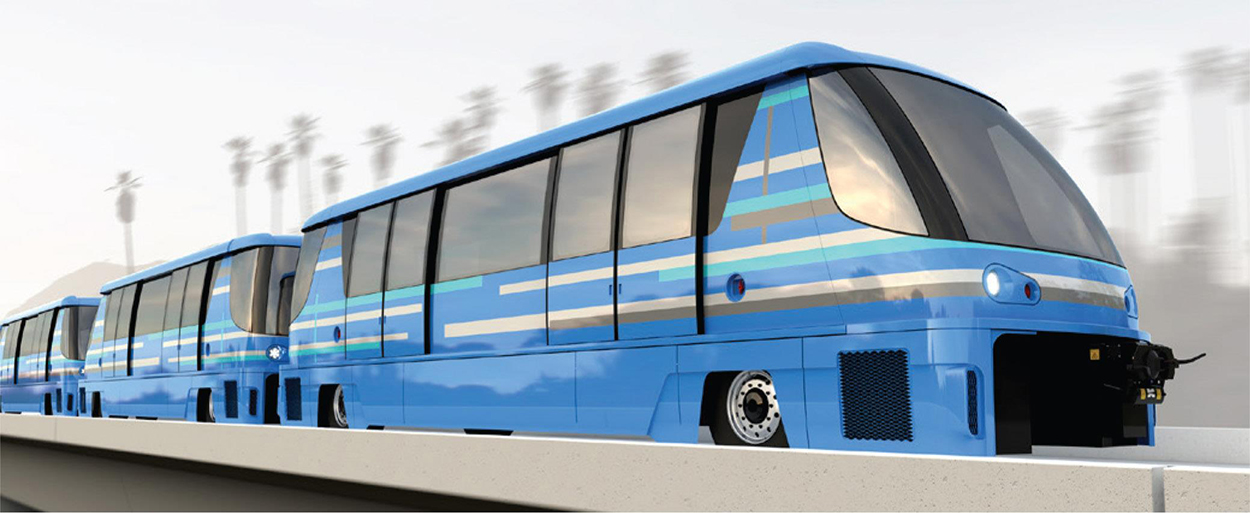
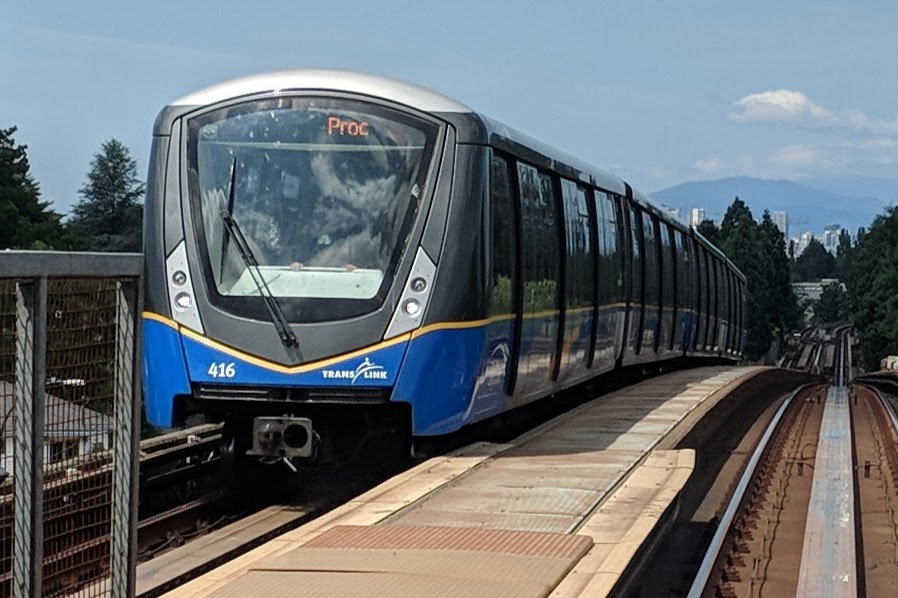





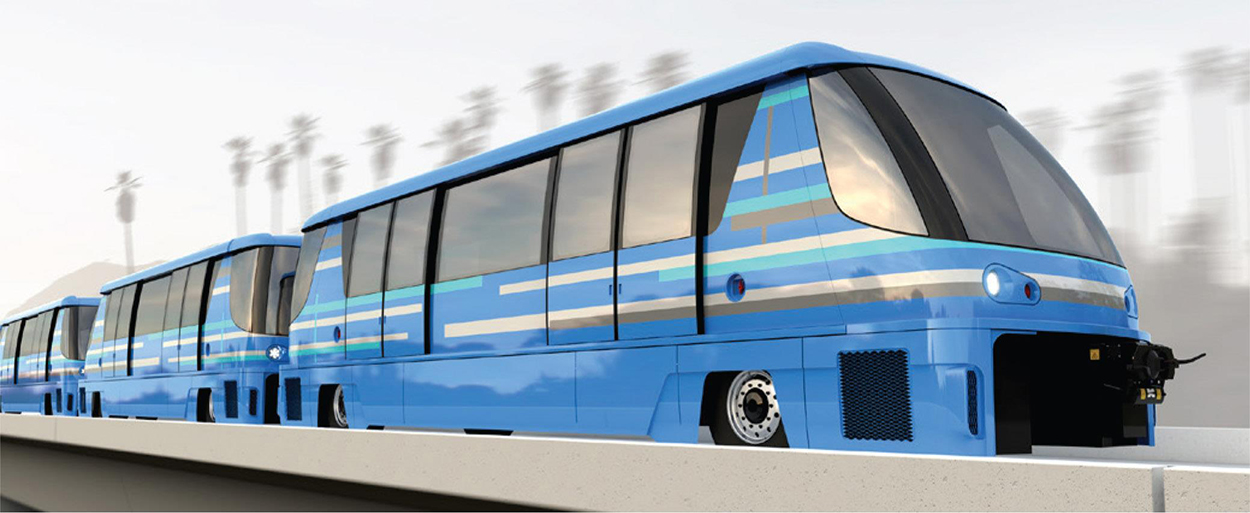
Recent Comments