What is is badly needed in BC and Canada is regional railways.
Local pundits have called for faster and faster rail transit, with some even advocating for high speed rail (HST) for the Fraser Valley as the only way to get people out of their cars.
The current cost for the Expo Line extension to Langley is now in excess of $350 million/km and a stand alone HST would cost much more, when one factors in land acquisition and the larger kinematic envelope needed for HST.
Funding please!
Today, with gas costing anywhere between $1.40 to $1.80 a litre, but for the future, especially when we are facing the whims of a American President, who presently seems hell bent tariffs, invading Greenland and Panama and making Canada the 51st state, alternative transportation is a must.
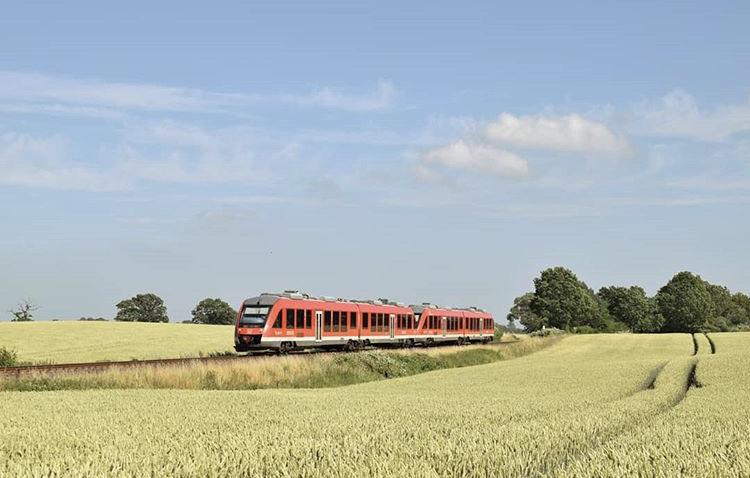
What is needed is a network of user-friendly rail line to entice customers to rail and those willing to try a modern DMU or EMU for a somewhat longer but far more comfortable trip may find a slower train far more enticing.
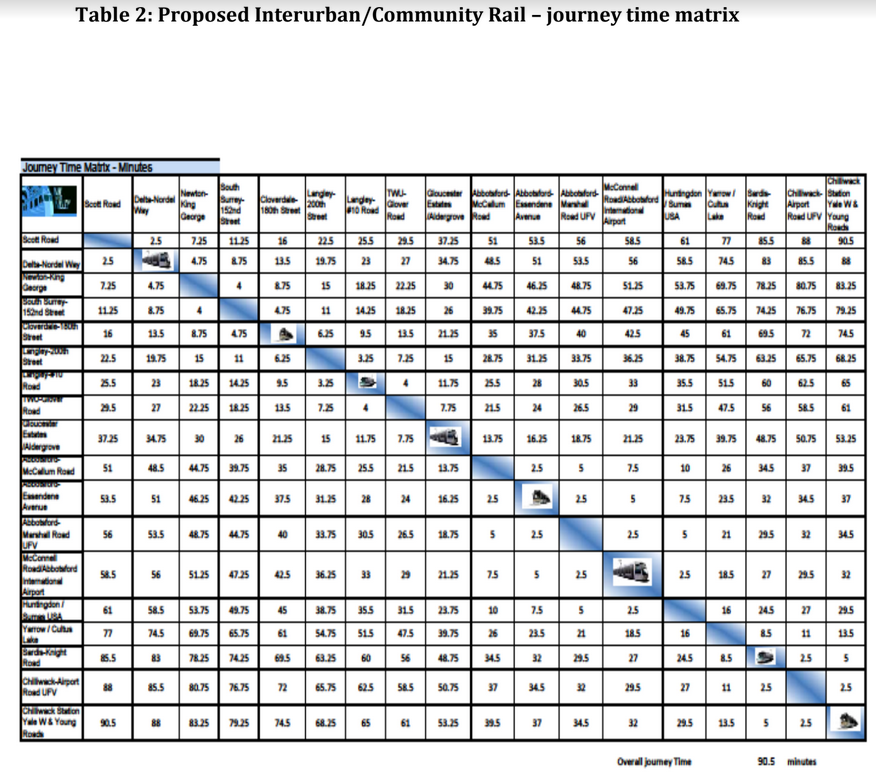
Rail for the Valley’s, Leewood Study sees a 90 minute trip time from Chilliwack to Scott Road Station, about 30 minutes slower than taking the car, in perfect conditions.
Perfect conditions is more and more a rarity on Hwy.1!
For many, the extra 30 minutes travel time will be well worth not dealing with gridlock and congestion and just enjoying the journey itself. With the added prospect of sipping a fresh coffee from a ‘Bistro Car’ could just seal the deal, taking the train.
A slow train to Chilliwack, just maybe, will be the fast train to success!
Famous for its high-speed TGV trains, France is now seeing the launch of a new rail revolution – slow trains. John Lichfield looks at the ambitious plan to reconnect some of France’s forgotten areas through a rail co-operative and a new philosophy of rail travel.
Published: 26 January 2022
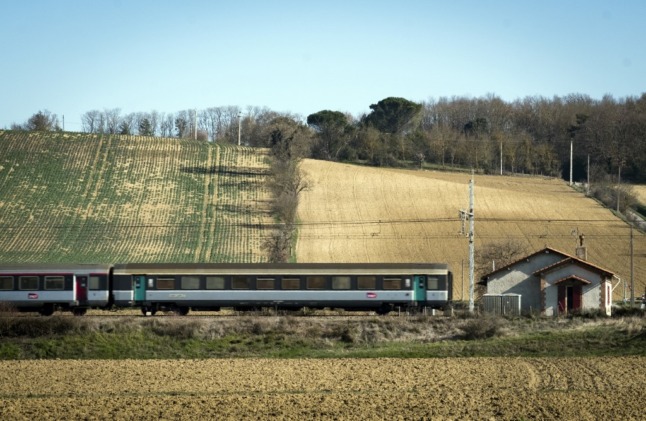
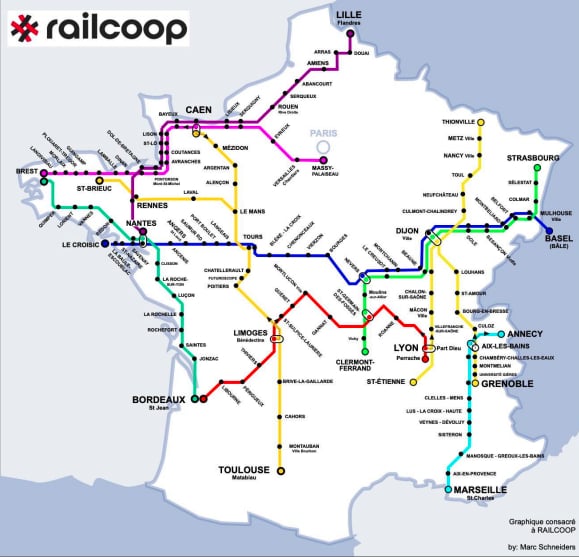
The slow trains would better connect rural France. Photo: Eric Cabanis/AFPFrance, the home of the Very Fast Train, is about to rediscover the Slow Train.From the end of this year, a new railway company, actually a cooperative, will offer affordable, long-distance travel between provincial towns and cities. The new trains – Trains à Grande Lenteur(TGL)?– will wander for hours along unused, or under-used, secondary lines.The first service will be from Bordeaux to Lyon, zig-zagging across the broad waist of France through Libourne, Périgueux, Limoges, Guéret, Montluçon and Roanne. Journey time: seven hours and 30 minutes.Other itineraries will eventually include: Caen to Toulouse, via Limoges in nine hours and 43 minutes and Le Croisic, in Brittany, to Basel in Switzerland, with 25 intermediate stops in 11 hours and 13 minutes.
To a railway lover like me such meandering journeys through La France Profonde sound marvellous. Can they possibly be a commercial proposition?
Some of the services, like Bordeaux-Lyon, were abandoned by the state railway company, the SNCF, several years ago. Others will be unbroken train journeys avoiding Paris which have never existed before – not even at the height of French railway boom at the end of the 19th century.
The venture has been made possible by the EU-inspired scrapping of SNCF’s monopoly on French rail passenger services. The Italian rail company Trenitalia is already competing on the high-speed TGV line between Lyon and Paris.
The low-speed trains also grow from an initiative by President Emmanuel Macron and his government to rescue some of France’s under-used, 19th century, local railways – a reversal of the policy adopted in Britain under Dr Richard Beeching from 1963.
The cross-country, slow train idea was formally approved by the rail regulator before Christmas. It has been developed by French public interest company called Railcoop (pronounced Rye-cope), which has already started its own freight service in south west France.
Ticket prices are still being calculated but they are forecast to be similar to the cost of “ride-sharing” on apps like BlaBla Car.
A little research shows that a Caen-Toulouse ticket might therefore be circa €30 for an almost ten-hour journey. SNCF currently demands between €50 and €90 for a seven-and-a-half-hour trip, including crossing Paris by Metro between Gares Saint Lazare and Montparnasse.
Maybe Railcoop is onto something after all.
The company/cooperative has over 11,000 members or “share-holders”, ranging from local authorities, businesses, pressure groups, railwaymen and women to future passengers. The minimum contribution for an individual is €100.
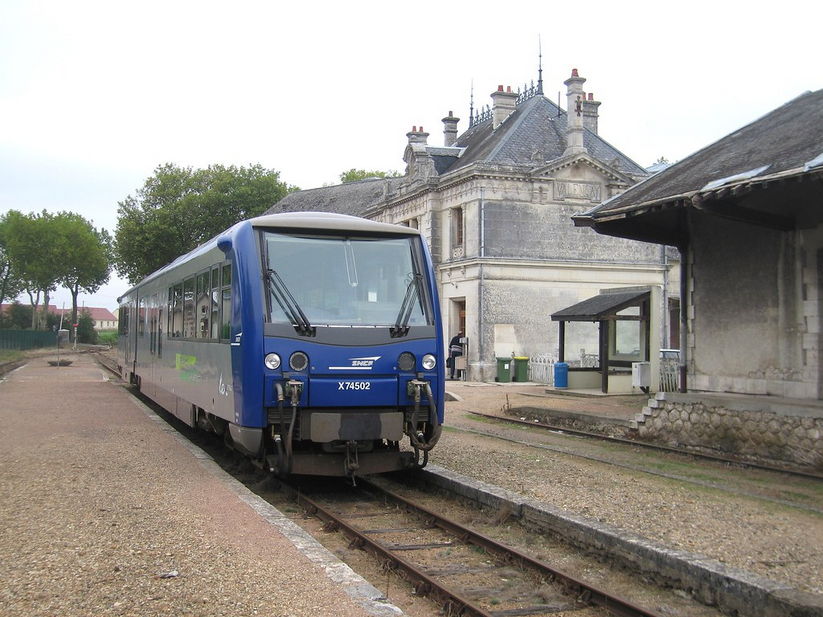
SNCF DMU X74502 at Valencay after arriving with train RE61277 the 1402 from Salbris
The plan is to reconnect towns ignored, or poorly served, by the Train à Grande Vitesse (TGV) high speed train revolution in France of the last 40 years. Parts of the Bordeaux-Lyon route are already covered by local passenger trains; other parts are now freight only.
For the time being it plans to lease and rebuild eight three carriage, diesel trains which have been made redundant in the Auvergne-Rhône-Alpes region.
There will be no space for a buffet or restaurant car. Restaurants and shops along the route will be invited to prepare local specialities which will be sold during station stops and eaten on board.
What a wonderful idea: French provincial meals on wheels; traiteurs on trains.
Olivia Wolanin of Railcoop told me: “We want to be part of the transition to a greener future, which is inevitably going to mean more train travel.
“We also want to offer journeys at a reasonable price to people who live in or want to visit parts of France where train services have all but vanished. We see ourselves as a service for people who have no cars – but also for people who DO have cars.”
Full disclosure. I am a fan of railways. I spent much of my childhood at Crewe station in Cheshire closely observing trains.
The government commissioned senior civil servant, and rail-lover, François Philizot to study the problem. After many delays, he reported that much of the French rail network was in a state of “collapse”. Far from turning out to be a French Beeching, he recommended that a few lines might have to close but most could and should be saved – either by national government or by regional governments.
Since then the Emmanuel Macron-Jean Castex government has promised a big new chunk of spending on “small lines” as part of its €100 billion three year Covid-recovery plan. Even more spending is needed but, for the first time since the TGV revolution began in 1981, big sums are to be spent on old lines in France as well as new ones.
The Railcoop cross-country network, to be completed by 2024-5, will run (at an average of 90 kph) partly on those tracks. Can it succeed where a similar German scheme failed?
François Philizot suggested in a recent interview with Le Monde that a revival of slow trains might work – so long as we accept that a greener future will also be a less frenetic future.
“When you’re not shooting across the country like an arrow at 300 kph, you can see much more and you can think for much longer,” Philizot said.
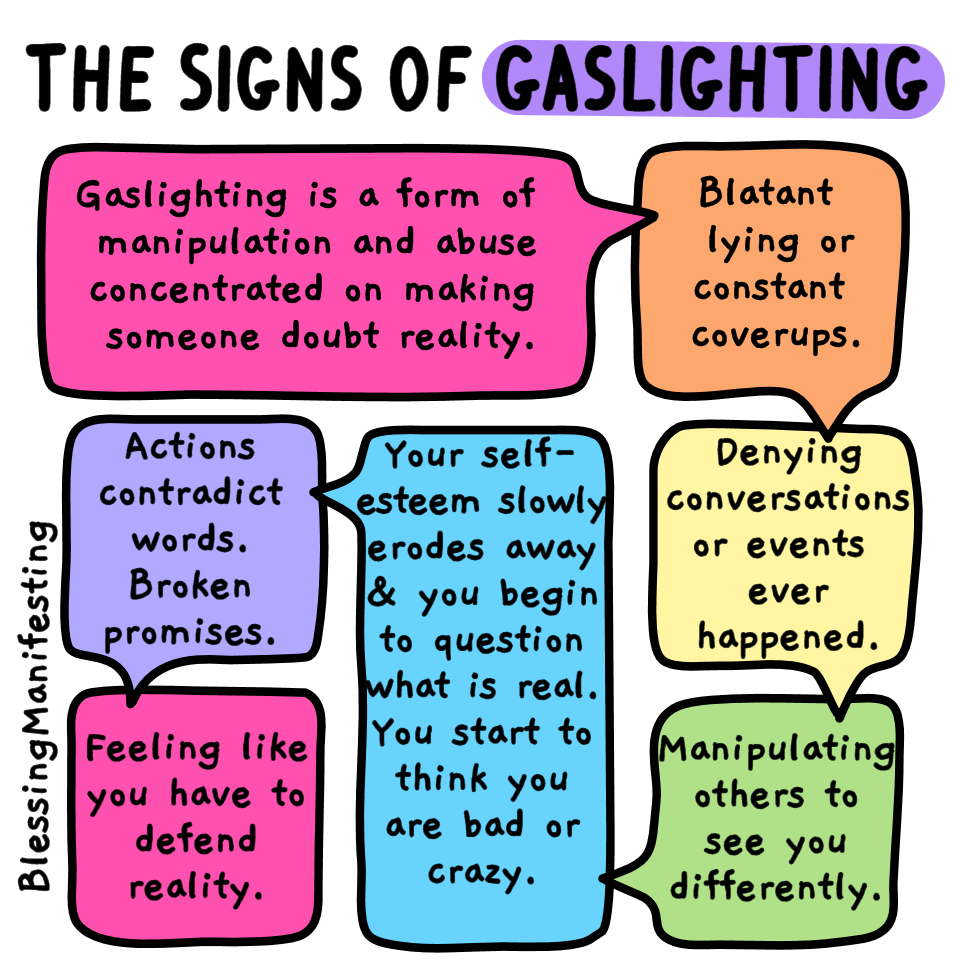
Gaslighting: a form of psychological manipulation in which a person or a group covertly sows seeds of doubt in a targeted individual or group, making them question their own memory, perception, or judgment, often evoking in them cognitive dissonance and other changes including low self-esteem. Using denial, misdirection, contradiction, and misinformation, gaslighting involves attempts to destabilize the victim and delegitimize the victim’s beliefs. Instances can range from the denial by an abuser that previous abusive incidents occurred, to the staging of bizarre events by the abuser with the intention of disorienting the victim.
When it comes to regional transit and regional transit planning, UBC Students, abetted by TransLink’s gas-lighting, rules.
Three issues which TransLink’s gaslighting has been a success.
SkyTrain is not a proprietary transit system.
Broadway is the most heaviest used transit route in Canada, no North America
LRT is in inferior
The SkyTrain Light-Metro system includes a proprietary transit system.
The question those claiming that SkyTrain is not a proprietary transit system, must ask; “Since when did the proprietary Movia Automatic Light Metro cease to be a proprietary transit system?“
SkyTrain is the name of the regional light-metro network and not the commercial trains used.
The Canada line uses conventional EMU’s made by ROTEM.
The Expo Line used the the proprietary Advanced Light Rail Transit (ALRT) system, renamed from the original Intermediate Capacity Transit System (ICTS), developed by the Urban Transportation Development Corporation (UTDC), an Ontario Crown corporation. The later Advanced Rapid Transit (ART) cars (MK.2’s), which came with the Millennium Line, were produced by Bombardier after it acquired the remains of the UTDC after it was returned to the Ontario government when Lavalin went Bankrupt.
Lavalin briefly owned the proprietary railway, renaming the proprietary transit system Advanced Light Metro (ALM) but the UTDC was returned to the Province of Ontario, after Lavalin went bankrupt trying to sell the often renamed proprietary transit system to Bangkok.
Montreal rebuilt the curs using their Innovia light-metro body-shell.
The Mk.5 cars, TransLink boast about, are Innovia 300 cars with open vestibules and have been on the market for about 20 years.
Bombardier’s Innovia line of light-metros, due to lack of sales was folded into the Movia heavy-rail metro line, with the proprietary system called Movia Automatic Light Metro.
MALM is now owned by Alstom, when they acquired Bombardier’s rail division.
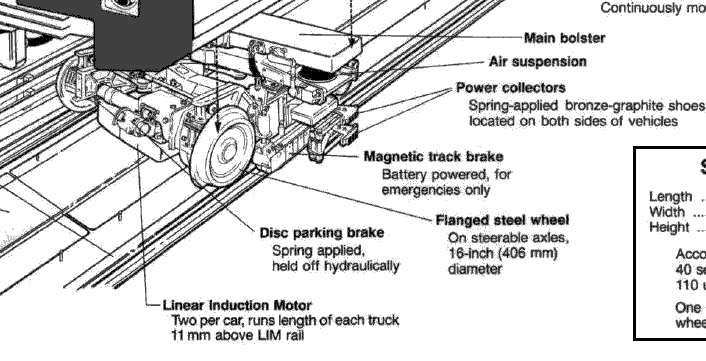
The key to the MALM system being proprietary is the use of Linear Induction Motors and the steerable axle trucks as no other company offers an “off the shelf” product compatible to operate son the MALM Lines.
As one German Engineer told me; “One just cannot slap on a pair of LIM’s on a conventional bogie (truck) and expect it to operate!“
The steerable axle truck, and LIM, are the key to the proprietary light metro.
Broadway is not the busiest transit corridor in Canada.
The hype and hoopla that Broadway being the the heaviest used transit route in Canada, no North America is a common refrain one reads in the mainstream media and hears on the radio or TV, made by politicians and bureaucrats.
Sorry it’s not true as the following from TransLink confirms.
“Finally, on January 31, 2019, you contacted several news organizations and this Secretariat raising concerns over TransLink’s assertion that the 99 B-Line is the busiest bus route in the US and Canada.
This is our region’s most overcrowded bus route. Pass ups are already common, as our regular riders on that route are fully aware. TransLink projects that the 99 B-Line from Arbutus to UBC will be at capacity in the peak when the Millennium Line extension from Commercial-Broadway to Arbutus opens.”
Cutting through the TransLink speak of this reply, TransLink only admits to Broadway being “our region’s most overcrowded bus route” and nothing more. What seems to be causing overcrowding is not heavy use, rather poor management because the capacity offered by B-line buses is under 2,000 persons per hour per direction at 3 minute headway’s.
The 99 B-Line bus only had 10,623,737 hoardings in 2024. That’s 34,161 to 40,861 passengers per business day, depending on your daily numbers conversion calculation method. Which puts it in at best, 4th in Toronto in 2024 or 9th if you use the lowest number, compared to other T.T.C. surface routes. Second place in 2024 Ottawa, if you use the arithmetic mean.
The claims that the 99 B-Line route on the Broadway Corridor moves 60,000 customers per day, are just, claims.
To increase capacity, why not offer peak hour 2 minute headway’s for the 99 B-Line and increase capacity by 50%; much simpler and affordable than a $4 billion subway.
Light rail is not inferior.
TransLink’s anti LRT screed is laughable and in the real world, they would be “thrown off the stage” with the drivel they peddle.
It seems TransLink’s six figured salaried bureaucrats can’t or won’t read transit history for if they had, they would know that only seven of the now called Movia Automatic Light Metro proprietary transit systems have been built over the past 40 years, under six different names. During the same period well over over two hundred and fifty new build Light rail lines have been built and most of the existing streetcar/ram systems have been upgraded or partially upgraded to light rail standards.
No MALM system has been sold in the past two decades.
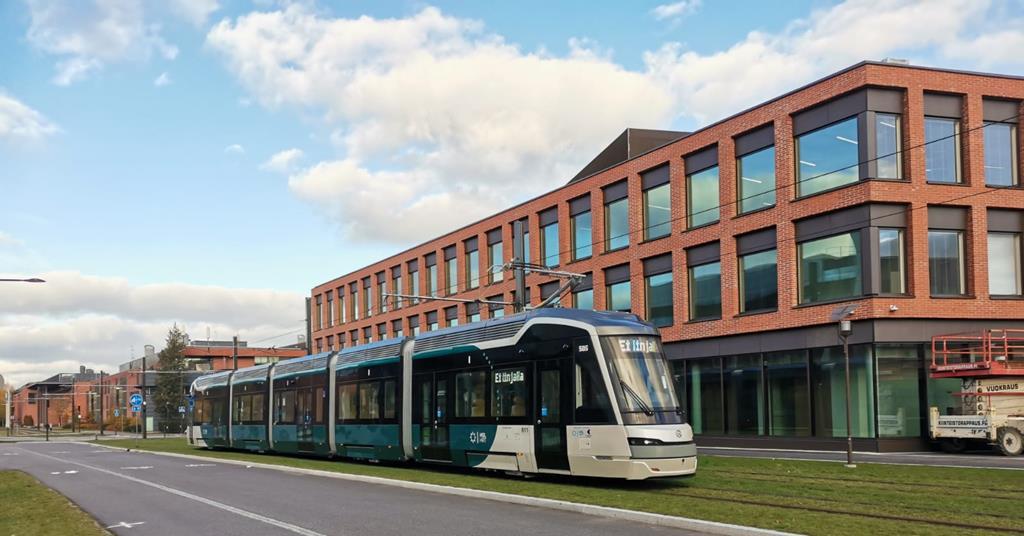
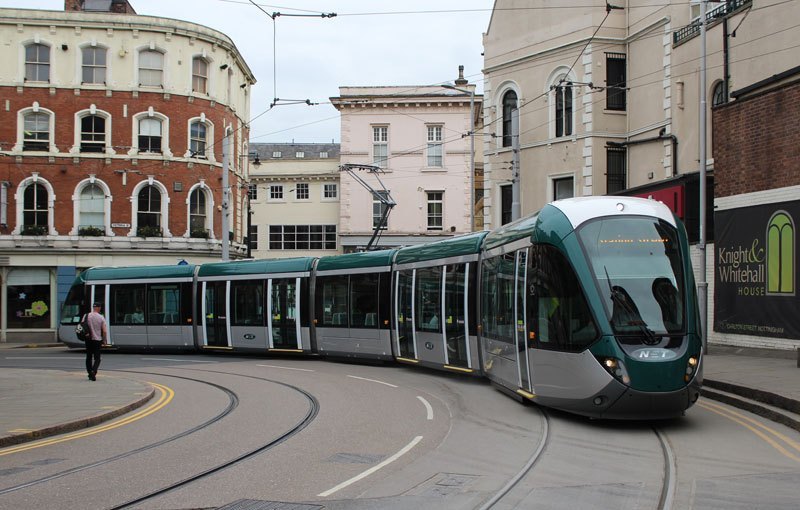
Modern trams, today can obtain capacities beyond 20,000 pphpd on portions of their routes at peak hours. This is why modern light rail has been so successful due in part for its ability to carry heavy passenger loads when need be. This is part of the flexibility of service inherent in modern light rail.
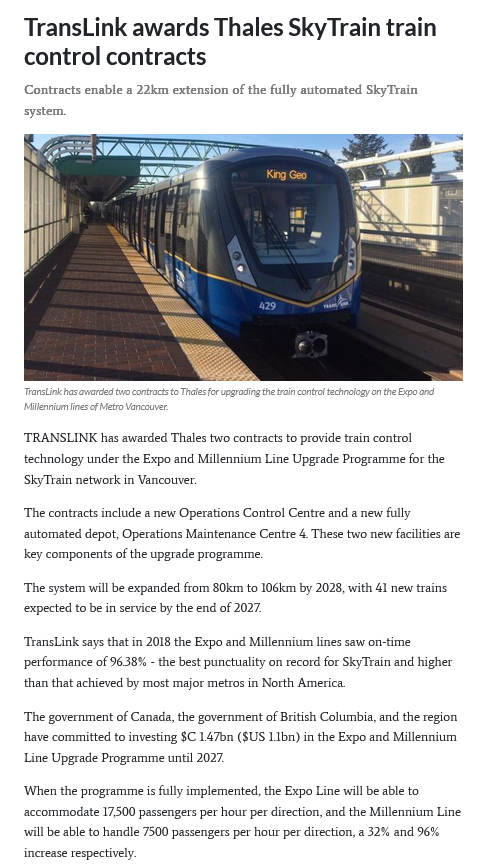
According to Thales, who has won the $1.47 billion re-signalling contract for the Expo and Millennium lines, the present maximum capacity of the Millennium Line is a mere 4,000 persons per hour per direction and after re-signalling, the maximum capacity of the Millennium Line will be only 7,500.
Toronto streetcars were obtaining peak hour capacity of over 12,000 pphpd on select routes in the late 1940’s and early 1950’s!
Today, the modern tram can operate as a mainline passenger train, a light-metro, light-rail and a streetcar all on the same route! Modern LRT has a proven record of attracting motorists from the car creating a viable modal shift from car to transit.
The last forty years has seen an unprecedented investment either building new or refurbishing existing transit systems around the world. It is a field where success is eagerly copied and what is deemed poor avoided. During this time, no other city has copied Vancouver’s transit planning, nor has copied Vancouver’s exclusive use of light-metro.
Sadly, TransLink’s “gaslighting” has so perverted transit planning in the region, that there is absolutely no hope of any coherent transit planning for the foreseeable future. UBC Students demanding a $8 billion subway to UBC, continue gas-lighting the media and public, continuing the Goebbels Gambit, of repeating lies often enough that the public begin to believe it!
The end result; Vancouver continues building with a “museum piece” transit system, too expensive to deal with today’s transit ills.
Move over E&N, passenger service on the former BC Rail, will soon take the spotlight in BC politics.
What is needed is a comprehensive passenger rail policy for the province, but never fear Premier’s Eby is fully focused spending $16 billion to extend the SkyTrain network a mere 21.7 km.
Again, the ruling NDP are extremely weak with any sort of “Green” rail policy and fumbles around with BRT (lite) and bicycle lanes as a cure for our current transportation malaise.
Sadly, the loyal opposition, Rustad’s Conservatives are mired in self immolation with anti-VAX/science types, homophobia, and has absolutely no vision for BC, except some sort of MAGA world clone of the USA.
Don’t hold your breath, as new highways are on order, ready for the next election.
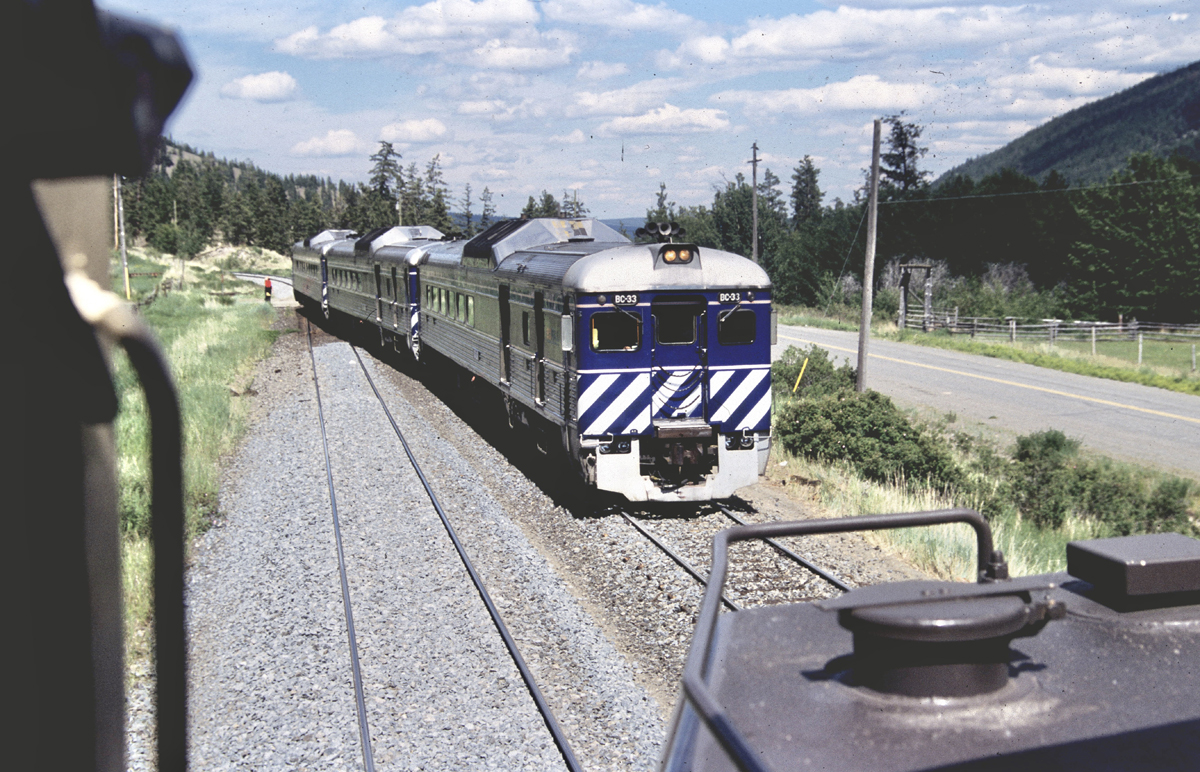
BC Rail’s Cariboo Prospector RDC passenger service is viewed from the cab of the Whistler Northwind at Lime, B.C., on July 2, 2001. The mayor of Squamish, B.C., is asking the government to hold consultations on Canadian National’s plans to end operations on the route. Bob Johnston
SQUAMISH, British Columbia — The mayor of Squamish is asking British Columbia’s Minister of Transportation and Transit to convene consultations over Canadian National Railway’s plan to end operations on 214 miles of its former BC Rail line through Squamish.
In Canada, consultations are a formal process to gather information and opinions from affected parties and others with an interest in a topic to help inform government actions.
Squamish Mayor Armand Hurford, in an Aug. 22 letter to Minister Mike Farnsworth, asked Farnsworth to hold consultations with “affected municipalities, regional districts, and First Nations,” saying CN’s plans to discontinue operations on portions of its Squamish and Lilloeet subdivisions places at risk benefits of the rail service including economic development, regional mobility, and climate resilience. On the latter point, Hurford’s letter says, “The line proved critical during th 2021 floods, offering supply chain redundancy in challenging terrain — a necessity in building resilience to climate change.”
CN informed Squamish officials of the plan to “decommission” the line — which it lhas eased from the province since 2003 — in a July 11 letter, saying the route does not have sufficient traffic. Among operations that could be affected is Rocky Mountaineer’s “Rainforest to Gold Rush” excursion between North Vancouver and Jasper, Alberta [see “CN seeks to end lease …,” Trains.com, July 22, 2025].
The Squamish Chief newspaper first reported both CN’s plan and the mayor’s request, which was included with the agenda for a District Council meeting scheduled for today (Sept. 2, 2025). The letter was provided to the council for informational purposes; no action is scheduled as part of the meeting agenda.
First published in 2009., The post has been updated.
A Wee Bit Of Local History
In early 1996, during BC Transit’s meaningless public consultation period for the Broadway Lougheed Rapid Transit Project which later morphed into the Millennium Line, Zwei received a phone call from an European Transit specialist, who worked for Asea Brown Boverai (later absorbed by Bombardier Inc.) regarding the project.
The European transit specialist, wanting to make contact with those planning for light-rail, had phoned BC Transit to arrange a meeting regarding the then proposed Broadway/Lougheed LRT project and was given Zwei’s phone number instead!
After his initial shock and displeasure being fobbed-off by BC Transit, the transit specialist entered into a long conversation with me on transit issues in the region and how modern light rail could help solve them. To make a long story short, he proposed a classic European style tramway for Broadway, with stops every 500m to 600m, going from BCIT to UBC, replacing all Broadway bus services and a second line via Main Street, Hastings St. to Stanley Park, that, he claimed would double present bus ridership on the two routes within two years, providing enough fare revenue for the tram to operate without any subsidy, with fares covering not only operating costs but most or all debt servicing costs as well. By doing so, a private company could build and operate the light rail line at no or little cost to the taxpayer.
“The rest is history” as they say and the SkyTrain Millennium Line was built instead and is subsidized by over $100 million annually!
The Light Rail Committee Proposes the BCIT to UBC and Stanley Park Light Rail Project.
In late 1996 the Light Rail Committee (now defunct) proposed a bold Broadway light rail plan: a tram/light rail line from BCIT to UBC via the Lougheed Hwy., Broadway, 10th Ave. and University Blvd. with a second line via Main street to Hastings Street to the Aquarium in Stanley Park. The plan consisted of lawned reserved rights-of-ways and on-street running; priority signaling on traffic calmed Broadway and Hastings Streets; tram/streetcar stops every 500 metres; a single track Vancouver General Hospital Loop via Fraser St., 10th Ave. and Cambie St., providing front door service to the hospital.
Commercial speed would be about 20 kph to 25 kph (depending on the number or tram-stops per km.) and the construction costs in the region of $35 million/km to $45 million/km; with maximum hourly capacity more than double the Millennium Line’s maximum capacity of 7,500 pphpd after a $1.47 billion re-signalling program!
In Finland a recent (2025) 3.9 km extension to a tramway cost CAD $34.1 million/km to build!
The value of the Petržalka contract is €83.043.464 (CAD $133 million(no VAT). This works out to $34.1 million/km. Compare the current cost of the 5.7 km, $3.5 billion extension to the Millennium Line to Arbutus (Broadway subway) at over $600 million per km, for the same cost of 5.7 km extension to the Millennium Line, we could build over 100 km of modern European Tramway!
Signaling would be line of sight with intersections and switches protected by local signaling. Headway’s could be as low as 60 seconds in peak hours.
What the LRCs plan would do is service many important transit destinations (UBC, BCIT, VGH, downtown Vancouver, Stanley Park, etc.), while providing economy of operation by replacing all bus services on Broadway and many in Vancouver, thus reducing operating costs by about half. Further economies are made by using existing masts and span wires along the proposed transit routes. The new LRT would be merely seen as the reinstatement of streetcar service by modern articulated trams, operating on 21st century rights-of-ways.
The concept of a private operator, by securing private financing to build the line at no or little cost to the taxpayer must be looked at by politicians. This type of P-3, not to be confused with the Canada Line scam, would see little or no subsides from government, unlike the Canada line which is heavily subsidized by TransLink by over $110 million annually.
The plan would reduce Broadway to one lane of traffic in each direction (passive traffic calming) except in areas of mixed operation, while keeping the all important on-street parking for local merchants. The plan would have offered a minimum of three transit routes: BCIT to UBC; BCIT to Stanley Park; UBC to Stanley Park.
The plan incorporates modern European light rail and tram practice; lawned reserved rights-of-ways, modular cars, high capacity, passenger comfort, and affordable cost.
It was not to be, as the Glen Clark NDP government, for reasons that can only be speculated, dismissed LRT out-of-hand and went for the then obsolete and hugely expensive Advanced Rapid Transit (ART) system, the fourth renaming of what is generally called SkyTrain.
The City of Vancouver and TransLink are demanded and got $3.5 billion dollar subway under Broadway, basically to serve their belief that “subways make a city world class”.
It is time to again to consider again a BCIT to UBC and Stanley Park light-rail network, that could cost the taxpayer little or no money instead of a $3.5 billion subway to Arbutus or a $8 billion plus subway to UBC that ignores transit concerns East of commercial Drive.
First posted by zweisystem on Tuesday, November 17, 2020 (updated)
I am reposting this from November 2020 because TransLink, civic and provincial politicians are singing hosannas about Bus Rapid Transit, with some going so far to say that BRT makes light rail obsolete!
What is damning today is that the numbers used in TransLink’s 2019 study for transit options are random, pulled out of the air.
Today, according to Thales, who has won the $1.47 billion resignalling contract for the Expo and Millennium lines, the present maximum capacity of the Millennium Line is a mere 4,000 persons per hour per direction and after resignalling, the maximum capacity of the Millennium Line will be only 7,500; far less than the numbers used in the study.
Not only does this call into question the validity of this study, but the validity of every study offered by TransLink to date!
It is a given, that TransLink has very serious financial ills mostly stemming from the $16 billion cost of the full program to extend the Expo and Millennium Lines (Broadway Subway) 21.7 km. As always, the provincial government, the Mayor’s Council on Transit, and TransLink are cowards when it comes to telling the truth about transit and continue to do the same thing over and over again, pretending that are doing it right …… this time.
They are not.
It verifies what we all knew: that TransLink underestimated the capacity of surface rail by 150% and the time penalty by infinity.
Professor Patrick M. Condon, James Taylor Chair in Landscape and Livable Environments, UBC
Yes we all knew. American Transportation Expert, Gerald Fox told us in 2008:
The Evergreen Line Report made me curious as to how TransLink could justify continuing to expand SkyTrain, when the rest of the world is building LRT. So I went back and read the alleged Business Case (BC) report in a little more detail. I found several instances where the analysis had made assumptions that were inaccurate, or had been manipulated to make the case for SkyTrain. If the underlying assumptions are inaccurate, the conclusions may be so too.
We were also warned about ALRT (SkyTrain) back in the early 1980’s!
Our politicians, academics, and the mainstream media knew, but did not heed, either blinded by gadgetbahnen envy or were too easily bought and thus continues the planning charade that has so distorted our regional transit planning today.
Tram Capacity to UBC has been grossly understated:
Given the characteristics of the tram’s exclusive lane corridor listed above, a 2.5 minute headway is achievable. This is roughly 60% more practical capacity than a 4 minute headway.
Let us also remember:
The Millennium Line’s legal capacity, as per Transport Canada’s Operating Certificate is 15,000 pphpd. Please note:According to Thales 2022 News Release regarding their winning a $1.47 billion resignalling contract of the Expo and Millennium Lines; ““When the programme is fully implemented, the Expo Line will be able to accommodate 17,500 passengers per hour per direction, and the Millennium Line (Broadway Subway) will be able to handle 7500 passengers per hour per direction, a 32% and 96% increase respectively.” This means the current maximum capacity of the Millennium Line (Broadway Subway) is 4,000 pphpd!After resignalling, the Millennium Line will still have less capacity than what streetcars were carrying 75 years ago!
In the 1940’s and 50’s Toronto’s Bloor Danforth streetcar line operated coupled sets of PCC cars, offering a capacity of 12,500 pphpd.
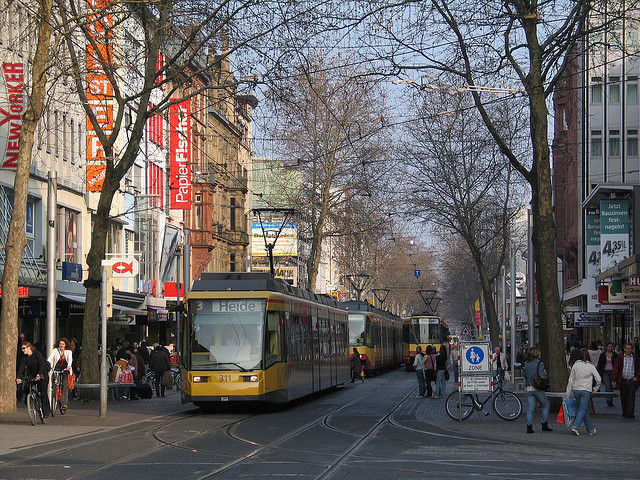
In Karlsruhe Germany, because of the success of TramTrain was seeing peak hour capacity of in excess of 30,000 pphpd.
Who says, LRT has less capacity than SkyTrain?
The Gelbe Wand or Yellow Wall of trams in Karlsruhe, Germany
As Gerald Fox summed up:
It is interesting how TransLink has used this cunning method of manipulating analysis to justify SkyTrain in corridor after corridor, and has thus succeeded in keeping its proprietary rail system expanding. In the US, all new transit projects that seek federal support are now subjected to scrutiny by a panel of transit peers, selected and monitored by the federal government, to ensure that projects are analyzed honestly, and the taxpayer interests are protected. No SkyTrain project has ever passed this scrutiny in the US.
******************************************
Background
In the Jan 2019 UBC transit report1, we see the demand forecast for transit options of Bus Rapid Transit (BRT), Light Rail Transit (LRT or street-running tram) and RRT (skytrain or ‘light-metro’). It is clear from the two pictures below, that RRT is the ‘winner’ or preferred option (as represented in the Jan 2019 report):
As an explanation to the charts immediately above, the 2019 report explains:
“ LRT ridership is forecast at about 60% that of RRT, partly because of slower travel times and the transfer penalty, but also because of capacity limitations. The increased speed, reliability and capacity of RRT attracts more ridership from latent and suppressed demand and better serves total demand along this corridor.”
According to the Jan 2019 study1, because of the following, RRT is the only suitable option for transit to UBC..
Travel times,
Transfer penalty
Capacity
It will be shown that the largest of these factors affecting LRT ridership is capacity. For this reason, this paper discusses the capacity limitation newly introduced by the 2019 study1, that was not a limiting factor in the 2012 study2 and why it is not correct.
The following is from our transit specialist in Ottawa.Mr. Haveacow, commenting on the post and is very informative.
The frustrating thing about the way Translink measured the capacity ranges for the various types of rapid transit technologies was because it was based on how they believed they would run the particular transit operating technology. It wasn’t based on how other more experienced regional transit properties ran their facilities or even close to the best-known Canadian or international operating practices of each type. This pretty much guarantees the results you want. The choice of Skytrain on Broadway was highly manipulated by this kind artificially low operational capacity and standards and practices that were poor choices for any comparison. I used Bus Rapid Transit as an example here not because I thought it was the best option on Broadway but as an example to show how poorly Translink’s BRT option really was compared to what could have been used in their report.
The Bus Rapid Transit norms used were inferior and far from the superior practices used by Ottawa and other cities.This absolutely shoddy choice of BRT infrastructure and operating practices shows the limited understanding Translink officials had on the subject. Thus it’s not surprising that the capacity limits believed for their BRT comparison were more than a little artificially low, especially compared to where and how they planned to operate the Skytrain.
How Translink Defined and Would Operate Bus Rapid Transit
I remember reading what Translink defined as Bus Rapid Transit in many of their past reports and giggling. Ottawa has operated real Bus Rapid Transit on our bus Transitway Network since 1983. Ottawa still has the most extensive network of BRT lines in North America, even with 12.5 km of BRT lines already converted to LRT and about 25 km more being converted presently. Many of the operating details of what Translink defined under BRT would be laughed at by longtime Ottawa Transitway passengers and not considered BRT but really, a glorified express bus with nice bus stops.
Professionally, many of the operating practices presently used or what Translink planned to use as BRT operational practices in their reports, showed at best an inexperienced operator and a lack of understanding about what you can really do with BRT. If you are going to measure BRT against Skytrain in a given corridor to determine the most useful operating technology, actually measure a real functioning line that is working within a real BRT operation. Not the joke Translink used to compare against the Skytrain. What was obvious from the start was that Translink doesn’t either understand or wouldn’t acknowledge that there are 2 main types or extremes, of BRT operations, open or closed systems. Choosing to mainly concentrate on either one has real operating advantages depending and different issues that very much effect what gets put in reports. Unfortunately the same lack of understanding can be said for their LRT and just general standard bus operating comparisons as well.
The example of BRT system Translink used was a mostly closed system which by their nature purposely limits operational capacity and bus numbers to preserve the infrastructure’s theoretical capacity. It greatly lowers cost as a result but Translink’s own documents downplayed the cost reality. It mainly concentrated on the capacity argument. The examples below are mostly open BRT systems which greatly increase operational capacity.
Before the conversion to LRT, during the height of both the AM and PM peak period, Ottawa’s Transitway would have a passenger level of 10,700 passengers per hour per direction. This was done using 185 to 200 buses per hour per direction on 85 seperate bus routes. During the day the Central Transitway would average between 4,000 to 6,000 pass/hr/direction using 60 to 80 buses/hr/direction.
Currently, during both peak periods Gatineau’s Rapi-Bus Transitway moves 4600 to 5000 pass/hr/direction using 90 to 100 buses/hr/direction.
Brisbane, Queensland, Australia “Brisbane Transport Agency known as “Translink” operates a successful BRT “The Busway Network” moves at peak 14,000 pass/hr/direction using 225 buses/hr/direction.
Pitsburgh’s Busway Network during both peaks sees 4500-4800 pass/hr/direction using 90-95 buses/hr/direction
Capacity and Cost is Important Here
The capacity of Translink’s BRT example in the report shows a service level of only a marginal improvement over the current bus system. Each one of these BRT examples I used uses far greater levels of buses than was currently planned for the Broadway Corridor, but their capacity far exceeds stated capacity levels of Bus Rapid Transit in the reports. The truly laughable BRT capacity used by Translink here can’t be realistically compared against a full Light Metro line operating in a tunnel. Especially if operating costs aren’t considered important. For example, data out of various projects in Montreal, Toronto and Ottawa all showed that a full scale BRT line is lower in cost per passenger and 30 year operating costs than a Light Metro line if that particular line is moving less than 134,000 people a day. Broadway has quite a while before it will consistently break that service level.
Compare Apples to Apples and Oranges to Oranges
The BRT example used in the Broadway report was mostly operating in a painted bus lane with some physical segregation. Painted bus lanes can be easily entered by other vehicles, they are almost impossible for any police service to regulate if it is more than a kilometre long, are highly effected by parking lanes, driveways and laneways, block lengths, the number, size, frequency of and types of intersections. Different types of intersection signaling and control and the sheer number of other lanes. Painted bus lanes have a very low numerical capacity 3000 to 5000 pass/hr/direction depending on many physical conditions. Lastly, the amount of external traffic is desperately important as well for the operating effectiveness of a painted bus lane. Unless the bus lane is a non painted, physically segregated from other traffic, the comparison of this bus lane to any train in a tunnel is meaningless.
To be fair, if you are going to measure a BRT lane against a Skytrain operating in a tunnel, the BRT lane needs to be in a tunnel as well!
The type of BRT operations used needs to have the capacity maximized to compete fairly against any type of train. The position of the BRT lanes also needs to be considered as well given other surface road conditions.
A mostly closed BRT system operating along mainly painted bus lanes, operating in the open, along with other mixed traffic lanes and having to enter signalized intersections will never compare favourably against the Skytrain operating below grade in a tunnel.
Stations become critical here because the report had fairly numerous bus stops that could only hold two articulated buses 18 to 20 metres long each. The Skytrain station platforms were 80 metres long. There were also more BRT stops than Skytrain Stations. That’s just not an equal comparison!
It is a rather long article, but worth a read because it illustrates TransLink’s big problem of declining ridership.
Claims of increased ridership are more than questionable, but it seems higher ridership numbers come mainly from the suburbs and due to population growth and not a user-friendly transit system.
This is a big problem, especially when one is spending $16 billion to extend the rapid transit system a mere 21.7 km!
Part of the problem is demographics, the transit friendly population is slowly aging out and the next generations view public transport differently. As well, downtown Vancouver is no longer the the big destination hub as high rents and leases are driving business outside the downtown core. Added to this, major universities and colleges have campuses in the downtown, with the big problem that the $1 a day U-Pass post secondary student pass, with around 130,000 issued and is being used far more than it was designed to, translates to the fact the income needed, to support the hugely expensive light metro system is not being generated.
The other huge problem facing TransLink is that the City of Surrey population will soon surpass Vancouver’s and the politcal strength of the city, will compel transit dollars being spent there, instead of the City of Vancouver. This could jeopardize the now $8 billion needed to complete the Broadway subway to UBC and any sort of real rapid transit, other than ‘rapidbus’ for the North Shore.
The following is from our friend Mr. Cow who gives a sobering explanation of the finical ills soon to beset TransLink and regional taxpayers.
Fast direct trains are darn great but they are really expensive. Vancouver (Translink) has a $600 million annual budget gap, due to a very outdated funding formula. Now, starting in 2026 both the federal government and provincial government are subsidizing Translink to partially close the gap. Including a annual 2% fare increase and other economic measures Translink is still out $266-$287 Million per year. These are from Translink’s own numbers.
What you need is very expensive new funding formula for Translink and they are still waiting for politicians to make a decision. According to my spies, the politicians are never going to give Translink the budget boost it wants, there are going to be service cuts, pardon me, service adjustments. Times are just too tough for people especially at the municipal level.
The serious issue is that, the extra provincial funding ends in 4 years and the federal in 10 years. That means in 2030 a new $94 million dollar operating budget gaps appears. Again in 2036 another $140 million. All these costs will have to be absorbed by Translink. Keeping in mind the current funding formula really only funded about 80% of what Translink really wanted to do, according to Translink officials I talked to back in 2015. The problem with great big regional transit agencies in North America, they never receive enough operating funds. One of the major points in my thesis for my planning degree back in the early 1990’s.
The days of $6-$10 Billion rapid transit lines are over. The money just isn’t there anymore provinces and federal governments want 33% -40% of the budget for new lines paid by the local government, unless national or provincial money is at risk due to congestion or some other important issue. Just like we were forced to in Ottawa for phase 2 and 3 of our Light Rail Transit network.In phase 2 we were able to build 44 km of rail service for $4.6 Billion but locally we paid almost 39% of the costs, it had to be as cheap as possible.
It is especially troubling for provincial and federal funding officials when they notice that, the local governments here in the lower mainland can barely afford its transit operating budget. Until that is dealt with, don’t even think of new lines unless your province wants to keep paying 100% of the capital cost all by itself. The funding pendulum is swinging back to what it was in the 80’s and 90’s get use to it.
Again last week, a local politician repeated the old trope, that Broadway was the busiest transit corridor in not only Canada, but North America.
Again Zwei counters the statement with facts. Oh yes, a little birdie told me that TransLink is not running the full schedule of buses in the peak hours due to driver issues, that the buses are operating well under their scheduled capacity of around 2,000 pphpd.
BROADWAY IS NOT THE BUSIEST TRANSIT ROUTE IN CANADA
It seems trouble is brewing on Broadway, buildings are sagging and media keeps repeating the TransLink and City of Vancouver’s nonsense that Broadway is the busiest transit route in North America.
Well it isn’t and never was and my guess is that TransLink, the provincial NDP and the CoV are softening up the taxpayer for some bad fiscal news about the now $2.7 billion, 5.7 km Broadway Subway.
The clincher is this; according to Thales News Release announcing thew $1.49 billion re-signalling contract;
The government of Canada, the government of British Columbia, and the region have committed to investing $C 1.47bn ($US 1.1bn) in the Expo and Millennium Line Upgrade Programme until 2027.
When the programme is fully implemented, the Expo Line will be able to accommodate 17,500 passengers per hour per direction, and the Millennium Line will be able to handle 7500 passengers per hour per direction, a 32% and 96% increase respectively.
A maximum capacity of only 7,500 pphpd on the Millennium Line (Broadway subway) supposedly busiest transit corridor in North America? Is Broadway the busiest transit corridor in North America, I think not.
For the past several years, the SkyTrain Lobby, politicians and academics have all said, almost in unison, that Broadway was the busiest transit corridor in Canada, if not North America.
The old Joseph Goebbels quote is true; “If you tell a lie big enough and keep repeating it, people will eventually come to believe it.”
Thus for the past several years the big Broadway lie, enabled by TransLink has ingrained the notion that Broadway is the most heavily transit route in Canada.
Fact Check!
According to the TTC’s Fall 2022 data, these routes are busier than Broadway 99B Bus Route: (data is from Translink and the TTC)
99 B: 35,800 Boardings (Fall 2022)
504 A&B King St Streetcar: 48,900 Boardings (Fall 2022) Queen 501Streetcar: 37,400 Boardings (Fall 2022) Finch West 36 Bus: 36,900 (Fall 2022) Lawrence West 52: 36,100 (Fall 2022)
In a letter to several news organizations, all metro mayors and other interested parties, I laid the foundation that Broadway was not the busiest transit route in Canada .
Stung by this, TransLink wrote a letter to myself and in a round about way claimed that Broadway “is our region’s most overcrowded bus route.”
No apology and not even a hint of remorse, TransLink continues to boast about Broadway!
Finally, on January 31, 2019, you contacted several news organizations and this Secretariat raising concerns over TransLink’s assertion that the 99 B-Line is the busiest bus route in the US and Canada. TransLink is confident in its data collection and peer comparisons, noting that the 99 B-Line route on the Broadway Corridor moves 60,000 customers per day on articulated buses running every three minutes at peak times. This is our region’s most overcrowded bus route. Pass ups are already common, as our regular riders on that route are fully aware. TransLink projects that the 99 B-Line from Arbutus to UBC will be at capacity in the peak when the Millennium Line extension from Commercial-Broadway to Arbutus opens.
Just a minor footnote, according to TransLink the 99B moves about 70,000 customers a day, but of course that is both ways, as TransLink slyly tries to once again inflate the real ridership on Broadway.
Why?
The big prize is the now almost $4 billion Broadway SkyTrain subway to Arbutus and TransLink does not want the truth to upset the subway bulldozer!
Even if the statement about Broadway being the busiest in Canada is true, why such a discrepancy between the contract for the signaling system and the current claimed daily ridership of 60,000 per day. The signalling system is designed to max out in peak hour capacity 7,500 p/h/d, that means your planning for a line that will move roughly 105,000 – 135,000 passengers per day. If your present bus corridor is actually moving 60000 per day, that’s roughly 3,300 – 4,500 p/h/d during the busiest point of the peak hour, and I’m being very generous. That’s a busway or a very light surface LRT line.
Montreal’s surface Busway is designed to handle twice that number per day (approximately 120,000). It cost, including cost overruns, $535 Million for 17 km, including a major bridge over a large river. That street doesn’t need a tunnel it needs better bus system management. Broadway is just as wide as Pie IX Blvd. Your going to spend anywhere from $4-$6 Billion for a 6 – 7 km long tunnel extension. MONEY YOU DONT HAVE, to extend the Millennium Line to U.B.C., to move half the daily passenger traffic Montreal’s Pie IX Busway is designed to move. This line is being built for purposes other than transport. After all this time it still doesn’t make sense.
I know the bus you are ridding is probably full and it feels like a Skytrain extension would be so much better but a massively expensive tunnel isn’t the answer, considering the small numbers your actually currently moving.
TransLink is spending a lot of time spinning the delivery of the new (or not so new) Mk.5 cars.
Could it be that TransLink wants to hide the fact that the so called new cars are none other than old Innovia 300, 4-car stock, with an added saloon, making it 5-car Movia Automatic Light Metro stock, which to confuse matters more, TransLink now call the trains SkyTrain MK.5’s.
From what Zwei has been told, TransLink was faced with a Hobson’s Choice ( A Hobson’s choice is a free choice in which only one thing is actually offered) with these cars, either take what you get or don’t buy them.
It seems the bidding process for the cars, was as phony as a three dollar bill as the under-bidder for the cars, the Chinese Railway Corporation did not have an operating vehicle and the bidding was basically what Bombardier offered or a vague non existent car by the CRRC.
Then there was Bombardier’s sale of their railway division to Alstom, so they did not care about the order because it would be soon Alstom’s problem. Thus fine details like a 5 cm rise from platform to train was ignored because it would soon not be Bombardier’s concern.
Alstom is sticking, strictly to the contract they inherited from Bombardier and not helping TransLink much, as they will soon cease production of the proprietary MALM system and cannot fathom why anyone would continue building with the now obsolete proprietary light metro system.
As for the mobility impaired, well welcome to TransLink’s world where the customer comes last.
Above: Innovia 300, 4-car stock as used in Kuala Lumpur.
Mind the gap: Wheelchair passengers question accessibility of new Mark V SkyTrains
It has been one month since TransLink announced a “new era” for SkyTrain as its new Mark V trains rolled into service but some riders say they’ve seen a step backward in accessibility. Angela Jung reports.
It has been one month since TransLink announced a “new era” for SkyTrain as its new Mark V trains rolled into service, but some commuters say they’ve seen a step backward in accessibility.
TransLink has ordered 235 Mark V train cars, which will eventually replace older trains serving both the Expo and Millennium lines. The transit authority has touted their wider aisles and open multi-use areas that can accommodate strollers, wheelchairs and other mobility devices.
2:10Accessibility issues remain on SkyTrain in Vancouver
But transit users like Janice Laurence say the new train cars aren’t level with many of the stations’ platforms, forcing riders to hop up as much as five centimetres to get aboard.
For commuters like Laurence, who uses a wheelchair, that is a problem.
“Look at how high that is. There shouldn’t be a gap like that,” she told Global News.
“Sometimes I’ve waited for three trains because I physically couldn’t get on.”
Laurence said the new trains should be flush with the platforms, and that she was frustrated the new trains weren’t better equipped for people with mobility issues.
Mark V SkyTrain cars now in service on Expo Line
Tessa Schmidt, who gets around with a wheelchair and a service dog, said she recently became stuck halfway on one of the new trains because she couldn’t get her back wheel aboard.
Passengers on the train had to hold the doors open so she could back out; her dog had already boarded ahead of her, and she said she feared he could have been separated or hurt.
“I was excited for the new trains to come in, and I expected there to be issues and concerns with new modes of transportation, new things, but I did not expect it to be a couple of inches,” she said.
“I find it frustrating because this is an issue that they should have looked at for not just people in wheelchairs, but people with walkers and elderly people pulling carts… TransLink is spending a lot of money on these new trains.”
Schmidt said TransLink is well aware of the issue, as its station attendants are frequently called on to help people get aboard the trains.
She added that a staff member told her TransLink was looking into possibly adapting the platforms to address the problem.
TransLink says it tested the new trains extensively and that a review of its platform gaps found they met safety and accessibility standards.
“Our gaps go above and beyond when it comes to the Americans with Disabilities Act standards,” spokesperson Anita Bathe said.
2:57Sneak peak into massive Broadway SkyTrain project
However, she said “there’s always room for improvement,” and that the transit agency wants feedback from its riders.
“We want to make sure going forward that no rider has to experience something like this, and we will look at the issue at hand and try to make improvements going forward,” she added.
Laurence and Schmidt both say they hope to see improvements that will make it easier for everyone with mobility challenges to access the transit system.
In the meantime, Schmidt called on other commuters to give their fellow passengers a hand.
“If you see someone struggling to get on the train, maybe offer them help, don’t be looking at your phone as someone’s trying to navigate onto a train and not moving out of their way,” she said.
“If you see a person with a mobility device, you can also go and flag down an attendant for help so that the person with the disability doesn’t have to go and do that and take more time out of the day.”
Currently the full program to extend the Expo and Millennium Lines a mere 21.7 km will now cost in excess of $16 billion. The now, estimated cost to complete the Broadway subway to UBC is now past $8 billion.
Yet the provincial government had be carried kicking and screaming to find a few million of dollars to help ease the passing of a terminally ill girl, who has an almost unique disease.
The estimated cost for Rail for the Valley’s regional railway from Marpole to Chilliwack is less than $2 billion and the estimated cost to upgrade the E&N railway on Vancouver Island to provide a comparable service with the RftV’s project is somewhat north of $4 billion.
The experts long ago, told the politcans in Vancouver and Victoria to avoid building with SkyTrain, but hey, it looks neat and it is sure of a “vote getter’.
Civic, provincial, and federal politcans are now caught in a trap of their own making as they have greatly deceived the taxpayer on the true costs of the SkyTrain light-metro system and are now doubling down planning more.
The key word is planning, because in today’s new Trumpian world there is no money for transit, especially politically prestigious transit projects built to win elections and little more.
Fiscal reality is about to hit TransLink, the regional Mayors, and the Provincial NDP square in the face and it will make them wish that an earlier premier “had listened to the experts”!
First posted by zweisystem on Thursday, October 27, 2022
We should have listened to the experts in the 1980’s when the then Social Credit government forced ALRT onto the regions regional transit planning.
We should have listened again to American Transit Expert, Gerald Fox in 2008.
The Evergreen Line Report made me curious as to how TransLink could justify continuing to expand SkyTrain, when the rest of the world is building LRT. So I went back and read the alleged Business Case (BC) report in a little more detail. I found several instances where the analysis had made assumptions that were inaccurate, or had been manipulated to make the case for SkyTrain. If the underlying assumptions are inaccurate, the conclusions may be so too.
We should have listened to the 62% of those voting against TransLink’s transit plans in the 2015 plebiscite.
$11 billion (the full program cost is now in excess of $16 billion) needed to build a mere 21.7 km of SkyTrain light metro should be setting off major alarm bells in Metro Vancouver and Victoria, but those alarm bells have stayed quiet.
“You don’t meet people of substance here. You meet flakes. The press is dominated by yellow journalism. Rarely if ever have I read a real piece of investigative journalism. You do not meet people who form their opinions based upon facts. When you encounter Vancouverites and engage them in the discussion of social issues the argument usually become circular and they end of talking only about themselves. There is a kind of deep insecurity that comes from profound feeling of self loathing that is hard wired into the political culture here. Narcissism is the dominate religion and worshiping at the Temple of Mammon; real estate speculation is the Holy Grail.“
We must listen to the experts today, as the alternative is more highways, more cars, more gridlock and more pollution.
Hundreds of thousands of trips are taken on Metro Vancouver’s buses and trains every day, but are enough commuters able to get to where they really need to go?
After the civic elections, TransLink is getting a new Mayors’ Council this fall and one expert believes the transit authority and its leaders need to start steering transit development toward change.
“I’ve long argued it’s well past time to do that because our transit model is not suited for the way the region is growing,” Patrick Condon with the Urban Design Program at the University of British Columbia said. “Most of the job growth is not in downtown Vancouver, it’s throughout the region, and it’s very dispersed in many, many locations.”
Condon says the current hub-and-spoke model presumes that all the jobs are downtown and all the workers live in the suburbs, but it’s no longer the case that all roads lead to Vancouver.
“We committed to the SkyTrain system in the 1980s and we seem very reluctant to move away from it into a system that’s much more affordable and much more capable of serving a distributed region with a distributed system of transit,” he told CityNews.
He says surface light rail and express buses are much more affordable ways to move people than using an elevated or underground SkyTrain system, particularly the “fantastically expensive” Broadway subway line currently under construction in Vancouver.
“The problem [with the SkyTrain] is, because of its nature, it can never serve, within reasonable distance, everybody in the region. It’s impossible to serve everybody with such an expensive system. There are much more affordable systems that can reach closer to people’s homes and can bring them to where they want to go if it’s not downtown Vancouver.”
Condon points to the “political brouhaha” in Surrey as an example.
“When Doug McCallum regained the mayoral seat four years ago, he immediately switched away from a completely funded light rail system that was going to serve Guildford, downtown Surrey and Newton, preferring to extend SkyTrain out to Langley without the funding. And they still don’t have the money to go out to Langley. It’s a terrible situation”
Condon argues the at-grade, light rapid transit plan would have served a denser population area, it was cheaper to build and it was fully funded.
“Now you have a situation, which I don’t think was fully recognized during the last election, where most of the job and housing growth are occurring south of the Fraser [River]. The City of Vancouver has a population growth of less than one per cent over the past couple of years whereas, when you get south of the Fraser, it ranges from about 1.8 per cent in Surrey to over three per cent in Langley.”
The good news, according to Condon, is that the growing Lower Mainland is arranged along a corridor.
“It would be relatively easy to service this constellation of linear communities, from Surrey to Langley to Abbotsford to Chilliwack, with a reasonably inexpensive system that just connects the dots.”
That’s if we consider the region as a whole, beyond the Metro Vancouver area served by TransLink, he notes.
“We don’t really think about [the region past Langley] as part of our metropolitan area but it most certainly is and that’s where the growth is happening. And to extend a super expensive subway out to UBC on the premise we are going to add another couple hundred thousand people to Vancouver really defies the gravitational pull of where growth is going.”
The inaugural meeting of the next TransLink Mayor’s Council on regional Transportation is November 17th.












Recent Comments