Comments From The Sandhouse

An AVG TramTrain, from Karlsruhe, on a rail tour on the Swiss mainline.
The Sandhouse is the journal of the Canadian Railroad Historical Association, Pacific Coast Division. In Vol 35, No. 4, Issue 140 – Winter 2010/11, is a summary of the Rail for the Valley/Leewood report and the BC government's effort, with some important observations.
It must be pointed out that the CRHA types are mainline railway people and not up to date with light rail, TramTrain or the concept of the track sharing philosophy, in fact many of them would shudder at the thought of having a tram share the mainline with regular train traffic. I would wager a great many CRHA members are completely unaware of the fact that the Karlsruhe TramTrain has been in operation for over 17 years track sharing with regular railways on many railway lines, without major mishap and that TramTrain is gaining popularity with many transit operators, including in the USA. The longest TramTrain route, in Karlsruhe Germany, is over 210 km. long.
The article left an impression that the TramTrain service would use Ex-Brussels PCC trams and of course this is not so, as the study recommends proven TramTrain vehicles for the service. I think that the Sandhouse article confused the efforts of running a vintage tramway on parts of the old BC Electric line, with what the RftV/Leewood report.
What is of concern is the 12 km. (7.5 mile) Pratt/Livingston corridor, where the Southern Railway of BC (formerly the BC Electric), shares its line with the Roberts Bank Superport Railway. I think that double tracking would be the desired compromise for more efficient operation and I belive the 18 metre corridor of the rail route would easily accommodate double tracking. The cost to double track would be in the $25 million to $30 million range, which would include improved signaling. BC Hydro does have a statutory right to operate passenger trains on that stretch of track and with a double track and improved signaling would appease the railway companies to allow the operation of TramTrains and fright trains in complete safety – as what happens in over twenty European cities on a daily basis.
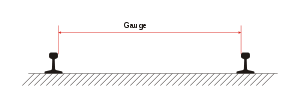
Railway rules change and the buff strength excuse, used by the railway companies to deliberately prevent LRT form track sharing dates back to wooden framed cars, modern TramTrains with steel frames and carbon fibre bodies are very robust and again, such vehicles operate safely in mixed railway traffic in Europe for many years now. It is the same sort of dated thinking that forced the Toronto streetcar system to be broad gauge, 1495 mm, instead of standard gauge of 1435 mm, to prevent any thought of the streetcars track sharing with the regular railways.
The key for safety is signaling – preventing a TramTrain and a regular train from colliding. And please, don't say the rules can't change, as the lowly caboose is all but a memory with freight train operation, yet were a common sight on all freight trains a mere twenty years ago.
The real problem of course is political support and if the public demand is strong enough for the Valley interurban, then politicians will do what is necessary to make it happen or face the wrath of the voters at the polls.
Click to see the famous Karlsruhe TramTrain in action.



Like the provincial government, the local commuter train crowd just love trains and a TramTrain would be seen as an alien influence. if the railway types had their way, we would have hand bombed steam train in daily operation.
We are so backward when it comes to railway technology, that the driverless SkyTrain light metro wows everyone, despite the fact it is neither the first automatic railway or the first automatic metro in the world.
Strange then, everyone ignores the singular fact that LRT made SkyTrain obsolete, but hey, don’t tell anyone in Vancouver, as they love seeing the world through rose coloured SkyTrain glasses.
I have read through the Leewood report and I can’t find a specific recommendation that tram-train vehicles, or any other specific type, be used for the service. If I am missing something, perhaps you could point me to it.
The consultant does review tram-train options, including diesel, electric and hybrid trains (pages 39-43), but he also looks at trams (pages 44-45), diesel multiple units (page 46), electric multiple units (page 46), the use of electricity generator trailers to power electric vehicles before the route is electrified (page 47), and the use of second-hand, reconditioned vehicles (page 47). Regarding the latter, he mentions various types that might become available in the second-hand market, including vehicles from Edmonton, Calgary, Toronto, Portland, Sacramento, Chicago and outside North America from Germany, Finland, the Netherlands and Belgium, including the Brussels PCC cars cited in the Sandhouse article you refer to..
There does not appear to be any recommendation as to which type he would consider preferable.
A TramTrain is merely a light rail vehicle, that meets the specification of operating on the mainline railways. I doubt that the elderly PCC’s mentioned in the article would be able to meet these specifications.