A Letter to NDP MLA David Eby
A letter by D. M. Johnston that is circulating around town.
Light Rail – SkyTrain – subways – myth and fact
Mr. Eby;On Wednesday night I was a guest speaker at the West Broadway Business Improvement Association meeting, giving a talk about modern light rail on Broadway. Those attending the meeting were quite savvy on the subject of transportation issues on Broadway and I was shocked to learn from them that you and the other Vancouver NDP MLA’s support a SkyTrain subway under Broadway.
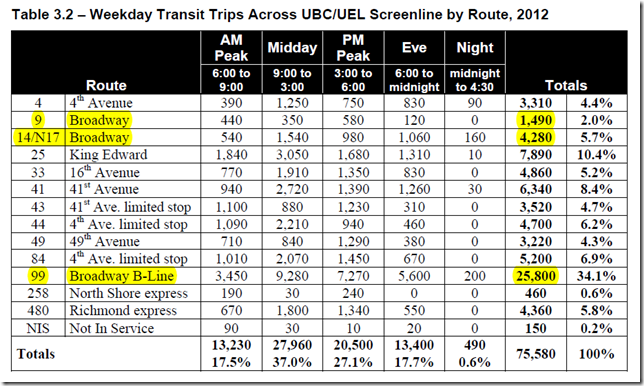
If one talks to ‘real’ transit experts and not the career bureaucrats working a both the City of Vancouver and TransLink, one would very soon discover that there isn’t the ridership to justify a subway at all. Present peak hour traffic flows along Broadway are well under 4,000 persons per hour per direction which is barely the ridership to justify building with much cheaper LRT. Peak hour congestion and pass-ups on the 99 B-Line has more to do with bad management, with TransLink failing to provide the buses to deal with present passenger flows and I am convinced this is being done deliberately by TransLink to force the impression onto transit customers for the need of a subway.
The claim that LRT would take away all parking and that trees would be cut down is another juvenile scare tactic by the CoV and Translink, to make local residents and merchants fear modern LRT. Real transit experts know that parking is very important to local merchants and would design a LRT in such a way to keep the all important merchant’s parking on Broadway. The tree issue is all the more bizarre when one considers the supports and span wires for the proposed LRT are already in place, holdovers from when streetcars operated along Broadway in the early 1950’s. In fact, the foundation for modern LRT is already in place along Broadway from the streetcar days and building LRT would be far cheaper than Translink and the CoV would have us think.
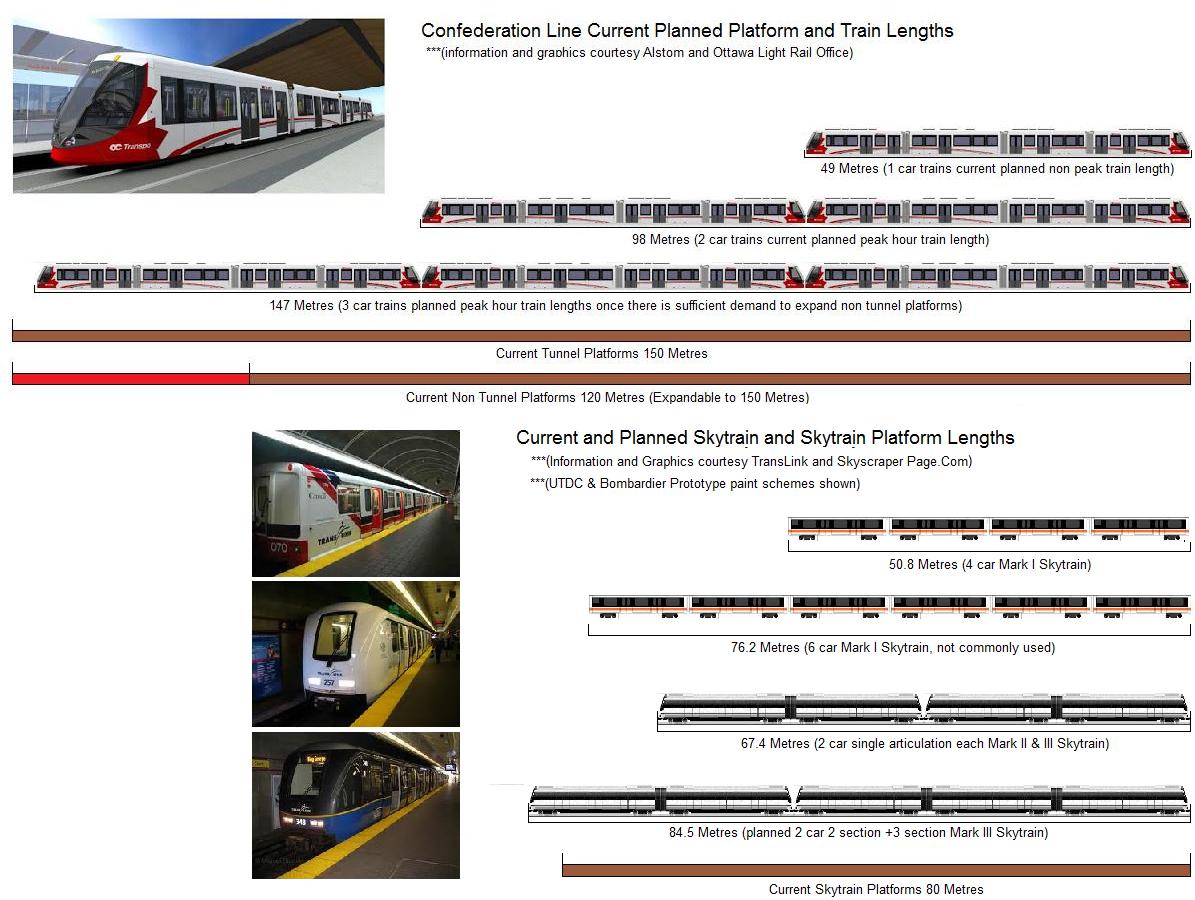
The LRT/SkyTrain capacity debate is more ludicrous as in revenue service, modern LRT has proven to obtain higher capacities than SkyTrain. The City of Ottawa rejected SkyTrain, in favour of modern LRT, due to its lack of capacity. The notion that SkyTrain has a higher capacity than LRT is based on 1970’s studies in Toronto, comparing ICTS (early version of what we call SkyTrain) with 40 year old PCC streetcars and not modern articulated light rail vehicles. For comparison, a modern tram has the same capacity of four car train of MK.1 stock. Modern trams, operating in coupled sets, would give a higher capacity than a six car train of SkyTrain MK. 1 stock or a four car train of MK. 2 stock.
SkyTrain’s capacity is also constrained because of its small 80m station platforms, which limits SkyTrain’s practical capacity to its contracted 15,000 persons per hour per direction. Most modern LRT station platforms are now 120m in length and the City of Ottawa is designing its stations with 150m station platforms to accommodate even longer trains. A SkyTrain subway would be limited to 15,000 pphpd unless all SkyTrain station platforms were extended by at least 40m, which would increase the cost of a Broadway SkyTrain subway by $1billion to $1.5 billion!
Modern LRT is both a ‘Green’ and economic. Green because is leaves a small carbon footprint and its proven ability to attract the motorist from the car. Economic because LRT greatly reduces operating cost of the transit route. One modern tram or streetcar (1 driver) is as efficient as six buses (6 bus drivers) and with wages accounting for about 80% of a transit systems operating costs, the economy of LRT replacing buses is easy to see. Even though SkyTrain is driverless, it still has more employees than comparable LRT operations making it about 40% more expensive to operate and SkyTrain needs buses to shuttle passengers between widely spaced stations. Operating SkyTrain only drives up operating costs of a transit route, not reducing operating costs as does modern LRT.
Subways are notorious for their high energy use as the cost of electricity to power lights, elevators, escalators, and ventilation is about the same as the electricity consumed by the subway trains themselves.
Doorstep to doorstep journey times on subways, with widely spaced stations, are only faster than LRT (with stops every 500m to 600m) if the journey greater than 7 km. The Hass-Klau International Study “Bus or Light Rail – Making the right Choice” found that transit speed was not as important as many would like us to think, as the study found that the ambiance and ease of use of a transit system far outweigh speed in customer importance. Subways are notorious in not attracting new customers and in fact, in some cases, forced transit customers back into their cars! Modern LRT has an opposite effect as it actual attracts new customers to transit. In South Delta, the forced transfer from bus to the Canada Line has deterred ridership to such an extent that suburban bus services have been reduced to post Expo 86 days.
The Canada Line, despite the hype and hoopla, has only 40m to 50m long station platforms, which can only accommodate two car trains, which means the Canada Line was at capacity the day it was built! Internationally, the Canada Line is seen as a “White Elephant”, as it is the only heavy-rail metro in the world, built as a light-metro, which has less capacity than a streetcar costing about one tenth to build!
SkyTrain was first conceived to mitigate the high cost of subway construction in Toronto, at a time when the heritage streetcar system was facing expensive major renewals or abandonment. In 1978, as SkyTrain’s development proceeded, the world’s first new-build LRT system opened in Edmonton. Today, only seven Skytrain systems have been built (only three used seriously for urban transit), has been marketed under five names; ICTS, ALRT (two versions) ALM, and now ART. During the same period, over 150 new LRT systems have been built and scores more are either under construction or in the final stages of planning. Not one SkyTrain type system has ever been allowed to compete against modern LRT. There are now over 500 LRT/tram systems in operation around the world, with one the newest LRT systems being built in Beijing.
I see SkyTrain and subway planning as pure Lysenkoism (Lysenkoism is used metaphorically to describe the manipulation or distortion of the scientific process as a way to reach a predetermined conclusion as dictated by an ideological bias, often related to social or political objectives.) to subsidize land speculators and land developers who have assemble properties at potential subway stations. SkyTrain subway planning is not about building a sustainable transit system for the future and in fact the massive construction costs of a subway, coupled with equally massive maintenance costs will make it impossible to fund future transit investment in Metro Vancouver, especially in Surrey, Langley, and North Delta.
If no other transit authority is building with SkyTrain, why are we? When subways are not considered until ridership is at least three times what Broadway is currently carrying in the peak hour, why are we planning for a subway?Sincerely
D. M. Johnston



Zwei,
Why do you do this to yourself? I assume David Eby is reasonably intelligent so he will read your letter as far as your section on capacity then he will say to himself capacity is vehicle size times frequency… why is that not mentioned? Then he will see your comment that the practical capacity of Skytrain is 15,000pphpd….at this point he will probably say ‘isn’t that the current daily acheived capacity every day at rush hour?’ Being well informed he may know about the capacity study if not he would probably do a google search to find out what the practical capacity of Skytrain in Vancouver is. At that point your letter will get tossed as ‘just a crank who does not know what he is talking about.’
Zwei replies: Rico, you should actually read a book on the subject because if you have done so, you would find that the contractual capacity for the Expo Line was 15,000 pphpd as it doesn’t have the power distribution necessary to operate more trains to carry more people. TransLink makes a big song and dance about capacity and ridership, but in reality the ridership is somewhat less than TransLink claims. They have increased the vehicle capacity to fudge ridership figures. In fact, SkyTrain’s actual or real ridership could be 10% to 15% from what is advertised. The Americans know this and the Europeans know this and is why SkyTrain is shunned. In the USA capacity of a transit vehicle is calculated at 5 persons per metre length, far less that what TransLink would have us believe.
LOL
The Ottawa LRT is really a subway. The whole line is grade separated either in a tunnel or trench. The extensions being planned will likely be grade separated too. They rejected a surface LRT due to capacity issues. Pretty sure the trains have automatic train control. The total cost is $2.4 billion for the initial system similar to the $2.8 billion initial cost of the Broadway subway (the $3 billion includes the cost of additional cars needed by 2041).
Don’t be confused because they are using LRT vehicles. The cost would have been similar or less if they would have subway or even SkyTrain vehicles.
I’m not sure what the point is in writing stuff that anyone who spends 5 minutes searching the Internet can prove wrong. It certainly does not help your cause.
Zwei replies: Richard I smell fear because the truth is slowly emerging from our transit mess. The real cost of the Canada Line was about $2.5 billion and look what we got, a parody of the transit system. Talk to real transit experts and even TransLink planners, the real cost of a UBC subway will be neat $4 billion, with no improvements to the the rest of the Skytrain lines. Any cheaper costs will mean a truncated mini-metro just like the Canada Line.
Here is a little secret Richard, Zwei got a quick memo from a TransLink type, they do not support a subway (it is all politically driven) because there isn’t the ridership to justify construction. If they publicly say that, they are out of a job. Just like BC Transit’s “night of the long knives” for LRT supporters when SkyTrain was forced upon us.
The trains are not automatic, but have drivers, but I will leave that for Mr. cow to answer.
By the way, for 5 minutes on the internet I can prove,the holocaust did not happen; there are buildings on the moon and on Mars for that matter, Bigfoot exists; Obama was born in Kenya, Obama is a Marxist, etc., etc. You get the picture; the internet is not the fountain of truth and facts.
Yes I have been called out, I was lucky to be at a hospital with free wifi as I was with my youngest who is having a EKG as we speak, (autistics are commonly prone to cesure disorders, hence the tests).
Richard is half right about the right of way being mostly segregated physically. The next phase will be 60% segregated physically however, most of the following ones won’t be so easily segregated. That’s why LRT was chosen so that future phase 1 extensions will not have to rely on a continually shrinking supply of transitway. That was the advantage of what was done so many years ago making sure the transitway was built to rail, not road standards although, it greatly increased the capital cost of several sections of transitway. The next big issue is how much of the non built up transitway Rights of Way that were originally cataloged back in the 70’s are actually rail friendly. That is the advantage of LRT, if we find at some point in the future that, a corridor that was saved cannot be used for rail for whatever reason, we have many options. Also many sections of the phase 2 corridors are actually on roads like Carling Ave. in the western areas of the city and Montreal Rd. in the east. Just a clarification, phase 1 has many segments we are actually only just starting on phase 1, segment 1. Most of what you see as what is planned for Ottawa’s future rail system is just phase 1. That is what you miss in your 5 minute internet searches.
Lastly the trains can be converted to automatic operation however, the cost of monitoring just the phase 1, segment 1 & 2 rights of way (a little feature that Transport Canada forces on you if you use automatic operation) was considered too expensive operationally, during the system planning phase of the project. This is based on the budget amounts that were known to be available for rail systems operations budgets in the next 2 – 3 decades by OC Transpo’s planning department. The option remains open if money and the desire is there.
The most frustrating thing about the high degree of planning that was done regarding the future Transitway and LRT System is that several of the planned future phase 1 extensions, the extension of the LRT Line from Blair Rd to the community of Orleans for example, is very expensive and in my opinion eats up too much of the available capital funding for what it will carry (very politically driven extension). Whereas for just half the planned capital budget for that 10th km extension a much greater extension to the O Train line could be built, around 16 km, including a separate spur line to the airport. As long as that extension to Orleans is on the books and planned for when it is, the money that it represents is held on to and saved, pushing back a greatly needed and much cheaper O Train extension.
Zwei replies: You can automate any transit system, if one wants to through enough money at it. In the 1950’s, British Rail experiment with driverless steam locomotives which had a stoker or fireman, but no engine driver.
That should be EEG not EKG! Dam auto correct.
Oh yes, phase 2 also is considering the central section of Bank Street (Billings Bridge to Downtown) as well as Baseline /Heron/Walked Road corridor and the South Urban Community Corridor (the planned link between the communities of Barhaven and Riverside South). Its expected though that both the B/H/W Corridor and the South Urban Community Corridor will start off as bus only lanes and then be gradually expanded to LRT farther into the future.
Questions:
1) Which cities around the world have copied Vancouver’s Skytrain system?
2) I understand that the Canada Line is not SkyTrain, why? The last time I visited Vancouver i took a cab because it was just faster to get to my hotel, with my luggage
3) Why is Skytrain called Skytrain as most of it is built underground?
Zwei replies: The only city which seems to have copied Vancouver is Seattle, which its new LRT line is mostly grade separated. The Canada Line uses heavy-rail EMU’s built to a light metro standard. Small stations means low capacity. The name SkyTrain was chosen in a contest held just before the mini-metro opened. Now with the Broadway subway, the name SkyTrain is rather silly.
@trolley
Seattle’s should have been a copy. They probably would have saved money while providing higher capacity and more frequent service if they would have gone with an automated light metro. Instead, they are building a very expensive LRT. Same with Toronto’s Elglinton LRT. $5.3 billion. More than the cost of the UBC Line and the Evergreen Line for a similar length. Plus it will have lower capacity.
More details at:
http://richardcampbell.org/2013/03/23/rapid-transit-is-an-investment-in-the-future/
Zwei replies: Richard, you are delusional, but then the SkyTrian Lobby has always been delusional.
Seattle’s signalling allows for a practical capacity of 18,000 pphpd. Now this is an American capacity calculation of 5 persons per metre length of vehicle. The Expo line’s capacity is by contract, 15,000 pphpd, based on vehicle capacity of 6 persons per metre/sq. or was it 8 persons per metre sq.
Isn’t funny Richard, that Toronto rejected SkyTrain in the 80’s and again has rejected SkyTrain in 2014. Go pedal you nonsense elsewhere because you sold your soul to Vision Vancouver and a SkyTrain subway for Bike Lanes. You are no longer credible. No one builds with SkyTrain anymore, live with it.
@ Richard, I lived in Seattle for five years and drove to work like most everyone else. There are no “economic, social and environmental benefits of rapid transit” as you suggest. Driving is and was the best way to get around Seattle – and here, too. Transit is a welfare program, necessary for students and a few others. That’s the brutal truth.
If you put people on transit, it frees up road space and others drive, instead. How do reconcile this paradox? Transit can’t possibly reduce road congestion. Right Richard? We have about 400,000 more cars on the roads after 15 years of stupid train (sky train) expansions: about the same as if we had no rapid transit over the last 15 years.
Furthermore, buses carry fewer than 10 people per kilometre on average (apply Rolle’s Theorem and integrate all the hours that the buses operate over the entire day when there are no or few people on board) and cars carry about 1.6 people on average. Because the fuel mileage of the average car is at least 10 times greater than the fuel mileage of the average bus, cars emit less CO2 than transit here on a per person per kilometre basis even with trolleybuses and stupid trains factored in as well. This is well known by anyone who is a qualified engineer or academic and is not in dispute, except by ignorant people.
Finally, to say that soot blowing buses are good for the health of people or the environment is foolish. Do read my comment on stupid train before jumping to conclusions:
http://www.railforthevalley.com/latest-news/zweisystem/complaints-up-and-service-down-at-translink/#comment-92322
Zwei,
Even you know the current peak on Skytrain varies between 14,500 to 16,000pphpd…..so…..then consider I know you are aware of the power rail upgrade and you know about the capacity study. Don’t you feel dirty telling things you know are false? Don’t you think it hurts your cause when everyone who spends 5minutes to look into your ‘facts’ can find out they are wrong?
For the record Seattle is a terrible comparison to Skytrain with pretty much no similarities (large stations, incomplete grade seperation, currently not that frequent, much more expensive). A very similar system would be the Honolulu system under construction. Or for completed systems the Coppenhagen metro….or several other European or Asian systems.
Trolley…where was your hotel? Obviously not in Vancouver because you would have gotten to most Vancouver hotels quicker and cheaper with the Canada line/bus than taxi (hopefully you have wheeled luggage). You can’t complain that the Canada line is slower if your hotel is in Surrey or Burnaby….
Zwei replies: Rico, you really haven’t a clue. No one really knows how many people use SkyTrain as TransLink has picked up the old habit of inflating ridership. In 1998 I did a study on ridership and found BC Transit over estimated ridership by over 20%.
If my facts are wrong as you suggest, why then are the transit specialists I consult with still employed? Obviously they are not wrong and maybe you are, as no one builds with SkyTrain anymore.
The power rail upgrade is just replacing worn out power rails as they are 30 years old and has nothing to do about increasing power.
Copenhagen is now building with LRT and Bombardier spent millions grooming Honolulu’s politicians to build with SkyTrain only having Ansaldo pipped them at the post for the job.
Wow, spend three days with my youngest doing medical tests at CHEO (Children’s Hospital of Eastern Ontario) and all hell breaks loose.
Rico, there are serious power system limitations limiting the planned future growth in carrying capacity for the Skytrain, all coming from a lack of “Line Current Capacity” not just power rail replacement. The way you solve this is by adding more electrical transformers and their various support systems. However this requires major electrical installations and physical upgrades of the stations themselves. As a planner who has gone through this process I can tell you this requires a Environmental Assessment under both the Federal Environmental Impact and Assessment Act as well as the provincial counter part, usually in some form of joint assessment process (this also takes extra time just to do plan the joint process) . They are loud, messy, take years and are frustrating on a level that tax any normal person’s sanity as well as one’s personal stress level limit. It all comes from the simple fact that when you talk about more electrical transformers of any kind, the subject of PCB’s comes up. I have referred to this on this site before as “Electric transit’s dirty little secret”. It doesn’t matter if this is to increase transit capacity what message comes out to certain members of the public is that, Translink wants to greatly increase the amount of PCB’s in your neighborhood. When that happens everyone losses their heads.
The Expo Line Upgrade Report also said that Billions of dollars in station upgrades also has to occur if the current Expo Line Capacity limits are to be raised beyond 14600-16,000 pphpd. This limit can only be reached when people have to get somewhere, for example, going to and coming home from special events. My guess as a professional is that, on average days the largest capacity amount reached is anywhere from 5-8 % lower than that 16000 pphpd. This is simply a result of people resenting being packed in like sardines. In most cases where this has effect has been measured, anything from a sunny day (giving fair weather cyclists and walkers a chance to not use transit) to a sale at a preferred retail location is enough to have up to 10-20% not use their packed transit system or delay their trip to times of lesser crowding. Data from the APTA says that a standing passenger density of greater than 3.3 people per square metre (Level of Service Density D) is enough to send a significant number of choice passengers away to some other means of transport, if a travel time on transit in this environment is greater than 5 minutes (up to 10%).
There were other costs that the report mentioned that aren’t even included like, Life Cycle Costs. These are the maintenance costs that have everything to do with things like, making sure the concrete on Skytrain’s above grade right of way (between the stations) doesn’t come crashing down one day. Most of the concrete on the original Expo line is now 30 + years old, depending on when during the construction of the Expo line a particular section of right of way was originally installed. The most recent estimates for upgrades and possible replacement for sections of that right of way I got, is somewhere between 750 Million to well over a billion dollars. So it will be a while before the Skytrain can meaningfully raise its operational capacity over 16,000 pphpd limit. Plus Transport Canada requires a safety envelope of 3-8% regarding transit line capacity limits to maintain its operating certificate. You have to start asking yourselves seriously how much are you willing to put into the Expo line to raise its capacity vs. just building another line in another location using some other form of rapid transit (not just LRT).
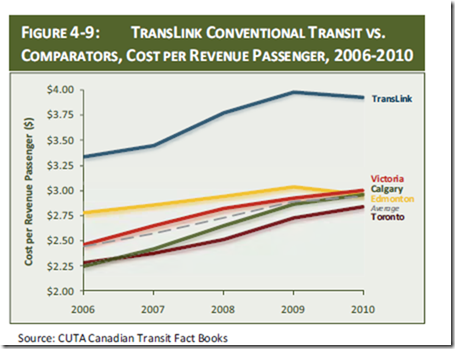
I have said this before, I am not particularly anti Skytrain or pro LRT in all circumstances for that matter but, the technology behind Skytrain is not aging well. Significant amounts of money are having to paid out for various operational upgrades just to equal the carrying capacity of what other rail based systems and some bus based ones, (again not just LRT) seem to have by design. Operating costs on Skytrain are actually very high, considering its a driverless system. What keeps the operating costs down statistically, especially when compared to other transit systems is the heavy amount of passenger traffic the system does get. For that I agree compared to other systems it has been successful but, as a network its continued affordability is very likely being questioned at the highest levels.
Zwei replies: Be in good company, Zwei’s eldest boy was ambulanced to Emerg. with a serious head injury last week. As it turned out, it was not as serious as the paramedics thought and he will be on the pitch in a week or so.
@ Rico,
You are only allowed to comment on this site so that others can blow holes in your inane ramblings. Zwei has been very gracious to you – too much so.
You are in no position to accuse anyone of lying. Whenever you are confronted and challenged, you slither away and reappear after the question has been forgotten. Here is one example:
“eric chris says:
February 21, 2014 at 6:03 am
@rico,
Thanks for wasting my time. Much appreciated.
How much did the garbage in the link cost TransLink, bye the way? Did TransLink really have to pay SNC Lavalin and Steer Davies Gleave for this arts level “study” in the link provided by you?
I asked for the present ridership along Broadway as a function of distance from Commercial Drive to UBC Q(x), where Q is the number of people using the buses on Broadway as a function of distance along Broadway, X. Your link on page 11 doesn’t indicate this. On page 11, your “Googled” link merely states the capacity of the buses for a number of transit options (lacking any depth of thought) to UBC:
http://www.translink.ca/~/media/documents/plans_and_projects/rapid_transit_projects/ubc/alternatives_evaluation/ubc_line_rapid_transit_study_phase_2_alternatives_evaluation_executive_summary.ashx
You’ve proven that when you are caught pulling numbers out of the air, you’d rather lie or try to hide it than admit it. Good job. You’re TransLink material for sure.”
http://www.railforthevalley.com/news-articles/subway-cost-per-mile-nearly-9-times-higher-than-for-light-rail-says-study/
You never answered me, what is the ridership on Broadway to justify a subway? I don’t know who you are, creep, but you disgust me.
If you love public transit so much, visit Brisbane and board transit when skin-heads or neo Nazis are on board at night after all the normal people stop using transit, With a name like “Rico”, the open minded and friendly white supremacists will follow you off the train or bus and rip your head off. Brisbane police won’t even investigate – apparent suicide. That’s what transit is and that’s the reason most people drive.
http://www.abc.net.au/radionational/programs/mongrelnation/ugly-mongrel3a-racism-26-aggressive-nationalism/5140994
I have also said this before as well, It may only be a few years till either Bombardier sells the Skytrain Vehicle Technology and or abandons it completely. There are just not enough sales in the current Transit Car and Transport system building environment to justify keeping a special production line open for it. Siemens has gone through this and think Bombardier will be next. They offer too many transit vehicle products, some of which compete against each other directly. In those cases the vehicles and systems that they sell a lot less of will be gotten rid of. Bombardier has huge Subway/Metro Vehicle orders and options for orders, 4000+units since 1997.(Movia Line), Light Rail/Streetcar/Tram 3000+ units since 1996 (Flexity Line). In the Automated Light Metro (Innovia Line) category not so many sales (638 in 36 Years) a considerable number of those orders before Bombardier owned the rights to the vehicle and propulsion products(originally UTDC of Ontario, later SNC Lavlin). SNC Lavlin still owns the engineering patents from this system. In fact, many of the technological systems that make up the Skytrain (Innovia) System are being offered by Bombardier on other products. The CITYFLO 650 Automation system, Linear Induction Motors and steerable trucks to name just a few. With the exception of the Automation system they are rarely chosen by customers. A Toronto Star writer, once quoted a unnamed source at Bombardier calling the product a “technological dead end” Compounding the issue for Bombardier the whole Automated Metro Line has now had to be grouped with its Monorail Technology (The proverbial ,”kiss of death” in the rail vehicle market) including its production facilities. There is only one large buyer of the Monorail system in the transit vehicle market currently (several small ones, each less than 5 km right of way) and that is San Palo Brazil, a 24 km line. The last large scale Monorail sale for transit operations in the North American Market was Las Vegas and its unlikely they will ever buy monorail technology again after all the start up and operations issues they had. There new BRT busway has also been very successful. The only consistent sales for many of these specialized transit technologies is the amusement park and people mover category.
Siemens once the 3rd largest Transit Rail Car manufacturer in the world, (recently slipped to 5th when two Chinese companies surpassed them) bought the rights to another Light Metro Product the VAL (Vehicule Automatique Leger) System a few years ago. This system is a Rubber Tired Light Metro design capable of automatic operation. The French government and its then current owners were having trouble getting sales beyond the airport people mover market and a few heavily subsidized sales to middle sized European cities (Tourin being the last one in 2006, for the Winter Oylmpics). Recently a follow on product CITYVAL (a joint Siemens and Translohr Corporation design) which combines the classic VAL System, regenerative braking (a new feature) with a single rail guidance features, similar to the Lohr guided bus technology was offered up for sale. The city of Rennes (heavily subsidized by the French Government) is getting a new prototype line based this technology. Rennes already has the original VAL system for its first Light Metro line. The original technology can’t operate on the new line and will have to upgraded in the future at great cost. There are only 9 VAL and CITYVAL systems in operation (transit and people mover operations) with combined sales of less than 300 2 and 4 car train sets in over 30 years. Only the act of partnering with another company and sharing the costs, kept Siemens from dumping the technology all together. French rail giant Alstom outright refused to buy this technology when it was offered to them (even at a very low price).
The big problem is that in the last 3 decades or so both the VAL and Skytrain systems represent two thirds of all Light Metro category sales in the world. This suggests that there is a big problem with the whole category not just the individual technology and its loosing out to both conventional subway/metro technology at the top end and conventional light rail at the lower end. I am sorry, I am not trying to be mean nor am I saying these things so that Zwei will listen to me (I am sure he is a nice guy). I like Vancouver area and its very friendly people, I just don’t see the Skytrain technology in its current form surviving in the medium to long term. There are not enough sales in the current global market to cover the costs of production or the expectation of future sales to justify and keep the production lines open beyond Vancouver’s next purchase (Evergreen Line) and maybe a purchase for an extension that is planned in a few years in Kuala Lampur. Until the money for your Broadway extension appears from upper levels of government, don’t hold your breath.
@ Havacow,
Yes, I totally agree. As soon as stupid train (new moniker as I refuse to call it by its marketing name any longer) sales dry up, Bombardier will dump stupid train which is a flawed concept requiring the train to be isolated from other traffic. More damning, stupid train can’t function unless extra buses are used to get people to the distantly spaced stupid train stations. This is a major failing and shifts the drivers from the trains to the buses – to increase operating costs substantially, beyond the 10 employees needed per kilometer of stupid train track.
TransLink thanks to stupid train will not be around much longer. Honolulu got sucked into stupid train after the apparent success of stupid train in Vancouver. Taxpayers in the USA aren’t fools. The taxpayers in Hawaii will tear the ones who purchased stupid train apart after the cost of transit explodes and drivers shun stupid train. After Honolulu discovers the truth (stupid train is a sham by fruitcakes who are deceiving the public here): the days of stupid train will be no more.
That’s enough ranting for a while. It is a beautiful day, and I’m going to cycle into downtown Vancouver to enjoy it.
https://www.youtube.com/watch?v=R2F_hGwD26g&feature=kp
After re-reading Malcolm’s letter and looking at the figures, the vast superiority of LRT based on the train length is obvious. While the speed of stupid train is touted as its major advantage, transit speed merely encourages transit users to live farther from their destination. This unnecessarily increases transit costs.
Stupid train has been the impetus for urban sprawl in Metro Vancouver and has not encouraged drivers to take transit. Stupid train has done the opposite of what it was intended to do.
In truth, the expansion of stupid train is about Ian Jarvis, Jerry Dobrovolny, Gregor Robertson, Gordon Price, Geoff Meggs… Ed Storm keeping their jobs or saving face. Gordon Price has built his entire career on teaching stupid train economics at SFU. Do you really expect this fool to say that he got it wrong? Jerry Dobrovolny only has his job at the COV because he is a TransLink stooge. He is spreading lies to make a case for stupid train.
If TransLink does not continue to purchase stupid train, Bombardier will be forced to drop stupid train like GM dropped Oldsmobile, due to lack of sales. Ian Jarvis and friends know this. Ian Jarvis is not going to let this happen and he is not going to willingly give up his $400K salary. He is attempting to extort taxes from residents in Metro Vancouver under the guise that stupid train is taking cars off the roads. Good luck.
Bombardier is essentially blackmailing taxpayers in Metro Vancouver to keep us buying overpriced and inferior stupid train or Bombardier will close its factory and let Metro Vancouver transit fail. I believe this is what Haveacow is alluding to in his last comment. Eby is smart enough to figure this out, too, and likely will. If it comes down to Ian Jarvis and friends losing their jobs or taxpayers being taxed for more stupid trains from Bombardier, Ian Jarvis and friends can take a hike.
Hi Eric,
Seen anyone about those anger issues yet?
For those who want to know here is a link to the Expo line upgrade report,
http://www.canadianconsultingengineer.com/awards/pdfs/2012/F8_ExpoLineUpgradeStrategyVancouver.pdf
Some highlights, capacity will increase when the Evergreen line comes on line because of Millenium line trains turning back at Lougheed (shorter travel time so more available vehicles). Many of the subsystems are currently being upgraded. Total capital cost to upgrade allowing 5 car MKII trains at 93 seconds (25,700pphpd) is 783million. This includes vehicle costs, station upgrade costs (including those currently underway like Main and Scott Road) and subsystem costs like the power rail upgrade currently underway. Additional operating costs to operate those trains for 30 years would bring the costs to 1.1billion dollars. Separate to that is a gem found in the Broadway study that models a reduction of peak demand on the Expo line North of Commercial (the most congested part of the Expo line) by about 2000pphpd if the Broadway line is built. This may allow Translink to use the cheaper all 4 car MKII option in the report.
Haveacow, I am sorry but I think you have been drinking the RfV coolaid a bit too long. Skytrain is not the Scarbourgh RT, it has one of, if not the lowest operating and maintainance costs in North America and not just on a per passanger basis but by revenue mile (as a ‘transit professional’ I am sure you are aware the FTA periodically publishes tables showing this….)
Zwei replies: I will let Mr. Cow and Eric respond, but if you have not read the news., ridership is declining on TransLink, which would include Skytrain. As always Rico, you are full of it and I will take my chances with the many professionals who advise me. Also, SkyTrain’s operating costs are about 40% higher thn comparable LRT operations. In my humble opinion, that is why no one buys the damn thing.
LRT in North America was an experiment worth trying. After 30 years, it is worthwhile seeing how that experiment has gone. While there are a few successful lines, it has largely failed in the goal to increase transit ridership. In fact, in many cities, the percentage of people commuting by transit has decreased. The bottom line is that it should be throughly evaluated on a case by case basis and rejected when there are better options. To often, it is supported just due hype when there is no business case for it.
http://m.theatlanticcities.com/commute/2014/04/have-us-light-rail-systems-been-worth-investment/8838/
Two of the initial light rail metros, Buffalo and Portland, had significantly higher transit mode shares in 1980 (7.9 and 9.7 percent, respectively) than they did in 2012. As shown in the following graph, Buffalo’s share of transit commuters fell at a rate very similar to the median of the 15 non-rail cities with transit mode shares of above 7 percent in 1980. Though Portland did better, its ultimate transit mode share in 2012 was lower than that of Atlantic City, Boulder, Honolulu, and Iowa City — none of which built light rail during this period.
Zwei replies: Forcing over 80% of your bus passengers on a transit line is not good public transit. Double counting bus riders as metro riders is a fools game that no one else wants to play. No one has copied Vancouver’s SkyTrain because it is poor public transport philosophy.
Zwei,
How about you suggest some comparable North American LRT operations and we can compare operating costs…..
Richard,
While I am obviously a Skytrain supporter I am also a supporter of good transit in general and I read the Atlantic article and the evidence is not as damning on LRT as the headline suggests. The take away I had from it was although cities that invested in LRT had declining mode share the mode share actually declined less than the American average. So LRT helped, just not as much as investment in Metros.
Zwei replies: Good try Rico but I am not biting. As one transit specialist told me; America’s fascination with subways is perverse. Spending up to 10 times more to achieve the same goal is more than foolish, it is perverse.
If LRT is so bad as you suggest, why is it still being built and why isn’t SkyTrain? Oh yes it is the world wide LRT conspiracy that everyone has bought into………….I think not.
That Atlantic article clearly says the regions where LRT were not successful were regions that also built new highways at the same time, and did not pursue policies to encourage development along the LRT lines.
This argument between You , Rico and Richard has been going on for so long, it’s kind of tedious to read.
Rico and Richard will never be convinced. They’re obsessed with the proprietary ART technology, and will post nonsense to justify their obsession.
Zwei replies: I apologize for the LRT/SkyTrain rather tedious debate, as I would rather comment on more positive transit developments. I do worry about mayor Rob Fords acute hatred of trams and lumbering Toronto taxpayers with billions of debt building subways. There is much to discuss about transit and to continue moaning about an obsolete light-metro system does get tiresome.
Richard is non other than Richard Campbell, a big wheel in cycling circles who has sold his soul to Vision(less) Vancouver for bike lanes. As Vision wants subways, Richard is their attack dog.
That’s always the problem with articles like the one in Atlantic Cities, measuring what is successful and what is not successful. Generally what is successful to insiders isn’t the same measure someone else would use. No transit technology would have been successful in Buffalo because the whole economy contracted over the last 30 years.
@ Rico,
You never answered me, first, what is the ridership on Broadway to justify a subway? Second, apparently, 80% to 90% of the hundreds of managers, presidents, vice-presidents, CEOs and directors at TransLink drive to work and don’t take stupid train. What do the hundreds of managers, presidents, vice-presidents, CEOs and directors at TransLink do as far as keeping transit in operation? Answer these two questions or don’t reply.
If 80% to 90% of the looters at TransLink are too good for transit and drive to work, what does that tell you, Rico? Only 60% of the general population drives, by the way. Something is terribly wrong with the cesspool called TransLink and TransLink is a social club financed by taxpayers..
You’re right, I have a short temper and don’t tolerate people like you well on transit. So, I drive or cycle and haven’t been on transit for years. Still, I once took transit as a student and feel obligated to support transit. Paying $113 million annually for the looters at TransLink to screw everyone in Metro Vancouver doesn’t sit well with me and this is taking money away from transit.
Next week, I have to attend a meeting in the corporate headquarters in downtown Vancouver. I’ll drive and pay with my corporate credit card which is billed to the company. I could take transit but it might soil my suit if I sit on a bus seat cleaned once every month. I also have asthma and don’t want to catch any air borne diseases on the buses.
Zwei is going on 59 and after 45 years playing rugby, my knees are ka-put. The last time I took transit it was a disaster. The bright sparks at TransLink do not have escalators that go both ways at stations and for people with bad knees, the escalators go in the wrong direction. A painful way to catch a bus after taking the metro. The “Casino Junction (Bridgeport) station is extremely user unfriendly, especially for those who must wait long times for a bus.
@ Rico,
How is it that TransLink never mentions the outstanding citizens who you will be sharing your trip with on stupid train lacking a driver to screen out creeps? Is this guy one of your friends, creepo?
http://www.vancouversun.com/news/Convicted+offender+allegedly+breaches+release+conditions+SkyTrain/9752962/story.html
Hey Eric, I know your anger stems from how successful SkyTrain and Canada Line are and the fact that even NDP is supporting a subway. Noone wants to close three lanes of the Broadway corridor to put in a slow LTR that take away parking space and the trees. One thing I am sure about is that you guys are not regular transit users and have no clue what you’re talking about.
Zwei replies: John, LRT will not, I repeat will not take away parking or trees. It is the Cov and the CoV Engineering dept. that want to get rid of parking and trees and is using LRT as an excuse. LRT is not slow, unless it is designed on purpose to be slow. Metro is only faster because it has fewer stations, fewer stations deter ridership. As long as the Fraser Valley continues to subsidize Vancouver’s expensive transit system, nothing will change.
Zwei, first of all, I want to tell you that I am not in love with SkyTrain system. I love whatever that works, regardless of the name. Please enlighten me how you claim constructing LTR on Broadway will have no effects whatsoever. If you want to use the center lanes, you need to close out two lanes for the trains and one for the stations. Remember these stations must be designed to accommodate not a handful of passengers, but maybe 50 or more during peak hours (on select stations like Main, Cambie, Granville). You close three center lanes and now you’ll affect the trafiic adversey, including left turns. So it leaves the other option which is putting the trains on the curb lanes, take away the parking spots and trip/cut some trees. This is the issue which is not clear to most people as what the effects would be, otherwise like I said I am with whatever that works practically. From the other hand, there’s no question that LTR is the best option for Langley and Surrey as there’s no space shortages in those cities to put LTR in.
Zwei replies: The average median LRT stop is designed to handle the capacity of a train, thus a stop designed for coupled sets can accommodate 300 to 500 people. Putting LRT in a curb lane is a big mistake, unless the ‘up & down” lines are adjacent to each other, with parking next to the tram line. Yes two traffic lanes will be upgraded from 1,200 pphpd to over 20,000 pphpd with LRT and with no trees cut down. If you do not do some active traffic calming, you will not get new ridership and SkyTrain is the prime example; all SkyTrain is doing is giving bus customers a very inconvenient transfer to continue their trip into town. TransLink and the CoV are masquerading forced transfers from bus to mini-metro as new ridership, double counting in a way. If we had real transit experts designing LRT for Broadway, instead of career bureaucrats who are just marching to their employers demands, LRT on Broadway wou;ld look a whole lot different than what we are being presented with today.