For four decades, the lessons building ‘rai’ transit has not been learned. Politicians in BC refuse the learn the lessons of others and continue to blunder on making the same higely expensive mistakes, over and over again. It is sheer negligence on the part of TransLink, the Mayor’s Council on Transit, the Premier’s Office, and the Ministry of Transportation, that they remain ignorant of what was commonly known elsewhere.
Ignorance of the truth, is not a defense.
Lesson #1
In the very early 1980’s, the Ontario Conservative Party (the William Davis Government) tried to force the Toronto Transit Commission (TTC) to build with the new Intermediate Capacity Transit System or ICTS, now known as SkyTrain; produced by the Urban Transit Development Corporation (UTDC) an Ontario crown corporation. The TTC commissioned a comprehensive study comparing streetcars/LRT and metro with ICTS. The results were not encouraging to those wishing to sell ICTS and even gave the City of Hamilton enough ammunition to reject the Ontario provincial government lead, construction of ICTS in the city. The TTC transit study, the Accelerated Rapid Transit Study or ‘ARTS’ found that:
“ICTS costs anything up to ten times as much as a conventional light-rail line to install, for about the same capacity; or put another way, ICTS costs more than a heavy-rail subway, with four times its capacity.”
ICTS was dead in the water as a product, so UTDC did what every other manufacturer does when faced with this dilemma, they changed the name from ICTS to ALRT or Advanced Light Rail Transit and sold the unsalable ICTS to some political rubes out West, namely Bill Bennett and Grace McCarthy, the leader and deputy leader of the British Columbia Social Credit Party and the rest, as they say, is history.
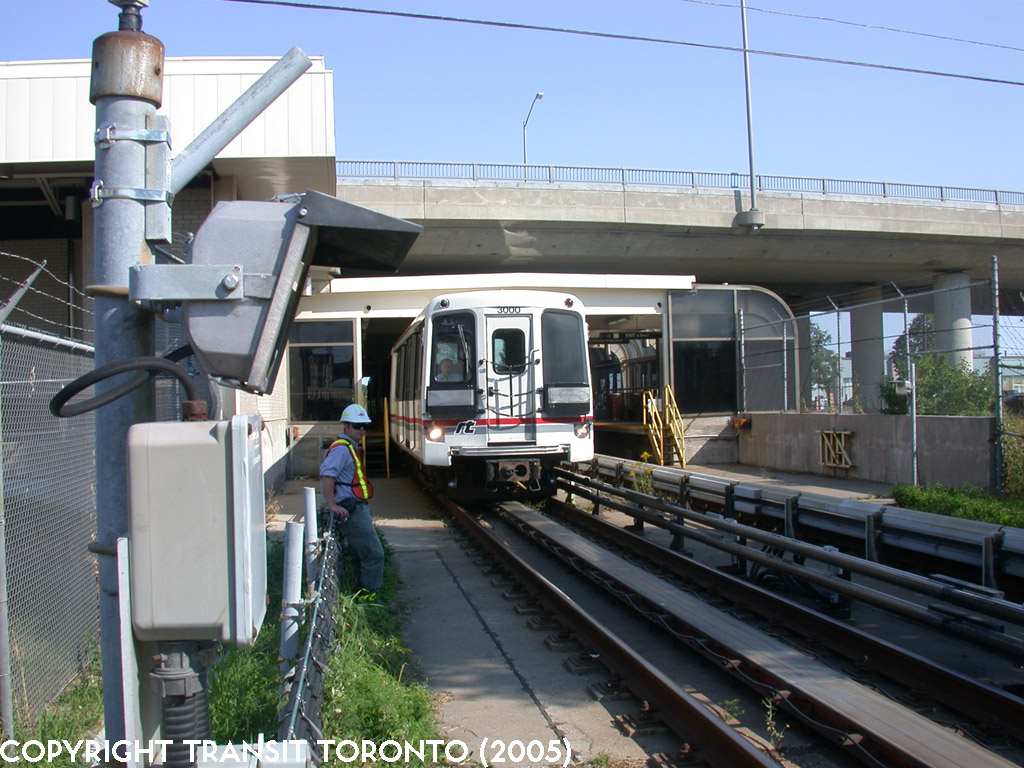
Toronto’s ICTS system, one of two built, and now closed.
Lesson #2
In the 1980’s there was much debate between modern light-rail and many proprietary transit systems being offered for sale, which included the SkyTrain ICTS/ALRT automatic light-metro. Many claims were made by the owners of various proprietary transit systems being offered for sale, about the effectiveness of their transit systems. In 1991, Gerald Fox a noted American transit specialist, produced a study comparing light-rail and automatic guided transit (AGT) systems including SkyTrain and the French VAL light-metro system. The study concluded that despite the hype and hoopla of the promoters of AGT systems, there was no benefit in building with more expensive AGT. These conclusions were not lost on American and European transit planners, who wanted ‘the best bang for the buck’ and the desire to build prestigious and expensive light-metro systems waned from the mid 90’s until the present day.
Conclusions from Gerald Fox’s A Comparison Between Light Rail And Automated Transit Systems. (1991)
Requiring fully grade separated R-O-W and stations and higher car and equipment costs, total construction costs is higher for AGT than LRT. A city selecting AGT will tend to have a smaller rapid transit network than a city selecting LRT.
There is no evidence that automatic operation saves operating and maintenance costs compared to modern LRT operating on a comparable quality of alignment.
The rigidity imposed on operations by a centralized control system and lack of localized response options have resulted in poor levels of reliability on AGT compared to the more versatile LRT systems.
LRT and AGT have similar capacities capabilities if used on the same quality of alignment. LRT also has the option to branch out on less costly R-O-W.
Being a product of contemporary technology, AGT systems carry with them the seeds of obsolescence.
Transit agencies that buy into proprietary systems should consider their future procurement options, particularly if the original equipment manufacturer were to cease operations.
Conclusion #4: “LRT and AGT have similar capacities capabilities if used on the same quality of alignment. LRT also has the option to branch out on less costly R-O-W.“is affecting future light metro growth very badly. The cost of the Expo Line extension to Langley has now surpassed $400 million/km to build, yet, according to TransLink, will carry around 40 thousand passengers a day, less than the Broadway B-Line bus carries today!
The taxpayer the province) can only afford one light metro line built every decade, thus the next line built, if it is indeed a MALM SkyTrain will not start construction until 2040 at the earliest. But will there be cars available to operate on it, when Alstom ceases production?
Today TransLink and the provincial government still make unfounded claims of superior operation for SkyTrain (if it doesn’t snow) and denounces LRT as a poor-man’s rapid transit system. Nothing could be further than the truth and it still seems TransLink and the SkyTrain lobby have failed to read and understand transit lessons, taught decades ago!
France’s VAL system, a comparable system to today’s Movia Automatic Light Metro, a.k.a. SkyTrain.
Those who do not read history are doomed to repeat it ……………..
……… and the BC government and Metro politicians are ignorant about history and have saddled the region with an unaffordable transit system that is now almost too expensive to extend.
In 2026, ridership on TransLink is tanking (a 4.5% drop from April 2026 from April 2025), yet our provincial and regional politcans blunder on, selling “snake-oil” tarted up as transit solutions. BC’s economy is on the rocks, yet the NDP preserver on planning for hugely expensive light metro, which in today’s world, is an operating museum piece.
BC desperately needs cheaper transit options, but 40 years of lies, deceit, and corrupt politics has doomed the lower mainland to massive traffic congestion and gridlock, simply because those in charge, refuse to learn lessons from the past.
What the (expletive deleted) is TransLink trying to say?
I will take an educated guess that Translink is either replacing the reaction fourth rail or replacing the third rail for electrical pick up.
The strange thing is, the same trains operate on the Expo and Millennium Lines already.
Or, are they replacing the switches to higher speed switches used on the Millennium Line which was designed for second generation Innovia 100 ART Trains?
Our utterly inept media has been duped again by Translink’s flim-flam.
SkyTrain’s Expo Line undergoes maintenance until the fall
Zwei often hears the tired old saw that “we don’t have the population for light rail or the alternative, light rail does not have the capacity to deal with traffic flows that SkyTrain can.
The “Good Burghers” in Bath England are countering this debate by actually listing 40 cities that have populations of 100,000 (with a 10% margin for error) that operate stand alone tram systems.
The below list is by no means exhaustive – as in the Belgian Coastal Tram example above, many outlying towns are connected to trams but are not listed here as it is mainly the central city listed.
Ranked by population:
Town/City
Country
Length of system, or to nearest large tram town, km
TramTrain, which is a tram, reminiscent of the interurban, so designed that it can operate on the mainline line railway, in mixed traffic, can also servcie small town on the mainline railway portion of its route very cheaply.
It is important to consider that the Vancouver metro region cannot afford to expand the SkyTrain light-metro system which base cost has now surpassed $400 million per km to build (over $700 million per km for subway construction). TramTrain and light rail can be expanded much more cheaply from costs ranging from $10 million/km to $50 million/km, depending on the quality of Right-of-Way used from track sharing with the mainline railway to operating on a dedicated R-o-W.
As a reminder, extensive viaduct or subway construction, drives up the cost and takes the “light” (light in cost) out of light rail!
Those who support continued SkyTrain expansion, must also accept a limited light metro network, ill equipped to deal with future expansion needs.
First published in 2022, this post remains extremity relevant today.
Four years have gone by and the cost today of the Expo Line extension to Surrey is now estimated at $7 billion and that is just for the guideway, which the federal government is paying 40%of the cost.
Zwei has been told privately that the full cost of the extension, including the operations and Maintenance Centre #5 may exceed $10 billion! By comparison, the Massey Tunnel replacement has now soared past $8.3 billion.
Yet, ridership is dropping on the regional transit system and has been in an ever steepening decline for the past decade.
The sense I get from TransLink, Metro Vancouver, the provincial NDP, and regional mayors and politcans, that the now, $17 billion, full program to extend the Expo and Millennium Lines (Broadway Subway), mere 21.7 km, will reverse this trend in declining ridership.
I think not, as the problems with TransLink including financial issues, coupled with a declining ridership, point to major structural issues that the provincial government, Metro Vancouver, TransLink and the mayor’s Council on Transit, refuse to address.
The problem with declining ridership may be in part, SkyTrain itself, where a very expensive1970’s light metro system was developed to cope with 1960’s, 9 to 5 traffic issues, where commuters took a bus to a transit hub, transfer to SkyTrain to complete the trip downtown.
Today, downtown Vancouver is no longer the main destination for commuters and taking the bus is both slow, even slower on the return journey and taking the car in most cases, is far faster and far more convenient.
Building more SkyTrain will only exacerbate the problem.
The echo of American engineer, Gerald Fox, reverberates:
But, eventually, Vancouver will need to adopt lower-cost LRT in its lesser corridors, or else limit the extent of its rail system. And that seems to make some TransLink people very nervous.
What Zwie has tried to convey for decades, that the driverless light-metro is a money hog and building more, will only see more tax money sucked into this heavily subsidized black hole.
Part of the problem is that the mainstream media and TransLink’s lil darlin, the Hive do not report on costs, just the hype and hoopla of building more SkyTrain.
The financial debate is purposely not reported as not to dampen local SkyTrain hue and cry by the local SkyTrain lobby.
The following comment by Haveacow, a Canadian transportation Engineer is a must read for all those armchair SkyTrain enthusiast and then wonder about this:
At the same time that billions of dollars are being lavished on two very expensive, yet completely unnecessary light metro extension, Emergency Care is collapsing in the province.
One can almost draw a straight line from SkyTrain expansion to eroding healthcare in the province.
The Skytrain really isn’t a regional distance based, rapid transit system. It is a inner suburb to downtown or a inner suburb to inner suburb rail rapid transit system.
The line extension fron Surrey to Langley (SLS) is and will be showing just how expensive the technology is to build and how expensive it will be to operate. Even 22 years after opening it will still be only moving around 5000 passengers per km per day or about 75% of the current passengers per km/per day average of the existing system. This means that this portion of the Expo line from Surrey to Langley will require more subsidy to operate than the already existing Skytrain system does simply due to geographic distance and attract fewer passengers at the same time.
Nothing illustrates the geographic limitation of the technology more than current SLS extension does. Each new significant segment of Skytrain, anything more than 8 to 10 km that is built further and further out from existing Skytrain yards seems to require, an entirely new yard or a major expansion of an existing one, just so servicing and train-set redeployment can be done efficiently and in a timely manner. Train storage and actual maintenance capacity is a whole separate issue. That means each extension becomes even more expensive due to the fact that, a new yard and servicing site must be constructed each time the system grows outward horizontally. Ottawa’s LRT system desperate to keep costs down, make the new yards, light maintenance centres instead of full ones, saving hundreds of millions of dollars without seriously impacting maintenance. Each new Skytrain Yard or OMC (operations and maintenance centres) is and must be because of the automation, a full service yard.
Yes, as a rail network grows in length and number of train-sets, more storage and servicing capacity is needed. However this driverless railway system requires very large, heavily protected and computerized yards, instead of just a simple set of ladder track (multiple sets of track sidings used for storage) connected to and parallel to the main line running track itself, no large storage buildings required, just a protected operations caban and maybe extra fencing.
This is how GO Transit builds new Train Storage facilities. Actually maintenance is done at 2 very large maintenance centres on a specific schedule. Keep in mind, this is a system with over 500 km of main line track and over 850 engines and passenger coaches with very little automation. The new GO Transit Region Rail Network (formerly GO RER) won’t change this situation too dramatically until, a lot of the planned Bi-Level EMU’s are purchased because the EMU’s will require an entirely new separated or a severely altered existing maintenance centre.
The following should be Emailed to every politicians, federal, provincial and civic in BC.
Here is something else to think about. This line extension, according to TransLink and the provincial government of BC, is going to move 56000 passengers a day upon opening in 2028. That’s roughly 53% of the daily passengers per line-km average for the rest of the SkyTrain system (3500 passengers per km per day vs 6613 passengers per km per day).
They both admits that this is the equivalent to what the 99 B express bus line moved per day in 2019. They are spending billions to move the same number of passengers you already move on Broadway with buses. They are currently spending $2.83 Billion (updated to July 8 2026 dollars $4 billion) to move passengers in a 5.7 km SkyTrain tunnel under Broadway, the busiest corridor in the city. Yet it’s good to spend somewhere between $1.67 billion and $2.17 billion (updated to July 8 2026 dollars $3 billion+ dollars) more, to move the same number of passengers per day between Surrey and Langley.
Our South-East Bus Transitway moved more people than that per day in 2019 and it sure wouldn’t cost that much to build.
Toronto spent only $2.3 million on King Street in downtown Toronto to improve passenger service on a streetcar corridor which moved more people per day in 2019 than the SLS line extension will move on opening day (84000 vs 56000) at a cost of billions.
RftV cost for a Vancouver to Rosedale regional railway $5.4 billion cheaper than the 16 km Expo Line extension to Langley.
Re-posted and updated on Saturday, September 19, 2020
Re-released and update July 2, 2026
On September 20, 2010, Rail for the Valley unreleased the groundbreaking Leewood Study regarding the reinstatement of a passenger service using the former BC Electric, now Southern Railway of BC route.
Why Groundbreaking?
The Leewood Study was the first and only independent study done on passenger rail for the Fraser Valley, without political or bureaucratic bias.
The Leewood Study shows the way how passenger rail should be reinstated on the former passenger rail route.
Today, more passenger passenger rail services are being restored on previously abandoned passenger routes; more passenger rail services are being restored on routes long abandoned and now rebuilt. Today politicians and planners see both the wisdom and economy of using existing railway infrastructure as a means to affordably extend passenger services to areas otherwise unreachable due to cost.
The vision was there a decade ago and the vision remains for the Fraser Valley, the question is; “Do politicians and planners in Metro Vancouver have the vision beyond there own parochial politics?”
The following is the Leewood Study’s costs for reinstating passenger rail, adjusted to 2020 dollars.
Total capital costs in 2020 dollars:
Stage 1 Phase 1 (Diesel Light Rail) 98 km Scott Rd. – Chilliwack: $578 million ($720 million – 2026)
Stage 1 Phase 2 (Electrification) 98 km Scott Rd. – Chilliwack: $134 million ($667 million – 2026)
Stage 2 Proposal – 28 km Extension to Downtown Vancouver: $426 million ($531 million – 20026)
Stage 3 Proposal – 12 km Extension to Rosedale: $33 million ($41 million – 2026)
Total:$1.171 billion! ($1.46 billion – 2026)
$5.4 billion less than the estimated cost of the 16 km extensions to the Expo Line To Langley.
From 2010
Groundbreaking report on Interurban light rail – released TODAY
Surrey Leader Editorial: We should get on track (Frank Bucholtz)
North Shore News: Valley residents on track with light rail
Vancouver Province: Valley light rail all go, twin groups claim
News 1130: Commuter rail service to the Valley is affordable – study
Rail For The Valley is extremely excited to announce the release of a comprehensive independent analysis of the potential for light rail service on the existing and publicly owned Interurban Rail Corridor, connecting communities from Chilliwack to Vancouver with an affordable, sustainable public transportation system. The study, now complete, was performed by Leewood Projects.
About Leewood Projects:
Leewood Projects is a British-based company that has professional expertise in light rail solutions, providing comprehensive project management and planning services to the international railway industry. Leewood Projects has i the past had involvement in prestigious rail projects such as the Channel Tunnel.
Railway stations designed as community gathering points. 10 full stations and 8 Tram Stops.
A detailed Journey Time matrix for stops along the line.
Total journey time between Surrey Scott Rd. SkyTrain Station and downtown Chilliwack: 90.5 minutes.
Future proposed expansions of the line: Downtown Vancouver (Stage 2) and Rosedale (Stage 3).
A detailed capital cost breakdown for the entire project.
Total capital costs (2010):
Stage 1 Phase 1 (Diesel Light Rail) 98 km Scott Rd. – Chilliwack: $492 million ($720 million – 2026)
Stage 1 Phase 2 (Electrification) 98 km Scott Rd. – Chilliwack: $114 million ($667 million – 2026)
Stage 2 Proposal – 28 km Extension to Downtown Vancouver: $363 million ($531 million – 20026)
Stage 3 Proposal – 12 km Extension to Rosedale: $28 million ($41 million – 2026)
This is the most comprehensive light rail study ever undertaken in this province, performed by a company with professional expertise in light rail solutions. This report at long last provides us with an honest accounting of the potential for light rail service on the Interurban corridor.
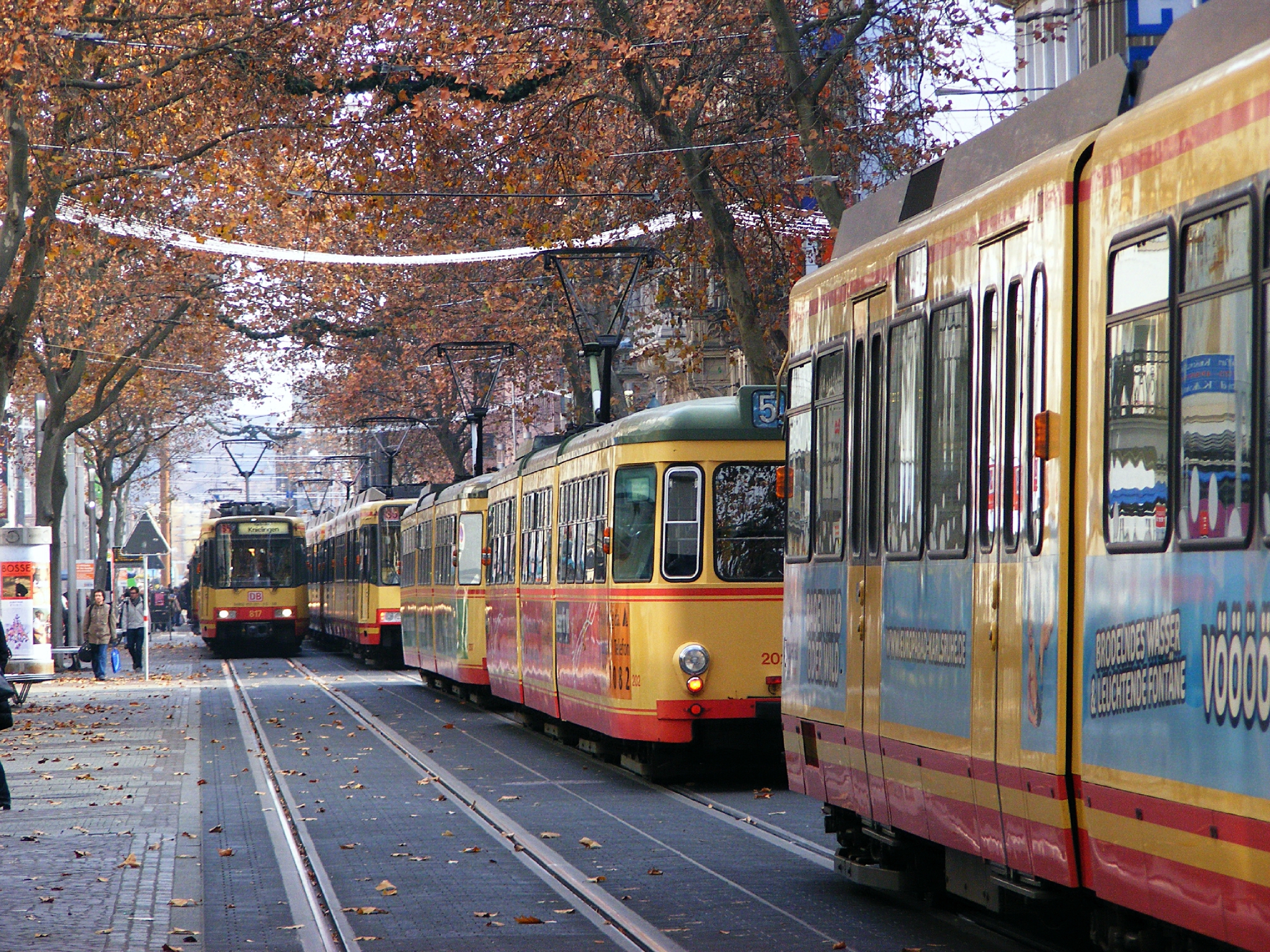
The “gelb wand” (yellow wall) of trams in Karlsruhe Germany
With the the Province; the City of Vancouver and TransLink continued selling big porkies about LRT, the following will be enlightening!
The ongoing planning and construction charade currently being played out by the usual suspects including cities of Vancouver & Surrey, TransLink and the provincial Minister of Transportation that the SkyTrain Light Metro System has shorter headway than light rail!
According to Thales’s 2022 news release, the Millennium Line (Broadway Subway) will only be signaled to allow a maximum capacity of only 7,500 pphpd, instantly puts a lie to these claims. Strange then Toronto’s TTC were obtaining capacities in excess of 12,000 pphpd on select tram/streetcar routes in the late 1940’s and early 1950’s.
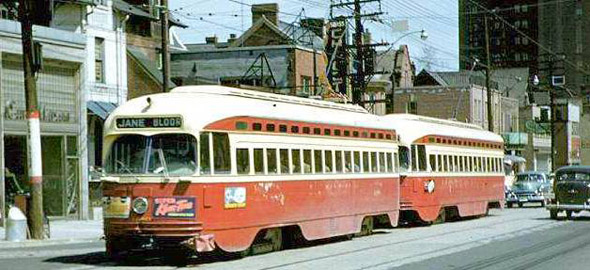
Couples sets of PCC cars, Toronto 1940’s
The following is an email from a transit engineer from Germany answering my questions regarding tram headway’s and capacity (Capacity is a function of headway). He is answering questions that were put to me by several local politicians claiming that LRT cannot obtain the same headway’s as SkyTrain. Remember the Millennium Line, after the $1.47 billion rehab by Thales, will only have a maximum capacity of 7,500 pphpd!
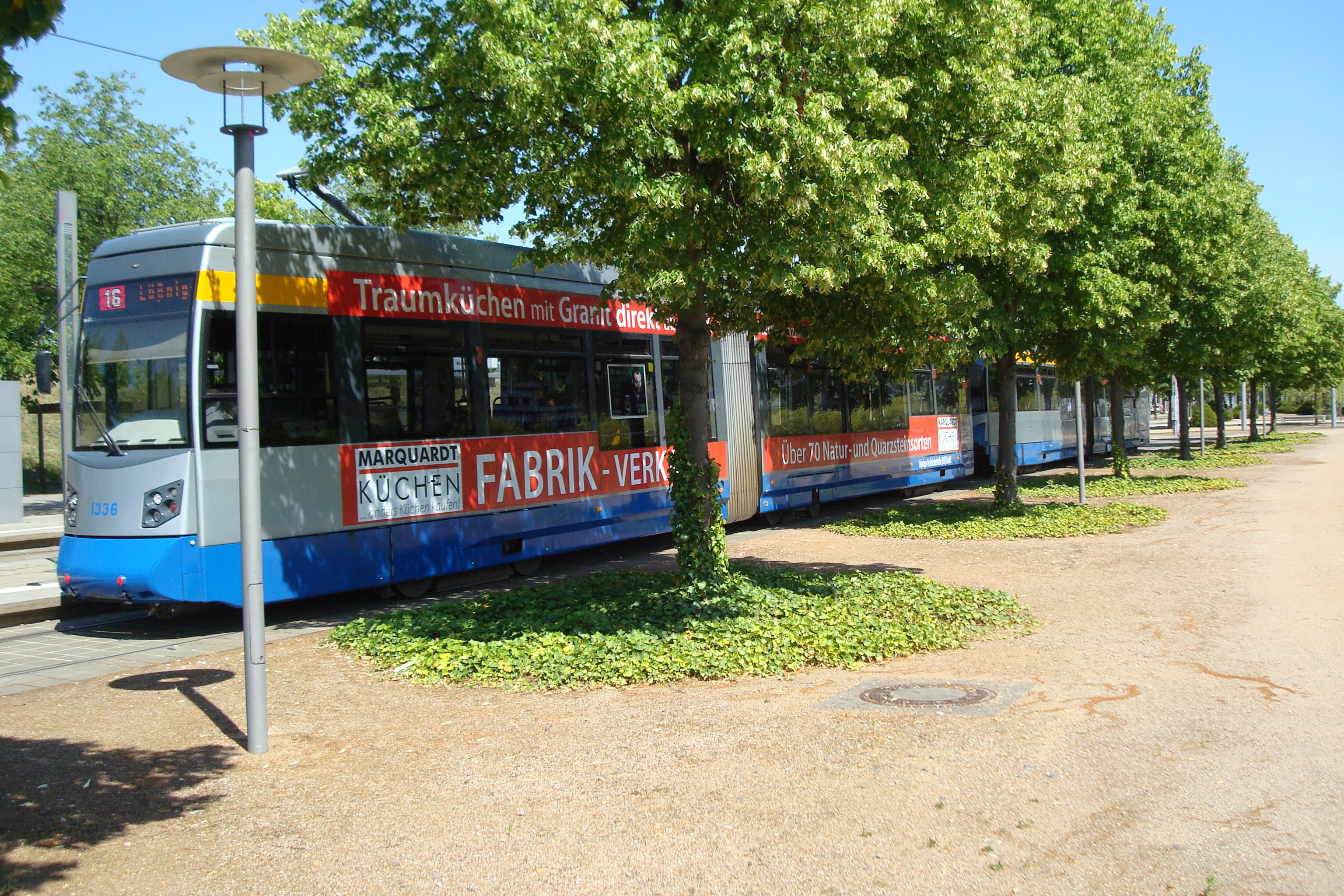
One should compare the maximum of 10 to 12 trains an hour on the Millennium Line after resignalling, with Leipzig’s 40 trains per hour or Prague’s 45 trains per hour in the peak hours!
Question: It is not possible to operate 36 trains per hour as traffic signals will hold them back.
Answer: That’s the whole point of traffic light pre-emption. Which does not *increase* the green phase for streetcars, but *shift* it in time. So automobile traffic does not wait longer, it’s just different drivers who wait, statistically.
If there’s no significant automobile traffic parallel to the streetcar/light rail tracks (as typically the case in those “transit malls”), you can even dynamically reduce the green phase for the trains to the strict minimum required to clear the crossing (less than ten seconds, even for a four-car set), which will actually *increase* the green phase for crossing automobile traffic.
Right here next door, Leipzig is easily running 40 trains per hour on sections shared by several routes. And the infrastructure is not nearly at capacity, neither concerning trainset length (platform length would allow 60m instead of 42m), nor concerning frequency. Other operators do as well or even better. Karlsruhe’s 80 trains per hour are running through a pedestrian street. Calgary’s transit mall preciselyseems to suffer from a lack of traffic light pre-emption, judging form the videos.
Another example, from Czechia, the streetcar at Prague. The sectio from Karlovo Namesti east to I.P.Pavolova carries the routes
4: 8 min 7.5 trains/h 6: 8 min 7.5 trains/h 10: 8 min 7.5 trains/h 16: 8 min 7.5 trains/h 22: 4 min 15 trains/h
That’s 45 trains per hour.
The tracks from Karlovo Namesti to the north carry the routes
3: 4 min 15 trains/h 6: 8 min 7.5 trains/h 14: 8 min 7.5 trains/h 18: 8 min 7.5 trains/h 22: 4 min 15 trains/h 24: 8 min 7.5 trains/h
That’s 60 trains per hour.
The tracks from Karlovo Namesti to the south carry the routes
3: 4 min 15 trains/h 4: 8 min 7.5 trains/h 10: 8 min 7.5 trains/h 14: 8 min 7.5 trains/h 16: 8 min 7.5 trains/h 18: 8 min 7.5 trains/h 24: 8 min 7.5 trains/h
That’s 45 trains per hour as well.
All figures given are for the morning peak. There are various other networks in Europe that have similarly dense operation on sections shared by several routes. 40 trains/h is not uncommon.
Question: with a subway, 31 trains are possible per hour with 14,640 passengers.
Answwer: Boston’s green line is running 40 trains per hour, 90 second frequency. Onsight in the tunnel, without ATC. Four branches, six minutes frequencyeach. They are running four-car trainsets for events so the platforms would be long enough.
Zwei has been wondering why all the rah-rah SkyTrain posts on You Tube and it seems the answer is, ridership is collapsing on this gold plated transit system.
This is very bad news because falling ridership equates to reduced service and reduced service translates to fewer buses and higher fares.
Then there is the now over $17 billion, 21.7 expansion program for the Expo and Millennium Lines and the rasion d’etre for expanding the SkyTrain light-metro system is steadily evaporating and it is time for the good old;
Repeat a SkyTrain lie often enough and the people will come to believe it!
The problem with transit in Metro Vancouver is that demographic change, especially the winding down of the “Boomer” generation was never taken seriously with planners. As well, the light-metro system depends on bus riders to fill it cars ar over 80% of SkyTrain’s ridership first take a bus.
Secret agreements and just plain dated planning, which continues at the university level, has created an ossified transit system, with zero flexibility to deal with future changes.
With the Mayor’;s council on Transportation, unwilling or unable to think 20 minutes into the future, with transit investment tied to election dates, rather than moving people, there is little hope for improvement. It seems despite the hype and hoopla about climate change and global warming, our regional and provincial politcans have condemend Metro Vancouver to a “rubber on asphalt future”.
All the YouTube propaganda will not save TRANSLINK’S SINKING SHIP!
Transit ridership is down and up: Here is the April 2026 Statistics
The last link provides monthly statistics by city or metro area.The following six regions have increased from 2.8 % to 22 %Leduc, Longueuil, Halifax, Greater Victoria ( +7.7 % ), Greater Toronto Metrolinx, Yellowknife ( +22 % )
Metro Vancouver – TransLink recorded a loss of 900,000 trips or 4.5 % decrease.( April 2026 vs April 2025 )
For the last 3 months( Feb. March, April 2026 ) TransLink ridership has been down compared to 2025. by 2.8%55.
6914 M vs 57.342 M in 2025
Transit ridership per capita Metro Vancouver 2019 – 100 and 2025 – 75
The Massey tunnel is back in the news and the non stop fake news and alternate facts brigade are hard at it trying to rewrite history.
MLA Ian Paton desperately continues trying to sell alternative facts and myth to the taxpayer and Delta Councillor a and mayoralty hopeful, Dylan Kruger, who has never met a grievance he didn’t like, continue their political song and dance.
Zwei would like to remind everyone that in 2017, CKNW radio reported that the cost for the bridge has risen to $8 billion ($10 billion in today’s brass), which was one of the reasons to build the tunnel.
The probable reason why the NDP put a stop to things is that the current SkyTrain expansion plan is now costing $17 billion and rising, to build 21.7 km of light metro and with staunch MAGA Maple conservatives as local MLA’s, there would be less politcal damage with the cancelled tunnel, than a stoppage in SkyTrain construction.
The following are two RftV post from 2017 and 2018, to remind everyone the incompetence and dishonesty behind this now reported $12 billion project.
As on tunnel engineer told me; “the best solution today is just drop another four lane tube next to the present tunnel and tile it this time and in a couple of years no one will know”.
Massey Tunnel Shit Show
Posted by zweisystem on Saturday, November 2, 2019
Blunt title but it is time to be blunt, regional transit planning is a “shit show”.
Shit show: Noun, vulgar slang, US origin – a situation or event marked by chaos or controversy.
This aptly describes our regional transit planning, where politicians at all levels of government promote their pet transit theories and projects, using an extremely dishonest bureaucracy to carry out their wishes.
This costs money, an awful lot of money; this wastes timed, an awful lot of precious time; this costs planning paralysis and in the end politicians approve doing the same thing over again, hoping for different results.
“The definition of insanity is doing the same thing over and over again, but expecting different results.” Albert Einstein, Dec 13, 2017.
The Massey tunnel replacement project must stand out as a grand example of political manipulation; yellow journalism by the mainstream media; and a complete lack of any coherent regional transportation plan.
The Massey Tunnel does not need replacing, it is perfectly safe.
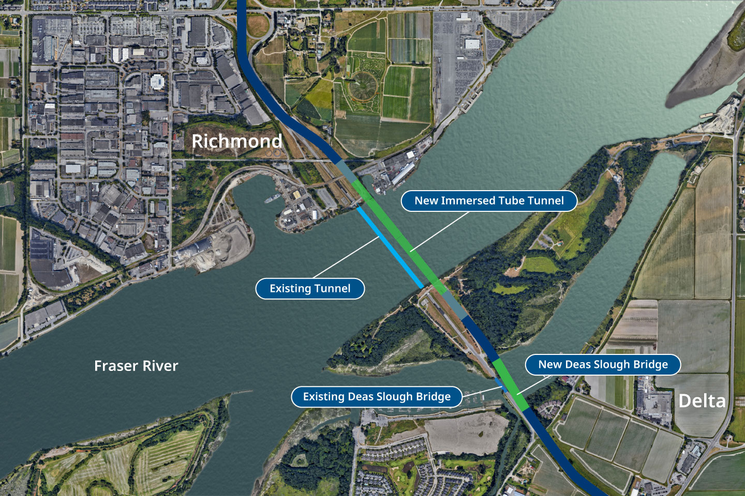
What is needed: A new bridge/tunnel crossing of the South Arm, near the vicinity 80th Ave in North Delta and a second bridge/tunnel crossing, of the North Arm, adjacent to the CN rail bridge, from Richmond to South Burnaby. This entails new highway construction, which the regional politicians are afraid to contemplate.
All the new 8 lane bridge or tunnel do, without a second crossing of the North Arm of the Fraser, is to create a parking lot on Highway 99 in Richmond because of the restricted capacity of the Laing, Oak St. Knight St., and Queensborough bridges!
There has been no capacity increase for crossings of the North Arm of the Fraser River since 1975!
Until a comprehensive transportation plan is tabled and a rational regional strategy for transportation is obtained, any new bridge will create a “shit show” for traffic.
Transit advocates say any plan for replacing the Massey Tunnel should be assessed in light of climate concerns
A Delta councillor says a seismically safe, efficient alternative is urgently needed for the crucial economic gateway
DELTA (NEWS 1130) — Transit advocates are citing climate concerns and calling for plans for the George Massey crossing to be studied further, but a Delta politician says enough is enough.
Abundant Transit Vancouver penned an open letter asking for the plan for replacing the crossing to be sent to the Regional District’s Climate Action Committee for further scrutiny.
Coun. Dylan Kruger is a member of that committee and says further study is not necessary and a new crossing is urgently needed.
“They are arguing that there should be no replacement for the George Massey Tunnel because we should not be building for car infrastructure, we should only be building for transit,” he says. “I’m fully in support of building infrastructure to get people out of their cars but there’s a fundamental concept people have to understand when it comes to the Massey tunnel: the Massey Tunnel is the economic gateway into Canada.”
Kruger says commuters aren’t the only ones who rely on the tunnel.
“At the end of the day, container trucks can’t take transit,” he explains. “We still need to build so we can get goods from point A to point B, in this region and in this country. So the notion that we should be building only for transit infrastructure here, I think really does not take into account the economic ramifications.”
Posted by zweisystem on Tuesday, September 12, 2017
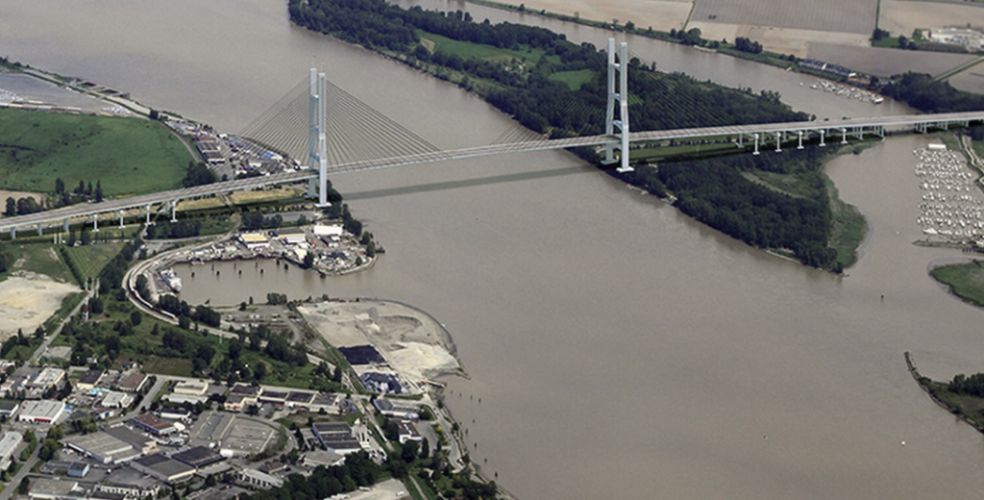
The Massey Tunnel Bridge replacement project is again in the news, as the massively expensive replacement bridge for the Massey tunnel has been mothballed.
Now, the CBC has found hugely expensive financial irregularities with the new Port Mann Bridge, and the air of political corruption hangs heavily in the air.
Was the proposed mega bridge to replace he Massey Tunnel nothing more than Liberal corruption on steroids?
Real reason for span disappears but Delta continues campaign
Delta Optimist
August 30, 2017
Editor:
Delta’s propaganda campaign to garner support for the proposed mega bridge replacing the perfectly safe George Massey Tunnel is in full swing.
Delta’s Politics and Misinformation Must Not Stop. The Bridge campaign is repugnant due to its long list of Trump style fake news and alternative facts.
A proper study for replacing the tunnel with a bridge would take a year or more to do. Delta’s “back of an envelope” review took less than a month to do and is poorly done as a result.
The replacement bridge was never about traffic congestion, rather it was to allow Panama-max tankers and colliers up the Fraser to Surrey Fraser Docks and no plans were made to reduce traffic at the Oak Street Bridge and Knight Street Bridge choke points. If anything, the proposed new bridge would create massive gridlock in Richmond.
As the real reasons for the bridge evaporated, Mayor Lois Jackson doubled down with another “back of an envelope” plan by hijacking the Rail for the Valley’s Leewood Study, for a Vancouver/Richmond to Chilliwack TramTrain service, for her pro-bridge propaganda campaign.
The study released in 2010 took over a year to prepare by real transportation professionals, providing a cost effective Vancouver/Richmond to Chilliwack passenger rail, using TramTrain service for the Lower Mainland.
The study never planned for LRT service across the proposed bridge, nor would a meandering rail line using the proposed bridge be viable.
Unless there was direct service to Vancouver, any rail service using the bridge (which will not have rail built in) would fail miserably.
Instead of a ruinously expensive bridge, the mayor should concern herself with Surrey’s $2.5-billion LRT, where two-thirds of the cost is being spent on roads and utilities for favoured land developers and speculators along the LRT route and the now $3 billion Broadway SkyTrain subway, which the route today has a quarter of traffic flows, needed to justify subway construction. Both are financial time bombs.
The mayor should support practical and cost-effective transit and transportation solutions and not massively expensive vanity projects that will do little real good except pauper the taxpayer.
The following video was brought to my attention and it gives a fairly honest argument about the SkyTrain versus Light Rail.
The big problem for Vancouver has been 45 years of SkyTrain propaganda coupled with condescending and fake news about Light Rail. Those who spoke against SkyTrain were quietly sent to Coventry and let go or for the biggest sins of saying SkyTrain is just plain wrong, get fired.
University professors who spoke positively about light rail were given the “Star Chamber” treatment.
In today’s world, legal or administrative bodies with strict, arbitrary rulings, no due process rights to those accused, and secretive proceedings called “star chambers”.
Even good old Zwei has been blacklisted from Post Media, the Tyee, CBC, CKNW, and most major news stations because they couldn’t cope with the truth about SkyTrain. The last time Zwei was threatened with a lawsuit for libel, but I mentioned a few names that had offered their services in defense, it all went away.
It seems they could not cope with the legal maxim that the defense against libel is the truth.
What is of no surprise for me is the general ignorance of public transport and transport mode, with many echoing old cliches about light rail and light metro. Yet, the one issue no one dares to address is cost, yet these are the same people who will decry the cost of every bean, but when it comes to SkyTrain they hide behind dated rhetoric and more.
The simple fact is, the current $16 billion plus, 21.7 km extensions to the Expo and millennium Lines will be the last simply because by the time funding is secured for the UBC extension, sometime after 2040, there will be no more MALM (SkyTrain) vehicles available and no manufacturers willing to design new vehicles without being paid up front, at a cost of over $200 million, before the first car rolls off the assembly line.
NEWS FLASH! The latest cost for the Expo line extension to Langley is now around $7 billion and the Operations and Maintenance Centre #5 (OMC#5) needed for the 5 car Innovia 300 trains is an added $1 billion.
Golly Gee Whiz Batman, how much light rail could we build for that?
As Canada flounders, with BC in particular, with any sort of passenger rail revival, Europe is leading the way with the current passenger rail renaissance.
HST, on the Toronto, Ottawa, Montreal route is being built more for politcal prestige, than anything else.
If any government is truly interested in mitigating the effects of Global Warming and climate change, rail must be part of the solution, but in Canada it is not.
In British Columbia, there are four passenger rail projects begging for investment:
Rail for the Valley’s Marpole to Chilliwack regional railway
The E&N rehab to a viable regional railway
Restoration of a public passenger railway on BC Rail from Vancouver to Prince George and beyond
.A Kamloops to Kelowna regional railway.
The cost of doing the above is about the same or less than the current cost to extend the Expo and Millennium light-metro lines in Metro Vancouver!
Regional passenger rail service is vital to bring quality transportation accessibility, at an affordable price, to areas with zero passenger service of any kind!
One of Europe’s longest train routes will launch next month, connecting multiple major cities
Spanning more than 1,300km, the journey will reportedly take 18 hours to get from Poland to Germany
Written by Liv KellyTravel WriterFriday 29 May 2026
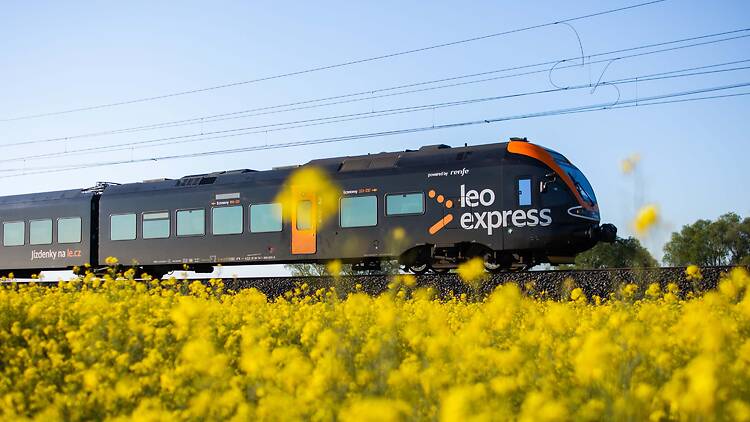
Photograph: Leo Express | Leo Express train in spring
The European rail boom continues, and a symbolic new route is the latest addition to the continent’s ever-expanding train network.
Leo Express, a Czech rail operator, is set to launch a brand-new route from Poland to Germany (via Czechia) on June 25.
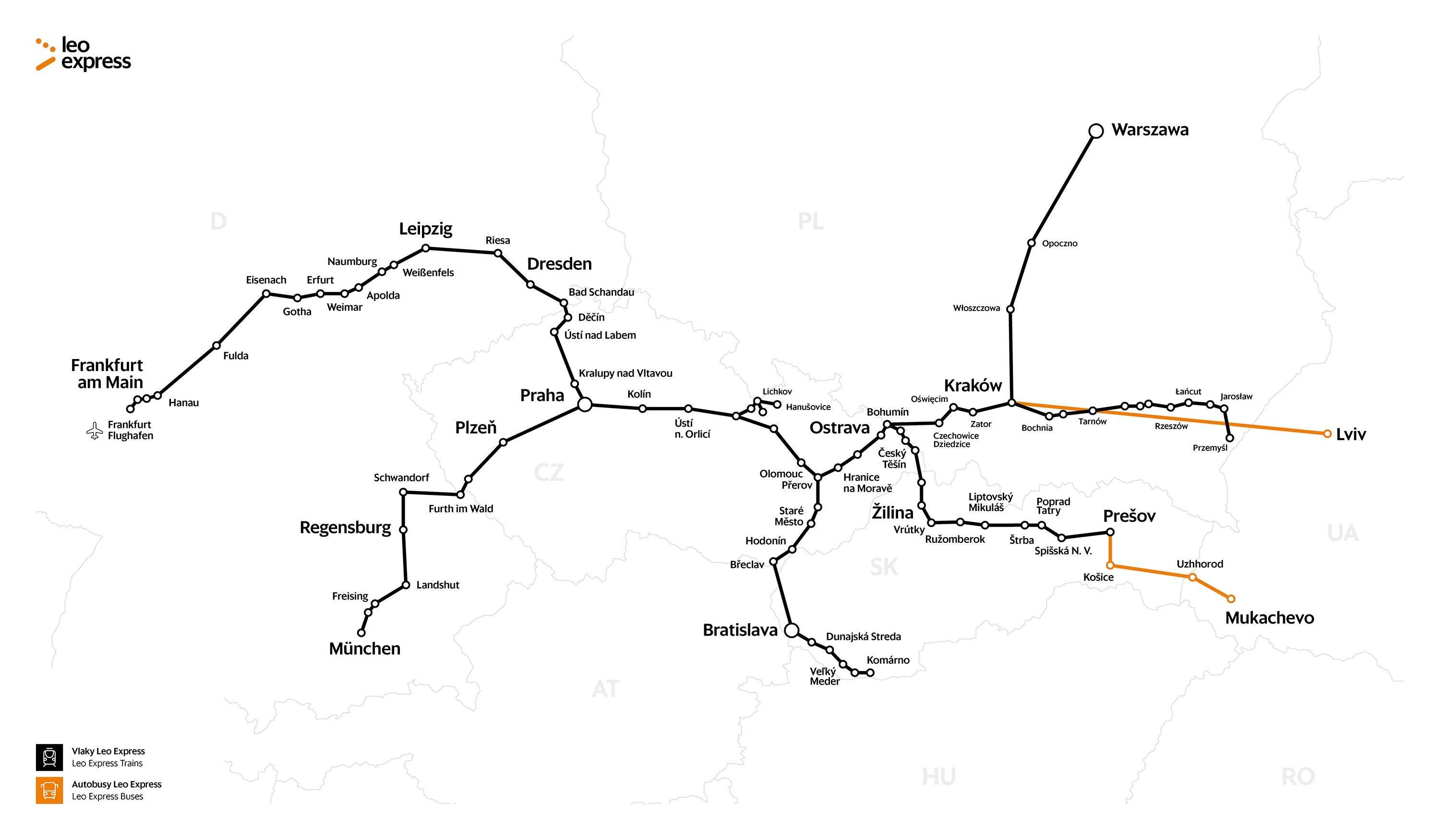
Starting in the eastern Polish city of Przemyśl, the service will stop at Kraków, Prague, Dresden and Leipzig before concluding in Frankfurt.
Demand for rail travel to and through Poland has been on the rise over the last couple of years, with record levels of passengers on the country’s railways. In fact, Przemyśl specifically has become a primary hub for Ukrainian travellers since the beginning of Russia’s war, as the city lies just 10km from the border.
In 2025, the first direct service between Poland and Croatia was inaugurated, and it also has connections to Germany, Czechia, Slovakia, Hungary, Lithuania and Austria. However, spanning 1,300km, this will reportedly be one of the longest single rail journeys in Europe, and it’s set to take around 18 hours to complete.
Departures from Przemyśl will leave the station at 1.31pm and arrive the following morning in Frankfurt at 7.53am. In the reverse direction, services will leave at 8.27am and arrive at the slightly impractical time of 2.23am.
With all that time to kill, passengers will have access to WiFi, power sockets, air conditioning and on-board catering. Here’s a map of the route.
Image: Leo ExpressLeo Express’s rail network
When initially announcing the route in December, CEO of the operator Peter Köhler said: ‘Leo Express is breaking down the symbolic rail barrier between eastern and western Europe and connecting key European centres with the gateway to Ukraine via a direct route that has been lacking until now,’ according to Notes from Poland.
We don’t yet know how much tickets will cost, but keep an eye on the Leo Express website for announcements about when you’ll be able to book.












Recent Comments