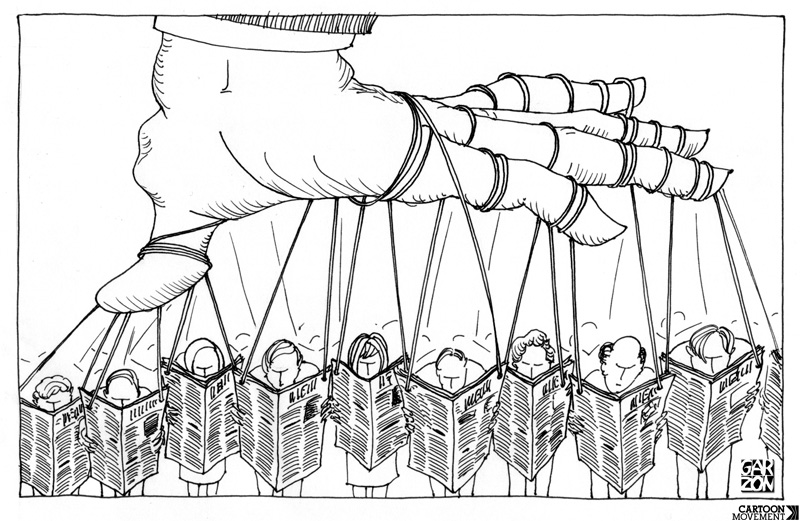
One just has to shake ones head with TransLink. Calling it the “Ship of Fools” is not correct. The “Ship of Fools are those buying into Translink’s continued propaganda stream.
Earlier, Zwei debunked the TransLink inspired myth that Broadway was the busiest transit Corridor in Canada; no wait North America.
Where was the mainstream media?
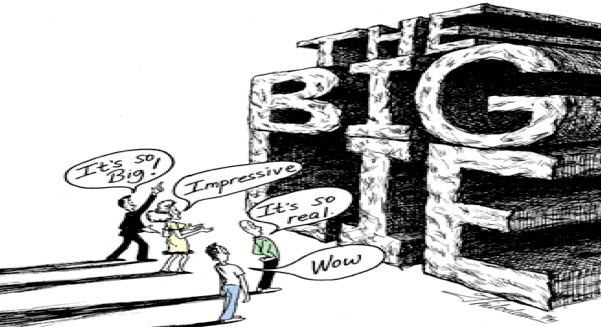
Tell a lie big enough and repeat it often enough, the people will come to believe it.
What we see in Metro Vancouver is a rogue bureaucracy, filled with people who really haven’t a clue about our transit system, rather the sole purpose is to build more of the obsolete SkyTrain. In short, BS their way for more SkyTrain construction.
On Feburary 24, 2019, The Vancouver sun ran an Op-Ed piece by Elizabeth Murphy;
I want to dispel the myth that SkyTrain technology is not proprietary. Automated train lines are popular around the world and that growth has brought more choice in the market.
A key to the SkyTrain technology is that it is a driverless, automated system. In addition to reduced operating costs, the automated system also improves safety, as it removes the potential for human error. The technology also allows us to run trains more frequently.
With more cities choosing automated systems, there are now more manufacturing options when it comes to procuring SkyTrain cars from several companies. While the vehicles and technology must be tailored to each agency’s system, the automated technology at the heart of our SkyTrain system is not unique or proprietary.
Sany Zein, vice president, TransLink
The letter written by a TransLink vice president demonstrates that either he is deliberately misleading the punlic or he is profoundly ignorant of the metro railway system.
Let us look at the veracity of his letter.
SkyTrain is not a technology, it is what our metropolitan railway is named. Many elevated transit systems are locally know as SkyTrain.
What we call SkyTrain is actually three different railways, with two being closely related.
The Canada Line is a conventional railway and is not compatible in operation with the rest of the “SkyTrain” network.
The Expo line was built with the old Linear Induction Motored (LIM), Urban Transportation Development Corporation ALRT system, which was renamed from ICTS, because it was unsalable. The Expo Line is not compatible in operation with the Canada Line.
The Millennium Line and Evergreen line expansion, uses the Bombardier Inc. rebuilt ALM system (renamed from ALRT because it was unsalable), which cars are longer and heavier. The LIM powered ALRT/ART system is now called Movia metro.
The patents for the Movia Metro system are owned by Bombardier Inc. and SNC Lavalin
Driverless transit system has very little to do with being a proprietary railway, rather driverless or automatic operation is a signalling issue. Driverless transit systems are very expensive to operate and maintain and are used on large metro operations where the traffic flows are such to make driverless operation sustainable.
The Expo and Millennium Lines operate LIM powered trains, with Bombardier Inc. the only supplier for the proprietary railway. No other railway company can provide a LIM powered train without first designing and safety case a new vehicle and set up a production line, which is very costly.
Vancouver is now the only city in the world, of the seven cities that built with the LIM powered now called Movia Metro, to pursue planning and building with it. Only three of the seven systems were actually built as a metropolitan railway.
Bombardier Inc. is slowly phasing out production of the proprietary LIM powered Movia metro system.
The City of Ottawa sent a delegation to Vancouver to study our SkyTrain system before they were to build their own transit system. They found the transit system, especially the Movia system, very expensive to build and cost more to operate and maintain than light rail. The delegation also found that driverless operation prevented flexibility of operation, that has been proven to attract customers to transit.
TransLink’s executives know this, yet deliberately continue mislead the public about the proprietary Movia Metro system.
Again, I ask; “Where is the mainstream media?” and “where is Attorney General, David Eby?” Should he not be protecting the public from misleading statements from TransLink?
For the past several years, the SkyTrain Lobby, politicians and academics have all said, almost in unison, that Broadway was the busiest transit corridor in Canada, if not North America.
The old Joseph Goebbels quote is true; “If you tell a lie big enough and keep repeating it, people will eventually come to believe it.”
Thus for the past several years the big Broadway lie, enabled by TransLink has ingrained the notion that Broadway is the most heavily transit route in Canada.
Fact Check!
In a letter to several news organizations, all metro mayors and other interested parties, I laid the foundation that Broadway was not the busiest transit route in Canada .
Stung by this, TransLink wrote a letter to myself and in a round about way claimed that Broadway “is our region’s most overcrowded bus route.”
No apology and not even a hint of remorse, TransLink continues to boast about Broadway!
Finally, on January 31, 2019, you contacted several news organizations and this Secretariat raising concerns over TransLink’s assertion that the 99 B-Line is the busiest bus route in the US and Canada. TransLink is confident in its data collection and peer comparisons, noting that the 99 B-Line route on the Broadway Corridor moves 60,000 customers per day on articulated buses running every three minutes at peak times. This is our region’s most overcrowded bus route. Pass ups are already common, as our regular riders on that route are fully aware. TransLink projects that the 99 B-Line from Arbutus to UBC will be at capacity in the peak when the Millennium Line extension from Commercial-Broadway to Arbutus opens.
Just a minor footnote, according to TransLink the 99B moves about 60,000 customers a day, but of course that is both ways, as TransLink slyly tries to once again inflate the real ridership on Broadway.
Why?
The big prize is the now $3.5 billion Broadway SkyTrain subway to Arbutus and TransLink does not want the truth to upset the subway bulldozer!
After flirting with Bombardier’s Innovia monorail and optically guided buses, Las Vegas is now improving their regional transit system, with a proven winner, light rail transit.
Regional Transportation CommissionA rendering of a proposed light rail system along Maryland Parkway.
Monday, Feb. 18, 2019 | 2 a.m.
Starting this week, the Regional Transportation Commission will hold a series of meetings to gather input on plans for mass transit along the Maryland Parkway corridor into downtown Las Vegas.
Three options will be on the table. But only one will take Las Vegas where it needs to go, and that’s light rail.
This is about way more than transportation infrastructure. The decision on how to move forward on the project will have major ramifications for the city’s ability to compete for tourism and convention business, the development of the valley’s inner core and the quality of life for Southern Nevada residents.
That’s because light rail, unlike the bus options that also are under consideration, is transformational.
As proven in city after city where systems have been built, light rail is a development magnet and a major asset in attracting visitors.
It also offers a check on urban sprawl by encouraging development upward instead of outward, says Brookings Institution transportation expert Adie Tomer.
Residential development near light rail tends to come in the form of multistory structures, Tomer said — not necessarily skyscrapers, but low- and mid-rise condominiums and apartment buildings.
The combination of upward development and mass transit development would produce consequences that would be felt valleywide, Tomer explained. If the community continues to grow outward and remain car-focused, he said, residents’ time in traffic will increase as more and more cars crowd onto more and more miles of roadway.
Look no further than Southern California, with its near-constant traffic congestion, for the logical conclusion of Las Vegas’ status quo.
Meanwhile, as Tomer and many others have noted, bus rapid-transit systems like those also being explored by the RTC simply don’t spark the same kind of development as light rail. Put yourself in the shoes of a developer who, say, plans to construct a mid-rise condo building with restaurant/retail space on the ground floor. Would you rather build it along a bus route, which can change, or a set of steel tracks that have been laid into the ground?
That’s a no-brainer, which is partly why so much development has happened in cities that have invested in light rail systems. Since Phoenix’s system came online 10 years ago, the city estimates that $11 billion in private investment has sprung up within a half-mile of the lines.
But in Las Vegas, the economic consequences go well beyond new development. Cities that compete with us for travel and convention business, such as Orlando, Fla., and regional metros like Phoenix and Denver, long ago recognized the value of light rail and are using it to their advantage.
The Maryland Parkway system wouldn’t directly help Las Vegas make up the distance, but it would be an important first step toward establishing a line to serve the Strip.
That’s a vital need. For a community whose marketing strategy revolves around the richness of our visitor experience, it’s an absolute must to make travel as convenient and carefree as possible for tourists and convention-goers. Being stuck in a taxi or ride-hail car for hours isn’t the kind of thing that will keep people coming back.
And while critics will argue that self-driving vehicles are the 21st-century solution, don’t believe it. Those critics may be right in predicting that the onset of autonomous vehicles will result in more ride-sharing, with drivers signing up for services as opposed to owning their own cars. But it would still take a flood of vehicles to provide drivers with the immediate service they would demand. So that’s not the answer to congestion.
Critics will also howl about the cost of light rail, which is substantially more expensive than bus options.
But there’s a cost for staying with the status quo, too, and it’s a heavy one. Our quality of life is on the line in the form the torturous travel times and environmental damage that come with sprawl. Also at issue is the health of the tourism industry that drives our community and our entire state.
So we’re going to pay one way or another.
Let’s invest in a proven winner, Las Vegas. Let’s commit to light rail.
It is hard to believe, that group of hapless politicians have just signed a death warrant for transit in the region.
The Mayors Council on Transit just gave the OK to build a SkyTrain subway to UBC, which means the rest of the region can kiss goodbye to any sort of credible transit planning for the foreseeable future.
Subways are expensive to build but they are also very expensive to operate and in Canada, the standard for building a subway is a transit route with customer flows in excess of 15,000 pphpd.
Broadway currently has peak hour customer flows of around 4,000 pphpd.
This means a $7 billion dollar SkyTrain subway, will be not just heavily subsidized, it will be massively subsidized which means higher fares and much higher taxes. The poor and the middle income residents of metro Vancouver will have to flee the region due to a huge tax burden.
More people will be moving up the valley, which in turn will put a massive stress on transportation infrastructure in the Fraser Valley.
The mayors that voted for this will go down in history as the most ignorant band of fools yet.
From the TTC, we learn that the operating costs for a subway to Arbutus are in the neighborhood of $40 million annually, and probably $50 million annually if it goes to UBC. But these cost escalate in time as the subway ages.
After all the hype and hoopla of the Expo line, BC Transit became very worried with the huge subsidies being paid.
*
The politicians lead the people to believe that it was paying for itself, then paying its operating costs but in 1992 the GVRD and BC Transit release “the Coast of Transporting People……” and showed that the annual subsidy for SkyTrain, just to operate to New Westminster was $157 million and change; more than the trolley and diesel buses combined.
*
But let us factor in the inflation rate of 157.63 million in 1982 is now $371.52 in 2019 dollars and that is for a largely elevated system.
With Broadway, the vast majority of users will be $1 a day U-Pass holders which means the subway will not generate revenue.
*
The total subsidy for just a Broadway subway to UBC could be higher than $300 annually!
*
Forget the pleasant homilies about transit and SkyTrain, the Broadway subway may not only bankrupt TransLink, it may never see a revenue customer! In Charleroi, France, politicians, against the advise of experts, built a regional metro, the costs were so high that there was no money to pay for operation and it remains today almost completed, but never used and has lain rotting with age for over twenty years!
*
The mayor’s council’s decision has just demonstrated to the world how stupid they are.
The Charleroi Metro, built but no budget to operate it, it remains largely built, yet never used.
TransLink’s Mayors’ Council chooses SkyTrain for UBC expansion
VANCOUVER (NEWS 1130) – It’s one giant leap forward for SkyTrain to UBC: TransLink’s Mayors’ Council voted to move forward with SkyTrain as the chosen technology to get rapid transit to the university.
The earliest construction would start is 2025 and only if the project receives funding under Phase Three of the mayors’ ten-year transportation plan. The project is expected to have a price tag of more than $3-billion.
Vancouver Mayor Kennedy Stewart is calling this great news for students, workers, educators and businesses across the region.
Regional Mayors just voted yes to move forward with #SkyTrain to UBC! This is great news that will help keep students, workers, educators and businesses moving right across the region. #vanpoli
TransLink Planner Geoff Cross says the next phase includes a lot of public consultation.
“Project planning still to be done is really around station locations, horizontal alignment, vertical alignment, connections, costing to be able for you to understand where this fits, what the business case looks like for future funding decisions,” he adds.
That process is expected to last up to 18 months with a full business plan developed by 2020.
Cross says other factors needing to be considered include the best construction method.
“The next phase would include quite a bit of public and stakeholder consultation, working with the City of Vancouver, syncing up with some of their land use and corridor planning, understanding what the technical and functional requirements for tunnelling, etc. could be.”
Concerns have also been raised about which company will be chosen to build the new SkyTrain considering recent problems being faced by one of the bidders SNC Lavalin.
Protecting renters long new route
Although Vancouver councillor Jean Swanson says she’s in favour of better transit, she says it shouldn’t be at the expense of low-income renters.
She says there are thousands of apartment units along the new SkyTrain route that should be protected.
“I’m not against having better transit, but I am afraid there’s 30,000 purposed built apartment units, they desperately need to be protected from being demolished and replaced with higher density condos,” she says.
Swanson hopes the city can re-zone the areas to be rental-only to protect renters.
The sheer incompetence of TransLink was on show yesterday with a SkyTrain melt down.
The Canada Line is former Liberal brainchild Premier, Gordon Campbell’s, attempt to have a P3 transit project. Well the result is a capacity constipated transit line that is not compatible with the rest of the SkyTrain system, with the operating consortium headed by Canada’s current favourite Company, SNC Lavalin.
Transport Canada must investigate this incident as customers were held hostage for three hours by Translink’s utter incompetence.
Kevin Desmond must resign or be fired!
SkyTrain passengers on a Canada Line train stuck for 3 hours in Richmond
It was a tense and very cold evening for SkyTrain passengers stranded on a Canada Line train for three hours Monday night.
The train became stuck between the Aberdeen and Lansdowne stations at about 8:20 p.m, halting all service between Bridgeport and YVR stations.
TransLink thinks heavy ice on the power rail may be the culprit but it needs to verify that.
Technicians initially tried to recover the train by rocking it back and forth. When that failed, they sent a rescue train to bail out the folks stuck onboard.
Passenger Masooda Shahi tells Global News reporter John Copsey what happened next:
“There was a rescue train, after maybe an hour, right behind us. That was the time the train was moving back and forth, like maybe 10 metres, and that also got stuck.”
Technicians managed to recover the stuck rescue train and tried coupling it with the first train, but there wasn’t enough power to haul both.
Finally, after nearly three hours, customers got out of their train and walked across the guide way to one on the opposite track.
Translink says customers were not evacuated to the opposite guide way right away, as it was not safe to lead them along the elevated guide way in the hazardous weather conditions.
“We extend a sincere apology to these customers,” Translink spokesperson Jill Drews says in an email.
SkyTrain is noted internationally that it doesn’t operate in the snow.
Poorly designed and poorly maintained, means the so called backbone of our transit system, turns spineless, leaving thousands of people to fend for themselves.
Toronto’s Scarborough line fails in the snow.
Detroit’s SkyTrain service stalls in snow.
JFK’s Airtrain balks in the snow.
And in Vancouver, a mere 4 cm of snow causes SkyTrain to crap out!
And the idiots at TransLink and the Mayor’s Council want to build more of it?
To again quote my late father, who was told by the Captain of his frigate, over a snafu from Halifax; “When you have idiot’s running the show, do not be surprised at the results.”
Snowfall hit the Metro Vancouver region quickly and swiftly on Sunday afternoon, with up to 10 centimetres expected.
It took a few months but it seems winter finally decided to visit the west coast.
Snowfall hit the Metro Vancouver region quickly and swiftly on Sunday afternoon, with up to 10 centimetres expected. The southeastern region of the Sunshine Coast, Greater Victoria, Southern Gulf Islands and Eastern and Inland Vancouver Island were also told to expect similar amounts of snowfall into Sunday evening.
“The heaviest snow for East Vancouver Island is expected on the Malahat Highway while the heaviest snow for Inland Vancouver Island is expected in the Lake Cowichan area where 10 to 15 centimetres of snow will fall through Monday morning,” read the snowfall warning issued by Environment Canada.
In Metro Vancouver, road warnings from local police agencies were plentiful, with snow blanketing all major routes and bridges connecting the region.
TransLink’s Expo Line has been negatively impacted from Lougheed to Columbia station. Customers traveling in either direction must now switch trains at Columbia station. A bus bridge put in place has been cancelled.
Update: At 6 pm, TransLink announced that Expo Line service has been impacted from Lougheed to Columbia station.
Any customers traveling in either direction will be required to switch trains at Columbia station. The bus bridge has been cancelled due to poor road conditions.
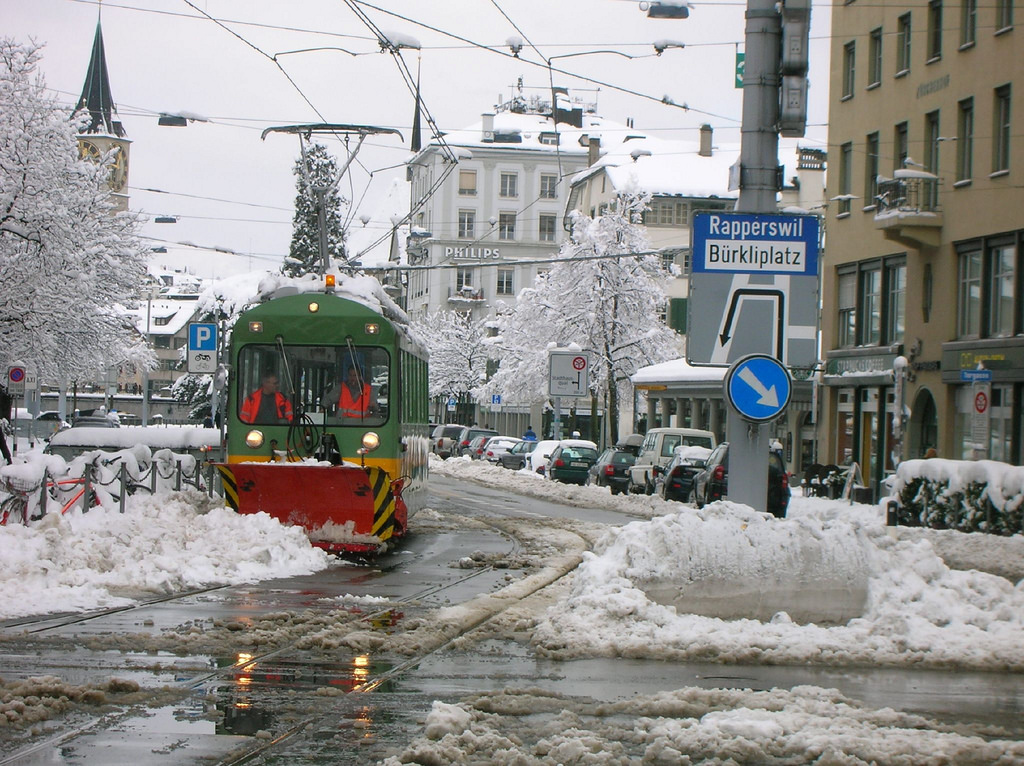
In Europe, cities with LRT or trams have plows to keep the track and roads clear of snow.
As interest in TramTrain grows abroad, we are left with Translink’s SkyTrain only planning.
The lack of flexibility of SkyTrain will soon hamstring our urban rail system under the weight of massive subsidies and debt serving costs.
TramTrain, first designed to make transit more user friendly, by eliminating transfers, now seems to be the affordable and user-friendly transit system than can affordably connect communities with major urban centres.
UK: Mayor of Greater Manchester Andy Burnham introduced the city region’s revised long-term spatial strategy on January 7, which includes a transport investment vision running to 2040.
The transport vision sets out how Greater Manchester’s wider economic objectives can be met through targeted infrastructure investment. It includes a Draft Delivery Plan running to 2025, which is intended to pave the way for the longer-term objectives to be realised. These include a target for no more than 50% of journeys to be completed by private car.
Public transport investment is targeted primarily at enhancing capacity and undertaking asset renewals on the 97 km Metrolink light rail network, developing more bus rapid transit routes, and working with Network Rail and franchisees to improve suburban rail services. Other key objectives include integrating the planned High Speed 2 and Northern Powerhouse Rail projects at a local level, and assessing the case for opening more tram stops and rail stations on existing lines where local development is planned.
The plan supports development of tram-train technology, which is now being trialled for the first time in the UK in Sheffield. Transport for Greater Manchester says it intends to prepare business cases for three ‘pathfinder’ routes, linking the existing light rail terminus at Altrincham with Hale; Bury and Rochdale; and Manchester Airport and Wilmslow. It is likely that the Bury – Rochdale route would partly share the alignment of the heritage East Lancashire Railway. These ‘pathfinder’ projects would be used to test the viability of tram-trains ahead of a wider roll-out to several local rail corridors, including Manchester – Wigan via Atherton, Manchester – Warrington Central and Manchester – Glossop.
Several light rail extensions are also to be evaluated for implementation in 2025-40. These include a possible cross-city tram tunnel linking Cornbrook with an expanded Piccadilly station, relieving pressure on the two existing surface tramways through central Manchester. Other proposals include a branch from the Bury line to serve Middleton, an eastern extension of the Ashton line to Stalybridge, and a light rail or tram-train link between Stockport and Manchester Airport.
A number of other investments are also proposed, which would be funded through developer contributions. These include a Metrolink extension from the Trafford Centre, terminus of a route now under construction, to Port Salford, and a tram stop at Sandhills north of Manchester city centre where the Bury and Oldham lines diverge.
The B.S. line, an apt name for the proposed Broadway SkyTrain subway.
What is more remarkable is that Postmedia allowed this to be printed.
Could it be that the SkyTrain Lobby in Postmedia is beginning to weaken?
Here is the real reason why the Broadway subway should not be built.
The Canadian and North American standard for customer flows on a transit route to justify a subway is over 15,000 pphpd.
In Europe, customer flows that would justify a subway is over 20,000 pphpd because light rail is able to cater to such traffic flows much cheaper than a subway.
Current customer flows, based on the the 99 B-Line’s scheduled peak hour servcie of 3 minute headway, combined with the twp trolley bus lines that use Broadway, under 4,000 pphpd. Not enough to even justify light rail, just a basic streetcar!
The Broadway subway line to UBC, with the appropriate acronym the “BS-Line,” has been accepted by Vancouver council, based on a consultant’s report some question as being more of a political document than a technical report. Within a week of release and with no public consultation, only two councillors voted against it, Colleen Hardwick and Jean Swanson.
The recent Vancouver civic election showed the public’s desire for a change in direction. An upcoming citywide planning process is intended to deliver that change, including to reconsider the Transportation 2040 plan. But now that the subway to UBC has been accepted by council — and the policies of the ousted Vision Vancouver government remain in place — that will predetermine the land use across the city and make the citywide planning process nothing more than implementation of a predetermined outcome of tower luxury condos like at Oakridge and along the Cambie corridor.
Last-minute council amendments for collaborative consultation after the fact is meaningless when funding partners such as the University of B.C., Jericho Lands and other developers are expected to contribute based on density bonuses to pay for the subway rather than public amenities. It’s not what most people had in mind.
Using what author Naomi Klein has described as disaster capitalism, Mayor Kennedy Stewart backed by Vision-appointed city staff, framed the need to pre-empt the planning process by insisting that there is only a small window of opportunity to get federal funding in an election year.
However, the federal government is nowhere near ready to approve where the infrastructure money will go across Canada. Vancouver is already getting a large amount of federal funding currently allocated for transit while they are lining up against other cities that have none. More funding is not likely to be a priority to a government wanting to spread it around in an election year.
Now the region is being pressured into approving the technology of subway/SkyTrain to UBC. Many regional mayors have raised concerns about equity, given that Vancouver already has a lot of transit infrastructure and about $3 billion of new transit funding recently allocated, while many municipalities have little to none.
Although adding rapid transit to UBC is important, there are many reasons why the subway is a terrible idea and other options should be considered.
Patrick Condon, founding chairman of the UBC Urban Design Program, has confirmed his opposition to subway/SkyTrain. He says it isn’t green (lighter infrastructure is more green and can be delivered faster), it is the costliest option (depriving the rest of the city and region), and it widens the wealth divide with the related luxury condos and out-of-scale development based on economics.
The growth and ridership numbers are designed for a predetermined outcome that favours SkyTrain. In fact, the current bus system to UBC has been underserved for over a decade in efforts to justify a subway. This could be rectified immediately on multiple routes with little cost if there was the will to do so.
The city’s underlying assumptions on population and unit growth need to be reconsidered since targets are much high than justified by population projections. Staff recently confirmed the numbers at council in response to questions from Hardwick. Head planner Gil Kelley previously confirmed that existing zoned capacity already is significantly beyond what is required to meet projected growth.
So the question is, do we really need to provide for so much more of the market supply? The city even confirms that we have been building too much of the wrong type of supply.
However, council meeting rules have been changed, seemingly on the fly, including muzzling the public by calling it out of order if concerns are raised over assumptions and recommendations of staff and consultants.
To put broader growth issues in context, it is important to understand how Vancouver and UBC have developed over time.
Vancouver is inherently a transit oriented streetcar city that was designed before the common use of the automobile. Its arterial grid of short blocks has everywhere within a 10-minute walk of transit on an arterial. The streetcars were updated to trolley buses.
UBC was designed as a small campus at the end of a peninsula in the forest, also served by streetcar. It was never intended to be a city centre. However, rather than building student and staff housing onsite, UBC has been developing its forested lands for market luxury condos to subsidize operations. It is increasingly becoming a development corporation rather than an educational institution.
Metro Vancouver tried to rein in that unsustainable growth, but developers influenced the province to take direct control so the growth could continue unopposed. Now, UBC has taxation without municipal representation and no regional oversight.
Instead, UBC expects the regional transportation system to heavily subsidize a $7-billion subway to serve their condo growth and the students who are not housed onsite that commute from across the region. This is the most unsustainable and undemocratic model in B.C.
Transit is no longer about transporting people and is mainly about delivering market condo development.
For a fraction of the money proposed for this subway to UBC, that would take 10 to 15 years to implement, the city and region could be much better served quicker. Within a couple of years, the Broadway corridor could be served by surface rail all the way to UBC. Also, immediately, upgraded peak-hour electric bus service, including express to UBC, should be added to multiple routes.
There is immediate urgency for the climate and affordability crisis to act now in the broader interests of the city and region that the subway proposal does not achieve.
It is important to note that the claimed environmental advantage of public transit is the ability to increase transportation mode-share toward modes having lower GhG emissions. But the consultant’s report concludes that “given the large number of trips occurring regionally, it is expected that the alternatives would show little improvement to the regional mode share,” and also that LRT would provide the greatest benefit to improving the transit mode share for Vancouver. The mode-share shifts are shown to be little different for the three rapid-transit alternatives, and that SkyTrain provides only a 0.2-per-cent improvement for the region over the existing B-Line bus and only a 0.3-per-cent improvement in Vancouver.
We need to look at the bigger picture and ensure that public funds are spent wisely. The Broadway subway would undermine planning for a sustainable future at too high a price.
Elizabeth Murphy is a private-sector project manager and was formerly a property development officer for the City of Vancouver and for B.C. Housing. info@elizabethmurphy.ca
Thanks to the Ford’s in 2010, the SRT remains in place instead of the planned LRT conversion that was supposed to up and running either late last year or this year. It would not only cover the exiting line, but the 1980 plan extension to Melven Town Centre. Then got to thank Mayor Tory for pushing a subway that will not be ready until 2030, if then at an extra $2 Billion and counting. The SRT will not last until the subway opens.
Let us not forget, the aging Expo Line is in dire need of a complete rehab, costing around $3 billion, or the core system may go the way of the SRT, making the $1.65 billion Fleetwood extension and the $3.5 billion Broadway subway a hugely expensive floundering beached whales, as the core transit system collapses due to age and lack of attention.
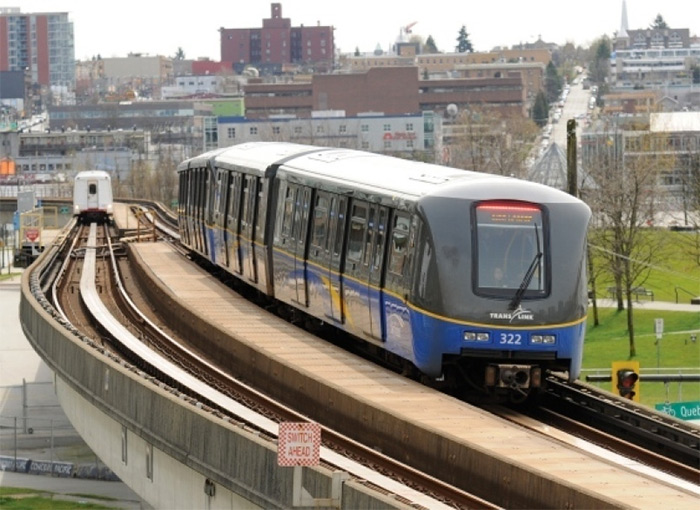
Scenes like this will become commonplace as the Expo Line ages
Kamran Karim arrived at Kennedy station and waited 30 minutes for the RT to arrive before realizing it was out of service — again.
“There is no sign. There is no notice,” he said, pointing to a gate barring access to the the stairs leading up to Scarborough’s elevated rail transit system, which was working on and off in the days after the snowstorm that bore down on the city Monday.
Kamran Karim was among thousands of TTC riders whose commutes were disrupted after the snowstorm knocked the Scarborough RT out of service. (Richard Lautens / Toronto Star)
The record snowfall and the polar ice freeze that followed wreaked havoc on portions of Toronto’s transportation system, but in particular the aging and vulnerable elevated train service in Scarborough — dubbed the RT, the SRT, or more recently, Line 3 — that is supposed to connect residents of the suburb to the rest of the city to the southwest.
It was a grim reminder of what residents of Scarborough are in for as they wait for construction to begin on the Scarborough subway extension, a project that successive city, provincial, and federal governments have supported for years but whose ultimate design and completion date are uncertain.
Meanwhile the SRT is nearing the end of its useful life, raising the prospect that riders will be left taking the bus if a replacement isn’t built soon.
Residents of Scarborough are among the city’s super-commuters — spending an hour to two hours or more getting downtown to work or study — connecting by bus from their homes to the RT train service that brings them to Kennedy subway station, the eastern terminus of the Line 2 (Bloor-Danforth) subway. From there it’s a long ride west on the subway and then south into the heart of Toronto.
About 35,000 people use the SRT’s six stations on a typical weekday.
Among them is Jackie Abrokwa, 25, who said it takes her about two and a half hours to get to Humber College’s lakeshore campus from her home in east Scarborough. The shuttle buses meant to replace the RT in recent days were much slower, and added another 30 to 45 minutes to her commute, she said.
“As someone who has been taking the TTC for a very long time, I am kind of over it,” said Abrokwa.
“In this weather it makes the whole thing really difficult,” said Joy Moro, who commutes from Scarborough to downtown Toronto for her tech job each day. “But if you don’t get to work, you don’t get paid, so you have to do what you have to do.”
The latest issues for the SRT started Monday, when the city was walloped with more than 20 centimetres of snow. The transit line went down at about 4 p.m., and though the TTC was able to get it up and running again for a few hours Wednesday, it was soon forced to shut it down again.
Regular service resumed Friday morning, but a mechanical problem forced one of the line’s six trains out of commission and the TTC had to supplement service with buses.
Although the SRT opened in 1985and is nearing the end of its service life, TTC spokesperson Stuart Green said the problems in recent days were “not a product of age, rather extreme weather conditions.”
He said the issue was high winds blowing loose packed snow onto the SRT’s traction rail, which powers the train. Snow on the line causes the vehicles to lose power.
“As quickly as we’re clearing it, another section gets covered,” Green said.
While the line was shut down the agency deployed between 15 and 20 shuttle buses as a replacement to SRT service.
Green couldn’t say if the service outage was the longest SRT users have been forced to endure, but said about seven years ago there was also a winter shutdown that lasted several days.
Councillor Jennifer McKelvie, who represents the ward of Scarborough—Rouge Park and also sits on the TTC board, said transit users from her part of the city are “tired of being left out in the cold.”
McKelvie, who is serving her first term at city hall, said the solution is building the Scarborough subway extension and Eglinton East LRT as soon as possible. She blamed previous terms of council for not getting a replacement for the SRT built quickly enough.
“For years we’ve been debating, revisiting, voting, revoting on Scarborough transit. It’s time that we get on with building the transit that Scarborough deserves,” she said.
Although council has voted several times about the specifics of the Scarborough subway extension, the subway option has been the official plan for six years, since Rob Ford was mayor.
Council approved a three-stop Scarborough subway extension in 2013, opting for that project over a cheaper seven-stop light rail line that at the time would have been fully funded by the provincial government.
The three-stop subway was initially projected to cost about $3 billion, but as costs ballooned council voted in 2016 to scale back the plan to a single stop at the Scarborough Town Centre, and to supplement the subway extension with a 17-stop Eglinton East LRT, which would run from Kennedy to U of T Scarborough.
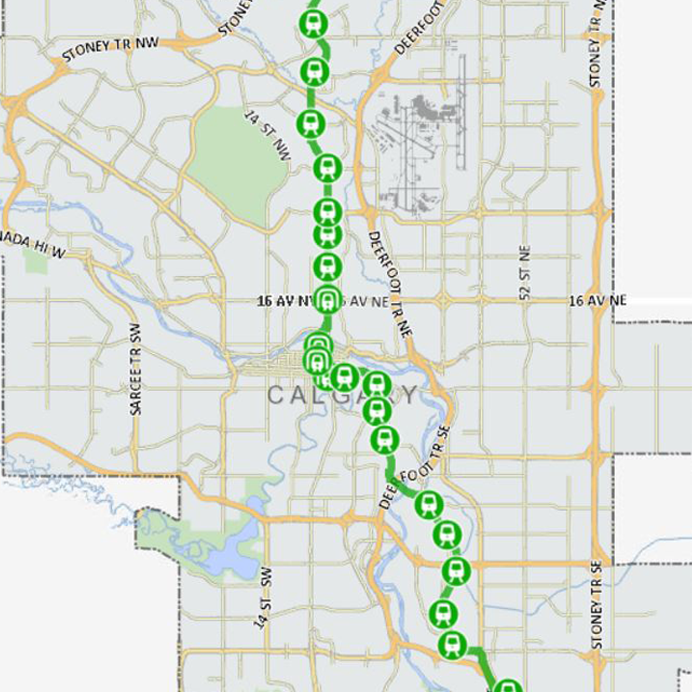
The Green line has now secured funding to commence building the $4.6 billion, 28 station, 46 km line, which includes a short subway under downtown Calgary, which will have three stations of which one is already built.
By comparison, the proposed 6 km. Broadway subway to Arbutus will cost $3.5 billion.
I wonder which set of taxpayers are getting the better deal!
Mayor Naheed Nenshi insists ‘this project’s getting built’ whether or not government changes in election
Rachel Ward · CBC News · Posted: Jan 30, 2019
Alberta Premier Rachel Notley has pledged $1.53 billion toward Calgary’s Green Line LRT project, which she calls “the most ambitious LRT project in Calgary’s history.”
The Green Line would be a massive public transit line that would stretch 46 kilometres across 28 stations from 16th Avenue North to Seton in the city’s southeast.
“This is really a big day for Calgary,” Notley said Wednesday in downtown Calgary.
She presented the funding with Mayor Naheed Nenshi and Finance Minister Joe Ceci at 10th Avenue and Macleod Trail S.E., where work is being done to prepare for Green Line construction.
The Green Line is being built in stages. This first segment, expected to begin in 2020, was previously promised
The federal government previously committed $1.53 billion to this first stage, which runs from 16th Avenue North to 126th Avenue S.E. Work is expected to begin in early 2020.
On Wednesday, the province signed an agreement with the City of Calgary that secures both promised investments, Notley said.
The first segment is scheduled to open in 2026, and is expected to cost $4.65 billion for capital construction, according to the city’s website.
Environment, community, jobs
The funding comes through Alberta’s Climate Leadership Plan, she said. Revenue from the carbon levy is being used through that plan to fund projects that reduce greenhouse gas emissions.
This project will improve transit services, which will in turn put more people on trains instead of cars, Notley said.
“The Green Line is the biggest transit project in the history of Calgary. It will transform the way Calgarians move around the city. It will generate enormous social and economic benefits for generations to come,” Notley said.
“It’s good for the economy, it’s good for the community, it’s great for the environment and it is great for everyone in Calgary.”
She also estimated the construction would generate thousands of jobs and spark private development along the line.
Nenshi said the Green Line, when complete, will double Calgary’s current light-rail network and move more than 60,000 people daily.
“Now that this agreement is signed, it means we can move forward,” the mayor said.
“We can push forward on getting this project out to market, we can push forward on creating 20,000 direct and indirect jobs in Calgary — something that’s absolutely critical in terms of economic stimulus.”
In a tweet after the funding announcement, United Conservative Party Leader Jason Kenney expressed his support for the project and suggested it would go ahead under a conservative government.
In the past, he has questioned the source of funding for the Climate Leadership projects.
“I reject the premise that the carbon tax is funding those projects,” Kenney recently told CBC.
“That is just a political accounting gimmick. There is one general revenue fund for the Province of Alberta that all revenues go into, including carbon tax revenues.”
He promised to cut the tax if elected in this year’s provincial election. Notley, in turn, said that if the carbon levy were cancelled, the Green Line would be cancelled.
According to the province’s fixed-date election legislation, the next election must be held sometime between March 1 and May 31, 2019.
At the Green Line announcement, Notley said contract language can be tightened to secure funding, should there be a change in government.
However, she said that if Kenney were elected and wanted to change the funding, he could by passing legislation.
“If they cancel the Climate Leadership Plan … the many, many programs that are funded out of it will disappear,” Notley said, before gesturing to the nearby transit construction.
“And what we will end up with is a hole in this part of Calgary as a testament to that kind of ‘forward-thinking.'”
‘Train has left the station’
Nenshi noted preparatory construction had already begun and the procurement process would get underway immediately.
“This project’s getting built. There are holes in the ground, there will be more holes in the ground,” Nenshi told reporters.
“So of course the legislature could do anything. They could dissolve the City of Calgary tomorrow if they really wanted to.… But in reality, this train has left the station.”
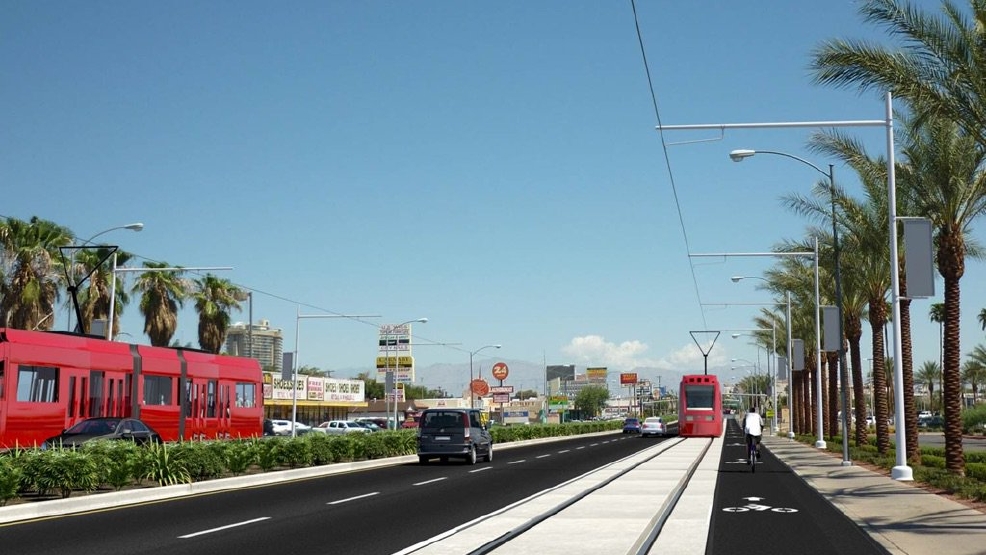
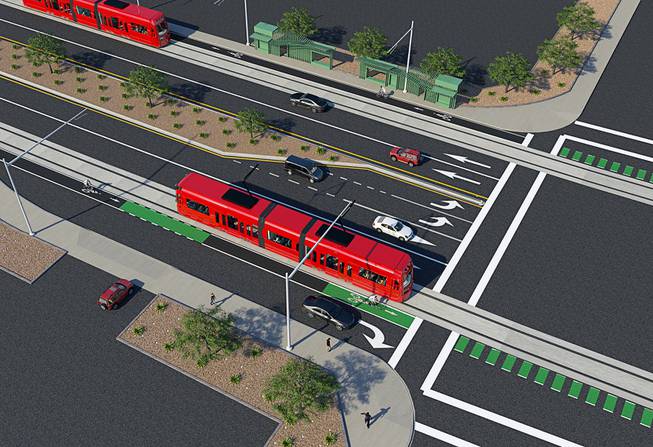 Regional Transportation CommissionA rendering of a proposed light rail system along Maryland Parkway.







/https://www.thestar.com/content/dam/thestar/news/city_hall/2019/02/01/breakdown-of-scarborough-rt-a-grim-reminder-of-what-may-be-in-store-for-transit-riders/srt.jpg)



Recent Comments