Are TransLink’s Broadway Ridership Claims Valid?
TransLink loves making high ridership claims for its pet bus and SkyTrain routes, but the trouble is, TransLink’s claims are just that, claims. We have seen this sort of nonsense on the Canada Line and now TransLink is claiming that the Evergreen Line or the unfinished portion of the Millennium Line, will carry “70,000 people a day“.
Eric Chris is a professional Engineer, who has applied science to verify TransLink’s ridership claims and has found the claims wanting.
If TransLink has been telling ‘porkies‘ about ridership numbers on Broadway, then one must assume Translink is telling ‘porkies‘ about ridership in general, especially of the Skytrain and Canada lines. Of course TransLink wants to inflate ridership on Broadway, because Translink wants to build a SkyTrain subway under Broadway instead of a surface operating LRT.
The following exert, from a recent letter written by Mr. Chris clearly demonstrates that TransLink’s Broadway ridership claims are like a conjurer’s trick at a sideshow.
Ai??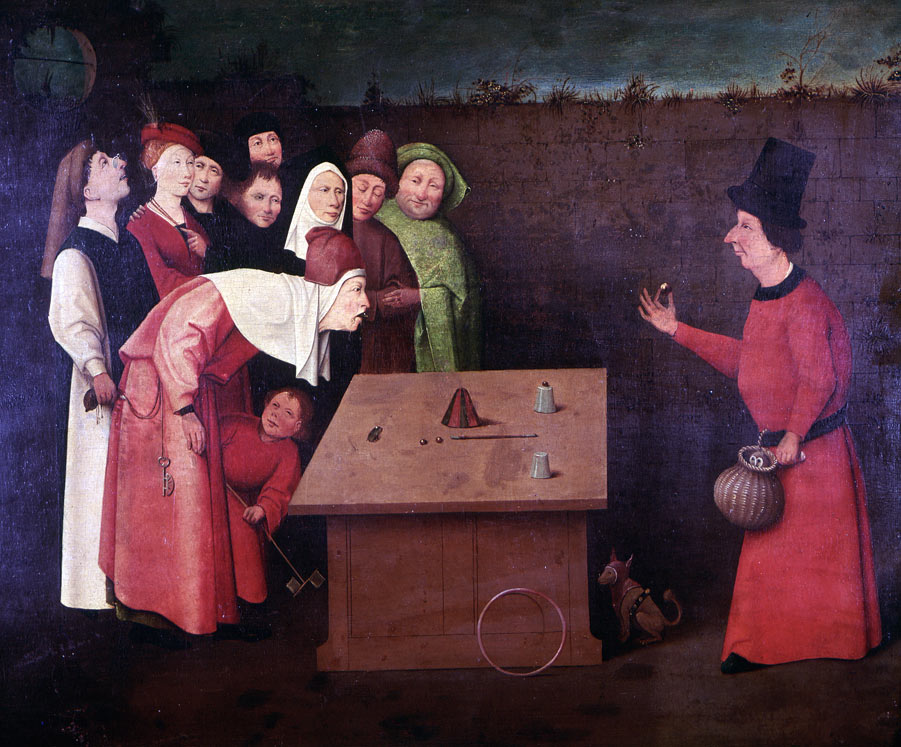
Many times TransLink has statedAi?? publicly and incorrectly that 100,000 people daily ride transit buses along the Broadway corridor.Ai?? In truth, TransLink has used the number of times that people board or alight buses along the Broadway corridor for the number of people taking buses along the Broadway corridor.Ai?? This is analogous to equating the number of times that a driver gets in or out of his or her vehicle for the number of drivers ai??i?? it is patently wrong.
It is highly improbable for 100,000 people daily to be traveling on transit buses along the Broadway corridor as the SkyTrain and subway lobby would have us believe.Ai?? Every year, UBC publishes data on the number of transit trips to and from UBC along the Broadway corridor.
In 2012, data from UBC indicate that about 15,785 people daily make 31,570 trips on the buses traveling to and from UBC along the Broadway corridor (1,490 + 4,280 + 25,800 /Ai?? = 31,570).Ai??Ai?? Daily, almost all people going to UBC on buses along the Broadway corridor travel once to UBC and then once home.Ai?? That is, people generally make two trips daily, and 15,785 people daily take buses on the round trip to and from UBC along the Broadway corridor (31,570 / 2 = 15,785):
Although other people use the transit buses along the Broadway corridor, UBC is the prime destination of transit users along the Broadway corridor and it is unlikely that another 84,215 people daily ride the buses along the Broadway corridor as TransLink asserts (100,000 ai??i?? 15,785 = 84,215).Ai?? In my calculations in 2011, as reported by TransLink, 14% of the population took transit on approximately 150 transit bus routes in all of Metro Vancouver (323,866 people in all of Metro Vancouver).Ai??
Data in my calculations are correct and the methodologies of my calculations presented are sound and correct, based on first principles.Ai?? Therefore, my calculations verified by numerous professional engineers are correct:
In contrast, without any calculations to support this claim, the SkyTrain land subway lobby’s are saying that almost one-third of all transit users in Metro Vancouver (100,000 people) travel on just four major transit bus routes along the Broadway corridor. This is next to impossible and there has no documentation to substantiated the basis for this claim that 100,000 people daily ride buses along the Broadway corridor.



Eric, your calculations are correct, your assumptions are not. Without looking up a bunch of information I can tell you less than 1/3 of the ridership goes to UBC. And yes Translink is probably talking boardings not riders since that is what pretty much all transit agencies count/report.
For the Evergreen line the 70,000 is for the whole line….all the way to Broadway. The Lougheed East section actually only accounts for 26 or 27,000 boardings.
Zweisystem replies: Certainly TransLink, with their news releases, wants the public to think that just the Evergreen Line will see 70,000 people a day using it. After several trips to observe Broadway, it seems that the B-Line express buses are filled, yet the local service, provided by trolleys are not, which seems to contradict your statement. Looking at TransLink’s timetable of bus service, it seems that traffic flows along Broadway are much less than what TransLink would have us think.
When I toured Vancouver the Transit officials told us that Broadway B-Line service was handling about 50,000 rides or about 25,000 people assuming everyone is doing roundtrips a day. The local services were supporting the rest, I used to have the ridership on my computer for the local routes but I could not fing it. Since construction has started on your Evergreen Line arguing about its ridership in my opiniopn is really pointless however, the real issure and question remains. Is the ridership on this R.O.W. going to be enough to support the choice of mode? Is a light Metro system going to save you the operating cost of running all those buses to UBC? Is the R.O.W. better served by a LRT system of some sort in terms of it’s operating costs vs. performance? Considering the costs I have seen for a light metro system like Skytrain (construction and operational costs both relatively high) versus the similar costs for some kind of LRT system and both systems relative performance I still have to go with LRT on this one.
Will LRT force a transfer yes but, there is a huge opportunity cost attached to the capital (construction) costs of the Skytrain. That is money that can’t be used for system expansion or the very large costs associated with the ongoing and upgrades of the existing Skytrain structures and keeping them from collasping in the coming years as they age.
The problem with the huge amount of above grade R.O.W. that the Skytrain has is that you are going to need $ Billions of dollars just to keep these structues from failing down. Remember the original system is now 27 years old however, the concrete structures could have been up as early as 1982 or 1983 during the system’s construction and have been aging since. When those structures hit 40-50 years you will begin to see the need for huge updating and upgrading of these structures. In Toronto the extension Bloor Danforth Subway to Sheppard instead of LRT is now been supported by Metrolinx because, the final tally of keeping the original Scarbough RT above grade R.O.W in good condition plus the conversion cost to LRT has made and the new Subway R.O.W. only slightly more expensive in the long run and the subway eliminates a transfer from LRT to the Subway at Kennedy Station. Yes that’s right, an above grade Light Metro R.O.W.upgrade is only slightly less expensive than a new below grade full scale Metro R.O.W. They also have the passenger levels to support the new subway expansion.
Zweisystem replies: All we want is honesty, yet TransLink still tries to sell the number of boardings as individual people. On the local radio the Minister of Transportation stated that 70,000 people will use the Evergreen line daily. A Vancouver councilor recently said that light rail can’t carry more than70,000 people a day! Every time TransLink or one of its surrogates speak, the BS metre runs wild.
@Rico, all the calculations are fully referenced and there are no “assumptions”. Unfortunately, the referenced table and figures don’t seem to have uploaded.
@Rico, all the calculations are fully referenced and there are no “assumptions”. Unfortunately, the referenced table does not appear to have uploaded.
Here is the link for the table showing the ridership to UBC, refer to Table 3.2:
http://planning.ubc.ca/sites/planning.ubc.ca/files/documents/transportation/reports/Fall-2012-Transportation-Status-Report-25-Mar-13.pdf
If about one-third of the riders travel to UBC on the buses along Broadway, as you say, the buses on Broadway carry fewer than 50,000 people. Thanks for the information.