Vancouver’s Olympic Streetcar Line Wins The LRTA’s Worldwide Project Of The Year Award!
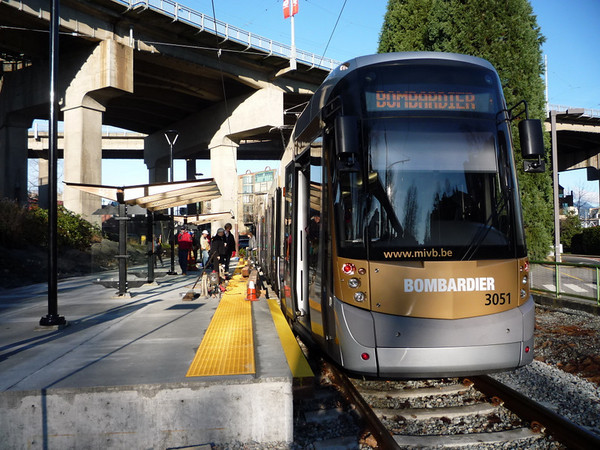
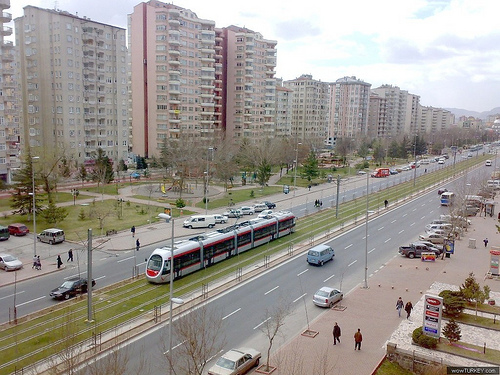
Good news everyone, Vancouver’s Olympic LineAi??has wonAi??the Light Rail Transit Association’s www.lrta.org Worldwide project of the year award. There were two winners in this category, the Olympic Line and the new LRT line in Kayseray, Turkey, which both came in on time and on budget..
Below, the now disused Olympic Line in Vancouver.
Below, theAi??award winning LRT Kayseray LRT
Rail For The Valley In The International News Again!

Rail for the Valley and the RftV/Leewood report is featured again in an international publication. In the December issue of Tramways & Urban Transit (the official magazine of the Light Rail Transit Association) is a two page feature of the RftV/Leewood report. As the magazine is distributed not only to LRTA members but internationally as well, the efforts of the RftV team will be widely read.

There is growing support in the South Fraser communities for the RftV tramtrain, but not one provincial or federal politician has endorsed the project, instead they still back multi billion dollar light-metro construction on routes that do not have the ridership to justify construction. The fallacy that we can build ourselves out of car dependency by increasing taxes and spending more on dubious transit projects is still holding sway with planning bureaucrats, who are misleading regional politicians that by spending more money on SkyTrain will solve regional transit problems. One is hoping that regional mayors will tell TransLink in the near future, that their transit plans are dated and too expensive and to go back to the drawing board. Mayors from South of the Fraser should remind TransLink of the RftV/Leewood report and that age of SkyTrain is drawing to a close.
Isn't it so BC'ish, that a transit plan that is well regarded internationally is ignored by the local powers that be, while at the same time local politicians and transit planners still want to build with the obsolete SkyTrain light-metro system that has been virtually rejected as a viable transit mode around the world.
Surrey’s main issue is simple: better transit
Surrey’s main issue is simple: better transit
Seven of every 10 people moving to the region in the next 30 years will settle south of the Fraser
BY KELLY SINOSKI, VANCOUVER SUN NOVEMBER 20, 2010
Light rail and streetcars will be the talk of Surrey over the next year, as Mayor Dianne Watts and her Surrey First slate-mates attempt to beef up transit south of the Fraser.
Transit is getting a big push from the city council, which has already made headway on most of its campaign goals after being elected in 2008, but has been hamstrung in its bid to get light rail because of TransLinkA?ai??i??ai???s financial woes.
But with Surrey finally considered a priority for transit by Metro Vancouver A?ai??i??ai??? and the focus of a rapid-transit study by TransLink A?ai??i??ai??? Watts hopes her city will soon see some improvements.
City council recently toured Portland, Ore., which has a mix of streetcars, light rail and buses, something Watts would like to see for Surrey.
A?ai??i??Ai??We have to make sure our voice is heard at the table around transportation,A?ai??i??A? Watts said. A?ai??i??Ai??We have to make sure we can manage the influx of people coming into the region.A?ai??i??A?
Another one million people are expected to move to Metro Vancouver in the next 30 years, with 70 per cent of those settling south of the Fraser. Yet despite its growing population, Surrey is still underserved when it comes to transit, councillors say.
During the 2008 election, all but one of the Surrey First team members listed transit as a priority, pointing out that while Surrey pays a hefty chunk of money to TransLink, it doesnA?ai??i??ai???t see any rewards.
Their preference is for light rail, which has an estimated cost of $27 million per kilometre versus $127 million per km for the Evergreen Line and $233 million per km for the UBC/Broadway Line.
Coun. Judy Villeneuve said following the visit to Portland, city councillors will be A?ai??i??Ai??building a case that putting light rail or streetcars in certain neighbourhoods in our city will be affordable in the long run.A?ai??i??A?
Watts said city staff is in the midst of developing an integrated transit plan, which would consider all the options. Council is also in discussions with the province and TransLink.
Her view is that light rail is better for economic development and not as unsightly as SkyTrain.
It is also a core plank of the cityA?ai??i??ai???s vision to create a safe, more connected metropolitan core where people can live, work and play. Other goals include preserving park space, getting the homeless off the street and boosting jobs and investment.
A?ai??i??Ai??ThereA?ai??i??ai???s certainly a long way to go,A?ai??i??A? Watts said, but added: A?ai??i??Ai??My concentration is on making a livable community and building the second metropolitan core of the region.A?ai??i??A?
Watts noted the city has already set up a homelessness and housing foundation, which has significantly reduced SurreyA?ai??i??ai???s homeless count by using permanent housing and not shelters. It has reduced crime and planted 200,000 trees around the city. A Build Surrey project has boosted investment, while Watts plans to lead a contingent of business people to India next year to market the city and try to drum up new business in B.C.A?ai??i??ai???s second-largest city.
A?ai??i??Ai??Ultimately, the thrust is taking the city from being planned as a suburb to becoming the next metropolitan core and an economic generator for the region,A?ai??i??A? Watts said.
A?ai??i??Ai??I donA?ai??i??ai???t particularly make election promises. It is important to lay out the vision and lay out how to get there.A?ai??i??A?
Villeneuve said Surrey is A?ai??i??Ai??right on trackA?ai??i??A? in reaching many of its goals, pointing out that instead of shelving reports like the crime reduction strategy, Surrey is acting on the recommendations. Its Build Surrey project, for instance, will result in new recreation and arts facilities across the city, while 512 homeless have been placed in permanent homes over the past two years.
Coun. Bob Bose, who doesnA?ai??i??ai???t belong to the Surrey First slate, said the Surrey First slate has been A?ai??i??Ai??very cohesiveA?ai??i??A? and canA?ai??i??ai???t be faulted for not achieving its plans for light rail.
A?ai??i??Ai??Transit is a big challenge,A?ai??i??A? he said. A?ai??i??Ai??The question is whether theyA?ai??i??ai???re making the best use of their resources.A?ai??i??A?Bose said while heA?ai??i??ai???s a big supporter of moving City Hall to Whalley, council could have spared the expense and put some of the $150 million cost into streetcars or other transit in neighbouring communities.
He also complained that city council was buying and developing land in Campbell Heights to pay for the new City hall facility.
ksinoski@vancouversun.com
Ai??Ai?? Copyright (c) The Vancouver Sun
via Surrey’s main issue is simple: better transit.
Surrey’s main issue is simple: better transit – From the Vancouver Sun
Kudos’ for Surrey mayor Diane Watts to think “out of the SkyTrain box” and think light rail, but to do so requires hiring real light rail experts to assist local planners and engineers in planning a usable and efficient LRT/tram network in Surrey.
Our local transportation planners still do not get it that the difference between a streetcar and light rail is the quality of rights-of-way, which a streetcar operates on-street, with little or no priority at intersections and LRT operates on an exclusive (reserved)Ai??R-O-W, which could be on a grassed median or an HOV lane (with rails) on a street with full priority signaling at intersections.
As recounted many times on this blog, the advantages of LRT/streetcar far outweigh any advantage by SkyTrain and this is what makes the SkyTrain lobby so nervous; if a stand alone light rail/streetcar operation opens in Surrey, then there will be an equal (oranges on oranges) comparison between the two modes. If a direct coma prison between SkyTrain and LRT happens in the region, regional politicians and bureaucrats will understand in short order why no other city in North America and Europe build with or rely on SkyTrain for urban transit. Modern LRT operating in surrey would show 30 years of professional misconduct in the regions transportation planning and the consequences of such planning.
 [
[
Ai??Light rail is simply a streetcar which operates on a reserved rights-of-way with priority signaling at intersections
Surrey’s main issue is simple: better transit
By Kelly Sinoski, Vancouver Sun
Light rail and streetcars will be the talk of Surrey over the next year, as Mayor Dianne Watts and her Surrey First slate-mates attempt to beef up transit south of the Fraser.
Transit is getting a big push from the city council, which has already made headway on most of its campaign goals after being elected in 2008, but has been hamstrung in its bid to get light rail because of TransLinkai??i??s financial woes.
But with Surrey finally considered a priority for transit by Metro Vancouver ai??i?? and the focus of a rapid-transit study by TransLink ai??i?? Watts hopes her city will soon see some improvements.
City council recently toured Portland, Ore., which has a mix of streetcars, light rail and buses, something Watts would like to see for Surrey.
ai???We have to make sure our voice is heard at the table around transportation,ai??? Watts said. ai???We have to make sure we can manage the influx of people coming into the region.ai???
Another one million people are expected to move to Metro Vancouver in the next 30 years, with 70 per cent of those settling south of the Fraser. Yet despite its growing population, Surrey is still underserved when it comes to transit, councillors say.
During the 2008 election, all but one of the Surrey First team members listed transit as a priority, pointing out that while Surrey pays a hefty chunk of money to TransLink, it doesnai??i??t see any rewards.
Their preference is for light rail, which has an estimated cost of $27 million per kilometre versus $127 million per km for the Evergreen Line and $233 million per km for the UBC/Broadway Line.
Coun. Judy Villeneuve said following the visit to Portland, city councillors will be ai???building a case that putting light rail or streetcars in certain neighbourhoods in our city will be affordable in the long run.ai???
Watts said city staff is in the midst of developing an integrated transit plan, which would consider all the options. Council is also in discussions with the province and TransLink.
Her view is that light rail is better for economic development and not as unsightly as SkyTrain.
It is also a core plank of the cityai??i??s vision to create a safe, more connected metropolitan core where people can live, work and play. Other goals include preserving park space, getting the homeless off the street and boosting jobs and investment.
ai???Thereai??i??s certainly a long way to go,ai??? Watts said, but added: ai???My concentration is on making a livable community and building the second metropolitan core of the region.ai???
Watts noted the city has already set up a homelessness and housing foundation, which has significantly reduced Surreyai??i??s homeless count by using permanent housing and not shelters. It has reduced crime and planted 200,000 trees around the city. A Build Surrey project has boosted investment, while Watts plans to lead a contingent of business people to India next year to market the city and try to drum up new business in B.C.ai??i??s second-largest city.
ai???Ultimately, the thrust is taking the city from being planned as a suburb to becoming the next metropolitan core and an economic generator for the region,ai??? Watts said.
ai???I donai??i??t particularly make election promises. It is important to lay out the vision and lay out how to get there.ai???
Villeneuve said Surrey is ai???right on trackai??? in reaching many of its goals, pointing out that instead of shelving reports like the crime reduction strategy, Surrey is acting on the recommendations. Its Build Surrey project, for instance, will result in new recreation and arts facilities across the city, while 512 homeless have been placed in permanent homes over the past two years.
Coun. Bob Bose, who doesnai??i??t belong to the Surrey First slate, said the Surrey First slate has been ai???very cohesiveai??? and canai??i??t be faulted for not achieving its plans for light rail.
ai???Transit is a big challenge,ai??? he said. ai???The question is whether theyai??i??re making the best use of their resources.ai???Bose said while heai??i??s a big supporter of moving City Hall to Whalley, council could have spared the expense and put some of the $150 million cost into streetcars or other transit in neighbouring communities.
He also complained that city council was buying and developing land in Campbell Heights to pay for the new City hall facility.
http://www.vancouversun.com/news/Surrey+main+issue+simple+better+transit/3858758/story.html
Tramway Turnkey Solutions

Alstom Citidas Dualis Tram-Train
Combining the best of trains and tramways
The challenge
The urban fabric now extends well beyond the city centre, with regional and urban networks tending to merge. Users’ needs are changing. They want to be able to move with ease from the city centre to neighbouring towns without having to change their transportation mode.
http://www.alstom.com/transport/products-and-services/rolling-stock/tram-trains-citadis-dualis-and-regio-citadis/
Turnkey Tramway Solutions
Your Project Delivered
http://www.alstom.com/WorkArea/DownloadAsset.aspx?id=8589935871
For new and established rail network owners and operators looking
to simplify the tendering process, shrink the overall schedule and
mitigate the risks associated with new systems projects, signing a
single global contract can make good sense. For one thing, this ai???all-inai???
turnkey approach reduces the risks of extended tender negotiations and
interface management between myriad suppliers and sub-contractors.
Uneven project management typically leads to scheduling delays,
cost overruns and greater disturbance of local life. A global contract
awarded to a single supplier – one that has design and manufacturing
capabilities, in house testing and, above all, systems engineering and
project management expertise – minimizes incompatibility issues
between critical subsystems (such as signaling, track and rolling
stock). This makes commissioning surprise-free and allows a smooth
introduction of the new, high performance transport system on-time and to-cost.
A radical solution to delivering the Fraser Valley – Chilliwack to Surrey Interurban Tram-Train
Ai??

Ai??Ai??Ai??Ai??Ai??Ai??
Ai??
Streetcars – The missing Link Symposium
The following is for the links for the speaker's presentations and the audio for the townhall meeting. Other that not one of the presenters could define what a streetcar is, the following should be of some value. For Zweisystem's view of the streetcar symposium http://www.railforthevalley.com/latest-news/zweisystem/the-streetcar-symposium-translink-doesnt-get-it/
Streetcars: The Missing Link?
29 September 2010
Renaissance Vancouver Hotel Harbourside
Vancouver BC
The Streetcars: The Missing Link? symposium brought together over 150 professionals, academics, advocacy groups, and politicians to learn about and discuss the potential role of streetcar networks in shaping Vancouver and other Metro Vancouver communities through mobility, accessibility, and system efficiency. Presentation topics ranged from historical context discussions, to the links between urban design and modal integration, to specific case studies in Vancouver and abroad.
The event was hosted by Dr. Lawrence Frank, Bombardier Chair in Sustainable Transportation at the University of British Columbia. Support for the event was provided by Bombardier Transport and Stacy and Witbeck, Inc.
Presentations from symposium speakers are available for download below. Audio and video will be available soon.
Keynote Presentation
Mr. Jack Collins
Vice President, Project Implementation, Metrolinx
"Streetcars: The Missing Link?"
Session 1: Vancouver’s Historical Development Around Streetcars and Future Growth Implications
Gordon Price
Director, The City Program, Simon Fraser University
"Historical Context"
Michael J. Shiffer
Vice-President, Planning Strategy & Technology, TransLink
"Mass Transit Modes: How They Fit"
Christina DeMarco
Division Manager, Regional Development, Metro Vancouver
"Are Streetcars a Missing Link in Metro Vancouver? Exploring the Question from a Place-making and Regional Planning Perspective"
Session 2: The Olympic Line Experience
Dale Bracewell
Director, Olympic Transportation Branch, City of Vancouver
"The Olympic Line Experience: A Demonstration of the Downtown Streetcar"
Silas Archambault
School of Community & Regional Planning, University of British Columbia
"Lessons from the Olympic Line"
Lunch Keynote
David Goldberg
Communications Director for Transportation for America and Smart Growth America
“Resurgence in U.S. Streetcar Systems”
Session 3: Urban Design and Modal Integration – Lessons From Other Places
Lawrence D. Frank
Associate Professor and J. Armand Bombardier Chair in Sustainable Transportation,
University of British Columbia
"Benefits of Transit and How It Can Shape Our Cities"
Patrick Condon
Professor and James Taylor Chair in Landscape Architect and Liveable Environments,
University of British Columbia
"Streetcars Elsewhere"
Lon LaClaire
Strategic Transportation Planning Engineer, City of Vancouver
"Mode Integration, Urban Design and Travel Demand"
Session 4: Streetcars – A Hosted Town Hall Meeting
Panelists from the day's session join each other on stage to respond to audience questions and debate and discuss the pros and cons of streetcars and their role within a system of transit solutions in the Lower Mainland. Download the audio here.
South Delta Leader – LETTERA?ai??i??ai???Light rail the one
LETTERA?ai??i??ai???Light rail the one
Published: November 18, 2010 11:00 AM
Updated: November 18, 2010 11:18 AM
The ongoing debate about TransLink, taxes, bridge tolls, and transit will not be resolved if current planning practices continue.
The problem is funding and when TransLink continues to plan for A?ai??i??Ai??pie in the skyA?ai??i??A? SkyTrain or light metro, costing over $125 million/km to build ($250 million/km for subways), instead of much cheaper light rail, our current transit funding gridlock will continue.
Provincial politicians like SkyTrain because they like to cut ribbons for glitzy new metro systems and TransLink likes SkyTrain because bureaucrats can hire scores of planners, engineers, spin doctors needed for light metro and everyone knows, a successful bureaucrat has hundreds of subordinates to help push paper.
Rail for the Valley and Leewood Projects have offered TransLink a golden opportunity to think out of the SkyTrain box with their recently released report, which shows that a basic TramTrain service could be had for under $6 million/km or put another way, at least $119 million/km cheaper than the TransLink SkyTrain product!
TransLink has ignored the report and now carries on planning for massively expensive subways and metros for Vancouver. The time has come to get blunt with TransLink, either plan for affordable transit for the region or face the South Fraser Valley municipalities seceding from this Kafka-ish bureaucracy.
Malcolm Johnston,
Rail for the Valley/Light Rail Committee
via South Delta Leader – LETTERA?ai??i??ai???Light rail the one.
International Comparisons of Urban Light Rail Systems
Three references, on the subject of International comparisons of Light Rail systems are posted for information purposes and education.
1) The roles of integrated ticketing, pedestrianisation and population density
http://www.raumplanung.uni-dortmund.de/rwp/ersa2002/cd-rom/papers/167.pdf
2) Light Rail Transit encyclopedia.
http://www.vtpi.org/tdm/tdm121.htm
3) Modern Light Rail as a transport solution for large cities. http://www.kaupunkiliikenne.net/Kirja/Modern%20Light%20Rail%20basics.pdf
Adios TransLink?

Recent events are pointing that TransLink’s time may soonAi??come to an endAi??and a new regional (or two) transit authority(s) may come into being.
The trouble with funding for the $1.4 billion Evergreen Line and TransLink’s strict adherence with SkyTrain and or light-metro is highlighting TransLink’s endemic financial woes. TransLink is getting a rough ride from regional mayors withAi??their almost unanimous rejection of increasing property taxes to fund transit, yet TransLink continues to plan for gold plated metro lines in Surrey and Vancouver, rejecting any call to live within its means.
The provincial government is in totalAi??chaos with the announced resignation of premier Campbell over the HST andAi??will be loathe to force new taxes on the region to fund transit, with a loomingAi??leadership convection and a possible provincial election in the next 12 months. The taxpayer is financially exhausted, something which well paid regional bureaucrats fail toAi??comprehend (which lead to the HST revolt) and announcing new transit taxes is just not on the menu at this time. Calls for road pricing and bridge tolls will also suffer the same fate.
Rail for the Valley has offered a partial solution with the RftV/Leewood TramTrain report, which clearly shows that much cheaper TramTrain can be built in the region, providing a much larger ‘rail’ network for attracting the motorist from the car. For the cost of the Evergreen Line SkyTrain we can install a ‘full build’ RftV/Leewood TramTrain (Vancouver/Richmond to Rosedale), with enough money left over for a Vancouver to maple Ridge TramTrain! TransLink continues to think only in a SkyTrain box and continues to ignore an affordableAi??TramTrain solution!
More bad financial news may come TransLink’s way. Despite much hype and hoopla about the $2.5 billion plus Canada Line metro, there is no evidence that it has attracted the all important driver from the car. In fact, the opposite is happening and the forced transfer from South of the Fraser bus customers onto the RAV/Metro is deterring ridership. What new ridership TransLink is claiming is from:
- Elderly gamblers going to River Rock Casino.
- Elderly Asians shopping in the manyAi??Asian stores and mallsAi??in Richmond.
- Employees at YVR who park in the spacious parking lots on Sea Island and travel the short distance,Ai??free, to work on RAV.
- U-Pass college and university students, who are making multiple trips per day (up to 8 boardings) on $1.00 a day tickets.
What is hurting TransLink’s bottom line is that the previous categories of new riders using the RAV/Canada line are either traveling on discounted fares or riding free, which translates into higher fees (taxes)Ai??being paid to the concessionaire. Laila Yuile’s diligent research has shown that ‘shadow tolls’ are being paid on the Sea to Sky highwayAi?? http://lailayuile.wordpress.com/2010/10/31/shadow-tolls-on-sea-to-sly-highway-the-william-r-bennett-bridgeand-the-bc-rail-connection/Ai??Ai?? and one wonders what TranslinkAi??and the provincial government is paying theAi??concessionaireAi??to operate the RAV/Canada Line?
The question that regional politicians must ask is “As Translink just does not have the will to live within its means and its selfserving doomsday senerios to scare politicians into squeeze the taxpayer for Ai??more money must end.Ai??Why not get rid ofAi??TransLink altogether and start anew?” The RftV/Leewood report has shown that transit planning by an outside transit consultant results in much more affordable transit options; so why then do we need such a ponderous planning bureacracy, well past its ‘best by date’Ai??that still plans for obsolete light-metro and rejects cheaper, yet just as efficent transit options, such as light rail?
If regional politicians do some soul searching on the transit/Translink issue, they just might come to the conclusion to say adiA?s Translink, you have over stayed your welcome.
Two upcoming events in Langley
Hosted by South Fraser On Trax:
On Saturday, November 20th, we will be hosting our 2nd Annual Ai??Ai??Sustainability onAi??Ai??the Edge event. Our keynote speaker this year is Time Ai??Ai??Magazine’s A?ai??i??Ai??One of the 6Ai??Ai??Most Important Civic Innovators in the WorldA?ai??i??A? Ai??Ai??Dan Burden. He will be speakingAi??Ai??on A?ai??i??Ai??How we got into this mess and our Ai??Ai??way outA?ai??i??A? along with other sustainabilityAi??Ai??minded developers and local Ai??Ai??government staff.
Sustainability on the Edge,Ai??Ai??Saturday, November 20, 2010,Ai??Ai??9:00am A?ai??i??ai??? Noon,Ai??Ai??4th Floor – Township of Langley Civic Facility,Ai??Ai??20338 65 Avenue
On Saturday, November 27th, our Living Green, Saving Green workshop kicks-off.Ai??Ai??Learn from David Suzuki FoundationA?ai??i??ai???s Queen of Green Lindsay Ai??Ai??Coulter and SFU’sAi??Ai??The City Program Director Gordon Price. Also, BC Hydro will talk on energyAi??Ai??saving in the home Ai??Ai??and provide help with accessing various energy savingAi??Ai??rebates and grants Ai??Ai??available.
Living Green, Saving Green,Ai??Ai??Saturday, November 27, 2010,Ai??Ai??1:00pm A?ai??i??ai??? 3:00pm,Ai??Ai??Douglas Recreation Centre,Ai??Ai??20550 Douglas Crescent



Recent Comments