Zwei has been wondering why all the rah-rah SkyTrain posts on You Tube and it seems the answer is, ridership is collapsing on this gold plated transit system.
This is very bad news because falling ridership equates to reduced service and reduced service translates to fewer buses and higher fares.
Then there is the now over $17 billion, 21.7 expansion program for the Expo and Millennium Lines and the rasion d’etre for expanding the SkyTrain light-metro system is steadily evaporating and it is time for the good old;
Repeat a SkyTrain lie often enough and the people will come to believe it!
The problem with transit in Metro Vancouver is that demographic change, especially the winding down of the “Boomer” generation was never taken seriously with planners. As well, the light-metro system depends on bus riders to fill it cars ar over 80% of SkyTrain’s ridership first take a bus.
Secret agreements and just plain dated planning, which continues at the university level, has created an ossified transit system, with zero flexibility to deal with future changes.
With the Mayor’;s council on Transportation, unwilling or unable to think 20 minutes into the future, with transit investment tied to election dates, rather than moving people, there is little hope for improvement. It seems despite the hype and hoopla about climate change and global warming, our regional and provincial politcans have condemend Metro Vancouver to a “rubber on asphalt future”.
All the YouTube propaganda will not save TRANSLINK’S SINKING SHIP!
Transit ridership is down and up: Here is the April 2026 Statistics
The last link provides monthly statistics by city or metro area.The following six regions have increased from 2.8 % to 22 %Leduc, Longueuil, Halifax, Greater Victoria ( +7.7 % ), Greater Toronto Metrolinx, Yellowknife ( +22 % )
Metro Vancouver – TransLink recorded a loss of 900,000 trips or 4.5 % decrease.( April 2026 vs April 2025 )
For the last 3 months( Feb. March, April 2026 ) TransLink ridership has been down compared to 2025. by 2.8%55.
6914 M vs 57.342 M in 2025
Transit ridership per capita Metro Vancouver 2019 – 100 and 2025 – 75
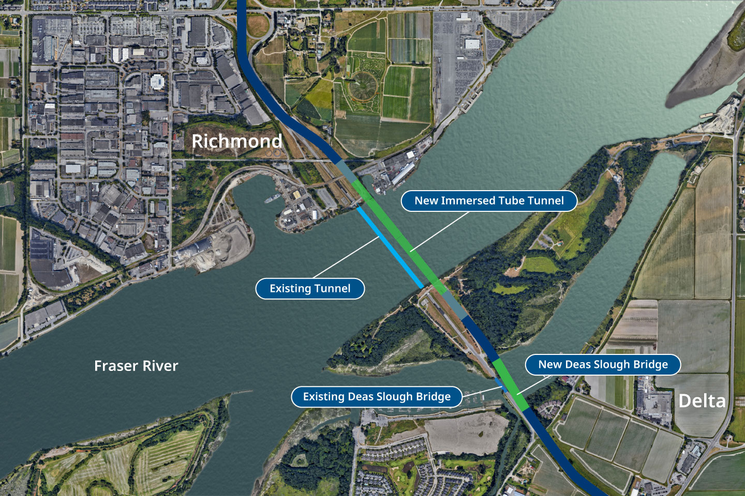
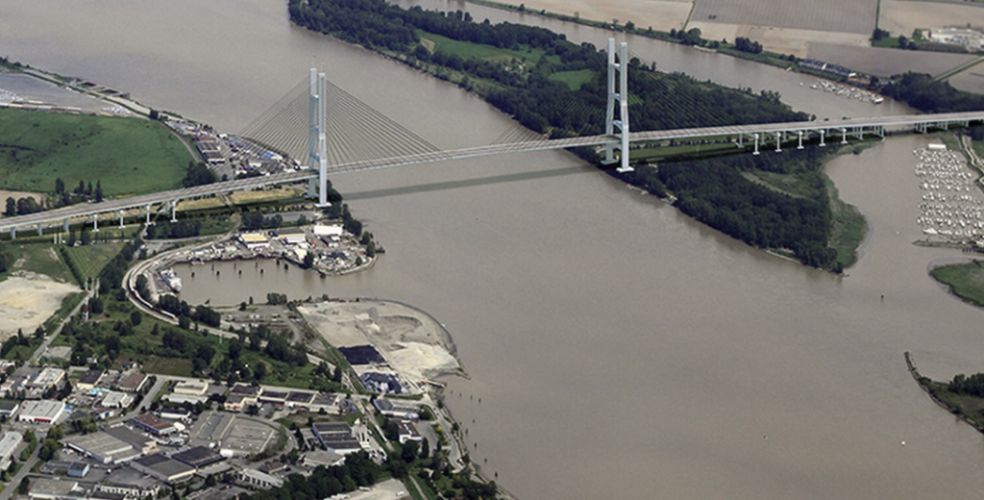
The Massey tunnel is back in the news and the non stop fake news and alternate facts brigade are hard at it trying to rewrite history.
MLA Ian Paton desperately continues trying to sell alternative facts and myth to the taxpayer and Delta Councillor a and mayoralty hopeful, Dylan Kruger, who has never met a grievance he didn’t like, continue their political song and dance.
Zwei would like to remind everyone that in 2017, CKNW radio reported that the cost for the bridge has risen to $8 billion ($10 billion in today’s brass), which was one of the reasons to build the tunnel.
The probable reason why the NDP put a stop to things is that the current SkyTrain expansion plan is now costing $17 billion and rising, to build 21.7 km of light metro and with staunch MAGA Maple conservatives as local MLA’s, there would be less politcal damage with the cancelled tunnel, than a stoppage in SkyTrain construction.
The following are two RftV post from 2017 and 2018, to remind everyone the incompetence and dishonesty behind this now reported $12 billion project.
As on tunnel engineer told me; “the best solution today is just drop another four lane tube next to the present tunnel and tile it this time and in a couple of years no one will know”.
Massey Tunnel Shit Show
Posted by zweisystem on Saturday, November 2, 2019
Blunt title but it is time to be blunt, regional transit planning is a “shit show”.
Shit show: Noun, vulgar slang, US origin – a situation or event marked by chaos or controversy.
This aptly describes our regional transit planning, where politicians at all levels of government promote their pet transit theories and projects, using an extremely dishonest bureaucracy to carry out their wishes.
This costs money, an awful lot of money; this wastes timed, an awful lot of precious time; this costs planning paralysis and in the end politicians approve doing the same thing over again, hoping for different results.
“The definition of insanity is doing the same thing over and over again, but expecting different results.” Albert Einstein, Dec 13, 2017.
The Massey tunnel replacement project must stand out as a grand example of political manipulation; yellow journalism by the mainstream media; and a complete lack of any coherent regional transportation plan.
The Massey Tunnel does not need replacing, it is perfectly safe.
What is needed: A new bridge/tunnel crossing of the South Arm, near the vicinity 80th Ave in North Delta and a second bridge/tunnel crossing, of the North Arm, adjacent to the CN rail bridge, from Richmond to South Burnaby. This entails new highway construction, which the regional politicians are afraid to contemplate.
All the new 8 lane bridge or tunnel do, without a second crossing of the North Arm of the Fraser, is to create a parking lot on Highway 99 in Richmond because of the restricted capacity of the Laing, Oak St. Knight St., and Queensborough bridges!
There has been no capacity increase for crossings of the North Arm of the Fraser River since 1975!
Until a comprehensive transportation plan is tabled and a rational regional strategy for transportation is obtained, any new bridge will create a “shit show” for traffic.
Transit advocates say any plan for replacing the Massey Tunnel should be assessed in light of climate concerns
A Delta councillor says a seismically safe, efficient alternative is urgently needed for the crucial economic gateway
DELTA (NEWS 1130) — Transit advocates are citing climate concerns and calling for plans for the George Massey crossing to be studied further, but a Delta politician says enough is enough.
Abundant Transit Vancouver penned an open letter asking for the plan for replacing the crossing to be sent to the Regional District’s Climate Action Committee for further scrutiny.
Coun. Dylan Kruger is a member of that committee and says further study is not necessary and a new crossing is urgently needed.
“They are arguing that there should be no replacement for the George Massey Tunnel because we should not be building for car infrastructure, we should only be building for transit,” he says. “I’m fully in support of building infrastructure to get people out of their cars but there’s a fundamental concept people have to understand when it comes to the Massey tunnel: the Massey Tunnel is the economic gateway into Canada.”
Kruger says commuters aren’t the only ones who rely on the tunnel.
“At the end of the day, container trucks can’t take transit,” he explains. “We still need to build so we can get goods from point A to point B, in this region and in this country. So the notion that we should be building only for transit infrastructure here, I think really does not take into account the economic ramifications.”
Posted by zweisystem on Tuesday, September 12, 2017
The Massey Tunnel Bridge replacement project is again in the news, as the massively expensive replacement bridge for the Massey tunnel has been mothballed.
Now, the CBC has found hugely expensive financial irregularities with the new Port Mann Bridge, and the air of political corruption hangs heavily in the air.
Was the proposed mega bridge to replace he Massey Tunnel nothing more than Liberal corruption on steroids?
Real reason for span disappears but Delta continues campaign
Delta Optimist
August 30, 2017
Editor:
Delta’s propaganda campaign to garner support for the proposed mega bridge replacing the perfectly safe George Massey Tunnel is in full swing.
Delta’s Politics and Misinformation Must Not Stop. The Bridge campaign is repugnant due to its long list of Trump style fake news and alternative facts.
A proper study for replacing the tunnel with a bridge would take a year or more to do. Delta’s “back of an envelope” review took less than a month to do and is poorly done as a result.
The replacement bridge was never about traffic congestion, rather it was to allow Panama-max tankers and colliers up the Fraser to Surrey Fraser Docks and no plans were made to reduce traffic at the Oak Street Bridge and Knight Street Bridge choke points. If anything, the proposed new bridge would create massive gridlock in Richmond.
As the real reasons for the bridge evaporated, Mayor Lois Jackson doubled down with another “back of an envelope” plan by hijacking the Rail for the Valley’s Leewood Study, for a Vancouver/Richmond to Chilliwack TramTrain service, for her pro-bridge propaganda campaign.
The study released in 2010 took over a year to prepare by real transportation professionals, providing a cost effective Vancouver/Richmond to Chilliwack passenger rail, using TramTrain service for the Lower Mainland.
The study never planned for LRT service across the proposed bridge, nor would a meandering rail line using the proposed bridge be viable.
Unless there was direct service to Vancouver, any rail service using the bridge (which will not have rail built in) would fail miserably.
Instead of a ruinously expensive bridge, the mayor should concern herself with Surrey’s $2.5-billion LRT, where two-thirds of the cost is being spent on roads and utilities for favoured land developers and speculators along the LRT route and the now $3 billion Broadway SkyTrain subway, which the route today has a quarter of traffic flows, needed to justify subway construction. Both are financial time bombs.
The mayor should support practical and cost-effective transit and transportation solutions and not massively expensive vanity projects that will do little real good except pauper the taxpayer.
The following video was brought to my attention and it gives a fairly honest argument about the SkyTrain versus Light Rail.
The big problem for Vancouver has been 45 years of SkyTrain propaganda coupled with condescending and fake news about Light Rail. Those who spoke against SkyTrain were quietly sent to Coventry and let go or for the biggest sins of saying SkyTrain is just plain wrong, get fired.
University professors who spoke positively about light rail were given the “Star Chamber” treatment.
In today’s world, legal or administrative bodies with strict, arbitrary rulings, no due process rights to those accused, and secretive proceedings called “star chambers”.
Even good old Zwei has been blacklisted from Post Media, the Tyee, CBC, CKNW, and most major news stations because they couldn’t cope with the truth about SkyTrain. The last time Zwei was threatened with a lawsuit for libel, but I mentioned a few names that had offered their services in defense, it all went away.
It seems they could not cope with the legal maxim that the defense against libel is the truth.
What is of no surprise for me is the general ignorance of public transport and transport mode, with many echoing old cliches about light rail and light metro. Yet, the one issue no one dares to address is cost, yet these are the same people who will decry the cost of every bean, but when it comes to SkyTrain they hide behind dated rhetoric and more.
The simple fact is, the current $16 billion plus, 21.7 km extensions to the Expo and millennium Lines will be the last simply because by the time funding is secured for the UBC extension, sometime after 2040, there will be no more MALM (SkyTrain) vehicles available and no manufacturers willing to design new vehicles without being paid up front, at a cost of over $200 million, before the first car rolls off the assembly line.
NEWS FLASH! The latest cost for the Expo line extension to Langley is now around $7 billion and the Operations and Maintenance Centre #5 (OMC#5) needed for the 5 car Innovia 300 trains is an added $1 billion.
Golly Gee Whiz Batman, how much light rail could we build for that?
As Canada flounders, with BC in particular, with any sort of passenger rail revival, Europe is leading the way with the current passenger rail renaissance.
HST, on the Toronto, Ottawa, Montreal route is being built more for politcal prestige, than anything else.
If any government is truly interested in mitigating the effects of Global Warming and climate change, rail must be part of the solution, but in Canada it is not.
In British Columbia, there are four passenger rail projects begging for investment:
Rail for the Valley’s Marpole to Chilliwack regional railway
The E&N rehab to a viable regional railway
Restoration of a public passenger railway on BC Rail from Vancouver to Prince George and beyond
.A Kamloops to Kelowna regional railway.
The cost of doing the above is about the same or less than the current cost to extend the Expo and Millennium light-metro lines in Metro Vancouver!
Regional passenger rail service is vital to bring quality transportation accessibility, at an affordable price, to areas with zero passenger service of any kind!
One of Europe’s longest train routes will launch next month, connecting multiple major cities
Spanning more than 1,300km, the journey will reportedly take 18 hours to get from Poland to Germany
Written by Liv KellyTravel WriterFriday 29 May 2026
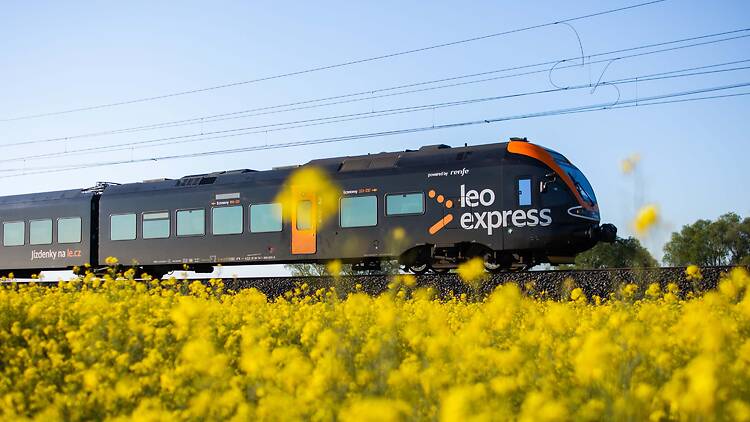
Photograph: Leo Express | Leo Express train in spring
The European rail boom continues, and a symbolic new route is the latest addition to the continent’s ever-expanding train network.
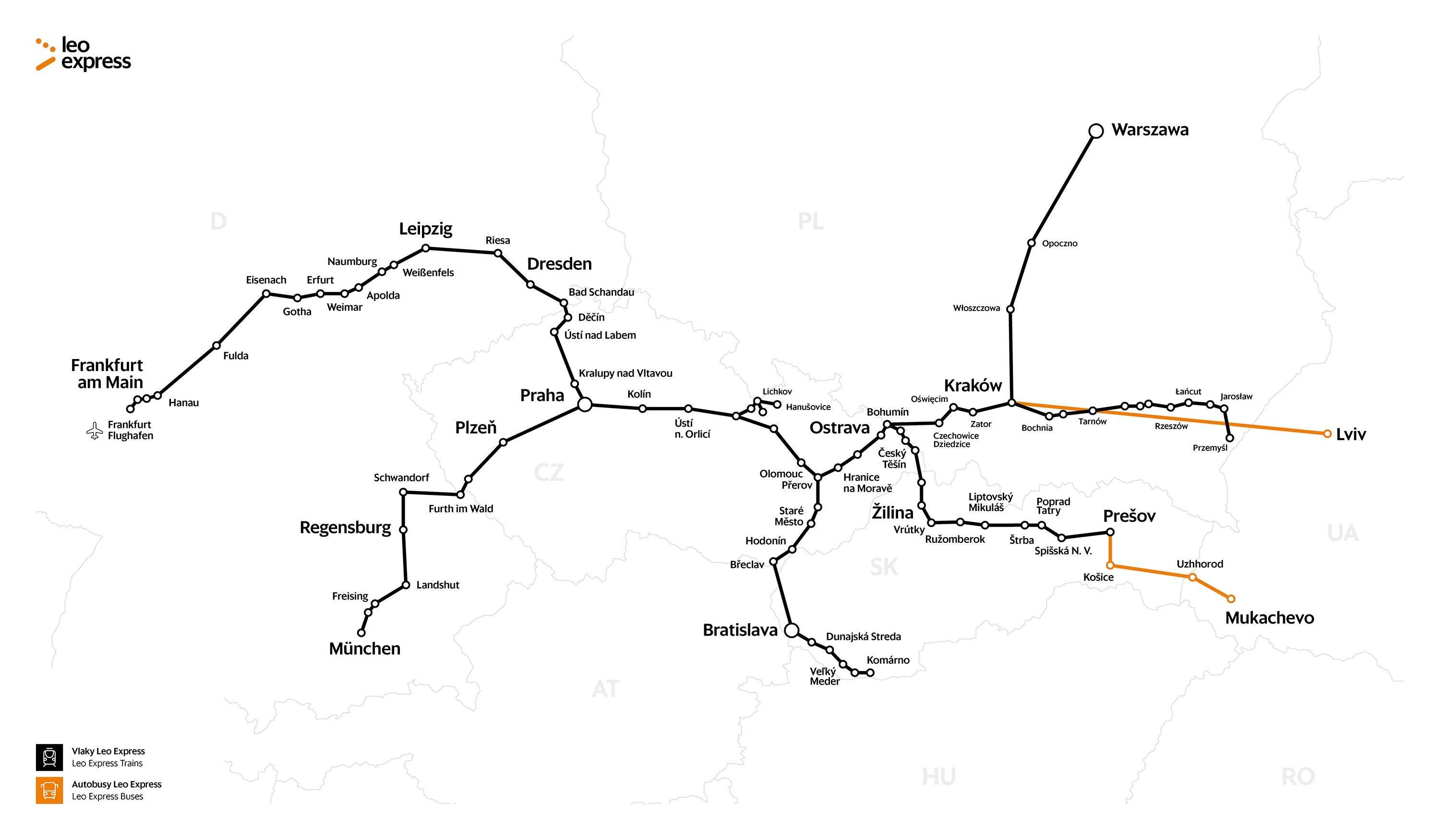
Leo Express, a Czech rail operator, is set to launch a brand-new route from Poland to Germany (via Czechia) on June 25.
Starting in the eastern Polish city of Przemyśl, the service will stop at Kraków, Prague, Dresden and Leipzig before concluding in Frankfurt.
Demand for rail travel to and through Poland has been on the rise over the last couple of years, with record levels of passengers on the country’s railways. In fact, Przemyśl specifically has become a primary hub for Ukrainian travellers since the beginning of Russia’s war, as the city lies just 10km from the border.
In 2025, the first direct service between Poland and Croatia was inaugurated, and it also has connections to Germany, Czechia, Slovakia, Hungary, Lithuania and Austria. However, spanning 1,300km, this will reportedly be one of the longest single rail journeys in Europe, and it’s set to take around 18 hours to complete.
Departures from Przemyśl will leave the station at 1.31pm and arrive the following morning in Frankfurt at 7.53am. In the reverse direction, services will leave at 8.27am and arrive at the slightly impractical time of 2.23am.
With all that time to kill, passengers will have access to WiFi, power sockets, air conditioning and on-board catering. Here’s a map of the route.
Image: Leo ExpressLeo Express’s rail network
When initially announcing the route in December, CEO of the operator Peter Köhler said: ‘Leo Express is breaking down the symbolic rail barrier between eastern and western Europe and connecting key European centres with the gateway to Ukraine via a direct route that has been lacking until now,’ according to Notes from Poland.
We don’t yet know how much tickets will cost, but keep an eye on the Leo Express website for announcements about when you’ll be able to book.
Translink, Metro Vancouver, and the provincial NDP, especially Minister of Transportation, Mike Farnsworth, are “flooding the zone”, with the Broadway subway, “nearing completion“, “on time and on budget“, “with change how people commute“, and the goody, “the line will be soon extended“.
Why all the hype and hoopla?
Like all big ticket items, politcans want the biggest bang for their electoral buck. Subways have been presented as the ultimate form of public transit, which will solve the issue of overcrowding and traffic congestion. The extra costs and bankrupt businesses along its route are worth it.
A little bit of pain, is worth the gain in the NDP’s election strategy.
But, what about the costs?
The following was posted in 2020 and is still relevant today.
Both the Broadway subway and the Expo Line extension to Langley are based on inaccurate and manipulated assumptions!
A general note: According to Thales news release in 2022, regarding the $1.47 billion resignalling of the Expo and millennium Lines:
When the programme is fully implemented, the Expo Line will be able to accommodate 17,500 passengers per hour per direction, and the Millennium Line will be able to handle 7500 passengers per hour per direction, a 32% and 96% increase respectively.
Broadway Subway: Based On Inaccurate And Manipulated Assumptions
Posted by zweisystem on Thursday, November 19, 2020
Haveacow is an avatar of a very knowledgeable chap from back east who works with public transport.
In the arcane world of transit in Canada, speaking one’s mind or even being truthful can send one to Coventry.
To send someone to Coventry is an English idiom meaning to deliberately ostracize someone. Typically, this is done by not talking to them, avoiding their company, and acting as if they no longer exist. Victims are treated as though they are completely invisible and inaudible.
Mr. Cow’s insights and vast experience makes him a person to be listened too and indeed, Zwei does.
When one reads the following, which is a comment he made on a previous post, the first thing that comes to mind is that Broadway is not the busiest transit corridor in Canada or the USA. Far from it, it is rather average.
Of course this manipulation of the facts, repeated over and over again so the public tended to believe it, was and is the basis for the justification to build the Broadway subway.
Even TransLink, grudgingly admitted to this in a letter, when they thought they were to be faced with a possible judicial inquiry.
TransLink is confident in its data collection and peer comparisons, noting that the 99 B-Line route on the Broadway Corridor moves 60,000 customers per day on articulated buses running every three minutes at peak times. This is our region’s most overcrowded bus route.
Please note, this includes all bus routes that use Broadway, including the number 9, 8, 14, 16, 17, and of course the 99B. It should be noted that the only bus route which the subway will replace is the 99 B-Line and only from Commercial Drive to Arbutus!
Not only has this sham planning been approved by regional mayors, it has been approved by the province!
For the common person, this would lead to investigation and criminal charges, but not our transit planning, where six figured salaries and bonuses are the order of the day.
Sadly inaccurate and manipulated data, repeated over and over again, swayed civic, provincial and federal politicians to fund a 5.8 km almost $3 billion subway under Broadway! (A cost update from Zwei: I have been told privately that the real cost of the Broadway subway is past $3.5 billion and may top $4 billion when completed.)
The frustrating thing about the way TransLink measured the capacity ranges for the various types of rapid transit technologies was because it was based on how they believed they would run the particular transit operating technology. It wasn’t based on how other more experienced regional transit properties ran their facilities or even close to the best-known Canadian or international operating practices of each type. This pretty much guarantees the results you want. The choice of SkyTrain on Broadway was highly manipulated by this kind artificially low operational capacity and standards and practices that were poor choices for any comparison. I used Bus Rapid Transit as an example here not because I thought it was the best option on Broadway but as an example to show how poorly TransLink’s BRT option really was compared to what could have been used in their report.
The Bus Rapid Transit norms used were inferior and far from the superior practices used by Ottawa and other cities.This absolutely shoddy choice of BRT infrastructure and operating practices shows the limited understanding TransLink officials had on the subject. Thus it’s not surprising that the capacity limits believed for their BRT comparison were more than a little artificially low, especially compared to where and how they planned to operate the SkyTrain.
How TransLink Defined and Would Operate Bus Rapid Transit
I remember reading what TransLink defined as Bus Rapid Transit in many of their past reports and giggling. Ottawa has operated real Bus Rapid Transit on our bus transitway Network since 1983. Ottawa still has the most extensive network of BRT lines in North America, even with 12.5 km of BRT lines already converted to LRT and about 25 km more being converted presently. Many of the operating details of what TransLink defined under BRT would be laughed at by longtime Ottawa Transitway passengers and not considered BRT but really, a glorified express bus with nice bus stops.
Professionally, many of the operating practices presently used or what TransLink planned to use as BRT operational practices in their reports, showed at best an inexperienced operator and a lack of understanding about what you can really do with BRT. If you are going to measure BRT against SkyTrain in a given corridor to determine the most useful operating technology, actually measure a real functioning line that is working within a real BRT operation. Not the joke TransLink used to compare against the SkyTrain. What was obvious from the start was that TransLink doesn’t either understand or wouldn’t acknowledge that there are 2 main types or extremes, of BRT operations, open or closed systems. Choosing to mainly concentrate on either one has real operating advantages depending and different issues that very much effect what gets put in reports. Unfortunately the same lack of understanding can be said for their LRT and just general standard bus operating comparisons as well.
The example of BRT system TransLink used was a mostly closed system which by their nature purposely limits operational capacity and bus numbers to preserve the infrastructure’s theoretical capacity. It greatly lowers cost as a result but TransLink’s own documents downplayed the cost reality. It mainly concentrated on the capacity argument. The examples below are mostly open BRT systems which greatly increase operational capacity.
Before the conversion to LRT, during the height of both the AM and PM peak period, Ottawa’s Transitway would have a passenger level of 10,700 passengers per hour per direction. This was done using 185 to 200 buses per hour per direction on 85 separate bus routes. During the day the Central Transitway would average between 4,000 to 6,000 pass/hr/direction using 60 to 80 buses/hr/direction.
Currently, during both peak periods Gatineau’s Rapi-Bus Transitway moves 4600 to 5000 pass/hr/direction using 90 to 100 buses/hr/direction.
Brisbane, Queensland, Australia “Brisbane Transport Agency known as “Translink” operates a successful BRT “The Busway Network” moves at peak 14,000 pass/hr/direction using 225 buses/hr/direction.
Pitsburgh’s Busway Network during both peaks sees 4500-4800 pass/hr/direction using 90-95 buses/hr/direction
Capacity and Cost is Important Here
The capacity of TransLink’s BRT example in the report shows a service level of only a marginal improvement over the current bus system. Each one of these BRT examples I used uses far greater levels of buses than was currently planned for the Broadway Corridor, but their capacity far exceeds stated capacity levels of Bus Rapid Transit in the reports. The truly laughable BRT capacity used by TransLink here can’t be realistically compared against a full Light Metro line operating in a tunnel. Especially if operating costs aren’t considered important. For example, data out of various projects in Montreal, Toronto and Ottawa all showed that a full scale BRT line is lower in cost per passenger and 30 year operating costs than a Light Metro line if that particular line is moving less than 134,000 people a day. Broadway has quite a while before it will consistently break that service level.
Compare Apples to Apples and Oranges to Oranges
The BRT example used in the Broadway report was mostly operating in a painted bus lane with some physical segregation. Painted bus lanes can be easily entered by other vehicles, they are almost impossible for any police service to regulate if it is more than a kilometre long, are highly effected by parking lanes, driveways and laneways, block lengths, the number, size, frequency of and types of intersections. Different types of intersection signaling and control and the sheer number of other lanes. Painted bus lanes have a very low numerical capacity 3000 to 5000 pass/hr/direction depending on many physical conditions. Lastly, the amount of external traffic is desperately important as well for the operating effectiveness of a painted bus lane. Unless the bus lane is a non painted, physically segregated from other traffic, the comparison of this bus lane to any train in a tunnel is meaningless.
To be fair, if you are going to measure a BRT lane against a SkyTrain operating in a tunnel, the BRT lane needs to be in a tunnel as well!
The type of BRT operations used needs to have the capacity maximized to compete fairly against any type of train. The position of the BRT lanes also needs to be considered as well given other surface road conditions.
A mostly closed BRT system operating along mainly painted bus lanes, operating in the open, along with other mixed traffic lanes and having to enter signalized intersections will never compare favourably against the SkyTrain operating below grade in a tunnel.
Stations become critical here because the report had fairly numerous bus stops that could only hold two articulated buses 18 to 20 metres long each. The SkyTrain station platforms were 80 metres long. There were also more BRT stops than SkyTrain Stations. That’s just not an equal comparison!
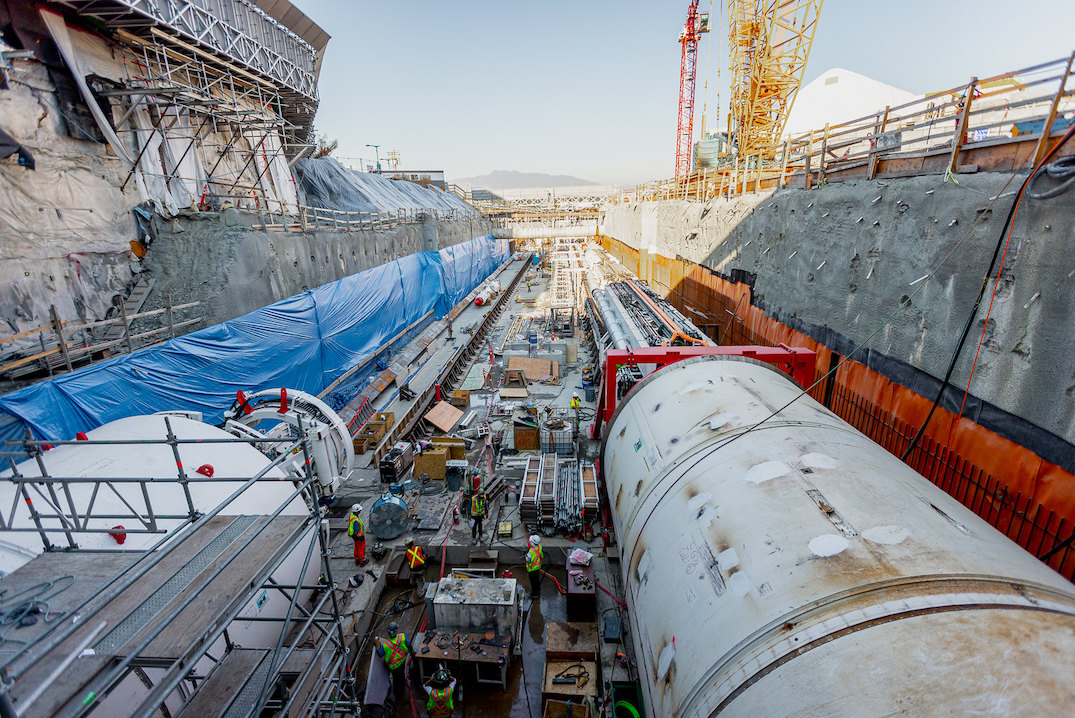
Above: A section of the outbound tunnel leading away from the Great Northern Way-Emily Carr Station site (Dec 2022). Photo: TransLink
The following is a letter received from Rail for the Valley www.railforthevalley.com, a great source of information, commentary, and analysis on transportation planning issues, with a special focus on the Metro Vancouver region.
This is in partial response to recent media coverage, including almost non stop postings in the media and on YouTube and other social media platforms.
***********
Reality check for the Broadway Subway
I am always astounded by those who support a subway to UBC, especially those who deem a subway to be a game changer. It’s not.
Mike Harcourt is not a transit expert. In fact, he knows little or nothing about public transport and his input is both uninformed and damaging for regional transit in Metro Vancouver and for the province.
Most politicians, once elected, think themselves transit experts, yet few ever take public transit except for photo-ops at election time.
Even the mighty TransLink is bereft of real transit experts and is now staffed by a large cadre of six-figure salaried bureaucrats and yes-men, having earlier fired those who dared to opine that Broadway did not have the ridership that would demand a subway, as TransLink did before with those who supported modern light rail!
Subways are not a transportation nirvana. Far from it, they are both expensive and user unfriendly and due to their high cost and in North America, are not considered (except for strictly political purposes) on routes with peak-hour traffic flows of around 15,000 persons per hour per direction or more. In Europe, which has a long history of subway construction, planners do not consider building a subway unless traffic flows on a transit route exceed 20,000 pphpd. This is partly due to the fact that trams (streetcars) can handle traffic flows in excess of 20,000 pphpd. By contrast, the maximum capacity allowed by the signalling of the Expo and Millennium Lines is 15,000 pphpd and 4,000 pphpd!
Even after Thales $1.47 billion re-signalling of the Expo and Millennium Lines, the maximum capacity of the the Millennium Line (Broadway Subway) will be a mere 7,500 pphpd!
Broadway’s current maximum traffic flow on the Broadway B-99 Express Bus, operating a peak-hour schedule of three minute headway’s (20 trips per hour), has a maximum peak-hour traffic flow of just over 2,000 pphpd!
Broadway is not the most heavily used transit route in Canada or in North America. This is merely political hearsay by Vancouver politicians and bureaucrats, and has no corroborating evidence to support it. TransLink has even stated that Broadway is merely “our most congested bus route”, which is not a valid reason to build a multi-billion dollar subway.
The other issue with the Broadway Subway is that the proprietary Movia Automatic Light Metro system will be used.
We must remember that the name “SkyTrain” is the name for our regional light metro system, and the system consists of two very different railways. The Canada Line is a conventional heavy rail railway, operating as a light metro, and the Expo and Millennium Lines use the MALM system, now owned by Alstom after they purchased Bombardier’s rail division.
MALM, originally called Intermediate Capacity Transportation system, has a very chequered history. ICTS was developed using cast-off technology from the failed Asea Brown Boveri TransUran MAGLEV, developed in the 1970s. ICTS used Linear Induction Motors (LIMs) for propulsion, making it a proprietary railway, and unlike the modern tram or streetcar, it could not operate with any other railway vehicle.
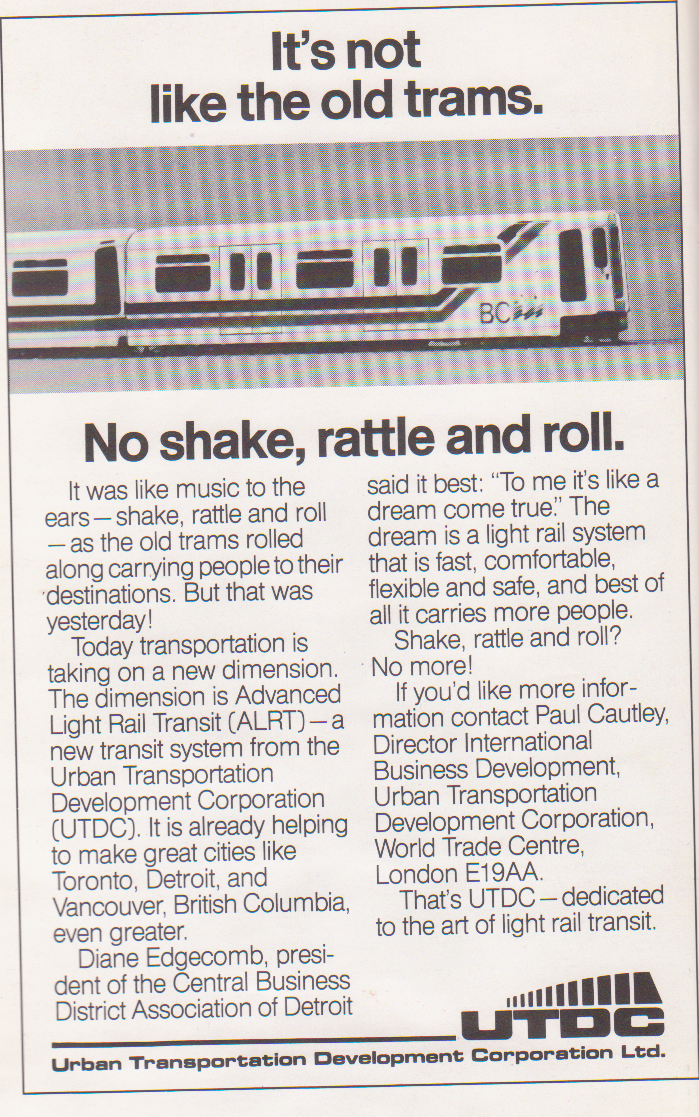
Only two were built — in Detroit and Toronto — with the latter being forced upon the Toronto Transit Commission by the Ontario government, whose Crown Corporation, the Urban Transportation Development Company UTDC), owned the proprietary ICTS system.
Studies by the TTC showed that “ICTS could cost up to ten times more to install than light rail, for about the same capacity.”
There were no further sales.
The name was changed to Advanced Light Rail Transit (ALRT), to compete against the more popular LRT, and only one was sold to Vancouver, but with its huge costs and lack of performance, there were no other takers.
The UTDC was sold to Lavalin, and they renamed the light metro from ALRT to Advanced Light Metro (ALM), and it went bankrupt trying to build a system in Bangkok, Thailand.
The remains of the UTDC were returned to the Ontario government, which promptly sold it at a fire-sale price to Bombardier, which promptly did a complete rebuild of the proprietary railway, using their universal Innovia body shell, which was longer and had more capacity than the “spam cans” used in Toronto, Detroit, and Vancouver. After SNC absorbed the bankrupt Lavalin, the new SNC Lavalin retained the engineering patents for the proprietary railway, with Bombardier owning the technical patents.
Bombardier renamed the newly-rebuilt proprietary railway Advanced Rapid Transit (ART), and only sold four such systems, with controversy following each one.
The ART system sold to Korea, which later saw Bombardier charged with bribery for paying “success fees” to senior bureaucrats and politicians to ensure a sale was made.
The ART system sold to Malaysia again saw Bombardier and SNC Lavalin charged with bribery and more, for paying “success fees” to senior bureaucrats and politicians to ensure a sale was made.
The Port Authority/JFK Airtrain, in New York, was funded by the Canadian Overseas Development Bank, because the American government, upon peer review (all new transit systems using federal funding are peer reviewed), found the system hugely expensive and badly designed and built, and rejected the use of federal funding, forcing the Canadian government to step in to fund construction to save face for Bombardier!
The Chinese government bought one to gain technology, with two results, the Chinese government obtained patented items and may have copied them unlawfully (China does not recognize intellectual property) and that Canadian users could not legally buy spare parts originating in China and the Chinese government never built another one, but they sold “coned cars (basically the original 1990’s ART design)” to Kuala Lumpur, where past Canadian misdeeds made any bid from a Canadian manufacturer untenable due to past corruption.
There was a fifth ART built and that was the Millennium Line in Vancouver, which the then NDP government flip-flopped from much cheaper LRT to ART, and one wonders what inducements or success fees were paid to have this system built?
Lack of sales saw Bombardier group all its light metros under one banner, Innovia transit systems, and just prior to the sale to Alstom, all the metro systems were grouped into the Movia brand with ICTS/ALRT/ALM/ART/Innovia, designated and Movia Automatic Light Metro. Only seven transportation agencies (cities) bought the system, which has had six rebrandings and no sales since 2005.
It has been rumoured that Alstom will cease production of MALM, as Vancouver is the only remaining customer, after the last paid-for orders are completed, and that also includes spare parts.
Alstom has put the Kingston plant up for sale, which is the home base for MALM production and that also includes the test track for the proprietary vehicles.
It is also interesting to note that Bombardier, after their legal issues, stated that the MALM system should not be used on any route without a peak-hour ridership of over 8,000 pphpd!
The current Broadway Subway plan, is just the original 1990’s LRT plan before the NDP flip-flopped to ART and it stopped at Arbutus, because of the then-planned future use of the former double tracked interurban route, the Arbutus Line, to Marpole and to downtown Vancouver.
The current Broadway Subway, as well as any expansion to UBC, will garner very little new ridership, except for those using the deeply discounted dollar-a-day ride-at-will U-Pass.
The now almost $4 billion for the present 5.7 km subway, plus a minimum of $8 billion investment to build it to UBC, will not attract much new ridership for several reasons, including that subways are non user-unfriendly, with stops about every one kilometer apart; subways deter those who suffer from claustrophobia (a lot more people suffer from this than most think); and the Millennium Line doesn’t go to any major destination other than UBC, which means customers will have to make troublesome and time consuming transfers (which deter ridership).
Example: Those using the Broadway Subway to downtown Vancouver, either will have to make a transfer onto the capacity-constipated Canada Line or travel to Commercial and then double back on the Expo Line, unless TransLink operates a dedicated bus service with frequencies to match the ridership demands of the subway to cross False Creek at Burrard or Granville to downtown.
I predict, based on the more transit-savvy transit users in Europe, that people will avoid the subway and drive instead. It is worth noting that the European tram or light rail Renaissance came about due to the high cost of hugely expensive rapid transit projects like subways, and that subways tend to deter ridership.
The following graph is from Ontario’s MetroLinx, comparing the 50 year costs of various transit modes.
Due to the larger construction and maintenance costs of MALM, the 50 year costs would rival that of a subway!
The huge cost of the Broadway subway to UBC, about $8 billion, could fund the following:
A completely rebuilt E&N Railway from Victoria to Courtney as a modern, 230 km regional railway providing a maximum three trains per hour per direction ($4 billion)
A modern 130 km regional railway connecting Vancouver to Chilliwack, using the former BC Electric interurban route ($2billion)
A modern European-style 25 km tramway connecting BCIT to UBC and Stanley Park ($2 billion)
Instead, we are building [the proposal is] a very short $8 billion subway to UBC to cater to a bus route which presently carries a peak-hour passenger load of just over 2,000 pphpd, with future taxpayers left to pay the huge costs associated with subways!
Sad to say, the Broadway Subway to UBC, if built, will be a financial fiasco for future generations, not just in Metro Vancouver but the entire province, paying the cost of Vancouver’s politically-prestigious subway megaproject.
The problem with the current transit system is simple, those in charge are doing the same thing over again, expecting different results.
Not working!
What is needed is a complete rethought how transit service is provided, based on customer needs and not TransLink’s or Victoria’s political needs.
TransLink’s ridership has been in decline for almost a decade with a huge 3.2% drop in ridership in 2025 from 2024. This should send alarm bells off in TransLink’s ivory towers, but it hasn’t.
The province should be concerned, but they are not, just more ‘gish-gallop’ from the Minister in charge with the current $16 billion+, 21.7 km expansion of the Expo and Millennium Lines.
The problem with transit in Metro Vancouver is rather simple, the bus system is so designed to feed the SkyTrain light metro system – pure 1970’s transit philosophy. Buses feed the rapid transit and the rapid transit takes the customer to the city centre, with everyone relishing the high ridership numbers on the R/T Line, while ignoring bus ridership.
The problem today is; it is 2026 and demographic and travel habits have changed, downtown Vancouver is no longer the main destination and then there is the electric car!
Commuters are now on a East-West axis as high rents in the downtown core are chasing many businesses East into the cheaper Fraser Valley, which is poorly served by transit.
The SkyTrain light-metro system is pure 1970’s transit philosophy designed for short trips in city centres and not as a regional railway and is both uncomfortable and inconvenient for today’s transit customers, yet TransLink is spending $16 billion+ (full program costs) to extend the light metro system 5.7 km in a subway on a route with nowhere the ridership to justify a subway and 16 km , extending it to Langley, again on a route that has noway near the ridership to justify the expenditure.
That $16 billion cost is now coming from healthcare, social services, education and from TransLink itself to pay for what is really and election showcase project.
As commuting habits and demographic change, the massive concrete structures for light-metro do not, yet light-metro is a politcal statement by the provincial and municipal governments. Today, this statement more and more means “we have done it all wrong“, yet change is felt to be politcal suicide.
So Transit ridership will decline and the “Ship of fools” that run the damn thing (Premier’s office, MoT, Metro Vancouver and the Mayor’s Council on Transit and an entrenched ossified bureaucracy will not or cannot change.
Fundamental change is desperately needed but will never happen, because the system is so designed not to!
Financial reality will soon hit TransLink and the fear and loathing from Victoria, and the Ivory towers of Metro Vancouver and TransLink, remain blind to the fact there is only one taxpayer.
Telling the truth about public transit in Metro Vancouver is a revolutionary act!
Lausnne, Switzerland, with a population 144,000 and a regional population of 420,000, is building a new tramway, The city also has a two line metro system, with one line using rubber tired metro’s based on the Paris metro and the other metro line using light rail vehicles.
The high cost of metro construction has now focused city planners on more economic tramways for future transit construction.
In North America, the new tramway would be termed light rail, due to much of its route operating on dedicated right-of-ways.
The lesson to be learned in Vancouver is that transit mode should be chosen to deal with traffic flows on the route and not for politcal prestige as it seems the good Burghers of Lausanne care far more for the taxpayer;’s dollars than their counterpart politcans in Metro Vancouver.
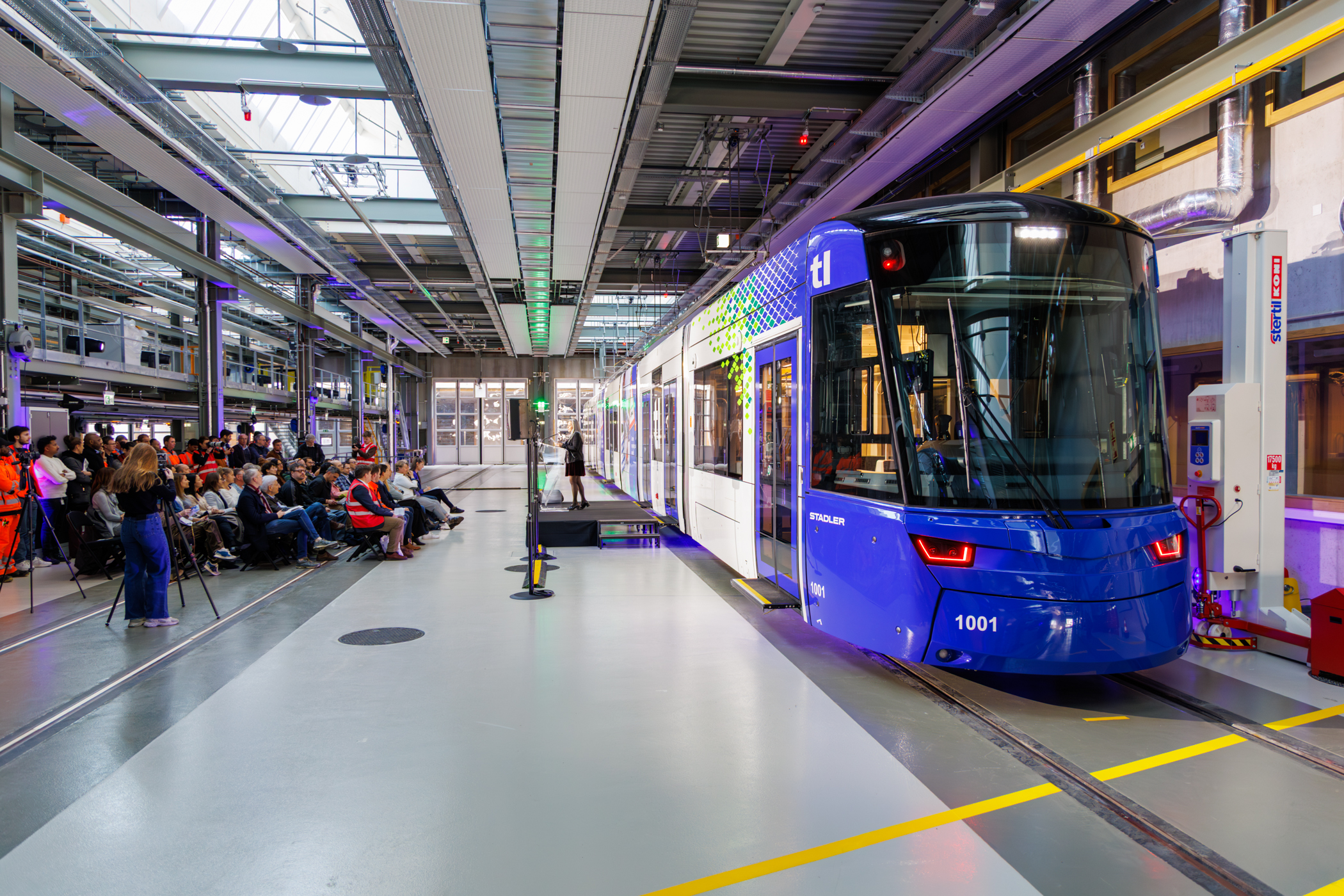
With the new tram line T1, the Swiss city of Lausanne is reintroducing a tramway system for the first time since 1964. At the weekend, a public open day at the Renens-Perrelet depot attracted significant interest, allowing visitors to explore the new vehicles supplied by Stadler Rail and gain insights into the project’s progress and future operation.
Construction timeline and investment
The new T1 tramway line in Lausanne is the result of a multi-stage planning, political and approval process that began in 2005 with the development of an air quality action plan for the Lausanne–Morges agglomeration. This plan was approved in 2006 and identified the expansion of public transport as a key measure, as existing bus services were no longer expected to adequately accommodate projected demand growth. For the Lausanne–Renens corridor, the construction of a modern tramway was therefore recommended.
Following a political framework decision in 2008, the transport operator tl was granted a 50-year concession by the Swiss Federal Council in 2011. The original scheme envisaged a link between Lausanne-Flon and Renens only. However, by 2012, a further extension to Villars-Sainte-Croix had already gained broad political support.
During the planning phase, several modifications were introduced, including the abandonment of a planned underground terminus at Flon in favour of an at-grade solution at Place de l’Europe. This change generated savings of approximately CHF 83 million.
However, the project was heavily affected by legal disputes, particularly concerning a proposed road ramp in the Flon area and interventions in green spaces. Multiple objections between 2016 and 2019 led to delays and federal court proceedings.
Construction of the new tram line officially began in August 2021 following several years of planning and approval procedures. The project involves extensive civil engineering works along the Lausanne–Renens corridor, the laying of utility lines, and the construction of a new depot in Perrelet.
The first phase of construction is estimated to cost around CHF 500 million (approx. €546.43 million). The first phase is scheduled to come into operation at the end of 2026, with the extension to Villars-Sainte-Croix expected to follow in 2027.
The first phase of the line runs over 4.6 km, connecting Lausanne-Flon with Renens-Gare and serving 10 stops. Journey time is approximately 15 minutes, with a planned headway of 6 minutes. In the full build-out, the system will extend by a further 3.4 km, reaching Villars-Sainte-Croix.
Projected demand is estimated at around 13–18 million passengers per year, depending on final network development.
The fleet consists of ten seven-section, fully low-floor Tramlink vehicles:
length: 45 m
width: 2.65 m
capacity: approx. 300–316 passengers
bidirectional design
eight double doors per side
The vehicles were manufactured in Valencia, Spain, and are specifically adapted for high-frequency urban operation in a dense mixed-traffic environment.
Integration into Lausanne’s public transport network
Lausanne already has a highly efficient public transport system: the 7.8-kilometre-long M1 low-floor metro line, the 5.6-kilometre-long fully automated M2 Metro Lausanne, and the 59-kilometre-long trolleybus network.
The new tram line will thus create, for the first time, a third efficient above-ground transport network that complements the metro and trolleybus services and, in particular, strengthens the link between the city centre and the surrounding area.
With construction now in an advanced stage, Lausanne’s tramway represents one of the most significant urban rail reintroductions in Switzerland in decades. The combination of metro, trolleybus, and tram creates a highly structured three-tier public transport system, rare for a city of this size in Europe. 07.05.2026
Evidently, the 16km Expo Line to Langley is in trouble, so who else to defend this hugely expensive project but the folks at SkyTrain for Surrey, otherwise known as FOX Entertainment North.
The claims made by SFS are breathtaking and needs serious comment.
True to form, the deliberate misinformation by SkyTrain for Surrey is again creating many misconceptions about transit and transportation and our regional public transit system is in trouble with declining ridership. The taxpayer has spent around $30 billion on SkyTrain, yet ridership has been in an ever steepening decline.
Because of the efforts of SkyTrain for Surrey, the city of Surrey will suffer from poor transit for decades to come as there will be scant monies available to expand the light metro system to a point where it will become an alternative to the car. Thus the SkyTrain light metro system will continue to offer “lessons” that local politcans and bureacrats refuse to learn.
Following the “Pied Piper” of SkyTrain has created and will continue to create public transit chaos in the region.
Zwei will comment when needed and it is certainly needed here.
MAYOR’S $8 BILLION SKYTRAIN ESTIMATE NOT SUPPORTED BY EVIDENCE
Zwei replies: Evidence, what evidence, unless one makes it up as one goes along.
Every few years, someone throws out a big, scary number about the cost of future SkyTrain expansion—and this year, that number was $8 billion. Mayor Locke’s statement reads like a warning, framing the idea of a future SkyTrain as unrealistic before the project has even been defined.
But here’s the reality: no one actually knows what a South Surrey SkyTrain extension would cost yet. Not because it’s unaffordable, but because it hasn’t been studied—whether by TransLink or the province. There is no finalized route, no design, and no engineering work to base a price on, so saying this future SkyTrain is “cost‑prohibitive” or claiming it would take “two decades” to build is not just premature—it’s irresponsible.
We’ve seen this pattern before.
Zwei replies: What is irresponsible is even talking about a SkyTrain south along the King George Hwy.
Queue up folks because any thought of a SkyTrain extension in Surrey must come after the now $8 billion completion of the Broadway subway to UBC and the now over $15 billion North Shore SkyTrain to Metro Town.
Sorry, any talk of SkyTrain expansion in Surrey in the near future is just plain daft.
In the early 2000s, the then-proposed Canada Line was subject to heavy scrutiny. Critics called the project “prohibitively expensive”; local leaders in other municipalities repeatedly voted to stall it; and some groups pushed for it to be converted to a surface LRT—including Richmond City Council, led by then mayor Malcom Brodie. It took the intervention of SkyTrain advocates, who called on the City of Richmond to hold a referendum, to keep an elevated line on the table—and on March 9, 2004, the finished public consultation drew a record response. Out of more than 13,000 respondents, the majority voted in favour of an elevated, grade-separated line over an at-grade LRT system.
Zwei replies: The Canada Line was a Gordon Campbell faux P-3 project, designed as a long term investment tool for Bombardier, SNC Lavalin and the Caisse du Depot. The problem was, the trains used on the Expo and Millennium Lines are proprietary and no other company cared to bid on the project.
In desperation, The Campbell BC Liberals allowed Siemens and Alstom to bid on the project but promptly tossed them from the bidding process because they used trams as vehicles. SNC Lavalin cut a deal with ROTEM from Korea to use EMU’s and won the bid because a conventional system is always cheaper than the proprietary LIM powered system used on the E&M Lines.
The result: The Canada Line is the only heavy rail metro in the world, built as a light metro that has less capacity than a modern streetcar costing a fraction to build. Any polling done were cleverly crafted push polls using deliberately misleading information.
Although Mayor Brodie and Richmond Council continued to stubbornly push for an at-grade system, TransLink and regional planners realized they had to respect the wishes of the people. So they sought a private partner who innovated to keep the elevated design, converted Mayor Brodie’s “no” vote into a “yes”, and eventually delivered the grade-separated Canada Line we know and love—on time and on budget.
Today, the Canada Line has become a national and international model for good public transit, inspiring projects like Montréal’s REM, which is opening a brand‑new 14‑kilometre extension to the West Island this weekend.
Zwei replies: Actually Richmond council was gung-ho for SkyTrain and not light rail for the Canada Line. Now buyer’s remorse has set in as the Canada Line has not done much to reduce traffic and there is zero chance of the Canada Line ever being extended in its present form. It is a ‘sort-of’ White Elephant’, with the only winner being YVR!
REM is a financial clone of the Canada Line as the Caisse du Depot is making a lot of money on the Canada Line P-3, as they will with REM.
========
“Dismissing a future SkyTrain on the basis of costs, but in the absence of a feasibility study that actually looks at those costs, is completely irresponsible,” says Daryl Dela Cruz, Founder of SkyTrain for Surrey.
Zwei replies: Actually, what we call SkyTrain, especially the trains used on the Expo and Millennium lines were deemed unsalable since the very early 1980’s when a TTC commissioned study, “The Accelerated Rapid Transit Study (ARTS) found that ICTS (the first name that SkyTrain was marketed by) cost up to ten times more to install than light rail for about the same capacity”. Death sentence for ICTS, but reprieved under a new name Advanced Light Rail Transit (ALRT) for the sale to Vancouver.
========
The Canada Line story shows how misleading early assumptions can be, and why it’s important to separate political messaging from actual project planning. Costs don’t come from speeches; they come from engineering, design choices, procurement models, and lessons learned from recent builds. And on all of those fronts, Surrey is in a far stronger position today than critics would have you believe.
To understand why the $8 billion figure doesn’t hold up, it helps to look at the fundamentals. Here are five key reasons a South Surrey SkyTrain extension is far more realistic—and far more affordable—than the mayor suggests:
***
#1: If a South Surrey SkyTrain were being built at the cost of the SLS today, it would cost only about $7 billion.
Using the Surrey Langley SkyTrain cost of $375 million per kilometre as a benchmark puts the 19-kilometre project cost closer to $7 billion. That’s not small—but it’s also not $8 billion!
And even this estimate assumes the South Surrey line would mirror SLS’s most expensive requirements: Expo Line infrastructure, long 80-metre platforms, and full system integration. But a future line doesn’t have to be built this way.
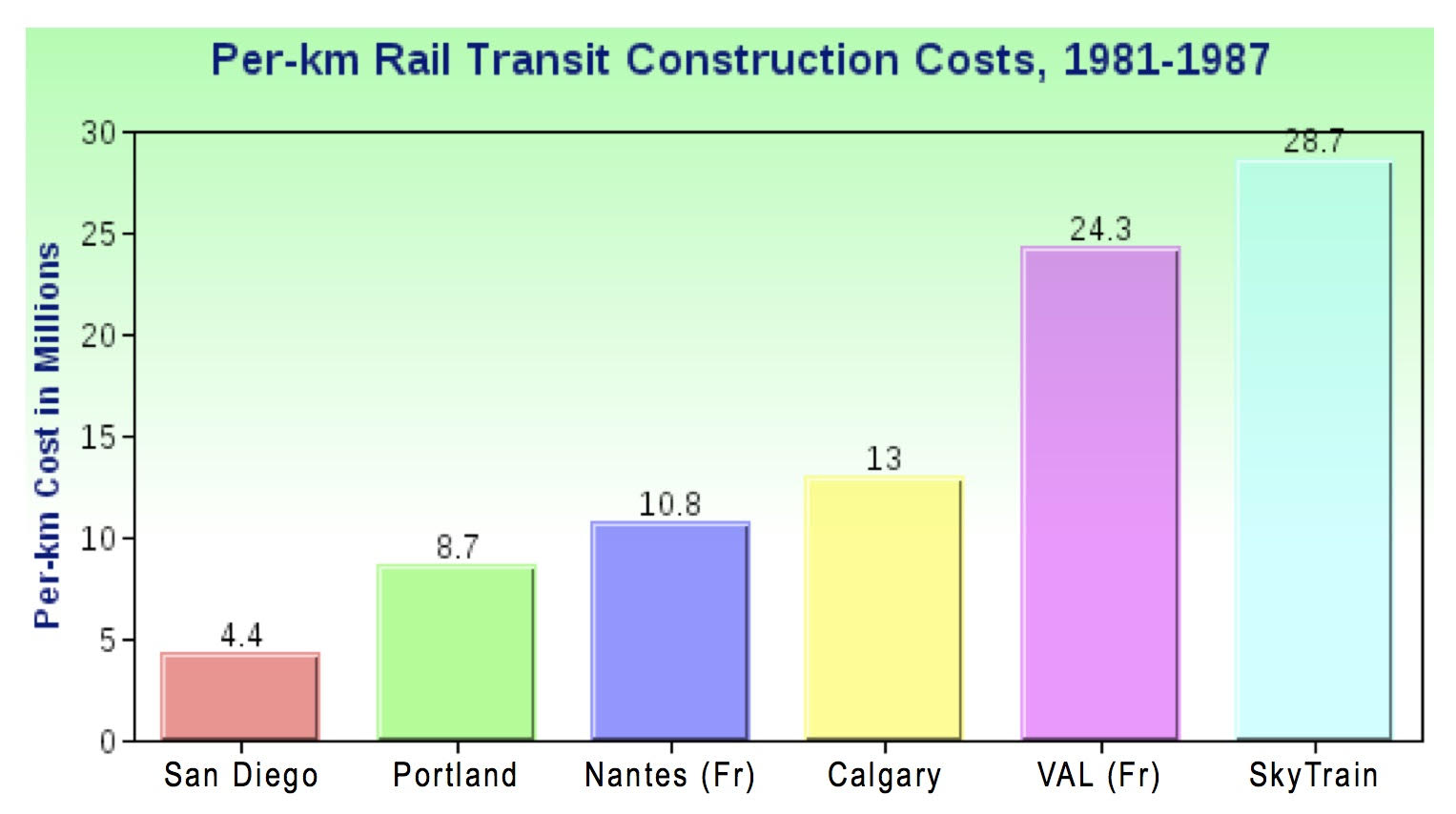
SkyTrain was always more costly to build than LRT
Cost comparisons from the 1980’s
Zwei replies: Wishful thinking at best. The final cost for the Expo Line to Langley is not finalized and the best the government can do is give two year old estimates. Building small stations is not in the cards as any future extension would have to accommodate the five car Innovia 300 train-sets. The estimated full cost of the Langley extension may well exceed $7 billion and may even exceed $8 billion due to inflation.
Also remember if there is a future extension to the light metro system, the UBC extension to the Millennium Line will come first and that is 20 years in the future at minimum. Also factor in that the proprietary trains needed to extend both the Expo and Millennium Lines will be long out of production as no one is interested in building with the system, evidenced by no sales for the past quarter of a century!
—
#2: The first phase to Newton would not require an OMC.
Although TransLink has not studied the full route to South Surrey, TransLink did study an Expo Line extension as far as Newton Centre in 2012 (with the cost estimates updated in 2019). This study noted that the short 5.5-kilometre extension would not require a new operations and maintenance centre (OMC)—dramatically reducing the costs by removing land acquisition requirements.
This was also long before we knew there would be OMC #4 in Coquitlam—and before we approved the SLS, which comes with OMC #5. Both of these OMC facilities should ensure that an OMC is not necessary for the first phase of King George Boulevard SkyTrain.
Zwei replies: Actually the OMC #5 is needed for the five car Innovia 300 train-sets replacing the Ml. 1 cars.
—
#3: The line does not have to follow the Expo Line’s infrastructure requirements or platform lengths
Nobody said that the future line has to be an extension of the Expo Line. As we discussed in our previous post, Two Ways to Build SkyTrain on King George Boulevard, a separate line with different design standards could be built for far less. This includes shorter platforms, because the line wouldn’t need to handle 5-car-long Expo Line trains (and the trains can be made wider to compensate).
Zwei replies: Obviously the station platforms would have to accommodate the Innovia 300 five car train-sets that are in operation. This line of reasoning is pure nonsense.
—
#4: The current BRT project will reduce the cost of the SkyTrain.
Every dollar spent on the King George BRT is a dollar that won’t need to be spent later on SkyTrain. That’s because BRT construction includes utility relocations, land acquisition, street reconstruction, and corridor widening. All of this work would otherwise be bundled into the SkyTrain budget—at a higher and inflated cost, and with greater disruption.
Surrey residents should be familiar with this: before Surrey Langley SkyTrain construction reached Green Timbers Forest, Fraser Highway was widened there from 2 to 4 lanes. Today, while the Surrey Sprinter launch gantry and work crews work on the guideway above, the two outer lanes below are kept open for traffic. The alternative would have been a full closure of Fraser Highway through Green Timbers for multiple years, sending transit buses and cars through local neighbourhood streets like 92 Avenue.
Zwei replies: I shake my head at this. BRT will not reduce the cost of SkyTrain light-metro construction. This is pure unsound reasoning by someone who is desperately trying to mislead the public.
Similarly, when the region’s first BRT (the 98 B-Line) was constructed on No. 3 Road in Richmond, the work done for it was critical for enabling the Canada Line. Before the BRT, No. 3 Road was a narrow 4-lane road with a centre turn lane, with malls and shops coming up to the sidewalk; there was no space to build a SkyTrain. Although the BRT was there for only 5 years before Canada Line construction began, the alternative would have been catastrophic: a fully closed road, shutting down businesses and severing the lifeline of the city.
Zwei replies: Nice try but again not true. Fact is, the Canada Line was a pure Gordon Campbell, BC Liberal project to promote P-3 construction and light metro was not planned for at least another 15 to 20 years. The notion that #3 Road was narrow comes from the 1950’s and 1960’s and by the time the B-98 was in operation. Actually #3 road and the Express Bus lanes were designed to accommodate LRT, not SkyTrain (which was actually built on the ‘gutter’ lane), but the NDP flip flop from LRT to light metro with the Broadway Lougheed Rapid Transit project made sure no LRT was to be built in Metro Vancouver.
Strange coincidence is that the NDP flip flopped again from LRT to light metro for Surrey, using the much more expensive proprietary MALM system.
—
#5: Integration with a larger regional or intercity rail project could make the SkyTrain essentially free.
That’s right, free!
Zwei replies: This is pure nonsense and desperately shows both the ignorance of the author of this piece. Currently there are no regional or intercity rail being proposed.
Rail for the Valley’s $2 billion Marpole to Chilliwack proposal only integrates with the Canada Line at Cambie for service to Richmond and YVR.
Groups like Mountain Valley Institute and experts like Reece Martin have often pointed out that much larger projects could include urban rapid transit in Surrey, including proposed high-speed rail to Seattle and Portland, and regional rail connecting the Fraser Valley (Abbotsford-Chilliwack) and Sea-to-Sky (Whistler-Squamish) regions to Greater Vancouver.
Zwei replies: Excuse me but mountain Valley Institute are not experts, rather they have no actual experience building rail and are basically theorists more than anything. Reece Martin, is a You Tube presenter, who again is not an expert.
Rail for the Valley have engaged real experts, such as Leewood Projects (UK) who have a good working knowledge on rail projects, for the Leewood Study.
When one talks of High Speed Rail, one instantly should recognize that due to costs, will not happen in Metro Vancouver or the Fraser Valley and should be seen as comments by real amateurs!
Large‑scale nation-building rail projects often incorporate local rapid transit infrastructure as part of their corridor design. This is common worldwide—and it could happen here. If a future regional or high‑speed rail line uses the King George corridor, the incremental cost of building the local SkyTrain component could be minimal or effectively zero.
Zwei replies; Absolute nonsense.
The problem with extending the SkyTrain light Metro system is finance and the huge costs of light-metro, a transit mode grossly ill suited to operate as a regional railway.
The failure to recognize the expensive pitfalls of using proprietary trains on the Expo and millennium lines and the politcal interference with the Canada Line P-3, with the line being the only heavy-rail metro built in the world as a light-metro, having less capacity than a modern tram or streetcar coasting a fraction to build.
Need I remind the reader that of the seven such proprietary railways built, as used on the Expo and Millennium Lines, two were forced upon the operating authority (Vancouver and Toronto); two were involved in bribery scandals involving payments of “success fees” to senior bureacrats and politicians (Korea and Malaysia); one was financed by the Canadian Overseas Development Bank because a panel of experts found the system too expensive and poorly built (JFK Airtrain); and one was built to gain technical information (Beijing).
The proprietary system used on the Expo and Millennium Line were also marketed under at least six different names, Intermediate Capacity Transit System; Advanced Light Rail Transit; Advanced Light Metro; Advanced Rapid Transit ; Innovia Rapid Transit; and Movia Automatic Light Metro.
The proprietary railway has also had four owners; the UTDC; Lavalin; Bombardier; and now Alstom.
The SkyTrain light metro system has a sad history of corruption, professional misconduct and politcal, interference, which has left Vancouver as an outlier with public transit as not one city has copied Vancouver’s transit planning, nor its exclusive use of light metro.
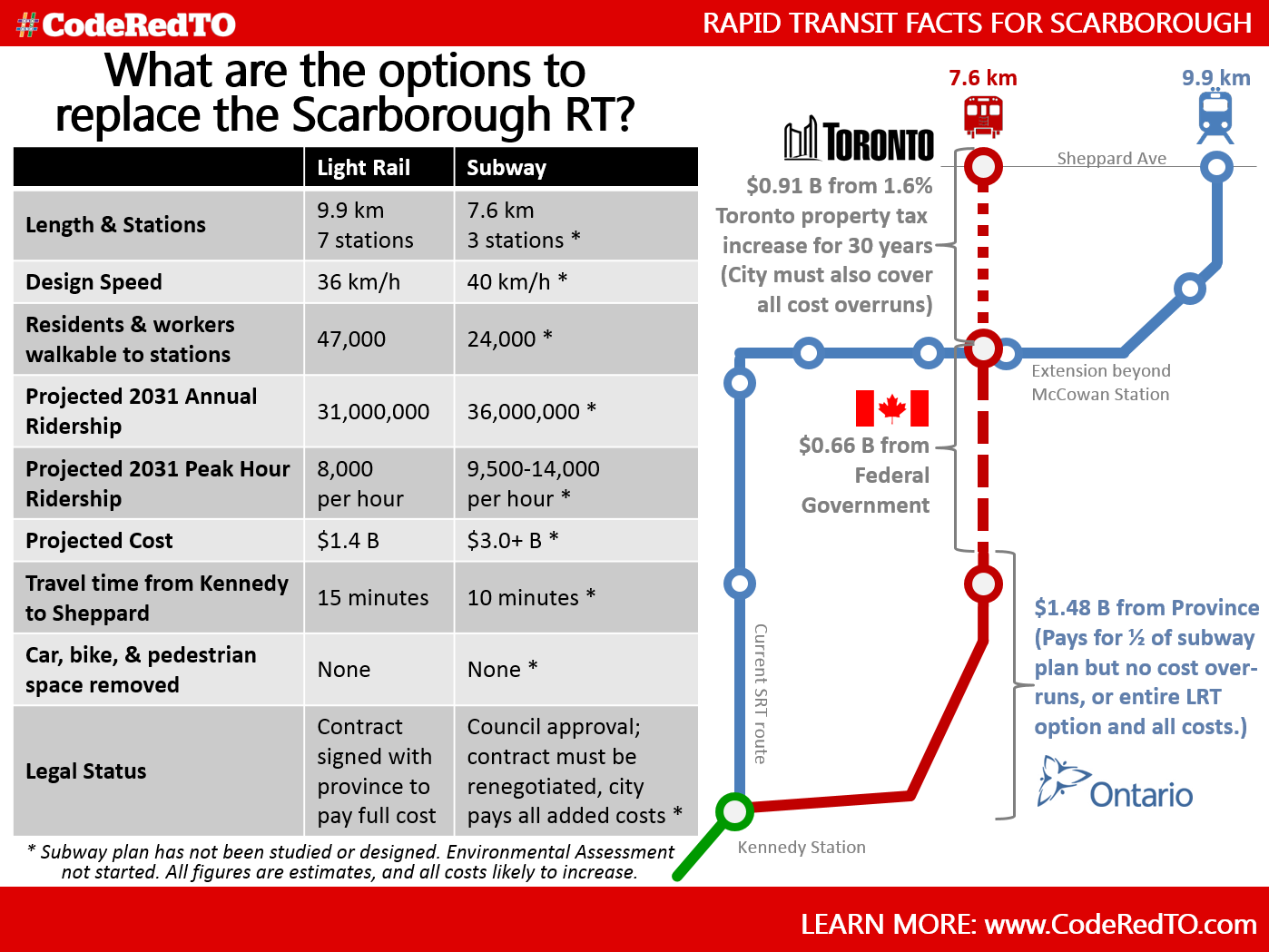
Eglinton Further East: City Council Reboots Scarborough LRT Plans
Why Light Rail?
The answer is simple:
FLEXIBILITY
Despite a sort of “character assassination” by the media and metro crowd, LRT still remains the most built rail urban and suburban transit mode in the world.
The reason is simple as it provides the best bang for one’s transit buck. Inherently flexible in operation light rail or just the simple tram brings many benefits to a town and city.
Politicians favour hugely expensive prestige projects like elevated light-metro or subways, yet the modern tram can achieve the same results at a far cheaper cost.
The following is from 2016 and now with transit dollars in short supply, the plan is being rebooted.
This past week, Toronto City Council approved a motion from Mayor Chow to provide an additional $10 million in funding to move forward the “Scarborough East Rapid Transit” line, while designating it a top priority within the City’s transit expansion plans. Formerly known as the Eglinton East LRT, Chow has shown renewed interest in reviving long-stagnant plans to build a light rail line through Scarborough, following its initial proposal in 2007.A rendering depicting the SERT’s envisioned alignment along Military Trail within the UTSC campus, image courtesy of the City of TorontoThe Scarborough East Rapid Transit (SERT) line is planned to be a street-running LRT, akin to similar operations seen on the 510 Spadina streetcar and the Finch West LRT. It would run a total of 18.6 kilometres from Kennedy station on Danforth Line 2 to the University of Toronto’s Scarborough Campus, before crossing the 401 to run along Sheppard Avenue, branching at Neilson Road to reach both Malvern Town Centre and the McCowan-Sheppard subway station now under construction. The proposed alignment would form a rough crescent, connecting to Line 2 at either end while travelling primarily on Eglinton Avenue East, Kingston Road, Morningside Avenue, and Sheppard Avenue East.A map depicting the planned route of the SERT, image courtesy of the City of TorontoWhile recent documents from City Hall indicate that City staff will explore the potential for grade separations along the line, the SERT is currently planned to run primarily in a dedicated right-of-way in the median of the various suburban arterials along which it will travel. This at-grade alignment will necessitate frequent stops at signalised intersections and render transit service vulnerable to disruptions from on-street collisions — two issues which have plagued the Finch West LRT since its opening last December.A rendering looking over the intersection of Eglinton Avenue East and McCowan Road, image courtesy of the City of TorontoThe width of the various streets that the LRT is set to run down varies drastically along its route. On streets such as Sheppard and Eglinton Avenues, the City-owned vehicular right-of-way stretches over 25 metres wide, allowing for the relatively simple insertion of light rail tracks and platforms while maintaining a similar number of general traffic lanes as currently exist.A typical right-of-way plan at a signalized intersection along the SERT, image courtesy of the City of TorontoOn narrower streets, such as Morningside Avenue and Neilson Road, a street section more similar to the dedicated streetcar alignments seen in downtown Toronto would be implemented. General vehicle lanes would be removed to make way for the dedicated tracks, while significant alterations to boulevards would facilitate the delivery of a “complete street” featuring wide sidewalks, cycle tracks, and planting boulevards.A typical cross-section of the planned alignment along Morningside Avenue between Kingston Road and Fairwood Crescent, image courtesy of the City of TorontoThe $10 million dollar sum recently approved for the project is intended to advance these preliminary designs to a state of 30% completion. This will allow City staff and consultants to determine in greater detail the requirements for implementing such a project, such as property expropriation and utility relocation. Additionally, the funding announcement comes at a time as the municipal government is attempting to garner provincial and federal support for the project. Those two governmental bodies have historically shown limited interest in the idea of a LRT for Scarborough, with provincially-run Metrolinx even failing to protect for a future integration of service on the SERT with the Eglinton Line 5 during the construction of the Crosstown. A Line 2 train arrives at Kennedy station, image courtesy of the TTCPart of the higher levels of government’s hesitancy to become involved politically or financially with the SERT may be that, by the City of Toronto’s own admission, the new line would run slower than the bus service it would replace. In the Eglinton East LRT: Initial Business Case, the actual projected speed of the LRT is heavily underemphasised; where it is addressed, the business case states “bus travel speeds [would be] higher than the LRT,” and that due to this failure to reduce travel times, “the project as currently defined [would have] a negative user impact.” Looking along Morningside Avenue as a 116 Morningside bus travels along the RapidTO bus lane, image courtesy of the City of TorontoIt is also worth noting that LRT business cases have a precedent for dramatically overestimating actual speeds during revenue service. The recently opened Finch West LRT was projected to complete its 10.3-kilometre route in 28 minutes, according to Metrolinx’s Sheppard-Finch Rapid Transit Benefits Case. On opening day, it actually travelled that same distance in 55 minutes—nearly half the projected speed on which the justification for the entire project was predicated. In the face of the ensuing embarrassment, City Hall enacted traffic signal changes to speed up LRV operations, a move which still saw the line running between 45% and 65% slower than its promised speed.Looking south-west over the intersection of Finch Avenue West and Islington Avenue at a Finch West LRT vehicle, image courtesy of AECONWith the City of Toronto unable to shoulder the multi-billion-dollar cost of building the SERT, and provincial transit interests shifting toward expanded commuter rail, the future of this nearly two-decade-old LRT concept remains uncertain. Nevertheless, with a mayoral election approaching and both incumbent Olivia Chow and likely contender Brad Bradford taking strong stances on the project, it will undoubtedly be a major campaign issue.An aerial photograph of the University of Toronto Scarborough campus, 2025, image courtesy of Wikimedia user CanmenwalkerUrbanToronto will continue to follow progress on this development.application.






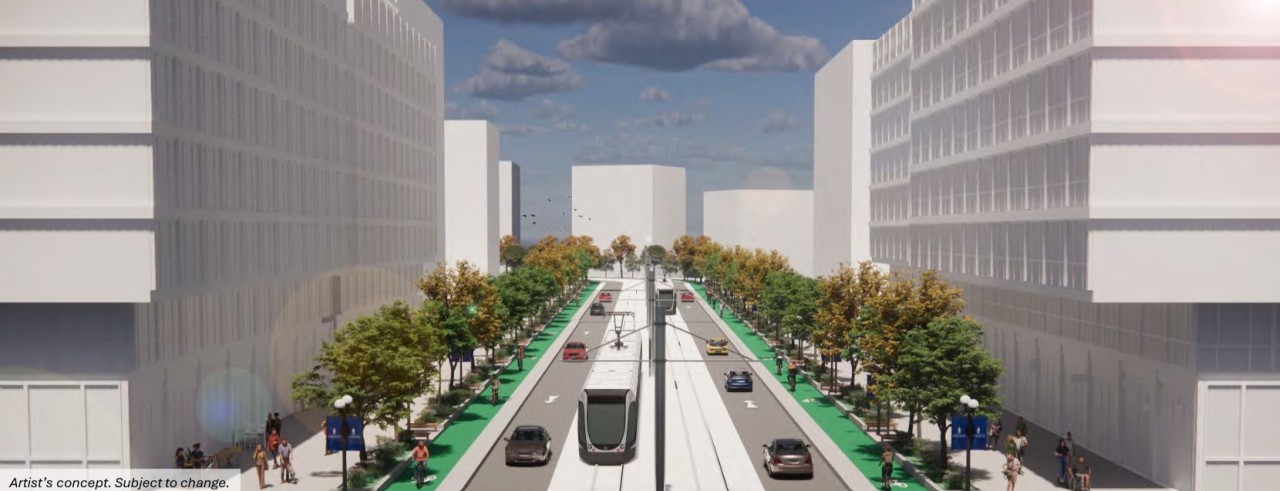 A rendering depicting the SERT’s envisioned alignment along Military Trail within the UTSC campus, image courtesy of the City of TorontoThe Scarborough East Rapid Transit (SERT) line is planned to be a street-running LRT, akin to similar operations seen on the 510 Spadina streetcar and the Finch West LRT. It would run a total of 18.6 kilometres from Kennedy station on Danforth Line 2 to the University of Toronto’s Scarborough Campus, before crossing the 401 to run along Sheppard Avenue, branching at Neilson Road to reach both Malvern Town Centre and the McCowan-Sheppard subway station now under construction. The proposed alignment would form a rough crescent, connecting to Line 2 at either end while travelling primarily on Eglinton Avenue East, Kingston Road, Morningside Avenue, and Sheppard Avenue East.
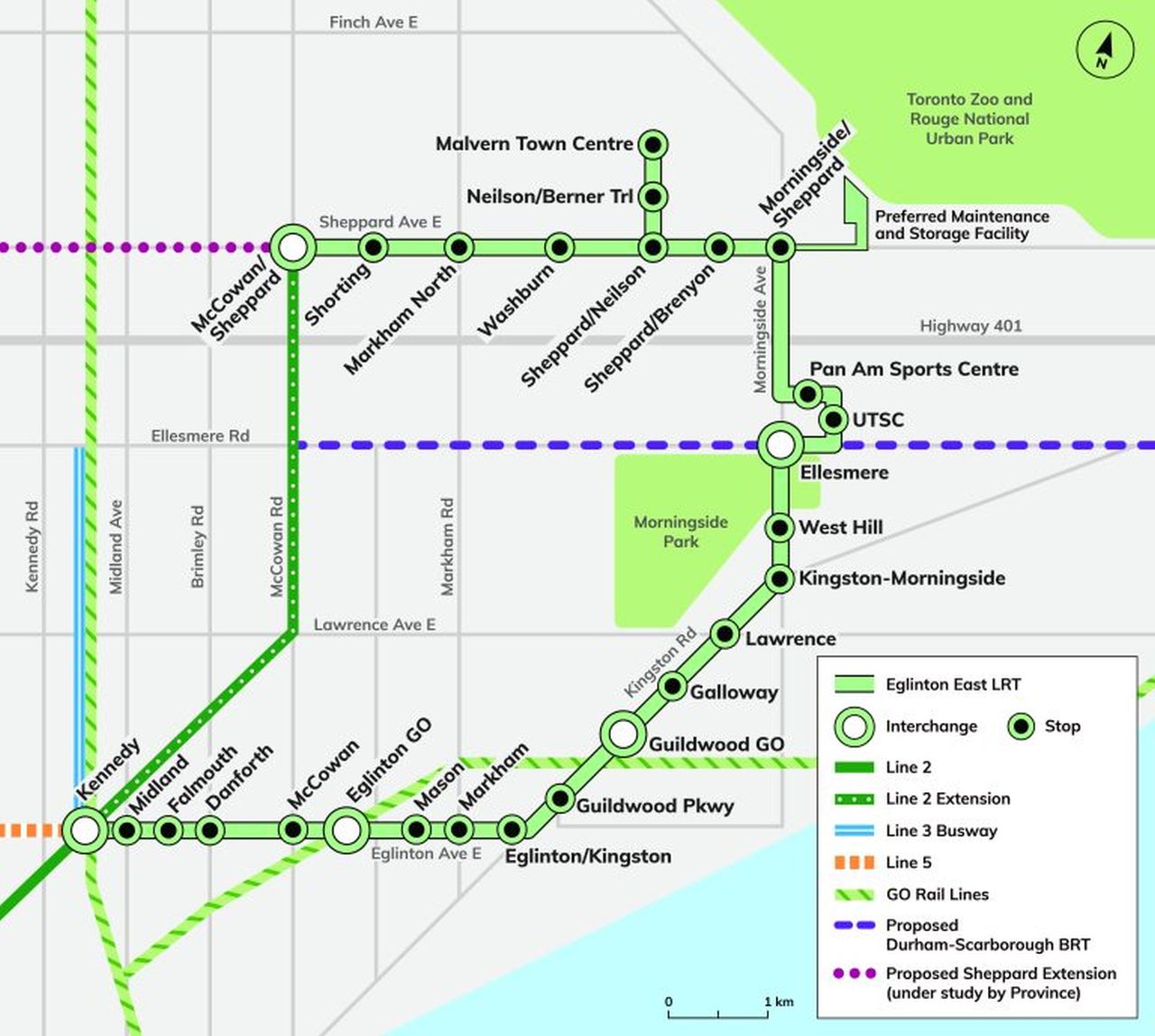 A map depicting the planned route of the SERT, image courtesy of the City of TorontoWhile recent documents from City Hall indicate that City staff will explore the potential for grade separations along the line, the SERT is currently planned to run primarily in a dedicated right-of-way in the median of the various suburban arterials along which it will travel. This at-grade alignment will necessitate frequent stops at signalised intersections and render transit service vulnerable to disruptions from on-street collisions — two issues which have plagued the Finch West LRT since its opening last December.
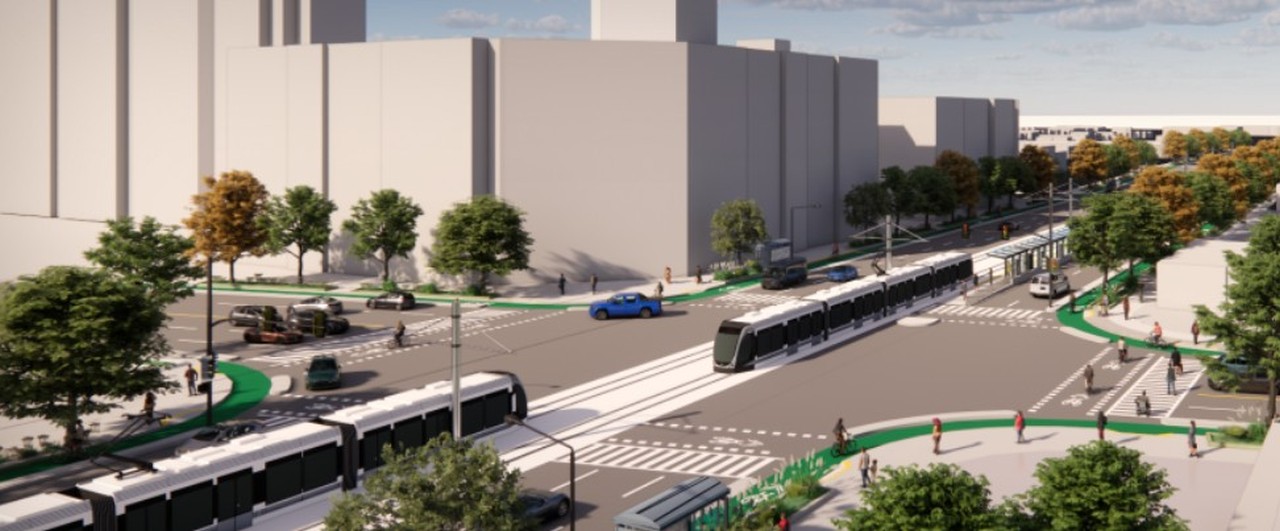 A rendering looking over the intersection of Eglinton Avenue East and McCowan Road, image courtesy of the City of TorontoThe width of the various streets that the LRT is set to run down varies drastically along its route. On streets such as Sheppard and Eglinton Avenues, the City-owned vehicular right-of-way stretches over 25 metres wide, allowing for the relatively simple insertion of light rail tracks and platforms while maintaining a similar number of general traffic lanes as currently exist.
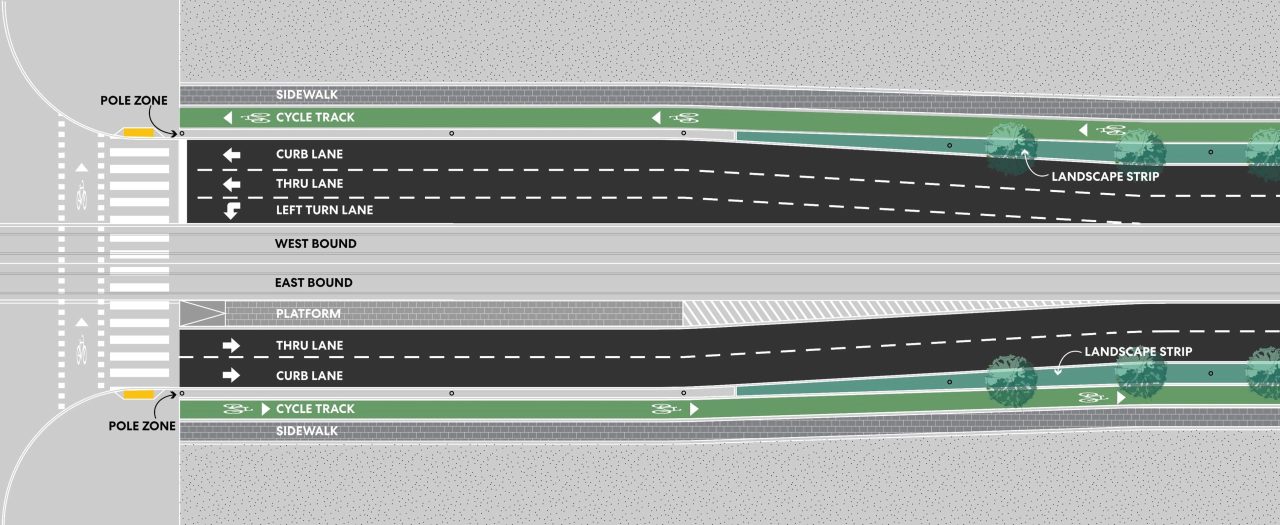 A typical right-of-way plan at a signalized intersection along the SERT, image courtesy of the City of TorontoOn narrower streets, such as Morningside Avenue and Neilson Road, a street section more similar to the dedicated streetcar alignments seen in downtown Toronto would be implemented. General vehicle lanes would be removed to make way for the dedicated tracks, while significant alterations to boulevards would facilitate the delivery of a “complete street” featuring wide sidewalks, cycle tracks, and planting boulevards.
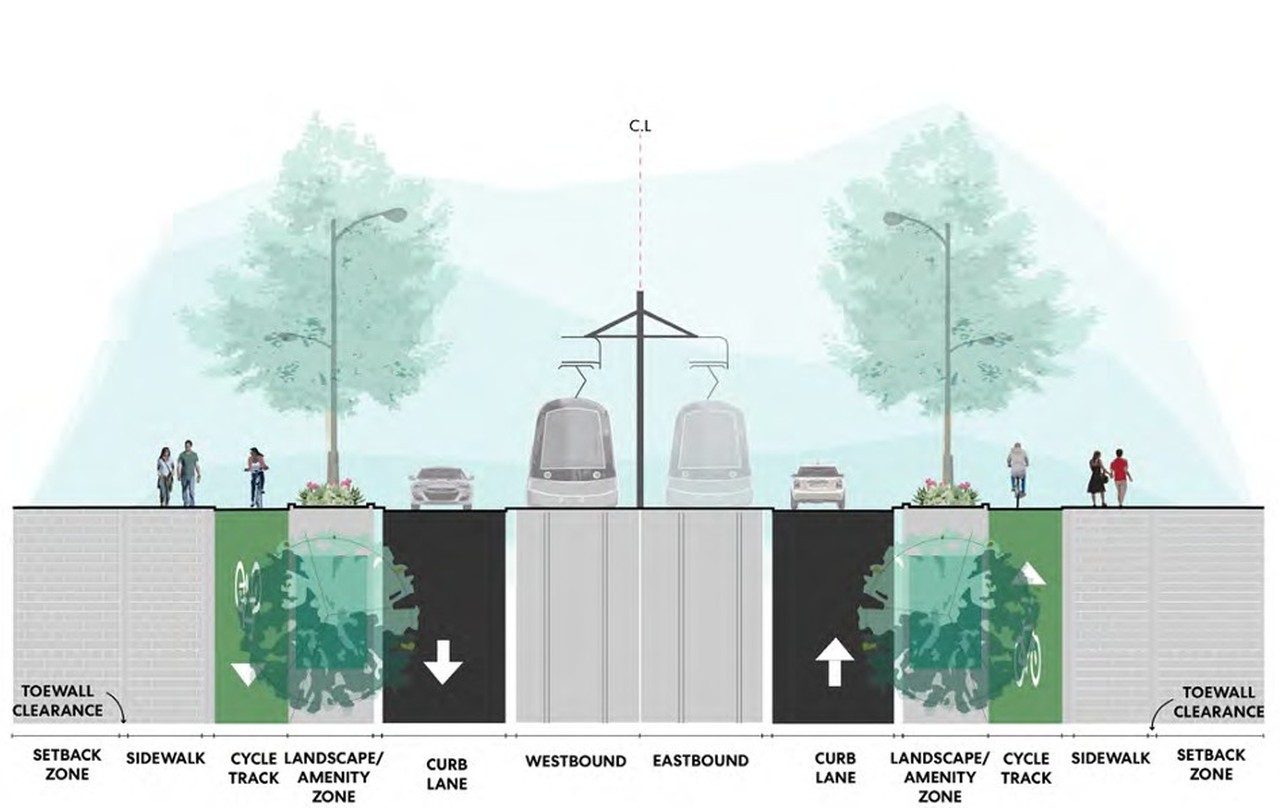 A typical cross-section of the planned alignment along Morningside Avenue between Kingston Road and Fairwood Crescent, image courtesy of the City of TorontoThe $10 million dollar sum recently approved for the project is intended to advance these preliminary designs to a state of 30% completion. This will allow City staff and consultants to determine in greater detail the requirements for implementing such a project, such as property expropriation and utility relocation. Additionally, the funding announcement comes at a time as the municipal government is attempting to garner provincial and federal support for the project. Those two governmental bodies have historically shown limited interest in the idea of a LRT for Scarborough, with provincially-run Metrolinx even failing to protect for a future integration of service on the SERT with the Eglinton Line 5 during the construction of the Crosstown.
 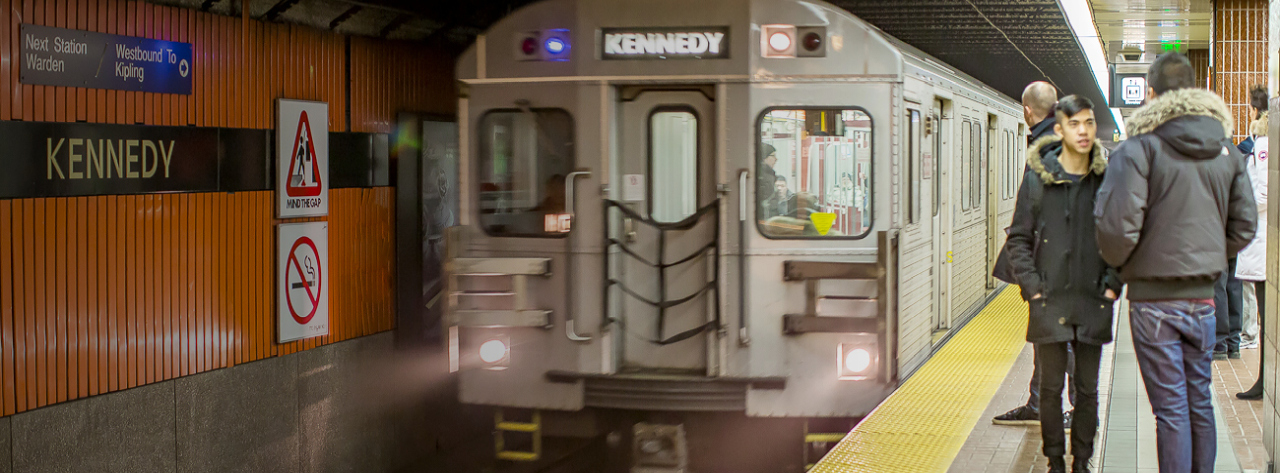 A Line 2 train arrives at Kennedy station, image courtesy of the TTCPart of the higher levels of government’s hesitancy to become involved politically or financially with the SERT may be that, by the City of Toronto’s own admission, the new line would run slower than the bus service it would replace. In the Eglinton East LRT: Initial Business Case, the actual projected speed of the LRT is heavily underemphasised; where it is addressed, the business case states “bus travel speeds [would be] higher than the LRT,” and that due to this failure to reduce travel times, “the project as currently defined [would have] a negative user impact.”
 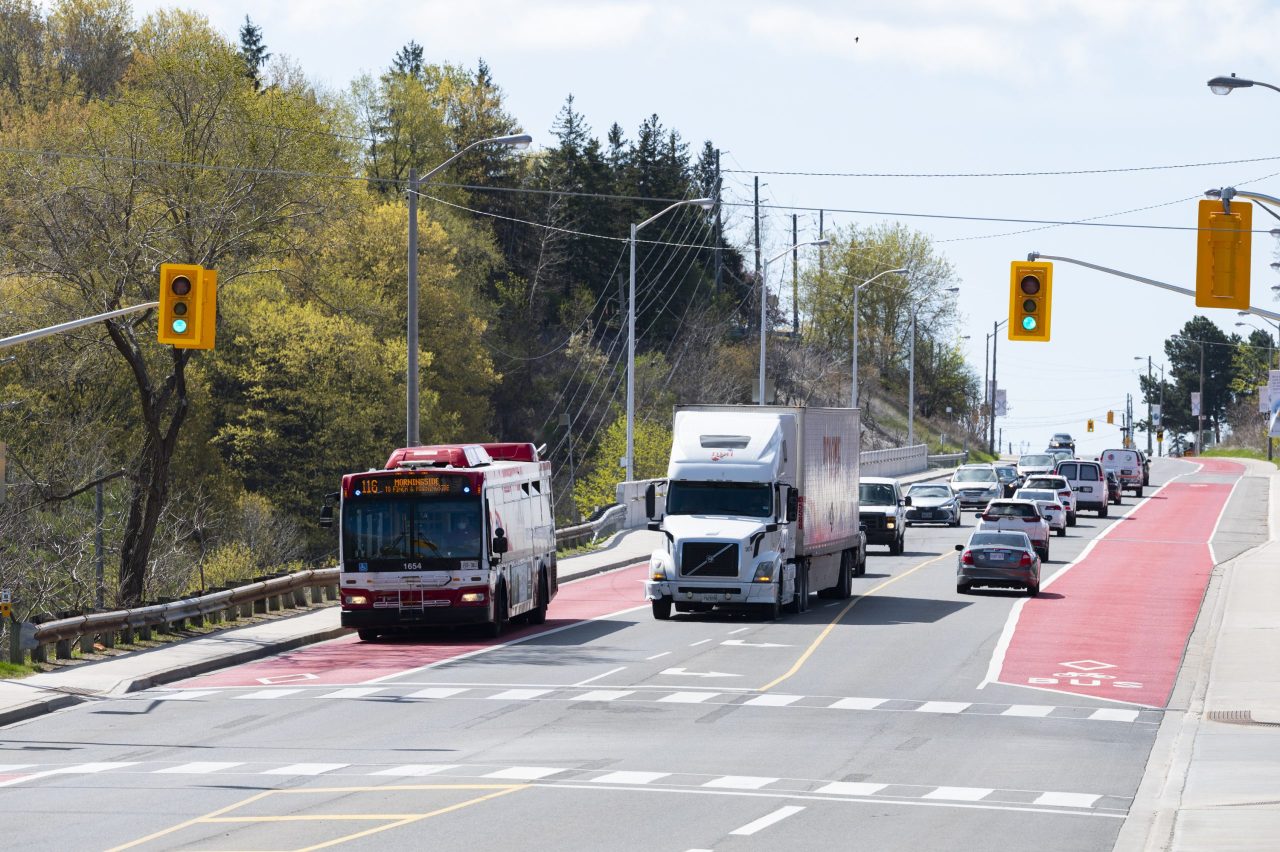 Looking along Morningside Avenue as a 116 Morningside bus travels along the RapidTO bus lane, image courtesy of the City of TorontoIt is also worth noting that LRT business cases have a precedent for dramatically overestimating actual speeds during revenue service. The recently opened Finch West LRT was projected to complete its 10.3-kilometre route in 28 minutes, according to Metrolinx’s Sheppard-Finch Rapid Transit Benefits Case. On opening day, it actually travelled that same distance in 55 minutes—nearly half the projected speed on which the justification for the entire project was predicated. In the face of the ensuing embarrassment, City Hall enacted traffic signal changes to speed up LRV operations, a move which still saw the line running between 45% and 65% slower than its promised speed.
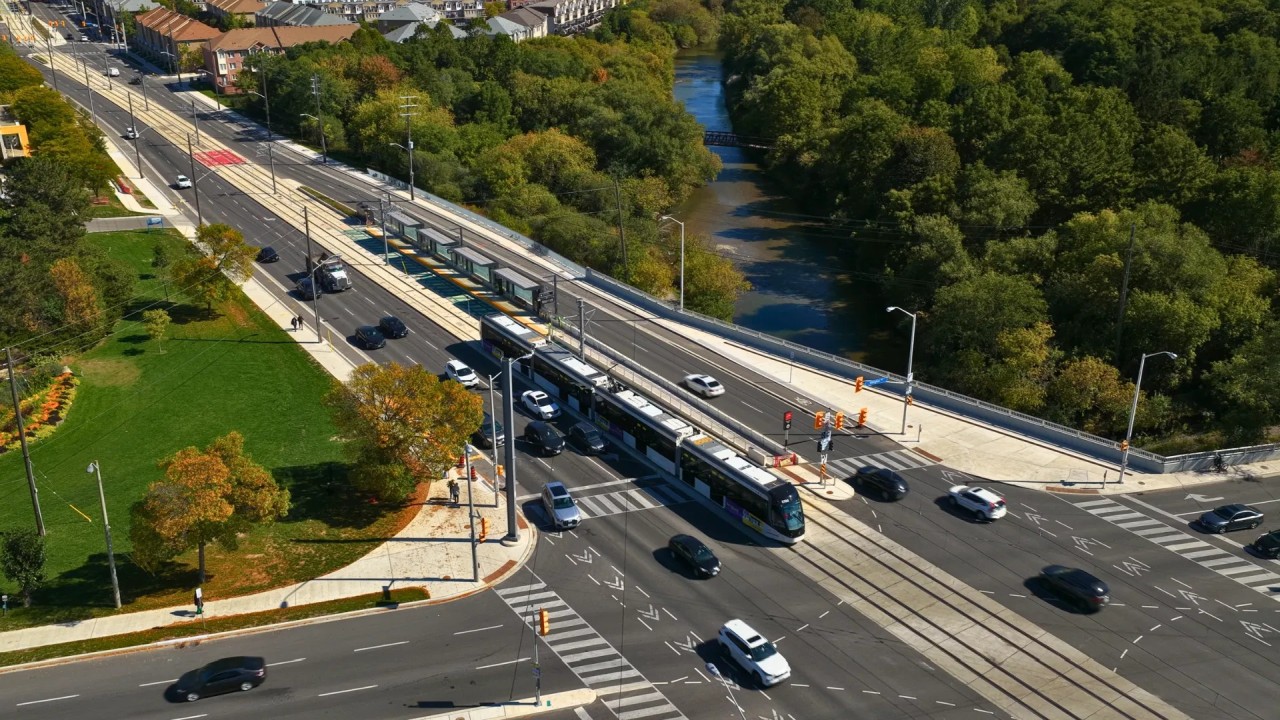 Looking south-west over the intersection of Finch Avenue West and Islington Avenue at a Finch West LRT vehicle, image courtesy of AECONWith the City of Toronto unable to shoulder the multi-billion-dollar cost of building the SERT, and provincial transit interests shifting toward expanded commuter rail, the future of this nearly two-decade-old LRT concept remains uncertain. Nevertheless, with a mayoral election approaching and both incumbent Olivia Chow and likely contender Brad Bradford taking strong stances on the project, it will undoubtedly be a major campaign issue.
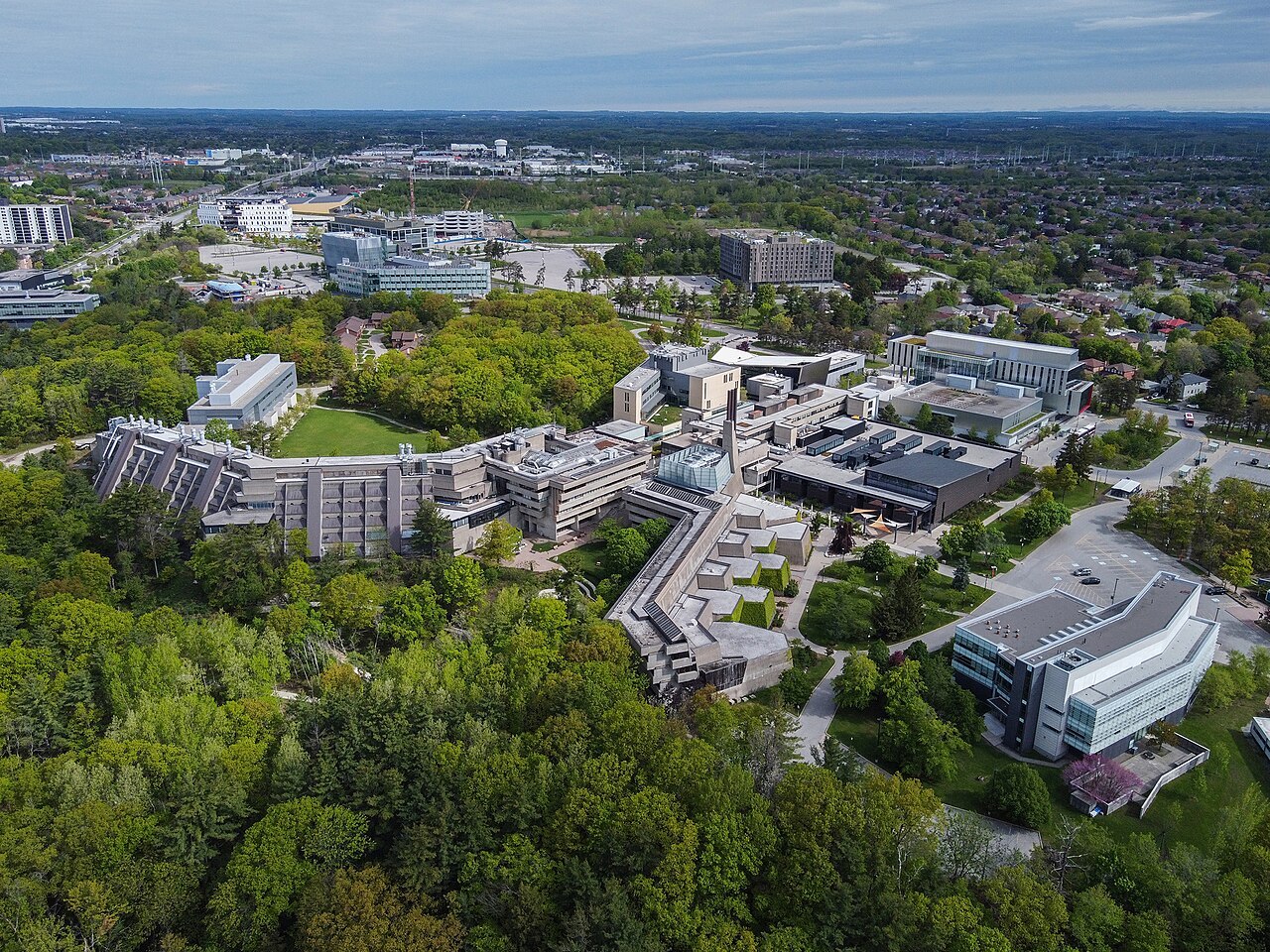 An aerial photograph of the University of Toronto Scarborough campus, 2025, image courtesy of Wikimedia user CanmenwalkerUrbanToronto will continue to follow progress on this development.application.


Recent Comments