This is what should be happening in Metro Vancouver, but it’s not.
SkyTrain is elevated or put underground, to keep streets free for cars.
The cycle lobby is giving precedence over transit customers.
Cars remain the most viable transit mode in the region.
Our regional, provincial, and federal politicians only invest in transit to reward political friends with fat construction projects, such as light-metro.
TransLink remains largely incompetent, in designing an affordable and user-friendly transit service.
And in Munich, no gates or turnstiles; no expensive and complicated ticketing system to deter customers.
User-friendly transit, is just not in the lexicon of TransLink, The City of Vancouver, many universities,Ai?? the provincial government, and the federal government, where transit is designed to profit political friends and secure votes at election time.
Notice, most tram routes service the city centre, providing the all important seamless or no-transfer journey to the transit customer.
It seems that most transit decisions in North America are made with the goal of making life easier for people in cars.
In North America, transit planning is a mess. Decisions like building a hyperloop from Cleveland to Chicago or a one-stop subway extension in Toronto in the face of sound transit planning by experts that say these decisions are ridiculous. In New York City, they arrest people for fare-jumping but let them park cars for free for months; in Toronto again (my home is in the news a lot these days) they beat up kids over a two buck ticket.
Massive development at end of streetcar line/ Lloyd Alter/CC BY 2.0
In Munich, you see what happens with sound planning and good transit. I am staying in the suburbs near a massive new residential and commercial development, with a lovely streetcar right outside the door of my hotel. It stops about six times on the way to the other end of the line at a subway stop.
I have been on this streetcar a number of times,looking out the window at the stores and buildings on either side. You can do that on a streetcar; you are on the surface, a step from grade, so if you want to get off and buy something you can. There are housing, offices and retail on either side; unlike subways with stations far apart, the development isn’t just at nodes but along the entire route.
As you get closer to downtown Munich, you switch to the subway. It isnai??i??t exactly strenuous, and there are lots of shops in the station. And there are no gates or turnstiles; it is all wide open, and works on the honour system. I bought a weekai??i??s pass and just treat it all as my personal transit system. Is there cheating? Sure, but those turnstiles and fare collectors and fancy card systems cost a lot of money.
In the subway, it feels like the cars are fifty years old, with wood and padded seats. Yet they are quiet, smooth and clearly well-maintained.
While I look out the window at the stores and restaurants, I think about the situation in North America. In New York, the subway never runs on time because they have to go slow because of signal problems and general lack of maintenance. The MTA is shutting down a main line for a while, but canai??i??t even agree on bus lanes that might slow cars down a bit.
In Toronto, the dead former mayor ordered a multibillion dollar single stop subway because he doesnai??i??t like getting stuck behind trolleys and the live mayor just panders to the car driving crowd and insists on driving this stupid train under single family houses, when one of the most important roles of transit is to promote development along its length.
In fact, it seems that most transit decisions in North America are made with the goal of making life easier for people in cars- Get those people who donai??i??t drive out of the way!
Really, they should all just come and spend a day in Munich, and see how transit can run smoothly, how it promotes housing and development. They should see how the world works when you donai??i??t pander to people in cars.
Not high speed rail, but TramTrain is an affordable rail option in lightly populated regions.
Vancouver’s mainstream newspapers have been famously ill informed on the subject of “rail”, whether be it, SkyTrain, light rail, or regular railways. I don’t even think there ever has been a honest story about light rail appearing in the Vancouver Sun, but………….
The Sun has completely out done itself on this story and poll.
Without any inkling as to the costs involved orAi?? even what high speed rail is, they offer a poll based on aAi?? transit mode with no definition, nor cost estimation.
It is like a poll asking:
Do you want a million dollars a year for life, no questions asked?
Of course the vast majority will vote yes. Stuff and nonsense.
There is a viable plan, it is called the Leewood Study and it is a very good plan; a foundation for a regional rail network for the Fraser Valley.
A much more honest poll would be:
Do you want:
1)Ai?? Large tax increases and user fees for a $12 billion or more high-speed rail line up the Fraser Valley , from Vancouver to Chilliwack or Hope.
or
2)Ai?? Modest tax increases for a regional rail network, with costs starting as low as $750 million for a Vancouver to Chilliwack route.
Now that is a poll worth asking or is the Vancouver Sun afraid to ask?
As Barnum observed, there is a sucker born every minute.
The Hyperloop is just another “better mousetrap scam” from the “anything is better than rail” crowd.
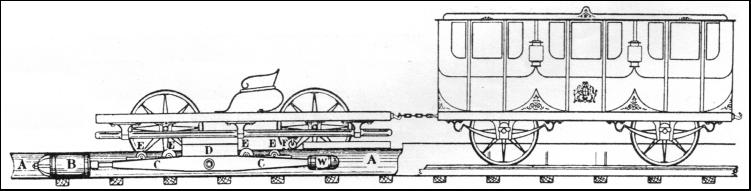
Hyperloop is just a 21t century version of the atmospheric railway con-game and a game well played to relieve ‘true believers’ of cash, like any other scam.
Very few atmospheric railways ever worked and when they did, it was for a very short while, as the mode extremely proved expensive to operate; more expensive than the railways they were to replace.
Sound familiar?
It should, because that is how are SkyTrain light-metros are built, supported by true believers, conned by very adept confidence tricksters. But, that is another story.
Hyperloop is just more of the same and it seems the the politicians in the American “Rust Belt” are playing the part of Barnum’s “suckers” as they are handing over millions of dollars to an untried, yet to be designed transportation system based on past atmospheric railway cons.
The most important thing for any con artist is never to think like a mark. Marks think they can get something for nothing. Marks think they can get what they donai??i??t deserve and could never deserve. Marks are stupid and pathetic and sad. Marks think theyai??i??re going to go home one night and have the girl theyai??i??ve loved since they were a kid suddenly love them back. Marks forget that whenever somethingai??i??s too good to be true, thatai??i??s because itai??i??s a con.
Holly Black
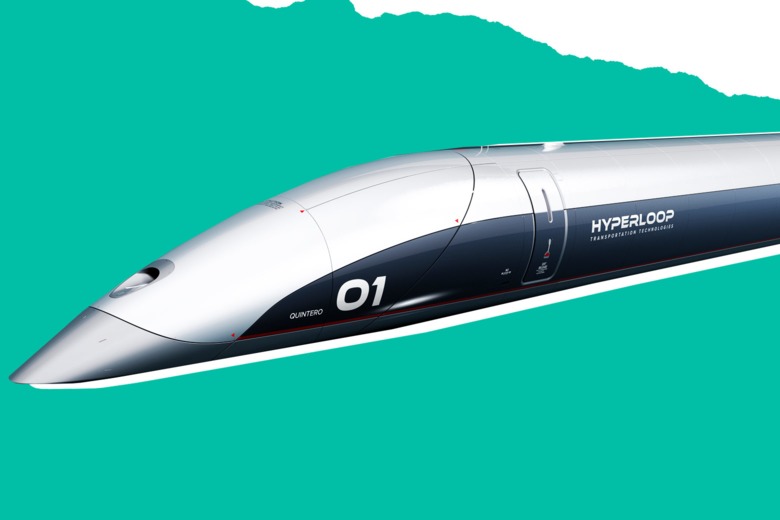
Cities and states are throwing money at a nonexistent mode of transportation.
By Henry Grabar
A Hyperloop capsule passenger car.
Photo illustration by Slate. Photo by Hyperloop Transportation Technologies (HTT).
Ai??For American lawmakers, funding public transit often feels like small ball. Politicians prefer to dream bigger. Earlier this month, transportation agencies in the Cleveland region and in Illinois announced they would co-sponsor a $1.2 million study of a ai???hyperloopai??? connecting Cleveland to Chicago, cutting a 350-mile journey to just half an hour. Itai??i??s the fourth public study of the nonexistent transportation mode to be undertaken in the past three months.
ai???Ohio is defined by its history of innovation and adventure,ai??? said Ohio Gov. John Kasich, who once canceled a $400 million Obama-era grant for high-speed rail in the state. ai???A hyperloop in Ohio would build upon that heritage.ai??? In January, a bipartisan group of Rust Belt representatives wrote to President Trump to ask for $20 million in federal funding for a Hyperloop Transportation Initiative, a Department of Transportation division that would regulate and fund a travel mode with no proof of concept.
Itai??i??s hard to keep up: Last week, the Mid-Ohio Regional Planning Commission announced feasibility and environmental-impact studies for a different hyperloop route, connecting Pittsburgh and Chicago through Columbus, Ohio, to be run by a different company, Virgin Hyperloop One. The companyai??i??which fired a pod through a tube at 240 mph in Decemberai??i??is also studying routes in Missouri and Colorado.* Meanwhile, Elon Muskai??i??who has obtained (contested) tunneling permission from Maryland Gov. Larry Hoganai??i??pulled a permit from the District of Columbia for a future hyperloop station.
But letai??i??s first look at the hyperloop that Grace Gallucci, the head of the Cleveland regional planning association the Northeast Ohio Areawide Coordinating Agency (NOACA), told local radio could be running to Chicago in three to five years, and to the study of which the NOACA contributed $600,000.
The company behind it, Hyperloop Transportation Technologies, is one of a handful of U.S. entities that have emerged since Elon Musk first introduced the idea in 2012. In a promotional clip for the Great Lakes Hyperloop that plays like a sequel to Chryslerai??i??s Detroit Super Bowl commercial, a gravelly voice intones that this is not a dream, as b-roll footage of factories is cut with aerial footage of what can only be construction of an oil-and-gas pipeline. ai???Weai??i??ve already got a prototype,ai??? the narrator instructs.
They donai??i??t. Andrea La Mendola, the companyai??i??s chief global operations officer and chief engineering council member, told me there is no full-scale prototype just yet. The company says it is building one now in the southern French city of Toulouse. ai???In terms of full-scale, all-integration, it will [be the first prototype],ai??? he said. ai???We will start with 400 meters. Then we go up to 1 kilometer, and possibly 1.6 kilometersai??i??if we add a curve at the end.ai???
For those who believe that, what we call SkyTrain, is a great Canadian invention, will be sad to hear it is not, not even close; it is a mix and match transit system, using largely discarded 1960’s and 70’s technology.
Krauss-Maffei’s Transurban was a 12-passenger automated guideway transit (AGT) mass transit system based on a MAGLEV guideway. Development started in 1970 as one of the many AGT and PRT projects of the age. Its selection as the basis of the GO-Urban system in Toronto in 1973 made it well known in the industry; it would have been the basis of the first large-area AGT mass transit network in the world.
The suspension used attractive magnetic levitation, lifted on two upside-down T-shaped beams.
Technical problems cropped up during the construction of the test track, and the sudden removal of funding by the West German government led to the project’s cancellation in late 1974.
Given the technical problems including problems turning corners, the Ontario government decided to abandon the MAGLEV concept. Instead, they took the basic train design, linear motor, SEL (Standard Electric Lorenz) control system and other features of the Transurban, and redesigned it to run on conventional steel wheels. The result was the “ICTS” system. Announced in June 1975, the government formed the new Urban Transportation Development Corporation, in partnership with five industrial firms.
Today known as the Innovia Advanced Rapid Transit (ART), ICTSALRT/ART is the basis for only seven such systems built in the past 40 years, of which only three are seriously used for urban transit.
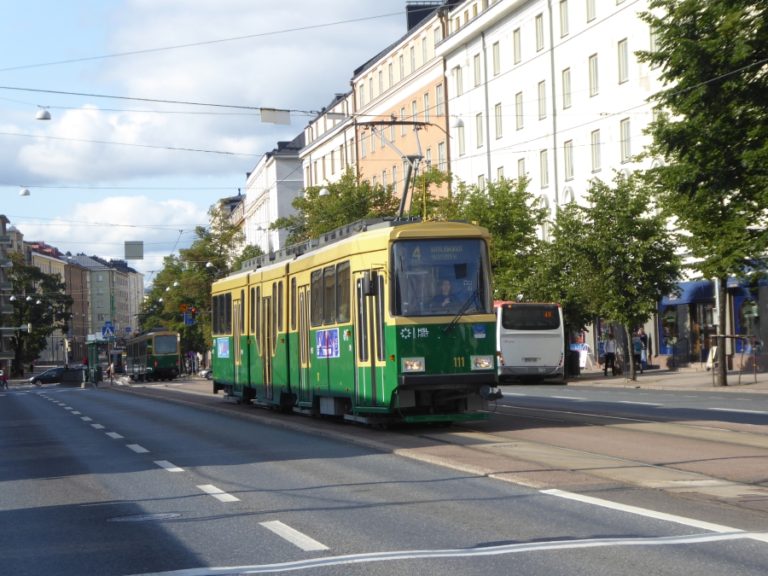
After listening to an very ill informed person on the radio, pontificating on all the ills of light rail, he made one last grand statement, about ” LRT would always get stuck in traffic”.
Of course the person in question was talking about streetcars, or trams that operate on-street in mixed traffic, but that is not light rail.
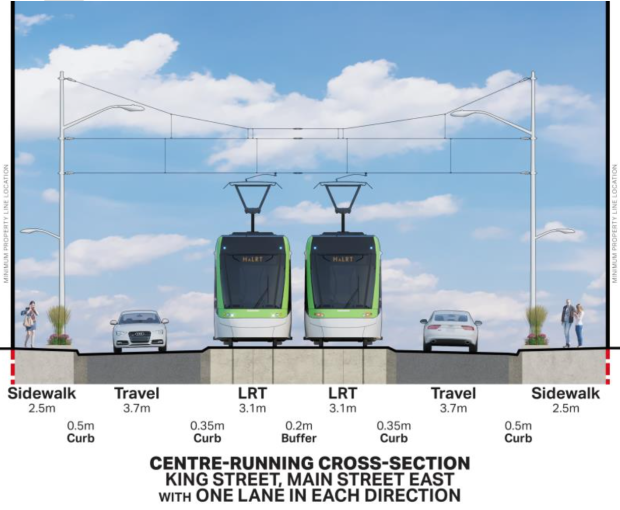
Light rail is a tram that operates on a dedicated rights-of-way, out of the way of auto traffic, thus not impeded by traffic.
This was realized back in the 1930’s and many tram operators were upgrading their tram lines with portions of ‘reserved R-o-W’s to increase the efficiency of their servcie, able to provide higher capacities and passenger comfort, without buying new trams.
WW 2 and the post war anti-tram movement all but halted upgrades to tram systems world wide and it was not until the resurgence of light rail in the 80’s, did the concept of the reserved R-o-W’s resurface.
Courtesy Tramway.com
A simple yet effective tram reservation in the city centre.
The tracks are slightly raised above the pavement, but still
can allow emergency vehicle access.
The success of the reserved R-o-W lead to dramatic decision, to lawn over the R-o-W, making a the tramway a “Green” linear park.
Courtesy Tramway. com
The lawned R-o-W, making tram routes linear parks.
It is the reserved or dedicated rights-of-way that has made LRT a powerful tool to ease congestion and pollution, by bring metro like service at a fraction of the cost.
Courtesy Tramway.com
A simple reserved rights-of-way, ensures unimpeded access at choke points, such as this bridge.
What is missing from Translink’s Surrey LRT debate, in fact all LRT debates in the region, is the importance of the reserved R-o-W, bringing a SkyTrain like servcie for a fraction of the cost.
The company lost Montreal’s tailor made tender for its REM light-metro project and continues to be late in delivering trams to Toronto and combined with a sundry of other problems has, made the Bombardier product a piranha.
If Bombardier lays off a good number of its employees at its railway plant, there is a very good chance they may mothball niche transit products, such as LIM powered Innovia light-metro.
If the Innovai production line is mothballed or dismantled, I doubt it will be reactivated.
This means no more new cars for the Innovia SkyTrain, unless another company designs and builds a LIM version compatible light-metro.
The recent announcement by TransLink to purchase cars in the near future, will mean nothing, if Bombardier does not have a production line to make them.
Memo to Premier Horgan: It is called the perils of a proprietary railway.
Company was recently excluded from contract to supply trains for Montreal’s light-rail
The railway division of Bombardier Inc. says losing out on a large electric train contract in Montreal may force it to lay off workers this fall at its plant in La Pocatiere, Que., unless it wins some new contracts.
Spokesman Eric Prud’homme describes the situation for the facility as perilous once the contract to make new subway cars for Montreal’s metro system ends.
He says it is “five after midnight” for the plant over the next 12 months, putting at least half of the plant’s 600 jobs on the line.
Local elected officials and workers are calling for an emergency meeting with Quebec Premier Philippe Couillard on the future of the plant.
They asked Couillard Monday to update his recent comments that there would soon be work and other contracts for this site, even though Bombardier was not selected for the contracts of the Metropolitan Express Network (REM).
The Quebec multinational was excluded from the contract to supply trains, which was won by a consortium involving Alstom Transport Canada and a subsidiary of SNC-Lavalin.
No local content requirement was set by CDPQ Infra, the subsidiary of Caisse de depot et placement du Quebec, which is leading the $6.3-billion project.
Bombardier also lost out last year on a contract to build cars for Montreal’s commuter transportation network, which ordered 24 new train cars from the China Railway Rolling Stock Corporation after lowering Canadian content requirements to 15 per cent from 25 per cent in prior contracts.
Prud’homme says La Pocatiere could benefit from an extension of the Montreal Metro contract, which is replacing aging cars on only half the subway network.
A year ago, the Canada line went ka-put in a snow storm and thousands of customers were stranded North of the Fraser River and all TransLink can do is advise people to walk a snow bound rail bridge, in a snow storm to get to Richmond.
This is unacceptable; in Europe this would have been illegal!
Kevin Desmond should shut up about new SkyTrain cars and capacity because the claims are moot when the damn thing doesn’t run!
The sheer incompetence of TransLink is appalling, but what is more appalling is that the Premier and the Minister of Transportation allows such incompetence to run the provinces largest public transit network!
In Germany, there would have been criminal action against TransLink, but in BC, the land of money laundering, no one gives a damn about transit customers, especially TransLink executives.
Why is Premier Horgan the NDP allowing this to happen?
Canada Line Ka-Put For Evening Rush Again! ai??i?? CEO Kevin Desmond Must Resign!
Twice in three days, the Canada Line has called it quits during Mondayai??i??s evenings rush hour. Snow, again is the culprit, but really, that excuse is wearing thin.
By world standards, it isnai??i??t a lot of snow that has fallen (1 cm per hour) and with trains every three to five minutes crossing the bridge over the Fraser River, there should be no large accumulation of snow that would stop the metro.
Why is this $2.2 billion mini-metro not able to cross the bridge over the Fraser River when it snows?
In other jurisdictions, questions would have been asked in Parliament or legislature and demands made on operating authority to answer why this disruption is taking place.
But this is is a BC Liberal built mini-metro and the mainstream media remain mute, no questions are asked and the transit customer is once again treated like crap!
Translinkai??i??s total incompetence is breathtaking and again, TransLink CEO Kevin DesmondAi?? must resign or be fired
Canada Line SkyTrain service delays, shuttle buses to come
As Toronto’s Kings street streetcar reinvents itself as LRT, good things happen.
But, as always with something new, people will complain, especially some restaurant owners who no longer can park their cars in front of their places of business.
If public transit is to work, it must be given priority over other transportation modes and unfortunately, parking.
Light rail, when built properly gives metro style servcie at a fraction of the cost.
New King Street pilot project data flies in face of claims that business is down 50 per cent
Streetcar travel times continue to improve as pilot goes on, city says
ByAi??Kate McGillivray ,Ai??CBC NewsAi??Posted: Feb 16, 2018 4:04 PM ETAi??Last Updated: Feb 16, 2018 4:04 PM ET
New data released by the city of Toronto suggestsAi??customer spending in the area of the King Street Pilot Project has not been affectedAi??by new rules that prioritize transitAi??and impose restrictions on private vehicle traffic.
That goes against recent protests from restaurateurs and other merchants, some of whom claim the project, which began in November, has cost them up to 50 per cent of their business.
“Preliminary findings indicate that customer spending since the pilot began is in line with seasonal spending patterns over the past three years,” says a report on the pilot project released Friday.
“There will always be skeptics,” said Coun. Joe Cressy,Ai??a long-time booster ofAi??the project. “But I believe the data speaks for itself.”
Cressy acknowledged that thanks to a cold snap, “business was in fact down on King in the early part of this pilot … but it was also down across the city.”
That city’s newAi??spending data comes from Moneris Solutions Corp., a tech company that specializes in processing payments.
Other findings in the report paint a cheery picture of transit on King Street:
A 16 per cent overall increase in ridership on King streetcars.
A travel time improvement of four to five minutes during the evening commute in both directions.
Travel times for cars on most downtown streets since the pilot started have, on average, increased by less than a minute.
“Eighty-four thousandAi??people are now riding the King streetcar. That’s an increase of 12,000 since the fall,” said Cressy. “It’s kind of like building a subway station on King for a fraction of the cost.”
Free parking brought in last month
The project has found enemies in King StreetAi??business owners like Al Carbone, who runs the Kit Kat Italian Bar and Grill and who placed an ice sculpture of a raised middle finger on his patio in protest.
“Eateries, bars and other small businesses on King Street have suffered nearly 50 per cent of revenue losses,” he said in late January.
Restaurateur Al Carbone says he wants city hall to completely scrap the King Street pilot project, and he’ll be keeping up a social media campaign until it does. (John Rieti/CBC)
Carbone also accused the city of “fudging” previous numbers that show the pilot project is increasing ridership without having significant impacts onAi??drivers on surrounding streets.
In response to complaints like Carbone’s, the city brought inAi??free parking on King StreetAi??for up to two hours in early January.
The boost in ridership has come with its own pitfalls: in December, CBCAi??TorontoAi??spoke to commutersAi??who said that while travel times might be improving, crowding on streetcars was still an issue.
By adding new Bombardier Flexity streetcars, which can fit two to three times more people, the TTC has increased the capacity of streetcar service in the pilot area from 2,047 passengers per hour to 2,892 passengers per hour since the pilot began.
Foresight:Ai??The ability to predict what will happen or be needed in the future.
The announcement for the Pattullo Bridge replacement, by Premier Horgan, displayed a complete lack of foresight for transportation needs in Metro Vancouver.
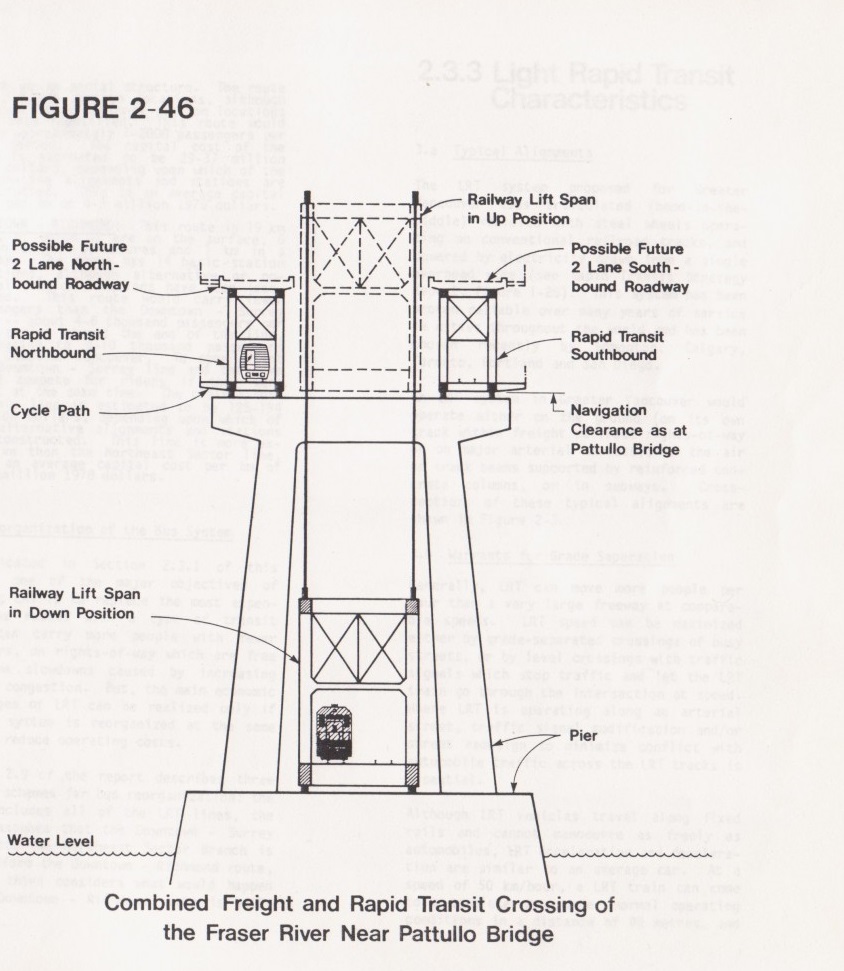
The key to improving regional mobility in Metro Vancouver and the Fraser Valley is a new railway bridge crossing the Fraser River, as the current decrepit, single track rail bridge crossing the river has long needed replacing.
The GVRD knew this back in the 70’s but with the forcing of the SkyTrain proprietary light-metro on the GVRD, all commonsense planning departed the region.
SkyTrain is far too expensive to build much past Surrey and lacks the flexibility to achieve much in reducing gridlock, which leaves the region withAi?? “Hobson’s Choice” (a choice of taking what is available or nothing at all) of using existing railways or no improvement in regional transit.
The current SkyTrain Lobby fail to understand this and presently they they are lost in a transit ennui, with visions of SkyTrain everywhere.
Sadly, they seem to have the Premier’s ear.
For Premier Horgan, an announcement of a combined road/rail bridge would have been a winner, both by providing a much needed replacement for the Pattullo Bridge and improving rail access across the Fraser River with an eye on future transit needs.
As it stands, Premier Horgan and the NDP’s lack of foresight has just given the Fraser Valley a massive slap across the face and no chance of wooing the Fraser Valley voter in future elections.
The GVRD's 1970's preliminary plan for a road/rail bridge replacing both the Pattullo and Fraser River Rail Bridges
The big news today is not the forthcoming announcement by the Premier and Minister of Transportation replacing the aged and decrepit Pattullo Bridge, with a new $1.6 billion bridge, rather it is revelation that so-called due diligence panels of handpicked experts who were hired to review TransLinkai??i??s business cases.
Included in the due diligence panels was a former SNC Lavalin Executive, yet SNC Lavalin hold the Engineering Patents for the ART Innovia proprietary light-metro system! In fact the due diligence panel, to review the TransLink business case for both the Broadway subway and Surrey’s LRT were filled with SkyTrain and light-metro types.
Even more disturbing, no one with any expertise with modern LRT, was on the panel.
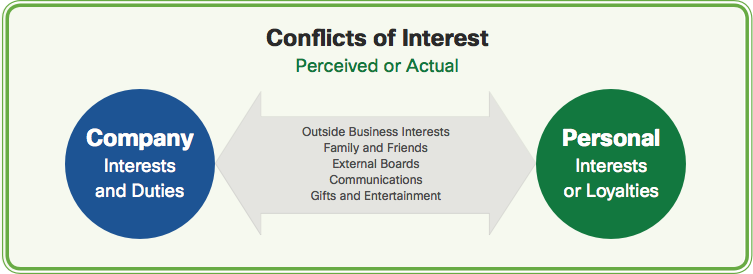
A missive conflict of interest now hangs over both rail transit projects, abetted by Premier Horgan and Minister of Transportation Claire Travena.
The fix is in and with the Broadway Subway and the Surrey LRT, as the recommendations from the due diligence panels were censored from the briefing notes.
As Gerald Fox observed:
So I went back and read the alleged ai???Business Caseai??? (BC) report in a little more detail. I found several instances where the analysis had made assumptions that were inaccurate, or had been manipulated to make the case for SkyTrain. If the underlying assumptions are inaccurate, the conclusions may be so too.
And concluded:
It is interesting how TransLink has used this cunning method of manipulating analysis to justify SkyTrain in corridor after corridor, and has thus succeeded in keeping its proprietary rail system expanding.
Common sense would derail both projects immediately, but building transit was never about common sense, it was and is by political diktat from the Premier’s Office; to build what the premier wants built. What the premier wants built is the political deal he or she cut with SNC Lavalin and Bombardier Inc. the patent holders of the proprietary ALRT/ART Innovia light-metro system.
The cost of the new Pattullo Bridge is pegged at $1.6 billion, according to a mid-October briefing note to the NDP minister responsible for TransLink.
Premier John Horgan, Transportation and Infrastructure Minister Claire Trevena and Municipal Affairs and Housing Minister Selina Robinson will green light the New Westminster-to-Surrey spanner on Feb. 16. They are expected to announce the government, not TransLink, will be responsible for replacing the decaying 80-year-old bridge. A source close to the project also told theBreaker that the contract to build the new bridge is expected to include a community benefits clause that may require, among other things, a quota of aboriginal apprentices.
Aritstai??i??s rendering of the new Pattullo Bridge (TransLink)
The briefing note, obtained by theBreaker under the freedom of information law, was written after the government received TransLinkai??i??s business case for the new four-lane bridge, which would be expandable to six lanes. Jan. 1, 2023 would be the target for opening.
ai???The Mayorsai??i?? Vision indicated that the bridge replacement would cost approximately $980 million,ai??? said the briefing note to Robinson. ai???TransLink currently estimates the Pattullo Bridge replacement would cost approximately $1.6 billion.ai???
The project is not eligible for funding from the Public Transit Infrastructure Fund, but TransLink was exploring options with the federal infrastructure bank and Trade Transportation Corridor Initiative. Horgan and Trevena threw TransLink a curveball last summer when they kept a campaign promise and abolished tolls on the Port Mann and Golden Ears bridges.
ai???TransLink is also looking for a subsidy to replace the tolls that were eliminated Sept. 1,ai??? said the briefing note. ai???The transit authority had been counting on tolls to pay for up to two-thirds of the cost of the new Pattullo, which was estimated at about $1 billion in 2014. The amount of the subsidy has not been determined.ai???
Late last year, Burnaby Mayor Derek Corrigan was voted to replace Vancouver Mayor Gregor Robertson as chair of the Mayorsai??i?? Council and a member of the TransLink board of directors. Corrigan suggested the Pattullo be the top priority, before TransLink builds the Broadway subway or Surrey light rail transit.
Under the heading ai???Escalating Costs,ai??? an aide to Robinson summarized theBreaker story that was headlinedAi?? ai???Mayors got secret update last year on TransLink mega project costs, but kept public in the dark,ai???
ai???The story is based on internal documents released through FOI that suggest the estimated costs for the megaprojects have risen significantly. Final costs will not be determined until TransLink submits its final business cases and will be shared publicly when they are approved (estimated late February).ai???
In 2014, the Surrey project was estimated at $2.21 billion and Broadway $1.98 billion. TransLink warned that costs have increased due to rising costs of property, labour, materials and equipment.
A briefing note said that $300,000 is being spent on so-called due diligence panels of handpicked experts who were hired to review TransLinkai??i??s business cases. The panels were struck in January 2017 to review what is officially called the Surrey L Line and the Millennium Line Broadway Extension.
ai???The focus of each panel was to review current alignment, geotechnical considerations, design and methods of construction; property acquisition; costs estimates; and formation and content of business case in relation to Treasury Board expectations,ai??? the briefing note said.
Former SNC-Lavalin executive vice-president James Burke and ex-B.C. Deputy Finance Minister Peter Milburn are on both panels. Engineer Les Elliott is the third member of the Surrey panel, while veteran SkyTrain construction engineer and transit tunnelling specialist Jeff Hewitt are on the Broadway panel.
Their recommendations were censored from the briefing notes.


Massive development at end of streetcar line/ Lloyd Alter/CC BY 2.0
Streetcar in Munich/CC BY 2.0
Subway coming into station/ Lloyd Alter/CC BY 2.0
Inside the old subway car/ Lloyd Alter/CC BY 2.0
Subway car/ Lloyd Alter/CC BY 2.0
 Not high speed rail, but TramTrain is an affordable rail option in lightly populated regions.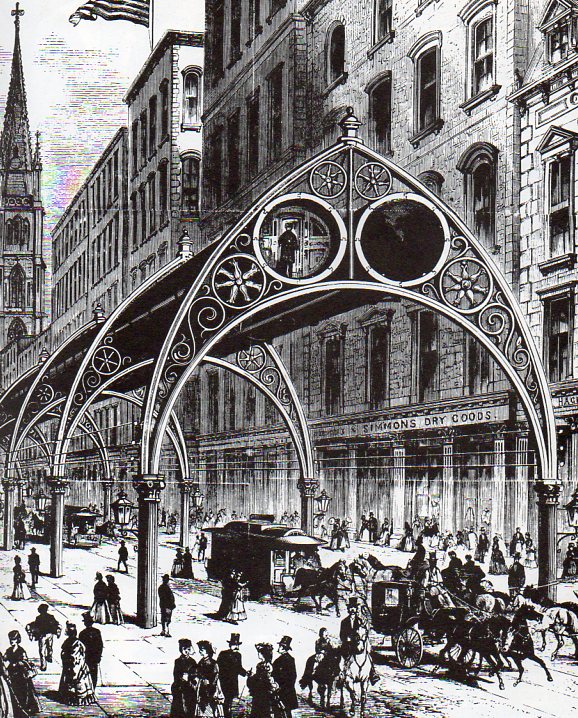

 OK children, a little history lesson, SkyTrain ancestor, The Krauss Maffei Transurban MAGLEV.
 Courtesy Tramway.com
 Courtesy Tramway. com
 Courtesy Tramway.com



Aritstai??i??s rendering of the new Pattullo Bridge (TransLink)



Recent Comments