In Toronto, metro madness is the order of the day, but the overlooked story is the Scarborough R/T, SkyTrain’s first cousin, being torn down because it will be soon “life expired”.
The current debate is whether to build a hugely expensive one stop subway to replace the SRT or a cheaper LRT that will carry more people.
This echo’s our SkyTrain’s dubious history.
The Expo Line was going to be light rail, until the then Social Credit Premier, Bill Bennett, made a private deal with Ontario Premier, “Bill Davis”, to purchase the unsalable ICTS light-metro, recently renamed ALRT.
The Millennium Line was going to be light rail as well, because of the poorly performing and expensive ALRT SkyTrain light metro, but then NDP Premier Glen Clark made a private deal with Bombardier which acquired ALRT’s technical patents and renamed ALM (then owned by Lavalin, which went bankrupt) system and rebranded it as ART.
Supposed to be able to carry 30,000 pphpd, the present SkyTrain can only manage 15,000 pphpd, as the stations are too small and a lack of electrical supply constricts capacity and about $3 billion needs to be spent to increase capacity.
American Engineer and transportation expert, Gerald Fox, easily shredded the Evergreen Lines business case.
The Evergreen Line Report made me curious as to how TransLink could justify continuing to expand SkyTrain, when the rest of the world is building LRT. So I went back and read the alleged Business Case (BC) report in a little more detail. I found several instances where the analysis had made assumptions that were inaccurate, or had been manipulated to make the case for SkyTrain. If the underlying assumptions are inaccurate, the conclusions may be so too.
And his summation devastating.
It is interesting how TransLink has used this cunning method of manipulating analysis to justify SkyTrain in corridor after corridor, and has thus succeeded in keeping its proprietary rail system expanding. In the US, all new transit projects that seek federal support are now subjected to scrutiny by a panel of transit peers, selected and monitored by the federal government, to ensure that projects are analyzed honestly, and the taxpayers interests are protected. No SkyTrain project has ever passed this scrutiny in the US.
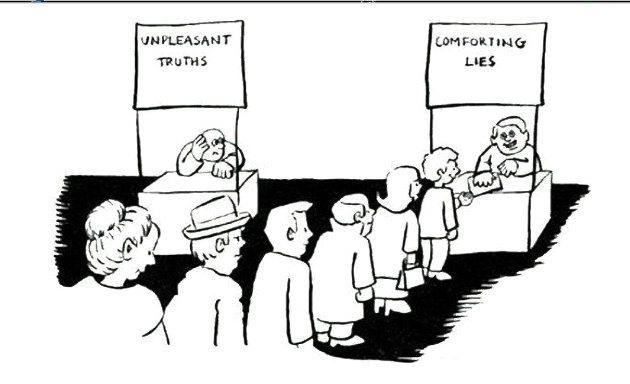
Yet, in Vancouver it is business as usual, SkyTrain is planned and built in a vacuum, where unpleasant and invented facts keep SkyTrain planning going. Myopic bureaucrats, doing the bidding of dishonest politicians, keep SkyTrain going; and equally dishonest academics, afraid of being found out being the charlatans they are, keep SkyTrain going.
This is the sad legacy of those who refused to study transit history and have doomed Metro Vancouver in repeating the same expensive transit mistakes.
Four decades after the TTC, its riders and Toronto ratepayers got stuck with Bill Davisai??i??s RT white elephant ai??i?? the Scarborough RT ai??i?? professional transit planning advice is again ignored in favour of pandering to the Scarborough electorate.
The Scarborough RT pulls into the McCowan Station in 2017.Ai??Ai??(Rene Johnston Toronto Star / Toronto Star)
By R. Michael WarrenOpinion
Wed., April 18, 2018
In 1981, as TTC chief general manager, I recommended the Kennedy subway station be connected to the Scarborough Town Centre by a streetcar line on a separate right-of-way. It was the best value-for-money option.
It would easily handle the 30 year projected ridership and provide excellent rider access. It cost a quarter of the other option: a Rapid Transit (RT) line using unproven ai???Intermediate Capacity Transit Systemai??? (ICTS) technology.
As is happening today, pure, parochial politics interfered.
It provided 20,000 riders per hour capacity. Today the RT line has only reached 5,000. It was supposed to be driverless. But drivers had to be added.
Four decades later, the TTC, its riders and Toronto ratepayers are stuck with Bill Davisai??i??s RT white elephant. Professional transit planning advice was ignored in favour of pandering to the Scarborough electorate.
Sound familiar?
There are many well known reasons why Mayor Toryai??i??s expensive, stubborn support for a one stop ai???vanityai??? subway connection will produce another transit white elephant.
A city-created Expert Panel found a modern LRT was superior to a subway extension on all counts: cost, transit service, economic development, sustainability and social impact.
Non partisan, Pembina Institute, concluded the LRT offered the best value for the taxpayer dollar. They forecast the original three stop subway would cost twice as much as a seven stop LRT ai??i?? and attract eight million less riders a year.
Metrolinx recommended replacing the aging Scarborough RT with a modern LRT. A subway is ai???not a worthwhile use of money.ai??? The province is willing to pay the $1.8 billion cost of an LRT.
The cost of Mayor Toryai??i??s one-stop subway extension could easily balloon from the approved $3.35 billion to beyond $4 billion. This will exceed the total government approved funding envelope of $3.56 billion. And thatai??i??s up from $2 billion only three years ago.
Just before the July 2016 vote a misleading TTC memo to council falsely escalated the cost of the LRT to $2.7 billion from $1.8 billion by pushing the completion date forward by an incorrect six years.
The subway option places a $910 million tax burden on the shoulders of Toronto ratepayers ai??i?? $745 million of this has to come from a property tax surcharge for the next 30 years.
TTC staff will have updated cost and ridership estimates by September. City staff says they canai??i??t release the estimates until January 2019 ai??i?? well after the November election. How convenient for the mayor and council.
Last week, Star reporter, Jennifer Pagliaro, uncovered further reasons to question the subway decision.
The July 2016 decision in favour of the one stop subway over an LRT was based on exaggerated design information by city staff, rushed input from consultants and on ai???hand-drawnai??? sketches.
City staff also ai???significantly down played the progress of the seven stop LRT alternative ai??i??ai??? The LRT was actually 30 per cent design complete at the time of the vote. Council was told it was only 5 to 10 per cent. Staff claimed the subway design was 5 per cent complete when it was closer to 2 per cent.
Tory has said, ai???There is no doubt the original decision to cancel a planned LRT in Scarborough and extend the subway instead was made without enough information or process ai??i??ai??? Tory is repeating the flawed process heai??i??s says heai??i??s against by ignoring the overwhelming case against a subway and refusing to initiate a value-for-money analysis of the two options,
When Tory talks about his SmartTrack plan heai??i??s committed to a cost-benefit analysis on each station. ai???The express purpose of what we are doing here is to move forward with a fact-based, transparent process.ai??? So why not on the Scarborough subway?
If Tory is really committed to transparent transit decision making he should demonstrate that obligation. If he has nothing to hide with respect to the Scarborough subwayai??i??s costs and ridership, he should direct city staff to report the latest cost estimates before the November election.
And he should call for a value-for-money analysis of the two options before further council action. Mr. Mayor, if you stand for transparency, act like it.
R. Michael Warren is a former corporate director, Ontario deputy minister, TTC chief general manager and Canada Post CEO. r.michael.warren@gmail.com
And here I thought universities were filled with intelligent people; people who crave education and research.
At UBC, evidently not!
The ignorance and displayed by the UBC types is nothing more than appalling.
Lysenkoism and jingoism has now become transit planning doctrine.
The current cost of the proposed UBC subway is in excess of $3 billion, based on costs of subway construction in Toronto and a subway to UBC will cost $5.5 billion to $6 billion, easily.
Then there are the added operational costs of over $40 million annually, which begs the question: “Would the customer flows on the Broadway route to UBC sustain a subway?”
That answer is no.
The Broadway B-Line bus, operatesAi?? three minute, peak hour service, or 20 buses an hour, which translates to a capacity of about 2,200 pphpd. Add the other bus services using Broadway and peak hour customer flows are less than 4,000 pphpd.
Subways in North America are not considered unless traffic flows exceed 15,000 pphpd on a transit route, thus if a subway is built, the huge operational subsidies will bankrupt TransLink.
As land development is also included with UBC’s offer to shell out money, (which would be better spent on creating a faculty of urban transport) one can only but feel if the current money laundering, casino, real estate, land development scandal is now pervading in UBC. A subway would inflate property values all along Broadway, allowing land speculators to assemble properties and gaining approval by Vancouver City Council to up-zone to greater density, flip the properties to land developers to tear down affordable housing to build non affordable shoe-box sized condos for the overseas market, all done with laundered money.
It is an Idiot’s Delight At UBC, where transit planning has devolved from a science to the criminal activity of money laundering.
UBC is willing to consider paying for a portion of the Broadway subway, according to a release
The University of British Columbia says contributions could take different forms, including donating land for stations
TransLink is open to discussions, but admits efforts are “directed toward delivering improvements in the 10-Year-Vision
VANCOUVER (NEWS 1130)Ai?? The University of British Columbia (UBC) says it’s willing to consider paying for a portion of the cost of extending Millennium Line SkyTrain all the way out to the Point Grey Campus, so long as it doesn’t interfere with academic funding.
The school is suggesting developers could help pay for it, and also floats the idea of an add-on fare to cut down on the cost similar to the YVR extension of the Canada Line.
The need for improved regional transit connectivity emerged as a key theme during consultations on UBC’s new Strategic Plan and pursuing an accelerated investment in rail rapid transit to campus directly supports the plan’s three themes: collaboration, inclusion and innovation, the university says in a release.
UBC is looking to other cities for ideas on how to contribute, and adds the contribution could take a number of forms.
As York University did out in Ontario, could be in the form of land or as Richmond’s doing in developer charges, explains Vice President of External Relations Philip Steenkamp. Or if it’s a financial contribution, then it would come from transit-enabled revenue, which would be as a result of the increased development we’d be able to do out here as a result of rapid transit.
He admits there’s no word on just how much the university would be willing to contribute.
ai???The current approved extension of the Millennium line to Arbutus is being funded 40 per cent by the federal government, 40 per cent by the provincial government, and 20 per cent by regional partners, he says. So UBC would be looking to contribute toward that regional share.
According to Steenkamp, extending the line all the way to the campus would not only benefit the school. It’s getting increasingly congested in the region, travel times are long, wea’ve got a housing affordability crisis here too, and rapid transit would give people access to more affordable housing options. It would reduce commute times by an average of 20 to 25 minutes each way.
He explains UBC has been consulting extensively with its internal community, which raised these concerns and flagged rapid transit as a priority.
The next step, he says, is to actively make the case that the benefits would extend regionally, and economically. This would connect UBC throughout the region to other knowledge, innovation and health clusters, and it really would help, we believe, the housing affordability crisis and help British Columbia meet its sustainability goals.
Steenkamp adds the university will also be speaking with the key partners; TransLink, all levels of government, and the internal as well as external communities at UBC.
Extending rail rapid transit to UBC is a key component of a regional approach to transit improvement, and directly supports UBC’s Strategic Plan, UBC president Prof. Santa Ono says in a release. Enhanced transit connectivity between UBC and the rest of the region will benefit individuals, businesses and organizations across Metro Vancouver.
Today’s Board approval of the advocacy strategy enables UBC to advance conversations with senior levels of government, regional partners, and with the UBC community about expediting the project, he adds.
TransLink open to discussions
Meantime, TransLink says it’s encouraged to see the Board of Directors openness to contributing to a project like this.
We have had success in the past working with private partners, YVR being one of them with the Canada Line, says the transit authority’s Jill Drews. But at this time, while we see rapid transit to UBC in the future, that timeline is not set. There are no approved plans for a start of construction or even project scoping on something like this.
She says TransLink is open to discussions, but adds efforts are currently directed toward delivering improvements in the 10-Year-Vision.
Phase three does have some early scope work for a UBC extension of rapid transit, she tells NEWS 1130. It doesn’t include any construction, and it’s something that we need to have approved, and approved plan.
Drews says the focus right now is getting the investment plan for Phase Two approved.
Willingness to contribute also poses questions
Andy Yan, director of the City Program at SFU, says UBCai??i??s willingness to contribute makes extending the line all the way to the school a real possibility.
ai???Really, why shouldnai??i??t it go to UBC? And really making that final connection to one of the major job centres in the region.ai???
However, he admits it also poses some challenges.
ai???As you build a line out to UBC, where should the stations be? And what kinds of land uses and development possibilities should occur there,ai??? he says. ai???Of course one of the biggest challenges is how youai??i??re going to pay for it, and what the fare splits might towards the funding of this line.ai???
Yan says building the line all the way through to Point Grey would mean the extension would cut through whatai??i??s already an area with a sizable mid-density type of housing market.
ai???I think the line is looking at from, basically, [VCC] Clark station connecting up down through Broadway to Arbutus, and I think that line has been effectively funded, if memory serves me rightai??i??Ai??I think that this does offer an opportunity now that had previously not been there. But then now comes into, I think, the consultations at the extension of the line from Arbutus to UBC.ai???
Surrey has a big transit and transportation problem, and now with the announcement that the current Mayor, Mayor Hepner, will not to run this fall, now leaves the LRT project in doubt.
The cacophony of the SkyTrain Lobby with their half truths, cherry picked data, and intimidating innuendo are demanding a change from light rail to the proprietary Innovia SkyTrain.
With their campaign of deceit and deception one fact remains for Surrey, either build LRT now or wait twenty or more years for a SkyTrain Line; which will be assuredly out of production and will end up building with LRT in the long term!
Surrey faces a classic Hobson’s Choice: Either build LRT now, or get nothing.
Why?
The problem with SkyTrain, is SkyTrain itself. Extending the Expo Line means a $3 billion refit of the Innovia system must take place. This refit or rebuilding is to increase capacity; increase the electrical supply; a host of track and switch replacements: and expand the station platforms on all stations on the entire Innovia network.
This means a $2.5 billion (current budget for LRT) SkyTrain expansion in Surrey could cost $5.5 billion or more and there is no money budgeted for that!
The region can only afford one rapid transit project every decade ans even with a windfall of federal money, a change from LRT to SkyTrain may prove to be too expensive and the project deferred. This will be a bonus for the now $3 billion and increasing Broadway subway as politicians will divert Surrey’s LRT money to complete the politically prestigious subway project – even to UBC.
This will leave Surrey with no money for SkyTrain unless road pricing and congestion charging is in place and that will not happen any time soon.
So Surrey Mayor and Council and the wannabe mayors and Councillors should take heed. You will have a Hobson’s choice with light rail;
Either build with LRT or build with nothing at all.”
A new player in Vancouver politics,Ai??Vancouver Green Citizensai??i?? Group, is emerging and is taking critical aim atAi?? Metro Vancouver and TransLink.
I have always said that Translink’s ridership numbers are inflated and the recent news releases; re releases and re re releases are indicative of TransLink’s desperate attempt to coax the public to accept Metro Vancouver’s 10 year plan and the implementation of road pricing.
I think TransLink is failing to find anything but a small base to support their two hugely expensive transit projects, both of which are tantamount to be two major fast ferry style fiascos, which will do nothing to reduce auto use and pollution, but will greatly increase Translink’s operational subsidies and property taxes.
The Broadway subway is the biggest threat to public transit in Vancouver as the huge costs involved, the huge annual subsidies will mire TransLink into a muddy quicksand of debt and pollution.
From the KPMG, Pete Marwick, Stevenson & Kellog - 1992 GVRD Cost of transporting people in Greater Vancouver. Source BC Transit. Inflation adjusted $250 million!
Either the housing crisis tied to rapid transit or climate change exacerbated by rapid transit is enough to scuttle the Broadwaysubway.Ai?? When Steer Davies Gleave did its ai???studyai??? in 2012 to award the Broadway subway to the World Bank barred engineering firm ai???selectedai??? to build it, electric vehicles and bikes werenai??i??t ubiquitous.Ai?? This makes the GHG intensity of users whoai??i??d take the Broadway subway untenable in 2018.
In the table, the carbon footprint for the rail lines is based upon the CO2 which Shoshanna (professional engineer) from McGill andAi??MIT (see below) determined for the Sheppard line subway in Toronto (30,545 tonnes of CO2 per km of subway). Carbon footprint is approximate for the above ground portions of the rail lines (horizontal guideways, vertical supports and stations).Ai?? Whatever the carbon footprint turns out to be, TransLink dropped the ball, and the carbon footprint of public transit here is the highest in Canada because the rapid transit lines here really donai??i??t carry many people (small trains) and the GHG emissions from the concrete poured for the lines are incredible.
ai???Shoshanna Saxe, an associate professor at the universityai??i??s department of civil engineering… Building even a relatively small subway like the 5.5-km Sheppard line is a massive, pollution-intensive project. Using data provided by the TTC, Saxe estimated the line required 358,851 cubic metres of concrete and 40,000 tons of rebar to build.
Producing the construction materials generated significant pollution, including at the mineral extraction, mining and processing stages. Emissions were also generated by the energy consumed at the subway construction sites and the movement of people and materials to and from construction locations. In total, Saxe estimated that Lineai??i?? generated almost 168,000 metric tons of carbon dioxide equivalentai??? [30,545 tonnes of CO2 per km of subway].
The average number of people taking public transit for the bus system from 2017 to 2018 and rail lines from 1985 to 2018 is calculated from the annual passenger-trips published by metrovancouver from 1989 to 2015 with the annual passenger-trips for missing years extrapolated.Ai?? TransLink stopped reporting the passenger-trips after 2015 when the passenger-trips went down and the boardings went up for public transit (contradiction whichAi??exposed the spurious method used by TransLink to count riders).Ai?? This indicates that TransLink has used rapid transit to force transfers and inflate ridership.Ai?? When TransLink could no longer expand the U-Pass program further after 2015 to inflate ridership with more double counting, presumably, TransLink stopped giving metrovancouver the data on passenger-trips.
From 2002 to the present, TransLink does not break-out passenger-trips for the Expo Line and combines passenger-trips for the Expo Line and Millennium Line (listed as SkyTrain).Ai?? To arrive at the number of people using the Expo Line from 2002 to 2018, 58% of the passenger-trips for SkyTrain are apportioned to the Expo Line (58% of the SkyTrain length is used as the approximate factor for the passenger-trips on the Expo Line).Ai??Ai??Annual passenger-trips are divided by two (two trips to and from home daily by people using public transit) and 365 days to arrive at the number of people using public transit on any given day for the Expo Line and other rail lines.Ai?? About 882,764 tonnes of CO2 (approximate) were generated when the Expo Line was built.Ai?? On average, roughly 31,000 people (representing about 100,000 boardings or 60,000 passenger trips on average for weekdays and weekends) on any given day have commuted on the Expo Line over the last 32 years (0.9 tonne of CO2 per person per year).
*
Only 28.9 kmAi??with 20 stations was used as the Expo Line length.Ai?? This is fromAi??the hardcopy inAi??the report which was referenced in 2013, TransLink Not in Service.Ai?? Apparently, the length of the Expo Line listed (after the Evergreen Line went into operation) on the internetAi??now hasAi??theAi??greaterAi??length of 36.4 kmAi??with 24 stations.Ai?? Carbon footprint for the Expo Line is greater with the 36.4 km length.
ai??i??Only 10% of the 2.5 million people (250,000 people) on average (weekends and weekdays) in Metro Vancouver use public transit, and the table shows about 300,000 people using all modes of public transit.Ai?? Even though the distribution of people by mode of public transit might be off, the average number of people using public transit in the table canai??i??t be too far off.Ai?? Incidentally,Ai??the maximum number of people using public transit during the peak hour is the average number of people using public transit for the dayAi??multiplied by roughly three.
*
*
ai??i??Another way of looking atAi??the carbon footprint for the Expo LineAi??is that 31,000 people driving cars with the GHG intensity of 0.9 tonne of CO2 per car per year over 32 years produces the same amount of CO2 as the concrete poured for the Expo Line when it was built in 1985 (882,764 tonne of CO2 or whatever it is with the actual amount of concrete used and the number of people carried).Ai?? Carbon emissions by mode are additive in the table for the number of modes used by the public transit commuter.Ai?? It is wrong for TransLink to use passenger trips or boardings by people on public transit to calculate GHG intensity and compare it to the annual GHGAi??intensity by drivers in cars.
*
If UBC could do the research to determine the actual carbon footprint of commuters taking public transit in Metro Vancouver, it could be presented to MLA Andrew Weaver to go to bat for the tram line.Ai?? Also, Steve Brown whoai??i??s the COV engineer for the Broadway subway could be requested to provide his calculations of the carbon footprint of the Broadway subway for peer review whichAi??could be sent to Shoshanna SaxeAi??toAi??vet.
I have included this item because of Raytheons’s involvement of this particular PRT system at a time when they were acting as engineer/consultants for the then Broadway-Lougheed light rail project.
It came closest in the 1990s, when defense giant Raytheon purchased the rights to Taxi 2000ai??i??s technology.
Raytheons negativity towards LRT at the time, encouraged the Glen Clark NDP to make the disastrous decision to build with ART, instead of light rail.
The late Des Turner, noted public transit and LRT advocate and also expert on ICTS/ALRT SkyTrain, wrote a letter to Raytheon Engineers, inquiring as to their knowledge of LRTAi?? planning and construction and in reply received a letter stating that LRT was obsolete and PRT was the way to go, complete with a VHS tape video, which Zwei still has!
VHS tape, like PRT, is obsolete!
Gadgetbahnen, yesterday’s transit for today!
The Twin Cities transit revolution that wasnai??i??t
Personal rapid transit company Taxi 2000 shut down last June after a major investor decided to cut off support. At Taxi 2000ai??i??s Fridley headquarters, visitors could ride a prototype pod on its 60-foot demonstration track. (Submitted photo)
A rendering shows a concept station for Taxi 2000ai??i??s Skyweb Express personal rapid transit system. (Submitted image)
More than three decades after it launched, promising nothing less than to revolutionize urban transportation, Minnesotaai??i??s only homegrown personal rapid transit company is no more.
Last June, Fridley-based Taxi 2000 mothballed its 60-foot demonstration track, first displayed at the 2003 Minnesota State Fair, and laid off CEO Mike Lester, its sole remaining employee. According to filingswith the Minnesota Secretary of Stateai??i??s office, the 34-year-old company was formally dissolved on March 13 of this year.
Taxi 2000ai??i??s demise is, in part, the story of a changing transportation landscape.
Ride-hailing apps like Uber and Lyft are now ubiquitous in Minneapolis and St. Paul, and have pushed deep into suburbs and some smaller cities outside the metro. Fully autonomous vehicles loom, promising even greater disruption. Big cities continue to invest in conventional transit; the Twin Cities will add two new light rail lines and several bus rapid transit lines by 2024.
Meanwhile, personal rapid transit, or PRT, never lived up to its backersai??i?? fervid predictions. The few modest systems that made it to service proved clunky and unreliable. More ambitious projects were stymied by engineering challenges, political resistance, concerns about extensive elevated trackways, and wildly optimistic cost projections that never panned out.
For Taxi 2000, the final blow was the apparent withdrawal of an anonymous, deep-pocketed investor.
ai???Our angel investor decided last year that it was no longer in a position to continue investments,ai??? wrote Taxi 2000 Chairman Morrie Anderson in a terse letter to shareholders posted by a ai???transport-innovatorsai??i?? Google Group member.Ai??ai???We have been unsuccessful in finding other investors, licensees or purchasers of the company assetsAi??and we are now out of funds.ai???
Since the 1950s, PRT proponents have hailed the concept as a catch-all solution to urban transport and land-use woes.
Taxi 2000ai??i??s proprietary system, Skyweb Express, resembled a miniature monorail, with two- or three-person autonomous ai???podsai??? running on narrow, elevated guideways powered by grid electricity. While the company never managed to push the pods past the prototype stage, it claimed they would cost no more than $20 million per mile to implement ai??i?? one-third the cost of light rail transit ai??i?? and dramatically reduce traffic congestion.
Fully built-out PRT systems could theoretically provide door-to-door or corner-to-corner service, obviating the need for traditional stations, funding operations through fare collection alone, and all but replacing private automobiles.
But reality hasnai??i??t caught up. Morgantown, West Virginia, is home to the United Statesai??i?? only operational PRT, a finicky, five-station line opened in 1975. (Purists question whether its 20-person, 8,700-pound cars even qualify as PRT.) A handful of smaller-capacity examples exist overseas.
Taxi 2000ai??i??s mysterious investor had previously promised $30 million to construct and fund a working PRT demonstration system ai???if there is local support,ai??? according to Taxi 2000 founder J. Edward (Ed) Anderson, the former University of Minnesota professor who developed the companyai??i??s technology.
That local support never materialized, and Taxi 2000 closed without constructing a full-scale demonstration system or collecting a single passenger fare.
It came closest in the 1990s, when defense giant Raytheon purchased the rights to Taxi 2000ai??i??s technology. Raytheon modified the technology, rechristened ai???PRT 2000,ai??? and inked a contract with the Chicago Regional Transportation Authority to construct a fare-collecting line near Oai??i??Hare International Airport.
According to a contemporaneous account, Raytheon invested at least $45 million in a 2,000-foot demonstration track at its Massachusetts headquarters. The systemai??i??s eventual per-mile cost ballooned to more than original estimates, threatening its self-sustaining promise. As the Chicago RTA and other prospective customers balked, Raytheon pulled the plug in 1999.
Common sense: something that TransLink, the City of Vancouver, the Mayor’s Council on Transit, TransLink and its CEO, Premier Horgan and is entourage lack.
Common sense: the industry standard for customer flows on a transit line needed to even think of building a subway is 15,000 persons per hour per direction.
Common sense: the actual customer flows on Broadway, under 4,000 pphpd, based on TransLink’s schedule of peak hour 99B-Line service of 3 minute headway’s or 20 buses per hour per direction.
Common sense: huge subsidies must be paid for subway operation on Broadway, which operating costs will be in excess of $40 million annually.
Common sense: realizing what a “FastFerry” fiasco is, before it happens.
Common sense: moving out of Metro Vancouver due to high taxation to fund politically prestigious “FastFerry” style transit projects, that do little to offer a transit alternative, except bleed the taxpayer dry.
The Charleroi Metro, built but never used and remains semi abandoned to this day. Subway operation cost too much for the operating authority and the stations, tracks and infrastructure never used.
Transportation infrastructure influences the shape of cities for centuries. The road pattern of ancient Rome still provides settings for a thousand sidewalk cafAi??s, long after most Imperial buildings have crumbled to dust.Ai??Yet governments seldom think carefully about how their transit decisions will influence future city form and the quality of experience enjoyed byai??i??or inflicted onai??i??our children and grandchildren. This is evident in Vancouver, where I am a professor of urban design at the UBC School of Architecture and Landscape Architecture. Along part of the cityai??i??s Broadway Avenue corridor, current officials insist on building an absurdly expensive ($400-million per kilometre, and rising) subway. Why? Ostensibly because itai??i??s faster, doesnai??i??t conflict with street traffic, and is theoretically capable of moving more people. But other high-capacity surface rail options can be had at less than a fifth of the cost.Ai??Toronto also has donned blinders in insisting on an as-yet-unfunded $3.5-billion one-stationAi??subway extension of the Bloor-Danforth line. Their choice is especially shocking given an earlier provincial government offer to pay for a high-capacity surface light rail system to serve the same district. Toronto is leaving billions on the table to satisfy its urge for a subway, seemingly compelled by a desire for Very Big Things.
The alluring high-speed underworld. Photo by Aaron Yeoman.
This is sad, because both cities once enjoyed extensive surface rail transportationai??i??systems that served not just one corridor, but many. Both Vancouver and Toronto are examples of North American ai???streetcar cities,ai??? built largely between 1890 and 1930, when migrant workers flocked to them and electric streetcars that served every arterial in the city. The legacy of this system is all around us. Both cities have a ai???sense of placeai??? derived from their low-rise linear corridors that are now some of the most attractive and vibrant neighbourhoods. These residential districts have been fertilized by the street railway system that served them. Surface rail provided an even number of customers for each street section, insuring a similar distribution of commercial and then cultural services everywhere. The system induced a perfectly walkable density, with a symbiotic relationship between the customers and streetcars.
So if surface rail works efficiently and affordAi??ably, then what is the impetus behind such a costly venture as a multi-billion-dollar subway extension? Well, follow the money. Around every station will sprout a forest of high-rise condo towers, both to supply the astronomical need for density needed to both feed and justify the subway, and the development taxes needed to pay for it. Our future cities will boast shimmering necklaces of these towers strung along our rapid transit system. But what of the vast majority of residents who will live far beyond a ten-minute walking distance of the stations?Ai??For the cost of one short piece of subway, you could provide high capacity, comfortable, surface rail for an entire city. This more evenly distributed approach would capitalize on the huge investment made in the last century to create these ai???streetcar cities,ai??? and would reinforce the qualities of the neighbourhoods that we hold dear.
City builders are now faced with a choice: we can construct a few expensive subway lines to serve largely unaffordable tower districts, while outlying neighbourhoods depopulate and their commercial streets decline. Or we can capitalize on what already existsai??i??the above-ground worldai??i??with a surface-transportation system that strengthens the existing structure of our cities, and restores urban enclaves that are more walkable, affordable and sustainable.
Which kind of city do we want?
Could this be the fate of the Broadway SkyTrain subway?
The current transit philosophy is that transit be used to density the route it travels, to increase ridership potential. In Metro Vancouver, this has been taken to the extreme, where properties along a transit route have been up-zoned to permit high rise condominiums. The downside, of course, is that affordable accommodations are torn down and one needs to earn about $50 an hour to live in the new high rise condo’s!
Those who are dependent on transit are forced to move and the condo’s are sold to overseas investors who have the money to buy stacked “shoe boxed sided condominiums.
This has failed miserably and what is being planned will fail, with those responsible for this nonsense rewarded handsomely.
Transit is to move people, not to develop land. Land development comes after transit is built, not before and is regulated by city councils.
Heresy, you scream.
No, from the earliest history, public transport was to move people.
The horse drawn Omnibuses, enabled people to live outside a walking distance from their place of employment to their dwelling.
As artisans who lived in the slums could now live further afield, more housing became accessible along the omnibus routes.
With the railway, the middle class could now quit the disease infested inner cities to live in semi garden estates 10 to 30 miles way.
Thus began the suburbs.
Fast forward to the 50’s and the car largely replaced public transit. Though bus routes remained to cater to the poor, the elderly and students, most commutes were made by car.
By the 60’s, congestion and smog, made livability in major cities almost as poor as they were a century and a half ago.
Then came rapid transit, which was to be the cure all for all urban ills, but some forms worked and others, well not really, but for many, the family chariot was the only way to get to work.
Instead of building “rail” transit as cheaply as possible and building lots, to serve as many destinations as one could afford, most cities built a very expensive, showcase “rapid transit lines”, that did little if anything in reducing the evils of congestion and pollution.
Smart cities built with light rail, which was and is a very inexpensive form of “rail transit”and with foresight, planned tram networks which has the proven ability attracting the motorist from the cat if they live and work within the network.
Not so smart cities built with politically prestigious light metro or subways, believing (falsely as it turned out) that glitzy transit will attract ridership and when that didn’t happen, forced every bus passenger onto the glitzy and expensive light metro or subway, pretending it to be successful.
Very stupid cities and politicians do the same thing over and over again, ever hoping for different results.
Metro Vancouver falls under the very stupid category and why they plan to force people out of their cars, because they have failed to provide a user friendly transit system.
User friendly transit, an oxymoron in Metro Vancouver if there was ever one and why Metro Vancouver’s politicians believe in the transit myth and not transit reality.
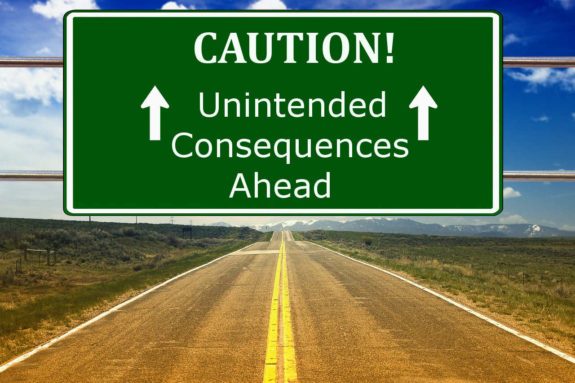
The unintended consequences of transit planning are embarrassingly many. What planners expected did not happen and the unexpected, proved challenging.
In Germany in the 1960’s and 70’s, there was a big push to build subways.
Subways were thought of great public works projects and many cities decided to abandon their surface tramways and build subways and it was generally accepted that by the year 2000 only a handful of tramways would be left in operation in Germany.
Did not happen that way.
Transit authorities ran out of money and taxes skyrocketed as the subways proved much more expensive to build than was originally thought. The subways carried a lot of customers, but overall ridership fell when compared to before tramway abandonment. For many transit customers, taking the car was easier.
Subway construction deterred overall transit ridership and greatly increased fares. Transit became user unfriendly.
Cities that built with subways, had smaller systems and the cities that opted to keep their urban tramways, saw both a greatly expanded transit systems and much higher ridership!
For many cities and politicians, the lessons of subway construction have been ignored, much to the unease of local taxpayers.
The unintended consequences of the guided bus is another example.
In the 60’s and 70’s, transit planners trying to improve bus service came to the conclusion was made that buses had to be more tram like and thus was born the guided bus.
There were three options for guided bus:
Kerb guided, where small vertically mounted wheels guided the bus via a raised kerb.
Rail guided, where the bus is guided by a single rail embedded in the street or bus way.
Optically guided, where the bus was steered by an optical system, following lines on a road or in a variation, by an embedded metallic cable.
All three variations were produced and marketed, but revenue service showed that for all the extra costs for guided bus, they did not attract the transit customers, unlike trams. Today, guided bus, which to replace small trmways, was itself replace by the tram.
Locally, combining rapid transit expansion with densification has had the opposite results than that were intended. As affordable apartments were torn down and developed into high rise condo’s, rents became unaffordable and those who were most dependent on transit had to move to areas where rents wee cheaper and transit poor.
Former Premier’s Glen Clark flip-flop from LRT to SkyTrain in the late 90’s is another example of things not quite going to script.
After the Expo Line went into operation, it was soon found out to be very expensive, not only to build, but to operate and maintain.
A large numberAi?? of of academics, engineers and planners, spent a lot of time planning for LRT to be built on what was then called the Broadway-Lougheed Rapid Transit Project. Political shenanigans by the provincial NDP government with Bombardier and SNC Lavalin and the NDP flip-flopped from LRT to the proprietary SkyTrain.
Instead of getting a vote “getter” with SkyTrain, most people washed their hands of the party and the flip-flop helped contribute to the embarrassing loss in 2001 and the two seat rump for the next Parliament.
Today, the Mayor’s Council’s 10 year plan for transit in the region is strictly amateur hour planning, where the two big items, the now $3 billion 5 km Broadway subway and the estimated $2.5 billion, 11 km Surrey LRT, will not take a car off the road, rather they will greatly increase the cost of transit, yet provide a shoddy service.
With Road Pricing and/or congestion charging just around the corner, the NDP may face having no seats after the 2021 elections. We shall wait with baited breathe for the unintended consequences of the much ballyhooed Mayor’s Council’s phase two plans.
Urban planner is cautiously optimistic about ways Metro Vancouver mayors plan to collect money to fund transit projects
A city planner says the model may hurt a city when it negotiates for public amenities in exchange for building permit
VANCOUVER (NEWS 1130) ai??i?? While the paralysis on municipal funding for Lower Mainland big transit projects has subsided, an urban planner is cautiously optimistic about the ways the Metro Vancouver mayors and TransLink plan to collect the money.
On Friday, the Mayorai??i??s Council announced its blueprint to cover its $2.5-billion share of the $7-billion worth of upgrades for phase two of the Mayorsai??i?? 10-Year Vision for Metro Vancouver Transportation Plan.
The plan includes charging developers up to $600 more per home they build, a model which may hurt a city when it negotiates for public amenities in exchange for building permits, according to city planner Brent Toderian.
ai???The cities are going to have less negotiation position because of this new charge because essentially the province is saying some of that now has to go to pay for transit and so it wonai??i??t be available for things like daycare facilities, heritage preservation, parks and community and cultural facilities,ai??? Toderian said. ai???In a way itai??i??s another form of provincial download.ai???
Phase two of the plan includes a new light rail line in Surrey, extending SkyTrain service along Broadway and boosting overall bus service eight per cent.
Transit fares will also climb two per cent starting in 2020, something Toderian says may run counter intuitive to encouraging more people to take transit.
Toderian does applaud the shift in the amount of funding municipalities were expected to contribute from 30 per cent to 20 per cent.
ai???The trap transit had been put in was it was dependent on local municipalities finding a third of the funds for public transit while just collect eight cents out of ever tax dollar. Itai??i??s a recipe for paralysis that we have been in,ai??? Toderian said.
Additional funding methods include raising property taxes by up to $5.50 annually per household in some areas starting next year and bumping parking rates by 15 cents per hour.
Light-metro, the great philosopher’s stone for urban transportation in the 1970’s has turned out to be nothing more than a wet squib.
BC’s provincial politicians have continually forced light-metro onto metro Vancouver, forcing bus riders by the tens of thousands to make transfers to pretend there is high ridership.
Light-metro was so expensive that a new science of “denisification” was created by embarrassed academics, planners and engineers, to justify building with it.
And what do we have in return?
A somewhat mediocre light-metro system that has cost the taxpayer well over $10 billion to date, that has not created the all important modal shift from car to transit.
Gridlock in the region intensifies.
The bus system is fractured.
The fare system is expensive overly complicated.
A transit system so expensive that TransLink is pleading for the region to impose “road pricing”.
A new word coined for land development, “demoviction”, where renters are forced out of affordable apartments and move to transit poor regions, then the affordable apartments are demolished to provide hugely expensive condos, designed for overseas investors.
Transit in Vancouver has been hobbled by light-metro. The taxpayer can only afford a $1 billion to $1.5 billion small expansion every decade.
The region has invested over $10 billion on light-metro, yet gridlock has increased unabated.
Vancouver is continually haunted by the lack of vision by city and regional planners who all believe that “they will get it right with he next SkyTrain Line built”.
Doing the same thing over and over again, expecting different results has been labeled as the definition of insanity.
Itai??i??s the largest investment in public transit the city has seen in decades, but critics warn of a fatally flawed plan that could haunt the region for years.
It sounds like the kind of project cities donai??i??t dare to dream of anymore: a massive new transportation network on par with the great mass transit buildouts of the 20th century.
The RAi??seau express mAi??tropolitain (REM), French for metropolitan express network, is slated to be the largest investment in Greater Montrealai??i??s public transit in 50 years. Projected to be completed within four years, the fully-automated light-rail system rivals the creation of the cityai??i??s subway, the MAi??tro, in both size and impact. It is among the largest public transit projects in Canadian history and is intended to demonstrate new alternative funding methods for infrastructural mega-projects ai??i?? in this instance, a ai???public-publicai??? partnership.
Once completed, the REM will ferry passengers between the cityai??i??s international airport and the train station located near the core of the central business district. It will carry commuters from rapidly growing off-island suburbs over the new Champlain Bridge ai??i?? designed with light rail in mind ai??i?? and connect new urban neighborhoods currently lacking in public transit access. Further still, the REM will reach into the cityai??i??s sprawling western suburbs to provide a long-awaited improvement to the current cumbersome and delay-prone commuter rail network.
When all is said and done, say its promoters, the REM promises to be the worldai??i??s fourth largest fully-automated light-rail system, offering competitive travel times, full integration with the cityai??i??s existing public transit systems, universal access and climate-controlled multi-modal transit stations. More than just a new railway network, it is being sold as a mechanism to shift the regionai??i??s transportation gestalt toward public transit and to foster new transit-oriented developments within Greater Montreal.
Why, then, are environmentalists, transit lobbyists, architects, urban planners, researchers and the public consultation office highly critical ai??i?? if not outright opposed ai??i?? to a project that has so much potential? Why is there strong opposition to a major investment in public transit in a city that regularly ranks third in North America, after New York City and Mexico City, for daily rapid transit ridership?
Critics charge that the REM is a backdoor to the privatization of public transit in its own right, and by privatizing key public transit infrastructure, in the long run it will limit the potential to expand other systems, such as the cityai??i??s MAi??tro or commuter rail. Moreover, the projectai??i??s developer has chosen a route design that would be highly favorable to its own real estate holdings and would further support suburban residential construction, in which it is a major investor. This has led some to condemn the project as a real estate venture masquerading as a public transit project. To top it all off, though a considerable amount of public money will be used as start-up capital, contractually obligated annual returns will essentially remain in private hands.
More broadly, whether the REM is even a good public transit system remains an open question ai??i?? the provincial environmental assessment board has indicated it isnai??i??t convinced that the REM would deliver on any of its promised benefits.
TransLink and the City of Vancouver have trundled out their end game for the Broadway subway and it is nothing more than a grifter’s delight of fake news and alternative facts.
To remind everyone, subways are only built on transit routes when passenger flows exceed 15,000 pphpd (20,000 pphpd in Europe).
Current traffic flows on Broadway are less than 4,000 pphpd.
So it is time for TransLink and the City of VancouverAi?? to sell the Subway lie.
“If you tell a subway lie big enough and keep repeating it, people will eventually come to believe it. The subway lie can be maintained only for such time as the City of Vancouver and TransLink can shield the people from the political, economic and/or tax consequences of the subway lie. It thus becomes vitally important for the City of Vancouver and TransLink to use all of its powers to repress dissent, for the truth is the mortal enemy of the subway lie, and thus by extension, the truth is the greatest enemy of the City of Vancouver and TransLink.”
In the East London vernacular; “the porkies are flying”.
So let’s look at TransLink’s big selling points for the Broadway subway; the $3 billion plus option!
Claim #1
More Volume.
A tunneled SkyTrain extension allows for the highest number of travelers and ensures the system retains theAi?? capacity needed for the regions growing needs.
There is so much wrong and misleading with this statement that the only conclusion available is to mislead the public.
The SkyTrain Innovia Line’s Operating Certificate with Transport Canada limits capacity at 15,000 pphpd, unless an estimated $3 billion is spent to enlarge stations and station platforms to allow longer trains; renew the electrical system to operate more trains; a new automatic train control system; new switches to allow faster operation; the possible replacing some guideway beams on the Expo Line and more.
If subway stations are built with only 80 metre long platforms, maximum capacity will be restricted to 15,000 pphpd, close to what the mini-metro system is carrying at peak hours (according to TransLink claims).
It is interesting to note that coupled sets of PCC trams in Toronto were carrying 12,000 pphpd on the old Bloor/Danforth route and that modern LRT carries over 20,000 pphpd on on-street routes in many cities in Europe. Karlsruhe Germany recently operated coupled sets of trams, operating at 40 second headway’s, on one of the cities main thoroughfares, offering a capacity well in excess of 30,000 pphpd.! Karlsruhe is now building a subway on that route and gives good indication at the threshold considered to build a subway in Germany.
Claim #2
Less Transfers
A tunneled SkyTrain extension reduces the need for transfers at Commercial Broadway Station – the region’s biggest transit bottleneck.
This is so dishonest, it is more than laughable.
Question: “Did TransLink and CoV spin doctors sleep through their arithmetic classes?”
Present, Millennium Line and Expo Line customers need only to take one transfer from train to B-Line bus.
With the subway, Millennium Line and Expo Line customers will still only have to make one transfer, unless…
If the B-line bus service terminates at Arbutus, then Expo Line customers will have to make two transfers: to the Millennium Line then transfer again to a B-Line bus.
All the subway will do is move the bottleneck to the Arbutus terminus.
Claim #3
Lower Operating costs.
SkyTrain technology has the lowest operating costs per km. and per passenger than other technologies like light rail and bus rapid transit.
This is blatantly untrue and demonstrates how dishonest TransLink and the CoV are.
Just the Expo Line was found to cost 40% more to operate than Calgary’s C-Train (both lines, then, being about the same length), with the C-Train carrying more customers.
In 1992, the GVRD found that just SkyTrain Expo Line was subsidized by $157.63 million annually, more than bus and trolley bus systems combined!
SkyTrain has been on the market, under various names since the late 1970’s and only seven have been built. Not one Innovia SkyTrain system has been allowed to compete against LRT! No LIM powered Innovia SkyTrain system has been sold in the past decade.
The Toronto Transit Commission, estimates that 5 km of subway will add $40 million to operating costs!
Question: “If SkyTrain is so cheap to operate, why does no one want it?”
Claim #4 More flexible
Because SkyTrain technology is driverless, TransLink can easily add or remove cars to accommodate demand.
This old saw has been around so long, that I guess the CoV and TransLink spin doctors resurrected it, from the dead pile.
Light rail, can increase capacity on demand, by adding more vehicles to form coupled sets, without added staff.
Larger light rail vehicles, which today have a capacity three or four times as much as an Innovia SkyTrain cars, have ample spare capacity, that there is seldom any need to diagram more cars in operation.
Light rail can operate on-street in mixed traffic; on a reserved or dedicated rights-of-way; elevated, in a subway and can also track-share with mainline railways. It is LRT which is truly flexible, not SkyTrain which can only operate on its extremely expensive guide way.
Claim #5
More efficient goods movement
Underground transit will free up road space for more efficient goods movement and vehicle transportation.
Desperation is shown by this claim.
As subway stations will be inconveniently located and are generally user unfriendly, subways have proven poor in attracting new customers, thus car traffic on Broadway will not be reduced, but congestion, may increase, creating more, not less gridlock along Broadway.
Emergency vehicles operators like dedicated tram routes because they can use them in an emergency, navigating around traffic jams.
Several European cities now deliver freight by tram, as pioneered in Dresden and Amsterdam.
The epitome of modern light rail's flexibility and adaptability, a freight tram on lawned R-o-W.
Claim #6
Faster Commutes
The SkyTrain extension will cut travel time from Commercial Broadway to Arbutus by half. People commuting from Coquitlam Centre could reach central Broadway in 40 minutes – as fast as the car.
The benefits of faster commute times to central Broadway are overstated and in fact not relevant, as commute times for people other than Coquitlam will remain the same or increased.
One can lose upwards of 70% of potential customers per transfer.
It is longer to travel by subway if one’s trip is 7 km or less.
Question: “Is the expenditure of $3 billion or more for a SkyTrain subway to Arbutus worth a few minutes in time savings for so few people?”
Claim #7
Meets Regional Vision
The mayor’s Council vision for Transportation outlines the need for the Broadway subway to help meet our collective transportation needs.
The Mayor’s Council’s 10 year vision, was doing what Vancouver wanted, to build a subway to both make Vancouver a world Class city (all cities are world class if they have a subway, didn’t ya know) and to appease land speculators and land developers who donated big money to Vision Vancouver for wholesale destruction of affordable apartments and theAi?? construction of high rise condo’s for overseas money launderers and speculators.
The mayor’s Council on Transit, was once described as a bunch of children playing with their toy trains that Father Christmas left them on Christmas morning.
A $3 billion plus subway will rob much needed transit monies in other regions.
A $3 billion plus subway will not reduce congestion.
A $3 billion plus subway will increase transit costs and transit fares.
A $3 billion plus Broadway subway will benefit no one except land developers and land speculators.
It is clear that the proposed Broadway subway is all about moving money and not transit customers.










Recent Comments