All Quiet On The Eastern Front

Zwei has a habit of making people mad and the list is long.
So, in an effort to even more people mad, I will recall a conversation I had a week or so back with a former NDP politician.
The former NDP politician wishes to remain anonymous as the person does not want to get harassing phone calls from the now premier’s Office.
There will be no Vancouver to Chilliwack rail service, because those in the NDP’s hierarchy do not want it and will invest only in official SkyTrain projects. As the former politico said joking; ” so please stop comparing the Broadway SkyTrain subway to a FastFerry project, even though it is.”
Why does the former NDP politico say this?
Past NDP/Liberal politicians and hanger-ons would be horribly embarrassed by any form of light rail operating anywhere in BC, as it would contradict preconceived notions based on previous private deals made to SNC Lavalin and Bombardier, holders of the proprietary SkyTrain light-metro’s patents. This includes the grand economies of the truth about cost, speed, capacity and safety.
University types would also be embarrassed by LRT, simply because it would refute the density quest for rapid transit theory they so favour, which are designed mainly to up-zone properties along the metro, for sales to overseas money launderers and handsome profits for land speculators.
The mainstream media would also be exposed for publishing almost 40 years of incompetent, non factual, anti LRT rhetoric.
There is so much professional misconduct associated by current transit planning, that many jobs would be in jeopardy. It is just too simple to continue to encourage the SkyTrain Lobby and the SkyTrain sheep to keep bleating SkyTrain good; light-rail bad routine.
On June 28, the Metro Vancouver’s mayor’s Council will rubber-stamp both the $3 billion Broadway SkyTrain subway and the $2.5 billion Surrey LRT, before a possible change in government and a change of transit policy.
Both projects have been planned by rank amateurs, with little or no rail background, abetted by land developers and land speculators, rubbing their hands gleefully at massive profits soon to be made with subway and light rail construction. Both projects, will run over budget; both projects will fail to attract new ridership.
The results of this foolish investment in prestige rail projects will not come into the fore until those making the inept decision, will be enjoying handsome retirement packages and perks.
I am saddened to say, unless an election hinges around a Valley rail service or returning a light DMU service to the E&N, Horgan and the NDP, just like Wilkinson and the BC Liberals, will happily spend billions on FastFerry style transit projects, designed to enrich politcal friends and insiders and to hell with the transit customer.
As SkyTrain Ages…………….
As predicted.
Yesterday, SkyTrain went ka-put, once again.
SkyTrain needs a massive refurbishment, about $3 billion infusion is needed to make it dependable again.
But, there is only so much money for transit projects, so the $3 billion Broadway subway and the $2.5 billion Surrey LRT get spending priority.
The result, no proper maintenance; unreliable service; and higher taxes to pay for this museum piece.
Translink’s and its CEO utter disregard for the fare paying customers is appalling and their lack of honesty, downright damning.
The transit customer in Metro Vancouver deserve better than this clown car.

SkyTrain trouble: Expect major delays on Expo Line this morning
Update: TransLink say the switch problem plaguing Expo Line service this morning has been and normal service is resuming.
Updated: June 8, 2018
Update: TransLink say the switch problem plaguing Expo Line service this morning has been and normal service is resuming.
A switch issue at Nanaimo Station is causing significant delays for people traveling on Expo Line during rush hour this morning.
TransLink says Expo Line trains are single tracking between Nanaimo and Stadium Station using Eastbound platforms.
Passengers are being told they can expect a minimum 45-minute delay.
TransLink says they are working on a bus bridge to help with passenger loads between Nanaimo and Stadium Stations. The bus bridge is for westbound travelers only.
“Due to a switch problem near Commercial-Broadway Stn, single tracking is in effect. This means trains are traveling in both directions alternating through on one side of the guideway. Service is still available, but trains are much less frequent than normal,” TransLink said in a release.
Millennium and Canada Line service is not impacted.
MORE TO COME
PEOPLE NOT HAPPY ABOUT THIS
Be thankful you don’t work for on the transit authority’s social media team this morning, because @TransLink is getting hammered on Twitter.

Some Smart People Out There, Not Here Apparently……
In Europe, transportation needs are designed to meet the needs of transit customers.
In BC, transportation needs are designed to further political careers and money laundering.
Example: The $3 billion Broadway SkyTrain subway, being built on a transit route which has peak hour traffic flows under 4,000 pphpd!
Who is the subway being built for?
Politicians to cut ribbons at election time?
Land developers and land speculators who are assembling properties so council will up-zone them to higher densities?
Overseas criminal gangs who want to invest their casino laundered drug money in Vancouver’s housing market, via the Vancouver Model?
We can build very affordable rail transit on many routes in Metro Vancouver, the Fraser Valley, the Okanagan, and Vancouver Island, but it seems both the BC Liberal party and the NDP just don’t give a dam, as they just want to cut ribbons.
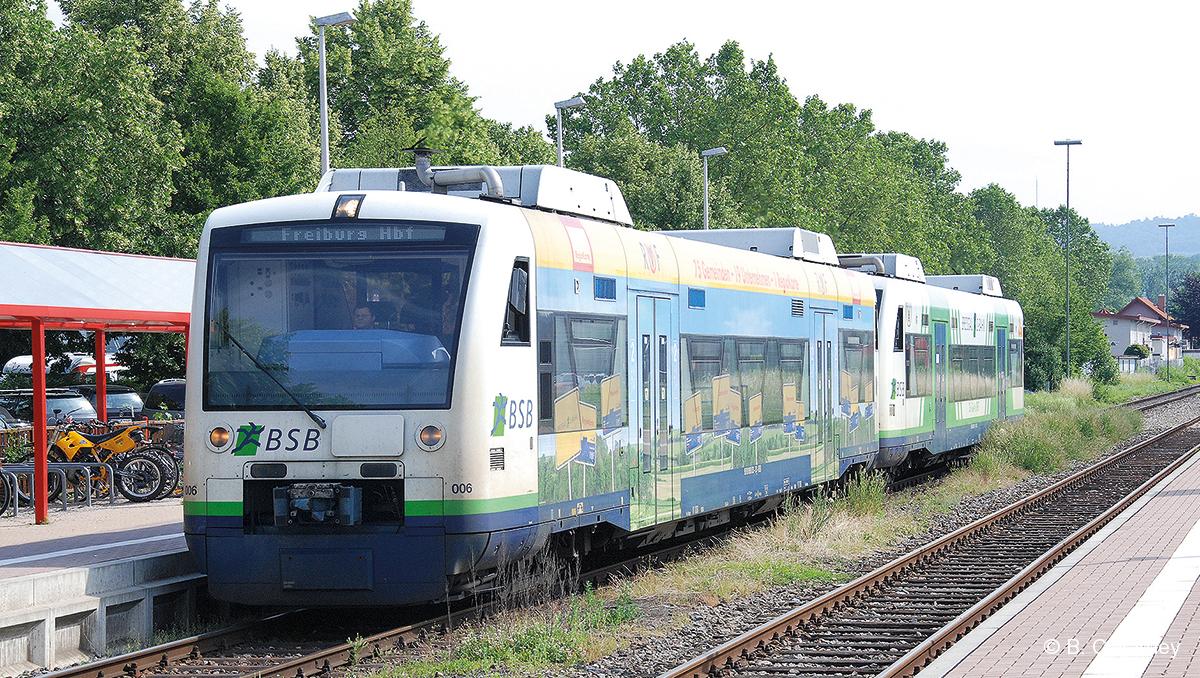
Modern light diesel rail-cars in operation on a lightly used line in Germany
Reopening of two Franco-German cross-border lines proposed
Written byA� Keith Fender
The bridge over the Rhine at Wintersdorf was converted for road and rail use, but trains no longer use it. Keith Fender
STUDIES are to commence soon on reopening two cross-border lines between southwestern Germany and eastern France. The lines would support new services as well as increase operating flexibility in the event of disruption on the one side of the border, as happened at Rastatt, Germany, last year.
The Pamina Euro-district, which brings together several German local authorities in both Rheinland Pfalz and Baden WA?rttemberg plus the Grand Est Region, DA�partement Bas-Rhin and town of Hagenau in France, has agreed to undertake a feasibility study into the re-opening of the railway between Rastatt, Germany, and Hagenau, France. The line could be used by a new SaarbrA?cken – Hagenau – Rastatt – Karlsruhe passenger service as well as a diversionary route for freight traffic.The 7km section from Rastatt to Wintersdorf, beside the Rhine, still exists and is owned by Karlsruhe area tram-train operator AVG. In France a short section remains in use to serve industrial sidings near the Rhine at Beinheim, but the 21.8km RA�schwoog – Hagenau section is disused and would need to be completely rebuilt. The old railway bridge across the Rhine is still in use as a road bridge, for cars and light vans. Two options are possible: reconstruction for rail use or construction of a new bridge.Pamina also wants to reopen the Freiburg – Breisach – Colmar line around 100km to the south. While there are lines on both side of the Rhine, the cross-border section no longer exists so a new river crossing would be required.
Pamina plans to seek funding for the studies from the European Uniona��s Interreg programme which exists to stimulate cross-border cooperation and is funded by the European Regional Development Fund.

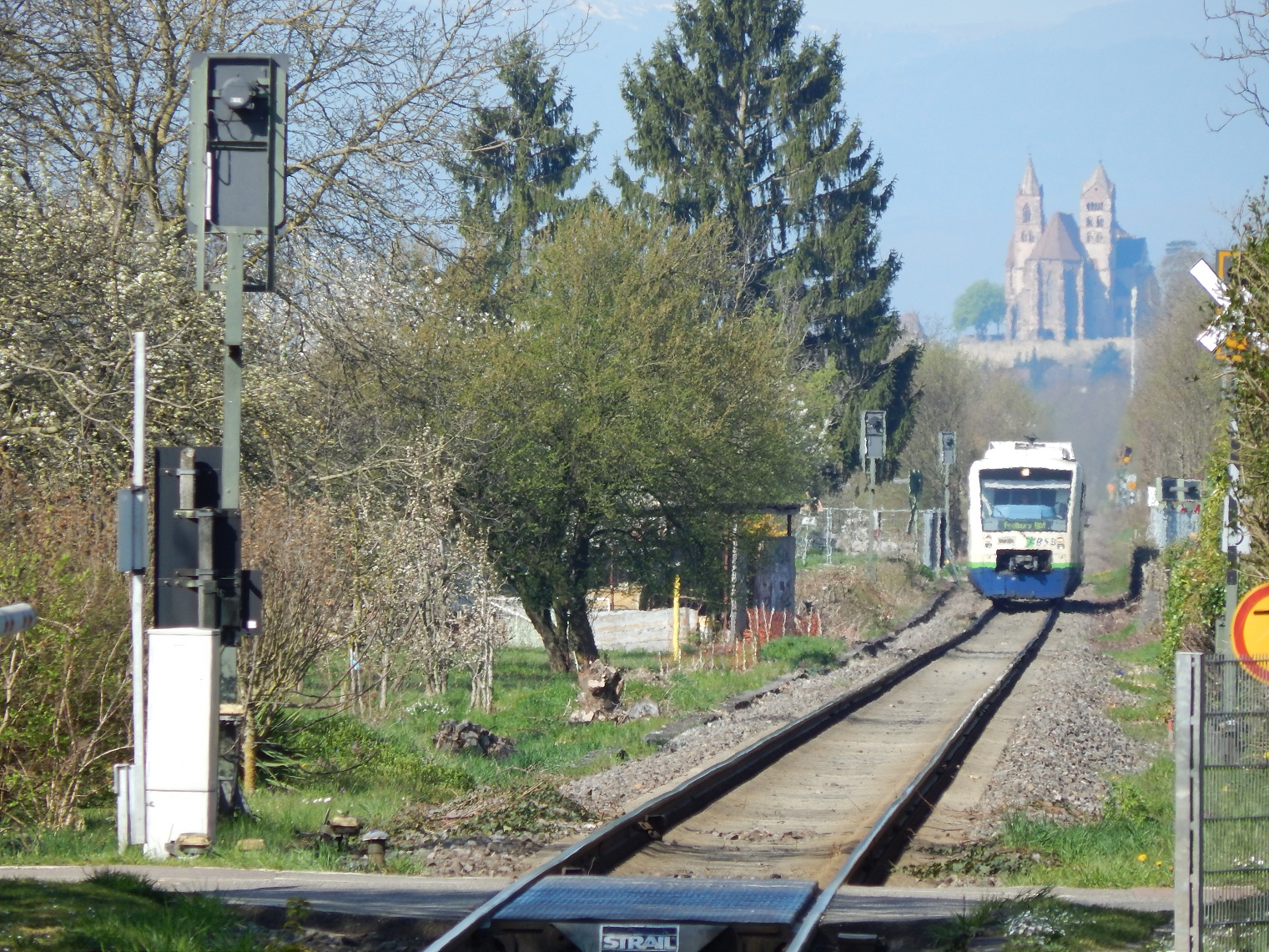
A rural German passenger rail line, not unlike the Fraser Valley or the E&N.
Mobility Pricing -TransLink’s Desperate Ploy.
Mobility pricing, TransLink’s desperate ploy to hide their inept planning to date.
TransLink happily spends twice or three times more for “rail” transit than they should. TransLink also spends at least 60% more operation “rail” transit than they should.
The result, large deficits operating the transit system, requiring large subsidies to pay for the large deficits.
The dishonesty of TransLink and its CEO knows no bounds as recently, Kevin Desmond, repeated the old saw that “SkyTrain pays its operating costs”.
Newsflash Mr. Desmond, the GVRD in 1992, blew that myth out of the water by releasing the annual subsidy for SkyTrain Expo Line, a massive $157 million annually. Put another way, just the Expo Line cost taxpayers more to operate than the combined diesel and electric buses!
 Also it should be of note, that TransLink, like BC Transit before did not apportion fares from bus and SkyTrain, which is important as over 80% of SkyTrain customers first take the bus!
This dishonesty by TransLink and its CEO has kept the public in the dark about the true costs of SkyTrain and as new lines are built, the subsidies increases with each new transit line built. Today, including the fake P-3 Canada Line which costs TransLink around $110 million annually, the total subsidy to operate SkyTrain light metro system exceeds $400 million annually!
TransLink can no longer hide this hemorrhage of cash and with the $3 billion Broadway subway, with its added $40 million annual operating costs (and not including debt servicing costs) TransLink either goes bankrupt or engages into a new revenue source.
Mobility pricing is TransLink’s desperate gamble to once again hide the real costs of the SkyTrain mini-metro from the public.
Metro Vancouver mobility pricing could cost up to $8 per day per family: report
Drivers could end up paying an average of between $3 and $8 per day to get around Metro Vancouver if decongestion charging is introduced in the region.
The cost estimates were in a report presented by the Mobility Pricing Independent Commission to a joint meeting of TransLinkai??i??s Mayorsai??i?? Council and board of directors on Thursday.
The report caused concern for a number of the regionai??i??s mayors, who called it a good start and agreed the conversation needs to take place, but worried that mobility pricing would not be fair or affordable for residents.
ai???Going through the report, definitely some of the charges that are talked about here are definitely up there and certainly are going to catch peopleai??i??s attention,ai??? said New Westminster Mayor Jonathan CotAi??, who described mobility pricing as a difficult, complex and controversial issue.
Itai??i??s been proposed that mobility pricing could pay for transit and transportation improvements in the region, replace the declining gas tax and deal with traffic gridlock.
The commission looked at two options for decongestion charging, both of which could reduce congestion by 20 to 25 per cent.
One option is congestion point charges, where drivers are charged when they pass a certain location ai??i?? including bridges ai??i?? and complemented by further charges at locations on the Burrard Peninsula.
Based on early analysis, a regional congestion point charge would cost the average driving household $5 to $8 per day, or $1,800 to $2,700 per year. This option would see the regional gas tax, which is 17 cents per litre, remain in place so that people who donai??i??t cross tolled points would still contribute to paying for transportation.
The capital cost to establish congestion point charges would be in the $150 million to $300 million range, with annual operating costs of $110 million to $200 million. Itai??i??s estimated it could bring in annual net revenues in the range of $1.1 billion to $1.5 billion.
The other decongestion pricing option is distance-based charges that vary by time and location, meaning drivers would be charged for each kilometre they drive, but the amount would vary depending on where they go and at what time.
The analysis shows that a multi-zone distance-based charge could cost the average driving household $3 to $5 per day, or $1,000 to $1,700 per year. Fuel tax could be eliminated under this option.
The exact number and boundaries of zones are still to be determined, but for the purpose of analysis eight zones were identified.
Capital costs ai??i?? which include on-board units for all Metro Vancouver vehicles ai??i?? could be in the range of $400 million to $700 million, with annual operating costs between $300 million and $500 million. If capital costs are annualized over 7.5 years, itai??i??s expected that annual net revenue would be in the range of $1 billion to $1.6 billion.
The report priced out some typical trips within the region.
For instance, travelling between South Surrey and Coquitlam would cost between $3.54 and $5.30 under cost-point charges at peak time, and 75 cents to $1.11 off peak. The same trip under distance-based charging would cost $5.20 to $7.48 at peak or 64 to 96 cents off peak.
In comparison, when the Port Mann and Golden Ears bridges were tolled, a person commuting from Surrey to Coquitlam paid $6.30 per day if they crossed the Port Mann Bridge twice.
Maple Ridge Mayor Nicole Read pointed out that there is a problem with equitable access to transit in some parts of Metro Vancouver, and that should be dealt with before mobility pricing.
ai???I think thereai??i??s a long way to go and, for me, I really need to use this opportunity to exercise a lot of caution because for people in the eastern part of the region this is a really, really concerning next conversation that we have to have,ai??? she said.
Delta Mayor Lois Jackson said she was also concerned about commuters ai???on the outer fringes of this region.ai???
ai???I know the commission has looked at this aspect of fairness and equity and I think we have to continue to look at that,ai??? Jackson said.
Kris Sims, B.C. director for the Canadian Federation of Taxpayers, called decongestion pricing ai???a non-starterai??? for the regionai??i??s residents.
ai???They just actually donai??i??t have the money for this,ai??? Sims said. ai???I was encouraged to see some of the mayors throwing cold water on this idea.ai???
Sims said she was skeptical that other taxes, such as the gas tax, would be eliminated or reduced with the introduction of mobility pricing.
CotAi?? said there does need to be more work done in the area of tax shifting.
ai???The commissionai??i??s report highlights a real need to talk about the elimination of the gas tax if this is something that we are going to be considering, and a whole host of other taxes that may not be as directly related to transportation that could ultimately be replaced,ai??? he said.
The report also put forward 13 principles for guiding mobility pricing policy around congestion, fairness, how transportation investment is supported, and other considerations.
The Mayorsai??i?? Council and board voted to share the report with the federal and provincial governments and referred it to staff for more research and follow up on the commissionai??i??s work.
They also asked TransLink to continue consulting the public and stakeholders on the proposal.
However, itai??i??s not anticipated that mobility pricing is imminent. The report itself states that it will take four to seven years to implement, if it makes it that far.
The political will to pursue mobility pricing may be difficult to find.
ai???It is not for the faint of heart politically, and we recognize that,ai??? said Surrey Mayor Linda Hepner. ai???I think that the better educated we can be both at local government and with our provincial government partners ai??i?? and even at the federal level ai??i?? the easier whatever transition to mobility pricing becomes.ai???
On Twitter, B.C. Liberal leader Andrew Wilkinson said that while he appreciated the work the commission did, ai???This proposal is unaffordable and the wrong direction for British Columbians. I canai??i??t support this and I hope (Premier John Horgan) wonai??i??t either.ai???
In a statement, B.C. Green party spokesperson for transportation Adam Olsen said that because it a political minefield, there needs to be provincial leadership on the issue.
ai???Our team is closely analyzing this report and will continue to engage with local governments and British Columbians to determine the best path forward,ai??? he said. ai???We will keep pressure on government and continue to work collaboratively with them to fulfil our shared commitments on transit, climate and affordability.
The full page from the GVRD's Cost of Transporting people......
 Jennifer Saltman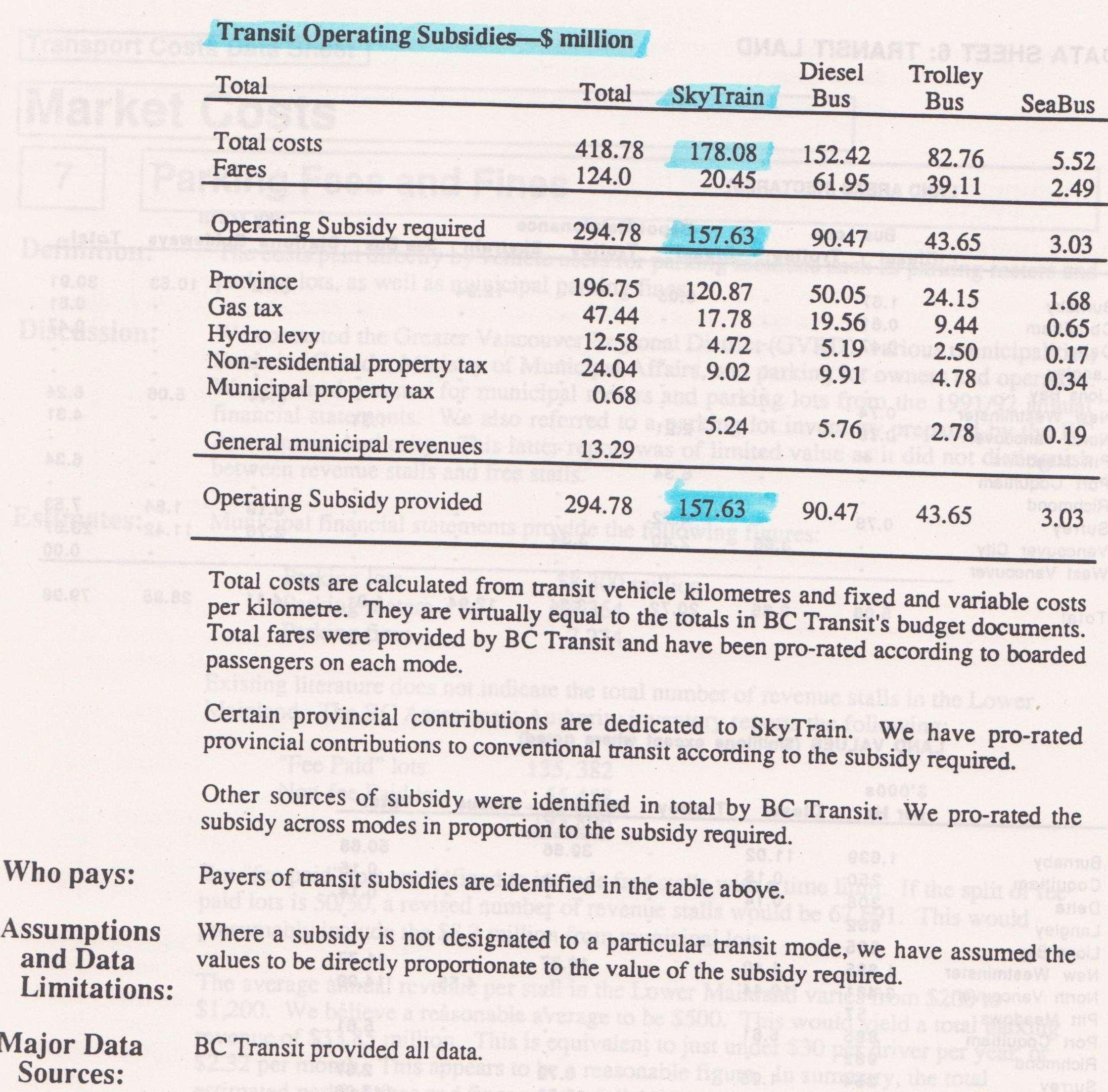
The Litmus Test

Litmus Test: a test in which a single factor (such as an attitude, event, or fact) is decisive.
Premier Horgan’s recent announcement, killing LRT On Vancouver Island all but sentencing the E&N to death, was the NDP’s Litmus test of their commitment on regional transit in the province.
The answer, the NDP has none and do not even want to consider one.
The E&N railway, in the Premier’s back door has demonstrated that the NDP continue not to understand public and regional transit and in fact, reuse to deal with major transit issues.
This is political cowardice in the extreme.
Zwei’s last post has angered many people, especially those who think that by some magic, the NDP will board the regional passenger train, but it is not going to happen.
Under $50 million would see the refurbishment of the tracks from Victoria to Nanaimo and for another $50 million, a demonstration light DMU servcie could be instituted.
$100 million is not chump change,but when the cost of a 5.5 km $3 billion extension the Millennium Line via a subway under Broadway or the over $2.5 billion for a horribly planned Surrey LRT, $100 million seems a bargain investment for regional transit.
As Zwei has said so often, “no transit system is a system unto itself, it is part of the whole“, the Premier’s coarse comments on the E&N reverberate across the Salish Sea to the Fraser Valley and Rail for the Valley’s project, the reenlistment of a Vancouver to Chilliwack passenger service, via light DMU or TramTrain.
The NDP, always decades behind when it comes to transit have demonstrated that have not and will not learn from previous fiascos.
What seems so right to do at a cost that is affordable, is rejected for expensive, FastFerry style transit projects that are built strictly for politcal prestige at best, or criminal money laundering at worst.
The NDP have now failed the Litmus Test on transit.
Megg’s Puppet, Horgan Kills LRT On Vancouver Island
What was turning out to be a breathe of fresh air in BC politics, Premier Horgan and his puppet master, former Vision(less) Vancouver Councillor and now Horgan’s chief advisor, Geoff Meggs, have killed the idea for LRT on the E&N and you can damn well betAi?? the same is true about the Rail for the Valley project.
Horgan was desperate before the election for a transportation solution for the Fraser Valley, but once elected all that has vanished.
Horgan’s Chief of Staff, Geoff Meggs is anti LRT and as a former Vision(less) Vancouver Councilor, he learned the fine art of intimidating people wanting light rail; with the premier, it is just Meggs whispering sweet nothings in Horgan’s ear and LRT is dead.
What Meggs is afraid of is that modern LRT could provide a better servcie than the proposed $3 billion subway under Broadway and that proprietary SkyTrain subway is very important as it is the use rapid transit that is causing land speculators and land developers great delight in assembling lands adjacent to rapid transit stations and having Vancouver council up-zone the properties to allow high rise condos for off shore sales.
And why is that?
Simple, it is part of the money laundering process which has enriched local governments,Ai?? via casinos and land developments. AndAi?? not forgetting of course the criminals that launder the money.
With light rail there is no impetus to build high rise condos and freshly laundered money goes elsewhere to further cleanse it of criminal activity.
SkyTrain is indeed the money train.
Light rail operating in BC would give an “apples to apples” comparison with the now obsolete and expensive SkyTrain proprietary light-metro and a tram-train version, with costs around $10 million/km, would certainly look good when compared to a $500 million/km plus subway under Broadway.
This is why Surrey’s LRT is so heavily gold-plated, as it is being built to fail!
Meggs could not stand for successful LRT and told Horgan not to stand for it either.
Sadly, the NDP have very short memories, as almost the same thing happened with former Premier Glenn Clark and Joy McPhail, with the former Broadway-Lougheed light rail project, which after inducements from Bombardier and SNC Lavalin, flip-flopped from LRT to SkyTrain. To many people were burned by this and sat out the next election, leaving the NDP with a two seat rump in 2001.
History is again repeating itself.

A Tram Train solution would be a perfect solution for the E&N, a real winner. Sadly the NDP back losers.
Les Leyne: Horgan puts brakes on light rail for E&N
Les Leyne / Times Colonist May 16, 2018
Premier John Horgan not only dashed the hopes of light-rail transit fans in the capital region on Tuesday, he got a nice round of applause for doing so.
Addressing the 400-member massed forces of all the local chambers of commerce, Horgan parked the light-rail dream in short order.
ai???The business case doesnai??i??t seem to be there.ai???
He signalled his government is vastly more interested in bus lanes. Watch for plans to extend them much farther than the construction thatai??i??s already underway.
Itai??i??s a bit of an about-face. The NDP in opposition made some polite remarks over the years about the potential for rapid transit on the abandoned E&N Railway line. It came with the job of nagging government to do more of everything when it came to transportation. But dithering over that potential has occupied dreamers for years.
Now that theyai??i??re in power, Horgan said, he has been talking to leaders about using the corridor for its purpose, ai???which is not necessarily a train, but moving people from the west into the city and back again.ai???
Referring to the never-ending talk of light rail, he said: ai???Iai??i??m not prepared to wait any longer. We shouldnai??i??t have a corridor like that designated for just growing Scotch broom.ai???
The ramshackle Dayliner passenger service that formerly used the line was mothballed seven years ago, and the rail line has been rotting ever since, while a bustling bike path occupies part of the right-of-way.
Horgan wasnai??i??t specific, but insisted the corridor should be used to move people. ai???Iai??i??m committed to doing that, and that will happen.ai???
People are wasting time in congestion, and Horgan said his government is keen to build a transportation plan for the south Island.
Bus lanes are an ai???immediate and efficientai??? solution to gridlock.
It went over well with the crowd packed into Crystal Garden.
But the elephant in the room was the employer health tax. Business leaders have concentrated attention on the downside of eliminating Medical Services Plan premiums ever since the move was made in the February budget.
Its partial replacement is a phased-in payroll tax that imposes new costs on employers, particularly those that didnai??i??t cover employeesai??i?? MSP premiums.
And those who do will sustain a double hit next year, paying one more year of their workersai??i?? premiums in addition to the new tax.
Horgan reminded them that he campaigned against the MSP, although the replacement came to light only in the budget. ai???We said were going to do it and we are doing it.ai???
He said he knows the replacement is a significant concern. ai???We understand. We feel your pain.ai???
He pointed to upcoming cuts to the sales tax on electricity bills as a partial offset.
But the first question after his speech was a plea to reassess the impact of the tax, given how it hits municipal employers, as well, and that impact compounds on business property taxes.
To paraphrase, the answer was: No.
The Finance Ministry is scrambling to soften the impact on some sectors, such as non-profits and school districts. But municipalities and businesses arenai??i??t on the list and wonai??i??t be any time soon.
Horgan said the property-tax impact of municipalities passing their tax costs on to property owners is ai???infinitesimalai??? compared to the savings for individuals (assuming their premiums werenai??i??t covered by their employers).
Horgan said the NDPai??i??s payroll tax will be the lowest in the country, is being phased in, and makes B.C. the last place in Canada to abandon the flat-rate premiums.
ai???This is what rest of the country is doing. This is catching up to the rest of the country.ai???
It wasnai??i??t what they wanted to hear, but Horgan held his own, overall.
The antipathy over the tax is partly offset by the sheer novelty of having a premier from the capital, with a select handful of cabinet misters from the ai??i??hood as well.
The crowd is counting on a bump in provincial spending locally as an offshoot of that representation.
If Horgan can hold the employer health tax anger to a simmer, rather than a boil, he can count that as a win.
Ai?? Copyright Times Colonist

Surrey LRT News.
I think a tad optimistic.
Huge costs for what is basically an on-street/at-grade tram is staggering and it seems TransLink has pulled out the stops to gold-plate this project, which has now become a road project, rather than a LRT project.
That no one with real experience in building with LRT has been involved, tells the tale; TransLink has designed Surrey’s LRT as a poor man’s SkyTrain, costing huge sums to build, but with little befits from the investment.
No wonder TransLink has an American CEO, as I think a Canadian CEO would be asking important questions and not pander to the SkyTrain crowd, as the present chap is doing.
Always with TransLink, zero steps forward and two steps back!
Rendering of a planned Surrey light rail train. (Photo: surrey.ca)
Surrey mayor says transit deal means LRT could be running by 2021
New federal agreement unlocks $2.2B in TransLink cash to help pay for projects like Surrey light rail
SURREY ai??i?? Mayor Linda Hepner says a $4.1-billion funding deal between Ottawa and B.C. is ai???the step we were hoping for.ai???
The 10-year agreement, announced Monday, unlocked the $2.2 billion in federal money that TransLink needs to complete the next phase of its vision to improve transportation in the region ai??i?? including 27 kilometres of light rail transit in Surrey.
Ottawa had previously promised to cover 40 per cent of project costs for phase two of the 10-year vision, which includes Surrey light rail.
B.C. had pledged to cover another 40 per cent, while TransLink and the regionai??i??s mayors would come up with 20 per cent.
See more: New federal deal unlocks $2.2B in TransLink cash
The agreement finally being signed means a major step forward in the transportation plan. Last month, Metro Vancouver mayors announced they would fill their $70-billion gap with increases to parking, transit fares and property taxes.
In a message to the Now-Leader on Monday, Hepner wrote the new deal is a ai???testament to the provincial governmentai??i??s commitment.ai???
She expects construction to be fully underway in 2019, and said phase one of Surreyai??i??s LRT line could be running by 2021-22.
During the 2014 election, she pledged Surrey residents would be riding light rail by 2018.
See also: Mayor says light rail announcement for Surrey ai???final piece of puzzleai??i?? March 16, 2018
Madness
Good old Zwei has been blogging on local transit issues for the past 10 years, I can say that both recently announced “rail” transit projects are both hugely expensive, will not ease congestion and will fail to achieve their objective, except giving the excuse for land development adjacent to the routes.
As advised by real transportation professionals, there are North America and Europe, there are many serious problems affecting our local transit.
First of all, what we call SkyTrain is really three different railways.
- The Expo Line is the original proprietary ICTS/ALRT system marketed by the former Ontario Crown corporation UTDC.
- The Millennium and Evergreen Lines are a completely re-engineered ICTS/ALRT proprietary railway, now called ART which patents are owned by Bombardier (technical) and SNC Lavalin (Engineering). Though ART and ICTS/ALRT can operate on each other’s rights-of-way, the cars cannot be operated in a single train. The E&ME Lines maximum capacity is 15,000 as per Transport Canada’s operating certificate.
- The Canada Line which is a conventional heavy rail metro, built as a light metro, but because of cost constraints, was built with very small stations with 40 metre long station platforms, allowing only 2 car trains, which constricts capacity to a maximum of 9,000 pphpd and internationally, is considered a “White Elephant”.
The Canada Line needs a minimum of $1.5 billion spent to increase capacity beyond 9,000 pphpd.
The E&M/E or Innovia Lines need about $3 billion spent to both renovate the aging Expo Line. Over $1 billion is being spent from the $7.3 billion budget for infrastructure upgrades, but a further $2 billion must be spent to increase capacity beyond 15,000 pphpd.
This $3 billion must be spent on the Innovia lines before any extension to Langley (cost around $3 billion).
To date only seven LIM powered Innovia SkyTrain systems have been built in the past 40 years, with only 3 seriously used for regional transit and not one new system has been built in the past decade.
By comparison over 200 new build LRT systems have been built, and many of the 350 existing or heritage tram/streetcar lines have been upgraded to LRT standard.
The North American standard for a subway is a transit route having customer flows in excess of 15,000 pphpd and in Europe, because of the success of light rail over 20,000 pphpd.
Customer flows along Broadway are less than 4,000 pphpd, much less than would demand of a subway (the same is true of the Canada Line and its annual operating costs of around $110 million is more than twice the amount than comparable LRT systems).
Please note: TransLink schedule for peak hour service on the 99B Express bus is 20 trips per hour, giving a maximum capacity of 2,200 pphpd.
The problem is that we are grossly over building transit to suit political needs and not transit customer needs.
We are going to spend over $6 billion on about 20 km of rail transit and this is pure madness.
As a reminder light rail is not rapid transit and in fact rapid transit is used to describe heavy rail metro and want we call SkyTrain is a light-metro, which was made obsolete by LRT in the 1980’s!
What is not being calculated are the huge operating costs of the Broadway subway, which will be around $40 million annually and this on a route most used by those holding the $1 a day U-pass, which means more subsidies to a very heavily subsidized rail service.
Again, no one builds with Innovia SkyTrain anymore as it is deemed dated 1960’s tech, akin to the Edsel.
What needs to be done is put an end to the mayor’s 10 year plan and get an outside agency of transportation professional, specifically from Europe, to plan and install the proper transit meeting transit customer needs.
In 10 years time we will be over $7 billion poorer with no real improvement to regional transit.
Congestion will be endemic, forcing the government to impose road pricing on the region, to pay for more “madness”.
People living south of the Fraser ‘punished’ for decades, argues local blogger about transit
Posted May 2, 2018
LOWER MAINLANDA (NEWS 1130)Ai?? A local blogger and former journalist says its time for people in Surrey to be the focus of transit improvements.
UBC has offered to pay for a portion of the SkyTrain line extension from its intended terminus at Arbutus to the Point Grey campus.
TransLink says the Broadway SkyTrain and Surrey LRT projects will move ahead simultaneously. It notes the Surrey-Newton-Guildford LRT is slated to be completed in 2024, a year before the Millennium Line Broadway Extension.
The next phase of transit improvements across Metro Vancouver, totaling $7.3 billion, makes way for 108 new SkyTrain cars, and 95 replacement cars.
Still, Frank Bucholtz, a former local journalist, writes that people living south of the Fraser have been punished for decades.
There is lot of parts of the region that need better service but Surrey has grown dramatically in almost 30 years since the SkyTrain last stopped here and nothing has been added since that time despite a tremendous amount of talk, he tells NEWS 1130.
That talk mostly comes from politicians who, as Bucholtz argues, can do little more than slightly improve bus service.
Of Fast Ferries and Casino Money Laundering, The Broadway Subway
One can draw a straight line from BC’s current money laundering scandal and the Broadway SkyTrain subway.
It is the only conclusion one can make with the proposed Broadway subway, as customer flows on Broadway just do not warrant a subway.
Building a subway, will enable developers and land speculators to assemble properties along the subway route and then fund civic politician’s election runs so they will look favorably in up-zoning the assembled properties for high-rise condos for off-shore investment for money laundered at BC casinos.
The costs are rising dramatically for the subway and as the cost for cement and steel rebar increase, so will the subway costs and by the time of its expected completion, the Broadway subway will cost in excess of $3.3 billion.
The Broadway subway is now the NDP’s updated version of the FastFerry fiasco, which has haunted the political party for the past two decades.
The NDP, it seems, will not learn or cannot learn from past mistakes.
Like the Canada Line, the only heavy-rail metro in the world, built as a light-metro and has less capacity than a simple tram, costing a fraction to build, the Broadway subway will be a future monument of blinkered thinking, political corruption, and just plain bad and incompetent planning.
Like the site-C dam fiasco, the Broadway subway will become the FastFerry headache of future governments, most likely not the NDP, but the smell of corruption and incompetence will cling to the present government, like the odor of a skunk.
The Broadway SkyTrain subway smells of scandal and corruption and will put regional transit planning in jeopardy, in effect, the Broadway SkyTrain subway will be the financial straw that broke TransLink’s back and will demand the implementation of road pricing and or congestion charging.
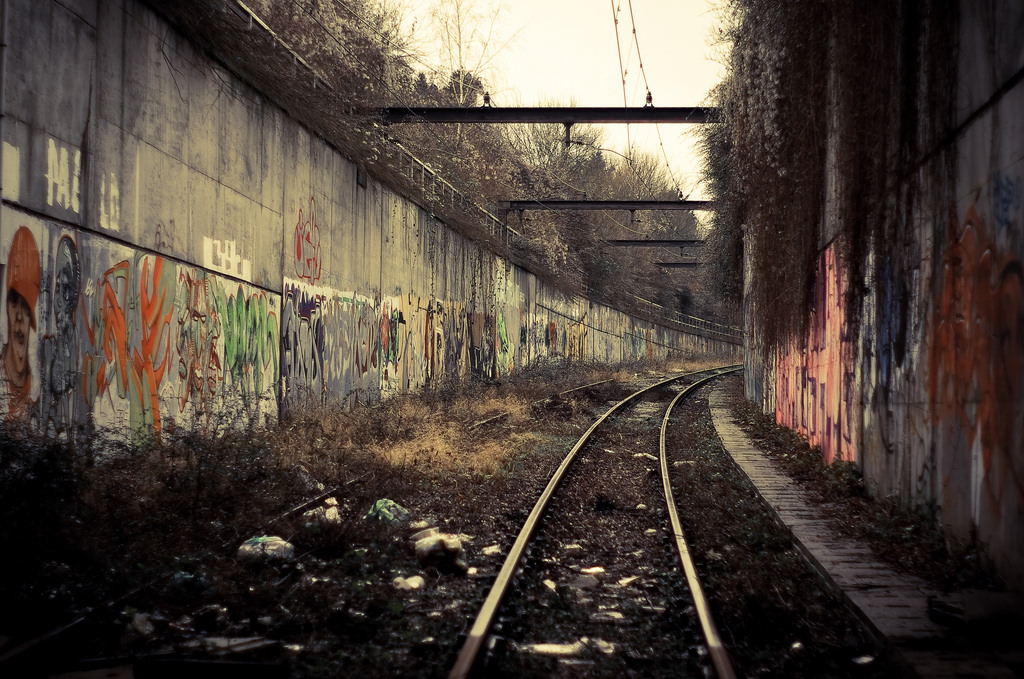
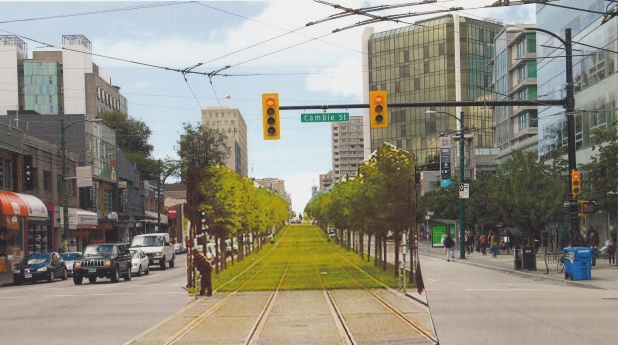
Is this a fate waiting for the Broadway "Fast-Ferry" subway?
TransLink’s CEO explains rising costs for major projects
Posted Apr 30, 2018
VANCOUVER (NEWS 1130) ai??i?? By the time a new Broadway SkyTrain extension opens, the cost could top $3 billion. And thatai??i??s not the only project in TransLinkai??i??s phase-two plans with a price tag thatai??i??s gone up more than 20 per cent since 2015.
TransLink CEO Kevin Desmond admits the $2.83-billion Millennium Line extension and the $1.65-billion Surrey Newton-Guildford light rail transit line are hundreds of millions higher than they were when Metro Vancouver voters said no to a sales tax hike three years ago.
ai???By the time we go through the procurement process, the numbers could change again, as well,ai??? says Desmond.
ai???We are expecting very competitive bids for these two projects ai??i?? the Surrey project and the Millennium Line extention ai??i?? and the projects are costed out fairly conservatively at this point in time to ensure that through the bid process, weai??i??re in a very good place within our budget.ai???
As for construction, Desmond says the Broadway line could be completed in 2025, with Surrey light rail ready in 2024.
The next phase of transit improvements across Metro Vancouver, totaling $7.3 billion, makes wayAi??for 108 new SkyTrain cars, and 95 replacement cars.
Riders can also expect an increase in service on the Expo and Millennium Lines during the morning and afternoon rush hours, evenings, and weekends starting in 2019. TransLink expects same boost in service will take effect for the Canada Line the following year.
Wow Factor!
Wow factor!
Here is a big problem. City of Vancouver types have been claiming that 100,000 people use transit on Broadway each work day.
From the following statistics, the claim is pure hokum.
From the following table there are a total of 73,328 trips in and out of UBC from all transit routes with Broadway accounting for a mere 7.4% of the trips.
41st Ave accounts for 10% of the trips to UBC.
It is clear, that those advocating for the Broadway subway are greatly inflating ridership numbers, in order to make the case for a Broadway subway.
More and more the Broadway subway is becoming this decades great FastFerry fiasco.
Is it not time to put a halt to the Mayor’s Council on Transit’s Ten Year Plan, until a public and independent inquiry is ordered to see if the project is viable or not.
From the UBC Vancouver Transportation Status Report Fall 2016
Table 3.3:Ai?? Average Weekday Transit Trips to / from UBC by Route, 2016
|
Route |
AM |
Midday |
PM Peak |
Evening |
Night |
Totals |
||
|
6am to 9am |
9am to 3pm |
3pm to 6pm |
6pm to Midnight |
Midnight to 4:30am |
||||
|
4 |
4th Avenue |
347 |
934 |
593 |
982 |
21 |
2,877 |
3.9% |
|
9 |
Broadway |
352 |
250 |
723 |
124 |
– |
1,449 |
2.0% |
|
14/N17 |
Broadway |
440 |
1,317 |
881 |
1,167 |
153 |
3,958 |
5.4% |
|
25 |
King Edward |
1,136 |
2,985 |
1,644 |
1,410 |
32 |
7,207 |
9.8% |
|
33 |
16th Avenue |
787 |
1,625 |
970 |
755 |
– |
4,137 |
5.6% |
|
41 |
41st Avenue |
1,237 |
3,383 |
1,566 |
1,565 |
5 |
7,756 |
10.6% |
|
43 |
41st Ave Express |
1,695 |
1,233 |
1,410 |
766 |
– |
5,104 |
7.0% |
|
44 |
4th Ave. Express |
1,177 |
2,564 |
1,477 |
594 |
– |
5,812 |
7.9% |
|
49 |
49th Avenue |
893 |
2,863 |
1,861 |
961 |
– |
6,578 |
9.0% |
|
84 |
4th Ave. Express |
872 |
2,396 |
1,620 |
811 |
– |
5,699 |
7.8% |
|
99 |
Broadway B-Line |
2,241 |
6,540 |
4,093 |
4,745 |
152 |
17,771 |
24.2% |
|
258 |
North Shore |
210 |
86 |
70 |
– |
– |
366 |
0.5% |
|
480 |
Richmond Express |
721 |
2,040 |
1,352 |
501 |
– |
4,614 |
6.3% |
|
NIS |
Not In Service |
– |
– |
– |
– |
– |
– |
0.0% |
|
Totals |
12,108 |
28,216 |
18,260 |
14,381 |
363 |
73,328 |
100% |
|
|
14.7% |
40.3% |
26.3% |
16.6% |
2.1% |
||||
Table 3.4:Ai?? Average Peak Hour Weekday Transit Trips to / from UBC by Route, 2016
|
Route |
AM Peak Hour Westbound 8:45am ai??i?? 9:45am |
PM Peak Hour Eastbound 5:00pm ai??i?? 6:00pm |
|||
|
4 |
4th Avenue |
232 |
3.0% |
197 |
3.4% |
|
9 |
Broadway |
189 |
2.5% |
334 |
5.7% |
|
14/N17 |
Broadway |
304 |
4.0% |
303 |
5.2% |
|
25 |
King Edward |
688 |
9.0% |
535 |
9.2% |
|
33 |
16th Avenue |
288 |
3.8% |
299 |
5.1% |
|
41 |
41st Avenue |
681 |
8.9% |
389 |
6.7% |
|
43 |
41st Ave.(limited stops) |
787 |
10.3% |
520 |
9.0% |
|
44 |
4th Ave.(limited stops) |
830 |
10.9% |
320 |
5.5% |



Recent Comments