Surrey’s mayor renews call for light rail
Surrey mayor, Dianne Watts is renewing her call for LRT and well she should as the province is now leaning towards a SkyTrain subway under Broadway. Surrey and the south Fraser region is grossly shortchanged by TransLink and public transit is just a few steps up the ladder from dismal.
The real problem is TransLink’s fetish with SkyTrain, light-metro and subways and all transit planning is based on the outdated bus/light-metro philosophy, where all bus routes feed a light-metro spine. Inflexible and mostly customer unfriendly, TransLink persists with this nonsense to the detriment of prospective transit customers.
The SkyTrain, anti-LRTAi??lobbies areAi??very strong and very vocal and they no shrinking violets at spreading untruths, questionable studies, and pure invention to discredit modern LRT. The ongoing debate with “rico” shows that utter lack of knowledge of modern LRT and the ability to carry large numbers of passengers, yet at the same time, absolutely no scrutiny isAi??done at all with the spurious claims aboutAi??SkyTrain ridership.
Mayor Watts should step up the calls for LRT and at the same time demand an independent consultant for proposed light rail in Surrey as TransLink is just not up to the task. Rail for the ValleyAi??would like to suggest Leewood Projects of the UK to undertake an independent study for LRT in Surrey, just like the historic study Leewood Projects didAi??in conjunction withAi??Rail for the Valley for the return of the Valley interurban.
TransLink is far to anti-LRT to have any credibility with any transit study, either with LRT or SkyTrain light-metro, as the Broadway transit studies have shown. Surrey needs a fresh approach to “rail” transit and surrey mayor, Dianne Watts, renewed call for light rail is on the right track!
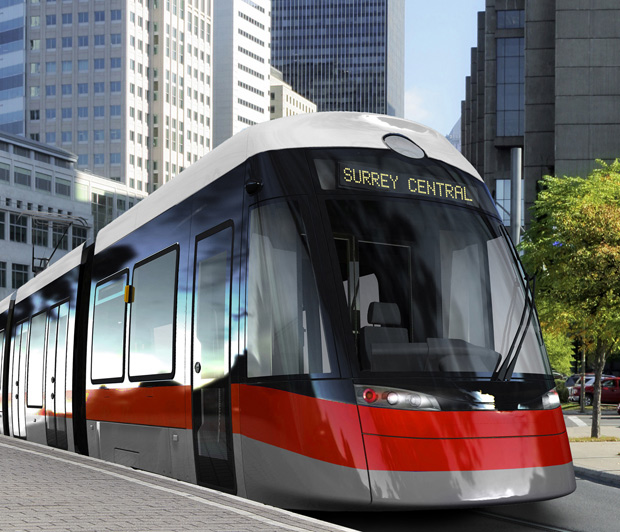
Surrey’s mayor renews call for light rail
Ai??Dianne Watts delivers her annual state of addressBy Kelly Sinoski, Vancouver SunMarch 13, 2012
METRO VANCOUVER — Surrey Mayor Dianne Watts is once again renewing her call for light rail transit south of the Fraser, arguing rapid buses or a costly SkyTrain line to Langley won’t reduce the increasing gridlock on city streets.
Watts noted her city pays $160 million every year to TransLink but is not getting the transit service it needs to meet a growing population that is set to reach 750,000 people by 2040. The city’s population has grown 18.5 per cent in the past five years ai??i?? more than three times the national average of 5.9 per cent growth. About one-third of the population is under the age of 19.
“Do we want to become Los Angeles?” she asked the attendees at her annual state of address of the Sheraton Guildford Hotel.
Using the same stage backdrop of an LRT as last year, Watts said light rail is not a “request of the month” and she won’t give up, noting three light rail trains could be built for less than the cost of a $2 billion SkyTrain to Langley. More buses aren’t efficient enough, she argued, while rapid buses are “not 21st century” and do not meet the city’s goal to have 80 per cent of trips within Surrey on transit by providing denser town centres.
The city is in line for a B-Line bus service along King George Highway from White Rock to Guildford, buses from White Rock to Langley and a rapid bus along Highway 1 over the new Port Mann Bridge. A new Pattullo Bridge is also included in the TransLink plan, while a study on a rapid transit line linking to the King George station is underway.
But Watts said light rail will help shape and connect communities across Surrey’s vast land base, while increasing economic development. Watts noted Portland, Oregon has seen $8 billion in new development around its rail stations.
The city is already exploring three routes: 104th Avenue between the City Centre and 152nd Street; Fraser Highway between City Centre and Langley; and King George Boulevard, between City Centre and South Surrey.
She also called for a regional tolling strategy to help defray the costs of a new Pattullo Bridge, noting residents south of the Fraser are being unfairly taxed with tolls on the new Port Mann Bridge.
Transportation was just one prong of Watts’ speech, which noted Surrey has a strategic advantage in becoming the economic powerhouse for the region because it holds 46 per cent of the region’s available industrial land, and has the second largest border crossing in Canada, the Fraser Surrey Docks and is the gateway to Asia Pacific.
But the city is feeling a financial pinch related to growth. The city’s major source of revenue is property taxes yet cities only get eight cents of every one tax dollar, are consistently facing downloading costs from the provincial and federal governments for expanded services such as sewer and water and are trying to address the growing issues of affordable housing and homelessness.
The city has already instituted new zoning bylaws to allow for more multi-family dwelling and smaller lots as well as mixed-used ton centres with higher density around transit, fee simple row houses and manor houses. The plan to move forward, she said, includes improving social infrastructure, generating social economic activity and creating thriving communities.