TramTrain Trial OK’ed in the UK
TramTrain is coming to South Yorkshire, in the UK.
If TramTrain passes muster with her Majesty’s Railway Inspectorate, it would past muster in BC for operation in metro Vancouver.
The real question, of course, is why TransLink must be forced kicking and screaming to accept TramTrain as a 21st century transit mode?
From the LRTA website at www.lrta.org
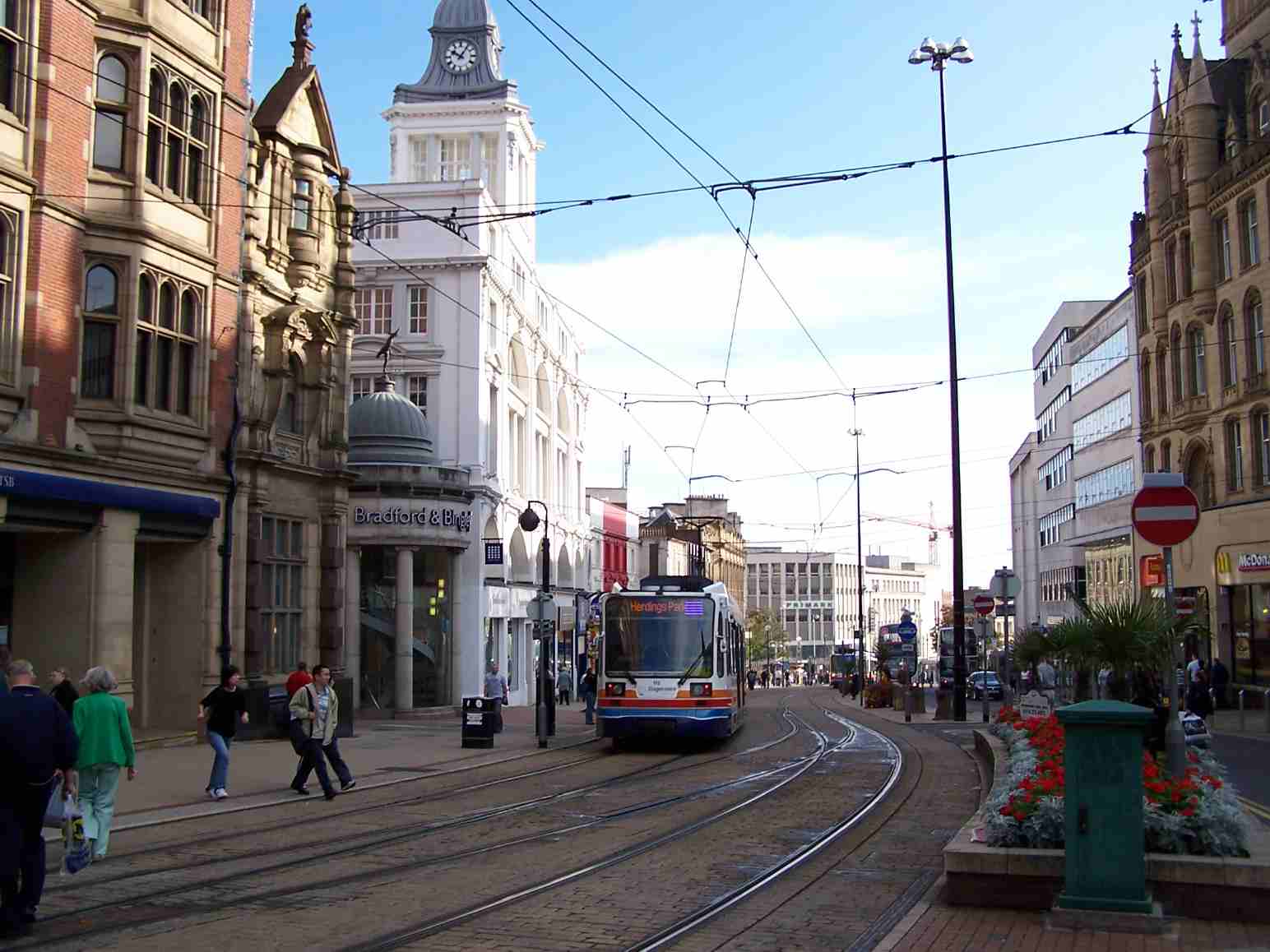
Tram Train pilot to go ahead in South Yorkshire : Transport Minister Norman Baker today gave the green light to a GBP58m (CAD $93.7 million) Tram Train pilot scheme in South Yorkshire. New vehicles will operate from 2015 on Sheffieldai??i??s Supertram network and on part of the national rail network, which will be adapted to allow seamless travel from one to the other.
Tram Train can assist city economies by increasing capacity and releasing space at mainline stations for other commuters or improved long distance services. It can reinvigorate suburban rail routes and bring passengers right into city centre destinations, creating growth and cutting carbon.
Announcing the pilot, Norman Baker said:
The pilot will see the introduction from 2015 of new Tram Train vehicles capable of using both light and heavy rail infrastructure, so providing continuous travel from Sheffieldai??i??s Supertram network onto Network Railai??i??s national rail network, as well as providing more capacity on the Supertram system itself.
The new vehicles will provide three services an hour operating from Parkgate Retail Park in Rotherham, travelling through Rotherham Central Station and joining up to the existing Supertram network at Meadowhall where the services will then continue onwards to Sheffield City Centre. The project is also expected to create 25 new driver jobs locally, plus around 10 additional jobs in maintenance and revenue protection.
The full text of Norman Baker’s speech can be found on the DfT website as can the Dft Press release.
17 May 2012



Seems to me tram train is a great system if you have an extremely dominant trip generator at the end of the line that can not be efficiently served by heavy rail (Karlseruhe). If the heavy rail is well situated and convinient it looses its advantages. This is why places like Zurich don’t do tram train despite a dominant ‘downtown.’ The problem is if your tram train turns into a tram while most of the passengers are continuing onward the advantages of the no tranfer trip are lost as people are on the slow ‘tram’. I can’t speak for translink but they probably have not thought about tram train because there are no obvious corridors for it in Vancouver.
Zweisystem replies: Sorry to deflate your balloon Rico, but there are plans for TramTrain for Zürich. The problem you have, is that in Vancouver transit is designed to satisfy politicians, not the transit customer, while in Europe, transit is so designed and built to cater to customer needs. Only a small percentage of transit customers in Vancouver, want to take transit, instead they are forced onto transit by political design (expensive parking & the U-Pass) or by economic need. Vancouver’s transit system is very non-user friendly.
The old Vancouver to Chilliwack interurban route is the prime candidate for a TramTrain style of service.
Ignoring the merits of the interurban corridor enlighten me on the benifits of a tram train vs standard LRT on this route.
Thanks for pointing out my error about Zurich, it has been too long and my memory is rusty. Actually several sections of the S-Bahn currently run on the tram network but have limited stops so would not be considered tram-trains, not sure but it looks like the proposed section going to Aargau will be the same (or not, could not tell), that said Zurich is a very strong end destination and the proposed line does not go to the hauptbahnhoff and I am not familiar with the proposed end station so a tram-train may make sense to get the people to their destinations (not needed at the hauptbahnhoff as it is very central and convienient.
The genesis of Karlsruhe’s TramTrain was to omit one transfer from commuter train to tram, as German transit planners’ well know that one can lose upwards of 70% of ones’ potential ridership per transfer. The success of TramTrain well illustrates this singular point.
Your numbers for loss of ridership per transfer are horse puck as long as the transfers are good. This is illustrated by the relative success of cities with a grid of frequent services vs cities that attempt to serve one ride trips http://www.theatlanticcities.com/commute/2012/05/what-really-matters-increasing-transit-ridership/2059/ So well designed networks with good easy transfers can be faster and easier than networks attempting to provide one seat rides.
All that is of course a digression, what did your reply have to do with any potential corridors in Metro Vancouver as there is no commuter tram network to link with and avoid any transfers. What is the benifit of tram train vs regular LRT on the Interurban corridor?
Zweisystem replies: Sorry Rico, the 70% number has been established long ago. Forced transfers deter ridership and one loses about 70% of potential ridership per transfer, even the TransLink types understand that.
Karlsruhe illustrates this, when they saw a massive 400% increase in ridership in just three months on the initial Bretten TramTrain line, which eliminated the transfer from commuter train to city tram.
It is interesting that the term “The Karlsruhe Model” is know internationally as a successful way to operate a transit system, but no one ever hears of the “Vancouver Model”. I wonder why, especially after taxpayers have invested over $8 billion on three light metro lines.
But I have heard of the Zurich model which has much higher transit modal share than Karlesruhe and it is a system that has lots of transfers (as does Vienna). The transfers are easy, convinient and they are reliable. Most transfers are timed and most portions of the system have clockface schedules. Transfers can be a problem but on a well integrated system they provide extra freedom and allow higher frequency services. What would you rather have, a bus that picks you up at your doorstep and delivers you to your office but it only runs once an hour (and travels all over the place picking everybody else up as well) or a bus that runs every ten minutes from your house and connects in a straight line to a LRT line that runs every 10 minutes and takes you in a straight line to your office. There is a transfer penalty but for services operating at less than 5minutes it is negligable, even for services operating at 10min frequencies it is reasonable. There is plenty of evidence that in North America and Australia (cities built in the Street Car or Car era) services operating on a frequent grid with transfers out perform systems that attempt to provide one trip rides (except perhaps in situations with cities that have a very dominant CBD, ie everybody is going to the same place….actually that seems to describe the situation in Karlseruhe). You are thinking untimed low frequency transfers which are a major problem (sure sucks if you miss your connection on a 1 hr frequency bus…..not so much if you miss the skytrain as you are getting to the station, people don’t even bother to rush to the train, another one will be by in another couple of minutes.).
Still wondering what the benifit of Tram-train for Metro Vancouver would be since as a city it functions nothing like Karlseruhe? Why would tram-train be better than LRT or S-bahn type service on the interurban route?
And actually I have heard of a Vancouver model on several American blogs.
Zweisystem replies: TramTrain is LRT.
I am sure that with your extensive library and tranist experts you are aware that people view waiting for transit services as being more onerous than travelling on transit, it varies a bit but on average I believe people view waiting at about 1.5 times actual travel time. So if you eliminate a transfer you eliminate that wait during the tranfer. But if you make an efficient system (feeder routes to main routes that go in straight lines, fast, reliable etc) you can increase frequencies with the same total hours and you can decrease travel times by keeping routes direct. So if your time savings with increased frequencies and more direct routes is greater than 1.5 times the wait time at the transfer you win (and you should win). That is why cities with a frequent grid built on transfers generally outperform those based on one seat rides. I guess you must have lost those volumes behind your shelf. Have fun on your one seat ride from Chilliwack to White Rock….I think it comes next week.
And here I thought tramtrain was a very specific subset of LRT that was capable of running both on mainline rail and tram tracks. In addition I understood that it functions for part of its route as a commuter train and part of its route as a tram. Perhaps I expected a bit much from you, where in Metro Vancouver would we run the tram portion of a tram train? Walnut grove?
Zweisystem replies: LRT has redefined modern light rail, in a way SkyTrain could not.
The Zürich S-Bahn as a whole is not a tram-train or compatible to a tram-train. On most services heavy double decker train sets are used and furthermore these are standard gauge whereas the tram system is meter gauge.
There are some exceptions however which might be classified as tram trains, although in contrast to other tram trains they are not new. Most notable is Forchbahn which is a meter gauge railway starting at Zürich Stadelhofen and sharing tram tracks from there to the city boundary at Rehalp. In contrast to what are normally tram trains it is not really a train that has developed to become compatible with a tram rather the opposite. The line was first built as a cross-country tram line but has over the years become more railway-like through the provision of a reserved alignment, level crossings with barriers and higher speeds.
The second candidate that might be considered a tram-train is the Bremgraten Dietikon line. It is also meter gauge but does not have a physical connection to the tram system as it terminates beyond the area of the tram system and passengers change to another train to come into town. There are however plans to connect it to the tram system (and until the 1920s such a connection already existed). It is street running in Dietikon and in Bremgarten but otherwise more a railway than a tram.
Zweisystem replies: I have read somewhere that transit authorities were considering a TramTrain service.
From Wiki, ‘In the Limmattal, between Bahnhof Altstetten and Bahnhof Killwangen-Spreitenbach, a new light rail service (compatible to the Zürich Tram Network and therefore meter gauge) named Limmattalbahn is in planning and should be partially opened by 2020. Since this line will stretch out to the Kanton Aargau, there is the possibility of two referendums against the project.
Furthermore, there are plans for numerous other extensions to be built up to 2025, notably over the Hardbrücke between Hardplatz and the new Tram Zürich West branch at Schiffbau’
Not sure of the details or if it would qualify as ‘tramtrain’
Thanks for the extra info I.K. Brunel, although not all the SBahn services are so heavy rail, my grandparents lived on the Uetlilberg line and it was more light rail than heavy rail. Some of the other services that shared the platforms also seemed pretty light. The double decker trains I saw tended to be intercity routes (although some were S-bahn too).