Is a real Tramway (Read: Light Rail) Coming to Canada?

The question I have, will this be real light rail, operating real trams or another hybrid light metro/rail system, currently in operation in Ottawa?
In Canada, what is called light rail tends to be more light-metro, than LRT, with very expensive subways and grade separation.
Remember, Ottawa had a signed contract with Siemens to build a 27 km light rail system for Ottawa, only to be sabotaged by the Harper government. This cost the city of Ottawa, $34 million in punitive damages for breaking a signed contract and what was built instead was a much more expensive hybrid light metro/rail system which due to politcal, incompetence has come to grief several times.
I hope the good burghers in Ottawa-Gatineau get it right this time and without interference from the federal government.
Consultants picked to lead Ottawa-Gatineau tram project
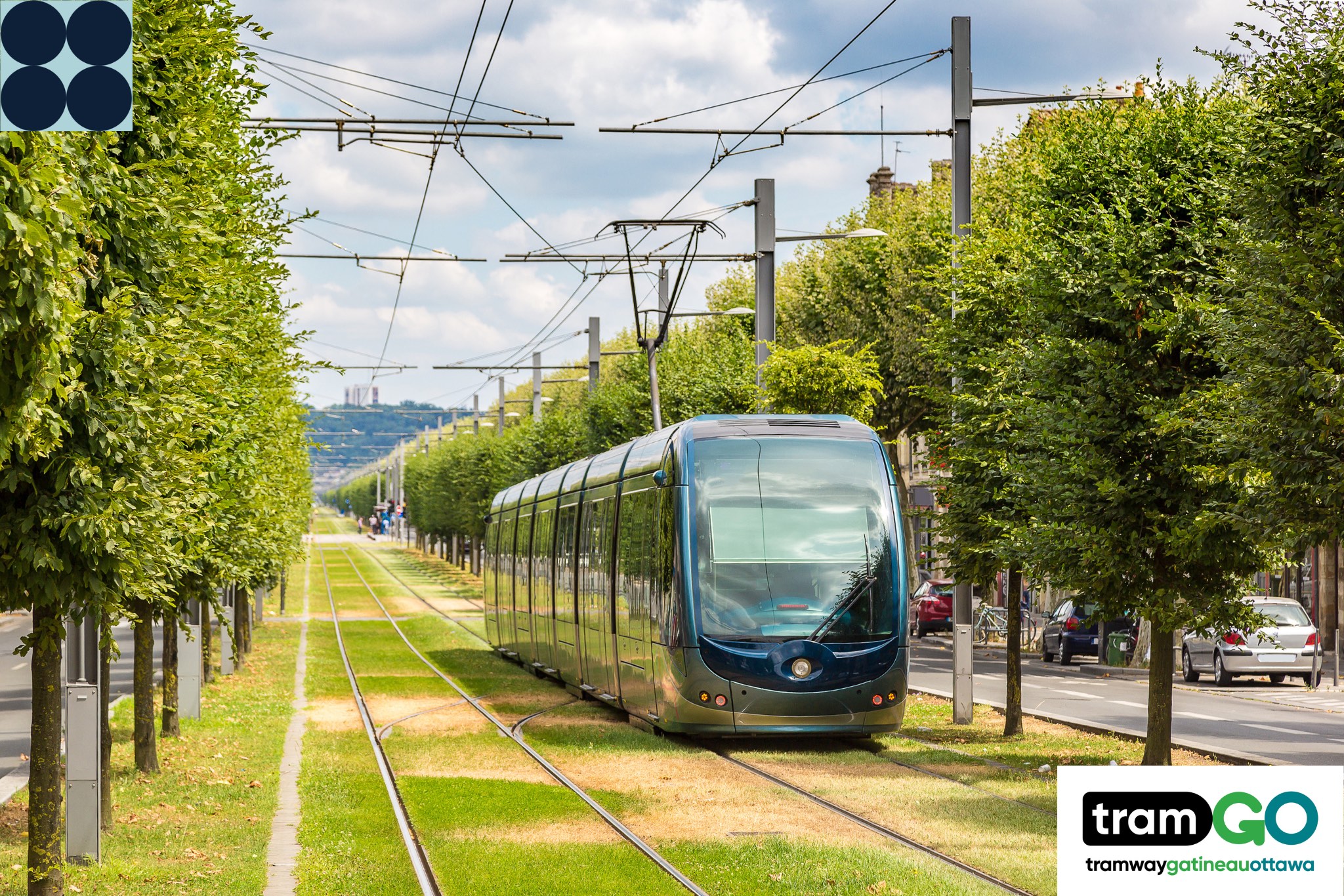
A joint venture led by Systra has won a US$79m technical services contract to prepare a tram system linking the Canadian capital Ottawa in the province of Ontario to the city of Gatineau directly across the Ottawa River in the province of Quebec.
The Groupe Porteur JV was appointed by the Société de transport de l’Outaouais. French infrastructure group Egis and local construction consultant EXP are the JV’s other two members.
When finished in 2035, the 24km tramline – called TramGO – will stitch together the fast-growing western districts of Gatineau with its city centre and downtown Ottawa.
It will have 37 stations and four intermodal exchanges.
Planners chose a tram over a rapid bus system because the former has up to five times the passenger capacity, and the population of Gatineau’s west end is expected to grow 50% in the next 25 years.
Working with architectural firms Richez Associés and Provencher Roy, Groupe Porteur will help the TramGO project office with technical and environmental studies, procurement, construction work supervision, and commissioning.
Egis chief commercial officer in Canada, Jean Steenhouwer, said the JV would submit a work plan in the second quarter.
Technical and environmental studies for the route on Quebec territory will also begin then.
Systra Canada’s executive vice president Samuel Derosiaux said: “Together, we are committed to offering citizens an efficient, sustainable and innovative transportation system that is perfectly integrated into the urban environment of the cities of Gatineau and Ottawa.”
Eby’s Reality Check On Transit

From what I can read, Eby is playing footsie with the Broadway subway to UBC. Farnsworth, who is now minister in charge of transit is doing penance for his complete screw-up of the Surrey RCMP/police fiasco, which many in the NDP blame their poor showing in the recent election.
Subways are expensive, both to build and operate. Replacing a bus route, which has a maximum peak hour capacity of only 2,000 pphpd, with a subway, which maximum capacity of only 7,500 pphpd, boarders on politcal and fiscal insanity!
In the real world, subways tend to be built on routes where traffic flows exceed 15,000 pphpd!
The maximum capacity of the Millennium Line (Broadway subway) after the $1.47 billion rehab of the signalling system will be only 7,500 pphpd! According to Thales “When the programme is fully implemented, the Expo Line will be able to accommodate 17,500 passengers per hour per direction, and the Millennium Line will be able to handle 7500 passengers per hour per direction, a 32% and 96% increase respectively.“
The 16km extension of the Expo Line to Langley is now costing $6 billion ($7 billion if one adds the much needed Operations and Maintenance Centre number 5). The government has yet to release the updated cost for the 5.7 km extension of the Millennium Line (Broadway subway), which, according to sources, is now costing around $4 billion.
I have been told that TransLink is still trying to source $2 to $3 billion to complete the two projects.
The completion of the Broadway subway to UBC is now said to cost around $8 billion, by the time construction starts. There has been a rumour about that to reduce the cost to a more manageable $6 billion, is to build the line elevated from MacDonald to UBC.
Watch Premier Eby try to get elected with that!
But there is a joker in the deck and it is called Trump.
If the tariff war takes place between Canada and the USA, one will see two things, a dramatic revenue shortfall in tax revenues and an equally dramatic increase in the cost of cement and special structural steel.
The American CEO of TransLink may just pack his bags and return to the ‘land of the free’ because, all things concerning transit and TransLink will become ugly, far uglier than it is today.
I can draw two main conclusions; first, the NDP want Farnsworth gone by giving him a no win assignment and two, I think it may mark the end of “SkyTrain” expansion in Metro Vancouver because there is a second joker in the deck and that is SkyTrain itself.
SkyTrain is the name of the regional light-metro system and consists of a proprietary train which operastes on the Expo and Millennium Lines and a conventional train which operate on the Canada Line with both railways being incompatible in operation.
The Linear Induction Powered (LIM) trains are proprietary and is currently owned by Alstom, when the acquired Bombardier’s rail division. The now called Movia Automatic Light Metro system (the proprietary railway has been rebranded at least six times) uses the former Bombardier Innovia light-metro body shell. Indeed the new MK.5 cars are actually over twenty years old but were reconfigured to use LIM equipped trucks for the sale to TransLink.
MALM is dated tech, more expensive to build and operate than conventional light-metro’s and a lot more expensive to build and operate than light rail. As Alstom has two lines of successful light-metro systems, they will phase out production of the proprietary MALM system, after the last paid for car leaves the production line. Only seven systems have been built in the past fifty years, with six remaining in operation and to add to further embarrassment, each one of the Bombardier built examples (then called Advanced Rapid Transit or ART) have been mired in controversy and/or legal ills.

The EverLine, above, in Korea can only operate one car trains and has lead to legal action in Korea over claims of “success fees” paid to bureaucrats and politcans in Korea.
To be blunt, there may not be any SkyTrain compatible trains available for future extensions available as new cars would have to be designed and a new production line built, further increasing the cost of an already costly system.
Contrary to what is being said, there is no affordable or efficient expansion of the now obsolete proprietary SkyTrain light-metro system. In fact there never was.

‘No discussion of funding,’ as Mike Farnworth takes on B.C.’s transit deficit and difficulties
Extending the $3 billion Broadway subway, now under construction, was a key election promise in the transportation plank of David Eby’s election platform.
Author of the article: By Derrick Penner Published Jan 16, 2025
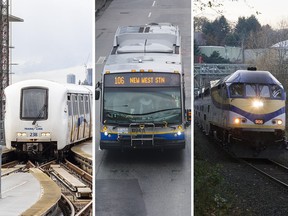
Premier David Eby tasked Transportation Minister Mike Farnworth with leading efforts to extend TransLink’s Broadway SkyTrain line to the University B.C. in a mandate letter that talked a lot about transit priorities but not so much about cash.
Extending the $3 billion Broadway subway, now under construction, was a key election promise in the transportation plank of Eby’s election platform and the premier’s mandate asks Farnworth to work with the federal government, UBC, the City of Vancouver and First Nations on planning the extension.
Farnworth also has Parliamentary Secretary George Anderson, MLA for Nanaimo-Lantzville, to handle co-ordination of efforts and relationship-building, as well as priorities related to transit oriented housing development.
Transit advocates, however, are worried that Farnworth’s mandate is short on the discussion of stable funding, when agencies such as TransLink and B.C. Transit are starving for more cash.
“There is no discussion of funding to increase service at TransLink or B.C. Transit, let alone filling the huge budget hole that we’re seeing at TransLink,” said Denis Agar, executive director of the advocacy group Movement.
Instead, at the same time that TransLink is warning about a looming $600 million per year deficit as early as 2026, Farnworth is being tasked with reviewing ministry programs, including in transit, to make sure services “remain relevant, are efficient (and) are responsive to the needs of commuters.”
The idea is that the review will help “protect key services that British Columbians rely on,” but Agar said that sounds like “classic deflection,” which indicates transit “isn’t a priority” for government.
Agar said such reviews or audits typically find “a handful of places to save” but “never in the order of magnitude that is needed to actually honour the people that are currently riding transit in this province.”
The broader scope of Farnworth’s mandate includes supporting improvements to road infrastructure, though balanced against opportunities to integrate better transit services and “work with B.C. Ferries” to reduce administrative costs “and ensure affordable, reliable and sustainable ferry service.”
It also talks about finding “ways to support taxi and ride hail operators, as well as working with Minister of Public Safety Garry Begg on using technology to improve transit safety.
Most of the letter, however, is devoted to other transit initiatives, including expansion of regional and intercity transit priorities, such as the Central Okanagan Regional Transit Plan and regular transit service on the Sea to Sky corridor, and identifying “affordable and efficient” expansions of SkyTrain, RapidBus and rail transit services.
As Eby’s government finalizes the budget it will table to support his cabinet’s mandates, however, the Transportation Ministry is going to need “stable long-term funding,” for transit, said planner Andy Yan.
“Not only from the province but it’s also from the federal government,” said Yan, an associate professor and director of the City program at Simon Fraser University. “It’s about how we’re going to get people where they’re going. It’s also about employment patterns and how economic development is spread out through the province and how (communities) can be serviced.”
Notes From The Past

The preceding graph is from the late 1980’s and adjusted for 2024 Canadian dollars:
San Diego: $10.25 million/km
Portland: $20.25 million/km
Nantes: $25.15 million/km
Calgary: $30.26 million/km
VAL: $56.7 million/km
SkyTrain: $66.82 million/km. Please note, the current 16 km Expo Line extension to Langley is now costing in excess of $375 million/km or put another way, the 16 km Expo Line extension to Langley is costing over five and half times more per km than the adjusted original Expo Line!
The 5.7 km Broadway (subway) extension to the Millennium Line, is now costing over $700 million/km or, again put another way, is costing ten and a half times more than the original Expo Line!

The following is from a German engineer who has worked in Vancouver and his take on our SkyTrain light metro system is more than interesting. The following is from an exchange of Emails from 2013.
The facts:
Skytrain is operated at a maximum frequency of 120s with trainsets of a
maximum length of 72m or 68m on the Expo and Millenium line, resp. just
42m (!) on the Canada line.
100m trainsets at 90s resp. 60s frequency are perfectly feasible with
light rail operated on sight. As demonstrated in the “real world”. By
examples given here on this list.
BTW: They claim that the Canada line would have a capacity of 15,000
pphpd. With platforms of 50m length (for 63m three-car trainsets?) and
a frequency of 120s, using the figure of 5 pass/m my pocket calculator
tells me it’s
50m/train * 5pass/m * 30trains/h = 7,500pphpd
NewMath. 2+2 equals 8 for them.
With the actually usable two-car sets it’s
42m/train * 5pass/m * 30trains/h = 6,300pphpd
With that strange idea to use 50m platforms for 63m trains it would be:
63m/train * 5pass/m * 30trains/h = 9,450pphpd
But that would be obviously impracticable in reality since the doors
at the ends of the cars wouldn’t be usable. Try to do that during rush
hour.
Conclusion: Like all of those driverless “mini metros” Skytrain is just
yet another ridiculous and hideously expensive gadget that’s unable
to cope with anything that deserves the designation “passenger volume”
in an agglomeration of 2.3 mio inhabitants.
Sincerely,

Jun 14, 2013
Zweisystem: “WHAT IS THE POINT OF DRIVERLESS RAIL CARS ?”
Good question. >;->
Back in the 60s and 70s of the last century, they had this idea to
reduce transit cost by replacing drivers with automation.
The operators and municipalities over here didn’t care for construction
cost for the required grade-free infrastructure (i.e. tunnels) because
these were highly subsidized (by 90%) by the federal and state
governments. Just like what you wrote about the case of the people
mover at Detroit.
Unfortunately for the taxpayers and farepayers, they didn’t
consider operating and maintenance cost of that infrastructure.
RATP (Paris) once admitted that their driverless subway line 14
(meteor) doesn’t require a single person less staff to operate than a
conventional subway line with manual operation. And I even doubt
whether they count in the maintenance staff for the platform screen
doors. Because I happen to have worked once for a company that did such
maintenance and it was a money-printing business for them.
Another operator once admitted that the electricity bill alone for all
those escalators and lifts, for lighting and ventilation of those tunnel
stations is higher than the electricity bill for the subway trains. The
same applies for maintenance of all that equipment. It’s a hopeless
money-sink, as numerous operators of “heavy rail”-style “light rail”
systems with tunnels and grade-free infrastructure over here now start
to figure out.
And now, quite a lot of that expensive equipment in those tunnels and
stations that was once paid with federal and state subsidies has
reached the end of its lifespan and needs to get replaced, while after
~40 years in operation, even the tunnel structure needs expensive
repairs in some places and at the same time, municipalities and
operators are broke.
Like in Lausanne (Switzerland), where they built a driverless
rubber-tyred mini-metro using “trains” consisting of single married
pairs of 24m*2.4m, based on the claim that streetcars/LRVs couldn’t
climb the 11.5% grade – which is nonsense as lots of examples cited on
this list have shown or are still showing. And then they had to install
electric heating of the rolling surfaces with a power of several kW per
m, over several km. At temperatures below 0°C, they’re wasting more
electricity for heating the guideway than for traction power.
BTW: That maglev gadgetbahn called Transrapid also would have required
electric heating of the guideway for operation below <0°C.
Zweisystem: “Detroit reports the same for their Sky-Train but they do not have rail to compare with. Sky Train costs more than buses.”
Which in turn cost more than streetcars or light rail.
Zweisystem: “Vancouver claims Sky Train costs no more than C-Train in Calgary but C-Train has operated well and cost far less to construct. Vancouver has very high ridership with no freeways allowed in the city so is a special case.”
A light-rail system running at grade would have at least as much
ridership. Already since for the same money, you could build a vastly
more extensive network.
Sincerely,
For Mr. B – Dealing With The Facts

Again, a SkyTrain supporter casts doubt on veracity of statements contained in posts.
So, to clarify any doubt, the following comes from a December 1983, article,The Direction of TTC Planning For the 1980’s by Phillip Webb, which appeared in Modern Tramways.
This interesting item certainly raised my attention.
For further clarification, ICTS was renamed ALRT for the sale to Vancouver and the proprietary cars still operate on the Expo and Millennium Lines, on the SkyTrain light-metro system.
Read and learn.


This little gem appears at the end of the article.

And remember a modern tram has two to three times the capacity of a PCC Car. Do the math!

Thoughts For 2025

If You Build a Better Mousetrap the World Will Beat a Path to Your Door.
TransLink would like the public to think that our transit system is world class and spends a lot of money on ‘spin-doctors’ to convince the taxpayer of this.
Sadly, the centerpiece of TransLink’s transit empire is the now obsolete and unsalable SkyTrain light metro system. Even more sad is that the light metro system has been one of the most studied, new-build transit systems in the world, yet no one has copied Vancouver. No one is beating a path to Vancouver’s door.
Strange that a world class transit system is unsalable as the world did not beat a path to our door.
2025, TransLink needs about $600 million a year more in subsidies to operate the transit system at its current levels and there is great public push-back, in an era of inflated costs for bare necessities of life.
TransLink and many local politcans remain deaf to this and continue promoting the expansion of our dated light-metro system.
Oh, we have a “foamer” from Toronto telling us that light-metro is good and subways are even better, yet he never mentions funding. Embarrassingly, the very same “foamer” disses Seattle’s rapid transit system for being light rail, when it is in reality a light-metro with 90% of its route grade separated, either on viaduct or in a subway, and is signaled to carry a maximum capacity of 18,000 pphpd. This is still more than after the Expo Line re-signalling program, which according to Thales, who is doing the the $1.47 billion re-signalling program, stated the maximum capacity of the Expo Line will be `17,500 pphpd after completion!
TransLink continues to plan for grossly over built light-metro lines on routes that just do not have the ridership to sustain them.
Example, on Monday Dec. 23, at 12:45 PM my wife, waited six minutes at Broadway Station for a Canada Line Train to Bridgeport Station. Now, 6 minute headway’s works out to 10 trains per hour, operating a maximum capacity of about 3,600 pphpd – really on a busy light-metro route?
The Broadway subway, upon completion will have a maximum capacity of only 7,500 pphpd, 5,000 pphpd less than what Toronto streetcars were carrying in the late 1940’s!
There is something radically wrong with our regional transit system, but those in charge just want more money and more money to make things better and the taxpayer is being held hostage.
TransLink is broke, yet no one will deal with this; not the premier, not the Mayor;’s Council on Transit; not anyone and this bodes ill for the future.
What do I see in my crystal ball for 2025.
I see the Expo Line extension to Langley deferred as this now $7 billion project and climbing is just not practical for several reasons, including lack of potential ridership.

The preceding sign is rather dated as the cost for Expo Line extension to Langley is now pegged at $6 billion or $7 billion including the needed Operations and Maintenance Centre #5.
I see planning for future ‘SkyTrain’ lines with great promises (all transit projects make good promises) but no real action will take place.
I see an expansion of B-Line (TransLink and the provincial government will call them BRT, but in fact they will not be) express bus routes.
I see a rationalization of bus services, especially suburban rush hour bus services.
I see higher compensation packages for the ossified TransLink bureaucracy much to the chagrin of the taxpayer.
I see higher fares for the commuter and cheaper fares for others, mostly those who would vote for the NDP.
I see former transit users, once again going back using the “electric” car.
I do not see any fiscal responsibility at TransLink continues to treat the taxpayer as a ‘milch cow.
I do not see any tangible improvement to our regional transit system, except higher subsidies, needing higher taxes, taxes the average person is finding hard to pay.
As politicians, pundits cheer for new projects, including the SFU Gondola, financial realities are going to bite hard and with only a one seat majority in Parliament, the current Eby government will not be so cavalier in spending.
Then there is the next federal election and with the current prime Minister Trudeau held in high odor with the voters a Conservative government is almost assured and the conservatives will halt many of the generous funding programs the Liberals have tried to vote buy for the past parliament.
My big fear is that we could be left with some very expensive, uncompleted projects, which like the previous “FastFerries”, will be were left to rot in full view of the taxpayer.

The built, but never used subway station in Chaleroi Belgium.
It is all about funding and I am afraid the “funding tap” is about to get turned off. TransLink has no plan “B”, in fact it really hasn’t had a viable plan for several years, they just do the same thing over and over again, ever hoping for different results, ever hoping the “government” will once again bail them out.
2025 is going to be an interesting year as TransLink will be living in interesting times.
A SkyTrain Carol – Apologies to Mr. Dickens!

Merry Christmas and it is time for Rail for the Valley’s “A SkyTrain Carol”, which, like a certain Mr. Scrooge, the lessons have not been learned.
We are doing transit all wrong, yet the government continues to blunder along, doing the same thing over and over again ever hoping for different results.
Metro Vancouver has become an island among itself, where real solutions are ignored and the taxpayer is treated as a rube with deep pockets.
The current $16 billion, and climbing, cost of the 21.7 km extension to both the Expo and Millennium Lines will not take a care off the road, yet TransLink plans for more “SkyTrain”.
Vancouver has now become the example of not how to plan and build transit. No one copies us or our exclusive use of light metro.
All, the NDP government has done is pave paradise, putting up parking lots.
Rail for the Valley
The SkyTrain Christmas Carol
STAVE1 (The Ghost of SkyTrain Past)
As TransLink still plans for SkyTrain even though it is almost universally known that it is a very expensive piece of kit and provides far less “transit” and “capacity“, than modern trams costing a fraction to build.
The old cliche, “follow the money” comes to mind.
The Province of Ontario’s former Crown Corporation, the Urban Transportation Development Corporation (UTDC) had a problem, its flagship proprietary mini-metro was a dud and no one wanted it.
For most, this is old news. The Intermediate Capacity Transit System/Advanced Light Rail Transit (ICTS/ALRT) version of this proprietary light metro was not only poorly built, but it was both expensive to operate and expensive to maintain. No one wanted it and of the three built, Vancouver’s and Toronto’s systems (Detroit was the third) were forced upon the operating authority by the provincial government. To fool the locals the name, ICTS, was changed to ALRT.
It Worked!
The name SkyTrain is a local name only and was chosen in a radio contest before the Expo line opened. The name SkyTrain is used by many transit systems, unrelated to our SkyTrain.
Almost forgotten, the Bill Bennett Social Credit Government did a horse trade with the Ontario government for Vancouver’s “rapid transit“, which was originally planned to use light rail a la Calgary and Edmonton. The Bill Bennett government bought the unsalable ICTS (renamed ALRT for the deal) and in return got the services of the then famed “Blue Machine”, to win the next provincial election as the Social Credit Party had a one seat majority in Parliament, in Victoria.

The CBC did a full documentary of this, but then prime Minister Mulrroney got wind of it and ordered the CBC not to air it and in fact had it shredded or “reduced to produce”. The reporter who interviewed me and the late Dez Turner (who was the most informed transit advocate in the 90’s), informed me. It was explosive as there were hints of plain brown manilla envelopes changing hands at the highest levels of provincial and federal governments.
The reporter was soon made redundant and the last time I heard from her, she was unemployed and seeking work down south.
Every extension of the Expo Line was designed to meet with a Social Credit election window, which was about every 3 years until the Van der Zalm saga.
STAVE 2
Lavalin purchased the UTDC, which was basically the ICTS/ALRT light metro system from the Ontario government and went bankrupt trying to build the system in Bangkok, Thailand. The UTDC was returned to the Ontario government, which promptly sold the remains to Bombardier at a fire sale price. SNC amalgamated with the bankrupt Lavalin to become SNC Lavalin and SNC Lavalin retained engineering patents for ICTS/ALRT from Lavalin.
STAVE 3
Bombardier Engineers soon found that ICTS/ALRT was unsalable; Bombardier rebuilt the cars using their universal Innovia light-metro body shell and redesigned the steerable axle trucks to support the longer and heavier Innovia body-shells.
The ICTS/ALRT system was rebranded as Advanced Rapid Transit or ART.
Only four were sold:
Korea, where Bombardier paid success fees to both bureaucrats and politicians to ensure a sale. The fallout from this was lawsuits and criminal investigations with the result of irreparable damage to Canadian Industries trying to do business in Korea with the scandal.

Malaysia, where Bombardier and SNC Lavalin paid success fees to bureaucrats and politicians including the prime minister to ensure the sale of ART for Kuala Lumpur for their second rapid transit system. This scandal started the whole SNC Lavalin and Bombardier bribery scandal, with hints that the Prime minister of Canada was involved.

The third system was built in New York, but in the USA all rapid transit systems being built, using federal funds must be peer reviewed and the JFK airTrain was duly peer reviewed and it failed badly, being far too expensive to build and not well designed. To keep Bombardier from “losing face” internationally with this fiasco, the Canadian Prime Minister authorized the Canadian Overseas Development Bank to fund the system.

China bought one strictly to obtain LIM technology and has never built another. Hint, ICTS/ALRT/ART use attractive LIMs, while Maglevs use repulsive LIMs and there is a technological void between the two.

STAVE 4
The ghost of SkyTrain past still haunts.
Both BC Transit and Metro Vancouver soon found out how expensive the ALRT system was to operate and was supported by a massive subsidy of $157.7 million annually or $302.7 million annually in 2024 coin of the realm. The next Rapid Transit project was the Broadway Lougheed Rapid Transit project and BC Transit and the GVRD did everything to plan for light rail.
The BC Government (NDP) did everything in its power to derail the project, first by hiring an international engineering firm with little interest in light rail (they were pushing for a proprietary personal transit pod sort of thing. I still have the video they sent me!) and finally forced Advanced Rapid Transit (ART) onto BC Transit and Metro Vancouver and in the process creating TransLink to exit BC Transit from the debate and making a one George Puil, Chair of Metro Vancouver, the Chair of TransLink to make sure.
But why the flip flop by the provincial government?
From many conversations with professionals and as well as former NDP types, unsavoury means were involved and money was also spent on UBC and SFU to pave the way for SkyTrain, such as the Bombardier Chair of Regional Transportation Planning.
Then there is the strange case of $1 million dollars found in a duffel bag in Clinton Park, in the late 90’s by an off duty police officer and according to a former VPD senior officer, now retired, the million dollars, was not a ransom for a kidnapping (the first investigation), nor wasn’t drug money, as there was no trace of drugs on the money, and it was assumed to be “spreading around money”, but for what or when they could not tell. Victoria did all it could to bury the story.
The postscript to this story is that the police constable who found the money, was able to keep it after much legal angst.
The now called ART Millennium Line was so expensive, it had to be built in two parts, the present Millennium line and the later Evergreen Line which became the Millennium Line. Thus the original Broadway Lougheed R/T cost about one half to one third the cost of the two completed SkyTrain lines.
STAVE 5
From 2005 to 2018 there was absolutely no interest in SkyTrain light metro and the ART system was folded into the Innovia family of transit with the LIM’s being a FREE add on and still no interest and finally, the Innovia line of light metros was folded into the Movia metro line.
Now we come to the strange case of Surrey’s flip flop from light rail to SkyTrain (now marketed as Movia Automatic Light Metro) and the former Surrey mayor’s exaggerations of the truth about building with SkyTrain, like it was going to cost only $1.63 billion and no one challenged him and the NDP government did everything they could to make this happen.
Today the cost for the 16 km Langley extension, including the Operations and Maintenance Centre #5 is now past $7 billion, with the cost further inching up with inflation.
Why did former premier, the late John Horgan agree to this? Could it be that both Bombardier and SNC Lavalin are still heavily invested with the current prime minister and that a promise of a nice job of being ambassador to Germany if Premier ordered TransLink to build what is now called MALM to Langley, to save jobs in Ontario and Quebec?
STAVE 6 (Ghost of SkyTrain Present)
Today, Alstom owns the MALM system when they acquired Bombardier’s Rail Division and all technical patents, but SNC lavalin still owns Engineering patents for the proprietary railway. Alstom is not actively marketing the system and by all appearances will phase out production altogether when the last paid for cars are completed for Vancouver.Vancouver is now the only customer.
The taxpayer has now estimated to have spent over $20 billion more for continued SkyTrain planning and construction, than if we built it with light rail as originally intended in the late 70’s.
Stave 7 (Ghost of SkyTrain Future and the end of it all)
The Broadway Subway will haunt taxpayers for years to come as the cost for this 5.7 km extension is now reaching past $4 billion and to complete it to UBC an additional $8 billion.
TransLink is now promising SkyTrain here, there and everywhere continuing the expansion of the light metro network, yet it has zero funding and much of the planning is mostly ghostly images on YouTube, promising nothing more than “sparkle ponies and fairy dust”.

If Alstom ceases production of LIM compatible vehicles means new cars must be designed and built by other manufacturers, further driving up the cost of the proprietary railway. Small orders will be cost prohibitive, yet the government still labours on pretending that SkyTrain is a world class transit system.
The only world class transit system no one wants to buy!
The poor Taxpayers because they have been totally Scrooged!
Rail for the Valley wishes all a merry Christmas and a happy New Year because 2025 will be ………… well let us not ruin the current festive spirit.
The SkyTrain Follies Continue – SkyTrain Everywhere!
This YouTube post has been creating a lot of local chatter, until I started fact checking, then the posts disappear. Strange that.
The SkyTrain Lobby hates “reality checks”.
Here is one of the many issue that the SkyTrain Lobby ignores, the province can afford only one light-metro line a decade.
Example:
1980’s – the Expo Line, built is 4 sections until the early 90’s.
1990’s – the Millennium Line – formerly the Broadway Lougheed Rapid Transit Project (formerly LRT).
2000’s – the Evergreen Line (the uncompleted portion of the Broadway Lougheed R/T Project.
2010’s – the Canada Line.
2020’s – the Broadway subway (now costing $4 billion).
2030’s – the Surrey/Langley extension – including the Operation & Maintenance Centre #5 – $7 billion (aprox. $3 billion short of funding).
2040’s – Broadway subway to UBC? (Cost in 2024 dollars, now $8 billion).
Both the Expo and Millennium Line’s extension costs have risen significantly and now are surpassing $16 billion. The Broadway subway to UBC is now pegged at $8 billion and that is in 2024 dollars!
Then there is the issue of the vehicle availability as the Expo and millennium Lines operate the now called proprietary Movia Automatic Light metro system now owned by Alstom and Alstom is the sole supplier of the trains operated.
Alstom has strongly hinted that they will cease production once the Vancouver fleet renewal order is finished as Vancouver is the only customer.
Alstom inherited MALM when they purchased Bombardier’s rail division and MALM, being a proprietary railway, with an extremely poor record of sales, with only seven systems built in almost fifty years, is seen a superfluous, especially since it conflicts with Alstom’s in-house products.
Yes, other companies can produce MALM compatible cars, but at a cost, as the new cars would have to designed and safety cased the new trains before they could offer the product.
As we do not know the transit vehicle market will be like 20 years from now, there is a possibility no company would produce cars for such a small market, leaving the cars being custom built, further adding to the costs.
As for the bridges mentioned, according to my sources, were not designed for SkyTrain extensions, rather for “rapid transit” which includes bus rapid transit or BRT.
The author of the post also mistook run-a-way tracks as proof of further extensions. Run-a-way track, several train lengths long, past the station are common on R/T projects and deal with trains with braking problems or a signal failure, prevents the train jackknifing onto the station platform, when it hits the buffer.

The preceding photo is not from a movie set, but the 2014 Chicago metro accident where a derailed train climbed the escalator at a station!
SkytTrain construction in Metro Vancouver is strictly done for politcal reasons and not practical reasons and those who want more SkyTrain, do not fully understand the financial and operational implications of continued building with a proprietary light metro system and that includes the provincial premier; Metro Vancouver; TransLink and the Mayor’s Council on Transit.
The real question that is never asked is simply; “What is the real costs and where will the funding for new SkyTrain extensions come from?”
The Transit Deficit Begins To Bite
Thursday night’s massive traffic accident on Highway 99 was to be expected, as it could not be otherwise.
Zwei drives this route twice a week for my cardio-rehab in White Rock and my eyes have been opened wide at the utterly poor driving habits by both car and commercial drivers.
Just on Wednesday, I witnesses no fewer than four commercial drivers, driving their ‘rigs’ at high speed, weaving in and out of traffic, rat racing to the boarder.
The posted speed is 100 kph and I was going 110 kph, keeping up with the traffic flow, yet these trucks were passing us at 120 kph plus!
Regular car drivers are no slouches either, regularity passing me at speeds I estimate at 130 kph or more!
What is very noticeable is the lack of public transit on the route, with very few buses connecting to White Rock from South Delta (Tsawwassen Ferry), Richmond and South Vancouver.
The current NDP government is hell bent increasing highway capacity with more traffic lanes and even new mini-highways as they firmly believe “rubber on asphalt” traffic solutions win elections and to hell with transit and public safety.
Currently the government is spending over $16 billion to extend the obsolete SkyTrain light metro system to Langley and to Arbutus in Vancouver, a mere 21.7 km, which with around $4 billion in funding yet to be sourced which means there is little or no money available to improve regional bus services.
With TransLink hidebound with “flavour of the month” transit projects and a complete disdain for a user-friendly transit service, the car remains the only real transportation alternative. Sadly, government at all levels do not care about the carnage on our public highways and continue doing the same thing over and over again ever hoping for different results. Sadly more accidents and deaths on our roads and highways will only increase
And do not get me started on the commercial trucking industry and the free pass they have been given by both the provincial and federal governments, with many drivers firmly believe they can break any law they wish, including the law of gravity!

2 critical after 9-vehicle crash on HWY 99 in Surrey; highway remains closed

By Emma Crawford and Charlie Carey
Posted December 12, 2024 5:58 pm.
Last Updated December 13, 2024 7:13 am.
Highway 99 is closed in both directions due to a multi-vehicle accident that happened on Thursday evening just south of the Highway 91 overpass.
Surrey Police Service (SPS) Insp. Finch tells 1130 NewsRadio on Friday morning that the accident involved nine vehicles, including a semi-truck and trailer.
Public Information Officer Ian MacDonald adds that six people were injured during the crash, two of who are in critical condition.
“It needs to be investigated, and regrettably, the location is one that normally is a regular commuter route. So, apologies for the inconvenience, but obviously this is a serious incident that has to be investigated,” MacDonald said Friday.
The closure runs southbound from the Highway 91 interchange and northbound from King George Boulevard.
According to the SPS, the northbound lanes will be the first to reopen, with southbound lanes reopening later in the day due to the nature of the crash.
“The balance that has to be maintained is to be able to gather evidence and not necessarily move all the vehicles around. I know that some of the vehicles have been moved out of the way, and certainly, we will endeavor to continue to do that,” MacDonald explained.
“But ultimately, our task is twofold. The primary task is to gather evidence and see what happened and determine if anything happened from a criminal nature, and then secondarily, obviously, is to remove anything that might be impeding traffic so we can reopen the roadway,” he added.
The BC Emergency Health Services (BCEHS) told 1130 NewsRadio on Thursday evening that it was called to the scene around 5:30 p.m.
“Four ambulances with primary care paramedics, three ambulances with advanced care paramedics, an air ambulance helicopter with critical care paramedics, and a supervisor responded to the scene,” EHS said.
“Paramedics provide emergency medical treatment to seven patients. Five patients were transported to hospital, three in stable condition and two in critical condition.”
REM’s Escalating Costs
The following is a translation from the Quebec Newspaper La Presse which seems to to do far more investigative reporting on transit than our local fish-wrap.
What is important to remember the Caisse du Depot is also a concessionaire with the Canada Lin e P-3, which I have now been told that the SNC Lavalin/Caisse concession operating the Canada Line now receives in excess of $150 million annually to operate the line.
It is safe to say that the Caisse learned well and used the Canada Line P-3 as a model to suck billions of dollars from the Quebec and Canadian taxpayer with an overbuilt light metro system, which by all accounts, is not operating to the expectations of the consumer.
The estimated non advertised cost, as stated in the Addendum, of $20 billion, for the 17 km line does not surprise as the cost for the 21.7 KM extensions of the Expo and Millennium Lines is now passing $16 billion (not including cars and more) and climbing.

(Quebec) Construction costs for the Réseau express métropolitain (REM) will rise to 9.4 billion, or 2.4 billion more than the bill of 7 billion expected in 2018.
Fanny Lévesque Fanny Lévesque La Presse
This new data comes from an update of the accounting analysis of the financial package published in 2018 carried out by the General Auditor (VG). Guylaine Leclerc. “It emerges in particular from this update that the construction costs of the REM have increased compared to the estimate established by the Caisse des Dépôts at the time of our audit, in 2018,” she explains. According to his analysis, the sums required to carry out the large-scale project increased from 7 to 9.4 billion between 2018 and 2024.
This estimate includes the costs paid so far and what is required until commissioning complete REM by 2027. We talks in particular about the costs linked to contracts concluded with consortia and the costs linked to the acquisition of land. Guylaine Leclerc also adds that “these costs could increase at the end of the contractual processes” and other methods of settlement aimed at “the determination and final distribution of costs” of the project – the largest public transport project undertaken in Quebec since 50, she writes. This assessment contrasts with that made public by CDPQ Infra in September 2023 when it was stated that the REM would ultimately cost nearly 8 billion.
In November, this cost was revised to 8.34 billion. This is because CDPQ Infra uses net construction costs to finance. This amount takes into account deductions from income and certain contributions obtained during the construction period. According to CDPQ Infra, such a presentation allows it to demonstrate, during public financial updates, that it assumes any increase in costs since it discloses the evolution of its investment in the project, while confirming that the investment of the government remains unchanged. The Auditor General, Guylaine Leclerc, in her report CDPQ Infra, for its part, indicates that accounting for net project costs allows it “to obtain a fair and precise image of the investment amounts necessary to finance the project”.
This way of doing things, based on net costs, is common in the financing and construction of large-scale infrastructure. CDPQ Infra “Moreover, during the update of the REM project, presented last week, CDPQ Infra presented all the costs, including transitional income (goodwill and land capture income) deducted from the gross costs of the project », we specify. More transparency At a press conference, the VG explains that presenting the net construction costs to be financed is especially “relevant” when speaking to your banker. But, she believes that for the sake of transparency, CDPQ Infra could also present the whole picture.
“It’s their choice to present it that way. […] But for us, by making such an update, it is important to present the full costs and the different types of costs,” argued Ms. Leclerc. In its report, it also recommends that the Caisse des Dépôts and its subsidiary CDPQ Infra carry out a new presentation of construction costs following the commissioning of the REM. CDPQ Infra has already committed “to carrying out a complete financial update of the REM project when the entire network is open to users”, specifies the organization. In its evaluation, the VG also emphasizes that during its operation, the contribution of the Government of Quebec will represent more than half of the ridership revenue that the REM will receive.
Furthermore, according to CDPQ Infra forecasts, the Quebec government “would begin to obtain a return on its share capital investment in approximately 25 years.” She also notes that the government’s equity investments have not changed since 2018. In September 2023, CDPQ Infra affirmed that the pandemic, the war in Ukraine and the discovery of century-old explosives in the Mont-Royal tunnel explained the increase in construction costs.
These three factors alone represent 800 million due to the significant impacts on supply chains and labor availability. The AG listed the same factors to explain the increase in costs. A recent estimate of the project was around 7 billion, but in 2018, at the time of the first bidders, the estimated cost was 6.3 billion. In 2017, the cost was set at around 5.9 billion. But when the REM was launched in 2016, the bill was 5.5 billion.
With Henri Ouellette-Vézina, La Presse

Addendum:
The following is from a local transit advocate, who has worked closely on the REM affair and gives some interesting detail on additional costs! Translated using Google translate.
The costs continue to climb. Considering that the REM used the rights of way of several existing commuter rail and future VIA systems and the highway right of way on the south shore as well as the Mount-Royal tunnel, it was as costly per kilometer as would have been the REM de l’Est, which would have been too much to bear for the Government of the CAQ before it was killed.
Count also the cost of the Commuter lines to the East and the Two Mountains trains which were earning a profit and were about to be upgraded with new double-decker wagons and new locomotives which were purchased and sold at a loss. Add also the cost of the loss of the useful freight service on the Doney Spur line parallel to the #420 superhighway and the cannibalization of the riders on the Hudson-Vaudreuil line rendered less profitable but as necessary as ever.
All these costs were calculated during the public hearings by the BAPE, and denied by the Caisse. The conservative capital costs were stated to be 12 billion by the experts of Trainsparence, Luc Gagnon and Jean François Lefebvre, and up to 20 billion if all the other costs paid by the province and the region not paid for to allow the Caisse’s work to be done. The operating costs calculated by Réjean Benoit raised the overall lifetime costs to another stratospheric level.
The Liberals and the Caisse should have been horsewhipped…..
The Caisse should be removed from all of the future rail projects that they are starting to wedge themselves into owning and running and the existing REM should be taken over by the province if only so that its future costs will be open to public scrutiny instead of hidden from view according to their commercial contract which disallows all examination and truth.
Feedback? When Has TransLink Ever Listened To Public Feedback?
Feedback?
This is TransLink’s spin doctor CEO Kevin Quinn’s attempt to pretend that TransLink listens to the public. A perfect word salad of drivel.
Ha! Ha!
Remember Kevin Quinn, you know the guy they were glad to see the back of in Baltimore …….
“you are about to get a new CEO of Translink in the person of Kevin Quinn. this is a good news/bad news situation. Good news is we are rid of him, bad news you are getting him. Mr Quinn may be the nicest yes man you will ever meet. he is very personable and friendly but have yet to actually see him in 6yrs have an opinion of his own. and if he has any use for light rail he has kept it well hidden. Hopefully you will have better luck than Baltimore, ridership is off (before pandemic) 2% year over year since he took over. good luck“
The Surrey Langley SkyTrain project is culmination of myopic planning; politcal corruption; and a complete squandering of the public’s money on a 16 km extension, using an obsolete proprietary light metro system and is unsalable elsewhere.
The cost of the original light rail project has risen from $1.6 billion to more than $6 billion light-metro project ($7 billion if one includes the OMC#5) for a route that according to TransLink, will carry fewer customers than the Broadway B-Line bus!
Oh, TransLink ignores the fact that proprietary light metro operates poorly, if at all in the snow and past Surrey, it snows a great deal more than in Western Metro Vancouver.
This extension’s cost is so bloated that it will be built as cheaply as possible and public inputs an entertaining side show, worthy of the great Barnum himself! What we see is classic”spin doctoring” to sell to a lazy, if not gullible media, on a slow news day.
No mention of a $2 billion funding shortfall either! One would think that was newsworthy.
Oh by the way, more bad news on costs are coming soon, when Mr. Trumps tariffs kick in and Canada retaliates.

Surrey-Langley SkyTrain project takes public feedback at open house
By Angela Bower
Posted December 1, 2024
The planners behind the Surrey-Langley SkyTrain (SLS) project held an open house Saturday to get public feedback on the design of the new $6 billion expansion.
Gilles Assier, the project’s executive project director, says the expansion is a noteworthy undertaking.
“This is a very important project,” he said. ” It’s the first expansion in the last 30 years south of the Fraser.”
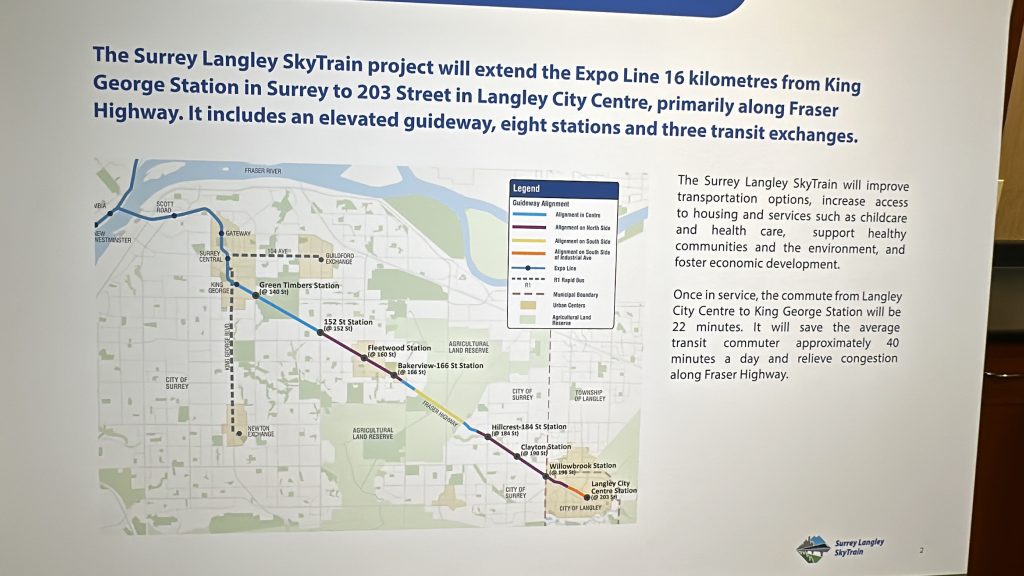
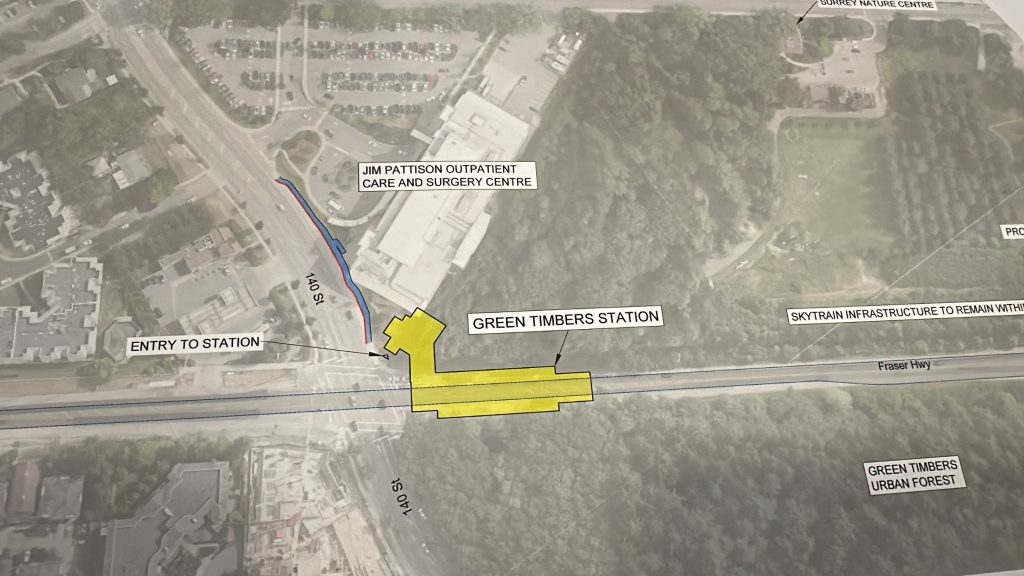
The line will have eight stations spanning the distance between Surrey’s King George Station and Langley’s Willowbrook Mall, with stops in Guildford, Fleetwood, and Clayton Heights.
Each station will have its own look.
Open Gallery4 items
“There was a desire to make each station slightly unique to reflect their neighbourhood,” Assier said.
The final stop will be at 203rd Street in Langley. The current travel time to this station via bus from King George Station in Surrey is just over 50 minutes. The new SkyTrain line is expected to cut travel time to just 22 minutes.
Heading into downtown Vancouver from Langley will take just over an hour.
CityNews spoke to some residents who are excited about having a new alternative to driving.
“If I want to hop on the SkyTrain down the road, I’ll be able to go downtown and not worry about traffic,” one attendee said. “That’s a plus.”
Others are excited about the economic growth encouraged by the new line.
“I think a lot of businesses will be opening because of the density and population,” another attendee said. “And those businesses need people to work.”
Assier agrees.
“We know the population is growing in the region,” he said. “We expect by 2050 to have up to 400,000 people living in Surrey and Langley,” he said.
But one attendee says the SkyTrain isn’t the ideal mode of rapid transit, claiming that light rail is easier to access while also noting the SkyTrain’s concrete pillars aren’t nice to look at.
“I don’t see it as a true friendly infrastructure; it’s not great for pedestrians,” the attendee said.
“It’s more of a car-friendly infrastructure versus LRT, which would be much better for our neighbourhood. I hope in the future, we see LRT because there is space for it on Fraser Highway.”
Residents who live near the new SLS line are encouraged to check the project’s website for any construction updates to avoid traffic disappointment.
“This is a very big project and we can expect a lot of congestion,” Assier said.
The project is expected to be completed by the end of 2029.



Recent Comments