Are Hydrogen Powered Trains A Decade Too Soon?
For all the talk of hydrogen powered trains, very few are actually in operation. Oh, they open with great hype and hoopla, but then silence.
Rail for the Valley preferred to stick with current technology as we have seen with the “SkyTrain” example, proprietary products tend to be both very expensive and tend to age out quickly.
“Stick to what is available on shelf” and let those with more experience experiment with hydrogen trains, has been RftV’s clarion call and it seems this was the correct path.
RftV is not anti hydrogen rail, rather we only want to deal with proven technology to get the costs down and not burden future operations with unnecessary costs with opening a 130 km Marpole to Chilliwack regional railway, using modern DMU’s.

Hydrogen Trains Continue To Derail

Recently I collaborated with David Cebon, head of the Cambridge Centre for Sustainable Road Freight, and interested parties on a complete list of all of the abandoned hydrogen bus trials globally. There are a couple of dozen of them, and I’m pretty sure there are more transit agencies that have tried and abandoned hydrogen buses than are currently trying to run them. Of course, there are even more transit agencies that dodged the bullet entirely just by looking at the history of failures and realistic cost workups themselves.
But what about rail? Maybe hydrogen actually has a niche there? Well, chancers keep trying it on, but to typical hydrogen results. Rail sets keep leaving the tracks.
It’s worth starting with the wisest rail organization, or at least the one that publicly patted itself on the back for being smart, Baden-Württemberg. That province of Germany actually used spreadsheets with real numbers in them before buying anything to assess the total cost of ownership and found that hydrogen trains would cost about 80% more over their lifetime than battery-electric and overhead wire powered trains. It said no thanks, of course.
The same can’t be said for its sibling state of Lower Saxony. The rail operator LNVG made the announcement that after running a relatively small number of small passenger regional trains for a few years, and abiding by its contract to buy more last year, it will no longer consider hydrogen trains for anything else. They’re just too expensive to operate, compared to trains with overhead line connections and batteries to bridge the tough spots.
Of course, Lower Saxony is also home to rail operator EVB with their hydrogen trains, which were put onto sidings and replaced with diesel trains in September of 2024 for lack of hydrogen as supplier Linde had a small deflagration incident — that’s industry speak for a hydrogen tube truck blew up — at their hydrogen facility that resulted in sufficient damage that hydrogen was in short supply even for actually sensible use cases in Europe. EVB’s pride of being the first hydrogen train in Europe is likely a little bruised by this.

Not to be outdone, or underdone, or something, the German state of Hesse decided to buy hydrogen trains and received some in 2023. Rhein-Main-Verkehrsverbund (RMV) operates the trains, and has had nothing but trouble. Basically, the trains are just unreliable, mirroring the reality of hydrogen fleets globally, where their inherent fragility and complexity just aren’t being fixed. They finally said enough, train supplier Alstom recalled all the trains to try to fix them — not going to happen — and RMV has leased a bunch of diesel trains to fill the gap in schedules.
Of course, they could have just asked their rail provider, Alstom. A European sales executive from the company is on record saying no one would buy their hydrogen trains because they are maintenance nightmares unless the tender was written in such a way as to exclude anything but hydrogen trains. Instead of learning from their own experience, the Lower Saxony experience and the basic math done by Baden-Württemberg, Hesse is still apparently committed to the dead end of hydrogen.
Closing out German failures with hydrogen — what are they putting in the wasser over there? — is the state of Bavaria. It entered into a 30 month agreement with Alstom for a trial of one of their hydrogen trains on a tiny rail line. With luck they’ll dodge the bullet because the contract for the trial is over in September of 2025, and the train isn’t on the tracks yet. However, they’ll still have wasted millions on hydrogen refueling and repair infrastructure.
As for what is in the wasser in Germany, well, it’s hydrogen infused, like scam brands HTWO and Hfactor, both of which claim miraculous health benefits from bottled or canned water with extra gas. Clearly it has hallucinogenic effects on rail operators because the number of hydrogen rail trials in Germany is the highest in the world. More seriously, the country is the leading proponent of hydrogen for energy in Europe, pushing hard for molecules instead of electrons as energy carriers because so many of its companies depend on molecule-for-energy value chains and are resisting transition heavily. It also explains why German truck manufacturer Daimler is seriously trialing liquid hydrogen refueling stations and trucks, an idea whose complete lack of thermodynamic and economic sense is compounded by the massive safety hazard it represents.
But these firms have a lousy excuse, which is that the government for 25 years has been pushing hydrogen hard, long past the point when rational actors realized it had been outcompeted by direct and battery electrification and heat pumps. Some of this is due to former German Chancellor Gerhard Schröder’s close ties to Russia, his in-office and ongoing efforts to keep Germany addicted to Russian gas, and his unsurprising appointment to a million euro a year Board role on Russia’s Gazprom subsidiary Nord Stream AG. That’s led to Germany’s Potsdam Institute for Climate Impacts (PIK) embedding artificially low — incredibly low — prices for hydrogen in its LIMES-EU and REMIND models and being unable to spot how ludicrous the results were just by glancing at them.
So German rail operators have an excuse, no matter how feeble, for buying hydrogen trains, and French rail giant Alstom has the excuse that the customer is always right, even though they clearly feel comfortable telling clients that they aren’t even as they pocket the hundreds of millions for bad technology. That’s likely going to bite them. RMV has been quite vocal about their dissatisfaction, something that’s going to impact transportation manufacturers that get sucked into hydrogen around the world.
The poster child for this right now is Quantron, the German provider of both inferior battery electric trucks and unreliable and more expensive hydrogen trucks. It sold Ikea in Austria, next door to Germany, its short range, expensive battery electric trucks, and then when they couldn’t go distances that were required for some deliveries, sold them expensive hydrogen trucks. Then it went bankrupt because it was wasting lots of money on hydrogen trucks instead of selling reliable, effective, reasonable range electric trucks. After all, when Mercedes is selling a battery electric truck with 150 km more range for €20,000 less than Quantron, and Quantron’s answer is hydrogen, you just know which company is going to survive. Hydrogen can seem appealing to manufacturers, but it’s a strategic trap.
That all said, it’s not like Germany is alone in this rolling stock folly. There are other places that for reasons without basis in economic, technical or service reality have decided that they have millions to throw away on hydrogen trains.
Foshan in China is worth a mention. That city decided to be a contrarian in the country, and while every other city went battery and grid tied electric with rail and buses, Foshan boldly introduced an industrial strategy based around fuel cells and hydrogen. As a result, it has more hydrogen buses on its roads than any other country in the world. Of course, even there battery electric buses outnumber the hydrogen ones. But it’s also home to a rusting set of tracks that once saw a hydrogen tram providing inferior service daily. That tram is now rusting somewhere, and if the tracks haven’t already been dug up and turned into consumer goods, it’s likely to happen any day now.

Hyundai Rotem has secured a contract to supply 34 hydrogen fuel cell trams to the city of Daejeon, South Korea. The agreement, valued at approximately $201 million, was signed in July 2023. The trams are scheduled for delivery between the first half of 2026 and mid-2028. That’s going to end badly, but South Korea is drinking that hydrogen fortified water as well, with equal impacts on rational thought and the ability to use spreadsheets.
In March 2021, 4 French regions—Auvergne-Rhône-Alpes, Bourgogne-Franche-Comté, Grand Est and Occitanie—ordered dual-mode train sets powered by electricity and hydrogen from Alstom again. The total cost for the project is €231 million. They are supposed to start service in 2025. Only Grand Est shares a border with Germany, so the intellectual contagion isn’t due solely to German influences. However, once again these regions are ignoring their rail provider and results from neighboring Germany. It’s going to end predictably. That said, hydrogen is the Champagne of transportation fuels and the French do like their wine. Perhaps they’ll persist long past any reasonable timeframe just out of Gallic contrariness.
Since 2021, North American Class 1 railroad CPKC — the merger of Canadian Pacific and Kansas City Southern railroads —has been conducting service trials with hydrogen-powered locomotives, powered by Ballard’s fuel cell modules. As of September 2024, these locomotives have completed over 3,540 km in mainline tests, which is both a nothing burger in terms of distances and likely means that the fuel cells are about to die of old age. North America is unique globally in claiming that electricity couldn’t possibly power trains, ignoring that every other continent in the world is quietly doing exactly that.
Class 1 railroad CSX decided that it will not stand that CPKC is alone in wasting money pretending that hydrogen is fit for purpose for rail, and introduced its own hydrogen fueled locomotive, again with Ballard’s money losing products providing the electricity. More trials, no operations.
After a good run ignoring hydrogen and focusing on direct and battery electrification, India is about to launch its own hydrogen passenger train. It’s unclear why given that India will have achieved 100% heavy rail electrification this year, and this isn’t a twee tourist train like others targeted for the molecule under India’s Hydrogen for Heritage rail program that aims to modernize and decarbonize historic and iconic routes like the Darjeeling Himalayan Railway, the Nilgiri Mountain Railway, and the Kalka-Shimla Railway. Putting overhead wires on those incredibly scenic routes apparently wasn’t on, but they’d be an improvement over the diesel engines operating there today. Once again, not paying attention to spreadsheets or experiences.
The Italian government has allocated €300 million to replace aging diesel trains with hydrogen-powered alternatives across select routes. These trains will operate on non-electrified lines, particularly in regions where full electrification is not considered feasible. Apparently Italian rail operators aren’t paying attention to battery energy density and cost curves, as well as hydrogen train trials. Alstom again but including Stadler this time are going to be supplying the trains that will end up rusting on sidings, replaced by reliable battery electric trains and some more overhead wires. They aren’t even getting stylish Italian trains, so no one is going to be happy.
In August 2023, Sarawak Metro introduced a prototype hydrogen-powered Autonomous Rapid Transit (ART) vehicle in Kuching, Malaysia. Developed by CRRC Zhuzhou Institute, this three-car, trackless tram is designed to operate on dedicated lanes, offering a sustainable public transportation solution. It’s supposed to be the backbone of the transit system, but if so, the transit system will need a wheelchair. Chinese firms, like Alstom, Stadler, New Flyer and many more, are happy to sell customers bad products for more money if the customers insist. The odds of the customers getting good warranties and service are low.
Finally we have the sole Canadian trial, a tourist train that ran back and forth on a 90 kilometer route in Quebec for three months in 2023. I put that down to the failed Quebec firm Bombardier, whose rail operation was swallowed by Alstom when Bombardier’s insistence on taking existential risks under the assumption that the Quebec and national government would always bail them out resulted in the predictable collapse of the firm. I suspect the train will never return to service and the route will be quietly electrified with batteries or overhead wires.
You’ll note that organizations that have already tried hydrogen trains have had the very predictable failures, with several German states saying never again, and one managing to avoid sniffing the bubbles effervescing off of the bottled wasser entirely. I’m sure that there are many more rail operators who have quietly created the not-all-that-complicated spreadsheets populated with real numbers for hydrogen and equally quietly just ignored the entire thing. But if you happen to know of more hydrogen failures or failures in the making where rails were involved, please let me know.
A Bad News Situation
Kevin Quinn, the American spin doctor, hired by TransLink (a.k.a the provincial government) to bamboozle the taxpayer to agree to anti up more money for the regional transit system is again taken to the media pleading poverty to the provincial government, in order to secure more funding.
He is now blaming the “electric car” for the shortfall. Well, yes there is some fiscal impact of electric cars but he doesn’t mention the free transit for under 12 year olds or the 130,000 or so, dollar a day, unlimited travel U-Pass for post secondary students.
Quinn also forgets to mention the $16 billion, 21.7 expansion for the Expo and Millennium Lines, which operates an obsolete light metro system, the Innovia 300/MALM proprietary railway. Further, he fails to mention that both extensions will operate on routes with insufficient ridership, which will greatly increase operating subsidies.
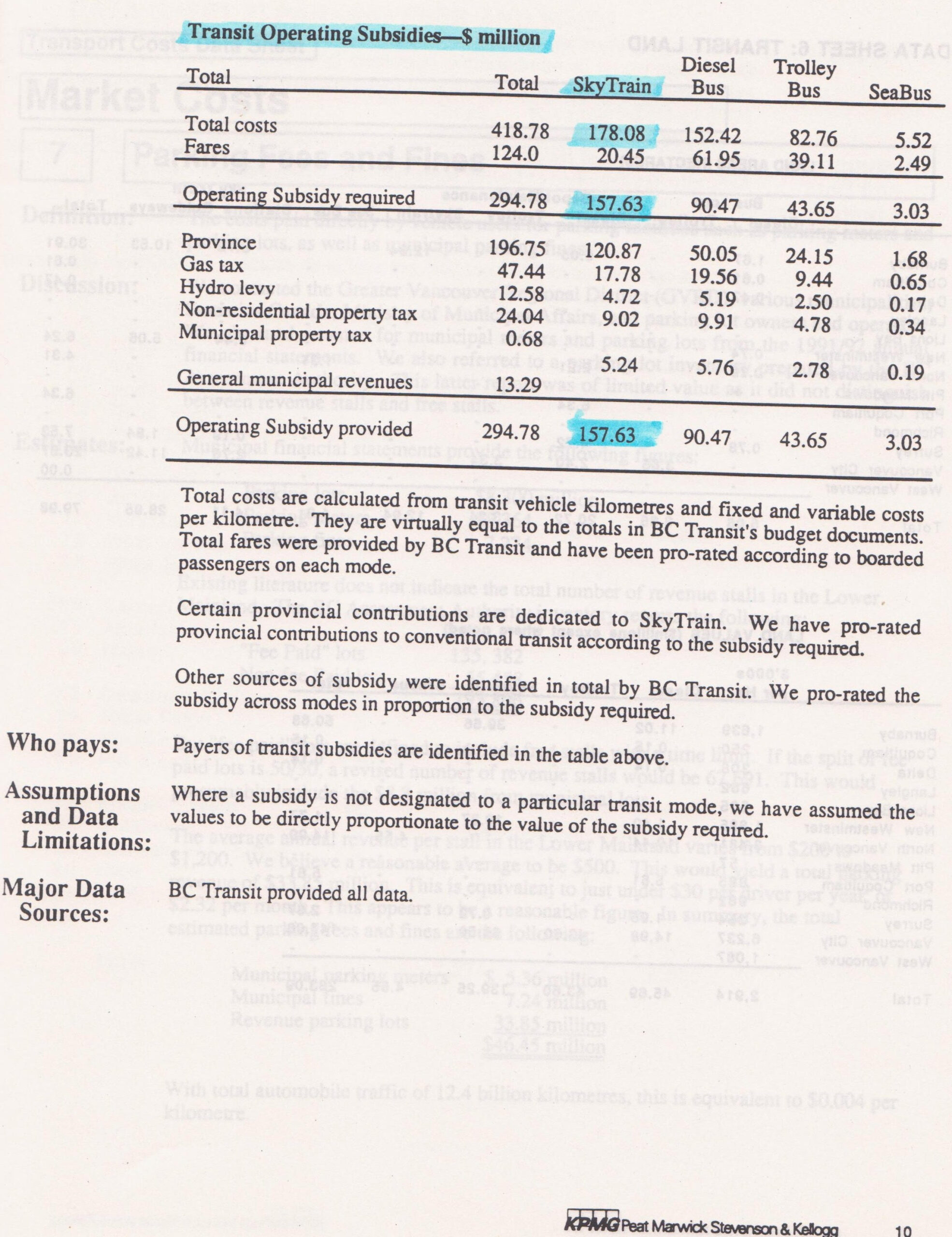
Fact is, Quinn doesn’t mention how much the Transit system is subsidized, especially the light-metro system. We do know that in 1992, just the Expo Line to New Westminster, was subsidized at over $157 million annually ($301 million in today’s coin!), more than the entire diesel and electric bus operations.
Quinn also ignores any sort of reforms to the regional transit system to make it more user friendly.
Sadly, Mr. Quinn treats the public like a one Mr. Trump treats the public, as rubes.
Back in 2021 I emailed the Engineering Dept. for the MTA to get a quick bio of Kevin Quinn and what i got back was hardly reassuring.
…………………………. you are about to get a new CEO of Translink in the person of Kevin Quinn. this is a good news/bad news situation. Good news is we are rid of him, bad news you are getting him. Mr Quinn may be the nicest yes man you will ever meet. he is very personable and friendly but have yet to actually see him in 6yrs have an opinion of his own. and if he has any use for light rail he has kept it well hidden. Hopefully you will have better luck than Baltimore, ridership is off (before pandemic) 2% year over year since he took over. good luck
The following photo is rather dated as the cost for the Surrey extension to Langley is now around $7 billion, including OMC#5! A billion here, a billion there, means absolutely nothing for TransLink and the provincial NDP!
And just think, Rail for the Valley’s Leewood Study, could see a Marpole to Chilliwack regional railway with three trains per hour per direction for around $2 billion and attract far more new ridership than the Expo Line extension to Langley.

TransLink facing massive funding shortfall, says CEO
By Kier Junos
City News
Posted November 23, 2024
Last Updated November 23, 2024 4:45 pm.
Speaking at an annual address at the Greater Vancouver Board of Trade Friday, the CEO of TransLink said the transit authority is facing a massive funding shortfall.
Kevin Quinn underlined the importance of keeping up with a booming ridership despite being short billions of dollars to do so.
“TransLink is standing at the edge of about a $4.7 billion fiscal cliff,” Quinn said.
“We can’t just say, hey, keep everything going as it is a year from now. Our region is growing, and I can’t convey this enough to this group, and you’re probably seeing it. You’re seeing it on our roads, you’re seeing it everywhere. Our region is growing at an astronomical rate, and we can’t keep up. We have to meet that growth. We have to meet that demand.”
Quinn highlighted a number of challenges keeping the transit operator from getting up to speed.
“Among the reasons, one of the biggest is the regional shift towards electric vehicles, and even more energy-efficient vehicles,” he said.
“I think every single person in this room recognizes that is great for the environment, but on the flip side, it is depleting gas tax revenue that we use to fund our transit system.”
Transit advocate Denis Agar attended Quinn’s address and says TransLink has proposed great expansions to the transit system.
“But at the end of the day, we need to see how is TransLink’s funding deficit going to be addressed,” said Agar, the executive director of Metro Vancouver Transit Riders.
“We need to see that in the next few months.”
In July, TransLink partnered with PCI Developments on a new mixed-use development at a future Vancouver SkyTrain station at Arbutus and Broadway.
Quinn says this sets a precedent for how the company will get the money it needs.
“This is really big because it marks the beginning of a brand new revenue stream for us, one that we have been searching for and advocating for for some time: leveraging TransLink-owned land to generate income that we can invest right back into our system.”
Agar says that would be great — but only if they had the land to work with.
“Using land development to fund transit is time-tested, all around the world. Hong Kong’s service is funded 100 per cent with land development,” he said.
“But someone needs to give TransLink the land to develop, right? They just don’t have a lot at their disposal. Someone needs to give TransLink something. That’s how land development could fund better transit.”
What is more realistic, he says, is the possibility of someone giving TransLink money in the short term.
“[That’s] probably more likely to happen.”
Articulated Rail Cars – Transit 101

So boys and girls, lesson for today; what is an articulated car?
I ask this because a TransLink type said that the new Mk.5 SkyTrain cars are articulated, which they are not.
Definition:
Articulated cars are rail vehicles which consist of a number of cars which are semi-permanently attached to each other and share common Jacobs bogies or axles and/or have car elements without axles suspended by the neighbouring car elements. They are much longer than single passenger cars. Because of the difficulty and cost of separating each car from the next, they are operated as a single unit, often called a trainset.
The difference between an articulated tram and a Bombardier ART Innovia 300/Movia car is that on an articulated tram, one truck or bogie supports two bodies. With the ART Innovia/Movia cars, one body is supported by two trucks.
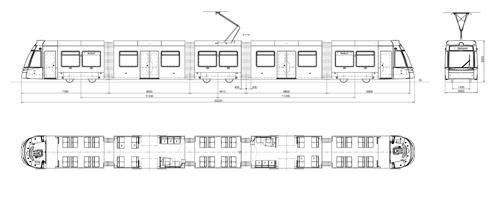
Another version of an articulated tram, where one body section is supported by the two adjacent body sections, with their own trucks or bogies.

The non articulated Innovia/Movia light metro car. Notice that each body section is supported by two truck or bogies. The Innovia 300 trains (the real name of the MK.5 cars), have coaches with open vestibules at both ends, semi permanently coupled into 5-car train-sets.
Transit History That Politicians Would Like The Public To Forget
The history of Vancouver’s SkyTrain light-metro system has been somewhat altered to fit today’s politcal narrative; the following is a brief but concise history of how metro Vancouver got saddled with the SkyTrain light metro system.
Prior to the Social Credit government forcing the then called Advanced Light Rail Transit (ALRT) system onto Metro Vancouver (To quote then premier Bill Bennett; “you will get SkyTrain whether you like it or not”, which was quoted again when then NDP Premier, Glen Clark echoes the same threat for the Millennium Line), there was a well studied plan to implement a modern light rail system for Canada.
Just weeks before the plan was to be accepted by the GVRD, the Bill Bennett government entered into a private agreement with the Government of Ontario to buy their unsalable Intermediate Capacity Transit System (ICTS) system, which was renamed ALRT for the sale to Vancouver, to acquire the services of the then famous “Blue Machine”, to win the next election, which like today, saw a one seat majority in the legislature in Victoria.
Only one ALRT system (Vancouver) was built and the proprietary transit system remained unsalable domestically and internationally.
Bill Van der Zalm was merely the government “points-man” to sell ALRT to the public and had little to do with the decision. He is on record stating that, except for the Expo Line, ALRT or SkyTrain, was unsuitable for the lower mainland rapid transit and supports the Valley rail scheme.
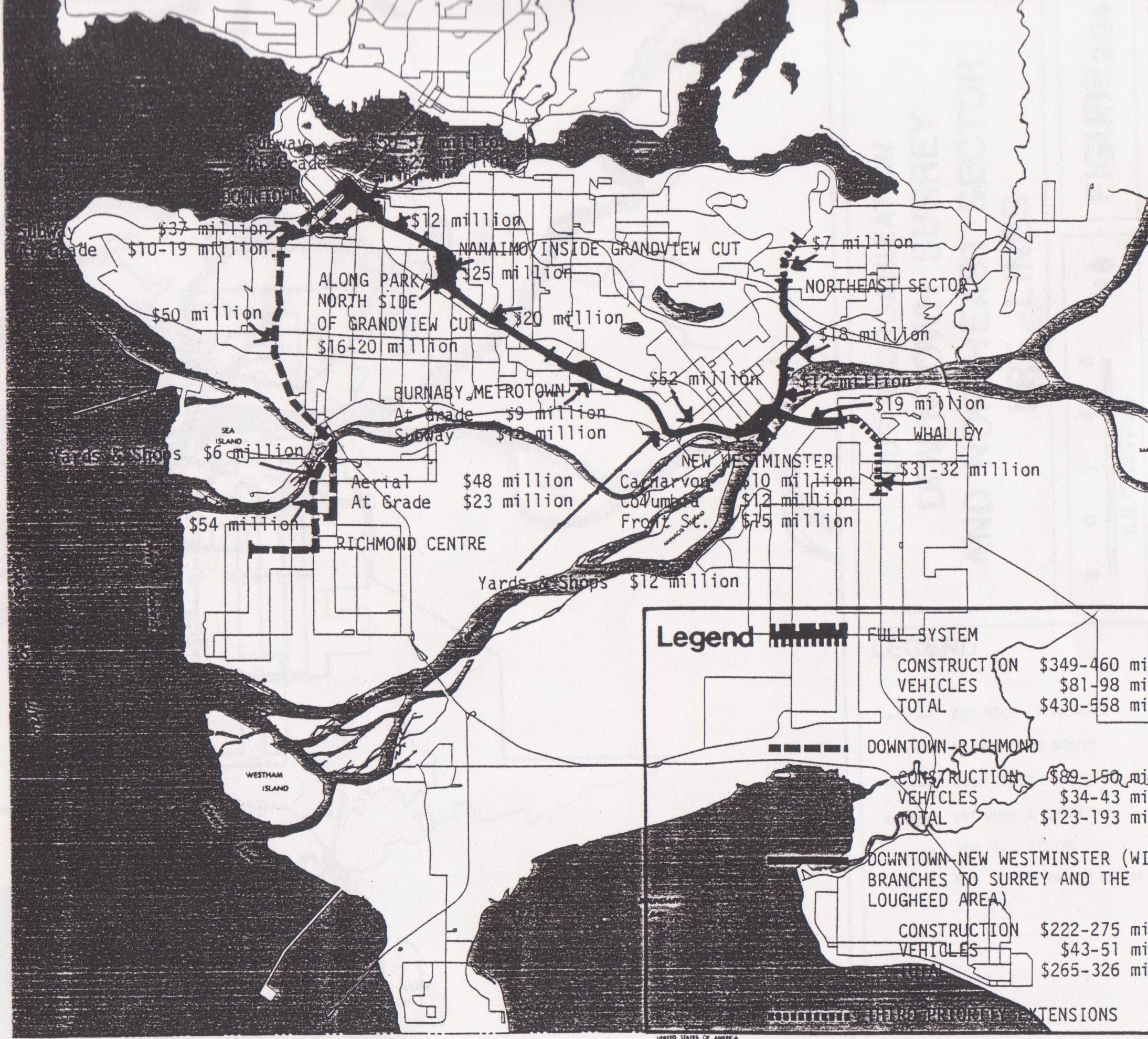
The original LRT plans saw LRT from Vancouver to Richmond; Vancouver to New Westminster/Lougheed Mall and Whalley.
The following is a map, with costs (1978 dollars) of the proposed LRT lines, but for a somewhat higher cost we got ALRT to New Westminster.
Adjusting for inflation, the $430 Million to $558 Million would be $1.88 Billion to $2.45 Billion. Compare to the $6 to $7 Billion, 16 km extension of the Expo Line to Langley or the now $4 billion, 5.7 km Broadway subway!
The GVRD did not want SkyTrain and instead wanted light rail for the then Broadway Lougheed Rapid Transit Plan as their “Cost of Transporting People in the Lower Mainland” Study found that SkyTrain, just to New Westminster, was subsidized at $157 million annually in 1992; more than the trolley and diesel bus operations combined!. Accounting for inflation, this is $300 million annually in 2024 dollars
The NDP have flip-flopped twice, Broadway Lougheed and Surrey, from originally planned for light rail to SkyTrain light metro.
Why?
It certainly wasn’t because it was a better system because the well studied ALRT/ART (ART is the name for Bombardier’s rebuild of ALRT) has been found wanting and remains today unsalable.
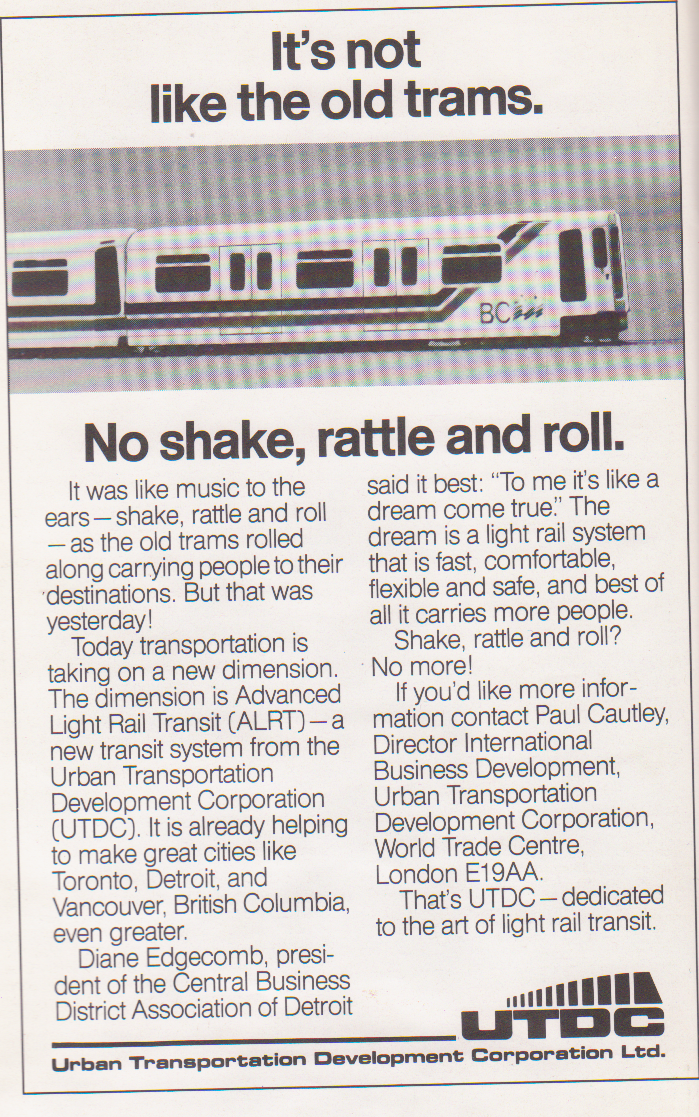
The following is from Modern Tramways in 1983 and clearly shows that ICTS/ALRT was inferior to LRT, yet the Toronto studies were never permitted to be made public in BC and the Vancouver media never bothered to investigate ALRT.
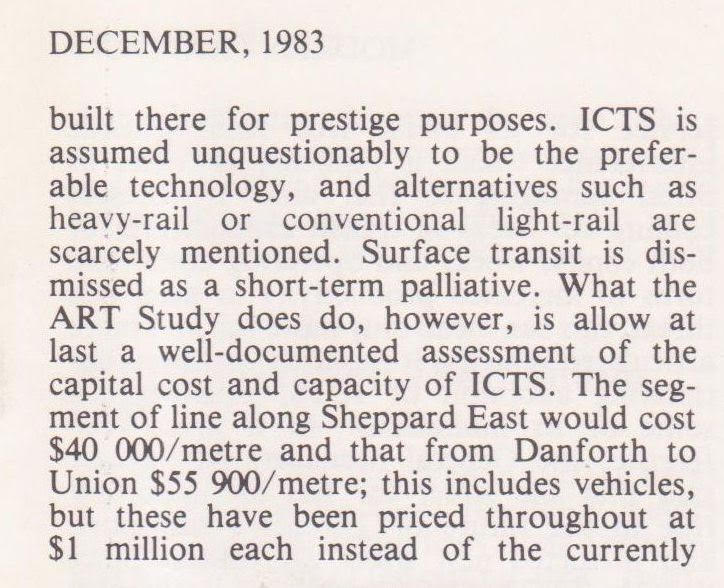
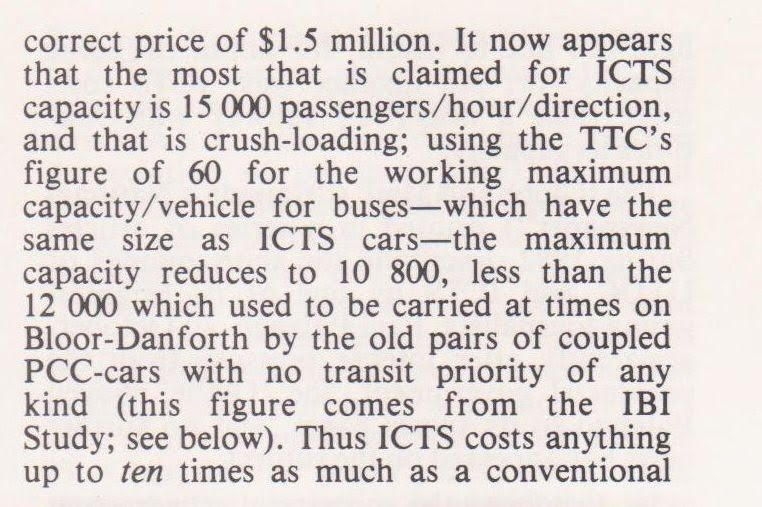

It was known by 1983 that what we call SkyTrain was unsalable and today only seven systems were built and only six remain in operation. It was well known in the 1990’s that Bombardier’s rebuild of ICTS/ALRT was unsalable and resorting to pay “success fees” to bureaucrats and politicians in Korea and Malaysia to build with ART.
Bombardier could only sell one ART system in the USA, if the Canadian government, through the Overseas Development Bank would fund it, yet Vancouver continues to plan for more and worse, pretends it is a “world class system“!
Whoever has heard of a “world class system” that is unsalable?
This is the legacy of the SkyTrain light-metro system, a world class white elephant.
Why does government continue planning and building with it?
Rail for the Valley’s Letter To The Mayor’s Council On Transit

I have been involved with transit issues in the lower mainland for 40 years. I am also the person responsible for the Leewood Study, an independent study by Leewood Projects UK, about the viability of reinstating the former Vancouver to Chilliwack interurban service with modern TramTrain or light diesel multiple units, on behalf of the Rail for the Valley group.
The Leewood Study, published in 2010, is all the more important today, with an ever growing Fraser Valley population combined with the massive escalating costs of building with Light Metro, will make any thought of future extensions financially impossible.
Rail for the Valley: www.railforthevalley.com/
TramTrain: en.wikipedia.org/wiki/Tram-train
Leewood Projects: leewoodprojects.co.uk/
Leewood Study: www.railforthevalley.com/studies/
The Lower mainland has a very expensive transit problem, called TransLink, which has a spending problem and not an income problem. This has resulted in TransLink demanding a further $600 million annually, threatening drastic cuts to the regional transit service. TransLink willfully squanders money on prestige transit projects, such as the SkyTrain light-metro system, which no transit authority has copied the Vancouver model!
It is time, regional politicians show some backbone and vote no to the demands of this ponderous and grossly inefficient bureaucracy because they will always come back, demanding more and more money, to hide their incompetent and extremely expensive transit planning.
The current expenditure of at least $16 billion, extending the Millennium and Expo Lines a mere 21.7 km is a combination of professional misconduct on the part of TransLink and the Provincial government and willful ignorance by the Mayor’s Council on Transit.
This $16 billion expenditure confirms Bent Flyvberg’s Iron Law of Mega-projects specifically addresses why politicians are obsessed with infrastructure at any cost.
“…the “political sublime,” which here is understood as the rapture politicians get from building monuments to themselves and their causes. Mega-projects are manifest, garner attention, and lend an air of proactiveness to their promoters. Moreover, they are media magnets, which appeals to politicians who seem to enjoy few things better than the visibility they get from starting mega-projects. Except maybe cutting the ribbon of one in the company of royals or presidents, who are likely to be lured by the unique monumental and historical import of many mega-projects. This is the type of public exposure that helps get politicians re-elected. They therefore actively seek it out.“
It is time TransLink stop its deliberate gambit of confusion with Metro Vancouver’s rapid transit system, which has led to decades of dubious transit projects, costing two to three times more than they should, by continuing building with an obsolete proprietary light metro system, locally known as SkyTrain.
Metro Vancouver’s light-metro system, called SkyTrain, is a name chosen via a radio contest in 1985 and is common name with many other elevated railways and proprietary transit systems that have no relation with Vancouver’s operation.

Vancouver’s SkyTrain light-metro system is made up of two distinct railways:
- The Canada Line, a conventional railway, built as a light metro and uses ‘off the shelf’ Electrical Multiple Units (EMU’s) currently supplied by ROTEM of Korea.
- The Expo and Millennium Lines operate an unconventional, proprietary and often renamed light-metro system, now called Movia Automatic Light Metro (MALM), whose cars are only built by Alstom, after they purchased Bombardier’s rail division. No other company offers a compatible vehicle that will operate on the MALM lines. This raises important questions with the so-called bidding process with car replacement because no other company produces compatible cars!
The MALM system uses Linear Induction Motors (LIM’s) and is not compatible in operation with any other railway except its small family of now six systems. In total seven systems were built but Toronto abandoned theirs last year.
Vancouver is now the sole customer for MALM, as it is the only operator currently expanding its system.
A technology bias exists at TransLink. Internationally the MALM system is considered obsolete, as it costs more to build, operate and maintain than conventional light rail. Cities that built light-metro, such as Ottawa and Seattle, use light rail vehicles, as they are much cheaper to operate and far more flexible in operation. In today’s world, modern light rail greatly outperforms the MALM light-metro system at a significantly lower cost.
TransLink continues to use this cunning method of manipulating analysis to justify SkyTrain in corridor after corridor, and thus succeeds in keeping its proprietary rail system expanding.
Gerald Fox, Noted American engineer, retired.
TransLink’s well oiled propaganda machine, churning out ”fake news” and “alternative facts” has created the local SkyTrain myth. The SkyTrain myth has fueled the SkyTrain Lobby, which repeats TransLink’s fake news and alternative facts, so much so that politicians and the public have come to believe the SkyTrain myth.
The Broadway subway is testament to the power of the SkyTrain myth. Funding for the now $4 billion Broadway subway (this cost will be announced after the provincial election) was based on a foundation of half truths and questionable planning.
The accepted standard for building a subway is a transit route with traffic flows in excess of 15,000 persons per hour per direction (pphpd), yet peak traffic flows on the 99B Line, which will be replaced by the Broadway subway to Arbutus, is about 2,000 pphpd, based on 3 minute peak hour headway’s.
Before Bombardier’s rail division was sold to Alstom, Bombardier publicly stated on its website “that it doesn’t recommend the Skytrain technology for peak period passenger levels below 8000 passengers/hour/direction“. According to Thales news release, regarding winning the $1.47 billion resignalling of the Expo and Millennium Lines; “When the programme is fully implemented, the Expo Line will be able to accommodate 17,500 passengers per hour per direction, and the Millennium Line (Broadway Subway) will be able to handle 7500 passengers per hour per direction, a 32% and 96% increase respectively.“
For added taxpayer insult, in the late 1940,s and early 1950’s, the Toronto Transit Commission were operating coupled sets of PCC trams on select routes, offering a maximum peak hour capacity over 12,000 pphpd, yet the Millennium Line will be limited to a maximum capacity of only 7,500 pphpd!
TransLink’s two top planners were fired for their opposition to the subway, by publicly stating the obvious; that there wasn’t the ridership on Broadway to justify a now $4 billion subway.
TransLink quite happily lets people believe that Broadway is the “most heavily used transit route in Canada“, but claims “This is our region’s most overcrowded bus route.”, instead when there is a threat of professional or legal accountability.
“The problem with TransLink is that you can never believe what it says; TransLink never produces a report based on the same set of assumptions.”
Former West Vancouver Clr. Victor Durman, Chair of the GVRD (now METRO) Finance Committee.
The former Mayor of Surrey’s flip flop from LRT to SkyTrain was also predictable, as the bureaucrats at TransLink did their best to ensure this would happen.
The well oiled SkyTrain Lobby was in full force with every bit of classic fake news and alternative facts they could muster, yet ignored the fact that MALM (SkyTrain) is now considered obsolete internationally and only seven such systems have been built in the past fifty years.
The original claim that a SkyTrain extension from King George station to Langley City could be completed for $1.65 billion, was later exposed to be false, yet no action was taken and today the cost of the 16 km Langley extension is now said to cost $6 billion or $7 billion if one includes the Operations and Maintenance Centre #5. The OMC#5 is needed for the proper maintenance of the new Mk. 5 – five car train sets.
With the politcal promise to complete the proprietary MALM railway to Langley at a cost of $7 billion, another very costly issue arises.
The aging Expo line is desperately in need of an additional major rehab. This rehab includes a major overhaul, including an expanded electrical supply and all the switches being replaced with higher speed switches to permit faster operation and increased capacity. Stations must be rebuilt to deal with the higher customer flows which come with a higher capacity and is said to cost between $2 billion to $3 billion and must be done before the extension to Langley is built.
The real cost of the Langley extension will continue to rise.
How is this to be funded?
The combined annual operating costs for the Broadway subway and the full Expo Line to Langley will now exceed $70 million annually.
How is this to be funded?

Is a $16 billion expanding MALM 21.7 km a good investment, especially when one considers the lack of ridership to support such an investment?
By comparison, 2024 cost for The Rail for the Valley’s Leewood Study, for a 130 km, Marpole (Vancouver) to Chilliwack passenger service, using the BC Electric rail line, servicing North Delta, Cloverdale, Langley, Abbotsford, Sardis and Chilliwack and connecting the many business parks, universities and colleges along the route, will cost under $2 billion. Or rehabbing the 230 km E&N Railway to the same standard of the RftV/Leewood Plan costing around $3 billion.
TransLink does not support the Leewood Study’s 130km Marpole to Chilliwack rail service because it would outperform their now $7 billion, pygmy 16 km extension to the Expo Line.
“But, eventually, Vancouver will need to adopt lower-cost LRT in its lesser corridors, or else limit the extent of its rail system. And that seems to make some TransLink people very nervous.”
Gerald Fox
TransLink has a spending issue, not an income issue and major rethink must be done on how we provide an affordable regional rail system. Metro Vancouver’s light-metro system has been well studied, yet those cities who have done so, have invested in light rail instead!
Why, in an era of unprecedented investment in regional rail transit, has no one copied Vancouver’s light metro system, including the exclusive use of the proprietary MALM system?
Of the seven systems built in the past fifty years, Toronto has abandoned their version of MALM and Detroit’s version only survives because the operating authority literally attended the TTC’s “transit garage sale” and purchased all the spare parts and equipment they could!
Two of the later versions of SkyTrain built in Malaysia and Korea have embroiled both the then patent holders, SNC Lavalin and Bombardier in legal proceedings, including charges of bribery.
The system serving JFK Airport, failed a peer review by the American Federal Government which withheld funding and to save face for Bombardier Inc., the Canadian government, through the Overseas Development Bank, funded construction.
It is time to put an end to MALM expansion or the provincial government and current mayors, will become like Marley’s ghost, dragging an ever longer chain made of empty cash-boxes, IOU’s, red ink, bare purses and increased taxes wrought in union made steel, election, after election for decades to come.
Remember the FastFerries?
Today, TransLink continues to be toxic with taxpayers and extending MALM to Langley will make TransLink and all who supported the gold-plated extensions radioactive politically, on a Chernobyl scale.
It is time for the Mayor’s Council on Transit to show some fiscal backbone and say no to TransLink’s demands for more money. All TransLink is doing, as it has always done, is doing the same thing over and over again ever hoping for different results, funded of course, by an increasingly paupered taxpayer.
Mayors Council on Transit Begs For More Funding

Ah, the Mayor’s Council on Transit, or the gang who couldn’t operate a Christmas tree train set is begging for more taxpayer’s money.
One has only look at the Stanley Park miniature railway fiasco to understand that politicians do not understand the issues, let alone trying to fix it. There only recourse is to throw more money at the problem, hoping this time for different results.
Not going to happen.
TransLink’s problems is not just financial, it is philosophical, as they are trying to operate a 1970’s transit system in 2024 and it is going badly. There are no real experts overseeing TransLink (the last were fired in 2015 because they opined that there wasn’t sufficient ridership potential on Broadway that would demand a subway) and career bureaucrats run the operation, being more focused on their pension plans that operating a good transit system.
Spending, now $16 billion plus, to build 21.7 km of the “proprietary” MALM light metro system which operates on the Expo and Millennium Lines seems to be a grand waste of the taxpayer’s monies as both will attract very few ‘new’ customers to transit.
But the list goes on and on, yet the “gang who couldn’t shoot straight“, fails to be honest with the public and resorts to scare tactics.
Zwei, in his typical fashion has inked a letter to the Mayor’s Council about the issue and in typical fashion it has been ignored. Increasing taxes without actually dealing with the issues is the cowards way out and cowards accurately sums up the Mayor’s Council’s demand for more funding.
So much easier to tax and spend and ignore the truth and rely on “mom and apple pie” homilies to placate the taxpayer.
It is time for a judicial inquiry on TransLink and the Mayor’s Council on Transit to ascertain the truth, before another nickle is spent on transit.
Next post, A Letter to the mayor’s council on Transit.

TransLink ready to ask new B.C. government for help to secure billions in funding

By Mike Lloyd
Posted October 31, 2024 7:07 am.
TransLink says it can’t save Metro Vancouver’s transit services without the help of the incoming provincial government, and those needs come with a very large price tag.
The region’s transit authority is asking for an annual $2.9 billion from senior levels of government to go into a fund to be used for capital spending.
TransLink’s Mayors’ Council will be discussing the results of its “Save Transit” provincial campaign at its Oct. 31 meeting, along with how it should proceed with the incoming NDP government.
“We look forward to getting to work immediately on Day 1 with the next government to fix TransLink’s broken funding model,” said Mayors’ Council Chair Brad West.
That work includes a proposed $3.4 billion per year Access for Everyone Fund which would include $500 million per year in new operating revenues as well $2.9 billion per year in senior government contributions to capital projects.
In an open letter written in July, West said the $2.9 billion request reflects what is necessary to continue delivering the transit services the region needs and avoid severe overcrowding amidst surging population growth.
“This amount is realistic and consistent with the level of investment by other provincial governments into their public transit systems and by the B.C. government into other essential services such as hydro-electricity and health care,” West wrote.
“Here in B.C., the Provincial government recently announced $36 billion over ten years for BC Hydro, $2.3 billion for the Highway 1 expansion project, and $13 billion in infrastructure funding for healthcare projects such as the new cancer care centre in Surrey and the redevelopment of St. Paul’s Hospital in Vancouver.
“Public transit is an essential public utility that must expand, similar to other provincial services, as our population surges,” he added.
West argues TransLink can’t meet the needs of the region without the help of the next provincial government.
A report going before the Mayors’ Council Thursday morning says that “this work will need to begin as soon as a new government forms to ensure there is sufficient time for TransLink’s Investment Plan approval process to complete by the end of April 2025 so that potential transit service cuts starting in 2026 can be avoided.”
Earlier this year, TransLink warned of the potentially drastic cuts unless it could find solutions to a looming $600 million annual funding shortfall.
The 2024 Provincial Election And Transit

How will the 2024 provincial election impact transit?
Hard to answer but, the current major “rapid transit” (Expo and Millennium Lines) projects are seeing a funding shortfall of around $4 billion and it is hard to see the new Parliament in Victoria approving funding, for what is now largely seen a “prestige” transit projects.
Oh, the politcans and bureaucrats will chatter on and on about the need of rapid transit and further embarrass themselves about global warming, but the funding is needed elsewhere, especially in the “Hurtlands” of BC.
This could lead to the Millennium Line’s Broadway subway terminating at Granville St or Burrard instead of Arbutus. The now $6 to $7 billion Expo Line extension to Langley will now be most likely deferred, with funding going to BRT planning and operation. Adios to Federal funding as by the time, the project gets on track, inflation and lack of federal funding will condemn the Expo Line extension to Langley to the history books.
Sigh …… and Surrey could have in operation today a $1.65 billion LRT line, with extensions to Langley now nearing completion.
One SkyTrain Line in Surrey will do nothing for traffic congestion or gridlock and hopeful more sane transit planning will take place.
Both the Rail for the Valley “Leewood Plan” will continue to be ignored and the E&N will continue to rot, because far too many elected officials and their bureaucratic henchmen have far too much “cred” and politcal investment in building light metro.
What will not be curtailed is BC’s now infamous “Black Top Politics” where building wider roads, new bridges (strangely not tunnels) and new highways will be top of the list.
In the short term it will be “rubber on asphalt” based transit, which will keep the Road Builders Association; the cement manufacturers, and Unions happy. The Carbon Tax will remain as a placebo, for the provincial government, pretending it is doing something to mitigate global warming and climate change, when in fact they are not.
For further insult to those concerned about climate change, the revenues from the Carbon Tax will go to fund new road projects, which in turn entice more vehicular traffic to our already over-stressed roads.
Induced demand is not in the NDP’s or Conservative’s lexicon, as is Global Warming and climate change.
BC politics at its best.

Addendum
The Greens self immolated themselves by not sticking to truly Green issues. Instead of the free transit nonsense, they should have campaigned for the restoration of the E&N into a modern regional railway. I would wager making the E&N part of their election campaign, they would have garnered one or two additional seats on Vancouver Island.
JOHN RUSTAD’S HIGHWAY TO HELL

This will be John Rustad’s highway to hell. The Conservatives, true to their ignorance of all things transit, have set forth a program, that if implemented will cost tens of billion of dollars, yet do little, if anything to alleviate congestion and gridlock.
In fact it will create massive gridlock in the region.
It is called induced demand and the more road space one creates, the more traffic that will use it, creating even worse traffic congestion and gridlock!

What about the cost of the Conservatives electoral promices?
Expanding Hwy 1 to 6 lanes to Chilliwack will cause massive gridlock elsewhere and cost in the region of $10 billion, based on current expansion costs on Hwy.1 to Abbotsford.

Expanding the Patullo Bridge to six lanes of traffic is a fools game because where will the traffic go? The road system is saturated on the New Westminster side. I cannot even guess the total costs for that, somewhere between $6 billion to $10 billion, based on new roads in New West.

The same is true for the 2nd Narrows Bridge, where an expanded bridge will create major traffic gridlock elsewhere and again the the estimated cost of this is somewhere around $10 billion, give or take a few billion.

Rustad’s Conservatives follows the BC Liberal’s false meme about the Massey Tunnel replacement, yet fail to understand that the “induced capacity” will create massive gridlock in Richmond. The total costs (full package including road and highway construction), somewhere around $10 billion.
Extending SkyTrain to Newton forgets some important factors, one being the cost to extend the Expo Line to Langley is costing around $400 million a km. (by comparison LRT can be built for about $40 to $50mil/km (cost depending on the amount of engineering required) and have a higher capacity as well. So, 6 km of SkyTrain will cost $2.4 billion in today’s money……but as the province is still trying to source the additional $3 billion to complete the light metro to Langley, I think this is more politcal hot air than sound planning.

Oh by the way, you better build this quick as Alstom is going to pull the plug building the Movia Automatic Light Metro (MALM) trains that operate on the Expo and Millennium Lines and being a proprietary railway, no one else makes this antique anymore.
For you information Mr. Rustad, the Rail for the Valley Leewood Plan for a modern DMU service from Marpole to Chilliwack, using the former and still in use BC Electric Interurban route, servicing 10 major destinations, offering a maximum of 3 trains per hour per direction, would cost around $2 billion. So we can build 130 km of RftV regional railway, cheaper than 6 km of SkyTrain!
Here is a hint, we can build the RftV/Leewood Plan for $2 billion and save $8 billion by not making the Hwy, 1 six lanes to Chilliwack. This is called fiscal prudence, or are the BC Conservatives like the NDP and toss fiscal prudence out the window to win votes!
What we see from Rustad’s Conservatives is a platform based on classic “BC Blacktop Politics”, where rubber on asphalt solutions that worked well in the 50’s, 60’s and 70’s, but not so much in the 2020’s, where expanding the road system, expands traffic chaos. We see a childish wish list from politicians who like playing cars and offer simplistic road solutions for very serious transportation issues.
Oh by the way, the minimum cost for Rustad’s promises?
Just the a fore mentioned items, over $40 billion (accounting for future inflation and cement cost increases) and the whole package, double it. Just add it to the current provincial deficit of $170 billion – easy peasy ain’t it!
So John, where is the funding? What taxes are you going to increase to fund this? What hospitals and schools are you going to close to fund this? Don’t know?
Just promise away John, because like the NDP you are a party of back of an envelope promises and nothing more.
Lessons
A lot has happened with Ottawa’s hybrid light metro/rail system, most of it negative, but most confuse it with the very successful O-Train, which is not light rail at all, rather a regional railway, operating DMU’s.
This is what Rail for the Valley is proposing for the Valley Rail scheme and what the E&N folks should be proposing for returning a passenger service on the presently moribund route.
The province is spending over $16 billion to extend the Expo and Millennium Lines a mere 21.7 km, yet the Rail for the Valley scheme could be in operation for under $2 billion and attract more ridership, simply because it directly services a minimum of 12 major destinations.
Building expensive light metro to win elections is a fools game in the end, sadly the fools are the taxpayers who keep voting for politcans who keep doing the same thing over again, hoping for different results.

From our man in Ottawa.
The following video is Renee Amilcarr’s the head of O.C. Transpo, the LRT Committee and the operator Transit Next report to council on Line 2 and Line 4.
This live meeting with City council’ Joint Transit and Finance Committee monthly Stage 2 LRT progress report is to announce the final testing, what’s involved and when Line 2 and Line 4 will eventually open.
The important part is this is the first line extension opening after the 104 points learned from the LRT Inquiry were incorporated. The 98.5% performance standard and THIRD PARTY testing and evaluation are some of the most important points, that are constantly brought up to the listener. The fact that all data good or bad is completely open to the press and public.
The report is about 50 minutes long (if you want to listen to the whole thing) but it’s the first 8 minutes that are quite telling and offer a stark contrast to SkyTrain’s operations and Translink’s very non public operations data policy. Keep in mind we learned this process the hard way.
Let the Games Begin
Back On Track

Cities across Europe are building trams (streetcars) at a rate not seen in nearly a century. Places that had torn up their tram tracks in the 1950s have realized they had made a mistake. Twenty-one French cities have built a tramway system this century. Sixty German cities now have trams.
Further afield, China has built 35 tramlines since 2010, with ten more currently under construction. Even the United States, land of the automobile, has been investing in new trams and light rail. America now has 27 light rail systems, the most in the world, and 15 tram systems.
But Canada is falling behind. Only Toronto has retained their tram (streetcar) system and only Edmonton, Calagary, Ottawa, Kitchener and Hamilton have built light rail systems, though not true tram or streetcar systems. there are too many large Canadian cities and towns that lack reliable transportation and resort to “rubber on asphalt” transit solutions.
In “Back on Track” we look at why we struggle to build much-needed trams and how to fix it.
The following back on track report is for the UK audience but has many lessons for Canada and especially BC. In Metro Vancouver, we are following an extremely dated ‘Light-Metro” and “Hub & Spoke” transportation philosophy. Unfortunately what was thought good in the 1980, has little revelance for today’s transit issues.
Flexibility is the keyword in today’s transit world and the tram is one of the most flexible transit modes on the market. The tram or streetcar can:
- Operate as a tram or streetcar on a city street.
- Can operate as light rail on a dedicated Rights-of-Ways.
- Operate as a light-metro on a grade separated Rights-of-Ways.
- Operate as a Metro, either in a subway, or on viaduct or at grade.
- Operate as a passenger train on the mainline railway.
- And it can do all this on one transit route, without the need of a transfer!

https://www.britainremade.co.uk/backontrack
The first paragraphs of this study contains two ‘zingers”:
Trams have a higher capacity, lower emissions, and better ride quality than either cars or buses. A single lane of a city street could carry 1,500 people per hour in cars, 8,000 people in buses, or up to 22,000 people if it was used as a tramway. With more doors, longer carriages, larger stops, and signal priority, trams can easily move thousands of people along a busy corridor in Britain’s cities. Trams can combine the capacity advantages of trains with the immediacy and lower cost of buses.
First zinger; “A single lane of a city street could carry……….., 8,000 people in buses………..”. Thus, Broadway currently has a peak hour customer flow of around 4,000 pphpd (all bus services), yet the city wanted a subway on a route that could handle up to 8,000 pphpd using buses and when the city got its wish, Vancouver is getting a $4 billion, 5.7 km subway which maximum capacity, according to Thales who is resignalling the route, have a maximum capacity of 7,500 pphpd.
One just cannot make up such utter stupidity and gullibility of building a subway!
The second zinger is that trams can carry up to 22,000 pphpd, which is something to consider when the maximum capacity of the Expo Line, after resignalling, will be 17,500 pphpd.
https://www.britainremade.co.uk/backontrack



Recent Comments