Are You A Transit Expert? 15 Questions.

Here are ten questions to test the knowledge of political candidates about LRT & public transit for this coming provincial election. Passing grade is 70%.
- What is light rail transit?
- What Makes a tram or streetcar Light Rail
- What is a metro?
- What is capacity?
- What grade maximum is now industry standard for light rail?
- What is the maximum grade that LRT/tram climbs (by adhesion) in revenue service today?
- What is the capacity of the Broadway B-Line Express Bus?
- Approximately what percentage of operating costs of a transit system can be attributed to wages?
- Approximately how much ridership is lost per transfer?
- Are automated transit systems cheaper to operate than non automated transit systems?
- What is the maximum capacity of the largest light rail vehicle today, calculated at all seats filled and standing passengers at four persons per square metre?
- How many names has the SkyTrain, as used on the Millennium and Expo Lines, been marketed under?
- Before the first subway was built in Toronto, what was the maximum capacity obtained by using trams on the streetcar system?
- What is the maximum legal Capacity of the SkyTrain system?
- What is considered the maximum capacity obtained by a streetcar or tram route?

Answers:
1) LRT is a transit mode, generally electrically powered, able to operate in mixed traffic, that can economically carry between 2,000 and 20,000 persons per hour per direction. (Light Rail Transit Association)
2) The dedicated or “reserved” rights-of-way, enables a modern tram to have an operation, superior to light metro and almost on par with a heavy rail metro.
3) Metro is a grade separated transit mode, electrically powered, built for average hourly ridership loads in excess of 10,000 pphpd. (Bombardier were compelled to recommend that MALM (SkyTrain) should not be built on routes with average ridership less than 8,000 pphpd. LRT can be operated as a metro, though a metro can’t operate as light rail!
4) Capacity is a function of headway and car capacity.
5) 8%
6) 13.8% (Lisbon, Portugal) – (Correct if one answers 13% or 14%)
7) Based on TransLink’s schedule of peak hour 3 minute headway’s (20 trips per hour per direction) and bus capacity of around 100 persons, the hourly capacity of the Broadway B-line Express bus is around 2,000 per hour per direction.
8 ) 70 to 80%
9) 70% (Hass-Klau Study)
10) No, studies have found that LRT is cheaper to operate, when comparing equal systems on equal right of ways.
11) 350 passengers; the 54 metre long ‘Caterpillar’ modular light rail cars used in Budapest, Hungary. (By comparison, four Mk.1 SkyTrain cars have a capacity of 300 persons!)
12) At least six: Intermediate Capacity Transit system (ICTS); Advanced Light Rail Transit (ALRT); Advanced Light metro (ALM); Advanced Rapid Transit (ART); Innovia Light Metro (ILM) ; Movia Automatic Light Metro (MALM).
13) The old Danforth Boor streetcar route, operating coupled sets of PCC cars obtained a peak hour capacity in excess of 12,500 pphpd.
14) The maximum legal capacity of the Expo Line, according to Transport Canada’s Operating Certificate is 15,000 pphpd, but will be upgraded to 17,500 pphpd after resignalling. The Millennium Line is another story, According to Thales, who won the $1.47 billion resigalling contract; “the Millennium Line will be able to handle 7500 passengers per hour per direction, a 96% increase.“
15) Over 30,000 pphpd on Kaiserstrasse in Karlsruhe Germany. Due to the success of its regional TramTrain network, Kaiserstrasse saw peak hour headways of 40 seconds with coupled sets of trams and TramTrains. So congested was the route it was nicknamed the “gelbe wand” or yellow wall by locals (yellow being the predominate colour of the trams). Soon a new subway will replace the route.

The Song Remains The Same. The NDP Stick To Their Worn SkyTrain Script
The following is a repost from 2020 and sadly absolutely nothing has changed. Just four years later, Premier Eby continues to fumble the transit ball.
The now full estimated cost for the 21.7 km extensions to the Millennium and Expo Lines is now North of $15 billion and climbing by the day. From a rough guesstimate, the project is now around $5 billion underfunded, so the continued random closing of Emergency Wards in Hospitals in the “Hurtlands” will continue as the NDP fumble along trying to source the billions of dollars needed to fulfill politcal promises now well over twenty years old.
The completion of the Broadway subway to UBC is now in excess of $8 billion and rumour has it that TransLink wants to build it elevated from around Vine to UBC to save $2 billion or so in cost.
Then there is the recent 19.5 km North Shore SkyTrain plan, which in light of recent huge escalation is cost for building with the proprietary light metro, would be in excess of $12 billion!
Then there is the Canada Line P-3, with its billions dollars worth can of worms with future expansion.
Not going to happen and the NDP instead of planning what the taxpayer can afford, instead plan for ‘pie in the sky’ SkyTrain light-metro projects to bamboozle the taxpayer once again.
“One of the saddest lessons of history is this: If we’ve been bamboozled long enough, we tend to reject any evidence of the bamboozle. We’re no longer interested in finding out the truth. The bamboozle has captured us. It’s simply too painful to acknowledge, even to ourselves, that we’ve been taken. Once you give a charlatan power over you, you almost never get it back.”
― Carl Sagan, The Demon-Haunted World: Science as a Candle in the Dark
So in the 2024 election cycle, the NDP’s transit planning is akin to “The song remains the same”; lots of promises; lots of photo-ops and 10-second sound bytes for the evening newscast, but in the end, nothing.

An Election Is Coming. The NDP Follows The Old Script.
Posted by zweisystem on Tuesday, September 15, 2020
As with all Metro Vancouver transit projects, they are good for three or four election cycles.
The NDP are just using their tired playbook from the 90’s, nothing more and, shock and disbelief, Parliamentary Secretary for TransLink, Browinn Ma is the do nothing MLA for North Vancouver Lonsdale.
Need I say more.
“Our government is committed to creating greener and more liveable cities and boosting access to transit as much as possible,” Claire Trevena, minister of Transportation.
If the NDP government was really committed to creating a greener and more livable cities, they would dump the $500 million/km plus Broadway subway in favour of $25 million/km LRT and the $200 million/km Expo Line extension in Surrey for $6 million/km Vancouver to Chilliwack TramTrain.
Show us the funding for this $6 billion plus project, then maybe we will get excited.
So, where is the funding John?

Five Burrard Inlet rapid transit crossing options announced
by Marcella Bernardo and Mike Hall
Posted Sep 15, 2020

File – SkyTrain. (Lasia Kretzel, NEWS 1130)
The five study options include a tunnel or bridge
NORTH VANCOUVER (NEWS 1130) — Rapid transit to the North Shore is one step closer to being delivered after the completion of a technical feasibility study, with five potential crossing options.
The list for a third Burrard Inlet crossing — finalized by the B.C. Ministry of Transportation — includes links to either downtown Vancouver or Burnaby, via a tunnel or bridge.
“We are now able to move forward on some more technical planning around that. That’s the really exciting part, for me. There’s at least five feasible options,” said Linda Buchanan, mayor of the City of North Vancouver.
She’s not saying which option she prefers, though.
“At the end of the day, I just want to make sure that we can do the next phase of the work, and we really are looking at getting a line that starts us to be able to move people and goods and greener and sustainable ways, keeps our cities vibrant and makes us more prosperous.”The Burrard Inlet Rapid Transit study is to help with Transport 2050 planning.
The study was led by Mott MacDonald Canada and listed as crossing options:
- Downtown Vancouver to Lonsdale via First Narrows (tunnel crossing);
- Downtown Vancouver to Lonsdale via Brockton Point (tunnel crossing);
- Downtown Vancouver to West Vancouver via Lonsdale (tunnel crossing);
- Downtown Vancouver to Lonsdale via Second Narrows (new bridge crossing);
- Burnaby to Lonsdale via Second Narrows (new bridge crossing).
“Our government is committed to creating greener and more liveable cities and boosting access to transit as much as possible,” Claire Trevena, minister of Transportation and Infrastructure, says in a release.
“This study shows possibilities that can be considered in future planning. It’s exciting to look towards a future high-speed connection that will make moving around on the North Shore and Greater Vancouver easier and greener.”
Connecting Lonsdale City Centre with Vancouver’s metropolitan core and the regional rapid transit network, while considering compatibility with existing and future land use, is one of the recommendations put forward by the Integrated North Shore Transportation Planning Project.
“People living in North Vancouver are eager to embrace socially, environmentally responsible ways to travel that allow them to beat the traffic,” says Bowinn Ma, MLA for North Vancouver.
No timeline or start date has been set for the crossing project, nor have costs.
Passenger Rail – Mexico Gets It, Why Doesn’t Canada?
Mexico’s politicians get it, to mitigate the effects of global warming and climate change, rail is the only option to reduce both personal and commercial vehicle use.
3,000 km of revitalized passenger rail route is ambitious, but at least Mexican politicians seem to understand the need of a modern passenger rail service, unlike their Canadian counterparts who stick with “carbon taxes” and electric cars as the way to fight global warming. Canadian politicians think spending over $15 billion for 21.7 km of rapid transit is OK, but $5 billion revitalizing around 400 km of passenger rail, is seen as a waste.
Sadly, Canada’s vacuous passenger rail strategy is focused on “High Speed Rail” (HST), with politicians and bureaucrats alike remain ignorant to the massive costs involved because in Canada, it is not about useful rail projects, rather it’s about photo-ops and ten second sound bytes for the evening news. Regional rail projects such as Rail for the Valley’s regional railway connecting Vancouver to Chilliwack via the former BC Electric Interurban line or the revitalization of the E&N railway on Vancouver Island are not just ignored but derided.
Canada is rapidly becoming a “Hermit State” with climate change and global warming with the philosophy that “Canada can tax climate change out of existence”, but doing little else. This expensive and ruinous philosophy is making Canada a backwater for real change and real change, which includes passenger rail, is needed.
Mexico’s new Prime Minister gets it, sadly our two contenders for Canada’s top job do not.
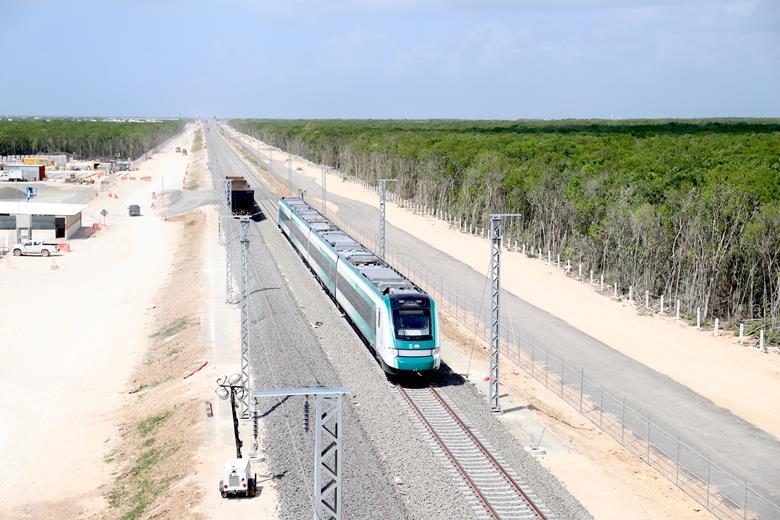
Incoming Mexican President commits to passenger rail revival
By Railway Gazette International10 September 2024
MEXICO: President-elect Claudia Sheinbaum has unveiled her ‘100 Steps for Transformation’ programme which contains the revitalization of passenger rail services on three major corridors, totaling 3 000 km in length.
The three services announced earlier this summer are among the seven routes totalling 8 000 km proposed for reactivation by outgoing President Andres-Manuel Lopez Obrador in November last year.
Sheinbaum was elected as Mexico’s President on June 2 and is set to begin her term in office on October 1. She has pledged to launch passenger services on three corridors in the first five years of her six-year presidency. Tendering for the infrastructure works is planned for the fourth quarter of this year and construction on some lines is planned to start in early 2025.
The programme stipulates that rolling stock procured for the three railway projects would have to be manufactured in Mexico. Currently, Alstom, CAF and CRRC have production sites in the country.
Serving the new airport
The first project to be implemented would be a 65 km route from the capital’s Felipe Ángeles International Airport, which was inaugurated in March 2022, to Pachuca, northeast of Mexico City. This service would be built on an entirely new alignment at an estimated cost of 20bn pesos. It is expected to serve eight municipalities in the densely populated area around Mexico City and relieve the congested road network.
It would be an extension of the 20 km greenfield line that is currently under construction between FAIA and Lecheria; this is scheduled to be inaugurated later this year.
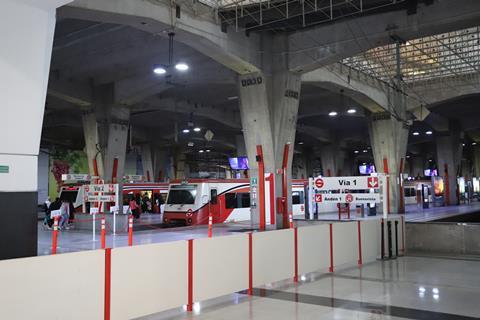
The line to FAIA and Pachuca will branch off at Lecheria from the main line that links the Buenavista railway station in Mexico City with Cuautitlan. Services on the line to Cuautitlan are being operated by CAF.
Guadalajara and Monterrey
Passenger services are also to be restored on two existing freight-only lines. The longest would link Mexico City with Nuevo Laredo on the border with the USA via San Luis Potosi and Monterrey. The passenger trains would cover a distance of 1 143 km and implementation is expected to cost 400bn pesos.
The second route would link Mexico City with Irapuato and Guadalajara on a 581 km main line. The Mexico City – Queretaro section would be shared with services to Nuevo Laredo. The reinstation of passenger services on the Querétaro – Guadalajara section would cost 55bn pesos.
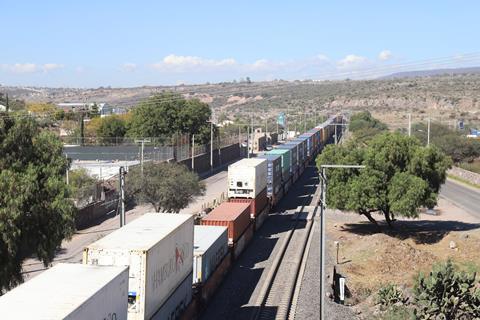
The government is currently studying if passenger trains in these corridors could share tracks with freight services after modernisation work has been completed, or whether new alignments would need to be built. This would be more costly but would allow higher speeds.
As required by the presidential decree published last November, freight concessionaires have been conducting technical studies to assess the feasibility of the restoration of passenger services on the selected routes and to define their own potential involvement. According to the decree, if private companies are not interested in the assessment and provision of passenger services, they will be able to maintain their freight operations, but the government could take over responsibility for delivering the passenger services.
The government is already overseeing management of the country’s two main line passenger projects. Tren Maya is being delivered through the Secretariat of National Defence, while the Mexican Navy is overseeing management of the Interoceanic Railway of the Isthmus of Tehuantepec.
CPKC operates and manages the Mexico City – Querétaro – Nuevo Laredo line and the Querétaro – Guadalajara section is managed by Ferromex.
Tren Maya and Trans-Isthimus extensions
The 100 Steps for Transformation programme also proposes extensions to the two major railway projects which have been developed during the Obrador administration. A 200 km extension of the Trans-Isthmus Railway would be built from the port of Coatzacoalcos in the Gulf of Mexico to the Dos Bocas port in Paraíso.
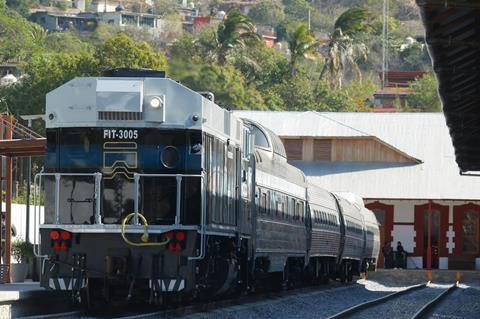
A 50 km extension is planned to extend the Tren Maya route from Mérida to Puerto Progreso in Yucatán.
The government is also assessing construction of a new alignment to link Veracruz on the Trans-Isthmus Railway with Palenque on the Tren Maya network. Construction of various intermodal freight terminals is also envisaged on the Tren Maya network in order to allow freight traffic to use the
TransLink’s BRT – What Is The Real Story?
BRT – A View From a Canadian Transit Expert – A Repost from 2015

Today’s post is a re post from 2015 and 2023, is an an interesting piece offered by Mr. Haveacow, a transit specialist from Ottawa who has good knowledge of Canadian public transit. He wishes to be anonymous because of Canada’s arcane attitude for those who dare to deal in facts and he wishes not to be blacklisted, which is common practice in Canada.
TransLink is telling all who will listen about the virtues of BRT (mainly it is cheaper than light rail), yet many issues arise from Bus Rapid Transit.
True, BRT is only a little cheaper to install than light rail but does have higher operating costs; as well, BRT does not have the advantages of scalability, that a modern tram has, such as operating two or three car sets.
The big, big problem I see with TransLink’s BRT is that it is designed to feed SkyTrain, which again, maybe not such a good idea because the the 1980’s SkyTrain proprietary light metro system is ill equipped to deal with businesses and commuter flows relocating from very expensive Vancouver to cheaper areas in the Fraser Valley.
Public transit is an “apple pie and motherhood issue”, with many people failing to understand that by throwing money at Transit projects, sometimes does not improve transit service, but instead does the opposite.

Guided Bus-ways have a big issue, capacity. The reason you have a guided bus-way is that, surface vehicles like buses can sway side to side quite a bit on a roadway. One of the reasons most Bus-way lanes are a minimum of 4 metres wide is to allow for that side to side sway that occurs naturally at higher speeds when we drive. Guided Bus-ways are fixed to their ‘track’ or Concrete Guideway or fixed using a laser/optical system that electronically locks them into a right of way so no side to side sway occurs at all. Optical systems also have an additional issue in that they are highly weather dependent and are very costly to service. The advantage for the guided bus-ways is that, your right of way can be considerably less wide much like a rail line right of way. Unless you design a complex concrete guideway bypass at Bus-way stations or an electronic one using optical guided equipment, the buses are forever trapped behind the buses in front of them. This severely limits system capacity.
The real problem common with BRT is the operating cost of carrying the large amount of passengers, only using buses, once the passenger levels become very high. That level is different for every city and is dependent on the exact nature and characteristics of the right of way.
The picture Zwei used of the Brisbane Busway is another common occurrence on successful Bus-ways, bus back ups at choke points or stations.
The company MMM Consulting (nee McCormik Rankin Consulting) was the main designer and developer of both Ottawa’s Transit-way System and its child, the Brisbane Bus-way Network, the subject of the article’s main picture.
The main differences between the two are the fact that Ottawa’s Transit-way System was designed and mostly built in the 70’s, 80’s and 90’s whereas, Brisbane’s was designed and built in the 90’s, and 20o0’s. The other major difference is that unlike Ottawa, Brisbane was able to build a fully segregated right of way through its downtown which comprised below grade tunnels and above grade viaducts and a physically segregated surface route. Ottawa has painted bus lanes on a couplet of downtown one-way streets with signal modification which allow Transit-way (east-west traffic) almost the legal limit of signal priority over the north-south traffic at intersections.
The difference between the two, using roughly the same number of vehicles about 185-200 buses/hour/direction at peak the Ottawa Transit-way can move 10500 people/hour/ direction and Brisbane about 14,000p/h/d.
Both however, have the same issue, massive back ups of buses primarily at downtown or major bus-way stations because the size and handling capacity of the actual stations has been grossly under built. The issue is that, to handle these kind of crowds and move them with 12 and 18 metre single articulated buses (23 metre long, double articulated and 30 metre long triple articulated buses are not street legal in Canada or Australia and even in the USA for that matter) you must construct monster sized, at the least full metro sized or larger bus station platforms that are or exceed 150 metres in length. The stations also have to be 4 lanes wide, 4 metres per lane, not including station platform width. Most downtown businesses would not want to be located near one of these stations for obvious reasons. One of Brisbane’s bus-way stations was enlarged to this standard, the bus back up picture Zwei used for this article is the que of buses entering that station.
The other main issue is the operational cost of having to use that many bus drivers and buses. Buses in general have far too little capacity for these high traffic BRT operations.
In China and Latin America drivers cost much less as a proportion of the total operating cost of each bus 50-60% in Latin America and 30-45% in China. In the northern 2/3 North America, Western and Central Europe, Australia/New Zealand, Japan Taiwan, basically most of the so called developed world, the cost of the bus driver is 70-80% of the total cost of operating the bus.
Using 185-200 buses/hour/direction to move people becomes a great financial drain on the operating bus system as a whole and makes it almost impossible to get extra buses to other non bus-way routes that need them. In Ottawa, several suburban routes that have needed many more buses to handle their high passenger levels can’t get them and haven’t been able to for more than a decade because so many buses are tied up on the Transit way, either on it or at the stations during peak hours. There are barely enough extra buses left to handle individual bus breakdowns let alone provide extra service on other routes. Buying more buses was not an answer because Ottawa’s bus fleet was already near 1100 vehicles this is a pretty big fleet for a city and area of at most, 1.2 million people. This would put the operational budget into a serious deficit. We already had the most expensive per taxpayer transit portion on our tax bills of all Ontario municipalities it really does not need to go higher. The bus options had run out of time. Ottawa’s answer was LRT. Brisbane continues to maintain their heavily used portions of busways. Ottawa is building more Transit ways but in suburban areas with much lighter passenger traffic levels.
The Transit-way was designed to be converted to rail however, the cost to convert the first part would be an eye popping $2.1 Billion. The reason was no one ever figured how much extra work there would be like, having to build parallel temporary bus rights of way so that, all those buses didn’t totally clog city streets during conversion of the Transit-way to rail and the fact that, they waited till much the original Transit-way infrastructure was in desperate need of replacement due to age. Some Transitway right of way also was only temporary and not rail friendly. These temporary rights of way lasted for over 30 years and now have to be either totally rebuilt and or abandoned at high cost. The kicker about the high operational cost of servicing bus-ways at high passenger demands was that, even with Ottawa being forced to build a 2.5 km tunnel, with 3 very large underground stations at a cost of $715 Million under downtown for the LRT line (surface operation would have simply exchanged heavy surface bus traffic and passenger crowds for heavy surface LRV traffic and passenger crowds) operationally, Ottawa was going to save a minimum of $60 million a year, switching to LRT technology.
The take away from this is that, building “Real BRT” can be a very good way of building up ridership and up to a certain point, a less costly way, compared to a lot of rail systems, to move people in a North American low density environment.
The problem now even in Canada is that, politicians are building express bus systems like B Lines, Brampton’s Zum (pronounced zoom) and many comparable systems in the US and calling it BRT, which it really is not. Those politicians love doing it because this false BRT is much cheaper to build and operate than real BRT and they still get a ribbon cutting ceremony.
The problem is that, the amount you spend with these systems generally is comparable to the systems effectiveness in moving passengers. VIVA, (York Region Transit) for example, started with the faux BRT or what I like to call “BRT” but, had definite designs and plans to build physically separate BRT rights of way that can be converted to a high capacity LRT system in the future and has carried through on it. York Region just didn’t have the passenger count to build LRT at the beginning. But they have designed in the ability to easily convert the BRT system to LRT technology when needed. Brampton (which is part of Peel Region) just to the west of York Region has no definite plan or design to convert its Zum system to a real BRT standard now or in the future. However, the Zum System has built up Brampton’s transit ridership. I am not saying that, these “BRT” systems aren’t useful but they are not real BRT and should be labeled as that because they can confuse people into not building anything in places that need improved transit but cana’t afford to build or operate LRT and or support LRT with enough passengers. As a planner it is quite common to hear comments like this at public meetings, “I saw BRT in Brampton and it gets stuck in regular traffic all the time. BRT sucks!” Then you have to explain what real BRT is and is not, by then most people fall asleep or stop listening.
Then you get into a half technical half ethical problem with BRT and or any other transit operating technology for that matter. How do you study the differences between operating technology so that you are being fair as well as being accurate in the final choice of technology? The best recent example of what not to do is right here locally in Vancouver, South of the Fraser River, to be exact.
Trying to convince people in Surrey that, their LRT plan is useful, TransLink used a SkyTrain option as well as a surface BRT option to compare to LRT capability, pointing out the superiority of LRT in this case. The SkyTrain option had many problems cost and general usefulness being the main ones. The BRT example they used is actually an LRT line using buses operating on a layout and design which is not even close to what a real BRT line in a on-street environment would or should be using. Its not even close to the best Canadian practices, let alone best practices used in the rest of the world, with BRT systems in a on-street environment. Did the staff doing this know enough to do this purposely or were they ignorant of the differences of what good BRT design is or is not.
Their example of LRT also displays a a serious lack of knowledge about best surface LRT operating practices in the US and Canada.
More importantly it shows to me, how committed or in this case not committed, TransLink staff really are to studying LRT technology at all. In fact, I don’t blame the people who supported SkyTrain technology for this area, like Daryl from SkyTrain for Surrey, he had a point, on the surface this study definitely made it look like that to me that the SkyTrain Light Metro was the superior technology choice. The difference as a professional is that, I know the real differences in all the technologies that were studied. I also have no belief that, I am the be all and end all of studying these things in the world and would also ask for much help in studying these technology choices from other friends and companies I am familiar with, whom are experts at it. To me a whole new study should be done using the actual best practices for all technologies not just the preferred LRT technology, you should seriously question major aspects and assumptions that were made in this particular TransLink study.

Video – German Regional Railway

The following is a cab view of Dillenburg to Betzdorf regional railway – enjoy!
Video – My Favourite Public Transport Video

The following is my favourite public transport video and includes all aspects of rail to move people, including TramTrain, Intercity trains, local trains, and even a steam excursion.
The Upcoming SkyTrain Mk.5 Train Fiasco
Zwei told ya so!
First, the 16 km Expo line extension cost is now put at $6 billion; $7 billion if one includes the operations and Maintenance Centre Number 5.
The next shoe to drop will be the announcement that the 5.7 km Millennium Line (Broadway subway) extension to Arbutus, will top $4 billion.
And the last straw, after much hype and hoopla, the SkyTrain Mk. 5 trains (consisting of 5 car open vestibule stock) are fast becoming a hugely expensive money pit.
Comments from our transportation expert, Mr. Cow, tells a sad tale of the perils of operating a proprietary railway.

“During a visit, well more than a few years ago, the maintenance chief said at the time that a 5 section Skytrain would require 1.5 to 1.75 times the maintenance time and of course, much more maintenance track space. To replace the Mark 1 cars with much larger 5 section Skytrains, he said would require all existing maintenance tracks upgraded in space and equipment, no fewer than 10 new maintenance spaces or the equivalent of 18 to 20 Mk. 5 sized maintenance tracks and no less than a 40% increase in the amount of staff.
The big problem no one is telling you, the new Mk 5 cars require almost twice the maintenance in terms of equipment and time that Translink planned for and was told by Bombardier they would need. Existing staff are having big issues due to the large amount of new “updated” systems on the Mk. 5 cars. These systems have been equipped by new and unknown suppliers. Retraining is taking far longer and is costing 60% more than expected. Now that Bombardier North America is being run by its new masters, Alstom, it appears they (Alstom) essentially have little concern for the ex-Bombardier product. They aren’t interested in solving this issue with the Mk. 5’s training issues and equipment problems. Translink was told by Alstom, “this is what you ordered, we are providing the vehicles and the various training packages (maintenance & operations), the rest is up to you”.
This is why OMC #5 was so critical. It was to have all Mk 5 capable maintenance track and equipment from the first day it opened. The earlier maintenance centres, other than OMC #4, aren’t able to handle the Mk. 5’s yet. They lack many key pieces of equipment, space is limited (because they were designed to handle smaller vehicles) and training is taking much much longer than planned. The equipment issues on the Mk. 5 trains haven’t been solved yet. They are also not likely to be solved quickly because of disinterest at Alstom’s board”
So let me spell it out in simple terms. Alstom is not interested in selling the proprietary MALM light-metro (erroneously called SkyTrain, which is the name of Vancouver’s light metro system); Alstom does not want to deal with Translink. In all likelihood, Alstom will abandon production of MALM after the last paid for car leaves the assembly plant.
For all the bumf spewed by the SkyTrain Lobby, regional mayors, TransLink, UBC, the premier, what we call SkyTrain is a proprietary railway and all the predictions that proprietary railways do not age well and tend to become classic White Elephants that causing huge financial ills to taxpayers, are coming true.
The experts back in the day tried to warn us, but our politcans remained deaf to the truth.

What Is The Real Cost For The Expo & Millennium Line Extensions? A Repost From 2022.
The following post is from a September 14, 2022 and I am re-posting because Zwei was wrong about the cost of the 16 km Expo Line extension to Langley. Evidently, my cost estimates were out by $1.5 to $2.5 billion as the provincial government recently announced that the cost of the 16 km extension to will cost $6 billion ($6.5 billion to $7 billion if the Operations and Maintenance Centre #5 is built). Evidently the land for the OMC#5 was taken out of the Agriculture Land Reserve and sold to TransLink for $8 million!
So, for all those who think that SkyTrain is cheap to build, even cheaper than light rail (yes that is you former Surrey Mayor McCallum) to build, well best wait for the other shoe to drop, because the operating cost for this portion of line will be around $50 million annually. And you wonder why TransLink is in a financial crisis?
From two years ago …………………
It is the provincial election season, or more fondly called the “silly season” and all sorts of claims and promises are made.
Recently on a local radio talk show a politcal wannabe claimed that; “SkyTrain operates almost free because it does not have any drivers and is cheaper than LRT” and the host agreed with the person!
This sort of nonsense has been going on for decades, where people who should know better, make outlandish claims for the SkyTrain light metro system, without even a notion of understanding of the regional light rail system.
So, let us look at the costs of the current Expo and Millennium Line projects.
The Millennium Line extension to Arbutus
The Millennium Line extension to Arbutus can trace its ancestry back to the old Broadway-Lougheed rapid transit project where originally planned light rail would stop at the Arbutus Corridor where it would hook up to proposed light rail operating on the former Arbutus Corridor interurban route.
The NDP shelved this project, when the flip flopped from LRT to the proprietary Advanced Rapid Transit (ART), which, at the time, was the latest rebranding of the former proprietary Advanced Light Rail Transit (ALRT) system used on the Expo Line. The NDP further debased regional transit planning when they promised to pay two thirds of SkyTrain only construction West of Commercial Drive.

The flip-flop from Light Rail to Light Metro and with the province paying two thirds of the cost, gave Vancouver politicians the idea that having subways, makes a city world class, without even a hint of knowledge of the true cost of subways and their lack of ability in attracting ridership. But, they make good background for politcal photo-ops.
In April 2018, it was announced that the cost of the 5.7 km Broadway subway or Millennium Line extension to Arbutus will cost $2.83 billion.
Accounting for inflation and that cement costs have risen two to three times the rate of inflation, the cost of the subway will be more.
How much more?
Accounting just for inflation, the project now costs $3.19 billion and rising.
All the more embarrassing is that the subway will cater to peak traffic flows less than 4,000 pphpd, with the Broadway 99-B Line bus currently having a maximum capacity of 2,000 pphpd!
Expect the bad news that the cost of the subway will exceed its original estimates after the next civic elections.
The Expo Line Extension To Langley
This project has even more dubious history than the Broadway subway.
With the cost of SkyTrain light-metro ever increasing, TransLink set in motion of a plan to build LRT to connect central Surrey and Langley to the light-metro network.

The planning was fraught with issues, as TransLink designed the proposed LRT as a road rebuilding project with rails which drove up costs. Another problem, TransLink designed the proposed Surrey LRT as a “poor man’s” light metro and failed to understand that LRT was not light metro.
Evidently the bureaucrats at TransLink do not understand the differences between LRT and light-metro.
In the 2018 Civic Elections, former City of Surrey Mayor Dough McCallum ran on a ticket which included a switch from LRT to light-metro because he was an expert about transit, being around when the Millennium line was built, and that he could build the 16 km Expo line extension to Langley for $1.63 billion.
The public bought into this nonsense and McCallum was duly elected and the switch from LRT to Movia Automatic Light Metro was made.
Fast forward to 2022 and the cost to extend the SkyTrain light-metro system to Langley has become so expensive that the the project has been split into two contracts in an effort by the provincial government to hide the costs.
Contract 1: The guideway, which is now estimated to cost over $4 billion, of which 40% will be paid for by the federal government.
Contract 2: The operations and maintenance centre #5, which is now estimated to cost $500 million to $1 billion and must be completed before the line opens.
Thus the true cost of the 16 km Expo Line extension to Langley is $4.5 billion to $5 billion+!
The Partly Funded Mid Life Rehab
What is not included with the cost of the SkyTrain light metro extensions, is the estimated $3 billion mid life rehab of the Expo and Millennium Lines. As mentioned several times before, the Expo and Millennium Lines need a complete re-signalling; a renewed and enhanced electrical supply; and the replacement of switches (points), and a sundry of lesser items to be renewed or replaced before the extensions are opened.

From Toronto’s MetroLinx – the 50 year costs of rapid transit.
Die Rechnung – The Bill!
This has been updated to 2024 dollars.
What is the cost of extending SkyTrain Light Metro system 21.7 km?
5.7 km Broadway subway – $3 billion+
16 km Expo Line extension to Langley – $6 billion to $7 billion+
Mid life rehab – $3 to $3.5 billion+ ($1.47 billion already spent to install a new signalling system)
Thus the total cost for extending the Expo and Millennium lines a mere 21.7 km is $12 billion to $13.5 billion+ not including the new cars or major track adjustments needed for the Expo line to achieve a capacity of 17,500 pphpd!
The question remains, is $12 billion to $13.5 billion or more, good value for money for 21.7 km of new rapid transit line?
OMC #5 – Who Made $8 Million?
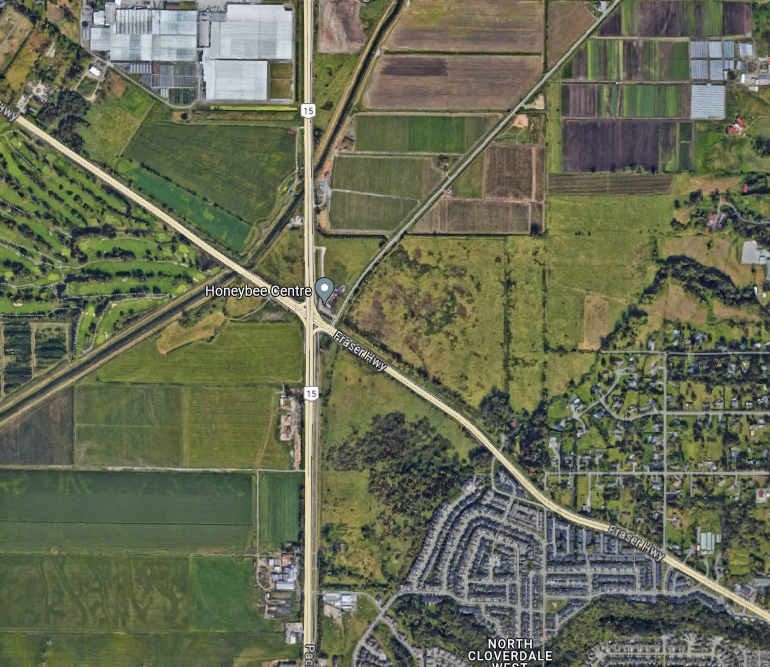
An interesting passage from Bob Mackin’s Breaker News has peaked my interest concerning the the Operations and Maintenance Centre #5.
“A Dec. 11, 2023 NDP cabinet order, signed by Surrey-Green Timbers MLA Rachna Singh, took a nearly 37-acre parcel of land at 176th and the Fraser Highway out of the Agriculture Land Reserve on which to build the $1 billion operations and maintenance centre for TransLink.
B.C. Assessment Authority valued the land at $5.65 million in July 2023. It was sold for $8.052 million last November.”
I find this remarkable because TransLink, the Minister of Transportation and the premier have refrained from all discussion about OMC #5.
Rail for the Valley knew about OMC#5 since 2018 and the government’s flip-flop from light rail to SkyTrain light-metro. Rail for the Valley were told that the cost would be between $500 to $1 billion.
There is no question about the need for the OMC#5, but certainly questions must be asked over the lack of any public input taking land out of the ALR for the OMC#5 and who made the massive profit selling ALR land for the OMC#5.
The NDP Just Love FastFerry Projects!
“Those who cannot remember the past are condemned to repeat it.” George Santayana, an early 20th century writer and philosopher.
Well, the NDP certainly do not remember their past because the $6 billion, 16 km Expo Line extension to Langley is turning into another “FastFerry” fiasco! Well done, Premier Eby, well done!
The fast ferry scandal was a political affair in the late 1990s relating to the construction of three fast ferries by the Canadian provincial crown corporation BC Ferries under direction of the Executive Council of British Columbia, headed at the time by Premier Glen Clark of the New Democratic Party. Due to various oversights by the government, BC Ferries, design bureaus, and the shipyards, the cost of the program more than doubled from $210 million ($70 million/vessel) to almost $460 million ($150 million/vessel) and final delivery was almost 3 years behind schedule.

Rail for the Valley, with excellent advice from real experts had predicted that the cost of of the Expo Line light metro extension to Langley would cost around $5 billion, with hints it could be more.
Well it is much more, $1 billion more and that is not including cars and the $1 billion Operations and Maintenance Centre #5!
Now, we are at $7 billion and counting.
By comparison, Ottawa is extending its light rail line by 64 km, for a cost of $6.7 billion!
There are many reasons why the proprietary Expo Line light metro should never have been considered for expansion into the Fraser Valley, with the prime reason being cost. Light metros were designed strictly for urban transportation, with the philosophy of small automated (driverless) trains, operating at close headway’s, moving customers.
The law of “unintended consequences” soon raised its ugly fiscal head, running small trains at close headway’s created far more wear and tear on the transit system than a regular heavy-rail metro, causing large operational and maintenance costs. Not only did light metro cost more to build than a heavy rail metro, light metro lacked capacity.
Ubiquitous LRT soon made light-metro obsolete, being able to carry far more customers at a far cheaper cost and only cities with entrenched bureaucracies, unwilling to change, and uniformed politcans, who care little about the taxpayer, continue to plan or build with light metro.
Like the FastFerries, the cost of transit rose from a $1.65 billion, LRT project to a $3 billion, SkyTrain light metro project, to $4 billion project and now the cost has topped $6 billion; and for what?
A now $6 billion light metro line, which according to TransLink’s own documents, will carry fewer customers than the Broadway B-99 Line express bus.
American transportation expert, Gerald Fox, neatly sums up the current situation with his review of the 2008 Evergreen Line Business Case.
“But, eventually, Vancouver will need to adopt lower-cost LRT in its lesser corridors, or else limit the extent of its rail system. And that seems to make some TransLink people very nervous.”



Recent Comments