News Flash – Expo Line Langley Extension Now $6 Billion
Rail for the Valley Vindicated!
Despite the name calling and insults, for Rail for the Valley’s estimate of $5 billion for the 16 km Expo Line Extension to Langley, as it now seems it was $1 billion off.
Today, the provincial government has put the cost of the extension at $6 billion!
So, where is the extra $2 billion in funding coming from, to fund this White Elephant? A White Elephant because TransLink has stated that the Langley extension will carry fewer customers than the Broadway B-Line Bus, which has a maximum capacity of around 2,000 pphpd!
Zwei calls for a judicial inquiry into TransLink; the Ministry of Transportation; the Mayor’s Council on Transit; and the Premier’s Office, before another penny is spent on this.
What could $6 billion buy you?
- A completely restored E&N railway operating as a modern regional railway.
- A Marpole to Chilliwack regional railway.
- A new multi track rail bridge across the Fraser River, replacing the aged and decrepit single track rail bridge. This would enable a regional passenger rail network to White Rock and as far as Hope.
Rail for the Valley had this right all the time!
Below: Ottawa’s O-Train, providing an affordable regional rail service.

Cost of Surrey-Langley SkyTrain surges to $6B amid ‘market challenges’

By Simon Little Global News
Posted August 15, 2024
The estimated cost to build the Surrey-Langley SkyTrain line has surged by nearly 50 per cent, to just under $6 billion, according to the province.

The project had previously been pegged at just over $4 billion, with a projected completion date of 2028.
In an update Thursday, the Ministry of Transportation said the line is now expected to be in service by late 2029.

2:20ACCIONA wins Surrey SkyTrain extension project
The increased cost has been blamed on “market conditions, including rising inflation costs and key commodity escalation, supply-chain pressures and labour-market challenges” resulting in “higher price proposals from contractors.”
BC Conservative leader John Rustad took to social media platform X (formerly Twitter) where he posed in front of a sculpture of the “Angel of Death” calling it the “unofficial mascot” of the SkyTrain line.
It is way over budget, it is years delayed, I don’t think this government would ever deliver on this for the people of Surrey,” he said.
“It is so sad to see what is happening. A conservative government will make sure we get this done, will make sure we get it done in an affordable way.”
BC United Leader Kevin Falcon called the cost escalation “alarming,” pinning the blame on the NDP’s Community Benefits Agreements, which prioritize unions, First Nations and women in certain public works projects.
“At a time when British Columbians are struggling with skyrocketing costs and an affordability crisis, the NDP’s reckless mismanagement of public funds and major infrastructure projects is not just deeply concerning — it’s a threat to funding for essentials like healthcare, housing, and education,” Falcon said.
Township of Langley Mayor Eric Woodward had a “mixed reaction” to the update, saying it was positive news that the project was moving forward, but raising concerns.
“Certainly it’s disappointing to see it over budget by such a significant amount, and then delayed potentially one year, perhaps longer,” Woodward said.
He also tied the delayed completion date to provincial legislation requiring municipalities to build density near transit hubs, an ongoing friction point between the Township and the province.
“How do you require transit-oriented development and make mandates for us to deliver that when there is no transit?” he said.
Earlier this year, the province revealed the Broadway subway line and the Patullo Bridge replacement, both currently under construction, would be delayed by one year. The province has yet to provide an update on those projects’ costs.
The ministry said major construction on the Surrey-Langley SkyTrain line is expected to begin later this year, with guideway, station, systems and trackwork contractor contracts now inked.
Early work on the project is already underway.
Rubber On Asphalt – The NDP’s Coward’s Way Out!
One just has to shake ones head in disbelief, as the NDP’s solution for Global Warming and Climate change is building more highways.
$2.65 billion (the amount of money the NDP are adding to the expansion of the Hwy.1) would build a deluxe Marpole to Chillwack regional railway, including a new rail bridge across the Fraser River. Such a regional railway would provide enough capacity that could be achieved by a six lane highway.
Premier Eby’s “rubber on asphalt” solutions are yesterday’s solutions and the NDP are nothing more than a yesterday’s politcal party.
So, when one pays the carbon tax, just remember the carbon tax is a mere placebo, to hide the NDP’s blacktop politics to win the next election.
Eby and the NDP has taken the coward’s way out.
More funding announced for Highway 1 widening work in Fraser Valley
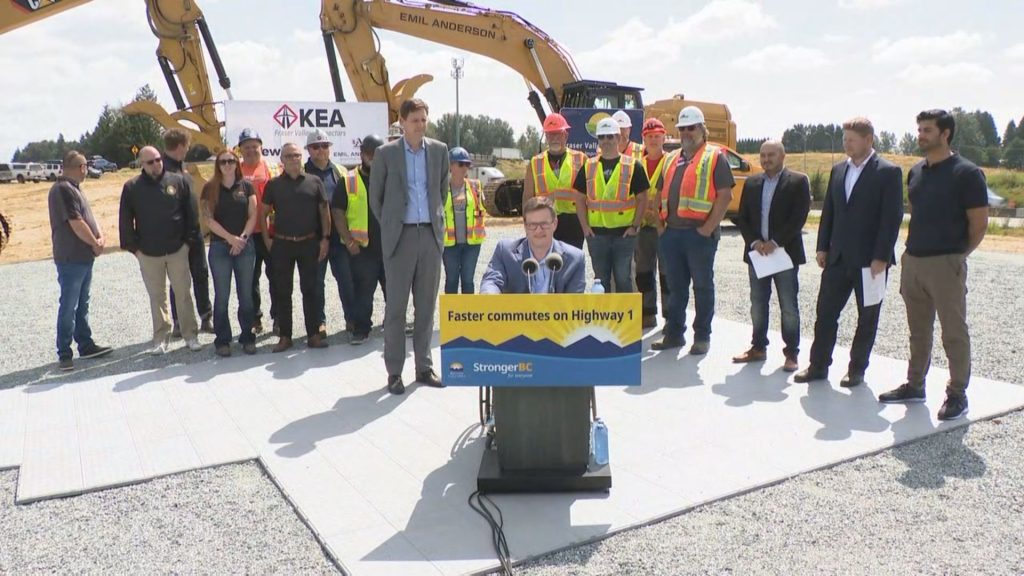
Posted August 14, 2024
The B.C. government says new funding to widen and improve Highway 1 through the Fraser Valley will help ease traffic congestion thousands of people face every day.
The $2.65 billion has been approved for upgrades to the section of Highway 1 between Mount Lehman Road and Highway 11 in Abbotsford. The province says this money is in addition to the $2.34 billion approved last fall, for work between 264th Street and Mount Lehman.
The province says major construction on the stretch between 264th Street and Mount Lehman will start this year, with the fourth major phase of work expected to wrap by in 2029.
Work on the segment between Mount Lehman and Highway 11 will start in 2026, with major construction expected to begin in 2026. This phase is set to finish in 2031.
“I know that many people in the Fraser Valley find travel increasingly difficult, given the traffic volume on Highway 1, and we’re working hard to address these concerns” said Minister of State for Infrastructure and Transit Dan Coulter.
“We’re focusing on improvements to the highway through widening to accommodate sustainable transportation and better, more accessible interchanges to make it easier and quicker for people to get where they need to go.”
In addition to upgrades, the province says overpasses at Peardonville Road, Bradner Road, and the CPKC rail overhead will eventually be rebuilt to accommodate height clearance for commercial trucks. This work on Highway 1 between 216th Street and Abbotsford is in addition to the rebuild of the Glover Road overpass, which is done.
Meanwhile, a new interchange is planned for the area of 232nd Street, 264th Street, Mount Lehman Road, and Highway 11.
The B.C. government says more than 80,000 drivers use Highway 1 between Langley and Abbotsford, and through the Sumas Prairie in Abbotsford and Chilliwack, each day. Additionally, more than $65 billion in goods are transported along this corridor.
FLASH – Is TransLink Buying ALR Land For OMC#5?

News flash!
It now seems that TransLink is going to purchase (if not already bought) Agriculture Land Reserve Land near the corner of the Pacific Highway and Fraser Highways.
This is probably going to be the new site of the Operations and Maintenance Centre #5.
The reason: ALR Land is $200 thousand an acre versus $6 million an acre for industrial land.
From my point of view, both TransLink and premier Eby have a “politcal death wish”, by blacktopping ALR land for SkyTrain!
Rumours!

There is a lot of transit news, but most of it is about TransLink’s insatiable need for money and delays to the completion of the Broadway subway. The strange claim that the provincial government making highways “LRT compatible”, has thankfully been ignored by the media and what is left is rumours.
The latest rumour, which I have heard from three different sources is that the 16 km, $5 billion, Expo Line extension to Langley is to be cut back to a 7 km extension to 168th St. in Surrey.
What is interesting is that the rumour seems to be be a face saving “trial balloon” from a NDP/Translink axis and is based on the premise that the federal Liberal government will use the $1.4 billion, earmarked for the full 16 km Line to fund the shorter 7 km line.
From my understanding the federal infrastructure program monies ($1.4 billion) was for a 16 km line and a 7 km line would be basically be an entirely new line needing a new funding program and all the issues that would come with this.
Evidently both Premier Eby and Prime Minister Trudeau are eager for “shovel in the ground” photo-ops for the next round of provincial/federal elections as the delayed Broadway subway would make a poor background for this. As resurging provincial and federal Conservative Party is spearheading this desire.
I think there is some truth to this rumour, as the Expo Line extension to Langley is grossly expensive for what it will do; $5 billion for 16 km of line could buy one a lot more light rail or even a whole lot more of Rapid Bus for this price.
Then there is the retirement from politics of Rob Fleming, current Minister of Transportation. A canceled rapid transit project would not make a good politcal resume and if the project is cancelled after his departure from provincial politics, it would make a politcal comeback far more easier.
As per the last News Release from TransLink and the provincial NDP, the cost of the 16 km extension to Langley was in the spring of 2024:
Guideway – $4.01 billion – firm, 40% Federal funding.
Stations – ? – to be negotiated.
Track – ? – to be negotiated.
Signalling – ? – to be negotiated.
Electrical supply – ? – to be negotiated.
Six – 5-car train-sets – $123 Million – signed contract.
Operations and Maintenance Centre #5 – $500K to $1 billion – not determined.
With the exception of the OMC #5, the items still in negotiations may add another $600 million to $700 million to the final cost and this is in 2024 dollars! This makes the 16 km Langley extension very close to $5 billion and it is both making TransLink and the provincial NDP very nervous indeed.
As I stated before, this is merely an observation of a rumour and I have not even touched the rumours with the Broadway subway and if those are anywhere close to being true, TransLink itself may become financially untenable.
Enough Premier Eby – How many People Must Die From The NDP’s “Rubber on Asphalt Planning”?
It is enough; it is time politcans get serious about transit alternatives to Hwy.1
More traffic lanes means more traffic and more traffic means a higher probability of accidents and death.
No more excuses, no more of you government’s questionable adherence to the SkyTrain light-metro system.
There is a plan and it is called the Leewood Study. The Leewood Study shows that a Marpole to Chilliwack regional rail line is both feasible and desirable.
The cost for the 130 km line, connecting Marpole to Chilliwack via the still in operation former BC Electric Interurban Line?
Less than one half the cost of the current $5 billion, 16 km Expo line extension to Langley, which, according to TransLink, will carry fewer customers than the current Broadway B-Line bus.
As premier, you cannot escape this; you cannot hide from what must be done. The buck stops at the Premier’s desk. The blood of those who were killed are on your hands Premier Eby and you cannot escape your complete lack of interest.

Fatalities, multiple injuries reported in HWY 1 crash in Chilliwack
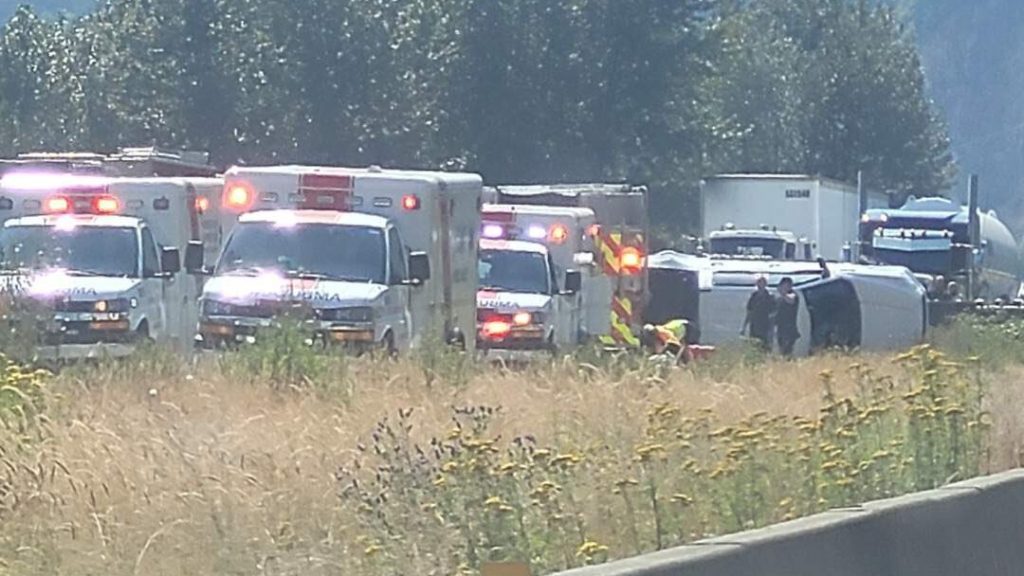
Posted August 6, 2024 3:55 pm.
Last Updated August 6, 2024 4:41 pm.
BC Highway Patrol says a multi-vehicle crash in Chilliwack has resulted in multiple fatalities and injuries.
All eastbound lanes on Highway 1 near No. 3 Road have been closed since approximately 2:45 p.m. Tuesday, when BCHP first responders reached the scene.
“Police can confirm that there are fatalities and multiple people injured,” said Corp. Melissa Jongema.
She tells 1130 NewsRadio that at least two people have died.
Police are asking the public to avoid the area until further notice.
The westbound left lane is also blocked and heavy delays can be expected in both directions.
Drivers can take Lougheed Highway through Mission as an alternate route.
There is no estimated time of reopening.
As Predicted By Rail for the Valley, TransLink’s Financial Fiasco

Nothing shocking at all, as TransLink’s financial failure has been long known to those who understand all things transit. As predicted, TransLink is running head long into a financial wall.
The villains in this tawdry two-penny play is politcal interference, corruption, ennui, and the SkyTrain light-metro system.
Currently the province (that is the taxpayer) is spending over $11 billion just to extend the Expo and Millennium Lines a mere 21.7 km, using the obsolete Movia Automatic Light Metro (MALM) system (erroneously called SkyTrain, which is the name of the regional light-metro system) and using the equally obsolete philosophy of building a heavy rail metro as a light-metro (the Canada Line).
Score; only seven of the former mentioned system have been built since the 1970’s, with now only six still in operation and only one of the latter being built by the Gordon Campbell government.
Both are hugely expensive for what they do; both have failed in attracting the motorist from the car.
Why do you think no one has copied Vancouver’s transit planning?
To quote my grade two teacher, “I will give you three guesses and the first two don’t count”.
The proprietary trains used on the Expo and Millennium Lines are very expensive to operate and maintain. The Canada Line, internationally, is viewed as a classic transit “White Elephant“.
Building light-metro on two routes that have nowhere near the ridership to justify the construction; the Broadway subway and the Expo Line extension to Langley, is sending TransLink into a fiscal black hole.
Backed by the NDP government, Metro Vancouver, and the largely incompetent Mayor’s Council on Transit has now forced TransLink into a no win situation.
This is why the province hired an American spin doctor, Kevin Quinn as CEO, to massage the truth to the taxpayer as he did in his previous employ in Baltimore, “…….. where ridership was off (before pandemic) 2% year over year since he took over.“
Remember, almost 62% of the regional population voted no for more funding for TransLink in the 2015 plebiscite and in 2024, even though ridership is up, due to population increase, the actual percentage of population using transit is dropping and is now hovering around 10%. This is a vote of non-confidence that all levels of government is deaf to.
As the province and Metro mayors continue to operate what is largely a 1970’s transit system they fail to recognize than in the 2020’s, demographic and workplace change, makes the extremely inflexible SkyTrain and its equally inflexible “hub and spoke” (where buses feed transit customers to SkyTrain hubs) philosophy obsolete.
In the 21st centruy, successful transit systems are customer oriented and user-friendly; designed to service where transit customers want to go, in a seamless or no-transfer journey.
Sadly user-friendliness is not in TransLink’s, Metro mayors or Premier Eby’s lexicon and throwing more and more money into a transit system, regarded as “toxic” by the taxpayer, will enrage voters at election time.

Shocking transit report reveals large-scale cuts threatening Metro Vancouver
West Coast Express faces potential elimination, along with bus service to entire communities
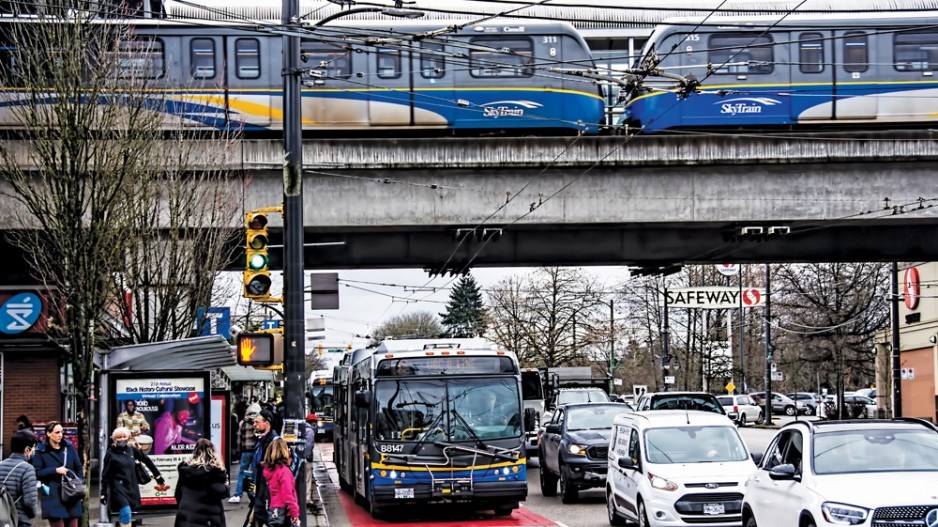
Metro Vancouver’s transit system is on the precipice of some of the steepest service cuts in its history, leaving entire communities without bus service and stranding the most vulnerable passengers, unless the provincial and federal governments step up with additional funding, according to a new report to be released today.
The “” will land with a thud on the desks of the Mayors’ Council on Regional Transportation this morning — as it will on the campaign trail in this fall’s provincial election, where the document seems intended to whip up a flurry of debate over transit funding.
“Due to the magnitude of the financial gap, transit reductions would be in the range of 45-50 per cent overall and include elimination of entire routes plus significant reductions in frequency and start/end times of service,” reads the report.
“This would include cancelling approximately 145 bus routes, significantly reducing SkyTrain, SeaBus and HandyDART service, and potentially eliminating the West Coast Express. Funding for walking, cycling, and roads programs would also be cut.”
TransLink says it is $600 million short in annual operating funding for 2026.
The current funding model is failing to keep up with inflationary pressures on the system, due to the fact fare increases are held artificially low to ensure affordability for passengers and fuel tax revenue is in decline as motorists switch to electric vehicles, reads the report.
The B.C. government had offered increased financial aid to TransLink in the past, most recently during the COVID-19 pandemic, but that money is set to end in 2025.
Prime Minister Justin Trudeau announced a new $3-billion transit fund earlier this month, but the funding is earmarked for building new lines and not funding operational costs of existing systems. Premier David Eby has complained Ottawa did not consult B.C. on its transit needs before creating the new program.
The report will likely spur significant debate during the upcoming provincial election campaign and influence how political parties structure their party platforms on transit funding.
The new TransLink report suggests cuts first be made in expansion and upgrade planning, customer outreach and municipal planning divisions, which would save $175 million annually. Add to that a $41-million cut to operations and maintenance payments to local governments for things like road safety and bike infrastructure, and the total funding gap shrinks to $365 million annually.
“There are no positive, easy or correct ways to cut $365M from transit operations,” read the report.
“At that scale, it is not possible to simply reduce costs by lowering frequency or span of service. We would need to eliminate entire routes, as well as reduce frequencies and span of service on all remaining routes.”
The report proposes two alternatives for cuts to the region’s 230 current transit routes.
Under the first, TransLink would cut 45 per cent of bus service, focusing on the least productive routes first and saving those that have the highest ridership in Vancouver, Burnaby, Richmond and central Surrey.
“Much of the rest of the region would be left with little to no transit access – particularly in the Northeast, Langley, White Rock, South Delta, and much of the North Shore,” reads the report.
“Remaining routes would likely carry higher overall system ridership, given relatively higher service levels.”
In this scenario, 15 per cent of SeaBus service would be cut, ending service an hour earlier and reducing peak frequency on weekdays to 15 minutes. The Expo-Millennium SkyTrain line would see a 10-per-cent service cut, and the West Coast Express would drop from five to three round trips per day.
Under the second option, TransLink would cut bus service 50 per cent (in the process eliminating more than 65 per cent of its actual routes) with the aim to retain reduced service for as much of the region, geographically, as possible.
It would mean steeper cuts to SeaBus, at 30 per cent, bumping service to 30-minute windows outside of weekday peak time, a 30 per cent cut to Expo-Millennium SkyTrain service and the complete elimination of the West Coast Express train.
In both scenarios, HandyDART service for those with disabilities would be slashed 35 per cent and be limited to medical trips, cutting off most day programs, education trips and other service for those with mobility issues.
The report notes the bus service reductions hit lower-income people the hardest, as well as visible minorities, youth and seniors. The changes would mean as much as one-third of those residents no longer live within walking distance to transit, according to the report.
“On the transit routes that remain, overcrowding would significantly worsen,” read the report.
“Late-night shift workers and those using transit later in the evening or early morning would have very limited or no transit option as service would end as early as 8 p.m. on some routes.”
The Mayors’ Council has warned transit cuts would have a dramatic impact on the region, at a time of rapidly growing population, but are not avoidable without financial assistance from the provincial and federal governments.
Rob Shaw has spent more than 16 years covering B.C. politics, now reporting for CHEK News and writing for Glacier Media. He is the co-author of the national bestselling book A Matter of Confidence, host of the weekly podcast Political Capital, and a regular guest on CBC Radio.
The Hydrogen Train Debate – The Expensive Quebec Connection
The great panacea to solve all our problems or currently a Popular Science “pipe-dream”?
Well is is now worse than that as it seems the push for hydrogen powered trains has more to do with huge Liberal government subsidies to Bombardier Inc. and now Alstom, to keep jobs in Quebec.
The old Canadian story; transit development is all about the federal Liberal Party subsidizing Quebec companies and jobs to garner votes at election time and not what is the best transit mode.
The following read gives some insight to the hydrogen fiasco and as Zwei was told two years ago, if one is considering any sort of regional rail in Canada, stick with existing and proven tech or else be prepared to pay premium prices for an under performing experiment, which will ultimately discredit regional rail.

Another Hydrogen Train Initiative Derailed By Terrible Costs
Battery and grid-tied trains a third the cost and dominating transition, but some people keep throwing money at hydrogen trains
Published in The Future is Electric
Sep 20, 2023
Hydrogen-for-energy advocates have been throwing lots of love at the German state of Lower Saxony’s hydrogen train, claiming that it’s the start of a massive hydrogen rail deployment globally. Well, no.
Let’s start with a bit of context. Trains have been being electrified with grid-ties for over 100 years. As I noted recently, outside of North America, rail is already electrified with grid-ties to a massive and increasing extent.
India is at 85% heavy rail electrification and heading for 100% by 2025. It has purchased a handful of hydrogen engines for tiny legacy rail on scenic tourist routes through twisting terrain, where installing overhead grid ties doesn’t make sense for scenic fit and economics, and for some reason decided to throw some money away on hydrogen for a while. I suspect they’ll revert to batteries in a decade or less.
China is at 72% freight rail electrification, in part due to the massive high-speed freight and passenger rail build-out that saw 40,000 km of track put into operation since 2007, and is heading upward with another 10,000 km of track planned or in construction, including into other countries. No hydrogen.
Europe is interestingly challenged. They are at 60% rail electrification and rising. They already have high-speed, electrified passenger rail. But they have a lot of legacy routes that go through tunnels and across bridges. And it costs a lot more money to install overhead catenary lines in tunnels and on bridges that weren’t designed for it. Tunnels have to have all the overhead wiring and lighting stripped out and be expanded upward, then the electric lines put in and the tunnel restored to service. Bridges have to have construction to mount infrastructure out from the sides, potentially requiring bolstering of the framework, and construction basically puts the bridges out of service.
Adding catenary overhead lines to bridges and tunnels is much more expensive. In my discussion with David Cebon, professor of mechanical engineering at Cambridge, and founder and director of the Center for Sustainable Road Freight, we discussed this. While adding overhead lines to rail that’s on the ground and under clear sky is reasonably inexpensive per kilometer, the UK’s effort has a total cost three times the base cost per kilometer. Two-thirds of the cost is due to retrofitting bridges and tunnels.
So even in Europe, it’s only routes that aren’t currently electrified that featured bridges and tunnels that required retrofitting where hydrogen was being considered.
And so rail giant Alstom — at least by western standards, as China’s manufacturers have built vastly more locomotives than the rest of the world combined in the past 50 years — stood up and said, “Let’s go with hydrogen!”
“It was at InnoTrans 2016 in Berlin that Alstom presented the Coradia iLint™ for the first time. The launch of the regional train with zero direct carbon emissions that represents a true alternative to diesel power positioned us as the first railway manufacturer in the world to develop a passenger train based on hydrogen technology. And just two years later, in 2018, the Coradia iLint™ entered into commercial service in Germany.”
These aren’t big trains or freight engines, by the way. The hydrogen tanks and fuel cells are integrated into the passenger cars. It’s regional light rail without a locomotive. There are two cars per train, not 200-car freight trains traversing the US Great Plains. The hydrogen variant of the train probably offers seats for fewer than 100 passengers, at the lower-end of the iLint range. And the distance between Cuxhaven and Buxtehude is just under 100 km. These aren’t big trains going long distances. By comparison, there are about 62,000 kilometers of high-speed passenger rail track in the world, and they are all grid-tied electric trains, as far as I am aware.
Alstom has been pushing this hydrogen concept uphill for a while, with limited success. It managed to get Quebec in Canada to pony up a few million for a limited trial, one which has entered service for its few months of trial, carrying passengers for the first time in June of 2023.
But there’s a backstory there. Quebec was home to Bombardier, a local firm which had recreational vehicle, rail, and passenger jet lines of business. It was part of Corporation Quebec, and a favored recipient of corporate welfare from provincial and federal governments in Canada. I was engaged in a transformation proposal to them a few years ago, and after a few weeks it became apparent to me that the firm had no idea how to manage strategic risks.
It had made four big bets, the most obvious being the C-Series jet development, any of which had the potential to bankrupt the company. When I was there, the recreational product firm was spun off already into its own separate and successful firm building skidoos, jet skis, and regulatory loophole three-wheeled vehicles for people who wanted all the disadvantages of both cars and motorcycles, or who simply had balance issues. But the big part of the firm still had rail centered in Europe and aerospace centered in Quebec. The company was so used to being bailed out by governments that its risk-reward calculations were out of whack.
And so it got whacked. Even after a multi-billion dollar bailout a few years ago, the company hit the wall. It sold the C-Series and virtually all the rest of its aerospace business to Airbus, with a series of transactions seeing Bombardier exit entirely, retaining only executive jet servicing, if memory serves. Its big rail business, which often featured prominently in headlines for delays and failures of engineering like the Las Vegas monorail that couldn’t go around corners without derailing, was sold to Alstom in 2020.
But that leaves a lot of corporate ties in Quebec, so former Bombardier types close to the government undoubtedly lobbied hard for their new bosses in Europe to try to push the hydrogen train rope uphill.
Even a year ago, Alstom was making announcements about the expansion of hydrogen trains in Germany and elsewhere. It had a contract to supply 14 more trains to Landesnahverkehrsgesellschaft Niedersachsen, the state-owned regional transportation company that understandably goes by LNVG most of the time, which went into operation in August of 2022. And the government had dumped €93m (US$102m) into the system, which included a hydrogen train refueling station to go with the hydrogen trains.
LNVG is Lower Saxony Regional Transport Company when it’s at home, by the way. While I’m at it, why is Lower Saxony above neighboring Saxony-Anhalt and its neighbor Saxony? Germans, please don’t explain.
But that all changed this week. LNVG made the announcement that after running the relatively small number of small passenger regional trains for a few years, and abiding by its contract to buy more last year, it will no longer consider hydrogen trains for anything else. They’re just too expensive to operate, compared to trains with overhead line connections and batteries to bridge the tough spots. I suspect that they’ll run for less than ten years before being shunted onto a siding to rust.
Those with attention spans longer than gnats might remember that the German state of Baden-Württemberg — also below Lower Saxony and incidentally where I lived in for a couple of years as a kid — had studied the options without investing a hundred million bucks of taxpayer money. What did they find without buying and operating hydrogen trains? Exactly the same thing that Lower Saxony found by spending an absurd amount of money to buy the trains and refueling station and spending five years paying the absurd cost of hydrogen. That grid-tied with batteries for the expensive bits was three times cheaper.
One assumes someone must have convinced the fine people of LNVG that hydrogen was going to be as cheap as drinking water, without specifying that the drinking water in question was bottled in diamond, had gold leaf floating in it, and was dispensed in glasses made of pearl in the most exclusive restaurant in Bavaria.
Regardless, another day, and another hydrogen-for-energy play leads to the inevitable conclusion that it’s vastly too expensive to be the basis of any economically sensible choice. Like the Norwegian liquid hydrogen shipping fuel site that Equinor, Aire Liquide, and Eviny abandoned, these hydrogen as an energy carrier plays always fail once spreadsheet jockeys are allowed to enter realistic numbers and compare to clear alternatives, instead of being constrained to fantasies about free hydrogen and delusions about batteries made of gold and platinum.
Broadway Subway Woes

Rail for the Valley predicted, the Broadway subway will cost far more than the $2.83 billion budgeted for the 5.7km extension.
But there is more scandal, that the mainstream media is ignoring and that is after Thales $1.47 billion resignalling program the maximum capacity of the Millennium Line will be a mere 7,500 pphpd! 500 pphpd less the than the bare minimum stated by Bombardier for building with the proprietary light metro!
TransLink awards Thales SkyTrain train control contracts
Contracts enable a 22km extension of the fully automated SkyTrain system.
TransLink has awarded two contracts to Thales for upgrading the train control technology on the Expo and Millennium lines of Metro Vancouver.
TRANSLINK has awarded Thales two contracts to provide train control technology under the Expo and Millennium Line Upgrade Programme for the SkyTrain network in Vancouver.
The contracts include a new Operations Control Centre and a new fully automated depot, Operations Maintenance Centre 4. These two new facilities are key components of the upgrade programme.
The system will be expanded from 80km to 106km by 2028, with 41 new trains expected to be in service by the end of 2027.
TransLink says that in 2018 the Expo and Millennium lines saw on-time performance of 96.38% – the best punctuality on record for SkyTrain and higher than that achieved by most major metros in North America.
The government of Canada, the government of British Columbia, and the region have committed to investing $C 1.47bn ($US 1.1bn) in the Expo and Millennium Line Upgrade Programme until 2027.
When the programme is fully implemented, the Expo Line will be able to accommodate 17,500 passengers per hour per direction, and the Millennium Line will be able to handle 7500 passengers per hour per direction, a 32% and 96% increase respectively.
For too long the mainstream media has given TransLink and its mega projects a free pass, and now the I can predict that the true cost of the Broadway subway will far surpass the the current $2.83 billion budget when the project is completed.
The Broadway cost overruns maybe the reason why present NDP Minister of Transportation is not seeking reelection this fall. It also maybe the reason why premier David Eby is so very touchy with transit issues, going so far as to demand any comments on transit, directed at the premier, must go through a provincial barrister.
What is premier Eby afraid of? That the NDP could not even operate a peanut stand?
Electioneering NDP hides true cost of the Broadway Subway project, now two years behind schedule
Bob Mackin
The arm of the Ministry of Transportation and Infrastructure overseeing the Broadway Subway Project is refusing to say exactly how much it spent through January and it claimed to be within the original budget in May.

South Granville Station, from January 2024 report (TIC/FOI)
In February, this reporter asked the Transportation Investment Corporation (TIC) for the most-recent project status report including, among other things, the financial report and schedule status. The NDP government finally disclosed the freedom of information records on July 16, but they were heavily censored to conceal key details about the megaproject that ends on the border of Premier David Eby’s Point Grey riding. The government relied on an exception to disclosure in order to withhold information that it believes could harm a public body’s financial or economic interests.
A summary of the cost and contingency report shows nearly $1.372 billion project-to-date, but the sum is incomplete because the costs for Indigenous relations and legal were censored. Other columns, which compare the budget with the true amount spent, were also censored. Despite that, the spreadsheet garnered a green rating, meaning insignificant or no concern.
Another spreadsheet, a multiyear forecast, shows $1.08 billion in costs through 2022-2023. Likewise, line items for Indigenous relations and legal costs were censored. TIC also hid the gross and net project expenditure totals and forecasts through 2026-2027.
On May 24, however, NDP transportation minister Rob Fleming announced the Broadway Subway would not open until fall 2027. Fleming’s communications staff maintained that the total budget remained unchanged at $2.83 billion. Fleming, who represents Victoria-Swan Lake, is not running in the Oct. 19 provincial election.
The 5.7 kilometre Millennium Line subway from VCC-Clark to Arbutus had previously been delayed from late 2025 to early 2026. Fleming blamed delays in tunnel boring, station excavation and relocating major utilities, along with the five-week concrete strike in 2022.
Elsewhere in the January report, there are indications of a poor safety record that is only getting worse.
The health and safety section was assigned a yellow dot for moderate concern. It showed a total 900 incidents during the life of the project, including 24 in December and 27 in January. Of the total, 552 were for first aid incidents, 110 near misses and 97 equipment/vehicle and property damage incidents.
WorkSafeBC has made 59 inspections through January, but none to end 2023 or start 2024.
The rolling 12-month lost time injury frequency per 100 workers was 2.92, but the 12-month rolling total of recordable injuries was 9.15 per 100 workers.

Mount Pleasant Station, from January 2024 report (TIC/FOI)
A chart showed days lost to injury jumped from just seven in 2022 to 122 in 2023 — a whopping increase of more than 1,600%. The trend continued in January with 18 days lost to injury.
“[Broadway Subway Project Corp.] has reported a large increase in lost time injuries in 2023. BSPC has shared their documented action plan to improve their injury reporting and claims management processes,” the report said.
There have been 26 alcohol and drug tests performed on workers, with failures by five workers attached to the main contractor and five with subcontractors. There have been 15 incidents of fire, 16 of violence, 34 incidents classified under public safety and 54 of property damage.
The report also pointed to a large number of nonconformities, or items that deviate from specifications or fail to meet quality control standards.
By the end of January, there was a total 370 nonconformities, of which 25 were still active.
“The average number of days that it took a nonconformity to be resolved and closed was 48 days,” the report said.
A heavily censored list of supervening events (or unscheduled interruptions) mentioned a “COVID-19-related health event” on Dec. 3, 2021, discovery of undisclosed utilities on July 5, 2021, acts and omissions by City of Vancouver on Nov. 19, 2021 and a “blockade or embargo falling short, protest action/force majeure event” on July 25, 2022.
BSPC is the design/build joint venture between Acciona of Spain and Ghella of Italy. Acciona is also working on the Site C dam and Pattullo Bridge projects. Metro Vancouver fired it from the North Shore Wastewater Treatment Plant in 2022, sparking an ongoing legal battle. The North Vancouver project is costing $3 billion more than originally budgeted and scheduled for 2030 completion — a decade late.
Why Do University Professors Get it all Wrong?
I shake my head in utter despair, when academics, get it all wrong.
Zwei, probably knows more about Karlsruhe’s Zweisystem or TramTrain than most in BC and or Canada. Karlsruhe’s famous TramTrains are powered by electricity, delivered from an overhead supply. What Karlsruhe’s Zweisystem Trains are famous for is the ability to operate on the railway mainline, as well as on tram or streetcar tracks in the city.
In operations since 1992, Karslsruhe’s TramTrain system has been built on success after success as evidenced by massive ridership increases.

Hydrogen powered trains are still in their developmental stage and despite one sided reporting in the media and/or environmental groups, there is still a lot of expensive bugs to work out.
Zwei has been told that all the routes using hydrogen powered trains, operate on lines with little or no grades as the hydrogen powered trains still have many issues dealing with gradients.
A lesson for the good professor, Karlsruhe’s success story is the TramTrain or Zweisystem and the ability to use streetcar/tram tracks and operate on the mainline railways; not hydrogen powered trains.
A basic cost (my estimation) for a light Diesel Multiple Unit Service from Salmon Arm to Kelowna, using the former CNR Railway R-o-W, would be in the neighbourhood of $2 billion, for a service with a maximum three trains per hour per direction.
Photo: A Karlsruhe TramTrain on a country route, operating on a mainline railway.

The German term Zweisystem, refers to the fact that the trains can operate under two different power supplies as used by the DBB or federal railways and by the city tram system.
Environment & Sustainability, Research
UBCO professor researches electric passenger light rail for Okanagan Valley
Feasibility plan introduces 342-kilometre route linking Kamloops and Osoyoos
July 10, 2024
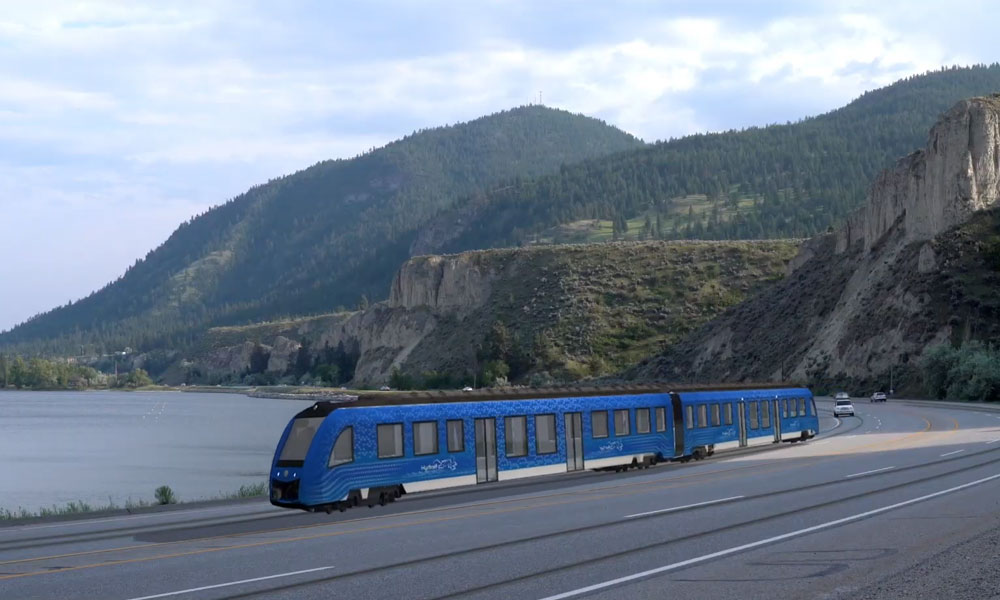
A conceptional illustration of the Okanagan Valley Electric Regional Passenger Rail shows the tram running alongside Okanagan Lake. Photo credit: Andrew Halfhide.
Anyone who has ever been stuck in gridlock while driving over Kelowna’s William R. Bennett Bridge or any Okanagan community can appreciate the thought that there has to be a better alternative than Highway 97 to navigate the busy corridor.
And a UBC Okanagan professor says there is.
Dr. Gordon Lovegrove, who teaches in UBCO’s School of Engineering, has studied the feasibility of an affordable passenger train patterned after a similar concept started in Karlsruhe, Germany 40 years ago.
“Hydrail tram-trains—powered by a hydrogen fuel cell/battery—is a passenger rail that acts like a tram in cities and like a train between communities. This is a new concept to North America,” explains Dr. Lovegrove. “They are self-powered, low-floor and a zero-emission technology, which differs from typical heavy-rail, high-floor, locomotive-pulled passenger cars. This gives hydrail the advantage of being able to climb hills and more affordable than highway widening.”
Dr. Lovegrove says the Okanagan’s booming tourism and population growth affect the more than 500,000 residents in communities connected mainly by Highway 97. The majority of travel is by cars, which increases the highway’s gridlock and risk of collisions. He cites recent surveys of residents, First Nations communities and businesses, coupled with joint municipal and provincial government studies that reveal the Okanagan Valley needs more than traditional auto-oriented solutions such as road widening and bypasses—options he calls ineffective and costly.
That opened the door for the researchers to study the technical and economic feasibility of an Okanagan Valley Electric Regional Passenger Rail (OVER PR) service. The study, published recently in the journal Sustainability, is the first of its kind in North America and one of the first published worldwide.
“To address growing inter-city transportation, safety, congestion and climate resilience challenges in the Okanagan Valley, we found that even in our Canadian climate and hilly terrain, hydrail tram-trains are technically feasible. And they would be more affordable than widening our highways and promoting more pollution and congestion. However, it is up to communities to decide if and where it would run.”
Dr. Lovegrove notes he deliberately analyzed the undulating Highway 97 route with its steep hills, as opposed to conventional near-flat freight routes, as the toughest test of its feasibility.
Assuming Highway 97 was chosen, OVER PR would connect cities and airports throughout the valley with a one-way trip from Osoyoos to Kamloops taking about four hours, comparable to driving a car. The tram-train could travel at higher speeds, about 90 k/h between cities, but at lower tram-specific speeds in cities, with modern transit priority signals designed to bypass delays at intersections.
“Using embedded rails, sharing existing and HOV lanes as well as highway rights-of-way, or medians, between cities, would drastically reduce the need for land acquisition without taking away capacity. The route would also be designed to integrate with regional bus services to construct an optimal arrival and departure schedule,” he says.
With OVER PR ridership expected to be more than 13,000 passengers per day, there is something in it for even those who could not make the jump from driving to using the tram-train, as it would mean less traffic congestion and travel delays.
“Hydrail combined with tram-train technology has never been tried in Canada, yet hydrogen trains present advantages compared with electrification by eliminating the requirement for expensive infrastructure such as catenaries (above ground wires) and substations. It also grants the flexibility to operate in remote rural areas or difficult terrain where electrification might pose challenges, which improves its overall effectiveness and adaptability. When hydrogen production is coupled with other forms of renewable energy generation, the environmental benefits are favourable.”
The study states the system, similar to ones that operate in California’s Napa Valley or the Karlsruhe region in Germany, can have economic, social and ecological benefits for tourists and residents.
Dr. Lovegrove’s research suggests that over 30 years, and using the same cost-benefit analysis template used by provincial policy analysts, OVER PR benefits total more than $45 billion, and outweigh its capital and operating costs by nine to one, with many more benefits than widening Highway 97.
“The Okanagan Valley is expected to continue with significant population growth, tourism and traffic congestion which leads to increased greenhouse gas emissions, as well as more vehicles and highway fatalities,” Dr. Lovegrove says. “If communities agree to proceed with OVER PR planning this valley-long zero-emission, passenger rail service could significantly enhance transport equity, safety and congestion while also providing a more affordable, resilient and environmentally friendly choice for valley residents, businesses and tourists.”
The North Shore’s “Hobson’s Choice”
From: Rail for the Valley
For the past 17 years, Rail for the Valley has advocated for the “return of the interurban” on the former Vancouver to Chilliwack BC Electric interurban line that still connects Vancouver to Chilliwack, via Surrey/Cloverdale; Langley; Abbotsford and Vedder/Sardis. Rail for the Valley, due to the soundness of the plan, secured Leewood Projects (UK) to do a study on the viability of such a service, with the result, the Leewood Study done for Rail for the Valley, released in 2010.
The Leewood Study is unique, in that it is a fully independent study, free of political and bureaucratic meddling.
Rail for the Valley, through its blog, tries to present viable and affordable transportation options-and being advised by real transportation experts and engineers who have “hands on experience” with transit projects, not only in Canada, but the USA, the UK and Europe. Having professionals who live outside the Metro Vancouver bubble advising on transit issues, gives a more realistic look at Metro Vancouver’s transit and transportation issues.
In 2010, the Leewood Study concluded that a full build, 138 km electric rail service, using modern articulated rail-cars, from Vancouver to Chilliwack would cost $998,519,424.00 or $7,235,648.00 per km. Accounting for inflation and updated to 2024 dollars, this would amount to $1.37 billion or $10.5 million/km to install.
In comparison, the current cost of the proposed Expo Line extension to Langley is now over $300 million per km. and the Broadway Subway is now said to surpass $500 million/km. The cost of the combined Expo Line extension and the Broadway subway is now over $7 billion for a mere 21.8 km of light metro and does not include a further $5 billion to complete the Broadway Subway to UBC, nor the much needed multi billion dollar rehab of the Expo and Millennium Lines.
In 2022, TransLink and Thales signed a contract for $1.47 billion to resignal the Expo and Millennium Lines. This does not include the much needed electrical rehab of the E&M Lines, which is now estimated to exceed $2 billion!
Also not included is the complete fleet renewal for the soon to be retired MK.1, ALRT, stock.
VICTORIA, WE HAVE A PROBLEM
A short recap.
Metro Vancouver’s SkyTrain light-metro system operates two very different railways: the Canada Line which is a conventional railway, built as a light metro and the Expo and Millennium Lines which operate the proprietary and now called Movia Automatic Light Metro (MALM) system, the sixth rebranding of this obsolete mini-metro. Only seven MALM systems have been built in over 40 years, with Alstom now being the fourth owner of the proprietary railway. Previous owners were Bombardier, Lavalin and the Urban Transportation Development Corporation.
Canada Line operation is incompatible with the Expo and Millennium Lines and vice versa.
Only Vancouver continues to build with MALM.
Today, MALM is considered obsolete as it lacks capacity, costs more to operate and maintain than comparative light rail systems and lacks flexibility which is very important in the 21st century.
The $2.4 billion Canada line was the BC Liberals foray into transportation Private Public Partnership or P-3. The Canada Line a capacity-constrained heavy rail metro, built as a light-metro, costing much more to build than a modern tram, with less capacity. Internationally, the Canada line is considered a classic transit “White Elephant”.
The cost to have the Canada Line rehabbed to match the present maximum legal capacity of 15,000 persons per hour per direction (as stated in Transport Canada’s Operating Certificate) for the Expo and Millennium Lines, is now between $1.5 to $2 billion dollars.
This must be done before any extension to the Canada Line can be considered.
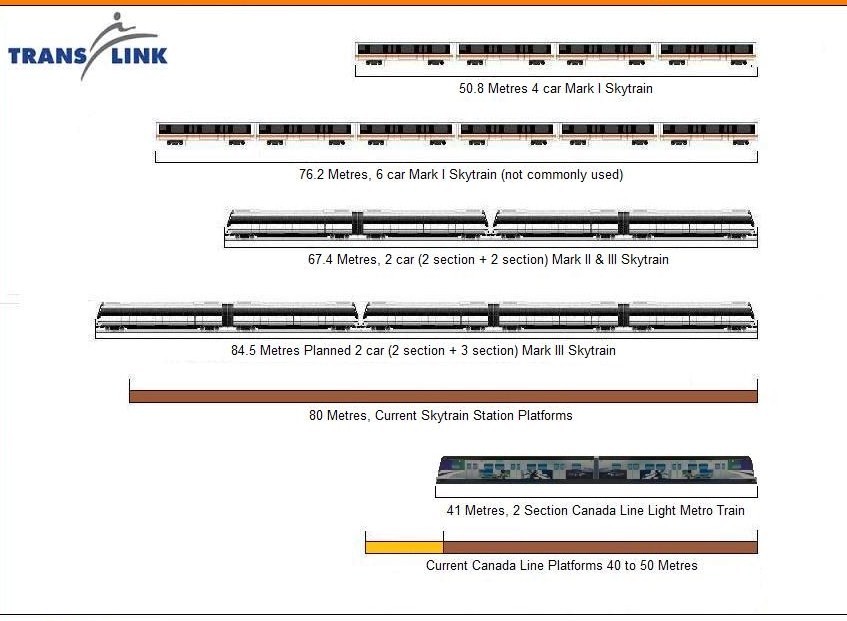
A big problem for TransLink is rumblings from Alstom indicating that production of MALM cars may cease when the last production orders have been filled in 2025. No sales for the past 15 years may speed up the decision to abandon the proprietary railway, which would both drive up the cost of new vehicles as no other company makes MALM compatible cars and the cost of replacement parts.
The cost for light metro, especially MALM extensions, is rapidly increasing, quickly making such extensions not cost effective.
There may be no further extension to the MALM Lines after the completed Broadway subway to Arbutus! Talk of extending rapid transit to the North Shore is nothing more than political posturing, for photo-ops and sound bytes at election time.
“The problem with TransLink is that you can never believe what it says; TransLink never produces a report based on the same set of assumptions.”
Former West Vancouver Clr. Victor Durman, Chair of the GVRD (now METRO) Finance Committee.
DARK CLOUDS
There has been a change in scope for the Expo Line Extension Project to Langley, from 2 stages into a single stage project due to escalating costs.
The cost to go 16km from Surrey Centre to Langley is now creeping close to $5 billion.
From the last news release regarding the Expo Line extension to Langley, the guideway was said to have a firm cost of $4.01 billion, but the signalling, the electrical overhead and stations were still under negotiations. Obviously the cost of the Langley extension will surpass $4.5 billion and if the needed Operations and Maintenance Centre #5 is built, the cost of the 16 km line will exceed $5 billion!
Translink may not be capable of being a full financial partner in this project or any other large capital project for some time, due to its current budget issues. This is not good news for the Surrey Extension and even worse news for the North Shore.
A dark financial cloud on the horizon is beginning to appear larger. TransLink had to begin serious final planning and engineering on the second stage of the Broadway Millennium Line extension from Arbutus to UBC by 2024, if construction is to begin in 2026.
They estimate this extension project to cost between $4.98 to $5.12 Billion for the planned 7.3 km long tunnel and above grade structure into UBC and those costs were estimated in 2021, Just accounting for inflation, the UBC extension project will cost between $5.7 to $5.9 Billion in 2024 dollars.
The question facing TransLink and the province is whether they pay $5 Billion for the Langley project or wait and fund the near $6 Billion for UBC extension, both will not be funded at the same time.
Unless something drastically changes soon, the current Langley Skytrain extension project in its present form is dying and may be put off, well into the next decade.
This bodes ill for any SkyTrain light metro connection to the North Shore.
RAIL FOR THE VALLEY’S SOLUTION
It is widely accepted that only a rail solution will attract the motorist from the car; buses have proven disappointing in operation, as they get stuck in traffic and true Bus Rapid Transit costs only a little less to build than LRT with none of the operating or capacity benefits. Only politicians think buses can be rapid transit, yet sadly for the transit customer, a bus is a bus, is a bus.
Rail for the Valley’s Leewood Study provides an affordable alternative, operating a regional passenger service using existing railways. As there is a railway connection from Vancouver to the North Shore, Squamish and beyond to Whistler, a passenger rail service must be considered.
Modern articulated rail cars can travel at higher speeds on curving track, giving realistic travel times and properly signalled with passing loops (double track), trains could operate up to three times an hour per direction.
This is not fanciful thinking, rather it’s what is currently happening in Europe where the huge cost of new metro and highway construction has forced planners to use existing railways for a regional rail service that people will use! In Europe and now even in the USA, disused railways are being refurbished and abandoned railways are being rebuilt as a much cheaper alternative than stand alone metro lines or new highways.
The modern articulated railcar, powered by clean diesel or electricity from by fuel cell or by overhead wires, can obtain commercial speeds acceptable by customers on even the most difficult routes. The modern articulated railcar can contain amenities such as a WC and or a ‘bistro’ offering light refreshments for the longer trips. The modern articulated railcar can also operate in multiple units, thus capacity can be increased when needed.
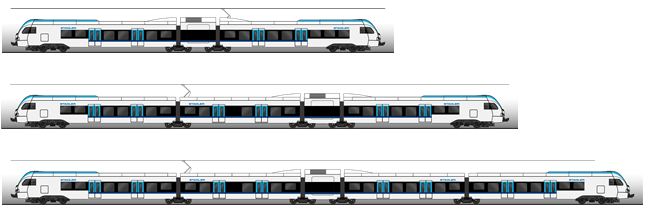
The modern articulated railcar can also increase vehicle capacity by adding additional modules at a much cheaper cost than buying a new vehicle.
Based on the Leewood Study and taking into consideration that the track is in excellent condition, the cost for the approximately 80km Vancouver to Squamish regional passenger railway, using the Canadian National Railway and the former BC Railway right-of-way, with a maximum of three trains per hour per direction would be in the neighbourhood of $1 billion.
The new regional railway would have stations at the Squamish, Britannia Beach, Lions Bay, Horseshoe Bay, Caulfield, West Bay, Ambleside, Capilano, Lonsdale, Lynn Creek, and Vancouver, Pacific Central Station.
The province and region are now in a climate emergency, combined with worsening regional traffic congestion. The current transit planning based on light metro and the hub and spoke philosophy of transit (where buses bring customers to transit hubs) is failing as pre covid, regional mode share for transit is dropping. Planning and building more SkyTrain light metro lines is akin to doing the same thing over and over again ever hoping for different results.
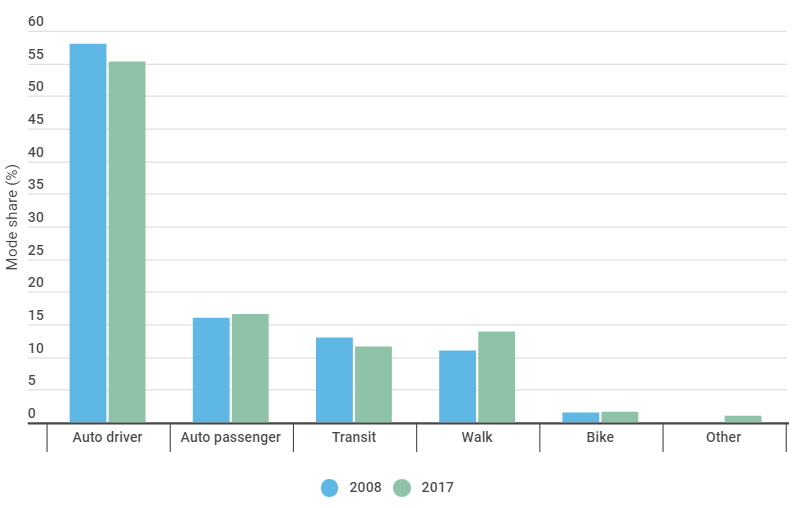
Metro Vancouver must plan cheaper, user-friendly transit options in order to attract the motorist from the car, as the present light metro system has failed to do so and despite an over $15 billion taxpayer investment.
For less than the cost of a now $3 billion, 5.8 km Broadway subway or just over half the cost of the over $5 billion, 16 km Expo Line extension to Langley, we could build two regional railways, connecting Vancouver to Chilliwack and Vancouver to Squamish, with a possibility of a 210 km regional rail service, with through service from Squamish to Chilliwack, via Vancouver.
There are many obstacles to overcome and all levels of government must be on board but….. the time has come to stop transit planning for politically prestigious projects and plan for the region’s future and the future is an affordable and user friendly transportation network, which the present transit system is definitely not.
The North Shore city government’s faces a Hobson’s Choice for transit planning, either advocate for what could be affordably built or advocate for ‘pie in the sky’ rapid transit solutions that will not be built.



Recent Comments