Electrification Suddenly in Vogue Again
The Transport Politic 18 June 2009
Electrification Suddenly in Vogue Again
Canadian, British, American railroad officials fighting to replace diesel locomotives.
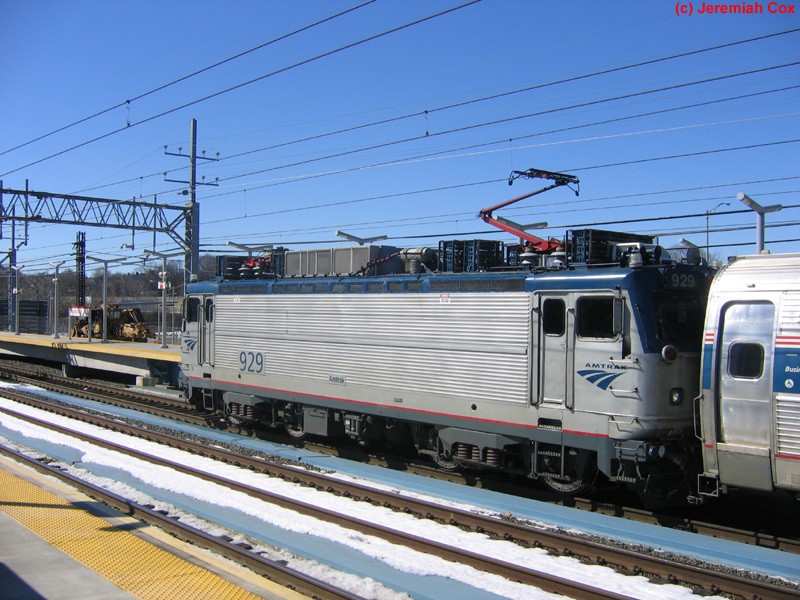
With efforts to combat climate change ramping up and ridership on public transportation increasing steadily, electrification of main-line rail corridors is in. Yet, though railroads in the U.S., Canada, and the U.K. are studying a conversion to electric traction for passenger and freight trainsets, few corridors are actually being readied for conversion from diesel operation. And even if electrification occurs, rail operators need to be assured that their electricity providers are carbon-neutral if the full advantages of traction operation are to be realized.
Railway electrification has a number of major advantages, including reduced environmental impact, faster running times, and lower operating costs. These benefits are clear in the case of true high-speed rail, which is nearly impossible with diesel locomotives. But freight carriers see improved operations with electrification as well, seeing eliminated fuel transport costs; the simultaneous operation of high-speed passenger and freight trains on the same corridor is more feasible when the passenger corridor is electrified as well. In addition, the numerous negative effects of diesel locomotives Ai??ai??i?? notably heavy local-point air pollution often stand in the way of rail service expansion in urban communities, where people are understandably hesitant to allow significant pollution.
In the United States, with few passenger carriers possessing adequate finances to pay for such conversion, the freight industry is taking the lead. Norfolk Southern, a major transporter, is studying electrification of heavily used corridors that could be profitable for use by passenger services. Similarly, BNSF Railways has similarly investigated electrification of many
of the major corridors that it controls in the western parts of the country. Freight trains could operate along both electric and non-electric corridors using dual-mode locomotives much like those used by several commuter rail lines that provide service to New York Penn Station. This would not only provide carriers the ability to increase capacity and service in
congested areas but also allow through trains to less densely utilized areas of the country. Freight operators want to orchestrate their involvement in electrification with the rebuilding of the American power grid, a major priority of the Obama Administration; new smart power lines could be constructed alongside tracks. As American rail investment expands, electrification of freight rail corridors with a focus on well-used lines could be a first step.Indeed, in California, the use of traction power along the Caltrain corridor between San Jose and San Francisco may be one of the first completed elements of that states high-speed program. The projectAi??ai??i??s construction would require include the purchase of all-new electric locomotives for commuter rail trains that would share the corridor with fast trains; freight
trains using the line would presumably also be required to convert their operations.Canadas two largest cities are considering the electrification of their commuter rail networks. In MontrA?Ai??al, the AMT regional transit network and Hydro-QuA?Ai??bec, that provinces primary power provider, are working together to replace the diesel trains currently used on four of the citys routes. Hydro-QuA?Ai??bec has an incentive to pay for the conversion, as its
power plants would be primary beneficiaries of expanded use. The majority of QuA?Ai??bec Provinces power comes unsurprisingly from dams, so trains would be operated using renewable power. The Deux-Montagnes line, which is electrically operated, has proven more effective than the citys other diesel lines; conversion of 250 km of diesel
operations would cost upwards of $300 million Canadian over the course of a 15 year period beginning in 2011.Toronto, which has no such similarly strong existing network of renewable power distribution, is nevertheless also considering electrification of its GO Transit commuter network, a project pushed by local citizen group the Clean Train Coalition. The citys network is expanding rapidly, with one line through the Georgetown neighborhood expected to see 300 to 500 trains a day in a few years once an airport express begins operation. Yet the diesel trains steaming through the community would significantly increase pollution levels, so electrification is a viable mitigating option.
In the United Kingdom, ridership has increased 60% since 1994, but capacity is close to its limit. The construction of a new high-speed west coast line is a long-term option, but improvements in the meantime will allow more trains to run on the same tracks. Electrification on corridors such as those between London and Cardiff and between Edinburgh and
Glasgow would be economically viable, according to a series of industry studies on the state of the U.K. rail network. Incorporation of commuter rail lines into the Crossrail project through central London would also require moving to traction power. Overall, the country seems ready to push for electrification on any commercially viable corridor.Of course, the most promising advantage of using electric power to move rail cars has little to do with efficiency or speed improvements; rather, electric propulsion allows trains to become carbon-neutral, something airplanes will never be able to claim in the near future. If we are to encourage using electricity to power trains, we must ensure that the electricity used is as clean as possible. Building an American electric high- speed rail network no matter how time competitive with airline travel it might be would be ecologically disastrous if the United States continues its dependence on coal, whose use will never be clean. We must not deny the fact that airplanes are more environmentally efficient than trains if the latter are powered by polluting sources.
Yet there are alternatives that would make electrification a clean option. In France, where nuclear power represents 80% of power production and traditional renewables another 10%, TGV high-speed trains operate at 200 mph with virtually no contribution to climate change. In Spain and Germany, wind mills provide an increasing percentage of overall power
generation. Along with electrification of rail networks, U.S., U.K., and Canadian utilities must increase investment in alternative power technologies that will reduce their respective carbon footprints. Taking that step would make installing traction power on the railways a win-win situation for everyone.
Debunking the SkyTrain myth part 4 – The curse of the gadgetbahnen

“SkyTrain is terribly complicated and not really well designed“, Bob Abrams, a former official and then in 1983 a consultant to the Urban Mass Transportation Administration in the USA.
“Vancouver is adopting a noncommercial approach……I hope they have lots of money.”, Norman Thompson; CBE, FCA, ACMA, English transit consultant and builder of the worlds busiest subway.
“SkyTrain is enormously expensive thing for what it will do.” Edgar Horwood (deceased) a former professor of civil engineering and urban planning at the University of Washington.
SkyTrain is powered by Linear Induction Motors (like MAGLEV) and therefore unable to operate on none but it’s own rights-of-ways and is considered an unconventional railway or gadgetbahnen.Ai??Ai??Being a gadgetbahnen, itAi??Ai??is fraught with very expensive problems, forAi??Ai??the LIM’s must be exactly 1 cm above the reaction rail andAi??Ai??constant maintenance must be preformed lowering the reaction rail. The reaction rail must be constantly adjusted to maintain the critical 1 cm air-gap becauseAi??Ai??of theAi??Ai??constant vehicle tire and rail ware. Being so close to the ground, the LIM’s are also vulnerable to dirt, moisture and certainly in the winter, snow.
It is because of the LIM”s ( the wrong type of LIM according to Professor Laithwaite who was the father of the modern LIM) that SkyTrain is maintenance intensive and being maintenance intensive means higher operating costs.
The SkyTrain lobby is ever eager to post ‘man of straw’ arguments based on emotion and not truth, to hide the failing of the proprietary metro. SkyTrain is faster; has more capacity; is safer, etc. is the clarion call for those in favour of the light metro, yet not one claim is true. The mainstream media, with a few exceptions, treat SkyTrain as a ‘mom and apple pie’ issue and claim all ‘rapid transit’ is good, no matter the cost. But, here lies SkyTrain’s Achilles heel – cost. The gadgetbahnen cost a lot more to build and operate than its competition, yet for the extra cost doesn’t have anything to show for it. The fact is, despite all the hype and hoopla, SkyTrain is just another very expensive metro, operating on a route that doesn’t have the ridership to sustain it and requiring very large subsidies toAi??Ai??maintainAi??Ai??it. Those who campaign for a SkyTrain subway to UBC live in a fantasy world, sadly for the BC taxpayer, the provincial government makes their fantasies come true!
TransLink, afraid to admit that they have wasted 30 years of planning for SkyTrain blunders on, like the FrenchAi??Ai??Bourbons of old, “remembering nothing and learning nothing.”
We are cursed with the SkyTrain gadgetbahnen, a very expensive, yesterdays transit system built to satisfy yesterday’s transit planning and with that curse is included the SkyTrain lobby, latter day Luddites, afraid to let go of the past and grasp the future.
Ai??Ai??Ai??Ai??  Ai??Ai??
  Ai??Ai??
 A?ai??i??Ai??Facts are stubborn things; and whatever may be our wishes, our inclinations, or the dictates of our passions, they cannot alter the state of the facts and evidenceA?ai??i??A?
http://railforthevalley.wordpress.com/2009/05/12/debunking-the-skytrain-myth-part-2/
UK News – Train operators plan to reopen mothballed lines
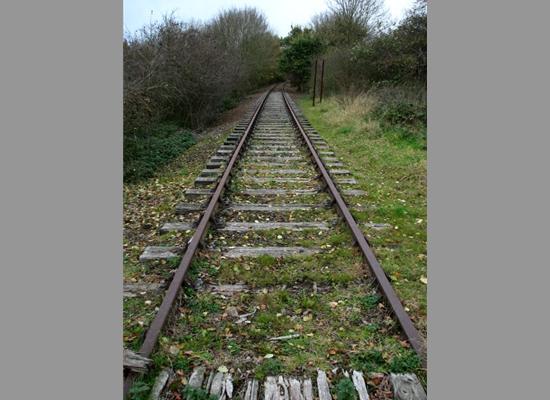
Interesting news from the U.K. which might bolster the campaignAi??Ai??for those wishing the return of the Vancouver to Chilliwack interurban. The Association of Train Operating Companies (ATOC) or in layman’s terms, the privatized companies formed from the old British Rail, have plans to reopen several abandoned or mothballed railway lines. What is of interest is that tramtrain or diesel LRT is being proposed for operation on some or all of the planned restored railway lines.
Of course the still in operation Southern Railway of BC line, from Vancouver to Chilliwack doesn’t fall into the derelict classification, but certainly with one or two trains a day, fall into the lightly used classification and could have a tramtrain in operation within one year!
Ai??Ai??
The Association of train Operating Companies (ATOC) has today revealed plans to open 14 rail lines closed by Dr Beeching in the 1960s from 2014.
ATOC wants the routes to be safeguarded – it says the plans would open 40 new stations and be a direct benefit to some 1.75M people – 750,000 not connected to the network, and a further 1M would have improved acess.
ATOC Chief Executive Michael Roberts said:A?ai??i??Ai??Record passenger numbers and rising demand require us to plan for the long term, while climate change and population growth make it vital that in doing so, we adapt the rail network to meet tomorrowA?ai??i??ai???s needs.
A?ai??i??Ai??Providing attractive new services and easier access to the rail network will encourage passengers to switch to railfrom other, less green, modes of transport.
A?ai??i??Ai??Many past studies have looked at re-opening old railways but this one looks first at the market, not the map,analysing where people live and where they want to travel.
A?ai??i??Ai??Much of the current debate about improving the network is focused on major enhancements, such as main lineelectrification and potential high speed lines. This is a welcome vote of confidence in the railways.
A?ai??i??Ai??This report complements the strategic approach recently advocated in Planning Ahead, and looks at otheropportunities to connect communities which have grown in recent years but which do not have good access to therail network.
A?ai??i??Ai??We have established that there is a strong business case for investment to bring a number of towns back onto therail network. Now we need to safeguard these routes and develop the detailed case for investment.A?ai??i??A?
The report, A?ai??i??Ai??Connecting CommunitiesA?ai??i??A? outlines an economic case for reinstating these lines as well as giving social costs and benefits such as time-savings by road users, a reduction in road accidents as well as the earnings from fares, and compared them with the cost of operating the service and the capital costs of reinstating the lines.
Over the next nine months ATOC will carry out further analysis with train operators, Network Rail and local authorities to validate the work so far undertaken, and to confirm those routes that would justify safeguarding.
The new lines would serve:
- Cranleigh (Surrey)
- Bordon, Hythe and Ringwood in Hampshire
- Brixham in Devon
- Aldridge and Brownhills (West Midlands)
- Wisbech (Cambridgeshire).
- Leicester to Burton (Derbyshire)
- Fleetwood, Rawtenstall and Skelmersdale in Lancashire
- Washington (Tyne and Wear)Ashington & Blyth (Northumberland)
- Ai??Ai??Ashington & Blyth (Northumberland)
- A further seven cases are being evaluated: Madeley (Staffordshire), Stourport on Severn (Worcestershire), Ripon (N. Yorkshire), Norton Radstock (NE. Somerset), Portishead (N. Somerset) and Witney (Oxfordshire).
Ai??Ai??
Cost estimate for light rail doubled over five years – WATERLOO REGION- Ontario

The proposed $710-million cost to put electric trains Kitchener and Waterloo has doubled in five years. Building rail transit on the spine of the cities was estimated at $21 million per kilometre in 2004. Today it will cost $40 million per kilometre.Ai??Ai??Ai??Ai??Ai??Ai??In explaining the increase, regional planners point to:Ai??Ai??A?ai??i??A? Annual construction inflation reaching 10 per cent.A?ai??i??A? The addition of three kilometres in tracks.
A?ai??i??A? New structures, higher costs for a maintenance facility and new parking, property and utility costs.
Regional Chair Ken Seiling isn’t surprised by the increase, saying other construction projects have seen similar jumps.
He was asked: Is it too much to pay?
“I’ll tell you that at the end of the day, when we find out what the federal and provincial contributions will be,” Seiling said. “I think that question’s premature.”
Senior governments have said they are interested in paying most rapid transit costs but have not pledged a dollar amount. Regional council has been warned local taxpayers might be on the hook for $150 million.
Critic John Shortreed, a retired transportation professor, contends the cities are too small to justify rail transit costs.
“You can build buses for a lot less,” he said. “Buses can do practically everything rail can do, and will do some things a little bit better.”
Rapid buses are less than half the cost of trains, according to regional estimates. Few local commuters ride transit but proponents say trains will draw homes and jobs to neighbourhoods around stations. Council plans to vote on trains June 24.
Fast buses are proposed in Cambridge for an extra $80 million.
SOARING COSTS FOR ELECTRIC RAIL TRANSITAi??Ai??
Ai??Ai??2004 cost = $306 million Source: Region of Waterloo
Add: + $188M Construction inflation
+ $ 64M Three extra kilometres
+ $ 50M Extra utility relocation costs
+ $ 46M Extra for maintenance facility
+ $ 46M New structures and property costs
+ $ 10M Two parking facilities
2009 cost = $710 million
Ai??Ai??
Zweisystem comments (in italics) on the following:
In North America, planners with little experience in ‘rail’ tend to add-on costs for non essential items, thus driving up overall costs of the project. The base cost for on-street track construction is about $6 million/km. (not including vehicles) and has not greatly changed in the past few years and when aAi??Ai?? proposed LRT project jumps almost 100% in five years, one must ask very serious questions on why.
One question not answered is: “Is the project ‘greenfields’ construction?” If it is, then another question must be asked, “Who profits from land acquisitions?”
Add:
+ $188M Construction inflation
This added inflation cost is outrageous and shows the incompetence of the original planners. Such a huge cost increase makes one wonder if that a major design change has been camouflaged by the claim of inflation. With annual Canadian Ai??Ai??inflation rates at about 2% to 3% per annum, the claim that the project’s cost has increased by $188 million is utter nonsense.
+ $ 64M Three extra kilometres
Three km. @ $64 million = just over $21 million/km., which is on par with the original cost estimates of about $21 million/km., which then begs the question on why an added $188 million in costs due to inflation?
+ $ 50M Extra utility relocation costs
Utility relocation is a favorite of city engineers to download utility renewals costs onto new LRT construction. That modern track laying technique negates the need for utility relocation is ignored – by all it seems.
+ $ 46M Extra for maintenance facility
Modern LRT has modular construction which means a less intensive (cheaper) maintenance facilities, because vehicle modules can be easily outsourced for repair. The modern tram is far cheaper to maintain that its older cousins, thus it needs a cheaper facility. This added $46 million charge is very questionable and it may be camouflage for questionable add-ons.
+ $ 46M New structures and property costs
$46 million seems a lot for new structures and property costs and again one wonders if ‘friends’ of the government are getting rich at the taxpayers expense?
+ $ 10M Two parking facilities
These costs should not be included with the light rail costs and it confirms one’s suspicions that a lot of politically prestigious add-ons have been down loaded on to the proposed new LRT.
2009 cost = $710 million
Ai??Ai??
Tunnel vision correctable
A note by Zweisystem: Liz James is one of the few writers around who has taken the time to study the issue of transit and transportation and Rail for the Valley welcomes her article.
Elizabeth James, Special To North Shore News
Published:Ai??Ai??Sunday, June 14, 2009
a recent decision by B.C. Supreme Court Justice Ian Pitfield is likely to have ramifications for all municipal taxpayers — whether or not it stands up to a possible appeal.
On May 27, Pitfield awarded Hazel & Co., a Cambie Street business, $600,000 plus costs in recognition of the severe disruption caused by Canada Line construction.
The decision was music to the ears of entrepreneur Susan Heyes and her counsel, North Vancouver’s Cameron Ward who, for four years, had painstakingly built the case for compensation.
Evidence amounted to thousands of pages. Forensically-audited financial statements supported Heyes’ claim that her maternity-wear business had experienced a loss in sales of more than $900,000. That decline in sales coincided with the appearance of what one customer called the “rubble and muck at Cambie Canyon.”
As Heyes pointed out, “Pregnant ladies don’t like climbing over and around construction trenches and street barricades; nor should they need to.”
After weeks of deliberation, Pitfield decided that Ward had successfully argued Heyes’ case against three of the five defendants: Canada Line Rapid Transit, InTransit B.C., and TransLink.
In his reasons for judgment, Pitfield explained why he decided the extent and four-year duration of the nuisance — an exquisite legal term that belies its real significance — constituted an “unacceptable burden” for the previously successful entrepreneur. He also emphasized that his findings applied only to Hazel & Co. and that, under the strict parameters he had established for this case, he found the provincial government and City of Vancouver not liable.
There is little doubt that Pitfield’s opinion will have implications for future capital projects, and reverberate throughout all municipalities — including the five on the North Shore. No one should be surprised, therefore, if the battery of government lawyers makes much of that point, in the event they launch an appeal.
But before anyone jumps to the conclusion that it will be Heyes’ fault if capital projects become more expensive, there are other points to consider.
As long ago as February 2003, TransLink board directors should have heard the alarm bells. Many of the alerts were contained in the 55-page Independent Review: Phase One report of The Underhill Company, LLC.
Although commissioned by the City of Vancouver, the prophetic findings were pertinent to all TransLink municipalities and concluded:
While “the prospect of senior government funding presents a distinct opportunity . . . it also presents significant challenges and potential financial risks . . . which can cost or save up to a billion dollars.”
So which was it; a cost or a savings?
Premier Gordon Campbell and then-transportation minister Kevin Falcon claim public-private partnerships remove the burden of risk from taxpayers. Yet, it is plain from the Underhill report that the City of Vancouver and, by extension, all taxpayers, remain at risk of financial losses on the Canada Line project.
The report states earlier: “Draft materials showed capital costs to be in the $1.8 to $2.2 billion range. . . .”
So how was it that, at a public meeting in June 2004, City of North Vancouver Mayor Barbara Sharp — representing all North Shore municipalities — still referred to “$1.35 billion, the money we have on the table?” No member of the board contradicted her.
That was not Monopoly money, our tax dollars were at stake.
The most telling Underhill statement appears in the executive summary: “Ultimately, the risks of the RAV project will fall on TransLink.” Those risks include, “a share of the risk related to ground conditions for the tunnel.”
Ah, the tunnel.
In November 2004 — 19 months after the Underhill Review was received by Vancouver council and three months after Sharp put her motion to the TransLink Board – District of North Vancouver Coun. Alan Nixon was so concerned he put the following motion to a special meeting of council:
“That the District of North Vancouver advise Mayor Sharp, as the North Shore representative on the TransLink board of directors, to reconsider her conditional support of this project and consider the rejection of the project as now designed and priced.”
As events unfolded, Nixon’s effort went for naught. In December 2004, the project was approved, and the consortium began its inexorable journey toward Justice Pitfield’s courtroom.
I attended the first of the two June meetings to speak against the project. I heard no discussion of a cut-and-cover tunnel, or of the yet-to-be-proven $400-million savings now being claimed for that method of construction.
It appears Sharp and her fellow directors were either in the dark as to any plan to switch to cut-and-cover, unaware of the significance of the phrase for adjacent businesses, or the phrase had never been used in presentations to the board.
This begs the question: When TransLink held the infamous third vote-until-you-get-it-right, did board members give their informed consent? If they did, why were Cambie business owners not so advised when they attended “public information” meetings, and why did Heyes have to find out only after she had renewed her five-year lease?
On the flip side, if the board was not informed about cut-and-cover details, one is left to ask if that is the process by which billions of our transportation dollars are deployed?
In other words, was this expensive fiasco due to strategic use of confidentiality agreements signed to protect competitive design plans of the for-profit partners in a P3 project dictated by provincial policy? Or was it a mind-numbing omission on the part of those to whom citizens entrust their tax dollars?
Whatever the explanation, justice suggests that taxpayers should not hold Heyes responsible for the fate she suffered. Just like the rest of us, she had no other way to hold the decision-makers to account.
What North Shore taxpayers can do is take heart from the Pitfield decision and resolve to take a closer look at other projects that are on course to drain municipal budgets and citizens’ wallets: the Bilfinger-Berger lawsuit — which also revolves around tunnelling design — for the water filtration project; the persistent downloading of provincial responsibilities onto municipal budgets; provincial policies that allow unelected, unaccountable boards to impose levies that compromise municipal tax revenues; carbon taxes that force municipalities to assign staffing and financial resources to tally the data required . . . the list goes on. Every one of these items warrants a column of its own.
The most important point, however, is this: Governments, at any level, can only spend money they have taken from taxpayers. It is our job to hold them to account for their decisions.
In the overall scheme of things, Heyes’ $600,000 will have been cheap at the price if it persuades us to take a firmer grasp of the wheel that, for far too long, governments have spun out of control on our dime.
Elizabeth James is a West Vancouver writer and editor.
TorontoA?ai??i??ai???s new streetcar: sleeker, lower, longer
By Allison Hanes, National Post
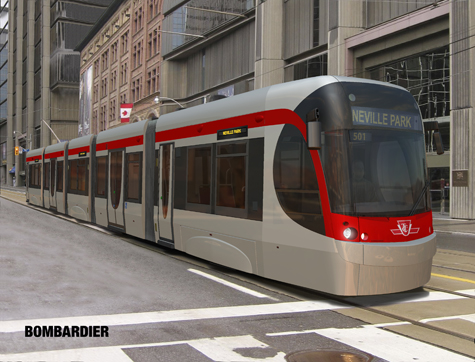
TorontoA?ai??i??ai???s next generation of streetcars will be sleeker, lower, longer and bigger.
At 28.2 metres, the new Bombardier cars will be longer than the iconic red rockets on the roads now, which stretch to a maximum of 22 metres.
MORE: Bombardier gets nod for new streetcars.Ai??Ai??
Each will have five sections and four doors to speed loading time, with a wide second door to accommodate wheelchairs or strollers.
They can hold up to two wheelchairs and two bikes, while also doubling capacity to 260 passengers.
There will be 62 seats, up from 61 A?ai??i??ai??? some of them 1.5 times wider A?ai??i??ai??? more generous aisles, more elbow room and air-conditioning.
They will be 100% low floor and accessible. They could start appearing on Toronto streets in 2012.
A?ai??i??Ai??I canA?ai??i??ai???t but say this is going to change the face of public transit in the city of Toronto and I am absolutely delighted by it,A?ai??i??A? said
Councillor Joe Mihevc (St. PaulA?ai??i??ai???s), vice-chair of the TTC.
The 204 replacement streetcars being purchased under yesterdayA?ai??i??ai???s announcement will have doors on one side and travel in a single direction, but when Toronto purchases up to 400 off-the-shelf models to run on TorontoA?ai??i??ai???s eight new Transit City light-rail lines they will have doors on two sides and be double-ended so they can travel in two directions.
Gary Webster, chief general manager of the TTC, said there are still details to be worked out, like how passengers will pay. The design has no door by the driver, so some sort of proof-of-payment system will have to be instituted.
The current generation of 248 streetcars first rolled onto streets in 1978, and are nearing the end of their lifespan. BombardierA?ai??i??ai???s Flexity Outlook will become the fourth generation vehicle in a city that prides itself on holding on to streetcars when most other cities trashed theirs.
BombardierA?ai??i??ai???s initial proposal was disqualified last summer over a risk of derailment on TorontoA?ai??i??ai???s tight turns, but the TTCA?ai??i??ai???s superintendent of light rail engineering said he is confident the latest design will work.
Stephen Lam said the major change in this version is length A?ai??i??ai??? 28.2 metres versus 30 metres, which altered the placement of the truck centres. The front-end was also reduced by 1.28 metres, he said, as well as the overhang, which minimized the lateral bearing force when turning.
A?ai??i??Ai??It is quite a change,A?ai??i??A? Mr. Lam said.
TransLink to phase out printed bus schedules at Metro Vancouver stops. Want to know when the next bus is coming? Translink says, get a cellphone. – from the Vancouver Sun.
TransLink, in one of their most boneheaded decisions to date, Ai??Ai??is going to phase out local bus schedules at bus stops. What the news story does show that the TransLink Board hasn’t a clue about public transit, nor do they care about the transit service. The Comte’s received so far from the Sun shows complete how out of tune TransLink and its bureaucracy is.
http://communities.canada.com/vancouversun/blogs/soundoff/archive/2009/06/12/404265.aspx
This bodes ill for any decent transit planning under the present regime. Regime change anyone? And Yes, it is June 13, not April 1!
TransLink to phase out printed bus schedules at Metro Vancouver stops
Want to know when the next bus is coming? Translink says, get a cellphone.Ai??Ai??By David Karp, Vancouver SunAi??Ai??VANCOUVER A?ai??i??ai??? Bus riders without cellphones will be out of luck in future if they want to know when the next bus is arriving.dkarp@vancouversun.comTransLink has decided to phase out its A?ai??i??Ai??info tubesA?ai??i??A? A?ai??i??ai??? plastic cylinders that wrap around poles at bus stops, with printed schedules inside.
TransLink spokesman Ken Hardie said bus schedules are normally changed four times a year. But a flurry of changes as a result of the Canada Line opening this fall and the Olympics next year makes keeping the tubes up to date too difficult.
All the info tubes will be removed by Labour Day, Hardie said.
A?ai??i??Ai??The person power and the physical ability to get around and change all of that material in the info tubes doesnA?ai??i??ai???t exist,A?ai??i??A? he said. A?ai??i??Ai??We simply donA?ai??i??ai???t have the horsepower to do that.A?ai??i??A?
Riders who have cellphones can call TransLink information or text their stop number to 33333 to get bus schedules, but those without a cellphone will be out of luck.
A?ai??i??Ai??[Cellphones] are very ubiquitous,A?ai??i??A? Hardie said. A?ai??i??Ai??To reach the relatively small part of the market that doesnA?ai??i??ai???t have a cellphone, that might be a cost that just canA?ai??i??ai???t be rationalized.A?ai??i??A?
Hardie was unable to estimate what replacing the info tubes would cost.
The removal of info tubes is A?ai??i??Ai??a little premature,A?ai??i??A? said Jim Houlahan, vice-president of Canadian Auto Workers Local 111, which represents bus drivers.
A?ai??i??Ai??It will be a bit of a loss for the public, because not everyone has a cellphone,A?ai??i??A? Houlahan said. A?ai??i??Ai??I was riding the bus myself the last couple weeks, and I went right over and used the info tube.A?ai??i??A?
Houlahan carries a cellphone, but he doesnA?ai??i??ai???t know how to text on it.
A?ai??i??Ai??I donA?ai??i??ai???t text-message, but IA?ai??i??ai???ve seen lots of news stories about people getting hit with lots of surprise bills because they are texting,A?ai??i??A? he said.
Hardie said route information will be posted at bus stops where routes interconnect, and in some cases TransLink workers will be at stops providing riders with information. He said the text-message service will be expanded to provide real-time estimates for bus arrivals based on global positioning. TransLink will re-evaluate the info tubes after the Olympics, but said he hopes they arenA?ai??i??ai???t missed.
A?ai??i??Ai??It would be a good sign for us if not too many people turn out to miss the old info tubes,A?ai??i??A? he said. A?ai??i??Ai??We know that itA?ai??i??ai???s dislocation for some people who got used to them, but the practical issue of trying to keep them updated in the coming months is almost impossible for us.A?ai??i??A?
Ai??Ai??
Two letters in the Tri-City News
Massive transit expansion needed in Metro Vancouver
The Editor,
Re. “Build real rapid rail” (Letters, The Tri-City News, June 5).
I have to second letter writer Barry Waterlow’s suggestion that only a massive rapid rail and SkyTrain expansion could convince commuters to use public transit and reduce the number of vehicles owned. Why wouldn’t comfort and speed matter when travelling long distances?
This is not only necessary for commuters but would encourage better access for businesses wishing to expand beyond Vancouver, be a boon for tourists and is the kind of win-win situation economically that the BC Liberals just can’t seem to grasp as a plus for this province and its environment.
If Premier Gordon Campbell was really as “green” as he tries to appear to be, then this initiative would have been properly funded and earmarked as the priority that it deserves.
Instead, he and Kevin Falcon deemed that expanding roads and bridges to accommodate hoped-for increases in port facility use is more important. But it’s a gamble because if oil continues its price increase as predicted, we may not see the kind of port traffic they optimistically hope for.
Meanwhile, people in the Greater Vancouver region and outlying towns have been at their wits’ ends for years now trying to commute to jobs from more affordable homes in the suburbs but our government is blind and deaf to this problem.
By delaying a much needed expansion in transit options for increased liveability here A?ai??i??ai??? buses just don’t cut it for long distance travel, Gord A?ai??i??ai??? the government has shown us where their priorities lie and is guaranteeing that as they keep on delaying, it will become far more more expensive to achieve what we so desperately need. Time is of the essence.
Unfortunately, we have voted in a premier with the “mandate” to do as he pleases.
M. Schooff, Port Coquitlam
Building more SkyTrain would be ‘madness’ for TransLink
The Editor,
Re. “You can have a say on future of transportation” (The Tri-City News, June 3).
The TransLink board of amateurs is at it again, holding another phoney public consultation process. It’s a case of TransLink trying to fool the public once again. Please, no more.
The recent $600,000 award to a Cambie Street merchant for negligence, which may be repeated more than 100 times, is due to less than honest public consultation with the Canada Line cut-and-cover subway. The public is tired of TransLink’s spiel.
Much of TransLink’s finical woes are due to the folly of building with the hugely expensive, yet obsolete, SkyTrain light metro system. Bolstered by questionable reports and studies, TransLink blunders on, forgetting the cardinal rule that elevated and/or subway systems need enormous daily traffic flows of 400,000 to 500,000 passengers a day to justify construction or huge subsidies (read: tax increases) must be made.
Hasn’t the TransLink board ever questioned why no one in North America or Europe builds with SkyTrain?
As well, TransLink keeps operating buses on routes that do not have ridership, haemorrhaging taxpayers money.
Isn’t time for independent audits of bus routes and SkyTrain? The estimated $450-million TransLink shortfall is due solely to inept planning, political interference and absolutely zero oversight. The taxpayer is maxed out and fat-cat bureaucrats need to understand this.
For too long, transit has bee treated as a mom-and-apple-pie issue, and politicians and the board believe the more expensive a project is, the better it is. But it hasn’t worked.
Doing the same thing over and over again, expecting different results, is a definition of madness and this seems exactly what TransLink and its board suffers from.
Malcolm Johnston, Light Rail Committee
LIGHT RAIL TRANSIT ASSOCIATION Discussion Document 73 March 2009
The British public have already demonstrated that where buses are used as the principle transit mode in a transport system, they (the public) will look around for a suitable alternative, unhelpful to city centre shopkeepers (less customers). The bus though is a vital component in an integrated transit system by providing feeder services to either a tram route or a suburban railway station and also on routes with low patronage.
Supertrams (Light Rail or streetcar):TRAMS:
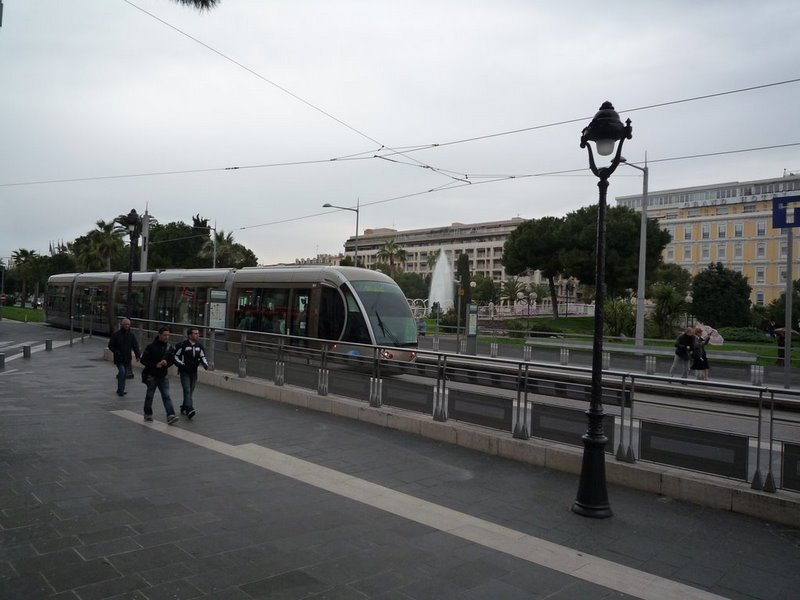
Most places in western Europe operate trams as a vital component in an integrated transit system. On very busy routes they can operate as a coupled pair with a loaded passenger capacity equating to about seven buses. A bonus for the operator is that the two trams only require one driver. Metrolink in Manchester couples its trams in peak periods.
Suburban Railways:
Although the cost of providing a local railway service is mostly cushioned by sharing tracks with Inter City services, the tracks are often distant from populated areas. Also, a city terminal often involves a walk to a shopping centre.
Tram-Trains:
These can connect rural areas to CBD without a change of vehicle, a service with considerable advantages. The passenger is often unaware of any change in the mode taking place and the infrastructure costs are relatively small. Saarbrucken (Germany) could be useful as a role model. In most cases, the vehicle has an outward appearance resembling a tram but hidden equipment facilitates the actual changeover.
Transport consultants have recommended a connecting tram service between Leeds and Harrogate via Horsforth. This was rejected by the Government which decided on a two year trial period between Huddersfield and Sheffield, completely on railway tracks.
Summary – Supertram advantages
1 Can quickly swallow a large crowd.
2 A large standing load saves some being left behind (as on a bus route) having to wait for the next bus.
3 Many doors permit a quick entrance and exit.
4 Gives a quality ride.
5 Permanence attracts passengers.
6 One tram stop can accept many routes. No walk required when changing route.
7 Can operate at high speed on segregated tracks.
8 Clean operation at point of use.
9 Can feed the braking energy back into the overhead line.
10 Some systems operate completely from renewable energy sources.
11 Can safely mix with pedestrians in precincts.
Footnote:
Many citizens supporting mixed bus and tram systems will already know well the tramsAi??Ai?? good points. This document is aimed at people who may have never experienced a modern tram ride and may not support the tramway concept.Ai??Ai??
The above eleven points could help them to appreciate the importance to Leeds (and elsewhere) of an integrated transport system.
Examples of Supertram type operation can be seen and experienced in five British cities: Manchester; Sheffield; Birmingham to Wolverhampton; London (Croydon) and Nottingham. In effect only five cities offer the choice of good quality transit to the car.
Ai??Ai??Prepared by F A Andrews LRTA Assistant Publicity Officer
Brisbane Reality Check: The high cost of "cheap" busways – From the Light Rail Now Folks
The following is from the Light Rail now folks in the U.S.A. It certainly blows the lid off the BRT crowd, when it comes to the claim that BRT is cheaper than light-rail.
When one hears Kevin Falcon or other Valley Liberal MLA’s claim that BRT must come first because it is cheaper than LRT, remind them of this posting and the cost for BRT in Brisbane Australia!
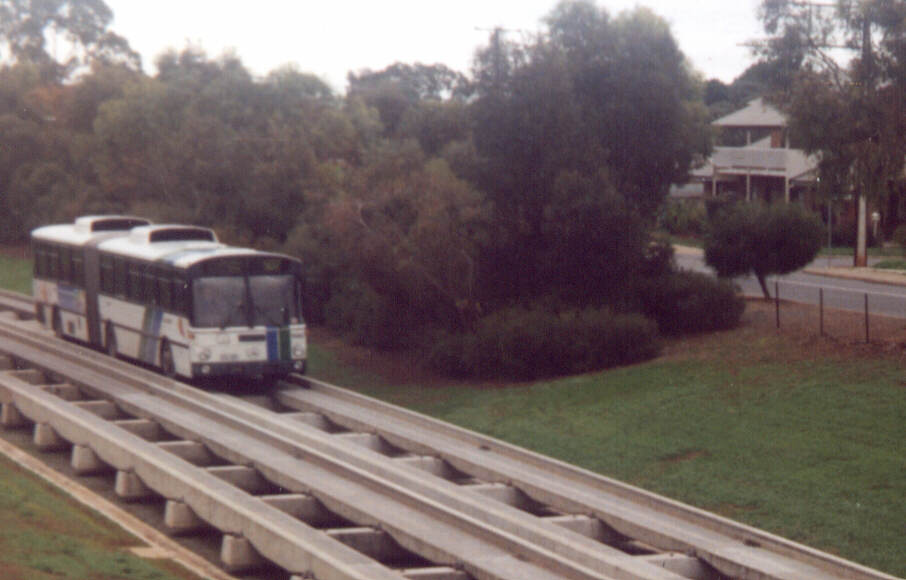
- The ultimate in bus rapid transit (BRT) guided bus or O-Bahn
Light Rail Now! NewsLog
5 June 2009Brisbane Reality Check: The high cost of “cheap” busways
In the ongoing battle between backers of light rail transit (LRT) and the rather blurry concept dubbed “bus rapid transit” (“BRT” ), Brisbane (capital of Queensland, and Australia’s third-largest ciry, on the country’s eastern coast) is definitely one of the hottest flashpoints, with Queenslland Premier Anna Bligh touting “BRT” busways as costing about half as much to build as LRT, and Transport Minister John Mickel advancing the merits of a “tramway-style” LRT system.
First, some background on Brisbane’s public transport system…
The city’s pervasive and efficient light rail electric tramway (streetcar) network was scrapped in the 1960s during the worldwide Transit Devastation era (when most city officials and planners were doing all they could to “motorize” their local travel and promote public dependency on personal motor vehicles running on public roadways).
In this process, as the electric tramways were ripped out, they were replaced by motor buses running on petroleum fuel (believed to be forever cheap and abundant). Fortunately, Brisbane’s legacy regional passenger rail (RPR) transit system relained, to evolve into today’s efficient Citytrain system, reaching some 382 km (237 miles) of route throughout the metro area.
In recent years, the need for a more rapid, medium-capacity surface transit system has sparked a debate between advocates of light rail transit (LRT) Ai??ai??i?? basically, a re-introduction of tramways and “BRT”, operating on both dedicated busways and streets. In 2000, “BRT” won the initial round, with the opening of the first of the region’s busways. Now 19.3 km (12 miles) of busway serve the Brisbane metro area, carrying some 100,000 weekday rider-trips. Promoters are claiming supposedly lower costs and greater “flexibility” as reasons to favor more “BRT” development rather than a light rail transit (LRT) system, proposed as an alternative by rail advocates.
One reason for the high cost of busways is the need for passing lanes at stations to enable capacity approaching that of rail but high ridership results in serious queuing of buses. Imagine your waiting time if you’re trying to catch your bus home after work, but it’s somewhere in that “conga line” of “BRT” buses trying to access the station!In Brisbane as elsewhere, proponents of “BRT” typically mix-and-match design criteria and lowball investment estimates in their campaign to assert that “BRT” is “just like light rail, but cheaper”
The claim that busways are “cheaper” than light rail merits examining with considerable skepticism as Light Rail Now has done repeatedly, in numerous articles on this website.
See: “Bus Rapid Transit” Analyses and Articles
In terms of capital investment cost, our research of Brisbane’s busway projects hardly justify the claim of “low cost” compared with LRT.
Obtaining the costs of Brisbane’s busway projects is not particularly easy the public agencies involved don’t publicize them to facilitate access. However, thefollowing two documents (recently available) have proven to be an extremely helpful source of basic information needed:
Public Transport Mode Selection: A Review of International Practice
http://etcproceedings.org/paper/download/1679State of Queensland (Queensland Transport) 2009 Busways
http://www.transport.qld.gov.au/Home/Projects_and_initiatives/Projects/Busways/
BuswaysSplicing together data from these two sources, we’ve been able to ascertain the actual cost, converted to current (2009) US dollars, of several of Brisbane’s major busway projects, as follows:
South East Busway (completed 2001):
15,6 km (9.7 mi), US$421 million
$27 million/km
$43 million/mileAi??Ai??Inner Northern Busway (completed 2008):
4.7 km (2.9 mi), US$408 million
$87 million/km
$141 million/mileNorthern Busway Project (currently under way):
1.2 km (0.7 mile), US$158 million
$132 million/km
$214 million/mileThese unit capital costs seem staggering, and it leaves little wonder why they are not more readily publicized by the authorities and “BRT” promoters.
These costs are particularly striking in comparison with the costs of LRT lines on exclusive rights-of-way (comparable to busways). There is no project in Ausralia in such an alignment (the Adelaide LRT was an upgrade of an existing railway alignment), but two projects in US urban areas could be considered comparable:
Ai??Ai??Charlotte Lynx LRT, South corridor (completed 2007):
9.6 mi (15.5 km), US$496 million
$32 million/km
$52 million/mileSacramento Folsom LRT extension (completed 2004):
7.4 mi (11.9 km)
$25 million/km
$41 million/mile(Again, all costs above expressed in 2009 US dollars.)
These comparative costs would certainly seem to call into strong question the claim of “BRT” promoters in Brisbane and elsewhere that busways are significantly “lower-cost” investments than LRT lines.



Recent Comments