U.S. seen "squandering" infrastructure funds. Is the same happening here?
It seems the big push is on, spending stimulus money on transportation projects, but Rail for the Valley doubts that the massive Gateway highways and bridge project is a good investment. More highways, means more cars and more cars means more congestion and pollution; a message that Premier Campbell and his transportation minister refuse to acknowledge.
Reuters News Service
Wed May 6, 2009U.S. seen “squandering” infrastructure funds
NEW YORK (Reuters) – The Obama administration risks “squandering” transportation investments included its economic stimulus plan because it failed to change a decades-long system favoring highways over mass transit, said the head of a group that advocates more transportation choices. “The federal transportation funding system is broken, it’s just broken,” Robin Holzer, chairwoman of the Citizens’ Transportation Coalition, told at the Reuters Infrastructure Summit.
An opportunity to level the playing field was lost with the stimulus program, she said on Wednesday.
“The short time frame was really a structural obstacle,” she said. The Houston-based group instead was advised to concentrate on pushing for more dollars for mass transit when the federal transportation bill is renewed this year.
Under the current system that U.S. President Barack Obama has maintained, at least for now, the U.S. government will pay as much as 80 percent of the multibillion dollar cost of a proposed 180-mile ring road around Houston — its fourth such loop — even though it serves a thinly populated rural area.
In contrast, an expansion of the city’s light-rail system is only eligible for getting 50 percent of the cost paid by the federal government, she said. Yet more than 147,000 people live within a half-mile of the ten stations on the light rail system, Holzer said.
To demonstrate the low demand for the new ring road, Holzer displayed a picture of its empty lanes that she said she took at 5 p.m. one weekday — a typical rush hour in urban areas.
“It’s a boondoggle highway in the middle of nowhere,” she said. “We need to invest our money where the people are.”
The environmentalist group Sierra Club has sued to block the road, called the Grand Parkway, which runs through birding areas.
Holzer also urged that the multistep process of approving mass transit projects be streamlined. Houston’s light-rail system was subject to voter approval as well as strict cost-benefit analysis and environmental provisions. Highways do not require voter approval, are not subject to such cost-benefit provisions and qualify for much more federal cash.
The United States needs to invest in other ways for people to get around, including adding bike lanes and sidewalks, which some cities and towns now constrain or do not allow, she said. In Houston, for example, “We can’t even build sidewalks to schools,” she said.
“We would love to see equal footing between different transportation modes” she said. “Even people who are commuting by car want options.”
Property values within the area served by Houston’s light rail system are firming, while those located outside this boundary are declining, she said.
http://www.reuters.com/article/ousiv/idUSTRE5456FT20090506
US Fed Funding Policy Heavily Favors Roads Over Transit – From the Light Rail Now Folks
Tipping the Playing Field: How America’s Federal Funding Policy Heavily Favors Roads Over Transit
Susan Pantell with Light Rail Now Project Team Ai??Ai?? May 2009
It should come as no great surprise that the federal government gives substantially more financial support to roads than to transit. However, what’s really disturbing Ai??Ai?? especially in a new political environment where the pursuit of “green” policies is now widely celebrated Ai??Ai?? is that, in addition to much lower authorizations for transit, the federal match (percentage of project cost covered) for transit grants has in practice been considerably less than for highway grants. Nominally, federal legislation authorizes a match of 80% for most capital projects, both highway and transit. However, in practice, highway matches are at least 80%, and can be as high as 90%, for interstate projects. In contrast, federal matches for transit projects have decreased dramatically, with projects that request lower matches receiving favorable treatment Ai??Ai?? indeed, the Federal Transit Administration (FTA) has typically been funding projects at the 50% match level or lower.
The Bush administration’s Safe, Accountable, Flexible, Efficient Transportation Equity Act: A Legacy for Users (SAFETEA-LU) of 2005, providing funding levels for transportation programs, authorized an average of $39.9 billion each year between 2005 and 2009 to federal highway aid programs. [Title 1, Federal-Aid Highways.] For transit, Section 5309, the Capital Investment Grants program, including the New Starts Program, which funds major fixed-guideway projects, such as rapid rail, light rail, regional passenger rail (“commuter rail”), and bus rapid transit, was allocated $7.4 billion over the five years, or an average of $1.48 billion per year. The Small Starts Program, which provides funds up to $75 million for transit capital projects costing less than $250 million, was allocated $600 million of the New Starts funding. (These allocations may now be increased under the more transit-friendly Obama administration.)
For most Federal Highway Administration (FHWA) programs, the federal share is 80%. When the funds are used for interstate projects to add High Occupancy Vehicle (HOV) or auxiliary lanes, but not other lanes, and for the Interstate Maintenance and Highway Safety Improvement Programs, the federal share may be 90%. These programs are subject to the sliding scale adjustment, which is an additional percentage federal match equal to the percentage of unappropriated and unreserved public lands and nontaxable Indian Lands in the state; the only catch is that the federal match in any state may not exceed 95% of the total cost.
US highway projects are routinely funded by predominantly federal grants Ai??Ai??mostly at a federal match of 80% or even as high as 95%. For transit, however, it’s a very different ballgame. Although SAFETEA-LU did not change the nominal federal match of 80% for New Starts projects, in practice, FTA guidance sets a much lower de facto limit:
>>
For many years FTA has encouraged projects seeking New Starts funding
to pursue no more than 50% of the total project costs using New Starts
funds. This is because the demand for New Starts funding has historically
been far in excess of the funding available.
[FTA website, Proposed Guidance on New Starts/Small Starts Policies
and Procedures, 5 Feb., 2007.]
<<
For most of the past 8 years of the previous administration, a conservative-dominated US Congress has also severely limited the percentage of federal match for major new transit investments. According to the American Public Transportation Association (APTA), in practice, “Congress and regulations have discouraged a federal match of more
than 60 percent.” [Primer on Transit Provisions, SAFETEA-LU, 20 Feb. 2007]
On 4 June 2007, FTA adopted a new transit funding policy document, Final Guidance on New Starts/Small Starts Policies and Procedures and Notice of Availability of Updated Reporting Instructions [Docket Number: FTA-2007-27172], which extends the preference given to projects requesting a lower, 50% match to Small Starts projects:
>>
FTA adopts as final its policy to add a decision rule that Small Starts and
Very Small Starts projects that meet the conditions for a simplified
financial rating be given a rating of “high” if their sponsors request no
more than a 50% Small Starts share, while those requesting between
50% and 80% share receive no less than a “medium” rating.
<<
Bush’s FTA justified this decision by what might be called the “earnest money” or “willingness to sacrifice” rationale:
>>
FTA believes that the ability of project sponsors to contribute a higher
non-Small Starts funding share represents a measure of local
commitment to a project that should be recognized in the ratings. FTA
further believes that providing higher ratings for requests of less Small
Starts funding is entirely consistent with SAFETEA-LU provisions that
specify local share as an evaluation consideration.
<<
In contrast to high federal match for highways, US rail transit projects Ai??Ai?? such as Seattle’s Link light rail transit project, shown here Ai??Ai?? have typically been allotted well under 50% federal funding.
Under Section 5307, the Urbanized Area Formula Grants, funds are allocated based on a complex formula that accounts for population, density, fleet size, ridership, etc. Urbanized area formula funds can be used for relatively smaller-scale transit capital expenditures, planning, minor transit enhancements, capital maintenance items, and operating costs in urbanized areas with populations of less than 200,000. The federal match for a capital project (including associated capital maintenance items) is 80% of the net “project” cost (where “projects” can include replacing buses, installing passenger shelters or transfer facilities,conbstructing maintenance facilities, etc.) For operating expenses, the federal share is not more than 50% of the cost. Annual authorizations for Urbanized Area Formula Grants average $3.8 billion between 2005 and 2009.
Certain other programs that provide funding for comparatively more modest transit-related activities do have an 80% match. One is the Capital Expenditures Program, under Section 5302, which includes funding for: acquisition or construction of transit facilities for ongoing operations and maintenance, such as buildings, stations, and rights-of-way; payments for
the capital portion of rail trackage rights agreements; overhauling rail rolling stock; preventive maintenance; some transit equipment and facility leases; transit improvements that enhance economic development or incorporate private investment; and introduction of new technology through innovative or improved transit products.
Other programs with an 80% match include the Surface Transportation Program, which provides funding that may be used for projects on any federal-aid highway, including transit capital projects and intracity and intercity bus terminals and facilities; the Statewide Planning Process, which is administered jointly by the Federal Highway Administration and
the Federal Transit Administration, and the Municipal Planning Process; and the Transportation, Community and System Preservation (TCSP) program, which funds transit-oriented development plans.
For state-owned railroads, the federal match is the same as for highways, 80%, subject to the sliding scale, and 90% for interstate projects. For the Railway-Highway Crossings program, which is designed to reduce the number of fatalities and injuries at public highway-rail grade crossings through the elimination of hazards and/or the installation/upgrade of
protective devices at crossings, the federal share is 90%. However, federal funding authorizations for these programs have been relatively small.
A couple of highway programs receive an 100% federal match, including certain safety improvements listed in the code; the Future Strategic Highway Research Program, which provides for time-specific research seeking New Starts funding to pursue no more than 50% of the total wal; and the Highways for Life Pilot Program, a new discretionary program
that provides funding to demonstrate and promote state-of-the-art technologies, elevated performance standards, and new business practices in the highway construction process.
As this brief summary shows, not only does transit receive significantly less federal funding than roads, but the match provided has, in practice, been considerably less as well. The federal match applies only to a portion of the total project costs. As reported by APTA,
>>
the matching ratio applies only to the portion of a project funded jointly by
federal and state and local governments. The portion of total project costs
funded by the federal government is, in practice, often much less than the
matching ratio allowed by law. For example, the federal share of all capital
revenue for transit in FY 2003 was 39.9 percent, not 80 percent and the
federal share of all operating revenue for transit in FY 2003 was 5.8
percent, not 50 percent.”
[APTA, Primer on Transit Provisions, SAFETEA-LU, 20 Feb., 2007.]
<<
These low levels of federal support make it extremely difficult to start up new light rail projects despite the increasing demand for them around the country.
The basic research and preparation of this report were performed by Research Associate Susan Pantell; additional material and analysis were
added by other members of the Light Rail Now team.
Debunking the SkyTrain myth A?ai??i??ai??? Part 3 ~ So who operates SkyTrain and why?
Ai??Ai??
Detroit’s ICTS
Two previous postings
“Ai??Ai??Debunking the SkyTrain myth……. “Ai??Ai??and
Ai??Ai??http://railforthevalley.wordpress.com/2009/05/12/debunking-the-skytrain-myth-part-2/Ai??Ai??
” Debunking the SkyTrain myth Part 2 “Ai??Ai??has sent the SkyTrain lobby into apologetic fits. The cries of “shock and disbelief“, untrue, and cherry-picked information fill the comments postings, yet the SkyTrain lobby fail to answer one question: “Why after three decades of unprecedented investment in public transit that SkyTrain hasAi??Ai??been rejected byAi??Ai??transit planners around the world, even after an unprecedented sales program including beingAi??Ai??showcased atAi??Ai??Vancouver’s Expo 86?” Despite the hype and hoopla about SkyTrain there are only seven type systems in operation, or nearing completion, sold under three marketing names.
Intermediate Capacity Transit System or ICTS
- The Toronto Transit Commission’s Scarborough ICTS a 6.4 km rail link forced on the TTC by the Ontario provincial government. Currently in operation, it needs major rebuilding and might be converted to light rail. The city of Hamilton rejected SkyTrain, even after the Ontario government was willing to pay for the initialAi??Ai??installation.
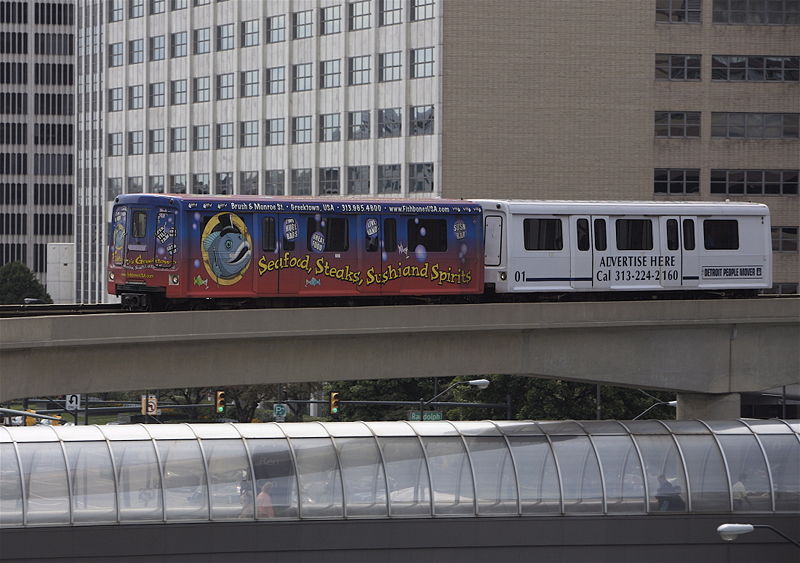
- The 4.7 kmAi??Ai??Detroit people mover or locallyAi??Ai??known asAi??Ai??the “Mugger mover“. This single track loop was a demonstration line for a planned ICTS system, butAi??Ai??the larger network did not materialize.
Advanced Light Rail Transit/Advanced Light Rapid Transit or ALRT
- Vancouver’s 49.5 km SkyTrain. Forced upon the operating authority instead of originally planned for light railAi??Ai??in 1980 by the provincial government, the First Vancouver to New Westminster Line cost as much as the originally planned for Vancouver to Whally/Lougheed Mall and Vancouver to Richmond LRT. The Millennium Line was again forced onto the operating authority by the provincial government after much planning for LRT. It is interesting to note that there was a slight change to SkyTrain’s name from Advanced Light Rail Transit to Advanced Light Rapid Transit before 1990 reflecting that SkyTrain was not LRT.
Advanced Rapid Transit or ART
- Ai??Ai??The 13 kmAi??Ai??Ai??Ai??JFK airport AirTrain. A private deal between Bombardier Inc., the Port authority, and the Canadian Government, precluded local planning. The AirTrain is funded, in part, with an airportAi??Ai??$7.00 departure tax.
- Ai??Ai??The 29 km Kelana Jaya Line (formerly PUTRA)Ai??Ai??in Kuala Lumpur Malaysia. Forced upon the operating authority by senior government, who wanted a ‘show-case’ elevated transit system like a monorail, senior government officials were horrified to find out, even after a prolonged bidding process, that the PUTRA was just another railway and later built a monorail for the city’s thirdAi??Ai??elevated transit line. The first elevated transit line in the city was the STAR elevated LRT line.
- The 27 km Beijing Airport Express. A limited stop, four station,Ai??Ai??airport transit line.
- The 18.5 km Everline in Yongin, South Korea. another limited stop airport line.
During the same period, over 150 new light rail transit (LRT) lines have been built or are now nearing completion, far too many to list. Many more new LRT lines are being planned. In fact, by 1986, the year of SkyTrain’s debut in Vancouver, it was considered obsolete by transit planners in North America and Europe andAi??Ai??like the French VAL system, now seems only to be sold in private deals as a prestigious airport connector.
What happened?
Modern light-rail, was cheaperAi??Ai??to build and operate andAi??Ai??far more flexible in use. If one needed to construct a light-metro to cater to high traffic loads, LRT could do the job and carry more customers, yet retain the ability to operate on lesser rights-of-ways, in mixed traffic if need be. Proprietary driverless transit systems, by their very design, can not do. This inherent loss of operating flexibility far outweighedAi??Ai??the fewAi??Ai??positives with light-metro and the fate of proprietaryAi??Ai??transit systems like ICTS/ALRT/ART and VAL were sealed. As with all proprietary transit systems, the seeds of obsolescenceAi??Ai??are sold with the product and if the manufacturer were to cease production, the costs forAi??Ai??proprietaryAi??Ai??transit systemsAi??Ai??increase dramatically!Ai??Ai??In Seattle, the operators of the ALWEG monorail have great problems finding spares and have to custom make, at great expense,Ai??Ai??broken parts. It is like getting spare parts for an Edsel!
Except for Vancouver, no other city relies on SkyTrain ALRT/ART solely for rail transportation, which makes Vancouver and TransLink an anomaly. The continued efforts to force more SkyTrain construction is like the past Bre-X scandal (where ore samples were ‘salted’ with gold);Ai??Ai??with SkyTrainAi??Ai??planningAi??Ai??being ‘salted’ withAi??Ai??questionable studies and invented statistical analysis.Ai??Ai??Abetted byAi??Ai??a complacent media who treat all public transit projects as a “mom and apple pie” issue, neverAi??Ai??have doneAi??Ai??the investigative reporting that has beenAi??Ai??standard with other mega-projects and gave SkyTrain a ‘free pass’. 30 years of SkyTrain indoctrinationAi??Ai??is clearly evident; a burgeoning TransLink deficit; high transit fares; a rail transit network that a nervous TransLinkAi??Ai??admitsAi??Ai??that 80% of SkyTrain’s ridership first come from buses; and a largely misinformed SkyTrain lobby. No wonder transit planners from around the worldAi??Ai??chuckle atAi??Ai??Metro Vancouver and TransLink with amusement.
The question that the SkyTrain lobby refuse to answer is again asked; “If SkyTrain is so good, why in an era of unprecedented investment in public transit, it has been rejected by transit planners around the world?“
From the Light Rail Now folks – Portland: The freeway city that might have been A?ai??i??ai??? without light rail

The following is from the Light Rail NowAi??Ai??http://www.lightrailnow.org/index.htmAi??Ai?? folks in the USA and gives an interesting insight on how Portland’s LRT stopped highway expansion in the city, giving some valuable lessons for those advocating the return of the interurban.
Portland, Oregon is certainly a model of the benefits a good light rail transit (LRT) system can bestow A?ai??i??ai??? but that attribute also lifts Portland high in the target sights of dedicated rail critics, who relentlessly try to portray soaring success as abject failure.
Because of the MAX interurban LRT system, installed in 1986, and the Portland Streetcar, installed in 2001, central-city Portland is today an exceptionally livable urban environment, with clusters of retailers, restaurants, inner-city housing, small shops, sidewalk cafA?Ai??s, and other amenities.
So it’s relevant to consider what Portland would have been like if it had followed the typical American city’s freeway-focused path of development, rather than the rail transit-focused path it took A?ai??i??ai??? in other words, the kind of development pattern favored by anti-transit, pro-sprawl advocates such as Randal O’Toole, Wendell Cox, and Portland anti-rail activist John Charles and his Cascade Policy Institute.
Such a vision of Portland as a “might have been” freeway city was resuscitated in a Feb. 16th article by Elly Blue on the BikePortland.org website, titled The Portland that might have been.
Elly refers to the map shown further below A?ai??i??ai??? which she says she rediscovered recently A?ai??i??ai??? describing it as “the map that might have sealed our fate, developed by Portland city planners in 1966 in response to freeway guru Robert MosesA?ai??i??ai??? vision for the city.”
Robert Moses (in case you don’t know, or need reminding) is the planning consultant and official who basically devastated swaths of New York City with his freeway-development plans A?ai??i??ai??? forcing the destruction of the city’s once-extensive urban electric light rail (street railway) system in the process.
As a Wikipedia article (20 May 2009) describes him,
>>
Moses was arguably the most powerful person in New York state government from the 1930s to the 1950s. He changed shorelines, built roadways in the sky, and transformed neighborhoods forever. His decisions favoring highways over public transit helped create the modern suburbs of Long Island and influenced a generation of engineers, architects, and urban planners who spread his philosophies across the nation.
<<The article further notes that “his works remain extremely controversial.”
>>
His critics claim that he preferred automobiles to people, that he displaced hundreds of thousands of residents in New York City, uprooted traditional neighborhoods by building expressways through them, contributed to the ruin of the South Bronx and the amusement parks of Coney Island, caused the departure of the Brooklyn Dodgers and the New York Giants Major League baseball teams, and precipitated the decline of public transport through disinvestment and neglect.His career is summed up by his sayings “cities are for traffic” and “if the ends don’t justify the means, what does?”
<<Robert Moses is perhaps best remembered for what he did to “motorize” New York City, but his efforts on behalf of private automobile-based, sprawl-oriented urban development touched other cities as well A?ai??i??ai??? including Portland.

The green lines are planned freeways, and the Mount Hood Freeway was the first of these that would have been built. It was stopped by a strong grassroots effort, with the support of local political leaders. After that, none of the other projects got rolling, and much of the money that was appropriated for the freeway instead went into other transportation projects like the first MAX light rail line.
The Tyee, on passenger rail for the Fraser Valley
An interesting article in The Tyee, on passenger rail for the Fraser Valley, By Monte Paulsen
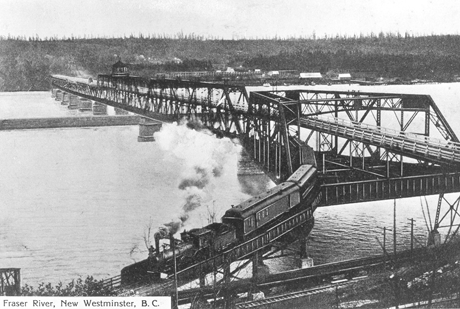
…and how it could mesh with express passenger rail service to Seattle and points south.
Yet another reason for a new rail bridge…
The Light Rail Committee’s position for Valley Rail from Vancouver to Chilliwack
The followingAi??Ai??Ai??Ai??is the Light Rail Committee’sAi??Ai??proposal for ‘rail’ transit,Ai??Ai?? from Vancouver to Chilliwack.
Overview:
Diesel powered TramTrain, track-sharing with mainline railways, except for portions of the route in Langley and Chilliwack.Ai??Ai??TramTrain is aAi??Ai??proven concept pioneered in Karlsruhe GermanyAi??Ai??in1992 andAi??Ai??now used in many cities in Europe and North America. Track-sharing enables light rail vehicles to extend their service range, by using existingAi??Ai??railway infrastructure, to affordably penetrate into less populated areas, while at the same time providing a high quality transit service. The following U-Tube clip demonstrates track-sharing on the Karlsruhe LRT system.
[youtube=http://www.youtube.com/watch?v=NsdJPaih0Fw]
Single track operation is used in almost every LRT operation in Europe,Ai??Ai??providing cheaper service to less frequently used routes. Single track operation of a Vancouver to Chilliwack TramTrain will have double track portions at strategic placed to allow trains to pass each other, enabling a 30 minute service. The following U-TubeAi??Ai??clip shows LRT operation on single track through a village.
[youtube=http://www.youtube.com/watch?v=YcM1xCJ_0fY]
Diesel LRT:
A concept of using diesel powered light rail vehicles on lightly used rail routes, providing light rail service without the expense of electrification. D-LRT conforms to strict EEC noise and pollution standards and provides a service on par with modern Light Rail Vehicles. Using D-LRT, enables transit service to operate in areas of small population, by track-sharing, yet still retain the ability to network onto city LRT rights-of-ways.
This U-Tube clip shows D-LRT in Ottawa.
[youtube=http://www.youtube.com/watch?v=34tGdjBbUvc]
The Plan:
The Light Rail Committee plan for the reinstatement of the Vancouver to Chilliwack Interurban service, combines modern light rail philosophy and operation, based on successful applications in Europe and North America with the need to provide an affordable service to the Fraser Valley. The line would start at Vancouver Central Station and track-share with existing railways to the Fraser River Bridge. This would entail double tracking the Grandview Cut, upgrading level crossing protection and adding two Stations at Braid and Rupert St.
Crossing the Fraser River Rail Bridge, the line would traverse the existing Southern Railway of BC rights-of-ways through Surrey to HWY 10, with double tracking and level crossing closures at strategic points. Future LRT lines could extendAi??Ai??along King George HWY. & 152nd, North to Guilford and Whalley, creating a desired circle route in Surrey.
From Hwy 10 to Glover Rd. (Langley by-pass), the proposed D-LRT line would network off the Southern Railway rights-of-way at HWY 10 and operate, on a double track rights-of-way, through Cloverdale and Langley, to the Langley by-pass, in the median. This route would service Willowbrook Mall and adjacent businesses. Also a future extension may also travel up 200th to service a large population node, North of Willowbrook Mall.
From Glover Road to Sumas; the route would track share with the mainline ‘Superport’ railway until it reaches the CN cut-off and then travel along the old interurban route, now the Southern Railway of Ai??Ai??BC,Ai??Ai??through Abbotsfords to Sumas. There would be a short rail connection from Sumas to Abbotsford Airport, providing direct Vancouver to airport service.
Sumas to Chilliwack; trains would travel on the existing rights-of-way until it reaches Chilliwack where a small 2 km. to 3 km. loop would turn around trains and provide a limited local service to the city.
As ridership increases and demand warrants the line could be electrified from Vancouver to Langley and full double tracking will be needed andAi??Ai??a new Fraser River rail bridge will also be needed. A new multi track bridge would also enable D-LRT to service North Delta and Crescent Beach/Whiterock.
A 54 metre tram from Budapest

A new 54 metre Combino tram for Budapest Hungary, capacity 350 persons!
Ex-Cambie merchant’s court victory linked to defendants’ failure to mitigate effects of Canada Line by Charlie Smith & The Georgia Straight
Publish Date: May 28, 2009
B.C. Supreme Court Justice Ian PitfieldA?ai??i??ai???s decision to award $600,000 to a Vancouver businesswoman was based, in part, on the fact that three of the six defendants didnA?ai??i??ai???t take sufficient action to mitigate the effects of Canada Line construction.
Susan Heyes, owner of Hazel & Co., will also be entitled to prejudgment interest and legal costs after she won a lawsuit against TransLink, a TransLink subsidiary called Canada Line Rapid Transit Inc., and InTransit BC Limited Partnership.
Pitfield noted the defendants claimed they took all possible steps outside of direct payments to offset the impact of a cut-and-cover construction project.
These measures included an advertising program to lure shoppers to the area. As well, there were frequent public announcements concerning changes in traffic patterns and the timing and duration of construction along the line.
A?ai??i??Ai??With respect,A?ai??i??A? Pitfield wrote, A?ai??i??Ai??the defendantsA?ai??i??ai??? submissions are not persuasive.A?ai??i??A?
Hazel & Co., which was near the corner of 16th Avenue and Cambie Street for 10 years, posted a gross annual profit averaging $329,424 between 2000 and 2004, according to the decision.
It fell to an annual average of $171,258 in the following four yearsA?ai??i??ai???a drop of 48 percentA?ai??i??ai???while Canada Line construction was taking place.Ai??Ai?? Heyes has since moved her store to 4280 Main Street.
A?ai??i??Ai??The loss of business income in the period from mid-2005 through December 2008, a period of just over three years, exceeded $500,000, and was wholly attributable to cut and cover construction on Cambie Street north of King Edward Avenue,A?ai??i??A? Pitfield wrote.
Heyes’s claims of misrepresentation and negligence were dismissed against all defendants, including the City of Vancouver and the provincial and federal governments.
She succeeded with a tort of nuisanceA?ai??i??ai???which is concerned with the effect of the use of oneA?ai??i??ai???s land on the use and enjoyment of land owned or occupied by anotherA?ai??i??ai???against TransLink, CLRT, and InTransit BC, This claim was dismissed against the three levels of government.
In 2003, Vancouver city council approved a resolution supporting the project subject to several conditions.
Pitfield wrote that one of those conditions was that the line would beAi??Ai??in a tunnel from Waterfront Station south to 46th Street, at the least.
At the time, the COPE-controlled council did not stipulate that this should be a bored tunnel, which would have created minimal disruption to businesses along Cambie Street.
Pitfield wrote that aAi??Ai??February 2003 “final draft” of the project-definition report listed 10 options for placement of the Canada Line.
A?ai??i??Ai??Each contemplated a bored tunnel under Cambie Street between 6th Avenue and King Edward or 25th Avenue to the south,A?ai??i??A? he wrote, noting that cut-and-cover construction was not considered north of King Edward Avenue.
A?ai??i??Ai??Neither the bored nor mined methods of tunnel construction disrupt the surface except in the vicinity of a portal or a shaft,A?ai??i??A? Pitfield wrote. A?ai??i??Ai??Cut and cover tunnel construction, by contrast, requires the excavation of a trench from the surface to the depth of the tunnel floor, the placing of pre-cast tunnel sections in the open trench, and the return of excavated material to cover the tunnel structure and restroe the land to its original surface grade.A?ai??i??A?
CLRT’sAi??Ai??request for proposals did not mention the possibility of cut-and-cover construction.
However, one SNC-Lavalin/Serco proposal called for cut-and-cover construction from 2nd Avenue to 37th Avenue. The other bidder, the RAVexpress consortium, did not propose a cut-and-cover project.
A?ai??i??Ai??The indisputable fact which I find evidence in this case is that the use of cut and cover construction was endorsed because it was cheaper and, in combination with some other aspects of the SNC-Lavalin/Serco proposal, reduced cost by more than $400 million so as to permit construction within the range of public funding commitments,A?ai??i??A? Pitfield wrote. A?ai??i??Ai??The reduction in cost was achieved by imposing an unacceptable burden on Hazel & Co.A?ai??i??A?
After the decision was made to proceed with a cut-and-cover project, CLRT CEO Jane Bird told Cambie Street merchants at a public meeting that the open-trench construction would last for three months.
“I find, in any event, that the statement that the tunnel trench would be open in front of a particular location on Cambie Street for a period of three months was a gross over-simplification of the impact that cut-and-cover construction would have on Cambie Street,” Pitfield wrote.
However, he dismissed the claim of misrepresentation, suggesting that Bird’s comment was based on “reliable information presented to her in January 2005”.
“The representation became inaccurate when conditions encountered in the course of construction necessitated change,” Pitfield wrote.
Source URL: http://www.straight.com/article-224070/cambie-merchants-court-victory-linked-defendants-failure-mitigate-effects-canada-line
Urban Transit News from the Light Rail Transit Association ~ Oregon streetcar gamble starts to pay off
Oregon streetcar gamble starts to pay off : The project to set up a US tram manufacturing capability in the Oregon city of Portland seems to be paying off. After last month’s order for six Czech-licensed cars for Portland, Oregon Iron Works has announced a USD 26 M order for seven trams of the 10T type from the Arizonan city of Tucson.
The Tucson version will have more powerful air conditioning. The city has enjoyed heritage tramway operation on city streets by a volunteer group for several years, and is now extending the tracks into the city to provide a city centre circulator.

It seems modern streetcars are being made quite close to the Greater Vancouver area.
28 May 2009
Influences on success of light rail – From ‘Future of Urban Transport: Learning from Success and Weakness: Light Rail’
The following is an excerpt from ”Future of Urban Transport: Learning from Success and Weakness: Light Rail” a study by Carmen Hass-Klau & Graham Crampton.
Influences on success
The available data allowed the effects of eleven different influences to be examined, using correlation and multivariate regression methods:
- the average light rail speed,
- population density 300m light rail corridors, following the lines,
- monthly fare relative to the country’s GDP/Capita,
- percentage of new light rail vehicles,
- peak headway in minutes of light rail service,
- park and ride spaces per light rail track/km,
- pedestrian street length per city population,
- % of passengers using travel cards,
- light rail network density, number of public parking spaces in the city centre according to city centre size,
- other suburban rail provision.
The four factors in bold are those which, on first analysis, seem to have statically significant effect on the overall indicator of success on their own, before considering their combined effect with other vehicles. The three strongest of these – travel card use, length of pedestrianized streets and corridor density, have positive effects, i.e. they improve the likelihood of the system scoring well in the combined measure of success. High levels of fares worked in the opposite direction.



Recent Comments