More on lawned rights-of-ways – LRT making transit corridors green!

Making transit corridors green goes along way for gaining support for new railAi??Ai??transit initiatives. Lawned light rail rights-of-waysAi??Ai??areAi??Ai??a wonderfulAi??Ai??way for turningAi??Ai??tram lines from eyesores to linear parks,Ai??Ai??creating vast avenues of ecco-friendly green spaces in congested city centres.Ai??Ai??Though costing more to install than conventional LRT/streetcar lines, the long term investment of lawned tram lines is undisputed. Even on downtown streets, a lawned LRT line makes a gray street something special with a green median strip.
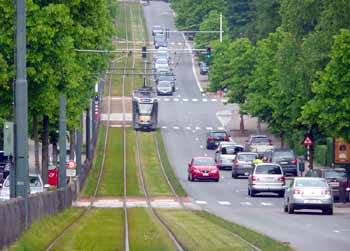
A former 4 lane arterial road with two lanes replaced with aAi??Ai??lawned tram line.
Ai??Ai??Even smaller cities and towns would benefit from Lawned, park-like LRT or interurban lines. Imagine the rail lined bisecting Abbotsford, being lawned or an interurban line in Langley or Chilliwack being a grassed and landscaped linear park.

A lawned median in the downtown; could be Broadway!
Tech stuff for the Valley Inturban A?ai??i??ai??? The Indusi Signaling System A?ai??i??ai??? how it works (Part 4)
Speed Supervision (GeschwindigkeitsA?A?berwachung)
The Indusi can also be employed to enforce speed restrictions, although it was not originally designed for this matter.
The principle of operation is this: A device detects the approach of the train and activates a track magnet (say, a 2000Ai??Ai??Hz magnet). A timer is set, and after a fixed time the magnet becomes inactive again. If the train runs at or below the permitted speed, it will reach the 2000Ai??Ai??Hz magnet after it has been deactivated, so no action is induced. If however the train would be too fast, it would reach the magnet while still active, and so the train will do an emergency braking. This is called GeschwindigkeitsA?A?berwachung (Speed Supervision) or GA?Ai?? for short.
Another way of enforcing speed limits is by using a track magnet which is always active by itself (a 1000Ai??Ai??Hz magnet would limit the speed to 85Ai??Ai??km/h, a subsequent 500Ai??Ai??Hz magnet would limit the speed to 45Ai??Ai??km/h).
Depending on the situation, either of the magnets can be used.
Speed Check Equipment (GeschwindigkeitsprA?A?feinrichtung)
The speed restriction determines the MeA?A?strecke (Measurement Length). At this length before the track magnet, the switch-on magnet is located. This magnet detects the passing of the locoA?ai??i??ai???s Indusi magnet and activates the track magnet. At DB lines, about three meters after the track magnet there is the switch-off magnet, which deactivates the equipment. At DR lines, the switch-off magnet is located at about seven meters before the switch-on magnet, so the equipment is always powered on but reset immediately prior to activation, so it is in a defined state, should the previous train have left it activated.
Suppose a speed limit of 80Ai??Ai??km/h is to be enforced. To provide for a certain tolerance, the speed is checked against a limit of 95Ai??Ai??km/h. At the announcement signal, there is a 1000Ai??Ai??Hz magnet. If the trainA?ai??i??ai???s speed is at or below 95Ai??Ai??km/h, the 1000Ai??Ai??Hz magnet is already turned off, so the train is not influenced. If the speed is above 95Ai??Ai??km/h, the Indusi is triggered. The driver has to acknowledge the warning light and subsequently must lower the speed to 95Ai??Ai??km/h (I am assuming the loco is equipped with DBA?ai??i??ai???s Indusi I60, set to train type “O”).
Since that Indusi (again, train type “O” assumed) enforces a maximal speed of 95Ai??Ai??km/h if triggered, it would be useless to enforcing speed limits of 100 km/h or higher. To that end, a 2000Ai??Ai??Hz magnet is placed at a given distance before the speed commencement signal or the point where the lower speed must be met. The distance is chosen such, that, should an emergency braking be triggered, the speed is below the limit when the train passes the speed commencement signal.
| limit | check speed | magnet type | magnet location |
| 80 | 95 | 1000 | announcement signal |
| 90 | 105 | 1000 | announcement signal |
| 100 | 120 | 2000 | 485 m before commencement signal |
| 110 | 130 | 2000 | 405 m before commencement signal |
| 120 | 135 | 2000 | 355 m before commencement signal |
| 130 | 140 | 2000 | 315 m before commencement signal |
| 140 | 150 | 2000 | 215 m before commencement signal |
So far, IA?ai??i??ai???ve talked about enforcing limits of 80Ai??Ai??km/h or higher. So what about limits between 10Ai??Ai??km/h and 70Ai??Ai??km/h? That can be done by:
Speed Check by Standalone Track Magnets (GA?Ai?? durch allein verlegte Gleismagnete)
In this case, standalone track magnets without additional equipment are used, i.e. the magnet used is active at all times.
At the speed announcement signal, a 1000Ai??Ai??Hz magnet is placed. The driver has to acknowledge the warning and must reduce the speed to 95, 75, or 60Ai??Ai??km/h depending on the train type.
With speed limits of 10Ai??Ai??km/h through 40Ai??Ai??km/h, at 150Ai??Ai??m before the speed commencement signal, a 500Ai??Ai??Hz magnet will be placed, enforcing a speed limit of 65, 50, or 40Ai??Ai??km/h.
Tech stuff for the Valley Inturban A?ai??i??ai??? The Indusi Signaling System A?ai??i??ai??? how it works (Part 3)
Ai??
How To Drive
Note: For this page I assume a passenger train of Zugart (train type) “O”. For other train types, the speeds, times and lengths differ. I assume no regular halt between the distant and main signal.
The status of the Indusi is indicated by an array of lights (see the Cab displays page).
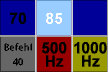
The 85 km/h indicator tells us that the Indusi is active and that the train type is set to “O”. Since no frequency indicator is lit, the Indusi currently does not monitor our speed.

On passing the 1000Ai??Ai??Hz magnet, we acknowledge the detection of that magnet within four seconds (“Indusi Wachsam” button, see picture). The steady yellow light comes on after we release the acknowledgement button, and reminds us that a 1000Ai??Ai??Hz-induced speed limit is active, and no release from the speed limit is possible at this time.
Now we have 23 seconds to reduce our speed to 85 km/h. The flashing blue “85” light reminds us to do so.
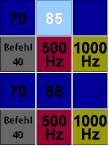
After 700Ai??Ai??m, the yellow light turns off, so we could release ourselves from the speed limit. Unless we do so, the speed limit is still active, as shown by the flashing “85”.
Since we assume that the main signal is still at halt and we don’t want to be fired, we further reduce speed. If the signal had changed to clear, we could release the speed limit.
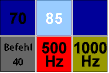
Next, the 500Ai??Ai??Hz magnet is detected. The speed must not exceed 65Ai??Ai??km/h at this point. Within the next 153Ai??Ai??m, we have to reduce our speed to 45Ai??Ai??km/h and must not exceed that until we reach the main signal, where we will come to a halt.
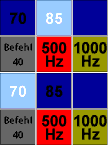
As soon as we halt, or travel with 10Ai??Ai??km/h or less for at least 15Ai??Ai??s, the 500Ai??Ai??Hz-induced speed limit is further restricted to 25Ai??Ai??km/h, which is indicated by the 70 and 85 lights alternately flashing.
We stop at the main signal.
The signal then changes to clear. Since the 500Ai??Ai??Hz-induced restrictive speed limit (i.e. 25Ai??Ai??km/h) is still active, we accelerate but not faster than this speed.
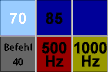
When we have travelled for 200Ai??Ai??m or 250Ai??Ai??m after the halt, the 500Ai??Ai??Hz restrictive speed limit ends, so the 500Ai??Ai??Hz light goes out. Since the 1000Ai??Ai??Hz-induced speed limit is still active until 1250Ai??Ai??m after the 1000Ai??Ai??Hz magnet (i.e. until about 250Ai??Ai??m after the main signal), and is restrictive because we had halted, we could not go faster than 45Ai??Ai??km/h, indicated by the alternately flashing blue light.
Since the main signal is clear, we can now release ourselves from the speed limit, which we do by pressing the “Indusi Frei” button.
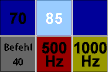
The Indusi will keep looking for a 500Ai??Ai??Hz magnet until 1250Ai??Ai??m after the 1000Ai??Ai??Hz magnet, then it will return to its normal state.
Signal Changes to Clear
If the signal changes to clear before we detect the 500Ai??Ai??Hz magnet, we can release ourselves from the speed limit (Indusi Frei) and accelerate to line speed. If we had wrongly released while the signal was still at red, the detection of the 500Ai??Ai??Hz magnet would have caused an emergency braking.
If the signal changes to clear after we have passed the 500Ai??Ai??Hz magnet, the 500Ai??Ai??Hz speed limit (45Ai??Ai??km/h) applies until 403Ai??Ai??m after that magnet, at which point we can release ourselves. (During the 500Ai??Ai??Hz speed control, no release is possible, but before or afterwards.)
A Halt between Distant and main signal
Suppose there is a regular halt between the distant and the main signal, before the 500Ai??Ai??Hz magnet. If the signal turns to clear, we depart and release ourselves from the (restrictive) speed limit (45Ai??Ai??km/h).
If the halt was after the 500Ai??Ai??Hz magnet, after departure we would have to obey the restrictive 500Ai??Ai??Hz-speed limit (25Ai??Ai??km/h) for 200 or 250Ai??Ai??m, then release ourselves from the (restrictive) 1000Ai??Ai??Hz-speed limit.
If you wonder why the speed limit is further restricted when the train halts, see the following example:
Suppose we have a station with a main track (upper track on the image) and a goods siding. A passenger train (shown in light green) enters the station on the main track and stops at its regular halt between the 500 Hz magnet and the exit signal. (The H board was omitted on the drawing).
While the train enters the station, the points on the main track are set to straight, and the points on the goods track are also set straight as flank protection. So after the exit signal we have a sufficient safety overlap should the passenger train overrun the exit signal.

Now, the points are set for the goods train to exit. Since the route for the passenger train has been reset, there is no overlap after main track’s exit signal. If in this situation the passenger train would start against the exit signal at danger, it might have gained sufficient speed at the exit signal that it could endanger the goods train. To avoid this danger, the speed limit for the halting train is lowered sufficiently.

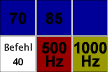
Now, suppose we come across a red or failed signal, and we got the permission to pass that signal (by the post plate, or by the signalman). How do we pass the 2000Ai??Ai??Hz magnet without rocking ourselves and the passengers?
Well, we press the “Indusi Befehl (40)” (Indusi Order [40Ai??Ai??km/h]) button. The “BefehlAi??Ai??40” light will go on, every magnet will be ignored, but we must not become faster than 40Ai??Ai??km/h, until we restore normal operation of the Indusi, which we must not do until we pass a main signal at clear.
Tech stuff for the Valley Inturban – The Indusi Signaling System A?ai??i??ai??? how it works (Part 2)
The Details
Here I will describe how the detection of the magnets influences the train. The details vary a little depending on which type of Indusi equipment is used, here I will cover the properties of the PZBAi??Ai??90 for Zugart (train type) “O” (Obere Klasse: Upper class, i.e. fast passenger trains)
If any test fails (i.e. driver does not react appropriately or speed is beyond the limit), an emergency braking occurs.

1000 Hz magnet
The 1000 Hz magnet is usually placed with the distant signal, i.e. some 1000Ai??Ai??m before the main signal and some 1200 m before the danger point protected by that main signal. That danger point could be e.g. a clear-of-points marker, a crossing etc.
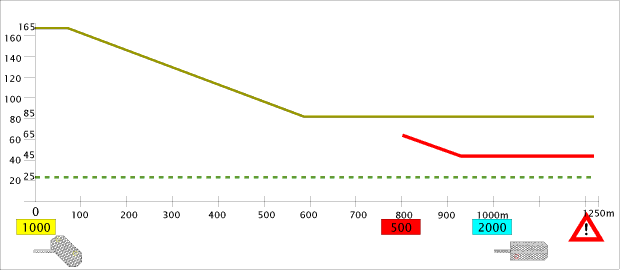
If the 1000Ai??Ai??Hz magnet is detected, the driver has four seconds to acknowledge by pressing the “Indusi Wachsam” (Indusi on alert) button. Then, the train’s speed is constantly compared against a limit, which starts at 165Ai??Ai??km/h and within the next 23 seconds is lowered to 85Ai??Ai??km/h (brown curve).
If the train does not stop (e.g. because of a halt or platform), and no 500Ai??Ai??Hz magnet is detected, the limit is maintained at 85Ai??Ai??km/h until 1250Ai??Ai??m after the 1000Ai??Ai??Hz magnet. At 700Ai??Ai??m after the 1000Ai??Ai??Hz magnet, the driver can press the “Indusi frei” (Indusi release) button to end the speed restriction, e.g. if he can see that the signal in advance has changed to clear. This is called “to release oneself from the (1000Ai??Ai??Hz) speed control”.
However, if the driver has released himself from the 1000Ai??Ai??Hz speed restriction, and then a 500Ai??Ai??Hz magnet is detected within 1250Ai??Ai??m after the 1000Ai??Ai??Hz magnet, indicating that the signal is still at stop, the driver probably has wrongly released himself from the speed control and gets – an emergency braking, what else?
500 Hz magnet
The 500Ai??Ai??Hz magnet is placed at some 150 to 250 m before the main signal, or about 450Ai??Ai??m before the danger point.
If a 500 Hz magnet is detected, a speed limit of 65Ai??Ai??km/h is applied and lowered to 45Ai??Ai??km/h within the next 153Ai??Ai??m, then stays at 45Ai??Ai??km/h for the next 250Ai??Ai??m (red curve). Release from that limit is not possible.
Note that if the restriction to 45Ai??Ai??km/h has ended 403Ai??Ai??m (153Ai??Ai??m+250Ai??Ai??m) after the 500Ai??Ai??Hz magnet, the restriction to 85Ai??Ai??km/h imposed by the 1000Ai??Ai??Hz magnet may still be active.
2000 Hz magnet
The 2000Ai??Ai??Hz magnet is placed with the main signal, or at some 200Ai??Ai??m (down to 50Ai??Ai??m or up to 400Ai??Ai??m in special cases) before the danger point.
A detection of a 2000Ai??Ai??Hz magnet always causes an emergency braking. If our driver made it until here (without emergency braking), his speed is at maximum 45Ai??Ai??km/h, so the braking should get him to stop before the danger point, even if he chooses to pass the red signal, so even a SPAD1 shouldn’t cause an accident.
| 1) | SPAD:Ai??Ai??Signal Passed At Danger. British Railtrack even invented a SPAD indicator signal(!), which is a signal telling you that you have just run a red signal (and must stop now) (NB: What then is a British stop aspect for…), and they otherwise love counting SPADs. For current statistics see Her Majesty’s Railway Inspectorate web site) |
Intermediate halt
If the train halts, or travels for at least 15 seconds at less than 10Ai??Ai??km/h, while either of the 1000Ai??Ai??Hz or 500Ai??Ai??Hz speed control is still active, the applicable speed limit is lowered by 20Ai??Ai??km/h, we say it becomes restrictive. A restrictive 500Ai??Ai??Hz-induced speed limit is maintained for the next 200Ai??Ai??m, if the restriction is activated until 100Ai??Ai??m after the 500Ai??Ai??Hz magnet, for the next 250Ai??Ai??m otherwise. This is to ensure that a train which has halted before the main signal, e.g. at a platform stop, can only accelerate to a speed that still permits the train to stop short of the danger point, should it detect the 2000Ai??Ai??Hz magnet, i.e. it had run the red signal.
Tech stuff for the Valley Inturban – The Indusi Signaling System – how it works (Part 1)
The following article is on the “Indusi” signaling system used by Passenger Trains and Freight Trains on lines shared with Karlsruhe’s famous two system or zweisystem TramTrains. With nearly 20 years of accident free service, the Indusi signaling system may be the ticket for safe track sharing on the Valley interurban.
Signaling is an important topic, which is largely ignored by transit advocates and Rail for the Valley believes that a primer on signaling is in order. It is exceedingly important for advocates for the reinstatement of the Vancouver to Chilliwack interurban to understand the basics of railway signaling, in the past, the present and the future.
- Part 1:
- Ai??Ai??Ai??Ai??Ai??Ai??Basics
- Ai??Ai??Ai??Ai??Ai??Ai??Theory of operation
- Ai??Ai??Ai??Ai?? Track side Equipment
- Part 2: The Details
- Part 3: How to Drive
- Part 4: Speed Limits and Indusi
Basics
“Indusi” is an acronym derived from “Induktive Signalsicherung”, or Inductive Signal Protection. The official term is PZB, for PunktfA?Ai??rmige Zugbeeinflussung, “spot-wise train control”, as opposed to Linienzugbeeinflussung (LZB), linear train control.
The Indusi was introduced in 1934, most signals still were wire-operated semaphores, so the trackside magnets do not need power supply. The idea is to prevent running a red signal under almost any circumstance.
The communication takes place by magnets that are mounted to the right of the right rail. A similar magnet is mounted to the locomotive. The locomotive’s magnet continuously emits magnetic fields with frequencies of 500, 1000 and 2000Ai??Ai??Hz, respectively.
The trackside magnet contains a passive resonance circuit which is tuned to one of these frequencies and may either be switched on (active) or off (inactive).

If the switch is closed, the resonance circuit is shorted, so it cannot resonate and hence the magnet is inactive. If the switch is open, and the magnet is passed by the locomotive’s magnet, it will begin resonating at its proper frequency, thereby extracting energy from the locomotive’s magnet and reducing the voltage in the respective resonance circuit of the loco’s magnet by some 80-90%.
Since the trackside magnet gets its energy from the loco’s magnet by induction, the system in principle does not need a trackside power supply and thus works perfectly even with wire-operated semaphore signals. In case that the switch is operated by a solenoid (i.e. it is an electro-magnetic relay) connected e.g. to a colour light signal, a power failure will leave the switch open, so the magnet will be active.
Theory of Operation
The theory of operation is (theoretically) quite simple (If it would practically be simple, it wouldn’t be German…)
If the signals show clear (with line speed), the magnets are inactive and thus have no influence on the train. If a signal shows stop, then all magnets are active.

At the distant signal, there is a 1000 Hz magnet. If that is detected, the driver must acknowledge that he has understood the distant signal by pressing an attention button within 4 seconds, or the brakes will be applied. Subsequently he must reduce the train’s speed to a certain level within a certain distance, see also details below.
If that speed limit is exceeded, the brakes will be applied.
Next comes a 500 Hz magnet, where the speed is checked again against an even lower limit. All this is to ensure that, even if the driver acknowledges the distant at caution but does not brake sufficiently or does not brake at all, the main signal is not passed at danger.
At the main signal there is a 2000 Hz magnet. This magnet will always cause an emergency braking when detected active by the loco, and so the train will come to a full stop whithin the safety overlap after the main signal. (There is always a short distance between the main signal and a danger point, which may be e.g. a point, a crossing or a buffer.)
Track side Equipment
A 1000 Hz magnet is placed with a semaphore or colour light distant signal, with an Hl or combination (Ks) signal which functions as distant or combined signal, with a level crossing signal, and with a stand-alone distant signal post plate if that announces a colour light signal for Falschfahrbetrieb (wrong line operation).
Note that in the remainder of the Indusi pages I will refer to Hl and Ks signals serving as distant signals as ‘distant signals’.
A 500 Hz magnet is placed between the distant and the main signal, usually at some 250Ai??Ai??m before the main signal or 450Ai??Ai??m before the danger point, and
a 2000 Hz magnet is placed at the main signal.
| The 1000 Hz magnet is active when: | |
| Ai??Ai??Ai??Ai?? | The distant signal shows VrAi??Ai??0 or KsAi??Ai??2: expect stop |
| Ai??Ai??Ai??Ai?? | The distant signal shows VrAi??Ai??2 or KsAi??Ai??1+ZsAi??Ai??3v with a speed of up to 60Ai??Ai??km/h |
| Ai??Ai??Ai??Ai?? | The level crossing signal shows BA?A?Ai??Ai??0: stop before level crossing |
| Ai??Ai??Ai??Ai?? | Always at a stand-alone distant signal post plate |
A 2007 Presentation on Valley Rail – by the Light Rail Committee
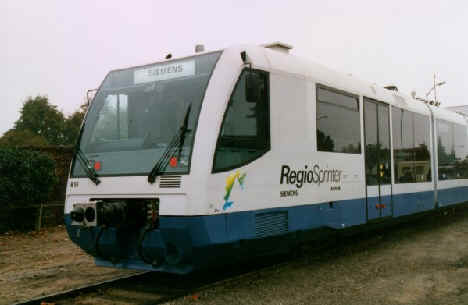
First, before any discussion about rail transit, including Light Rail Transit, we must define LRT and other transit modes. The following is a brief descriptions of various transit modes advocated as solutions for transit in the region.
Commuter rail:
Locomotive hauled rail coaches or diesel or electric multiple unit trains, catering specifically to peak hour transit demands.
Passenger rail:
Any regularly scheduled passenger rail service.
Ai??Ai??Light Rail Transit:
Ai??Ai??A rail mode, that economically bridges the gap between what passenger loads that can be economically carried by bus and that of a metro, between 2,000 and 20,000 persons per hour per direction. Comes from the English term light railway or a railway light in costs. LRT is able to operate in mixed traffic on city streets, its own reserved rights-of-way, or on mainline railways. LRT can be built as a simple streetcar or as a light metro, and can combine any and all of the previous examples on one route.
The metro family, including light metro:
Ai??Ai??A rail mode that operates on segregated rights-of-ways, due to longer rakes of passenger vehicles operating at close headways. Metros generally operate on elevated guideways or in subways and has more intensive signaling, sometimes including driverless operation. Metros are built to cater to large passenger volumes, in excess of 300,000 or more passengers per route (line) per direction per day.
The problem:
The population of the Fraser Valley is growing at an unprecedented rate, roads and highways are congested and pollution in the upper regions of the valley is increasing rapidly. The provincial government in 1980, forced the proprietary SkyTrain light metro system upon the GVRD instead of previously planned for light rail. For the cost of LRT going from downtown Vancouver to Lougheed Mall, Whalley, and Richmond Centre, the region got SkyTrain from downtown Vancouver to New Westminster. Some $5 billion later we have SkyTrain to Whalley and the Millennium line, the only metro in the world that goes nowhere to nowhere. The annual subsidy for SkyTrain is now over $200 million annually and has given rise to the myth that “we do not have the density for rapid transit“. We have plenty of density for LRT, we never did have the density for metro.
Ai??Ai??The provincial government has again forced another, now $2.5+ billion, metro system onto TransLink, on a route without sufficient density to provide the ridership neededAi??Ai??to justify its construction costs, which in turn will further increase the annual subsidy for metro in the GVRD.
Ai??Ai??TransLink, with absolutely no experience with modern LRT is planned forAi??Ai??a hybrid light metro/rail line costing well over $100 million per km to build, later fiddled………..
http://railforthevalley.wordpress.com/2008/12/26/can-translinks-business-cases-be-trusted/
……….. a business plan to support SkyTrain light-metro; again on a route that doesn’t have the sufficient ridership to justify the line and again will further increase the annual subsidy for the GVRD’s grand railway projects.
Ai??Ai??Because of the huge cost for TransLink’s rail transit, the provincial government claims that there isn’t the density for rapid transit in the Fraser Valley and has embarked on a $4.5 billion “Gateway” highways and bridge program. Problem is new highways and bridges only attract more traffic and soon highways become congested – again!
A Note on Density:
Many people, including TransLink confuse density with ridership. Density is the number of people living per square km. in a region and ridership is the number of people using transit. People only will use public transit if the public transit services their travel needs and if transit doesn’t serve where “I” want to go, “I” will not use it.
Ai??Ai??What TransLink and the GVRD are trying to do is increase density near a SkyTrain routes and hope that the sheer numbers brought by higher density will provide the ridership for their metro. Sadly what has happened is that yes, more people are using SkyTrain, but even more people are using the car! One can densify all one wants but if public transit doesn’t serve the needs of the population, people will not use it.
Ai??Ai??Many smaller European cities operate extensive light rail networks and carry large volumes of customers because the public transit services where people want to go. The key is build moreAi??Ai?? rail transit, serving more destinations, but built it cheaply!
The Karlsruhe Solution:Karlsruhe, Germany, with a regional population on par with the Fraser Valley has become famous in the urban-transportation field for its pioneering dual-system Stadtbahn “tram-trains” that run both on city streetcar tracks and on railroad lines shared with normal passenger and freight trains, in what is now known as the Karlsruhe Model.Ai??
The first step in this development came with the extension of the previously-existing Albtalbahn, an electric suburban light-rail line that runs southward from Karlsruhe to Bad Herrenalb and Ittersbach. In 1979, it was extended through the center of Karlsruhe on city streetcar tracks, then northward to Neureut, where it shares tracks with freight trains on a lightly-used branch of Deutsche Bahn (DB). Further track-sharing allowed the line to be extended to Hochstetten in 1989. This DB branch uses diesel power, so the shared sections were electrified with 750V DC to accommodate the light-rail (Stadtbahn) trains.
The success of this project stimulated interest in converting some of the DB’s regional passenger services to Stadtbahn lines and running them into the city on streetcar tracks also. This would have significant advantages for passengers:
They would no longer have to transfer between trains and streetcars at the main railroad station (Hauptbahnhof) or other stations on the fringes of the city, such as at Durlach.
Because light-rail trains can accelerate more quickly than conventional trains, running time could be reduced. Alternatively, more stops could be made, so that fewer passengers would have to drive or take connecting buses to reach the outer stations.
The first dual-system Stadtbahn service began operation in 1992, between Karlsruhe and Bretten, on what is now part of route S4. It was a huge success, with ridership increasing a whopping 475% in a few weeks. New routes and extensions have followed . The total length of the AVG’s routes is now about 470 km (291 miles), making it one of the largest passenger rail operators in Germany after DB. The “tram-train” longest run is now a 210km (130 miles) service from A?ai??i??hringen through central Karlsruhe! So successful is the Karlsruhe “tram-train” or interurban, the DB now operates with trams in the region!
Kevin Falcon’s TransLink Mk. 2 will continue to plan for hugely expensive subways in Vancouver and just leave transit crumbs for the rest. Vancouver now has nearing completion, a $2.5+ billion subway on two transit routes (98-B and Cambie St.) that could muster less than 40,000 customers a day. Now the City of Vancouver wants a multi-billion dollar subway under Broadway and what Vancouver wants, Vancouver gets! To fund Vancouver’s next subway, TransLink needs the tax base of the Fraser Valley to Hope and as far as Squamish.
There are affordable rail options for the Fraser Valley and it’s time for Valley politicians convey the message to Victoria and Ottawa that we do have the density for light rail; we can afford light rail; we want light rail; and no, no more hugely expensive metro’s and subways for Vancouver and its neighbours!

Chilliwack station
What is the Cost of Building a Subway Line? Are Vancouver’s subway plans realistic?
Ai??Ai??
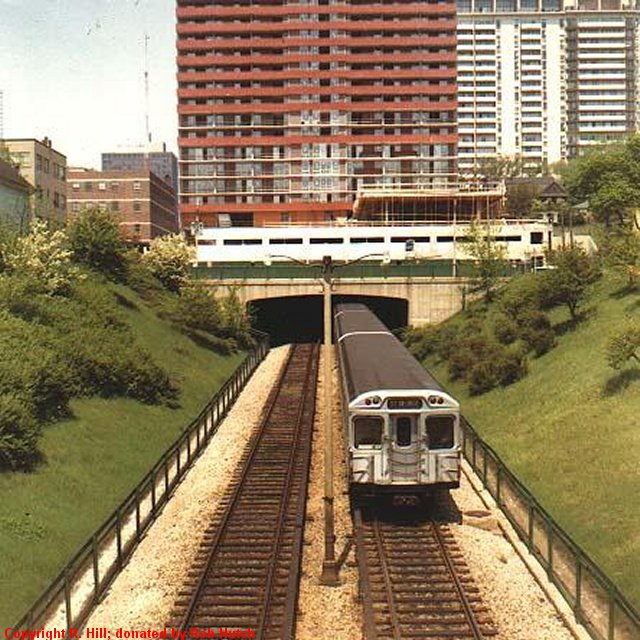
I found this item on the excellent ‘ The Toronto LRT Information Page’ http://lrt.daxack.ca/Ai??Ai??
What is the Cost of Building a Subway Line?
Underground: $200 million to $250 million per kilometre
At grade: $150 million to $200 million per kilometre…plus the cost of vehicles.
Since Toronto has recent examples of constructed and proposed Subway construction, it is easy to find reasonably recent figures. Despite this, the estimates stated above are LOWER than the estimated costs outlined here. Only the construction of the Sheppard line, taking inflation into mind, falls within the range above at $172 million per kilometre.
Spadina-York Extension: $266.5 million per kilometre, vehicles and yard improvements excluded
The extension from Downsview station to a station in the Vaughan Corporate Centre (VCC) in the Highway 7 and Jane Street area is budgeted at approximately $2.5 billion. As this extension is 8.6 km, that makes the cost per kilometre about $291 million.
This figure includes the purchase of 36 subway cars and improvements to Wilson Yard. The amount for these were $108 million and $85 million respectively in 2005 dollars according to the Environmental Assessment on the extension to Steeles. This comes to $207.8 million in 2008 dollars. Removing this from the $2.5 billion project budget leaves $2.2922 billion, or a per kilometre cost of $266.5 million.
Acknowledgements: special thanks to Karl Junkin for pointing out previous errors in this breakdown.
Sheppard Subway: $172.5 million per kilometre, no vehicles – stations limited to four cars
This line opened on November 24, 2004 at a cost of just under $1 billion to construct. Factoring in inflation, this is about $1.1 billion in 2008 dollars.
It involved four new stations, some utility relocation for a fifth station, new connecting tracks with the Yonge line, and the construction of the interchange station at Yonge above the existing station on the Yonge line. The line is 5.5 km in length, but involves new track length that is effectively 6.4 km.
Using that full length, today’s cost per kilometre is $172.5 million. No new vehicles were part of this cost, and there was no need for any new storage facilities. Even at this cost, cuts were made that result in only completing a portion of the stations to serve four-car trains that carry about 43,000 passengers per day (the Scarborough RT carries about 42,390 passengers per day).
Sheppard Extension Proposal: $247.5 million per kilometre
In March of 2003, the TTC issued a report that outlined the costs of extending the Sheppard line from Don Mills to Scarborough Town Centre. This extension would have added 7 stations over a distance of 8 km for an estimated cost of $1.75 billion, or about $218.75 per kilometre. Factoring in inflation, this is about $247.5 million per kilometre for the whole line.
This extension would have opened in three stages:
- Don Mills to Victoria Park: 2 km with two stations for $470 million ($265.9 million / km in 2008 dollars)
- Victoria Park to Agincourt (GO Station): 3.7 km with three stations for $730 million ($223.2 million / km in 2008 dollars)
- Agincourt to STC: 2.3 km with two stations for $550 million ($270.6 million / km in 2008 dollars)
It was not stated in the report if any of these costs included the purchase of new vehicles, so it likely does not.
Bloor West Extension Proposal: $270 million per kilometre
One other proposal from a few years ago was to extend the Bloor-Danforth Subway line beyond Kipling. This was to involve a 3.7 km extension to the Queensway/West Mall area for a cost of about $1 billion. This translates to $270 million per kilometre.
A further extension of 1.5 km from there to Dixie in Mississauga would have cost another $500 million, for another $333 million per kilometre!
All of these extensions would have been at grade, making them extremely expensive. As the date of this proposal was not confirmed, no inflationary adjustment has been made to these figures.
Ai??Ai??
Portland, Oregon: New streetcar line finally gets federal funding
Light Rail Now! NewsLog
17 June 2009
Portland, Oregon: New streetcar line finally gets federal funding
Portland, Oregon:
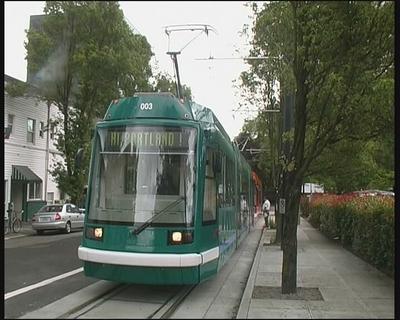
Ai??Ai??After years of federal stalling by the previous Bush administration, Portland’s new streetcar line has finally received a go- ahead to proceed … from the Obama administration. On 30 April 2009, US Transportation Secretary Ray LaHood announced $75 million in federal funds for the Portland Streetcar Loop Project (formerly called the Eastside Extension), approved as part of the recent federal appropriations bill.
Not only does this represent a significant unclogging of Portland’s streetcar funding logjam, but also this is the first streetcar project in the USA to receive substantial federal funding.
The streetcar system is owned and operated by the City of Portland, in partnership with the Tri- County Metropolitan Transportation District (TriMet), which operates and maintains the streetcars and contributes a portion of operating funds. The City of Portland contracts with Portland Streetcar, Inc., a non-profit corporation, to manage the development, construction and operation of the streetcar system.
Portland’s Loop Project is a 3.3-mile (5.3-km) double-track extension of the streetcar east from downtown Portland over the city’s Broadway Bridge and south along Martin Luther King, Jr. Boulevard to the Oregon Museum of Science and Industry, and then back up the way it came on a parallel street, Grand. The new line will serve project 28 additional streetcar stations.
The ultimate goal is to complete the loop by crossing back downtown over a new Willamette River bridge proposed as part of the Portland-Milwaukie Light Rail Project.
For a detailed map, see:
http://www.oregonmetro.gov/files/planning/011707_loop_lpa_map-web.pdf
The total cost of the project, including the vehicles, is estimated at $147 million a total of about $44.5 million per mile ($27.7 million/km). Per a report in The Oregonian of April 30th, construction of infrastructure (i.e., less rolling stock and other items) is estimated at about $77 million and infrastructure construction cost of about $27.3 million/mile ($14.5
million/km).
According to another April 30th report in the Portland Business Journal, most of the federal funding about $45 million comes from the Federal Transit Administration’s (FTA’s) Small Starts program, generally aimed at assisting smaller-scale urban transit projects. Small Starts, combined with a similar New Starts program aimed at larger-scale transit projects, received $750 million from the American Recovery & Reinvestment Act, more widely known as the federal stimulus bill. This award speeds up allocation of the money under the Small Starts program but does not add new funds.
Ai??Ai??
Ai??Ai??
Cranleigh Railway Line: All stop Bramley Station!
Rail for the Valley is not alone in trying to reinstate little used, abandoned, disused or mothballed rail lines for passenger use. The following web site for the Cranleigh reopening project…….
http://www.cranleighrailway.info/reopen.htm
……in the U.K. is well worth a visit.Ai??Ai??One useful idea whichAi??Ai??could be copied,Ai??Ai??is aAi??Ai??a ‘model’ Valley Interurban station, locatedAi??Ai??in Chilliwack, Abbotsford or Langley as whatAi??Ai??has beingAi??Ai??done for the Cranleigh line project in Bramley. There is also otherAi??Ai??interesting Ai??Ai??ideas available on the Cranleigh web site that could be of value to bolster our efforts here.

- Bramley Station site 1980’s

Bramley station 1990's
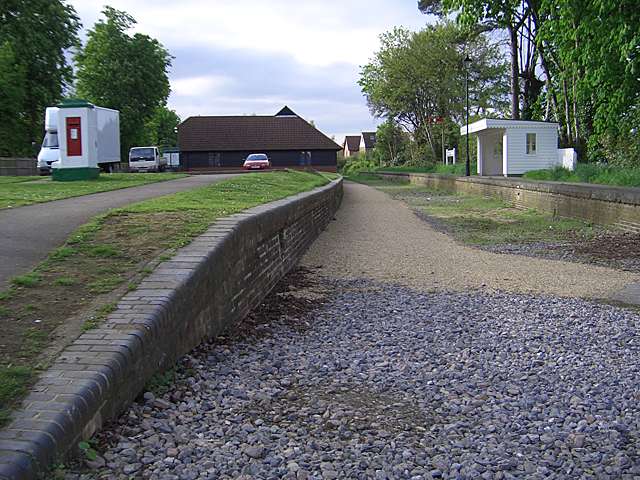
Bramley Station today
Photos Ai??Ai?? Craneligh Railway.info
Michigan: Hearings on Hydrogen-Solar-Maglev Supertrain

Ai??Ai??
Got lots of federal recovery money to spend on ecconomic stimulusAi??Ai??transportation projects? Then, let’s spend it on questionable studies and silly projects instead of real transitAi??Ai??solutions that will solve real transportation problems. Even though this article comes from the USA, Canadian politicians are no different and when there is free money around it’s seldom, if ever spent where it is truly needed.
The claim that a grade separated railway can be had for $12 million/km is just nonsense as the last quote for SkyTrain is over $100 million/km. for elevated guide-way! Yet politicians eat this stuff up and squander millions of dollars on questionable transit studies. It’s just like TransLink and the provincial Liberals.
Ai??Ai??Gadgetbahnen seem to attract support from ditzy politicians, sorta like flies are attracted to dung.
The Transport Politic
15 June 2009
Hearings Today on Hydrogen-Solar-Maglev Supertrain for Michigan
States legislature, foolish as ever, contends that the plan is worth consideration.
Back in March, the State of Michigan announced that it would hold hearings on a proposal for a new mass transit system to run between Detroit and Lansing. The Interstate Traveler Company promises to build a 200 mph maglev train, running on hydrogen and solar power, along the right-of-way of several highways. The project would be financed completely through private means. Today, the first of those hearings will be held in the state legislature.
The Interstate Traveler Company has done little more than provide a series of graphics to support its claim that it knows how to create a true high-speed rail system. Its founder, Justin Sutton, has no experience with the rail industry, but heAi??ai??i??s won a prize from the American Computer Science Association. That organization is currently promoting the idea that
Bill and Hillary Clinton are supporting terrorism and which refers to the President as Mr. OAi??ai??i??Bamma. Nonetheless, Tim Hoeffner, administrator of high-speed rail for the Michigan DOT, thinks Mr. Suttons project is worth examining.Yet there is little evidence thus far presented that demonstrates how this project could be built at the advertised minimal cost of $15 million a mile or that several miles of track could be built each day, as the website claims. The projects reliance on solar power for energy production is similarly difficult to believe in a place as overcast as Michigan. The vehicles design is questionable at best. The companys proposals for a horse transporter and moving surgery center are strange.
Michigan has a good chance of receiving funds for a new traditional high-speed rail line between Detroit and Chicago; the federal governments $13 billion commitment to fast trains could spark renewal in many of that states declining cities. But the Interstate Traveler Company is not the place to start. How soon will the states legislators figure that out?
Just in. The following is a comment from the Light Rail now folks.
I think this is proposed to be an elevated
monorail-like system, and the highway medians
would just hold the support piers. That sounds
like a lot of grade-separations (overpasses)
would need to be rebuilt, or the system would
need some mighty high flyovers at the overpasses.
And all that, plus stations, plus solar power
facilities and hydrogen refineries for $15
million/mile (12 mn/km)?? Some fairy dust involved here…
My bet is that the proprietor has spread some
campaign contributions around, and is hoping for
one of those interminable “research” grants that
are so familiar with Gadgetbahnen in the USA…



Recent Comments