Now fifteen years old, the Leewood Study, done by Leewood Projects (UK), to assess the viability of reinstating a passenger rail service from downtown Vancouver to Chilliwack via the former BC Electric R.R. route, is worth a revisit.
The Leewood Study brought a fresh set of ideas to the planning table, something the establishment did not like, because the establishment planned for failure. Just recently, Zwei was informed why the government would not consider reestablishing a 130 km Marpole to Chilliwack regional railway, connecting Marpole to Chilliwack via the former BC Electric interurban route, was because it would attract more new customers than the current $7 billion, 16 km Expo line extension to Langley. The Rail for the Valley/Leewood Plan would service a minimum of 10 major destinations, unlike the light-metro extension.
The major destinations served along the $2 billion, 130 km route would include:
Marpole – Vancouver terminus and 20 minute transfer to YVR.
New Westminster.
North Delta at Scott Road
Central Surrey
Cloverdale – Front door servcie to KPU campus and the new hospital.
Langley – 10 minute walk to KPU campus.
Front door service to Trinity Western University and 15 minute commute to historic Fort Langley.
Gloucester Business Estate.
Abbotsford – 2 stops and 20 minute commute to YXX.
Yarrow/Sardis – 20 minute commute to Cultus Lake
Chilliwack
The Leewood Study brought the word TramTrain into the local lexicon, but the genius of TramTrain has been lost on politicians and bureaucrats who still want to plan for ruinously expensive, photo-op friendly light metro in Metro Vancouver.
A modern European diesel TramTrain in operation on a country branch line
This brings us to this weeks release of the Vancouver Island Corridor Study, which gave a sobering cost of renewing the railway, but woefully deficient on providing a sound basis for any sort of passenger rail.
Time wasted on “commuter rail” is almost laughable if it were not so sad as commuter rail is only viable in major conurbations.
To be successful, a new and fresh look must be taken at proven methods of offering an affordable passenger rail service, as the establishment does not want any sort of rail transit, preferring buses and new highways.
The Vancouver Island Corridor Study is a voluminous tome that lacks a coherent objective.
The study pinpoints the costs of rehabbing the line, but a 50% contingency, points to the fact those doing the study did not do a lot of homework.
The failing of the study lies in the fact it is using 19th century passenger rail solutions to solve 21st century problems.
It won’t work.
Creative thinking was desperately needed, but was absent, as the those doing the study reverted to old methods, tarted up as new.
TramTrain is a solution ready made for the E&N, yet not even a hint of this modern evolution of the interurban, which saw service in Victoria, years ago. Interurban Road in North Victoria/Saanich is a reminder of trams long past.
A tram-train is a light-rail public transport system where trams run through from an urban tramway network to main-line railway lines which are shared with conventional trains. This combines the tram’s flexibility and accessibility with a train’s greater speed, and bridges the distance between main railway stations and a city centre.
Direct (no transfer) service has dramatically proven to attract ridership.
The ability of TramTrain to bring customers direct to the city centre has been a proven winner where used. The bonus is that TramTrain has proven to attract the all important motorist from the car.
New Jersey’s River line’s TramTrain operation using diesel light rail cars.
A TramTrain service linking downtown Victoria to Langford, through the extremely congested Malahat, to Duncan, Chemainus, Ladysmith and Nanaimo, with on street running in Nanaimo (possibly to Departure Bay) would be a winner.
Future operation would extend to Courtney and Port Alberni!
Using TramTrain would leave plenty of pathways for freight and tourist services.
It would be best that BC’s Ministry of Transport, dust off the Leewood Study and reread it as it gives affordable answers that their overly complicated, yet extremely dated study does not.
While local politicians squabble about expensive transit planning and gouging the taxpayer to pay for multi billion dollar transportation vanity projects, economic and user friendly TramTrain construction and operation continue to increase.
A Langley to Marpole trip in 50 minutes train service with three trains per hour per direction could be in operation by the start of 2028!
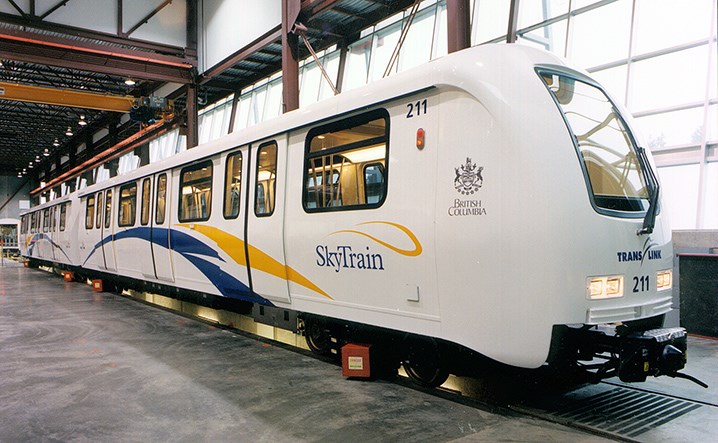
TransLink’s and the Province’s much ballyhooed Expo Line extension to Surrey really doesn’t offer the transit customer very much, except for a 60 minute ride (if their are no glitches) on a dinky and crowed SkyTrain car to Vancouver.
The Rail for the Valley TramTrain concept could do the trip from Langley (200th Street) to Marpole in 50 minutes, including stops in Cloverdale, Central Surrey, and Scott Road on the West side of the Fraser River and the 10 mph speed restriction on the Fraser River rail bridge. The Leewood/Rail for the Valley Study time matrix shows that a 23 km. journey from 200th Street in Langley to Scott Road Station, including four stops, would take 22.5 minutes and an estimation of the 22km. trip from Scott Road to Marpole would take 25 minutes – 50 minutes total; a few minutes faster for a much cheaper cost. The cost, in 2025 , $2 billion for a full Marpole to Chilliwack service, certainly looks more affordable than the $7 billion (including OMC #5) 16 km Expo Line expansion to Langley especially if one can get to Vancouver faster and in more comfort.
We are now living in uncertain times, with uncertain funding for transportation projects. To mitigate the endemic congestion and gridlock in the Fraser Valley, a Marpole to Chilliwack train service could provide relief to our over crowded roads as well serving over ten major transit destinations. Using TramTrain, would be a “cherry on top” for a modern regional rail service; a 21st centruy solution for the 21st century.
The Stadler GTW light rail car could use city streets and operate as LRT if need be.
The NDP’s master of the screw-up with the Surrey police fiasco and now the minister responsible for SkyTrain, Mike Farnsworth took to the corporate media selling porkies about the Broadway subway.
Farsworth is sticking to the creative accounting by TransLink and the NDP government, that the cost for the 5.7 km subway project will still be under $3 billion.
Really?
Recent cost estimates by independent experts put the cost of the project at around $3.5 billion. Ian fisher, one of TransLink’s top bureaucrats, in a item in Modern Tramways, put the cost at $3 billion.
Farnsworth is also playing games with the capacity of the subway as he gave the percentage increase of the Millennium Line only and not hard numbers.
According to Thales 2022 news release the Millennium Line (Broadway subway) will only have a maximum capacity of 7,500 a 96% increase in capacity.
This means that the Millennium Line’s present maximum capacity is a mere 3,000 pphpd!
This raises serious questions about the Evergreen Line’s Business Case, which analysis assumed a capacity of 4,080 for LRT, on the Evergreen Line which it states is not enough, and compares it to SkyTrain capacity of 10400!
What is startling is that LRT can handle traffic flows as high as 20,000 pphpd, yet the Evergreen Line (later merged with the Millennium Line) had a capacity of a mere 3,000 pphpd – 7,400 less than what the Business Case assumed.
I wonder if a criminal investigation is needed!
I wonder if any current SkyTrain business Case can be trusted?
When the programme is fully implemented, the Expo Line will be able to accommodate 17,500 passengers per hour per direction, and the Millennium Line will be able to handle 7500 passengers per hour per direction, a 32% and 96% increase respectively.
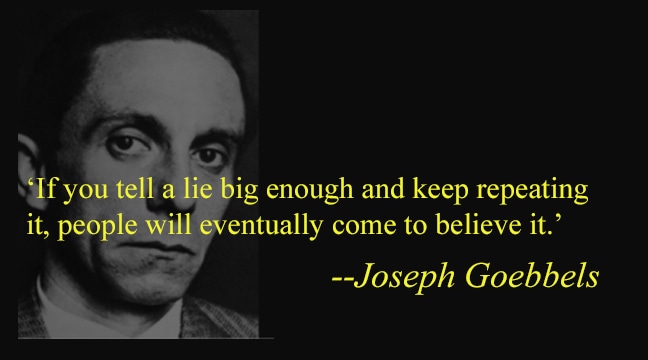
It seems to me that the NDP government in doing a preemptive media strike against bad news, because we all know; “that telling a big SkyTrain lie and keep repeating it, the public will tend to believe it“.
Zwei has studied “Road Pricing” and “Congestion Charging” for over 20 years and………………
the very first rule for a successful road pricing scheme is that the region have a user friendly and affordable public transit alternative.
With TransLink we don’t…….. not even close and TransLink is so incompetent at what it does, will insure the public’s wholesale rejection of the scheme, the politicians who supported it, and even the political parties that endorse it.
You do not need a committee to look at “Road pricing” , it’s not going to work….oh sorry; for many, it is the last slurp at the “pork barrel” for a while.
Remember the 2001 NDP rump, with 2 seats in opposition after their switch from LRT to SkyTrain for the Broadway Lougheed R/T Project?
Remember (King) George Puil former head of TransLink and the fiscal damage he did?
Remember the 2015 plebiscite? Yes, TransLink and the NDP would like you to forget that one!
Remember Fassbender (locally called ‘Factbender‘), the Minister responsible for TransLink and his incompetence?
The 2015 plebiscite had it right, the public do not like TransLink, its planning, its operation, nor the people who work there and TransLink and the regional mayors has done nothing to improve this, but to punish the taxpayer and transit customer with more incompetence.
Note from Zweisystem May 2025. Road pricing is strictly to pay for TransLink’s very bad planning and continued lack of candor. The TransLink is spending the now $4 billion plus Broadway subway to Arbutus; $1.65 billion for the Patullo Bridge replacement the of the $7 billion to extend the Expo line to Langley, just to mention a few bloated projects.
As the title says, the Road Pricing Commission is a complete farce, terminate it and build transit within our means.
TransLink is spending $2.31 million for a committee to explore spending hundreds of millions of dollars to tax motorists who drive in downtown Vancouver and cross the region’s bridges.
So-called mobility pricing is how the Mayors Council wants to fund the regional share of the 10-year plan for roads, bridges and the Broadway subway and Surrey light rail. The latter two mega-projects will cost more than $4.6 billion (Zwei updates: This cost for the Expo and Millennium Line extensions in 2025 is passing $16 billion!) combined, but the 2017 cost estimates are a tightly held TransLink secret, for fear of sparking sticker shock among taxpayers.
TransLink’s 2015 interim CEO Doug Allen (Mackin)
When interim CEO Doug Allen’s $35,000-a-month contract expired in August 2015, his exit report said TransLink should strike a committee and study the tax measure for two years, then take until 2025 to design and implement the measure. But this new committee is supposed to report and dissolve by the end of April 2018.
Almost three years ago, Allen warned that it would be a political minefield.
“Road usage charging can only be used to increase transit ridership [not fund roads and bridges] if it ever gets implemented in the first place,” Allen wrote in his advice to his successor. “Risks and challenges to implementation are numerous on both the technical and the public acceptability fronts several orders of magnitude more complex than the Compass Card project.”
The Compass Card faregates and smart card project took an extra three years and doubled in budget to $200 million by the time it was launched in 2016. The road tax would require installation of networked surveillance cameras and sensors throughout the city, like in Milan, San Diego, Singapore, Stockholm and London. It cost the British capital $831 million to start-up and operate its congestion pricing system over the first decade, in order to net $1.3 billion net revenue.
Will anyone on the 14-member committee travel to see how it works, first hand?
“At present there are no plans for the commission to travel outside of the region as part of their work,” said TransLink spokeswoman Jill Drews.
Note from Zweisystem: We forget that TransLink squanders the taxpayer’s monies freely because the provincial government is deathly afraid of this run-away bureaucracy. Nothing has changed in the past decade, as TransLink continues to squander taxpayer’s monies on obsolete or “pie in the sky” planning. TransLink should try to operate a user-friendly transit service and not waste money on rapid transit planning they can ill-afford.
“At present” could be the operative phrase. TransLink is notorious for junkets. Back in November 1999, chair George Puil led a 10-person, $70,000 delegation to London to explore the turnstiles on the tube. Puil’s travel buddies included: NDP MLA Jenny Kwan and her aide Ian McConnell, Millennium Line president Lecia Stewart, TransLink vice-president Sherri Plewes, ex-BC Transit boss Larry Miller, and transit consultant Jane Bird.
They enjoyed business class airfare and stayed in a $300 hotel room in the posh Mayfair district.
Mobility pricing committee chair Allan Seckel, who was Premier Gordon Campbell’s deputy minister during the 2010 Winter Olympics, and vice-chair Joy MacPhail, the former NDP leader, are being paid $2,500 and $1,666 respectively, per month. All members of the board including directors like ex-NPA Coun. Jennifer Clarke, ex-B.C. trucking industry lobbyist Paul Landry, and United Way CEO Michael McKnight will be paid a $550-per meeting stipend.
The board reads like a reunion of the Better Transit and Transportation Coalition, which lost the 2015 TransLink tax plebiscite: Greater Vancouver Board of Trade’s Iain Black, UNIFOR’s Gavin McGarrigle, Surrey Business Improvement Association’s Elizabeth Model and Counterpoint Communications Bruce Rozenhart. Rozenhart was in the backroom for Liberal incumbent John Yap’s re-election in Richmond-Steveston.
This was first posted in 2020 and five years later mobility pricing is back on the agenda.
Why?
Simple, TransLink is broke. The now $16 billion price tag, for the full program to extend the Expo and Millennium Lines a mere 21.7 km has hit a financial iceberg and is $3 to $4 billion short of funding.
The federal funding provided, just barely pays for the added operating costs of this 21.7 extension program. Operating costs are never factored in by our local brand of politician simply want to hide from inconvenient truths. In their simple minds; “SkyTrain is driverless, so it is cheap to operate and pays its own operating costs!“
Ya right and now the big fact check; SkyTrain is heavily subsidized and in 1992, the annual subsidy was over $157 million ($300 million in today’s coin) and with Three major expansions, this cost has easily surpassed $600 million and in fact the cost is so high that unlike BC Transit, TransLink refuses to release any concise subsidy numbers.
The Civic and Provincial politcans lack the moral fortitude (read: they are cowards) to curb TransLink’s spending on politically prestigious (read: extremely expensive) transportation projects that the public cannot afford. Just the completion of the Broadway subway to UBC is now pegged at $8 billion in 2025 dollars!
Instead of building affordable and just as effective transportation solutions, the unchecked TransLink bureaucracy just wants more and more taxes and feckless politicians cave in to the demands of career bureaucrats who know little about modern public transport but know a lot how to gold plate a transit project.
The result, more and more new taxes, with many disguised as “Green” taxes to fool the public. In BC, this works well, even after 45 years selling porkies about the now obsolete and horribly expensive SkyTrain light-metro system.
First published November 2020.
The first rule of mobility pricing is:
One must have an affordable and user friendly public transit alternative.
Metro Vancouver doesn’t, nor is planning for one. Instead metro Vancouver is planning for politically prestigious mega transit projects and like all megaprojects, they cost a lot of money and government, whether it be civic, provincial or federal, has only one taxpayer to source income.
Metro Vancouver’s and the NDP’s addiction to the hugely expensive, yet extremely dated light metro, for the sheer rapture of cutting ribbons and laying plaques means the car must be singled out to pay for political largess.
Bent Flyvberg’s Iron Law of Megaprojects specifically addresses why politicians are obsessed with infrastructure at any cost.
…the “political sublime,” which here is understood as the rapture politicians get from building monuments to themselves and their causes. Megaprojects are manifest, garner attention, and lend an air of proactiveness to their promoters. Moreover, they are media magnets, which appeals to politicians who seem to enjoy few things better than the visibility they get from starting megaprojects. Except maybe cutting the ribbon of one in the company of royals or presidents, who are likely to be present lured by the unique monumentality and historical import of many megaprojects. This is the type of public exposure that helps get politicians re-elected. They therefore actively seek it out.
The die has been cast, with the NDP’s political promise to extend the obsolete SkyTrain light metro to Langley, Vancouver needs money to help pay for an extremely costly transit system woefully unsuited for the job it is supposed to do. (Zwei updates: Light-metros were never conceived as “suburban railways”, rather as a cheaper option to subway construction in dense urban areas.)
The sad fact, for almost $10 billion (Zwei updates: his cost is now estimated at $16 billion in 2025 dollars) in investment to extend the dated SkyTrain light metro to Arbutus in Vancouver and to Langley, including much needed rehab and upgrades to the aging Expo Line, will probably not take a car off the road.
Vancouver’s mobility pricing debate dominates council’s approval of emergency climate plan
VANCOUVER (NEWS 1130) — A debate over charging Vancouver drivers a fee in a bid to reduce congestion and emissions dominated city council ahead of its approval of the Climate Emergency Action Plan, on Tuesday.
Council voted 6-4 to adopt the plan, including an amendment to have staff report back in two years with a feasibility plan on road pricing for all of the downtown peninsula and part of the central Broadway corridor.
“The already insufficient and unstable gas-tax revenue will decrease further as we continue to encourage an uptake of electric vehicle use, whose drivers currently pay little toward the roadway network,” the report says in arguing the need for a new revenue source.
“The number one issue we’re hearing about from the public was the City of Vancouver advancing a transport pricing framework without any coordination regionally,” says Dominato, adding it’s critical to coordinate with other municipalities and TransLink to invest potential revenue back into public transportation.
“But it has to be a regional approach because we’re so interconnected in our economies across Metro Vancouver,” Dominato says.
Mayor Kennedy Stewart acknowledged last week that the city lacks the power necessary to tax roads and the law would require changes before the city can go-it-alone on charging drivers.
Councillor Rebecca Bligh says she’s happy her amendment to separate the road/mobility/congestion vote from the rest of the plan was accepted, adding she heard loud and clear that more stakeholder engagement is necessary.
“We’re in the middle of a pandemic and in two ears we’ll still be feeling the effects of a pandemic, financially, for sure, and so we need to take all that into account while we study mobility pricing,” she says.
Bligh says she believes in the long run a system can be designed that will reduce congestion and accomplish a fair and equitable tax while reducing city expenses overall.
New focus on climate initiatives
With the adoption of the Climate Emergency Action Plan comes a commitment to add electric vehicle charging stations and city-wide residential parking permits. It also includes a plan to grow walking, cycling and alternative transportation methods.
Another large focus will be on using more sustainable building materials and reducing the use of natural gas, which accounts for 54 per cent of the city’s emissions, according to staff.
In an op-ed in the Georgia Straight this week, Councillor Christine Boyle made her case for parking fees and surcharges on high-emission luxury vehicles.
“Transport pricing and parking permits need to have fairness and equity at their core. We need to incorporate discounts or exemptions for low-income people and people with disabilities, and to consider the needs of precarious and low-wage workers,” she wrote.
Dominato and others have criticized the inclusion of additional parking fees and permitting, saying the COVID-19 pandemic has put too much strain on people’s wallets and the economy already.
“I really didn’t see a strong business case for that in terms of affordability,” says Dominato
A re-post. First posted on Wednesday, October 13, 2021
Memo from Zweisystem: This post is from 2021, yet we still see TransLink beating the drum for more and more money, as politicians, both regional, provincial and federal are afraid to say no more money and live within your means.
All financial numbers will be updated to 2025 valuesand I will add comments where necessary.
Well, the first surprise was that this news item came via the Alaska Highway News of all places.
This tells me TransLink is spinning the story to everyone it can to give the good news to!
The big problem that there is no money to fund these grand schemes and the post Covid economy may not support the level of taxation that politicians have deluded themselves that they can shake from taxpayer’s pockets.
Metro Vancouver’s rapid transit system needs to quadruple by 2050 with 300 kilometres of new routes including SkyTrain, subway, light rail, or bus rapid transit, says a TransLink report released today.
So someone please tell me, how much will that cost?
The Expo line extension to Langley is topping $250 million/km (Update – the 2025 cost is now $437.5 million/km) and the Broadway subway will surpass the current $500 million/km (Update – the 2025 cost is now $615 million/km) to build. The city of Vancouver claims a 12 km streetcar will cost over $1 billion, so where is the money coming from?
It also becomes evident why Kevin Quinn was hired to be TransLink’s CEO. Kevin holds a Master’s Degree in Public Policy from Johns Hopkins University. Translation, he is an over paid spin doctor with expertise manipulating facts and truths to be fed to the public.
I sent an email to he Baltimore MTA inquiring about Mr. Quinn and what I got back was less than reassuring.
You are about to get a new CEO of TransLink in the person of Kevin Quinn. this is a good news/bad news situation. Good news is we are rid of him, bad news you are getting him.
Mr Quinn may be the nicest yes man you will ever meet. he is very personable and friendly but have yet to actually see him in 6yrs have an opinion of his own and if he has any use for light rail he has kept it well hidden.
Hopefully you will have better luck than Baltimore, ridership is off (before pandemic) 2% year over year since he took over.
TransLink has serious financial problems; TransLink has not sourced the extra $1 billion dollars to complete the Expo Line expansion to Langley ( Update – this cost is now estimated to be between $3 to $4 billion!). TransLink does not have the funds to cover cost overruns on the Broadway subway. Covid has cut deep into ridership and ridership revenue. So what does a university trained spin doctor do, smother us with dreams of transit here, there and everywhere, while lurking in financial shadows deflecting the truth.
TransLink also has ridership problems, as transit use has been slowly dropping pre Covid as the following table records. The ridership numbers are increasing at a slower rate when compared to rising population numbers.
Let us not forget that transit ridership in Baltimore decreased 2% a year every year, during Mr. Quinn’s tenure there!
Pre Covid, Mode share for transit was declining.
(Zwei replies: I have checked with independent sources and the trend is still continuing, mode share for transit is still in decline, with ridership increases coming from population growth.)
What TransLink is doing is opening the first shot for the 2022 civic campaign giving current politicians platforms to win their reelections. TransLink has no money, revenue is dropping, there is a $1 billion and growing shortfall of money to complete the Expo Line expansion, costs are sure to increase for the Broadway subway, so the big transit lie is offered and………When you repeat a transit lie often enough, the people tend to believe it!
Memo from Zwei: TransLink’s ills persist, with Mayor’s Council on Transit and the Eby NDP government oblivious to the chill winds of Trump’s tariff war. The planning for Bus Rapid Transit, which is not really real BRT, rather a tarted up B-99 Express bus service on select routes is now a fools game, as the BRT is so designed to feed SkyTrain stations, but demographic and land use changes has drastically changed peoples commuting and travel use.
Falling tax revenue has brought back the hoary issue of “Congestion Charging” or metered road use, will certainly mean politcal suicide for politcans, simply because the current transit system is not equipped to deal with today’s transit issues.
The failure of TransLink to offer a transit system to meet the needs of today’s transit customers, instead they only offer an extremely dated 1950’s bus system and an equally dated and expensive 1970’s light-metro system that has not attracted the motorist from the car.
The failure of TransLink, the Mayor’s Council on Transit and the provincial government to provide a user-friendly transit system will scar Metro Vancouver for decades.
300 kilometres of new SkyTrain, subway, light rail, or bus rapid transit routes needed, study finds.
By: Jeremy Hainsworth
TransLink’s draft Transport 2050 strategy has 100 recommendations to improve transportation over the next three decades.translink
Metro Vancouver’s rapid transit system needs to quadruple by 2050 with 300 kilometres of new routes including SkyTrain, subway, light rail, or bus rapid transit, says a TransLink report released today.The draft Transport 2050 strategy lays out a vision for the region’s future with 100 recommendations to improve transportation over the next three decades.
“Transport 2050 will transform the way we move and live, and it’s imperative that the region’s transportation future is guided by the people who call it home,” TransLink CEO Kevin Quinn said.
And, with growth projections showing a huge influx into the region by 2050, transit expansion will be needed.
“Metro Vancouver grew from 2.38 million people in 2011 to 2.59 million people in 2016. Regional Planning’s modelling shows that this growth trend will continue. The region is anticipated to reach about 3.8 million people by 2050,” said an April Metro Vancouver Regional District report.
Other key TransLink recommendations include completing an 850-kilometre traffic-separated major bikeway network to connect communities with greener, healthier transportation options and promoting electric and shared vehicles such as bikes, scooters, and cars.
The report was released as TransLink opens its third and final round of public engagement on Transport 2050 before the strategy becomes final. TransLink wants to gauge public support the overall strategy, and is seeking suggestions for improvement.
“Based on the input, we will update the strategy before sending to the TransLink Board and Mayors’ Council for final approval in early 2022,” TransLink said in a news release.
“Transport 2050 will have wide-reaching benefits on our lifestyles in Metro Vancouver,” said Mayors’ Council chair and New Westminster mayor Jonathan Coté. “Our ability to move around has massive impacts on our quality of life, climate change, and our potential to grow as a region.”
B.C.’s Minister of State for Infrastructure Bowinn Ma said Victoria is committed to reliable, affordable, low-carbon travel options.
“This includes investing in public transit, expanding active transportation networks and facilities for people who walk, bike, and roll, and supporting the development of complete communities that allow people to live close to where they work, study, and play,” Ma said. “Transport 2050 will provide an important roadmap to guide us toward those objectives.”
Minister of Environment and Climate Change Strategy George Heyman said Lower Mainland residents expect affordable transportation options supporting climate change action.
“By aligning priorities – such as increasing the region’s use of transit and active transportation – TransLink and the province will create a bigger, better, cleaner transportation system that will serve generations to come,” Heyman said.
The final phase of engagement begins was to start Oct. 12 and run until Oct. 29. Members of the public are invited to learn more, complete a survey, or register for an online open house by visiting transport2050.ca.
Memo to the Caisse du Depot: REM is a light metro and light metro is obsolete. Automatic (driverless) railways have issues in the snow.
It snows in Montreal, doesn’t it?
What Vancouver calls SkyTrain is a light-metro and it was deemed obsolete back in the late 70’s and why it was unsalable. Six marketing names and four owners, with only seven systems sold in almost 50 years tells the tale. Too bad the Caisse failed to recognize this salient fact, but greed and good luck with Vancouver’s Canada Line, which is a conventional heavy-rail metro built as a light-metro, combined with some very questionable political interference in Victoria, cause them to believe that they could sell light-metro abroad.
Why would a transportation authority invest in light-metro, when a conventional heavy-rail metro could be built for the same price and carry a lot more customers, with cheaper operating costs.
Again, why would a transit authority build with light metro when a tram/LRT system could be built, costing much less, but offering a lot more advantages, including higher capacities than an automatic light metro.
The above graph avoids the name light-metro and instead uses “elevated LRT” which is a light-metro. There is a reluctance to use the term light-metro in Canada simply because the mode is obsolete, something the Caisse should have known.
As well, light-metro, operating in a subway is in fact a subway, but with much less capacity than operating heavy-rail subway trains.
The Caisse du Depot just learned a very hard lesson, bankers are not transit experts, sadly is the the lesson that politicians never learn.
Plans to sell REM trains to the U.S. have been scrapped, Caisse says La Presse Canadienne, 2025 2:21 PM Construction at the REM station at Sources Blvd. in Dollard-des-Ormeaux May 6, 2025.
Construction at the REM station at Sources Blvd. in Dollard-des-Ormeaux May 6, 2025. Dave Sidaway Montreal Gazette After dreaming of exporting its REM light automated rail service to the United States, the CEO of the Caisse de dépôt et placement du Québec told a legislative committee on Tuesday the idea had been scrapped.
Charles Emond told Liberal MNA Frédéric Beauchemin that the context in which the pension fund had several conversations in 2018 about exporting the service had changed. “I have no intention of exporting the model to the United States in the same way it was discussed at the time,” Emond said. “All of the team is concentrated on delivering the project (the REM expansion in Montreal) in its entirety.” Emond justified the change in policy by noting that “charity begins at home.” His comments come as the existing REM service between Brossard and Central Station continues to be interrupted because of what operators describe as “technical issues” or, in some cases, winter weather.
Meanwhile, the Caisse defended its investments and operations in India in the wake of what the Liberal opposition is describing as a “scandal.” The Caisse invested US$470 million in Azure Power Global, an India-based solar energy company that is now worth no more than US$100 million. The company is at the centre of an alleged bribery scheme. Emond said Quebecers “should not be worried,” saying the incident was an isolated case.
Read more at: https://www.montrealgazette.com/business/article919218.html#storylink=cpy
The Tampere light rail (Finnish: Tampereen raitiotie), branded as Tampere Tram (Finnish: Tampereen Ratikka), is a public transport system in Tampere, Finland. In November 2016, the Tampere city council approved plans to construct a 330-million-euro (CAD $516 million in 2016 dollars or CAD $660 million in 2025 dollars), 24 km light rail system on the route from the city centre to Hervanta and to the Tampere University Hospital. Traffic on the first two lines of the route (lines 1 and 3) began on 9 August 2021.
Interesting to note the system cost CAD $27.5 million/km to build in 2025 dollars or put another way, the cost of the Tampere Tramway cost less to build than on kilometre of the Broadway subway!
The flexibility of the modern tram to operate on mainline railways is now being exploited in Romania.
This means affordable, quality public transport can be extended to service customers, who would otherwise be excluded from transportation planning.
Until our politcans and public clearly understand that building subways and elevated transit is not how to increase a transportation’s user-friendliness (translates to ridership), rather affordable options, such as TramTrain, serving remote destinations at a far cheaper cost, will attract far more new ridership to transit.
It is time to stop building transit to win elections and build transit to move people!
From the Light Rail Transit Association.
Oradea (population 184,000), a city in Romania which has a smallish tramway system has plans to extend this into a tram-train project.
This will involve using bi-mode and tri-mode vehicles capable of operation on the urban tramway using 600 V dc, the state railway system which uses 25Kv ac and there will be some sections unwired on which battery operation will be used.
Publicity states that there will be 11 vehicles but as this is split into 8 bi-mode and 5 tri-mode it will probably be 13!
What TransLink wants, TransLink gets as fiscal responsibility is not in TransLink’s lexicon. Public scrutiny of TransLink is non existent. The Mayor’s Council On Transit invests in Transit to secure future elections and reelections and the public is left with a largely 1950’s bus system, tarted up with a now obsolete 1970’s light-metro system.
Positive photo-ops and well practiced 10 second sound bytes for the evening news is more important than providing a user and a taxpayer friendly transit service.
What is telling, mode share for transit in the Metro Vancouver region has stagnated for a quarter of a century, as new ridership comes strictly from population increase.
TransLink is building a now almost $4 billion, 5.7 km subway under Broadway to cater to traffic flows of just over 2,000 pphpd from customers using the Broadway B-99 bus!
TransLink turned a $1.63 billion light rail project in Surrey to a $7 billion, 16 km SkyTrain project on a route that will carry fewer customers than the Broadway B-99 bus!
TransLink is spending $16 billion to extend the Expo and Millennium Lines a mere 21.7km!
There is something radically wrong with Metro Vancouver’s transit system, yet the NDP’s only solution is to raise taxes and fares and throw more money after bad at the system, ever hoping that the transit system will improve.
Taxpayers demand an independent audit of TransLink governance, planning and operation and independent means done by someone outside the BC and SNC Lavalin’s sphere of influence.
Is the Metro Vancouver taxpayer getting good value from money spent on transit?
The transit customer and the taxpayer deserve much better from Premier Eby’s NDP government!
Metro Vancouver’s TransLink plans fare and tax hikes for better service
Buses line the Vancouver Transit Centre. THE CANADIAN PRESS/Ethan Cairns
By The Canadian Press
Posted April 10, 2025
TransLink is proposing a plan to improve its services, ease overcrowding, and finish projects, but it will involve a fare hike and a tax increase for Metro Vancouver residents.
The B.C. government announced Thursday that it would provide $312 million in operating funding to the Metro Vancouver transit operator over the next three years if the rest of its investment plan is approved.
The plan would allow for several improvements, including more service on up to 50 bus routes, extending the North Shore’s rapid bus, and adding West Coast Express train cars.
But it would also mean a five per cent fare increase in July 2026, followed by annual two per cent increases, and there would be another $1.50 added to the current fee to go the airport, along with a 0.5 cent property tax increase, equal to about $20 for a median household.
Denis Agar, executive director of Movement: Metro Vancouver Transit Riders, says Thursday’s funding announcement is a huge sigh of relief for commuters.
“We generated over 3,000 emails to mayors and 3,000 emails to MLAs,” Agar said.
“So we think they heard loud and clear that riders want to prevent cuts and they actually want more service. And it looks like that’s what we got.”
He says he hopes TransLink will use this momentum to come up with a permanent solution to their financial issues.
“This is a three-year plan, that’s when the funding expires, and it doesn’t address some really serious problems that are still left in the system,” he said.
“So we’re challenging the mayors in the province to come up with a new plan in just one year.”
Agar notes the plan doesn’t fund the long-awaited SkyTrain extension to UBC or the gondola up to SFU.
A public consultation process is being held on the plan with comments accepted until April 24. A vote by both the Mayors’ Council and the TransLink Board is expected on April 30.
TransLink provides 5.5 million service hours every year, operating commuter trains and the SeaBus, as well as trolley and regular buses, but has said it faced a shortfall of $600 million per year.
Transportation Minister Mike Farnworth says they know that TransLink is facing a significant deficit as costs and demand for services increase, and the provincial funding will allow for both stable service and for expansion.
The B.C. money is in addition to $1.5 billion over 10 years that the federal government announced for the network in March.




TransLink’s 2015 interim CEO Doug Allen (Mackin)







Recent Comments