The $400,000.00 Fraser Valley Transit Study – Much Ado About Nothing
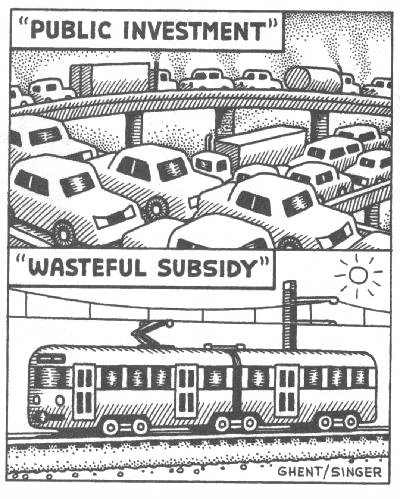
TwoAi??weeks before Christmas and the provincial Liberal Government releases its long awaited Fraser Valley Transit Study and one can see why; it is badly stale-dated by the Rail For The Valley/Leewood Report. By releasing the report before Christmas, the government hoped to bury this stinker under Christmas cheer, hiding the the fact that the Fraser Valley has again received lump of coal inAi??its Christmas stocking.
Rail For The Valley, quite rightly is going to study this document and do an in depth report in the new Year, but Zwei wants to make a general observation; “Why don’t the BC Liberal partyAi??find the moral fortitudeAi??and tell the Valley taxpayers that they just do not want to build affordable rail transportation in the Fraser Valley and instead want to build highways for the Fraser Valley transportation needs. What really makes this report look silly is the estimated $70 million operational costs for a yet to be planned for “interurban commuter rail service.”
Really?
$70 million to operate what?
TheAi??phase 1Ai??RftV/Leewood Report ( http://www.railforthevalley.com/studies/Ai??), diesel LRT Scott Road to Chilliwack option, costing just under $500 million or slightly more than $5 million/km. to build, would have annual operating costs under $10 million per year! Already the government report has been discredited and as many have observed in the past, if the author has got this wrong, then what else has he got wrong in the report?
Oh yes, buses will attract more ridership than rail!
The report seems full of this nonsense.
No matter,the report will give Liberal candidates an opportunity to once again ignore implementing ‘rail’ transit for the Fraser Valley, citing this report, while at the same time, hiding it in the Christmas rush, hoping that no one really looks or heavens forbid, vet the report for its accuracy.



I’m a licensed professional Engineer whose career spans 25 years. I’ve worked on all forms of track service (in North America and abroad) and in all capacities including design, maintenance and construction. I’m quite familiar with many of the systems discussed in this and related threads. For those folks who fail to see the inherent value in a system similar to Sky Train and the Canada Line, I have the following points for your consideration:
1. Grade separation (elimination of all at-grade crossings and barring public entry) of the so called “automated guideway” is a requirement to permit driverless operation;
2. The headway between trains is much shorter for driverless systems than is normally permissiable with driver-operated systems; the ultimate capacity of such a system is considerably greater than that of a driven LRT system;
3. The transportation plan followed by driverless trains is remarkably precise and passengers know exactly when they may expect their train to arrive;
4. As the system is generally grade-separated, the track system is predominantly slab track. Slab track systems require considerably less maintenance than ballasted track systems. (no surfacing/lining, ballasting, shoulder cleaning, etc.).
What is the source of “annual operating costs under $10 million per year”?
You have made the grand mistake of all professional engineers, you think you are a transit expert. It is one of the main reasons why our regional transit system is in such chaos, where professional engineers, instead of transit experts, have run the show.
1) Grade separation drives up there cost of transit and unless their is hourly capacity in the 15,000 to 20,000 pphps range, does little to mitigate transit operation.
2) This is untrue, in fact many tram systems in Europe operate at 30 second headways during peak hours. Driverless operation also encourages needless operation driving up maintenance costs.
3) The same is true with light rail, GPS signaling enables trams to be as precise as a driverless system. To date, SkyTrain has yet to match the capacity that can be offered by at-grade light rail.
4) Trams and LRT also use slab track, for the benefits you mention.
You seem to forget that SkyTrain has been virtually rejected by transit planners around the world, who in turn favour modern light rail. The ratio is about 15 to 1 in favour of modern LRT.
I factored the number of trains operated, the number of drivers and staff needed, then i compared with like interurban operations around the world. In 2006, the Calgary -Train annual operating budget amounted to about $34 million annually and I would like to remind you they operated at 120 second headways and carried nearly 300,000 passengers a day. The interurban is planned to operate at 20 minute headways, needing 12 trains in operation, with maintenance crews etc. factored to meet this criteria. Just for comparison, just the Expo Line costs 60% more to operate than the Calgary C-Train.
The figure of $10m per annum, quoted by Zwei is broadly comparable to modern European Light Rail/Tramway operating costs.
The annual operating cost of $70m quoted by the FVTS/FVRD report is based on WCE Heavy Rail/Heavy Metro figures. TransLink & BC Transit have lifted many of the costs, for their report from the 2006 DLR study and freely admit that.
Likewise based on current US & European practise, savings of a third in annual operating costs, could be achieved with an electric LRT/Tramway/interurban showing savings when compared to the rubber tyred bus/BRT option.
The FVTS/FVRD report has ommitted to include `life-cycle’ costing in its findings, the amortisation and annualising principals are curious to say the least and its evaluation of `end to end’ ridership as opposed to `trip generators’ confirms that the report was released urgently, flaws and all to screw down the lid on the transit dissidents in the FV
zweisystem….
I’ll be the first to admit that I am not a signal systems designer. But I am considered an expert in railway infrastructure, like me or not!
1. True it does drive up cost. The capacity of the system may not be fully realized or appreciated until sometime in the future and so your point related to justification is noteworthy.
2. I’m not sure where you get your information from related to the Calgary system. I suspect the folks at Calgary Transit would be interested in knowing where they were able to operate at a headway of less than 5 minutes. The Calgary system uses an automatic block system and the distances between most blocks will not permit a headway as close as you suggest. Furthermore the Calgary system has a downtown section that runs line-of-sight, has traffic signals without pre-emption devices and represents a capacity limiting bottleneck on the system. Their longterm plans inlcude moving this section of their system below gorund to improve system capacity. The Canada Line uses a much more advanced signaling system (ATC) which (without drivers) does not rely on a wayside signal system. The Canada Line was designed based on the same performance requirements as the original Skytrain system and permits headways down to 108s. The European systems you refer to must be either line of sight or something other than an ABS system.
3. Before you use the Calgary system as an operating example, I suggest you try using it. The trains are routinely plagued by delays. These delays are often tied to grade crossing issues, signal system malfunctions, etc. The trains are supposed to run on a 5 minute schedule during peak periods but it is not uncommon to have to wait longer for a train.
4. True. but the cost of installing a slab track system is at least 50% higher than a ballasted track system for construction at-grade. When the total cost of the civil sub-structure and track structure are considered collectively, the slab track system represents an economically competitive solution.
I wonder if the folks that oppose the skytrain system have ever had a chance to visit their Operations Control Center? The total number of operating staff required to keep that system running is only a fraction of those used to run the more traditional LRT systems.
Some notes regarding your letter.
The Calgary C-Train, as reported in the transit media, have resignaled the downtown section for 90 second headways, thus allowing an increase in capacity. In the past, the Calgary C-Train have run at 2 minute headways in the city centre section of track. In Europe, most tramway’s operate by line of sight, especially on on-street sections of track.
As for track, there are many cheaper alternatives to ballasted track, including the L-55 track system http://www.lr55-rail-road-system.co.uk/index.htm .
You are mistaken about the number of staff needed to keep a tram system operating. You forget to include station staff and track attendants, which add to the cost of operation. When compared to the Calgary, just the Expo Line costs about 60% more to operate than the C-Train.
Studies have shown that automatic railways do not save operating costs, until ridership exceeds about 20,000 pphpd, this is why systems like SkyTrain and VAL very shortly fell out of favour with transit planners, after their introduction in the late 70’s.
Please do not confuse electronic gadgetry with economic operation. Remember, where automatic (driverless operation) have been installed, it was to replace expensive to maintain signal boxes and signal men, both which do not exist on LRT systems.
Zweisytem….
I suppose we may just have to agree to disagree on several of the points discussed previously.
I don’t claim to know the precise costs related to operation of the two systems but I’ve been inside both of their OCCs and I can tell you that the driverless system has far fewer people assigned to “dispatch” trains. In fact the people assigned to operate the system generally only intervene when necessary to increase dwells or similar. Each train follows a pre-determined transportation plan. This coupled with the fact that the driverless system has no drivers leads me to believe that the number of operating folks is fewer on the driverless system.
I would love to read the studies you refer to that suggest that driverless systems operating costs are higher than those of conventional systems.
One of the other problems that we did not specifically address related to the line of sight in-street track included in the Calgary system is related to the impact that this system has on vehicular cross traffic. I was not aware that the City installed some form of pre-emption device in an atttempt to relieve congestion downtown. I’m not sure I even know how they could since that section of the line is “dark”; no signal system. It’s is interesting to hear the train drivers on the backed up trains express their frustration when neither they nor their dispatchers in OCC have any idea when the congestion will clear as that part of the system is “dark”. In any event, it is in the City’s plan to move this portion of their line underground in the next block over (8th Ave.) in an attempt to increase system capacity.
I’m familiar with the track lr55 track system you included in your previous message. In fact there are several other forms fo the same “embedded” track system in use both in Europe and in North America. These are more typically used in tramway systems than LRT systems.
http://www.edilonsedra.com/index.cfm/t/EDILON_ERS/vid/E98248CC-17A4-A597-D9A6998728E6B87A
I agree that this form of construction is the way to go for in-street applications. As you know, most of the Calgary system is not in-street but out in the median or adjacent to opposing lanes of roadways. In these installations, the embedded track system is not as cost-effective as the ballasted track system as it first requires a slip-form paver, precast panels or similar to form the roadway.
I’ve certainly enjoyed this discussion and I hope you have.
You seem to confuse LRT with a metro and modern LRT doesn’t use dispatchers, like a bus. of course there is a control room, showing train operations, but modern LRT run by timetable, with the next train a few minutes behind.
Calgary is going to build a subway, for through running and will keep the surface section for local use.
Unfortunately, is is the professional engineer, without modern knowledge of light rail, nor any grounding in light rail operation, who thinks him/her self a transit expert that has created this regional transportations chaos we now have to deal with.
You continue this myth, that driverless operations have fewer employees, yet reject any comparisons with comparable light rail systems, which is certainly not professional at all! Zwei has, for almost 30 years, communicated directly with those who have planned, built and operated modern LRT, with such background, I fully understand the concepts and methods of modern rail operation. If driverless systems were at all cheaper to operate, then there would be a lot more of them, sadly this is not true and has led to the demise of both the VAL & SkyTrain ART transit systems.
My observations with transit development in North America is that the ‘Professional Engineer’ has done all to inflate light rail costs to suit their own ends and is the reason why we, as a continent, lag so far behind Europe in public transport development!
Hard words, but I think true.
zweisystem…. I’ll be the first to admit that I am not a signal systems designer. But I am considered an expert in railway infrastructure, like me or not! 1. True it does drive up cost. The capacity of the system may not be fully realized or appreciated until sometime in the future and so your point related to justification is noteworthy. 2. I’m not sure where you get your information from related to the Calgary system. I suspect the folks at Calgary Transit would be interested in knowing where they were able to operate at a headway of less than 5 minutes. The Calgary system uses an automatic block system and the distances between most blocks will not permit a headway as close as you suggest. Furthermore the Calgary system has a downtown section that runs line-of-sight, has traffic signals without pre-emption devices and represents a capacity limiting bottleneck on the system. Their longterm plans inlcude moving this section of their system below gorund to improve system capacity. The Canada Line uses a much more advanced signaling system (ATC) which (without drivers) does not rely on a wayside signal system. The Canada Line was designed based on the same performance requirements as the original Skytrain system and permits headways down to 108s. The European systems you refer to must be either line of sight or something other than an ABS system. 3. Before you use the Calgary system as an operating example, I suggest you try using it. The trains are routinely plagued by delays. These delays are often tied to grade crossing issues, signal system malfunctions, etc. The trains are supposed to run on a 5 minute schedule during peak periods but it is not uncommon to have to wait longer for a train. 4. True. but the cost of installing a slab track system is at least 50% higher than a ballasted track system for construction at-grade. When the total cost of the civil sub-structure and track structure are considered collectively, the slab track system represents an economically competitive solution. I wonder if the folks that oppose the skytrain system have ever had a chance to visit their Operations Control Center? The total number of operating staff required to keep that system running is only a fraction of those used to run the more traditional LRT systems.
The Calgary transit system has resignalled the entire transit mall to permit 90 second headways, to ease the congestion due to 120 second headways. This was reported in the transit trade publications.
Sorry, but your claim that LRT use more operating staff is without foundation and continues this silly myth. As wages account for over 70% of operating costs, automatic railways continually have higher operating costs than comparable LRT systems as the advantage using driverless systems is realized when ridership exceeds 15,000 to 20,000 pphpd. Automatic metros still need station staff and attendants for safe operation of the metro. LRT doesn’t have station staff or attendant rather drivers, thus despite the claims of those who support automatic metros, they do have more employees. LRT doesn’t need a vast control room or controllers as most LRT/tram systems are run by schedule, have automatic route selection, etc.
You seem to forget that modern LRT has also taken advantage of new technology and can be operated quite effectively in areas of low capacity, something SkyTrain cannot.
What I see is the continued sad anti-LRT debate which sees hugely expensive metros are somehow better than much cheaper LRT. Vancouver’s automatic SkyTrain system has been in operation for 26 years, yet there was no takers and SkyTrain was so expensive that a generic automatic metro was built instead for the Canada Line, which performance, despite the hype and hoopla, is not stellar. I hope Santa leaves some nice books about modern LRT for you to read under the Christmas tree
My previous comments were related the two systems included in the earlier discussion. The Calgary by system is an LRT system that uses a wayside ABS signal system and an elaborate Operations Control Centre. By comparison, the Skytrain and Canada Line systems use fewer resources in their operations. The systems design of these and similar other North American systems is normally developed by comptetent experienced systems engineers, often from Europe. The “Modern LRT” you refer to in your messages appears to be more cloesley resemble a Tramway or street car system neither of which operate in the cities included in the current discussion.
The main difference between LRT or light rail is the quality of rights-of-way, not the vehicle. LRT operates on, what we call a “reserved rights-of-way” or a R-o-W, reserved strictly for the tram or light rail vehicle, a streetcar operates on-street, in mixed traffic. By operating on reserved R-o-W, enables a tram to have operating characteristics similar to a metro.
A metro operates on a segregated R-o-W, either in tunnel or on a viaduct. LRT operating in a tunnel or viaduct is to be considered a metro.
Only in Canada and the USA is LRT considered a poorman’s metro and is built as such. Sadly, the professional engineer in North America has re-engineered LRT to suit professional needs and not the needs of the traveling public o the taxpayer.
You are disingenuous to the extreme when you claim that “The “Modern LRT†you refer to in your messages appears to be more closely resemble a Tramway or street car system neither of which operate in the cities included in the current discussion.” can operate in a city environment, from cities as large as Paris France or as small as Ghent. Your anti-LRT bias shows in true Technicolor!
Unfortunately RailwayEngineer, you’ve lost me in the logic contained in your posts.
I do detect the usual North American/Canadian lack of understanding of the key features of Heavy rail surburban & Interurban, Metro (Heavy & Light), S Bahns, LRT, Light Rail, Tramways, subways & U Bahns, ART, MRT and Streetcars.
In Europe the differences, capabilities, respective advantages/disadvantages, capacity, capital costs and headways are clearly understood.
In the weeks before Christmas, European Tramways, operating on 3 to 6 minute headways, primarily on Line of Sight in shared and segrated lanes regularly achieved passenger loadings in excess of 12,000 pph in both directions.
At the height of the arctic weather condition in Britain; Croydon Tramlink, Manchester Metrolink & Nottingham NET were achieving daily loadings of 200,000.
I’m an experienced Railway Engineer; Design, Project Management, Construction Management in High Speed Rail, Suburban, Metro, Subways, LRT and of course Tramways
@ Springs Branch Junction, yes a pretty impressive testimony of the dependability & flexibility of LRT/Tramways; the bus systems were paralysed by the weather, commuters & shoppers came to appreciate the reliability of a fixed-track public transport system.
I’m at a loss to understand the minds of the TransLink & BC Transit planners in recommending BRT, they will come to regret their lack of forethought when their service has to be cancelled because of blocked roads, as happened in Ottawa a couple of winters back.
An interesting point is that European Light Rail systems operate with no more than two control room staff per shift, despite the protestations of our Trans-Atlantic cousins!
The US with 35 operating LRT/Tram systems has understood the advantages & benefits of the mode, unlike the Canadians who steadfastly deny that at-grade LRT/Tramways have a role in 21st century transport strategy and indeed some would like to rip all existing system up & put it all underground.
On Friday 26 November 2010 London Underground, carried a record 4.2 million passengers, but with an overall track mileage of 402 km & 270 stations, in a city of 7.75 million.
I cannot see Vancouver or Toronto reaching these ridership figures with Skytrain or Sheppard Subway; indeed the figures are higher than the entire monthly ridership on all of Canada’s rail transit systems.
For a nation who were taught about railway building & transit planning by English, Scottish, French & German Engineers, it is disappointing that so much has been forgotten in the pursuit of the cult of the automobile.
The points included in my previous discussions are not intended to indicate a preference for one system or another. I was merely attempting to clarify what appeared to be, numerous misconceptions about the two systems.
Zweis….do you realize today that the Calgary system uses a rather archaic wayside (fixed) signal system that limits effective headways to something considerably larger than the headways permissible on the (SelTrac) moveable block system used in Vancouver’s driverless systems?
The European system were purposely excluded from the discussions. (Although it may be of interest to some to know that the London Underground uses a driverless system similar to Skytrain but with an attendant driver to open and close doors and for obstacle detection).
We may be talking apples and oranges here. Clearly the “bang for the buck” for developing a simple line of sight at-grade LRT system should not be overlooked. Let’s just avoid suggesting that these systems are more efficient than the numerous “fully automated” systems that currently exist and are under construction elsewhere in the world.
Of London Underground’s eleven lines, only the Victoria Line is automatic; and incidently the first automatic passenger railway in the world!
Once the Train Operator has closed the train doors and pressed the start buttons, the trains run automatically to the next station, responding to coded impulses transmitted through the track.
RailwayEngineer, why should we purposely exclude the European systems?
Regretably you are talking through your arse old man, the 250 – 300+ European line of sight at-grade LRT system are more efficient than the half a dozen “fully automated†systems that currently exist and are under construction elsewhere in the world.