Yesterday Calling
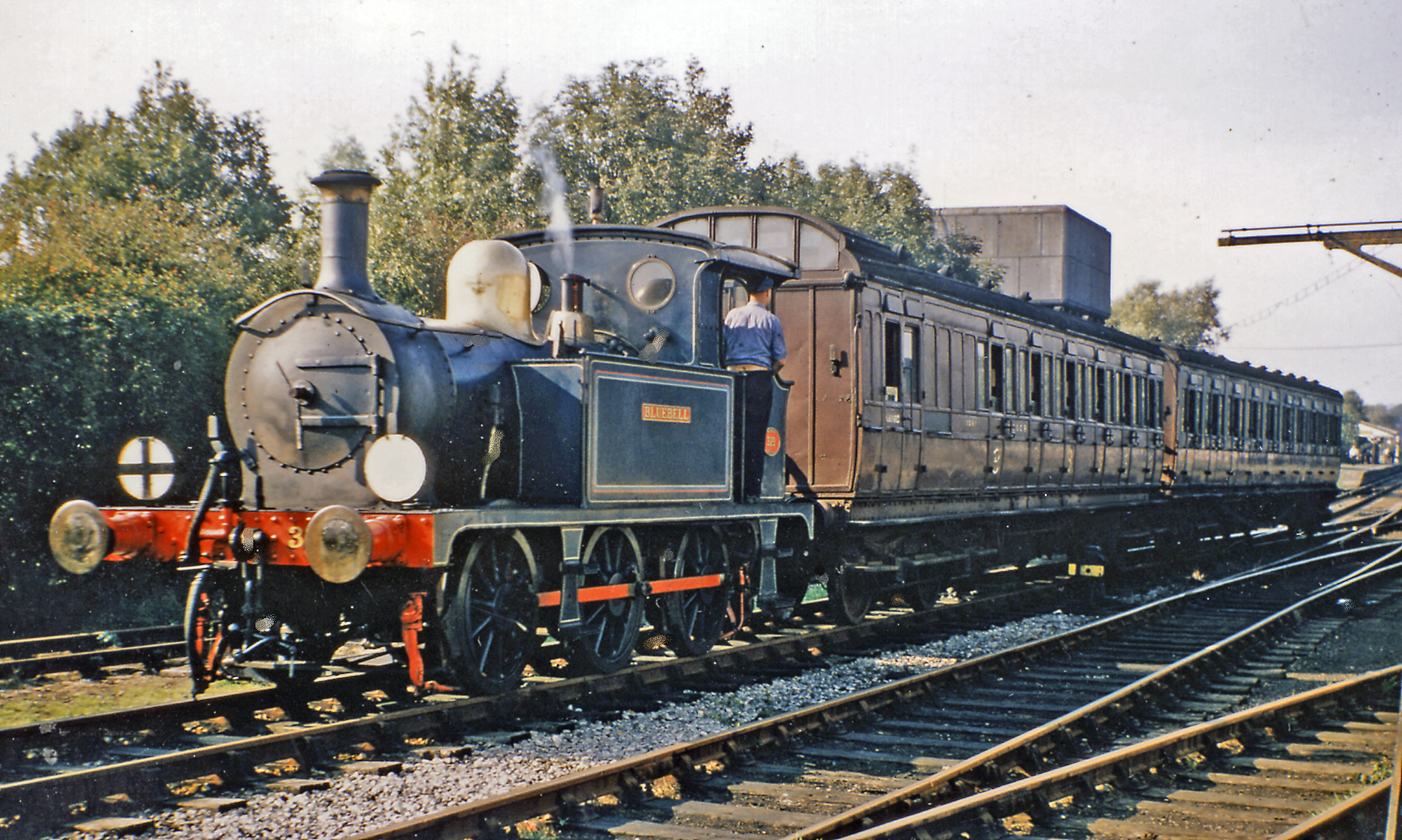
New West minster station C. late 1940’s
A Vancouver bound interurban just leaving New Westminster station.
For WhomThe Road Toll, Tolls
Yup, road tolls will spell political suicide for any politician who wants to take up the crusade for road pricing.
But Price and Harcourt are , in part, the architects of the TransLink fiasco, simply because they pretend to be transit experts, but in reality know very little about Public Transport, pontificating on hugely expensive and poorly planned LRT lines in Vancouver and Surrey, that will do little to ease congestion, but will greatly increase taxes.
When Harcourt was Premier, he cared little for public transit, but later glad handed the capacity constipated and very expensive Canada Line.
Price, a former Vancouver Councillor, loves the now obsolete, yet expensive SkyTrain system, especially when it is in an even more expensive subway in Vancouver.
Sorry, plebiscite failed because the public has lost faith in those running it and the tax and spend dreams of parochial regional politicians.
It seems both Price and Harcourt still have not learned the lesson and whine on and on about a subject they know little of.
Now, if the public were to be given an affordable transportation plan, serving the region, including maybe 200+ km of rail transit (The Leewood Richmond/Vancouver to Chilliwack TramTrain would account 130 km, yet would cost less than half of either the proposed Surrey LRT and the Vancouver SkyTrain subway) in the next decade, maybe, just maybe, the public will approve of road pricing. Under the current regime that operates TransLink like a fiefdom, building R/T lines strictly for political vanity, no, nada, never to road tolls.
Road tolls called too risky after referendum
SFU City Program director Gordon Price and former B.C. Premier Mike Harcourt spoke Wednesday at a Surrey Board of Trade leadership dialogue on the future of transportation.ai??i??Ai??image credit: Jeff Nagel / Black Press
- byAi?? Jeff Nagel – BC Local News
- posted Sep 30, 2015
Metro Vancouver mayors are foolish to even consider pushing ahead with road pricing as long as Premier Christy Clark insists any new tax for transit in the region must survive another referendum.
That was the advice from SFU City Program director Gordon Price at a Surrey Board of Trade panel discussion Wednesday on the future of transportation.
Surrey Mayor Linda Hepner, who was also speaking on the panel, listed some form of mobility pricing as the likely method to deliver the regional share of funding for Surrey’s $2.1-billion light rail network.
Metro mayors and Transportation Minister Todd Stone have said they intend to study road pricing as an option.
But Price predicts disaster if mayors persist with that revenue strategy in light of the July referendum defeat of a 0.5 per cent sales tax for transit.
“It’s a tax on something we’ve previously taken for granted to be free,” he said of a pricing scheme that could toll not just bridges but major roadways as well.
“The emotions on that are going to require extraordinary leadership and maturity. Don’t even start unless you’re prepared to engage with that.”
If road pricing were to be pursued, Price said, it would make sense to test it with tolls on Highway 99, coupled with much-improved transit, that he said could together solve the problem of congestion through the Massey Tunnel without the multi-billion-dollar cost of a new bridge.
“We saw what happened when we put a toll on the Port Mann Bridge ai??i??Ai??it didn’t get the traffic,” Price said. “If your issue is congestion, there’s a dramatically cheaper way to do it that won’t have all the negative impacts on the delta.”
The province has committed to building the 10-lane Massey bridge and has begun preliminary design work but there’s no price estimate or confirmation yet it will be tolled.
Both Price and former NDP premier Mike Harcourt denounced the referendum as a mistake.
“I think you’re elected to lead and make decisions,” Harcourt told the business audience in Surrey. “You don’t have referendums or plebiscites to decide on transportation infrastructure.”
He said TransLink must either be given an integrated place in a restructured Metro regional district or be shut down.
Price said the provincial government must reconsider its insistence on referendum approval for any new tax apart from property taxes, which mayors rule out.
Otherwise, he suggested, the region will remain mired in a funding standoff, while congestion and transit service worsens, and development continues without a coherent plan that meshes land use with transportation.
“If the premier doesn’t clarify there will not be another referendum, folks, that’s the end of regional planning for the foreseeable future,” Price said.
While Hepner plans to finance Surrey’s light rail lines pending a regional source, Price said the reality is the light rail operating costs will end up higher as a result and force transit service cuts elsewhere in the region.
Harcourt said he supports Surrey’s light rail plan but cautioned it needs to be integrated with good bus service feeding into it.
“You’ve got to add a few hundred buses too.”
The former premier from 1991 to 1996 urged decision makers to “be bold” and not underbuild future transit lines as happened with the Canada Line, where some stations are too small to handle four-car trains.
Monkey See – Monkey Do
The Surrey LRT (in dark green) will just inconvenience the bus customer with
an unwanted transfer and one can lose upwards of 70% of potential ridership per transfer.
Well, the Liberals re-announced an already pledged monies to fund one third of the Broadway subway if elected, now it is the Conservatives turn to re-announce already pledged monies to pay one third of the Surrey LRT.
Monkey see, monkey do.
It is election time in BC, where pure political hokum is spread like chicken manure on a field; the stench is eye watering.
Being cynical, I think that both political parties are well aware of the recent failed plebiscite and their promises will not be tested.
The following from our friend Haveacow, sums up the many problems with the Surrey LRT.
“ai???Trying to convince people in Surrey that, their LRT plan is useful, Translink used a Skytrain option as well as a surface BRT option to compare to LRT capability, pointing out the superiority of LRT in this case. The Skytrain option had many problems cost and general usefulness being the main ones. The BRT example they used is actually an LRT line using buses operating on a layout and design which is not even close to what a real BRT line in a on-street environment would or should be using. Its not even close to the best Canadian practices, let alone best practices used in the rest of the world, with BRT systems in a on-street environment. Did the staff doing this know enough to do this purposely or were they ignorant of the differences of what good BRT design is or is not. Their example of LRT also displays a either a serious lack of knowledge about best surface LRT operating practices in the US and Canada. More importantly it shows to me, how committed or in this case not committed, Translink staff really are to studying LRT technology at all. In fact, I donai??i??t blame the people who supported Skytrain technology for this area, like Daryl from Skytrain for Surrey, he had a point, on the surface this study definitely made it look like that to me that the Skytrain Light Metro was the superior technology choice. The difference as a professional is that, I know the real differences in all the technologies that were studied. I also have no belief that, I am the be all and end all of studying these things in the world and would also ask for much help in studying these technology choices from other friends and companies I am familiar with, whom are experts at it. To me a whole new study should be done using the actual best practices for all technologies not just the preferred LRT technology, you should seriously question major aspects and assumptions that were made in this particular Translink study.”
Faster Transit May Cause Congestion
An interesting item from the BBC, especially when everyone points to speed as paramount for good transit.
What the following does illustrate, is the ongoing scientific exploration of public transit overseas, completely missing in North America, where instead, shysters try to sell politicians one gadgetbahnen after another or subways as the great cure for congestion.
Study suggests London Underground may be ‘too fast’
By Jonathan Webb Science reporter, BBC News
23 September 2015A mathematical study of transport in London and New York suggests the British capital should be wary of its trains travelling too quickly.If Tube journeys are too fast, relative to going by road, then the model predicts an increase in the overall level of congestion.
This is because key locations outside the city centre, where people switch transport modes, become bottlenecks.
By contrast, New York’s layout is such that faster trains will always help.
Reporting their findings in the journal Royal Society Interface, the researchers calculate that London’s system would function best with underground trains travelling about 1.2 times faster than the average speed on the roads. This makes the optimum Tube speed approximately 13mph (21km/h); the current average is 21mph (33km/h).
Dr Marc Barthelemy, the paper’s senior author, said it was a theoretical study and more data would be required to make specific recommendations.
“Giving exact numbers is a tricky thing,” he told the BBC. “But the fact is that these networks are coupled to each other. Optimising something on one network can bring bad things on another network.”
Transport for London (TfL) chose not to comment on the research.
‘Multimodal’ movement
Dr Barthelemy, a statistical physicist at the CEA research centre in Saclay, France, is fascinated by the interplay between coupled networks. And transport networks, such as the roads and train lines in his study, are becoming increasingly interconnected.
In a report on urban mobility published on Tuesday, the LSE Cities group at the London School of Economics describes a trend towards “multimodal” journeys, where travellers switch – for example – from train to bus or car.
This is partly driven by smartphones and apps which search for the fastest route, even if it involves a change or two. But in big, expansive cities like London, multimodal trips are inevitable, Dr Barthelemy said.
“In London there’s a clear increase in the number of modes with distance,” he explained. “It’s a very clear effect.”
To test how these different transport networks can affect each other, he and his colleagues built computer models based on the exact structure of the road and underground train networks of both London and New York.
Then, they connected these two layers based on the proximity between streets and subway stations. “We create these connections, and then we make an assumption, which is: When someone wants to go from A to B, they look for the quickest path – whatever the mode.”
Using this relatively simple system, the researchers measured various aspects of the “connectedness” of different points in the two networks.
This painted a distinctive picture of how they function together; the underground network, for example, tends to decrease congestion centrally but increase it where the underground lines finish.
And there were key differences between London and New York. “Surprisingly enough, the network in New York is much more centralised than the one in London,” Dr Barthelemy said.
This means that, according to the model, levels of congestion in downtown Manhattan are so high that the city would benefit from faster trains “even if that increases the congestion at some peripheral points – the entry points to the subway”.
In London however, those bottlenecks tip the balance in favour of a compromise on train speed – with possible planning implications.
‘Worth considering’
“Maybe making Crossrail as fast as possible isn’t the best solution in terms of global congestion,” Dr Barthelemy commented.
This study is based entirely, however, on a model which includes no passenger data from the transport system itself – as Prof Michael Batty, a planning expert at University College London, pointed out:
“It really is just a network model. There are no capacities on the network – it’s not really a flow model, like the ones that Transport for London actually use.”
Nonetheless, Prof Batty said the findings were perfectly plausible. “If you join networks together, then you get unanticipated effects,” he said.
“I think the point they’re making is well worth considering.”
The problem of interacting networks probably applies equally to the capital’s distinct, overlapping train networks, he said
Forward Thinking – Absent In BC
Now here is a politician who looks three minutes into the future, wanting existing rail lines preserved for future use.
We lost the rails in the Kelowna/Vernon corridor; we are about to lose the E&N; and the city of Vancouver is making damn sure that the Arbutus Corridor is not used for rail!
The political myopia on using the valley interurban line for rail transit is nothing short of breathtaking.
Forward thinking in BC is just not going to happen, not with the Luddites in charge, who see transit solely as a method to give supporters “spreadin around” money, taxpayer’s money that is.
Hat’s off to Councillor Wilkinson.
Wilkinson wants existing rail preserved for future commuter trains
O-Train-like service to Kanata before LRT a possibility: Coun.
Existing rail idea gets new support
Kanata North Coun. Marianne Wilkinson is hoping the city will move to protect existing railroad tracks so that it can eventually be converted into a commuter rail service similar to the O-Train. Existing track could serve Kanata and Nepean as well as other communities, and could potentially be ready before light rail transit gets to Kanata, she said.Kanata Kourier-Standard
By Adam KvetonKanata North Coun. Marianne Wilkinson is hoping the city will move to preserve existing rail lines so they could eventually be converted into an O-Train-like transit system, she said at a community meeting on Sept. 14.
*
Though Wilkinson said she has yet to broach the subject at city hall, she said existing rail conversion could be quicker and cheaper than light rail transit.*
The idea of using existing rail for commuter train use was recommended by former Ottawa mayor Larry Oai??i??Brienai??i??s task force on transportation in 2007, and has continued to receive support, including during 2014ai??i??s city elections where a mayoral candidate and several councillor candidates pushed for existing rail use over light rail transit.FASTER BUILD
In a subsequent interview, Wilkinson said she is not suggesting an existing rail transit system could replace the light rail transit plan, but that it could complement the electrified train system.*
However, as a light rail transit connection to Kanata is not due until 2031 at the earliest, converting existing rail for diesel train use could be a quicker, cheaper way of getting Kanata and Nepean some commuter train service in the meantime, she said.*
Then again, getting light rail transit to Kanata sooner is preferable, said Wilkinson, who admitted she doesnai??i??t have a good idea of when an existing rail system could be up and running.*
ai???I just think it should be in the master plan,ai??? she said of the diesel option.*
Wilkinson had opposed the existing rail idea multiple times at candidatesai??i?? events in the 2014 election, but said some new information has convinced her itai??i??s an opportunity the city shouldnai??i??t overlook.*
For starters, CN Rail ai??i?? which still owns the track from near March Road, across Nepean to near Hurdman Station and the east end ai??i?? is going to stop using those rails, said Wilkinson.*
The alleviates the problem of trying to schedule commuter trains around freight train usage, and could allow the city to acquire the land and put in track suitable for commuter train use.*
Furthermore, the city is now looking into a new official plan amendment that would allow it to place setbacks (potentially up to 30 metres) on railway corridors to both preserve them and to keep buildings at a safe distance should there be a derailment.*
ai???That gave me the idea,ai??? said Wilkinson.*
While the existing rail doesnai??i??t go downtown, it would provide service to Algonquin students living in Kanata, for example who could ride a commuter train using the city-owned line from March Road to Woodroffe Avenue just south of the college. The rails reach the existing O-Train line near Confederation Heights.*
ai???There is a lot of merit in looking at it,ai??? said Wilkinson. ai???It would be complementary to what we are doing with the light rail and the buses. But I think we need to have it in our plan, so we can protect it to do it in the future.ai???FOCUS ON LRT
Wilkinsonai??i??s interest in existing rail conversion has come about three months after Kanata South Coun. Allan Hubleyai??i??s motion which asked city staff to look at bringing light rail transit to Kanata earlier than 2031.*
Despite Hubleyai??i??s motion passing with Wilkinsonai??i??s support, Wilkinson said she is not as certain as Hubley that light rail transit can be brought to Kanata any sooner.
ai???Frankly, itai??i??s a comfort motion,ai??? said Wilkinson, who said she wasnai??i??t convinced the city would have the money to finance the Kanata connection, short of getting 100 per cent funding from other levels of government.*
ai???I just think (existing rail conversion) needs to be looked into,ai??? she said.*
Hubley disagrees.*
ai???I think that might have been a great idea 20 years ago. Itai??i??s not (a good idea) in the future,ai??? said Hubley, adding that Wilkinson ai???tends to think in the past.ai???
Hubley said he was confident light rail transit can reach to Kanata before 2031 for many reasons.*
For one, the rapid bus transit work currently being done between Bayshore and Moodie Drive is being engineered so it can be converted quickly and cheaply to light rail.
ai???All that would be left is (laying) the tracks,ai??? said Hubley.*
The same thing will be done for the rapid transit connection to Terry Fox Drive, which is already funded, said Hubley.
Costs will also be much lower than past light rail transit stages as much of the land needed to build on is already city owned, and almost all of the track will be above ground, so no digging is required.*
With the cityai??i??s west end expected to continue to grow, and many businesses located there, the Kanata extension is a good candidate for funding from other levels of government, he said, pointing to other transit projects ai??i?? like Hamiltonai??i??s light rail transit system ai??i?? that have been 100 per cent funded by the Ontario government.
He said Wilkinsonai??i??s interest in existing rail conversion is a distraction to that end, especially if she pushed for the conversion to be done before light rail transit was finished.
ai???We have to stay focused on the LRT piece and get it done,ai??? Hubley said. ai???If we start confusing staff and the public by talking about all different ideas, who knows what else she will come out with. Maybe a zipline from Bayshore to Kanata. You are only confusing people.ai???*
Wilkinson said she plans to speak with Mayor Jim Watson in October about getting a feasibility study done on converting existing rail to a commuter train service, ai???so that when we have enough money to do it, we actually could do it,ai??? she said.
Since When KPMG Become Transit Consultants?
The following news headline from the CBC Cabinet ministers met publicly with KPMG while firm’s tax ‘sham’ under CRA probe may pose some questions, but UBC prof. Patrick Condon would like to remind us all that……..
This is the firm UBC and City of Vancouver entrusted our study of the Broadway subway to. Sheesh. Google KPMG and Fraud for fun and see the long history of this kind of shenanigans.
KPMG advertises itself as……….
KPMG LLP, the audit, tax and advisory firm, is the U.S. member firm of KPMG International Cooperative (“KPMG International”). KPMG is a global network of professional firms providing Audit, Tax and Advisory services. We operate in 155 countries and have more than 162,000 people working in member firms around the world.
So I would like to ask: “Since when did KPMG become transit consultants or even the more technical demanding subway consultants?”
All In The Family
Wow, this sort of thing should be illegal, but it seems with TransLink, nepotism is standard operating practice.
The further reporter Bob Mackin investigates TransLink, the more interesting and questionable items surface.
Is it a surprise that the majority of the public hold TransLink in high odor?
From Business In Vancouver.
TransLink should report supplier payments, says political watchdog
Business in Vancouver investigation reveals inventory of contractors and suppliers that includes brother of former TransLink boss
Bob Mackin
A company owned by the brother of Ian Jarvis was paid more than the ex-TransLink CEO was in 2014, but you wonai??i??t find that in TransLinkai??i??s list of suppliers obtained by Business in Vancouver.
The Financial Information Act Return shows TransLink paid Ian Jarvis $483,625 in 2014. The report does not show the $676,000 in payments to Trevor Jarvis Contracting Ltd. from the subsidiary that operates SkyTrain.
TransLink media adviser Chris Bryan said thatai??i??s because subsidiaries like BC Rapid Transit Corp. (BCRTC) are not subject to the act, which requires public organizations to annually list suppliers of goods and services worth $25,000 and up.
Bryan said Trevor Jarvis Contracting performs landscaping and maintenance at 90 sites, including SkyTrain stations, transit centres, bus loops, park and rides, rectifier stations and HandyDart locations. It is also contracted for snow and ice removal.
ai???Trevor Jarvisai??i?? firmai??i??s relationship with TransLink subsidiary BCRTC pre-dates Ian Jarvisai??i??,ai??? Bryan said. ai???It has been contracted by BCRTC to do landscaping and other maintenance work for 30 years.ai???
In 2012, three companies filed bids for the landscaping and grounds maintenance services contract. Rocksolid Enterprises was hired for West Coast Express and Coast Mountain Bus Company, while Trevor Jarvis got the BCRTC gig.
Trevor Jarvis and G. Trasolini Contractors were the only bidders in 2013 for the snow clearing and ice/frost mitigation job and both were contracted.
Trevor Jarvis declined comment and referred questions to TransLink.
Dermod Travis, executive director of IntegrityBC, said TransLink is ai???skirting the lawai??? and should publish suppliers to subsidiaries, like BC Hydroai??i??s Powerex Corp., Powertech Labs Inc. and Columbia Hydro Constructors Ltd. did last year.
ai???Itai??i??s entirely inappropriate,ai??? Travis said. ai???Theyai??i??ve tried to find a way to justify hiding these expenses so they do not create additional controversy for TransLink.ai???
Documents obtained by BIV via Freedom of Information show that when Ian Jarvis, who was TransLinkai??i??s original CFO in 1999, stepped down as CEO to become board adviser and was replaced by Doug Allen on February 11, a Ministry of Transportation and Infrastructure official suddenly became curious about Trevor Jarvisai??i?? work for TransLink.
ai???Hi Folks: Urgent issue. Just had a call from MOTI asking if Ianai??i??s brother has or had a contract with TransLink,ai??? wrote vice-president Bob Paddon to others on the senior management team. ai???I recall that his brother may have had a contract with BCRTC at one time. Please advise asap.ai???
CFO Cathy McLay, the acting CEO since August, wrote in an email to assistant deputy minister Jacquie Dawes that Trevor Jarvisai??i?? landscaping contract was based on a three-year, plus two option years term and valued at $386,000 in 2013, $394,000 in 2014 and $402,000 in 2015.
The snow and ice removal contract was weather-dependent, and its value was not available, according to McLay. ai???We have a signed code of conduct from Ian disclosing the relationship and that he has no involvement in the procurement,ai??? McLay wrote.
Ian Jarvis was the highest paid of the 524 TransLink employees earning $100,000 or more in 2014. There were 90 more employees earning six-figures than in 2013 and 107 more than in 2012. TransLink blamed the increase, in part, on overtime from SkyTrain service outages in 2014.
Cubic Transportation Systems, the company behind the overdue and over-budget Compass card and fare gates system, was paid $9,047,765, bringing its total since 2009 to $75.63 million.
Cubic hardware and software fare collection equipment was part of the Canada Line launch in 2009. The San Diego-based company was awarded the Compass project in late 2010, a year after the federal and B.C. governments announced the $100 million project. The budget has since ballooned to $194 million and system wide public rollout is finally expected this fall.
IBM Canada was removed as the principal subcontractor. Since 2011, TransLink paid it $9.5 million.
The first name on the list of suppliers of goods and services $25,000 and up is 1034 Resources Inc., the holding company owned by Allen, which was paid $31,884. Allen was paid $35,000-a-month between February and August.
TransLink reported spending $526.5 million on suppliers. It did list salaries over $75,000 for its subsidiaries, of which Coast Mountain Bus Company accounted for $327.9 million.
TransLinkai??i??s 2014 fiscal year end was last December 31, and its list of salaries ($75,000 and up) and suppliers ($25,000 and up) was due to the Ministry of Finance six months later, according to the Financial Information Act. It took until September 15 for TransLink to post the report on its website, but BIV obtained a copy on September 11 after making requests to board chairman Barry Forbes and general counsel Gigi Chen-Kuo.
Much Ado About Nothing – Reforming TransLink
The regional mayors just do not get it. There is something missing, something very important.
Where is public participation?
Nowhere to be seen.
The defeat of the TransLink plebiscite was, in part, due to the public holding TransLink in high odor and why not, as this ponderous and obtuse bureaucracy has failed to maintain any semblance of being user friendly. Successful public transit operations have a high level of public approval, yet TransLink still operates in secret, treating transit customers poorly.
Sorry Mr. Moore, unless there is full public process in reforming TransLink, the regional mayors talk about reforming TransLink is “Much Ado About Nothing”.
Metro Vancouver fast-tracks work on TransLink reform
By Kelly Sinoski, Vancouver Sun September 17, 2015
Metro chairman Greg Moore is setting up a committee to pull together a Metro Vancouver position on the future of TransLink, the batteedr provincial transit agency.
Photograph by: Jason Payne , Vancouver Sun
Metro Vancouver directors are scurrying to come up with a new governance proposal for TransLink, with just three weeks before cabinet minister Peter Fassbender is to report on the regionai??i??s transportation problems.
Metro chairman Greg Moore announced Thursday that he will pull together a committee to devise a proposal based on the regionai??i??s transportation and regional land-use policy before Oct. 14.
Moore said it would be quicker to have a small group of people come up with a report to send Fassbender than a full Metro committee. Other work, such as considering how to allocate money from the federal gas tax, could come later, he added.
ai???Our board gave us the direction to look at governance,ai??? Moore told Metroai??i??s intergovernmental committee Thursday. ai???Weai??i??ve done this all before, so we donai??i??t have to do a lot of background research. Itai??i??s about bringing it all together in a comprehensive position … either reaffirming our position or tweaking it.ai???
North Vancouver District Mayor Richard Walton said there are many issues to be clarified, including whether Metro wants to keep the TransLink mayorsai??i?? council. Both TransLink and the mayorsai??i?? council were heavily criticized this summer following the publicai??i??s rejection of a proposed 0.5-per-cent sales tax to fund transportation expansion.
Fassbender, a former Langley mayor who once sat on the TransLink mayorsai??i?? council, was appointed by Premier Christy Clark shortly the transportation plebiscite failed. Fassbender said his immediate goals were to ai???restore the confidence of the people of Metro Vancouver in TransLink,ai??? most notably its fiscal management and governance structure.
TransLink has been battered by public criticism of mismanagement, mainly over its executive salaries and the long-delayed Compass card and fare gate system. It has since shed several executives, including two involved in the plebiscite process.
Oh, Yesterday
Circa 1949; a Chilliwack bound interurban, traveling South on Commercial Drive.
SNC-Lavalin replaces CEO amid more allegations
SNC is so intertwined with SkyTrain and the Canada Line that everyone should give this a good read.
Let us remember that judge Pittfield, who presided over the original Susan Heyes lawsuit against TransLink, called the bidding process for the Canada Line a “charade“.
From the CBC, SNC-Lavalin replaces CEO amid more allegations
The title photo is misleading, SNC did not win the Evergreen Line contract, as it owns the engineering patents for the proprietary SkyTrain mini-metro system. By owning the the engineering contracts, SNC Lavalin was assured of winning the mock bidding process. In fact one could call the Evergreen Line bidding process a “charade”.
This poses an interesting question: Is a mock bidding process illegal in Canada and BC?


Recent Comments