For the first time since I have been advocating for better transit, now over thirty years, we now have a minister of the crown who not only understands modern light rail, he is an advocate of modern LRT!
Let us hope new infrastructure minister Amarjeet Sohi is open to new ideas including the Leewood/RftV TramTrain!
New infrastructure minister Amarjeet Sohi a ai???light rail advocateai??i?? with incredible backstory
Amarjeet Sohi is shown in Edmonton in this file photo. THE CANADIAN PRESS/Jason Franson
Amarjeet Sohi ai??i?? a three-term Edmonton city councillor and light rail advocate who was once held as a political prisoner in India for over two years in the 1980s ai??i?? was sworn in as infrastructure minister Wednesday, which would seem to make him the point man on billions in promised infrastructure spending and the creation of a new Canada Infrastructure Bank.
But with new Liberal infrastructure money divided into three categories (public transit, green infrastructure, and social infrastructure), and the fate of the Conservative-created crown corporation PPP Canada (Public-Private Partnership) ai??i?? which reports to the finance minister ai??i?? unclear, thereai??i??s still a lot to be fleshed out.
Sohi, whose incredible story of surviving torture, solitary confinement, and sleep deprivation at the hands of the Bihar state authorities in India was the subject of a February profile in the Edmonton Journal, only narrowly defeated Conservative MP and junior minister Tim Uppal.
He comes to federal politics from Edmonton municipal politics, where he ai???represented the city on the Canadian Urban Transit Association, and has been a strong advocate for light rail transitai???, according to a biography provided by the Liberal Party.
ai???What I have learned over the past eight years being a city councillor is that municipalities donai??i??t have the ability to plan for long term. When they donai??i??t have the long-term funding commitments from their partners, itai??i??s always difficult to plan. Also, it becomes costly ai??i?? even though you may have a long-term vision and plan in place, you canai??i??t execute it unless you have a strong commitment from your partners,ai??? Sohi told the Journal the day after the election.
ai???One thing Iai??i??m really about is the $2 billion each year for next 10 years commitment that we have made (to mass transit). That will definitely help us in our city, help us expand the LRT to all parts of the city. And we are committed to being equal partners.ai???
He also stressed the importance of giving the municipalities the freedom to build infrastructure as they see fit, without dictating the terms.
ai???The Liberals are very clear on how we support municipalities. They are very clear that we are there as equal partners, but we are not there to dictate to municipalities how to build a system and what kind of procurement process they have in place. We leave that to the municipalities and itai??i??s up to every municipality to decide which way they want to build so the system, whether itai??i??s P3 or not P3,ai??? he said.
Itai??i??s hard to say what, if anything, that means for PPP Canada, which the Harper government created as a crown corporation in 2009.
The Liberal infrastructure plan doesnai??i??t mention PPP Canada, says the new infrastructure bank will help municipalities finance the broad range of infrastructure projects their communities, and that the Liberal government will work with the ai???private sector and pools of capital that choose for themselves to invest in Canadians infrastructure projectsai???.
Presumably Catherine McKenna, the new environment and climate change minister, will have to work closely with Sohi on implementing the planai??i??s green infrastructure component, which commits to direct funding for things such as local water and wastewater facilities, and climate resilient infrastructure.
As will Jean-Yves Duclos, the new Minister of Families, Children, and Social Development, since the ai???social infrastructureai??? component includes promises investment in affordable housing and seniors facilities, early learning and child care, and cultural or recreational infrastructure.ai???
In 2016-17, the Liberals have committed to $5.1 billion in additional spending for public transit, green infrastructure, and social infrastructure.
Thatai??i??s on top of the $5 billion in infrastructure spending under the New Building Canada Fund, which is for what more often comes to mind when the word infrastructure is used ai??i?? bridges, roads, and ports, for example.
Zwei is not against road pricing or congestion charges per se, but before road pricing or some form of congestion charge is implemented in the region, we would need to have a quality public transportation system in place and that we do not, not even close.
The problem of course, as Eric Chris, has so eloquently posted in the past is that “TransLink does not have a revenue problem, it has a spending problem.” TransLink’s cost per revenue passenger is a full one third higher than Calgary, Edmonton and Toronto!”
Until our regional politicians and planning bureaucrat achieve some sort of maturity on the subject of regional transportation and stop planning for hugely expensive vanity projects like the Broadway SkyTrain subway, TransLink will always be short of cash and the ‘grifters’ of road pricing will forever be at the doorstep selling their newly minted version of “tax and spend” snake oil.
A note: Zwie drove into downtown Vancouver on Monday and decided against taking transit. It took me all of 40 minutes to drive from Tsawwassen and park the family chariot near Seymour and Pender – 36 km). After an hour I drove home in 45 minutes. The same trip by transit, just over an hour with one transfer, necessitating the use of a Compass Card makes transit a non option.
Congestion in Vancouver, I think not!
Opinion: We need a serious discussion about congestion pricing
By Jock Finlayson and Christopher Ragan, Special to The Vancouver SunNovember 2, 2015
Traffic congestion on Oak street.
Photograph by: Steve Bosch, Vancouver Sun
In the past year, public debate in Metro Vancouver has focused heavily on how to pay for new transportation capacity. But there is a critical missing piece in this mobility puzzle. Improved transit services and more investment in roads are needed but they arenai??i??t enough. Experience shows that we canai??i??t just build our way out of gridlock. We wonai??i??t solve the problem of traffic congestion without also changing the underlying incentives. Thatai??i??s why we need a serious discussion about congestion pricing.
This summerai??i??s transit referendum was about how to pay for new transit investments. Its failure doesnai??i??t signal that people are happy being stuck in traffic; nor does it signal that we are using our current infrastructure efficiently. There are several things that pretty much everyone agrees with regarding transportation in Metro Vancouver. First, traffic congestion is extremely costly: time lost in traffic costs people and businesses in the region at least $1.4 billion per year. Second, more and expanded public-transit options are necessary, as are maintenance, repairs and upgrading of existing roads and bridges. Third, those transportation investments somehow will have to be made, for neither businesses nor residents can afford to live without them indefinitely.
Another point of agreement is that traffic congestion is getting worse. Given that Metro Vancouverai??i??s population is projected to grow by about million people over the next 25 years, one can easily imagine how bad things could get. As population and port activities increase, container truck traffic will also grow. Who pays for the time that trucks spend idling on backed-up highways and arterial roads? These time delays raise costs for businesses and increase prices for consumers. We all pay for traffic congestion.
How to find a less-congested path forward? As decision-makers across the region regroup, there is a critical opportunity to introduce the idea of incentives into the conversation ai??i?? the piece thatai??i??s been missing all along.
Choices and incentives are inseparable pieces of any realistic solution to traffic congestion, a fact that may not be obvious, especially when it seems like the simplest solution is to build bigger roads and more public transport. But experience from cities around the world shows that this simply doesnai??i??t work. More and bigger highways reduce congestion for a while. But then more drivers are encouraged onto the roads, and before long the traffic congestion returns with a vengeance.
More public transit can create a similar effect. Even cities with large and highly efficient public transit systems ai??i?? New York and London, for example ai??i?? find that this does not alleviate serious congestion problems. This is not to say that better roads and transit systems arenai??i??t valuable: in fact, theyai??i??re critical. But we wonai??i??t get the greatest possible value from new investments in transit services and road improvements unless we also address everyoneai??i??s incentives regarding which roads to drive on and when.
Congestion is not just about the number of drivers on the road. It is really about which road theyai??i??re on and when they want to be there. Reducing traffic congestion requires not only providing people with alternatives to driving, but giving them tangible incentives to shift their road-use patterns. Congestion pricing, when it is designed well, works precisely because it creates these incentives.
By charging more to drive in traffic hot spots at peak times, congestion pricing encourages individuals who have flexibility to use it ai??i?? to adjust how they commute, and when and where they drive. Some people who can avoid driving in hot spots at peak times will do so. People with less flexibility use the road and pay the fee, but in return they get a faster, easier, and more bearable commute or business journey. The ultimate profit of a congestion charge is in peopleai??i??s time, arguably the scarcest resource. In practice, they may save money too. The funds generated from the policy can provide additional benefits ai??i?? for example, by investing in public transit, road repairs, or reducing taxes, such as the fuel tax.
A more mobile Metro Vancouver will not be a carless one. Rather, it will be a place where people have better transportation options and also make more informed decisions about how, when, and where to use them. That is the not-so-secret formula for beating traffic congestion.
How do we start moving this solution forward? We need to observe how congestion pricing can work in conjunction with expanding transportation options. That research needs to go beyond theory and into gathering on-the-ground evidence. Simple and temporary pilot projects would give decision-makers ai??i?? and commuters ai??i?? the real evidence needed to determine if a pricing approach makes sense for this region and how best it might be designed.
B.C. and Metro Vancouver have never been afraid to lead Canada in innovative solutions to 21st century challenges. Urban traffic congestion is a symptom of our time and itai??i??s not going away. We have everything to gain, and little to lose, by putting pricing to the test.
Jock Finlayson is Executive VP at the Business Council of BC (the views expressed here may not represent those of the Business Council of BC). Chris Ragan is an associate professor of economics at McGill University and the chair of Canadaai??i??s Ecofiscal Commission.
One has to give it to the SkyTrain Lobby, they repeat inaccuracies so often they become truth.
The new SkyTrain cars being delivered are not articulated (the LIMs are not powerful enough enough for this), rather all Bombardier did was make a few cars ‘coaches’ adding gangways at both ends.
As predicted they will operate in four car train-sets not offering much of a capacity increase when compared to 4-car train-sets made up of two married pairs. The claim that the new 4-car train-sets will offer a capacity of almost 200 people more, is delusional.
The 700 person figure probably comes from the proposal to operate 5 car trains, which would be longer than the present station platforms, necessitating ‘Selective Door Opening’ technology or SDO to be implemented at all stations, which in turn would increase dwell times, reducing overall capacity.
What capacity increases that will come is from reduced seating, which in North America, tends to discourage transit ridership and this is especially true in the USA.
As Bombardier Inc. is actively selling its rail divisions, and the lack of ART being sold, these cars may very well be the last Innovia LIM propelled cars built.
One section of a new SkyTrain arrives in Vancouver – Date unknown Anonymous Photographer.
27 October 2015
First New Generation SkyTrains
Begin Arriving in Vancouver
Vancouver British Columbia – The first cars from TransLink’s $90.7 million order of Bombardier Innovia Metro 300 trains for the SkyTrain system have begun to arrive at the Edmonds Operations and Maintenance Centre in Burnaby.
A total of seven trains, totalling 28 cars, were ordered in 2012 to expand the fleet’s capacity ahead of the fall 2016 opening of the Evergreen extension of the Millennium Line.
According to TransLink, the cars were built on the East Coast, with four trains built at the Bombardier plant in Kingston, Ontario, and the remaining six trains at another plant in Plattsburgh, New York.
All of the cars are being shipped across the continent on flatbed trucks.
Upon arrival, the cars will be assembled into four-car trains with the addition of accordion-style gangways to connect the cars, allowing passengers to walk from one end of the train to other while also providing a greater capacity.
But at this time, there is no estimated date for when the first trains could go into service as rigorous testing needs to be completed.
“Once assembled, these trains need to complete a comprehensive testing program before being placed into service,” Cheryl Ziola, TransLink media relations manager, told Vancity Buzz.
“This typically takes several months. When testing is done, we can confirm when trains will be in service.”
The new trains also offer substantial aesthetic and experiential design improvements to SkyTrain’s older train models.
These new trains will be much more spacious with more larger open spaces available for bikes, strollers, and wheelchairs, and the interior will be more brightly lit due to an improved LED lighting system.
But the most noticeable design improvement that passengers will likely notice will be the sizeable windows.
Windows on the sides of the trains will extend down to waist height while the windows at the front of the trains will be full width, similar to the Canada Line’s cars.
The trains also boast a lightweight, longer lasting, battery system that is expected to last 25 years.
In comparison, the batteries on the existing fleet last 10 years.
TransLink was unable to comment on the overall capacity of the vehicles, but the new trains will likely be able to hold nearly 700 passengers per train given the increased floor space from the gangways of the four-car articulated configuration and the improvement in interior space usage.
In contrast, a four-car Mark II train holds anywhere between 520 to 580 passengers per train, depending on the year of purchase, while a four-car Mark I train can pack in 480 passengers per train.
The Canada Line’s two-car trains built by South Korea’s Hyundai can only accommodate 334 passengers per train.
Meanwhile, the original 114 SkyTrain cars, the Mark I cars, are currently being refurbished at a cost of $37.9 million to extend their operational life by 15 years.
The cars have already already exceeded their operational lifespan of 25 years.
The refit includes top-down upgrades to the electrical system, entry doors, and interior passenger comfort designs.
The train exteriors are also being repainted with TransLink’s new black, grey, blue, and yellow livery.
PUBLIC services resumed on Stockholm’s LidingAi?? Line following the completion of a two-year project to comprehensively rebuild the 9.1km former suburban railway as a tram line.
The line runs from an interchange with the metro Red Line at Ropsten to GA?shaga, serves 14 stations on the southern half of LidingAi?? Island. In addition to track renewal and doubling, the project included resignalling, upgrading of electrification, and modernization of stations, which are now fully accessible for passengers with reduced mobility.
Services are operated by a fleet of seven new 40.6m CAF A36 low-floor LRVs, which accommodate up to 159 passengers, 102 of them seated.
The line will be linked to Stockholm’s City Line, which will be extended from DjurgA?rdsbron to Ropsten by 2020.
Last summer’s shutdowns had passengers abandoning SkyTrain in droves.
As Zwei has predicted, the Expo Line is aging and problems are arising all to often.
What this continuing problem does illustrate is Translink’s bankrupt policy of trying to put all east-west transit customers on one line, instead of several east – west line if LRT was to have been built. With SkyTrain there is no redundancy.
Expect more and more shut downs until the line is refurbished at a cost of several billions of dollars.
Electrical problem shuts down SkyTrain service on Expo Line
By Staff Reporter, The Province October 24, 2015
An apparent electrial problem has shut down SkyTrain.
Photograph by: Arlen Redekop, PNG
SkyTrain engineers are trying to fix an electrical problem that has led to the shutting down of the Expo Line.
Transit reports that normal operations continue on the Millenium line between Clumbia and VCC Clarke.
A bus bridge was initially set p for Expo line trains between King George Station and Columbia Station and between Waterfront Station and Broadway station.
While the service across the Fraser was brought back on line, SkyTrain continued to rely on a bus bridge between the Edmonds station and Waterfront.
Passengers are being urged to stay in the trains and wait for SkyTrain attendants to manually drive halted trains to the nearest stations
Service on TransLinkai??i??s Expo Line has resumed after 12 trains completely came to a halt along various locations.
TransLink Spokesperson Anne Drennan says Ai??numerous trains had to be manually moved.
Ai??ai???There were a dozen trains that were on the tracks with passengers when the system shut down, when the Expo Line shut down. We had crew members go out as quickly as possible and bring those trains manually back to the stationsai???.
The delay began around 6pm affecting the entire Expo Line.
About an hour later service was restored between Edmonds station and King George station.
Bus Bridges were put in place between Waterfront and Edmonds Station.
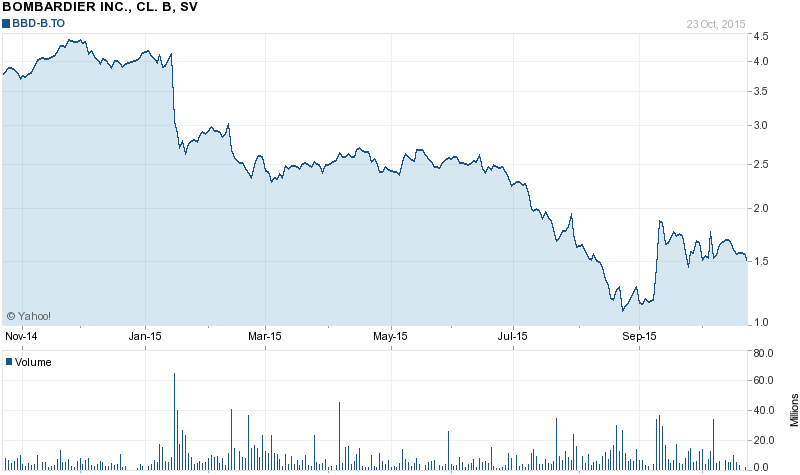
Oops, Bombardier Inc. is having problems and this does not bode well for TransLink as Bombardier Inc is the sole supplier of mini-metro cars for the Expo, Millennium and Evergreen lines.
That what’s happen when buy a proprietary railway, they “gotcha”.
MONTREAL ai??? The Toronto Transit Commission, accusing Bombardier of incompetence,” says it may sue the Quebec plane and train maker over the latest delays in delivery of streetcars. Ai?? Commission chairman Josh Colle says the board will consider at its Oct. 28 meeting possible legal and financial actions against the company, including a $50-million claim permitted under the contract for late delivery.
Ai??He said Bombardier Transportation advised the commission Thursday that it won’t meet a commitment made in July to deliver 23 new streetcars by year-end, including 20 available for service. Given Bombardier’s failure to meet its past commitments, Colle said the TTC has no confidence in this latest schedule.
“I am incredibly disappointed to learn that Bombardier, yet again, will not be meeting their commitments to deliver new streetcars to Toronto,” Colle said in a news release.
“The TTC board has lost all faith in Bombardier’s public promises and ability to deliver this order. We will not let Bombardier’s incompetence hold our patient and loyal customers hostage.”
The company now says it will deliver 19 cars by the end of 2015. Sixteen of them will be in service, including the 10 currently in operation.
The original $993-million contract called for 67 of 204 new vehicleordered by the TTC to be in operation at this time.
Bombardier blamed the delays on production issues in Mexico with the crimping of electrical connectors on six streetcars in production. The problem was identified during quality assurance reviews in Thunder Bay, Ont. The 3,000 wire connections in each of the cars will need to be examined and fixed.
Ai?? “Bombardier obviously regrets that its performance on this particular project has been disappointing to the TTC, but we remain fully committed to continue to support our customer and deliver the streetcars as soon as> possible,” said spokesman Marc-Andre Lefebvre. Ai?? The company said it plans to extend production hours in the manufacturing sites assigned to the project by adding a third shift per day.
Lefebvre said the incident doesn’t signify a broader problem with its Mexican operations, noting it is involved in projects across North America. The previous production delays were caused by issues in Thunder Bay, Mexico and some external suppliers.
TransLink is desperate to gain the transit customer’s affection and is doing a mock comment process to pretend they are listening, the transit customers friend.
Ha, ha, ha, the joke is on the transit customer as TransLink’s futile effort in public relations is no more than a joke.
Take Tsawwassen as an example.
One of the affected bus routes in question is the 609, locally known as the “Wally Wagon”, which about 10 people a day use. No tweaking of service will fix this lemon, but TransLink still offers a charade process, pretending they are listening to the public. Simply, this bus service should be terminated.
The 601 is Tsawwassen’s life line to Richmond and Vancouver and by diverting it to access the new mega mall built on TFN lands, will increase journey times, which will decrease ridership.
Oh yes, the fare regimen, means that it will be cheaper for Tsawwassen residents to drive to the mall, than take the bus.
What is more galling, TransLink has remained deaf since the opening of the Canada Line for real service improvements in South Delta, but (most likely) prodding from the Premier’s Office, to have buses service Gordon Campbell’s and the TFN’s Tsawwassen Mills mega mall fiasco.
If the the rest of the proposed route changes (of course some maybe necessary) are as daft as South Delta’s, TransLink’s senior brass has learned nothing from their recent failed plebiscite.
Real change is needed at TransLink, not the current pretend “we are listening” currently being offered.
The Conservatives have re-announced the committed $700-million portion for the proposed Surrey Light Rail Transit (LRT). The total cost of this project will be over $2 billion, yet present passenger flows are below the amount needed to make the operation viable for light rail and it would be fiscally suicidal for SkyTrain expansion.
There is another way.
Almost five years to the day, the Rail for the Valley group released a study done by Leewood Projects in the UK, proposing a modern LRT solution that would connect Richmond and downtown Vancouver to Chilliwack using the former BC Electric interurban route, that would also service Cloverdale, Langley and Abbotsford, for just under $1 billion.
The study envisioned the use of TramTrain, a light rail vehicle that can be used as a streetcar or a passenger train, using existing rail tracks.
TramTrain was first pioneered in Karlsruhe, Germany in 1992 and has been an outstanding success. So successful that today there are 12 lines ai??i?? 265 kilometres of route mileage serving 190 stations.
A Fraser Valley TramTrain service to Vancouver and Richmond would give faster travel times than using the proposed LRT and SkyTrain Expo Lines, as well as giving residents in Abbotsford and Chilliwack direct transit service to Vancouver.
Using TramTrain in the Fraser Valley would be a win-win situation for both transit customers and the taxpayer. Even former TransLink CEO, Tom Prendergast, was supportive of the idea.
TramTrain is a 21st-century innovation that could provide more transit to more locations at a cheaper cost than the current transit projects proposed by TransLink.
TramTrain puts the transit customer first, which in Metro Vancouver, is a novel idea.
Maybe the University of the Fraser Valley could offer a course in Urban Transit and Transportation, or be even more daring and have a Department of Urban Transport, offering degrees in Urban Transportation, just like Europe!
ByAi??Jeffrey TrainorAi??(The Cascade)The UFV geography department kicked off its Discover Lecture Series last Thursday, September 24 with a presentation on inter-urban rail.Trains are common in highly-populated areas like Europe and large cities like New York, Toronto, and Vancouver. However, in spread-out suburban areas like Abbotsford, Chilliwack, or Langley, reliance on the road and the convenience of cars deprioritizes the building of an inter-city railway.
The lecture was given by Jeff Kenworthy, a professor in sustainable cities at Curtin University in Perth, Australia, as well as a guest professor at the Frankfurt University of Applied Sciences. Kenworthy focused his lecture on his research regarding the benefits and resurgence of inter-urban rail to an audience of about 25.
The bulk of the presentation highlighted similarities between Kenworthyai??i??s intra-urban rail project in his hometown of Perth, Australia and a potential rail line that would run from Abbotsford into Vancouver. In Perth, Kenworthy helped to design a 70-kilometre intra-urban rail line that connected urban sprawl communities to the cityai??i??s central business district. At its completion in December 2007, the expected ridership on the line was around 500,000 per year but that number has already reached 850,000 in 2014.
ai???[This shows the potential] when you put in a really good high-speed and attractive rail service,ai??? he said.
When relating this project to the Fraser Valley, Kenworthy believes the potential for success was even higher.
ai???The densities [within Abbotsford and the Fraser Valley] are far higher than [Perth], and [Perth] has made an inter-urban rail system work extremely well,ai??? he said. ai???A well-planned rail line has the potential to be a great success [in the Fraser Valley].ai???
Kenworthy said heai??i??s trying to debunk the North American attitude of simply building or widening roads or highways to help alleviate car congestion ai??i?? for example, the recent widening of the Port Mann Bridge. He provided data to show that working to increase the speed of traffic didnai??i??t have any real affect on traffic congestion.
ai???If we increase the average speed of cars, we also increase the usage of cars ai??i?? so as the average speed of traffic goes up, we tend to use cars more ai??i?? higher congestion correlates with less use of cars in cities,ai??? he said.
This lead Kenworthy to theorize that road traffic behaves more like a gas than a liquid.
ai???If we expand road space to alleviate congestion, all that will happen is the traffic will expand to fill the space available,ai??? he said.
Though no initial plans are in the works to put a rail system through the Fraser Valley, local groups like Rail for the Valley are working to bring the issue into the spotlight of local and regional government agendas. In the meantime, the West Coast Express runs from Mission to Vancouver on weekdays and the Fraser Valley Express bus shuttles commuters on Hwy. 1 through Chilliwack, Abbotsford, and Langley.
I have had an ongoing conversation with CBC reporters about the Montreal’s Champlain Bridge light rail project. Evidently, the Conservatives were trying to force the Montreal transit authority to install SkyTrain and they were having none of it. In fact, the authority claims that LRT would be able to carry more passengers than SkyTrain (maybe Mr. Cow’s graphic I sent to the CBC raised some eyebrows)!
I won’t go into the story that proved very embarrassing for TransLink.
Hmmm!
The Libs, who seem to have no clue about transit, and promise money to what ever project they think that will win them votes.
The BC way to plan transit.
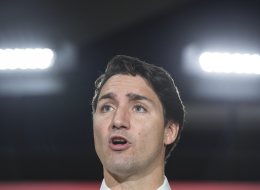
Justin Trudeau Promises Funding For Light Rail Project In Montreal
CP Ai??|Ai?? By The Canadian Press
Posted:
MONTREAL ai??i?? Liberal Leader Justin Trudeau promised new money for two big transit projects Thursday in Montreal and touted his plan to run deficits and spend on infrastructure ahead of Friday’s leaders debate in Quebec.
Trudeau made the announcement in a province not unfamiliar with deficits, and tried to differentiate himself from NDP Leader Tom Mulcair as the only progressive option on the economy and spending stimulus.
“Mr. Mulcair made the wrong choice. He chose not to listen to what Canadians have been telling all of their leaders over the past year ai??i?? that now is the time to invest, now is the time to grow our economy,” Trudeau said at a forklift repair plant.
“He’s put forward a plan (to balance the budget) based on Stephen Harper’s framework.”
Throughout the question-and-answer session with reporters, Trudeau frequently repeated the accusation that Mulcair made the wrong choice by promising to balance the budget ai??i?? even while fielding a question on post-secondary tuition.
Trudeau’s comments drew a sharp rebuke from Andrew Thomson, a former Saskatchewan finance minister running for the NDP in Eglinton-Lawrence in Toronto.
“Justin Trudeau’s plan is based on broken promises, bad math and a $6.5 billion cut to services,” Thomson said.
He said Trudeau promised in August to spend $5.8 billion on transit over four years, but when he released his fiscal plan, he’d cut $150 million from that.
“If he’s breaking these kinds of promises before election day, imagine what he’ll do after.”
Trudeau’s Liberals are trying to gain traction in Quebec, after securing a handful of seats in the last election. With the NDP and Liberals both trying to convince voters they are the alternative to the Conservatives, Trudeau has been playing up his pitch that only the Liberal spending plan will boost the economy.
The NDP and Conservatives have also promised infrastructure spending, however, and accuse Trudeau of making spending promises that exceed his deficit allowance.
He made the announcement in the riding of Lac-Saint-Louis, a longtime Liberal bastion on Montreal’s West Island and one of the few seats considered safe.
His promise Thursday was to help fund a rapid transit system to the area, as well as a light-rail project on the Champlain Bridge, which connects Montreal to the suburban South Shore. A Liberal government would spend $20 billion on transit infrastructure alone over 10 years across the country, he said.
But while the economy appeared to be top of mind at the start of the election campaign, discussion has often diverted to questions of Canadian identity ai??i?? whether women should be allowed to wear the niqab during citizenship ceremonies and whether Canadians with dual citizenship should lose their Canadian one if convicted of terrorism.
The Bloc Quebecois has run ads attacking Mulcair that portray a woman wearing a niqab. Conservative Leader Stephen Harper got a loud round of applause from supporters Wednesday in Montreal when he pledged to legislate a ban on wearing face veils during citizenship ceremonies.
Trudeau blamed the other parties for the focus on identity issues.
“Our opponents are falling down into identity politics ai??i?? the politics of fear, the politics of division, the politics of personal attack.”
“If my opponents want to try to distract people so that Canadians don’t realize they have no plan for economic growth and no change to offer Canadians…then I find they’re missing the mark,” he added in French.








Recent Comments