The $1.8 billion and delivered on budget, Valley Line is a low-floor urban light rail line in Edmonton, Alberta. The 13.1-kilometre (8.1 mi) line runs southeast from downtown at 102 Street stop to Mill Woods Town Centre at Mill Woods stop, and connecting to the Capital and Metro lines at Churchill station in downtown.
Even with inflation applied to the LRT cost which included the yard and LRV’s, this line is half the cost of the Langley Extension. This is just using the $4.1 Billion cost without, the new cars (5 – 5 car trains) needed or the OMC #5 and without the expected cost increase due to post Covid & Ukraine war inflation.
Oh yes, LRT operates in snow as it has done in Edmonton since 1978, something our balky MALM system has a problem with.
Long-awaited Valley Line Southeast LRT officially opens to passengers
City officials, excited residents gathered to witness the inaugural ride
The Valley Line Southeast LRT officially opened to passengers early Saturday morning.
The long-delayed transit line finally opened this weekend, nearly three years behind schedule, and hundreds of people woke up before dawn to catch the first ride.
The first trains rolled at 5:15 a.m. from the stops at Mill Woods and 102nd Street, downtown.
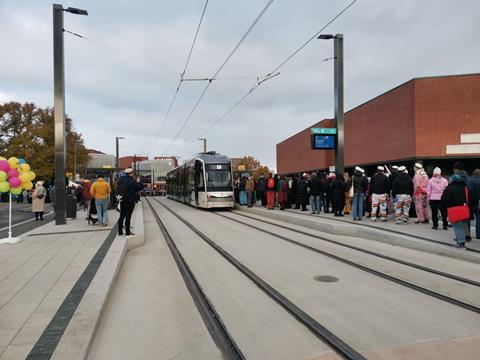
City officials, excited residents, and transit authorities gathered to witness the inaugural ride. As the ride started, passengers of all ages clapped, sang, and chanted to celebrate the occasion.
Joshua Stubbard showed up in a tuxedo with a bottle of champagne.
“[The train] is going to make getting around much easier. Getting south anywhere in Edmonton is difficult,” Stubbard told CBC News.
Stubbard said when he heard that the train was going to begin operating, he made plans with his friends to catch the first ride.
“We wanted to make it a whole celebration,” he said.
The inaugural train carrying passengers took off before dawn on Saturday from the stops at Mill Woods and 102nd Street, downtown. (Danielle Benard/Radio-Canada)
Kiyoteru Lee got on his bike at 4:00 a.m. to catch the first train departing from downtown Edmonton.
He said he was pleasantly surprised to see the crowds.
“I thought I’m the only one who geeks out on this stuff,” Lee said.
“It was totally unexpected but very good to see that a lot of people are participating in this and care about the things in their own city.”
The long-delayed 13-kilometre, low-floor line will connect passengers to the downtown from the southeast Edmonton neighbourhoods of Mill Woods in 30 minutes.
In an interview Friday, Ward Métis Coun. Ashley Salvador said she would be on the first train boarding at the 102nd Street stop downtown to be a part of the “historic moment.”
“Being able to have that direct connectivity into the heart of our city is so incredibly important,” she said. “We want Edmontonians to be able to move around their city quickly, efficiently, safely in ways that work for them.”
The long wait
The $1.8-billion project, a public-private partnership with Trans-Ed, was supposed to be operational in December 2020. Almost three years and many tests later, it is finally open to members of the public.
It is expected to serve up to 30,000 riders per day.
Mill Woods residents Joan and Len Huculak bought their home in the neighbourhood in 1974, enticed after hearing talk about a potential train line from their realtor.
Almost 50 years later, the couple said they plan to catch a train from Grey Nuns station today and check out the downtown library which they haven’t seen since its revitalization in 2020.
“To go downtown would be a treat,” Joan Huculak said.
“To go for supper and then just go for a walk about and then come back or something just for a change.”
Mobility issues and the lack of parking are other reasons the couple are excited to see the train line open, said Len.
“Rather than taking a car and driving down there, take the LRT and make it an excursion,” Len Huculak said. “I’m looking forward to that convenience.”
The Valley Line Southeast features 11 stations, including stops at major hubs such as Davies Station, Holyrood Station, and the Muttart Conservatory Station.
On Saturday and in the short term, trains are going to run about every 10 minutes between the start of service until 9:30 p.m., in both directions, Monday to Saturday.
After that time, a train will come every 15 minutes until service ends for the night at 1 a.m. On Sundays, the train will run every 15 minutes.
Jayci Shkopich, 32, said she will be using the new LRT to commute to her classes at MacEwan University every week. Not only will it save her from the long drive and icy roads in the winters but it’ll save her about $200 in monthly parking fees.
“Until the end of spring semester, I’m going to be saving like $800 or $1000 which is insane because I already get free transit because I’m in school,” Shkopich said.
While the LRT is designed to have trains run every five minutes during peak periods on weekdays, the city is giving itself “breathing room” before providing service at full capacity at the advice of other jurisdictions, said Bruce Ferguson, branch manager for LRT expansion and renewal for the city.
“So if something does pop up, then you’ve got time to work on it,” Ferguson said Thursday.
The city does not have a time frame of when the frequency will pick up, but it could in the next month or two, said Ferguson.
In the meantime, the 73A and 73B Mill Woods buses, which run parallel to the Valley Line, are going to run until February 2024.
Mr. Havacow is, what I call, a transit expert. He has worked in the field for decades and has a wealth of knowledge on all forms of transit.
Cutting through the hype and hoopla of politcal and bureaucratic promises, claims, and what can be best called, propaganda, Mr.Cow calls it as it is.
Why is he anonymous?
Simple, in Canada and the USA, telling the truth can get one or one’s company blacklisted, thus if one wants the truth to be known, they post under pseudonym. Mr. Cow, the Major, Cardinal Fang and a few more can comment without fear of retribution from provincial, federal or corporate entities.
The following is in answer to a chap who uses the moniker of Legoman, which by his posts, is associated with TransLink.
The following comment by Mr. Cow, deserves a post of its own because of the vast amount of misinformation presented by politicians and bureaucrats, who, quite frankly, don’t give a damn about transit, and only invest in transit to win elections.
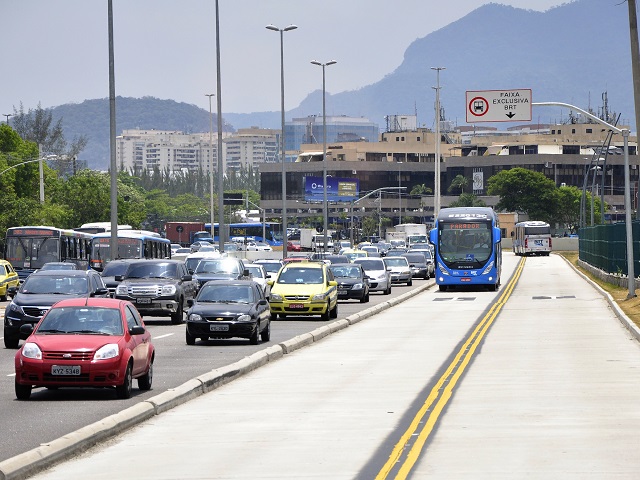
BRT bus-jam in Brisbane, Australia.
@Legoman0320 in North America you are never going to see fully enclosed BRT stations anymore, they are just too expensive unless you have winters like Ottawa. The same for off board fare payment, this means expensive fare gate devices in each station, most likely unmanned stations (absolute waste of time). You do that in China, or South America with their truly gigantic passenger numbers. In a European or North American context, that’s just too much like a light metro (Skytrain) or a heavy metro (Toronto subway, Montreal Metro). Remember, politicians build real BRT to try and save capital and operating costs, compared to rail based operating technologies.
Lastly Bi-articulated buses still aren’t road legal in North America (Canada,USA). Ottawa tried in the 1990’s and Transport Canada & MTO (Ministry of Transportation Ontario) were forcing O.C.Transpo to jump through multiple hoops to allow them. This is a transit agency with the most extensive heavy BRT system in North America and by far the most experience in running BRT and still they were forcing limitations on them that would have made even basic operations with Bi-articulated buses difficult.
Bi-articulated buses are difficult to maneuver in anything but absolutely clear roads, Ottawa’s Transitways were very busy making maneuvering difficult. Like standard articulated buses, they are easily humbled by moderate amounts of snow or ice. Most models still have hill climbing issues on wet or icy roads.
Bi-articulated buses are twice as expensive as standard articulated buses, currently no North American companies produce a model, this means foreign suppliers with wickedly expensive part packages. Even Nova Bus, the Quebec based but mostly Volvo owned company, uses GM parts for its North American vehicles, due to the fact that even their own European Volvo parts are far more expensive than GM and GM look alike parts. Bi-articulated buses have far more non standard parts and components, like their entire engine and drive train system, braking systems and transmission. Non standard systems and components means higher maintenance and training costs. They also don’t last any longer than standard articulated buses, sometimes appreciably less than standard buses, although that is design dependant.
Even Ottawa is moving away from articulated buses and switching to the newer North American friendly double decked buses. They hold more passengers, more stable on hills, they are not humbled by just 10-12 cm of snow, their easier to maintain and most important, they won’t spontaneously fish tail like articulated buses can.
Although double-deckers have their own serious issues it seems the industry has turned away from articulated buses in general lately, we will see. Ultimately though, the main issue with BRT is still its perceived savings in operations vs. actual savings in operations. BRT works as long as passenger numbers are below a certain level. That level changes with each new system and it’s own operating and physical characteristics. Generally, at what level does adding another bus to carry more passengers stops saving money and starts costing extra money to operate. BRT has some interesting issues:
1. At some level of passenger demand the BRT infrastructure needed to handle greater passenger demand, more and larger buses, forces said infrastructure to be more robust and or physically larger, thus more expensive, than the infrastructure needed to move the same number of passengers with rail based technology. At their core, buses don’t always make great rapid transit vehicles compared to rail based ones.
2.BRT works best in environments where people costs are low and infrastructure costs are high. This limits their effectiveness in first world countries. At higher passenger levels, the operating costs of BRT get higher than rail because you can’t connect the vehicles together into a train, all with one operator. Buses also require more mechanical equipment and staff for maintenance, than rail based vehicles.
3. BRT is not like a rail line with buses. If your so called experts spout this more than once, run for the hills. BRT and Rail operations are fundamentally different. Good BRT design can do things that rail just can’t or more precisely, shouldn’t do and or even attempt to do. Many things that BRT supporters claim that BRT can do as well as rail technology end up as spoiled opportunities because buses can’t generally operate in the same way, especially economically efficiently, as a train.
I could go for days on this last point, entire volumes of books have been written on this issue. You will just have to trust me on this. 30 years of working in this industry and 30 years as a BRT passenger in Ottawa teaches you a few things. I would suspect that, many long time Ottawa transit passengers know and understand a lot more about the advantages and disadvantages of BRT operations than many of your B.C. based experts do.
When is Bus Rapid Transit just a an express bus route? When TransLink claims an express bus route is BRT
Real BRT operates on a fully dedicated Rights-of-Ways, with priority signalling at intersections, offering headway’s in the 2 minute to 5 minute ranges.
BRT operating on dedicated R-o-W. Not happening in Vancouver.
What TransLink is palming off onto the public is a tarted up bus service like the Broadway B-99, with some HOV lanes to create the illusion and with our extremely gullible media, will be an easy sell to the public.
Here is the core issue, TransLink just cannot tell the truth; it cannot be straight with the public.
But what would one expect when the CEO is an American spin doctor selling snake oil to the rubes!
The real insult to both the transit customer and the taxpayer is that the real cost of real BRT, is only slightly less s than at-grade light rail, which has a far bigger bang for the taxpayers buck.
The following graph from Ontario’s MetroLink tells the tale of the real costs involved.
Sad to say, TransLink and the Mayors council on Transit are again deceiving the public with fake news about the regional transit system and it seems the premier and the provincial NDP government are in full agreement with this.
Shame on TransLink. Shame on The Mayors Council. Shame on Premier Eby!
TransLink unveils three new bus rapid transit routes in Metro Vancouver
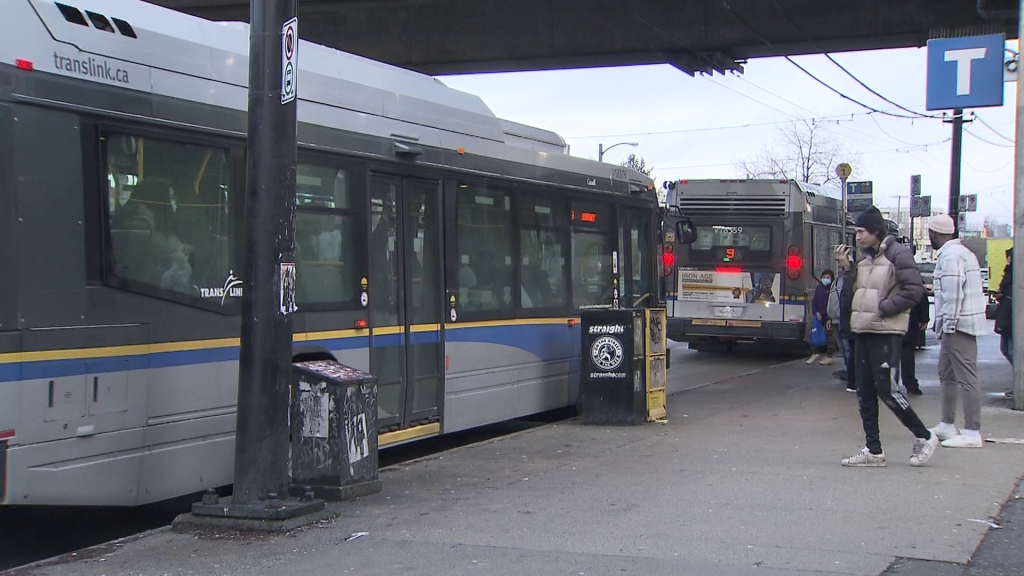
Transit services in Vancouver. (Allan Chek, CityNews Image)
TransLink has identified the first three bus rapid transit routes coming to Metro Vancouver.
According to the Mayors’ Council on Regional Transportation, the three new “priority corridors” will be King George Boulevard from Surrey Centre to White Rock, Langley Centre to Haney Place, and Metrotown to the North Shore.
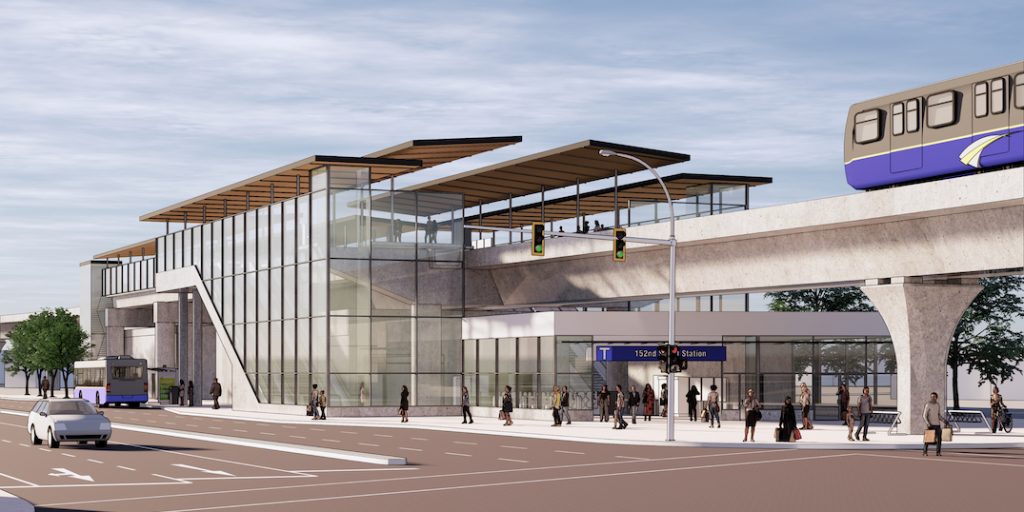
Bus Rapid Transit (BRT) “is a high-frequency rapid transit service with dedicated bus lanes and rail-like stations.”
Mayors’ Council Chair Brad West says the three new corridors are part of the first phase of the 10-year Access for Everyone Plan.
“The three new corridors being announced today had been selected to maximize people’s access to rapid transit based on ridership potential, future housing and population growth projections, as well as strong support from mayors to bring these projects to their communities. Simply put, these rapid transit projects … will help us unlock housing potential and keep up with record-setting population growth,” he said Thursday.
West says the B.C. government’s plan to densify housing near transit hubs across the province “underscores the urgency to expand our transit system.”
“From a regional standpoint, each of these corridors will provide major improvements to residents in need of better transit,” West said.
BRT corridor timeline
The Mayors’ Council says it will now be “stepping up” engagement with municipalities to “nail down a concept design.”
“From there, we’ll start to do engagement with the public in the spring, summer of 2024. As we get into 2024, we’ll start to engage the public as we have that alignment, to really discuss and get their feedback. It’s so important to us to get public feedback to understand how this will impact people’s lives, right? This transit expansion is going to be such a game changer for the region, I think it’s going to help a lot of people,” explained TransLink CEO Kevin Quinn.
“From there, we’ll in 2025 likely move, once we have an agreement on that pending funding, we’d moved to procurement stage and then likely construction, potential service rolling out in 2027.”
Transportation and Infrastructure Minister Rob Fleming says the BRT plan comes “at an incredibly good time for TransLink,” adding these BRT corridors and other future plans will help the province deliver on its housing goals.
“We also want to anchor the BRT plan that is under discussion today to new legislation that we passed as a government around transit-oriented development. We have to make smart investments in our transportation network that also meets the goals of providing more affordable housing choices for people in this region and that’s what we aim to do,” he said.
səlilwətaɬ (Tsleil-Waututh Nation) Chief Jen Thomas says “safe, quick, and reliable transit” is critical to the Tsleil-Waututh community, “to keep us connected to the wider community and to transport us to and from work and school.”
Squamish Nation Chairperson Khelsilem echoed the importance of transit, noting BRT through the North Shore “presents a unique chance to enhance the quality of life for all residents, including the Squamish People, who have been an integral part of this region for nearly 400 generations.”
“Establishing a dedicated Bus Rapid Transit link from Park Royal to Metrotown promises improved accessibility to essential services, job opportunities, and community resources while alleviating congestion,” Khelsilem said. “The long-awaited prioritization of the North Shore is a welcome development, and the Squamish Nation looks forward to collaborating with local, regional, provincial, and federal governments to work together to create shared benefits for all our communities.”
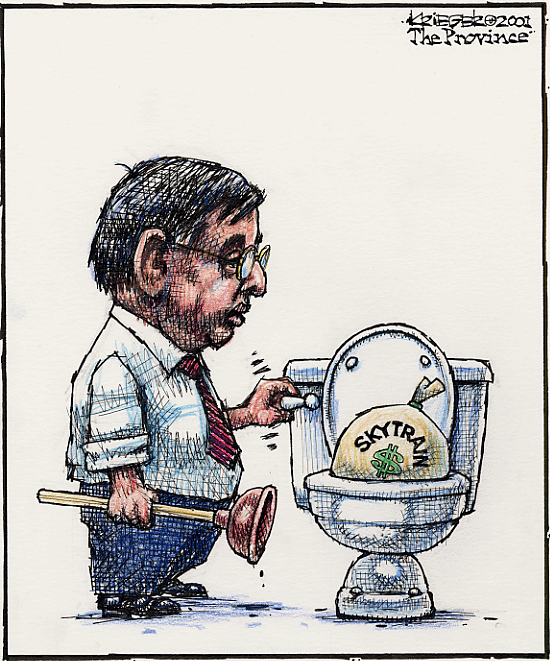
SkyTrain has always been used at a photo-op for provincial elections.
And the David Eby NDP government is no different. Announcing SkyTrain extensions win votes. Whether spending huge sums of money actually does anything to improve transit is another question.
Contrary to the claim in the news article; “The project is estimated to cost $4.01 billion.“, the cost to extend the Expo Line to Langley will cost more, much more.
In excess of $6 billion for the 16 km line, metro politicians are being quietly told!
Not included include in the cost:
Operations and maintenance centre #5, estimated to cost $500 million to $1 billion.
A complete electrical rehab of the Expo and Millennium lines, estimated to be around $2 billion.
The resignalling of the Expo and Millennium Lines to permit higher capacity, contract let to Thales, $1.47 billion.
The extra cars needed to operate on the 16 km line, estimated at six to seven 5-car train-sets, cost unknown.
The replacement of all switches on the Expo line with higher speed switches to permit an increase in capacity, (this means expensive structural work on the guideway), cost unknown.
Station expansion and rehab, cost unknown .
All this for a 16 km line that according to TransLink will carry fewer customers than the Broadway B-Line.
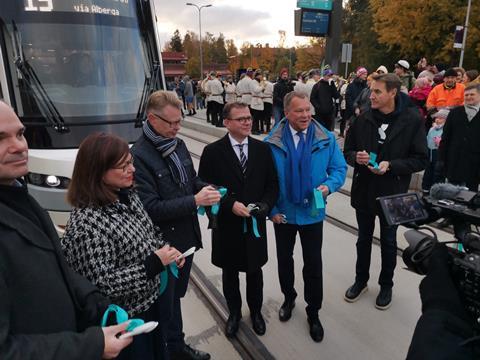
In BC, at election time, photo-ops cutting ribbons for SkyTrain makes good politics, that is, until the bills start coming in!
Surrey SkyTrain expansion work set to begin in 2024: Fleming
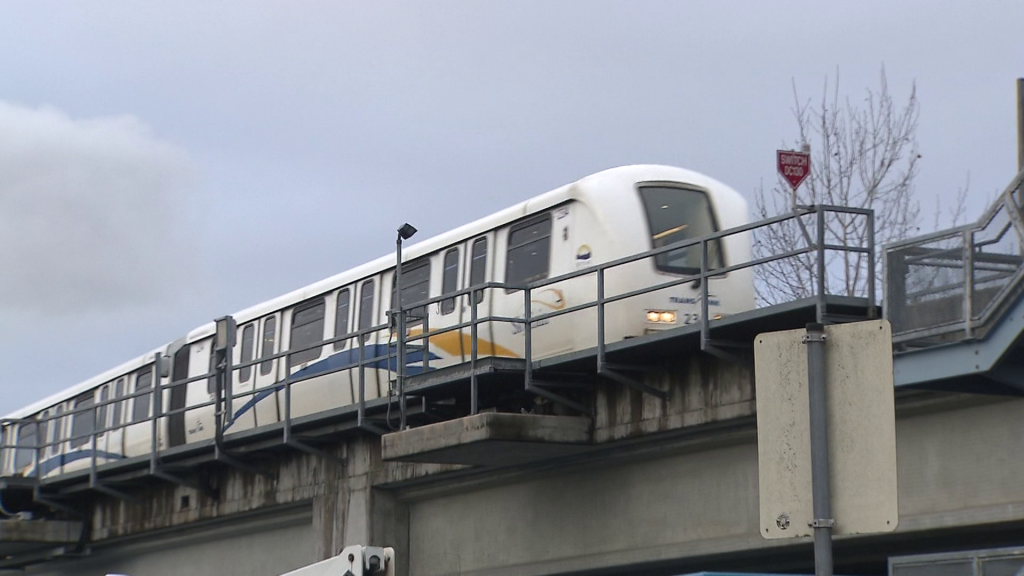
A SkyTrain in Vancouver on Dec. 31, 2022. (Allan Chek, CityNews Image)
B.C.’s minister of transportation says the province is working to keep up with Surrey’s growing population.
Rob Fleming says part of that means ensuring the city has the transit it needs, adding work on the multi-billion-dollar Surrey Langley SkyTrain is set to begin in 2024.
“We expect, in a few months’ time, in the new year, to be awarding contracts. The procurement is proceeding, we will begin this project in 2024 and it’s all going to be done in one phase,” he explained Wednesday.
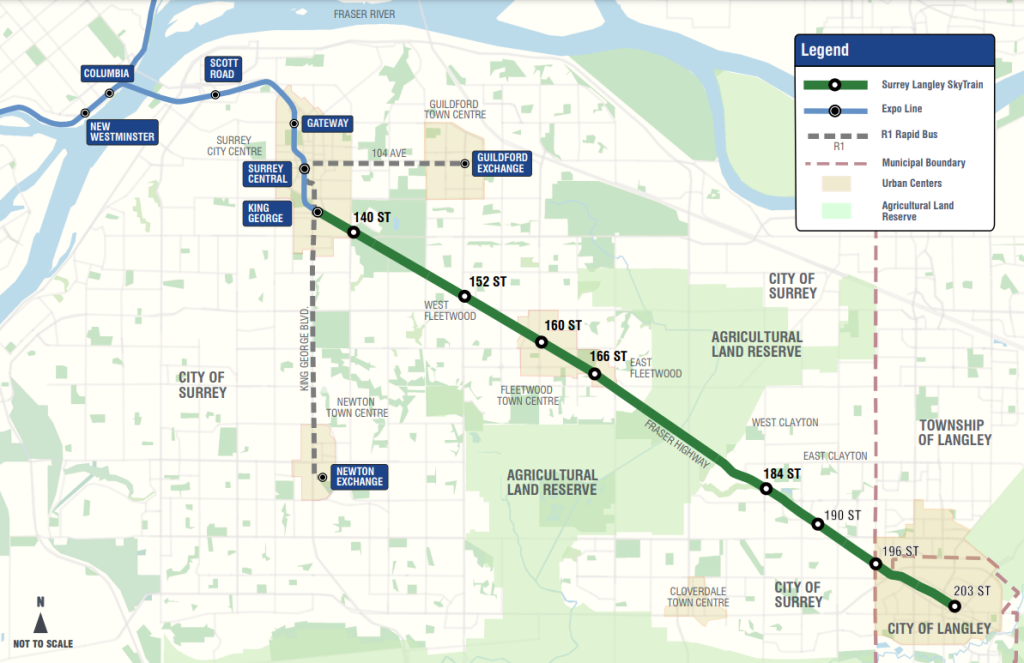
A map showing the expansion of the Expo Line as part of the Surrey Langley SkyTrain project. (Courtesy B.C. government)
Fleming says 430,000 people use transit in Surrey every day. Given that figure, and the anticipated increase in the population, he explains it’s important to “stop chasing growth and start shaping growth.”
“We know that Surrey is poised to become the largest city in the province, perhaps by 2036. It has grown by 100,000 people just in the last decade, and TransLink has put out an investment plan that calls for new bus rapid transit,” the transportation minister said, adding there is a lot of opportunity in Surrey to rebuild transit.
Fleming provided an update on the SkyTrain project to the community Wednesday night. That came the same day the province tabled potential legislation focusing on new housing builds near transit hubs. Following that announcement, the TransLink Mayors’ Council stressed the need for additional funding to “dramatically expand public transit service.”
“The fact is, you can’t have transit-oriented development without transit, and TransLink’s current system is unable to keep up with growing public demand for services across this region,” said Mayor Brad West, the chair of the Mayors’ Council.
“With transit in Metro Vancouver currently frozen at 2019 levels, we need to see both the provincial and federal governments commit funding to dramatically expand public transit service. This legislation represents one of the most significant changes to land use and zoning policy that we’ve ever seen in this province, but it won’t succeed unless our three levels of government work together to deliver better transit in this region.”
The province says the SkyTrain expansion will extend the Expo Line 16 kilometres from King George Station in Surrey to 203 Street in the City of Langley, with eight stations and three transit exchanges.
OK folks, the following is a small list of the many European regional railways, operating on single tracks or which route operates on portions of single track.
Why am I posting this, you say?
Last week I received an angry phone call from a gentleman who claimed had done some work for Metro Vancouver on the subject of reinstating a passenger service on the former BC Electric interurban line to Chilliwack.
He wanted me to: “…….cease publishing blog posts on reinstating the former interurban passenger service and refrain from sending mail referring to reinstating an interurban to the various Metro Vancouver Councils!”
He further said; “I was wasting his time because he had to debunk what have stated in various mail and he was tired of dealing with the issue.”
I stated that; “I was not an expert, nor claimed to be but an informed taxpayer who has a interest in local transit and transportation affairs“, or something like that anyways. I further added, “that what had been stated in recent mailings and the RftV blog, was information from credible media sources and from real experts in Canada, the USA, the UK and Europe, which I wished to share with those who are making the decisions on transit and transportation.”
I did manage to pry what offended him the most and that was the concept of single track operation as; “according to TransLink, no viable passenger service could be operated on single track!”
Really? Doesn’t the Canada Line have 600 metres of single track operation in Richmond Centre and almost 700 metres of single track at YVR? (of course this was an after thought and i wished I was speedier with the repartee!)
He then warned that “some sort of legal action would be taken against me if I continued“…………. click! Less than two minutes and from a private number as well.
To be honest, I was very slow on the uptake, didn’t quite get his name or who he worked for, or was he just a member of the SkyTrain Lobby who is in denial.
Well I heard that threat before and all I can say is bring it on!
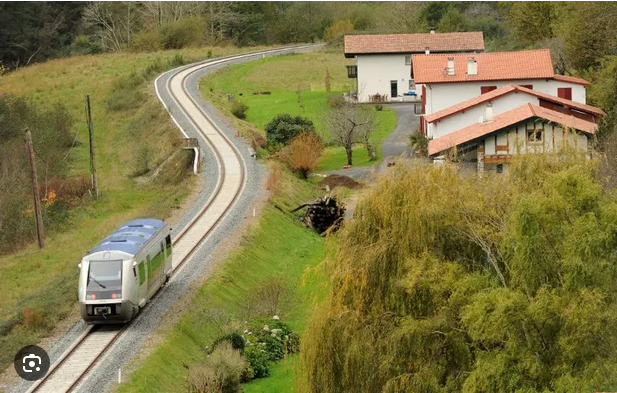
The following are videos from YouTube showing single track operation on all or portions of the line. There are a lot more “Driver’s view” videos and I would recommend watching them, if only to have a scenic train trip, through delightful countryside holiday in the quiet of your home.
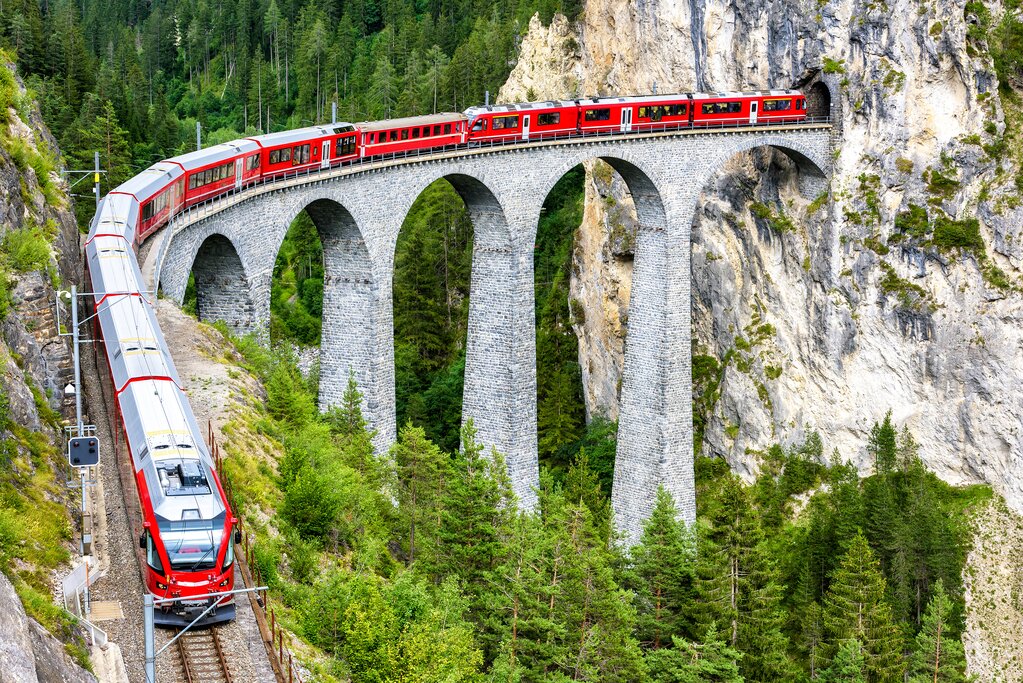
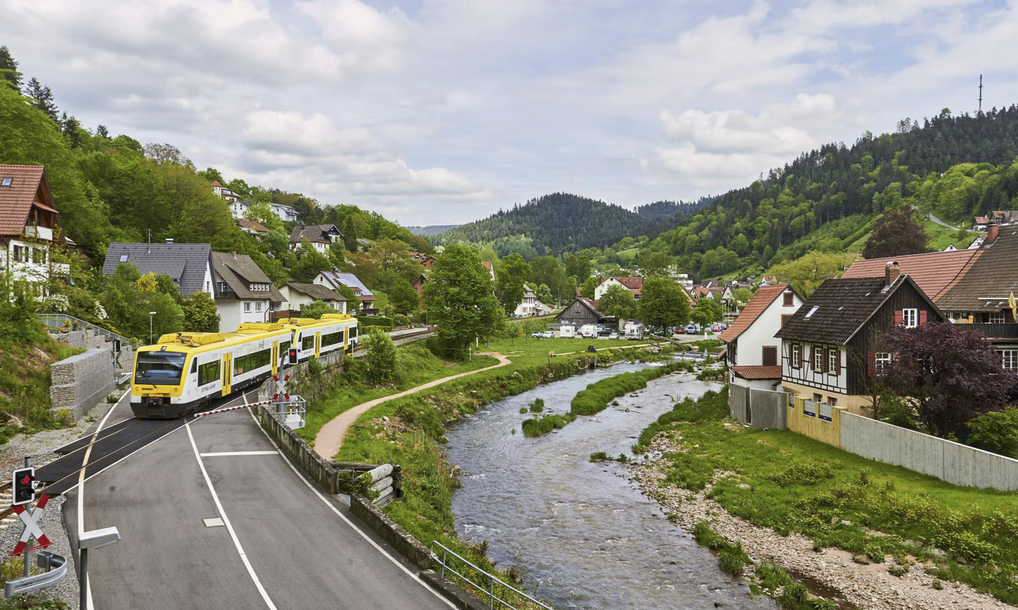
Classic German regional railway in the Black Forest.
Please cut and paste to view or open on a new tab.
The problem with automatic (driverless) light metros is that when the system fails, the entire system fails. Regular customers of Vancouver’s SkyTrain light-metro can attest to this.
There are many issues that a automatic transit system must deal with, including computer issues and maintenance. Poor maintenance leads to computer issues and maintenance is expensive. Automatic light metro’s need a rigorous program of preventive maintenance to operate problem free, far more than systems with drivers. Vancouver’s SkyTrain system requires more maintenance than conventional systems with drivers, costing around 60% more to operate than a conventional system.
This is why automatic light metro’s age very badly because as maintenance is cut to reduce operating costs, due to higher operating costs as the system ages, leading to more “down” time. It is a viscous downward financial spiral.
Of course I am being polite, because Montreal transit customers, particularly REM customers will soon find out how automatic light metros operate in the snow.
They don’t!
Entire REM line shut down during rush hour due to computer problem
A train is seen stopped at a station during a media tour of the the Reseau express metropolitain (REM) in Brossard, Que. on Thursday, June 10, 2021. The automated light train network will have 26 stations and 67 km of tracks across Greater Montreal. THE CANADIAN PRESS/Paul Chiasson
Montreal’s new light-rail network experienced “technical problems” during the afternoon rush hour on Monday, as some passengers reported on social media that they were stuck on the train for close to an hour.
The Réseau Express Métropolitain (REM) said in a post on X, formerly known as Twitter, that there was a service disruption at Montreal’s Central Station. The post was published at 5:26 p.m.
A previous post from 3:45 p.m. said the REM was down heading north from Brossard.
In an email to CTV News, an official from CDPQ Infra, which operates the REM, said, “Technical problems with the computer system are causing problems and errors at the control centre,” and that a backup plan was in place.
“No safety issues have been raised,” the email stated.
Passengers took to social media to air frustration with the breakdown and the lack of information from the operator.
One person on X said he and several other passengers were stuck on the train between two stations and demanded to know when they would be able to get off.
Another person wrote: “Our train is stationary near Panama. Can we at least have some information?”
Shortly after 6:30 p.m., REM service started to be gradually restored, according to an update from the REM’s X account.
COMMUNICATION ‘NEEDS TO BE IMPROVED’: CDPQ INFRA
Philippe Batani, vice-president of public affairs at CDPQ Infra, confirmed in an interview with The Canadian Press that there was also a service breakdown earlier in the day on Monday.
“We’re still in a break-in period, but this is a problem we’ve encountered for the first time today,” he said.
“At the end of the day, the problem became more serious, forcing us to shut down the entire system so that we could take corrective action”, he added, adding that “minor slowdowns” were observed throughout the day.
Batani acknowledged that the communication issue needs to be improved.
“We’re taking notes. It’s been mentioned to us that the way we communicate information to users when there are breakdowns needs to be improved,” he said. “It’s something that’s at the top of our (priority) list.”
TransLink has now admitted that they are $4.7 billion in the hole and Rail for The Valley has told you so, many times in the past.
The $11 billion to extend the Expo and Millennium Lines has now landed, like the financial time bomb it is, onto the Mayor’s Council’s lap.
RftV has warned for over a decade that building a hugely expensive, yet obsolete light metro system instead as just as effective light rail, would haunt taxpayers and like a bad Halloween joke gone awry and now it has come true. TransLink’s inept planning and operation has plunged the region and its taxpayers into a $4.7 billion nightmare on East Columbia St.
Excuses and more excuses is all the taxpayer gets from TransLink’s well paid bureaucrats, which the word economy is not in their lexicon.
RftV has been chastised over and over again for asking “Show me the money.” Well, it now seems there was no money to show!
The Provincial government is also to blame because all this debt has been created by the premier’s Office using transit as a sort of pre-election photo-op gimmick to win votes.
Zwei sent a letter to now unelected Premier Eby (never has been elected as Premier) asking for a judicial inquiry on Transit and Transit planning, with all facts all based on published accounts by Canadian newspapers of note and all I got for my troubles is that all further correspondence must go through a provincial barrister.
Eby knows that this $4.7 billion financial hole is a politcal time bomb and he will hide behind the Mayor’s Council’s skirts like the politcal coward he is, even though the provincial NDP approved the spending of $11 billion (but never approved how to raise the funds) to extend the Expo and Millennium Lines, as reported here.
With financial restraint, now the politcal keyword in both the the next provincial and federal elections and the taxpayer getting more and more restless with proliferate spending by politicians and their bureaucrat masters on dubious projects. With more and more people are living on the streets, ever longer lineups at food banks and fewer coins in one’s purse, $4.7 more billion for gold-plated transit schemes may just tip the balance at the ballot box.
A report going to the Lower Mainland’s Mayors’ Council Wednesday shows that the transit authority is facing a structural deficit of $4.7 billion.
While that loss is a projection, that is the forecasted gap between its planned expenditures and expected revenues if nothing changes in the next few years.
The report notes that the deficit “appeared” at the beginning of the COVID-19 pandemic in 2020, “where a significant decline in ridership resulted in suppressed fare revenue. While ridership has been recovering steadily, TransLink has been facing rapidly growing costs as a result of the inflationary pressures, particularly labour and construction costs.”
It says fare rates and property tax increases were kept lower during that time to “avoid adverse impact on the Region recovering from the pandemic.”
Funding from senior governments’ has helped TransLink over the last three years, however, the report notes that the deficit really “starts becoming apparent in 2026, and grows progressively.”
“For the years 2026 to 2033, based on the scope of 2022 Investment Plan and before any additional scope of the 10-Year Priorities is included, the total funding gap is $4.7 billion. To fill this gap, TransLink would need approximately $600 million per year in new revenues starting in 2026.”
The report notes that the main reasons for the cash gap are inflation, service expansion, and debt servicing costs.
“The largest expense increase is caused by inflation, contributing $839 million to the funding gap. Of this amount, the largest portion ($551 million) is driven by labour rate increases due to negotiated settlements,” the report explained.
“The next highest expense driver is expansion, at $408 million. The addition of Broadway Subway, Surrey Langley Skytrain and Expo Millennium Line Upgrade projects result in additional costs needed to operate and support the expansion.”
The cost of borrowing money has also increased, as interest rates have steadily gone up since March 2022.
“Debt service costs have increased compared to 2018 Investment Plan, driven by an increase in capital spending. This is partially offset by lower borrowing rates than those assumed in the 2018 Investment Plan. As a result, debt service costs contribute $459 million to the funding gap.”
The region’s Mayors’ Council will receive the report Wednesday, with actions to address the deficit to come at a later date.
Europe’s newest light rail line just opened and our local tax hungry politicians and bureaucrats should take note!
Broadway subway – $2.7 billion for 5.7 km. (not including vehicles, electrical/signalling upgrades)
Proposed Expo line Extension to Langley – Almost $5 billion for 16 km. (not including vehicles, electrical/signalling upgrades)
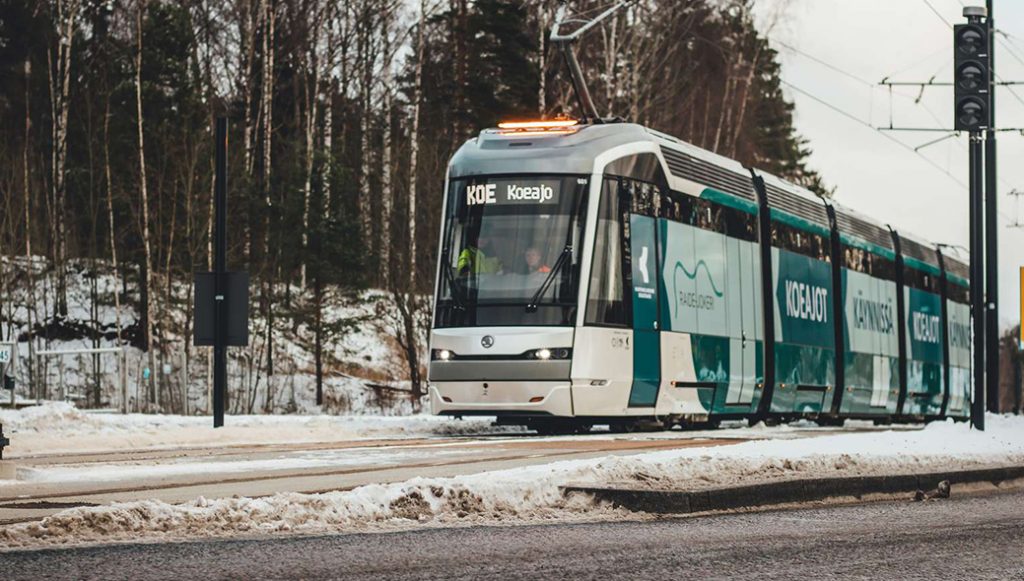
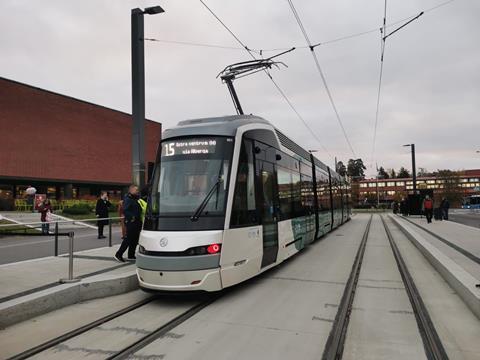
Helsinki’s Jokeri Line, including vehicles – $819 million for 25 km!
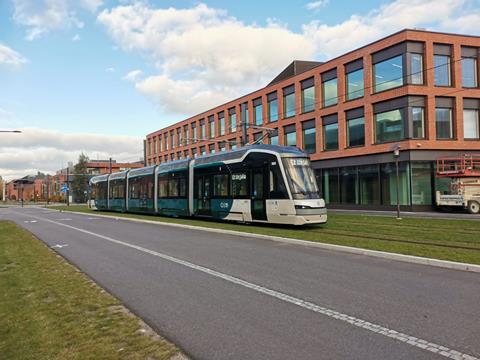
The Jokeri LRT ot Helsinki’s route 15, is a 25-kilometre (16 mi), 34 station light rail line connecting Keilaniemi in Espoo and Itäkeskus in Helsinki, Finland. The line started operating in October 2023, about 10 months ahead of the original schedule. The line will eventually replace trunk bus line 550, the busiest bus service on the Helsinki Regional Transport Authority public transport network.
The 25 km line cost €562 million or CAD $819 million and came in €13 million or CAD $19 million under budget and opened ten months early!
As Translink pleads poverty to any and all who would listen, a comment from American Transportation Engineer who worked on many pioneering US light rail projects, in 2008, when he shredded the Evergreen lines business case.
But, eventually, Vancouver will need to adopt lower-cost LRT in its lesser corridors, or else limit the extent of its rail system. And that seems to make some TransLink people very nervous.
Jokeri light rail line opens early and below budget
23 October 2023
FINLAND: Helsinki Regional Transport opened its 25 km orbital light rail line serving the Helsinki-Espoo conurbation for revenue service on October 21, almost a year ahead of schedule.
Running from Itäkeskus in eastern Helsinki to Keilaniemi in neighbouring Espoo to the west, the line is branded Jokeri as an abbreviation of JOukkolikkenteen KEhämäinen Raide Investointi (mass transport ring rail investment).
It runs in an arc around the capital, which is located on a pear-shaped peninsular connected by three radial highways. Around 16 km of the route is located in Helsinki and 9 km in Espoo.
Being promoted as an ‘express tram’, the Jokeri LRT is intended to replace bus Route 550, which since being launched in August 2003 has become HSL’s busiest with 40 000 passengers/day on weekdays. The end-to-end journey time of 65 min, an average speed of 25 km/h, is similar to the bus timetable, but the trams will not be subject to delay by traffic jams. The bus service is expected to cease running at the end of the year.
Planning and construction
The light rail line was first mooted around 1990, but it was not until June 2008 that the city of Helsinki commissioned a detailed plan, which was presented in May 2009.
The scheme was finally approved in 2016, and construction began in June 2019.
Tracklaying was completed in August 2022, and test running finished in September. The route was originally expected to open in summer 2024, but the target date was brought forward to January and then to October 2023.
The line has been developed by the Jokeri Rail Alliance, set up by the two cities to bring the promoters, designers and contractors into a single umbrella organisation. The double-track line has been built to 1 000 mm gauge for compatibility with HKL’s legacy tram network. It serves 34 stops at an average spacing of approximately 800 m. Three of these provide interchange to the metro stations at Itäkeskus, Aalto University and Keilaniemi and three to suburban railway stations at Oulunkylä, Huopalahti and Leppävaara. Construction of the line required four new bridges over the radial highways and one of the city’s ring roads, plus a 300 m tunnel at Patterinmäki.
Civil works were budgeted at €382m with another €108m for the rolling stock plus €70m for the dedicated depot at Roihupelto bringing the total to €562m.
The cost of the project has been split three ways. The national government contributed €84m, and the remainder has been divided between the municipal administrations in Helsinki (65%) and Espoo (35%). According to HSL, the line has been completed around €13m below budget.
Vehicles and services
The line will be operated by a fleet of 29 ForCity Smart Artic X54 supplied by Škoda Transtech. These are a longer version of the Smart Artic cars previously supplied to HKL and similar to those in operation in Tampere.
The five-section low-floor cars are 34 m long, with provision to incorporate an extra 10 m section if demand increases in the future. Each car can carry up to 214 passengers, including 78 seats and four spaces for wheelchairs or prams, and can run at speeds up to 70 km/h. The trams are finished in a white and petrol blue livery which like the interior was developed by Finland’s Idis Design.
Tram services operate from 04.30 to 01.15 each weekday, starting an hour later at weekends. As only 15 trams have so far been delivered the initial headway is 10 to 12 min, but the frequency will increase to a tram every 6 min when all 29 are available, allowing the bus route to be withdrawn. Zonal fares are charged, with a flat fare of €2·80 for travel in either Helsinki or Espoo and €3·10 for both zones, all valid for 80 min.
Environmental improvements include an estimated reduction of around 85% in CO2 emissions and 95% in NOx emissions compared to the 550 bus. The trams are expected to carry more than twice as many passengers, reaching an estimated 91 000 passengers/day by 2030. Total ridership is projected at 3·5 million trips for the remainder of 2023 and up to 15 million in 2024. The line is also expected to encourage commercial and residential development in both Helsinki and Espoo.
Plans are being developed for extension of the line to serve Viikki, Pasila, Otaniemi and Tapiola. This would follow the completion of HKL’s 5·5 km Crown Bridges light rail line linking Helsinki with its fast-growing eastern suburb of Laajasalo, which is scheduled to open in 2027.
I do not have the answers to these questions or rather I may know the answers but with libel and slander laws the way they are, I will not offer an opinion.
Why do TransLink and the Mayor’s council on Transit still continue planning for the obsolete Movia Automatic Light Metro system (A.K.A. SkyTrain), when it costs more to build, maintain, and operate than al other transit systems of the same class?
Why do we build subways on routes that do not have the ridership to support them, with a transit system, specifically designed to mitigate the high cost of subway construction?
Why does the provincial government allow TransLink to grossly misinform the public on the costs of building and operating light metro?
Why is the government afraid of much cheaper and proven more effective light rail transit?
Why is the government spending over $5 billion to Extend the Expo Line in Surrey, while doing all it can to discredit a 130 kilometre, Vancouver to Chilliwack regional railway, costing less than $2 billion to install?
Why did TransLink import American transit CEO’s from Baltimore, (where ridership declined , before pandemic, 2% year by year during his tenure), who knows little of local transit issues while ignoring “in house” managers who do have the local expertise to be CEO of TransLink?
Why does the provincial MoT refuse to accept any transit solution other than light metro?
Why does Premier Eby refuse a judicial inquiry into regional transit planning which by all accounts has failed miserably in providing an affordable alternative to the car?
Why did the provincial government allow a $1.65 billion light rail project, balloon to an over $5 billion light metro project in Surrey/Langley?
Why do the ruling elites at UBC support a $4 to $5 billion subway to the university, again on a route that does not have the ridership to demand a subway?
Maybe readers can ask these questions of their civic, provincial and federal politicians, but do not expect a straight answer!
The genesis of this blog was to advocate and support reintroducing a passenger rail service from Vancouver to Chilliwack and after 13 years since the release of the Leewood Study, which created a template for such a service, the need today is greater than it has ever been.
As the upper Fraser Valley’s population increases the stresses on the highway system is reaching a breaking point and the provinces simplistic “expanding Hwy. 1 philosophy” will prove to be unworkable as traffic will soon fill the added road space – as it has done everywhere else, creating even great gridlock at choke points!
Multi story condos at Vedder Crossing
With light metro construction both expensive and being very temperamental in winter conditions (it operates poorly in snow and snow it does in the upper Fraser Valley) using the existing and former BC Electric rail line only makes sense.
This map from 1961 shows clearly the former Marpole (Vancouver) and Chilliwack interurban routes
We are not talking commuter trains, such as the West Coast Express. The geometry of the track was not designed for long wheelbase double deck commuter cars. Using classic commuter trains would demand very expensive track adjustments and a slow operating speed and such use would not be cost effective.
This leaves two alternatives, diesel or electric articulated multiple units (D/EMU’s) or TramTrain. Both are designed to tackle tighter curvatures and sharp grades and thus major expensive track adjustments are avoided.
D/EMU’s are common in operation around the world and provide an affordable transport service.
A modern DMU operating on Ottawa’s Trillium Line.
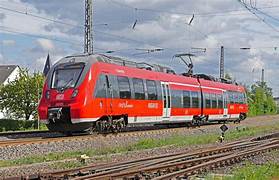
A German electric multiple unit (EMU) for branch line service.
TramTrain is a modern tram or streetcar, so designed that it can operate on both tram lines and the mainline railway.
From Wikipedia:
A tram-train is a type of light rail vehicle that both meets the standards of a light rail system, and also national mainline standards. Tramcars are adapted to be capable of running on streets like an urban tramway but also be permitted operation alongside mainline trains. This allows services that can utilize both existing urban light rail systems and mainline railway networks and stations. It combines the urban accessibility of a tram or light rail with a mainline train’s greater speed in the suburbs.
The modern tram-train concept was pioneered by the German city of Karlsruhe in the late 1980s, resulting in the creation of the Karlsruhe Stadtbahn. This concept is often referred to as the Karlsruhe model, and it has since been adopted in other cities such as Mulhouse in France and in Kassel, Nordhausen and Saarbrücken in Germany.
An inversion of the concept is a train-tram; a mainline train adapted to run on-street in an urban tramway, also known as the Zwickau Model.
A diesel powered TramTrain in Germany operating quite happily on a secondary branch line bringing a quality transit to areas which otherwise would not have.
Today there are now over thirty TramTrain operations around the world, with over forty being planned.
First in operation in Karlsruhe, Germany, in 1992 the success was almost instant, with a 479% increase in ridership on the initial rout in just 7 months! By eliminating just one transfer from commuter train to tram, ridership went from 533,600 per week to 2,554,976 million per week!
The Rail for the Valley Leewood Study is the only transit study in BC to date to mention TramTrain as a solution for reinstating the former BC Electric interurban service.
New Jersey’s River Line uses Stadler diesel powered TramTrains.
Rail for the Valley recommends using a diesel powered TramTrain, running from Marpole (15 minute transfer via the Canada Line tio YVR) to Chilliwack, serving, South Vancouver, south Burnaby, New Westminster, North Delta, Central Surrey, Cloverdale (with front door service to KPU and the proposed new hospital), Langley (KPU Langley campus) ; Trinity Western University (front door service); Gloucester Industrial Estates; Downtown Abbotsford, Huntington/Sumas (US Boarder & 15 minutes from YXX); Vedder/Sardis (gateway to Cultus Lake) and Chilliwack.
A 130 km, end to end journey time would be less than two hours, not bad when today’s congestion on Hwy.1 regularly sees one hour traffic delays or more!
Today’s cost for such a service is $1.5 billion to $1.7 billion and such a service would attract far more new customers to transit than the current 16 km, $5 billion to $6 billion extension of the Expo line to Langley, which TransLink estimates will carry fewer customers than Vancouver’s Broadway b-Line Express bus.
Why TramTrain?
TramTrain offers flexibility of service, especially for future expansion and allows for stand alone tram/streetcar routes in Langley, Abbotsford and Chilliwack.
Today, TransLink and the province continues planning for now obsolete light metro, with the belief that “they will get it right this time“.
By continuing to plan for a 1980’s “Edsel” of “rapid transit“, the region is rejecting the the 2020’s reality of “Prius” and “Tesla” type transit systems.
It is time our politicians and planners join the 21st century and get on board with affordable and flexible, modern TramTrain.


Sad to say, TransLink and the Mayors council on Transit are again deceiving the public with fake news about the regional transit system and it seems the premier and the provincial NDP government are in full agreement with this.


A train is seen stopped at a station during a media tour of the the Reseau express metropolitain (REM) in Brossard, Que. on Thursday, June 10, 2021. The automated light train network will have 26 stations and 67 km of tracks across Greater Montreal. THE CANADIAN PRESS/Paul Chiasson





 The Rail for the Valley Leewood Study is the only transit study in BC to date to mention TramTrain as a solution for reinstating the former BC Electric interurban service.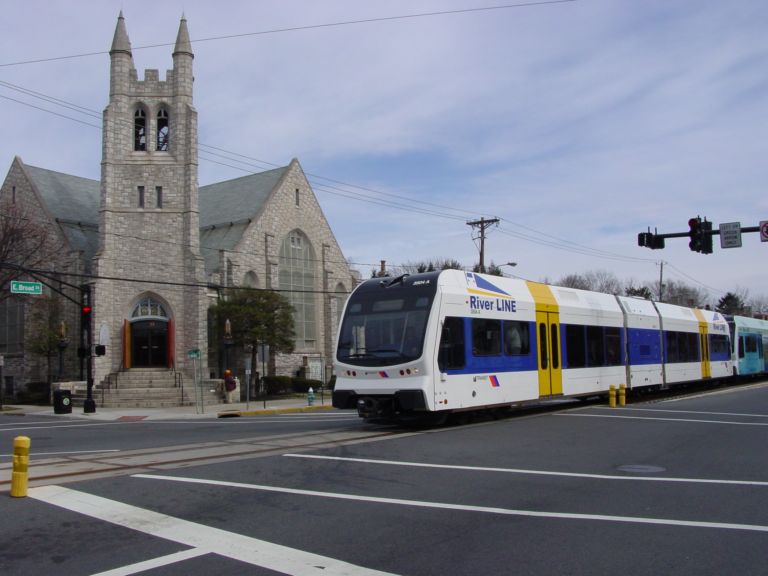



Recent Comments