Icy wires gives trolley buses trouble – Hey guys, we do get frost in Vancouver

Excuse me, but is it not December and was it notAi??Ai??this time last year we had a big snowfall to contend with? So why the problems with TransLink’s and West Coast Mountain Bus trolley fleet in the real first frost in December 2009?Ai??Ai??Unable to operate trolleybuses in the first heavy frost of the yearAi??Ai??demonstrates the sheer incompetence of the two organizations that run our regional transit system. When winter comes, all must be ready to ensure that Greater Vancouver’s public transit system operates without a hitch and transit customers are not inconvenienced;Ai??Ai??but of course with TransLink the customer always comes last.
Yesterdays fiasco in the first Ai??Ai??frost of the yearAi??Ai??must send shivers down the spine of VANOC, for if Vancouver’s bus system is crippled in a frost, what would a few cm of snow do to transit during the winter games? The 2010 Vancouver Winter Olympic Games must be the only Winter Olympic Games in history that the organizing committee pray that it doesn’t snow!
From News Radio 1130
Icy wires gives trolley buses trouble this morning
Many streets were lined with useless buses
Dean Recksiedler VANCOUVER (NEWS1130) | Wednesday, December 2nd, 2009
VANCOUVER (NEWS1130) – Huge problems for trolley buses this morning.Ai??Ai??Ice on the overhead wires is making it a tough go for the trolleys.
A de-icing crew was out overnight but they had problems with their vehicle so they couldn’t clear all the ice off.Ai??Ai?? TransLink’s Drew Snider says they don’t really have an option of even replacing the trolley buses, “The issue of course, with this being the rush hour, our diesel buses are already committed to other parts of the city, so in some ways our service delivery people are working on how maybe they can take one diesel from a route and shift things around.”
Snider isn’t sure when things will return to normal.
From The Centre For Transportation Excellence – The Anti-Public Transit Crowd
The following from the CFTE is interesting, as the following names pop up North of the 49th once in a while. Strangely, many in the SkyTrain lobby think that these people support SkyTrain because they attack modern Light Rail in the United States, but of course, they don’t build SkyTrain in the U.S. do they. Once ‘Peak Oil’ kicks in in a decade or so, these people will probably be relegated as a rusticAi??Ai??anachronism or 21st Century version of Luddites as American cities will be grappling with fuel shortages and rationing, inadequate transportation alternatives, but havingAi??Ai??miles and miles of very underused highways and expressways.

Randal OA?ai??i??ai???Toole, Executive Director of OregonA?ai??i??ai???s Thoreau Institute (http://www.ti.org).
His publications include: ISTEA: A Poisonous Brew for AmericaA?ai??i??ai???s Cities; Light Rail Myths and Realities; The Vanishing Automobile; and Light Rail: YesterdayA?ai??i??ai???s Technology Tomorrow. OA?ai??i??ai???TooleA?ai??i??ai???s background is in economics, and prior to being energized by PortlandA?ai??i??ai???s Urban Growth Boundary, he worked mainly on forest issues and against the federal subsidization of logging. He was the primary organizer of the February 2003 transit critics conference, “Preserving the American Dream.”Wendell Cox, a self-employed privatization proponent who lives in the St. Louis area who has written attacks on transit and Amtrak for the Cato Institute, the Heritage Foundation, the Highway Users Alliance and others. His work includes the Cato publication False Dreams and Broken Promises: The Wasteful Federal Investment in Mass Transit and has continued with numerous op-eds, seminars and radio and TV appearances in communities considering new transit investments. Cox has authored reports for the Wisconsin Policy Center and the James Madison Institute attacking the proposed Milwaukee rail system and the Florida Overland Express high speed rail project. CoxA?ai??i??ai???s background as an expert is derived from his appointment to the old Los Angeles County Transportation Commission as a citizen member. He has been employed by various conservative and road building groups over the years. Cox is also known for his anti-Portland and transit-bashing website, (http://www.publicpurpose.com), which Peter Gordon has cited in his presentations.
John Semmens, a fellow at Phoenix’s Goldwater Institute. His major contribution so far is the report “Public Transit: A Worthwhile Investment?” The report was an attempt to de-rail the Phoenix Transit 2000 initiative, which called for a .4 percent tax increase to expand bus service and build a light rail line there. The ballot measure was approved in March of 2000. Semmens’ report includes a number of fact sheets, including “A Declining Industry”, “A Financial Disaster”, “A Blight on the Economy”, and “A Failure Everywhere.”
Robert Poole, President of the Reason Foundation. He and others at the Reason Foundation have published detailed attacks on the Los Angeles MTAA?ai??i??ai???s rail projects and on transit investments in general. Poole came to Phoenix before the 1997 referendum to attack the proposed regional transit system at seminars and on the radio. This visit created negative coverage in several local media outlets, including the Arizona Republic, which was otherwise in favor of the project.
Stephen Mueller of the Independence Institute played a role in undermining support for the 1997 referendum on the Denver light rail project with his paper Light Rail In Denver: Taking Taxpayers for a Ride and numerous appearances in the local media.
John Charles of the Cascade Policy Institute in Oregon began as an environmentalist and has evolved into a libertarian who promotes congestion pricing and attacks transit and planned growth. His recommendations include: “Local transit taxes should be abolished, OregonA?ai??i??ai???s ties to federal government transit funding should be terminated, and publicly owned transit assets should be auctioned off. Stop any further spending on publicly owned urban rail systems.” He also travels to spread the word: the Phoenix Business Journal reported that “… Charles was invited to Phoenix by the Goldwater Institute.”
Peter Samuel, editor of the self-published Toll Roads Newsletter, wrote a piece for the Reason Foundation which makes the case that one can build oneA?ai??i??ai???s way out of congestion. Samuel is a libertarian and an advocate of building toll roads and converting existing highways to toll roads as a solution to transportation problems. His past work includes writings for the Cato Institute promoting highway privatization, and he is also associated with something called the Sutherland Institute, and has joined the fray over Salt Lake CityA?ai??i??ai???s light rail proposal, arguing that the absence of rail has been a reason for growth in the West.
Other main actors include Peter Gordon and Harry Richardson of the University of Southern California, Charles Lave of the University of California at Irvine, Steven Hayward of the Commonwealth Foundation in Pennsylvania, and others.
The most expensive transit rides – from MSN News
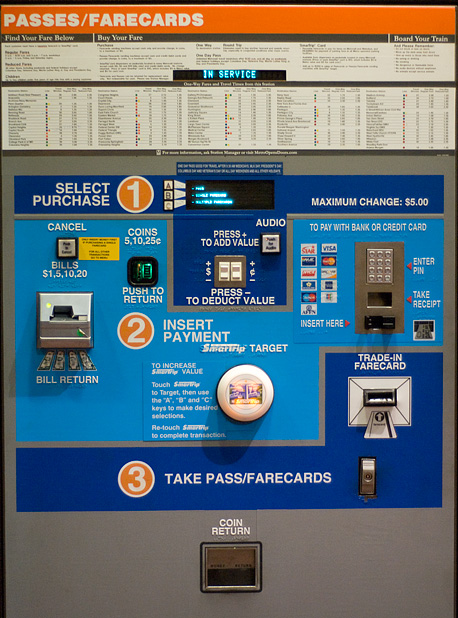
Though Vancouver is not mentioned, our transit fares are right there up with the big boys, with three fare zones, starting at $2.75 for one zoneAi??Ai??and $5.00 for traveling three zones; how soon will our one zone fare match that of Toronto’s and a three zone fare match that of London’s Underground?
From MSN Website
Note: All prices have been converted to Canadian dollars based on the exchange rate on Nov. 23, 2009.
London, England
Ticket price: $7
Annual ridership: 1.2 billionLondon’s Tube, the world’s oldest underground transit system, can also boast being the most expensive. While savvy riders will use an Oyster card to drop the single ride price to about $3.86, the average commuter would be forced to pay nearly twice that for a regular ticket during rush hour. The London Underground is connected to all of the city’s suburbs (and even, via the Eurostar railway, to Paris), but the extra distance will just cost extra. The initial $7 fare covers only one-way travel within the city’s core.
Berlin, Germany
Ticket price: $3.32
Annual ridership: 473 millionThe Berlin U-Bahn operates on the most extensive underground transit system in Germany. Yet to see the entire capital, don’t expect the above fare to cover it all. A one-way pass to roam the whole town would cost more than a dollar extra ($3.32 only buys you access to Berlin’s core trains). If you want to bring your bike, not only does the U-Bahn charge up to an additional $3.16, but there is another fee for commuters wanting to bring large dogs onboard.
Washington D.C., United States
Ticket price: $3.25
Annual ridership: 293 millionFares are so high on the D.C. Metrorail because it’s one of the few North American transit systems with no dedicated source of government funding. In fact, almost 60 per cent of the Metrorail’s operating budget has to come from fare revenue alone, so you can see why the price of a fare has gone through the roof. The good news with riding the D.C. Metro: Washington is said to have some of the most congested car traffic in the U.S. The bad news: a one-way ticket, if your commute is over a certain length, can easily jump to as much as $4.75.
Oslo, Norway
Ticket price: $5.67
Annual ridership: 73 millionLike many subway systems around the world, it’s much cheaper to ride the Oslo T-Bane if you buy your ticket in advance. But even with those savings (advance fares are still $4.16), this Norwegian transit system is one of only two in the world to routinely cost more than four dollars per ride. Make sure you get your pass stamped before you board a train in Oslo, too. Neglecting to do this could get you slapped with a $140 fine.
Stockholm, Sweden
Ticket price: $3.07
Annual ridership: 307 millionStockholm’s Tunnelbana boasts 100 well-decorated stations, leading to the transit system being known as the “longest art gallery in the world.” And creativity in design isn’t the only reason the Swedes are on the cutting edge. Riders of the Tunnelbana are some of the first in the world to be able to buy a metro ticket via text message. Commuters might be better served visiting an operator instead, though, as a text message pass costs at least $1.53 more than a regular ticket.
Toronto, Canada
Ticket price: $3 (as of Jan. 3, 2010)
Annual ridership: 471 millionWho knew that the tiny TTC, with only 69 stations in a city of 2.5 million, could rank so high on the world list of most expensive transit systems? Public outcry against the TTC has brewed for years, yet the commission’s decision to increase fares from $2.75 seems to finally have people bubbling over. While the system is expanding across Toronto, recent media reports suggest the city’s proposed 2010 budget would allocate a whopping 59 per cent of taxpayer dollars towards building A?ai??i??ai??? not operating A?ai??i??ai??? the TTC. Factor in the cost to run Canada’s most controversial transit system, and another fare hike isn’t hard to see down the road.
Sydney, Australia
Ticket price: $3.12
Annual Ridership: 3.5 millionThe most modest entry on this list, Sydney’s transit system is also the only one without a subway line. But while the city’s Metro Light Rail covers just 14 stops, don’t let its smaller infrastructure fool you. Sydney’s expansive bus system will cost you over the three dollar mark and A?ai??i??ai??? with a proposed subway system slated for a 2014 opening A?ai??i??ai??? perhaps soon will increase.
Brussels, Belgium
Ticket price: $3.16
Annual ridership: 136 millionCommuters in Brussels can save a bit of money ($0.47) by paying in advance, but the average rider who buys a ticket onboard the city’s metro is in for a hit on the wallet. The Belgium capital is home to some transit innovation: A demonstration of the city’s streetcars, for example, will run on a 1.8 km track in Vancouver at the 2010 Olympic games. Yet few accolades can ease the sting of a fare on the Brussels Metro, the third most expensive subway system in all of Europe.
See also:
http://railforthevalley.wordpress.com/2009/09/04/fares-fair-translinks-fares-compared/
A Flash From the Past – "Skytrain gathers speed despite cost to taxpayers" – From Charlie Smith & The Georgia Straight.
In light of TransLink’s newly departed CEO, Tom Prendergast’s parting shot at the SkyTrain Lobby,Ai??Ai?? A?ai??i??Ai??ItA?ai??i??ai???s overcoming the culturalAi??Ai??embracement of SkyTrain that has existed to date.A?ai??i??A? …… “TransLink is seeking to cut through the pro-SkyTrain A?ai??i??Ai??cultural biasA?ai??i??A?…………….”, which isAi??Ai??entrenched in all levels of civic and provincial bureaucracy; we should look at the warnings given almost a decade ago about the pitfalls with SkyTrain and light-metro.
Charlie Smith has been and is the most knowledgeable reporterAi??Ai??on regional transit issues and his relentless investigative reporting on SkyTrain has shed much light on the troubled light-metro. Certainly this article sheds some light on how our regional transit planning has been skewed to favor only a SkyTrain solution.
Though a truncated, generic heavy-rail metro was built instead of SkyTrain, it is interesting to have a look back and see how accurate Charlie Smith was about SkyTrain and theAi??Ai??RAV/Canada & Evergreen Lines and the financial mess that TransLink is in today.

“Skytrain gathers speed despite cost to taxpayers”
Georgia Strait,, February 8 – February 15, 2001
Charlie Smith
For more than two years, Lower Mainland critics of SkyTrain have waged a noisy and so far futile battle against expansion of the rapid-transit system. Four NDP cabinet ministers who have overseen the project-Joy MacPhail, Jenny Kwan, Graeme Bowbrick, and Mike Farnworth-have casually dismissed any arguments about the prohibitive cost of building SkyTrain.
Critics such as environmentalist Deming Smith, light-rail advocate Malcolm Johnston, transit consultant Ron Stromberg, UBC academic Peter Boothroyd, and neighbourhood activist Phil LeGood have also failed to persuade civic politicians on the boards of TransLink and the Greater Vancouver Regional District that extending SkyTrain will do nothing for traffic congestion and air pollution.
Even if SkyTrain is built to Coquitlam and to the corner of Granville Street and Broadway, there will be just 17,000 people on the system during the peak morning rush hour, according to the provincial Rapid Transit Project Office. That will leave almost half a million others relying on private vehicles and other forms of transit to get to work or school.
Meanwhile, B.C. Auditor General Wayne Strelioff has repeatedly refused requests from antitax crusader Liz James and environmental activist Dave Norman to audit the project, even though the Millennium Line is “potentially four months over schedule”, according to a capital-spending review last year by Deloitte Consulting.
At this point, the SkyTrain appears to be unstoppable, driven by powerful forces prepared to flatten any obstacle in its way. Frequently, the critics are dismissed with lectures about the importance of the GVRD’s Livable Region Strategic Plan (Stromberg prefers the term “Gullible Region Strategic Plan”), which can only succeed with a rapid-transit project linking major municipalities. Because provincial and local politicians don’t want to risk the wrath of merchants and drivers who might oppose a street-level light-rail line taking up two lanes of the street, the public is told that a rapid-transit line must be separated from the roadway. More buses are seen as impractical because they don’t “shape development”.
Hence, we get more SkyTrain, at great benefit to the contractors, engineering firms, real-estate developers, and shareholders in Bombardier Inc. To its growing legion of critics, SkyTrain is a disaster for neighbourhoods, taxpayers, and the vast majority of transit riders.
The Millennium Line-linking New Westminster’s Columbia Station with Lougheed Mall and Vancouver Community College’s King Edward campus-is meeting its $1.2-billion budget, the provincial RTPO insists, even though the guideway contractor has put in a claim for at least $35 million in added costs. The cost of another line linking Lougheed Mall with Coquitlam Centre has been estimated at $730 million, with $650 million expected to come from TransLink. Vancouver city hall has estimated the cost of a mostly underground extension from the King Edward campus along the Broadway corridor to Granville at $527 million, though that figure has not been confirmed by the Rapid Transit Project Office and has been ridiculed by SkyTrain critics as too low.
TransLink is reviewing another possible extension linking the airport to Broadway in time for the 2010 Olympic Games, if Vancouver’s bid succeeds; so far, there is no cost estimate and no preferred route. Stromberg has concluded that a $2.5-billion capital project financed over 30 years at a seven-percent interest rate would result in an additional $3.5 billion in interest payments.
On January 31, Liberal Leader Gordon Campbell released an internal government report, written by consultant Alan Greer in 1999, containing shocking allegations about the way the Millennium Line was conceived and approved. The Greer report claimed that “the most relevant information advanced in support of the SkyTrain option was misleading, incomplete or unsubstantiated.” In addition, Greer alleged, there was no ridership analysis to justify the choice of SkyTrain for the so-called T-line linking Columbia station with VCC’s King Edward campus. (The RTPO issued a statement rejecting many of Greer’s allegations, citing ridership estimates contained in a 1995 provincial government study.)
Greer’s report pointed out that the cost of a light-rail maintenance yard was tripled from a 1994-95 estimate to $110 million. The RTPO also used “higher end” prices for light-rail transit cars, Greer claimed, then concluded that SkyTrain cars could be bought at a discount.
Perhaps most troubling, Greer wrote that the company that evaluated the cost of SkyTrain, SNC-Lavalin, had a “direct interest” because it is the preferred engineering firm for SkyTrain systems, which are sold exclusively by Bombardier. “The Lavalin assessment therefore, could best be viewed as a bid of a proponent, competitively crafted to minimize the apparent costs of the project,” Greer wrote.
Campbell compared the SkyTrain extension project to the “fast-ferry fiasco”. However, if history offers any lessons, Campbell’s bombshell and the accompanying two days of media coverage may not be enough to stop the planned extensions.
After all, many of Greer’s criticisms had already been pointed out by UBC’s Boothroyd and his then-graduate student, Tamim Raad, in a detailed 1999 comparison between light-rail and SkyTrain. They concluded that the cost differential between light rail and SkyTrain was either 34 percent, 70 percent, or 133 percent, depending on the assumptions, which meant that the province could have saved between $700 million and $1.6 billion by going with street-level light rail. RTPO had put the cost differential at eight percent.
In 1998, light-rail advocate Louis Guilbault pointed out that the Calgary light-rail project would have cost $28.8 million per kilometre in 1998 dollars, whereas the RTPO’s consultant, Parsons Brinckerhoff, had claimed that it was $41.1 million. Stromberg demonstrated that a new 10-kilometre SkyTrain line at the JFK Airport in New York City cost $93-million per kilometre, whereas SNC-Lavalin had estimated the cost of SkyTrain to be around $55.5 million per kilometre in the Lower Mainland.
In 1998, the Light Rail for Vancouver Committee had claimed that the latest order of SkyTrain cars from Bombardier cost the equivalent of $42,000 per passenger space, compared to $20,000 per passenger space for light-rail cars in Denver, $24,000 per passenger space for light-rail cars in Dallas, and $26,000 per passenger space for light-rail cars in Portland.
The same year, the minister responsible for SkyTrain, Joy MacPhail, admitted in the legislature that the government had not calculated the cost-recovery on more SkyTrain lines. Cost-recovery is a critical factor in transportation planning, because whatever cannot be collected from users must be covered through government subsidies. Before TransLink was created, SkyTrain consumed 35 percent of BC Transit’s operating and debt-servicing costs while carrying just 15 percent of the passengers, according to then-manager of strategic planning Glen Leicester.
The original SkyTrain from Waterfront Centre to King George Station in Surrey, including the rolling stock, cost $1.23 billion, not including debt-servicing costs. According to a 1998 GVRD consultant’s report, the SkyTrain debt-servicing costs alone for 1997-98 were $143.3 million. So how could a service that costs so much money and carries so few passengers continue to be extended across the region?
Former Socred premier Bill Vander Zalm wanted to build a SkyTrain extension from Richmond to Vancouver via Cambie Street but ran into intense opposition from Campbell, then the mayor of Vancouver. On November 15, 1991, the BC Transit board approved the purchase of 60 of the larger Mark II SkyTrain cars after a presentation by BC Transit official Clive Rock, who is now a senior bureaucrat at TransLink. In Opposition, various NDP politicians decried the system, and they stopped the order for 60 SkyTrain cars from going through after assuming power in 1991. Glen Clark said in the legislature in 1994 that it was a “really dumb decision” to build the original SkyTrain, referring to it as a “toy train”.
But pressure was building in a different direction. The wily premier of Quebec, Robert Bourassa, persuaded Premier Mike Harcourt in 1993 that BC Transit could benefit by helping Bombardier and SNC-Lavalin market the SkyTrain in Asia. In 1995, former BC Transit chairman Eric Denhoff told the Georgia Straight that he had argued vehemently in favour of adding up to 50 new large SkyTrain cars before the Crown corporations secretariat reduced the order.
Denhoff and BC Transit vice-president Bob Tribe eventually negotiated a smaller, 20-car purchase from Bombardier, and were later hired by SNC-Lavalin. As chairman of SNC-Lavalin’s B.C. development board, Denhoff persuaded the provincial government to sign a deal in 1995 to help market the SkyTrain abroad, bringing Bourassa’s vision to fruition.
Under the agreement, SNC-Lavalin would retain B.C.-based engineering firms to complete at least 25 percent of all detailed engineering work. Perhaps most significantly, the deal granted SNC-Lavalin at least 25 percent of the outsourced project management and engineering work if BC Transit decided to extend the SkyTrain in the Lower Mainland.
This put the provincial government in an awkward position. It could reap financial rewards if SkyTrain was built in Asian cities, but it would be a difficult sale if a different form of rapid transit was chosen for the Lower Mainland. A month earlier, the provincial government had issued a report suggesting that light rail made the most sense in attracting development and containing costs. For the GVRD, light rail was a cornerstone for meeting the objectives of the Livable Region Strategic Plan.
Campbell, as the former chairman of the GVRD, played a key role in developing the plan, which described how population increases could be accommodated across the region while preserving greenspace and agricultural land. Developed at a time of extremely high interprovincial and international immigration, the plan called for big population increases in Coquitlam and Port Moody. Conveniently for Campbell, it allowed much of Vancouver to remain zoned single-family.
After former premier Harcourt and Clark together announced the light-rail projects in September 1995, a GVRD staff report went to the board saying that BC Transit didn’t have the expertise to build light rail. Instead of hiring someone with light-rail experience to oversee the project, then-premier Glen Clark chose Lecia Stewart, a former journalist who had developed the West Coast Express commuter-rail line.
Commuter rail was relatively simple compared with the plan to build street-level light-rail across the region. Vancouver Coun. George Puil, quickly becoming the most powerful civic politician in the region, publicly doubted the wisdom of a light-rail line on Broadway because he said it would tie up traffic and eliminate streetside parking. As a result of municipal concerns, Stewart’s office decided it would be necessary to keep the train off the street in many areas, boosting the cost.
According to Greer’s report, Stewart’s office was already studying the possibility of building SkyTrain in 1997, even though it had been rejected by Clark and Harcourt. In June, 1998, Clark shocked GVRD politicians by announcing that SkyTrain would be built instead of light-rail.
To reinforce the wisdom of the decision, RTPO hired a construction-cost expert, Tony Steadman, to perform due diligence on the cost estimates for SkyTrain and light rail before they were examined by SNC-Lavalin and Parsons Brinckerhoff.
Meanwhile, the TransLink board continues going along with the SkyTrain expansions, even though it could legally veto investing $650 million on the Coquitlam extension. Coun. Gordon Price, previously a critic of SkyTrain, introduced a motion at Vancouver city council endorsing its expansion along Broadway to Granville Street. To the Non-Partisan Association majority on council, it didn’t matter that Harvard transit researcher Jonathan E.D. Richmond had concluded in a 1998 study of 15 North American cities that “there had been no case where new rail service had been shown to noticeably improve highway congestion or air quality.”
Campbell has a choice. He could attend the TransLink annual budget meeting on February 16 and tell the directors that he opposes the $650-million investment in the Coquitlam SkyTrain extension. For good measure, he might add that building SkyTrain along Broadway is also a silly investment if the objective is to alleviate traffic congestion. Or he could continue supporting his Livable Region Strategic Plan. Because the way things have developed, it’s going to be difficult to do both.
On-street Light Rail – Streetcars & Trams – How would it look?
The following are streetscapes and street cross sections of modern LRT (streetcars or trams) operating on-street and will help many to visualize how a modern tram would look on a typical city street in Vancouver, Langley, Abbotsford and even Chilliwack.

The above picture shows a pure streetcar setting with cars and trams sharing a common road. Simplicity and affordability are the keynotes in this type of light rail planning. Streetcars suffer from being stuck in auto traffic flows which reduce commercial speeds but still a tram operating on-street is about 10% faster than a bus using the same route.
Ai??

The above two pictures shows the next step forward, a tram operating on a reserved rights-of-way on a one-way street. Operating on a reserved rights-of-way means that the tram is now light rail and can achieve faster speeds between stations increasing commercial speeds as there is no auto impediment. Also, when a tram stops at a station, it does not impede motor traffic. The tram route offers one tram line, to lanes for vehicular traffic, a parking lane, a bicycle laneAi??Ai??and two spacious sidewalks for pedestrians.
Ai??

The above picture illustrates a streetcar or tram, operating as light railAi??Ai??on a reserved rights-of-way on a narrow city street. Auto capacity is restricted but the capacity of the two tram lines have the potential to exceed 20,000 persons per hour per direction, far greater than the ,1600 to 2,000 pphpd capable on the two auto lanes. By installing a tram or light rail on a city street, has increased the potential capacity of the auto lane by over 18,000 pphpd!

Contrary to the doom and gloom of the SkyTrain lobby, this is how Broadway could look with modern light rail, a vibrant pedestrian friendly, cycle friendly and merchant friendly street; a place where locals, out of towner’s and tourist will want to frequent.
Ai??
From the Surrey Leader – Exposing The SkyTrain Urban Myth

The following letter to the Surrey Leader certainly shreds the SkyTrain Urban Myth that it is faster and has more capacity than light rail. What the SkyTrain lobby and mainstream media forget, that both modes are railways (SkyTrain is an unconventional railway) and adhere to the same operating principals. SkyTrain’s reputation has been created by BC Transit and TransLink, yet outside the lower mainland, SkyTrain continues to be rejected by transit planners and only can be sold in private deals that are largely funded by the Canadian government! There are only seven SkyTrain type systems in operation, despite being on the market for over 30 years.
There is no evidence that the SkyTrain light metro or any light metro for that matter is fasterAi??Ai??or has a greater capacity than LRT and is the prime reason why light rail made light metro obsolete almost two decades ago.
Light rail capacity rivals SkyTrain
Published: November 24,
The article A?ai??i??Ai??TransLinkA?ai??i??ai???s Prendergast offers parting adviceA?ai??i??A? contains an error, which is commonly made by those who know little about modern LRT, which must be rectified.
The comment: A?ai??i??Ai??At-grade light rail typically canA?ai??i??ai???t carry as many people or run as fast as grade-separated SkyTrain,A?ai??i??A? is absolutely false.
The maximum capacity of a modern LRT line is over 20,000 persons per hour per direction and even some European streetcar or tram systems do manage 20,000 persons per hour in peak hours on portions of their lines.
SkyTrain, limited by automatic (driverless) train control can only manage under 15,000 persons per hour and needs a billion dollars or more in upgrades just to match what modern LRT can achieve today.
As for speed, SkyTrainA?ai??i??ai???s higher commercial speeds can be, in part, accounted for fewer stations per route kilometre than comparable LRT systems.
The maximum speed for SkyTrain is about 80 km/h, yet in Portland, their MAX LRT line travels at 90 km/h on portions of their line.
MAXA?ai??i??ai???s commercial speed is lower than SkyTrain because it has about twice as many stations per route kilometre than SkyTrain and the light rail travels as a streetcar through downtown Portland, with no track reservation or signal priority at intersections.
St. LouisA?ai??i??ai??? LRT system in fact has a higher commercial speed than our SkyTrain light metro.
One would wish the media stop listening to the many SkyTrain urban myths and start dealing with established facts about modern light rail.
There is a good reason only seven SkyTrain type systems have been sold in the past 30 years.
Ai??Ai??http://www.bclocalnews.com/surrey_area/surreyleader/opinion/letters/73010312.html
From the Vancouver Province – Transit must derail cheats: Politicos
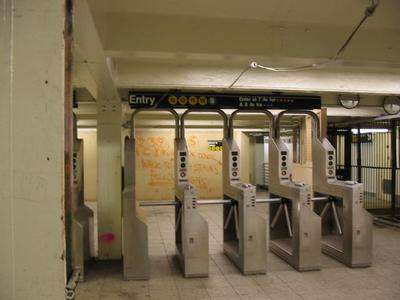
Here we go again department. The hoary old turnstile debate is again before us and leading the charge is Richmond council, wonderful. The current council in Richmond know little, if anything, about transit and I would suspect that the ‘turnstile issue’ is nothing but a propaganda ploy to hide the real problems with our light-metro system. I wonder if politicos in Richmond truly understand the costs involved with an automatic light metro, let alone understand the nuances of fare evasion and turnstiles.
The basic question for turnstiles is this: a) The annual cost of fare evasion on a transit line; b) The annual cost of operating a turnstile/fare-gate system; and subtract (a-b) and if the answer (c) is in negative territory, it is not cost effective to install turnstiles.
Everyone wants a scapegoat to point fingers at for TransLink’s current financial woes, while at the same time ignoring the real reason: TransLink operates three metro lines on routes that do not have the ridership to sustain them, the resulting money to subsidize the metro is taken from the buses. Simple; Prendergast knew that and it is part of the reason why he left, as there was no future for TransLink until senior governments admitted that because they forced much more expensive light-metro on the region, they must ante up more subsidies to support the expensive transit mode.
Adding turnstiles (which are somewhat ineffective in preventing fare evasion) will only add to the financial burden of SkyTrain.
A message to Richmond Council: “Stop whining about fare hikesAi??Ai??- you got your metro, now pay for it!”
Transit must derail cheats: Politicos
Richmond councilors rip TransLink’s proposed fare hikes when many escape paying
By Kent Spencer, The Provinc eNovember 25, 2009
TransLink should scrap its planned fare hikes until it does something about the cheats ripping off the system for millions of dollars, say two Richmond councillors.
“Those that pay their fair share shouldn’t have to pay more until fare cheats are forced to pay themselves,” Coun. Derek Dang said Tuesday. “We are calling on TransLink to install fare gates on mass transit lines.”
A recent TransLink report estimates total fares evaded across the system between $5.3 million and $9.5 million annually.
The regional transportation body wants a 10-per-cent fare increase next year and a three-cent-per-litre hike to the gas tax as well.
Richmond Coun. Bill McNulty said TransLink “has got to deal with this issue.”
“I won’t say it’s out of hand, but it’s getting to that point. It’s a significant amount of money. It also sets a tone,” said McNulty.
SkyTrain user Marcel Potter said he is “sick and tired” of politicians “bellyaching” about a lack of funds.
“It’s stupid talk when so much could be paid by installing turnstiles,” said Potter. “One TransLink official said he honestly thinks the system works and the majority of users can be trusted. What cloud is he on?”
Violators don’t even pay when they’re caught. Last week, The Province revealed that transit cops checked 374,000 people and handed out 11,500 tickets for fare evasion worth $173 each this year.
Through the end of June, just 1,423 of 9,909 tickets were paid — leaving almost $1.2 million in outstanding fines.
TransLink spokesman Ken Hardie said fare gates have never been profit-making ventures in the past.
“There is no economic argument to go with fare gates. They cost more than you can ever get back,” he said.
What’s more, Hardie said, money collected from fare evasions could never offset the $130-million shortfall TransLink faces next year.
He said the Richmond councillors’ argument “sounds fetching, but it’s a suggestion which will not work. We need more money to sustain the system than we could ever hope to gain by fare evasion,” he said.
Meanwhile, the whole question of turnstiles will soon be turned on its head with the aid of senior governments and a smart-card system that Hardie said will finally make turnstiles economically viable.
B.C. Transportation Minister Shirley Bond said that turnstiles are on the way in Metro Vancouver, perhaps as early as next summer.
The province has put up $40 million, the feds $30 million and TransLink will put up $30 million to install turnstiles and a smart-card system.
Retrofitting Expo line stations to accommodate turnstiles will cost even more money, but the brand new Canada Line was designed with turnstiles in mind.
“It’s an important way to improve the transit system,” said Bond. “The designs are well under way. All of us are frustrated by fare evasion.”
Prendergast’s parting words on Rail for the Valley

A couple weeks ago, it was announced that Translink CEO Tom Prendergast was quitting his position, and accepting a job as president of New York City’s Transit Authority. He had only joined Translink in July 2008, and now he has left! I am guessing he didn’t like what he saw.
Prendergast was as positive a force as could be expected in such an organization as Translink, run under the tightest of control of Premier Gordon Campbell.
Here’s an illuminating excerpt, his parting words on the possibilities of light rail for the valley (Surrey Leader, Nov. 24):
Kwantlen Student Association rep Nathan Griffiths said improved transit is needed to serve campuses in Cloverdale and Langley and asked about the potential to extend passenger light rail to the Fraser Valley.
“There’s really no impediment,” Prendergast responded. “It’s overcoming the cultural embracement of SkyTrain that has existed to date.”
He said TransLink is seeking to cut through the pro-SkyTrain “cultural bias” as it embarks on a careful examination of rapid transit technologies for line extensions west along Broadway and south of the Fraser.
Prendergast predicted the first light rail line that comes to the Lower Mainland will lead to much greater appreciation of its potential.
It’s interesting to think about this “cultural bias” towards Skytrain. Who actually has this bias? It isn’t residents or even politicians in the Fraser Valley: Not a single municipal candidate in Surrey the last election supported Skytrain expansion over light rail. Not a single candidate. Not one!
No, it’s the old-guard politicians of Vancouver, who were around for the previous Skytrain expansions and have the most personal stake in continuing to expand the Skytrain money hole. It’s Mike Harcourt, it’s Gordon Campbell, and others involved in Vancouver’s transportation decisions of the last 25 years.
To anyone who wonders why the problems with Skytrain often take centre stage on this blog, Prendergast answers the question.
To get light rail for the valley, we absolutely must cut through the pro-SkyTrain “cultural bias” that exists, not among the populace of the Fraser Valley, but among Vancouver’s political elite, who all-too-often take it upon themselves to make all the decisions for the rest of us.
Please consider joining the Light Rail Transit Association
It’s that time again, membership renewal requests are in the mail or in one’s email box.Ai??Ai??Zwei is renewing his annual subscription to the Light Rail Transit Association and would like you to consider joining the Light Rail Transit Association.
There are three good reasons for joining the LRTA:
1) The LRTA membership includes an annual subscription to the excellent Tramway’s & Urban Transit.
2) The LRTA blog, which is open to members only, is an excellent source of information on transit around the world.
3) With a larger membership in our area, we could get an article published on our efforts with Rail for the Valley for world wide coverage.
Zwei has been a member of the LRTA for over twenty-five years and the information obtained from T& UT and its predecessors has made me a feared opponent to the anti-LRT crowd. Information on how to join the LRTA can be found on their web site at www.lrta.org or go to http://www.lrta.info/shop/index.php?jssCart=9b0dc4b500628431f7675d9dcfb6884c
To succeed, Rail for the Valley must be well informed and there is no better way of being well informed than joining the Light Rail Transit Association.

LRT versus BUSES – Why Portland chose light rail – from the LRTA

MAX in snow
The following article written by Gerald Fox,Ai??Ai??former TriMet Rail Corridor Manager, is well worth a read as it gives good insight why Portland opted for modern light rail. http://www.lrta.info/tramforward/TAUT-Oct09-LRTvBus.pdfAi??Ai?? Gerald Fox, one must remember is the same chap, who in the early 90’s, published a study, “A comparison of Automated Guided Transit (AGT) and Light Rail Transit”, which concluded that given equal rights-of-ways, LRT was cheaper to build, operate, and maintain. Mr. Fox also wrote a letter to a Victoria transit group shredding the Evergreen Line’s business case.Ai??Ai??Ai??Ai??http://railforthevalley.wordpress.com/2008/12/26/can-translinks-business-cases-be-trusted/
There is a growing number of people in the region who believe that buying and operating more buses will solve our local transit woes, yet the same people refuse to recognize the buses just do not attract much new ridership. Mr. Fox’s article mat shed some light on the bus/LRT issue and why Portland opted for light rail.



Recent Comments