Has SkyTrain become British Columbia’s Greatest Bamboozle?
One of the saddest lessons of history is this: If we’ve been bamboozled long enough, we tend to reject any evidence of the bamboozle. The bamboozle has captured us. Once you give a charlatan power over you, you almost never get it back.
Carl Sagan

Is SkyTrain a colossal bamboozle? Does the SkyTrain lobby and TransLink still continue to bamboozle the mainstream media and politicians, with false claims and/or questionable statistics supporting building more SkyTrain?Ai??
WhyAi??Ai??do transit authorities, civic, provincial and even federal politicians continue to support, plan for, and fund a transit mode that costs up to ten times more to construct, almost double to operate than the light rail alternative.Ai??Ai??Why do the powers that be continue to plan and build with a transit mode thatAi??Ai??has failed to achieveAi??Ai??the all importantAi??Ai??modal shift from car to transit?
The mainstream media hasAi??Ai??long been bamboozled and continues to be bamboozled by the Ai??Ai??SkyTrain lobby and its friends; Ai??Ai??twisting and perverting stories to always make the mode look good, especially whenAi??Ai??the modeAi??Ai??is deemed an obsolete by many knowledgeable transit planners around the world.
Part of the great SkyTrainAi??Ai??bamboozle isAi??Ai??the ‘density’ bamboozle.
For years politicians, planners, and assorted pundits have claimed there isn’t enough density for ‘rapid transit’ when light rail is mentioned for a transit route, but neverAi??Ai??state what density is needed for successful ‘rapid transit’.Ai??Ai??IfAi??Ai??”there is not enough density for rapid transit”Ai??Ai??Ai??Ai??then there needs to be a publishedAi??Ai??densityAi??Ai??criteria for transit modes such as bus, light rail and SkyTrain and/or light-metro, yet there is none.Ai??Ai??Ai??Ai??Why then was the Arbutus Corridor, which had a higher published density than the Cambie Corridor, deemed to have not enough ‘density‘ for light rail, yet there was the ‘density‘ on Cambie St. to support a much more expensive light-metro subway?
Point of logic: If one can build light-rail for one half to one quarter the cost of SkyTrain, then does one need on half to one quarter the density to support LRT than SkyTrain?
Is the ‘density‘ questionAi??Ai??just a bamboozle, by the transit charlatansAi??Ai??to support building moreAi??Ai??SkyTrain?
SkyTrain’s supposed higher speed is another bamboozle, oft used by the SkyTrain lobby, while at the same time, failing to mention that the supposed higher speed comes from sacrificing stations, as most LRT lines have twice a s many stations per route km. than SkyTrain. If this is so, then if we design a LRT line with just as many stations as SkyTrain, then LRT will be as fast, if not faster than SkyTrain.
Yet another bamboozle, is the old saw that SkyTrain is cheaper to operate because it has no drivers, yet the SkyTrain lobby fails to mention that automatic transit systems actually have more employees than comparable LRT systems. Funny how politicians, media types and pundits never actually useAi??Ai??hard numbersAi??Ai??to compare the actual number of people working for SkyTrain, rather state: “it’s a driverless system, no drivers and much cheaper to operate”, as well the SkyTrain lobby alwaysAi??Ai??uses the bamboozleAi??Ai??that “with no drivers, SkyTrain can’t be shut down by a strike!” What the pundits politely forget is that if the SkyTrain operators go on strike, the metro effectively shuts down.
With the present provincial government and their transit planning, the art of the bamboozle is fully evident and the mainstream media, being asleep at the switch for over thirty years, have been captured by the SkyTrain bamboozle. Sadly, those who should be doing reporting and investigation have unwittingly beenAi??Ai??a major player in the Great SkyTrain Bamboozle.
The Night of the Blunt Butter Knives – TransLink Fires Three Executives

It looks like TransLink has sacrificed three executives, to give an appearance of “getting their house in order” after two very recent uncomplimentary reports; nothing like firing three top executives (of course leaving with handsome golden handshakes) to give the public confidence that TransLink is cleaning house.
Sorry, no it’s not – not even close.
If TransLink was really concerned how taxpayers money was spent, it would cut non-productive bus routes like the South Delta 609 service, that only carries five to ten passengers a day. How many more 609 like bus routes operate in the region? If TransLink was really interested in revenue protection, they would disband the SkyTrain police (which more and more seem like a sop for retired RCMP officers), with real fare inspectors or conductors and do actual revenue protection duties on the trains. In Europe, it is not turnstiles (which TransLink is being forced to install by the BC Liberals) that ensures fare compliance, but roving conductors checking tickets and issuing on the spot fines for noncompliance.
Why does TransLink have or even need expensiveAi??Ai??spin-doctors, unless they want to continue to deliberatelyAi??Ai??confuse the public. What is TransLink trying to hide?
What is needed is a forensic audit by the Auditor General, to root out the real financial problems with TransLink and the RAV/SkyTrain light-metro system. Only after a complete and thorough audit is done will the public, politicians, and TransLink’s managementAi??Ai??will know where real economies can be made.
TransLink fires three executives
Move linked to ‘finding efficiencies’
By Kelly Sinoski, Vancouver Sun December 12, 2009
Three top senior TransLink executives have been let go, a little more than a month after a comptroller-general’s report criticized the transit authority for its “excessive” number of senior staffers.
But TransLink spokesman Ken Hardie said the departures of the three executives — who held posts in human resources, information technology and capital management — were part of a move by TransLink to “find efficiencies” and not related to the report.
The move started before the provincial government had even asked for the comptroller’s report, he said.
Hardie couldn’t say how much money would be saved by the loss of the three executives, saying TransLink would need some time to work through some of the details with them.
TransLink, under the guidance of then CEO Tom Prendergast, had sought late last year to find efficiencies in the transit system and “get more for less,” Hardie said.
“We went at this looking at the work that needed to be done and the resources needed to do it,” Hardie said.
This included eliminating duplication of services.
The capital management division, for instance, which is involved in vehicle acquisitions and the Vancouver Transit Centre, was doing similar work to that undertaken by Coast Mountain Bus.
As TransLink isn’t currently involved in building large new projects, it’s looking at redesigning its corporate management structure.
The move to find efficiencies came as TransLink was facing a looming cash crunch. The regional mayors’ council has since approved a $130-million supplement to help keep transit services running at existing levels.
Hardie noted TransLink has about 23 vacancies right now and more are anticipated as a result of a hiring freeze.
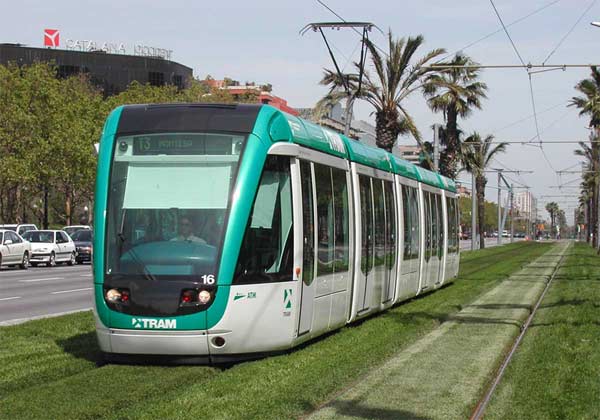
Trams for the 21st Century – Alstom Citadis
 Ai??Ai??
Bombardier and Siemens trams also have stiff competition from France’s Alstom’s Citadis modular tram.
Alstolm’sAi??Ai??Citadis family of modular tramsAi??Ai??includes both partially low-floor and 100% low-floor trams,Ai??Ai??which can be delivered inAi??Ai??three, five, and seven sections, to suit the needs of individual costumers.
The Citadis family of modular tramsAi??Ai??comprises of:
- Citadis 100 – three section, 70% low floor, designed and manufactured in Alstom-Konstal plant in ChorzA?A?w for polish market (Katowice, GdaAi??ai??zsk)
- Citadis 202 – double articulated 100% low floor (Melbourne)
- Citadis 301 – also three section but with 70% low floor (OrlA?Ai??ans and Dublin).
- Citadis 302 – five car-body sections, 100% low floor (Lyon, Bordeaux, Paris T2, Valenciennes, Rotterdam, Buenos Aires, Madrid, Melbourne, Murcia and Barcelona)
- Citadis 402 – seven car-body sections, 100% low floor (Bordeaux, Grenoble, Paris T3)
- Citadis 401 – five sections, 70% low floor (Montpellier and Dublin)
- Citadis 403 – seven sections, with modified end bogie design (Strasbourg)
- Citadis X-04 – three sections, 100% low floor, designed for Central and East Europe and built in Alstom-Konstal plant (Istanbul)
- Regio-Citadis – three sections, 70% low floor (Kassel, Ridderkerk (connected to Zoetermeer and The Hague transportation systems), Salzgitter)
- Citadis-Dualis – derived from the Citadis series and adapted both to tramway lines and regional railway tracks, it will be operated by the SNCF

The 70% low-floor A?ai??i??Ai??Regio-CitadisA?ai??i??A? variant allows for tram-train operation, in which trams run and track-share on mainline railways and is currently used in the German city Kassel, and has been delivered for The Hague in the Netherlands. The Dutch tramtrainAi??Ai??isAi??Ai??exploring usingAi??Ai??of duo-powering (diesel/600 VDC, 600 VDC/1,5 kV 16 Hz or 600 VDC/Bioenergy/diesel).
The Regio-Citadis model has now been superseded by A?ai??i??Ai??Citadis-DualisA?ai??i??A?, redesigned to operate on the same lines as regional trains (on the TER (Transport express rA?Ai??gional) network) and intended for running at up to 100 km/h (62 mph, compared to 70Ai??Ai??km/h (43 mph) for the Citadis tram), and for stop spacings ranging from 0.5Ai??Ai??km to 5Ai??Ai??km (460Ai??Ai??yds to 3.1Ai??Ai??mi). 31 have been ordered (plus 169 on option) by the SNCF at an average cost of A?ai??sAi??3Ai??Ai??2 million per car or CAD $4.95 million.
Like most trams, Citadis vehicles are usually powered by overhead electric wires, but the trams in Bordeaux (and in the future Angers, Reims and Dubai) use the A?ai??i??Ai??ApsA?ai??i??A? (ground-level power supply), a third rail systemAi??Ai??which is only powered while it is completely covered by a tram so that there is no risk of a person or animal coming into contact with a live rail. In outer areas, the trams switch to conventional overhead wires.
.
Trams for the 21st Century – Siemen’s Combino

With Bombardier’s two Flexity Outlook trams arriving in Vancouver, let’s take a look what the other companies have to offer for trams for the 21st century.
Siemen’s Combino modular car
The Combino is a low floor tramAi??Ai??made by Siemens Transportation Systems and firstAi??Ai??model came off the assembly lineAi??Ai??in 1996 at the Duewag works in DA?A?sseldorf, Germany. Because of its modular design using standardized components, resulting reduced costs, the Combino was for a time one of the most successful tram types on the market. They were sold to twelveAi??Ai??transportation operationsAi??Ai??and a further development was sold to two others. In 2007, a new generation of Combinos was sold to Berne. The Combino line of modular tramsAi??Ai??is expected to be superseded by Siemens with new line of trams called Avenio, which have been built on the design technology of Combino.
The tram is largely made out of aluminum, with a welded under-frame to which the body framework is bolted in sections, which means that the Combino can easily be adopted to different lengths, widths and gauges. The length of the trams varies from 19Ai??Ai??metres (62Ai??Ai??ft) (Nordhausen “Duo” and Melbourne D1) to a world record 54Ai??Ai??metres (177Ai??Ai??ft) (Budapest), accommodating between 100 and 350 passengers. All versions are designed to have a 300-millimetre (11.8Ai??Ai??in) floor height and a 10-tonne (11-short-ton) axle load. It can be built as an unidirectional to bidirectional vehicle with driving positions at both ends, and for TramTrain operation orAi??Ai??for operation on unelectrified tracks, the DuoCombino with an additional diesel propulsion system, is offered.
The Combino tram uses (can be adapted for other voltages)Ai??Ai??600V DC overhead power and which convert this to 400V 3-phase AC power for the regenerative low wear motors via 3 IGBT PWM inverters. On board controls, lighting and air conditioning run at 24V DC.
In earlyAi??Ai??2004, Siemens admitted to problems concerning the stability of the car bodies and, as a precautionary measure, instructed all public transportation services to take all Combinos with a serviceAi??Ai??mileage of more than 120,000Ai??Ai??kilometres (74,565Ai??Ai??mi) out of service. Torsion forces generated in S-curves were much higher than anticipated, leading to cracks around the articulations between the car modules. Subsequently, hairline cracks were found in the joints of the aluminum bodies, which could cause the roof to collapse in the case of an accident.
Siemens launched a three stage process of rebuilding the 454 modules affected, which nowAi??Ai??reinforces the modules to give an expected 30-year life. The cost of the rebuild programme was put at A?ai??sAi??400m or CAD $620m.Ai??Ai??
Over 500 Combino’s have been built and Ai??Ai??in operation around the world and theAi??Ai??Combino tramAi??Ai??has now been superseded by the Avenio modular tram.

Budapest's 54m Combino caterpillar tram
The Streetcars are coming, The Streetcars are coming – or are they?

There has been some media attention given to the arrival of the the two BombardierAi??Ai??Flexity OutlookAi??Ai??trams from Belgium, for a demonstration operation on a short section of Vancouver’s ‘Downtown Historic Railway’, during the Olympics. I was very disappointed in BCTV News when the commentator described the trams as “old fashioned“, as the Flexity generation of trams are probably the most modern public transit vehicle on the market today.
The Flexity family of modular trams, as with Siemen’s ‘Combino‘ and Alstom’s ‘Citidis‘,Ai??Ai??can be either unidirectional or bidirectional, with two driving positions at either end. Being modular, the Flexity tram can be made to custom suit any operator and shorter cars maybe delivered to starter systems and can be economically lengthened, by adding more modules, when customer demand warrants. Being low-floor means that the Flexity tram can cater easily to the mobility impaired, with no expensive ramps or the need for attendants.
The Flexity comes in a standard length of 2.65 metres, unlike other modular trams whichAi??Ai??designed to cater to metre as well as standard gauge transit systems. Also of note is that trams designed solely for urban or city lines, with stops every 400m to 600mTram The, have smaller (cheaper) motors and lower maximum speeds; Flexity trams designed for suburban routes or tram tram service, with much longer station spacing have higher maximum speeds.

32.5 metre Flexity Tram
The Flexity family of tramsAi??Ai??
| Name | Floor | Ai??Ai?? | Top speed | Ai??Ai?? | Length |
|---|---|---|---|---|---|
| Flexity 2 | Ai??Ai?? 100% low-floor | Ai??Ai??Ai??Ai?? | Ai??Ai?? | Ai??Ai?? | Ai??Ai??Ai??Ai??Ai??Ai??Ai??Ai??32.5m |
| Flexity Classic | 65A?ai??i??ai???74% low-floor | Ai??Ai??Ai??Ai?? | Ai??Ai?? 70A?ai??i??ai???80 km/h | Ai??Ai?? | Ai??Ai??Ai??Ai??Ai??Ai??21A?ai??i??ai???45 m |
| Flexity Outlook | 100% low-floor | Ai??Ai??Ai??Ai?? | Ai??Ai?? 65A?ai??i??ai???80 km/h | Ai??Ai?? | Ai??Ai??Ai??Ai??Ai??Ai??27A?ai??i??ai???43.4 m |
| Flexity Swift | 70A?ai??i??ai???76% low-floor or 100% high-floor |
Ai??Ai?? | Ai??Ai?? 70A?ai??i??ai???100 km/h | Ai??Ai?? | Ai??Ai??Ai??Ai??25A?ai??i??ai???42 m |
| Flexity Link | 50% low-floor | Ai??Ai?? | Ai??Ai??100 km/h | Ai??Ai?? | Ai??Ai?? 37 m |
| Flexity Berlin | 100% low-floor | Ai??Ai?? | Ai??Ai??Ai??Ai?? 70 km/h | Ai??Ai?? | Ai??Ai??30.8 mA?ai??i??ai???40 m |
Ai??Ai??

42 metre Flexity tram
I also see Vancouver’s Engineering department has relaid a portion of the “Downtown Historic Railway” track, which seems to be built to a much more expensive heavy-rail standard, suitable for TGV operation with cement ties and Pandrol clipped rail, which is overkill for a tram designed to operate on trambahn and/or girder rail. No doubt city engineers are pleased, but this rather expensive track may skew the city’s estimates for the costAi??Ai??future streetcar development. It would be nice to see some sections of trambahn, girder rail and even some L-55 low profile rail to give a realAi??Ai??look of modern tram track.
The ‘Downtown Historic Railway’ operates on a route that never did have streetcar or interurban operation (the line was original a GNR/CPR interchange track) and very few people in Vancouver will have the opportunity to see modern LRT in operation; and modern light rail it is, as the Flexity trams will operate on a fully reserved rights-of-way, with no on-street operation. A streetcar it is not.
There are financial clouds hovering over the Historic Railway, as Vancouver is in a budget crisis and Vision (Visonless by many) Vancouver who now control the reigns of power may cut funding or not even fund the ‘Downtown Historic Railway’ in 2010.
One hopes that the very short operation of the two European trams will spur on development of light rail in this light metro city, but I think the powers that be believe in massive tax and fareAi??Ai??hikes to fund a few more SkyTrain Lines.
Our Campaign Blog – 1 year old today

April 11, 2009: Two young Rail for the Valley supporters hold a banner on a Chilliwack overpass, part of our Highway 1 Day of Action.
Today marks the one-year anniversary of the Rail for the Valley Campaign Blog!
Readership (now at 300-400 hits per day) has grown dramatically since last December, when the Campaign Blog was initially launched and the readership was… well, 0.
Here’s the very first blog post, on Dec. 8, 2008: http://railforthevalley.wordpress.com/2008/12/08/rail-for-the-valley-on-ctv/
When I first created this blog, I had in mind a place where I and others could regularly congregate and contributeAi??Ai?? – not necessarily “News” items – but our thoughts and items of interest, a place to communicate and get ideas flowing. In that regard, the blog has so far been a success well beyond my expectations.
At the time, I asked Zweisystem if he would like to be a contributor. I had no idea how quickly he would adapt to blogging, to getting debate going (and certainly not always preaching to the converted!), and how adept he would be at building our readership, both locally and in fact around the world. I know today we have visitors from every place you can imagine – to our international readers, I’m glad you have found this blog and are enjoying it!
Looking to the future of the blog, I want to keep us moving forward, and to really build an online community around our main issue, as well as other related issues. To do this, means more writers and fresh perspectives. (Zweisystem strongly agrees.)
In the new year, you can look forward to an increase in the number of “guest posts” on this blog – and if all goes well, new regular bloggers as well.
In order to achieve this, we are looking for
1) “guest” bloggers who wish to contribute one or more “guest” articles for publication on the blog
You don’t need to be an expert on the Fraser Valley, or on all things light rail. A well-written post from a personal point of view is just as good. We’re looking for both local, as well as international perspectives.
2) regular contributors, whether it be once a week, or more frequently.
If you’d like to contribute, or if you know someone else, please send an email to railforthevalley@gmail.com.
If you have a passion for the issue of Rail for the Valley, and an enthusiasm to write for us, please come forward!
Cambie merchants hope for better fortunes – From CKNW News Radio
As predicted, those thousands ofAi??Ai?? RAV/Canada Line passengers are not getting off the train to shop at Cambie Street stores. The sad fact is, the inference from RAVCo. and later InTransit BC, was that the Canada Line would bring thousands of shoppers to Cambie St., it hasn’t and only those merchants lucky enough to be located near a station have seen increased foot traffic.
Subways, unlikeAi??Ai??street operating light rail or trams,Ai??Ai??do not increase surface merchant’s business and was not very honest of the RAV/Canada Line folks to infer thatAi??Ai??the RAV/Canada Line subwayAi??Ai??would. What is seen now, isAi??Ai??the attempt to try to overturn Susan Heye’s successful lawsuit and settlement against TransLink, by trying to water down the effects of the RAV/Canada Line on local business, with ‘puff‘ news reports on the effects of the new metro. TransLink is desperate to stop the flood of potential lawsuits if Ms. Heyes lawsuit survives appeal.

Cambie merchants hope for better fortunes
VANCOUVER/CKNW(AM980)
Dan BurrittCambie Street merchants are hoping for a good holiday season, four months after the Canada Line opened and construction on the street wrapped up.
Christine Schattenkirk opened up her clothing store, My Best Friend’s Closet, in the building once occupied by Susan Heyes’ store, Hazel and Company, on Cambie and 16th.
“It’s actually picking up for us. We get a lot of walk-in traffic, especially on the good days, sunny days. I’m absolutely thrilled with the way things are going. There are people by all the time.”
But Melinda Michalak at Black Dog Video on Cambie near 17th says the Canada Line hasn’t brought many new customers to the village.
“There doesn’t seem to be, like, a real reason to, sort of, shop in this area from out of the local vicinity.”
Michalak says it’s also tough to attract Canada Line riders when there is no stop between Broadway and King Edward Ave.
Leonard Schein with the Cambie Village Business Association agrees that stores closer to Canada Line stops have seen a lot more business than stores in between.
Looming Bus Rapid Transit Fiasco in the UK? – From the Cambridge News: Millions at stake after latest busway wrangle
The UK government have been very pro BRT and the Cambridge – St. Ives BRT was to have been a showcase for Bus Rapid Transit. A dedicated group called CAST. IRON, promoting a ‘rail‘ solution predicted many of the problems now facing the Cambridge BRT and questioned the financing of the scheme. Sounds familiar doesn’t it.
Too many people promoting BRT, have read little about the transportation mode and have made silly pronouncements, especially calling for BRTAi??Ai??for ‘rapid transit’ inAi??Ai??the Fraser Valley.
The Cambridge – St. IvesAi??Ai??BRT/guided busway is built onAi??Ai??the formation of an abandoned railway line and it is nowAi??Ai??clear that a tramtrain service could have been reinstated on the route for just a little more thanAi??Ai??the cost of the presentAi??Ai??BRT project, now seeing cost overruns. Sadly, the mandarins in the UK government want ‘rubber-on-asphalt’ transit solutions as they perceive them to be cheaper to build and operate (cheap and nasty) as ‘rail‘ solutions are so, so dated and highways so modern. The mandarins of course run the government and the UK Labour government seems unable or unwilling to implement successful European style light rail solutions, as billions of Pounds are being spent on road projects. Again, sounds familiar – Gateway anyone?
No doubt the St. Ives – Cambridge BRT will beAi??Ai??soon beAi??Ai??in operationAi??Ai??and the true costs will be hidden to prevent embarrassment to politicos and bureaucrats alike. The real question that should be answered is: “Would not a tramtrain service built on the same route be cheaper to build and attract more ridership than BRT in the long term?”
I think the folks at CAST. IRON know the answer.

Millions at stake after latest busway wrangle
chris.elliott@cambridge-news.co.uk
A MAJOR court battle is looming over the cost of CambridgeshireA?ai??i??ai???s guided bus project after contractors claimed it could cost millions more to build than originally budgeted.
Cambridgeshire County Council and the builders have been at loggerheads over the guided bus contract for years.
The contract was awarded by the council to BAM Nuttall in 2006 after the Dutch-owned construction giant won the tendering process.
In all, the cost of building the busway was set at Ai??A?116.2 million, with the Government agreeing to give a Ai??A?92.5 million grant towards it.
The rest of the money is due to be paid out by developers who are building new houses in the county.
But a series of delays have led to its opening being postponed A?ai??i??ai??? and transport bosses have trimmed back some of the facilities planned to go alongside it.
The council says the Government should now contribute just over Ai??A?87 million for the scheme A?ai??i??ai??? but BAM Nuttall is understood to have claimed more than Ai??A?30 million on top of that, a figure that could rise to Ai??A?50 million.
The council says it cannot confirm these figures, but Brian Smith, its executive director of environment services, said: A?ai??i??Ai??As we announced about a year ago, there is a gap between what BAM Nuttall believe they will spend on building the busway, and what the council will actually have to pay for the route.
A?ai??i??Ai??As we have said before, we have a robust contract and we are confident this passes most of the risk of any overspend to the contractor.
A?ai??i??Ai??I completely understand that local people feel they should be told exactly what BAM Nuttall believe they will spend building the scheme.
A?ai??i??Ai??But as we have always said, it forms part of the ongoing contractual discussions and at the present time we believe publishing this information would not be in the best interests of local taxpayers as it could affect the council’s position in the sensitive legal discussions ahead.A?ai??i??A?
Officials at Shire Hall admit the busway is over budget, but insist it is likely to be about Ai??A?1.3 million. They say they have put A?ai??i??Ai??prudent measuresA?ai??i??A? in place to tackle that.
A council statement said: A?ai??i??Ai??Prudent measures are in place to cover the potential final cost of building the busway.
A?ai??i??Ai??Current council forecasts show that the cost of the route, including land, could to be
Ai??A?1.3 million over the original budget A?ai??i??ai??? but as costs can fluctuate up as well as down, planning has been carried out for a range of outcomes around this forecast.A?ai??i??Ai??As with all major building projects the final cost of building the scheme will not be established until after the project is completed as some costs, like land, are finalised over a number of years.
A?ai??i??Ai??The first option the council will take if the busway does cost more than the original budget will be to seek to cover this using additional developer funding that we are currently negotiating, or Government transport funding.A?ai??i??A?
He added the council planned to set aside Ai??A?1 million of Government transport funding each year from its capital programme A?ai??i??Ai??to cover potential additional busway costsA?ai??i??A?.
Roy Pegram, the councilA?ai??i??ai???s cabinet member for growth, infrastructure and strategic planning, said: A?ai??i??Ai??Although delays to completing the works should not mean busway construction will cost the council more, it does mean we must be prudent and plan for potential extra costs.
A?ai??i??Ai??As with all forecasts the costs will fluctuate up as well as down so planning and making provision for a range of outcomes around this point is important.A?ai??i??A?
The northern section of the busway, between St Ives and Cambridge, should have opened early this year, but a succession of delays meant the opening date was pushed back to November 29. That date was shelved as well, with reports that the busway will not now get up and running until early next year.
Work is also still to be completed on the southern end of the busway, stretching from the city centre beyond AddenbrookeA?ai??i??ai???s Hospital.
A spokesman for BAM Nuttall said: A?ai??i??Ai??We canA?ai??i??ai???t make any comment on the issue at this stage, or confirm or deny any of the figures.
A?ai??i??Ai??We are continuing very delicate negotiations with the council, and it would be unwise of us to discuss figures in public.A?ai??i??A?
http://www.cambridge-news.co.uk/cn_news_home/DisplayArticle.asp?ID=469082
Portland’s Ice Storms – A Chilling Reminder That Mother Nature Is Unpredictable
Zweisystem was in Portland during the 2007 ice storm and what an experience. Portland’s car drivers seemed ill equipped to deal with ice and tried to drive like it was snow and the following video shows the results.
[youtube=http://www.youtube.com/watch?v=KyfjZlOSq2A]
The following video shows a four car MAX train clearing the ice build up in the flange way at an intersection. The build up of ice in the flange way breaks the electrical contact and stops the train, thus a four car train is needed to clear the flange way so at least one vehicle remains in the electrical circuit. Portland up to 2008 did not invest in snow and ice removal vehicles, unlike other cities who operate light rail in harsh winter conditions and removal of snow and especially ice is done manually.
[youtube=http://www.youtube.com/watch?v=MNHUuLB0zew]
Just a note: Vancouver hasn’t endured the ices storms that Portland now seems to get on an almost regular basis and when the last time an ice storm hit Vancouver in the late 90’s, the ice build up on theAi??Ai??SkyTrain reactionAi??Ai??rail stopped the SkyTrain metro system.
Last of the Interurbans Part 6 – The Rittnerbahn – A True Interurban Railway
Ai??Ai??

The 11.8 km. Rittnerbahn, located in the Western part of the Italian Dolimites,Ai??Ai??once connected the cityAi??Ai??Bolzano with the Ritten plateau and today only connects the villages on the Ritten plateau.

Opened in 1907, the interurbanAi??Ai??line started at Walther Square in the center of Bolzano where it shared the track with the Bolzano trams untilAi??Ai??it reachedAi??Ai??Brenner Street. FromAi??Ai??Brenner St.Ai??Ai?? to the village ofAi??Ai??Maria Himmelfahrt the line was a rack railwayAi??Ai??climbing 990m until it reached the Ritten plateau. AAi??Ai?? rack locomotive was placed behind theAi??Ai??trams and pushed them uphill. The train that went down to Bolzano produced, by an early example of regenerative braking,Ai??Ai??some of the power for the ascending train. After arriving in Maria Himmelfahrt on the Ritten plateau, the locomotive was uncoupled and theAi??Ai??trams could proceed unaided on normal tracks until the final station in the village of Klobenstein.
In the 19th century the Ritten plateau was an highly frequented place by the people of Bolzano, who liked to pass their weekends there. To connect the two places, it was decided to build a rack railway and 1906 the railway engineer Josef Riehl commenced the planning of the line. In April 1907 the construction finished and the railroad was officially inaugurated on August 13th, 1907. At the end of the sixties aAi??Ai??highway was built from Bolzano to Ritten and the railway was nearly abandoned, with minimalAi??Ai??maintenance and operation. A decision was taken to augment the rack railway with a ropeway or gondola, which in the end replaced the rack railway, which suffered a serious derailment and accident in 1966 caused by reduced maintenance. In 1985 the RittnerbahnAi??Ai??was fully renovatedAi??Ai?? and a new tricable aerial ropeway with eight gondolas, that can carry 550 persons per hour was constructed.

Today, remaining interurban line between Maria Himmelfahrt and KlobensteinAi??Ai??is used by tourists, locals and train enthusiasts.Ai??Ai??Two interurbans still in use are vintage 1907 and can be said to be some of the oldest tram cars still in operation. Ai??Ai??The company that currently operates the line, SAD (Servizi Autobus Dolomiti), Ai??Ai??is the same company that runs all the buses in the province and also the Vinschgerbahn in the Vinschgau valley.



Recent Comments