Why Rail for the Valley must set the agenda in 2010 for light rail in METRO Vancouver.

The region is at a juncture: either proceed with light-metro planning and build the Evergreen Line and extend SkyTrain to Langley by 2030 or abandon current regional transportation planning and start anew, but using LRT instead to service many more destinations in the region.
Though TransLink is boasting about its three light-metro lines and continues to conjure up high ridership figures, the startling fact is that the METRO regions transportation network has notAi??Ai??generated the all important modal shift from car to transit. 80% of SkyTrain’s ridership first take a bus to the metro; the RAV/Canada Line’s perceived new ridership is made up of elderly Asians venturing into Richmond’s predominately Asian shopping malls and poorer people going to the River Rock Casino to gamble. Mr. Campbell’s 200,000 car trips a day removed by the RAV/Canada Line was a politically inspired pipe-dream.
With the SkyTrain lobby fighting a desperate rearguard action to build a $3 billion to $4 billion subway to UBC, it is time for Rail for the Valley to ‘grasp the nettle’ and set the agenda for affordable ‘rail’ transit planning for the region.
Why Rail for the Valley?
RFVAi??Ai??is the only group in the Fraser Valley focused on a TramTrain solution for a viable Vancouver to Chilliwack light rail service. This is not to say that the other two groups VALTAC and SFOT are not vibrant players, but they have too many agendas to focus on, while for RFV, there is one issue: To reinstate a viableAi??Ai??TramTrain service from Vancouver to Chilliwack.
Why a Vancouver to Chilliwack rail service?
By terminating the interurban in Vancouver, as the original interurban did, will giveAi??Ai??the all important seamless (no transfer) journeyAi??Ai??for transit customers from the Fraser Valley to downtown Vancouver and visa versa. A downtown VancouverAi??Ai??terminus for the interurban is important to the success of the venture and those who only want the interurban service to terminate at Scott road Station, willAi??Ai??court failure. We must remember the lesson of Karlsruhe Germany, withAi??Ai??their first true TramTrain service, by eliminating one transfer (from commuter train to tram) at the main railway station, saw a massive increase of ridership from 488,400 per week days to over 2,064,378 per week days; a 423% increase in ridership!
Why TramTrain?
The track geometry of the old interurban line, now the Southern Railway of BC Line, was designed for the interurban, not locomotive hauled trains and certainly not for long and heavy bi-level commuter train cars. By using TramTrain, means that higher speeds can be maintained on the original formation, especially at tight curvatures; as well TramTrain will give the opportunity for ‘classic‘ LRT operation in Surrey, Langley, Abbotsford, and Chilliwack, with on-street operation.
2010 will be the year thatAi??Ai??to tell politicians, that the ‘old school’ transit and transportation solutions have failed andAi??Ai??that SkyTrain is an obsolete, proprietary light-metro that has been rejected by transit planners for over 30 years.Ai??Ai??With the dawn of peak oil soon approaching and huge increases in the cost of energy, it isAi??Ai??imperative to get the biggest bang for our transit ‘buck‘. RFV must reject calls of a $3 billion to $4 billion subway to UBC, because the ‘Burghers‘ in Vancouver see building subways as a way to gain international status of being a world class city and instead, invest the money for a regional light rail network, which would include a TramTrain service from Vancouver to Chilliwack and beyond.
2010 will start the era for 21st century transit planning in the region.
The Strange Case of the Karlsruhe TramTrain – Streetcar, LRV, or Commuter Train?

A Karlsruhe tramtrain operating on tram tracks. The same LRV can operate on the mainline.
Recent posts on the LRTA blog, debated the the present definitions of streetcar/tram and light rail. North Americans tend to define LRT as a light-metro, where as EuropeansAi??Ai??associated LRT as a tram. Now added to the debateAi??Ai??is the tramtrain and the strange case of the Karlsruhe’s new Zweisystem (two system) LRT:Ai??Ai??is itAi??Ai??a tram or a train?
http://railforthevalley.wordpress.com/2009/05/20/is-lrt-becoming-the-new-light-metro/
The tramtrain was not invented in Karlsruhe, rather transit planners refined interurban operation with specially designed tram-cars, which could operate on both on the regular railways and on city tram tracks, which use girder rail.Ai??Ai??The North American interurban was probably the first incarnation ofAi??Ai??tramtrain as the heavier interurbans operated on both streetcar tracks and railway trackage. In Europe, many light railways operated on city streets and even shared tram tracks when need be, thus the concept ofAi??Ai??dual operation of trams on railway tracks and trains on tram tracksAi??Ai??is both old and sound.

Leaving Chur station the light railway train uses a main road.
The coming of the tramtrain has further blurred the definition of an already blurred subject: just how does one define a streetcar or tram; light rail or LRT; light-metro and of course tramtrain.

On-street train station in Chur is much simpler than many LRT stations.
Light metro has further blurred the definition of LRT as in Asia and North America, light rail vehicles are operated as light-metro on fully segregated rights-of-ways, either on elevated guide-ways or in subway. Though retaining the ability to operate on lesser rights-of-ways, these “hybrid” light-metros have more in common with Vancouver’s SkyTrain proprietary light-metro, than LRT. Seattle’s new LRT,Ai??Ai??can be defined as a “hybrid” light-metro, which does have sections of at-grade operation, itAi??Ai??also has miles of elevated guide-way and subways.Ai??Ai??Elevated guide-ways and/or subwaysAi??Ai??drives up construction costs and byAi??Ai??doing away with the great economies of LRT over metro that originally made the mode successful. This has not been lost on the light-metro lobby.

Seattle's LRT operates on great lengths of elevated guide-way, which costs as much to build as a light metro. The cost advantage of LRT is immediately lost with such construction.
Previous definitions of transit mode (tram or streetcar, LRT) were based mostly on the vehicle size and weight, but with the growing popularity of the tramtrain, where one vehicle can operate as a streetcar, light rail vehicle and passenger train, theAi??Ai??old modalAi??Ai??definitions are now of little use. What is more, transit planners and politicians tend to call very expensive light-metro projects, light-rail, in an attempt to confuse the populace, forcing the taxpayer to fund the wrong type of transit mode needed.

A Karlsruhe TramTrain on the mainline!
The 21st century demandsAi??Ai??new definitions for streetcar/tram, LRT and light-metro – not based on the vehicle but on the quality of rights-of-ways. Zweisystem offers these definitions for ‘rail‘ transit.
Streetcar or tram: A steel-wheel on steel rail vehicle, powered by electricity (either by overhead wire or third rail), with the exception of deisel LRT, which operates on-street, in mixed traffic, with little or no signal priority at intersections.
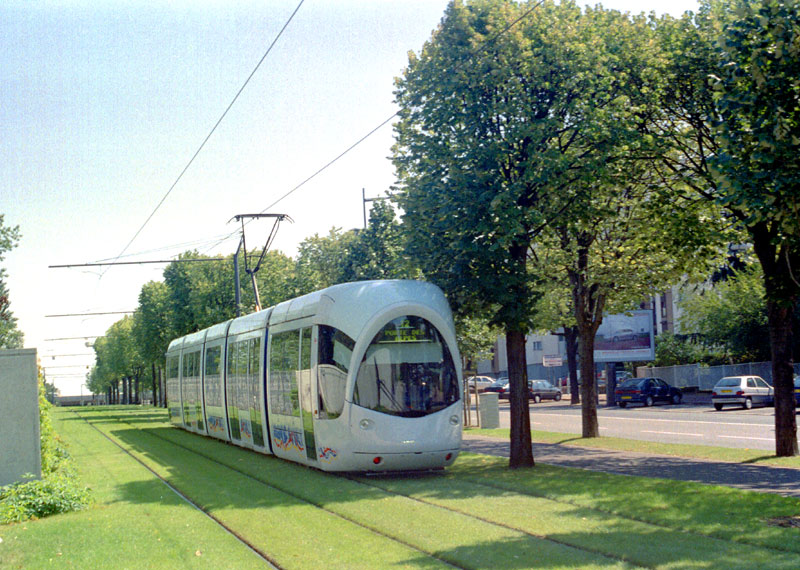
LRT: A steel-wheel on steel rail vehicle, powered by electricity (either by overhead wire or third rail), with the exception of diesel LRT, which operates on a reserved rights-of-way with signal priority at intersections. A reserved rights-of-way is an at-grade route that is for the exclusive use of a light rail vehicle and can be as simple as a HOV lane with rails, a railway line,Ai??Ai??or as complicated as a park-like lawnedAi??Ai?? boulevard.
Light-metro: A steel-wheel on steel rail vehicle, powered by electricity (either by overhead wire or third rail), which operates on a segregated rights-of way, either elevated or subway.
TramTrain: An electric or deisel vehicle that can operate as tram/streetcar, LRT or a passenger train.
It is the TramTrain which has forced a rethink on transit mode, as one vehicle can be a streetcar, a light rail vehicle and/or a commuter train, operatingAi??Ai??on one route.
The lesson for Rail for the Valley is clear: TransLink and others opposed to TramTrain will confuse transit mode to such a degree that the average person will not know who to believe, for clarity, RFV must use the above definitions and ensure others do too.
A Christmas Story – Steam Train to the Rescue – From the BBC

From the BBC
Passengers were rescued by a steam locomotive after modern rail services were brought to a halt by the snowy conditions in south-east England.
Trains between Ashford and Dover were suspended on Monday when cold weather disabled the electric rail.
Some commuters at London Victoria faced lengthy delays until Tornado – Britain’s first mainline steam engine in 50 years – offered them a lift.
They were taken home “in style”, said the Darlington-built engine’s owners.
Train services in Kent were hit hard by the freezing conditions at the start of the week.
The weather-related disruption included three days of cancellations for Eurostar services through the Channel Tunnel.
Tornado, a Ai??A?3m Peppercorn class A1 Pacific based at the National Railway Museum in York, was in the South East for one day, offering “Christmas meal” trips from London to Dover.
Its “Cathedrals Express” service, the last mainline journey in its first year of operations, was about to depart when staff heard about the stranded passengers.
About 100 people were offered free seats, according to Mark Allatt, chairman of The A1 Steam Locomotive Trust – the charity which built Tornado.
‘All credit’
He said: “It was a nice way to finish for Christmas, though I think some of the rescued passengers didn’t realise they’d even been travelling on a steam train until they got off.”
Ai??Ai??Mr Allatt, who was on the service at the time, said he only saw a handful of other trains between London and Dover throughout Monday.
He added: “If any of the train operators want to modernise their services by using steam trains, I would be happy to give them a quote.”
A spokesman for Southeastern Trains congratulated Mr Allatt on his “moment of glory”.
He said: “I’m sure those passengers were saved from a lengthy wait, all credit to him.”
The A1 Steam Locomotive Trust
From CKWX NEWS 1130 – SkyTrain issues for morning commute

What the SkyTrain lobby wishes us to forget is that the automatic metro is somewhat erratic in its operation. SkyTrain is a complicated proprietary light-metro and even small issues defeats the computer and the system shuts down. TransLink plays down these problems but regular riders of the metro has told Zwei that problems on SkyTrain are becoming an all to normal part of operation.
Unlike LRT, where the driver has ultimate control and can deal effectively with minor problems, SkyTrain’s computers can not and for safety the metro shuts down. As SkyTrain ages, the control system ages as well and itAi??Ai??well may beAi??Ai??the fare-gate issue is being used to camouflage a greater problem of a poorly aging SkyTrain, which is in desperate need of a $1 billion retrofit.
Here we have another glaring example of transit tax money being squandered on our metro system, while other transit needs go begging. Just think, $1 billion would build us a deluxe version of a Vancouver to Chilliwack interurban system. How long will it take for ‘Valley’ politicos to wake up and smell the coffee that the ‘Valley’s’ property and gasAi??Ai??taxes are going straight into the SkyTrain black-hole?
VANCOUVER (NEWS1130) – Big problems on Skytrain this morning. It’s only running from the ‘burbs to Stadium station. A bus bridge is being set up to get people down to Waterfront, but if you’re downtown, TransLink recommends you don’t wait at Granville for trains on the Expo and Millenium lines. The Millennium Line is only running from VCC-Clark to Columbia and then turning back.
TransLink has no idea what the problem is…and when service will be back to normal.
From the Surrey Leader – Rapid transit extensions frozen under TransLink budget
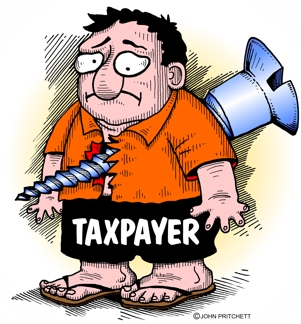
It seems TransLink’s bureaucrats think that the METRO region taxpayer has very deep pockets; while I have a news flash for TransLink, they don’t. To save money, more and more of the region’s car drivers are filling up with gas South of the 49th, encouraging the business of US gas stations. One can save $0.25 to $0.30 a litre for gas in Blaine and when people travel South to buy gas, they also buy groceries, etc., thus increasing much needed savings from tight budgets.
Zweisystem predicted many years ago that TransLink’s insatiable need for tax monies will force consumers toAi??Ai??shop elsewhere, yet the regional politicians remain oblivious as they OK more and more TransLink expenditures on ill preforming transit measures. What we see with TransLink is an extremely expensive bureaucracy who can not seem to grasp the basics of operating a transit system, instead insist on building vast ‘Ivory Towers’ to shuffle paper in. What is worse, civic, provincial, and federal politicians are woefully ignorant on the issue of public transit and fully believe that the more one spends on public transit, the better it will be.
We can’t spend ourselves out of TransLink’s current financial debacle, yet this message is lost.
Again, Zweisystem repeats the key for success for 21st century public transit: “To be successful, public transit must be seen as a product and if the product is good, people will buy the product. But if the product is poor, people will reject the product and the product fails.” Sorry to say that most people in the region give TransLink very poor marks and will take the car where possible. Raising taxes and increasing fares doesn’t improve transit, rather it just keepsAi??Ai??the current transit systemAi??Ai??doing the same thing it has always done,Ai??Ai??plan forAi??Ai??more metro lines and hope for different results in the future.
The message for Rail For The Valley is clear, to get a Vancouver to Chilliwack interurban service in operation, we must either avoid TransLink altogether or better yet, get rid of it and start anew.
Rapid transit extensions frozen under TransLink budget
By Jeff Nagel
TransLink will extract an extra $146 million from transit users and taxpayers in 2010, but don’t expect to see service expand as a result.
The 2010 budget calls for more belt-tightening at the transportation authority and advances no major spending towards the long-promised Evergreen Line to Port Moody and Coquitlam, nor for other rapid transit expansion in Surrey or along Broadway in Vancouver.
The more than $1.2-billion budget is in line with the 10-year plan approved by Metro Vancouver mayors in October, along with fare and tax hikes to avert huge deficits in future years.
“WeA?ai??i??ai???ve avoided service cut backs that would have been a real blow to Metro VancouverA?ai??i??ai???s sustainability and quality of life,” TransLink CEO Ian Jarvis said.
TransLink and the mayors intend to seek new revenue sources from the province for expansion.
“Our challenge is to build consensus around how we can make the road and transit investments needed to support our region’s growth,” Jarvis said.
TransLink is to collect $673 million in taxes next year A?ai??i??ai??? $100 million more than in 2009 A?ai??i??ai??? due to rising property tax, fuel tax and parking sales tax rates.
Motorists will pay three cents a litre more to TransLink when they gas up, and three times as much in sales tax on pay parking lots.
Transit fare revenue is also forecast to climb 11 per cent to $423 million as TransLink raises prepaid fares in April and adds a surcharge to take the Canada Line to the airport. The projection also counts on a 7.4 per cent increase in ridership.
Golden Ears Bridge tolls are forecast to generate $29 million in the first full year of operation, but more than that will be paid out to the firm that built and operates the new bridge.
Despite the increased funding, TransLink still expects to draw down its reserves by $79 million in 2010.
That’s because almost half the new money coming in will go to rising debt costs to pay for TransLink’s latest megaprojects.
Between the Canada Line, Golden Ears Bridge and the purchase of 48 new SkyTrain cars, TransLink’s annual debt repayments rise from $183 million in 2009 to $251 million next year.
The Olympics are the main challenge ahead for TransLink as the transit system ramps up handle up to a million passengers a day.
But some of the improved service won’t last long.
A just-launched third SeaBus will increase sailing frequency to every 10 minutes, but service will be cut back to two vessels once the Games end.
“That third one is in service because Vanoc is paying for it,” TransLink spokesperson Judy Rudin said.
West Coast Express service will also nearly triple during the Games, but be largely unwound afterwards.
Overall, Rudin said transit service in 2010 will be maintained at 2009 levels.
The Transit Police budget is to be frozen at $28 million.
And TransLink administration costs are being cut 18 per cent, with 23 staff positions to be eliminated.
Money will be spent on road work, with $10 million earmarked for the widening of the Fraser Highway in Surrey and Langley, $6 million for the Coast Meridian overpass in Port Coquitlam and $9.1 million to help build overpasses over the Roberts Bank rail corridor through Delta, Surrey and Langley.
Also on the to-do list is finding a buyer for TransLink’s two decommissioned Albion ferries, which stopped running when the Golden Ears Bridge opened.
A MERRY CHRISTMAS TO ALL – FROM RAIL FOR THE VALLEY
From the Zweisystem and the rest of the Rail For The Valley Gang
A very merry Christmas and a very happy and safe New Year!

A Darmstadt tram plowing through a snow storm.
TransLink Faregate Fiasco – Mr. Dobell wins again!

Stephen Rees’s blog has a good article on TransLink’s faregate fiasco and is well worth a read. The fare gate issue is not one of safety or making people pay, rather it is one of political influence and meddling. If the cost of implementing and operating faregates is $30 million annually as claimed by TransLink and if they only expect to collect $3 million in fares, means that there will be about a $27 million shortfall in revenue. Again, Mr. Campbell and Friends will stick it to the taxpayer to make up the difference in higher taxes and fares for his questionable decisions.
http://stephenrees.wordpress.com/2009/12/17/the-faregate-fraud/
Also for a refresher on Zweisystem’s most recent post on the issue –
http://railforthevalley.wordpress.com/2009/11/25/
AAi??Ai??report prepared by TransLinkA?ai??i??ai???s staff in 2005 predictedAi??Ai??installing fare gates on SkyTrain and the Canada Line would cost more than $30 million a year to install and operate and reduce fare evasion by less than $3 million. WhyAi??Ai??force the cash strapped TransLink to install fare gates? Could it be that Premier Campbell’s formerAi??Ai??deputy ministerAi??Ai??was also a registered lobbyist for Cubic Transportation Systems Inc., purveyors of Faregate and fare card technology. Could it be that whatever Dobell wants – Dobell gets?
For another view on the topic
http://www.straight.com/article-213873/translink-install-fare-gates-skytrain-stations
From the New York Times – Why Is the M.T.A. Always in Trouble?
It seems that TransLink’s former CEOAi??Ai??may haveAi??Ai??jumped out of the frying pan and into the fire, as New York’s Metropolitan Transportation authority (MTA) seems to be in severe financial distress. There has been much positive news here of late about the MTA, but it seems the transit authority faces the same problems as most others – funding. An aging subway system (subways are notorious for expensive maintenance – Canada line take note!) is adding more stress on the MTA’s operating budget.
When it is all said and done, Mr. Prendergast probably will find it easier to deal with New York politico’s and bureaucrats than Mr. Campbell & friends and his short sojourn with TransLink was an eyeopener on how BC shady public transit practices are. As noted in one blog, “He got out of Dodge fast!”.
The following from the New York Times may be of interest.

Why Is the M.T.A. Always in Trouble?
By THE EDITORS – New York Times
The Metropolitan Transportation Authority, which is struggling to fill a sudden budget gap of $400 million, voted to approve a slate of cuts, including phasing out free student fares, reducing or ending service on dozens of bus lines and eliminating two subway lines, the W and the Z.
The current financial crisis came up quickly as expected revenues plummeted. For riders, the M.T.A. seems to be in perpetual trouble, with threats of fare increases and service cuts even in good times. A 7.5 percent fare increase is already scheduled for 2011. Strong union contracts and an aging infrastructure make cost control challenging. What savings and efficiencies might be achieved immediately, and what cuts need to be done in the out years?
For the rest of the article:http://roomfordebate.blogs.nytimes.com/2009/12/16/why-is-the-mta-always-in-trouble/
Global Warming, Copenhagen, & Light Rail – The Solution That Is Ignored

When one looks past the European street theater of riots, the embarrassment of Canada, the intransigence of the USA, China and Russia, what will Copenhagen climate conference accomplish? Probably very little. The world is not ready for global warming and if a few island nations submerge due to rising sea levels, no one will really care.
Much of CO2 contributing to global warming is coming from burning fossil fuels and much of it comes from gas and diesel motors, yet no one seems to think reducing auto and truck use should be a top priority. Premier Campbell points to the newly completed RAV/Canada Line as an example of taking 200,000 car trips off the road per day, but can’t show any believable statistic to support his claim as the RAV Line has yet to show that a modal shift, from car to transit, Ai??Ai??has taken place.
Unlike the new Karlsruhe tramtrain service which saw an over 423% increase in ridership in a few short weeks, RAV’s new ridership seems to be elderly Asians from Vancouver shopping in Richmond and older gamblers going to the River Rock Casino to be relieved of their savings; there is absolutely no evidence of the all important modal shift from car to transit. Have we spent almost $3 billion to attract people to malls and casinos?
The SkyTrain light-metro system is force-fed 80% of its riders from the bus system and in almost twenty-five years of operation, BC Transit and now TransLink have never claimed any modal shift from car to transit. This is dismal news, as the taxpayer has now invested over $8 billion in a light-metro system that has failed to attract the motorist from the car. Regional transit planners, abetted by politicians, seem to be doing the same thing over and over again, without achieving a different outcome.
Rapid transit does not reduce congestion or pollution.
It is an ongoingAi??Ai??myth that rapid transit reduces traffic congestion and pollution and the clichA?Ai??’ “Build it and they will come”, is now used to masquerade poorly implemented transit schemes, like Seattle’s Link Light Rail. What does reduce auto congestion and pollution, is a transit system that is designed to suit the needs of customers and what customers want is a ‘seamless’ of no transfer journey from home to destination. Modern light-rail, being much cheaper to build, is better able to achieve the all important seamless journey than much more expensive metro and light-metro. Modern LRT can provide the rail network that can achieve the all important modal shift from car to transit, yet it is largely ignored.
Even though the SkyTrain light-metro system carries a largeAi??Ai??volumes of customers every day, most (over 80%) are bus passengers forced onto the metro not former car drivers. This certainly makes for impressive ridership numbers and bureaucrats can pat themselves on the back, but in reality, SkyTrain has achieved very little because it hasn’t provided the transit network that will attract the all importantAi??Ai??motorists. The SkyTrain lobby, of course, continues the myth that the light-metro has reduced congestion and pollution, but ignores that SkyTrain’s ridership has just kept pace with population growth. Too expensive to extend (Langley is said to get SkyTrain by 2030), SkyTrain continues to constrain both public transit policy and public transit development.
With the spectre ofAi??Ai??‘Peak Oil’ and ‘Global Warming’ looming, the METRO region will find it difficult to cope with increasing public transit demand and will be forced, kicking and screaming, Ai??Ai??to consider much cheaper LRT; in fact, in a few short years the SkyTrain light-metro system will be seen as a combined curse of dated technology and operationalAi??Ai??philosophy.Ai??Ai??
Vancouver and theAi??Ai??Fraser Valley needs 300 km to 400 km of ‘rail‘ transit to provide the transportation network that will attract the motorist from the car, thus creating the all important modal shift. The question is do we build with modern LRT, with costs as low as $4 million to $7 million (track sharing) or SkyTrain with starting costs now well over $100 million km. By building with LRT, the region could create a large, user friendly transit network that wouldAi??Ai??go a long way in achieving the all important modal shift. Continuing our present course of only planning for light metro will create financial chaosAi??Ai??resulting inAi??Ai??a very expensive, disjointed and very user unfriendly transit system.
One has little hope for any successful outcome from the Copenhagen conference andAi??Ai??very few peopleAi??Ai??inAi??Ai??the METRO region have the foresight to provide the real solutionsAi??Ai??to mitigate a looming environmentalAi??Ai??catastrophe. Building modern LRT and creating a large light rail network would go a long way in reducing both auto congestion and CO2 pollution which, strangely,Ai??Ai??is something local environmental groups seem afraid in endorsing, as they prefer to jet about pretending they are achieving something.
Sadly in BC, it is business as usual, with planning continuesAi??Ai??for very expensive, politicallyAi??Ai??prestigiousAi??Ai??light metro builtAi??Ai??on routes that do not have the ridership to sustainAi??Ai??them and building highways, in transit starved areasAi??Ai??to cater to the auto.
21st century transit planning has never seemed so far away.
Overseas news From the LRTA – Wuppertal ‘Monorail’ Closed
The following news item shows the problems of not doing proper maintenance on a transit system, especially a ‘grade seperated’ transit system. In the winter, in the least desirable time, the Wuppertal Schwebebahn is closed due to serious safety concerns with the support columns, until they are replaced, sometime near Easter.
The problem with expensive grade separated transit systems is that they need much more expensiveAi??Ai??maintenace than at-grade/on-street light rail. TransLink wants toAi??Ai??spend about $1 billion to retrofit and upgrade the Expo Line and one wonders if this is a smokescreen to hide an expensive maintenace program with the guideway?
Wuppertal ‘monorail’ closed :
After an inspection by an engineering consultant on 14 December the Schwebebahnseparatedmaintenance was declmaintenanceared unsafe to operate from 15 December. The undertaking is predicting that service will resume at Easter 2010. In the meantime a bus replacement service is being provided, and work will start to replace the 110-year old iron supports on those sections where this has not already been done.
15 December 2009



Recent Comments