The Light Rail Revolution in France
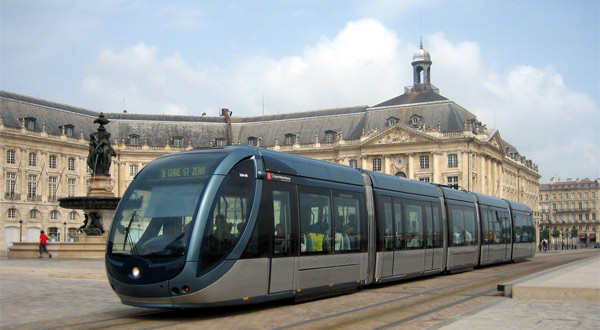
The one country that has spurred on the “light rail revolution” is France, yetAi??in the late 70’s and early 80’s French politicians and planners were going the light-metro route with the French VAL rubber tire mini-metro system.
MATRA, the massive French Arms consortium, were the owners of the VAL proprietary light-metro system and the French government was very generous to cities that built with theAi??VAL light-metro. French politicians as well as MATRA executives, wanted to see almost every sizable French city operate a VAL mini-metro because; “it would showcase French technology, especially for weapons export.” Cities not building with VAL would be considered unpatriotic.
Sounds familiar doesn’t it.
Despite generous subsidies provided by the French government, the good burghers of of the small French towns of RoubaixAi??and TourcoingAi?? found it was much cheaper to completelyAi??refurbishAi??the localAi??worn out tramway, locally known as the ‘Mongy‘, than build with VAL. With the local taxpayers very much in mind, politicians in both cities rejected the very much more expensive VAL and went ahead modernizing the 22 km. Roubaix and Tourcoing tramway.
InAi??Ai??Saint-Ai??tienne, politicians again Ai??found it much cheaper to refurbish an existing tramway than build a new VAL mini-metro despite heavy inducements by the French government.
It is Nantes, where the real light rail revolution started and has been the blueprint for 21st century French public transit philosophy.
The first tramway in Nantes opened in 1879 and closed in 1958 due to bombing damage during World War II, city planners wanted to reintroduce a “rail” transit system to aleviate ever increasing traffic gridlock in the city. Again, a VAL system was proposed, but due to its extremely high construction and operating costs only a small line could be built and this after substantial subsidiy by the French government. Planners felt that extending the initial line would be cost prohibited. Instead, planners in 19981 opted for classicAi??light rail, complete with new three section articulated tramcars (with a capacity of 253 persons per car – 58 seating, 285 standing) with a low-floor centre section.
Success of the new tramway was instant and today, the 42 km./83 station Nantes tramway carries almost 300,000 persons a day.
It became apparent, to the chagrin of French national politicians that modern light rail, not only proved to be much cheaper to build than light-metro, but it was also cheaper to operate. All important was the fact that modern LRT was able to attract the motorist from the car! Even the BRT/GLT types have been not very successful in using bus based technology for regional transit as LRT can be built for just a few Euro’s more and provide a much bigger bang forAi??ones Euro.
Today there are twenty cities, including Paris, that operate light rail lines and the VAL light-metro has been relegated to a ‘niche‘ transit mode.
France provides the lessons learned about modern LRT but in BC, Canada, and the USA, most transit planners remain deaf about the LRT revolution and design LRT as a sort-of ‘poorman’s‘ light metro at great expense, a laai???, Seattle. Sadly in North America, dated transit planning and a grand ignorance of successful modern public transit philosophy reigns supreme, as the transit Ludites (especially the SkyTrain Lobby in BC)Ai??are still in operator’s seat.