

VANCOUVER (NEWS 1130) ai??i?? The problem with the transit funding announcement is it wonai??i??t cover the whole 10-year plan for Metro Vancouver.
Thatai??i??s the message from the David Suzuki Foundation after this weekai??i??s transit announcement.
Ian Bruce with the organizations says the problem is that the province, which has the power to make a difference, isnai??i??t doing enough.
ai???Now is the opportunity to set political differences aside and come up with an adequate funding model. Otherwise we risk losing billions of dollars of investment into our transportation system,ai??? says Bruce. ai???Plans have been stalled to improve transit and transportation in our region because of a lack of a funding model.ai???
Bruce says the province needs to support a funding model presented by Metro mayors or develop a new model that fixes the gap.
The Rapid Transit Density Con Game Exposed
Vancouver’s unique rapid transit/density debate is now fully exposed as a con game and nothing more.
TOD or transit oriented development has been the philosophers stone for so many academics, transit, and planning pundits that they remain oblivious to the real reasons to build transit: to move people.
TOD has been around for a millennia, ever since traders started using defined routes for caravans, such as the “Silk Road”. Services followed the caravan routes, which became important trade routes and over time villages grew into major cities and trading centres. Where trade routes were established population densities increased to service the caravans and travelers. This continues into the present day.
In Vancouver, the history for TOD is a little different; In the early nineties, the BC Crown Corporations Secretariat found that “SkyTrain” was so expensive to build on its own and decreedAi?? that “rapid transit be only built for purposes of land use.” This gave rise to Vancouver’s unique and as some would say obsession with density, so much so a modern day land rush has taken place along the various light-metro lines and station hubs, with building massive high rise condos and retail malls.
The folly of this is now apparent; affordable lower density housing is being replaced by unaffordable high-density housing, displacing (in many cases) those people who are transit dependent, to areas not serviced by SkyTrain or poorly service by buses.
By creating massive high-rise zones around transit hubs, may in fact reduce the actual number of people that will use transit, thus making a mockery of the political and academic density diktat: that massive density must follow rapid transit lines!
What the density debate has become is a tawdry bit of graft, where politicians allow developers to up-zone properties along transit lines so they can make massive profits at the expense of the taxpayer and the transit dependent poor.
Don’t expect things to change as developers have invested tens of millions of dollars on local civic, provincial and federal politicians, to continue the density charade and in BC, developers get what they pay for!
In Metro Vancouver, rapid transit is built to move money, not people.

No Vacancy: The face of Metrotown ai???demovictionsai???
Vancouver, BC, Canada / News Talk 980 CKNW | Vancouver’s News. Vancouver’s TalkPosted: June 01, 2016
Imagine being forced to move twice in two years, your home sold out from under you and replaced by towering high rises with rents two to three times what you were paying?
Thatai??i??s the story of Don and Eleanor Gorman, and itai??i??s symbolic of hundreds of others in their Metrotown neighbourhood, an area changing rapidly under a wave of development.
The pair arenai??i??t your prototypical senior couple; they didnai??i??t meet until their 40ai??i??s, in the personals column of the Vancouver Sun.
Nearly thirty years ago they moved to Burnaby, building a cozy home in a one-bedroom suite much like their current one: packed with knickknacks and photosai??i?? but barely affordable atAi??$750 dollars a month.
No home
The neighbourhood was a different place back then; the Expo Line had just arrived for the first time, long before big malls, and Starbucks, and sushi restaurants on every corner.
ai???It was like heaven,ai??? says Eleanor.
But Don says itAi??all changed in 2014 when the owner of theirAi??complex sold the building.
ai???The owner got such a big offer that he couldnai??i??t turn it down. I think it was $40-million or something for the one building, so I guess he just couldnai??i??t resist and he sold it? I guess itai??i??s like winning the lottery, isnai??i??t it?ai???
The pair had to pack up their lives, and quickly, because the building was zoned for demolition to make way for a high-rise condo.
Luckily, they found another rental building close byai??i?? heartened by promises it would be a permanent home. They had received an unwritten promise from their landlord and owner that the building wasnai??i??t going anywhere.
Instead, it happened again. That building too was sold, zoned, and Don and Eleanor are once again on the moveAi??as their home faces the wrecking ball.
But it isnai??i??t just them; the more Don and Eleanor looked around the Metrotown neighbourhood they spent three decades in, the more they didnai??i??t recognize it: Building after building pegged for demolition.
ai???How many are going down on this street, five or six, something like that. And over on the other street there, too.ai???
ai???Somebody must just hate Burnaby the way it is. They must hate it. They figure it looks like a slum. I donai??i??t think thereai??i??s anything slummy about it.ai???
All along Beresford and Dunblane, rental unit after rental unit sold off, zoned, and bulldozed to make way for high-rise condominiums that are well out of the Gormanai??i??s price range.
ai???We like Burnaby. We like the shopping and everything. Itai??i??s been really good, but the money talks, and there you go.Ai??We were walking around some of these high rises, you know what the prices areai??i?? $1700 for a one-bedroom suite,Ai??$2200 for a one-bedroom suite. I mean thatai??i??s fine if you got that kind of money, but how many people can afford it?ai???
Eric Chris On “Puff” Stories In The Local Media
Eric Chris sent this letter to a local scribe who works for one of the dailies.
It is worth a read because Mr. Chris is an Engineer and knows a thing or two about maths and indeed, he seems to know more about calculations than those working in the premier’s office; oh sorry, I mean TransLink.
Zwei too, is baffled by the 1980’s rhetoric, about SkyTrain and transit in general that emanates in the local media; good lord it is 2016; only seven of the proprietary ICTS/ALRT/ART SkyTrain systems have been sold in almost forty years; the world has moved on, but not our local mainstream media it seems.

Iai??i??m baffled by your latest story on how more ridership on public transit is going to turn things around, financially, for TransLink.Ai?? TransLink spends $3 for every $1 collected from fares by users.Ai?? More service hours for public transit by TransLink merely loses TransLink more money, doesnai??i??t it?Ai?? On the other hand, fewer service hours for less ridership on public transit actually saves TransLink money, right?
Public transit by TransLink is welfare transportation.Ai?? It doesnai??i??t make money.Ai?? Otherwise, TransLink could list on the Toronto Stock Exchange and offer shares for investors looking to lose $2 for every $3 ai???investedai??? in public transit by TransLink.Ai?? Good luck with that.
In 2015, TransLink had an annual operating budget of $1.5 billion (before the hundreds of millions of dollars donated recently by the provincial and federal governments) for roads, bridges and transit.Ai?? Spending on public transit in 2015 took up 90% of TransLinkai??i??s annual operating budget ($1,400 million).Ai?? Fares from public transit only generated about $450 million annually in 2015.Ai?? TransLink stringing us along over the last 17 years to spend too much on public transit hasnai??i??t spent enough money on roads and bridges and has allowed the Pattullo Bridge, for instance, to rot into disrepair and become unsafe to use.
For the last two decades, TransLink has been spending wildly on public transit for developers to build housing density along its subways and viaducts, supposedly to make housing affordable and banish road congestion. With Vancouver having developed the most unaffordable housing in Canada, possibly the world, and the worst road congestion in Canada, how can any intelligent and sane person suggest that more funding for TransLink is a good idea?
Overhead at TransLink is about $100 million annually. Nobody at TransLink matters and nobody at TransLink does any work: everybody at TransLink is on overhead. TransLink is $3.6 billion in the hole. How many people know this?Ai?? How about you tell them?
http://vancouver.24hrs.ca/
2015/10/27/critical-years- loom-for-translink-credit- rater TransLink has no way to get out of debt. All that TransLink can do is come up with expensive subway and other money sucking projects to try to raise taxes – hence the call for road and bridge tolls, euphemistically referred to as mobility pricing in order to ostensibly curb road congestion; yet road congestion dropped during the transit strike in 2001 when transit buses werenai??i??t on the roads.
http://www.trucknews.com/
features/transit-strike- improves-traffic/ TransLinkai??i??s whole theory that public transit cuts road congestion is flawed.Ai?? Transit buses clogging up the roads and interfering with traffic create more road congestion than they alleviate.Ai?? Road space created by drivers taking public transit is used by other latent drivers, and public transit accomplishes nothing in terms of cutting road congestion:
ai???The Fundamental Law of Road Congestion: Evidence from U.S. Cities, concluded that ai???the provision of public transportation has no impact on vehicle kilometres travelled. The transit advantages were offset ai???by an increase in driving by current residents; an increase in transportation intensive production activity; and an inflow of new residents.ai???
Diesel buses used for public transit spew out toxins causing cardiovascular and respiratory diseases; whereas, cars donai??i??t to any extent.Ai?? While ridership might be high on public transit during a few peak hours on weekdays, most of the time, ridership on public transit is abysmal.Ai?? Overall, carbon emissions drop without public transit by TransLink.
Ridership
On the topic of ridership on public transit by TransLink:Ai?? ridership on public transit refers to the number of times that transit users board buses and trains.Ai?? Ridership reported by TransLink is analogous to ICBC reporting how many times people get into or out of their cars.Ai?? In Metro Vancouver, about 300,000 people out of the 2.4 million people use public transit by TransLink, on average.
TransLink needs more service hours to create ridership from transit buses to the new driverless induction rail transit (DIRT) line in Coquitlam (11 km extension to the Millennium Line).Ai?? If TransLink doesnai??i??t add more service hours to recycle existing transit-bus users to the new 11 km extension to the Millennium Line, TransLink canai??i??t conceal that the new 11 km extension to the Millennium Line is a flop, like all the other ones in the past.
Express service (B-Line or DIRT) increasing ridership doesnai??i??t make drivers take public transit more; express service just makes existing transit users make more transfers and board public transit more (inflate ridership).Ai?? At least, this is what the facts say and the percentage of trips by drivers which TransLink published last in 2011 was the same then (57%) as it was in 1999 (57%) when TransLink was formed.Ai?? Maybe you can find out whatai??i??s preventing TransLink from publishing the percentage of trips by drivers in 2015.Ai?? Iai??i??m guessing; it is over 57%.
TransLinkai??i??s whole transit system based on express service is a hoax as is TransLink.Ai?? Conventional transit with transit buses or trams in regular service does a better job of moving transit users more quickly and economically than B-Line buses or DIRT trains in express service as the attached article by Charlie Smith (a real journalist) pointed out 17 years ago.
Ironically, increasing ridership through more transfers deters people from using public transit.Ai?? Hapless individuals who have no choice but to use public transit end up making more transfers (to lengthen their commuting times).Ai?? As ridership with express service (B-Line and DIRT) goes up, transit use in terms of the number of people using public falls.Ai?? This slashes TransLinkai??i??s fare revenue. Ai??It is no accident that TransLink keeps losing money as its ai???ridershipai??? (number of transfers) keeps going up in number.
According to scientific evidence, public transit by TransLink can be correlated to increased road congestion, unaffordable housing, increased cardiovascular and respiratory diseases and increased carbon emissions.Ai?? These are good reasons to fund TransLink?
Finally, TransLink doesnai??i??t have a 10 year plan to fund for public transit, any longer. Remember?Ai?? It was defeated in the transit plebiscite.
http://www.notranslinktax.ca/
translink_tax_defeated Get the facts right.Ai?? You arenai??i??t a journalist presenting the facts.Ai?? Advertising fees by TransLink to the The Vancouver Sun over the years have paid for your salary.Ai?? You are indirectly working for TransLink and likely would not have a job if you wrote the truth about public transit here.Ai?? So, kindly make it clear that the opinions expressed by you in your articles contradicting reality are nothing more than advertorials for TransLink.Ai?? Okay?
http://www.railforthevalley.
com/latest-news/zweisystem/ sorry-david-suzuki-you-are- wrong/
The TransLink Debacle – Brought To You In Part, By Mr. Factbender
Nothing new here.
TransLink was conceivedAi?? by the NDP to get then GVRD Chair, George Puil on board to support the now renamed (ALRT to ART) Millennium Line. No one in the NDP at the time had any thought of making TransLink independent as control of major transit projects would remain in the Premier’s office. In Short, former Premier Clark and his side kick, Joy McPhail, conned George Puil into buying into TransLink with a carrot ofAi?? the provincial government paying two thirds the cost SkyTrain subway to Arbutus.
Puil’s popularity tanked soon after and he was voted out of office, yet the City of Vancouver clings to the Broadway subway dream like a starving Leach.
In my opinion, the region faces seven major transit problems:
Problem #1: All R/T projects build to date were expensive vanity projects, which cost two to three times more than they should. This has drained tax monies from the rest of the transit system.
Problem #2: Our regional rail planning is based on the extremely dated light-metro/rapid transit model, using the equally dated, even obsolete proprietary ALRT/ART (only 7 such system built in 40 years.). TransLink refuses to”move on” continues with bad transit planning.
Problem #3: Many academics, bureaucrats and politicians have followed the density model for transit, where rapid transit is built to create higher densities and not move people, thus our transit model (not copied by anyone around the world) subsidizes developers, but does not efficiently move people. Until this changes, there will be no change in regional transportationAi?? planning.
Problem #4: BC’s ‘carbon tax’ is used as a general revenue tax and not like other countries where it is used to fund transit. In reality, BC’s ‘Carbon Tax’ isn’t.
Problem #5: Despite investing now over $10 billion on three (soon to be four) light-metro lines, mode share by auto has remained around 57% in the Metro Vancouver Region for well over 20 years. Despite ample proof that our transit model is not working, TransLink is doing the same thing over again, hoping for different results.
Problem #6: We do not have real transit experts planning our transit, rather a lash-up of planners and engineers with little knowledge of transit mode or modern public transport philosophy. In short, those planning for transit haven’t a clue what they are doing. Again, no one has copied Vancouver and in Europe, Vancouver is a sort of example that is politely ignored.
(Note: our current crop of engineers and planners are calling the newAi?? MK. 3 Skytrain cars, “articulated” which they are not. To use the English vernacular, the cars are gangwayed, but not articulated.Ai?? All Bombardier did with the new cars is to further take out seats and add another vestibule at the car end. If these birds do not understand what an articulated car is, how can one have any faith in their planning.)
Problem #7: Lack of any planning vision. TransLink seems to lack any overall vision and clings to planning that is decades old. This is true of the Broadway subway and the Surrey LRT, which are both based on political thinking from the 1990’s, yet the transportation realities of 2016 are not dealt with.
Add this together and it equals a public transit and transportation debacle and Mr. Factbender is doing nothing to improve the situation.
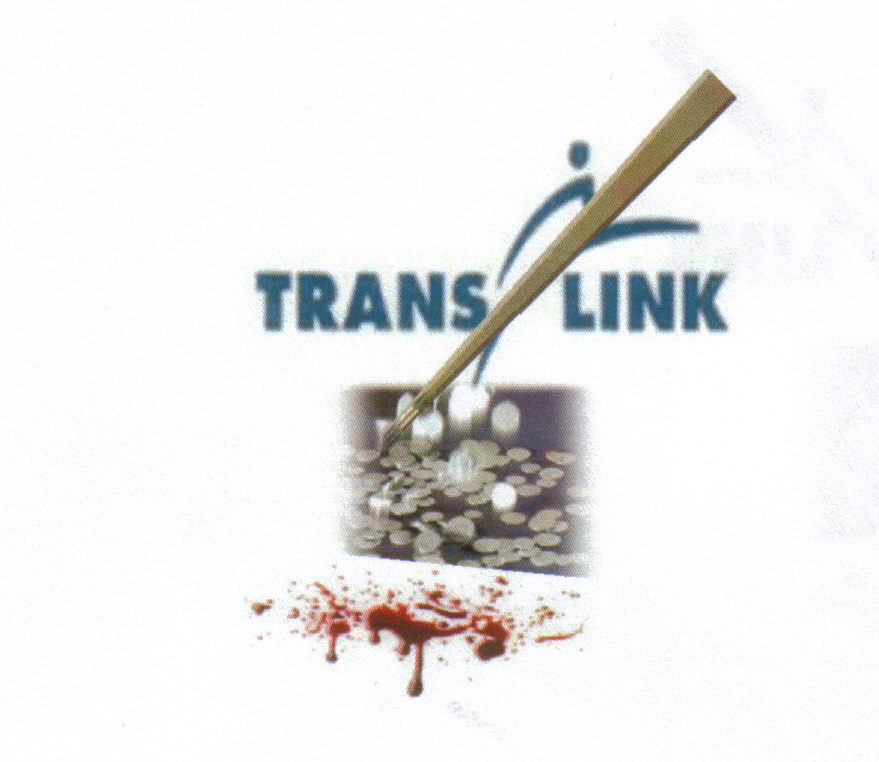
Pete McMartin: No plan, no cooperation, no clue with B.C.’s unrapid transit
Pete McMartin
Published on: May 27, 2016 | Last Updated: May 27, 2016
As Minister Responsible for TransLink, Peter Fassbender is at the wheel of the provincial governmentai??i??s transit portfolio. On Thursday, he ran a red light, roared through the intersection, and T-boned Metro Vancouverai??i??s mayorsai??i?? council. What remained from the ensuing collision was a write-off.
Fassbender, through the media, and without the mayorsai??i?? prior knowledge, announced the provincial governmentai??i??s ai???commitmentai??? to fund $246 million worth of improvements to TransLink over the next three years. All the mayors would have to do to fundAi??their share of the plan, Fassbender said, would be to raise property taxes ai??i?? a suggestion they had previously refused to consider ai??i?? and levy development cost charges onAi??developers who benefitted from increased density around transit stations.
The timing of the announcement, the apparent generosity of the $246-million commitment and the factAi??that a provincial government minister was making the announcement by himselfAi??while the mayors were nowhere in sight seemedAi??designed to suggest that the provincial government was being proactiveAi??on transit while the mayors were being obstructive and uncooperative.
What the public didnai??i??t know was that it was the mayorsAi??who originally suggested raising property taxes, and that it was they who suggested it to Fassbender. After last yearai??i??s disastrous referendum, which saw the mayorsai??i??Ai??$7.5-billion, 10-year transit plan rejected by the public in an overwhelming No vote, a select group from the mayorsai??i?? council held a series of private meetings with the provincial government in hopes of salvaging something from the wreckage. Their suggestion to raise property taxes, which they had been previously refused to do, was a concession to the province to break the policy impasse. Several mayors I talked to felt Fassbender saw the opportunity to play politics, instead.
ai???This,ai??? wrote Port Coquitlam Mayor Greg Moore in an email to me, ai???was a betrayal ofAi??the Mayorsai??i?? Council.ai???
Moore, who is in China at the moment, wrote that Fassbender had been well-apprised of the councilai??i??s intentions.
ai???TheAi??(council) passed a resolution regarding the funding source at our meeting in April and sent (Fassbender)Ai??an official letter with all the details and asking for a response. After which, we had two meetings with (him). Our goal, collectively, was to work together and announce a funding solution together ai??i?? he knew this at both meetings. We originally planned to have the Mayorsai??i?? CouncilAi??meeting May 10, but (Fassbender) wanted more time to respond, so we adjusted our meeting to May 26. Why (he) decided to negotiate through the media is beyond me. In fact, he has yet to officially respond to our letter even though he asked for more time and agreed to our date of May 26. All we know to date is what we read by his comments in the media.
ai???From my opinion, this is no way to build partnerships and work towards solutions. I question why we continue this strategy.Ai??The mayors are looking to deliver services for our residents, but the province is stalling. I am not sure what their motivation is.ai???
Heai??i??s not the only one. New Westminster Mayor Jonathan Cote, who did a lot of groundwork on the transit plan, met with Fassbender earlier in the year. On Thursday, Cote saw the previousAi??commitment to fund one-third of the entire plan shrink radically to much, much less.
ai???Weai??i??re getting a lot of mixed messages from Minister Fassbender and the provincial government on this. The mayors had always gone under the assumption, going back to the last referendum, that the province was committed to 30 per cent of the capital for the entire plan. And since that time, weai??i??ve continued to work under that assumption.Ai??Itai??i??s only moreAi??recently that the wording has slightly changed to ai???commitment to a third of the funding for the major projectsai??i??, which have never been defined what they are. Then yesterday, really the only thing he was stating was that they were going to commit to one-third of Phase 1, which is only 10 per cent of the mayorsai??i?? plan. So from our perspective, it seems like the commitments are shrinking as opposed to finding a way to close the gap to move forward.ai???
Thereai??i??s a lot at stake. Prime Minister Justin Trudeauai??i??s government has promised $370 million for transit improvements in Metro. But that money comes with a due date. It wonai??i??t be on the table forever. And it comes with the proviso that the provincial and Metro governments can reach a consensus.
Fassbenderai??i??s preemptive strike might have shattered that consensus. The mayors, who have worked hard to come up with a capital plan time and again, were blindsided Thursday. If they walked away from the table andAi??let the provincial government take over all the planning and all the political heat that comes with planning public transit, I wouldnai??i??t blame them.
Meanwhile, plans proceed to build Premier Christy Clarkai??i??s $3-billion 10-lane bridge to replace the Massey tunnel ai??i?? the cost of which some private contractors are now suggesting will end up being north of $4 billion. What an appetite it has. What a testamentAi??it will be.
Sorry David Suzuki, You Are Wrong
Sorry David, you are wrong.
TransLink does not have a income problem, it has a spendingAi?? problem as it spends about three times more to build with the now obsolete light-metro instead of light rail. Our proprietary light-metro system also costs about 60% more to operate than comparable light rail lines.
David, you and your foundation had better stick with genetics or animals because your knowledge on transit issues is dismal. It is all very well throwing billions of taxpayer’s dollars at transit and convince yourself you are doing some good, but it does not make good public transit policy.
The problem is very simple David, our public transit program is designed to enrich political friends by allowing them to up-zone properties to higher densities along light-metro lines. This means we get multi billion dollar light-metro lines that are non-user friendly and thus are unattractive for the motorist.
Simply put, our regional transit system, despite an over $10 billion investment has failed to provide a modal shift from car to transit, as mode share by car in the region has stagnated around 57% for over two decades.
The solution is to completely rethink how we provide public transport in the region. There is a simple solution, it’s called light rail, but to advocate a change in public transit philosophy will make your academic friends rather uneasy, so instead of wanting workable solutions, just throw more money at transit and hope one gets different results.
Not going to happen!
So David, please read a book on the subject, instead of advocating throwing more money at a dysfunctional transit system, because doing the same thing overAi?? and over again, expecting different results is a definition of madness.
Province needs to budge on Metro Vancouver transit funding model: David Suzuki Foundation
by Kayla Butler and Denise Wong
Posted May 27, 2016 6:44 pm PDT
 (Photo by Dustin Godfrey for NEWS 1130)
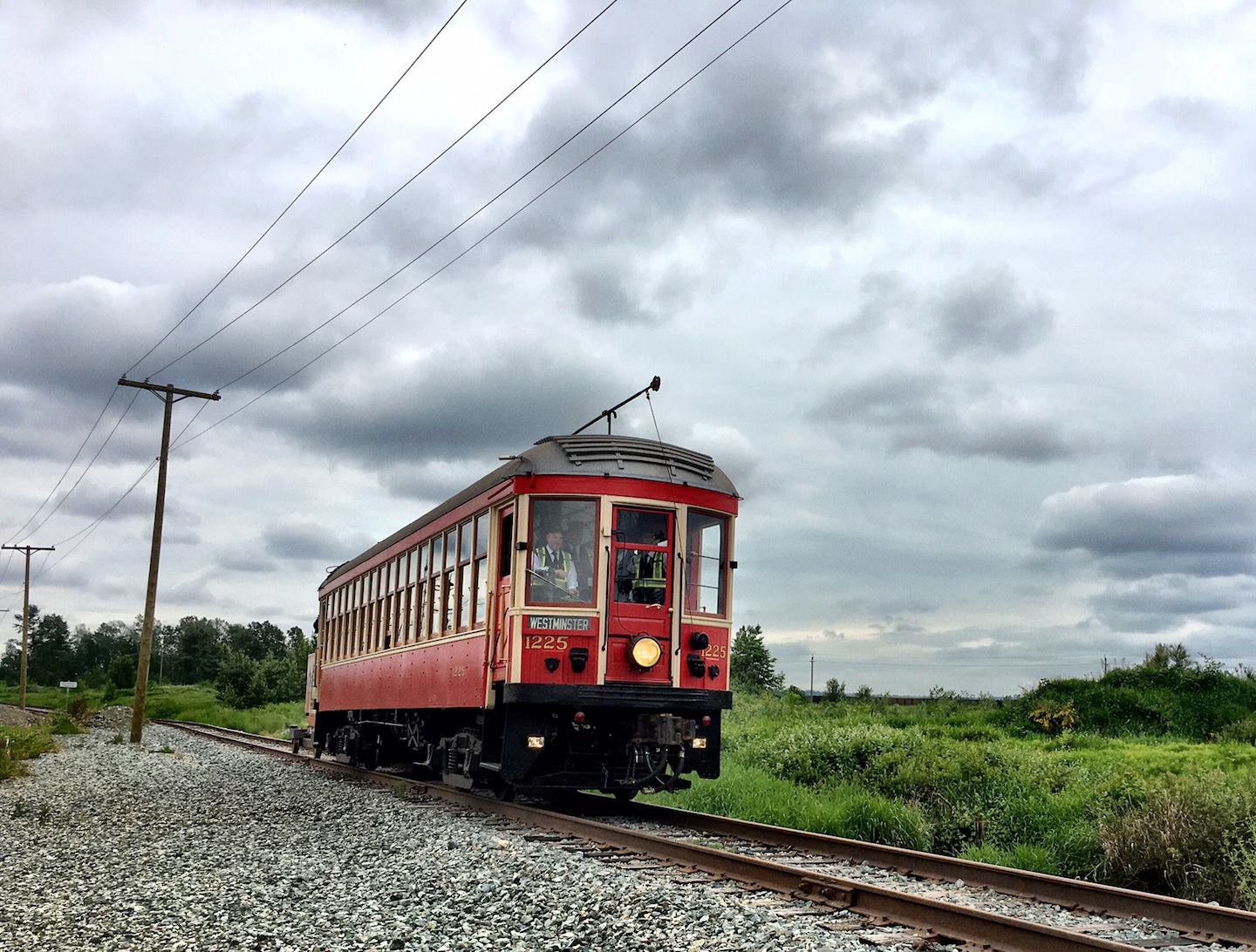
The Fraser Valley Heritage Railway
The Fraser Valley Heritage Railway is again in operation, which begs the question; “Who says that passenger rail cannot operate on the former interurban route?”
The interurban operates on weekends and please go for a ride and support them.
Is Factbender Going To Announce SkyTrain To Langley On Canada Day?
 “You are going to get SkyTrain whether you like it or not”, has been the popular refrain
from notable BC politicians including Bill Bennett, Bill Van der Zalm, Grace McCarthy, Glen Clark, Joy McPhail,
Gordon Campbell, Kevin Falcon and now, Factbender and Premier photo-Op!
Only seven built in 40 years!
Is the Minister responsible for SkyTrain, Mr. Factbender playing the role of a latter day Bill Van der Zalm, being the “points-man” to support the government decision to extend SkyTrain to Langley?
Reliable sources have indicated that this announcement will be made on or near Canada Day.
Transportation Minister Todd Stone just did not have the jam to do it, but the bombastic Factbender does, because he merely a “Trump” clone spewing out stuff and nonsense, pretending it is fact, to support the construction of the now obsolete proprietary SkyTrain light metro to Langley.
This 16 km line is going to be very expensive, a minimum of $2.5 billion, yet it will provide little or no transit relief as for many commuters, the train will not go where they want to.
Obviously the BC Liberals do not give a damn about regional transit planning and view it as a plum “vanity” project good only for photo-ops at election time.
A Langley extension is going to put a great strain on the capacity constipated Expo line, unless another $2.5 billion to $3 billion is spent upgrading the Expo Line with larger stations and new electrical supply, not to mention new cars. This means that the Langley SkyTrain will cost in excess of $5 billion!
Added to this, a small fleet of buses will be needed to feed the light-metro customers and as recent history has shown with the buses feeding the Canada Line from South Delta and South Surrey, that those in the outer burbs will getAi?? poor bus service and taking the car will be the only choice.
One wonders how much Bombardier Inc. and SNC Lavalin (who hold the patents to the proprietary railway) donated to the BC Liberal party to make this happen?
With only seven ICTS/ALRT/ALM/ART systems sold in forty years, one would need a lot of ‘spreadin around cash’ to make it happen.
Building SkyTrain means the Liberal’s goal of blacktopping the lower mainland and neutering the Agricultural land Reserve is in full swing.
The last word goes to Gerald Fox, American Transit expert, who roasted TransLink’s business case for the Evergreen Line.
It is interesting how TransLink has used this cunning method of manipulating analysis to justify SkyTrain in corridor after corridor, and has thus succeeded in keeping its proprietary rail system expanding. In the US, all new transit projects that seek federal support are now subjected to scrutiny by a panel of transit peers, selected and monitored by the federal government, to ensure that projects are analysed honestly, and the taxpayersai??i?? interests are protected. No SkyTrain project has ever passed this scrutiny in the US.

TransLink’s PR Stunt & Factbender Follies

TransLink is going to review fares. Great, I thought, they are listening to the public, who hold the ossified bureaucracy in high odor, but it was too good to be true as the minister in charge of Transit, Mr. Factbender is rehashing an old idea, create a density tax for new high rise development.
But Mr. Factbender, has this not failed in the past, as higher taxes on new construction, only increases the cost for the poor punters wanting to buy a condo or rent a shop?
Maybe, Factbender and his band of merry Liberals have tossed aside any thought of affordable housing and commercial space and let the well heeled offshore buyers buy the new condo’s and shops and to hell with the locals as they are too poor to matter.
Remember, those well heeled offshore buyers do not take transit.
This begs the question: ” Is the announcement of a fare review by TransLink, nothing more than a PR stunts to hide a tax grab?”
TransLink launches first review of fare system in 30 years, asks for your input
Posted May 24, 2016
 (Photo credit: Dustin Godfrey for NEWS 1130)
VANCOUVER (NEWS 1130) ai??i?? TransLink is asking for your input on itsAi??fare system.
The survey isAi??part of a four-phase review of the transit fare policy, which will take up to two years to complete.
This is the first comprehensive look at the structure of TransLinkai??i??s fare system in over 30 years. The three-zone policy was originally brought in back in 1984.
The transit authority says the fare review will include technical analysis and feedback will be used to develop different fare system options.
Final recommendations will be shared at the end of the two-year process.
TransLink was recently forced to drop fare zones on buses because of issues with the new Compass Card system, but zones are still applied on SkyTrain.
Click here to take the online survey, which will be open until June 30.
Then on another news site, Factbender lays an egg.
A density tax will further increase the cost of a new building, meaning higher rents for tenants, which will drive more people out of the metro Vancouver area. Brilliant Mr. Factbender.
How about a much more simple solution; build transit within our financial means, which means, building $35 million/km LRT on Broadway instead of $300 million/km SkyTrain subway or better yet, a modified RftV DMU service from Langley to Vancouver, costing under $500 million, instead of a $2.5 billion poor man’s SkyTrain masquerading as LRT.
Ai??Ai??Ai??Ai??Ai??Ai??Ai??Ai??Ai??Ai??Ai??Ai??Ai??Ai??Ai??Ai??Ai??Ai??Ai?? TransLink minister floats solution on transportation funding issue
Vancouver, BC, Canada / News Talk 980 CKNW | Vancouver’s News. Vancouver’s TalkMay 24, 2016
BCai??i??s Minister Responsible for TransLink says the solution to the regionai??i??s transit and transportation funding problem is to raise revenue on density created by transit corridors.
Peter Fassbender also says property-lift revenue has the potential to do more than simplyAi??cover the regionai??i??s 17Ai??per centAi??share.
ai???Things like property lift and density around transit corridors are issues that we do need to talk about and see what contributions they can make. It is our view that density can not only help with providing funding for transportation but also affordability because the issue is supply not demand.ai???
And Fassbender says the funding mechanism would not require a referendum.
ai???No. That one I think is we sit down, and there is still a fair amount of work to be done, so it is not simplistic. We would work out how that would be collected by the communities, and how it is contributed not only in terms of building things, but then to the long-term operating as well.ai???
He says he will meet with the mayors soon to iron out the wrinkles.
Fassbender says the formula is key so developers can be profitable, cities get what they need, and the regionai??i??s share is covered off.
Roses in full bloom along Tokyo’s only tram line
Roses are in full bloom along the only streetcar line in TOKYO, Japan’s capital city, according to “the-japan-news dot com” site:Ai??
Roses in full bloom along streetcar line
May 22, 2016
The Yomiuri Shimbun
Ai??Roses in full bloom at Machiya Station on the Toei Streetcar Arakawa Line in Arakawa Ward, Tokyo, on May 12
Roses along the Toei Streetcar (Toden) Arakawa Line in Tokyo are at their best now, delighting passengers.
The Arakawa Ward government has been cultivating about four kilometers of roses along the streetcar line since 1985. Large roses in red, pink, yellow and other colors are in full bloom around Machiya Station along the Arakawa line, their sweet fragrance drifting through the area.
ai???Theyai??i??re really beautiful. I never get tired of looking at them,ai??? Toshiko Matsuo, 89, said as she approached the flowers. She lives in the neighborhood and takes a walk every day.
According to the ward governmentai??i??s roads and parks section, the best time to see the roses this year is up through late this month.

Honolulu is Learning the Vancouver Lesson – Build Light-Metro At Your Financial Peril
Updated May 22, 2016 – Added CAD currency conversions.
Bombardier and SNC Lavalin spent years grooming Honolulu City politicians to build with light-metro.
For their efforts, Bombardier and SNC got pipped at the post by Ansaldo with their proprietary light-metro and and the now chagrined burghers of Honolulu are now finding out that proprietary light-metro systems are indeed very expensive and tend to be an eyesore.
With the cost of the Honolulu light metro escalating, the idea of conventional surface LRT may get a fresh look to complete the system, KHON-TV reports. The three-part pdf links total 70 pages The 20-mile (32 km) elevated light metro now could cost USD $8 billion (CAD $ 10.5 billion) or $250 million/km. (CAD $378 billion). So it is natural where light-metro goes, much cheaper LRT must soon follow.
Zwei told them so in the 90’s in a series of letters that were printed in local Honolulu papers, but very few heeded my warnings, but when it comes to vanity transit projects, common sense always takes a back seat.
On our side of the pond, the massive costs of the Honolulu light-metro project must put to rest any thought of SkyTrain being built in Surrey and in fact, i will go one step further and transit planners who advocates ALRT/ART for Surrey should be charged with professional misconduct.
 An earlier cost comparison with American cities with transit. One should temper Portland’s higher costs
is due in part that it has 60 miles (96.5 km) of route compared to Seattle’s 17.3 miles (27.8Ai??km) of route.
Honolulu will have 20 miles (32 km) of route if completely built. All costs in US dollars.
Could light rail help train reach Ala Moana and beyond?
By Gina Mangieri Published:
With the cost of Honoluluai??i??s rail project doubling, transit officials are scrambling to figure out how much more of it they can afford to build, where it will have to stop short, and what to do from there.
Already-studied alternatives could be a solution.
Honoluluai??i??s rail system is slated to hit at least $8 billion, according to the Federal Transit Administration. Experts say other options that move nearly as fast and for billions less could be tied seamlessly into whatai??i??s already built, and make it not only to Ala Moana but also to Manoa, Waikiki and West Kapolei.
Years ago, as the city closed in on launching the rail project, people on the job recall the atmosphere as officials pushed for heavy rail.
ai???They, the Honolulu client, were going to ram the thing through the process and ram it through downtown,ai??? said Douglas Tilden, who served as the projectai??i??s chief architect at the time for rail consultant InfraConsult. ai???It was wrong. It was going to be so very, very expensive and going to have such tremendous environmental and visual impact.ai???
But the city wanted support from the community. An extensive study paid for by Kamehameha Schools and supported by Hawaiiai??i??s professional organization for architects ai??i?? AIA Honolulu ai??i?? advised the city to go with light rail that was mostly at-grade and went up above where it had to.
ai???We had a nationally recognized transportation expert ai??i?? a lover of trains ai??i?? develop that study,ai??? said local architect Peter Vincent. ai???Rail is great. We need a fixed guideway to help the traffic congestion, but it should have been light rail from the get-go.ai???
That study said light rail would be nearly $2 billion cheaper than a heavy-rail, all-elevated train. It also would have been just 12 minutes slower end-to-end. That means light rail was $150,000,000 cheaper per minute, and thatai??i??s was before the cost of the overhead rail system doubled in the years since.
ai???It was a very valid study and it was just dismissed by the authorities as being not workable,ai??? Vincent recalled.
Why the car is winning the commuter war – Simple, it is called SkyTrain
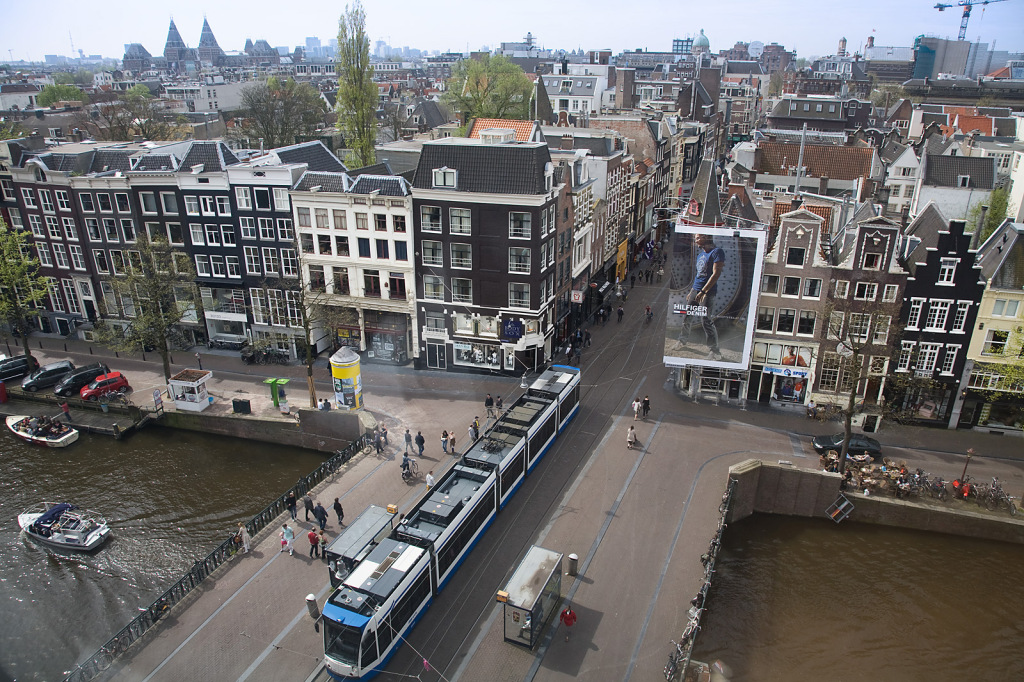 The modern tram brings fast, reliable and user-friendly public transport to
densely populated European Cities, like Amsterdam. The ability of the transit customer
of having his/hers transit on the pavement and easily accessible, makes
modern light-rail the first choice of transit planners around the world.
Sadly, not so in Metro Vancouver.
A bit of a “Puff”Ai?? article in BC Business.
Frances Bula, a big supporter of light-metro and her “puff stories” on the Canada Line earned a rather unfriendly moniker by those living on Cambie St.
But the “chickens have come home to roost” so to speak and now with over $10 billion invested in SkyTrain and the Canada line, the car is winning the commuter war!
The problem is so simple, that it is far too complicated for the likes of Bula and many other media mavens who opine on transit in the mainstream media to understand.
If you want people to use transit, it must be user friendly; it must be an attractive alternative to the car.
As Bula and Translink have not figured this out, speaks volumes why TransLink is held in such high odor by locals.
Except for residents of the principality of Vancouverai??i??aAi??little piece of Amsterdam dropped into our local equivalent of Los Angelesai??i??the majority of people in the
region are wedded to their wheels.
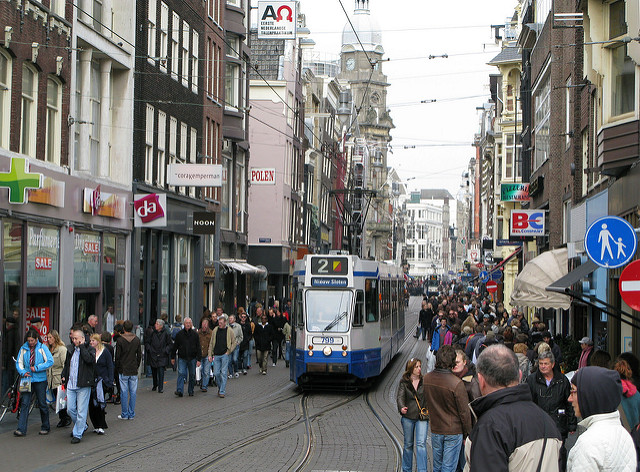
The preceding quote from Bula shows her Vancouver centric thinking, where people living in Vancouver remain blind to the fact of massive car use in the city.
Vancouver cannot even come close to be compared with Amsterdam and by doing so showcases the many biases contained in the article.
Amsterdam, like most European cities offer a customer friendly trams (as well as metro and a comprehensive metro and regional rail services), which Vancouver shuns, in favour of grossly expensive subways and mini-metros which have been proven very poor in attracting the motorist from the car.
Bula further muddies the water with her love affair with SkyTrain and the Canada line and nowhere does she mentions that the proprietary ALRT/ART system is hugely expensive to maintain and operate and the Canada line has greatly limited capacity due to have only 40 metre long station platforms, giving the illusion of being popular by offering short crowded trains.
Light-metro is so expensive to build that it can only offer a limited network that must be reached by bus, both inefficient and time consuming for the potential transit customer.
Yes, as Zwei had predicted many years ago, the car is winning the commuter war and there is a solution, it is called light rail (tram in Europe), a user friendly transit mode that has the proven ability to attract the motorist from the car, but the likes of Bula, Vision(less) Vancouver and TransLink are too blind, too dated in their thinking, and too egotistic to discuss honestly.
Unless there is a complete reversal in transit planning in the region, the car will win.
Why the car is winning the commuter warai??i??and what can be done to stop it
Frances Bula | May 19, 2016

Image by: Paul Joseph
DOUBLE COMMUTE | The Chmeliks were dedicated transit users until they moved from Vancouver to more affordable Surrey. Now they have two cars
Billions have been spent on new transit lines, better bike lanes and more walkable communitiesai??i??and yet we refuse to give up our wheels. And nowhere is that more true than in the suburbs of the Lower Mainland.
Clayton Chmelik and his wife were poster children for the car-shunning millennial generation for most of their 20s. They lived in south Vancouverai??i??s Marpole neighbourhood and both took buses almost everywhereai??i??first to university, then to their practicums and jobs. They didnai??i??t own a car and didnai??i??t feel deprived.
Now 33, Chmelik, a health manager at a Richmond company, has two cars in his family. He commutes 40 minutes a day each way in his Mazda 3 from his townhouse in Surrey, while his wife has her own car, a Mazda 5, that sheai??i??ll be using to commute to her counselling job when her maternity leave for their second child ends later this year. He estimates it costs them at least $700 a month to run both vehicles, not counting the $10,000 apiece the cars cost to buy. He knows itai??i??s a lot. ai???If I had a choice, I wouldnai??i??t do it.ai???
But he feels like he doesnai??i??t have a choice. First, TransLink eliminated the B-line bus along Granville when the Canada Line opened and transformed his 10-minute commute to Richmond into a 40-minute, two-transfer one. Then, when he and his wife decided to buy a home, a modest townhouse in South Surrey was all they could afford. That new location made transit even more unrealistic.



Recent Comments