Transportation Planning – A North American view
An interesting extract from a commentary comparing currentAi??North AmericanAi??practice with European
`In Vancouver, over a decade ago at the grand opening of the heritage streetcar project, a chap from Bombardier singled me out. What he said after a few niceties, astounded me. To paraphrase, he claimed that:
Vancouver’s SkyTrain greatly retarded sales of Bombardier built LRT in North America. “It was a two edged sword”, he claimed, because;
1) Bombardier Inc. dared not seem to make LRT a better bargain compared with Vancouver’s SkyTrain mini-metro and because of this
2) It was very difficult for Bombardier to counter claims about other manufacturers light rail products, lest they make unfavorable comparisons with SkyTrain.
Example: If SkyTrain mini metro is so good, why are you flogging light rail’
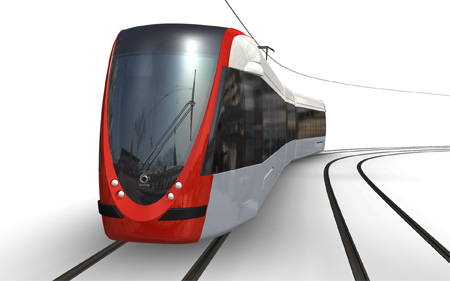
Enter the door to KinkiSharyo, who are designing cars with the U.S. market in mind and it is in their interests to keep streetcars and LRT separate.
All European trams can operate both as LRT or a streetcar,
but KinkiSharyo certainly doesn’t want to invest more money to provide a comparable (modular) product; it is in their financial interest to keep up the current charade. What KinkiSharyo is providing is dated cars, to
suit dated transit planning and the sad part is that the taxpayer is paying far more for what is largely a stale-dated product.
The real problem, of course, is that universities are not training transportation planners in the fine art of modern light rail and the current crop of “rubber on asphalt” lot in charge of transit planning, are using resources that are 20 to 30 years old or more. Imagine planning for a new airline, based on DC-8’s and DC -10’s, when everyone
else is using Boeing 777’s and Boeing 787’s or the Airbus equivalents.*
In an age when a transit authority can pick and choose the LRV it wants by choosing which modules to use to make a custom car design to suit its needs, many people on this side of the pond are incapable of carrying out this determination.
The fictitious war on cars
Why the automobile is not ai??i?? and has never been ai??i?? endangered
Jennifer Good ai??i?? The Brock Press (Brock University)
Canadian University Press
http://cupwire.ca/articles/50669

Bike lanes don’t slit cars’ tires. There’s no war zone here. (Photo courtesy of Paul Krueger/Flickr Creative Commons.)
ST. CATHARINES (CUP) ai??i?? “The War OnAi??Cars.”Ai??It’s a slogan that I first heard Rob Ford use in his successful Toronto mayoral campaign. More recently, Progressive Conservative premier wannabe TimAi??HudakAi??used “The War On Cars” mantra in his unsuccessful campaign. The concept? Bike lanes, streetcars and car-related taxes are indications that the car is under attack. “The War On Cars” encourages us to believe that, somewhere out there, unfriendly folks are making life difficult for those of us who just want to drive ourAi??favouriteAi??jalopy, unencumbered by nasty, inconvenient stuff like bikes and streetcars.
This notion, that the car is somehow falling victim to a nefarious war, strikes me as so ridiculous that I can barely stand it. The idea that cars have some sort of prima facie role as the rightful transporter of the people comes not from some set of objective benefits of car travel, but rather from the car’s history of dismantling ai??i?? indeed waging a war upon ai??i?? other transportation options. When the car was born in the earlyAi??1900s, the big car companies (like General Motors) realized that a fast, efficient network of economically viable publicAi??transportationAi??would impede the car’s rise to prominence.
In the PBS documentary Taken For A Ride, filmmakers Jim Klein and Martha Olson describe their exploration of this moment in history thusly: “Before freeways, traffic congestion and air pollution, public transportation was a vital part of the American landscape. [Taken For A Ride] weaves [together] investigative journalism, urban history and social commentary to uncover General Motors’ role in dismantling street car transportation in the 1930s, therefore catapulting the automobile to the centre of our national culture.”
Dismantling the street car? This is the way that car travel has gained prominence: by making the playing field ai??i?? or transportation field ai??i?? as uneven as possible. Car travel has become entrenched over the years, and our support of its dominance has been unfailing. From road maintenance to oil/fuel subsidies, and from tax breaks to industry bailouts (and a few oil-relatedAi??skirmishesAi??here and there), I think one would be hard-pressed to say that we have done anything but continually prop up the car’s reign over our other transportation options.
That’s what makes Ford’s,Ai??Hudak’s and others’ claims that the poor automobile is under siege so ridiculous. They think that other ways of getting around are “winning.” What FordAi??and Hudak should really oppose is the fact that the car’s war on other forms of transportation has been so successful ai??i?? so ferociously, unrelentingly successful ai??i?? that we don’t have much of a choice but to get in our cars and join the masses of other people in their cars jostling along in stop-and-go traffic. It is the ultimate irony that the blame for gridlock and other such driving ills gets placed at the feet ai??i?? or should I say, wheels ai??i?? of such things as bike lanes and mass transit.
The Toronto Star has reported that 60 per cent ofAi??TorontoniansAi??are interested in riding their bikes, but they’re too scared to vie for space on Toronto’s busy, car-filled streets. Seems to me that the nicest thing to do for those who really want to be in their cars would be to build safe bike lanes for those 60 per cent of would-be bikers and improve the mass transit options for as many other people as possible to get those folks out of their cars. In other words, give the car lovers their roads and let the rest of us safely ride our bikes and comfortably take mass transit. Let us all do our part in stopping this oh-so-lamentable war on cars.
Professor Lewis Lesley and the LR55 tram track – will it usher in a new age of cheaper light rail?
The Lewis LR55 track system has been around for many years now the good Professor himself is advocating its use for the troubled Edinburgh tram project.
The concept is that the weight of the tram is supported by the concrete trough longitudinally along the track, instead of a downward thrust, thus not disrupting the underground utilities that either cross under the track or are adjacent to the tram line.
I wish some transit or research authority undertake to build a proper demonstration line to showcase the LR-55 track and see if it does indeed deliver as advertised. Cheaper construction costs for new LRT/streetcar systems are in everyone one’s interest, except maybe the SkyTrain and metro lobbies around the world.

A professor who is the technical director of the Trampower light rail manufacturing concern says he could build Edinburgh’s full light rail route at the same cost as the truncated version decided on by the City Council. The difference would be the type of rail used, according to a story posted by the “scotsman dot com” site. The city decided to build the line from the airport to St. Andrew Square in the city centre and shelve the extension from the downtown retail district to the Newhaven waterfront redevelopment area. The cost saving proposal by Professor Lewis Lesley is to use LR55 track, described on this Trampower page:
http://www.trampower.co.uk/track.html
And the news story:
http://tinyurl.com/875bfax
“I’ll build full tram route for same cost
Published on Monday 2 January 2012 15:34
A TRANSPORT expert has offered to build Edinburgh’s tram route all the way to Newhaven ai??i?? for the same money.
Professor Lewis Lesley says using a different type of tram track would allow the controversial scheme to reach its original destination within the A?776 million ($1.20 billion USD) budget.
He says the alternative track type would also mean minimum disruption during construction.
Professor Lesley, who is technical director of light rail company Trampower, met city council transport convener Gordon Mackenzie and senior officials to discuss his proposal.
But council chiefs say they believe the existing consortium led by Bilfinger Berger is “best suited” to deliver the project.
Prof Lesley said the LR55 tram track he proposed for Edinburgh had already been proven a success in Sheffield and was being considered by the US Department of Transportation as a US standard.
He said: “It’s a different technique for laying the track, which means only five per cent of the road has to be dug up instead of the whole road.
“It’s much less expensive because you only have to lay what is in effect a large kerb and the track sits in the kerb.”
Professor Lesley said it would require the minimum diversion of underground utilities, “and it’s much quicker too”.
He accepted work was already under way on relaying the faulty tram track on Princes Street, but suggested the LR55 method could be adopted between Haymarket and Princes Street and between Princes Street and Newhaven.
“It would cost around A?10m a mile whereas at the moment it’s about A?60m a mile in Edinburgh. You could build a complete metro for that.
“They are going to have about ten trams they don’t need because they are only going to have half the tramway. What do they do with them? They tried to sell them to Croydon, but they didn’t want them.
“It would be a bonus if they could use them as well instead of leaving them to rust in a siding in Spain.”
Prof Lesley, who is professor of transport science at Liverpool John Moores University, was behind private company NETCo, which a decade ago had a A?35m plan to run trams around north Edinburgh.
He said he had been in dialogue with the council for the past three months.
He said: “The LR55 track system can be constructed with a minimum of utility works and without having to close important streets.
“All this can be achieved by 2014, and help to restore the reputation of the city.”
However, city council transport convener Gordon Mackenzie said the idea would be going no further.
He said: “We are confident that the consortium we have appointed to build Edinburgh’s tram network is the best suited to fulfil our vision of a clean, modern and efficient system.”
Deputy council leader Steve Cardownie, leader of the SNP group, added:”I think it could be far too late in the day now for a new player to arrive on the scene, but now it’s in the public domain councillors will no doubt be briefed as to the nature of these discussions.”
The huge cost of building subways: is TransLink listening?
What was once going to be a much more affordable hybrid light-metro/light rail line, before the election of Toronto’s Ai??Mayor Ford, Ai??is now being replanned as a full scale subway, dramatically increasing costs.
Those wanting to build a subway under Broadway had better get out their calculators because new subway construction in Toronto is getting extremely expensive. For too long the SkyTrain/metro lobby in Vancouver have been singing hosannas about metro and its superiority over LRT, but remain mute about the costs. The proposed preliminary cost ofAi?? $8.2 billion for one subway line in Toronto is roughly the same cost that taxpayers have paid to date forAi?? three mini-metro lines in Vancouver. TransLink, as BC Transit before, have rejected the notion of BC’s Ai??Auditor General checking the books, which leaves me suspicious that the cost for SkyTrain and the Canada Line are much higher than advertised; this especially when the BC Auditor General found $2.2 billion of deferred debt at BC Hydro, which was deliberately hidden from public view.
The cost of new subway construction should send alarm bells ringing with every mayor and council in the Vancouver Metro Region, especially with TransLink actively pursuing a SkyTrain subway under Broadway. This also should put to rest the silly notion espoused by the SkyTrain Lobby and Vancouver politicians that SkyTrain and subways are OK for Vancouver and light rail isAi??OK for the Fraser Valley. In truth, new UBC subway will pauper regional taxpayers and merchants who have stores on Broadway should look at moving to new locations as any subway built under Broadway will involve cut and cover subway construction as cut and cover will help mitigate the high cost of underground subway construction.
One must remember that TransLink destroyed hundreds of businesses along Cambie Street with cut-and-cover subway construction, and they will do the same along Broadway, ten fold and if anyone has any doubts over this, just ask Susan Heyes!

TORONTO, Ont. – A national magazine has named the Eglinton Crosstown Light Rail Line the most expensive public infrastructure project in the nation.
The list was compiled by Renew Canada, ranking each project on total cost, including materials and labour.
The magazine cites Mayor Rob Ford’s decision to move the line underground as a major reason the price was increased substantially to $8.2 billion ($8.03 billion USD).
The now cancelled “Transit City” plans were named number four on the magazine’s list last year.
The Globe and Mail reports that oil and gas projects are not including in the list because they’re not considered part of public works.
The Spadina subway expansion is number eight on this year’s list, with an overall cost of $2.6 billion ($2.54 billion USD).
Ottawa tries to avoid the Vanvouver T.O.D. disease.
In Vancouver, metro construction is planned andAi??built toAi??subsidize land development, not to provide better transit for customers. In theory it is to greatly increase ridership for the new metro line, in practice some unpleasant things happen,Ai??such asAi??people moving into the new high rise apartments and condos and driving to work because they work where the metro doesn’t go.
The gurus of density will never be happy until everyone is living in high rise apartments, with shoe-box size living accommodations and work in downtown Vancouver. Mind you the gurus of density, always mindful of their stipends when spreading the gospel of Vancouver styleAi??T.O.D. at public meetings, (who also tend to be developers)Ai??also want to make a ‘quick‘ buck by increasing density and building condo’s and apartments on what was once single family lots.. Good transit planning (transit designed for the transit customer’s satisfaction), just never enters the picture as metro lines are built to where friends of the government owns land, so they can have the excuse to increase density, encouraging the great development ponzi scheme.
If one reads the followingAi??article item correctly, Ottawa doesn’t want to follow Vancouver’s rush to turn areas of single family homes into high-rise ghettos and all I can say is good on them. The Vancouver penchant for ever higher densities is based on the philosophy of unlimited growth in the region. But there is a problem with this, the region presently can’t afford to build more than one metro line a decade, yet the metro population continues to increase, with the result of three heavily overcrowded metro lines, which will find it all but impossible to cater to the increased densities that politicians have allowed to happen in the metro region. The result is easy to see, the car remains the most important transit mode in the region.
Instead of building much cheaper light rail lines, which does not need the proscribed residential densities that SkyTrain/Canada Line metroAi??are supposed to have, for the same amount of investment for our present metro system, the region could have had at least three times theAi??LRT network in the region, offering a far superior transit service than what we have today, while at the same time, protecting residential neighbourhoods from the ravishes of Vancouver style (in reality, an old fashioned land rush, causingAi??a localAi??inflation of property values) T.O.D.
But then, transit planning in Vancouver has always been about moving money, not people.

Plan is to double the density of homes and jobsAi?? around future LRT stations
By DavidAi?? Reevely, The Ottawa Citizen December 30,Ai?? 2011OTTAWA ai??i?? The city is about toAi?? move into high gear on redevelopment plans for the neighbourhoods around threeAi?? stations in the eastern stretch of the planned light-rail line, with majorAi?? rezonings to come at four more within a couple of years.The mission is twofold: First, to more thanAi?? double the density of jobs and homes around stations like St. Laurent, CyrvilleAi?? and Train. Like many Transitway stations outside the downtown core, theyai??i??reAi?? surrounded by other roads and low-density stores and light industry, and if thatAi?? doesnai??i??t change, the cityai??i??s $2.1-billion rail project wonai??i??t be as busy as theAi?? city wants. The city wants to more than double the population around thoseAi?? stations in the next 20 years, ideally to make the neighbourhoods even denserAi?? than Centretown outside the core business district.
ai???Our drive is to ensure that to the best of ourAi?? abilities, there will be the people that are going to drive ridership on theAi?? LRT,ai??? says Councillor Peter Hume, who chairs city councilai??i??s planning committee.Ai?? Whatai??i??s going on, he says, is a basic shift in the purpose of public transit,Ai?? from a system thatai??i??s mostly about getting commuters from the suburbs to downtownAi?? and back, to a system that serves distinct neighbourhoods built up around eachAi?? station.
And so, second, the goal is to have a good ideaAi?? what those distinct neighbourhoods will look like and how theyai??i??ll fit into theAi?? neighbourhoods that are already there. With LRT stations due to begin servingAi?? districts of parking lots and highway cloverleafs in 2018, the city doesnai??i??t haveAi?? much time. The goal isnai??i??t to have several million square feet of offices andAi?? condo towers built around the stations in the next seven years, but to beAi?? completely ready with neighbourhood plans for what can go where and cityAi?? infrastructure, from bike paths to water mains, thatai??i??s up to the job.
Hume says ai???transit-oriented developmentai??? hasAi?? been a hot topic around city hall for years (city council approved designAi?? guidelines for it in 2007) but itai??i??s only been executed in a ai???tentative,Ai?? fracturedai??? way. Often, the language in the cityai??i??s development rules isAi?? dangerously vague: Just this week, city councilai??i??s planning committee backed aAi?? pair of residential towers at the north end of Roosevelt Avenue that are to beAi?? twice as tall as the zoning allows, in part because the property is so close toAi?? the Westboro and Dominion stations on the Transitway. The cityai??i??s officialAi?? land-use plan calls for taller buildings close to the Transitway that willAi?? someday be a rail line, but the zoning, providing rules that are finer-grained,Ai?? doesnai??i??t match up. Nearby residents, who are getting 14- and 16-storey buildingsAi?? in their backyards, screamed. But to no avail.
ai???Weai??i??re always responding to someone whoai??i??s sensedAi?? an opportunity,ai??? says Hume, reacting when a developer wants to do one particularAi?? thing on one particular lot. When an application comes in that makes sense underAi?? one set of rules but not the other, ai???people say, ai???Whoa, whoa, whoa, shouldnai??i??t weAi?? do this comprehensively?ai??i?? Well, weai??i??ve learned that lesson.ai???
St. Laurent, Cyrville and Train are first, withAi?? the cityai??i??s planners having just finished mapping the areas they want to look at:Ai?? anything within roughly an 800-metre walk of the stations. In the new year, saysAi?? the cityai??i??s top planning manager John Moser, theyai??i??ll make contact with theAi?? landowners and begin to talk about the possibilities. Around the Train station,Ai?? for instance, the existing density is about 100 people a hectare, roughly 7,000Ai?? people, and just about all the people who count toward that figure are workers.Ai?? The city wants to increase that to 200 to 300 a hectare, and have a mix ofAi?? employment and residential uses. Centretown south of Gloucester Street, forAi?? comparison, has about 200 people a hectare today, with a plan to increase thatAi?? to 250.
ai???We want to have these areas be site-plan andAi?? building-permit ready,ai??? says Moser. ai???And do we have the right pedestrianAi?? patterns to get to [the stations]? Do we have the right cycling routes to get toAi?? it?ai???
The first three plans should be done by the endAi?? of next summer. Over the following two years will come similar plans for Blair,Ai?? Hurdman, Lees and Tunneyai??i??s Pasture stations. Theyai??i??re supposed to governAi?? development around the stations for about 20 years and be nearly impossible toAi?? overturn.
A very similar plan for the northern part of theAi?? O-Train corridor, between Bayview station and Carling Avenue, offers a glimpseAi?? of what all those neighbourhood plans might look like. The area around theAi?? Bayview station includes a lot of unused publicly owned land; most of the restAi?? is light industry or low-density commerce, like the self-storage business thatAi?? took over the former bus barn on City Centre Avenue, and the currency-printingAi?? company that just announced itai??i??ll shut down next year. Theyai??i??re uses that made aAi?? lot more sense when the O-Train line carried freight.
The latest draft of the Bayview plan calls forAi?? the storage place to be replaced with townhouses, new shopping and commercialAi?? towers going in several blocks to the northwest, all linked up via treed plazasAi?? and cunningly connected pathways. It imagines ai???point towersai??? ai??i?? tall buildingsAi?? with small bases ai??i?? along the O-Train track north of Somerset and againAi?? overlooking Dowai??i??s Lake, surrounded by shorter buildings that step down to theAi?? houses and small apartments of Chinatown and Bayswater.
The O-Train corridor is in fairly tightAi?? quarters; the eastern rail stations give the city more room to work with. SouthAi?? of the St. Laurent station, for instance, the federal Public Works department isAi?? planning an office complex on fallow ground once occupied by the provincialAi?? government. The city wants 80 per cent ai??i?? four out of five people! ai??i?? to get toAi?? work there using transit, Hume says.
ai???One thing that has to come out is parking,ai??? heAi?? says. ai???The only way itai??i??s going to work is if thereai??i??s very little parking and soAi?? what parking there is, is expensive. And so people will say, ai???I can pay $400 toAi?? park my car, or I can spend $100 on a transit pass,ai??i?? and theyai??i??ll do the thingAi?? that makes sense.ai??? To make that work, itai??i??ll sure help if people arriving byAi?? transit can live close to stations somewhere else.
In Vancouver, theyai??i??re working on a similarAi?? project with ai???upzoningai??? around stations along the Canada Line ai??i?? the undergroundAi?? extension of the SkyTrain built before the 2010 Olympics to connect theAi?? Vancouver airport to downtown along Cambie Street. Itai??i??s been a major north-southAi?? artery forever, but long stretches of it are lined with single-family homes andAi?? Vancouver wants to replace them with taller mixed-use buildings.
Thatai??i??s created a land rush, crazy even byAi?? Vancouver standards. Houses along Cambie assessed at $1.2 million went for $3.4Ai?? million earlier this fall, once developers realized theyai??i??d eventually be able toAi?? knock them down for taller buildings. Residents are getting tired of agents forAi?? would-be buyers pounding on their doors, but also fretting that if they donai??i??tAi?? sell out, their homes will soon be surrounded by construction sites and then sixAi?? storeys of neighbours peering down on them.
Ottawa intends to avoid that. Almost anywhereAi?? thereai??i??s an existing house, itai??i??s being treated as off-limits.
ai???If I was a homeowner, and I was to look at itAi?? strictly from a value perspective … I would want my land in the area,ai??? HumeAi?? says. But most residents probably donai??i??t want to move and including peopleai??i??sAi?? homes in the redevelopment plans would be extremely disruptive. ai???For those whoAi?? [would] choose to stay, it has the potential to fundamentally change theAi?? character of the community,ai??? he says. And itai??i??d likely mean the planners wouldAi?? spend nearly all their time discussing changes in a relatively small part of theAi?? land that needs redeveloping. So, Hume says, theyai??i??re just staying away unless aAi?? community approaches the city en masse with the intention of selling.
There may be a sticky exception to the hands-offAi?? rule: At Tunneyai??i??s Pasture, single-family houses right across Scott Street fromAi?? the station are just the sort of thing transit-oriented development doesnai??i??t callAi?? for. The redevelopment plan there is barely a gleam in the planning departmentai??i??sAi?? eye right now, somewhere on the to-do list for 2013 or 2014, but the plannersAi?? will have to deal with it. Figuring out what to do there and how to involveAi?? residents will take a star urban designer, like Larry Beasley (credited withAi?? many of the successes of downtown Vancouver) or George Dark (behind the cityai??i??sAi?? downtown urban-design strategy and part of the panel overseeing design work atAi?? Lansdowne Park) to ai???engage the community and make sure that theyai??i??re fullyAi?? represented and fully respected.ai???
Ultimately, the city hopes to solve two problemsAi?? at once, by making it easy for people to build their lives around transit andAi?? dramatically reducing neighbourhood zoning fights, one neighbourhood at aAi?? time.
ai???We want to make it so that communities can knowAi?? that density is going to happen here but itai??i??s not going to happen here,ai??? HumeAi?? says.
Toronto’s Mayor “Edsel’s” War On Transit – When idiots makes decisions, don’t be surprised at the results!
Toronto’s Mayor Ford’s (Mayor Edsel is a better name) amateur attempts to improve transit in the Toronto region is fast becoming a fiasco! But what else would one expect from aAi??puffed up American tea-bag style politician who has a hate on for streetcars and LRT because; “they take road space away from cars“. His solutionAi??building $350 million/km subways instead of light rail is doomed for failure. Simplistic and foolish, but what would one expect from a politician who hasn’t a clue about modern public transport.
The sameAi??sort of nonsense isAi??happening in Vancouver, where Vancouver Mayor Moonbeam is advocating a $350 million/km subway under Broadway, because LRT/streetcars don’t have the capacity or some other such excuse.
Such ignorance is all too common with regional politicians in the Vancouver metro region, who use TransLink’s SkyTrain ‘spin‘ as transit fact, without doing any fact checking. If theyAi??take the time and doAi??some research they wouldAi??find that LRT/streetcar has plenty of capacity to handle traffic volumes on Broadway for years to come and that SkyTrain has yet to match the capacity that can be obtained by much cheaperAi??streetcar/LRT.
As in Toronto, Vancouver is opting forAi??screwing theAi??taxpayerAi??for more and more money to fundAi??subway construction on transit routesAi??which much cheaperAi??on-street LRT/streetcar could handle with ease. Never let facts get in the way of metro construction, especially if civic politicians think that a subway will make their city “world class“and that taxpayers are so willing to ante up more tax monies to fund politically prestigious subways.
The Toronto Star, reviewing Mayor Rob Ford’s decisions since taking office, says he’s conducting a war on public transit but motorists can relax because they’ll get benefits under his watch:
http://www.thestar.com/news/article/1109029
Ai??”Rob Ford’s war on public transit
(Friday, Dec. 30, 2011)Bungled and botched policies are hallmarks of the Ford administration, but no file has been more badly mishandled at Toronto City Hall than public transit. The impact of that failure hits riders starting Sunday, when a 10-cent fare increase kicks in. But that marks only the beginning of their woes in the coming year, and beyond, thanks to Mayor Rob Ford.
On taking office last December, Ford forthrightly declared his goal of making life easier for motorists, announcing: “The war on the car is over.” Left unsaid ai??i?? but made clear by subsequent events ai??i?? was that a war on public transit had begun.
The 10-cent fare hike is part of the onslaught. Yes, there have been plenty of fare increases in the past, including under Ford’s predecessor, David Miller. But Miller raised fares while expanding public transit and giving riders more for their money. The Ford administration is doing the opposite ai??i?? burdening commuters with new costs while reducing Toronto Transit Commission service levels. Meanwhile car owners pocket an extra $60 a year thanks to Ford’s elimination of the city’s motor vehicle tax.
The mayor’s favouritism toward drivers goes even beyond that. It was instrumental in his killing of Transit City, a fully funded expansion of TTC service that would have pushed light rail lines into almost every part of Toronto. Ford’s main objection was that cars would have had to share street space with these lines, which he called a “disaster.”
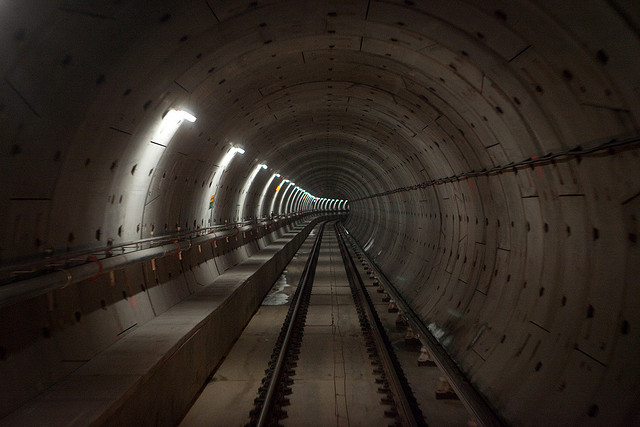
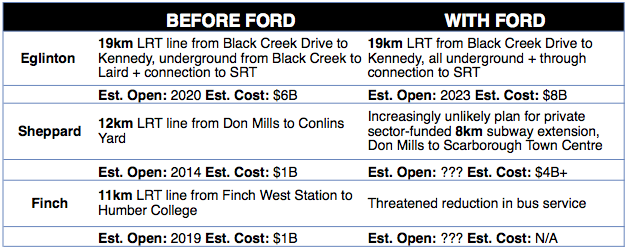
Ford’s alternative was to take Transit City’s funding and use it to bury one of the planned light rail routes, the Eglinton crosstown line, effectively turning it into a subway. To its shame, Queen’s Park went along since granting Ford’s wish wouldn’t cost the province any more money. Even some of the mayor’s supporters now recognize that burying the entire 20-kilometre (12.4-mile) length of the Eglinton line would be a mistake.
The original Transit City plan called for putting about 11 kilometres (6.8 miles) underground, in the most built-up sections of Toronto’s downtown. It was correctly felt that beyond this zone there would be ample space on Eglinton to accommodate both surface light rail and car traffic. But that wasn’t good enough for Ford. His burial plan almost doubles the cost of the Eglinton light rail line, to more than $8 billion, while providing fewer stops for commuters. Riders are shortchanged. But never mind: it’s more convenient for drivers.
Ford’s flawed vision for public transit involves replacing another planned light rail line, the Sheppard East route, with a subway. The problem there is that Toronto doesn’t have an extra $4 billion to build a Sheppard subway. No worries, says Ford; the private sector will cover most of that.
Except it won’t.
Gordon Chong, the man appointed to make this subway happen, wasn’t able to deliver a preliminary report by Christmas as promised. Instead, that’s been put off until February, with Chong saying that working up a full business case will take more time and up to $10 million in new funding for research and analysis. Even with that investment, Chong says it’s already clear that private funding will pay for only 10 to 30 per cent of the Sheppard subway’s cost, leaving Toronto with a multi-billion-dollar bill.
The bottom line: Ford rashly took a comprehensive and provincially funded transit plan and tore it up in favour of building a subway the city doesn’t need (the entirely underground Eglinton line) and a subway it can’t afford (the Sheppard line). Because the switch involved cancelling several already-signed contracts, it’s going to cost an estimated $65 million in penalties. That’s another $65 million that could have been invested in public transit but is instead being thrown away. Outraged? Relax, motorists still get their tax cut.
It’s now clear that Ford’s approach consists of little more than telling people what they want to hear, regardless of the facts. His simplistic and repeated denial of reality is an understandable strategy, given that it got him elected. But reality has a nasty way of making itself felt over the long run. The real pity is that a great deal of damage has already been done. And those in line for future pain are this city’s hard-pressed transit riders.
Trams, Pedestrians & Bicycles + buses & cars in Amsterdam
Trams, bicycles, pedestrians also buses, motorcycles & cars happily co-existing in Amsterdam.
http://www.youtube.com/watch?v=5JeWED7Zilo
Just to reassure Ai??theAi??Ai??retardedAi??Ai??dingbats amongst Skyscraper, Ai??Skytrain for Surrey, Translink & Ai??VancouverAi??activistsAi??that it can be done Ai??and that no one was killed or injured during the making of this video

a Happy New Year to one & all….
the toast is `Shiney rails to Surrey, Langley & allAi??stations eastAi??in 2012′
Seattle’s Light-Metro Plans……Er, LRT Plans
Seattle’s Sound Transit penchant for planning for light-metro and calling it light rail is leading regional taxpayers into a fincial fiasco. Sound familiar, well it should, it is the same type of regioanl transit policy that TransLink has.
Sound Transit’s first hybrid 22.4Ai??km light-metro/light rail line, costing $3.6 billion (this is the complete cost including debt servicing) has 7.1 km of its route on expensive on elevated guideway; 4 km. in very expensive subway; and 11 km at grade. With about one half of the route being grade separated, hasAi??greatly increased the cost of the transit project, making it a hybrid light-metro/light rail system. Poor ridership on this expensive hybrid transit system leads one to question that the Central LinkAi??is greatly over-engineered for theAi??job it is to accomplish.
Over-engineering seems to be a passion of Sound Transit as the East Link is also going to have kilometers of very expensive subways, that probably will do more to deter ridership than attract it. Also, by greatly increasing the cost of this proposed transit line, means that the chances of it being built at all is very slim.
The following article again shows Sound Transit’s regimen ofAi?? over-engineering is alive and well with the proposed hybrid transit system expansion to Lynwood and I would question Sound Transit’s contention that an elevated mini-metro style transit system would attract more ridership, than say an at-grade (true) LRT operating in the median of Hwy. 99.
Seattle, with its endemic traffic gridlock desperately needs affordable transit solutions, yet Sound Transit, like TransLink and BC Transit, seem incapable in planning for affordable transit solutions and in the end plan build hugely expensive mini-metros and hybrid mini-metros, simply because they are incapable of doing anything more.
I welcome light rail developments in the greater Seattle region, but please do not call it light rail or LRT if the system is to run mostly on very expensive grade separated guideways. Call it a light-metro.

The Snohomish County Business Journal has an article today about Sound Transit’s plan to extend its light rail line north to suburban Lynnwood and says that could lead eventually to track to Everett, which once had an interurban trolley connection to Seattle:
http://www.davesrailpix.com/odds/wa/htm/sei01.htm
Pacific Northwest Traction service from Seattle to Everett ended in February 1939 resulting from trackless trolley conversion of the city streetcar line that provided access to Seattle. Interurban car No. 55 is preserved as a static display at Lynnwood:
http://wtneary.files.wordpress.com/2011/09/lynnwood-trolley.jpg
Under the voter approved Sound Transit plan, LRT will be extended in stages from downtown Seattle to the University of Washington, Northgate and then Lynnwood. Here’s a map:
http://projects.soundtransit.org/Projects-Home/\North-Corridor-Transit-Project.xml
And the news story:
http://tinyurl.com/cnq4eav
“Published: Thursday, December 29, 2011Sound Transit makes a move north
New line from Northgate to Lynnwood will follow I-5
By M.L. Dehm
SCBJ Freelance WriterWhen Sound Transit starts turning dirt on a light-rail line into Snohomish County, the route will most likely follow I-5 between Northgate and the Lynnwood park-and-ride.
In 2008, voters approved a plan and funding for Sound Transit’s North Corridor Transit Project, which would extend light rail from Northgate into Lynnwood.
Later, the line would continue north to Everett and eventually could connect Snohomish County riders south to Seattle-Tacoma International Airport or over to the University of Washington.
So why isn’t anything being built yet?
“I get that question all the time,” said Sound Transit spokesman Bruce Gray. ” `Why does it takes so long to get these things moving?’ “
The project is moving, according to Gray. But the progress that is being made isn’t of the construction variety. There are a lot of steps to complete before turning that first shovelful of earth.
Currently, the project is wrapping up the first stage of development. This “alternatives analysis” stage is the most important part of the project. It gave the public a chance to weigh in on the location of the future light-rail route, which is required to qualify for potential Federal Transit Administration funding.
The recession reduced Sound Transit’s projected revenues over the next several years by about 25 percent, leaving a significant funding gap even when accounting for the sales-tax increase that voters approved in 2008. Without federal funding, it’s possible the long-awaited project could take longer yet to start.
The alternatives analysis explored potential variables and created a preliminary environmental review.
Scoping was completed in order to form an environment impact statement that met governmental guidelines.
Under scoping, Sound Transit officials met with the public, identifying social, economic and environmental issues and identifying alternative routes for the draft stage. The scoping process was recently completed and a capital committee made its recommendations to the Sound Transit board Dec. 8, 2011.
Of the route alternatives that were considered, only two were found to have serious merit. These were a route directly up the I-5 corridor between Northgate and the Lynnwood park-and-ride or an elevated rail line following Highway 99 between Shoreline and Edmonds.
Different routes away from those commuter corridors were eliminated early because it wasn’t clear if those areas could attract enough riders or if right-of-way could be established.
Ultimately, the the capital committee unanimously endorsed I-5 alternative. A route on Highway 99 would have been more expensive because the line would require elevation to separate it from cross traffic. Private property would have to be acquired for rights-of-way and there would have been more construction impact on local neighborhoods.
Route length and travel time also played a role. The I-5 route will cover 8.5 miles with four new stations while the Highway 99 route would cover 10.2 miles and require five new stations. The longer route would extend travel time between Northgate and Lynnwood by about four minutes.
The scoping process also projected more potential riders, perhaps up to 4,000 more, along I-5 compared to Highway 99 within the next 20 years.
Both routes raised some environmental concerns. The I-5 route will pass through some wetlands. On the Highway 99 route, the environmental impacts would have been limited to noise abatement and visual issues created by the elevated line.
Now that scoping for the project is complete, the Sound Transit board will begin to prepare a draft environment impact statement for public comment. After that, preliminary engineering on the project can begin.
After engineering reports, the Sound Transit board will issue a final environmental impact statement and make further decisions about the project.
This review and preliminary engineering stage is scheduled to be completed by 2014 and Snohomish County residents still won’t see any visual progress by the end of that phase.
In 2015, the project should be ready for final design. Permits will be in place and rights-of-way will be established. The final step before construction is to apply for and secure Federal Transit Administration grants to make up for Sound Transit’s funding shortage. This should be completed by 2017 if everything stays on schedule, Gray said.
“The goal here is to get into construction on the north link by 2018 and have it open by 2023,” he said.
Once completed, the project will add about nine miles of reliable commuter rail to the Sound Transit system. More importantly, it will connect Snohomish County to the greater transit hub to the south and take a large number of commuter vehicles off the road.
Public feedback during the scoping process has been fairly positive, Gray said. Only one respondent thought the project was unnecessary. Most people who responded, either at public meetings or by mail, phone or email, supported the concept of light rail, as did several state and local agencies.
The main concerns that citizens voiced about the route had to do with the location of the rail line, parking, where the stations would be located and how well connections would work between the stations and other forms of public transportation.
The cities of Lynnwood, Shoreline and Edmonds and the Muckleshoot Tribe expressed concern about possible environmental impacts while the City of Lynnwood specifically had concerns about traffic.
Although the scoping process is complete, the need for local involvement continues.
Gray said he hopes more citizens will get involved with the planning process. More public involvement and feedback in the early stages will mean fewer surprises down the road when construction finally begins, he said.
“Contact us,” Gray said. “Get on our mailing list, get on our email update list then they can keep up-to-speed on it all the way along.”
On the Web
Learn more about Sound Transit’s North Corridor Transit Project online at http://www.soundtransit.org
2011 Year in Review: A tough 12 months for the TTC – With another tough 12 months to come
 With Toronto’s Mayor Ford at the helm, The good ship Toronto is steering directly into a financial iceberg, with is subway only
transit policy.
Ah, The Toronto Transit Commission has had a very tough year and with the election of Mayor “Edsel” will make 2012 even tougher.
The realization that ‘shiny’ new subway lines are very expensive, needing billions of dollarsAi??in newAi??taxes and fare revenue to build and maintain them just hasn’t dawned on tea-bagAi??type Mayor “Edsel“. By following the American right-wing disdain for at-grade/on-street LRT, Mayor “Edsel” will cripple the Toronto taxpayer, burdening them with billions of dollars of public transit debt, while at the same time, greatly increasing traffic gridlock by not providing an affordable public transit alternative.
Pity the Toronto taxpayer, mayor “Edsel” is sailing the good ship TorontoAi??directly into the path of a financial iceberg, with Titanic consequences.
The “City News Toronto” site has a retrospective on Toronto Transit Commission [TTC] events and issues during 2011, concluding it was a tough year for the transit agency:
“2011 Year in Review: A tough 12 months for the TTC
12/25/2011
Marcia Chen, CityNews.caOvercrowding, a stagnant transit plan, service cuts and a pending fare hike. The TTC’s already tarnished image took a hit in 2011, and it has finally admitted there’s a problem. The commission blamed many of its woes on budget cuts, but acknowledged it could improve.
“Customer service will be a big focus in 2012,” said TTC spokesman Brad Ross.
“Fiscal challenges will also be a focus in 2012, but those are the kinds of issues that customers, while they appreciate, don’t necessarily need to care about really. They want to make sure that when they leave their home to go wherever they’re going, they can do so without incident.
“Operational organizations like the TTC are from time to time going to have problems in the system. How you manage those problems ai??i?? and how you communicate them effectively is really the key.”
Despite the troubles, there are signs things may be turning around at the TTC. The transit authority hired a customer service officer, held the first in a series of town halls, and announced changes meant to appease riders.
Here’s a look back at the TTC’s tumultuous year.
QUEEN’S PARK DECLARES TTC AN ESSENTIAL SERVICE
The provincial government stripped TTC workers of their right to strike in March, when it passed an essential service bill ai??i?? the Toronto Transit Commission Labour Disputes Resolution Act ai??i?? with a vote of 69-9. Under the new law, which will be reviewed in five years, a third party must provide binding arbitration when collective bargaining does not work.
Union boss Bob Kinnear called Premier Dalton McGuinty a “lapdog for a union-hating, right-wing mayor.”
MORE DELINQUENT TTC WORKERS, MORE AMATEUR VIDEO
A year after a photo of a sleeping fare collector went viral, riders snapped photos of three different bus drivers texting behind the wheel. The TTC wouldn’t confirm reports the employees were fired.
And months later, a passenger showed CityNews video she took of a TTC supervisor lunging at her and apparently breaking her camera. She had been recording a dispute between a streetcar driver and another rider at the time.
SHINY NEW SUBWAYS, STREETCARS
Although seven months behind schedule, the sleek, new “rocket” train went into service on the Yonge-University-Spadina line in July. The trains hold more people and allow passengers to walk between cars. Wider doorways, security cameras and anti-bacterial poles are among the other features.
The trains will eventually run on an automatic signal system which will allow more vehicles on the line.
In November, the TTC unveiled the design for its new light-rail vehicles. The streetcars will have more seats, larger windows and air conditioning and allow boarding from four doors. They will also accommodate bikes.
The fleet, which Bombardier designed and will build, should start appearing on the streets in 2013.
CONSTRUCTION BEGINS ON SPADINA SUBWAY EXTENSION
All three levels of government turned up in June for the start of construction on a $2.6-billion subway tunnel linking Toronto with the remote York University campus and Vaughan. The 8.6-kilometre track will extend north from Downsview station on the Yonge-University-Spadina line and end at the Vaughan Metropolitan Centre ai??i?? a planned development at Highway 7 and Jane Street.
Service is expected to start in late 2015.
SERVICE CUTS ai??i??
Despite expecting a record 503 million riders next year, the TTC announcedAi?? in November that it would revert to pre-2004 service levels with cuts to dozens of routes in an effort to meet Mayor Rob Ford’s budget demands.
“Customers will experience longer wait times and more crowded vehicles in some cases,” the TTC said in a statement.
Included in the cuts: the Dufferin, Eglinton, Steeles and Finch buses and Bathurst and Queen streetcars.
However, in December, TTC chair Karen Stintz said that because the TTC overestimated diesel costs, the cuts will start in February, one month later than expected.
ai??i?? AND A FARE HIKE
In December, the TTC approved a controversial 10-cent-fare hike every year over the next three years starting Jan. 1. The increase only applies to tokens and passes, not cash fares, and is expected to generate around $30 million a year.
Tokens will increase from $2.50 to $2.60, the monthly Metropass from $121 to $126 and senior/student tickets from $1.65 to $1.75. Cash fares will still be $3.
“WE’RE TALKING ABOUT A CULTURE CHANGE”
Hours after announcing its service cuts on Nov. 24, the TTC held the first of four town halls. Newly-minted customer service officer Chris Upfold chaired the tense meeting, and about 200 people were given a minute each to vent.
“I think it’s important for senior people at the TTC to sit down and to listen and to hear what people have to say so that we can go away and form plans ai??i?? and we are doing that,” spokesman Ross said, looking back at the town hall initiative.
“We know that cleanliness is an issue, reliability of service ai??i?? that is buses and streetcars arriving at the scheduled times. Issues like that ai??i?? we’re working hard to address.”
The initiative stemmed from a report the TTC’s customer service advisory panel released last year.
AND YOU THOUGHT PUBLIC NAIL-CLIPPING WAS BAD ai??i??
In mid-December, police charged a couple with engaging in a lewd act after they had sex in front of fellow passengers on a subway train and on the Spadina platform.
The TTC’s Brad Ross said the pair was extremely drunk and treated in hospital.
“My advice to others who wish to engage in public displays of affection of this nature is to get a room,” he said.
Now our second feature that demonstrates what happens when one single handedly drives up the cost of public transit by building extremely expensive subways on routes that do not have the ridership to support them. Is anyone in TransLink taking notice?

What the hell is happening with transit inAi?? Toronto?
Rob Ford has screwed up transit in Toronto. WeAi?? can endlessly debate the merits and impacts of the mayorai??i??s budget policies, but nothing compares to the long-term damage heai??i??s doneAi?? on the transit file. In less than a year, Ford has taken a fully financed andAi?? designed plan for multiple transit lines in the suburbs and replaced all of itAi?? with an overpriced half-baked tangle of transit ideas, all in various incompleteAi?? stages of funding and design. In doing so, his administration has set transitAi?? expansion back by a decade and replaced near-certainty with gobs of doubt.Ai?? Thanks to Rob Ford, no one is really sure where transit in Toronto isAi?? going.
Fordai??i??s undemocratic transit meddling comes withAi?? an estimated price tag of $65 million, most of which will go toward paying various contractorsAi?? and manufacturers to not do the work they were originally supposed toAi?? do.
Keeping track of Rob Fordai??i??s transit strategy isAi?? an exercise in frustration, as no one is forthcoming with information andAi?? nothing has come to council about any of this. To the best of my knowledge,Ai?? hereai??i??s where thing stand.
Eglinton Crosstown LRT
The one Transit City line that still has aAi?? beating heart, Eglinton represents, in its current incarnation, both a vitalAi?? piece of infrastructure and a massive waste of public money. Writing forAi?? Spacing, John Lorinc called Fordai??i??sAi?? unilateral decision to build the entirety of the 19 kilometre line undergroundAi?? the ai???single most expensive infrastructure mistake in TorontoAi?? history.ai???
Hereai??i??s why: thereai??i??s no ridership projection,Ai?? traffic model or any other kind of reasoned analysis that shows a cost-benefitAi?? for burying the eastern section of the line. No one has made an argument inAi?? favour of burying this section of the line that doesnai??i??t boil down to ai???Rob FordAi?? hates above ground transit.ai??? But thatai??i??s not a sensible reason to make any kindAi?? of public policy decision, much less one that involves spending billions ofAi?? dollars.
There is some hope that cooler heads willAi?? prevail on this one. The existence of the Don Valley ai??i?? sneaky jerk that it is ai??i?? has forced some public conversation about how anAi?? underground line can really work. And TTC Commissioner and Ford ally John ParkerAi?? recently reiterated his support for sticking with the original Transit CityAi?? design on the eastern part of Eglinton. He told the Town Crierai??i??s Karolyn Coorsh that, as planned, Rob Fordai??i??s Eglinton Crosstown lineAi?? will be ai???the goofiest LRT line known to man.ai???
The TTC now pegs the open date for Eglinton atAi?? 2023, a minimum three-year delay over the original window of 2019 or 2020. TheAi?? money weai??i??re set to spend to appease one manai??i??s irrational bias against surfaceAi?? rail could fund major transit infrastructure improvements on key corridors likeAi?? Finch West.
Sheppard Subway Extension
There is no plan to extend theAi?? Sheppard Subway in the near-term. It will never happen. Former Councillor GordonAi?? Chong, hand-picked by the mayor to bring the dream of the privately-fundedAi?? subway to reality, has come clean,Ai?? admitting that private partners are only likely to fund 10-30% of the overallAi?? project cost. And we canai??i??t even know that for sure unless we spend another $10Ai?? million on further analysis.
Fordai??i??s Sheppard gamble always felt like aAi?? face-saving decision. His original transit vision called for the outrightAi?? cancellation of the Eglinton line, funnelling all resources into extendingAi?? Sheppard at both ends. When the province told him this wasnai??i??t likely to happen,Ai?? both sides compromised.
Somewhat inexplicably, Ford has stuck to hisAi?? guns on the long-term viability of the project through his end-of-yearAi?? interviews with various media sources. Citing federal money that was committedAi?? to David Miller several years ago for the Sheppard LRT, Ford told the National Postai??i??s Chris Selley and NatalieAi?? Alcoba that we could see shovels in theAi?? ground on Sheppard in 2012. Sure.
Finch West
N-O-T-H-I-N-G.
When plans shifted away from Transit City, FinchAi?? West ai??i?? a horrendously busy bus route ai??i?? was left with nothing butAi?? a vagueAi?? commitment to ai???Enhanced Bus Service.ai??? No one ever indicated what that meant, andAi?? further details now seem entirely unlikely. Finch West was actually one of theAi?? routes proposed for service cuts under the TTCai??i??s original plan to roll back theAi?? Ridership Growth Strategy in 2012. Fortunately, thanks to some commendable wrangling from TTC Chair Karen Stintz, we got a stay of execution.Ai?? Council will get a chance to permanently preserve service as part of theirAi?? budget debate in January.
The Way Forward: Calling for a new consensus onAi?? transit
As we learn more about the long-termAi?? implications of Rob Fordai??i??s transit vision, it seems more and more like this allAi?? amounts to something resembling the Port Lands fiascoAi?? from this summer. There, Ford backed a short-sighted vision for a major cityAi?? asset that really didnai??i??t hold up to scrutiny. Once the public started pushingAi?? back, councillors who tend to support the mayor started to question whether FordAi?? had things right.
The rest is history. At the eleventh hour, FordAi?? backed a face-saving compromise that saw council unanimously back a way forwardAi?? for the Port Lands. And while thereai??i??s still a lot of questions about theAi?? implications of that new consensus, itai??i??s a hell of a lot better than what wouldAi?? have happened otherwise.
Is a Port Lands-style consensus possible withAi?? these transit plans? Early indications are good. Aside from Ford, very fewAi?? councillors expressed strong objections to the on-street operation of EglintonAi?? and other Transit City routes when they were first proposed. And thereai??i??sAi?? certainly an appetite for more transit in more places, which is what weai??i??d get ifAi?? council rejected Fordai??i??s all-underground scheme for Eglinton and reverted toAi?? something resembling the Transit City plan.
The important thing is to position any changesAi?? as a compromise, and to leave room for the mayor to save face. As much as itAi?? might be fun to see Rob Ford utterly defeated as Transit City rises from theAi?? ashes, weai??i??re far more likely to find a successful way forward with a compromiseAi?? strategy that integrates elements of Transit City with new vision for transit.Ai?? That vision could include a small subway extension (to Victoria Park), a tweakedAi?? plan for surface LRT service on Finch & Eglinton, and even bus rapid transit ai??i?? any and all things that can meet our goal of moving more people moreAi?? efficiently.
This isnai??i??t optional. Letting Fordai??i??s transitAi?? vision move forward unimpeded will only amount to a waste of time and money. InAi?? 2012, council must be given an opportunity to debate these issues and getAi?? transit planning in this city finally and permanently back onAi?? track.
With credentials, any idiot can make all other idiots believe any idiotic claim
 A San Fransisco cable car on a city street. Please note the slot on the pavement where the cable car’s “grip”
grips the continuousAi??operatingAi??cable under the street for forward movement. Being cable hauled, cable cars
are very good at climbing steep grades and the main reason they survived in San Fransisco.
A San Fransisco cable car on a city street. Please note the slot on the pavement where the cable car’s “grip”
grips the continuousAi??operatingAi??cable under the street for forward movement. Being cable hauled, cable cars
are very good at climbing steep grades and the main reason they survived in San Fransisco.
The following comment was made on a transit blog lamenting that anyone with an university degreeAi??can call themselves a transitAi??expert, yet those with real expertiseAi??with transit issues, especially those without a degreeAi??are ignored.
The density issue is a good example of this. Only in the Vancouver regional area is the issue of density forAi??new transit construction is taken as an absolute, with much time and study taken with the issue, yet outside our transit region, the question of density barely raises an eyebrow and instead, questions of the seamless (no transfer) journey; transit being user friendly; or transit being affordableAi??being deemed more important. Go to any transit meeting in the Vancouver metro regionAi??and the the term density is used ad naseum by those who really don’t know what they are talking about, promoting the SkyTrain light-metro instead of light rail.
Talk about modern LRT with regional planners and one comes away in wonderment that the mode is used at all, with the litany of complaint about the mode being slow, dated, unable to cater to transit demands, etc. In fact, modern light rail is treated as a pooman’s SkyTrain and is designed as much. This is tantamount to a shortcut to failure and one wonders if the so-called transit experts at TransLink want this to happen.
Just about everyone who has an Engineering degree, whether it be a chemical or electrical or more, feel that they are an instantAi??transit expert, yet so much of what they speak is nothing more than opinionatedAi??baffle-gab, nowhere near being accurate or correct. Professional misconduct comes to mind.
This reminds ‘Zwei’ of a story which happened some years ago in Vancouver.
A transit expert was giving a talk on streetcars and part of his video show were pictures of San Fransisco cable cars, which the chap mistakenly called streetcars. On and on he went misinforming those attending the meeting about how streetcars were small and open to the whether, etc. During the question period I told the chap that what he called streetcars in San Fransisco were in fact cable cars and were powered by an underground moving cable and that San FransiscoAi??streetcars were in fact a mixtureAi??PCC cars and articulate Boeing VERTOL cars, which he had no pictures of.Ai??Oh, no, no, no said the expert, “all of San Fransisco streetcars were once cable hauled and now have been rebuilt with electric motors.”
I again stated that he was wrong, the steam powered cable system was indeed replaced with electric motors but the cable cars themselves were unpowered and that the cable cars he was calling streetcars, were in fact cable cars.
A minder from the Vancouver City Engineering Dept. soon appeared at my side and told me not to disturb the meeting any further, that, “that the city paid good money for this man to speak, he is a qualified engineerAi??and we don’t want any nonsense from the trolley-jolly types, LIKE YOU!”
I haven’t gone to a streetcar meeting since as most what is talked about is dated drivel, by people who haven’t a clue about modern LRT, let alone streetcars.
ThisAi??observation manifested itself with the short lived Olympic (tram) Line long False Creek. The new track was laid to a mainline railway standard complete with welded rail, concrete ties and Pandrol clips, costing about $8 million of aAi??1.5 km. stretch of single track. What ever one wanted to call the Olympic Line, a simple streetcar it was not.



Recent Comments