Christmas Greetings
Seasonal Trams & Christmas lights from:
BudapestAi??http://www.youtube.com/watch?v=MzLNouWQlWg&feature=youtu.be&hd=1
Vienna http://www.youtube.com/watch?v=wixBopxlTUI
Graz http://www.youtube.com/watch?v=vDANZba5Qxc&feature=related
Munich http://www.youtube.com/watch?v=EXGVFcwE7C0&feature=related
and the Budapest Christmas Tram !http://www.youtube.com/watch?v=hcEZvwMlKMs&feature=related

E & N Blues

Want to kill a Railway? Starve it of funds and let it rust away and this seems the fate of the E & N railway.
For a want of a mere $15 million to upgrade the tracks, the provincial government has loudly signaled that it wants to wash its hands of the E&N, especially when the same government subsidizes the Vancouver region’s SkyTrain/light-metro network by over $250 million annually and is pumping in billions of dollars on the grossly over engineered lower mainland Gateway project. BC Transit remains deaf, blind and dumb, with modernAi??transit planning centeredAi??on the the E&N (TramTrain?) and remain willfully ignorant of the RftV/Leewood valley TramTrain report. The City Victoria’s civic politicians remain myopic of the advantages of TramTrain operating on the E&N by not including a rail portion of the new Johnson Street Bridge.
Current light rail planning isAi??blundering ahead with a $950 million streetcarAi??line for the Victoria Region, which translates to no LRT because it is too expensiveAi?? (just what BC Transit wants!). Using the E&N railway would be a natural for a regional Tramtrain service and $950 million could provide bothAi?? LRT for Victoria and a Naniamo to Victoria diesel LRT service, providingAi?? a downtown to downtown service, guarenteed to attract ridership!
But no, not in BC, where cheap light rail or tramsAi??in Victoria means we could build cheap LRT or tramsAi??in Vancouver and that is a big no-no with regional planners in the Vancouver metro regions, where new highway planning (rubber on asphalt) trumps all. The result is that the E&N will continue to rust away, with nothing being done because those in the provincial and regional transportation bureaucracies just do not want affordable LRT in BC.
Watchdog will keep eye on rail foundation
Founder of ICF forms group that aims to inform public about challenges facing the E&N line
By Walter Cordery, Daily NewsDecember 19, 2011
One of the founders of the Island Corridor Foundation claims the organization has derailed its plans to be open and transparent.
Thursday, Jack Peake and other concerned rail advocates and professionalsAi?? announced the formation of a new group, which will act as a watchdog toAi?? advise the public about challenges facing the E&N as well asAi?? concerns with the decisions made by the ICF, a consortium of regionalAi?? districts, municipalities and First Nations.
Peake, the former chairman of the ICF board of directors and past mayor of Lake Cowichan, said people aren’t getting timely information from the ICF and is particularly concerned that two ICF committees that advised the foundation no longer exist. It’s one of the reasons he and others formed the E&N Railway Action Group.
“I am concerned that the ICF, a public non-profit organization, is not presenting any detailed plan for the future of the E&N, and has closed out important advisoryAi?? committees from its decisionmaking,” Peake said. “I fear that withoutAi?? input from the public, and professionals who have been involved with the railway for years, the E&N could be lost. Joe Stanhope, chairman of the Regional District of Nanaimo board, also a founding member of theAi?? ICF, agrees “we could always do a better job at communication.”
Right now there’s not much to tell the public as the foundation awaits wordAi?? from federal government to see if it will match provincial funding,Ai?? contingent on Ottawa’s contribution.
“We are in a hiatus right now,” said Stanhope.
He’s been actively corresponding with federal Minister of Transport,Ai?? Infrastructure and Communities Denis Lebel urging him to convince theAi?? rest of cabinet to get on board with the matching funding.
“I’veAi?? been writing letters to Minister Lebel but I’m not hearing much back,”Ai?? Stanhope said. The removal of the E&N’s Rail cars from the IslandAi?? last month shook Peake’s already waning confidence in the direction theAi?? ICF was heading.
“To me that was, unfortunately, the writing on the wall of the railway.”
The ICF acquired the E&N Railway in 2006, as a donation from Canadian Pacific and Rail America.
Last March, daily VIA Rail service between Victoria and Courtenay wasAi?? suspended after the track was found to be no longer safe for passengerAi?? trains. This prompted the ICF to step up its request for $15 million inAi?? federal and provincial funding to fix the E&N’s decayingAi?? infrastructure. However, the ICF has not publicly released any detailedAi?? plans on how this money will be spent.
Until its disbandment, theAi?? ICF received suggestions and information from a rail operations advisory committee, Peake was chairman of the committee. The foundation alsoAi?? received direction from a community advisory committee but that also has been disbanded.
Peake’s new action group has launched a web site, saveislandrailway.org, where people can learn more about the E&N,Ai?? and get involved.
WCordery@nanaimodailynews.com 250-729-4237
Ai?? Copyright (c) Postmedia News
http://www.canada.com/Watchdog+will+keep+rail+foundation/5880953/story.htmlE&N Railway Action Group
E&N Railway News and Opinions
Welcome
Our Most Important Updates!
Our Press Release
New E&N Action Group demands better governance and transparency from Island Corridor Foundation
ICF founder expresses concern that Esquimalt & Nanaimo Railway is in jeopardy
Thursday, December 15, 2011: Vancouver IslandAi?? railway professionals and advocates today announced the formation of aAi?? new E&N Railway Action Group, which will act as a watchdog to advise the public about challenges to the Esquimalt & Nanaimo Railway, and governance issues with the Island Corridor Foundation, which overseesAi?? the E&N rail corridor.
ai???I am concerned that the ICF, a public non-profit organization, isAi?? not presenting any detailed plan for the future of the E&N, and hasAi?? closed out important advisory committees from its decision-making,ai??? says Jack Peake, a co-founder and former co-chair of the ICF, and aAi?? spokesperson for the new Action Group. ai???I fear that without input fromAi?? the public, and professionals who have been involved with the railwayAi?? for years, the E&N could be lost. With the VIA Rail cars having been removed from the island on November 5, this concern has never been more real.ai???
Click here to read our entire press release and post your comments.
Toronto Meet Your New Ride
 New Toronto Streetcars
http://lrv.ttc.ca/Ai?? is the website from the TTC on the new streetcars.
The Toronto Transportation Societyai??i??s December newsletter has some interesting thoughts on the vehicle as well as photos of the half mock-up. The first 80 cars will have both pole and pantograph with the remainingAi?? (109 or 116 depending on the order) will be fitted with pantograph only.
http://lrv.ttc.ca/Meet_Your_New_Ride.aspx
Facts about your new ride:
- Accessible
- 100% low floor
- More seats
- Some wider seats
- Boarding from all 4 doorways
- Wide 2nd and 3rd doorways
- Modern
- Comfortable
- Spacious
- Large windows
- Air conditioning, climate controlled
- Bicycle accommodationAi??
This light rail vehicle is part of our new transit legacy. We are committed to working with Torontonians and our current and future customers to make solid design decisions.
In 2007, over 10,000 of you told us what you wanted to see in a new streetcar. We heard.
In June 2009, the path was chosen for one of Torontoai??i??s newest transit rides. The TTC entered into a contract with Bombardier to design and build 204 new low floor, light rail vehicles (LRVs) to replace the existing fleet of streetcars.
Bombardier’s Guided BRT Is A Bust In Caen

With all the hoopla about BRT, it is interesting to note that the Caen TVR (proprietary guided bus) being in operation for a few short years, is being abandoned in favour of LRT. To be competitive with light rail/streetcar, BRT must be guided and if BRT is guided, it must run on its own rights-of-ways, in fact it must operate as a tram. This fact is not lost on promoters of BRT, as they design their buses to look like trams.
The cost of TVR was about 25% less than a tram to install, but it was supposed to attract the same amount of ridership and have similar operating capabilities. In revenue operationAi??TVR didn’t meet expectations and finally added to the mix was the ominous; “it was no longer being actively supported by the manufacturers“, the death knell of proprietary transit systems.
TVR has proven to be an expensive experimental BRT system that has failed, yet in BC, indeed in North America, BRT is being promoted as a successful transit mode, but in most cases (such as BC) what is being presented as BRT is not really BRT at all, just a tarted up express bus service, that offers few, if any, amenities other than having few stops which gives it a faster service. This is something to remember when TransLink and the mainstream media bang the drum for Bus Rapid Transit.
Bombardier Transportation’s “light guided transit” — an electric trolley bus running under overhead wire with a one centered guidance rail — proved to be a bust in the city of Caen which now plans to replace the system with conventional light rail — a conversion that will take 18 months, according to Railway Gazette International. Here’s a view of the technology to be abandoned:
http://2.bp.blogspot.com/_9fJALTovDT4/TFm0EEpqbjI/\
AAAAAAAAUTw/L29RLoq4R44/s1600/cnlr1.jpg
This Wikipedia article contains a description of “trams on tyres” and shows the guidance systems used by Bombardier and Lohr Industrie:
http://en.wikipedia.org/wiki/Guided_bus
And the news story:
http://www.railwaygazette.com/nc/news/single-view/view/\
caen-to-switch-to-light-rail/archiv/2011/12.html
“Caen to switch to light rail
19 December 2011FRANCE: On December 14 Caen transport authority ViacitAi??s confirmed its intention to abandon its TVR rubber-guided light transit route and replace it with conventional light rail by 2018.
ViacitAi??s estimates it will take 18 months to replace the TVR guideway with tram track on the 15 km (9.7-mile) Y-shaped network, at a cost of ai??i??170m $221.2 million USD). The change will require the termination of two concession contracts currently held by and Keolis, and Bombardier-Spie Batignolles consortium STVR.
Following completion of the network at a cost of ai??i??215m ($279.8 million USD), local operator Twisto began TVR operations in November 17 2002, under a 30-year concession. This was two years after a similar TVR service began in Nancy. However, the TVR technology has proved unreliable, and is no longer being actively supported by the manufacturers. Conversion to light rail is expected to pave the way for construction of a second line in the future.
PRESTO – My Bank Account is Drained
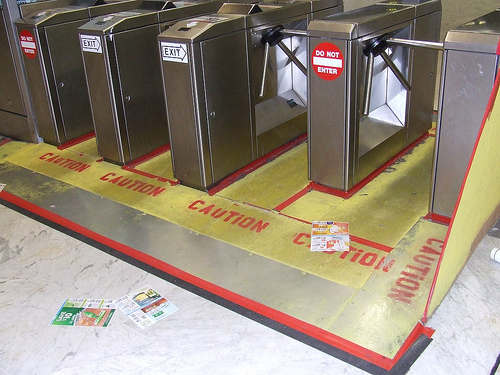
With Vancouver soon adopting an automatic fare card system, it is interesting to note, that not all is well in the land of transit fare-cards.
TransLink doesn’t want its new fare card just for transit, oh no, TransLink’s mandarins want the new fare card as a currency, valid for purchases in convenience stores and some major retailers, which mayAi??pose some problems in the future.
TransLink’s Modus Operandi is simple, a bureaucrats reads (or looks at a picture) of some transit development or other elsewhere and deems it would be neat to have in Vancouver. Then to persuade the politico’s of the need of this development, TransLink uses its well oiled public relations machine to manufacture a demand, yet from the beginning not knowing the real reason why this particular development is used transit wise. BRT, U-Pass, fare-gates/fare-cards, transit police, all fall into this category, as TransLink has spent hundreds of millions of dollars implementing them, without really knowing the reason why they are used, except that they look or sound neat.
In Toronto, those holding a Presto Transit card, allows Presto to dip into their bank accounts to top up the card when needed and for some, with rather nasty and expensive results.
The same will happen in Vancouver, but I have great expectations that TransLink will treat the fare-cardAi??customer with the same disdain as it does with all transit customers; “too bad, so sad”.
I can’t wait until the $127 million (and more)Ai??fare-gate/fare card folly begins.
Back to Presto problem taps riders and dips into their bank accounts
Presto problem taps riders and dips into their bank accounts
December 20, 2011
Tess Kalinowski
Adam Field works in customer service for a software company so he knows that computer-based systems can hit the odd glitch. But when the auto-reload function of his Presto card malfunctioned recently it cost him about $150 in bank charges.VINCE TALOTTA/TORONTO STAR
The last thing anybody needs at the holidays is a surprise hole in their budget. So when Adam Field read in a GO riderai??i??s blog that the automatic re-load feature was malfunctioning on some Presto transit fare cards, he decided to check his statement.
Sure enough, there were 11 instances in which the Presto system loaded $40 on Fieldai??i??s transit card before it reached the $20 balance thatai??i??s supposed to trigger a cash injection.
The auto-load feature allows Presto users to trigger a transfer from a bank account or credit card onto their transit smartcard when Presto reaches a minimum balance determined by the user.
Field had his account programmed to take $40 from a bank account if his Presto balance went below $20. Although he doesnai??i??t think his balance ever went under $50 in the affected period, his Presto account received 11 $40 credits.
But the funds werenai??i??t being withdrawn from his bank, so last week, when he discovered the problem, Field found himself overdrawn and on the hook for about $150 in bank fees.
Itai??i??s not the money that irks the Hamilton-Toronto commuter, although he said he had to complain vigorously to get Metrolinx to up its original offer of a $10 voucher to $150 to cover the bank costs. Itai??i??s the fact that he wasnai??i??t notified that annoys the 27-year-old systems administrator.
ai???You have a system where you can just take money out of peopleai??i??s accounts. If thereai??i??s an issue with the system, why was I not told? Why wasnai??i??t I notified?ai??? he said. ai???I work for a service-based company. If something goes wrong, the first thing weai??i??re going to do is tell our customers.ai???
A spokeswoman for the Toronto region transportation agency told the Star on Tuesday that Metrolinx only discovered the issue last week, at which point it emailed or phoned 320 affected customers. The auto-load problem was in effect between Nov. 7 and Dec. 4. The money was deducted from customer bank accounts until Dec. 8, 9 and 10.
ai???About 90 percent of those contacted did not realize that there had been delayed, combined charges. For customers who felt that they were severely impacted by the software issue, we issued them vouchers to reimburse them for any overdraft bank charges,ai??? said Thomas in an email.
ai???In any complex system such as a banking or card payment system, there will be rare glitches. This software error was a rare occurrence,ai??? she said.
But itai??i??s not the first time the Presto system has malfunctioned. On Oct. 27 about 200 electronic Presto readers at six GO stations were out of commission for about five hours. Presto officials told a Metrolinx board meeting in November that problem has been resolved.
The two issues are not related, said Thomas.
The Ontario government paid Accenture $250 million to design, build and operate the Presto system, which has been adopted across GO Transit and all the regional bus services, except the TTC.
The TTC, which has Presto readers in some stations, has agreed to work with Metrolinx to finance its installation. But until itai??i??s widely available on the TTC, one of the main features of the card ai??i?? its transferability across municipal boundaries ai??i?? is of limited use because about 85 per cent of transit riders in the Toronto region use the TTC for some part of their trip.
There are110,000 Presto cards in circulation.
ai???Pass-ups,ai??i?? overcrowding lead to litany of complaints aimed at TransLink
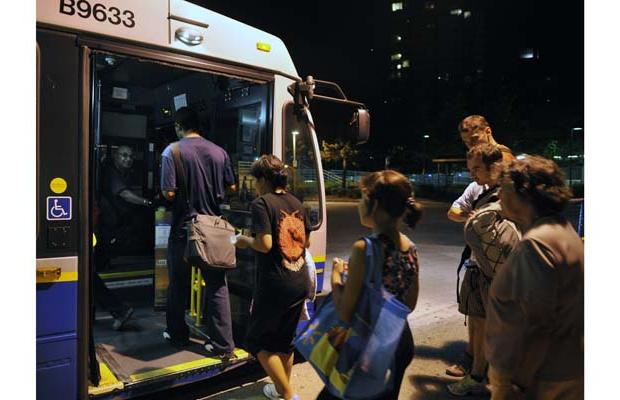
Pass-ups and over crowding of buses all point to one thing, extremely bad management of the transit system.
TransLink’s endemic bad management is easy to understand once one investigates the tiers of bureaucracy that operate our regional transit system. West coast Mountain Bus (WCMB) actually operates the buses, with TransLink setting the routes and operating frequencies. This ‘agency gap’ means that complaints are firstAi??delivered to TransLink, only to beAi??funnled to WCMB at a later date, there is no connectivity.
Customer service was never part of TransLink’s mandate and the transit service provided today shows it. It must be remembered that the then NDP government only created TransLink to save their failing Millennium Line SkyTrain projectAi??after their well orchestrated flip-flop from LRT to SkyTrain. Alienating many in the NDP membership, the political party was desperate to gain some credibilityAi??for the project coerced then GVRD Chair, George Puil, to sign the TransLink Deal (at the same time giving the green light to the Millennium Line) by promising to pay two thirds of SkyTrain only construction west of Commercial Drive in Vancouver! No niceties about customer service were ever mentioned!
Today, TransLink only cares on the amount of bus passengers force fed onto the SkyTrain/Canada Line metros, so they can score political points with the politicians and media.
In the 21st century, for a transit system to be deemed successful, it must be customer friendly, which our system is not and until TransLink puts the customer first and have contingencies in place to ensure customers good service, taking the car will just be a better bet.
ai???Pass-ups,ai??i?? overcrowding lead to litany of complaints aimed at TransLink
By KELLY SINOSKI, Vancouver SunDecember 14, 2011TransLink is being bombarded with complaints by passengers unhappy about being passed up by overcrowded buses or having to wait for drivers who donai??i??t arrive at the stop on time.
A third-quarter report by the transportation authority said the number of complaints from TransLink passengers is higher than it was during the same period last year, partly as a result of expanded channels ai??i?? such as social media ai??i?? on which to log their concerns.
The top two categories of complaints continue to be ai???overcrowding and pass-upsai??? as well as ai???early and late bus arrivals,ai??? according to the report. But TransLink spokesman Ken Hardie said passengers are also voicing concerns on everything from fare disputes to the way theyai??i??re greeted by an operator or the behaviour of another passenger.
ai???We can certainly see when weai??i??re having a bad day … it could simply be because of a traffic snarl somewhere,ai??? Hardie said. ai???When you consider that weai??i??re again going to set a ridership record but doing it with the same fleet [as last year] we anticipated there would be more issues with pass-ups and crowding.ai???
Preliminary year-to-date results to the end of October show just over 192 million transit trips on the system ai??i?? five-per-cent higher than for the same period in 2010, which included the Olympic Games. TransLink said trends indicate that by yearai??i??s end, it will record its 10th annual ridership record in a row.
TransLink said the increase in riders is partly due to reallocating underused buses to routes and time periods where passengers had experienced crowding and pass-ups.
Hardie couldnai??i??t provide the specific number of complaints Wednesday, but said passengers are expressing their grievances in a variety of ways, ranging from emails and phone calls to Twitter. The complaints usually concern buses because they carry about 80 per cent of Metro Vancouverai??i??s transit passengers, but are also rising among HandyDart users.
If TransLink can isolate a particular issue, Hardie said, extra buses can be sent to that area to pick up passengers.
Certain routes, such as the 99B Line, the No. 20 and No. 25, often bear the brunt of the complaints. ai???Those are very long and very complex routes and itai??i??s very easy for buses to get overrun or behind schedule because of traffic conditions,ai??? Hardie said.
The West Coast Express also saw an increase in complaints, mainly due to cancellations, train schedule changes and requests for additional train runs. According to the report, complaints on the Canada Line were down as a result of a commitment to improve customer service
Liar, liar, liar……….

It seems the SkyTrain Lobby has started a wee blog to compete with Rail for the Valley, called Surrey needs SkyTrainAi??and true to form, if one supports light rail, one is a liar.
It is so sad to see so much time and effort is wasted on what is now an obsolete proprietary transit mode, but if it makes the SkyTrain lobby happy, so be with it. In the real world, SkyTrain is classed as a light metro and light-metro is now a ‘niche’ transport system, best suited for theme parks or airports. For the cost of a light-metro, one can build a heavy-rail metro, with the benefitAi??of higher capacity, or on the flip side, one can build several light-rail lines for the cost of one light-metro line, creating the ‘rail’ network that has proven to attract the all important motorist from the car.
What the SkyTrain/light-metro lobby do have, is a profound ignorance of modern public transit and 21st century public transit philosophy and instead pretend that truncated mini-metro lines, force fed bus passengers are a successful way of moving people. Successful light rail lines operating elsewhere are ignored, while every little LRT accident or problem is magnified to such a degree, one wonders how light rail survives today!
What drives the SkyTrain Lobby to continue their vehement attacks on LRT and its proponents is that modern light rail works and works very well; light-rail works so well in fact that it has made the SkyTrain proprietary light-metro mode obsolete, all but killing the market for light-metro. The only way a company can sell light-metro is to ensure that it doesn’t have to compete against light rail for a transit project, such as Vancouver, Honolulu, Kuala Lumpor and the few other cities that have built with light-metro. If modern LRT is to compete directly with SkyTrain and/or light-metro, light rail wins hands down, being far more cheaper to build and operate and much more flexible in operation. In short, one gets a far greater bang for your buck with LRT.
One will not hear that from the SkyTrain Lobby as their daily moan about modern LRT is becoming more and more tiresome with weary taxpayers, who are maxed out paying for prestigious light metro, either in the guise of SkyTrain or a truncated heavy-rail metro like the Canada line.
For the SkyTrain Lobby, money is no object and those who dare to say that there is a cheaper and better way to provide ‘rail‘ transit the refrain is: “liar, liar, pants………………”
Hume: The suburbs ask: Whereai??i??s the subway? In Metro Vancouver, the ‘burbs ask: Where is SkyTrain?

Like the Vancouver Metro Region, everyone wants SkyTrain, but there is no money to pay for it. Trouble is, no one has explained this to civic and provincial politicians, who continue to promise multi billion dollar SkyTrain extensions.
In the Fraser Valley mayor Watts of Surrey does get it, with her support for LRT construction, but not TransLink who continue plan for light rail as a poorman’s SkyTrain acting only as a cheap feeder line and nothing more. Other valley mayors don’t really get it and repeat TransLink’s mantra that; “we don’t have the density for rapid transit.”
In the Victoria region, BC Transit continues its long tradition of gold-plating planned LRT to such a point that the cost for proposed light rail is so over-engineered, that it rivals SkyTrain. TramTrain, which would be a natural for the E & N railway (with trams offering through service North to Duncan or even Nanaimo), is willfully ignored, despite a positive track record that greatly surpasses that of the bureaucracy’s Ai??favourite, SkyTrain.
As the deafening crescendo of anti-LRT rhetoric rises to fever pitch on other Vancouver centric blogs, the one question the SkyTrain lobby refuse to ask is; “How are going to pay for it?” Of course ever higher gas taxes are proposed and levied and regional bureaucrats are compelling politicians to impose a car levy or road pricing, which will do more to increase the number of bureaucrats in TransLink’s expensive new digs in New West, than improve transit.
It is not money that is stalling ‘rail‘ transit in the region, it isAi?? blinkered transit planning, which depends on extremely expensive SkyTrain and/or light-metro for regional transit and not much cheaper LRT. We are spending up to fifteen times more for SkyTrain instead of LRT, yet regional and provincial politicians remain mute on this point.
Until we adopt much cheaper LRT for regional transit, money for SkyTrain and light-metro will always be in that pot at the end of the rainbow.
Hume: The suburbs ask: Whereai??i??s the subway?
Published On Fri Dec 09 2011
By Christopher Hume Urban Issues, Architecture
Suddenly, it seems, everyone wants a subway. ButAi?? nobodyai??i??s willing to pay for one.
Fereydoon Darvish is an exception. The presidentAi?? of Markham-based development company Liberty ai??i?? think World on Yonge, RoyalAi?? Garden Condos, Thornhill City Centre ai??i?? insists the suburbs have waited longAi?? enough for decent transit.
Weai??i??ve heard that before, but Darvish goes a stepAi?? further. He suggests that his industry and its customers should help pay forAi?? transit.
That might not sit well with his fellowAi?? builders, many of whom complain bitterly about how much it costs them toAi?? continue to make huge profits, but Darvish remains adamant.
ai???Iai??i??m the only developer who says, ai???Letai??i??s put aAi?? $10,000 levy on new units,ai??i??ai??? he declares, ai???a dedicated fee for transit levied onAi?? all new housing units that would average out to about $10,000 per unit.Ai?? Dependency on the car has to be reduced drastically. The first thing we need isAi?? transit. Without transit, the city will not move any more.ai???
Specifically, Darvish wants the Yonge subwayAi?? extended north from Finch Station to Richmond Hill, just above HighwayAi?? 7.
So does Vaughan Councillor Alan Shefman. ai???Transit is the issue here,ai??? he says. ai???Itai??i??s a street-level peopleai??i??sAi?? issue.ai???
First elected in 2004, Shefman points out that ai???50,000 housing units have been approved but not completed between Finch andAi?? Major Mackenzie.ai???
As he also notes, at various times there haveAi?? been plans to run the subway north. For various reasons, however, they have beenAi?? dropped. And so Shefman finds himself assembling a task force that will ai???developAi?? a funding model for this line.ai???
Its members will come from across the GTA. If theyai??i??re to have any chance of success, they will have to be unusually creative. One of the key points, both Shefman and Darvish argue, is that users should pay. That means residents as well as passengers, fees as well as fares; in other words, donai??i??t look to the province, but to the GTA itself.
Indeed, experience shows that weai??i??re more willingAi?? to shell out if our taxes go to a specific program rather than general revenues.Ai?? That would open up all sorts of possibilities ai??i?? parking levies, a regional gasAi?? tax and even TIFs ai??i?? tax increment financing.
As Shefman explains it, a parking surcharge ofAi?? $1 would raise between $1 billion and $2 billion annually. Then, of course,Ai?? there are road tolls, congestion fees, vehicle registration taxes and theAi?? like.
The secret lies in GTA-wide acceptance, butAi?? donai??i??t hold your breath for that. We talk about the need to act like a region,Ai?? but still havenai??i??t learned to think like one. So far, rising above the pettyAi?? rivalries and traditional hostilities has been impossible. One municipalityAi?? distrusts the other, this one is leery of that one, and everyone hates Toronto
ai???We need to raise the level of discussion,ai??? saysAi?? Shefman. ai???Our official plan is dramatically transit-oriented. Thereai??i??s a hungerAi?? for transit in Vaughan.ai???
ai???Thirty per cent of the people who work atAi?? Markham Centre walk to work,ai??? Darvish claims. ai???The public is ahead of theAi?? politicians.ai???
ai???Iai??i??d stop project-based planning,ai??? Shefman adds. ai???We must build transit continually; otherwise weai??i??re going to choke.ai???
The proposed line would have six stations andAi?? connect with a GO stop in Richmond Hill. As Shefman also notes, theAi?? environmental assessment for the route extension is complete.
The task force will report in June, thoughAi?? getting a commitment ai??i?? political and corporate ai??i?? for these sorts of fundraisingAi?? measures will be tough.
But as Shefman notes, ai???The GTA is the pot ofAi?? gold at the end of the rainbow.ai???
Words of Wisdom
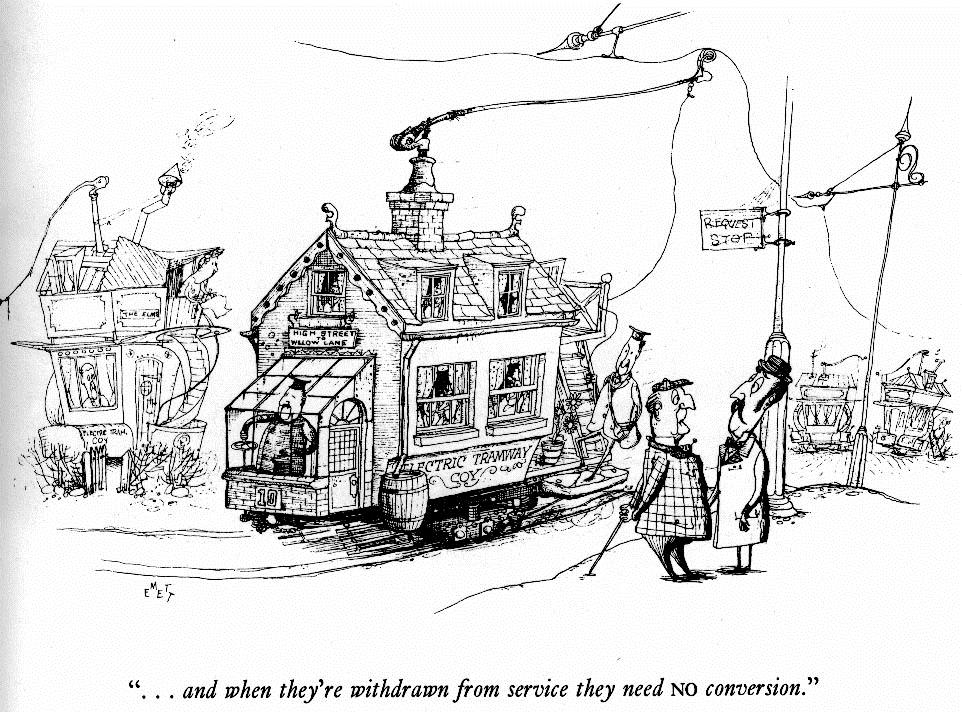
The following comment comes from the LRTA’s chat room and I believe has much relevance here. I have slightly abridged the item as the first part was mainly about British Politics and with the spider web of BC politics to contend with, I thought it best not to reprint it.
Is the proposal Clegg is speaking about, for Councils to be able to borrow locally from an infrastructure fund for transport projects, for Councils to be able to borrow against tax receipts for local transport & infrastructure projects or Councils to be able to raise funds for local transport & infrastructure projects by issuing bonds using tax receipts & debts as collateral?
I do think that this is a good proposal, not quite as revolutionary as a French style `Transport Versement’ but a huge step forward compared to the DfT’s centralised system.
A brief remark on the responses in the Telegraph; am I surprised, no.
Over ten years of advocacy and I’ve read every angry response from Bristol to West London to Croydon to Nottingham, Manchester & Edinburgh.
The 1% would much prefer tax cuts and s** the 99%
If you can’t win by making dubious challenges to the business case, play the ecology/environmental card (read challenges to HS2)
Remember, worse than an NIMBY is a:-
NIABY
Opposition to certain developments as inappropriate anywhere in the world is characterised by the acronym NIABY (Not In Anyone’s Backyard). The building of nuclear power plants, for example, is often subject to NIABY concerns.
NAMBI
NAMBI (Not Against My Business or Industry) is used as a label for any business concern that expresses umbrage with actions or policy that threaten that business, whereby they are believed to be complaining about the principle of the action or policy only for their interests alone and not for all similar business concerns who would equally suffer from the actions or policies. The term serves as a criticism of the kind of outrage that business expresses when disingenuously portraying its protest to be for the benefit of all other businesses. Such a labelling would occur, for example, when opposition expressed by a business involved in urban development is challenged by activists – causing the business to in turn protest and appealing for support from fellow businesses lest they also find themselves challenged where they seek urban development. This term also serves as a rhetorical counter to NIMBY. Seen as an equivalent to NIMBY by those opposing the business or industry in question.
BANANA
BANANA is an acronym for Build Absolutely Nothing Anywhere Near Anything (or Anyone). The term is most often used to criticize the ongoing opposition of certain advocacy groups to land development. The apparent opposition of some activists to every instance of proposed development suggests that they seek a complete absence of new growth. The term is commonly used within the context of planning in the United Kingdom.
PIBBY
PIBBY is the acronym for Put In Blacks’ Back Yard. This principle indicates that the people with social, racial, and economic privileges object to a development in their own back yards, and if the
objectionable item must be built, then it should be built so that its perceived harms disproportionately affect poor, racially disadvantaged people. The environmental justice movement has critiqued Nimbyism as a form of environmental racism. Robert Doyle Bullard, Director of the Environmental Justice Resource Center at Clark Atlanta University, has argued that official responses to NIMBY phenomena have led to the PIBBY (Put In Blacks’ Back Yard) principle.FRUIT
FRUIT is the acronym for Fear of Revitalization Urban-Infill and Towers. The word FRUIT or FRUITs is a play on words in support of the acronym BANANAs. First used in a development industry article in Vancouver to describe irrational local opponents (fruit cakes, fruit loops or just fruits) of well-planned developments.
I have a particular disdain for certain journalists at the moment:
The Gruniad’s Tony Brignull
The Gruniad & Evening Standards Simon Jenkins
The Times Matthew Parris
The Telegraph’s Simon Heffer
Finally my List of forty Most Frequent Questions Asked (FQA):
Critical comments.
Excuses.
Criticism.
Opposition.
And Hostility to Trams
1.Ai??Ai??Ai?? Trams are inflexible.
a.Ai??Ai??Ai?? If the road becomes closed, due to an accident or emergency road or utility repairs, is there any way a tram service can be maintained?
2.Ai??Ai??Ai?? Trams are noisy.
3.Ai??Ai??Ai?? The construction of a tram system, causes disruption to towns & city’s; noise, dust, road closures, utility diversions.
4.Ai??Ai??Ai?? Can I claim compensation for disruption & reduction in earning to my business, during the construction work?
5.Ai??Ai??Ai?? Why do the electricity cables, gas & water mains, have to be dug up & moved to accommodate the building of a tram system?
6.Ai??Ai??Ai?? We have a perfectly good bus system/service, why do we need a tram system?
7.Ai??Ai??Ai?? Will the tram system mean that a number of our existing bus routes will be shut down?
8.Ai??Ai??Ai?? Who will operate a new tram system?
a.Ai??Ai??Ai?? Will the trams run 24/7?
b.Ai??Ai??Ai?? Can trams continue to run if it snows, unlike many buses & trains?
9.Ai??Ai??Ai?? Are tram drivers trained, to the same high level of competence as:
a.Ai??Ai??Ai?? Bus drivers?
b.Ai??Ai??Ai?? Train drivers?
10. Will there be conductors on the trams to collect fares?
11. Will the trams be as safe or safer for vulnerable people travelling on their own late at night than other public transport modes?
12. Can I use my Freedom Pass/Bus Pass/disabled pass/Oyster/Travel Card to travel on the tram?
13. Are trams accessible to disabled people & parents with prams?
14. Do tram systems operate on signals like the main line railways?
15. How is the location of the tram stops decided?
16. How fast do trams travel along the road?
a.Ai??Ai??Ai?? Do trams have to obey the roads speed limit?
17. How long will tram rails last, before the road has to be dug up to repair or replace them?
18. Trams represent an old fashioned & outmoded Victorian form of transport.
a.Ai??Ai??Ai?? Why has the reintroduction of trams to Britain, become fashionable in the last two decades?
b.Ai??Ai??Ai?? There are, only six tram systems in Britain to date, with a seventh being currently built in Edinburgh. If, as I am being told they are successful; then why have more not been built?
19. Who pays for new tram systems, the Government, the City/town council or the local Passenger Transport Authority?
20. Who decides, if a new tram system represents value for public money?
21. Is private investment used to pay for tram systems to be built?
22. Tram systems are expensive.
a.Ai??Ai??Ai?? No British tram system has ever made/run at, a profit.
b.Ai??Ai??Ai?? Constructing a tram system will mean that our Council tax/taxes will have to rise to pay for it.
c.Ai??Ai??Ai?? Every tram system built in the past twenty years in Britain, has overrun it’s construction budget.
23. Will public transport ticket prices rise, to pay for the tram system?
a.Ai??Ai??Ai?? Nobody will use the trams, when they are introduced because the fares will be too expensive.
b.Ai??Ai??Ai?? How is fare evasion controlled on tram systems?
24. A tram system will bring crime & more undesirables into our town/city centers.
a.Ai??Ai??Ai?? Who is responsible for policing tram systems?
25. Trams cause congestion on the roads, to other users; private cars, buses.
26. Trams will cause delays at road junctions for private cars & buses.
a.Ai??Ai??Ai?? How will the designers phase junction traffic lights, to meet the needs of the trams & other road users?
b.Ai??Ai??Ai?? Will trams get priority at road junctions, over other road users?
27. Why don’t they, the council/government, build a metro/underground system instead?
28. The trams should run in tunnels under the town and not down the streets. This will free up more road space for private cars.
29. We need less public transport, not more.
30. Public transport & particularly trams slow down the speed of traffic.
31. Trams are dangerous for:
a.Ai??Ai??Ai?? Pedestrians.
b.Ai??Ai??Ai?? Cyclists.
c.Ai??Ai??Ai?? Car drivers.
32. The overhead electric tram wires & masts are an eyesore.
a.Ai??Ai??Ai?? The tram line will pass through a conservation area, overhead poles & wires will be an aberration.
b.Ai??Ai??Ai?? Is it possible to design trams that can run on rechargeable batteries, so that ugly poles & wires do not have to be installed?
c.Ai??Ai??Ai?? The pre 2nd World war London trams, picked up electrical power from a conduit in the road, rather than from overhead wires; is this practical system in the 21st century?
d.Ai??Ai??Ai?? The overhead poles & wires will spoil the attractiveness of the town/city.
e.Ai??Ai??Ai?? The overhead electricity wires will reduce the value of my house/property.
f.Ai??Ai??Ai??Ai?? The overhead electrical cables are a cause of cancer in children.
g.Ai??Ai??Ai?? How safe are the overhead power cables? What happens if one breaks and falls down across the road?
h.Ai??Ai??Ai?? How do tram system designers ensure that the return current passing through the tram rails does not corrode buried utilities?
i.Ai??Ai??Ai??Ai??Ai?? How do tram system designers ensure that the current in the overhead wires, does not cause interference with business computer, data & hospital life support equipment?
33. Trams cause accidents in towns & city’s.
34. Government accident statistics prove that trains & trams have a poorer safety record, per passenger miles travelled than other forms of transport.
a.Ai??Ai??Ai?? The statistics prove that more pedestrian accidents are caused by public transport, than by private cars.
b.Ai??Ai??Ai?? Buses have a better safety record than trams.
c.Ai??Ai??Ai?? How quickly, can a tram stop if a child runs out in front of it?
35. A tram line past my house/property will cause the value to fall.
36. My shop/business will suffer if a tram line is built on this street.
a.Ai??Ai??Ai?? Where will my customers park, if they cannot stop outside my shop/business?
b.Ai??Ai??Ai?? Where will my suppliers park, to deliver to my shop/business?
c.Ai??Ai??Ai?? The council will raise my business rate to pay for the tram system.
d.Ai??Ai??Ai?? If a tram line/system is built, all my customers will ride/take the tram to the out of town shopping malls.
37. Trams are a continental form of public transport.
a.Ai??Ai??Ai?? Trams were invented on the continent, so let the continent keep them there.
b.Ai??Ai??Ai?? Why do the French appear to be more successful at introducing new tram systems, in even their smaller cities?
38. Britain’s streets are too narrow for trams.
a.Ai??Ai??Ai?? Will any roads have to be closed for private cars, to allow the tram system to be built?
b.Ai??Ai??Ai?? Will any of these roads, remain permanently closed to suit the operation of the tram system?
c.Ai??Ai??Ai?? What rules exist, for safely running trams through a pedestrian thoroughfare?
d.Ai??Ai??Ai?? Can tram lines be designed to run in their own corridor separated from other road users?
39. Trams are more polluting than private cars or buses.
a.Ai??Ai??Ai?? Tram systems have very large carbon footprints.
b.Ai??Ai??Ai?? It’s a myth, that trams are an ecologically cleaner form of public transport.
c.Ai??Ai??Ai?? Where will the electricity for powering the trams be generated?
d.Ai??Ai??Ai?? Can tram systems be powered by renewable sources of electricity?
e.Ai??Ai??Ai?? How much electricity, does each tram use?
40. Can it be proved that trams are successful in reducing the number of journeys made by private cars, in towns & cities?
Toronto Elected a Ford, But Instead got An Edsel

Toronto mayor, Rob Ford, is an American tea-bag clone or clown (depending if one voted for him or not) who had big transit ideas. No more streetcars, no LRT, but miles and milesAi??(sorry kilometres and kilometres) of new subway construction.
Well, financial reality has hit with a big bang and with Mayor Ford’s unwanted help and inept ideas has now made public transit both expensive and non-user friendly. Affordable transit schemes were thrown outAi?? and instead ‘pie in the sky’ subway plans has turned “Transit City” into the city of perpetual gridlock.
I hope voters in the metro Toronto region get it right in the next civic elections.
Ah yes,Ai??one wishesAi??that the subway lobby in Vancouver are taking notes!
http://www.torontosun.com/2011/09/22/miller-says-fords-transit-plan-off-track



Recent Comments