LRT is a transportation system based on electrically powered light rail vehicles (LRV) that operates on a track in a dedicated right-of-way (meaning separated lanes).
It is the operating on dedicated or “reserved rights-of-ways that makes a simple streetcar or tram light rail! many simple streetcar or tram systems have sections of dedicated rights-of-ways, thus can operate as LRT on those sections of line.
The ultimate form of LRT is TramTrain, which can operate on mainline railways.
The Olympic Line tram operated on a dedicated R-o-W and can be considered LRT.
What is LRT? Light rail transit explained
Is it a streetcar? Is it a subway? Metrolinx News is going back to the basics on light rail transit.
Jan 3, 2022
Metrolinx News constantly offers up transit project updates through photos, videos, and graphics.
This content is our bread and butter.
So we may take some background for granted.
There have been countless stories on the light rail transit (LRT) projects happening within the Greater Toronto Hamilton Area (GTHA). From Toronto, Mississauga, and Hamilton, there is no shortage of LRT work happening these days.
But we recently noticed a trend when it comes to online searches. In this case, many people are asking ‘What is an LRT line?’
So we thought we would answer that, as well as explain what makes it different from current transit options in the GTHA.
LRT is a transportation system based on electrically powered light rail vehicles (LRV) that operates on a track in a dedicated right-of-way (meaning separated lanes). They are designed to deliver rapid, reliable, and safe transportation services.
Depending on the project, in the event of a schedule delay, some LRTs have the ability to change the traffic lights to green as they approach, so they can move even quicker along the route.
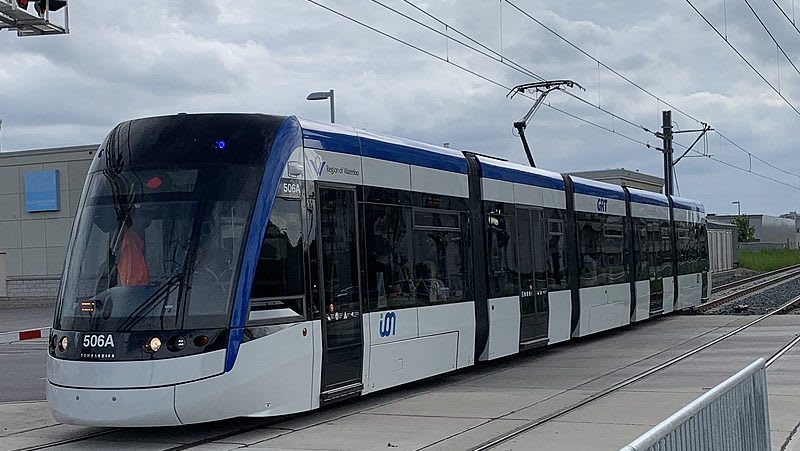
Grand River Transit’s ION LRT line in action. (Jason897 photo)
LRT is growing in popularity for major cities around the world, including right here in Canada, as it provides significant transit capacity without the expense and density needed for subway systems. Waterloo and Calgary both have popular modern LRT lines. Los Angeles, Portland, Prague, and Paris too.
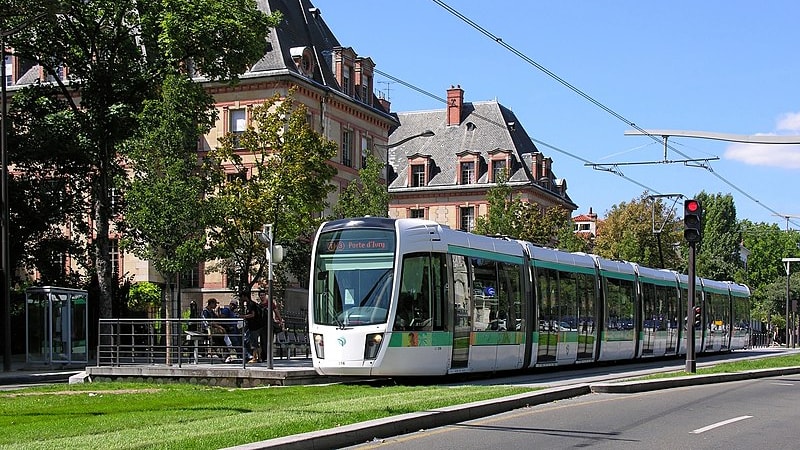
An LRT stops outside Université de Paris, one of many light rail lines in and around Paris, France. (Cramos78 photo)
LRT lines can run at street level, like a streetcar. However, the dedicated right-of-way means the LRV is not impacted by vehicular traffic and can reach higher top speeds than a regular streetcar – in some cases, up to 80 km/h.
Zwei replies: Most modern streetcars or trams can operate at speeds of 80 kph or higher, but for most urban tram systems with stops every 400m to 600m apart, the maximum comfortable top speed is 60 kph. If higher speeds are needed larger motors can be ordered.
Another cool feature, LRTs can run below ground like a subway. Which is the case for much of the Eglinton Crosstown LRT route.
Zwei replies: Tram subways have been around a long time. Basically a subway is an underground rail route.
Streetcars often need a ‘loop’ in order to turn around. Light rail vehicles, like the ones on the Eglinton Crosstown line, will be bilateral, meaning it can be driven at either end.
Zwei replies: Some cities still use “Y”‘s to turn trams. Loops at the end of the line also include a station and some loops also contain storage tracks or circular park.
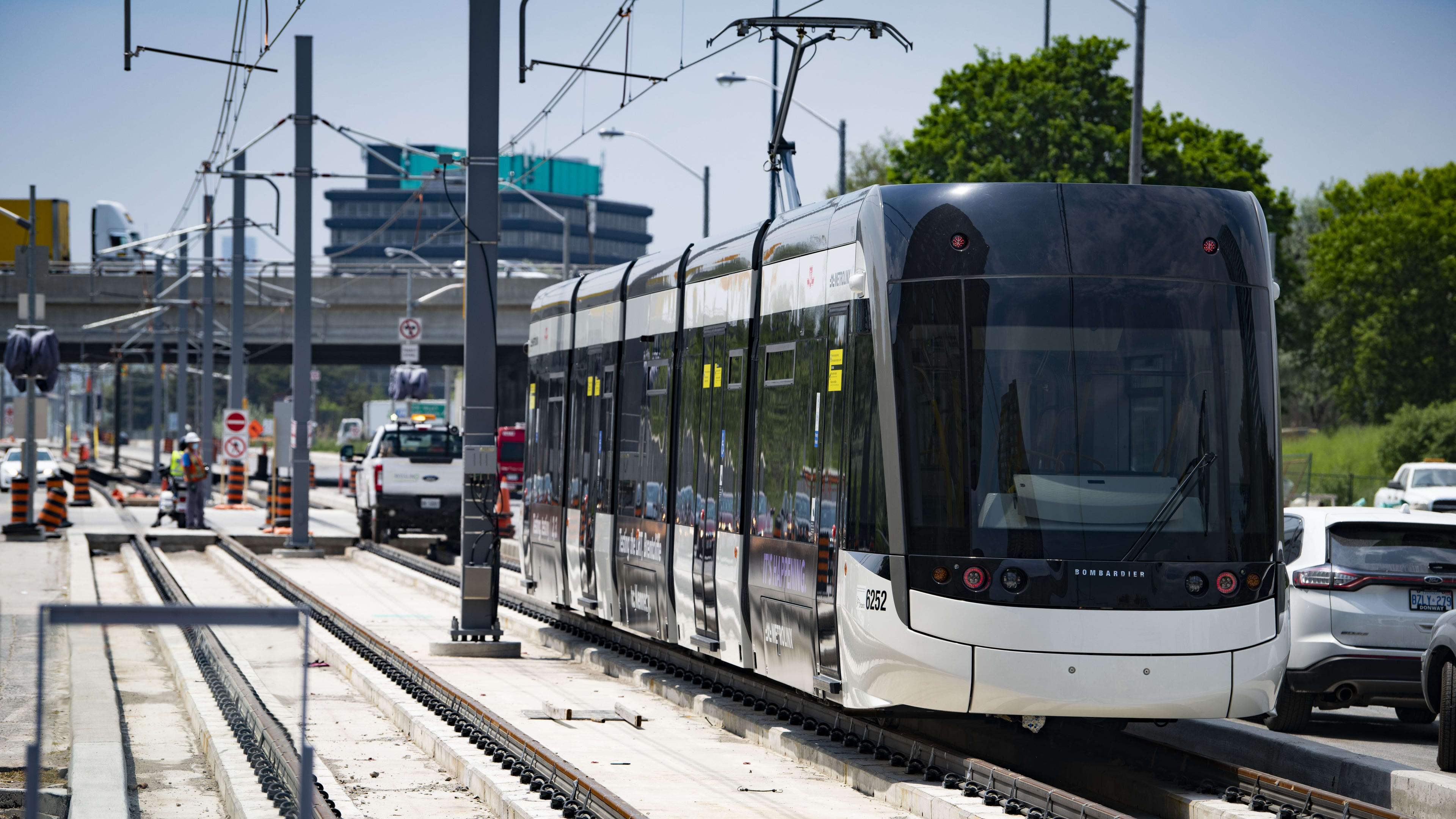
A Eglinton Crosstown light rail vehicle is seen driving the route, seperated from car traffic, powered by the overhead wires. (Metrolinx photo)
LRV’s aren’t as long as subways, but multiple LRVs, or trains, can be coupled together to form a longer train if needed. The Alstom Citadis Spirit for example, the type of vehicle being used for the Hurontario LRT project, has a seated passenger capacity of 120 and maximum passenger capacity of 292.
Zwei replies: A coupled pair of Citadis Trams, used in Ottawa is 98 m long and a 5-car rake of MALM (SkyTrain MK.5) cars is 84.5 metres long. Both operate in subways.
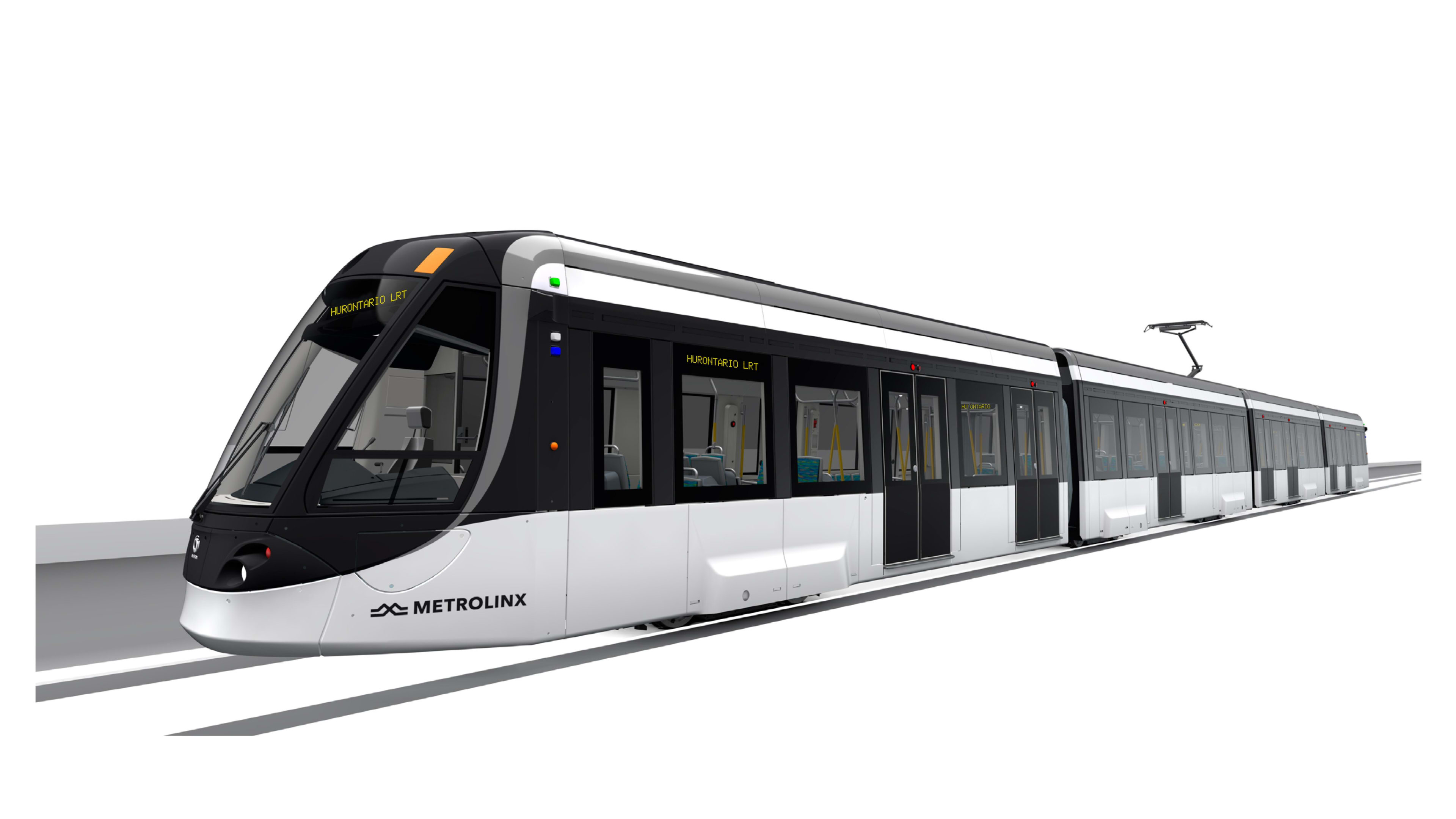
Mockup of the Alstom Citadis Spirit that will be used on the Hurontario LRT line. (Metrolinx image)
Power behind the system
Subways get their power from an electrified rail below the vehicle. This requires larger stations, more infrastructure and safety separation. An LRV gets its power from a cable over head, like a streetcar, meaning passengers can easily catch their ride from a stop located on the roadway.
Zwei replies: Too much of a generalization. MALM (SkyTrain) cars get their power from a rail along the side of the track and some subways get power from an overhead wire. More than few light rail operations get power from a “third rail” between the tracks, using an energized inductive loop technology getting power.
Light rail transit is currently being used in many cities around the world. The new light rail projects being built in Toronto, Mississauga, and Hamilton will transform these cities, offering communities a convenient and safe way to get around.
Zwei replies: There are now over 500 tram/right rail systems operating around the world.
We’ll look to get back to basics with other transit terms we often write about. But for now, we hope these lines have helped get you up to speed on LRTs.
As Zwei has repeated so often, only seven ICTS/ALRT/ALM/ART/IRT/MALM proprietary railways have been built and operating. Well that is not true any more as the TTC is also confirmed train service on Line 3, originally scheduled to end on Nov. 18, will not restart following a July 24 derailment.
This unwanted proprietary railway was forced on the TTC by the then Conservative government in the early 1980’s to “sort of” save face as the Ontario Crown corporation backed an “Edsel” style rapid transit system that no one wanted and the the provincial government forced ICTS onto the Toronto Transit Commission.
Service on Line 3 was suspended following the derailment south of Ellesmere Station and replaced with frequent shuttle bus service. A comprehensive review, that includes the participation of industry-leading consultants, is still underway. However, given the time required to complete the review, the decision has been made to permanently close the line and begin to implement elements of the replacement plan. These measures will improve transit priority and operations, provide frequent, high-capacity bus service and ensure customers can plan their trips online in September.
If the provincial or federal government actually created a program for regional rail systems in the country, they could also carry freight, creating a regional rail system that would not only serve the public, but businesses as well.
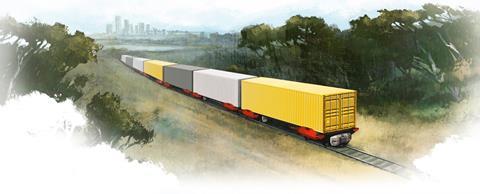
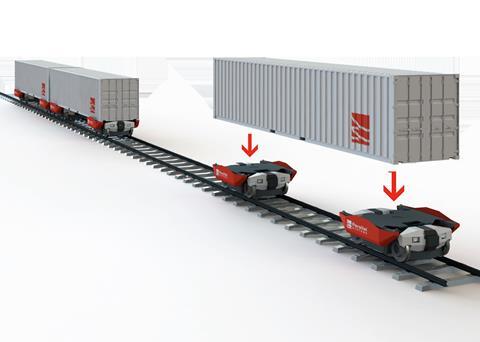
With autonomous battery powered rail-cars, we could see “Mixed Trains” in operation in the off peak hours where a local D/EMU could consist of three or four ‘wagons’ carrying containers to be dropped off a strategic locations and they could autonomously shunt themselves to their destinations.
This would bring a complete new dimension to a regional railway by offering a freight service competitive with a truck.
20 minutes into the future is closer than you think!
Autonomous battery-powered wagons to be tested in Georgia
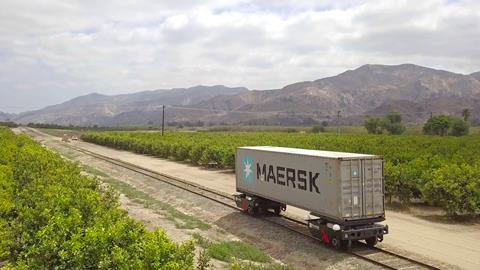
USA: Genesee & Wyoming is to pilot the use of autonomous battery-powered wagons on two short lines in Georgia, saying the technology from Parallel Systems could be used to transport containers to and from the Port of Savannah, reinvigorate rural railways, revive inland ports and remove lorries from the roads.
G&W has applied to the Federal Railroad Administration to undertake the trial on its Georgia Central Railway and Heart of Georgia Railroad subsidiaries.
If approved, the multi-phase project would begin next year, enabling the technology to be demonstrated in a field setting with ’carefully developed protocols to ensure the pilot is operated in a safe, controlled manner’.
Parallel Systems was founded in January 2020 by three engineers who previously worked at rocket company SpaceX. Co-founder Matt Soule said railways provide an ideal environment for the testing and commercialisation of autonomous technology, as there is limited access to the track, centralised traffic control systems already exist and weight limits mean larger batteries can be used than on roads.
In January 2022 the company announced $49·6m of Series A funding led by Anthos Capital and including Congruent Ventures, Riot Ventures, Embark Ventures and others. This was followed by a $4·4m grant from the Department of Energy’s Advanced Research Projects Agency-Energy initiative to support testing of a prototype which began in southern California in November 2022.
Mr. Haveacow, who frequently comments on the RftV blog, is a Canadian public transit specialist and what he says deserves to be listened to. As he is active in the transit profession in Canada, he would like to keep his real name out of the media, lest he be black listed for his views.
The following is a repost from 2015, largely explaining BRT and the former Surrey LRT planning.
The following diagram may help explain the capacity issue comparing bus and LRT.
Guided Bus-ways have a big issue, capacity. The reason you have a guided bus-way is that, surface vehicles like buses can sway side to side quite a bit on a roadway. One of the reasons most Bus-way lanes are a minimum of 4 metres wide is to allow for that side to side sway that occurs naturally at higher speeds when we drive. Guided Bus-ways are fixed to their ‘track’ or Concrete Guideway or fixed using a laser/optical system that electronically locks them into a right of way so no side to side sway occurs at all. Optical systems also have an additional issue in that they are highly weather dependent and are very costly to service. The advantage for the guided bus-ways is that, your right of way can be considerably less wide much like a rail line right of way. Unless you design a complex concrete guideway bypass at Bus-way stations or an electronic one using optical guided equipment, the buses are forever trapped behind the buses in front of them. This severely limits system capacity.
The real problem common with BRT is the operating cost of carrying the large amount of passengers, only using buses, once the passenger levels become very high. That level is different for every city and is dependent on the exact nature and characteristics of the right of way.
The picture Zwei used of the Brisbane Busway is another common occurrence on successful Bus-ways, bus back ups at choke points or stations.
The company MMM Consulting (nee McCormik Rankin Consulting) was the main designer and developer of both Ottawa’s Transit-way System and its child, the Brisbane Bus-way Network, the subject of the article’s main picture.
The main differences between the two are the fact that Ottawa’s Transit-way System was designed and mostly built in the 70’s, 80’s and 90’s whereas, Brisbane’s was designed and built in the 90’s, and 20o0’s. The other major difference is that unlike Ottawa, Brisbane was able to build a fully segregated right of way through its downtown which comprised below grade tunnels and above grade viaducts and a physically segregated surface route. Ottawa has painted bus lanes on a couplet of downtown one-way streets with signal modification which allow Transit-way (east-west traffic) almost the legal limit of signal priority over the north-south traffic at intersections.
The difference between the two, using roughly the same number of vehicles about 185-200 buses/hour/direction at peak the Ottawa Transit-way can move 10500 people/hour/ direction and Brisbane about 14,000p/h/d.
Both however, have the same issue, massive back ups of buses primarily at downtown or major bus-way stations because the size and handling capacity of the actual stations has been grossly under built. The issue is that, to handle these kind of crowds and move them with 12 and 18 metre single articulated buses (23 metre long, double articulated and 30 metre long triple articulated buses are not street legal in Canada or Australia and even in the USA for that matter) you must construct monster sized, at the least full metro sized or larger bus station platforms that are or exceed 150 metres in length. The stations also have to be 4 lanes wide, 4 metres per lane, not including station platform width. Most downtown businesses would not want to be located near one of these stations for obvious reasons. One of Brisbane’s bus-way stations was enlarged to this standard, the bus back up picture Zwei used for this article is the que of buses entering that station.
The other main issue is the operational cost of having to use that many bus drivers and buses. Buses in general have far too little capacity for these high traffic BRT operations.
In China and Latin America drivers cost much less as a proportion of the total operating cost of each bus 50-60% in Latin America and 30-45% in China. In the northern 2/3 North America, Western and Central Europe, Australia/New Zealand, Japan Taiwan, basically most of the so called developed world, the cost of the bus driver is 70-80% of the total cost of operating the bus.
Using 185-200 buses/hour/direction to move people becomes a great financial drain on the operating bus system as a whole and makes it almost impossible to get extra buses to other non bus-way routes that need them. In Ottawa, several suburban routes that have needed many more buses to handle their high passenger levels can’t get them and haven’t been able to for more than a decade because so many buses are tied up on the Transit way, either on it or at the stations during peak hours. There are barely enough extra buses left to handle individual bus breakdowns let alone provide extra service on other routes. Buying more buses was not an answer because Ottawa’s bus fleet was already near 1100 vehicles this is a pretty big fleet for a city and area of at most, 1.2 million people. This would put the operational budget into a serious deficit. We already had the most expensive per taxpayer transit portion on our tax bills of all Ontario municipalities it really does not need to go higher. The bus options had run out of time. Ottawa’s answer was LRT. Brisbane continues to maintain their heavily used portions of busways. Ottawa is building more Transit ways but in suburban areas with much lighter passenger traffic levels.
The Transit-way was designed to be converted to rail however, the cost to convert the first part would be an eye popping $2.1 Billion. The reason was no one ever figured how much extra work there would be like, having to build parallel temporary bus rights of way so that, all those buses didn’t totally clog city streets during conversion of the Transit-way to rail and the fact that, they waited till much the original Transit-way infrastructure was in desperate need of replacement due to age. Some Transitway right of way also was only temporary and not rail friendly. These temporary rights of way lasted for over 30 years and now have to be either totally rebuilt and or abandoned at high cost. The kicker about the high operational cost of servicing bus-ways at high passenger demands was that, even with Ottawa being forced to build a 2.5 km tunnel, with 3 very large underground stations at a cost of $715 Million under downtown for the LRT line (surface operation would have simply exchanged heavy surface bus traffic and passenger crowds for heavy surface LRV traffic and passenger crowds) operationally, Ottawa was going to save a minimum of $60 million a year, switching to LRT technology.
The take away from this is that, building “Real BRT” can be a very good way of building up ridership and up to a certain point, a less costly way, compared to a lot of rail systems, to move people in a North American low density environment.
The problem now even in Canada is that, politicians are building express bus systems like B Lines, Brampton’s Zum (pronounced zoom) and many comparable systems in the US and calling it BRT, which it really is not. Those politicians love doing it because this false BRT is much cheaper to build and operate than real BRT and they still get a ribbon cutting ceremony.
The problem is that, the amount you spend with these systems generally is comparable to the systems effectiveness in moving passengers. VIVA, (York Region Transit) for example, started with the faux BRT or what I like to call “BRT” but, had definite designs and plans to build physically separate BRT rights of way that can be converted to a high capacity LRT system in the future and has carried through on it. York Region just didn’t have the passenger count to build LRT at the beginning. But they have designed in the ability to easily convert the BRT system to LRT technology when needed. Brampton (which is part of Peel Region) just to the west of York Region has no definite plan or design to convert its Zum system to a real BRT standard now or in the future. However, the Zum System has built up Brampton’s transit ridership. I am not saying that, these “BRT” systems aren’t useful but they are not real BRT and should be labeled as that because they can confuse people into not building anything in places that need improved transit but cana’t afford to build or operate LRT and or support LRT with enough passengers. As a planner it is quite common to hear comments like this at public meetings, “I saw BRT in Brampton and it gets stuck in regular traffic all the time. BRT sucks!” Then you have to explain what real BRT is and is not, by then most people fall asleep or stop listening.
Then you get into a half technical half ethical problem with BRT and or any other transit operating technology for that matter. How do you study the differences between operating technology so that you are being fair as well as being accurate in the final choice of technology? The best recent example of what not to do is right here locally in Vancouver, South of the Fraser River, to be exact.
Trying to convince people in Surrey that, their LRT plan is useful, TransLink used a SkyTrain option as well as a surface BRT option to compare to LRT capability, pointing out the superiority of LRT in this case. The SkyTrain option had many problems cost and general usefulness being the main ones. The BRT example they used is actually an LRT line using buses operating on a layout and design which is not even close to what a real BRT line in a on-street environment would or should be using. Its not even close to the best Canadian practices, let alone best practices used in the rest of the world, with BRT systems in a on-street environment. Did the staff doing this know enough to do this purposely or were they ignorant of the differences of what good BRT design is or is not.
Their example of LRT also displays a a serious lack of knowledge about best surface LRT operating practices in the US and Canada.
More importantly it shows to me, how committed or in this case not committed, TransLink staff really are to studying LRT technology at all. In fact, I don’t blame the people who supported SkyTrain technology for this area, like Daryl from SkyTrain for Surrey, he had a point, on the surface this study definitely made it look like that to me that the SkyTrain Light Metro was the superior technology choice. The difference as a professional is that, I know the real differences in all the technologies that were studied. I also have no belief that, I am the be all and end all of studying these things in the world and would also ask for much help in studying these technology choices from other friends and companies I am familiar with, whom are experts at it. To me a whole new study should be done using the actual best practices for all technologies not just the preferred LRT technology, you should seriously question major aspects and assumptions that were made in this particular TransLink study.
You cannot build yourself out of congestion, as it never works.
A good example is Boise Idaho, where between 1993 and 2017, roads expanded 141 percent while population grew 117 percent. But congestion increased 446 percent.
The previous example is what is happening across the united States and Canada.
It seems the rubber on asphalt crowd would like everyone to ignore the concept of induced demand, which shows that building new highways or expanding existing ones might seem to relieve congestion at first, but over time, attracts more drivers. Before long, new lanes are just as crowded as the old ones were.
There is a part solution and Rail for the Valley offers this.
For under $2 billion, we can reinstate a modern regional railway service from Vancouver to Chilliwack, using modern diesel or electric multiple units, offering a peak hour service of three trains per hour per direction, which could offer a maximum hourly capacity of around 3,000 pphpd.
Not bad, considering that the total cost to extend the Expo and Millennium Lines a mere 21.7 km is costing $11 billion!
Sadly, in BC, proven unworkable highway expansion wins votes and proven rail alternatives do not.
The Stadler Flirt DMU, as ordered by Ottawa. Capacity around 450 per train-set. A two car train-set would have a capacity of 900.
‘Overdue’: Business groups decry delays on widening Highway 1 through Fraser Valley
Business groups in B.C.’s Fraser Valley are calling on the provincial government for clarity on the timeline to widen Highway 1 from Langley to Chilliwack.
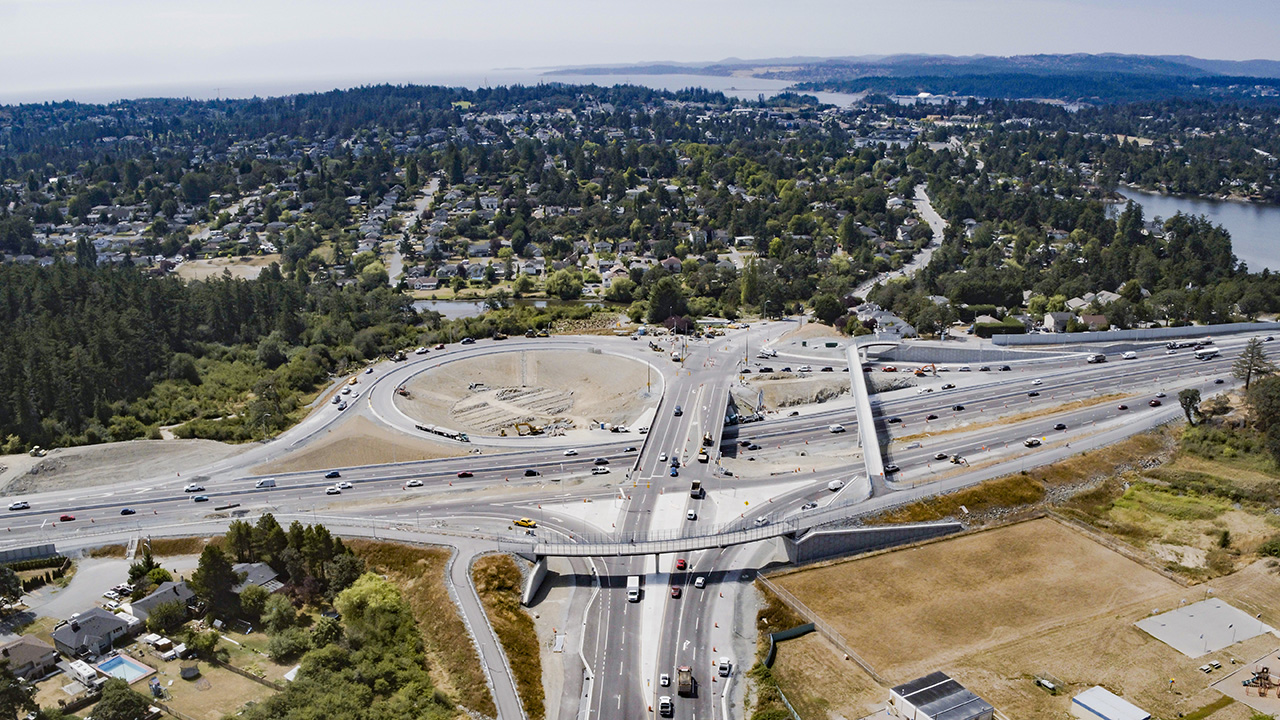
Work is currently underway to widen a stretch of the highway between 216 and 264 streets in Langley, and the province says advance works on the next phase of the project, from 264 Street to Mt. Lehman Road in Abbotsford, will begin “shortly.”
The multi-phase project includes construction of a third lane in both directions and overpass improvements along the bottleneck-prone stretch of the freeway between Langley and Chilliwack.
The NDP government pledged to complete highway widening to Abbotsford by 2026 as a part of its 2020 election platform, and signs along the highway still say the Langley to Mt. Lehman upgrade is slated for a fall 2025 completion.
But the chambers of commerce in Langley, Abbotsford, Chilliwack and Mission say the province has no firm timeline for work on the highway east from that point, and are calling on the province to lay out a clear roadmap.
“We know this infrastructure is long overdue and that highway widening has been needed for many years already, we’re far behind,” Abbotsford Chamber of Commerce CEO Alex Mitchell told Global News Monday.
“You see producers, agricultural producers, manufacturers, sitting in gridlock as they’re trying to get their product to market from the Fraser Valley to the port of metro Vancouver, and those costs add up for businesses and consumers.”
Mitchell said it was “encouraging” to see work getting underway on the stretch of highway to Mt. Lehman Road, but that overall the infrastructure upgrade needs to catch up with the needs of businesses and residents in the valley.
BC United Opposition Leader Kevin Falcon said the NDP government appears to be dragging its heels on the project.
He said work on the 216 Street to 264 Street stretch actually started under the former BC Liberal government in 2017, but was paused for two years when the NDP took power.
“It has a massive impact on commuters, and especially on families, he said.
“You talk to them, it makes it really challenging to get their kids to hockey games, to baseball games, to get to work, to get home in time to see their families in the evenings, but it also has an economic impact, because that is a very vital goods movement corridor.”
Falcon said B.C.’s population is expected to grow by a million people in the next decade, and that the freeway needs to be fully upgraded through to Chilliwack long before then.
“If we don’t get government that understands that you’ve got to build for the future, we’re never going to get these projects done,” he said.
“That’s what needs to happen and it needs to happen now.”
Chilliwack MLA and Minister of State for Infrastructure and Transit Dan Coulter said the province was “still working on timelines for construction,” but said the government was keenly aware of the project’s urgency.
“I myself travel that highway all the time, so I as much as anyone want to see that highway done as quick as possible,” he said.
“It’s costing (businesses) a significant amount of money and it really is a nationally significant piece of infrastructure for goods movement.”
Coulter acknowledged completion of widening to Mt. Lehman Road would not be complete by 2025, as stated on road signs, citing impacts of the devastating 2021 atmospheric river and flooding.
But he maintained the ministry was “forging ahead” as fast as possible with the work.
“We have tenders out for advance works between 264 and Mt. Lehman, we’ll have by the end of the year tenders between Mt. Lehman and the Sumas exit,” he said.
“As well as we’ll be putting out tenders shortly for the 264 interchange, and we’re already on construction between 216 Street and 264 Street, so there’s a lot happening there.”
Coulter, however, could not give an estimate on when the project would be complete to Chilliwack.
Mitchell said that’s information businesses in the valley need so they can plan for the future.
“The two lanes are not sufficient for the needs of our community today, and especially not sufficient for the needs of our current economy, we need to be able to have space for truck traffic,” she said.
“We’re at a place where they just have to get it done.”
To date there is no ‘hard’ evidence that the train cause the fire that engulfed Lytton. Transport Canada inspected the train and there was no evidence of a fire on the train.
Instead of waiting for evidence that would tie the train to the fire, the politicians jumped on the anti-train bandwagon to sue the railway for a cash settlement.
There is an ongoing police investigation and with the stalling by the NDP government helping to rebuilt the town, the desperate citizens have been lured into the politcal hard world of spin, alternative facts, and fake news at who or what is at fault.
It seems in BC and Canada, when in doubt, blame the railway.
Lytton proposed class action against railway companies thrown out by BC Supreme Court
A proposed class action lawsuit brought by Lytton residents that aimed to hold major Canadian railway companies liable for the damages of the 2021 Lytton Creek wildfire won’t be moving ahead.
The BC Supreme Court did not certify the suit, explaining it failed to provide evidence that freight trains caused the fire. The province’s highest court added the case was overly broad and “bound to fail.”
The court did offer a glimmer of hope, saying if these issues could be addressed a future case could proceed. However, it’s not clear if residents will pursue further legal action.
The Village of Lytton and the Thompson Nicola Regional District have their own lawsuit which is seeking damages from the railway companies.
That case is still working its way through the courts.
The estimated cost for a 21.7 km extension of the Millennium Line (Broadway subway) and the Expo Line (Surrey – Langley extension) is now past $11 billion.
The NDP are setting in motion a highway’s only planning for the future, doubling down on BC’s famous blacktop politics.
In the age of Global Warming and climate change and all the climate change disasters that have befallen BC, this pure politcal madness, so cynical, it defies imagination.
From November 2020……………………
The NDP’s refusal to give Metro Vancouver’s transit planning an independent review has condemned the region to congestion and gridlock for generations. The billions of dollars spent on rapid transit and the future billions of dollars to be spent expanding rapid transit has and will utterly fail to attract the driver from his/her cars.
The continued planning and building of obsolete light-metro, especially the now called Movia Automatic Light Metro (MALM) system, used on the Expo and Millennium Lines, has condemned the taxpayer to ever increasing ‘transit’ taxes, high fares and onerous user fess.
Breaking News: Mobility or congestion charging is now back on the table to pay for TransLink’s and the Mayor’s Council on Transit’s largess.
The continued use of the now obsolete light-metro, means that the region has now past the point of no return for transit being effective in moving people and the family chariot becomes essential for urban mobility.
How the hell did we get here?
The Broadway Subway
The Broadway subway to Arbutus, is based on the 1990’s Broadway – Lougheed Rapid Transit Project, which saw a planned LRT line being built from Arbutus in Vancouver, east to the Tri-Cities. At the time, the plan was to use light rail on the Arbutus Corridor, giving a direct Richmond to downtown Vancouver light rail service and having the proposed Broadway light rail connecting would give many advantages to transit customers.
The NDP flip-flopped from LRT to Bombardier’s new proprietary Advanced Rapid Transit (ART) system, which was a rebuild of the older Advanced Light Rail Transit (ALRT) system used on the Expo Line. Bombardier Inc. purchased the Ontario Crown Corporation’s Urban Transit Development Corporation (UTDC) at a fire sale price after Lavalin, which originally bought the UTDC, went bankrupt trying to sell the again renamed Advanced Light Metro (ALM), in Bangkok, Thailand. Lavalin returned the UTDC to the Ontario Government and then amalgamated with SNC, to become SNC Lavalin. The Ontario government quickly sold the remains of the UTDC to Bombardier Inc.
The NDP naively purchased ART and forced it onto the GVRD, when Bombardier promised to build an assembly plant in Burnaby for ART cars, with promises of major international sales and many union jobs.
Union jobs, you say? The NDP were all over that!
To sell a ART light metro to the GVRD, the NDP government promised to sweeten the deal by paying to two thirds the cost of ART only construction West of Commercial Drive. The City of Vancouver passed a by-law banning elevated construction and the only option for the driverless light metro was to place it in a subway. Then GVRD Chair and Vancouver Councilor, George Puil, was then offered to be Chair of the newly formed TransLink as a further inducement to build with the proprietary ART light-metro.
The international sales for ART did not materialize; the fabrication plant has been abandoned; union jobs gone; but subway planning continued.
Premier Horgan’s chief advisor; big subway booster and former Vision Vancouver Councillor Geoff Meggs, ensured the Broadway subway was made a transit priority. The problem it’s being built on a route with not even close to the ridership numbers that would demand a subway.
Broadway is not the busiest transit route in Canada, rather according to TransLink, it is their most congested route, which sounds more like a management problem than anything else.
The Broadway subway is now an integral part of the NDP’s election strategy and the City of Vancouver’s desire to be seen as world class, yet being part of the Millennium Line will offer no real advantages to transit customers, except making transit more cumbersome to use. The subway, when built will be force fed bus riders from many routes to pretend the subway is carrying high numbers , just as the Canada and Expo Lines do.
The subway will not reduce congestion.
The Fleetwood Extension
As the potential ridership numbers in Surrey did not warrant a “SkyTrain” extension TransLink was forced kicking and screaming to plan for light rail for BC’s second largest city. TransLink did everything in its power to increase costs, delay planning and in the end, designed the Surrey LRT not as a true tram system, rather a “poor man’s” SkyTrain, doomed to fail in the public’s mind.
Then enter the the 2018 civic elections and the former mayor of Surrey running again for mayor, claimed he was some sort of transit guru and ran on a platform of doing a flip flop from LRT to SkyTrain, and he won.
Shades of the Broadway Lougheed!
Building driverless light metro at grade creates the “Berlin Wall” effect.
His claim about building SkyTrain for the same cost of LRT soon turned out to be ‘porkies’, but TransLink, the provincial and federal governments all approved and SkyTrain it was for Surrey, but not to Langley, but just to Fleetwood, a mere 7 km extension.
The funded costs for the Broadway subway and the Fleetwood extension is $4.6 billion and if there is any money left over, an aerial tramway in Burnaby going to Simon Fraser University.
The problem is for the NDP and Metro Vancouver is that SkyTrain is a classic light metro
Light metro was a 1960’s/70’s transit innovation, before the 1980’s light rail renaissance and was an attempt to to build a small metro type system, much cheaper than a heavy rail metro. The main characteristics were elevated construction (about half the cost of subway construction), small trains operating a close intervals, and automatic (driverless) operation.
Light rail could achieve everything a light metro could do at a cheaper cost and more. By the 1990’s, light metro was deemed obsolete and as most light-metro’s were proprietary, such as Vancouver’s ALRT and later rebranded ART, obsolescence has come quickly.
With light metro, came light metro ‘philosophy’, the raison d’etre for building it.
Many academics at UBC and SFU provided one; densification. Rapid Transit (no one in Metro Vancouver calls our light metro system, light metro) is to be built on routes where densification is to be allowed.
Rapid transit was to be a driver for land development, by up-zoning land to build high rise condos and towers.
Rapid transit ceased to become a cost effective and user friendly transportation tool, rather it was built as a harbinger of densification. And with densification, came land speculation, land assembly and land development. Politicians soon jumped on the bandwagon for rapid transit and light-metro because it made their political friends and insiders very happy and very rich.
The transit customer, not so much, as to pretend that rapid transit was successful, bus customers, were forced to transfer to rapid transit and the vast majority, over 80% of SkyTrain’s ridership, first take the bus and that translates into boarding’s as the average transit commuter makes 4 to 6 boarding’s a day!
The Ghost of Transit Costs to Come
What has been ignored by TransLink, the SkyTrain Booster Club, politicians and academics is that rapid transit comes at a cost.
Funded:
– $4.6 billion for 12.8 km of R/T Line
Unfunded:
– $1.6 billion+ To complete the Expo Line to Langley.
– Up to $3 billion to rehab the aging Expo Line (needed before the Langley extension is completed).
– $1 billion+ – New SkyTrain cars to replace the aging MK.1 stock.
Wish List:
– $4 billion+ – Completion of the Broadway subway to UBC
– $5 billion+ – Sending R/T to the North Shore.
– $2 billion+ – Rehab of the Canada Line to increase capacity beyond its current limit of around 9,000 pphpd.
Honourable Mention:
$70 million+ in extra annual operating costs for the funded subway to Arbutus and Fleetwood extension.
Pandora’s Box of Costs:
The 50 year rehab, finance, operational and capital costs of the SkyTrain light-metro system.
The 50 year costs for SkyTrain are never mentioned and for good reason, they are huge.
The NDP, by supporting further light-metro construction has condemned the region to a very small and very expensive light metro system, ill designed for suburban use.
The small network will mean that it will not be a competitive option for car drivers, nor will it be user friendly. The small light metro cars will be expensive to maintain, uncomfortable for longer journey’s and definitely not user friendly; and that is to be expected because rapid transit has been designed to meet the needs of politicians and their political friends and not for the transit customer.
The result of the NDP’s transit hubris will be more cars on the road, more congestion and more gridlock at classic choke points, such as bridges. More car use will bring demands of more roads and highways, only creating more gridlock and the vicious circle will continue because at a minimum cost of $200 million per km to build, the taxpayer will only be able to afford a short light-metro line every decade.
Rail for the Valley offered a decade ago a viable transportation solution for the Fraser Valley, to reinstate the Vancouver to Chilliwack interurban service, using modern vehicles such as TramTrain or light diesel multiple units. The cost in 2020, around $1.5 billion for over 135 km of route mileage, connecting Vancouver to north Delta, Cloverdale, Langley, Abbotsford, Sardis and Chilliwack, and also connecting the many post secondary institutions and business parks along the route.
For less than the cost of the Expo line extension to Fleetwood, we could have had a much longer passenger line, connecting to many destinations; a transit service that would attract more new ridership than a 7 km SkyTrain extension or a 5.8 km subway under Broadway.
Sadly, for the NDP, just like the BC Liberals, rapid transit is being built to meet their political needs and not the transit customer needs and by doing so, ensuring that the auto is the prime transportation mode in the region.
Don’t it always seem to go
That you don’t know what you’ve got ’til it’s gone?
The NDP have paved paradise
The consensus is the same, Metro Vancouver will need to adopt lower-cost LRT for its future transit needs.
This was first posted in 2019 and the costs and the financial numbers have changed somewhat.
Currently, the province and metro Vancouver is spending over $11 billion for 21.7 km of new light-metro line, including the Broadway subway and the Surrey/Langley Expo Line extension.
Absolute madness, spending over $11 billion on two extension that will carry about the same customer flows of the current Broadway 99 B-Line bus.
An inquiry is needed NOW!
From 2019
But, eventually, Vancouver will need to adopt lower-cost LRT in its lesser corridors, or else limit the extent of its rail system. And that seems to make some TransLink people very nervous.
Gerald Fox, 2008.
Here is the big crunch which TransLink seems deathly afraid of, do they continue with the now obsolete and often renamed and now called Movia Automatic Light Metro, or join the rest of the world and build with light rail?
Here are the cost comparisons so far.
McCallum’s Expo Line extension to Langley – $3.2 billion and climbing ($1.6 billion funded). (Updated: total cost $4.6 to $5.1 billion)
The original LRT plan – $1.6 billion and climbing, (but not so much).
Broadway subway to Arbutus – $3 billion plus (funded to $$2.8 billion). (Updated: projected cost said to be $2.7 billion)
Total: $4.4 billion, funded for about 14 km of Movia Automatic Light Metro. (Updated: Upfront cost $7.3 to $7.8 billion)
*
Here are the unfunded costs, so far.
Broadway subway completion to UBC (7 km) – a minimum of $5 billion.
Expo/Millennium Line rehab – $2 billion to $3 billion. (Updated: Re-signalling $1.47 billion, signed contract – Electric rehab now estimated $2 billion)
Completion of the Expo line extension to Langley (9 km) – a minimum of $1.6 billion. (Updated: The project is now a 16 km, Surrey to Langley)
Total unfunded costs: A minimum of $7.6 billion, for about 16 km of MALM . (Updated: Total cost for both the E&M Line extensions now in excess of $11 billion)
*
Total, a minimum of $12 billion for about 30 km of light metro lines. (Updated: $11 billion+ for 21.7 km of line)
*
The dark horse:
*
Vancouver to Chilliwack DMU./EMU service costing $1.5 billion (unfunded and unwanted by TransLink). Or, put another way $1.5 billion for about 100 km of DMU/EMU service.
*
As things stand, the dark horse, the reinstated interurban with modern vehicles, would probably attract the most customers, at a more affordable cost.
*
The problem we have is who is listening?
*
The politicians don’t seem to give a damn about how much it costs. Neither do the voters, until they are sure its going to directly increase their taxes, which all SkyTrain extensions will.
*
The lessons of the 2015 plebiscite are lost and both the politicians and the bureaucracy, with both desperately trying to obscure the financial costs for fear of an anti tax uprising.
*
$12 billion minimum for 30 km of Movia Automatic Light metro; think about it.
Updated for August 2023, total cost for 21.7 km of Movia Automatic Light Metro is in excess of $11 billion!
Trams without the electrical overhead, brings a new dimension for new tram planning, by making trams cheaper to build and operate, enabling them to penetrate further to attract more ridership.
Except for Canada and our archaic rules about light rail, the fuel-cell tram will no longer have issues with winter ice on the third rail or on the electrical overhead.
The fuel-cell tram can be built and operated without the need of costly electrical overhead maintenance as it does away with it completely.
Unlike battery trams or fast charging capacitor trams, there is no worry about the lithium batteries exploding or catching fire.
The fuel cell tram is opening the door on a new age of clean, green public transport, which sadly is something Canadian politicians talk a lot about but never do anything about it except raising carbon taxes.
Sadly Canadian politicians have been left at the station long ago, waiting for expensive subways and light metros that seldom come.
New hydrogen fuel cell tram unveiled by Hyundai
South Korean rolling stock manufacturer Hyundai Rotem has revealed its Hydrogen fuel cell tram.
The tram has been in development since 2021, as part of a project backed by the South Korean Ministry of Trade, Industry and Energy; as well as the Korea Institute for the Advancement of Technology, Korea Railroad Research Institute, Korea Automobile Research Centre and Ulsan Tecno Park.
The tram moves by using electric energy generated by hydrogen fuel cells which are loaded inside the trams. The fuel cells produces the electricity used to move the trams through electrochemical reactions between hydrogen and oxygen, essentially generating electric energy using stored hydrogen.
The tram also produces zero carbon emissions according to Hyundai alongside a clean air system which traps ultrafine dust in an air filter.
The tram can travel 150km on a single charge, according to the company and generates 107.6kg of clean air and purifies 800 micrograms of fine dust for each hour of operation.
The fuel cell itself uses a hybrid method that combines a hydrogen fuel cell with a battery. Using a fuel cell that produces electricity from the hydrogen tank, it then saves any surplus energy in an energy storage system.
Hyundai Rotem is developing liquid hydrogen engine trains to implement hydrogen energy across the rail industry while also building the hydrogen infrastructure by building hydrogen fuelling stations and the Hynet Hydrogen Shipping centre to produce hydrogen by extracting hydrogen from natural gases and to supply hydrogen fuel.
The new hydrogen fuel cell tram is Hyundai Rotem’s first commercial model of hydrogen fuel cell and is part of its larger plans for carbon-friendly rail. The company is also currently in the early planning stage of a hydrogen-powered train which will operate at increased speeds of 180km/h. The new model is expected to be completed in 2027.
The development of the tram however, is expected to finish at the end of 2023.
Despite all the hype and hoopla with Montreal’s new REM light metro, the first day’s service was a shambles.
A stuck switch, on opening day? This is a bad omen for the light metro system.
With an at-grade tram or light rail, a stuck switch can be operated manually, but on a fully automatic and driverless light metro no, a stuck switch cannot be operated manually.
There many reasons driverless light metro systems have lost favour with planners, who instead opt for tram/LRT instead, but one is the lack of flexibility in operation if a minor problem occurs, such as a stuck switch.
The following quote from the article is telling:
“Before the REM, Leger said she took the bus into the city and it usually took about an hour. With the REM operating, and running smoothly, she estimated that it would take her about the same amount of time.
But the buses, she said, rarely had technical problems. She hoped the REM’s shutdown on Monday wouldn’t become a frequent occurrence.”
For all the billions of dollars spent, REM is seems to be not giving the transit customer a better service, just the same, but more expensive to use and that is definitely not user-friendly.
The Réseau express métropolitain, Montreal’s newest mass-transit system, ground to a halt in both directions during its first rush-hour commute on Monday — twice — forcing passengers to get off the trains and triggering the service’s emergency backup plan.
Shortly after 9 a.m., service resumed in both directions.
The southern branch of the REM, which links Brossard on the South Shore to downtown Montreal, was inaugurated on Friday. Tens of thousands of Montrealers tested out the new trains on Saturday and Sunday, when the rides were free.
But on Monday, just before 8 a.m., the driverless trains stopped running, and a message relayed to commuters on loudspeakers said the delay was due to a “technical problem.”
Several trains at a standstill could be seen on the tracks near the Champlain Bridge.
Commuters on Montreal’s South Shore lined up for shuttle buses. (Fanny Samson/Radio-Canada)
Riders were told the delay would last approximately 20 minutes.
Service began gradually resuming after 15 minutes, but the kinks were not fully ironed out and passengers in some trains were forced to disembark.
Jean-Vincent Lacroix, a spokesperson for CDPQ Infra, which developed the REM and is a subsidiary of the Caisse de dépôt et placement du Québec, said the issue was caused by a railway switch that got stuck, preventing trains from changing tracks.
The REM shut down for a second time Monday night due to a similar issue. At 11 p.m., service halted for approximately an hour. Users were directed to shuttle buses.
Technical teams are investigating the issue, a REM spokesperson said.
On Monday morning, Lacroix says service was shut down between the Gare Centrale station in downtown Montreal and the Panama station between about 8 and 8:30 a.m. During that time, buses from the branch’s southern terminus, the Brossard station, kept running, bringing riders to Panama where they had to get off and wait for shuttle buses to head into Montreal.
Between 8:30 and about 9:15 a.m., however, the entire REM branch was shut down.
“We were ready, so we worked closely with the CDPQ,” said Maxime Laliberté, who is is responsible for public affairs at the Réseau de transport de Longueuil (RTL).
“So we launched 20 buses to go to all the stations … going to downtown Montreal back and forth to transport everyone who was on the REM,” he said.
Dozens of people wait for a REM train at Brossard station on Saturday, July 29, 2023. The REM was free to ride over the weekend of July 29-30, and officials say more than 120,000 people rode the new transit line. (Aloysius Wong/CBC)
‘Adjustments to be made’
When the service shut down, one of the top priorities was making sure trains that were stranded could get to the nearest station.
Lacroix said trains near the Champlain Bridge made it to the closest station in Montreal: Îles-des-Soeurs.
He described the REM’s first rush-hour run as a “big test.”
WATCH | What happened to the REM?
First rush-hour for the REM hits some roablocks
1 day ago
Duration 1:19
Montreal’s new light-rail train system’s first weekday trip did not go without a hitch. An issue with a rail switch caused trains to stop, forcing passengers on several trains to exit and take shuttle buses from Brossard into downtown Montreal instead.
“Everywhere around the world, when you put in a new service of this magnitude like that, there’s always some adjustments to be made,” the spokesperson said.
“The only thing we can say to the people is that we’re working hard. We’re going to make sure to limit that kind of situation.”
Lacroix stressed that the REM system ran smoothly on Saturday and Sunday.
Meredith Alousi-Jones, a research assistant at Transportation Research at McGill (TRAM), says the popularity of the weekend may have contributed to this morning’s issues.
“They were prepared for excitement and for a lot of people, but in terms of the infrastructure and the service, it’s not the usual pattern that they are going to get on a regular service day,” she said. “So it might not be as much of an issue with the days going forward.”
‘I just wanted to get home’
Mahan Mansoor arrived at the Gare Centrale station Monday morning hoping to ride the REM home to Brossard, but shortly after he boarded, he was told to get off and wait to be shuttled by bus to Panama station.
“Somebody came in and told us that there were a lot of technical problems,” he said. “It was a bit confusing; I just wanted to get home.”
Charlotte Leger, a commuter from Candiac who took the REM over the weekend while it was free, arrived at the Brossard station Monday morning only to learn that the trains were running late.
But she took the news with philosophical calm.
“It can happen,” she said. “We knew that something could happen. They always say that everything will be alright but you never know.”
REM trains, seen here frozen on the tracks in Brossard, were immobilized on Monday, July 31, 2023. It’s the first full day of service for the long-awaited network. (Ivanoh Demers/Radio-Canada)
Before the REM, Leger said she took the bus into the city and it usually took about an hour. With the REM operating, and running smoothly, she estimated that it would take her about the same amount of time.
But the buses, she said, rarely had technical problems. She hoped the REM’s shutdown on Monday wouldn’t become a frequent occurrence.







 Work is currently underway to widen a stretch of the




.jpg?crop=1.777xh:h;*,*&downsize=510px:*510w)




Recent Comments