Poor maintenance can be traced to TransLink’s dire financial ills.
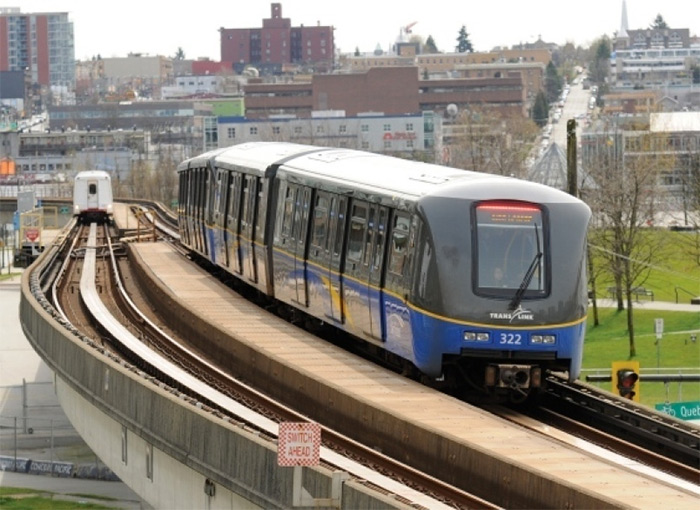
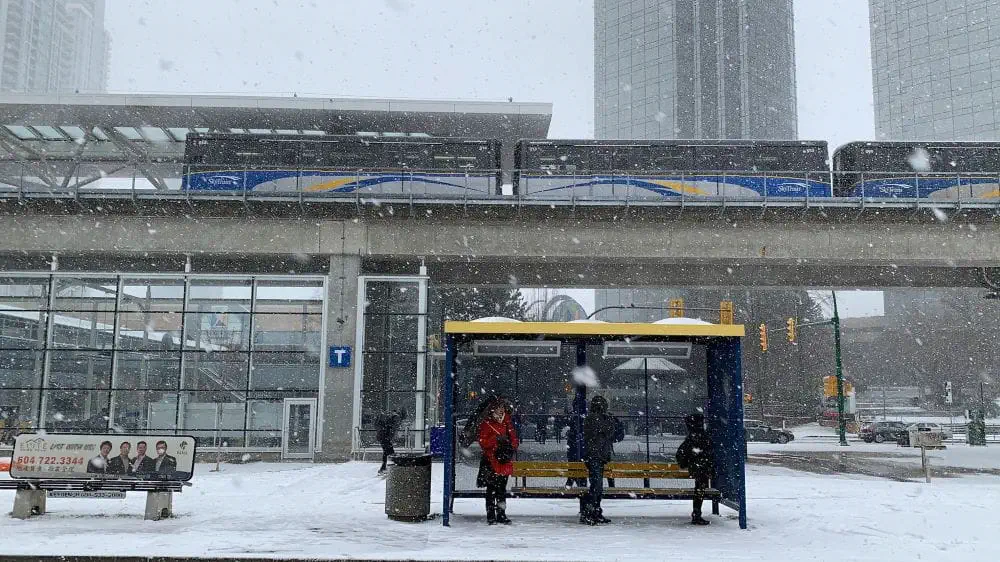
Sadly the mandarins running TransLink do not seem to be acquainted with the nuances of maintaining the railway and the SkyTrain light-metro system is a railway.
Track switches are an integral part of the railway and must be constantly maintained, yet TransLink seems to have ignored this.
In Ottawa, a train derailment caused by improper maintenance brought about a public inquiry and the same should happen here, but it will not happen, lest its finding will embarase the provincial NDP and regional mayors. Premier Eby is afraid of a public inquiry.
It seems poor maintenance, mainly to a lack of funding, leads to serious incidents, something that the current Premier and the Minister of Transportation are somewhat unwilling to tackle.
We need a public inquiry, not only to deal with current problems, but to chart a course for the future, because the current government and TransLink keep doing the same thing over and over again, ever hoping for different results.
A major derailment of Toronto’s SRT (SkyTrain) was due to poor maintenance practices, with the line closing down for good in November of this year.
The botched inspection of an original Expo Line train switch, that should have been replaced more than a year earlier, led to a rare SkyTrain derailment, according to a draft investigation report obtained under freedom of information.
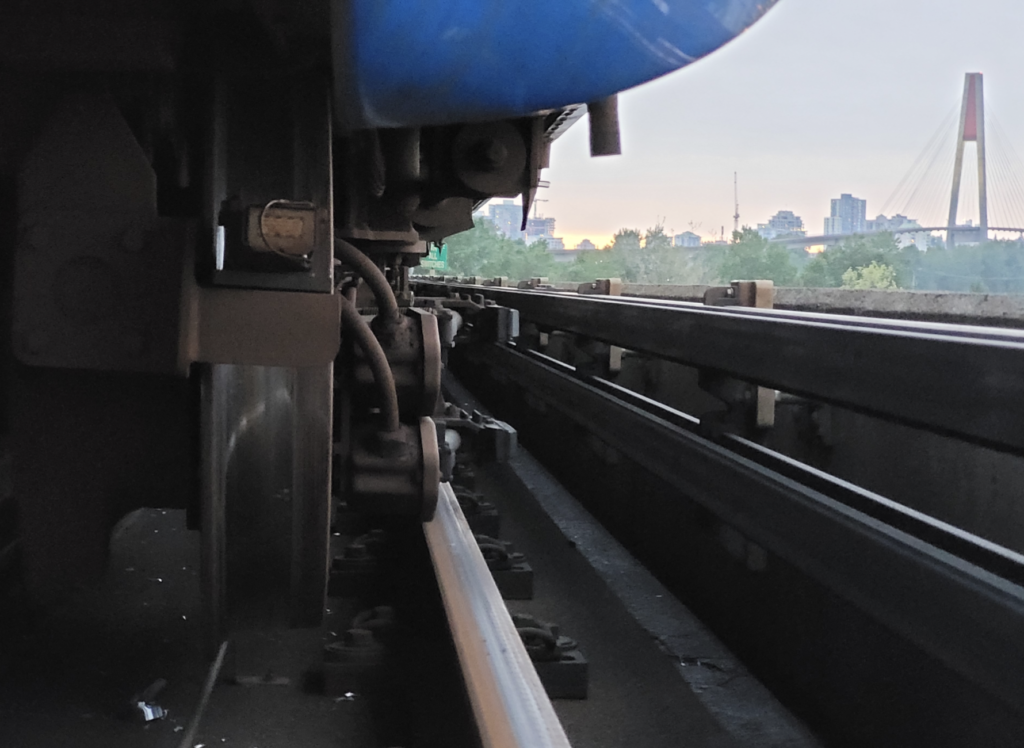
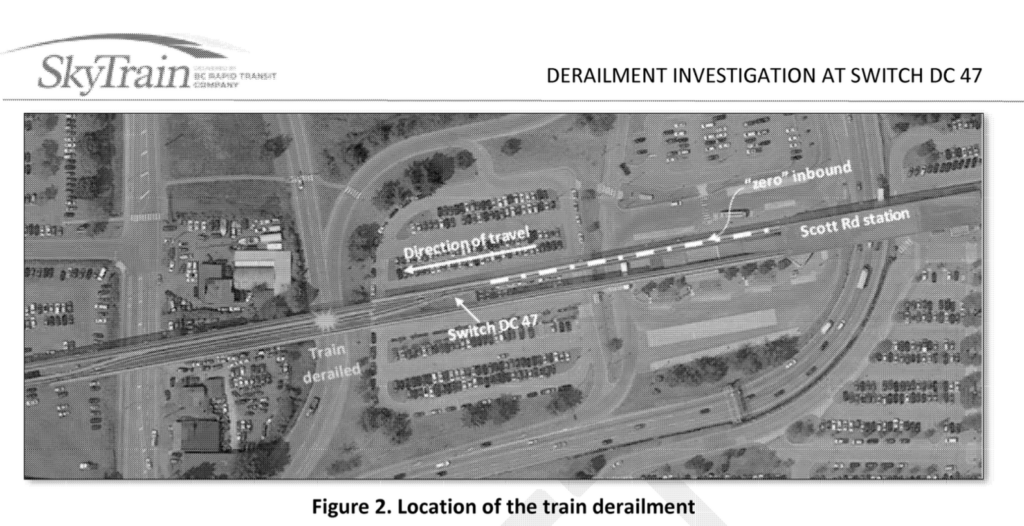
The May 30, 2022 incident near Surrey’s Scott Road station disrupted service for 24 hours. The heavily censored, B.C. Rapid Transit Co. September 2022 report, titled “Derailment Investigation at Switch DC 47,” said the root cause was worn lateral surfaces and elongated bolt holes at a bolt connection, combined with poor bolt installation techniques.
The internal investigation identified five factors that led to the derailment, including inspections on May 28 and 29, 2022 that “did not record findings” and “did not capture the condition of the bolt.”
The switch is one of 124 on the mainline that enables a train to move from one set of tracks to another. It was due for annual inspection on May 18, 2022, but other urgent work took priority.
Additionally, the 1989-installed switch had been scheduled for replacement in the first quarter of 2021, but COVID-19 restrictions impacted plans and emergency work order changes put other repairs ahead in the queue.
At the time of the report, there were 3,092 open work orders in the SkyTrain guideway department.
Deficient quality control, training and resources also contributed to the incident.
“There was no document provided to verify critical components are installed correctly to the manufacturer specifications and aligned with requirements from the Railway Act,” the report said.
The switch’s last annual inspection was July 9, 2021. Had the May 18, 2022 inspection occurred, technicians would have reassembled the components with new bolts. “This had the potential to have addressed the failed K-plate bolts,” the report said.
In 2021, there were eight work orders for broken K-plate bolts across the entire SkyTrain system. Three of them were on DC 47, including two that broke at the same time.
“There were previous incidents at DC 47, but no technical investigation was completed on previous broken bolt incidents.” The next sentence was censored.
The report said the incident began at 7:40 p.m. on May 30, 2022, when the train operations centre received a fault code from the automated train. Two minutes later, a passenger reported a burning smell via the intercom at Scott Road station. Train operations tried to route the train to Columbia station, but it did not move as commanded. So an attendant was directed to walk out to the track and check the switch.
The attendant reported back that the switch was “disturbed and a ‘big chunk of the train has fallen off’.” The incident was declared a derailment at 8:01 p.m. “Work zone and power isolation were in place to off-load passengers safely to Scott Road station.”
No injuries were reported.
The four-car, Mark II train had been traveling at approximately 69 kilometres per hour at the time of the incident. Cars 313 and 314 passed through the switch, but the frog turnout failed to remain locked. As a result, both truck sets on car 317 and truck set 1 on car 318 were derailed and made contact with the median parapet structure, travelling approximately 75 metres to the north until coming to rest.
TransLink’s communications department originally downplayed the severity of the derailment and how close it was to calamity, by calling the incident a “track issue” and “stalled train” before settling on the euphemism “partially dislodged.”
The draft report was dated Sept. 23, 2022, five days before the Sept. 28, 2022 TransLink board meeting where operations vice-president Mike Richard used the euphemism “train dislodgement” during his presentation.
There are previous reports of SkyTrain derailments in 2010 and 2017.
SkyTrain is single-tracking until July 31 between Scott Road and King George stations in order to replace two switches near Gateway station.
An interesting read for those who want free transit, but remember, free transit comes at a price.
The Tallinn experiment: what happens when a city makes public transport free?
Since Estonia’s capital started providing free public transport for residents in 2013, it claims to have turned a €20m a year profit each year. But has the scheme achieved its ambitions of reducing traffic and saving people money?
Since the scheme launched, thousands more people have registered as residents to qualify for free transport. Photograph: EPA
In London a monthly travel card for the whole city costs almost £200. InCopenhagen, a city a fraction of the size, you will pay €160. So when you ask the residents of Tallinn about the benefits of free travel across the city, it’s a surprise to be met with a roll of the eyes or a sarcastic smile.
The capital of Estonia introduced free public transport at the beginning of 2013 after their populist mayor Edgar Savisaar called a referendum on the decision, dismissed by critics at the time as a political stunt that the city couldn’t afford.
Three years on Savisaar has been suspended amid allegations of corruption, but the city remains committed to the programme, claiming that instead of it costing them money, they are turning a profit of €20m a year.
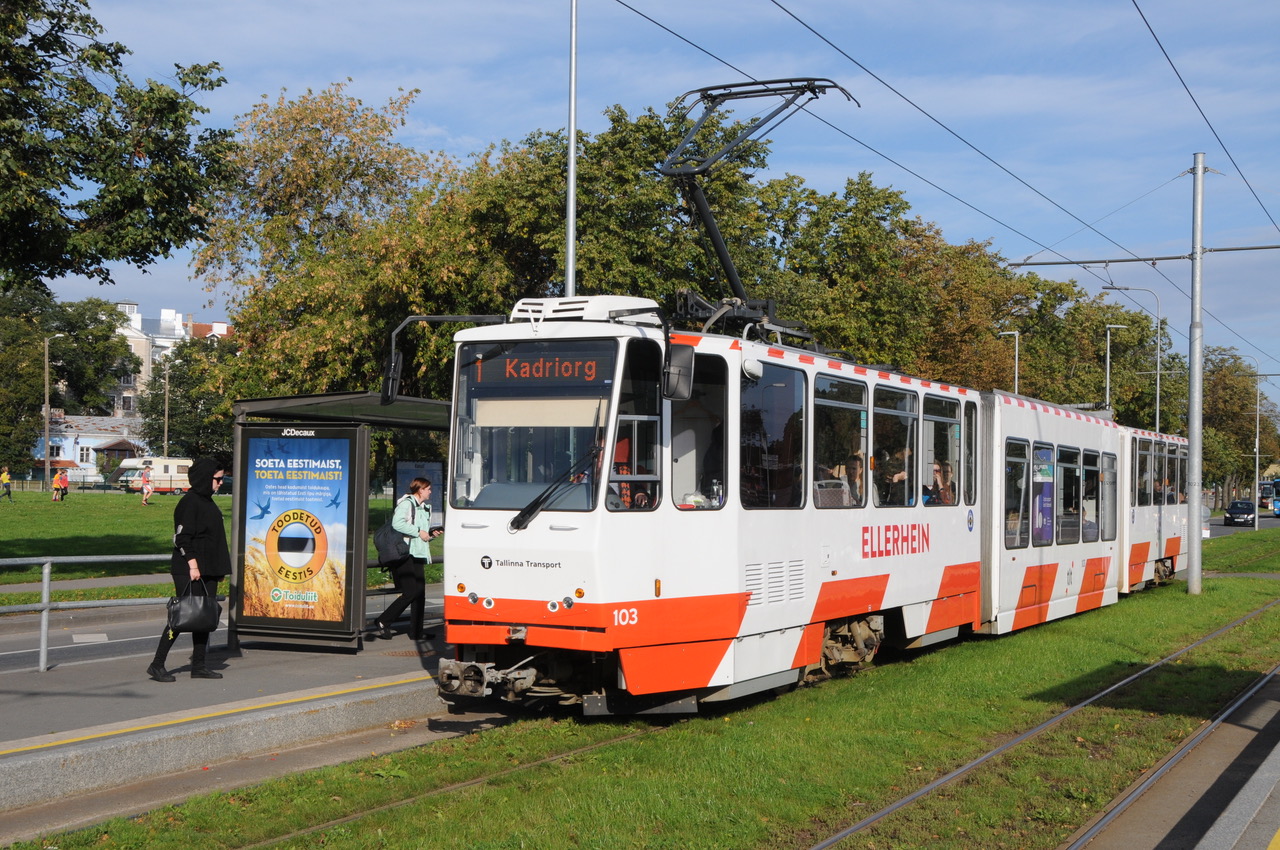
To enjoy Tallinn’s buses, trams, trolley buses and trains for free you must be registered as a resident, which means that the municipality gets a 1,000 share of your income tax every year, explains Dr Oded Cats, an expert who has conducted a year long study on the project. Residents only need to pay €2 for a “green card” and then all their trips are free.
Since the scheme launched, an additional 25,000 people have registered in the city that previously had a population of 416,000, but this is where the tension lies. The more money for the city of Tallinn, the less there is for the places they leave behind, explains Cats, “so it’s not hard to see why the government and the mayor’s office might see things differently”.
Allan Alakula, the official spokesperson for the project, admits boosting the popularity of the mayor’s office was one of the key motivations for rolling out the project, but insists that it was primarily about easing the burden on people’s wallets, and the city’s roads.
The project took a year from inception to reality in which time Alakula and his team struggled to find cities to learn from. The city of Hasselt in Belgium had free transport for 16 years but they had to reintroduce fares when it became financially unsustainable. It is also free in the town of Aubagne near Marseille in France, but neither were on the scale of Tallinnai’s ambitions.
Three years later the project has been inundated with requests from the Chinese city of Chengdu, home to 14 million and desperate to ease traffic congestion, to Romaniaai’s capital Bucharest. “We would be happy to hand over the title of the free public transport capital of the world,” Alakula laughs.
Tallinn is not a crowded or a big city, most journeys don’t take longer than 15 minutes, and transport feels like it’s part of the cityai’s furniture rather than something to be braved.
Drivers wait patiently as passengers cross their path to board a tram near Vabadus square in the centre of the city. It is nearing rush hour but everyone who needs a seat gets one. The trams and trains are clean and Tallinners have been enthusiastic about using them for free, with early polls delivering a 90% approval rating for the scheme.
Dr Cats, who is based at Delft University of Technology in the Netherlands, found that the number of people in Tallinn using public transport instead of cars was up by 8%, but at the same time the average length of a car journey had gone up by 31%, which he said meant there were more, not fewer, cars on the road in the time they tested.
He puts the increase down to a change in ‘shopping and leisure habits’ rather than limitations of the scheme itself, and suggests that making driving more expensive, through parking fees and other taxes, could be more effective at cutting back on traffic.
Early polls showed a 90% approval rating for the scheme among Tallinners. Photograph: EPA
So could cycling, which Alakula admits the city hasn’t done enough to promote: “less than 1% of people make their journey by bike, which basically means that cycle commuting doesn’t exist,” he says.
Cats also found mixed evidence whether the scheme has improved mobility and accessibility of low-income and unemployed residents ” [and] no indication that employment opportunities improved as a result of this policy”.
According to Cats, free public transport is not the no-brainer everyone might initially think it to be. “The idea still faces political opposition and visitors who use public transport are less satisfied with having to pay more for it than locals”. But in the case of Tallinn it is almost exclusively used by residents, not tourists who rely on private buses, taxis and most recently Uber.
There is also a risk, says Cats, “that free public transport could lead to less investment in the service. In the event of an economic depression, investment in public transport will be more exposed to potential budget cuts if they are not earmarked”, he says.
Tallinn also can’t rely on increasing tax revenues by attracting new residents forever. Before the scheme started, 6,000 new residents registered annually. And while the numbers shot up to about 10,000 new registrations in the immediate years after the scheme launched, early figures Alakula has seen suggest that only 3,000 to 4,000 have registered in 2016 so far.
But Alakula is positive about its longevity and says they have also been able to funnel money back to improve their networks. “We are also in the process of building a tramline in to the airport that will get you there in 15 minutes.”
On CHEK News this afternoon was a rather long piece on Ultra light rail for Victoria and Zwei sees a problem.
What was being pitched was an Ultra Light Rail system and not the Very light rail system, being proposed for Coventry, though using photos of Coventry’s Very Light Rail proposal.
When a promoter of certain transit mode doesn’t know the name of the transit system, he/she is promoting, Zwei gets very worried.
Ultra light rail system, is a different proprietary transit system altogether and I hope this is just a translation issue because Very light rail uses small trams, while Ultra light rail uses bus like vehicles and has some off-track capabilities, which puts it into the gadgetbahnen category.
Very light rail is basically smaller trams, operating on lighter track, which would make for cheaper installations in urban centres.
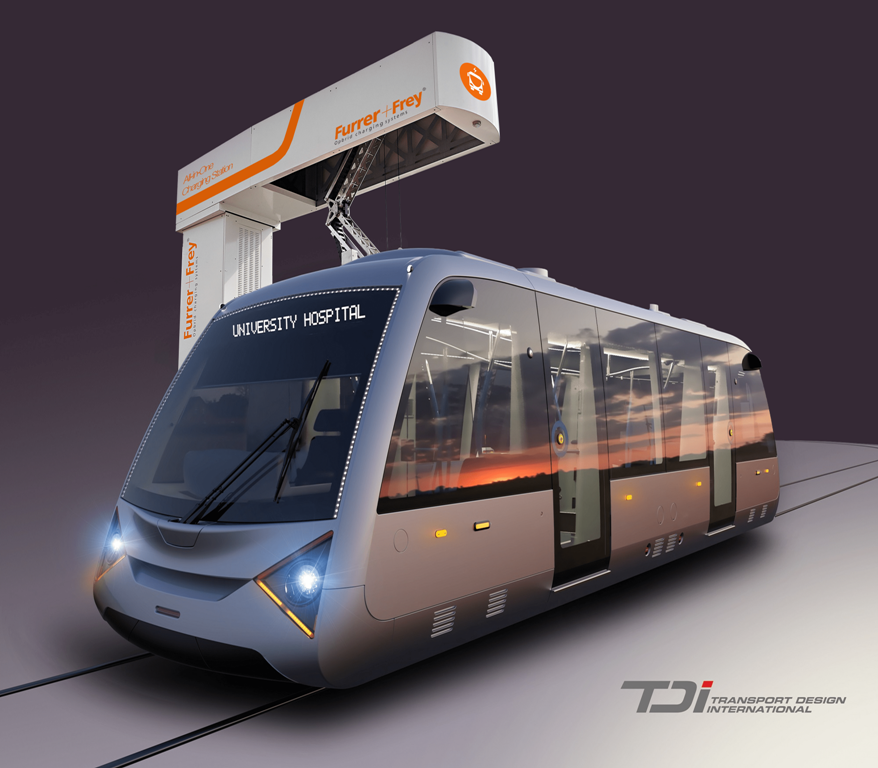
Very light rail evolved from the earlier Parry People Mover, which used stored energy kinetic/flywheel technology to a power the tram. Very Light Rail uses quick charging batteries for operation, thus no need for electrical overhead, just a few strategically located charging stations.
There were hints it would operate on the E&N, but that won’t happen, but using the Galloping Goose Trail is another story.
Of course that will excite the cycle lobby, what fun!
Building an European style tramway would probably be a much safer investment, but politicians just love spending money on media pleasing projects and not what is good for the transit customer and taxpayer.
Zwei will wait and see what transpires and with an election looming, who knows.
In London, Birmingham and Manchester, urban rail projects have encouraged thousands to take zero emission journeys instead of jumping in the car. But for many cities, urban rail is simply not an option – the costs are too high, the streets too narrow, and existing infrastructure presents too costly a barrier to remove.
Coventry is building something different; a new urban rail system which could allow other similarly sized cities and towns to benefit from urban light rail.
Dubbed Coventry Very Light Rail (VLR), Coventry City Council is working with researchers and engineers from WMG at the University of Warwick, to develop a new kind of vehicle, alongside a new track, to enhance the business case for urban light rail in places like Coventry.
The vehicle
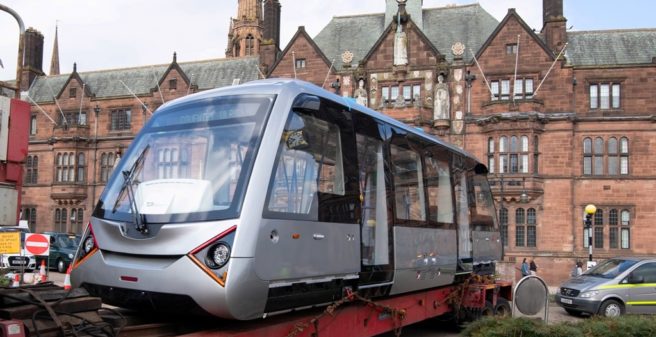
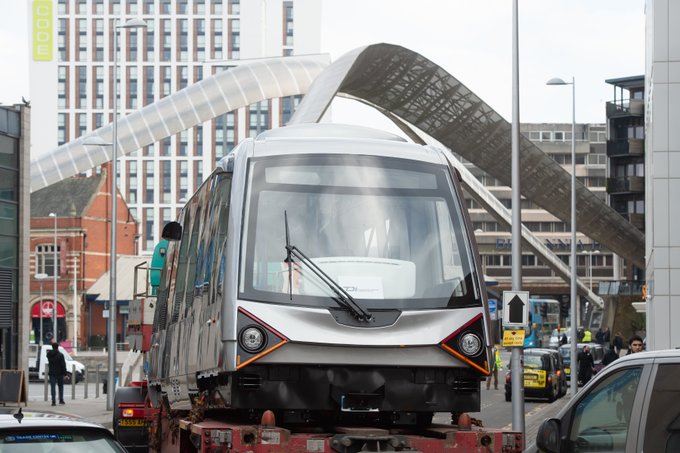
The new vehicle, pictured, differs significantly from trams and is about the same size as a single decker bus, having roughly the same capacity – 56. It’s designed to have a 15m turning circle, meaning it can get round the tight corners in Coventry’s roads. It’s battery powered, meaning it’s locally zero emission and doesn’t need overhead cabling. Recharging is done via pantograph at Furry&Frey fast cargers along the future line. And by making use of lightweight materials, it puts less pressure on the road, enabling the design of an entirely new kind of track.
The track is where the significant cost savings come in. Sitting beneath today’s roads is a crisscross of utilities – gas, water, internet – which can be extremely costly to relocate. This means traditional urban rail can cost anywhere between £25m and £50m per kilometre – with £100m not unheard of in some city centre locations.
The new track, designed from scratch in partnership with WMG and Ingerop, will sit just 30cm into a road surface, minimising the need to move utilities. As a result, Coventry City Council estimates the new track could cost closer to £10m per kilometre to install.
“The track is really what brings this project together”, says Darren Hughes, Associate Professor at WMG, University of Warwick. “In addition to savings made by removing the need to divert utilities, we expect the track’s shallow nature to speed up installation, too. It is envisaged that sections of the new Coventry Very Light Rail track could be completed within a few weeks rather than months as is typically needed when installing conventional track in complex city environments.”
The first use case
While work is ongoing on proposed first route, it has been confirmed that it will connect the city centre and railway station with University Hospital Coventry & Warwickshire. Future routes will focus on areas likely to see high uptake of the system.
The Coventry VLR vehicle has been exhibited on different places and will shortly move from Coventry to the VLR National Innovation Centre in Dudley, the UK’s first site dedicated to VLR technology, to undergo extensive testing. By 2024, the Council hopes to have installed a city demonstrator route in the city centre, to showcase the technology to other local authorities, with the first full route expected to be complete in 2026.
Public opinion
Councillor Jim O’Boyle, cabinet member for jobs, regeneration and climate change at Coventry City Council and board director at Coventry and Warwickshire Local Enterprise Partnership (CWLEP), explains: “As a city, it’s important for us to provide people with a number of attractive, affordable and green options to encourage a shift to public transport, both in an effort to fight climate change, and also to address air quality.
“I’m extremely excited about our Coventry Very Light Rail project, we’re taking advantage of a unique opportunity and it’s one that could transform public transport. Our city led the transport revolution, and we have some of the best engineers in the world working to improve public transport and tackle climate change. With Coventry VLR we’re building a unique mode of transport with the potential to make cities and towns across the UK even greener and more interconnected.
“Coventry Very Light Rail is just one of our world-beating transport projects. From micromobility, electric vehicle manufacturing, vehicle charge points or our proposed Gigafactory, Coventry is leading the green industrial revolution.”
Councillor Simon Phipps, cabinet member for regeneration and enterprise at Dudley Council, said: “Dudley Council is working closely with BCIMO and Coventry to drive this fantastic project forward and we are incredibly excited about the Coventry VLR vehicle coming to Dudley. This project is one of a number of exciting rail programmes taking shape and it puts Dudley a step closer to becoming a global leader in rail innovation and greener transport solutions.”
The project is part of the West Midlands Combined Authority’s City Regional Sustainable Transport Fund bid, and is expected to be awarded at £54.9m. The project has also received funding from the Coventry and Warwickshire Local Enterprise Partnership and the Council itself.
Hmmm – election coming and a fear of of another transit strike, well what can a government do?
Give transit workers a “gold plated” union contract.
TransLink, despite claims otherwise, is run by the premier’s office. All major TransLink decisions must have the approval by the Premier of British Columbia and this union contract is no different and the current premier of BC, Davis Eby, did not want an embarrassing transit strike to hamper his well choreographed election run and gave the nod to a gold plated union contract for transit workers.
The big problem, of course, is that TransLink is broke, which means huge tax increases for everyone else to help pave the way for a NDP win at the polls at the next election.
The Mayor’s Council on Transit, is mere window dressing and remain nothing more than a toothless tiger to take the heat for decisions made in Victoria.
What we see is classic politcal vote buying by the current provincial government that does not give a damn about real transit issues, except what makes them look good in election photo-ops and sound good in ten second sound bites at election time.
What is even more sad is that the current rapid transit system costs about 60% more to operate than comparable light rail systems and that cost is now increasing rapidly and this, for a rapid transit system sold to the public on the premise it was”cheap to operate because it had no drivers!”
Inside the new deal for SkyTrain workers
Bob Mackin
The tentative new contract between B.C. Rapid Transit Company and SkyTrain workers calls for a 6.75% pay raise effective Sept. 1.
On June 29, CUPE 7000, which represents workers on the Expo and Millennium lines, reached the agreement with the division of TransLink after 10 days of talks. Details were not announced.
According to a leaked copy of the memorandum of agreement, pay will rise by at least 16.25% over the life of the five-year deal. The union recommends members accept the contract and is holding information meetings via Zoom on July 17, before a vote later in the month.
This follows the April-negotiated contract between Unifor locals 111 and 2200 and Coast Mountain Bus Company that would see pay rise between 11.25% and 12.5% through March 31, 2026 at TransLink’s bus division.
The CUPE 7000 deal contains a no contracting out clause to protect jobs of existing SkyTrain workers and the formation of a joint committee of three company representatives and three union representatives to discuss “contracting in” work that is currently contracted out.
Pay will also increase on Sept. 1, 2024 by 2% or 3%, based on the 12-month rate of inflation beginning Sept. 21, 2023. Further increases are scheduled at 2.5% annually in 2025 through 2027. The the final two years could be higher in order to match whatever general wage increase Unifor members achieve in their next contract from CMBC.
Non-skilled trades workers get a .24% adjustment plus 25 cents per hour in 2025.
According to an appendix in the Aug. 31-expiring contract, SkyTrain pay ranges from $29 an hour for a parts driver to $58.41 an hour for an elevator/escalator technician. For administrative workers, $28.08 is the hourly rate for receptionists and administrative support clerks and, on the other end of the scale, $57.18 per hour for a control centre instructor.
Workers on duty Sundays will be paid time-and-a-quarter for all work hours beginning Sept. 1. That increases to time-and-a-half in 2026. Workers on afternoon shifts will see their $1.80-an-hour shift differential bumped to $2 an hour on Sept. 1. The nighttime differential increases by $1 to $4 an hour on Sept. 1. By 2027, it will reach $6 an hour.
The company will pay union president Tony Rebelo’s wages for one day a month to a maximum of 120 hours per year and also pay $20,000 to the union for the purposes of bargaining.
The new deal also gives workers eight, full-paid individual sick days beginning Jan. 1, 2024. A maximum of five sick days may be used consecutively. There are various increases to benefits and allowances, such as $2,500 more to see a psychologist or registered clinical counsellor, to a maximum $4,000 a year, and a $500 increase to annual physiotherapy payments, now capped at $1,500.
The maximum $5,000, interest-free loan for entering a residential substance abuse treatment program is tripled to $15,000. Upon successful completion of a monitoring agreement, the company will forgive the loan. The company can recover the debt in the event of failure or forgive 100% of the loan one time during the worker’s employment with the company.
Maternity leave is increased by six weeks to 18 weeks and the contract language is amended to replace references to mother with “birthing parent.”
Similarly, male and female pronouns are out and “they,” “them” and “their” are in. The wording of the fair practice anti-discrimination clause changes sexual “preference” to sexual “orientation” and adds protection for gender expression.
A letter of understanding upholds the provincially adopted United Nations Declaration on the Rights of Indigenous Peoples and contains measures aimed at increasing recruitment, retention and advancement of Indigenous employees. It contemplates an employment equity committee and training for anti-racism and cultural competency.
The Sept. 30 National Truth and Reconciliation Day is added to the list of statutory, paid holidays. Indigenous workers will receive an unpaid day off to observe National Indigenous Peoples Day every June 21. By request, an employee may have an elder or support person of their choice present when dealing with issues affecting Indigenous employees.
A side letter from BCRTC labour relations director Kevin Payne to Rebelo on June 29 says that the union will be given an opportunity to discuss its concerns should the company rescind its November 2021-implemented work-from-home policy.
Another June 29 letter clarifies how the company deals with special leave requests for employees who attend incidents after a person is struck or run over by a SkyTrain.
Affected employees may request time off for special leave through their manager/supervisor to the labour relations department.
“Special leave will only be approved for the remainder of the shift; and if necessary, the shift immediately following the date of incident. Should an employee require additional time off as a result of their attendance at the incident site, they will be required to file a claim with WorkSafeBC,” the letter said.
So-called “dirty work employees” called to don personal protective equipment and clean up after a track level incident involving human contact shall receive a premium of two hours equal to 200% of their normal straight time pay rate.
A new clause about accident/incident investigations says supervisors involved in a safety investigation will only participate as a witness and any statements by an employee will not be used beyond the investigation.
TransLink is studying the feasibility of erecting platform barriers to prevent people from jumping or falling into the track area as it approaches the 40th anniversary of service in two years. A 2001 B.C. Coroners Service (BCCS) report cited a 1994 SkyTrain safety review that estimated it could cost as much as $2.2 million to retrofit each station with platform screen doors.
BCCS statistics show that, between 2008 and 2018, 32 people died of suicide on the SkyTrain system.
Interesting study from the UK comparing rail travel to plane travel.
As Canadian politicians and bureaucracies are basically anti-rail, if they wish to be honest about global Warming and climate Change, this pampered group of plutocrats must have a serious discussion about passenger rail in this country, including the elimination of short haul flights.
Rail travel is far more carbon efficient than previously thought, according to a rail industry group that has commissioned a new tool for calculating emissions.
The Rail Delivery Group (RDG), the association of train companies and National Rail that works to coordinate Britain’s railways, commissioned the development of the tool so that they could measure their carbon footprint properly.
The calculator, developed by Thrust Carbon, a sustainability intelligence platform, uses seven sets of data – including engine and fuel type, occupancy and carriage layout, and exact journey distance – to more accurately measure the footprint.
“The more granular you can get with the data, the better decisions can be made,” says Kit Brennan, founder and head of product at Thrust Carbon, who led the project.
Previously the calculation had been based on the UK government’s annual “greenhouse gas conversion factors for company reporting” data which involves one simple calculation – total energy consumed by the national rail network divided by total reported number of passenger kilometres travelled.
On the electrified rail route from London King’s Cross to Edinburgh Waverley station, figures showed emissions per passenger were 24kg/CO2e, where CO2e is a measurement used to show the total greenhouse gases emitted as an equivalent of carbon dioxide.
The first result from RDG’s new carbon calculator confirms this figure is actually 12.5kg/CO2e – approximately half the previous estimation, and 10 times less carbon than car travel or 13 times less than the equivalent flight.
The new calculations are part of the rail industry’s green travel pledge that aims to make travel sustainability information clearer so that travellers can make informed choices between transport options such as plane and car. This calculator will also enable businesses to measure their carbon emissions from rail travel more effectively.
“We want to empower businesses to make greener travel choices,” said Jacqueline Starr, RDG’s chief executive, who plans to make detailed carbon calculations for rail routes across Britain available by the end of the year.
Fuel use is a major factor, but there are also operational efficiencies to consider, Brennan said: “So, if a train runs but is completely empty, and you’re breaking down your emissions on a specific train then perhaps ticket prices should be lower to encourage more people to take those trains.”
He hopes that greater transparency with carbon emissions may add an element of healthy competition between rail operators that use the same train line: “That’s good because it encourages rail operators to invest in their trains, to have newer, more energy-efficient trains, and to lobby government to electrify more of the lines for the same reasons.”
Latest statistics from the Office of Rail and Road show that in 2021-2022, just 2km of track were electrified in Great Britain. “Basically HM Treasury has pulled the plug on electrification,” said Richard Hebditch, UK director at Transport & Environment, an organisation that campaigns for cleaner transport across Europe. “This new research from Thrust Carbon shows how electrified routes are clearly miles better for carbon savings, so it should be common sense for the government to have a rolling programme to electrify the rail network.”
“It’s basically stupid to have so many diesel-only routes, and older, polluting trains travelling around the system,” said Hebditch, who described the contrast between the old and new data as “dramatic”. He explains that the new calculator will not only show the variation of CO2 emissions between different rail routes but it will be possible to get a more accurate comparison between aviation and rail as well.
“This should be a catalyst for better understanding what’s on the railway and for showing that train travel is really good for minimal CO2,” said Hebditch. “This shows the clear case of the environmental advantages of supporting it. Hopefully, more [trains] will start to be electrified, routes can be decarbonised and we might see newer trains with regenerative breaking that put energy back into the system.”
Clive Wratten, chief executive at the Business Travel Association, said: “We’ve heard loud and clear from our members and the business travel community that consistency in carbon measurement is an imperative. This initiative from RDG on behalf of the whole rail industry has the potential to provide clarity and a robust green message to all parts of business travel.”
Once rail carbon information is displayed at point of sale, booking sustainable travel will be easier, especially when comparisons between rail journeys and flights are listed, Brennan said. “All our tools are about making sustainability effortless,” he added.
Plane or train?
A trip from Edinburgh to London on, say Monday 3 July, by train would start at £59, according to Trainline. It would take upwards of four hours and 40 minutes, and according to Thrust Carbon, would emit about 12.5kg of CO2.
A plane ticket from Edinburgh to London Gatwick on the same day would start at £65 (EasyJet via Opodo) and take 1.15 hours (although that doesn’t include waiting times after check-in). And it would emit about 131kg of CO2.
It seems Premier Eby and the NDP have been left behind at the station with this.
With two railway projects that would have set BC as a leader in “Green” transportation, Premier Eby and the NDP continue to promote Greenhouse gas projects with new highway and tunnel construction: in other words, good old “rubber and asphalt ” politics BC style.
The Fraser Valley rail project and the E&N Railway could have been world leaders, especially with the lucrative US markets in “Green” transportation. But no, as BC seems to be anti-rail, blaming railways for our ills.
With absolutely no foresight and seeing Global Warming and climate change as an excuse for onerous Carbon Taxes to fill provincial coffers, BC’s NDP is now becoming “Global Warming” deniers.
Sadly, we are missing a golden opportunity to promote clean transportation in the region, leaving future generation to condemn us for out myopia about the perils of climate change.
Alstom’s first North American hydrogen train journey has set off
June 30, 2023
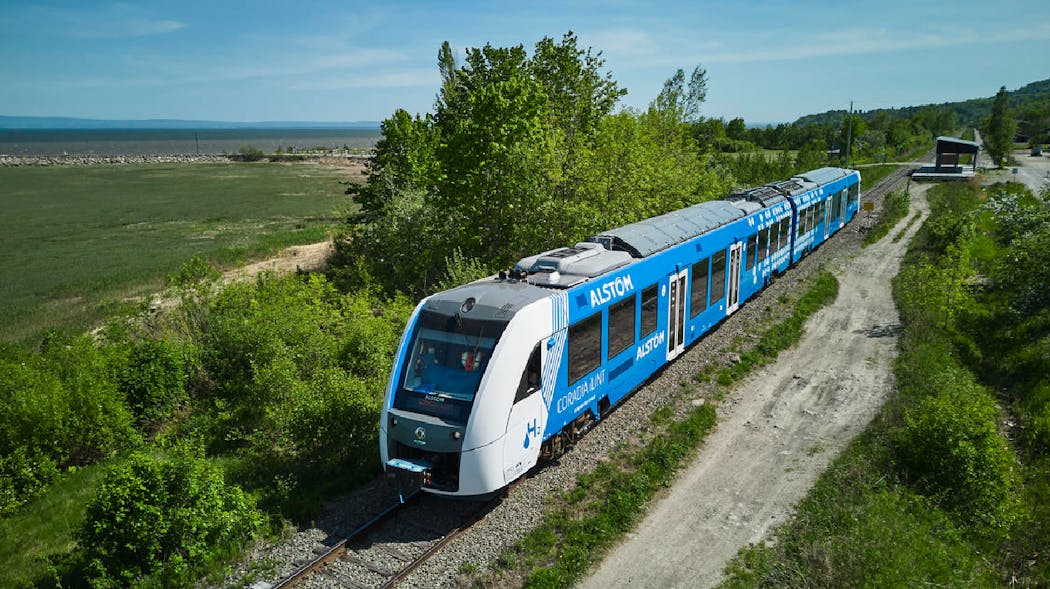
Operating commercially on the Réseau de Charlevoix railway network, the Coradia iLint will connect the Parc de la Chute-Montmorency in Quebec City to Baie-Saint-Paul in a 55.9-mile trip along the St. Lawrence River.
The Coradia iLint will connect the Parc de la Chute-Montmorency in Quebec City to Baie-Saint-Paul in a 55.9-mile trip along the St. Lawrence River.
On June 17, 100 passengers boarded the Coradia iLint for the first hydrogen train journey ever in North America. The train connected the Parc de la Chute-Montmorency in Quebec City to Baie-Saint-Paul, a 90-kilometer (55.9 mile) trip along the St. Lawrence River. The Coradia iLint, which generates its own energy using fuel cells supplied by Accelera by Cummins, which has operations in Ontario, is powered by green hydrogen produced by Harnois Énergies at its Quebec City site.
The project will allow Alstom and its partners to better assess the steps required in the process for the development of an ecosystem of hydrogen propulsion technology and its penetration into the North American market.
A first in Canada and in the Americas, Alstom and its partners: the government of Quebec, Chemin de fer Charlevoix, Train de Charlevoix, Harnois Énergies, HTEC and Accelera by Cummins to make this all happen.
The train will operate commercially in summer 2023 on the Réseau de Charlevoix railway network.
“Hydrogen technology offers an alternative to diesel and demonstrates our ability to provide more sustainable mobility solutions to our customers, agencies and operators, as well as passengers. said Alstom President of the Americas Region Michael Keroullé. “It will also provide an extraordinary showcase for Quebec’s green hydrogen ecosystem, which is under development.”
The province of Quebec will be the first jurisdiction to run a train with zero direct emissions powered by green hydrogen, demonstrating its leadership in the transition to a low-carbon economy and the set-up of ecosystems dedicated to hydrogen. The Hydrogen Research Institute of the Université du Québec à Trois-Rivières will accompany Alstom in the analysis of the results of this demonstration project.
The Coradia iLint first entered commercial service in Germany in 2018 and has travelled more than 220,000 kilometers (136,701 miles) in eight European countries. Currently, Coradia iLint is operating in commercial service on two different networks in Germany. The train is powered by a hydrogen fuel cell that emits only water vapor during operation while ensuring a quieter environment for passengers and those close to tracks.
On Sept. 15, 2022, the Coradia iLint travelled the record distance of 1,175 kilometers (730 miles) without refueling. Coradia iLint has a top speed of 140 km/h and acceleration and a braking performance comparable to a standard regional diesel train – but without the noise and the emissions. Coradia iLint stands out for its combination of innovative features: clean energy conversion, flexible energy storage in batteries, smart traction and energy management. Designed especially for non-electrified lines, it allows for safe, clean and sustainable operations. To date, 41 trainsets have been ordered by clients in Europe.
“We are proud to see our Coradia iLint hydrogen train onboard and carry its first North American passengers here in Quebec,” Keroullé said. “Alstom is fully involved in the decarbonization of mobility in the world and particularly in America. Hydrogen technology offers an alternative to diesel and demonstrates our ability to provide more sustainable mobility solutions to our customers, agencies and operators, as well as passengers. It will also provide an extraordinary showcase for Quebec’s green hydrogen ecosystem, which is under development.”
“Harnois Énergies is a partner in this project, positioning itself not only as a hydrogen producer, but also as a distributor,” said Serge Harnois, president and CEO of Harnois Énergies. “The hydrogen used will be produced at our Quebec City station and will then be transported via high-pressure tanks to Baie St-Paul. Harnois Énergies is focused on the future and keeps an open mind. Energy diversification is at the heart of the company’s priorities,”
The Coradia iLint in Quebec is the first milestone in the development of an ecosystem around Alstom’s rail solutions with zero direct emissions. The primary mission of this center, located in Saint-Bruno-de-Montarville, Quebec, is the development of future platforms with hybrid, battery or green hydrogen propulsion specifically adapted to the North American market, leveraging the proximity to the more than 700 Alstom engineers currently working in the city to help accelerate the decarbonization of the rail sector.
A C.P. Huntington Train, made by Chance Rides, being shipped to a customer.
The Stanley Park miniature railway fiasco demonstrates the mindset of Vancouver politicians including incompetence, hubris and dishonesty.
The fact of the matter is that the Vancouver Parks Board wanted rid of the train and they let it rot until it failed safety inspections.
The “single” driver C. P. Huntington locomotives and passenger cars are made by Chance Rides, a well know company making carnival rides. Spare parts are readily available and track maintenance is reasonably easy, that a lay person could do it.
If the Parks board really wanted to see a well run miniature Railway, they should go to Confederation Park and Visit the Burnaby Central Railway and they operate live steam trains requiring more strict regulations!
People should be fired over this, but in true Vancouver fashion, they will be probably promoted.
It seems the truth is just not in the Park’s Board lexicon.
Live steam on the Burnaby Central Railway.
Documents reveal funding issues, safety concerns for shuttered Stanley Park train
The Stanley Park train was pulled out of service last year and now documents obtained by Global News show the beloved miniature railroad failed a safety inspection. The train fell into such disrepair under the last park board, it posed a serious risk to children and families who rode it. The board had been warned repeatedly the attraction was not getting proper maintenance.
Damaged brakes, rusted tracks and lose spikes securing rails to the ground are just some of the problems that forced regulators to shut down Stanley Park’s beloved miniature train.
The new details were revealed in documents obtained by Global News through a freedom of information request, that show just how badly degraded the popular attraction was before it was taken offline last year.
Following an inspection in September 2022, Technical Safety BC ordered the train be shut down due to significant safety issues, and ordered an assessment by an independent engineer.
Vancouver Park Board surprised train failed inspection
Since then, it has been out of service for several key events, including the annual Ghost Train, Bright Nights and attendant Firefighters Burn Fund fundraiser and Easter.
According to internal Vancouver Park Board emails, issues with train maintenance appear to stretch back more than a decade.
The train had a dedicated maintenance person for more than 30 years. That ended in 2012 when the worker retried and maintenance was folded into the city’s Fleet and Manufacturing Services, a massive department that oversees thousands of city vehicle.
Problems soon cropped up, with FMS superintendent John Pezzolesi writing on one email that the train’s four ageing engines came with “no documentation of any kind,” and “no history of parts purchased, maintenance done, or what repairs were done to any of the units.”
Labour and funding also appear to have been major issues.
“Right from the start, there was very little to no maintenance budget to service these trains,” Pezzolesi wrote.
“We have discussed on a few occasions late 2018/early 2019 with Parks … for future budgeting to no avail. We repaired units as required, when required.”
Loss of the Stanley Park train for Bright Nights a blow to charity
The email adds that the department had seen a staff shortage for “many years” making it hard to get crews out to work on the trains in the face of “more priority units” from other departments needing work, and that staff availability hit an “all time low” in the wake of COVID-19.
Acting park board general manager Steve Jackson insisted that the city has always focused on preventive maintenance, but said the train’s maintenance schedule was derailed by the pandemic. He told Global News we wasn’t aware of any funding requests being turned down.
“Many assets, again, we would love to maintain them at tip top conditions, we do have to make priority decisions every day whether its the train or a truck or a fire engine and what have you,” he said.
“I’m not personally aware of any situations where we’ve gone to request money to maintain the trains in a more significant fashion where that’s been declined.”
Jackson instead pointed to the train’s six-decade age as the key issue, with its manufacturer no longer stocking key parts, and maintenance work becoming progressively less effective on old components.
Safety report outlines major issues
The train’s ageing locomotives, passenger cars, rails and tracks were, according to Technical Safety BC, in concerning condition.
According to the regulator’s full report, also obtained by Global News, outlined a laundry list of issues that would need attention before the train could get back in service.
The report found the train’s black engine had “excessive oil leaking on a brake lining which could (pose) fire hazard during operation” while the Green locomotive’s “brakes were not releasing after being applied” and the red locomotive had “overheating and radiator issues.” The fourth, blue locomotive was already out of service at the time of inspection.
Portions of the track were rusty, “multiple” rail ties were rotten and some of the spikes that held the rails in place were loose
“Observed excess rust and corrosion on track lower surface, spike heads not contacting track rail allowing movement as train pass over,” the inspector wrote in one note.
Stanley Park train condition under assessment
It also observed excessive wear on multiple undercarriages, and brake issues with every single passenger carriage.
“I don’t think it’s a report that any of us feel good about,” Jackson said.
“Again there are so many pressures on our system, at times we can’t prioritize everything. There’s not any situation I can point to where we de-prioritized the train, but we’ve been making do with what we have, the assets we have, the resources we have whether its labour, money, parts.”
Jackson said the city immediately shuttered the trains after they failed their safety inspection.
But when pressed on the fact they had been carrying passengers just a short time before that failure, he acknowledged there could have been risks.
“I don’t disagree in terms of there being a risk, but again, we rely on that safety report, we rely on those inspections, if we were told this is unsafe to operate we would not operate,” he said. “And as soon as we knew we were offline.”
Exactly when the trains will be back in service remains unclear.
Jackson said the city has put in a crucial part order to get one of the locomotives back in action, with the goal of having it moving some time by the fall or winter.
That could mean in time for the Halloween Ghost Train, but more likely would see it in service in time for the holiday Bright Nights event, he said.
Off the rails: Stanley Park Ghost Train cancelled for 2022
There’s also the outstanding question of cost. Jackson estimated with parts and labour each locomotive would cost at least $300,000 to get back in service.
In the long run, he said the city will need to have conversations about potentially replacing the equipment, either with a modern rail gauge and parts that can more easily be maintained, or with a new electric system.
“We’re going as fast as we can, and as soon as the train is fixed we’ll be looking to open with whatever we can open with,” he said.
“To be honest we just want the train functioning, we want to see the smiling faces again, we want staff to be enjoying their time here and not worrying about a broken train.”
It seems several TransLink and City of Vancouver bureaucrats are tying the spin that subways are cheaper in the long run.
Of course, they do not give firm numbers on anything!
Some transit blogs seem to think that building a subway is easy peasy , costing only a little more than a surface operation. This train of thought comes from a grand ignorance of subway construction and operation; with Translink’s grand subway plans based on the myth that subways carry more people.
As we all know in BC, all mayors are experts are experts on transit and the holy grail in transit planning is a subway.
Yippee!
The mayor’s council on transit is like an old boys rugby game, thirty one referees on the field, but I digress.
The staggering costs for subway construction is clearly evident with subway planning in Toronto.
The following quote should put an end of any discussion for new stations for the Canada line or future stations on the Broadway subway.
“The three stations recently built on New York’s Second Avenue line reportedly cost about $644 million-$812 million (U.S.) each.”
In Canadian funds this cost is $856.2 million to $1,079.5 billion!
Staggering!
Memo to Ontario Tories — there’s no such thing as a free subway
Ah, free transit. Is there anything our politicians like promising more?
Remember departed former mayor Rob Ford promising the private sector would construct a Sheppard subway extension in Scarborough at no cost to taxpayers? Remember when current mayor John Tory promised that the life-changing magic of Tax Increment Financing would deliver a 22-station “surface subway” at no cost to property taxpayers?
Now, as reported by the Globe and Mail, Premier Doug Ford, through his Transportation Minister Jeff Yurek, promises to change the one-stop Bloor-Danforth Scarborough extension back into a three-stop extension, with private sector developers entirely picking up the difference in cost.
They love the idea of something for nothing. I get the appeal. When it comes to prices, $0 looks pretty attractive.
Thing is, you tend to get what you pay for — and to not get what you don’t. Instead of free transit, basing plans on skipping out on the bill might ensure we remain transit-free.
That would be my primary concern when examining the provincial government’s recent idea to revert to the three-stop subway plan in Scarborough. “The developer would pick up the cost of those stations (in Scarborough) as we go forward, and it will not be a cost to the taxpayer,” the Globe reported Yurek saying on the weekend.
Let’s be clear about a something up front.
Wherever and whenever we are building transit, we absolutely should be working with developers to put intense commercial and residential uses on the station sites themselves if possible. It provides job sites and housing in transit-served locations, and can bring in significant revenue for the governments doing the building.
The hitch is that that money — decent as it may well be — is unlikely to be enough to cover the costs of the stations. Not nearly.
The three-stop subway extension was estimated to cost about $1 billion more than the one-stop version, partly because the topography of the area requires the stations and tunnels to be deep underground, and partly because subway stations are monstrously expensive to begin with. (The three stations recently built on New York’s Second Avenue line reportedly cost about $644 million-$812 million (U.S.) each.)
So if this is coming free of cost to the taxpayer, as Yurek says, we’d need a developer to essentially pay the province $500 million each for development sites at Lawrence and Sheppard.
It’s hard to know, in general abstract terms, how much land and development rights above a subway station at Lawrence and McCowan would be worth.
Right now, there’s a two-acre strip mall-and-housing site in Scarborough a few blocks from the proposed subway site listed for sale for $9.7 million. But land in the area would no doubt be more valuable with a subway line there, and land directly atop a subway more valuable still.
How much more valuable? It’s hard to know, exactly. But to get some sense, how about looking at a spot directly beside Finch subway station on the Yonge line with an underground tunnel connected to the subway station? That’s about as close to being on top of a station as a building can get.
Last year, such a building on Yonge St. in North York, a fairly new 18-story office tower, LEED certified and with 92 per cent of its 274,000-square-feet of commercial and retail space leased to mostly government and credit-grade tenants, sold for $85.15 million. That was for an existing highrise tower in an area of the city that is already fairly densely developed and populated.
Or, to look at it from another angle, in 2017 a developer bought a site at Yonge and Steeles — where a subway extension to the 905 is one day expected — with hopes of putting three condo towers and a hotel on it. The price? $53.9 million.
I don’t know which may be a better comparison to a site like the ones Yurek is discussing. But perhaps between the three examples, we see the ballpark value for commercial real estate of that type. It’s a big-league park — the numbers are huge!
But if the province essentially needs someone to buy the land and development rights above a station for $500 million in order for us to get a free subway station, we’re talking about a different order of magnitude.
Some might shrug and say, “Well, so what? This is still more real estate revenue than we were discussing before. It’s better than nothing.”
Perhaps. My concern is that when you promise something for nothing, and it turns out that something may instead cost hundreds of millions of dollars, you either wind up with a shocking and unexpected bill, or you get exactly what you planned to pay: nothing. Both results are as disappointing as they are sadly familiar.
In Metro Vancouver, again and again, one hears calls for the light metro system to operate 24/7.
It cannot, or put in another way, it can but it would increase maintenance costs considerably and TransLink is near broke.
The reason is quite simple, automatic or driverless operation.
Simply, the light metro system need preventative maintenance every night, especially the Expo line, to ensure continuous operation during the day. Sections of line must be shut to make sure it is safe for maintenance staff to do their work.
LRT/tram (streetcar) is much simpler to operate and maintain and can operate 24/7 with little problem.
So, if one wants a more flexible transit service, one that can operate 24/7, keep it simple with modern light rail.
Keeping a transit system simple makes it more user friendly!
Information on night buses and S-Bahn, subway and tram service at night on weekdays and weekends.
After a concert, on the way to the next party, or back to the hotel: Berlin’s buses and trains will take you where you want to go even at night. The S-Bahn and subway are in operation 24 hours a day on weekends. On weekdays, night buses and the Metrotram provide transport connections throughout the night.
Public Transport at Night: Monday to Friday
On weeknights from Sunday to Monday until Thursday to Friday, subway and S-Bahn trains operate only until 1 or 1.30 AM, depending on the line. After that, they are replaced by night buses.
The S-Bahn operates until around 1 to 1.30 AM.
The U-Bahn operates until around 1 AM.
The Metrotram operates 24 hours a day. From 0.30 AM, trams arrive in 30-minute intervals.
Night buses, recognizable by the letter N, replace all important bus lines. The night bus lines N1, N2, N3, N5, N6, N7, N8 and N9 roughly follow the corresponding subway routes.
Public Transport at Night: Weekends
On nights from Friday to Saturday, from Saturday to Sunday, and before public holidays, the S-Bahn and subway operates all through the night. Night buses and trams run all night as well.
The S-Bahn operates 24 hours. At night, trains run in 30-minute-intervals.
The U-Bahn operates 24 hours. At night, trains run in 15-minute-intervals.
The Metrotram runs 24 hours. From 0.30 AM, trams arrive in 30-minute intervals.
Night buses, recognizable by the letter N, replace all important bus lines.












Recent Comments