Light rail is not a panacea, but it is a proven method in reducing auto traffic, something those promoting SkyTrain cannot claim.
Building with trams opens an opportunity for not only providing a user-friendly and environmentally- friendly alternative to the car, the mode offers an almost universal transit mode as the modern tram can operate as a streetcar, operating in mixed traffic; as light rail, operating on a dedicated rights-of-ways; as a light-metro, operating on a totally segregated R-o-W’s; and as a commuter rail train on the railway mainline: all on the same tram route!
The main issue in Australia and Canada is the same, if one wants to reduce auto use, one must have a user-friendly and taxpayer-friendly public transit alternative. The modern tram fits the bill, if designed and operated properly.
Though the price tag of $1.2 billion(CAD $1.08 billion) for 6.7 km of tram line seems excessive but it does include the cost of rebuilding 6.7 km of highway. Many city engineers hide the cost of road construction onto the cost of the new LRT line!
One hopes Australian politicians can see 20 minutes into the future, unlike their counterparts in Canada who firmly believe an ever higher carbon tax will cure Global Warming and cannot see past the next election window.
From down under………………
A modern tram can economically adapt to almost any situation.
The latest extension to the Gold Coast line will cost $1.2 billion — $500 million more than initially expected.(ABC Gold Coast: Dominic Cansdale)
They increase property prices, take cars off the road and governments seem keen to splash billions to roll them out in rapidly growing cities.
But light rail is facing increasingly passionate opposition in some of the very areas it’s meant to benefit.
What’s happening with light rail?
Light rail has sprung up in Canberra, Newcastle, the Gold Coast, and Sydney — where an additional line is expected to open in Parramatta next year.
Studies are also underway for potential new lines on Queensland’s Gold and Sunshine coasts, both rapidly growing cities north and south of the capital, Brisbane.
Canberra is one of several cities to embrace light rail in recent years.(ABC News: Ian Cutmore)
South-east Queensland’s population is set to balloon with 1.4 million new residents by 2040, so all levels of government are looking at ways to improve the liveability of cities.
Right now, the only Queensland project under construction is stage three of the light rail on the Gold Coast — a 6.7-kilometre extension of the existing 20km track, which has been in operation for almost a decade now.
The latest stage of the Gold Coast light rail line will run to Burleigh Heads.(ABC Gold Coast: Dominic Cansdale)
A $5 million business case is underway looking at the feasibility of extending the line further south to the Gold Coast Airport.
On the Sunshine Coast, north of Brisbane, similar investigations are being made to improve public transport offerings.
Why light rail?
Queensland Transport Minister Mark Bailey shared a summary of a study into the southern Gold Coast on social media recently.
These two lines from the report give an insight into the state government’s approach:
“Current urban policy is focused on creating more sustainable and liveable urban areas by consolidating land uses within existing urban areas (reducing urban sprawl) in particular around town centres and high capacity public transport nodes.
“The study found the Gold Coast Highway from Burleigh Heads to Tugun could be transformed into a high amenity community focused boulevard with priority given to walking, cycling and a world class light rail system that enhances the livability and character of the southern coastal suburbs.”
Mr Bailey has said light rail was an increasingly popular transport solution globally and pointed to the roughly 69 million trips that had been made on the first two stages of the Gold Coast light rail so far.
Is light rail just an excuse for increased development?
That is a big concern for those who don’t want it running through their areas.
But public transport works best when it is located near where people live, Cairns-based independent town planner Nikki Huddy said.
“The best public transport has density along it, that’s true,” said Ms Huddy, who recently travelled to the US to look at public transport solutions as part of a Churchill Fellowship.
“I think it’s a magnificent opportunity.”
She said light rail could help reduce traffic without impacting existing roads.
“You can run it parallel to roads and still have your traffic running its own way, so there’s no real interference between those two modes of transport,” Ms Huddy said.
“You’ve just taken how many cars off the road. It’s going to make driving better for those who want to drive. I think it’s a really good idea.”
Why don’t locals want it?
More than 600 people packed a hall on the Gold Coast at a recent light rail meeting organised by Liberal MPs Michael Hart and Karen Andrews.
The vast majority of the group was against the proposed route to the Gold Coast Airport.
Residents gave passionate arguments against the light rail at a recent community meeting.(ABC News: Nicholas McElroy)
Among them was Kath Down from community group Save Our Southern Gold Coast.
She said light rail would cut off access to the beach, despite most people currently having to cross four lanes of highway to get to the surf.
“They’ll lose access to things like the beaches, nippers, surf clubs, but they’ll also lose access to the trams. It really doesn’t service the majority of the population,” Ms Down said.
“It’s a ruse for overdevelopment and urban renewal to support high-rises.”
Light rail will run down the middle of this section of the Gold Coast Highway as part of stage four of the roll-out.(ABC Gold Coast: Dominic Cansdale)
Despite the light rail running down existing sections of the Gold Coast Highway, Ms Down said the project was not suitable for the southern Gold Coast.
“If you put a tram through Palm Beach, number one, it doesn’t fit,” she said.
She said the rail lines would also change the feel of the area, which was already undergoing increased development.
“We’re losing the vibe of the southern Gold Coast, we’re losing why we live here and quite frankly, locals would like excellent public transport. Light rail just isn’t excellent transport.”
What about the Sunshine Coast?
Tracey Goodwin-McDonald helped found the Sunshine Coast Mass Transit Action Group after plans were announced for improved public transport in her city.
She said a mooted 13-kilometre transit line from Maroochydore and Caloundra “starts nowhere and ends nowhere”.
Like some of those opposed to light rail on the Gold Coast, Ms Goodwin-McDonald said she supported an extension of heavy rail.
She said heavy rail on the Sunshine Coast would take pressure off the clogged Bruce Highway.
She said she was concerned that the Sunshine Coast would become more like the Gold Coast — renowned for high-rise towers near the beach.
“Light rail with the overhead wires came out in the business case, surprise surprise at 10 out of 10 and the most preferred option. The reason it [won] is because of its ability to change the urban structure.”
Ms Goodwin-McDonald said she also supported higher-density development, just not on the coastal strip.
“We do need some higher-density living, yes, but when you’re living with two-storey housing, and then they’re now looking at six-storey apartments, that’s a radical, radical change,” she said.
“So what we’re saying is that there’s land masses, that in our case is the town of Nambour which is crying out for investment, and people and business, that could take some of the load. But that’s not even been considered.”
Back to the future
Australian cities used to be well serviced by tram networks.
Trams running down Stanley Street on Brisbane’s southside in the late 1960s.(Supplied: Brisbane City Council Archives)
According to studies, Australians made more than one billion annual trips by tram in 1945.
But Ms Huddy said things started to change in the decades that followed.
“California highway engineers came to Australia to teach us how to build highways like they did. Overnight, the tram tracks were bitumened,” she says.
“So for the last 70 years now we’ve been planning only for a car and the opportunity truly to retrofit light rail in is magnificent.”
She said it was a rare opportunity for regional cities, adding that other cities around the state could be in line for similar projects.
“The ability to get around in multiple modes is one of the greatest gifts that you can give to your community.”
“I think Townsville would be primed for it, and I bet you Queensland Transport thinks the same.”
Alas, poor SRT! I knew of it, TTC: A system of infinite cost, of most expensive fancy: It hath
taken us more than thousand times; and now, how abhorred it is! My gorge rims at it. Here, it cost much money, I know not how much. Where be your new systems now? Your
LIM’s so disappointing? Your screeching wheels?
Your flashes of of electrical arcing from being stuck in the snow?
Not one now, to mock such folly? Quite chap-fallen? Now get you to the Mayors chamber, and tell them,
make call for more taxes and more taxes, to this favour
subways must come; make me shake my head at that.
Apologies to the Bard……
Toronto’s Scarborough Rapid Transit system
Toronto’s SkyTrain, the Scarborough Rapid Transit system ceases operation in November of this year.
And then there will be only six of the ICTS/ALRT/ART/MALM systems left..
Last day for SRT train service is targeted for November 2023
Last year, the TTC Board approved decommissioning Line 3 Scarborough and replacing train service with an express bus service to begin in Q4 2023.
The last day for the SRT train service is targeted for November 18, 2023.
Express buses are scheduled to start running the following day on November 19. The closure of the SRT will require a very frequent bus replacement service to provide alternate services for customers connecting between important nodes, such as Scarborough Centre and Kennedy stations.
As Europe is rediscovering travel by rail, in Canada rail travel is treated with disdain, yet in the age of Global Warming and climate change, the train is making a strong comeback for travel.
It is my contention, that when federal and provincial politicians and bureaucrats are banned from taking planes for travel under 1500 km, only then will rail see the investment needed for a strong regional rail system.
Do our politicians have the moral fibre to do the same?
I doubt it, especially when the Carbon Tax is just a tax, with revenue going into both the provincial and federal treasuries and is doing little to mitigate the current environmental crisis.
Rail is not a panacea, but it is a proven alternative to the car and if government is serious about reducing auto and truck use (which they are definitely not), rail is the proven alternative.
If government is honestly wants to reduce motor vehicle use, government must invest in a viable and user-friendly regional and long haul rail services.
Sadly, honesty is not in the Canadian politcal lexicon.
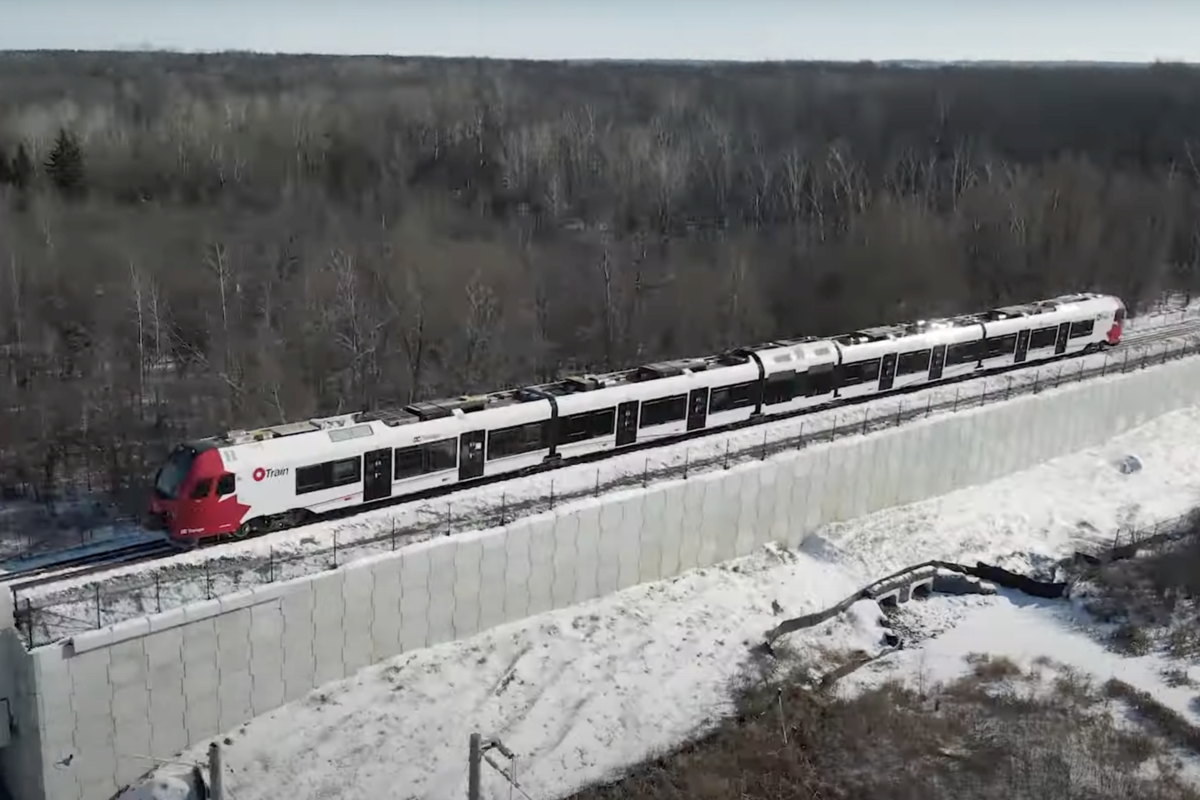
The Stadler DMU’s now used on Ottawa’s Trillium Line could be a template for regional rail services across Canada
Europe is currently in the midst of a full-blown night train renaissance. In fact, the number of new and revived sleeper train routes in Europe is getting so numerous that it’s getting pretty hard to keep track of them all. Up and down the continent, new routes are providing more and more alternatives to travelling by plane – alternatives which are greener, nicer and maybe even cheaper.
But hold on to your hats: European Sleeper has barely launched its latest route, and already another sleeper-train service linking Brussels and Berlin is in the works.
Run by NightJet (the sleeper arm of Austria’s national rail provider ÖBB), this new service has a number of potential advantages over European Sleeper’s. It’ll be more frequent, with a daily shuttle service. It’s expected to feature the company’s brand-new sleeper carriages, which are set to come into service this summer. And it’s set to launch this year: to be precise, in December 2023.
It’s worth noting that ÖBB/NightJet is a massive player in European train travel, whereas European Sleeper is a new start-up: in fact, the Berlin route is its very first venture. The new Brussels-Berlin NightJet service is expected to directly compete with European Sleeper’s trains, which could lead to lower prices for all passengers on the route.
Initially billed to launch in 2022, the so-called ‘Good Night Train’ will link Brussels and Berlin via Amsterdam and Rotterdam, letting travellers shuttle between three dazzling European capitals via one overnight service. What’s more, the route will link up with Eurostar, meaning passengers from the UK will be able to join the sleeper train service to Berlin with one quick change in Brussels. That’s right: from this week, you’ll be able to hop on the 15:04 from London St Pancras, enjoy a quick beer in Brussels and wake up in Berlin.
The service from Brussels will initially run three times a week, and tickets from Brussels or Amsterdam to Berlin start at €49 for a seat – though you’ll want to spend a bit more and book a couchette or sleeper bed for a better night’s kip. Depending on the size of your group, taking a sleeper train could be cheaper than flying. And all services will include free wifi, coffee and a light breakfast – something you wouldn’t get on a budget flight, that’s for sure.
If that’s not exciting enough, the pan-European sleeper route is set to extend even further in 2024, sweeping passengers from Brussels all the way to Prague, with an additional stop in the historic German city of Dresden. European Sleeper also recently announced plans to set up a direct night train route between Amsterdam and Barcelona in spring 2025, which will also serve the north and south of France. Eventually, the service might even link up with the UK – thereby criss-crossing a huge chunk of the entire European continent.
All this is a big win for green travel. Apparently, a single trip from one of these trains will produce 75 fewer tonnes of carbon than the equivalent plane journey. Honestly, flying is so last year.
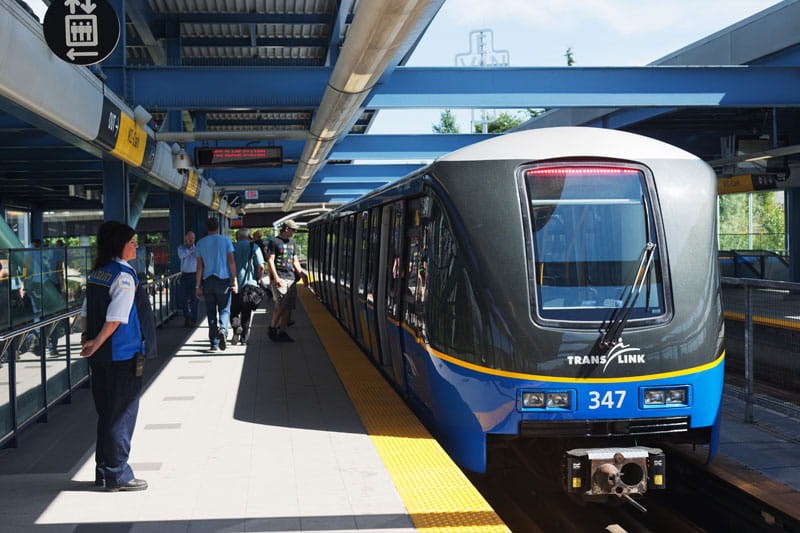
I thought this would be an interesting article as we have in Vancouver two incompatible light metro systems, the Canada Line and the Expo and Millennium Lines.
The Canada Line uses ROTEM built EMU’s, standard railway fare and can be used on most standard gauge electric railways.
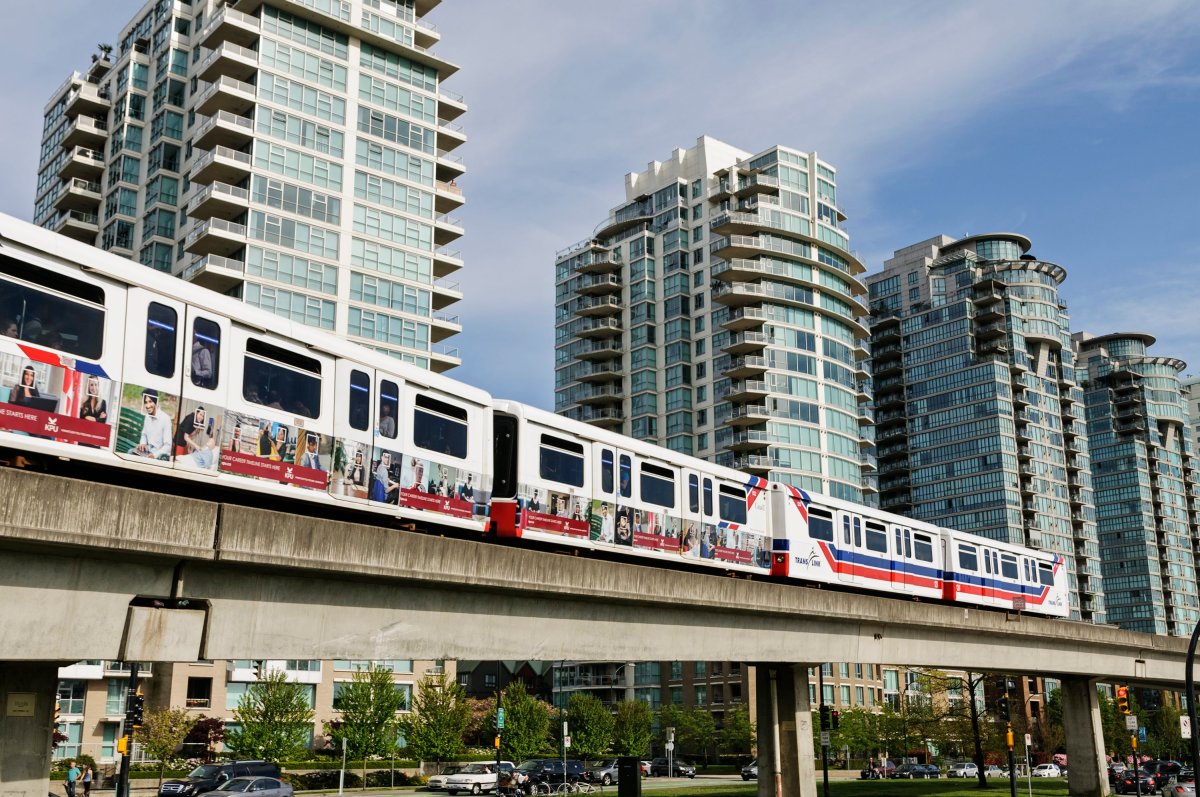
The Expo and Millennium lines use the proprietary, Linear Induction Motored Movia Automatic Light Metro cars and is nor compatible in operation with any other railway except its family of seven light metro’s.
The problem in Sydney is not as serious for future planning as Vancouver is now finding out. Most train companies offer dual voltage vehicles that can operate on systems with electrical supply different than the ‘home’ line.
Karlsrhue’s famous Tramtrains are dual voltage as they can operate on DC on the tram network and AC on the mainline railways.
Dual voltage trains will cost more but they would permit through operation on the other lines.
In Vancouver, LIM powered trains just cannot operate on non LIM lines, making the system all that more expensive to maintain and operate with two totally different railways.
Being LIM powered, the MALM system cannot operate on any other railway except for its family of 7 transit systems.
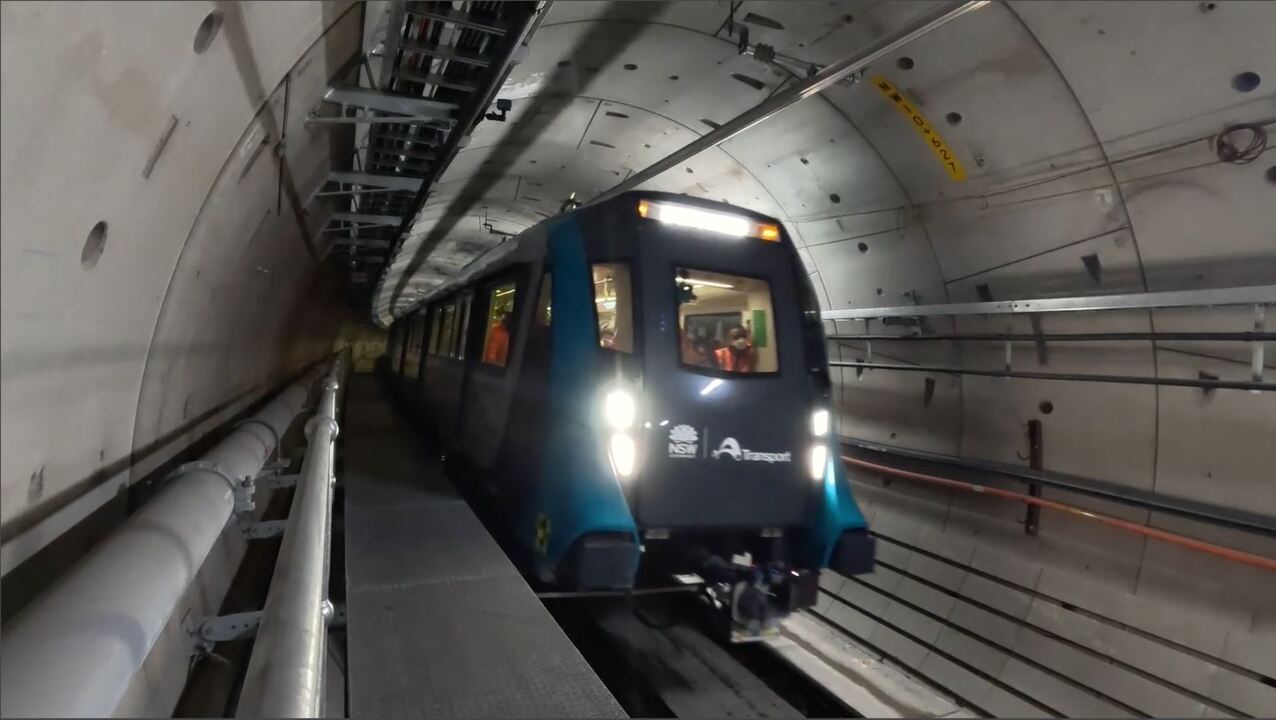
Sydney’s new driverless metro trains and stations might end up looking the same to commuters but key differences in the mega-projects mean the city is set to construct three lines run by three separate private operators with trains that cannot be switched between them.
The use of different power and trains built by separate manufacturers will make the new $11 billion metro line to Western Sydney Airport at Badgerys Creek incompatible with the first two stages of Sydney’s metro rail network.
Part of the 45-strong train fleet for the Metro Northwest and City and Southwest lines. Credit: Nick Moir
As a result, the 12 autonomous trains to be built by German company Siemens for the airport line will be unable to run on the Metro Northwest and connecting City and Southwest line. The airport line’s trains will be about 30 centimetres wider than other metro trains to cater for flyers who are lugging bags.
The different electric current also means the 45 driverless trains built in India by French company Alstom for the city’s first two metro lines will be unable to be switched to run on the airport line. Neither will they be able to operate on the $25 billion Metro West line – the biggest of the four lines which is due to open in 2030 – because it will run on 25 kilovolts, too.
The airport line is being designed for trains comprising up to four carriages whereas those for the Northwest and City and Southwest lines can be trains up to eight carriages long
At 2am on April 21, a single-deck metro train traversed its way from Tallawong through Chatswood and North Sydney before running under Sydney Harbour.
Transport and planning consultant Alex Gooding said it was highly unusual for metro lines in the same city to be deliberately planned to be as different as the airport line was from both the Northwest and City and Southwest lines.
“We are building a system from the ground up, but the previous government appeared to have deliberately designed a range of incompatible features which makes no sense,” he said.
Gooding said a likely reason for the difference was that building the airport line to match the greater passenger capacity of the first two metro lines would have substantially increased the former’s cost, while it also avoided a “single-private operator monopoly” in Sydney.
“Instead of getting one metro, we will end up with three distinct and, to varying degrees, incompatible systems,” he said.
“Metros in cities overseas tend to have different lines but where possible they are built with consistent rail systems and trains.”
Main differences
Metro Northwest/City & Southwest
Power supply: 1500 V DC
Carriages per train: six with ability to increase to eight
Train builder: French company Alstom
Operator: Metro Trains Sydney comprising MTR, John Holland and UGL Rail
Metro Western Sydney Airport
Power supply: 25 kV AC
Carriages per train: three with ability to increase to four
Train builder: German company Siemens
Operator: Parklife Metro comprising Siemens, Plenary, Webuild and RAPT Dev
Metro West
Power supply: 25 kV AC
Other details to be decided because contracts yet to be awarded
When the main section of the City and Southwest line opens next year, it will be operated by a private consortium led by Hong Kong’s MTR Corporation which runs Metro Northwest.
In contrast, a separate consortium that includes Siemens, Australian infrastructure investor Plenary and Italian company Webuild will construct and operate the airport line.
Gooding said the decision to electrify the Metro West line between the Sydney CBD and Parramatta with 25 kilovolts and set up a special entity to manage that project was likely to result in it having a different operator to the other lines.
The new Labor government last month flagged a major overhaul of the Metro West line as part of a wide-ranging review into Sydney’s metro rail projects.
Transport Minister Jo Haylen said the integration of Sydney’s metro lines with one another and with the broader transport network was important, and was why the Minns government had commissioned a review into the projects.
“It’s important to make sure that these projects are being delivered in a way that works for passengers, and properly embed metro services into the transport network as a whole,” she said.
Sydney Metro said each line was designed to operate independently to ensure the highest reliability with train configurations to suit the customer requirements of the line. “Sydney Metro has a responsibility to procure rolling stock responsibly, driving optimal outcomes on price and safety for the benefit of taxpayers,” it said.
The agency said it ran competitive tender processes for each project to get the best outcome for taxpayers, which created resilience in the broader transport network and ensured passengers had access to the latest train technology and systems.
The design of the Metro Northwest and the City and Southwest lines was also influenced by the need to convert existing stretches of track such as the Epping-to-Chatswood rail line which, like the existing suburban rail network, operated on 1500-volt power.
Mr. Cow has been bang on with his predictions of the growing cost of SkyTrain light metro expansion and the following news item certainly shows the ongoing expensive problems TransLink faces.
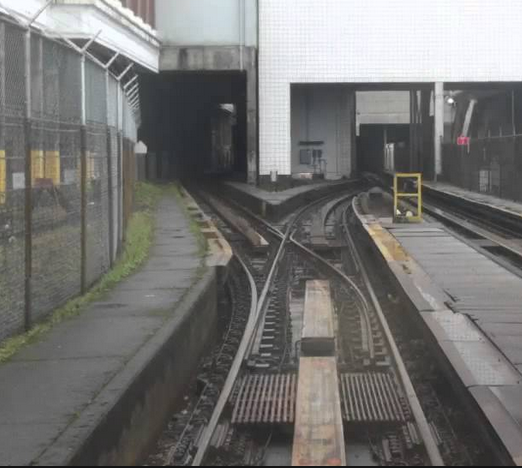
Replacing two switches should take a weekend at most, but these are new high-speed switches, which needs a lot of engineering done to the guideway for the switches to fit.
Currently the Expo and Millennium Lines use small radius movable frog switches and with the newer, longer ART/MALM cars, the switches must have a larger radius for the cars to be able to traverse the switch at a speed greater than a crawl.
This Marx, O-gauge switch gives a good example of the movable frog switch.
As the Expo Line has scores of the older switches, the replacement process will be ongoing for several years and costing a huge amount of money.
A movable frog switch on the Expo Line.
Expect significant SkyTrain delays this summer due to repair work
They’re upgrading two Expo Line track switches that were first installed over 30 years ago
SkyTrain’s Expo Line will be reducing service to and from Surrey for six weeks between June 3 to July 18. TransLink
The two Expo Line track switches were first installed over 30 years ago and haven’t been replaced – until now.
From June 3 to July 18, TransLink will be working to replace the switches which are an essential component that allows trains to be rerouted to different tracks. While the work is important, it will create a significant slowdown for commuters.
Over the six-week period, SkyTrain service will be temporarily reduced on a portion of the Expo Line because trains will only be able to travel on one side of the tracks between Scott Road and King George stations.
During the maintenance work, Surrey customers are encouraged to use Scott Road Station, as it will have the most frequent SkyTrain service in the area, and to plan for at least 20 minutes of extra travel time and crowded train cars.
The station will operate with near-normal peak service, but some trains stopping are expected to reach maximum capacity and some trains will terminate there.
Some trains will terminate at Gateway Station which will operate at 66 per cent of usual peak service, and some trains will terminate at Surrey Central Station which will operate at 50 per cent of usual peak service.
King George Station will operate at 33 per cent of usual peak service and some trains will continue there as normal.
TransLink promises additional SkyTrain staff will be on-site to assist customers at impacted stations but people are advised to look at station platform screens to ensure the train they are boarding will reach their destination.
This track maintenance work will not affect Expo Line travellers who aren’t going as far as Surrey, not will it impact the Canada Line and Millennium Line.
Flexibility is the key in today’s transit planning.
More and more, freight that used to be carried on railways, then switched to heavily subsidized trucks on heavily subsidized highways, is now goring back to the railways.
Ignoring Global Warming and climate change is a fools game, played by civic, provincial and federal politicians to the detriment of the environment. You just cannot tax climate change out of existence.
When it comes to regional transit, the various levels of governments responses are dismal. The region is spending $11 billion to extend the SkyTrain light metro system a mere 21.7 km, yet this very expensive piece of kit cannot adapt for the future, unlike light rail.
It is pure Darwin, if a species or a transit mode cannot adapt, it has a doomed future.
Light rail’s inherent flexibility enables a transit system to adapt to future needs and sadly our proprietary light metro used on the Expo and Millennium lines cannot adapt, hence politicians just do the same thing over and over again, ever hoping for different results, not realizing that different results jut will not happen.
Doing the same thing over and over again, ever hoping for different results has been defined as madness!
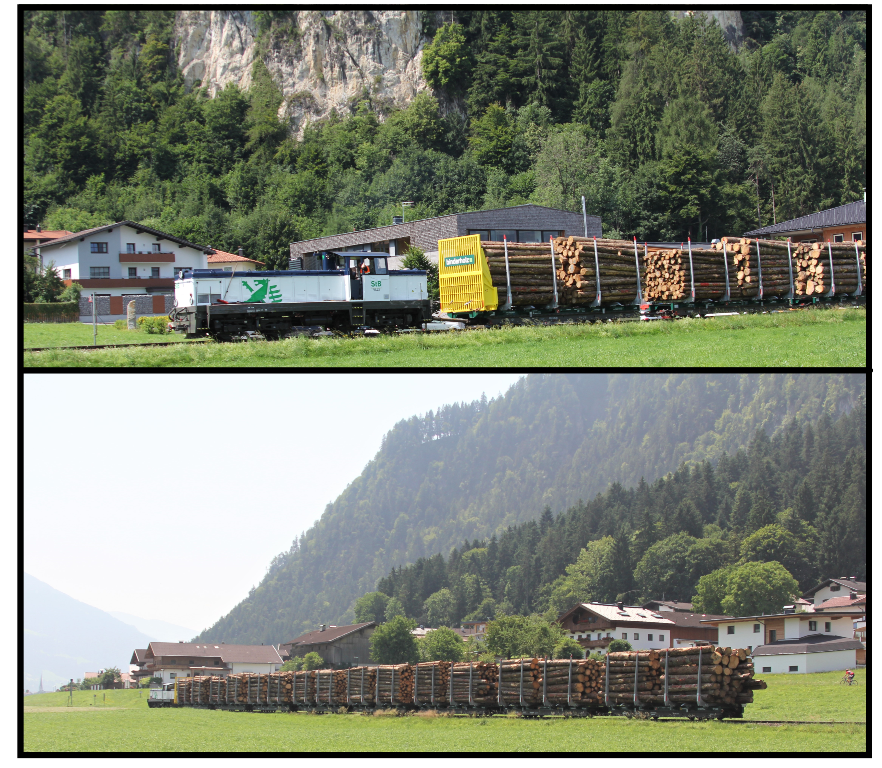
In 2014, the Zillertal Railway stopped transporting timber by means of trolleys and thus the last remaining commercial freight transport. Thousands of additional truck trips were therefore necessary in the valley. I reported on this unpleasant development in my book (1).
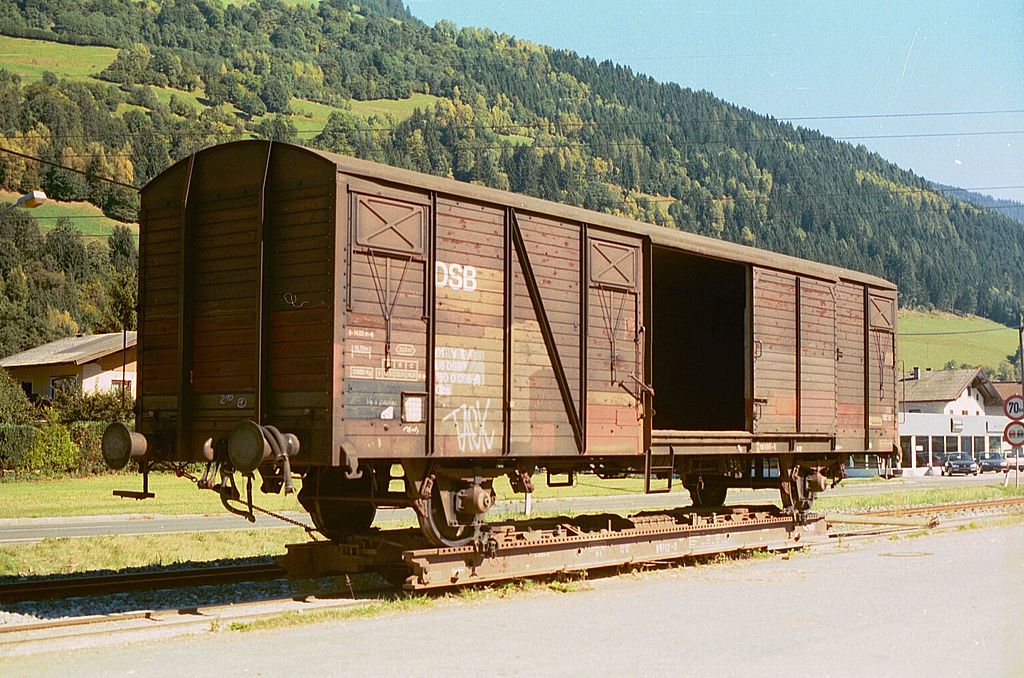
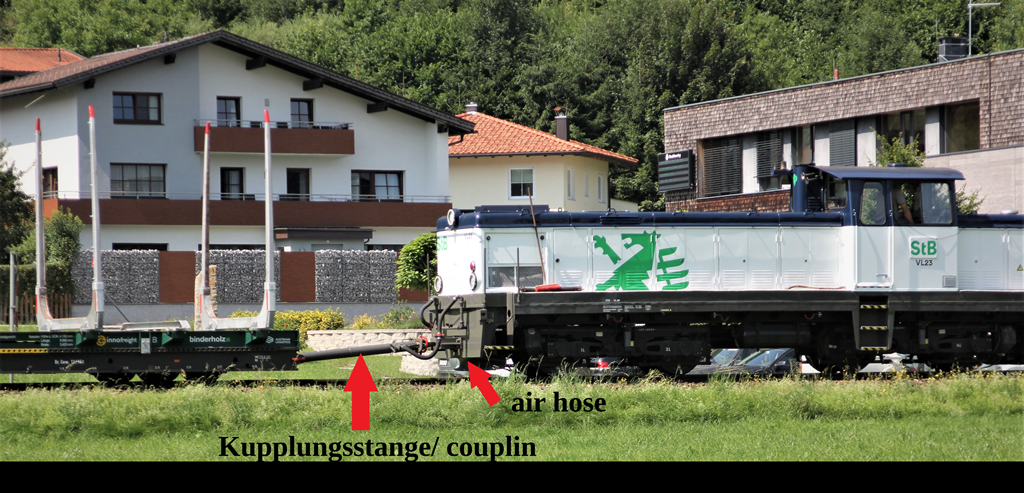
Conversion of trolleys (manufacturer Jenbacher Werke – principle of use see Figs. 2 and 3) to stake wagons. This was done through a new top frame. In Figure 4 you can also see that the coupling rods, which are indispensable for the trolley trains, are being used again.
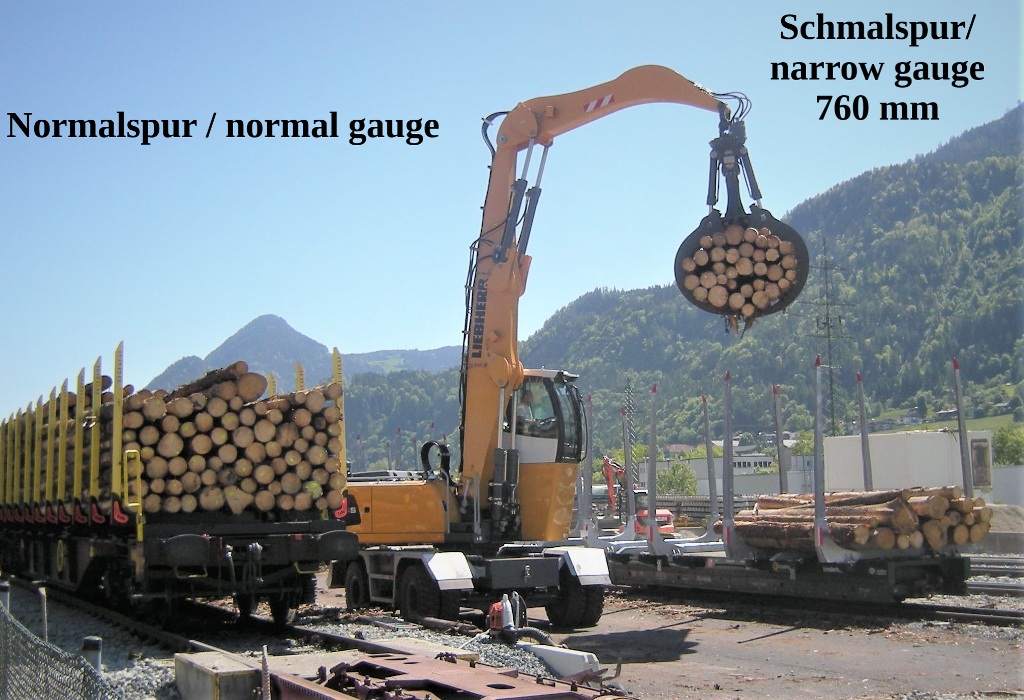
Construction of a transshipment terminal with eleven new switches, 2800 m of track [2] and a sufficiently large area for the loading excavator (Fig. 5) and for trucks. A modern loading excavator is obviously much cheaper than the time-consuming shunting work involved in rolling truck traffic.
Temporary rental of two diesel locomotives (Fig.1) until the company’s own locomotives (manufacturer Gmeinder) become available after the commissioning of the new hydrogen railcars for passenger traffic.
The freight trains, which now run three times a day, consist of eight to ten wagons and transport up to 400 t of round timber. This eliminates 20,000 truck journeys annually [2].
In addition to the direct business partners Zillertaler Verkehrsbetriebe AG and Binderholz GmbH, the federal State of Tyrol, ÖBB, Innofright Solutions GmbH Bruck an der Mur and the Austrian rail infrastructure company were involved in the project. In the future, the return journeys should be used more effectively by transporting sawn timber from Fügen to Jenbach.
A prerequisite for rail transport is an expensive infrastructure. Therefore, using them as widely as possible is a matter of economic reason. I am concerned about branch lines that see, in extreme cases, only a one-piece railcar per hour. In this extreme case cited as an example, the real great advantage of rail-bound traffic is also lost, which is the formation of trains. Before every expensive but necessary measure on the rail infrastructure, there will be a discussion of the economic and environmental justifiability, and with it the question of whether the “little bit” of rail traffic cannot also be shifted to the existing road network. A test from the point of view of environmental impact could also turn out negative, because it is essential to consider the so-called embodied energy of construction works [3].
An example of such broader uses of existing branch lines is the use of passenger railcars that can haul some freight cars (Fig. 6) or extra passenger coaches. In the case of mountain railways in Switzerland, the inclusion of goods traffic on the rack railways to car-free holiday resorts such as Wengen or Mürren is a necessity. A number of freight trains also run on other meter-gauge mountain routes, e.g. on the Rhaetian Railway, but freight wagons are also attached to regular passenger trains [1].
The Zillertalbahn uses its track network for local public transport but also for maintaining tradition in the form of the steam trains that are popular with tourists and residents alike, and now again for freight transport.
Picture Gallery (please click to open):
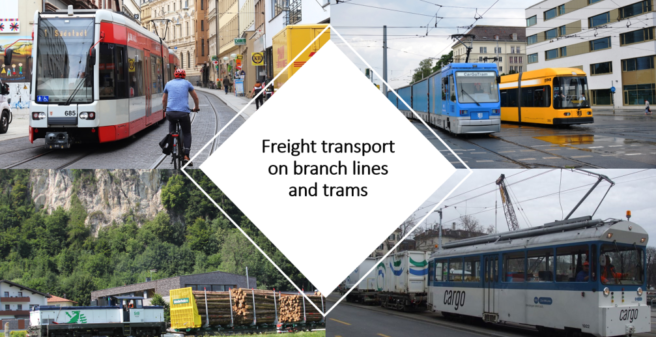
Freight trams
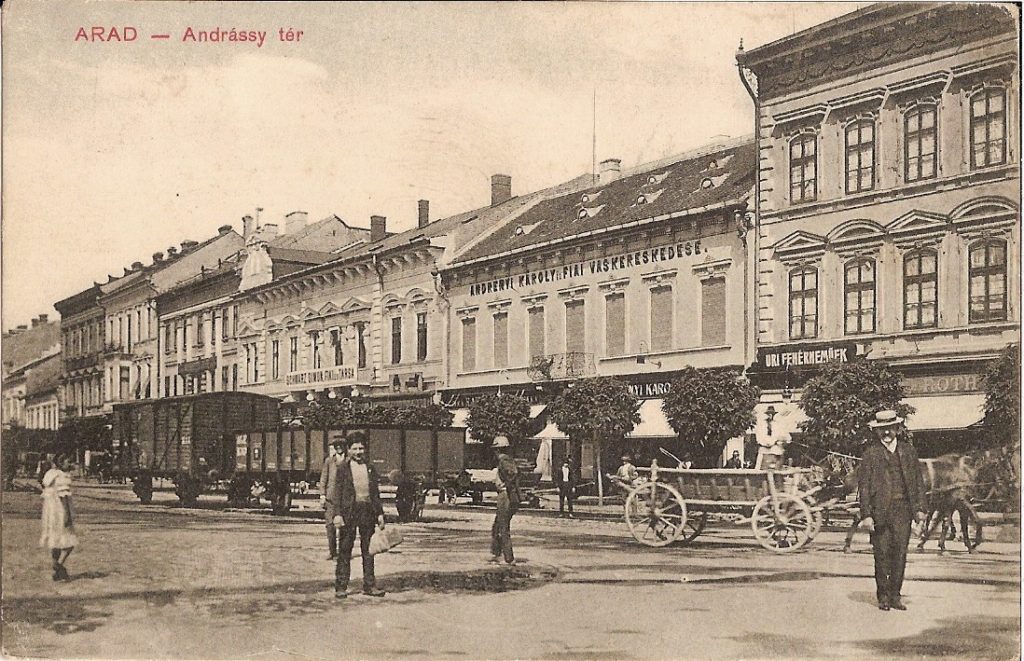
There is an interesting article on freight trams on Wikipedia [4]. Tram companies used to make their tracks available for the delivery of freight wagons. In the case of narrow-gauge networks, trolleys were also used, e.g. in Gera and Hagen [4]. The shunting trips were generally time-consuming, there were always disruptions in the timetable, so that this approach was discontinued soon after the Second World War. Figure 7 shows a historical postcard from the Romanian city of Arad.
The unsatisfactory traffic situation and air pollution in the inner cities has revived considerations in the last few years and decades to include the tram in the inner-city freight logistics. A distinction is made between the “last mile” approaches – directly to the end customer and “middle mile”. With the latter, the tram takes over goods on the outskirts or at the freight station and brings them to inner-city distribution centers, where they can be handed over to e-cars, cargo bikes or the like. The City Cargo Tram Amsterdam is an example for the middle mile approach. The classification into the two categories is sometimes difficult and is not necessarily handled uniformly.
A research report [5] presents in its chapter 3.1. a comprehensive overview of experiments and studies dealing with such use of the tram infrastructure. Unfortunately, many good, publicly funded projects did not succeed in the long term and were mostly abandoned for financial reasons (e.g. Güter (Freight)- Bim Wien and City Cargo Tram Amsterdam). In chapter 5.2. different types of transport are compared: Separate goods trams, partial use of the trams for goods in low-traffic times and regular trams with trailers. The advantages and disadvantages are compared. Notably, the last two variants do not require any additional drivers. There is thus a similarity to the passenger trains with goods transport that were often used in the past on the branch lines.
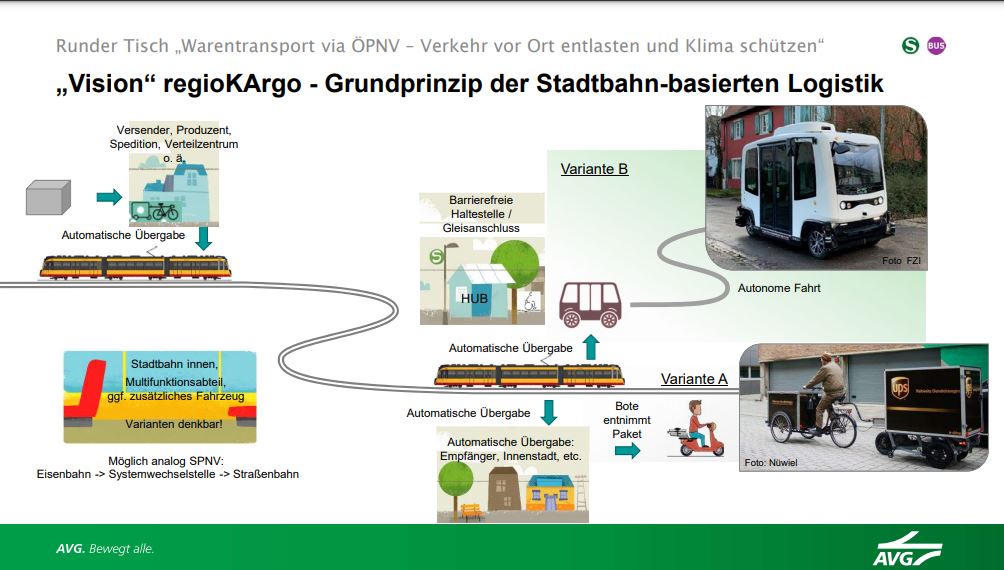
The Karlsruhe Institute of Technology (KIT), the Albtal-Verkehrs-Gesellschaft (AVG), the FZI Research Centre for Information Technology and other partners are developing a vehicle technology and logistics concept for a “goods tram” based on a Karlsruhe dual-system light rail system and are investigating the effects on road and rail traffic. The tram-trains connect the region to distribution centers. Thus, a middle mile concept is being pursued. A first adapted high-floor tram-train is expected to run in 2022. LogIKTram is part of the overall regioKArgo initiative, whose partners want to research and implement new forms of cross-modal goods loading and delivery transport.
The joint project LogIKTram, in which both the AVG and the KIT are leading participants along with several other partners, aims to develop a logistics concept and an information and communication technology (ICT) platform for future freight transport in tram and light rail vehicles.
As part of LogIKTram, the researchers now want to go one step further and develop a logistics concept and an information and communications technology (ICT) platform for future freight transport in streetcar and light rail vehicles.
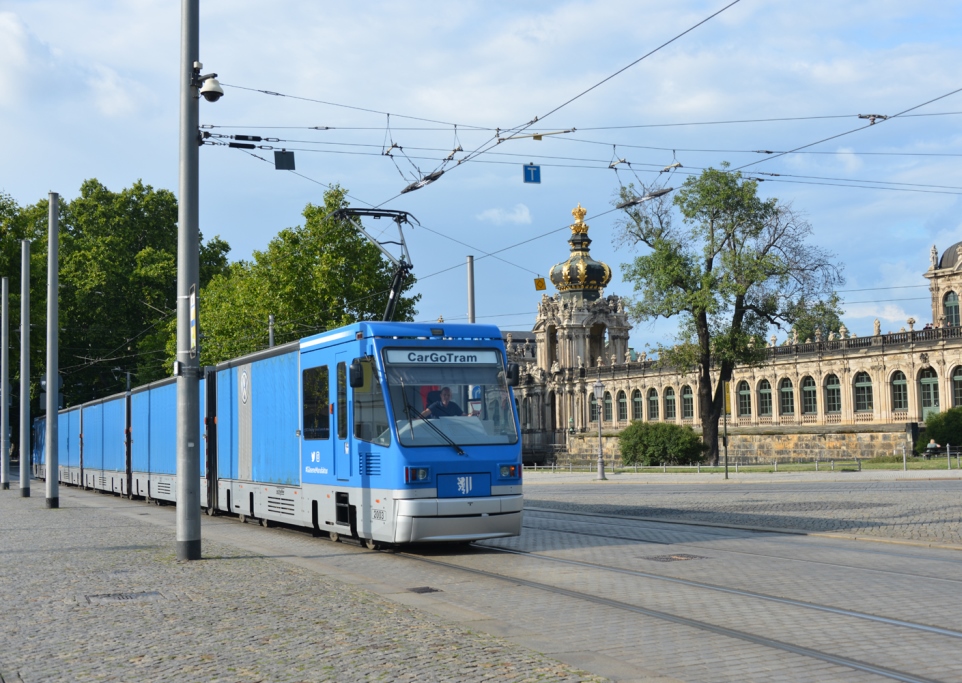
From 2001 to 2020, the flow of materials to the “Transparent VW factory” at the Great Garden in Dresden was carried out by means of a freight tram CARGO Tram (manufacturer Schalke GmbH-Fig. 8). This should relieve the city center of additional truck transports. A product change at VW ended this freight traffic.
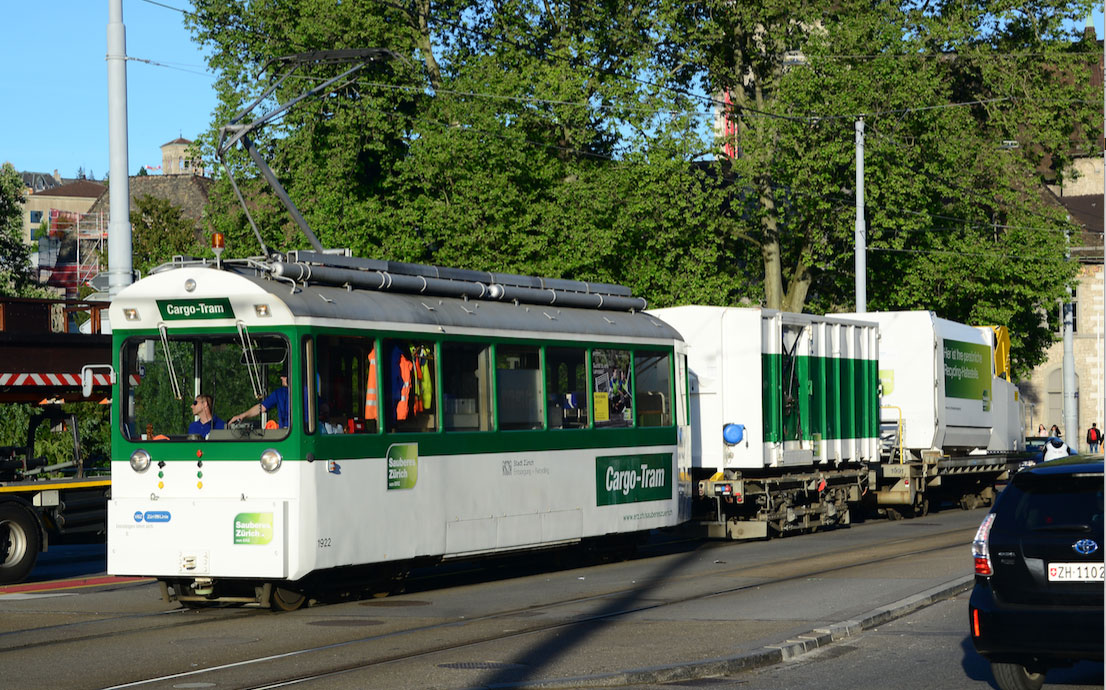
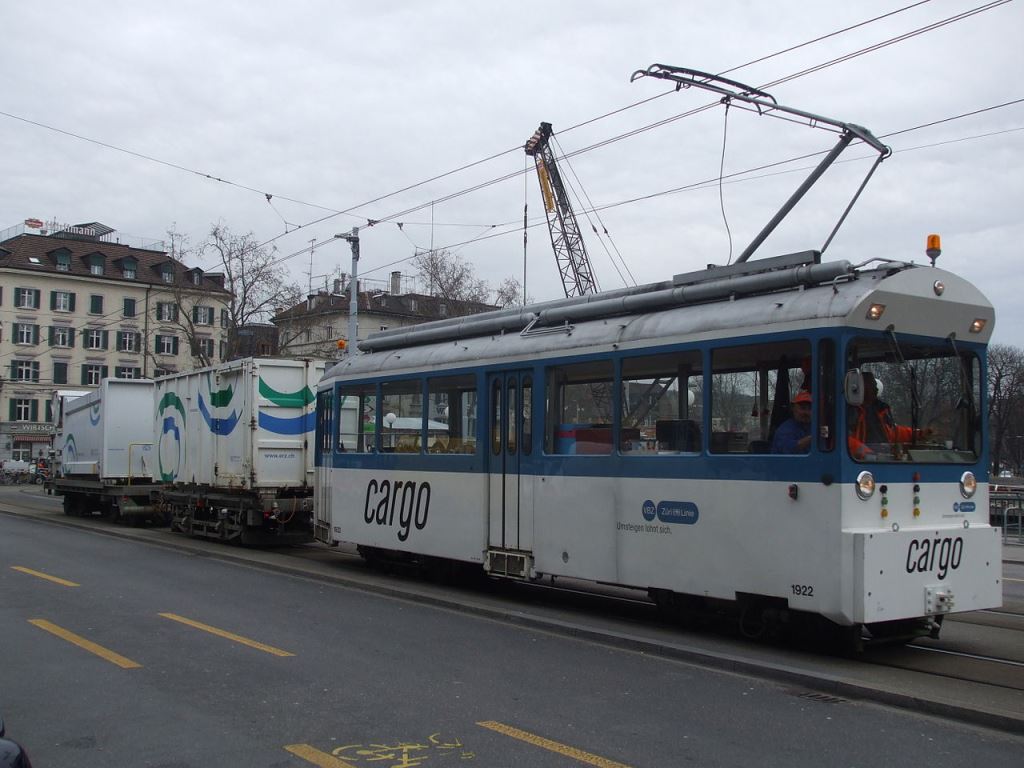
In Zurich, there has been a bulky waste collection campaign known under the casual name of the Kehricht (rubbish) Tram since 2003, during which certain stops of the network are regularly called at by the CARGO and the E-TRAM. There, the population has the opportunity to dispose of bulky waste and electronic waste directly on the attached car. According to my research, it is the only currently practiced inner-city freight transport solution. It follows the “first mile” principle, which, however, comes very close to that of the “last mile” because of the direct customer contact.
The transport of round wood takes place in the Zillertal again on the train! Following on from this success, the importance of using the rail infrastructure as diverse as possible, i.e. also for freight transport, is explained. This idea also leads to the freight tram. In some large cities in Europe, air pollution limits are permanently exceeded, which shows the need of action in various ways. The trams can also take over freight transport.
The Urban Transport Magazine offers the opportunity to discuss the topic raised through comments. We would like to receive suggestions in this way and / or learn about other application examples, plans and initiatives.
Literature (only German)
[1]Iwainsky, H.: Von der Kunst, einen Zug zu bauen. Eigenverlag, Jenbach 2018
[3] Iwainsky, H.: Zu einigen Aspekten der Energieeffizienz und des Umweltschutzes. ZEV rail 144(2020) S.19-25
[4] Güter-Straßenbahnen- Wikipedia 2021
[5] Schocke,K.O.; Schäfer,P.; Höhl,S.; Gilbert, A.: Last Mile Tram – Empirische Forschung zum Einsatz einer Güter-Straßenbahn am Beispiel Frankfurt am Main. Forschungsbericht der Frankfurt university of Applied Science 3/2020 – abgelegt im Internet.
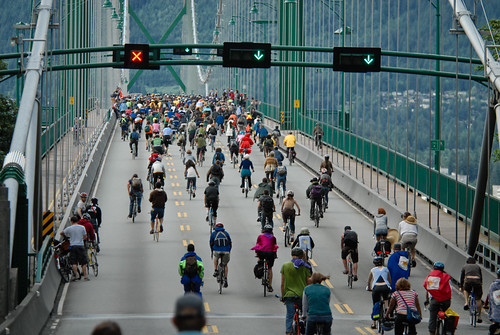
Critical mass blockading the Lions Gate Bridge in pre covid days.
Well, it was bound to happen, good old Zwei has been banned by the on line newspaper the Tyee, because he questioned the “Left’s” sacred cow, the bicycle lobby, by mentioning that the cycle lobby has done great damage to future regional transit planning.
I did not use foul language, nor did I threaten anyone but stated an opinion, but the author of the piece as well as the Tyee editorial board saw fit to ban my comments and ban me from commenting.
Now, I have sent people to “spam”, mainly for the tiresome memes of “SkyTrain good, LRT bad” sort of thing. I was banned for an informed opinion.
Zwei picked up a badge of honour being called a “Curmudgeon Laureate”, with postings asking questions about a whole range of issues.
How have we come to this point?
After many years watching the bicycle lobby in action, including their evil twin, the “rails to trails” folks, they only one agenda and that is bike lanes and they do not care an iota about the after effects of bike lanes.. This small but well choreographed and vocal group of people, put the fear of god into politicians and the cycle lobby’s PR team are superb with their Orwellian message of “bikes good, cars bad”.
The Critical Mass group especially love blocking traffic to bring attention to their cause. Sadly, they have become so full of themselves, they are embarking on another assault of politicians and motorists.
Local politicians do what they do best, politic and have seduced the bicycle lobby to support SkyTrain and subway expansion and in turn, the cycle lobby will get bike lanes. Of course, the bad old motorist will pay the price in gridlock. Kow-towing to the cycle lobby is a win/win for politicians as they love the 10 second soundbites for the evening news and ever important photo-ops at election time because it is both easy politicking and cycle lanes are very cheap when compared to other transit infrastructure.
Sadly it puts long term transportation planning into chaos.
By seducing the cyclists with the promise of bike lanes, the region is expanding the politically prestigious SkyTrain light metro system, to a tune of $11 billion to build a mere 21.7 km of light metro that will not take cars off the road and just may do the opposite.
For that opinion, Zwei has been banned.
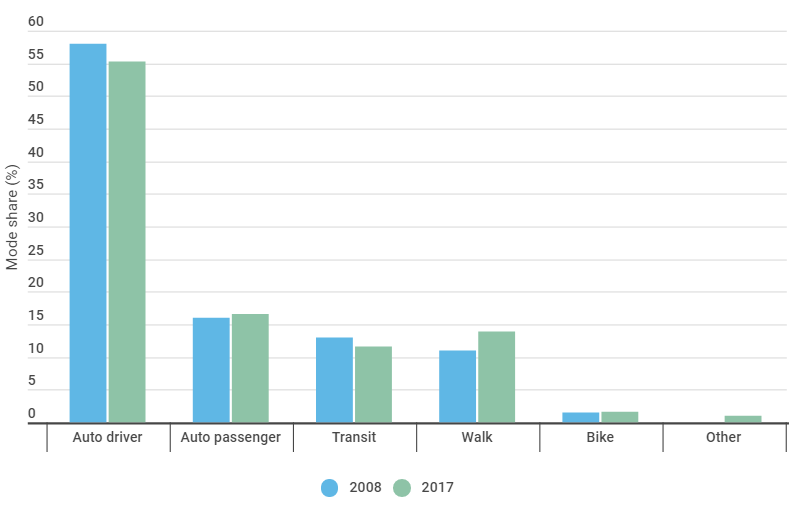
From Metro Vancouver, mode share of commuters. Please note the percentage of those cycling has not perceptively budged. Post Covid the trends are continuing.
This problem has been around a long time, small wheels means more revolutions and more wear of the track’ correlated rails; and a strict regimen of rail grinding and preventative maintenance of the steerable axle trucks.
This costs a lot of money and TransLink has never been good with maintenance issues.
TransLink is near broke and is stealing from the maintenance budget to pay for other costs. It is bit of a shell game.
This is the second time in 36 years that the rail has been replaced and the steerable axle truck’s issues also bridge over to the ART/MALM cars.
The big problem, of course, is that the Expo and Millennium line’s are proprietary railways and when proprietary railways age, costs rise dramatically, but maintenance budgets do not.
The “SkyTrain” chickens are coming home to roost.
Burnaby residents say screeching SkyTrain is unbearable, TransLink says it’s working on it
Residents living near the SkyTrain in Burnaby say the noise is particularly bad there. The Expo Line, seen here, was built for Expo 86 and is nearly 40 years old. THE CANADIAN PRESS IMAGES/Bayne Stanley
TransLink says it knows some of its SkyTrains, especially on the Expo Line, are noisy but it is committed to reducing noise as much as possible.
After a letter to the editor of the Burnaby Now newspaper generated more than 150 comments on a Reddit thread, TransLink told Global News it will be implementing recommendations put forward by an independent consultant to deal with the matter.
According to the letter, the curve just west of the Edmonds station, on the Expo Line, is the worst for noise pollution.
According to a report conducted in 2018, TransLink stated it is implementing a number of noise-mitigation techniques.
These include replacing the rail with harder steel, improving rail grinding techniques to reduce noise and adding rail friction modifiers and rail dampers throughout the system.
“TransLink is committed to reducing SkyTrain noise for residents as much as possible,” the organization said in a statement. “We are implementing recommendations put forward by an independent consultant who examined ways to mitigate noise on the SkyTrain system.”
The Expo Line is nearly 40 years old, having been built for Expo 86, and TransLink said trains will always have some level of noise.
In Austin Texas, the often repeated claim that trams cannot climb steep grades is being cleverly used to derail a new light rail line.
The same argument was used successfully by TransLink, the City of Vancouver and the Ministry of Transportation to discredit any proposed LRT/tram line in Metro Vancouver.
In the early 2000’s, the Vancouver city Engineer and the then BC Liberal Minister of Transportation, Kevin Falcon used the argument to discredit the use of LRT on what is now called the Canada Line by saying LRT could not climb the 300 metres of 7% grade from Broadway to 12th Avenue.
Both government and the mainstream media often report this bit of fake news, that the tram or streetcar cannot climb steep grades. This lie has been repeated so often that the public now believe it.
The following is from a Bath (UK) group, advocating for the return of the tram.
Can trams climb the steep gradients and hills in Bath (and in winter)?
From Prof. Lewis Lesley:
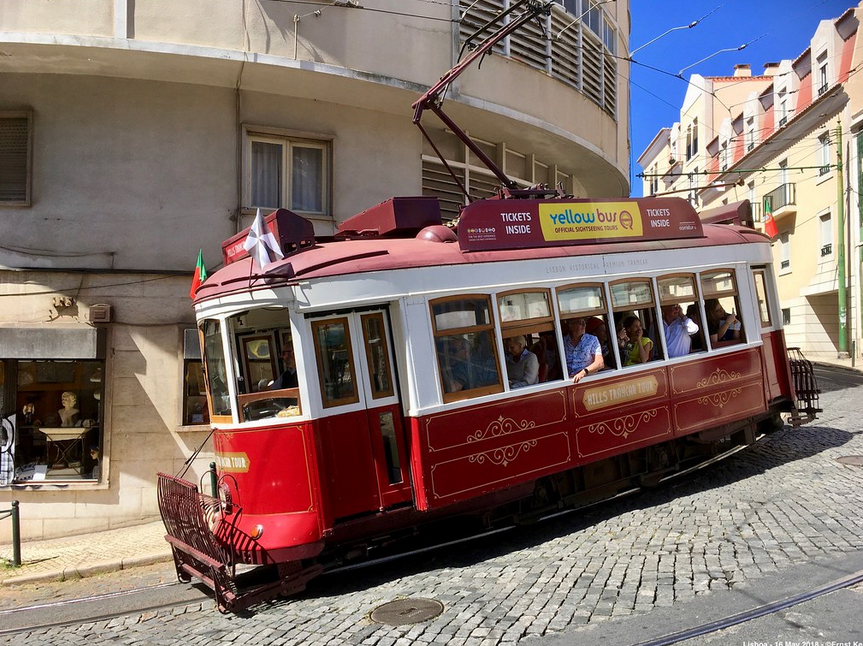
See: https://bathtrams.uk/can-trams-deal-with-baths-hills-hill-climbing-capability-of-trams/Maximum hill climbing, and braking down hill is not dependent on vehicle weight but the number of driven axles and the control system used. The steepest tramway with only wheel/rail adhesion was in Montreal (14%), which the replacement buses could not manage in winter. As a number of you have pointed out Lisbon has 12% gradients with all axle powered trams, coping with in all weathers for over 100 years. Trams used to climb the steep hills of Bath until 1939. The steepest gradient in the UK is Sheffield 10%, with all powered axle trams operating up and down safely since 1995.
Kind regards,
Prof. Lewis Lesley BSc, AKC, PhD, CEng, FRSA, MICE, FCIT, MTPS
Dear All,
Once you have measured the gradient, you can check against the steepest gradients trams operated purely on wheel/rail adhesion.
Montreal (until 1966) 14%, Saarbruchen (until 1965) 13%, Lisbon (currently) 12%, Sheffield (currently) 10%. The only constraint is that all wheels have to be motored. It is a simple calculation to work on the available adhesion on specific gradients, available to overcome gravity (uphill) and braking (downhill). Trams will have additional (emergency) brakes to provide 0.3g braking rates on the level and so available for down hill application. Magnetic track brakes are the most usual additional system, with shoes magnetically attracted to the rails (friction shoe/rail) and enhancing the effective mass on wheels/rail.
Lewis
13.8% grades in Lisbon Portugal.
………………………………………………………………………………..
From Clive Hinchcliffe:
I repeat yet again there are trams available that are rated for 12% in all weathers.
I have personal been on trams in Lisbon starting fully loaded in a rain storm on 1 in 6 hills that buses have problems with.
The correct driving technique coupled with traction control system can overcome any issues.
In some Swiss cities they have trams starting on 1 in 5 inclines in snow storms.
Coupled with the fact that trams used to operate in Bath I can foresee no issues.
Time to put this to bed until there is a full feasibility study…..
Best wishes.
Clive Hinchliffe
………………………………………………………………………….
From David Walmsley
I asked a contact in Lisbon about gradients. He works for the public transport company Carris. He said the maximum gradient in Lisbon is 14.5 %, not counting funiculars, and the sharpest curve is 11m radius. And it works.
David Walmsley
……………………………………………………………………………………………….
From Adrian Tuddenham – electrical engineer:
The big advantage of trams in ice and snow is that only the width of the
track surface ( 2 or three inches) needs to be completely cleared, not the whole road width.
This is something trams can easily be equipped to do for themselves; Bath
had a ‘snow broom’ car to keep the tracks clear (as did most cities with
trams).When the M.O.D. had an important base at Lansdown in the 1960s or ’70s,
it was considered vital that Lansdown Road was never allowed to become
impassable. Under-road heating pads were installed on the vulnerable
bits. I never heard of them being used and I don’t suppose anyone
remembers them now. They heated the whole width of the road, which was
very wasteful, and they were vulnerable to damage by movement of the
surface under heavy traffic.Compare that with trams, where only the rails need to be heated (if this
system is chosen) and traffic will not damage them. No special equipment
is needed under the road because the heating current can be passed
directly through the rails themselves.
Adrian Tuddenham
Just to put the cat among the pigeons it seems it can be done and is done:
Interesting from Stadler
“and to work on tracks with a maximum gradient of 10%.” (Sheffield)
“In addition, the Citadis X05 for the Urban Community of Caen la Mer can climb slopes with gradients of up to 8% and has standardised, proven and more accessible components.”
In general, it advisable to minimize grades on any new transit system as much as possible. However, where necessary (to access critical sections of a city, to contain costs, or for other reasons), LRT can handle grades as steep as 12% (depending on vehicle design, motor power, and other technical capabilities). Here are some examples:
Europe
· Sheffield – short section on 10% grade, and others at 9%. Articulated tramcars operate without any problem on these grades, on a daily basis. All axles on the cars are powered to enable operation on such gradients.
· Nordhausen – the tramway, located in this small city on the south side of the Harz hills range, negotiates a 9.8% grade in Stolberger Strasse for about 500 meters.SiemensCombino tram/train
USA
· Boston – C-Commonwealth Avenue streetcar line has a gradient of more than 8%.
· Portland – MAX LRT system has a 7% grade on the ramp leading from Second Avenue onto the Steel Bridge.
· Little Rock – River Rail streetcar line between Little Rock and North Little Rock climbs a gradient of 7.8% on the approach to the Main St. bridge over the Arkansas River.
· San Francisco – grades of 9% on the J-Church and L-Taraval streetcar lines of the Municipal Railway.
· Pittsburgh – Route 52-Arlington has a grade of 10%, routinely negotiated by modern Siemens and CAF articulated interurban-type railcars.
3. Tokyo – Metro pop. – 40.7 mil. [Trams] (subway)
4. Copenhagen – Metro pop. – 2.1 mil. (Metro) Trams planned with the first line opening in 2025
5. Stockholm – Metro pop. p 2.5 mil. [Trams] (RT Metro)
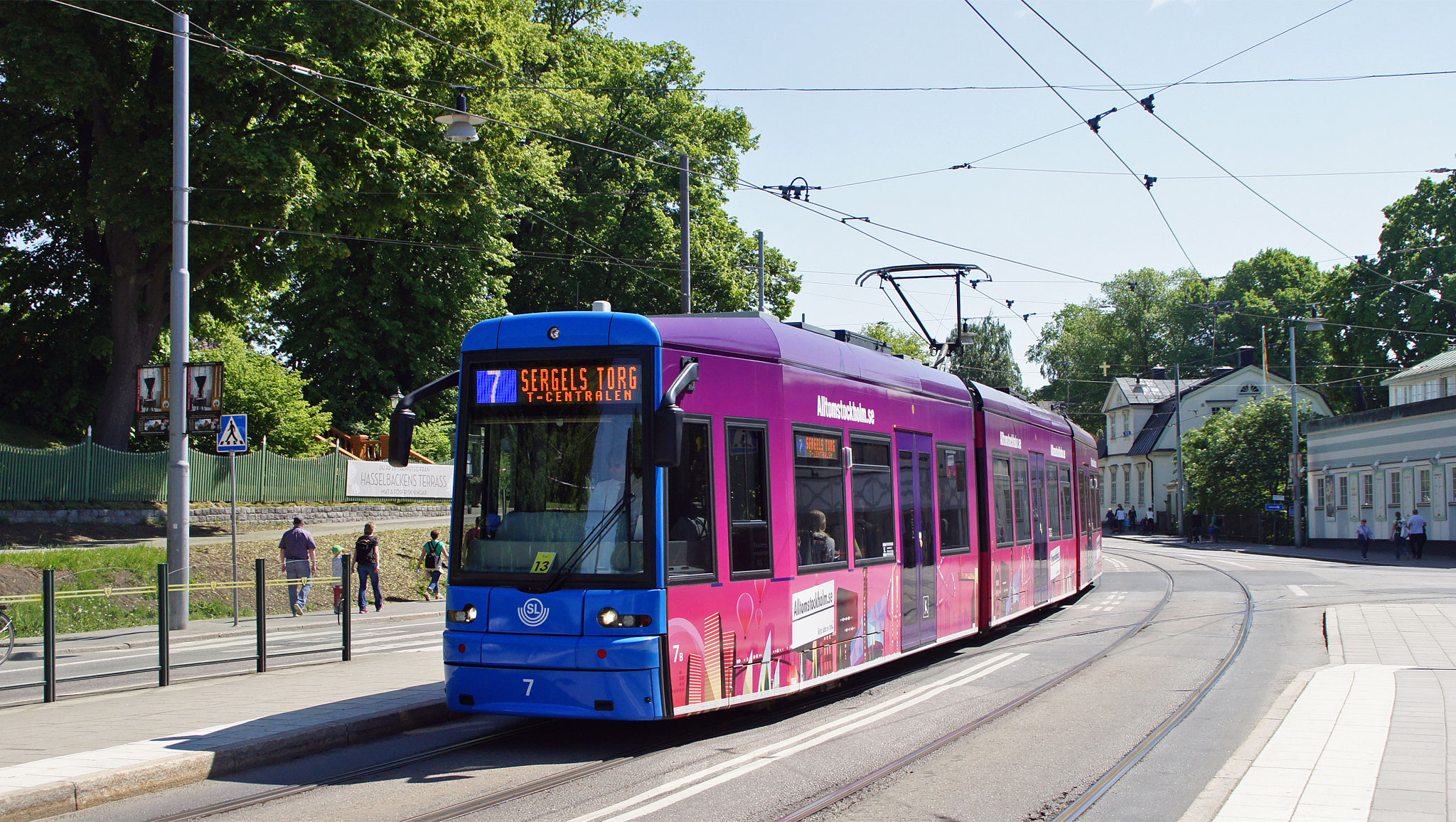
A tram in Stockholm, offering Metro service at a fraction of the cost.
6. Singapore – Metro pop. – 5.6 – (MRT)
7. Hong Kong – Metro pop.- 7.33 mil. [Trams] (MTR)
8. Taipei – Metro pop. – 9.07 mil. (MRT)
9. Shanghai – Metro pop. – 44.4 mil. [Trams] (Metro)
10. Amsterdam – Metro pop. – 2.5 mil. [Trams] (Metro)
11. London – Metro pop. – 14.2 mil. (LUL LRT-DLR & Tramlink)
12. Madrid – metro pop. – 6.8 mil. [Trams] (Metro)
13. Edinburgh – Metro pop. – 901,000 [Trams]
14. Paris – Metro pop. 19 mil. [Trams] (Metro)
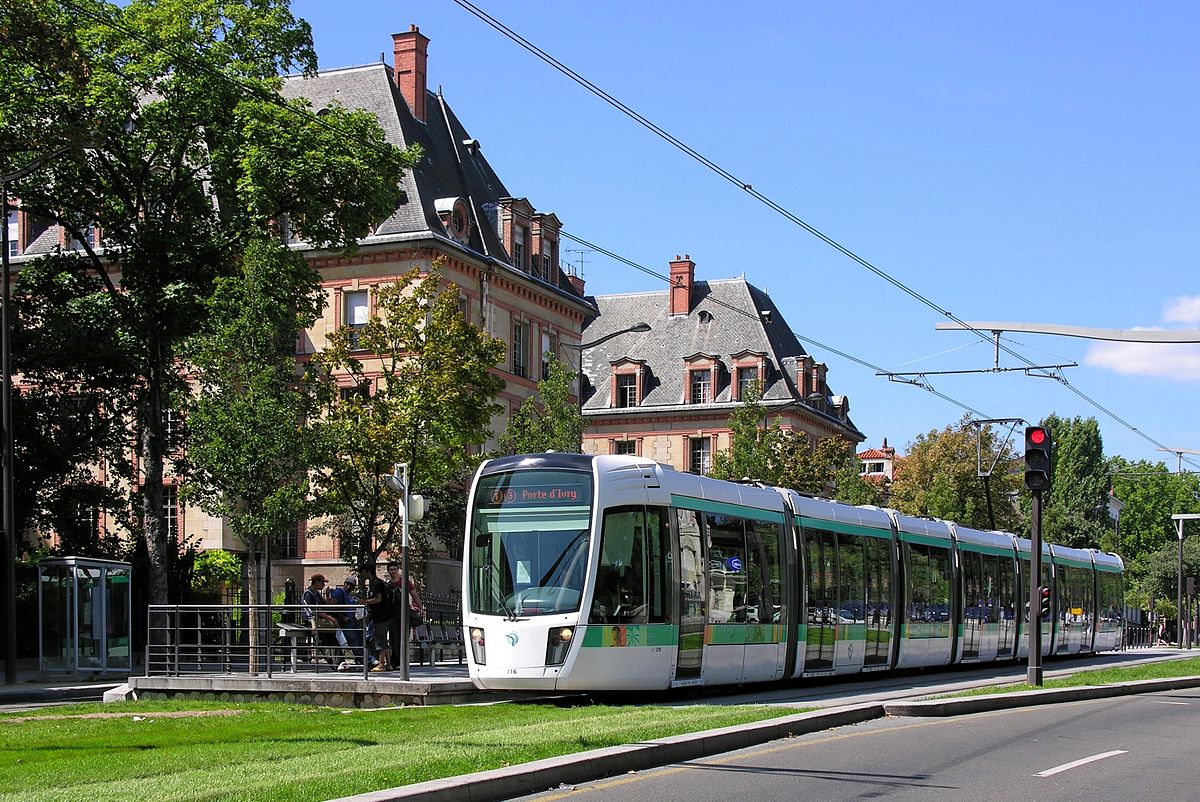
A paris tram transitioning from on-street operation to a dedicated and lawned rights-of-ways.
15. New York – Metro pop. 19.5 million – (subway) Trams being planned
16. Montreal – Metro pop. 4.2 million – (Metro) {Light-Metro}
17. Chicago – Metro pop. 6.8 million -(L – elevated metro)
18. Beijing Metro pop. 21.9 million – [Trams] (subway)
19. Mumbai – Metro pop. 18.4 million – (Metro)
13 of 19 cities have Trams
2 of 19 cities are planning Trams
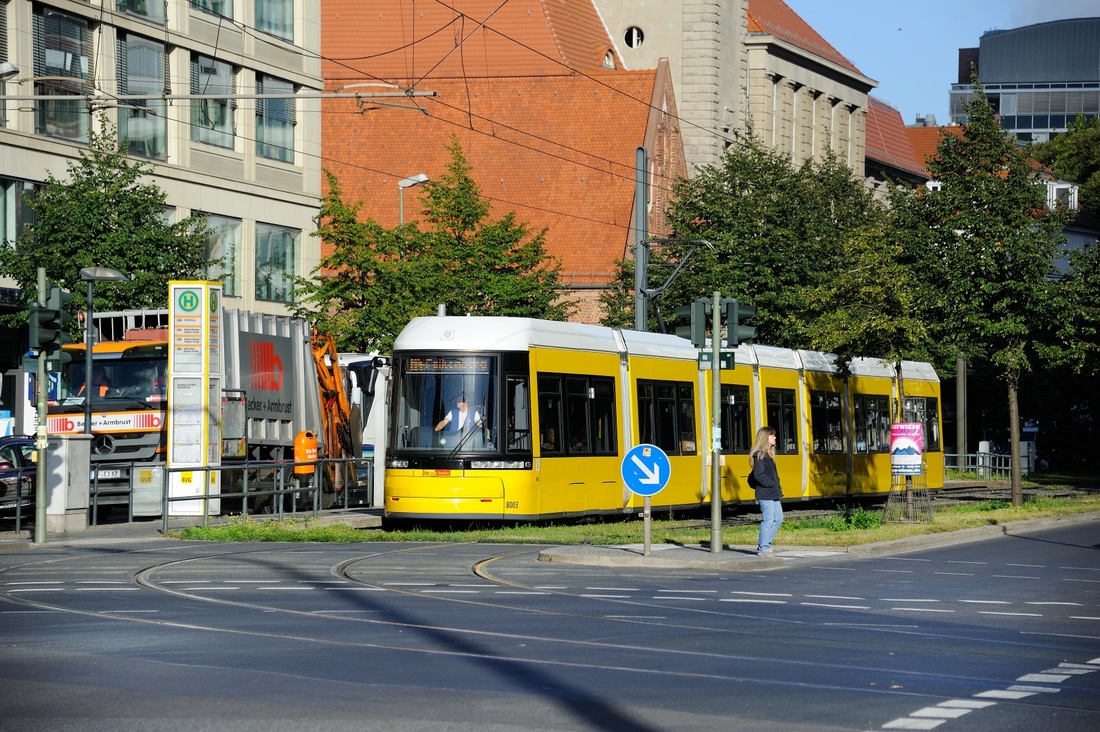
See how easily a Berlin tram transitions from being light rail on a dedicated right-of-way to a streetcar on a street. This flexibility of service has enabled simple trams to compete against very expensive light and heavy metros.














Recent Comments