While local politicians squabble about expensive transit planning and gouging the taxpayer to pay for multi billion dollar transportation vanity projects, economic and user friendly TramTrain construction and operation continue to increase.
A Langley to downtown Vancouver in 50 minutes train service could be in operation by the start of 2020!
TransLink’s and the Province’s much ballyhooed Expo Line extension to Surrey really doesn’t offer the transit customer very much, except for a 60 minute ride (if their are no glitches) on a dinky and crowed SkyTrain car to Vancouver.*The Rail for the Valley TramTrain concept could do the trip from Langley (200th Street) to Vancouver Central Station in 50 minutes, including two stops at Braid St. and Willingdon on the West side of the Fraser River and the 10 mph speed restriction on the Fraser River rail bridge.*The Leewood/Rail for the Valley Study time matrix shows that a 23 km. journey from 200th Street in Langley to Scott Road Station, including four stops, would take 22.5 minutes and an estimation of the 22km. trip from Scott Road to Vancouver would take 27.5 minutes – 50 minutes; a few minutes faster for a much cheaper cost.*The cost, in 2023 , $1.5 billion, certainly looks more affordable than the $4.5 billion to $5 billion Expo Line expansion to Langley especially if one can get to Vancouver faster and in more comfort.The Stadler GTW light rail car could use city streets and operate as LRT if need be.
Thales has signed a $1.47 billion contract for re-signalling the Expo and Millennium Lines but with capacity only increasing by 2,500 pphpd to 17,500 pphph for the Expo Line and for an astonishing increased maximum capacity of only 7,500 pphpd for the Millennium Line.
A maximum capacity of only 7,500 certainly for the Millennium Line tells me that TransLink is not expecting much of ridership for the Broadway subway!
There is still no hint of the much needed electrical upgrade to both MALM Lines, nor the expensive maintenance needed for the leaking Dunsmuir Tunnel, hints at the fact that Translink’s ridership predictions are mostly stuff of nonsense.
Zwei’s estimate of $11 billion total investment for the 21.7 km Expo And Millennium Lines expansion has not been seriously challenged by TransLink or the Mayor’s Council on Transit.
I believe, after the next provincial and federal elections, serious funding problems will hamstring operation with Metro Vancouver’s light metro lines compounded by the fact that Bombardier Inc. no longer owns the proprietary railway, giving politicians little incentive to fund the obsolete light metro system..
From March 2017………….
Why can’t TransLink be honest with its customers and the taxpayer?
Like B.C. Transit before, honesty is not in TransLink’s lexicon, why and why can’t TransLink be honest about SkyTrain?
The answer lies with he fact each SkyTrain Line has been a political decision, with the final decision made by the Premier of the day. Thus SkyTrain has become a political transit system and not a customer oriented transit system.
This continues today with SkyTrain being built to the needs of the government’s friends, including concrete manufacturers, land developers and land speculators.
The federal government loves ALRT/ART SkyTrain because it financially helps two political friends, Bombardier Inc. and the SNC Lavalin as they hold the patents to the proprietary ART system.
By being a political transit system, it is imperative that the public sees it as good investment, as the SkyTrain Lobby tries to do with “man of straw” arguments, “alternate facts”, and pure “fake” news.
Funny then, no one builds with ART (ALRT has been made redundant) and only seven ICTS; ALRT; ALM; ART proprietary light metro’s have been built, with one, the Toronto ICTS Line to be soon torn down because it is “life expired”.
Mr. Cow, who is a transportation professional from Ottawa, has been upfront with honest commenting on our transit scene. We may not see eye to eye on some subjects, he he is a professional and deserves to be listened to.
SkyTrain has some very expensive issues to rectify before it can increase its capacity, something that TransLink is keeping very quiet about. So much so, that I call it dishonest because what renovations needs to be done to the ALRT/ART system, needs to be done before a Broadway SkyTrain subway is built!
As TransLink’s utterly dishonest planning process continues, abetted by Vision Vancouver and the SkyTrain Lobby, the truth is leaking out and it is very bad news for the taxpayer, which in turn, is very bad news for the sitting Premier.
From Mr. Haveacow, with some slight editing.
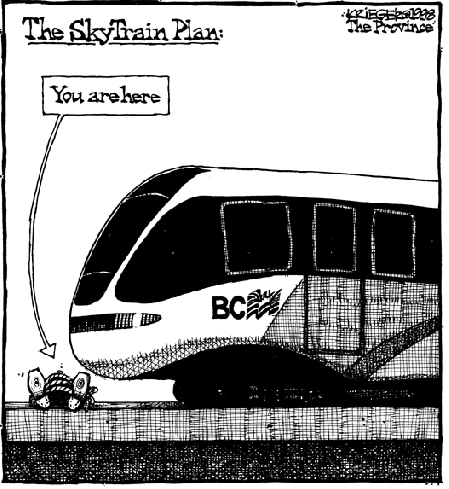
This cartoon is from 1988 and in 20 years, nothing has changed!
I hate to be the s*** disturber here but many of the needed upgrades are just not going to happen for the Skytrain Network. Currently according to Translink the Expo Line maxes out at around 15,000 passengers/hour/direction. A 75 Second headway is possible but Transport Canada would have to sign off on quite a few improvements before that can happen. The report you mentioned, although sounds exhaustive, is really meant for public or political consumption. Its not a real professional upgrade plan in any serious form. I know after talking with the head of operations during our little tour of the SkyTrain a few years ago, he outlined possibly hundreds of individual upgrades that would be needed. The reality he argued is that, the people who run TransLink really don’t want to implement these upgrades unless a massive wholesale tear-out and tear down from the bottom up is approved and considering the state of transit funding in BC right now, its not likely to occur. Here is a few things off the top of my head that Transport Canada said must be done before any service improvements occur on the Skytrain network from their current operating regime of 109 second headway’s.
1. Translink has to upgrade the electrical carrying capacity of the system, by either adding many new electrical transformers and or improving the others that are already there dramatically. The current handling capacity of the system is the prime limiter right now in regards to increasing passenger capacity. The cost is around $500-800 million, that also includes upgrading the existing 3rd rail power cable connections and adding new ones. Major upgrades are needed to the electrical panel control system in many stations and work is only slowly occurring on this front. At current rate work is progressing, it will take 12-15 years before they are complete. There also has to be a major master electrical panel upgrade so that it can be accessed in many places, right now there is only 2 master panel access points. By the way, it was the short circuiting of the master electrical access panel located at the commercial drive station by a worker using a non insulated screw driver when doing work for connecting the Evergreen Extension in the summer of 2015, that caused one of the large system wide, day long service interruptions on the Expo and Millennium Lines.
2. The Expo Line’s signaling system needs upgrading and many km of cabling needs replacement and or wholesale upgrades. Much of this cabling is 30+ years old and is desperate need of replacement. Many of the signal units are not working up to specs anymore. They are safe, but they need to be replaced entirely before a 75 second headway is possible.
3. Many of the turnouts (switches) on the main parts of the Expo Line need to be replaced with high speed models not the low to medium speed turnouts that are presently there. The turnout control units will also most likely be needing replacement as well before higher service frequencies are possible. The replacement costs can be excessive if they are not done in a pre planned way. Each turnout conversion can take 3-6 hours per turnout per crew. It is also required to switch out the existing turnout tower and control unit. Keep in mind just one double crossover track area has 4 turnouts. Then the double crossover track centre module (the place where all the tracks cross) will need replacement as well. These can take 5-6 hours by themselves and are very expensive and tricky to switch out. One of the reasons many new LRT and Rail rapid transit systems are reluctant to use double crossovers is the high cost of maintenance and their sensitivity to damage when heavily used.
4. As per an earlier post, the track grinding regime at Translink needs to improve especially on high traffic parts of the system. Translink used to have an asymmetrical grinding profile needed to stop the excessive wheel damage and squeal that is common with the Skytrain system. It was abandoned because it was too troublesome to maintain and continue implementing. Your maintenance staff didn’t like the extra work and Translink’s management didn’t like the bother of having to schedule and pay for the time consuming work. However, when you stopped doing it your maintenance costs went up and stayed there. I know this because the company that created the rail grinding regime is staffed by some school friends of mine and they were going to sue Translink at one point over this issue. They decided not to due to cost but if frequency of service is going to increase something better be done or maintenance costs will get even higher.
5. Many platform and station capacity upgrades are needed because the existing system just doesn’t have enough capacity, especially at certain key stations. There is very little money for this work but they appeared to be ready to start on one or two stations. They were the last time I was there anyway. I don’t believe any of this work has started yet though. (Zwei replies: Evidently a few stations, including Main Street and Metrotown have been renovated or are being renovated with longer platforms and more entrance/exits)
6. The last Transport Canada Report that was issued when Translink was allowed to operate at 109 second frequency of service, noted that, Translink did not have enough operating funding to increase peak hour service without having to cut weekend and late evening service. This was a great concern to them. They were essentially robbing Peter to pay Paul. They also noted that without an overall increase in maintenance and operational spending as well as other non sexy operational upgrades, any future service upgrades would not be possible to be considered. The age of the Expo Line was also concerning in that, the line could as it ages, suffer from a “block-obsolescence” in many operational areas and operating components, unless major funding increases for maintenance and equipment upgrades was allowed.
7. As Zwei mentioned before there is no budget to upgrade the Skytrain’s aging concrete above grade right of way between the stations. The current track network configuration is really outmoded and needs upgrades, which is also expensive and extremely time consuming. This will require weekend and or weekday closures for extended periods of time to implement these improvements.
In fact, many of these upgrades I mentioned will require large portions of their respective lines to be temporarily closed during weekday or weekend regular operating hours.
TransLink has a problem, overall decline ridership on its transit system and resent assaults and a murder on the bus and light-metro system is not helping transit customer confidence.
TransLink must adjust accordingly and is by cutting bus service.
There have been cutbacks to 50 bus routes in Vancouver, North Shore, Burnaby, New Westminster, Richmond over the last 3 years. ( There have been very few improvements, some that are highlighted by TransLink Media are just a return of some of the previous cuts.
Faltering ridership also has impacts, especially with the $11 billion dollars being invested on the SkyTrain light-metro system to extend it a mere 21.7 km.
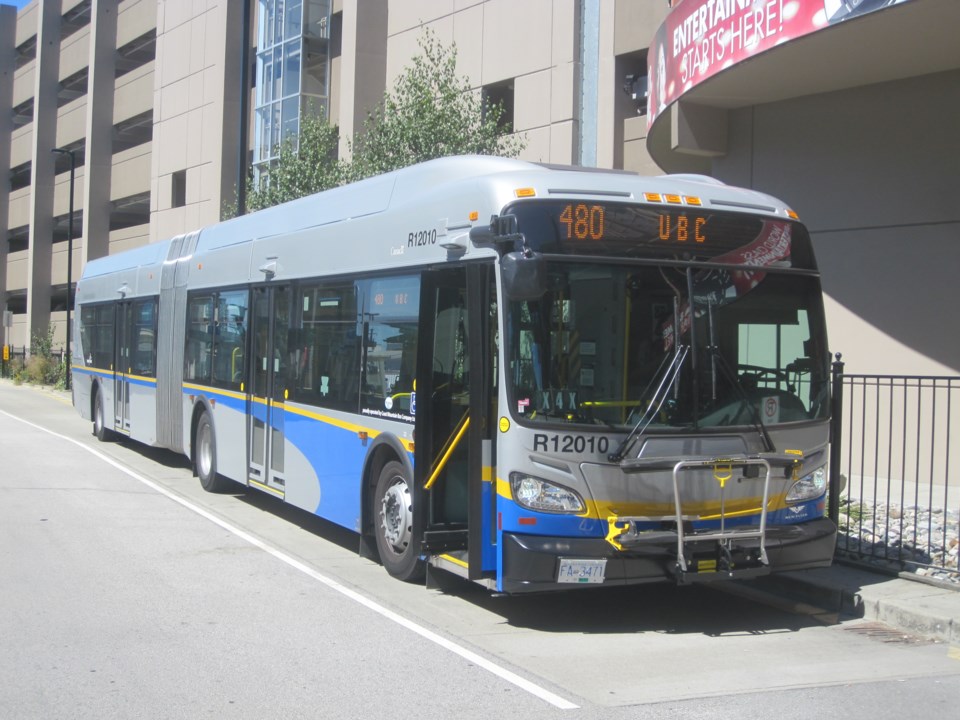
In the case of the 480, it would be safe to assume that ridership on the Canada line is not all what TransLink would like us to think it is and TransLink is sourcing as many riders as it can to inflate Canada line numbers.
The 480 bus makes absolute sense, a direct to UBC bus service, cutting commute times by providing a no-transfer service for those in Richmond or south of the Fraser. This is a very attractive bus service.
But wait, is that not the same story line the City of Vancouver, TransLink and UBC are using to spend $5 billion to extend the Broadway subway to UBC?
A successful public transit system is a user-friendly transit system, except user-friendliness in not in TransLink’s lexicon.
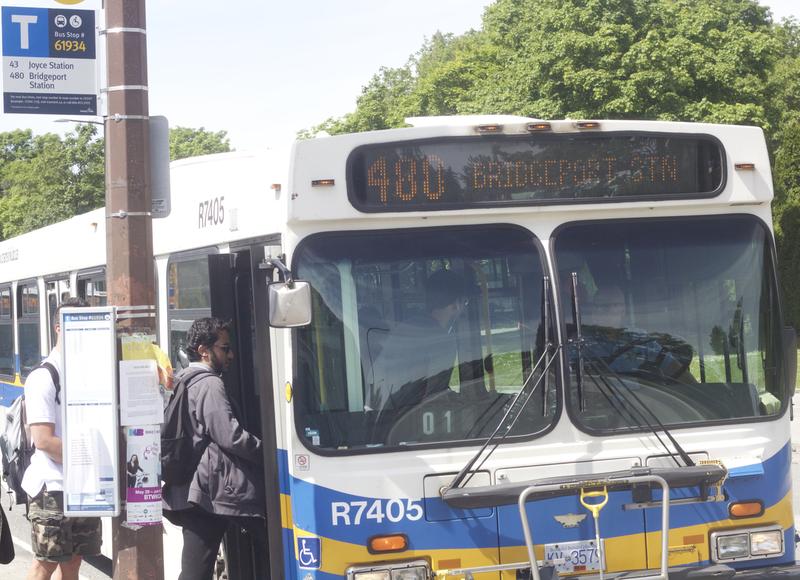
Petition set-up by Richmond student for TransLink to reinstate the 480 bus
“This has taken time away from my academic and personal life, and has added significant stress to my routine,” says a Richmond resident.
TransLink announced the 480 route between Richmond Bridgeport and UBC will no longer be running. Foxfan1992, Canadian Public Transit Discussion Board
Listen to this article
00:02:25
A Richmond resident and student has kicked off a petition to reinstate TransLink’s 480 Richmond-UBC bus.
James Yu, 19, a Ph.D. student of economics at UBC, said the cancellation of the 480 Bridgeport Station/UBC express bus has caused “inconvenience and stress” for him and other transit users between Richmond and the university.
During the pandemic, TransLink suspended the 480 bus for “cost-saving” reasons.
However, the transportation agency announced on April 3 the bus route “will not be returning to service.”
“More than 200 individuals and counting agree with me that TransLink’s current service is not effective compared to when the 480 was in place,” said Yu, referring to his ongoing petition.
He added his travel time with the 480 in place was between 45 and 60 minutes but has since increased to one hour and 20 minutes in each direction without the bus route.
“This has taken time away from my academic and personal life, and has added significant stress to my routine,” said Yu.
“As a Ph.D. student, I have a limited time budget available, and the loss of the 480 adds to the pressures I face daily.”
He added that the cancellation of the 480 bus has contributed to the “worsening, overcrowding and delays on the Canada Line and R4 RapidBus.”
Meanwhile, TransLink said in a recent announcement that a new express bus route will be operating between the River District and Marine Drive Station to complement the existing 100 and 31 buses.
Yu, however, is calling this decision an “inequity in treatment” between the communities.
Passengers who formerly used the 480 bus need to face two or more transfers, but commuters in West Vancouver only need to face one transfer, according to Yu.
“It does not make financial or logistical sense to restore the West Vancouver direct service while also keeping the 480 discontinued, and this has created an inequity in treatment between our communities.”
Yu is planning to deliver the petition and a list of collected names to TransLink administrators to show that TransLink’s “data analysis does not reflect the reality that commuter students … have to face every day.”
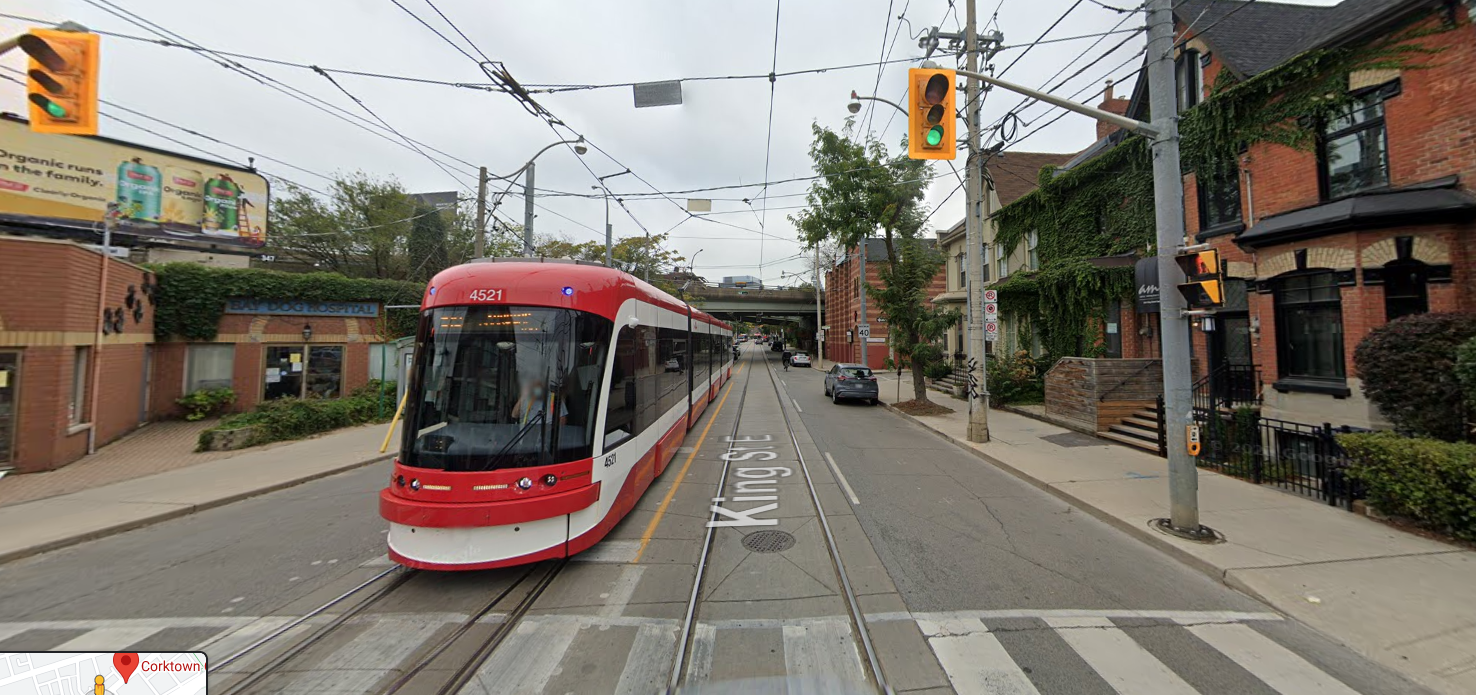
Toronto is the only city in Canada to retain its streetcar or tram system and today the system is expanding to meet the travel needs of transit customers.
The following videos explains the new Waterfront project with expanded streetcar service.
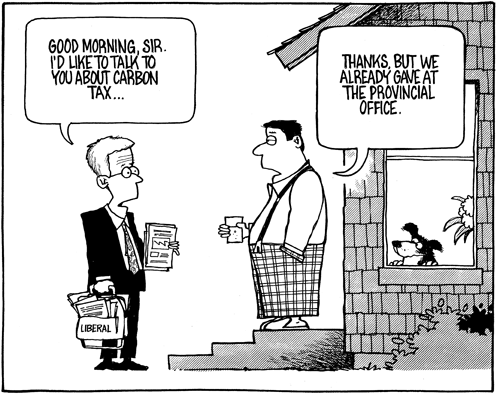
The Carbon Tax flim-flam in BC and Canada gets exposed by Norm Farrell’s excellent In-Sights blog.
Zwei has always thought the Carbon Tax was mere politcal theater as all Carbon Tax revue is deposited in “general revenue”, spent at the government’s whim.
With a compliant mainstream media, the Carbon Tax scam continues unabated, being nothing more than a funding vehicle for the oil and gas industries provincial and federal subsidies.
Like all taxes, the Carbon Tax ends up as being a tax on the poor while big business enjoys the profits of this tax.
According to a study published by Nature Climate Change, governments of 51 countries spent C$940 billion subsidizing fossil fuels in 2021. The number is likely higher since there are many indirect subsidies, such as Canada’s $35 billion Trans Mountain pipeline, and it is unclear if benefits provided by sub-national governments are included.
In fiscal year 2022, fossil fuel companies in British Columbia used royalty credit programs to reduce payments to the BC government by more than $1.5 billion. In addition, monthly tenders for natural gas and petroleum rights have been eliminated. These sales once put billions of dollars into the provincial treasury.
Royalty reductions and elimination of rights payments have drastically altered provincial revenue. These numbers, extracted from Ministry of Finance documents, include accrued royalty credits but all numbers have been adjusted to 2022 dollars using the Bank of Canada inflation calculator.
Carbon tax is levied in BC to encourage residents to reduce consumption of carbon based fuels. But that is justification for fools, because natural gas not burned here is exported to be burned elsewhere. The trouble, of course, is that we have only one Earth and one atmosphere.
Comments may suggest I oppose carbon taxes. The opposite is true, but it is idiotic to use them as a device to to raise fossil fuel exports and achieve no real improvement in carbon emissions.
Note: Writing this leaves me wondering if the next boardrooms Coalman John Horgan occupies will be those of gas producers. No doubt they believe he deserves generous rewards.
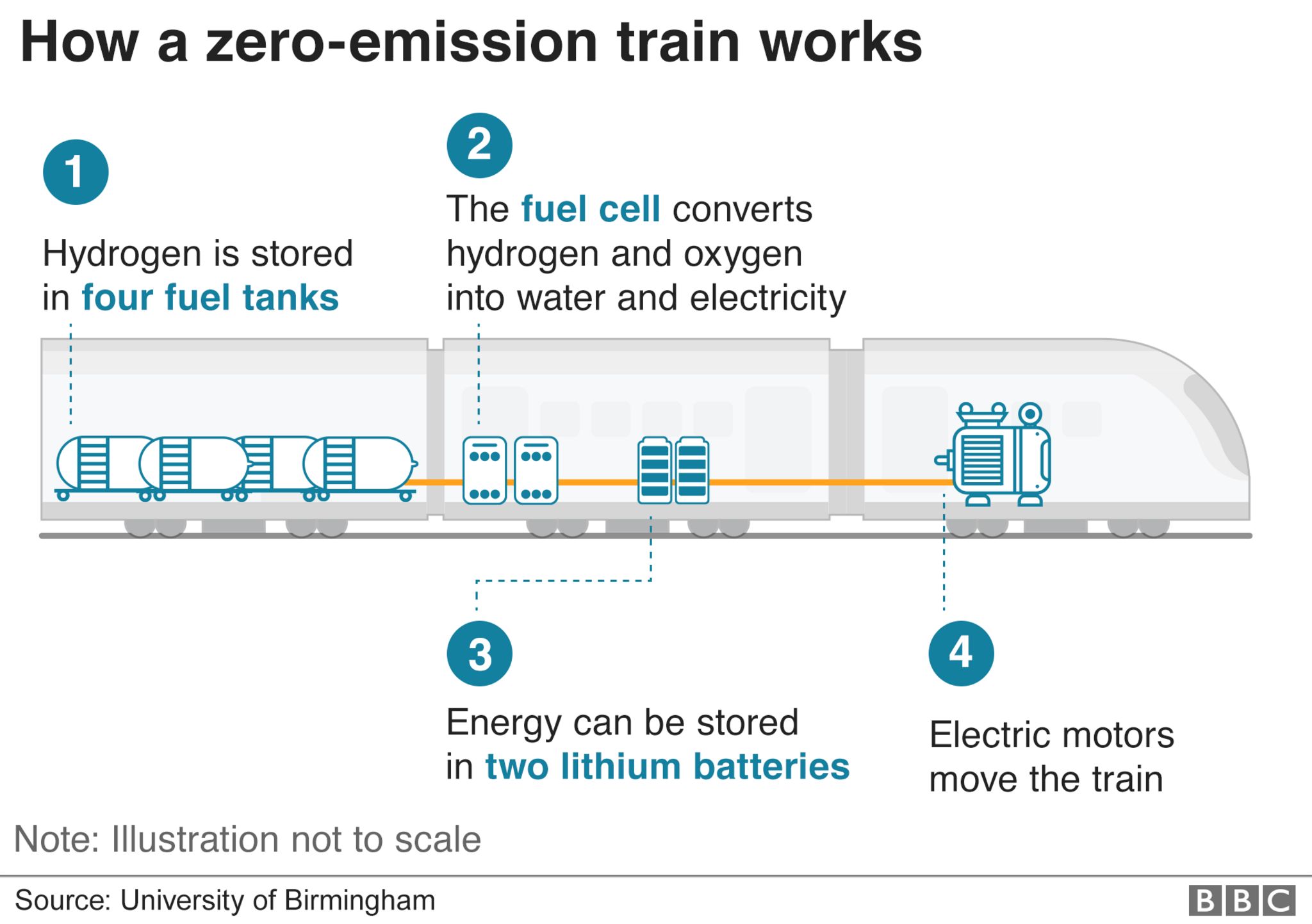
Instead of spending $11 billion, to build a mere 21.7 km of the now obsolete MALM light metro, the government could have spent less than half that amount by building and operating hydrogen powered trains on the former BC Electric interurban route from Vancouver to Chilliwack and from Victoria to Courtney on the Island, providing a maximum of three trains per hour per direction.
The new 400 km regional rail service would have carried far more new passengers than the 21.7 km Broadway subway and the Expo line extension to Langley.
If only the Premier and the Minister of Transportation and the Ministry of Transportation and Infrastructure had a brain.
The hydrogen-powered train will travel between Parc de la Chute-Montmorency and Baie-Saint-Paul. Train de Charlevoix
This summer, North America’s first zero-emission train will start running in Canada.
The hydrogen-powered Train de Charlevoix will run a 90-minute route between Parc de la Chute-Montmorency, the site of an almost 300-foot waterfall located just outside of Québec City, and Baie-Saint-Paul, a picturesque riverside town known for its art galleries and local food scene, reports the Independent’s Joanna Whitehead. Developed by the French company Alstom, the train has been in the works for a decade.
The project is a triumph for North America, though European countries beat Canada to the punch: Germany started testing the world’s first hydrogen-powered passenger trains in 2018, going on to roll out a fleet in 2022. The German Coradia iLint trains, also made by Alstom, can reach speeds of 140 miles per hour. A single tank of hydrogen can last for more that 600 miles.
Germany’s trains are a “model for the rest of the world” and “a milestone on the road to climate neutrality in the transport sector,” said Stephan Weil, president of Lower Saxony, last summer, per CNN’s Julia Buckley.
Canada’s Train de Charlevoix will reach speeds of up to 85 miles per hour, while emitting only water vapor, reports Afar magazine’s Bailey Berg. The trains are powered by combining hydrogen with oxygen.
Particularly in Europe, electric trains are becoming an increasingly common sustainable alternative to diesel-powered trains. But as Smithsonian magazine’s Sarah Kuta wrote last year, electrifying train lines can be a challenging and expensive solution, sometimes making hydrogen more realistic.
According to a statement from Alstom, since 2018 its hydrogen-powered trains have traveled more than 100,000 miles across eight European countries. Now, the company is positioned to expand across the Atlantic.
“With only 1 percent of the networks electrified in our region, this technology will provide an alternative to diesel,” says Michael Keroullé, president of Alstom Americas, in the statement. “This project will demonstrate our capabilities to provide more sustainable mobility solutions to customers, agencies and operators, as well as to passengers. It will also provide an extraordinary showcase for Quebec’s developing green hydrogen ecosystem.”
Service on the new trains will begin on the morning of June 17. Starting in Quebec City, the train will stop at seven riverside towns (including Sainte-Anne-De-Beaupre, Petite Riviere-Saint-Francois and Le Massif) on the way to Baie-Saint-Paul, which it will reach in the late afternoon. Tickets start at $99, while children ride for $69.
Travelers can also sign up for the Eco-Agro tour, a set itinerary that brings passengers to tastings at local breweries, where they’ll learn about sustainable brewing techniques.
If anyone believes that the government did not know that subway construction was going to negatively impact businesses along its route, I have shares in the Lions Gate Bridge to sell you.
Both the provincial government and the City of Vancouver have selective amnesia with subway construction as the ills associated with the Canada Line subway have been selectively forgotten. It is the price to be paid to make Vancouver a “world class” city.
Also with selective amnesia is the Vancouver Sun.
The Vancouver Sun, a big supporter of SkyTrain Light metro and the Broadway subway, will not tell its readers that according to a Toronto Report, Transit City, subways ‘sterilize‘ surface businesses between stations.
No mention that the often repeated “Broadway is the most heavily used transit corridor in North America” is a mere myth, with no independent corroborating study to back up the claim. TransLink claims “Broadway is our most congested bus corridor”, knowing full well that the myth espoused by the City of Vancouver and many gullible politicians is not true.
According to the TTC’s Fall 2022 data, these routes are busier than Broadway 99B Bus Route:
(DATA IS FROM TRANSLINK AND THE TTC)
99 B 35,800 Boardings (Fall 2022)
King 514 A&B Streetcar: 48,900 Boardings (Fall 2022)
Queen 501Streetcar: 37,400 Boardings (Fall 2022)
Finch West 36 Bus: 36,900 (Fall 2022)
Lawrence West 52: 36,100 (Fall 2022)
There were 5 other TTC routes (2 streetcar and 3 bus) that came very close to equalling the 99B ridership
(Boarding levels wthin 2000 riders daily)
Nor will the Vancouver Sun tell its readers that the present maximum capacity of the Millennium Line (Broadway Subway) is a mere 4,000 persons per hour per direction, which will be increased to 7,500 pphpd after a $1.47 billion resignalling rehab. Nor will the Vancouver Sun tell its readers that 7,500 pphpd is one half the capacity of the deemed necessary for a subway in North America!
From Thales 2022 News Release: When the programme is fully implemented, the Expo Line will be able to accommodate 17,500 passengers per hour per direction, and the Millennium Line will be able to handle 7500 passengers per hour per direction, a 32% and 96% increase respectively.
The Vancouver Sun would never inform its readers that according to Bombardier’s own website (before the sale of their rail division to Alstom) that they did not recommend SkyTrain on any tout with a peak hour ridership less than 8,000 pphpd.
Also ignored is that the Broadway subway is replacing the 99B Line bus, which currently has a maximum peak hour capacity of 2,000 pphpd!
Here we have a $2.7 billion (before inflation), 5.7 km Subway, built on a route which goes nowhere (passenger wise), with a hugely constricted capacity, strictly for politcal prestige for photo ops at election time.
It is now time, not for a judicial inquiry of the Broadway subway, but a criminal inquiry on why the Broadway subway subway is being built on a route with the fraction of the ridership deemed necessary for a subway and which maximum capacity of the subway is one half that is deemed necessary for a subway, strictly for politcal prestige and cute photo-ops at election time.
How about it Premier Eby, you did mention that you wanted government accountability?
‘It’s unfair’: Business group calls for support as more shops shutter during Broadway construction
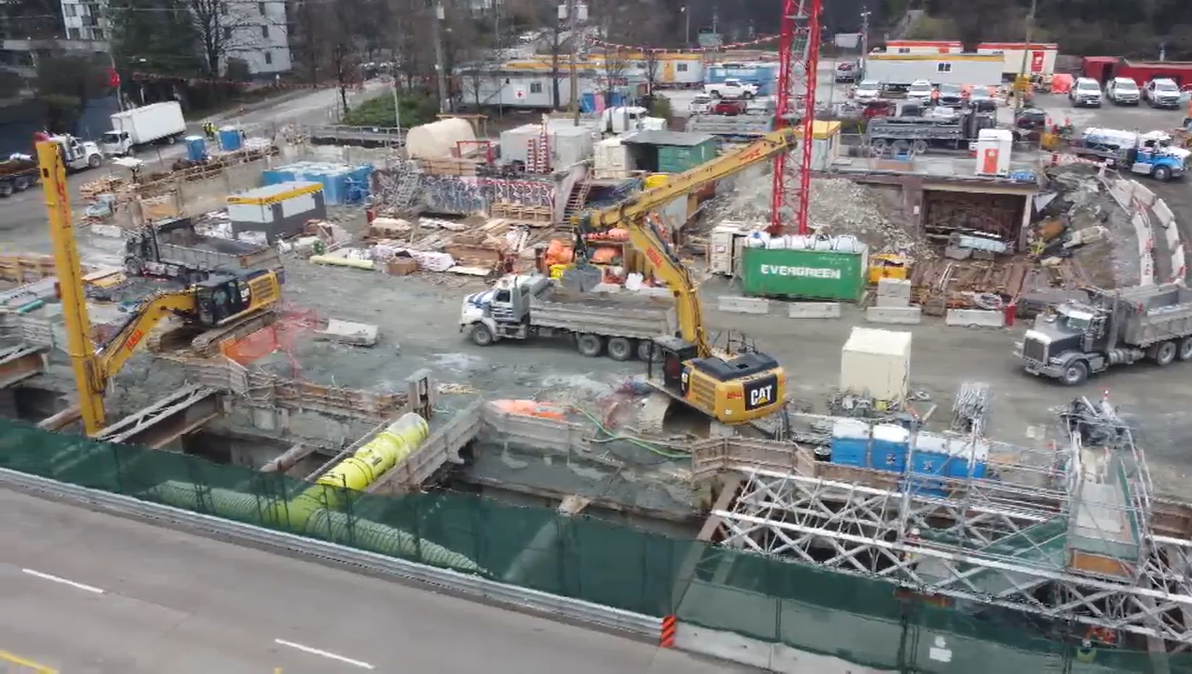
Drone footage shows construction on the Broadway Subway Project in Vancouver, B.C. on Tues. March 21, 2023. Global News
The Mount Pleasant Business Improvement Association is calling on the B.C. government to support businesses impacted by Broadway Corridor construction, citing record new numbers of shuttering shops.
According to the Vancouver group’s executive director, at least 56 businesses along the Broadway Subway Project line are “papered-up” or displaying “for lease” signs in the windows — up from the 40 he counted in January.
“They’re struggling to get customers in the door because it’s difficult to get there. There’s nowhere to stop,” said Neil Wyles on Tuesday. “It’s unfair to these businesses.”
The Broadway Subway Project is a $2.38-billion, 5.7-kilometre extension of the Millennium Line, whose construction began in spring of 2021. To accommodate the work, parking or stopping on long stretches of the street has been forbidden for many months on end, while fences have hidden some storefronts from customer view.
A number of crosswalks and sidewalks have been closed at times as well, although posted signs redirect foot and vehicle traffic, letting customers know the businesses remain open.
“Even though these customers want to be supportive, how many times will they be inconvenienced before they find something else or somewhere else to go?” asked Wyles.
“People can’t afford to be here with declining sales and continue to pay the rent and pay the ever-increasing costs on everything else, and they’re either packing up and going bankrupt or closing businesses.”
Transportation Minister Rob Fleming has previously said “very extensive consultations” were conducted with businesses along Broadway in advance of the project, and the street will remain open throughout construction. The new line is not expected to open until 2026.
In a written statement, Jobs and Economic Development Minister Brenda Bailey said the province recognizes the “added challenges” the project may present to businesses already impacted by COVID-19 closures and restrictions, but did not specify any specific financial support for them.
“While there have been some business closures along the Broadway Corridor, we are also aware that a number of businesses have opened along the Broadway corridor in recent months. We expect to see more positive activity as businesses recognize the increased opportunities this project will create as it moves toward completion,” Bailey wrote Tuesday.
“We will continue working with businesses to ensure supports are in place to help them mitigate the impacts of the project which, once completed, will significantly improve access to the Broadway corridor for people to work and shop close to home.”
Tara Shayegan, co-founder of Uphoria Yoga on East Broadway, said it’s been “really hard” to keep her new enterprise afloat. The studio opened its doors five months before the pandemic began, then closed for 18 months due to health restrictions.
When operations resumed, Shayegan said there was no drop-off or pick-up space in front of the studio due to construction. The team has since secured a limited number of spaces for that purpose, but she said business has “still not been really great.”
“It’s definitely been challenging,” she said. “It was difficult to start with, now it’s kind of moving towards a good direction.”
Shayegan said she would like to see the province provide “whatever” support it can, suggesting reduced construction hours, additional parking spots or financial support.
Broadway Subway “breakthrough” at future Mount Pleasant station
City of Vancouver Coun. Rebecca Bligh said she’s interested in connecting with the province about reducing parking restrictions in the areas without active construction.
Prior to October’s municipal election, Vancouver Councillors had also asked staff to explore financial relief options for those businesses impacted by “cut and cover” tunnelling — a particularly disruptive technique that restricts pedestrian, vehicle and bus access to the merchants, as well as their street visibility.
“We consistently work with the provincial government, who of course is sort of managing the Broadway Subway Project team. TransLink is involved of course when it comes to traffic infrastructure and plans around the construction, (and) City of Vancouver staff,” Bligh said.
“What we’ve heard and what we’ve seen is a request for these groups to come together and be responding real-time to changing conditions … every option has to be on the table.”
At least two Broadway businesses — the Storm Crow Alehouse and a Subway restaurant — have permanently closed amidst the construction.
When finished, the Broadway Subway Project will include 700 elevated metres from VCC-Clark Station to a tunnel portal near Great Northern Way, and five kilometres tunneled below the Broadway Corridor from Great Northern Way to Arbutus Street.
Six underground stations will connect communities to the region, including a connection to the Canada Line at Cambie Street. Traffic decks have been installed at multiple station construction sites to keep traffic and people moving, and the project recently marked a new building milestone: the start of tunneling through to the future Mount Pleasant Station.
Metro Vancouver is making a name for itself on the world stage once again, this time, for not such illustrious reasons. The area has been named the second worst metro area for traffic in North America.
Vancouver has also taken the fourth spot in having the worst traffic in North America.
The TomTom Traffic Index, released Wednesday, shared its rankings for 2022, and lists locations on how long it takes to travel 10 km within city limits.
The index found Vancouverites average about 22 minutes and 30 seconds to travel the distance.
CityNews 1130 Morning Show Traffic Anchor Ryan Lidemark says he’s noticed traffic has gotten worse in Metro Vancouver since the COVID-19 pandemic.
“I would say in the last 10, 11 months, traffic is back to their pre-COVID [levels] or even worse,” he said.
The index says the average driver in Vancouver spends almost 200 hours a year in rush-hour traffic. Drivers in Mexico City were found to have the worst driving times in North America, followed by New York and Toronto.
When compared to metro areas, Metro Vancouver ranked second in North America, just behind Mexico City, with Halifax in third.
Lidemark notes that the high housing and real estate costs mean many have to live farther out and commute into business centres.
“Many people have moved during the pandemic, and also with the cost of living the Lower Mainland people are going farther and farther,” he said. “Now you see people from deep in the valley, people commuting from Chilliwack, into Vancouver, people from Abbotsford. So, it definitely makes a difference, especially going towards the Port Mann Bridge.”
However, Lidemark thinks Highway 1 has always been bad for traffic.
“I would say in the last 10, 11 months, traffic is back to their pre-COVID [levels] or even worse,” he said.
The index says the average driver in Vancouver spends almost 200 hours a year in rush-hour traffic. Drivers in Mexico City were found to have the worst driving times in North America, followed by New York and Toronto.
When compared to metro areas, Metro Vancouver ranked second in North America, just behind Mexico City, with Halifax in third.
Lidemark notes that the high housing and real estate costs mean many have to live farther out and commute into business centres.
“Many people have moved during the pandemic, and also with the cost of living the Lower Mainland people are going farther and farther,” he said. “Now you see people from deep in the valley, people commuting from Chilliwack, into Vancouver, people from Abbotsford. So, it definitely makes a difference, especially going towards the Port Mann Bridge.”
However, Lidemark thinks Highway 1 has always been bad for traffic.
“It was designed just for people going out of town or going deep in the valley, it wasn’t designed for commuting like is done now,” he said. “They weren’t planning on that many people living out that way. And now, you have a flow, and they’re expanding the highway from 264th towards the Port Mann Bridge but that’s still going to be about another seven or eight years.”
“It was designed just for people going out of town or going deep in the valley, it wasn’t designed for commuting like is done now,” he said. “They weren’t planning on that many people living out that way. And now, you have a flow, and they’re expanding the highway from 264th towards the Port Mann Bridge but that’s still going to be about another seven or eight years.”
Insanity Is Doing the Same Thing Over and Over Again and Expecting Different Results
The preceding quote, often misattributed to Einstein, conveys the huge financial issues facing TransLink.
The provincial government’s bailout of TransLink, to a tune of $479 million, is nothing more than per-election politics as a financially floundering TransLink, does make good politics at election time.
The real problem is that former customers are not coming back to transit as predicted and with two very questionable and very expensive transit projects being built, lack of customers may prove very embarrassing in the future.
The $11 billion Broadway subway, Expo line extension to Langley and rehab, will look quite silly if no one uses them.
Instead of facing TransLink’s real problems including a proliferation of electric cars (no gas tax), remote working, and of course a very user unfriendly transit system.
In my local, the transit service, except for the express buses to the ferry, are mainly used by students (cheap fares, including the U-Pass) and those who do not have access to a car. The elderly have all but stopped taking transit, simply because it has become so user unfriendly.
Demographic change has also changed the playing field as more and more business are leaving Vancouver to cheaper operations up the valley. Uber and other like ride-hailing services are also eating away at TransLink’s core business.
Yesterday’s destinations are growing thinner every year and except for post secondary institutions, such as UBC and SFU (which students have the universal $1 a day U-Pass, which also adds to TransLink’s financial woes), taking transit becomes more and more user unfriendly.
Instead of facing facts, the Premier and the Minister of Transportation, abetted by the Mayor’s Council on Transit are doubling down, with photo-op ready, politically prestigious transit projects and not designing a regional transit system that will naturally attract ridership for the future.
By doing the same thing over again, and expecting different results is a coward’s way out.
The B.C. government is stepping in to bail out TransLink from financial shortfalls that could have led to service reductions.
Premier David Eby announced the $479 million cash infusion on Wednesday, saying it will go toward things like infrastructure, avoiding service cuts, and keeping free transit for kids under 12 years old.
“Hundreds of thousands of people rely on TransLink’s service every day to get to work, travel to school, and access all parts of the region,” Eby said. “Failing to act now would lead to higher fares, fewer buses on the road, and reduced service across the board. We won’t let that happen.”
B.C. Transportation and Infrastructure Minister Rob Fleming says the province will continue working with the federal government for future funding partnerships to help the transit company.
“Given TransLink’s significant and immediate needs, the Province is taking action with this funding stabilization to address TransLink’s short-term operating funding needs, preventing layoffs and maintaining transit services that will create jobs and reduce traffic congestion and air pollution, which benefits residents and visitors to Metro Vancouver,” he said.
Last month, the Metro Vancouver Mayors’ Council called for a $250 million investment from the federal government, which would be matched by the province.
Brad West, chair of the council and mayor of Port Coquitlam, says he welcomes Wednesday’s funding announcement.
“Every day almost 400,000 Metro Vancouver residents use our transit system. These are regular people trying to get to work or school, or go to a hockey game or a park, all of whom expect governments to keep them moving with good, reliable transit,” he said.
Since the COVID-19 pandemic began, TransLink has received over $850 million in government assistance due to decreased ridership, going from about 450 million users in 2019, to 200 million in both 2020 and 2021.



Chemitz TramTrain on the mainline.


:focal(792x528:793x529)/https://tf-cmsv2-smithsonianmag-media.s3.amazonaws.com/filer_public/05/d9/05d9e90c-4b2c-420e-a49b-2466739f89d5/crop.jpg)









Recent Comments