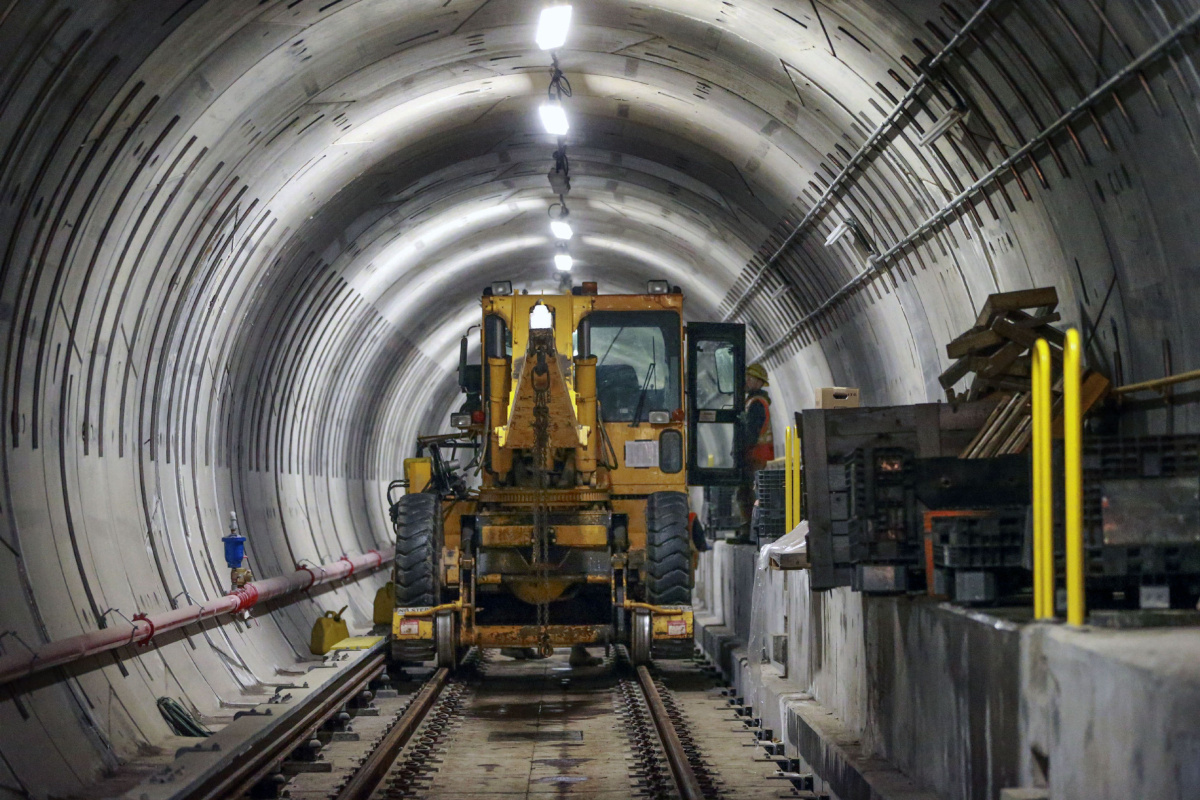
Subways tend to cause ground subsidence and when two two cylindrical tunnel boring machines (TBMs), six metres wide and weighing around a million kilograms, gnaws away underground, subsidence will occur.
Memo to Rob Fleming, Minister of Transportation: It is not vibrations you should be worried about, it is subsidence as the tunnel boring machine chews through the earth below.
TransLink knows this.
The City of Vancouver knows this.
The provincial government, especially the Minister of Transportation knows this.
Yet, no compensation for business owners when the TBM causes issues to their building.
Pretending its not our fault just does not cut it.
Government just does not give a damn.
TransLink, the city of Vancouver and the provincial government, having learned nothing with the Canada Line fiasco, blunder ahead with the subway, with a “what me worry” attitude.
Premier Eby is spending billions of dollars on politcal friends and insiders, to buy himself an election, while ignoring the business folk on Broadway and flipping the bird at their woes.
The NDP, as always, never understood public transit, other than a politcal tool to garner votes at election time.
Vancouver businesses close as heritage building façade crumbles
Business owners in a heritage building in Vancouver have been forced to close their doors as engineers assess the state of its crumbling façade.
“At 3 p.m. on Friday we were instructed that we would need to close our business,” said Allen Ingram, the owner of Home on the Range Organics.
“We closed our front doors at the end of the day, 5 p.m. and as such we have been closed since that point.”
Ingram’s shop is located in a two-storey brick building at 245 East Broadway where a scaffold protects pedestrians. In recent weeks, loose bricks were noted and last week, the engineer decided to act.
“I’m in a 100-year-old heritage building,” said Skylar Stock, the owner of Mintage Mall, a vintage clothing store occupying the second floor. He was also forced to close Friday and remained closed Tuesday.
“The brickwork on Broadway and the brickwork on Kingsway could be compromised,” he said. “Why would I want to put somebody at risk if there’s potentially risk?”
Both owners wonder if construction of the Broadway subway extension could have played a role in their building’s deteriorating condition. It’s a massive project to expand the SkyTrain Millenium Line 5.7 kilometres from the VCC-Clark Station to Arbutus Street.
“Obviously we look to the province to put in a compensation package that should have been there for the (Canada Line Cambie Street construction), that they could definitely do now,” Ingram said.
Between 2005 and 2009, businesses along Vancouver’s Cambie Street complained they were being hammered by construction of the Canada Line. That tunnel was built using the cut-and-cover method where crews dug a massive trench before installing rails and finally covering the tunnel with asphalt.
Businesses sued for compensation and won at the B.C. Supreme Court, a decision that was later overturned on appeal.
The Broadway subway is instead being bored in deep tunnels. Only station areas are being dug out, though this has caused traffic disruptions in construction zones. Ingram’s building sits just east of one of these pits.
Construction of the $2.8-billion project is overseen by the Transportation Investment Corporation on behalf of the provincial Minsitry of Transportation.
On Monday, B.C. Transportation Minister Rob Fleming showed little enthusiasm for compensation.
“It’s an older heritage building,” he said, suggesting the loose bricks are more reflective of the building’s overall condition and not construction nearby.
“The tunnel-boring machine has gone by, vibrations were not observed at all and there is monitoring equipment on site,” he said.
The city has ordered an engineer to assess the building’s condition and determine next steps. Business owners have been told that work could take days or weeks.
“I hope it’s quick and I can say to my staff, ‘days off are over,’” Stock said. “Time to get back to work.”
A subway here, an elevated guideway in the countryside there, begs the question: “Has TransLink badly erred with their transit planning.”
TransLink is completely hooked on the “hub and spoke” philosophy of transit, where buses bring passenger to light metro hubs, to be transported to another transport hub, and the either arrive or take another bus to their destination.
Hub and Spoke transit planning
Contrary to the myth that transit must be fast to garner ridership, the hub and spoke philosophy of transit is time consuming when one adds the walk/wait time to get a bus; then the time on the bus, then the time waiting for a train and the more time if one must again transfer onto another bus.
A local example.
Zwei used to commute daily by bus from South Delta to downtown Vancouver and the entire trip took between 45 to 60 minutes depending on the time of day and traffic. The express buses used to have standing room only and it was not uncommon to be left at the curbside because the bus was full.
Then came the Canada line and part of the P-3 contract was a nasty little clause that made all downtown Vancouver buses, forcibly transfer their customers onto the Canada Line, at Bridgeport Station to complete their journey to Vancouver. For added insult, where prior to the Canada Line, there was direct bus service to Richmond Centre from South Delta, with the Canada Line Richmond bound customers were forced to travel by the Canada Line, again forced to Transfer to the Canada Line then doubling back to Richmond Centre. By forcing customers to transfer onto the Canada Line, added 10 to 15 minutes to ones journey time going to downtown Vancouver and increasing journey times by as much as 30 to 45 minutes going to South Delta!
This put a lie from TransLink that customers would save about 10 minutes in travel time using the new route.
Ten years after the Canada Line opened South Delta Express buses are a quarter full and service has been cut back to a 1990’s level of service as customers have voted with their feet by avoiding transit. TransLink is unrepentant and refuses to address customer’s wants.
In 2019 Zwie was held up by 90 minutes at the stark Bridgeport Station on a very windy and cold Saturday afternoon, due to cancelled buses and unannounced changes made by management. No help was offered to the large contingent of marooned passengers: management did not give a damn.
I have never used a bus since and I am not alone.
I have been told privately by neighbours and long time acquaintances in South Delta of many similiar experiences, with management ignoring customers and in the end, TransLink loses both customers and any hint of public support.
No wonder TransLink is held in high odor by the taxpayer.
It is also important to note that South Delta now has a lot of electric cars, with a recent survey at the local shopping centre, every fourth parked car was electric.
Is the electric car taking ridership away from transit?
From my somewhat experienced eye, it seems to me that the locals have turned their back on transit and instead have gone electric.
This does not bode well for future transit investment.
TransLink wants $20 billion in coming years to both expand and operate the regional transit system, but with the majority of public, seeing TransLink in such a vile light, I doubt they will not get public sympathy and the politicians trying to sell TransLink to taxpayer may find themselves out of office with a populace fed up with TransLink’s insatiable lust for money, but providing a mediocre service outside the Vancouver, Burnaby and New Westminster nexus.
Thus the question remains: Is TransLink ‘s planning out of date?
The following is from the LRPPro group, which is made mainly of experts in the field of public transport and well worth a read.
The big question for me is: Is today’s transit tech be tomorrow’s transit tech? Those questions should be asked, lest we again invest in a proprietary technology and continue building and using it, when the rest of the world (and manufactures) have moved on?
PRT was the flavour of the month for transit nirvana in 1971!
I have a degree in this industry and ran both para-transit and mainline bus systems as well as owning a bus company at one time so think I have run into every or most every new gizmo that has come down the pike in the past 60yrs or so. and am pretty into the history of the industry.
Batteries are getting better all the time, from lead acid to nicad to lithium ion to lithium iron phosphate etc. and maybe the next one will be from what is now unobtainium. I have no doubt the tech will improve. but will human nature improve along with it.
To play devils advocate here for a bit.
. Electric rail systems will continually run into NIMBY and cost constraints especially as they become more complex. Some countries for legal or social reasons will always have an “operator” if only to watch the computer controls. Where fully autonomous has been used there has been a lot of push back, with the possible exceptions of airport shuttle vehicles.
. Trunk electric buses may become more and more BEB but ground level charging would have to overcome some basic laws of physics to be seriously practical, just look up the function of distance between charging plates and amount of loss of power. will we have that much power available to us to waste 90% to cover a 2cm air gap?? so far no one has found a way around the air-gap problem (except maybe N. Tesla and he took that to his grave unless we can rediscover it).
. AV shuttles of any type have run into a conflict with accessibility laws which in many cases require human intervention. and the mobility technology is getting so varied and complex that automatic systems are not reliable or damage equipment. and as someone who is heavily invested in that industry on a personal basis I see it getting more complex not less so.
Then there are a few “little” things like
. Unions
. Getting sufficient highly skilled workers to maintain this equipment and their salaries
. Parochial rules and laws from country to country and even city to city.
And some that I haven’t thought or overlook or that will surface as this issue progresses.
The number of new items that will come along such as the monorail or Maglev, or does anyone remember the all wonderful Aerobus system, and of course everyone thinks we will have flying cars in our driveways tomorrow (What about that pesky pilots license needed to use them off the ground, I have a pilots license and know how hard they are to get).
I am not saying there won’t be all of these things but even the diesel engine took years to become common in many parts of the world, in fact in many places it is still not the most common with gasoline engines powering many transit vehicles especially in third world countries where diesel fuel is very expensive or hard to obtain.
The future is coming but I doubt we will recognize it as anything we predicted. (Heck I probably won’t live long enough to see it, unless major medical breakthroughs) Battery tech will have a place in our future, the flashlight is over 100yrs old but except for the newer LED bulbs how much has it changed. The basic bus or rail vehicle has changed very little in it’s base dimensions in 200 yrs, I would say standard gauge but that depends on were you are since standard gauge is different.
Here is the USA on the North East Corridor rail route of Amtrak from Washington DC to Boston complex engines are required because 3 different electric systems are used depending on who built the original. and in Europe change of voltage is routine.
One of my concerns is proprietary battery tech, will a BYD battery work on a New Flyer or Protera or ? Will transit systems be “locked” into a single provider of proprietary technology (such as Vancouver?). I have seen it happen and it costs lots of money, ask TransLink in Vancouver Canada, and even in New York city why they need different subway car designs for the numbered vs lettered routes. Who will set the standard and will it work internationally.
Enough you get the point and this isn’t just BEB but applies to LRT and many things outside the transit industry; example:I have many battery operated tools, so why can’t the batteries in my Makita work in a Ryobi etc.
The following article is eerily familiar with TransLink’s continued building of light metro, especially subway construction. In Australia the state of New south Wales is spending AUD $11 billion (CAD $10.1 billion to build 23 km of rail line that will not generate the ridership that would demand such an expenditure, while Metro Vancouver is spending $11 billion to build 21.7 km extensions to the Expo and Millennium lines, which again, will not have the ridership to justify the expenditure.
Some time before Bombardier’s rail division was sold to Alstom, Bombardier publicly stated on its website that, it did not recommend the ART/Innovia technology for peak period passenger levels bellow 8000 passengers/hour/direction.
Peak hour traffic flows on the almost $3 billion, 5.7 km subway is estimated under 5,000 pphpd! Ditto for the Surrey to Langley Expo Line extension!
Modern light rail, costing up to ten times less to build, can economically carry traffic loads between 2,000 to over 20,000 persons per hour per direction.
This quote from our friend Mr. Haveacow from 2015, is extremely relevant in 2023,
The real embarrassing thing is what happened with Bombardier’s website. I have been pointing out to anyone who had been willing to listen that, the INNOVIA Automatic Metro line section of Bombardier’s website was moved out of the rail vehicle section into transportation systems section. Well just before John retired a big s***storm about the website had occurred. Turns out that, both representatives from Kuala Lampur and Vancouver had both been wanting to ask why their rail vehicles were not in the rail vehicle section of the website. They were told that, even though they were both highly valued long time customers and Bombardier would always be willing to design a replacement vehicle for them. It was just more advantageous for them to have the INNOVIA product as a stand alone complete transportation system product because so few people had ordered the technology compared to Bombardier’s other rail vehicle lines. Very few would be looking for just replacement vehicles and they (Bombardier) assumed that your transit people would just call them directly because there are no other compatible technologies that you would be able to order, technically. The simple translation, you can’t call anyone else our propulsion technology only works with our vehicle designs although, there are others that use LIM propulsion it would be a very expensive option. John was not sure and seriously doubts that, there was a legal requirement that the current users must order from Bombardier unless, they Bombardier does not offer an equivalent product!
Today, SkyTrain or MALM, is Alstom’s problem and with a ‘foreign’ light metro system in their stud of light-metros and only one customer, time will run down quickly for the proprietary transit system, which means costs will rise sourcing scarce replacement parts for the almost orphaned mini-metro.
As SkyTrain light metro’s construction costs escalate upwards and needed refurbishment done piecemeal, Metro Vancouver’s version of “Metro Mania” is costing the taxpayer dearly and in a time of high inflation and taxes, poses the question:
“Will Metro Vancouver’s extremely expensive metro mania ever stop?”
The man who masterminded the train timetable for the Sydney Olympics warns the city’s multibillion-dollar metro rail projects risk delivering limited benefits to commuters despite their staggering price tags.
In what he terms “metro mania”, former top NSW rail executive Dr Dick Day argues the state government is rushing to commit to massive rail projects in Sydney for which there is “little rationale”.
One of the twin tunnels on the Metro City and Southwest rail line.Credit:Brook Mitchell
He describes as a “gross misuse of public funds” the $11 billion to be spent on a 23-kilometre rail line from St Marys to Western Sydney Airport because it would “see quite limited use”. Infrastructure Australia also warned two years ago that the cost of the airport line would far outweigh the benefits.
Day, a former general manager of planning and timetable development at RailCorp, expects people will travel primarily by car to the new airport after it opens in late 2026, and that a network of express buses would initially provide the best form of public transport access.
In a paper for Sydney University, Day said Sydney’s “metro mania” was destined to be an “extremely expensive and poorly thought through experiment” which would be “found wanting as a cost-effective means of enhancing” the city’s public transport network.
“Sydney’s proposed metro projects represents very poor use of what were once considered scarce public funds,” he warned. “The willingness to commit public money to such poorly conceived projects raises disturbing questions about financial governance within NSW.”
The cost of constructing three new metro rail lines in Sydney, as well as the Metro Northwest which opened in 2019, is estimated at $63 billion.
Day argues it is reckless to keep committing vast sums of money to extra metro rail lines because of a “very real possibility” that peak-hour commuting by train never returns to pre-pandemic levels.
He warns Sydney is out of step with London, Melbourne and Brisbane, where new rail tunnels under the heart of those cities will accommodate existing train services at improved frequencies and offer relief for their networks. Sydney’s metro rail lines run driverless single-deck trains, and other types of passenger and freight trains cannot operate on them.
Day, who was responsible for mapping out and planning train services that contributed to Sydney’s successful 2000 Olympics, is also critical of plans for a $27 billion line from the CBD to Parramatta known as Metro West.
He warns that most passengers travelling towards central Sydney from the outer west by rail will have boarded double-decker trains at stations further west of Parramatta, and will not change there to catch services on Metro West, which would have only one main station in the CBD. In comparison, the existing western line serves three CBD stations.
Premier Dominic Perrottet, centre, with Metropolitan Roads Minister Natalie Ward and Sydney Metro chief executive Peter Regan last week.Credit:Dominic Lorrimer
“There has been an unprecedented rush by the government to lock in the construction of these projects despite a very poor understanding of their costs and benefits. This has taken place at a time when commuting patterns have shifted considerably following COVID-19,” he wrote.
Premier Dominic Perrottet last week re-committed to planning for an expansion of metro rail in Sydney’s outer west, including between St Marys and Tallawong, near Rouse Hill, if his government is re-elected, four years after his predecessor Gladys Berejiklian outlined similar plans.
It seems our regional mayors have been smoking some good weed because they want $20 billion for transit and playing the old gambit that transit is really a Social Service, a human right.
That sort of thinking has gotten us where we are today: a massively expensive transit system that does not attract new ridership, especially the motorist from the car.
There is a steady downward trend for transit mode share in Metro Vancouver
In most other cities around the world, there would be serious questions asked of TransLink, TransLink’s management and those who make the final decisions. Instead the mayors are going full throttle demanding $20 billion to continue doing the same thing over again, hoping different results.
With climate change and global warming posing an ever greater danger, investing $20 billion into a somewhat discredited regional transit system, tells me that the Mayor’s Council on Transit really do not have a clue about transit, transit finances or why our current public transit system is not popular.
I sent the following letter sent to Delta’s Mayor and Council concerning TransLink’s current spin on a rail service for the Fraser Valley, commenting on a news story in the local paper.
Mayor and Council members;
In the Optimist’s digital edition, an article by Sandor Gyarmati, “Interurban Rail Not on The Horizon for Delta”, underlines TransLink’s excuse for not looking at operating as regional railway using the old interurban line is” that the interurban line does not advance regional objectives as well as other options……………”.
*
I do understand TransLink’s objections to reinstating a passenger service on the former BC Electric line and it has nothing to do about “regional objectives and other options”, rather it is their fear and embarrassment that 130 km $1.4 billion regional rail route, operating at a maximum of three trains per hour, will attract far more new customers to transit than the current $4.5 billion to $5 billion, 16 km Expo Line extension to Langley.
*
In 2009 through my efforts and contacts, the Rail for the Valley group engaged Leewood Projects (UK) to do an independent analysis on the viability reestablishing a passenger service from Vancouver to Chilliwack via the old BC Electric interurban line which is still in use today. Leewood projects were very thorough with the study and networked both with Canadian professional engineers and Transport Canada in producing a credible document.
*
In 2010, Rail for the Valley and Leewood released the “Leewood Study” which showed that such a rail service was viable and could be built with costs ranging from $500 million for a basic 90 km. Scott Road Station to Chilliwack Line to $1 billion for a fully electrified 130 km Vancouver to Chilliwack route. These costs also include the vehicles.
*
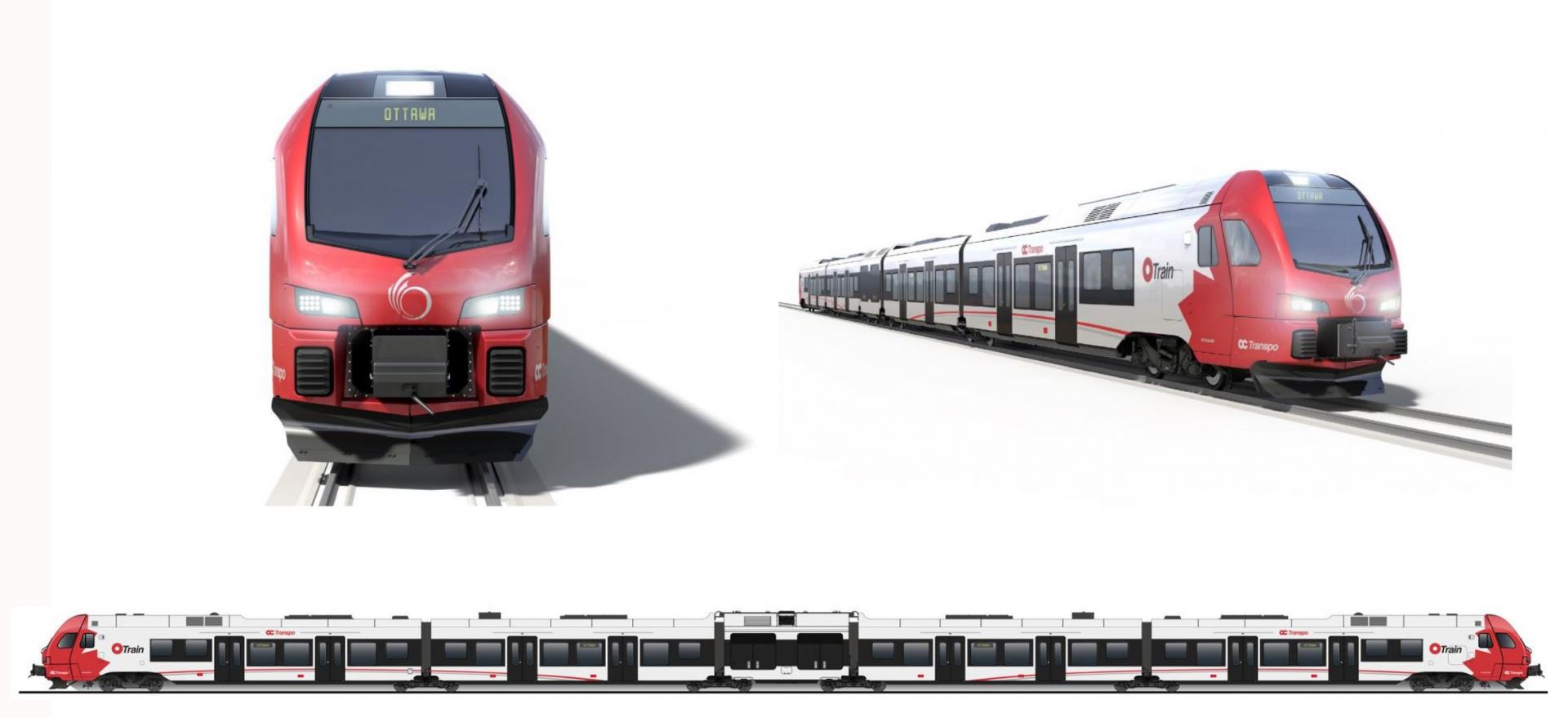
The Stadler Flirt DMU, used in Ottawa. 81 metres long, the vehicle Can be upgraded to hydrogen power by purchasing a hydrogen power pack, now being developed. The Sadler Flirt has a seating capacity of 224, versus 132 seats for a Movia Automatic Light Metro (SkyTrain) 4-car train. Seating capacity is extremely important for attracting transit customers, especially on longer distance trips. The Stadlertrains can operate in multiple units, doubling seating capacity.
*
Updated, to 2023 the cost would be $700 million to $1.4 billion respectively. The latest cost for the 16 km Expo line extension is $4.1 billion for the guideway and $500 million to $1 billion needed for the Operations and Maintenance Centre #5, which must be built and in operation by the time the extension opens. This cost does not include vehicles nor the now over $3 billion rehab needed to both the Expo and Millennium Lines before they can carry capacities over the current legal Limit (Transport Canada’s Operating certificate) of 15,000 persons per hour per direction. Already the signalling and automatic train control systems are being replaced with a contract let for $1.7 billion last fall. Tthe electrical supply must be both renewed and upgraded at a cost much higher than the resignalling cost and as of yet, no contracts have been let for this necessary work.
*
When one includes the Broadway subway and much needed rehab, the real cost to extend the Expo and Millennium lines a mere 21.7 km, is in the neighbourhood of $11 billion, not including vehicles!
*
You can see TransLink embarrassment and why they do not want anything to do with reactivating a passenger service on the former BC Electric Line as it would provide a far better service for many more people at a far cheaper cost to the taxpayer.
*
The BC Electric Line would serve not only Vancouver and new Westminster, but North Delta/Surrey, Central Surrey, Cloverdale, Langley, Abbotsford, Huntington/Sumas (US Border Crossing), Yarrow/Vedder/Sardis (gateway to Cultus lake) and Chilliwack. The line almost gives front door service to KPU Cloverdale and the proposed major hospital in Cloverdale, KPU in Langley, Trinity Western University, Gloucester Estates Business park, Abbotsford International Airport, downtown Langley and Abbotsford and the burgeoning communities Yarrow/Sardis and Chilliwack. The tourist aspect of the line has been ignored by TransLink completely!
*
The journey time matrix from the Leewood Study from Scott Road to Chilliwack, with a trough journey time of 90.5 minutes.
It is easy to see, with the RftV/Leewood Study and plan, we would get 8 times more rail mileage for one third of the cost of a 16 km light-metro extension to Langley, which, according to TransLink, will carry fewer customers than the current Broadway B-Line bus!
*
Rail for the Valley continues to be in contact with real transportation professionals who have expertise in all forms of rail transit and are advised accordingly. TransLink lacks real experts in rail transit and continues to plan for an obsolete proprietary light metro system that transit authorities around the world have rejected, ever hoping for different results.
*
The Leewood Study gives a firm template and technical information for the return of a modern interurban service from Vancouver to Chilliwack, serving over one million people by providing a modern and affordable regional rail service that is so desperately needed in the region.
Addendum
SkyTrain is the name of the regional Light Metro System and not the trains operating on them.
*
The Canada Line operates standard railway Electrical Multiple Units (EMU’s) manufactured by ROTEM (Hyundai) as a light metro, which internationally has not been copied.
*
The Expo and Millennium Lines operate the unconventional and proprietary Movia Automatic Light Metro, now owned by Alstom when they purchased Bombardier’s rail division.
*
MALM has had three previous owners; Bombardier, Lavalin and the Urban Transportation Development Corporation (UTDC)
*
MALM has also had five previous marketing names; Innovia Light Metro, Advanced Rapid Transit (ART), Advanced Light metro (ALM); Advanced Light Rail Transit (ALRT changed for the sale to Vancouver); Intermediate Capacity Transit System (ICTS).
*
Only seven such systems have been sold since the late 1970’s and no new system has been built since 2005. Vancouver is the sole customer for MALM and Alstom has strongly indicated that they will cease production when the last paid for orders are complete. No other manufacturer produces a MALM compliant vehicle as the mode is deemed obsolete.
The big problem for regional transit is that population growth is happening all the way up the Fraser Valley to Hope and with a light metro only mentality, means the only reasonable way for people to travel is by car.
It is time to say no to TransLink; to say no to the mayor’s Council on transit and to say no to the NDP government and instead demand an affordable and user friendly transit system that just may provide such a service to attract the motorist from the car. From what I can see, current transit planning is making metro Vancouver more and more unlivable, forcing families to move where they can afford and it is affordable because there is little public transport and that is a damn shame.
TransLink Mayors’ Council pushes for renewed federal funding to keep up with growth
The TransLink Mayors’ Council on Regional Transportation is requesting more funding from the federal government in order to support its expansion of public transit across Metro Vancouver.
During a meeting last month, the mayors outlined their 10-year plan to keep up with the influx of residents to Vancouver and across the lower mainland.
Expected to cost $20 billion over the next decade, the plan includes doubling buses by 2035, the extension of the m
Millennium line to UBC, rapid transit to the north shore, and the gondola to SFU.
“Public transit is rightly seen by our residents as a basic utility like electricity, drinking water or roads, an essential service that keeps our cities moving, working and successful. Not a nice to have, but a requirement,” said Mayors’ Council chair Brad West.
“Our region is growing faster than ever, and as long as we are stuck in survival mode, our transit system will not be able to keep pace with demand and the essential service it provides.”
The proposal also calls on Ottawa for $250 million in emergency relief funding, to be matched by the province in order to maintain current services, West said.
“Looking ahead to population growth, we are calling on the government to speed up the delivery of the permanent transit fund by two years to 2024. This will ensure that we don’t have to delay projects in the 10-year priority plan.”
TransLink warns that users could possibly see raised fares and a cut in services without funding.
“Metro Vancouver is expected to grow substantially in the near future, which will bring increased pressures on our public transit services,” said CEO Kevin Quinn.
“TransLink will need sustainable and dependable funding to both maintain our current levels of service and prepare for critically needed expansion.”
In addition, the Mayors’ Council is calling for Ottawa to once again permanently double the Canada Community-Building Fund, and increase its annual escalator to 3.5 per cent, to account for construction cost inflation.
It is also asking for a national commission with provinces, transit agencies and local governments to develop a new funding model.
Sheffield TramTrain networking onto City Tram R-o-W
Three Tram Trains an hour travel on the Supertram network from Sheffield Cathedral to Meadowhall South, before proceeding over a new section of track linking the tram line to the rail track, called the Tinsley Chord, and on to the national rail network to Parkgate Shopping Park via Rotherham Central station. Journey times are around 27 minutes from Cathedral to Rotherham Parkgate, and you can buy tickets from the conductor when you board the service.
We need an affordable alternative to the car and airplane.
Rail is the only answer.
Sadly, in Canada government is anti-rail, except when it provides a good photo-op at election time.
The Canadian government’s view of a passenger railway
Railroaded: A National Train Wreck
When Transport Minister Omar Alghabra appeared before the House of Commons Standing Committee on Transport, Infrastructure and Communities on January 12, he said he wasn’t hiding from the multiple meltdowns of Canada’s airlines and VIA Rail over the Christmas holidays. But he was.
Alghabra and his government are hiding from an inevitable confrontation with more than a century of political and corporate blunders that are now cumulatively causing Canada’s transportation “chickens” to come home to roost. The storms that hit B.C. and eastern Canada at Christmas revealed we have a disjointed, ineffective and subsidy-soaked system that lacks resiliency and reliability.
Decades of indiscriminate public funding, self-destructive competition between the modes and little accountability are just a few of the reasons for a series of transportation failures affecting Canada economically, socially and environmentally.
It started at the dawn of the railway era in the mid-19th century. Promoters required public assistance to build costly railways in a far-flung, sparsely populated and physically punishing country. Pliant governments provided land grants, cash subsidies, loans and bond guarantees for these capital-intensive lines, often because they saw votes in railway building. Their quid pro quo for this public assistance included route changes to serve certain ridings and freight rate reductions to buy voter favour.
If politicians couldn’t get private railways to take on politically expedient railways, they created government corporations to do it, usually with dire financial, patronage and operational consequences. Two examples were the poorly located Intercolonial Railway from Quebec to Halifax and the recklessly optimistic National Transcontinental Railway from Moncton to Winnipeg on a route through traffic-thin northern Quebec and Ontario.
When all but the Canadian Pacific (CP) strands of this overbuilt web of rails collapsed between 1917 and 1923, Ottawa created Canadian National (CN) to fuse and fix the bankrupt railways and the government lines … and then encouraged further network growth.
As the 1933 Royal Commission on Transportation observed, CP responded “in the ways habitual to all competitive railways” by expanding, often with public assistance.
By the time this second overinflated railway scheme deflated in the depression of the 1930s, the automobile was well on its way to a position of mass popularity. Provincial politicians rushed to fund highways to ensure votes by breaking what they invariably described as the railway monopoly. Trucking went along on this taxpayer-funded ride, gobbling up more and more railway freight revenue as the highway system grew at public expense.
Soon after the subsidized highway steamroller was born, the feds began to generously fund airports and air services. Transport Minister C.D. Howe quashed a CP/CN plan to launch a jointly-owned airline coordinated with their trains, steamships and hotels. Instead, he compelled CN to help establish a government-owned airline, Trans-Canada Airlines (TCA), which competed with the struggling passenger trains of both railways.
To keep this predecessor of Air Canada financially aloft, Howe ordered much of the mail shifted from the trains to his loss-making airline at a high cost to the post office, starting with the high revenue first class mail, even on routes where TCA’s planes couldn’t get it to its destination any faster than the network of overnight trains then being operated by CP and CN. This infuriated the postmaster general, who had to explain the high costs and low revenues of this “all-up” first-class mail program when he was grilled by the unenlightened members of various parliamentary committees.
The political rush to fund aviation and highways not only drove transportation spending skyward before and after the Second World War, but it also made a mockery of the concept of reasonable cost recovery from public investment and destabilized the railways.
This toxic transportation brew has been repeated many times since. It continues today. Billions in non-recoverable funding went to so-called pandemic relief support for some portions – but not all – of the transportation system. This has been accompanied by announcements of public-private partnership mega projects, such as VIA’s high-frequency rail proposal for the Quebec-Windsor Corridor. This dream scheme has received nearly $1 billion in federal advances and commitments without even producing a plan. If built, it would require an amount the transport minister refuses to even estimate.
“One of these days, somebody will have to sit down and figure out what transportation we need, and what we can afford,” a member of the Board of Transport Commissioners told a reporter in 1961.
Sixty-two years later, that overdue decision still hasn’t been made. Instead, Transport Minister Alghabra offers platitudes and promises of dazzling future projects when corrective, non-partisan action is urgently required. The Christmas travel meltdowns and rising public anger prove that.
Will this long-standing national transportation dilemma ever be decisively resolved? Will our elected officials ever smarten up and perhaps take some rudimentary courses in transportation and public finance? Hiding from the truth and rearranging the deck chairs on Canada’s transportation equivalent of the R.M.S. Titanic yet another time isn’t the answer. It never was.
It is quite apparent that the Mayor’s council on Transit is nothing more than a PR stunt and nothing more, as all major transit decisions are made in the Premier’s Office.
The mainstream media’s research for news stories is lacking, because it is the Metro Vancouver (not BC) Mayor’s Council on Transit.
TransLink loves giving percentages in their public news releases but they do not like giving whole numbers. A 20% increase of 100 is only 120.
The TV news report was more of the same, big ideas, including a $3 billion subway to UBC, Really?
A $225 million gondola to SFU, which nothing more than a politcal prestige project (PPP) for both the university and the City of Burnaby.
What did spark my interest is BRT here, there and everywhere, which will not be real BRT of course but a Broadway B-Line type of Express bus.
A Richmond Centre to MetroTown B-Line express bus is, I believe needed, but is should go right to BCIT. Again TransLink is hesitant to do what should be done and only does what makes good photo-ops.
Making most of the promised BRT routes feed into the SkyTrain light metro system will not attract much new ridership and again shows the Achilles Heel of light metro, just too expensive to extend.
Not mentioned is how all this is to be funded and here we enter the land of fairies and pixie dust, with the Mayor of Langley saying that Ottawa has set up a transit fund to fund transit expansion.
What was interesting was that there was no mention of the Expo Line extension to Langley.
The $4.5 billion to $5 billion, 16 km line was not mentioned at all, even by the Mayor of Langley bodes ill for the project.
All in all it was a lot of boasting, promising, and a 3 minute photo-op that in the end did not answer the one important question, funding. Funding, I believe funding will put TransLink between a rock and a hard place, especially with our current inflation and finical woes.
There is a steady downward trend for transit mode share in Metro Vancouver
B.C. Mayors’ Council on Regional Transportation meets to discuss future projects and ridership
The first meeting of the year for TransLink’s Mayors’ Council took place Thursday as the municipal leaders from across Metro Vancouver met to discuss transit topics.
The meeting was to align priorities and discuss TransLink’s 10-year plan, as well as Metro Vancouver’s transit recovery from the pandemic.
The 10-year plan includes mega-projects and comes with a price tag of more than $20 billion over the next decade.
High on the priority list is doubling bus service by 2035 and adding up to 11 rapid bus lines, including routes from Lynn Valley to downtown Vancouver, Marine Drive Station to 22nd Street Station, and Richmond Centre to Metrotown.
Big projects were discussed as well, including the proposed Burnaby Mountain Gondola and the SkyTrain Millennium Line extension to the University of British Columbia.
One of the biggest hurdles for the projects is securing the necessary funding to make them happen, something the municipal leaders are discussing, and are putting together a long-term investment plan for.
According to a 2022 ridership report, passenger levels have not risen as quickly as expected.
There was an increase in annual ridership of nearly 50 per cent comparing last year to 2021, as people returned to using public transit amid the pandemic. Officials did say they expected more people to return to the transit system.
One of the biggest hurdles for the projects is securing the necessary funding to make them happen, something the municipal leaders are discussing, and are putting together a long-term investment plan for.
According to a 2022 ridership report, passenger levels have not risen as quickly as expected.
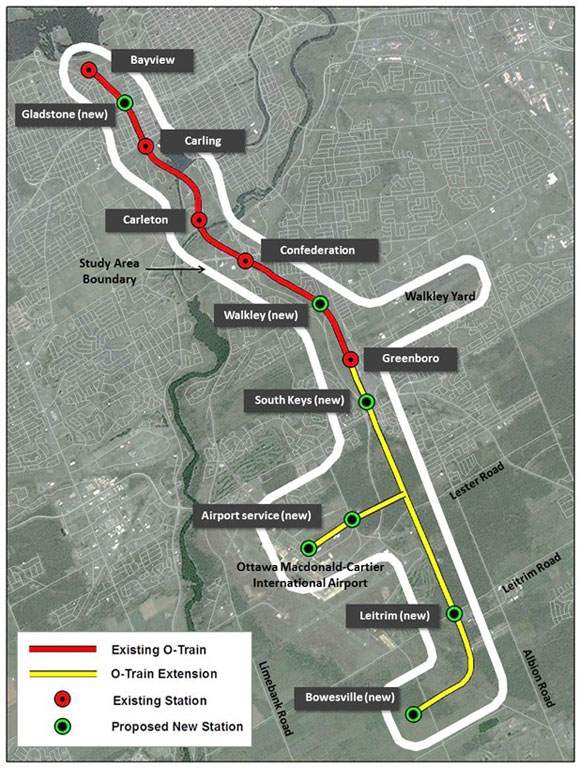
Ottawa’s Trillium, often mistakenly called LRT by the media is actually a DMU operation, using existing railway right-of-ways. In fact, the Trillium Line is in no way connected to Ottawa’s troubled hybrid light metro/rail system.
The Trillium Line is a single track, with three passing sidings on dedicated rights-of-way shared with Ottawa Central freight trains south of Walkley Yard, which occasionally serve the National Research Council of Canada‘s Automotive and Surface Transportation Research Centre. Despite being a local public transit line, it is actually a federally regulated mainline railway and operated under the official name “Capital Railway”, which appears on the trains in addition to the service’s logo. All stations except Carleton have single platforms.
Between 2013 and 2015, the line was upgraded and its fleet replaced, cutting wait times during peak periods from 15 minutes to 12 minutes.
On May 3, 2020, the line was shut down for a three-year upgrade and expansion project, which will add eight stations and 16 kilometres (10 mi) of track, including a spur to Macdonald–Cartier International Airport. During its closure, service along the line is being provided by buses. The upgraded and expanded line is expected to reopen in 2023.
The concept of the Trillium Line is what is needed for badly needed improved public and regional transit in BC. Cheaper rail solutions are paramount if BC is to deal with global Warming and climate change as the taxpayer cannot afford the SkyTrain light-metro solution.. The failure of the current government and metro Vancouver city governments to invest in more affordable rail solutions, such as DMU’s using existing rail corridors and track share with mainline railways will leave the region with permanent traffic congestion and gridlock as the the current rapid transit system has failed to achieve any modal shift on any of the routes where light metro operates.
The failure to attract the the motorist from the car has not been unnoticed abroad as no one has copied the Vancouver model of light metro only operation.
As the next phase of the defining transit project of his mayoral career comes together, Mayor Jim Watson shared his “great confidence” that the O-Train south extension “will not see the kind of challenges we’ve seen in the first stage of the Confederation Line.”Watson spoke to this newspaper after the Friday unveiling of the new Trillium Line fleet: seven Stadler FLIRT trains that will service the extended line stretching from Bayview Station to Limebank Road in Riverside South. The old Alstom Cordia LINT trains, used on the Trillium Line before its closure in 2020 for Stage 2 construction, will run along the new airport spur.Watson said his confidence came from the different technology for the southern O-Train branch; unlike the electrified Confederation Line, the Trillium Line is diesel-powered, with the potential for conversion in the future. It’s also being built on a system that has worked well for two decades.However, Watson added, “At the end of the day, it will be seeing is believing … People will not take our word until the trains are out, they’re working properly, they’re reliable. And that’s ultimately our objective.”
Ottawans have already had to digest disappointment that their new Trillium Line was running nine months and then a year behind its contracted completion date of August 2022. It’s to be the first finished of the three rail extensions that make up the Stage 2 project. The next update will come at a September meeting of council’s finance and economic development committee.
An interior view of one of the new fleet of light-rail trains unveiled at the maintenance and storage facility for O-Train South Extension on Friday.Photo by Tony Caldwell /Postmedia
It’s also one of the companies in the Rideau Transit Group consortium behind LRT Stage 1, also known as the Confederation Line. The extension of this line to the east and west by Kiewit and Vinci makes up the remainder of the $4.6-billion Stage 2 project funded by the federal, provincial and municipal governments.
Alongside Swiss chocolate, courtesy of Stadler, fodder for optimism was dispensed Friday.All seven trains have arrived, testing has begun and both station construction and installation of track are “progressing well” along the extended Trillium Line, said Michael Morgan, the city’s rail construction program director. Stretching 80 metres and capable of holding 420 passengers, the Stadler trains are twice as long and double the capacity of their Trillium Line predecessors.“Fantastic vehicle. It’s been working great,” Morgan said. “We’ve had no issues since we started the testing.”They’re looking to have the full track and signal system available end-to-end by the year’s conclusion, allowing winter testing in December, January, and February. But they’re not expecting problems with the trains’ performance in cold conditions, Morgan added.As the mayor did, Morgan focused on key differences between the Trillium and Confederation Lines when asked about the potential for problems like those riders encountered with LRT Stage 1.“The Trillium Line’s a different technology, it’s a different system, we’re starting from a different base. We already have a number of vehicles that work today. We have seven new vehicles that will come, they’re ready to go, they’re ready a year in advance of the opening … We’re quite confident that the different technology, the different systems are going to make a huge impact in terms of how the system operates.”As Stage 2 work continues in the south, east and west, an independent commission probing the problem-plagued first phase of LRT in Ottawa will prepare a final report with recommendations to prevent future system failures. Following weeks of hearings and countless pages of publicly accessible evidence submissions, the report is due by Aug. 31, but the deadline could be pushed to Nov. 30 with approval of Ontario’s transportation minister.
Mayor Jim Watson and Coun. Allan Hubley, chair of the transit commission, assess the interior of one of the new fleet of light-trail train cars.Photo by Tony Caldwell /Postmedia
Transit commission chair Allan Hubley said Friday that he’d welcomed the public inquiry from its outset, noting its distinction from a judicial inquiry, which council ultimately voted against pursuing and could have cost the city millions and taken years.
“The public inquiry was great because it’s focused on a couple of key issues and we’re expecting a report by the end of August, which is really good turnaround because we want to action whatever comes out of that report,” Hubley said. “We want to make sure that we do it, whatever they recommend with the train.”
Hubley said he also found it heartening to see “the number of experts that said that we did the right thing, that, you know, changing the testing criteria didn’t make that big a difference … 98 to 96 wasn’t a big game-changer.”
“I remember at the time it being discussed that … you’d go from a 3.5- to a five-minute wait time,” Hubley said.
“I compared that to 15 minutes waiting for a bus and thought, ‘You know, people aren’t going to be that much upset over it.’”
Stretching 80 metres and capable of holding 420 passengers, the Stadler trains are twice as long and double the capacity of their Trillium Line predecessors.Photo by Tony Caldwell /Postmedia
I have reprinted this story from the LRTA’s February’s issue Light Rail and Urban Transport to illustrate the cost of a modern European style tramway (LRT).
The 13.4 km Limmattalbahn cost €607 million or CAD $884 million or about $65 million a kilometre to build!
Compare this with $4.6 t0 $5 billion or 287.5 per km. for the 16 km extension of the Expo Line to Langley!
A modern tramway in today’s money costs four and half times less than a light metro, yet the tramway could, if pushed offer a higher capacity if needed.
And the SkyTrain Lobby fails to understand why no one builds with SkyTrain light metro!
Want to know more about modern light rail?
Join the Light Rail Transit Association at www.lrta.org and be up to date with modern public transport!
Limmattalbahn
Switzerland’s newest tramway
Delivered 20% under budget, Zürich’s Limmattalbahn is inaugurated for Europe’s timetable change
December’s Europe-wide timetable change saw inauguration of thenew Limmattalbahn.
* Opened with celebrations and free travel on 10 December – with regular service from 11 December – the 13.4km (8.3-mile) metre- gauge line links Bahnhof Altstetten in the western suburbsof Zürich with communities in the Limmat Valley. There are 27 stops serving Farbhof, Schlieren, Urdorf, Dietikon and Killwangen (the western terminus).
* Track-sharing takes place with the VBZ tram network (line 2) in Zürich between Farbhof and Schlieren, and at Dietikon with the Bremgarten – Dietikon Bahn (BDWM). The line’s depot is atMüsli (near Kreuzäcker stop), next to a railway marshalling yard.
* The Limmat Valley has always been a significant transport corridor; the first Swiss railway (theSpanisch-Brötli-Bahn)ran here from 1847. With a highway network at capacity and 113 000additional journeys per day expected by 2030, plans for the new public transport connection were endorsed in a November 2015 referendum.
* From Altstetten to Schlieren the line is electrified at 600V dc for compatibility with VBZ trams, while further west the line voltageis powered at 1200V dc (the same as BDWM). A 15-minute service is provided by eight double-ended StadlerTramlinkLRVs; each 44.3m-long, 2.4m-wide car can carry 260 passengers, 88 seated. Aargau Verkehr holds an option for eight more of the seven-section trams, which would permit a 7.5-minute service as traffic develops. End-to-end journey time is 38 minutes. The trams were part of a joint order with Baselland Transport for there-gauged Waldenburgerbahn, which re-opened to passengers on the same day (see below).
* Test running started in July 2022. The total cost of the project was around CHF600m (EUR607m), less than the budgeted CHF755m/ EUR766m), with one third met by the Federal Government and 50% by the Canton Zürich.
* An extension beyond the current western terminus is proposed, but is yet to progress beyond the planning stage. The earlier Limmattal- Strassenbahn ran trams from Zürich to Dietikon until 1930.
* A feature on the Limmattalbahn will appear in the next TAUT.













Recent Comments